Enter The Dragon

IMG_3813ed

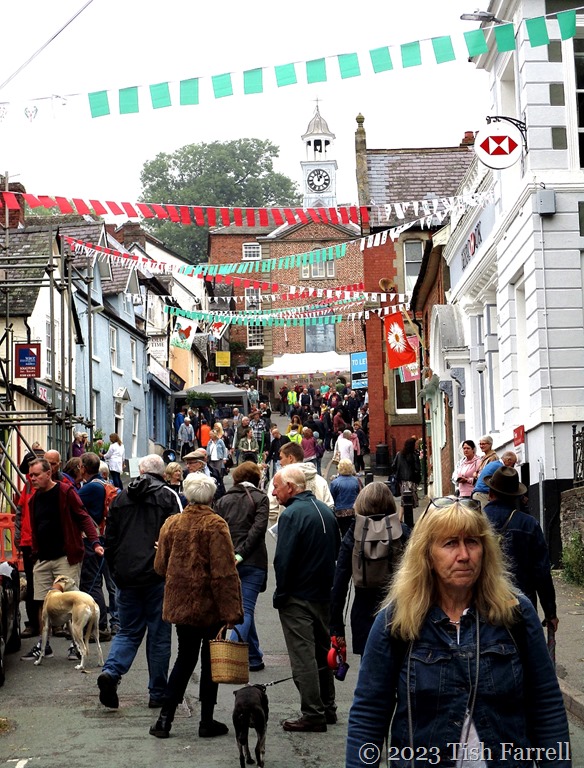
We’ve been ‘moving in’ to our new Bishops Castle home for a month now; more an ongoing state of flux than a settling in. There’s a lot to do and for months ahead, including work on roof and chimneys.  And so not a little frazzled, it was a relief to abandon the house and head for the streets.

Yesterday was Michaelmas Fair day. Time to find out what kind of a town we’d moved to. Time to mingle with our new community and connect. After all, it’s what humans most need beyond basic sustenance – connection. And when we think we don’t (because there’s just too much to do), it’s probably when we need it most.

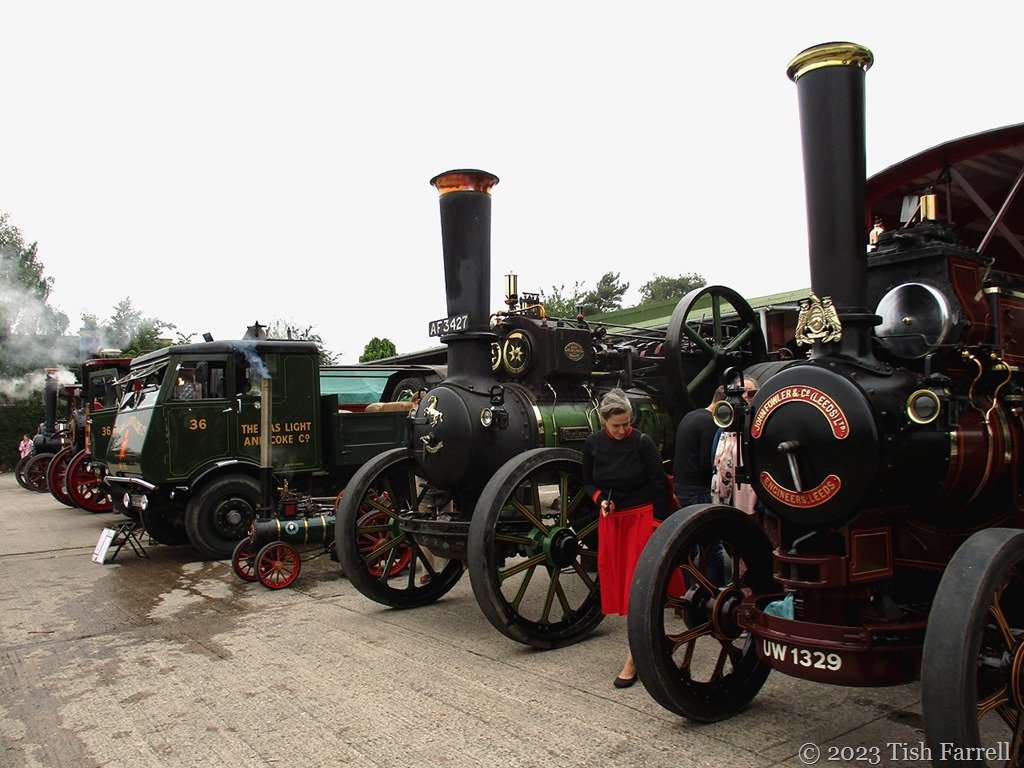
Proceedings kicked off at noon with street stalls and roaming performers, bands on the Town Hall stage; classic cars lined up on the High Street – primped and prepped; fleet of steam traction engines huffing coaly steam in the cattle market, waiting on the 3 o’ clock grand parade.

IMG_3777ed

IMG_3768ed

IMG_3759ed

But as you can see, it was a dull old day – autumnal mist and drizzle plus intermittent showers, so we dipped in and out of the afternoon’s programme, met some new neighbours, reprised earlier introductions (yes, I do remember your name), bought a very fine rudbeckia, caught the Shropshire Bedlams Morris Dancers, but then listened to Jane the town’s singing florist (much amplified) while installing the new plant in the front garden. It was the evening’s events we wanted to go to.

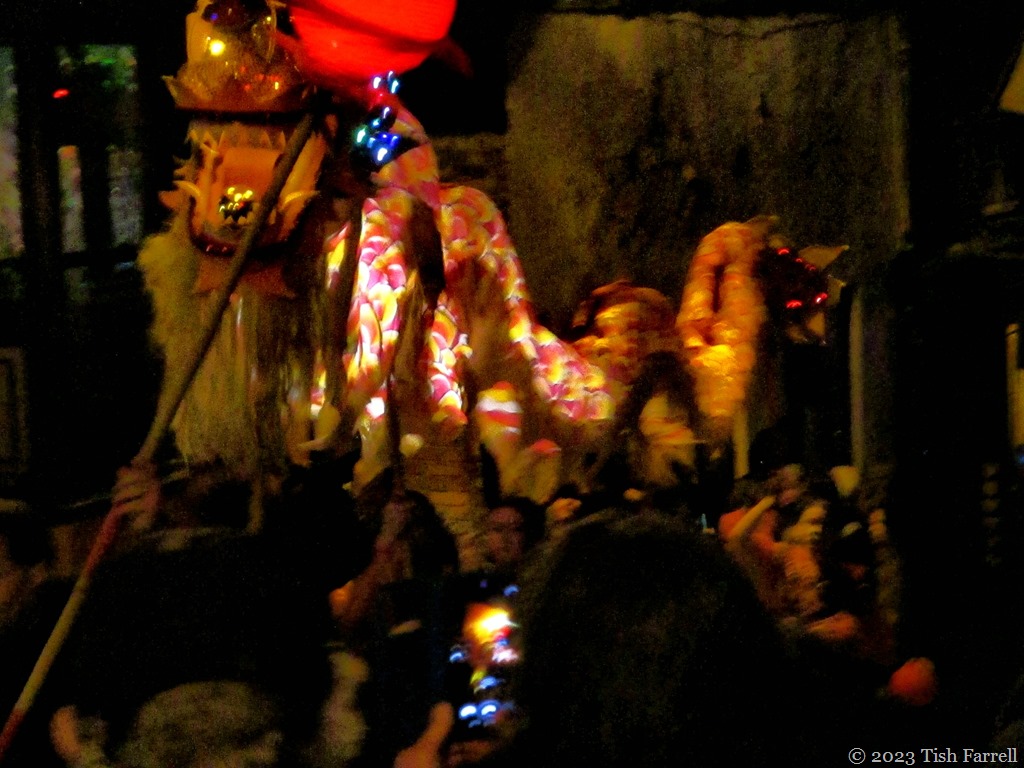
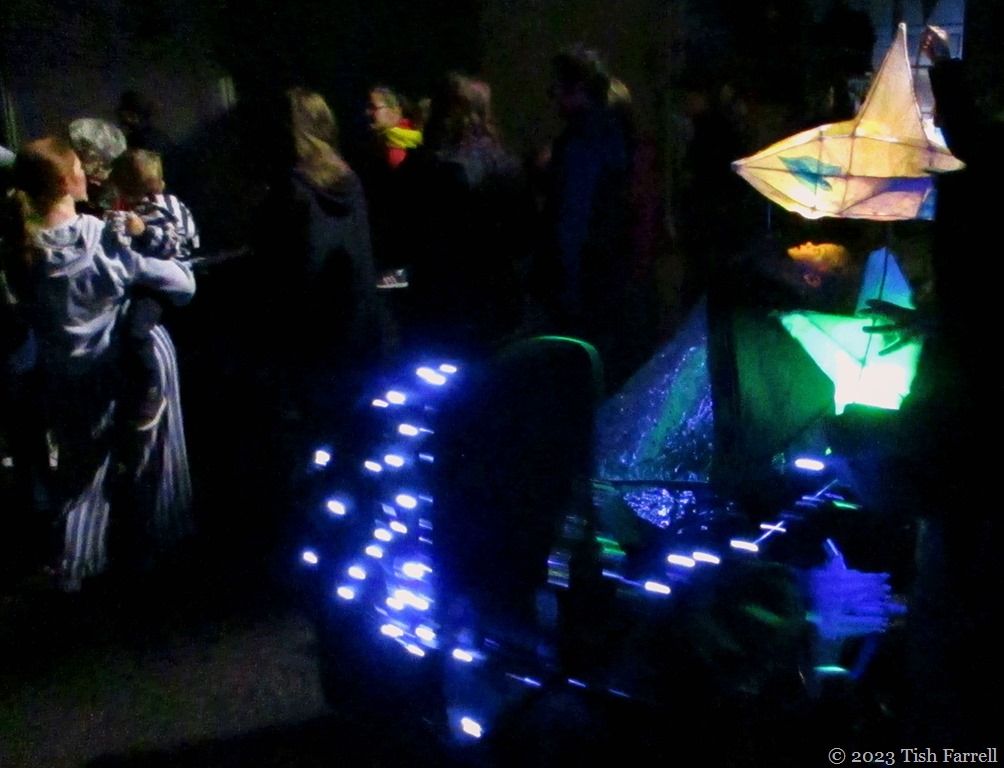
The Lantern Procession began at 7.45. We stood at the top of the town to welcome it, wondering why the street was so sparse in humanity. (Was everyone in the pub? It surely looked like it. The nearby Vaults inn was full to bursting). And then down the hill the drumming began. Then out of the gloaming, the sinuous twists and twirls of the Hung Gar Light Dragon. And strung out behind him, the town’s lantern-bearing children and all their friends and relations.

IMG_3789ed

IMG_3791ed

IMG_3794ed

Now we understood. Most of Bishops Castle had been busy making lanterns in the Church Barn. They were all in the procession. What a throng.

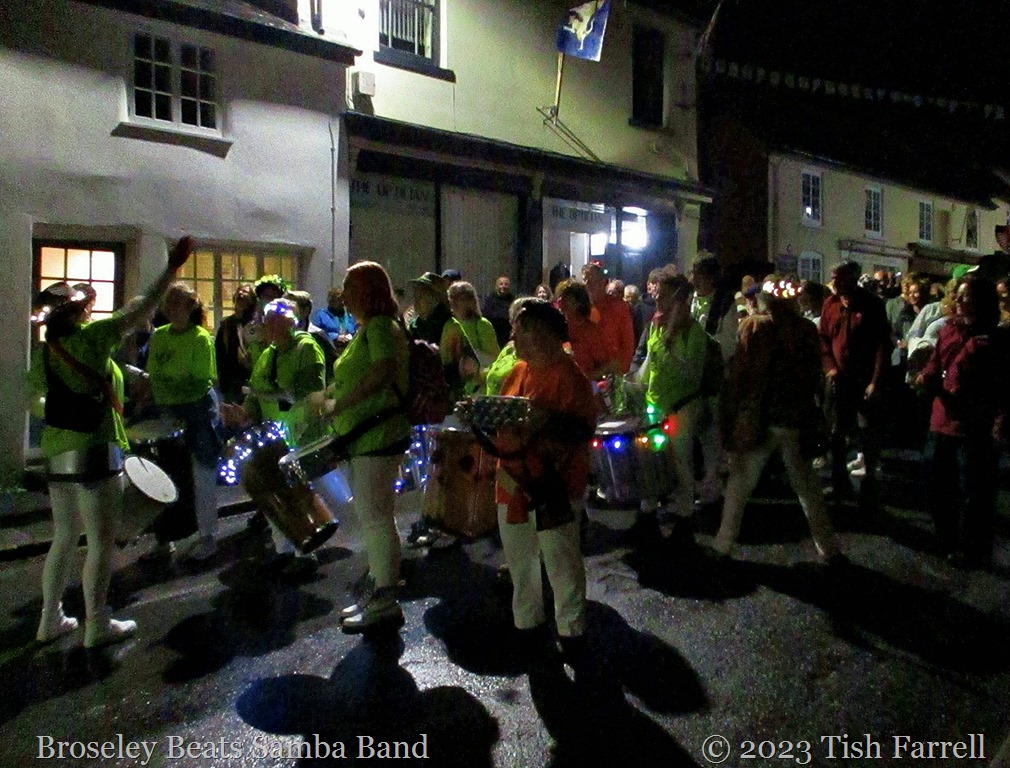
And so as the dragon and Chinese drummers climbed the hill, so the Broseley Beats Samba Band struck up at the top. (I wish we’d discovered them when were living Broseley). A drumming play off then, the beats ripping from toe to crown. No choice. The body says, DANCE!

Then just when we thought the show over, the dragon came whiffling back round the Town Hall, heading off down the hill. Followed by the samba band. Followed by us and everyone else, the descent choreographed by the drummers, stopping at intervals to give a bravado performance.

IMG_3820ed

IMG_3832ed

*

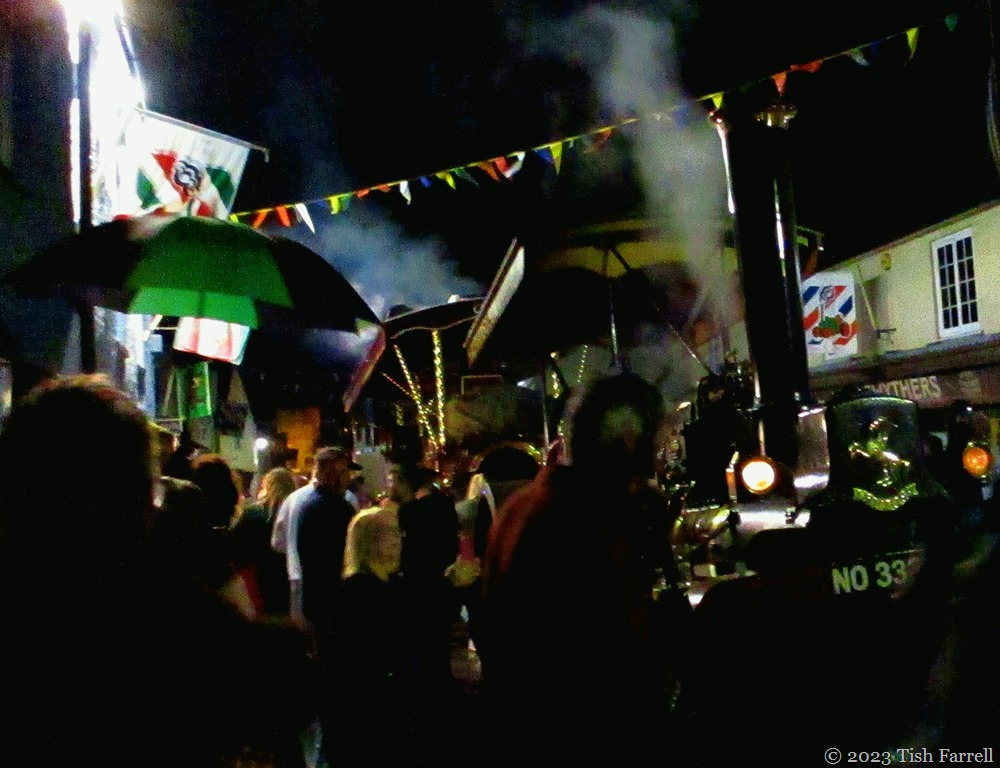
When we reached the King’s Head at the bottom of the town, we (somewhat astonished) came on a line-up of several steaming traction engines outside the pub door. What a hoot, and literally too. One owner was a tad whistle-happy. I trust he wasn’t driving home.

IMG_3827ed

*

So there you have it, a fine finale to the Michaelmas Fair. All good spirits restored. And a taste of good things to come? I should think so.

Lens-Artists: recharge    This week Egidio sets the theme as he hikes Colorado’s fabulous trails.

Old As The Hills: That Would Be 570,000,000 years

100_9277ed

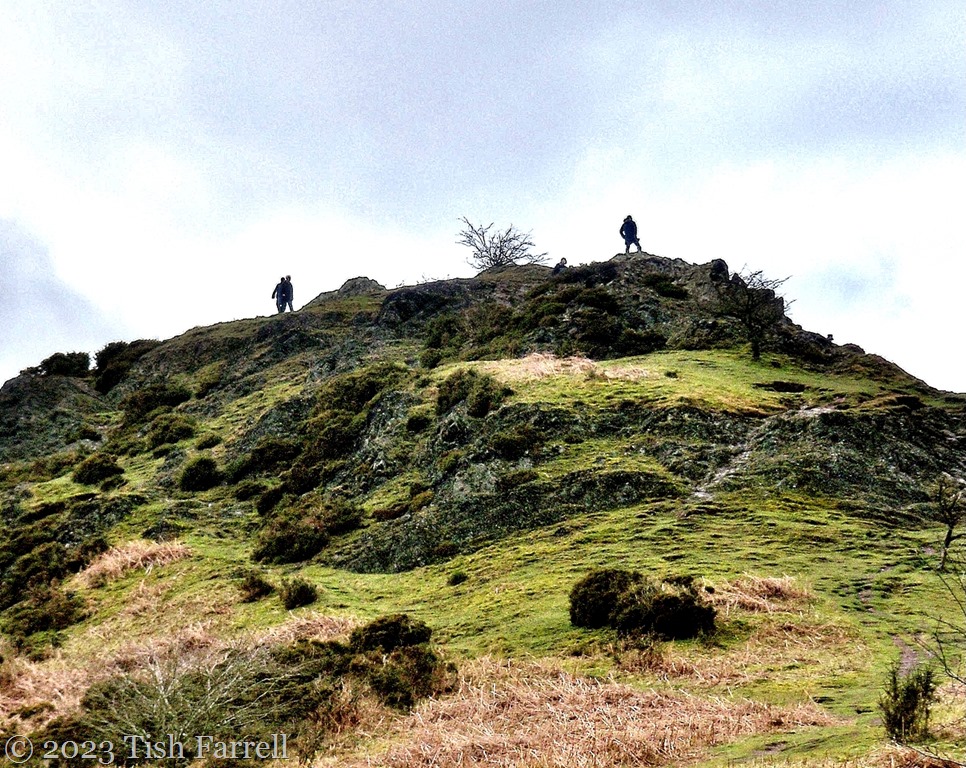
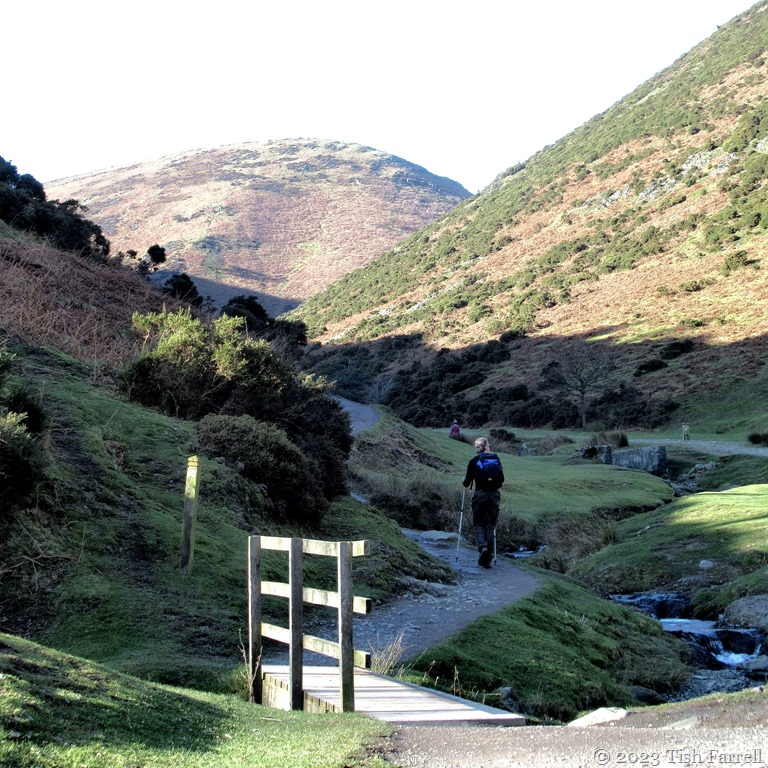
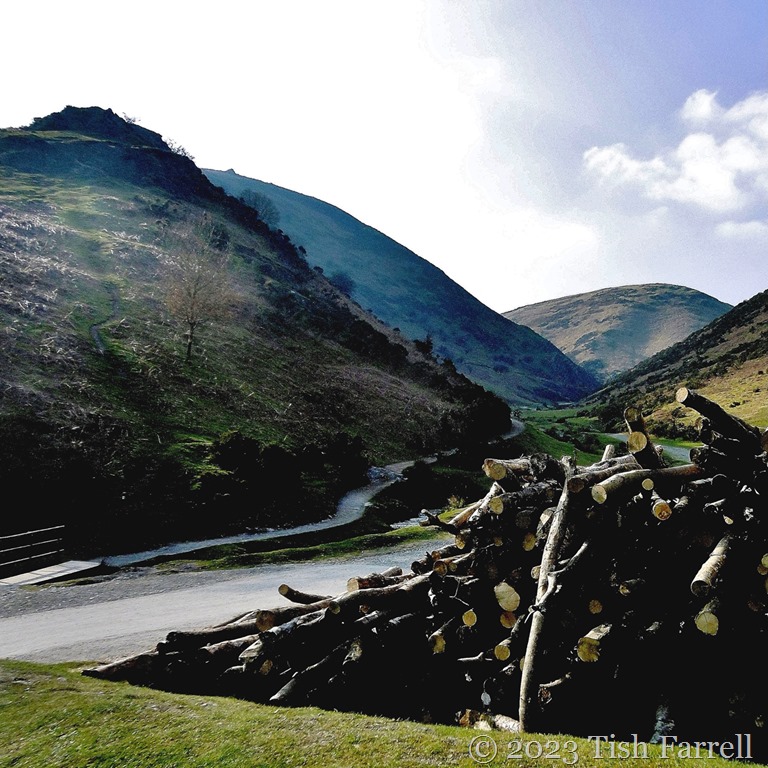
I recall being told by my geography teacher (aeons ago) that the Shropshire uplands comprised some of the world’s most venerable rocks i.e from the Precambrian era. The hills in question lie either side the Church Stretton fault, just across the Long Mynd from where we live now in Bishop’s Castle. On the east of the Stretton Valley are Lawley, Caer Caradoc and Ragleth, all formed from volcanic lava and ash around 570 million years ago. The Long Mynd lies to the west and began forming a little later with the build up of mud- and sandstone sediments in shallow seas.

Most astonishing of all, this whole process began when the earth’s crust beneath the land on which I now live was sited south of the Antarctic Circle. I’ll say that again: South Shropshire once lay south of the Antarctic Circle. Which obviously means this part of the British Isles has travelled from one end of the globe to the other.

On that journey, over millions of years, sea levels rose and fell; tectonic plates collided as continents shifted and shunted; uplifted landmasses were compressed, folded, tilted.

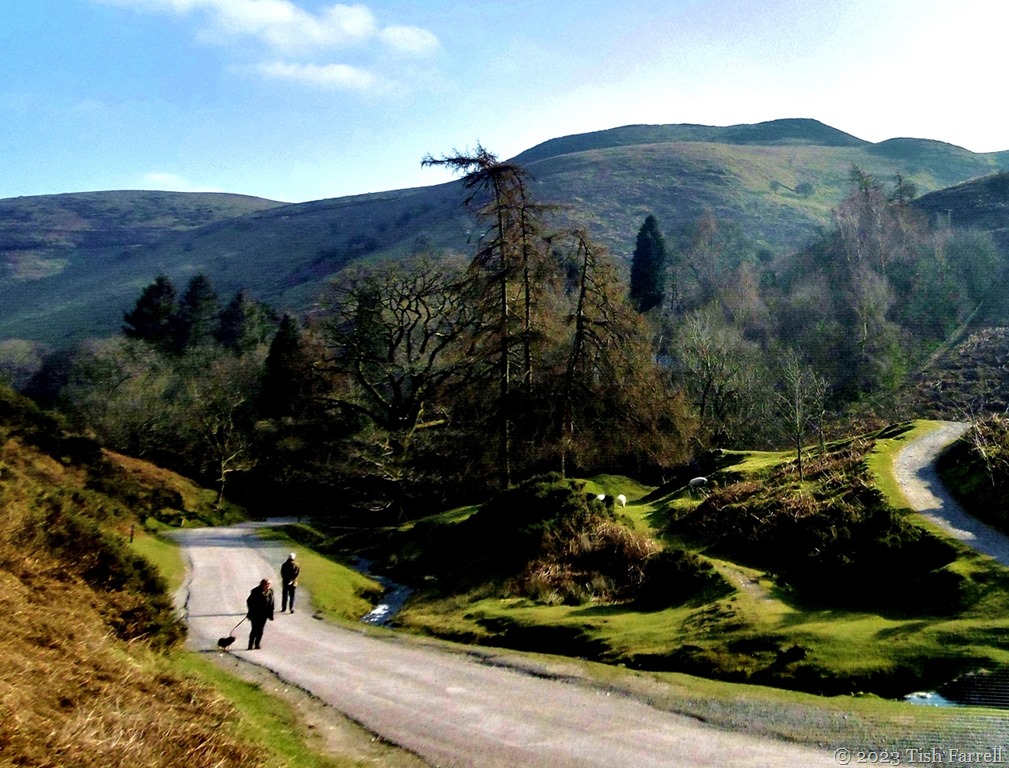
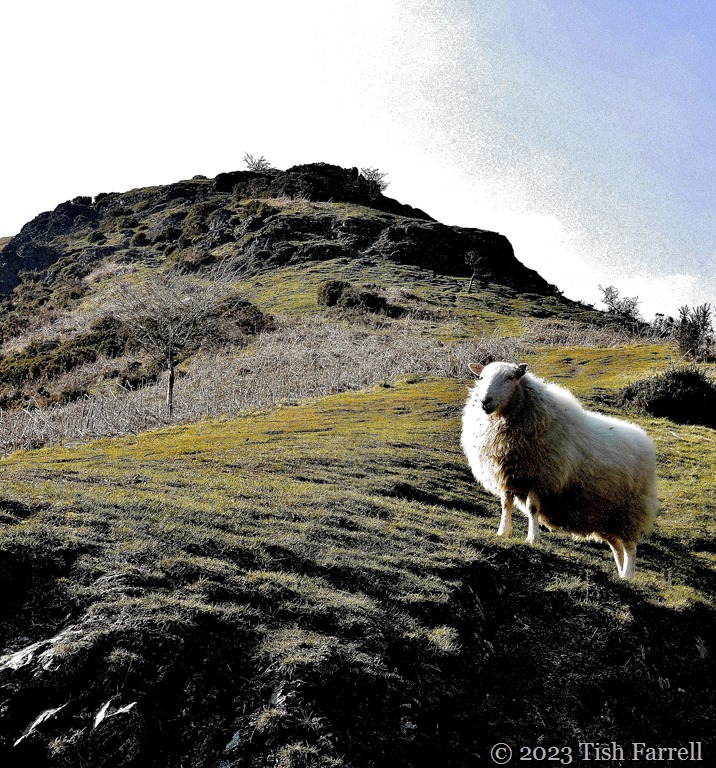
Then a succession of Ice Ages knocked the hills into shape. The Long Mynd is probably the most dramatic example – seen here in the the next photos taken in Carding Mill Valley, near Church Stretton. From 2.4 million years ago to 20,000 years ago glaciers shifted around the Mynd. When the ice sheets melted during interglacial periods, streams fed by melt water and rain carved out deep valleys, locally known as ‘batches’.

How mind-bogglingly amazing is this for a piece of landscape sculpting: water power plus the passage of time.

P1030461ed

P1030466resixws

IMG_6743ed

P1030464ed

P1030457

Lens-Artists: Time

Mysterious In Monochrome: The Shropshire Borderlands

P1030697sepia

This week at Lens-Artists, Anne from Slow Shutter Speed asks us to think about monochrome and black and white photography. Click on the link below to see her post.

My first photo here was edited from a colour image, although however it comes, it’s an odd composition. It was taken at Mitchells Fold, the Bronze Age stone circle on the border with Wales, and I was only aware of the passing figure as I snapped the shot. I neither saw him arrive, nor leave the scene. Gives one a bit of a shiver.

These next two shots were taken with my Lumix point and shoot (before it gave up the ghost), using the ‘dynamic monochrome setting’. It was midday, and in high summer, but the light was penumbral; as if the sun had been switched off. Again very strange, although you can well see why these hills inspired tales of the Devil and gatherings of evil ones whenever mist shrouded the heights.

sepia

P1080542mono

*

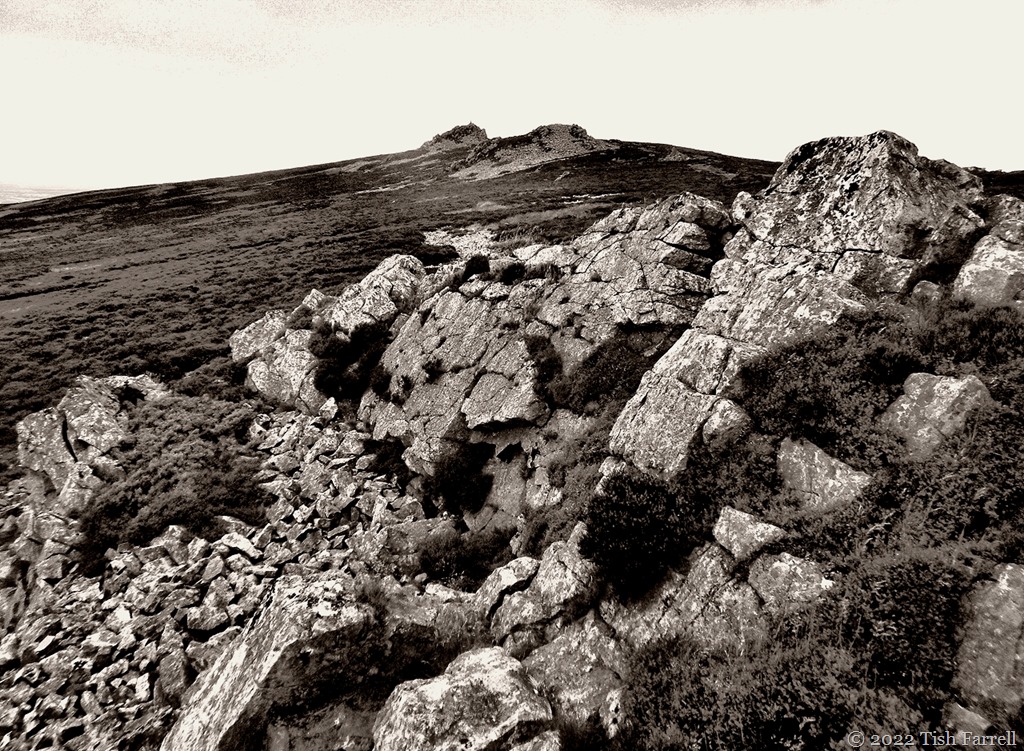
This last photo was again taken on the Stiperstones, but on a brilliantly sunny day – a view of the Devil’s Chair (edited from colour). It looks like a ruined citadel, the quartzite rocks catching the sunlight.

IMG_0542bw

Related post: To Shropshire’s Mysterious Stiperstones

Lens-Artists: Black & White or Monochrome Please visit Anne at Slow Shutter Speed. She’s given us a snappy little essay on this topic.

Simply Does It

P1070611cr

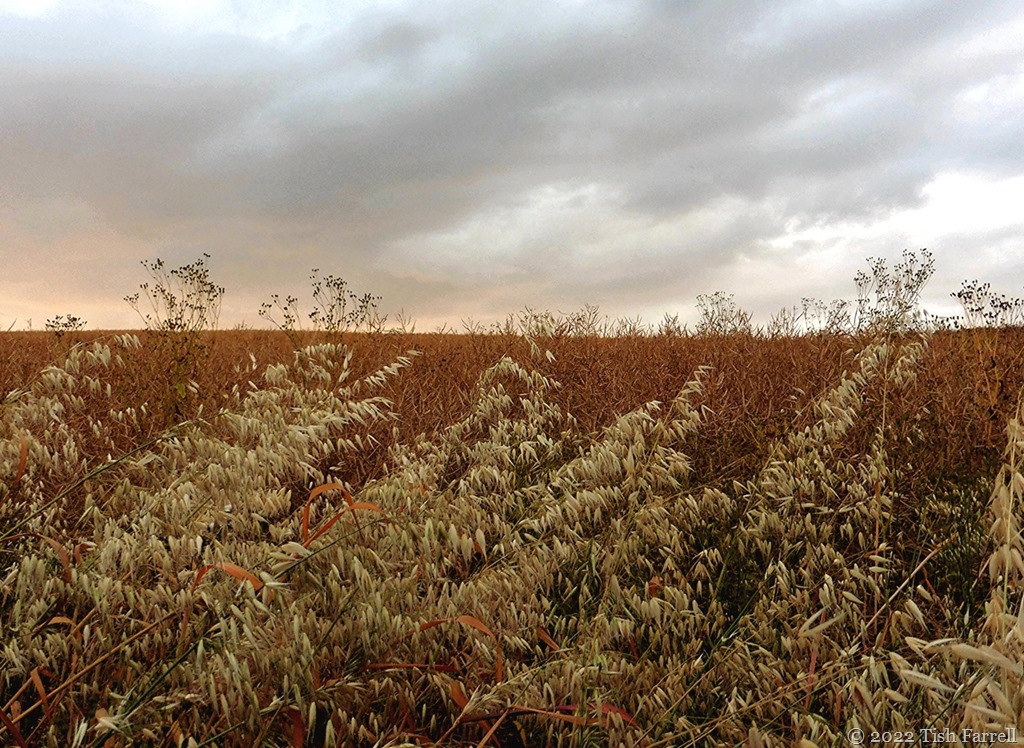
Wild oats and a summer storm brewing: I liked the muted tones in contrasting textures.

*

These convolvulus flowers seemed to light up a shady corner:

100_6691

*

The barley field: shades of green with front row sgraffitto effect:

IMG_0222

*

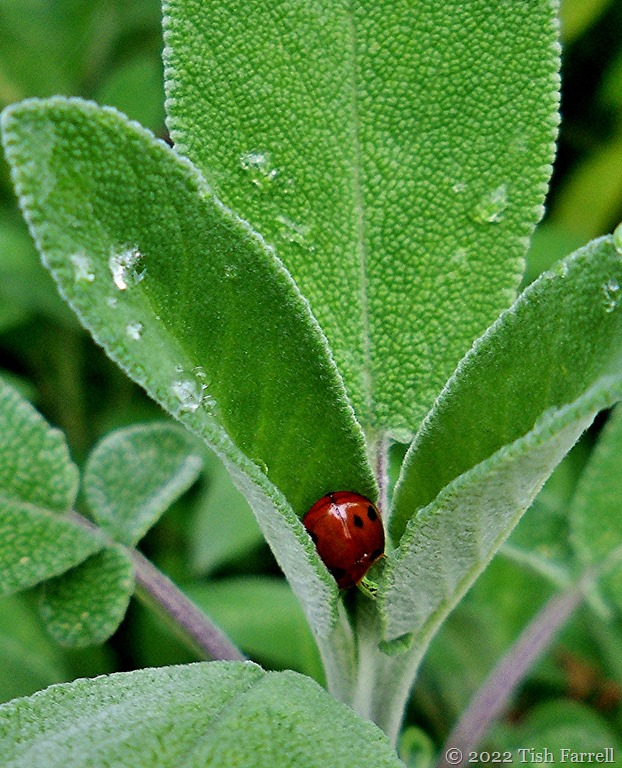
Ladybird sheltering in a sage leaf – what’s not to love?

100_6855

*

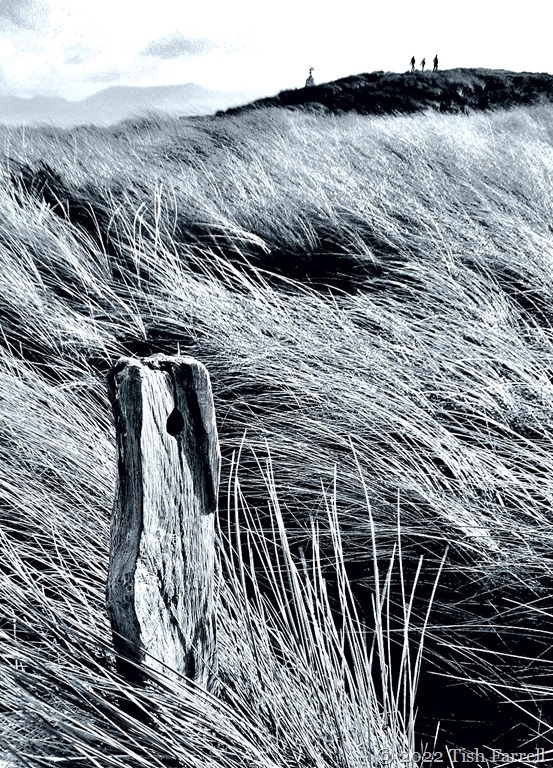
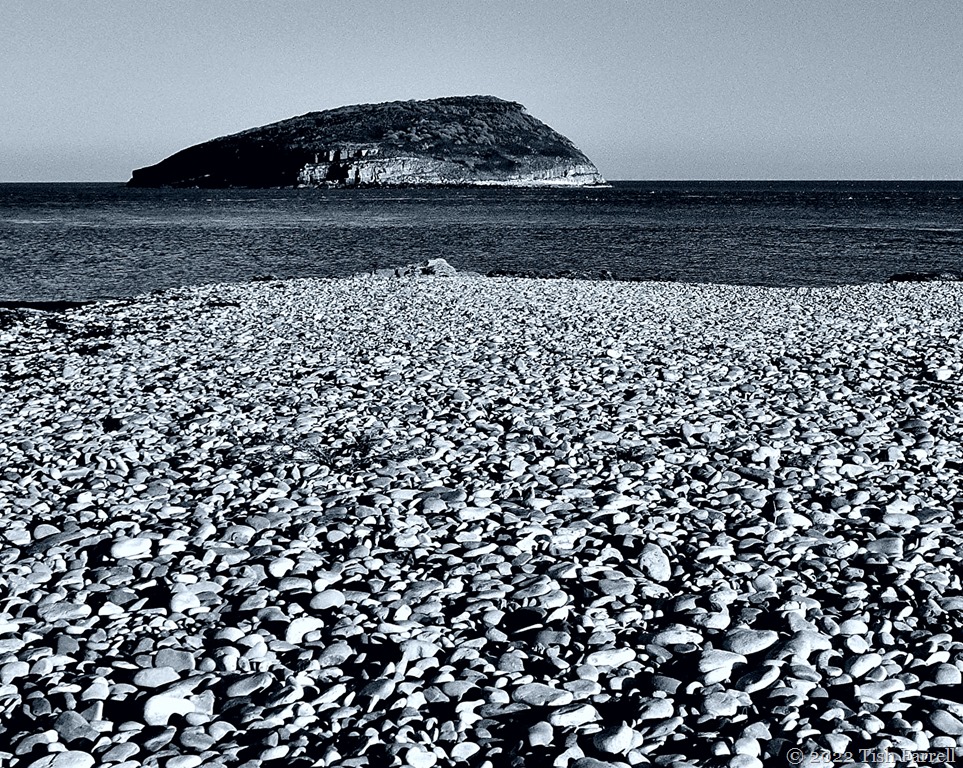
And finally – three photos taken at Penmon Point on the island of Anglesey. In descending order: view of Puffin Island;  looking across Menai Strait to the Welsh mainland;  boy looks at lighthouse.

P1060570cr

IMG_6205

p1060566

Lens-Artists: Simplicity  This week Philo at Philosophy Through Photography sets the theme. Please go and see his inspiring examples.

When Creator Comes Visiting…

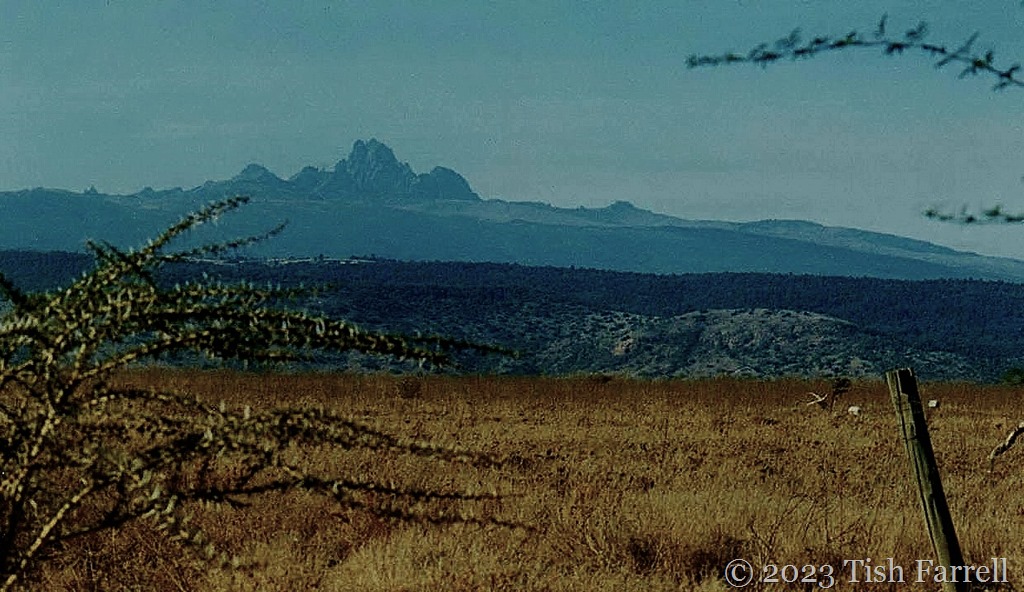
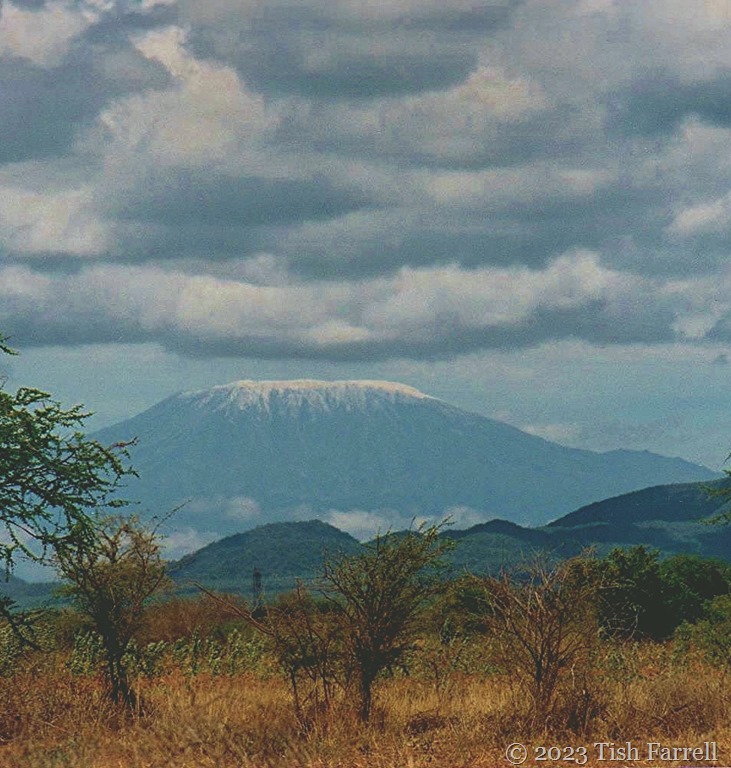
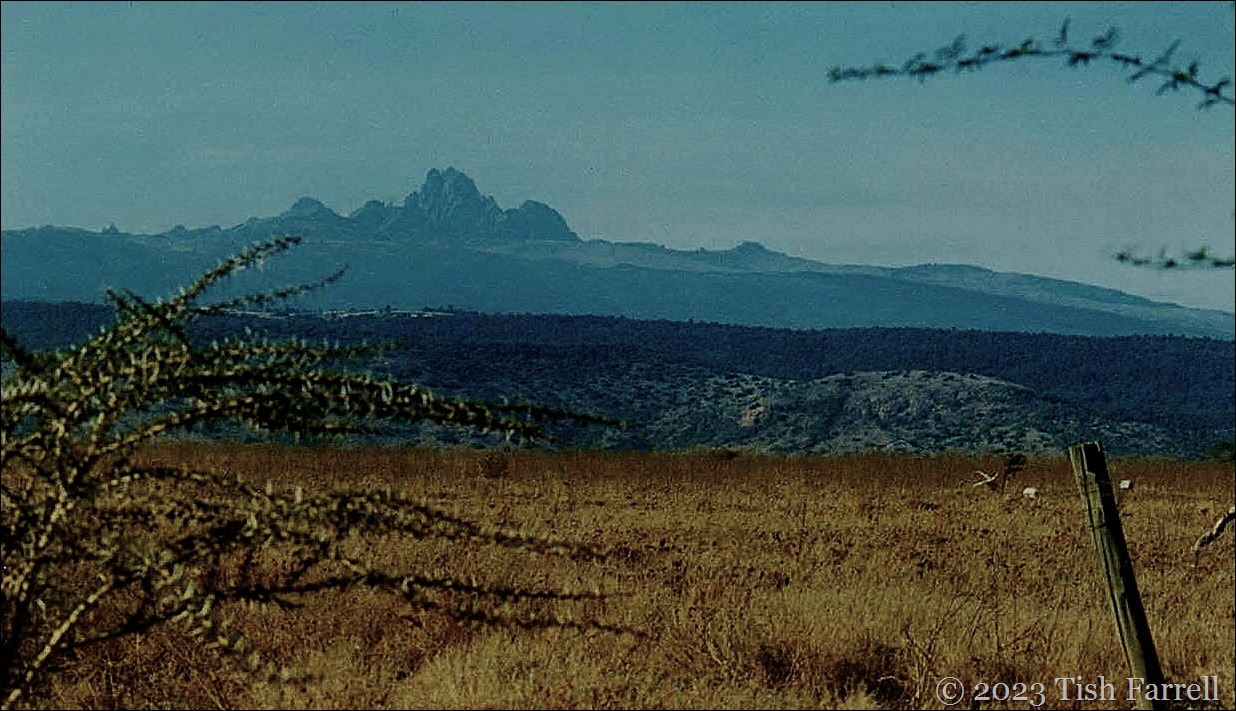
Mt Kenya

…this is one of his domains – the craggy summit of Kere-Nyaga, Mountain of Brightness, better known outside East Africa as Mount Kenya.

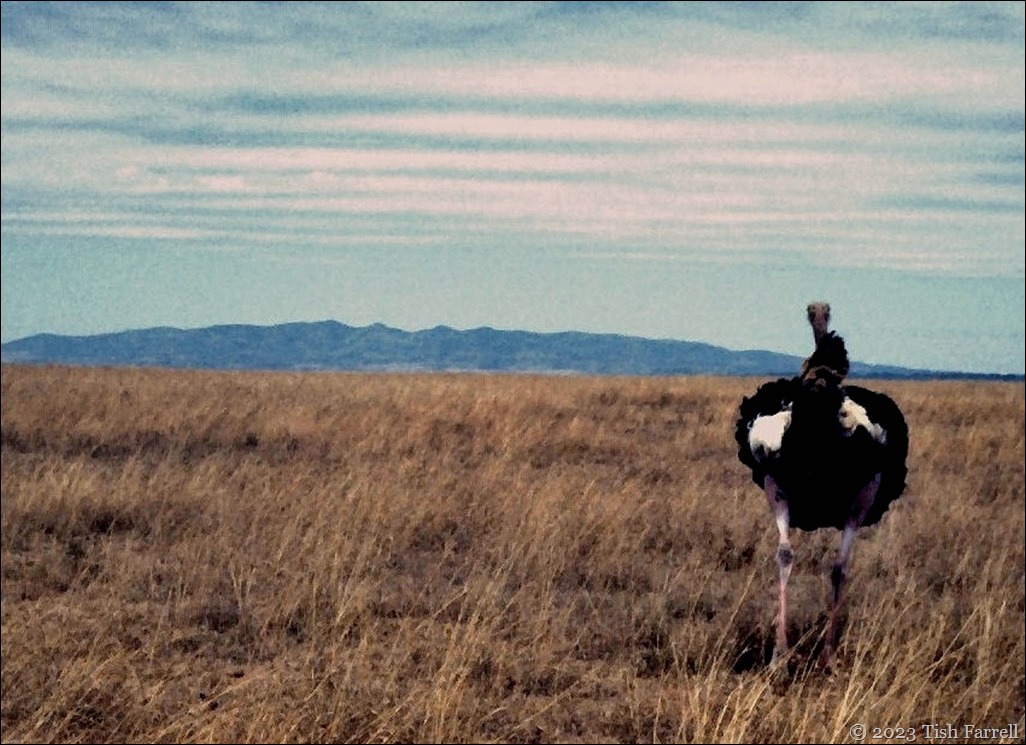
And the supreme being concerned is Ngai, maker of earth, the cosmos and everything. And it was to Ngai that the Kikuyu farmers of Mount Kenya’s southerly foothills once offered their sacrifices and prayers. Although they only did this in times of great crisis, since it was generally held that Creator was a remote figure, little concerned with human affairs. When his help was sought, he was addressed as Mwene-Nyaga, possessor of brightness (Jomo Kenyatta, Facing Mount Kenya 1938). Nyaga also has figurative connotations, meaning ostrich, but in this context suggestive of the white plumes of the male ostrich, a visual analogy for the glaciated zones among the dark mountain peaks.

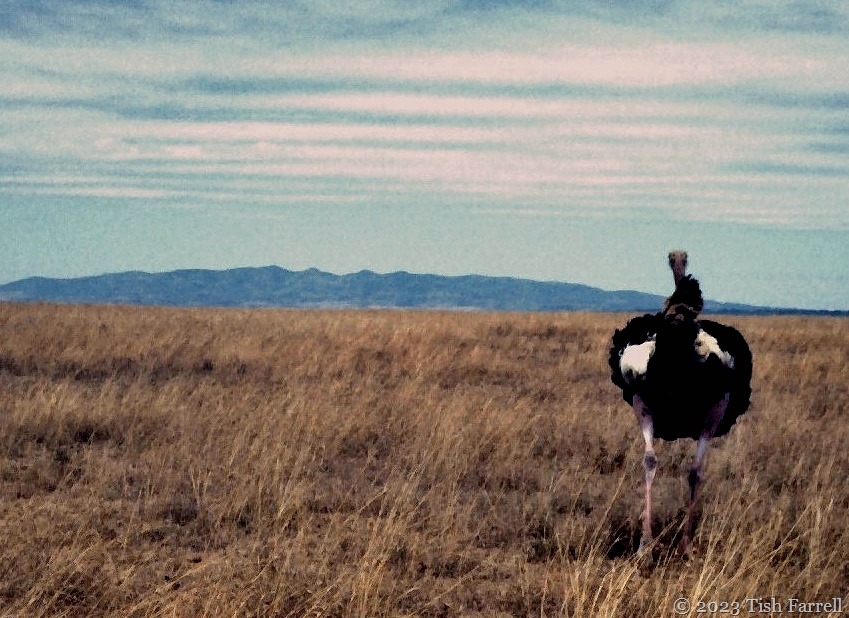
You’ll see the thinking in this next photo:
ostrich and Ngong hills best

This shot of a retreating male ostrich also captures a distant view of the Ngong Hills, another landmark of spiritual significance, not least in recent times to Out of Africa  writer Karen Blixen and her lover Denys Finch Hatton whose burial place it is. For that story see Caught inside a Kikuyu garden.

I’m sorry I don’t have more and better photos of Mount Kenya. The ones I do have are a little odd, as if the mountain meant to tease by showing off parts of itself at times and in places where it was not expected to be. I remember spotting it early one morning as I stood in the garden of the Outspan Hotel in Nyeri, the jagged summit floating gauzily above the horizon.

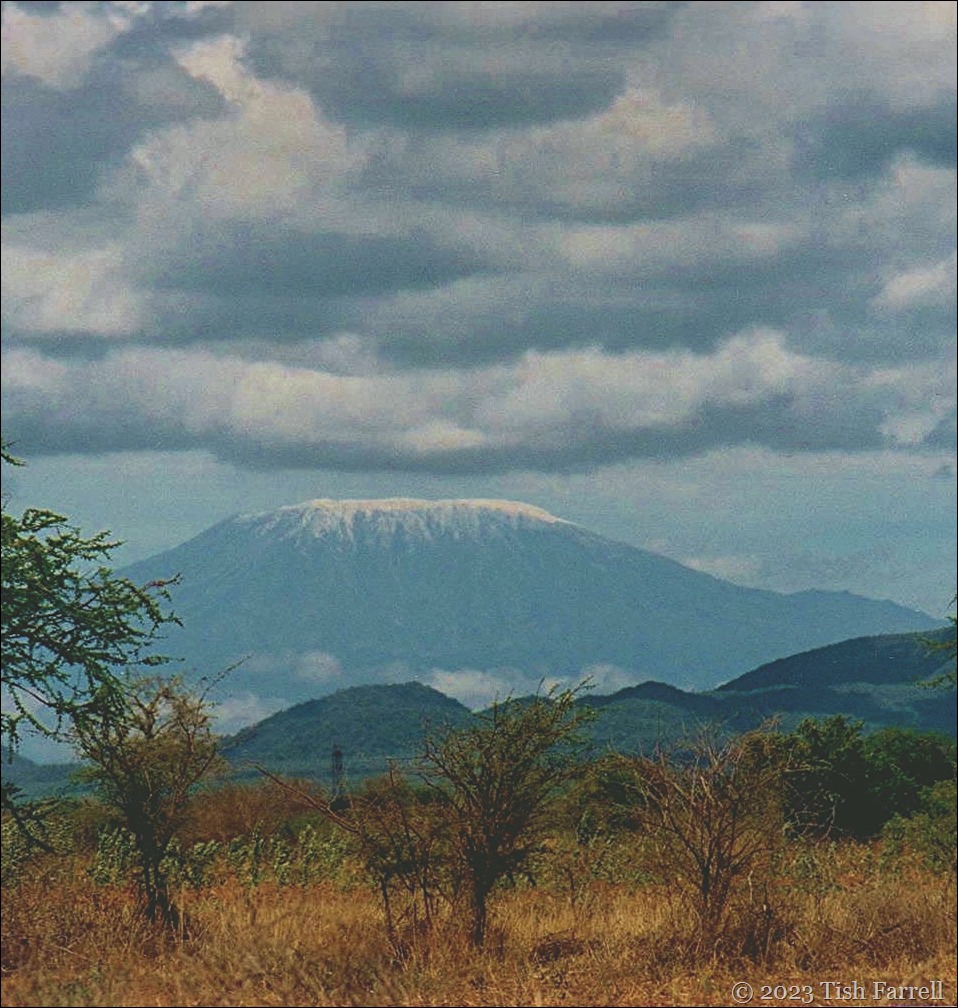
For several moments I was fixed to the spot. By the time I thought of taking a photograph it was gone – only empty sky in the place where it was, and a visceral sense of loss. Kilimanjaro just over the border in Tanzania, plays the same trick. Both mountains spend much of their time being mysteriously invisible. Yet there are travellers’ tales that claim occasions when, looking north and south, both mountains appeared simultaneously. Just imagine!
002 (2) ed

*

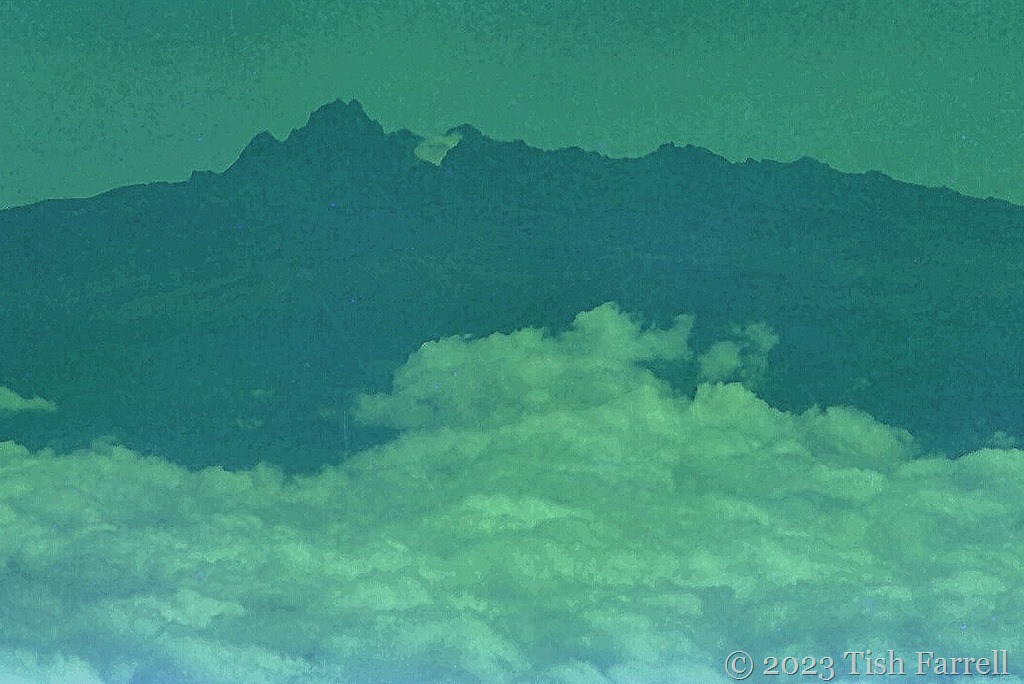
And now for the Mount Kenya photos I do have. The first one was taken from a small plane on our way to Lewa Downs:

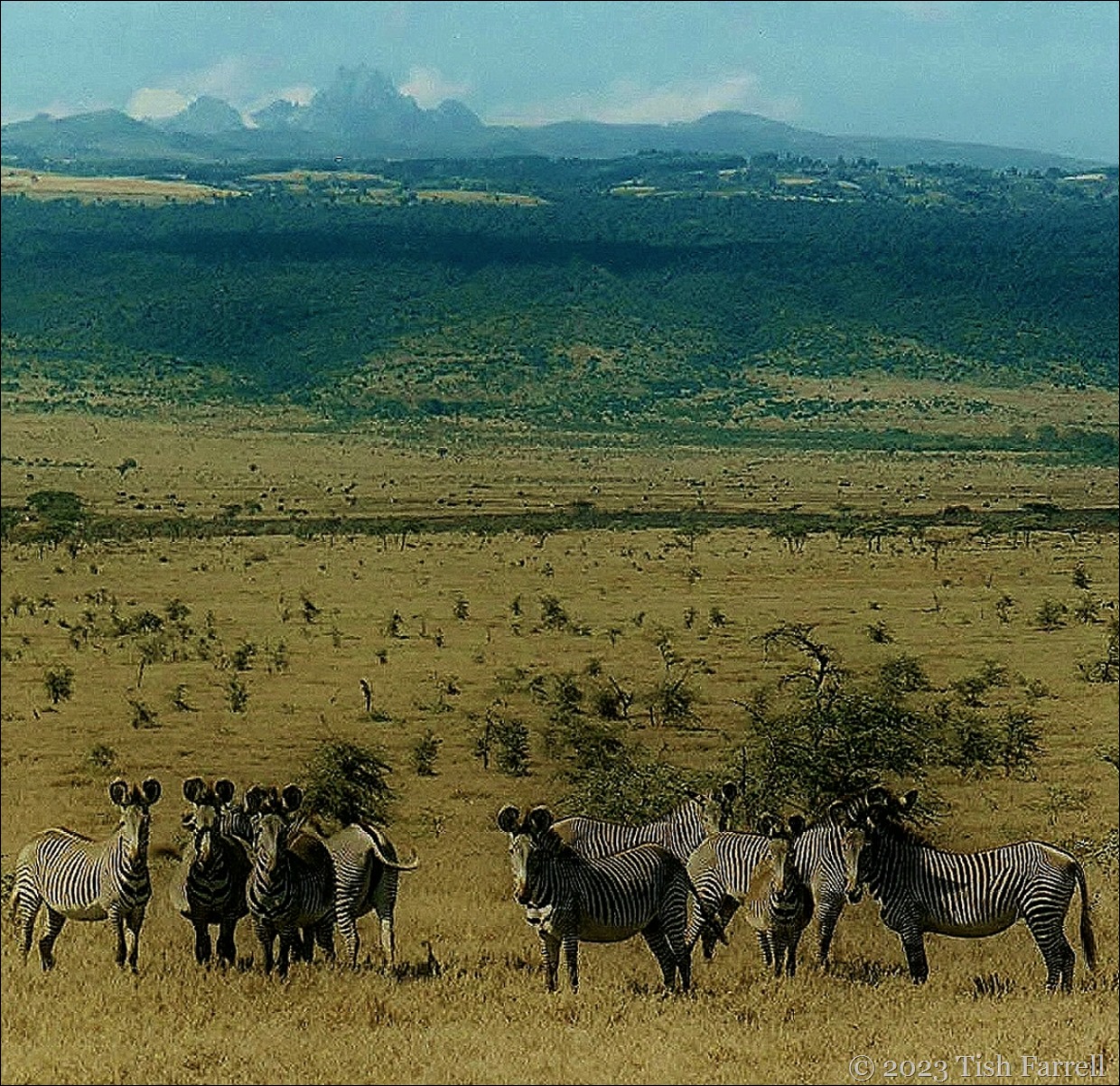
Mt Kenya from plane

Grevy's Zebra and Mt Kenya

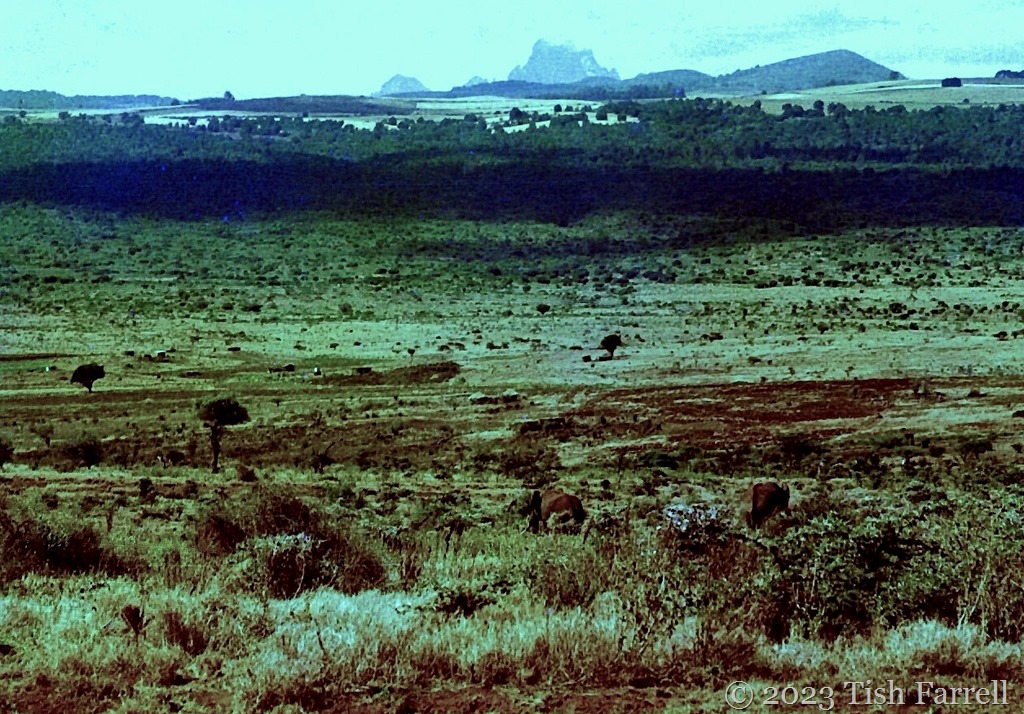
Mount Kenya and elephants

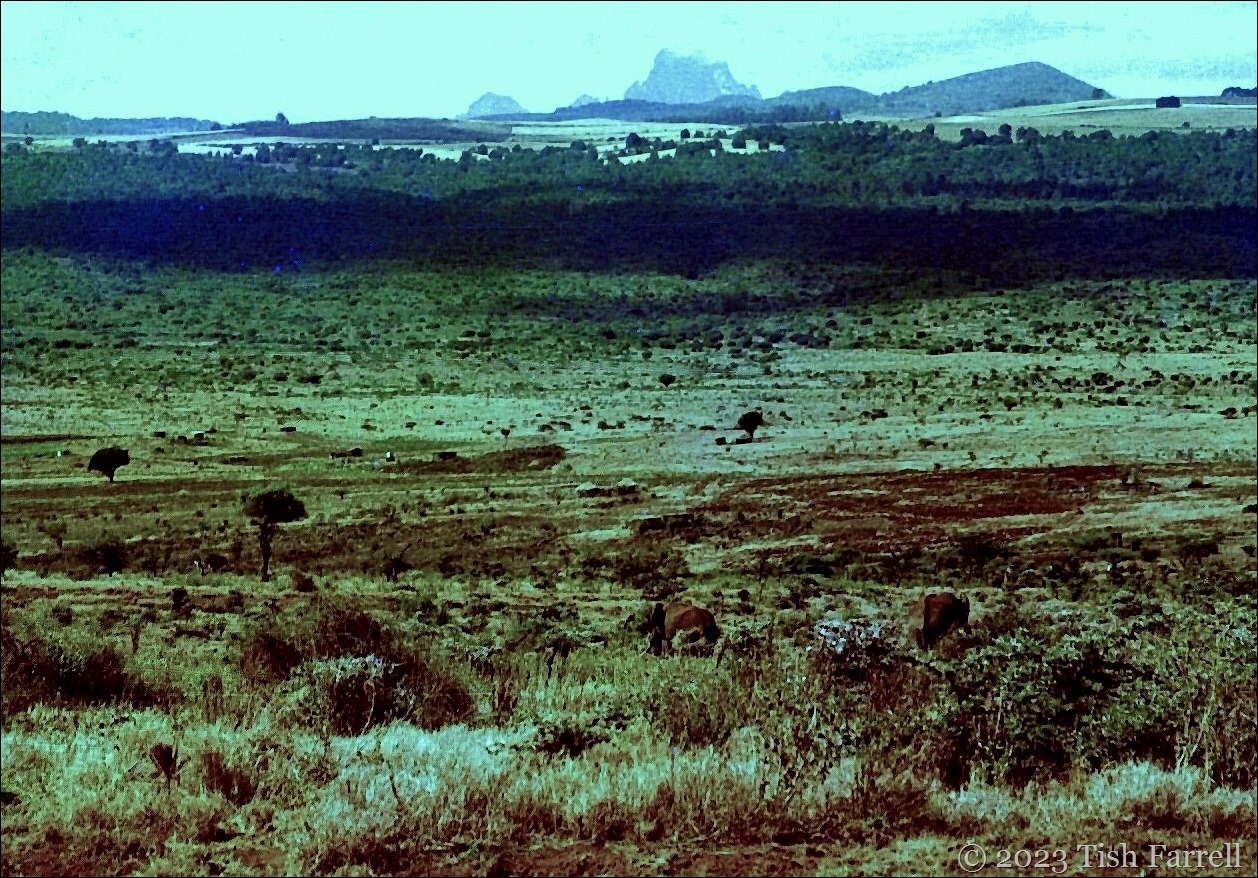
This photo was taken beside the Lewa Downs air strip. At the time, it was the two elephants, just visible in the foreground, that caught my eye. It was only when I was scanning the image that I noticed the odd geographical juxtaposition of Mount Kenya’s summit. What are its lofty peaks doing just there, and so sneakily? They are over 17,000 feet high.

*
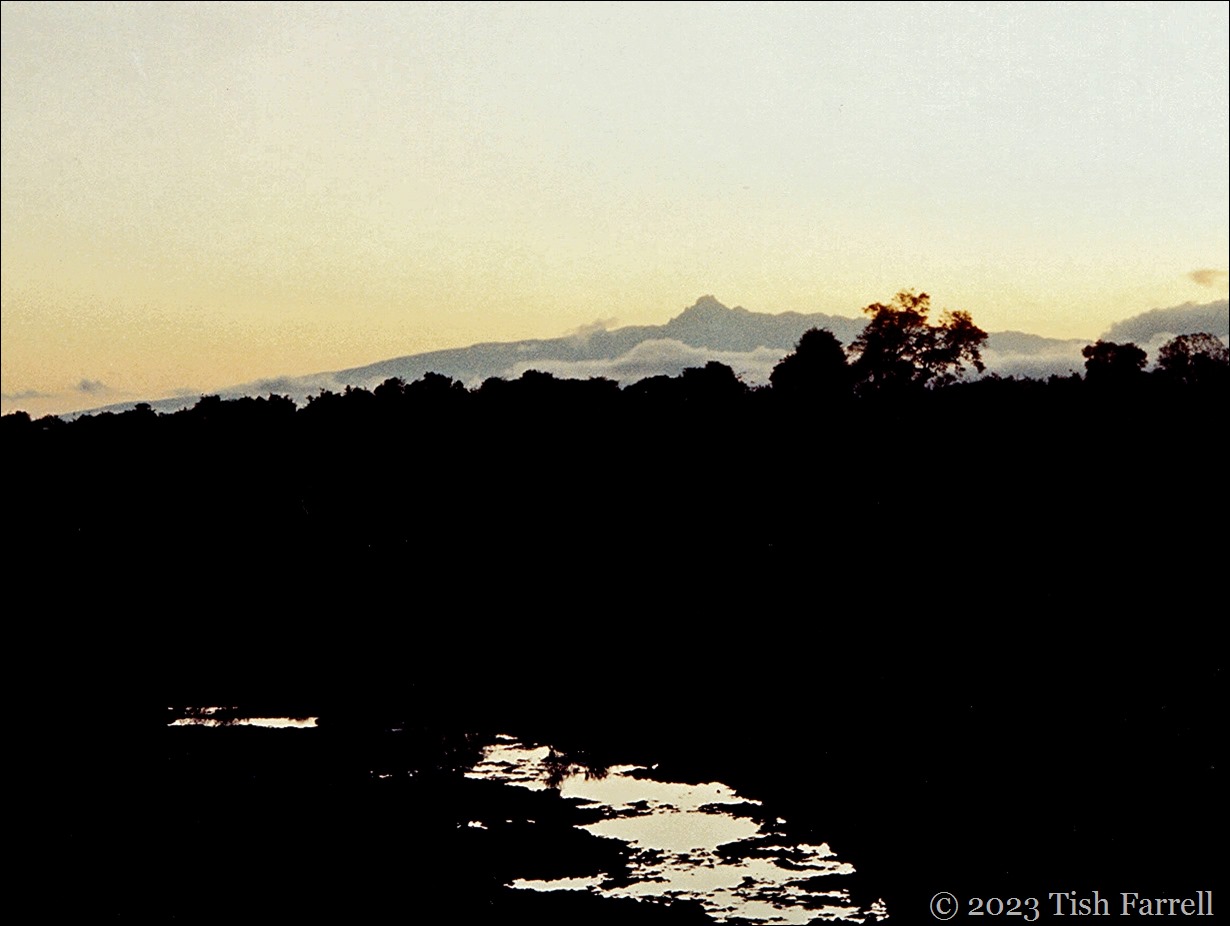
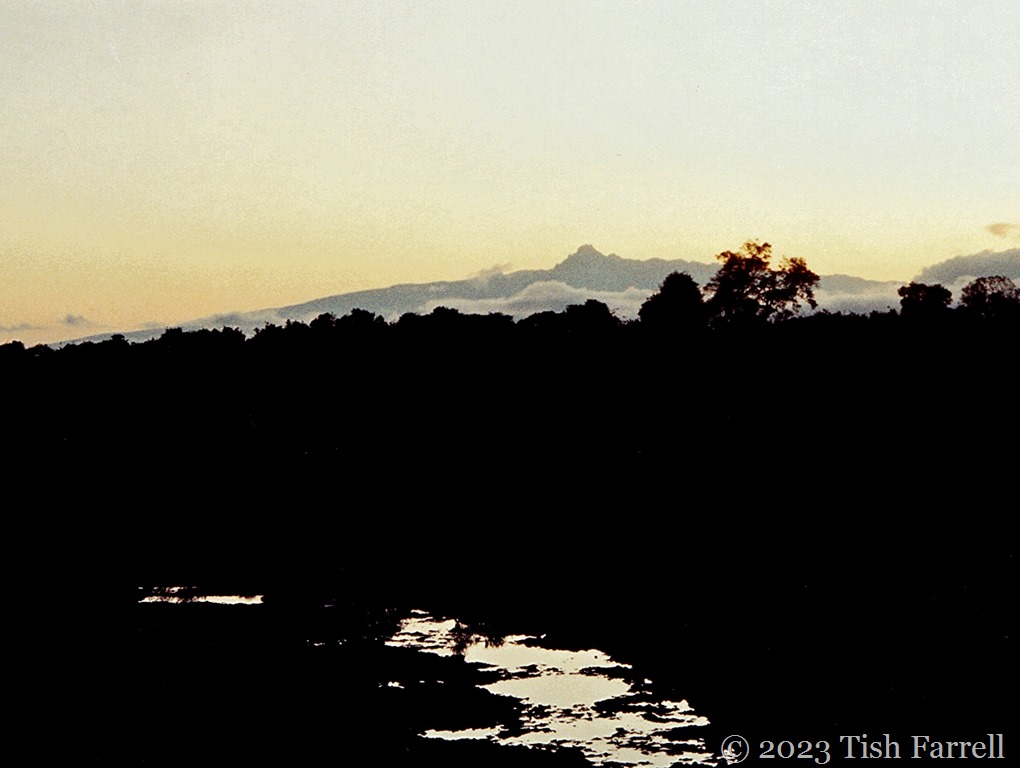
Kenya Aberdares

And finally a sunset view of Mount Kenya from the neighbouring Aberdares National Park. The Aberdare Range is also one of Creator’s dwelling places when he is checking out earthly doings. Its Kikuyu name is Nyandarua, which I believe means place of the crumpled hide – another interesting metaphor. Here’s an aerial view:

Scan-130608-0051

These vivid names for spiritual landscapes remind me that in traditional pre-literate societies, the natural world provided humans with unlimited scope for pondering, creating and observing. Its diverse parts were sources of inspiration and expression, things to think by, a resource for metaphor, analogy, riddles, song, dance and story telling as means for making sense of existence.

Particular mountains, trees, rocks, lakes, chosen as places to make sacrifices or pray to Creator, are gateways to congress with the divine, and so may be taken as sacred in the same way a church is sacred space for a Christian. More broadly, though, all land may be seen as sacred since it was made and given to humans by Creator.

And in this sense, then, there is no divide between spiritual and physical; all states exist in the same plane, which is interesting, if somewhat difficult for some of us to think about. We might call it respect. We might even call it love.

*

Lens-Artists: Spiritual Sites   Tina sets this week’s fascinating theme. Please take a look at her inspriting post.

Lens-Artists: What’s Bugging You?

IMG_9780cr

I don’t need to be asked twice to reprise photos from my bugs and butterflies archive. And this week at Lens-Artists, Donna is doing the asking.

IMG_2780cr

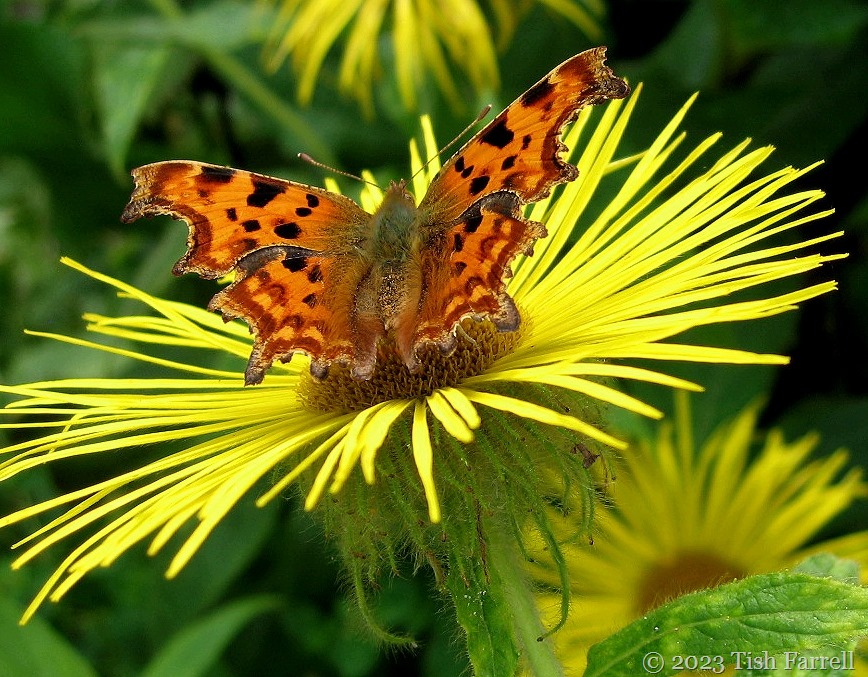
Comma butterfly on Doronicum ‘Little Leo’ aka Leopard’s Bane.

*

IMG_9331

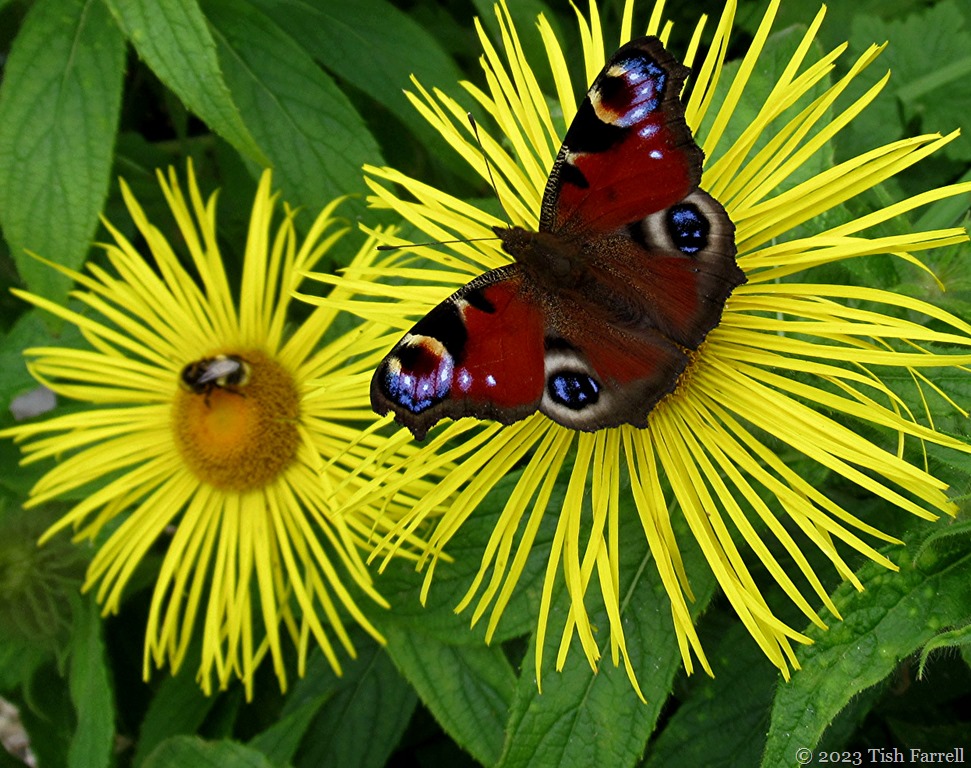
Peacock and the bee.

*

100_6631cr

Marmalade hoverfly visiting the crocosmia, a variety which I’m pretty sure also had marmalade in its name.

*

IMG_1485

And another kind of hoverfly on a lace flower.

*

IMG_3103

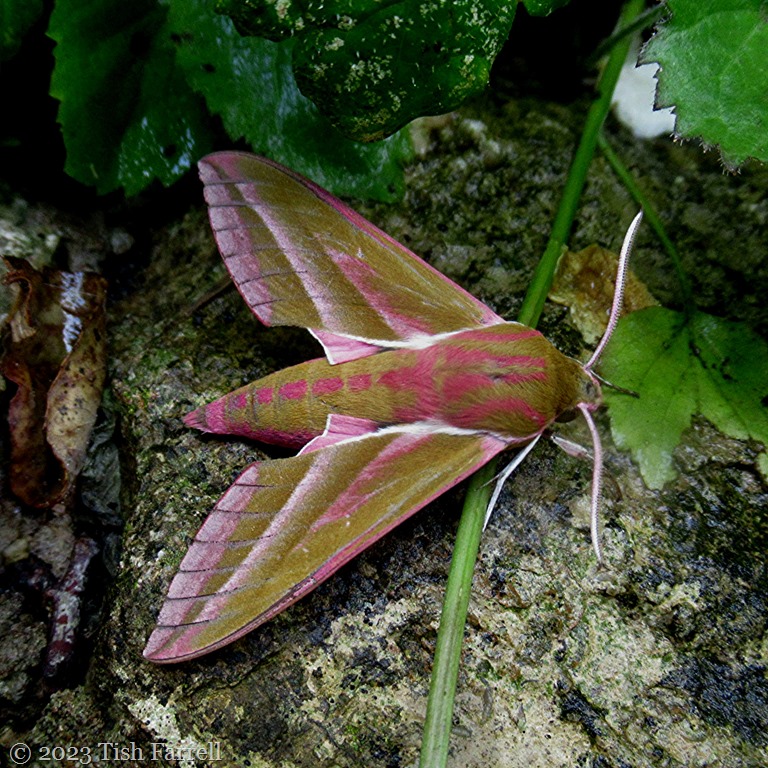
Elephant hawk-moth found one day on the garden wall.

*

IMG_8834cr

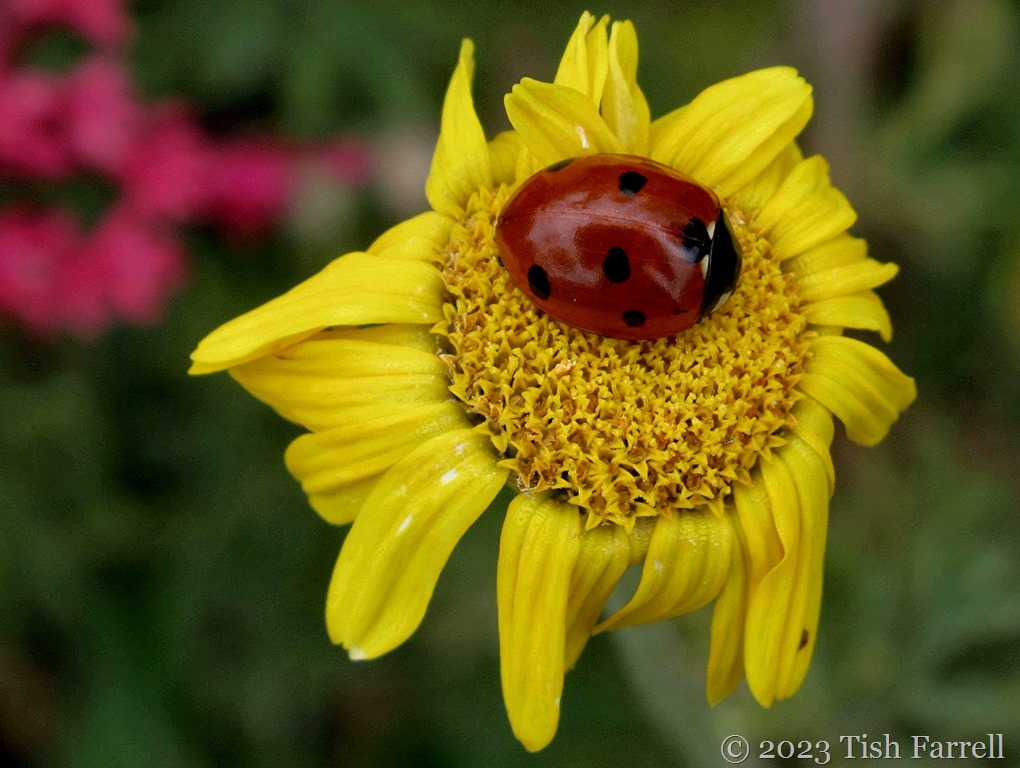
This ladybird has found the perfect ‘platform’ on a Dyer’s chamomile daisy.

*

IMG_0670

IMG_1263

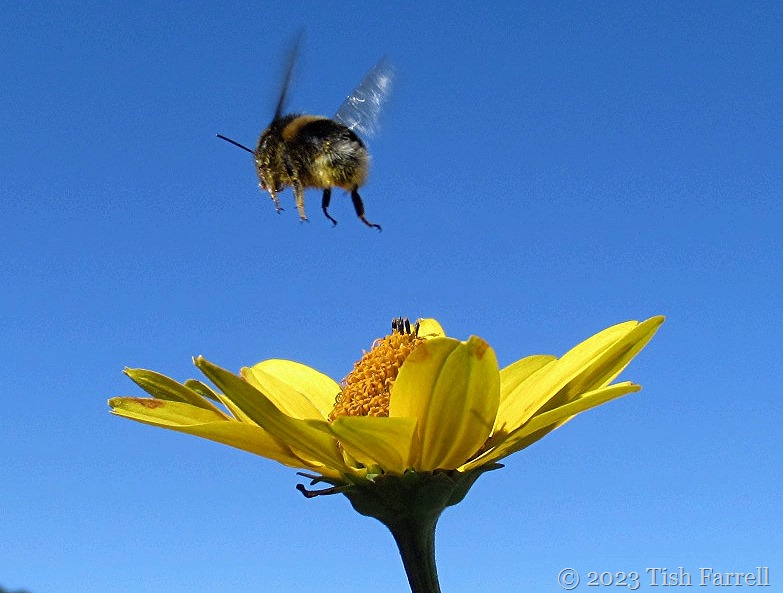
White-tailed bumble bee ‘bathing’ in Hollyhock pollen.

*

100_3915

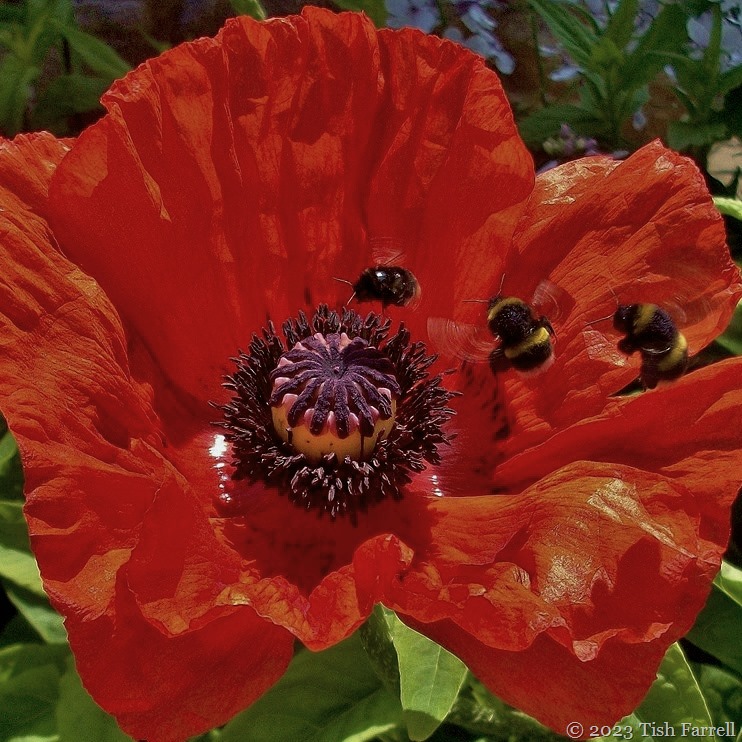
We could call this a bee line: oriental poppy here we come. BZzzzzz!

*

Lens-Artists: What’s bugging you? That’s this week’s question from Donna at Wind Kisses. Go see her fine gallery of close-up bugs, bees and butterflies.

Sky Views Over Townsend Meadow

lens P1050990

I do miss the ever changing sky-show over the field behind our Wenlock cottage, the weather and cloud effects heightened by a false horizon created by the crest of Wenlock Edge and the way the ground there falls steeply through some thousand feet of hanging woods to farmland and the North Shropshire plain.

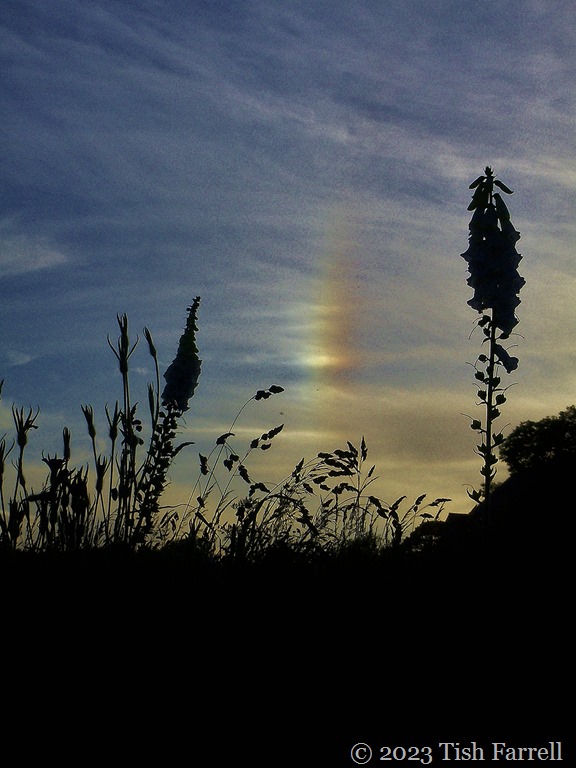
I think our elevated viewpoint of the lowland’s rising clouds might explain an unusual ‘rainbow’ phenomenon witnessed one fine, dry June evening after the sun had dropped behind the Edge. Here it is (it was rather more vivid in real life)…

lens100_5851

At the time I thought it was a fire rainbow, but I’m not sure it was. They apparently occur in fluffy cirrus clouds at around 20,000 feet when the sun shines at a particular angle through ice crystals. Anyway, I’m assuming the reason for the effect seen in the photo is something similar – to do with rising cold air above Wenlock Edge, some icy vapour caught by the sun shining up from below. Further info welcome from any atmospheric scientists out there.

*

lens 1

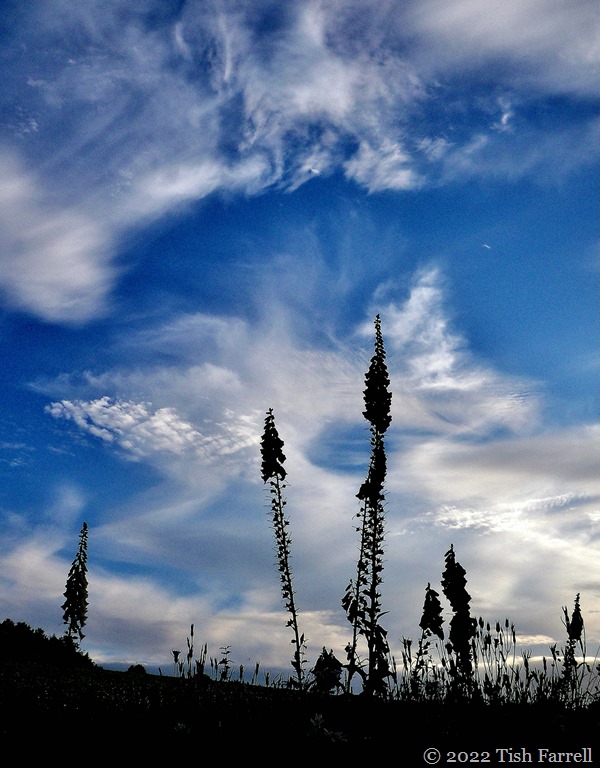
Another early evening sky in June

*

lens P1040221

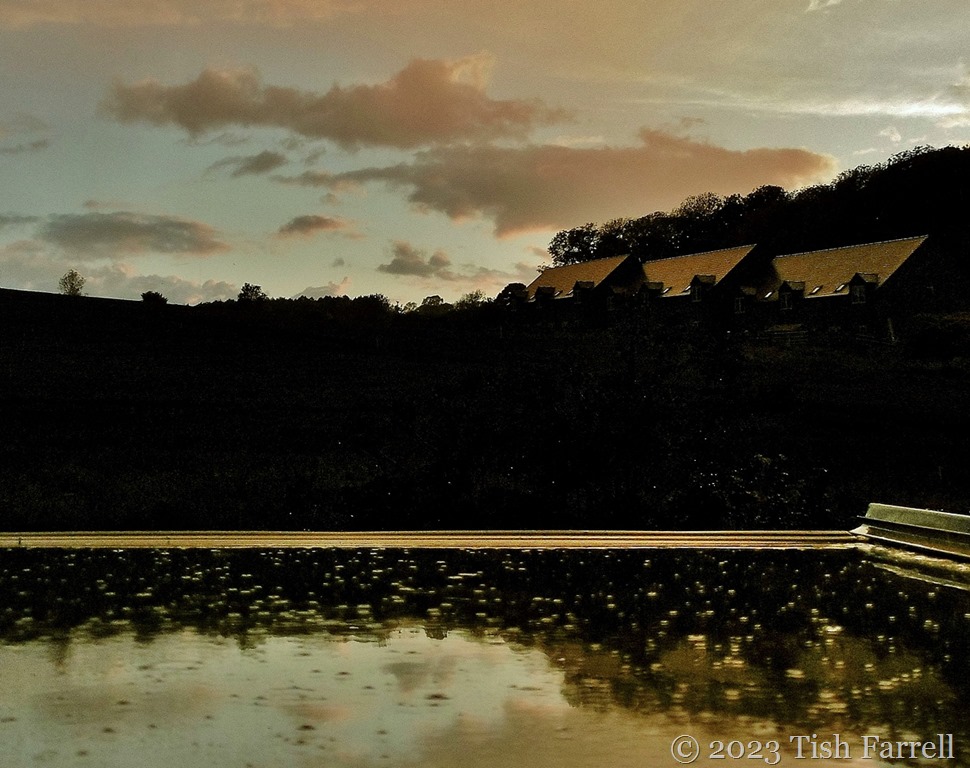
February sunset and shower from the office window

*

IMG_0658ed

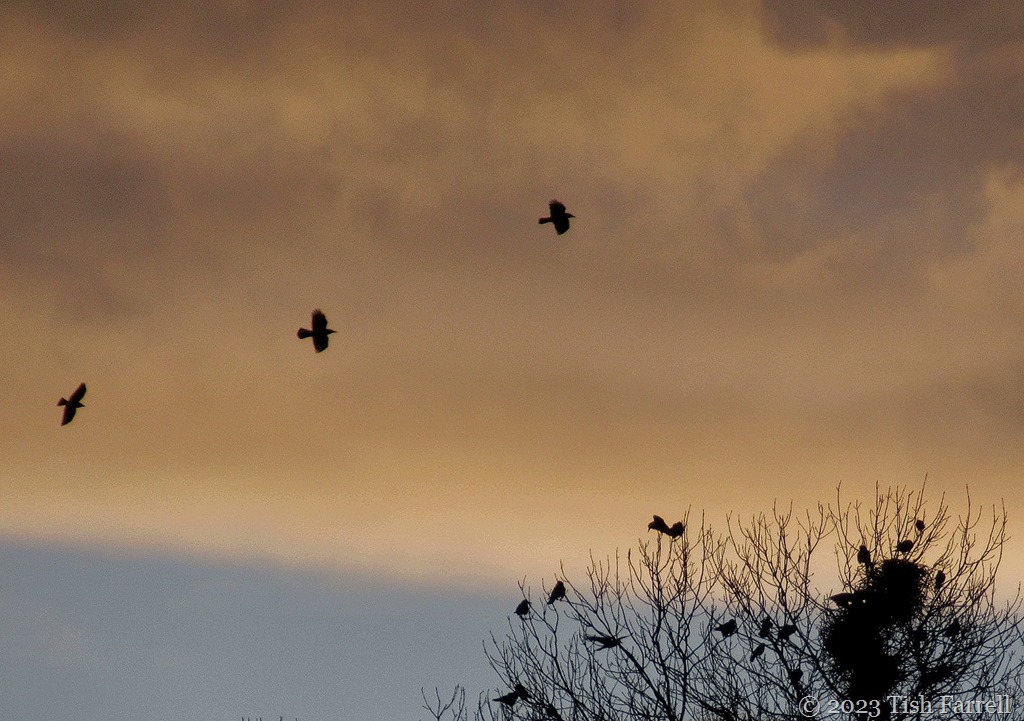
Winter at the Sytche Lane rookery

*

100_6323ed

Late summer storm brewing

*

lens 2

A rare dawn shot

*

lens ed

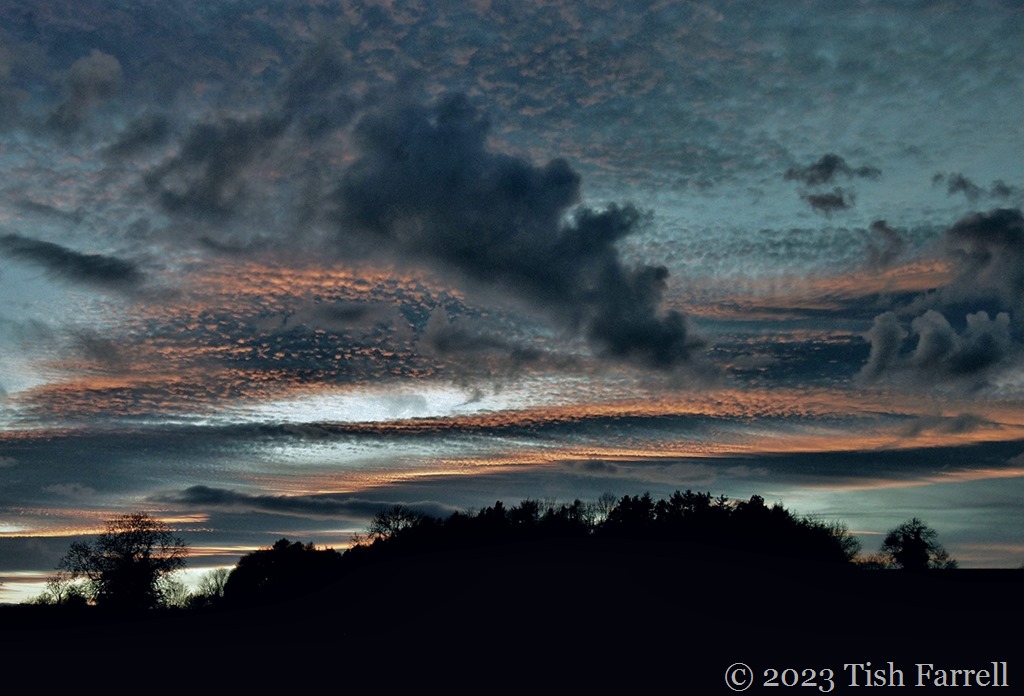
And a soothing cloud view to finish – because it’s definitely good for our well-being to gaze at clouds. It helps to broaden our visual and mental perspective. I learned this last week while listening to an interview about mindfulness and anxiety with Harvard Medical School professor and psychotherapist, Dr. Ron Siegel. He has some recorded guided meditations HERE for anyone who needs a bit of extra soothing.

Lens-Artists: Skyscapes or cloudscapes  This week Amy sets the theme with some stunning examples.

Backlit From The Wenlock Archive

P1050321

This week Ann-Christine at Lens-Artists wants to see our backlit subjects – always an appealing approach as far as Mrs. Farrell’s concerned. This year, though, the sun has been so tricksy – more going than coming – there seem to have been few chances for new naturally  backlit shots.

Which means dipping into the archive: a Much Wenlock retrospective in other words; I know some of you won’t mind revisiting Sheinton Street.

IMG_0777cr

Underneath the Horse Chestnut tree, last summer on the old railway line

*

IMG_0323re

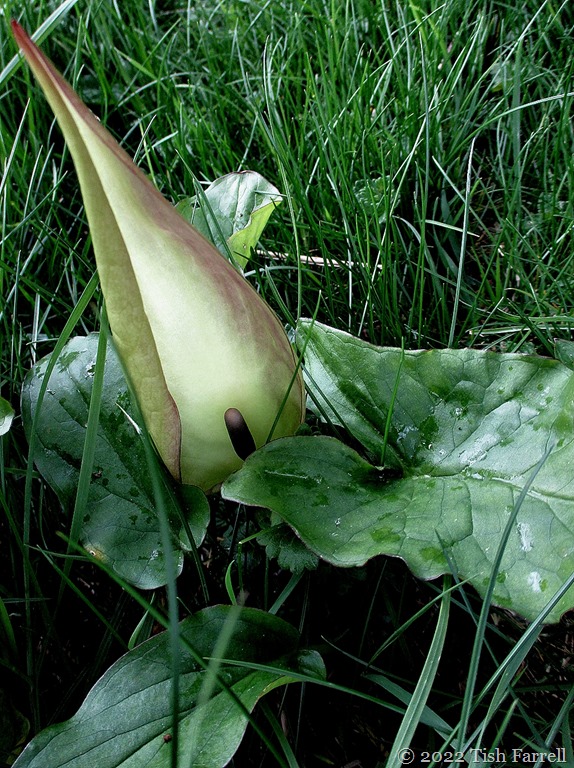
Wild Arum Lily/Cuckoo Pint/Lords and Ladies last spring on Windmill Hill

*

IMG_7453cr

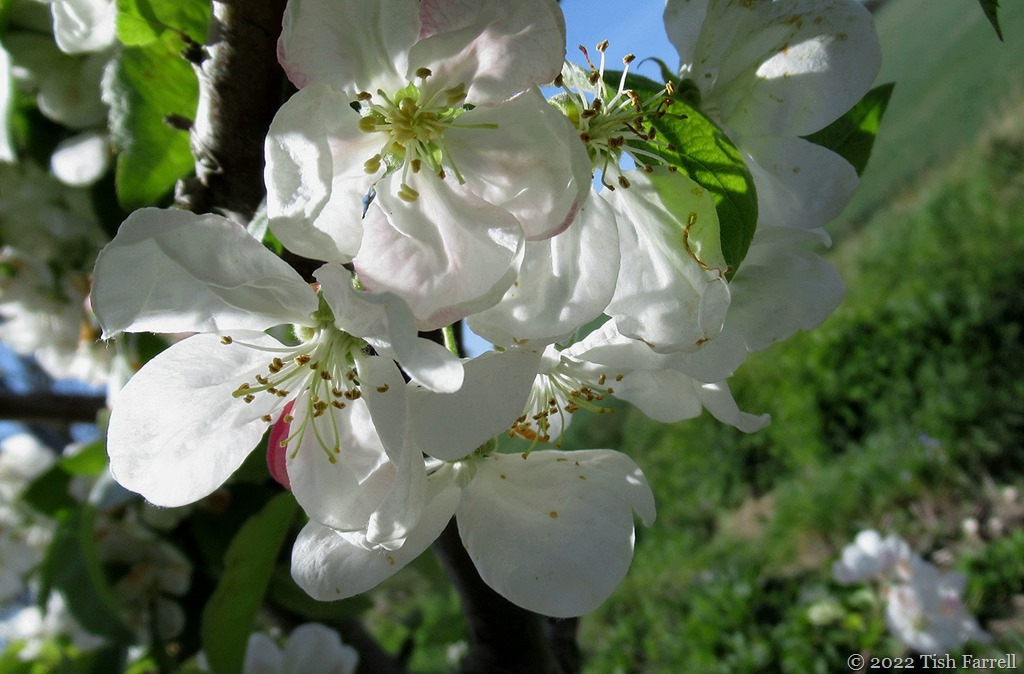
Evereste Crab Apple blossom over the garden fence

*

IMG_7572

On the kitchen table: lilac and hawthorn blossom

*

IMG_8160

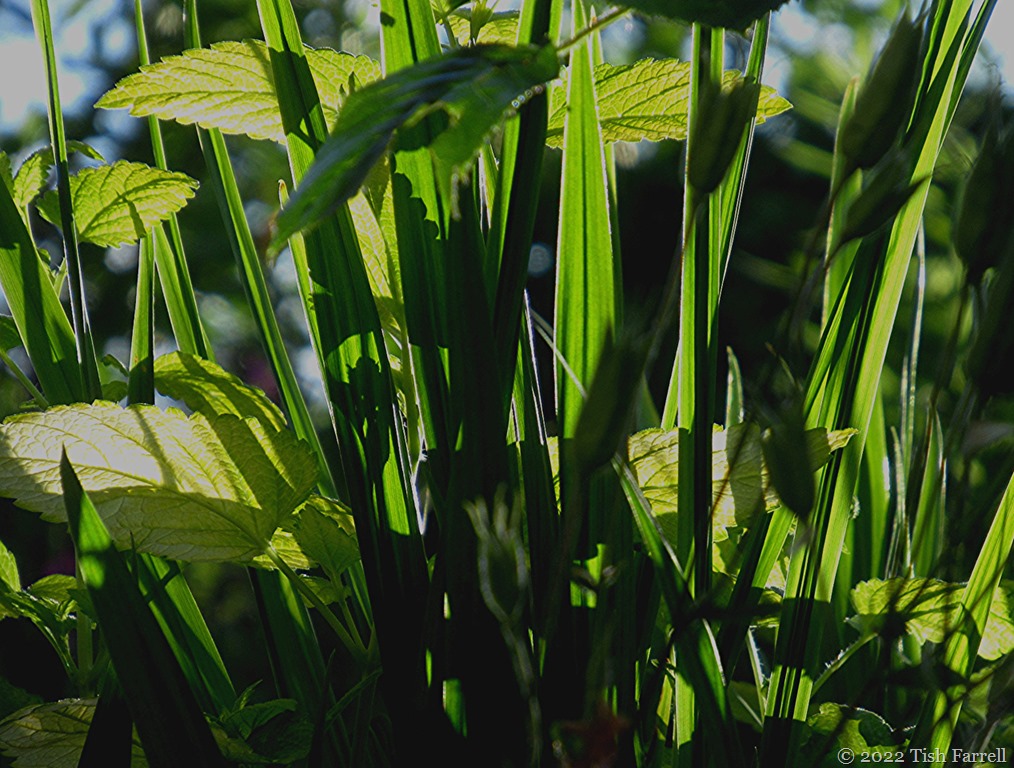
Looking up into the ‘upstairs’ garden: lemon balm and montbretia leaves

*

sqIMG_0652

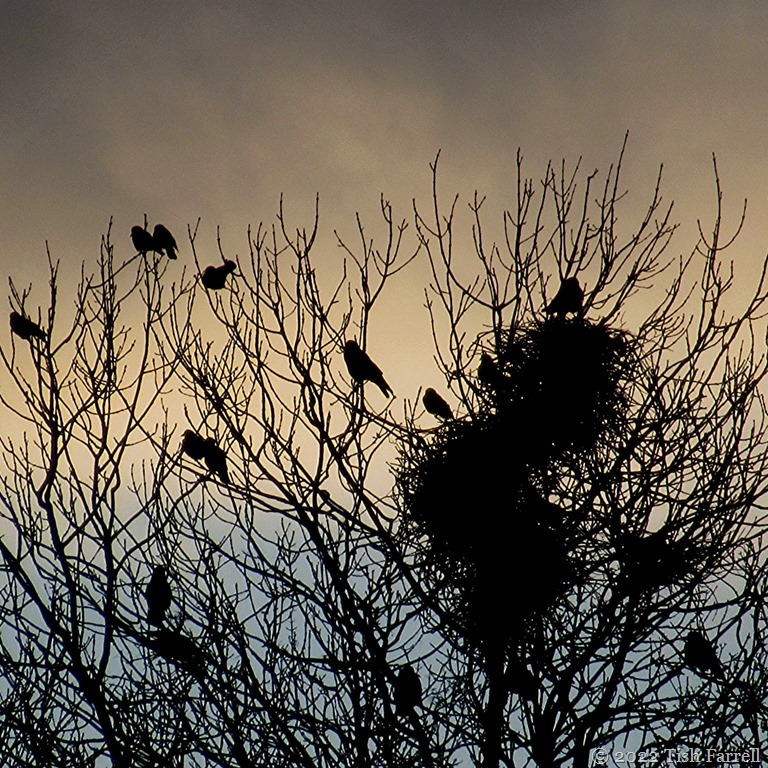
Winter sunset in the Sytche Lane rookery

*

IMG_8700

Late summer sunset on Townsend Meadow with nettles

Lens-Artists: Backlit

Broseley: A Town Of Many Views

IMG_2716ed

Well they say that moving house is one of the most stressful things you can do ~ and it was, and for more than a year, but here we are in a new small town, scarcely a crow’s flight from our old home in Much Wenlock.
Broseley as a town isn’t as ancient as Much Wenlock. There were only 9 residents recorded in 1086. Much Wenlock, by contrast, had its Priory which saw much growth from the Norman period onwards, the new cult of St. Milburga (who was abbess of the first religious house there in the 7th century) attracting pilgrims, and thus spurring demand for local trades and services throughout the Middle Ages.

Broseley, with its once well wooded and agricultural lands, was part of Wenlock Priory’s domain, providing prime territory for deer-hunting monks. The Priory also exacted various rents from Broseley manor tenants, including the lord  himself, who held his land according particular obligations to the Prior.

In the 1200s the Lord of Broseley kept his possessions on the basis that on St. Milburga’s day he was to dine at the Priory and carve the principal dish. His immediate neighbour, the Lord of Willey was  obliged to bear the Prior’s robes to Parliament. Rents were charged for pannage (grazing of pigs in the woods) and also for operating coal pits in the area.

In 1570 Broseley was a small (mostly) agricultural village of around 125 individuals. But this changed when the lord of the manor, James Clifford encouraged the immigration of miners to work the local coal deposits. He let the newcomers build cottages on irregular plots of the uninclosed commons and wastes to the north of the village above the River Severn, a part of the town now known as Broseley Wood.

IMG_2719

Soon the mining households outnumbered the locals’ homes more than 2:1, their presence leading to riots during the early 1600s, as Broseley villagers grew increasingly angry over their loss of common rights. Nonetheless, the hugger-mugger building of cottages in Broseley Wood continued as the mining enterprises(ironstone and clay as well as coal) thrived. As might be imagined, there was a proliferation of taverns to serve the workforce, and by 1690 Broseley Wood apparently had the looks of ‘a country town’. Miners were the main inhabitants, but there were also watermen (handling the export of coal down the River Severn), potters (making tavern mugs) and clay-pipe makers. Interestingly too, the hillsides down to the River Severn wharves were, from 1605, laid with a network of railways, the earliest ones made of wood, the haulage of trucks provided by humankind, often children.

IMG_2662

IMG_2686

New builds in the town emulate traditional local idioms and continue the habit of filling every available space, no matter how awkward to reach.

*

IMG_2704

The cottages cling to the sides of precipitous ridges, access only by winding narrow lanes and cross-paths known as jitties.

IMG_2691

IMG_2703

I still have much to discover about the jitties, but on my short walk from the house yesterday, I revisited Maypole Jitty. It hives off Woodlands Green where the new maypole stands (reinstated in 1985), also the locale of the 1600s riots between villagers and miners.

Standing here, you can just see the top of the Severn Gorge above Ironbridge.

IMG_2693

And here’s the maypole:

IMG_2696

A nearby information board tells me that maypole dancing was part of an age-old fertility rite:

IMG_2699

*

And now in case you’re wondering where the header image comes into this, well it was an unexpected discovery. After passing the maypole I found myself at the end of a cul de sac on Maypole Road where a discreet footpath sign caught my eye. It took me down a narrow bosky bridleway of celandines and wild garlic…

IMG_2711

And in no time brought me to this spot at the top of the Gorge, and thence to the wood on Ball’s Lane and the maypole.

IMG_2715

*

And so back into town:

IMG_2687

IMG_2660

With a here and there burst of spring colour if not spring warmth:

IMG_2733

More Broseley views to follow.

Lens-Artists: New experiences This week the theme is set be Anne at Slow Shutter Speed