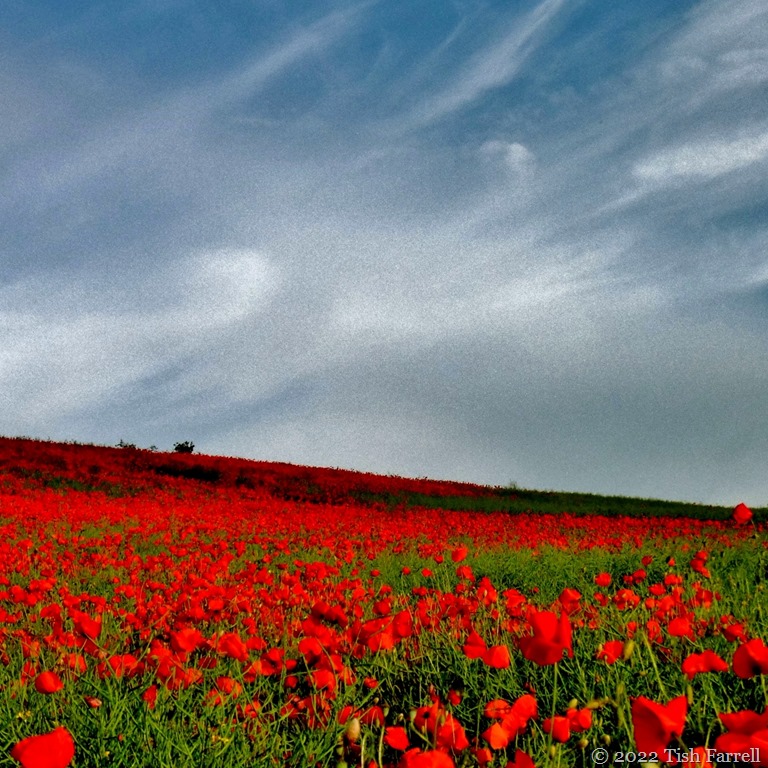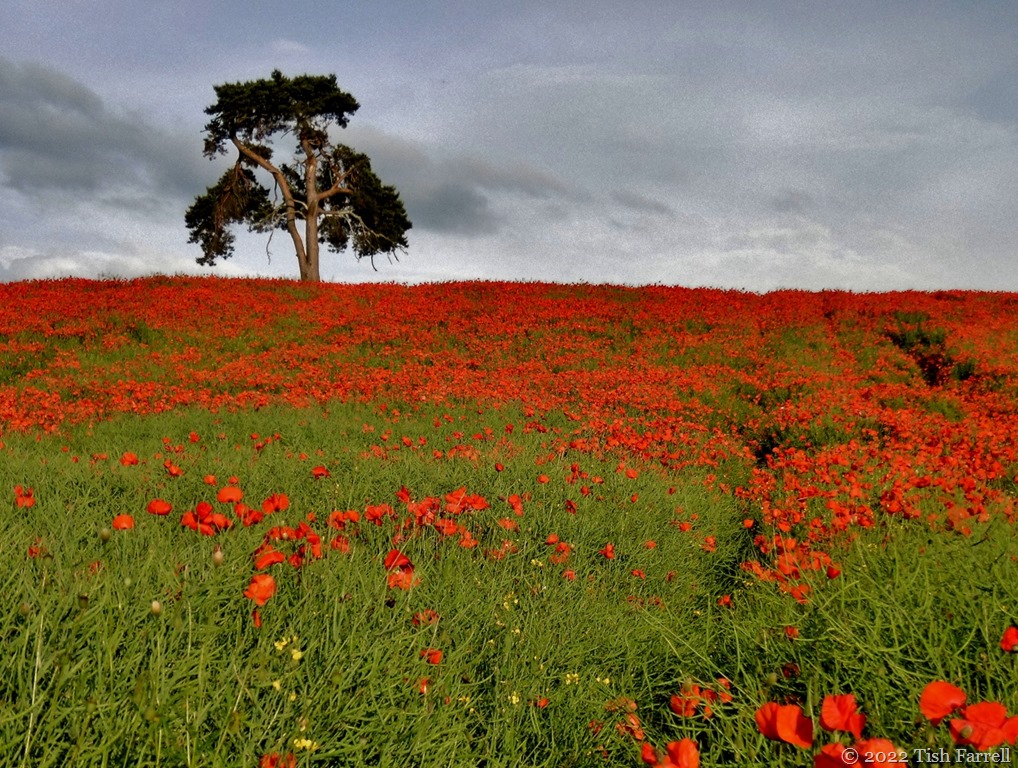
The Wenlock Poppy Bomb

P1050072cr

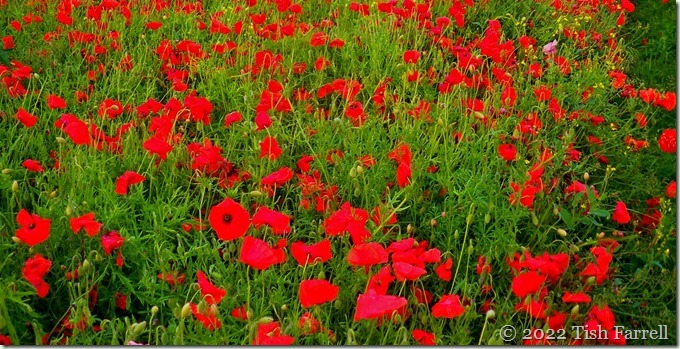
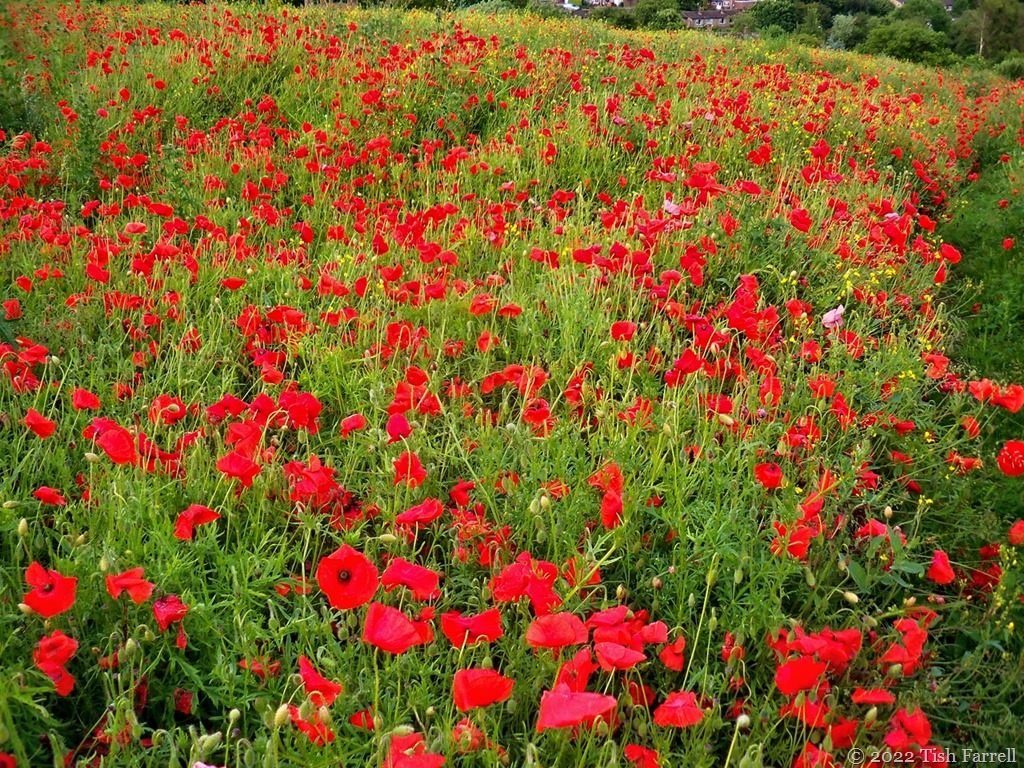
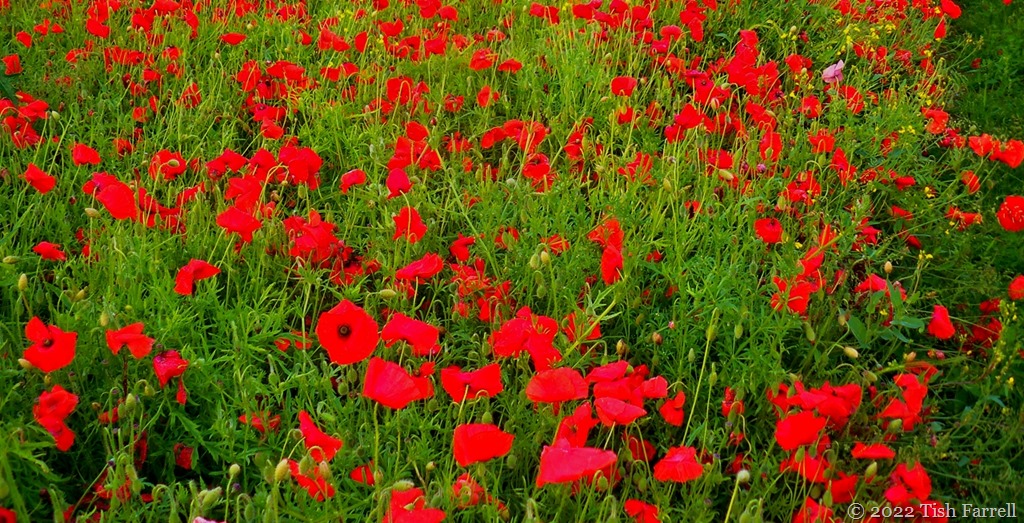
One mid-summer evening when I was leaving the allotment by the gate rather than by my usual route through the field hedge, I glimpsed, on the far edge of town, over rooftops, and between trees, an astonishing scarlet blaze where I’d never seen one before. Home was forgotten, and off I went to investigate: over the main road out of Wenlock and down a lane beside the old railway bridge, into a field with an abandoned barn by the gate, and there it was: an entire field of poppies.

They looked to have exploded from an oil seed rape crop, but it was hard to tell. Had someone sabotaged the farm seed, or did the farmer do it on purpose? Whatever the cause, it’s not happened since. But it was one of those weirdly wonderful happenings wherein it was hard not to grow very over-excited and run amok. I took lots of happy snaps, then dashed home to spread the news to he had a much smarter camera. And then we went back and repeated the excitement, all fuses fired by poppy power.

P1050070cr

101_0340cr

101_0335cr

101_0335header

The Square Odds #14

And Another Shropshire Ghost

100_7053cr

In an earlier post this week I mentioned Wild Edric our heroic Saxon warlord who challenged the Norman interlopers and ended up as a ghost haunting the Stiperstones. Now shunt forward a few hundred years to the 1640s, a time when England was locked in civil war: Roundhead Parliamentarians versus Charles 1 and the Royalist army. The Parliamentarians were intent on curbing the king’s proclivities to do as he liked at the nation’s expense; the Royalists were set on protecting the monarch’s prerogative.

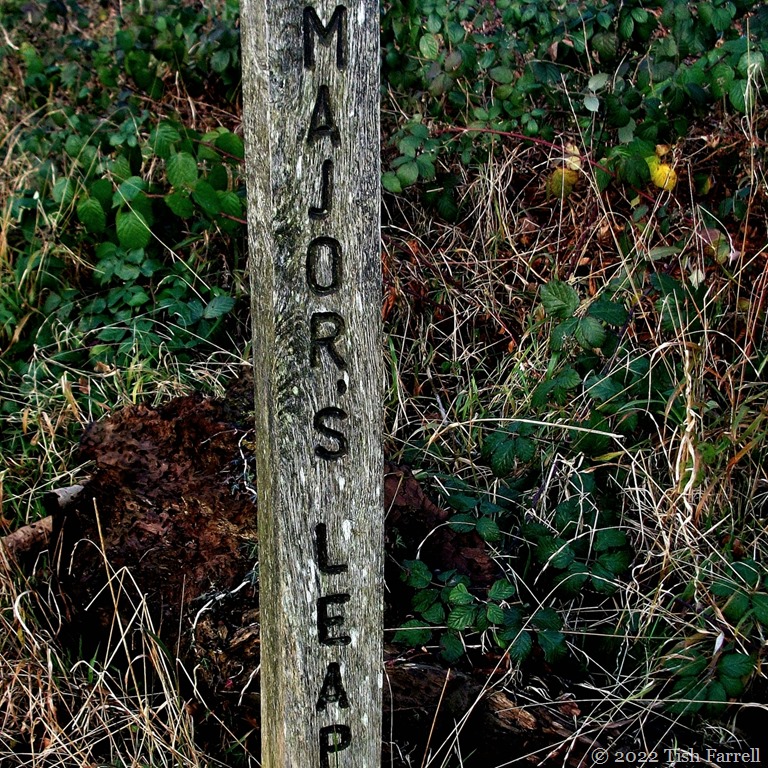
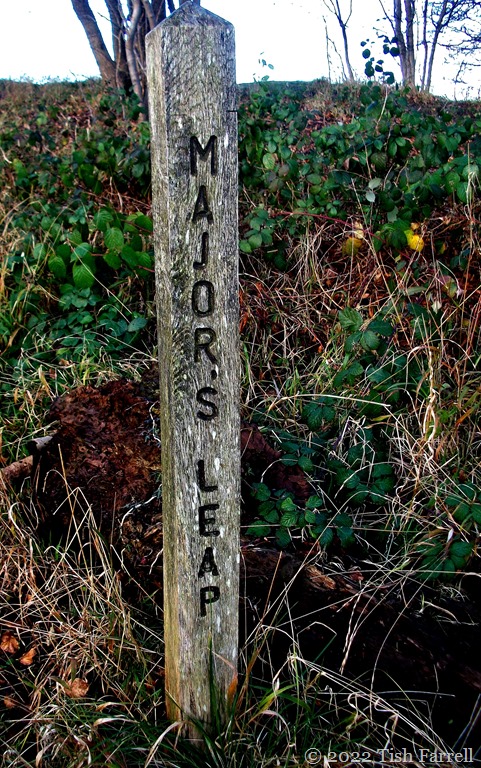
We’ve shifted from the South Shropshire hills to Wenlock Edge, a wooded limestone escarpment that rears up above the county’s farming lowland for nearly 20 miles. Enter one Major Thomas Smallman, fleeing on horseback from his home in nearby Wilderhope Manor. He is a King’s man, carrying despatches for the Royalist headquarters in the county town of Shrewsbury, some dozen miles away. On his heels are Cromwell’s troops. Trying to evade them, the major veers off along the Edge. But there’s no escape. He and horse leap over the precipice. It is a two hundred foot drop. The major was caught up in a crab apple tree, and so survived to deliver his despatches to Shrewsbury, but his valiant horse was lost. Perhaps that’s why a ghostly major on horseback may sometimes be glimpsed near this signpost on the Edge footpath.

100_7053

*

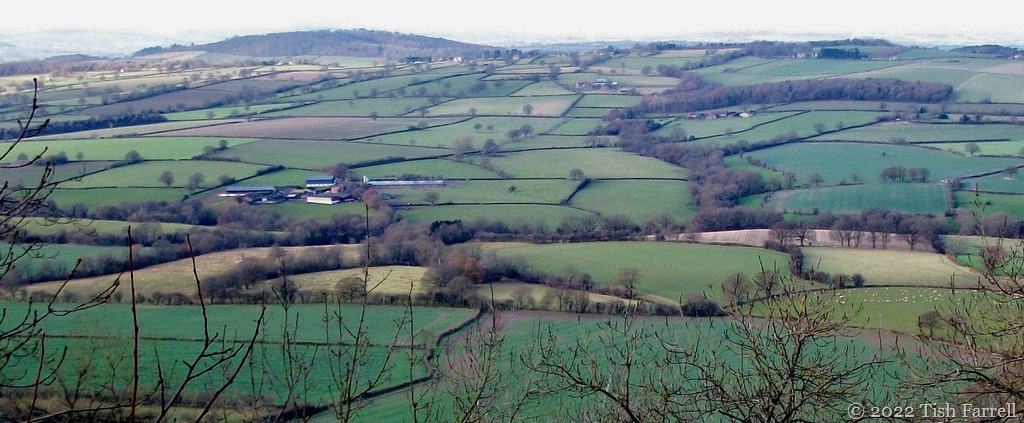
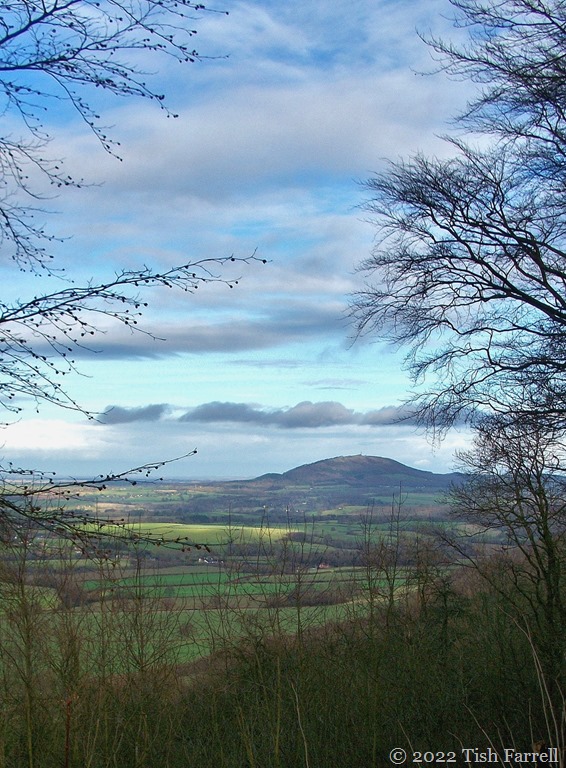
And to give you a notion of what lay before the major when his horse took off:

100_7057res

The Square Odds #10

A Fine Herring-Flying Kind Of A day?

IMG_3877

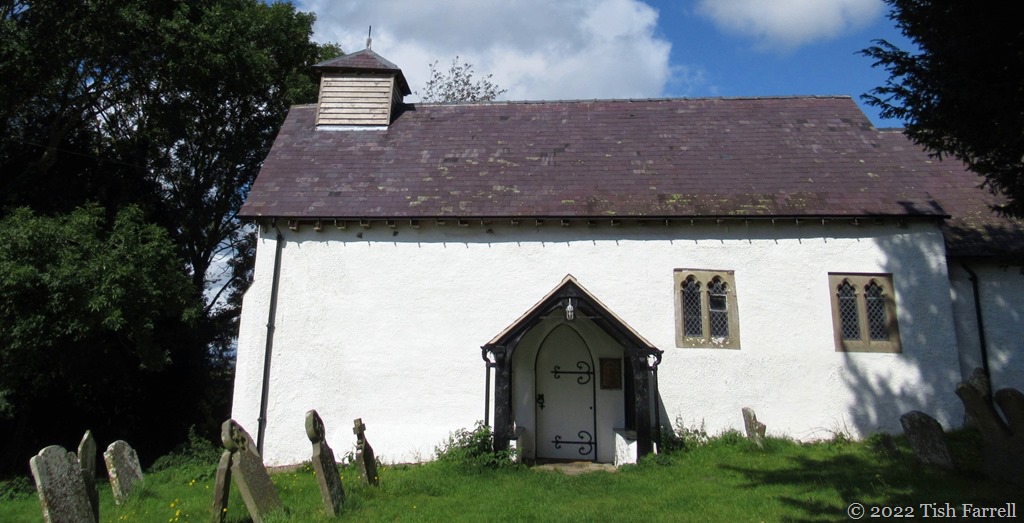
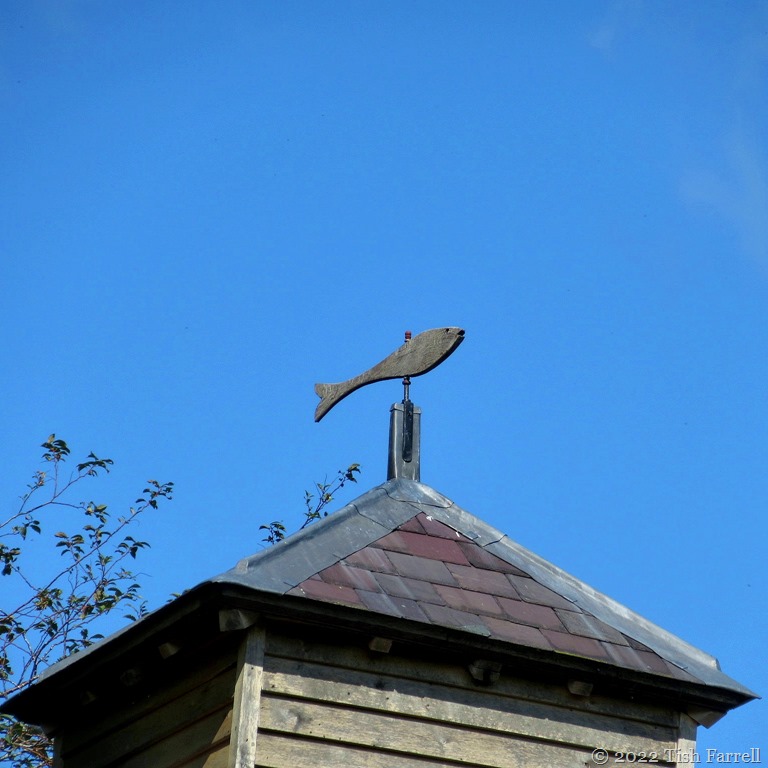
I don’t know about you, but I had never encountered a weather fish before. This one is atop the tiny ancient church of a very tiny farming settlement below Shropshire’s Long Mynd. The church is 12th century and you can find out more about it and its location in an earlier post: On the way to Myndtown to see which way the fish blow

For now, just a smidgeon of history.

As you will see, the word ‘town’ in Myndtown is misleading. It should be understood in the old Saxon sense of ‘settlement’. In the Domesday accounts of 1085 it is described as being held by Leofric who in turn holds it from a French lordling nicknamed Picot, otherwise known as Robert de Sai (from the Orne district in France).

Leofric (a good Saxon name) is a freeman, overseeing some 240 acres (one and half hides), enough for three and half ploughs, and on which tax is due. In the settlement there are four villagers, four smallholders with two ploughs and two slaves. There is one hedged enclosure. The conqueror’s accountants state whole is worth 30 shillings, half the amount is was worth in 1066.

Historians surmise that the fall in value at this particular place and time is due to incursions by raiders from nearby Wales.

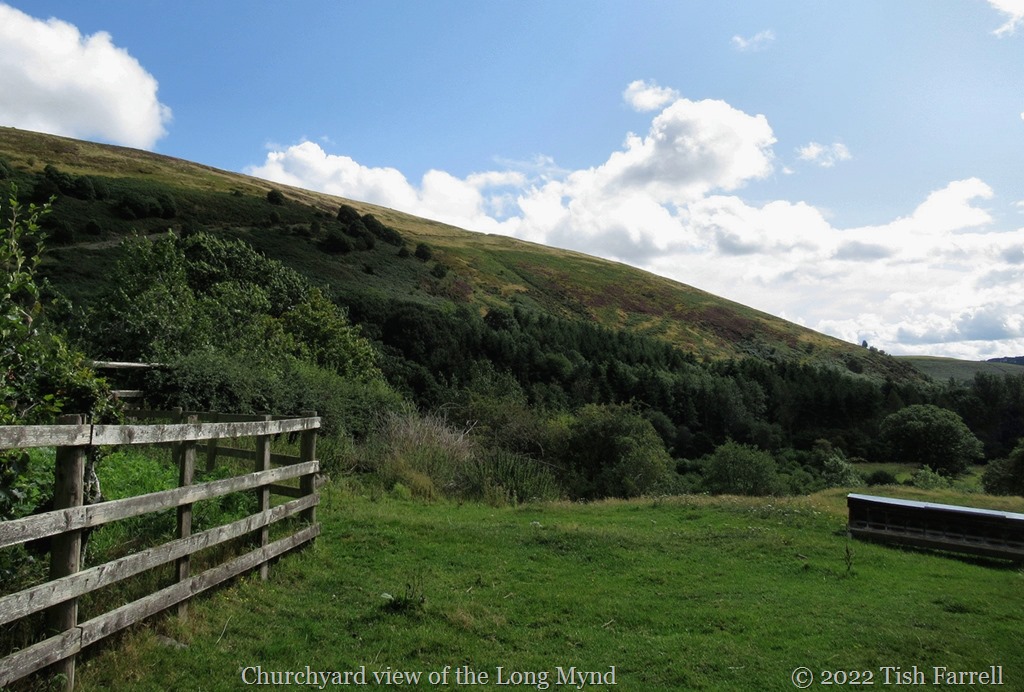
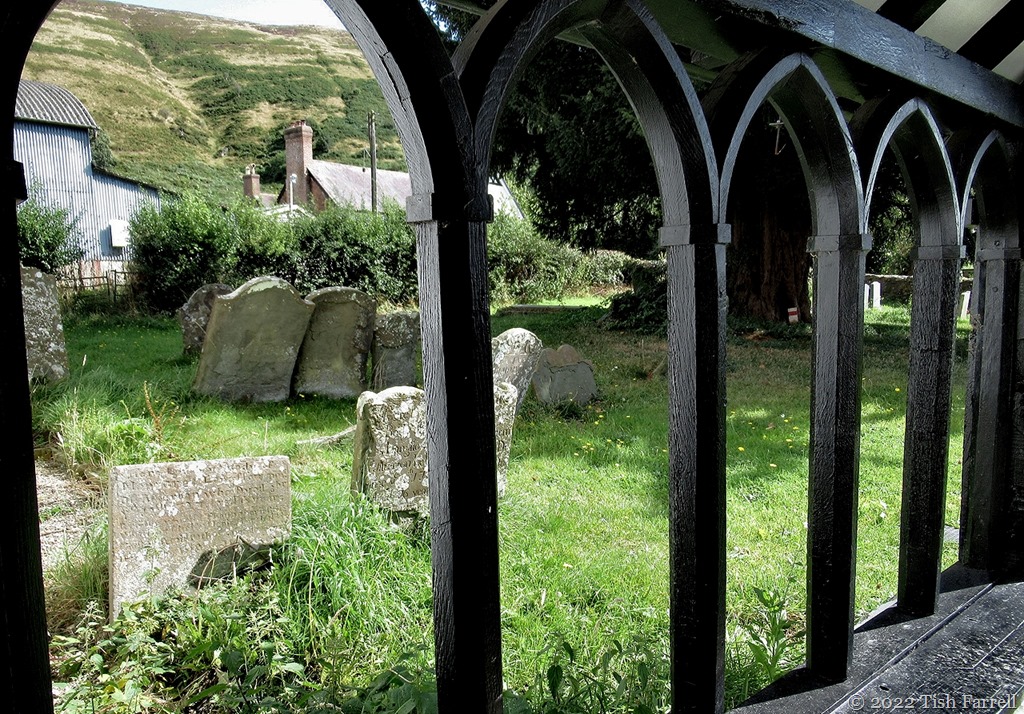
Fortunately there was no raiding going on during our Myndtown visit. The only sound was a buzzard tracking the Long Mynd foothills. You can just spot it in the next photo (above the porch roof).

IMG_3903cr

IMG_3901

IMG_3921

*

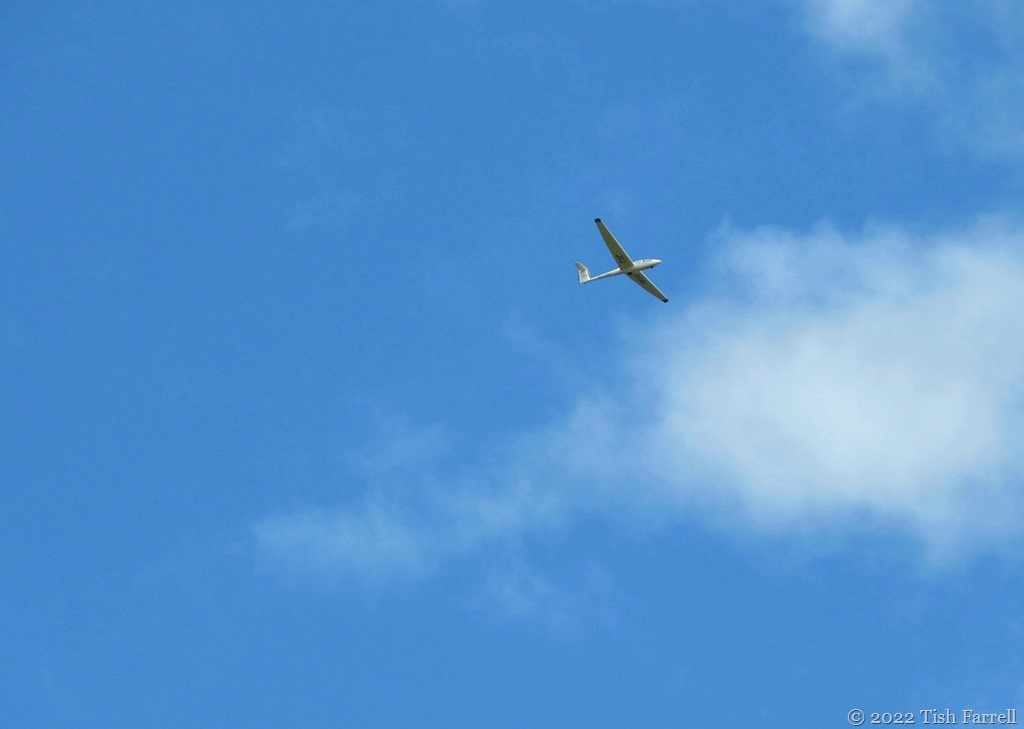
And besides the general peacefulness, there were other signs that the weather fish spoke truly: it was indeed a fine day for flying. Look up! Here comes a glider launched from the Long Mynd glider station.
IMG_3930

The Square Odds #9

Odd Rocks On The Stiperstones

P1080553cr

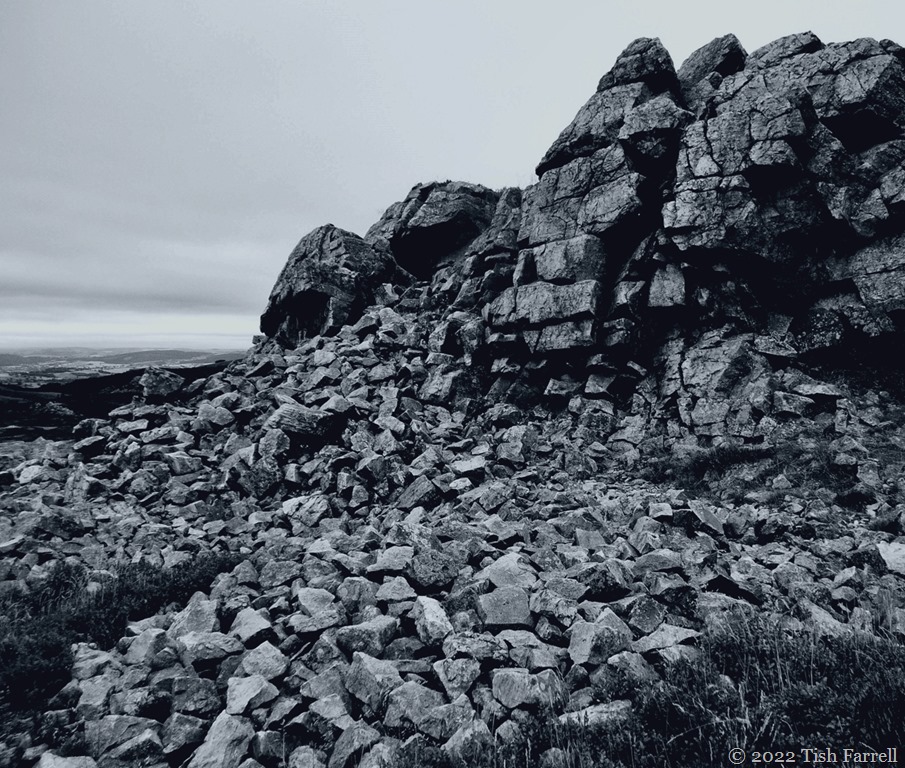
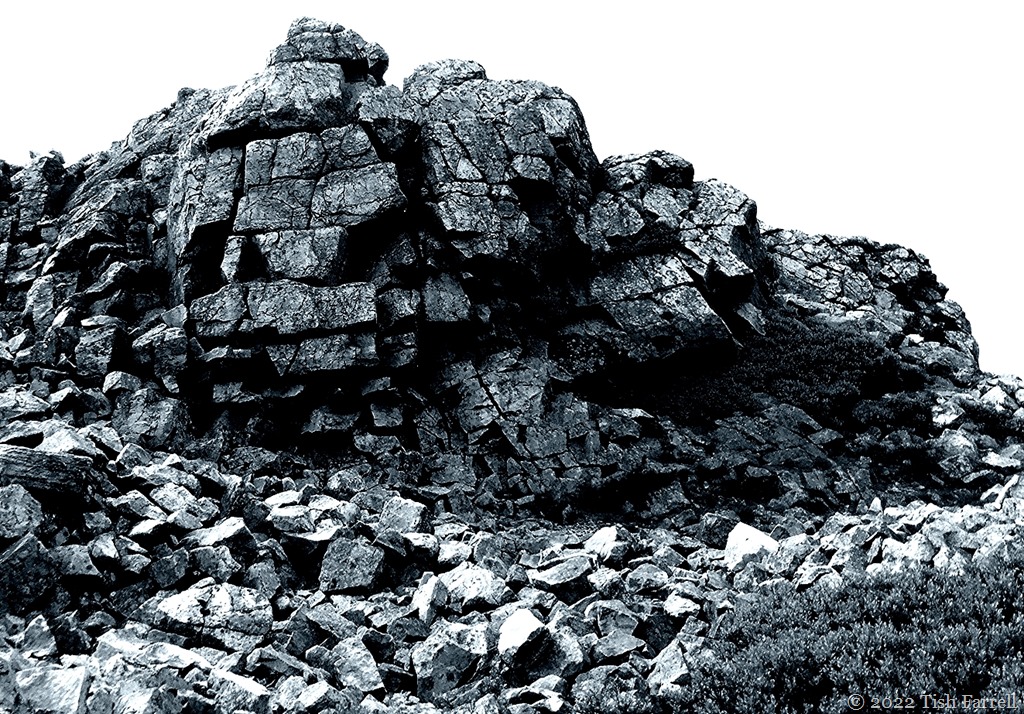
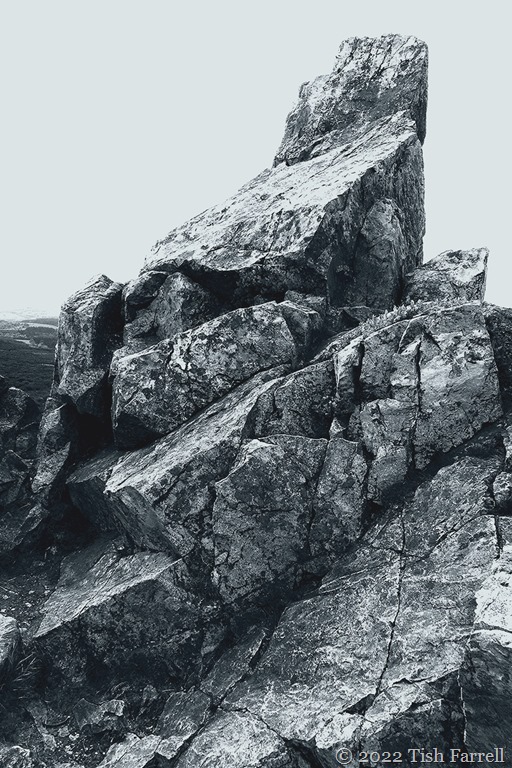
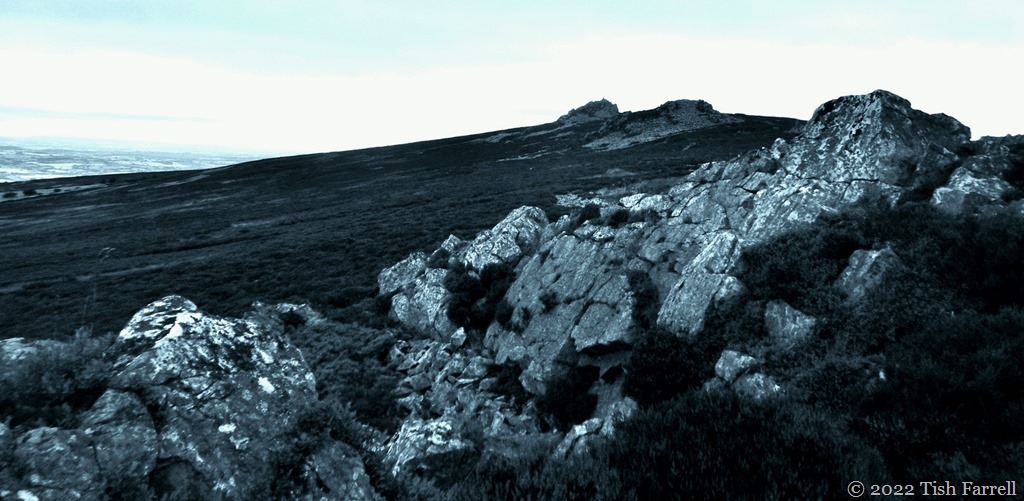
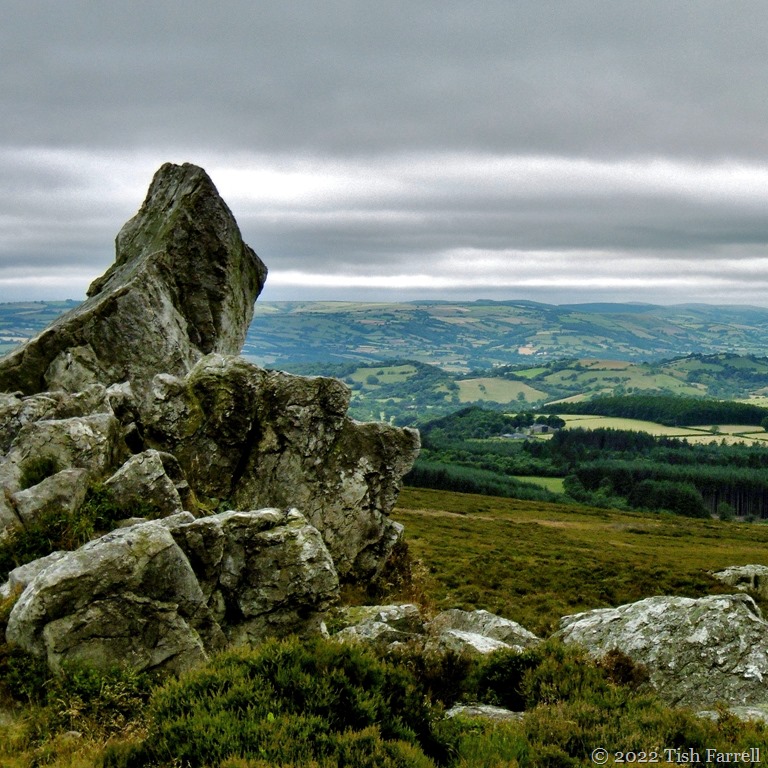
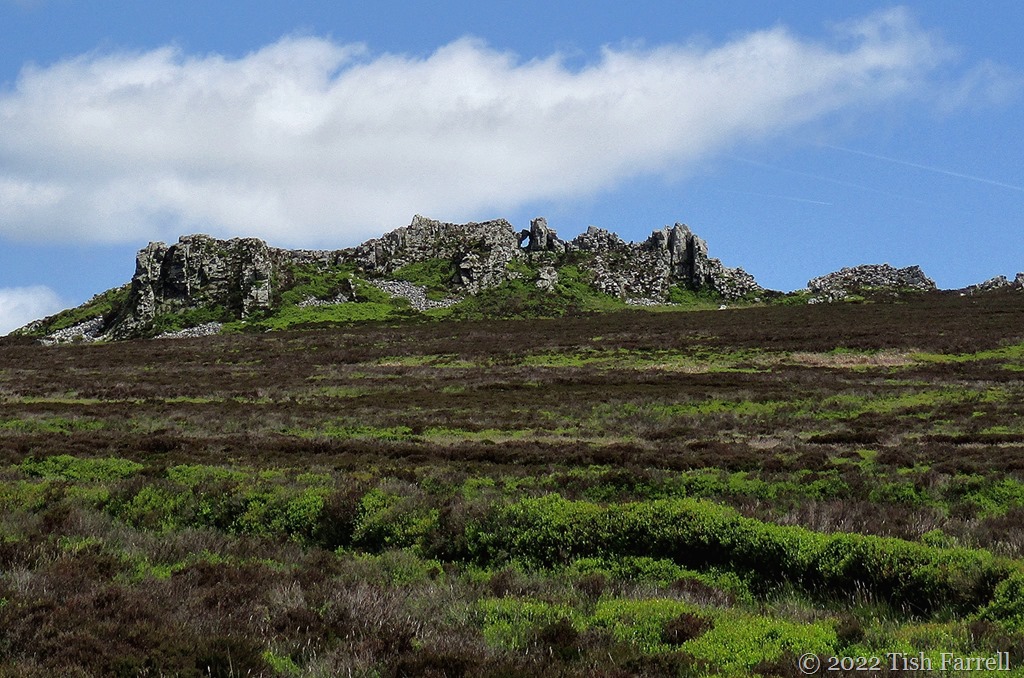
With its series of other-worldly outcrops, the Stiperstones ridge has to be one of Shropshire’s most compellingly strange landscapes. The cragginess was wrought by the scything, crushing and cracking action of ice during the last glacial period. But natural forces alone don’t explain the sense of weirdness. It is also a place of old lead mines (going back to  Roman times), and of older-still Bronze Age burial cairns.

And on the supernatural front, there are ghosts there, most notably of Saxon lord, Wild Edric, our local King Arthur, who rampaged against the Norman invaders and is said to have been imprisoned in an abandoned lead mine. When he rides again, it is said the natural good order of things will be restored to the land.

And last, but scarcely least, there are the sinister witchy happenings, especially when the mist falls and Old Nick himself is said to occupy the most mysterious of all the outcrops – otherwise known as the Devil’s Chair. (See Mary Webb’s novel Gone to Earth  whose heroine Hazel Woodus is tragically enthralled by the landscape and legends of the Stiperstones.)

P1080554cr

*

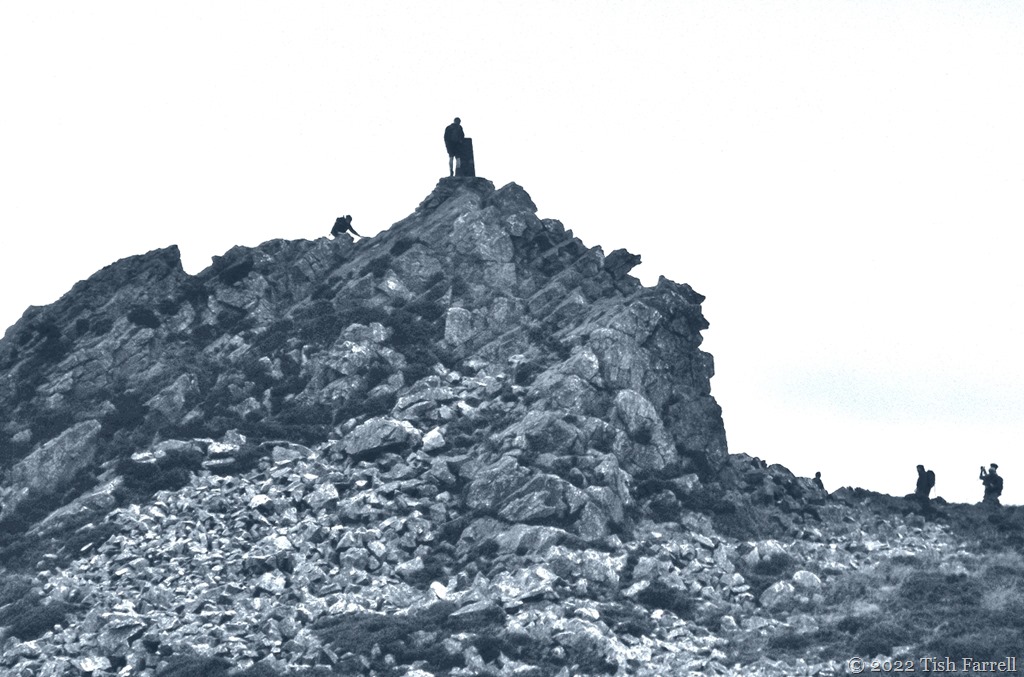
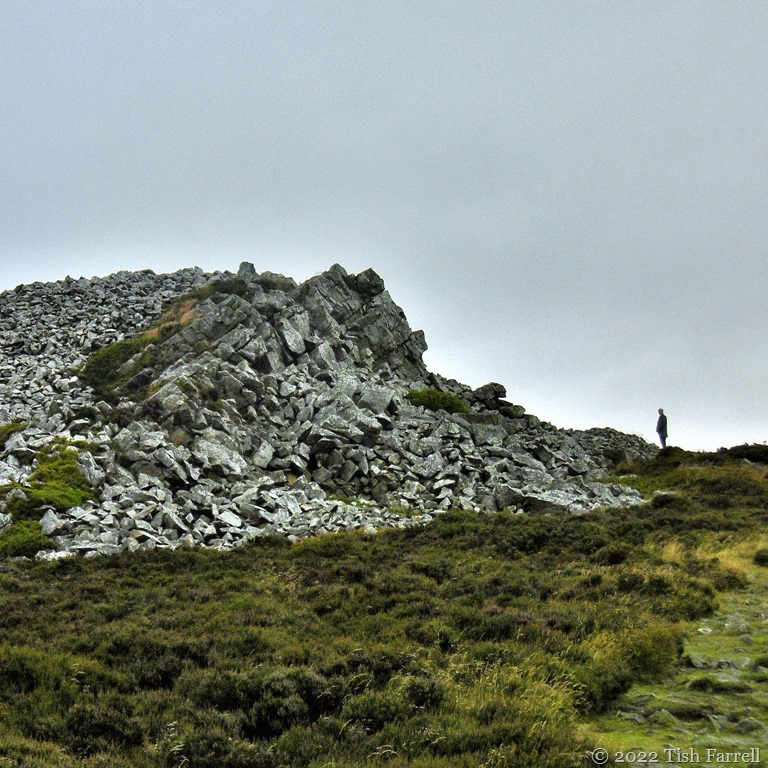
As a 6/7th Shropshire lass, I’m ashamed to say I have not yet got myself to the Devil’s Chair. On our last two expeditions we did not get further than Manstone Rock. This year’s ambition perhaps. On a mist-free day of course!

P1080556cr

P1080572header

The Square Odds #8

Remembering Shropshire’s Last Sin Eater

P1060049cr

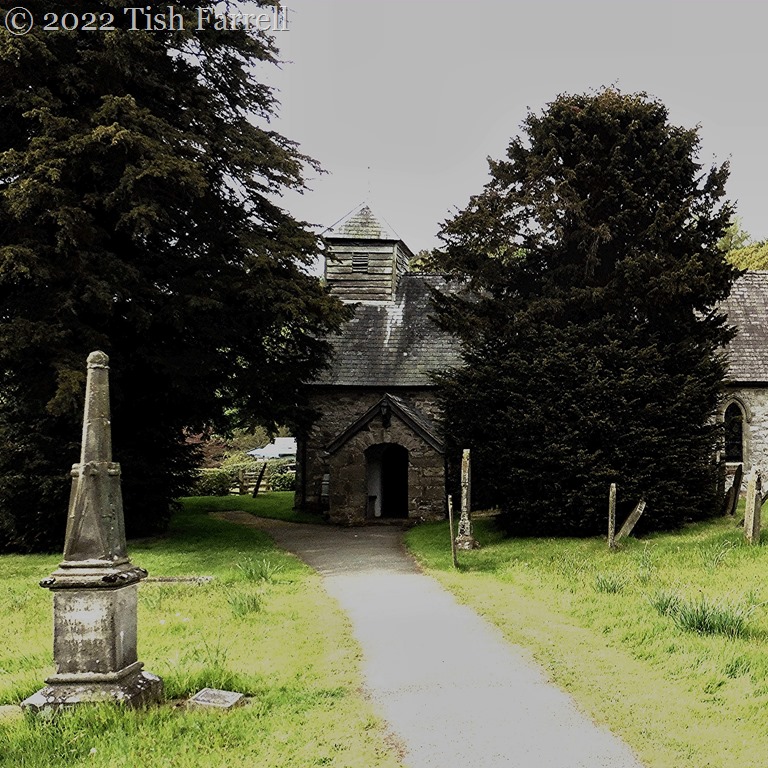
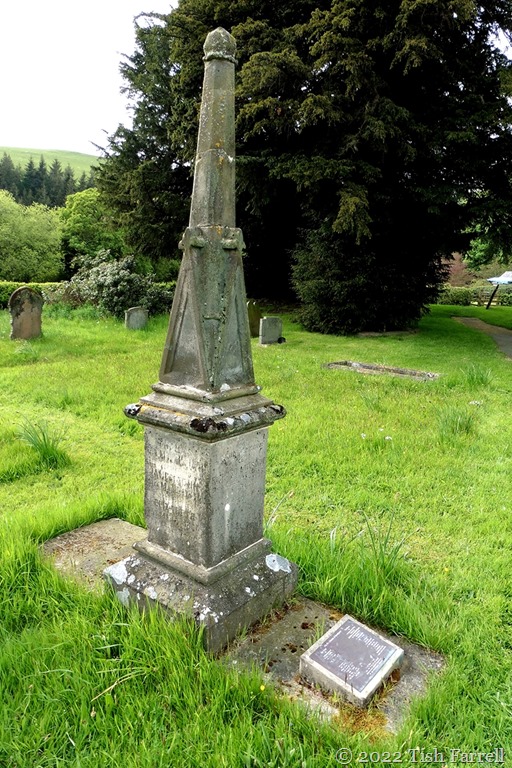
In our secular-minded times it is hard to imagine that there could even be the need for a burial ritual that involved a designated eater of sins. But it did happen, both anciently and more recently, although it is a custom mostly known of in Shropshire, Hereford and the Welsh Marches. Shropshire writer Mary Webb (1881-1927) whose novels are set in the rural lead-mining communities around the Long Mynd and Stiperstones, gave an account of it in Precious Bane. You’ll find the extract at the end of my earlier post In which the Farrells go to Ratlinghope to visit Shropshire’s last sin eater

But to give you the gist, the sin eater played a crucial part in the burial service. A ritual meal – usually bread and ale – was passed over the coffin of the deceased for the sin eater to eat. In this way, the dead person’s spirit was absolved of all wrong-doing and could depart in peace. The people prepared to take on this role might be local wise folk, exorcists, or poor people outcast from the community by some misfortune. As time went on, it was often the last-mentioned who performed the act in order to have a decent meal. A harrowing thought on many fronts.

However, the man who has the distinction of being Shropshire’s last known sin eater, was not a poor man, but a sheep farmer whose family had farmed in the vicinity of Ratlinghope for generations. He in fact chose to revive the custom, and when you read the inscriptions set around his very striking memorial in Ratlinghope churchyard, you begin to understand why. Between 1862 and 1870, Richard and Ann Munslow lost four of their children. And so it is thought that Richard took on sin eating in response to this loss and as an expression of compassion. On a happier note, he and Ann did have two more children who outlived them. Richard died in 1906, his family grave set in the most peaceful of spots and in sight of the Long Mynd where he held the sheep grazing.
P1060026

The Square Odds #7

copyright 2022 Tish Farrell


A Case Of Mediaeval Ribaldry?

P1050936

As ecclesiastical carvings go this one definitely falls in the rude category. It is one of four known Shropshire Sheelagh Na Gigs, crudely worked images of women (emphasis on reproductive parts and/or breasts) found in parish church walls. According to The Sheelagh na Gig Project there are a dozen more examples known in Britain, but they are also found in early mediaeval churches across Europe.

This particular one is over the door of Church Stretton’s parish church (Church Stretton being Wenlock’s neighbouring town across the Edge). The church is mostly 14th century, but with earlier Norman parts, and it seems likely that this Sheelagh has been retained from the first building phase.

P1050941cr

As you can see, she is not easily spotted. But there she is above the side door, further implying that when the Norman church was being rebuilt, she was thought important enough to re-instate. It’s worth remembering, too, that this was in times when the church ruled over every aspect of people’s lives; adherence and attendance were not optional.

So what is meant by these crude effigies?

There have been all sorts of explanations: that they’re hang-overs from pre-Christian mother-goddess worship; are warnings against immorality; meant to confer success in childbirth; are simply part and parcel of the Norman tendency to add grotesque figures to their churches.

In other words, we do not know. It is yet another example of how the ancestors’ thought processes (much like our own) are not easily fathomed. But if you want to see more examples The Sheelagh na Gig Project is well worth a visit.

DSCF9382cr

The Square Odds #6

A Saint On His Cell Phone?

100_5799cropped

Once seen it’s hard to unsee (also pardon the pun).

This carved stone panel comes from the 1220s Lavabo – the erstwhile monks’ washing place among our local ruins at Wenlock Priory. The panel is one of two survivors, which date from the 1160s but were then reused in the later building of the Lavabo. They tell of the lives of the apostles. The chap on the phone is apparently John.

Here’s a general view of the lavabo remains, sitting in what was the priory cloister. The three-arched building behind was the library, and the round carved archway (far right) is the chapter house where daily business was conducted, including the issuing of punishments for disobedience. The once massive nave of the church ran at right angles to the library, between the trees and the topiary hedges.

100_5913 (2)

*

There’s another oddity inside the chapter house, carved on the wall. Again it seems to have been reused from a much earlier phase of the priory. This Anglo-Saxon/Scandinavian style depiction of evil entities was doubtless meant to keep the monks’ minds focused on holy matters.

100_5943 - Copy

*

I’m seeing a theme developing here for Becky’s February ‘square odds’ challenge. Expect more Shropshire curiosities in coming days.

The Square Odds #5

Who Is That Hooded Man?

P1030697resized

Yesterday you saw Mitchell’s Fold stone circle in winter light – an ethereal gloaming. This photo is the late spring version. Well, almost. We set off there in warm weather, but by the time we arrived, a weirdly luminous gloom had descended and there was a perishing wind. I was struggling to make the best of the flat light that made the standing stones look dull. I was also trying to show more of the circle which proved difficult with many of the stones fallen flat. I didn’t even notice this chap arrive, but suddenly there he was striding through my shot. And when I looked again, he was gone. It’s at times like that you start thinking a grasp of quantum physics might help.
The other thing you can see between the stones of this four-thousand-year-old circle are signs of Mediaeval ridge and furrow ploughing. A surprising discovery on this exposed upland, but then there is plenty of evidence that Britain’s climate was much warmer back then, i.e. before the descent into the ‘Little Ice Age’ of the seventeenth-eighteenth centuries.  The way things change.  And so much we don’t know.

P1030686cropped

IMG_2184

The Square Odds #4

And Another Odd Capture

373sq

It’s hard to know how to follow yesterday’s yarn about my recent small-hours radio ‘haunting’, but since Shropshire landscapes cropped up in it, I thought I’d have a ‘rummage’ through that particular photo file. And so I found this one of me, courtesy of he-who-builds-sheds-and-greenhouses in the days before he did such things.

It must have been taken in the second winter after we left our life in Kenya. We had settled in Rochester, Kent. For the eight years we’d been living in Africa, Graham had been employed by the Natural Resources Institute (NRI), once the scientific arm of British Government overseas aid, but now part of the University of Greenwich. Its offices were based in the old Chatham dockyard, just up the road from Rochester. (Odd factoid: both locations have strong Charles Dickens connections). And so Graham was returning to base, though he had never had a desk there. It was a strange situation.

Neither of us wanted to be there. For one thing we were overwhelmed by the hemmed-in urban congestion of the Medway five towns: Strood, Rochester, Chatham, Gillingham and Rainham massing together so closely so that once in their midst, you could not see out or move for traffic. The one source of local relief was the River Medway that wound between them. We had bought a house there – in one of the new riverside developments that were sprouting up along its banks.
A little oddly too, our particular townhouse enclave was on the site of the old Short Brothers Empire flying boat factory, the craft that had served Imperial Airways during their 1930s pioneering of air travel to Africa, India and beyond. Later Imperial morphed into BOAC (British Overseas Airways Corporation), and I remembered that some of the first flights to Kenya used to land on Lake Naivasha and, while the crew put-up in the cottages of the Naivasha Country Club (where we ourselves had once stayed), travellers to Nairobi would have to complete the last sixty miles by dirt road.

The connection was a small ‘haunting.’ Added to when one of our first house guests, an expat friend from Nairobi (actually an Englishman who had settled in Australia)  told us that his father had been a steward with Imperial Airways. (This was the same person who, on another visit from Australia, came to stay with us in Much Wenlock, and on arrival told us he had a cousin living up the road).

Imperial Airways flying boat 1937 public domain

*

But back to the header photo. One of my adjustment strategies to UK life was to go to T’ai chi classes. This then explains the pose. I think I am in the throes of grasping the sparrow’s tail.

But what of the location?

One reason we didn’t want to be living in Kent was because family and friends were mostly faraway in the West Midlands: Shropshire and Staffordshire – and between them and us was the evil M25 London orbital car park motorway. We could access it in either direction from Rochester. It never made any difference. The jams seemed to last for days.

But then the photo shows we must have broken out. Here we are in Shropshire in late December 2001. It is one of the county’s most mysterious locations: Mitchell’s Fold, a Bronze Age stone circle, sitting on the borderland with Wales. I don’t remember now why we chose to be driving round the Shropshire hills in such wintery weather, but there’s more about that visit and the circle’s folk lore associations with wicked witch Mitchell here: Witch Catching In The Shropshire Hills

373

Copyright 2022 Tish Farrell

The Square Odds #3

Night Waves Oddities: When The Voice On The Radio Is Mine

IMG_0002odd

Photo: detail of glass vase taken at an odd angle

*

This post isn’t actually about the vase, though the photo is as close a visual cue as I can muster for the very odd thing that happened last week . It went like this.

When I wake in the night, I often plug in an ear bud and listen to Radio 4 Extra, the blessedly news-free zone that continuously recycles BBC broadcasts: drama, book readings, poetry, quizzes, whodunnit Miss Marples and Sherlock Holmes. Imagine the shock, then, when in the dark hours of Wednesday morning, I switch on and the voice that emerges on the digital air waves is mine. What on earth…?

The voice (familiar yet unfamiliar) speaks of seizing the day, of the fallacy of perfect landscapes whose ‘loss’ we continue to mourn. And accompanying the words, my unrehearsed, off-the-cuff words, are the heart-haunting strains of George Butterworth’s Rhapsody, the orchestral epilogue to his song cycles that had set some of A E Housman’s A Shropshire Lad  poems to music.

It is all about loss – Housman’s song-like stanzas of Shropshire’s young men going off to war, written in reaction to the Boer War; Butterworth’s later musical echo, premiered in 1913, followed by his own death on the Somme in 1916.

Listening in the small hours of 26 January 2022, I struggle to believe what I’m hearing. Soul Music is a popular Radio 4 series, featuring several people’s stories and responses to a particular piece of music. In June 2014 I’d taken part in the programme’s recording. It was a special production for Remembrance Sunday November 2014. Yet here I was, randomly switching on, in the middle of the night, eight years later, just at the moment when the repeat broadcast was being aired. Had I become my own oracle? Was some entity trying to tell me something?

As I said, I was only one of several contributors whose thoughts on Butterworth and Housman were used to create the programme. Shropshire broadcaster, Sybil Ruscoe, provided the narrative thread, telling of the loss of her young great uncle who, like Butterworth, had died on the Somme.  So it was stranger still to next discover that it was my sound bites that had been edited to create a trailer for that week’s Soul Music reprise. Over the next couple of nights, there I was again, several times over – talking to me. As odd experiences go, and days later, it’s still hard to process.

*

P.S. The story of how I came to be involved with the programme in the first place, my words being recorded by producer Maggie Ayre out in a Shropshire wheat field on Wenlock Edge  can be found here. It was all down to her reading a post I’d done on Butterworth and landscape.

Some of you may be able download the programme here: https://www.bbc.co.uk/programmes/b04nrw25

*

Square Odds  This month Becky, Doyenne of Squares, wants our header photos to feature all manner of oddities and oddnesses – however they come so long as they’re square.