
Thursday’s Special ~ Pick-A-Word At Penmon Point

P1060605 (3)

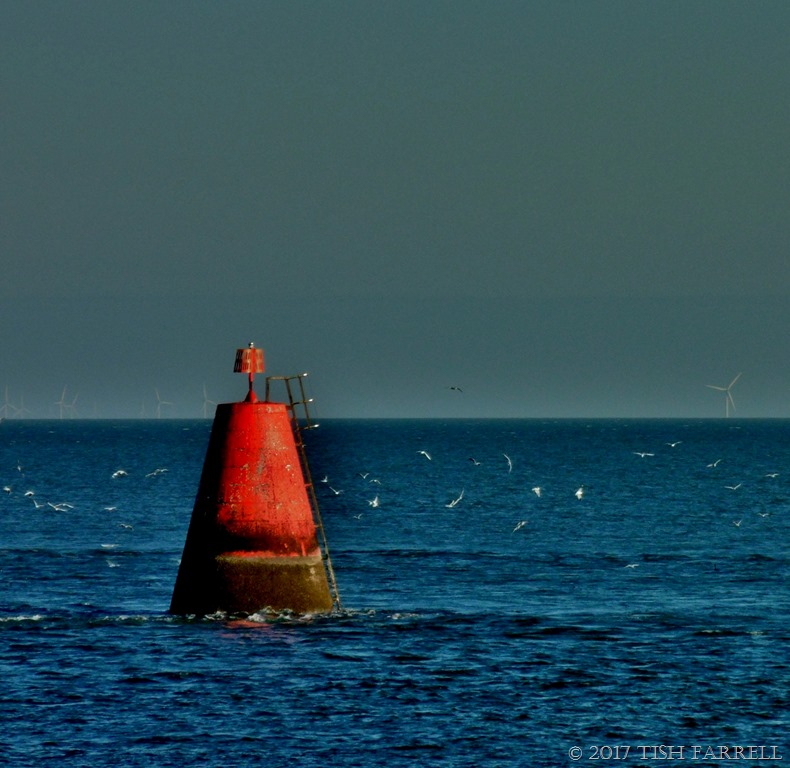
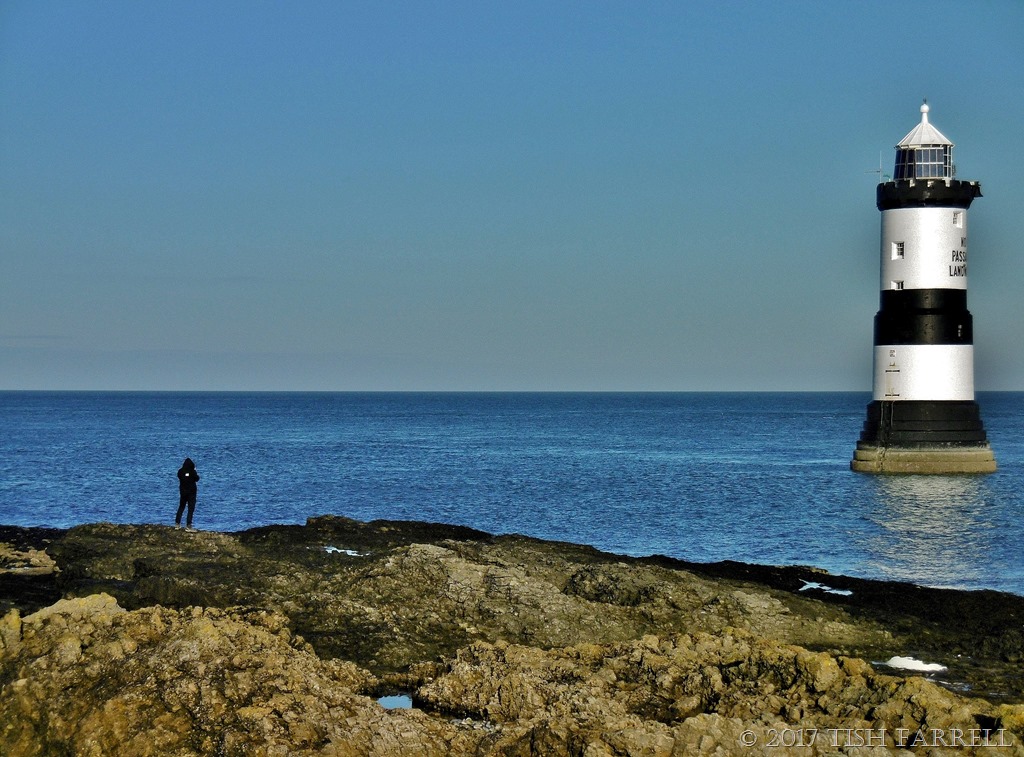
This buoy at Penmon Point, on the Menai Strait in Anglesey tells shipping to be vigilant – the channel between the main island and Puffin Island is too shallow for passage. The lighthouse says so too in a big notice on its topmost white stripe (out of shot):

P1060580

P1060566

This month Paula’s pick a word at Lost in Translation includes: branching, vigilant, pomp, hooked and continual. So I’m laying claim to them all – distantly branching wind turbines off the Great Orme, the need to be vigilant in these waters, the hooked profile of the bay, and the continual ebb and flow of the tide. And as for pomp, well I think the lighthouse has plenty of it.

But for a truly outstanding interpretation of these prompts, please visit Paula, and enjoy her Venetian gallery.

Tonight Over The Garden Wall ~ The Foxglove Garden

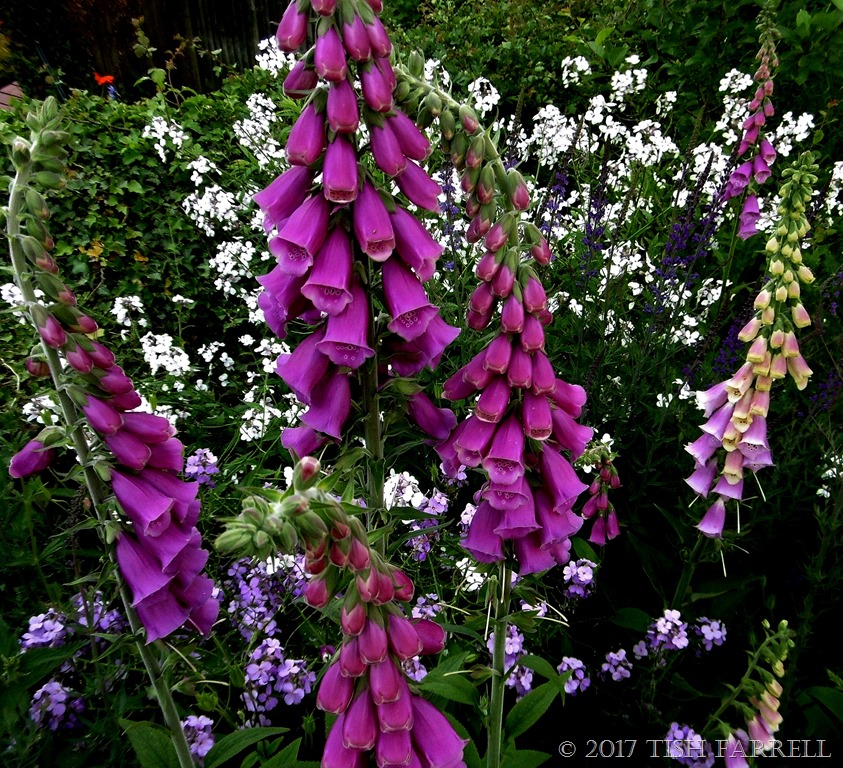
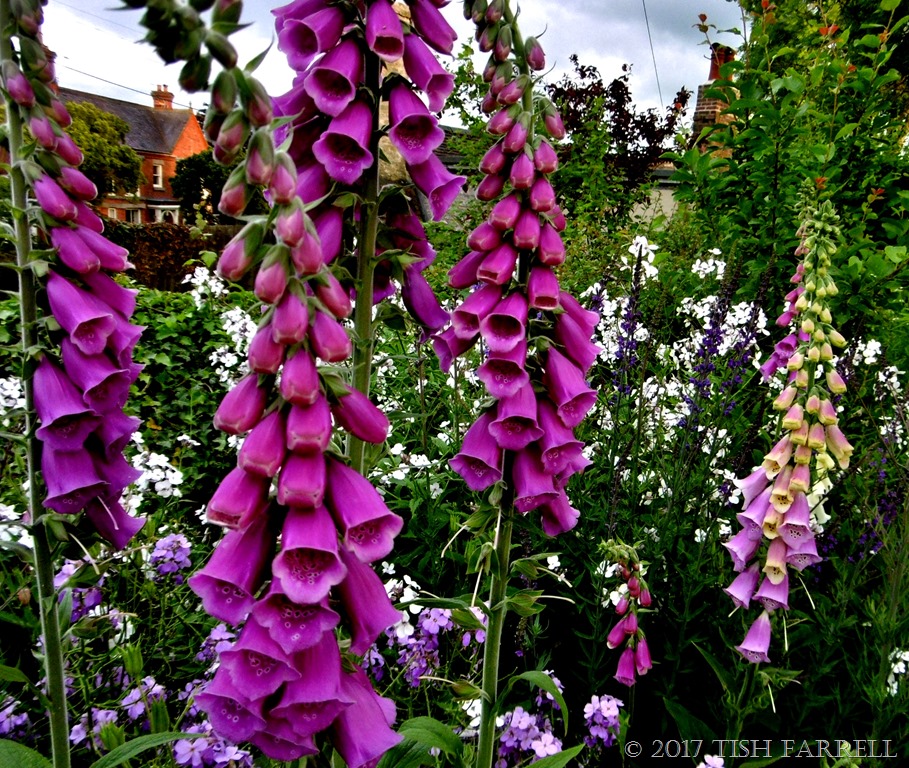
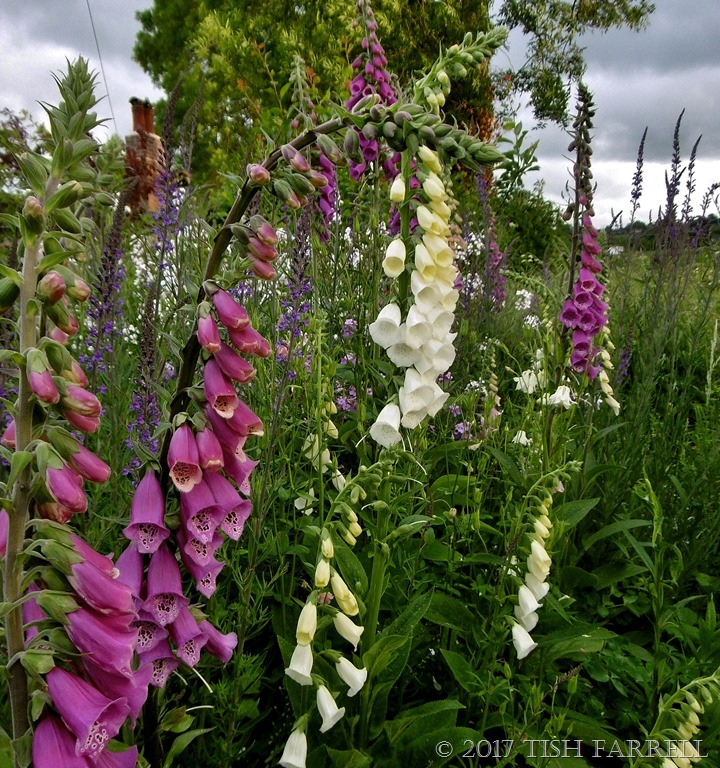
A week ago the wilderness garden behind our house was all columbines. They went to seed very quickly and now it’s the foxgloves’ turn – along with the Dame’s Violets and the slender spires of purple toadflax. All self-sown and grown. I’m rather taken with the foxglove on the right, the one  with creamy lips. I must remember to collect some seed, though there’s no knowing how its offspring will turn out.

P1080140

P1080135

The white foxgloves are lovely too. They have lime green speckles inside each flower.

P1080156

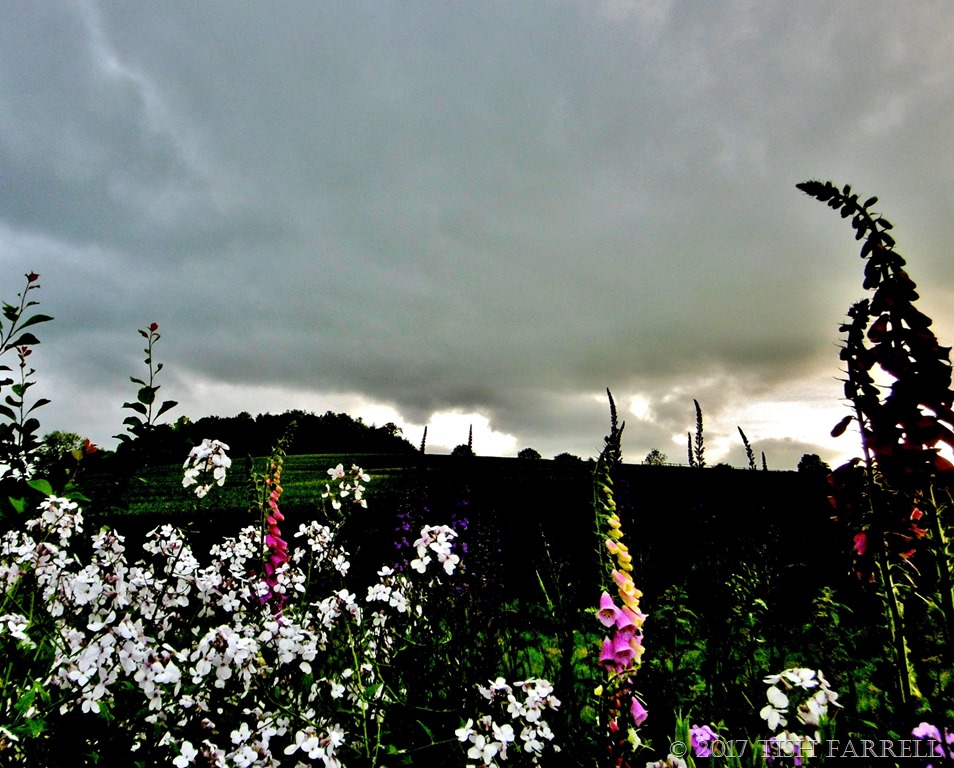
And finally a view looking out over the garden wall as the sun goes down over Wenlock Edge.

The Big Digger Driver And The Kindness Of Strangers

P1060816 - Copy

P1060816 - Copy - Copy

I think I’ve mentioned that here in Much Wenlock we’re in the throes of having a couple of attenuation ponds dug above the town – this in a bid to reduce flood risk.  We are in what the Environment Agency calls a ‘Rapid Response Catchment Area’. This means that if a severe storm hits our part of Wenlock Edge, then we have about twenty minutes warning before a flash flood reaches the town. There are other factors involved too. Flash flooding is more likely if the ground is already sodden from periods of prolonged rainfall. Or if it is frozen hard.

Our last bad flood was in the summer of 2007 when over fifty homes were affected. Due to the steepness of our catchment, any flood is usually quick to leave, but even so, it can cause a lot of damage.

One of the attenuation ponds, currently nearing completion, is in the top corner of Townsend Meadow behind our house. Earlier in the year, and in preparation for the excavation work, a number of small trees were felled and shredded into heaps around the pond perimeter. Yippee, I thought on discovering them by the path on the long way round to the allotment. More chippings for paths and weed suppression.

I duly went to collect a few bags full, but it was harder work than I expected. For one thing there is quite a haul up the path from the pond, and then once at the top of the hill and into the wood, another haul down the field boundary to the allotment.

Meanwhile, my chippings collecting habit had not gone unnoticed. Late one afternoon in April, and after the working day was over, I was plodding up the path with a full bag when a truck pulled up on the field track that the construction crew were using. It was the digger driver in the photo. A very Welsh digger driver. At first I didn’t quite grasp what he was saying. I thought he’d come to tell me off. But that wasn’t it.

When I explained what I was doing and where I was going with the chippings, he said it would be no problem for him to move the chippings piles to the top of the hill. In fact I think he would have delivered them to the allotment if there had been suitable access. He drove off down the track, and I carried on with my bag, and rather forgot about the digger man.

Sometime later (I was pottering around in my polytunnel) fellow allotmenteer, Dave, came to tell me that he had  been surprisingly hallooed from the neighbouring field by a very Welsh man who was going on about chippings and some woman he’d met on the path. After some thought, Dave had concluded I was the woman in question, and so we went up the field to investigate, and there at the top of the track was a huge pile of wood chips – enough for all my paths, and more to compost over the winter. There was no sign of the digger man. I expect he’d gone home for his tea, but Dave helped me fill my big blue IKEA bags and carry them back to the plot.

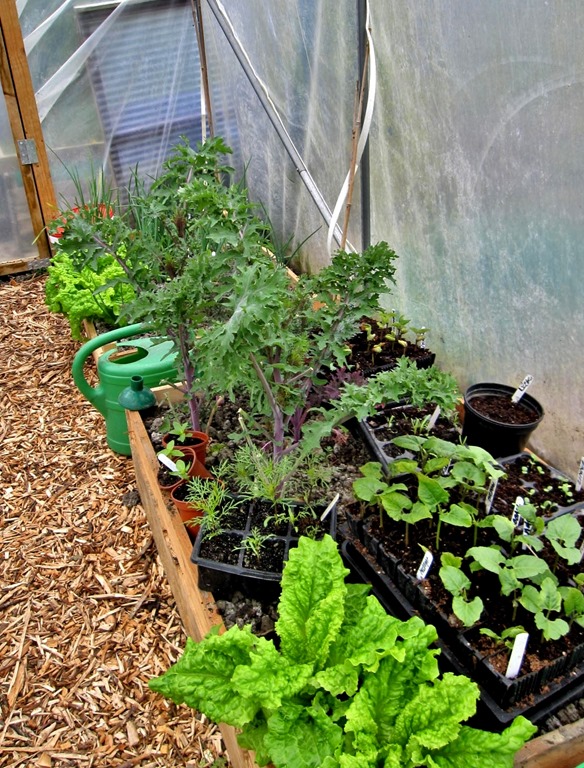
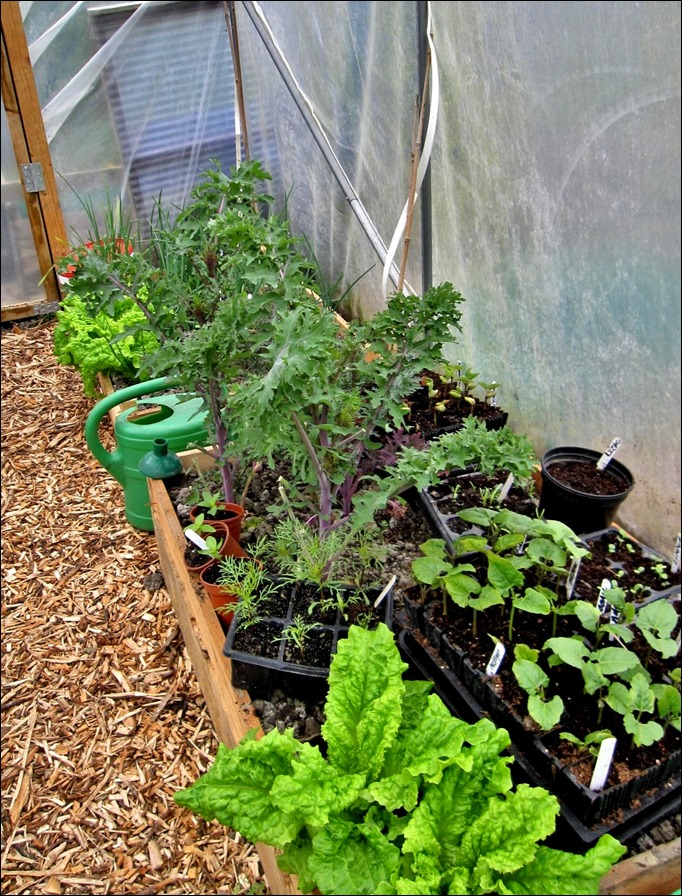
So lucky me! Two very kind men in one day. And a nice new path between the polytunnel raised beds, which incidentally were made by a third kind man who lives in my house.
IMG_4380


Black & White Sunday: After and Before    This week Paula asks us to give a colour shot a monochrome edit.

This Week Over My Garden Fence ~ Granny’s Bonnets Galore

IMG_4543

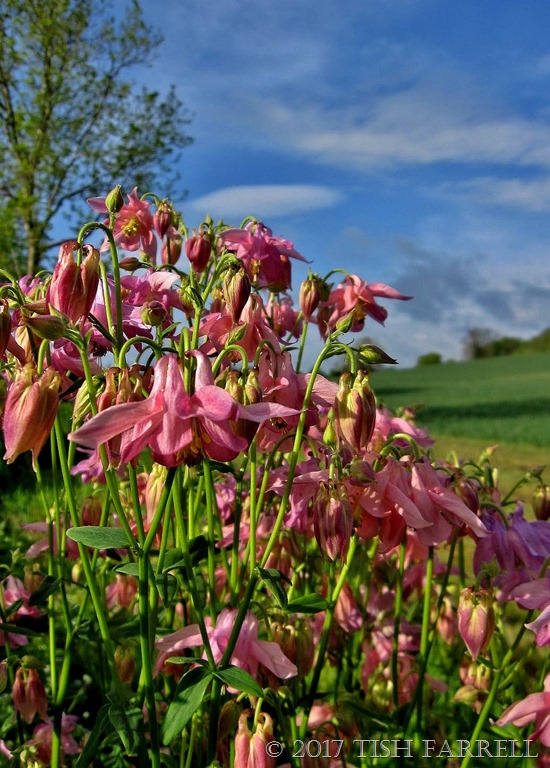
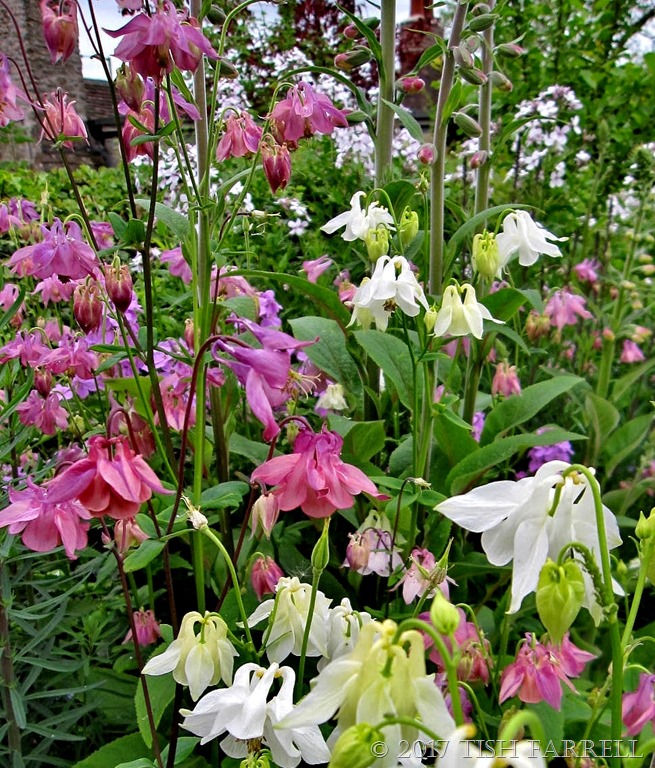
You can’t have too many, can you? Aquilegias that is, aka Columbine or Granny’s Bonnets. They self-seed all over our garden, and also outside the back fence where we have a self-gardening border between us and the field. Dame’s violet, feverfew, purple toadflax, moon daisies, corn cockle and foxgloves are the other vigorous self-sowers. The Dame’s violet in particular is welcome for its fabulous scent. This year most of the plants have come up white. Last year they were mostly pinky-mauve as the plant in the next photo. I like the way they give us a change of scheme:

IMG_4885

IMG_4884

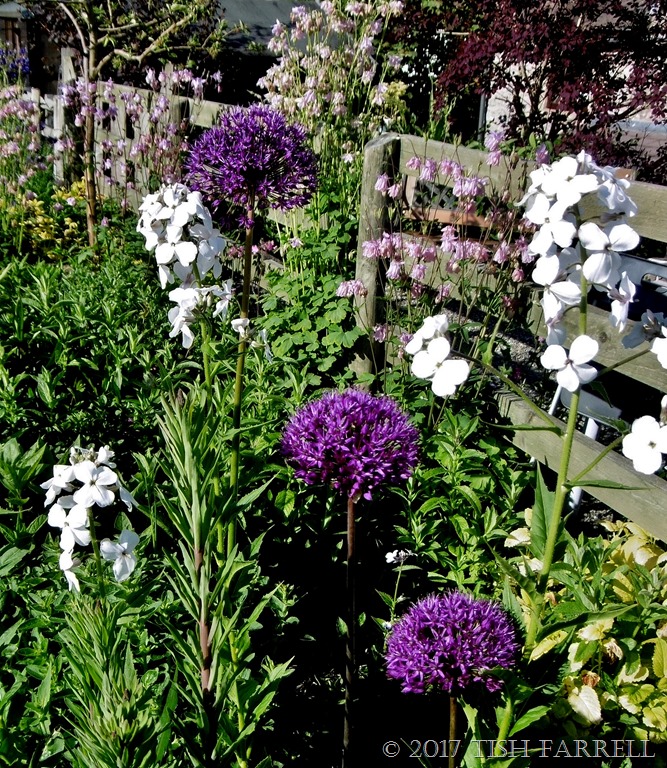
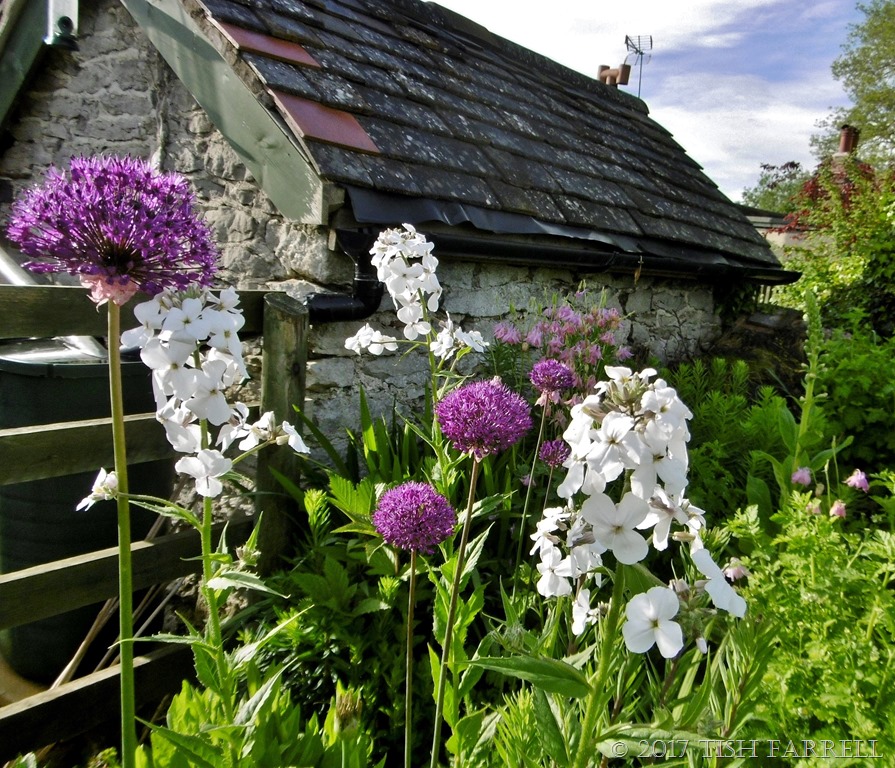
The border isn’t entirely made up of DIY flora. I have put in a few perennials, along with spreading useful herbs – various mints, oregano, lemon balm and marjoram. This year too, some left over allium bulbs put in 18m months ago, are making a nice show – quite unplanned planting scheme-wise.  They were planted in the places where I could get my trowel in the soil.

P1080117

You can also glimpse the transplanted crab apple tree in the top left corner. It’s just coming into full leaf. Next on parade will be the foxgloves. They are opening today under a sudden heat wave – so pictures to come. I’m also wondering if the invasion of opium poppies will be repeated this year. It’s nice to be kept guessing and to have a good garden fence to lean on – to watch and wait, and see what this unofficial garden will do next. It’s certainly keeping the bugs and bees happy.

P1080113

This slideshow requires JavaScript.

Cee’s Fun Foto Challenge: Gardens  Please visit Cee for more lovely plants and gardens.

Thursdays Special ~ Spring In My Garden

IMG_4027

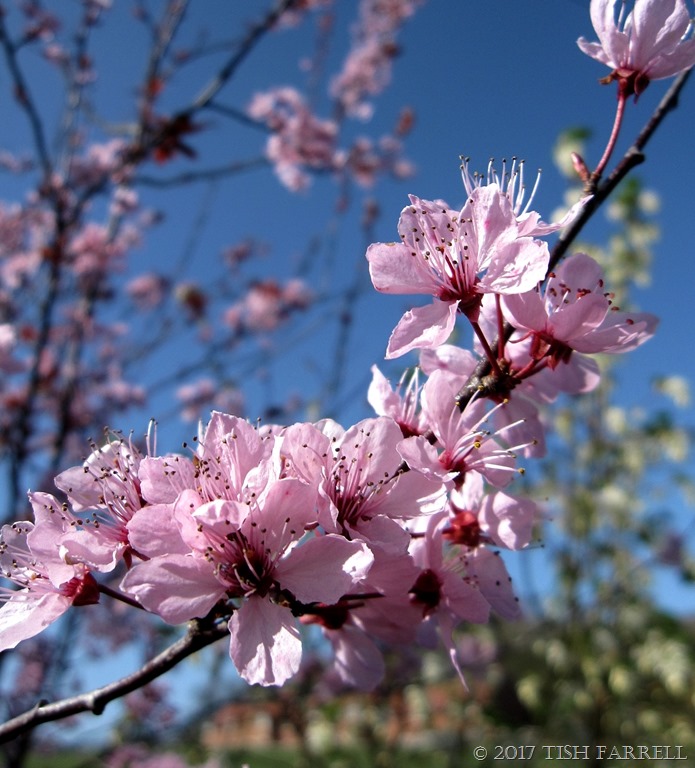
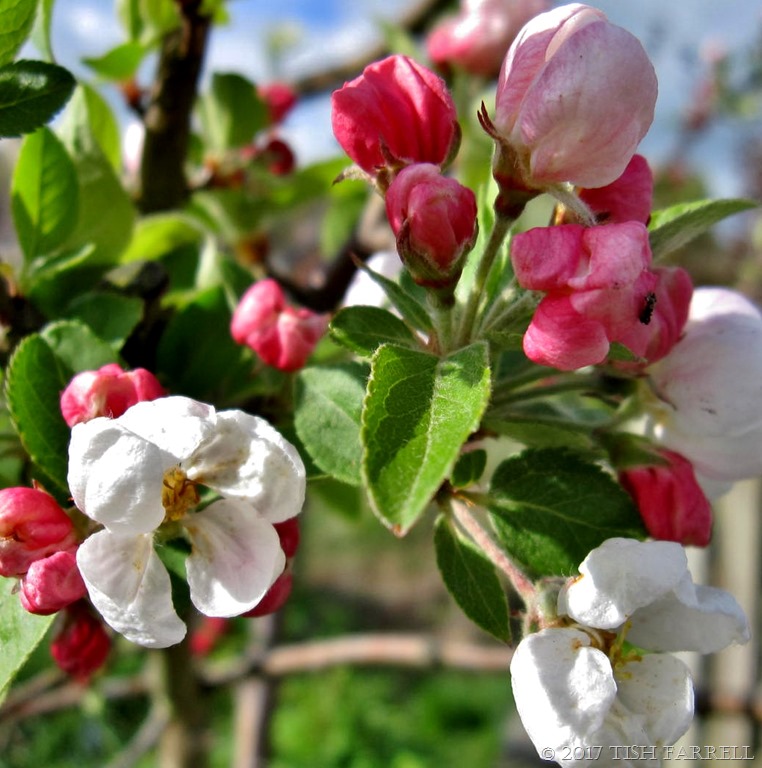
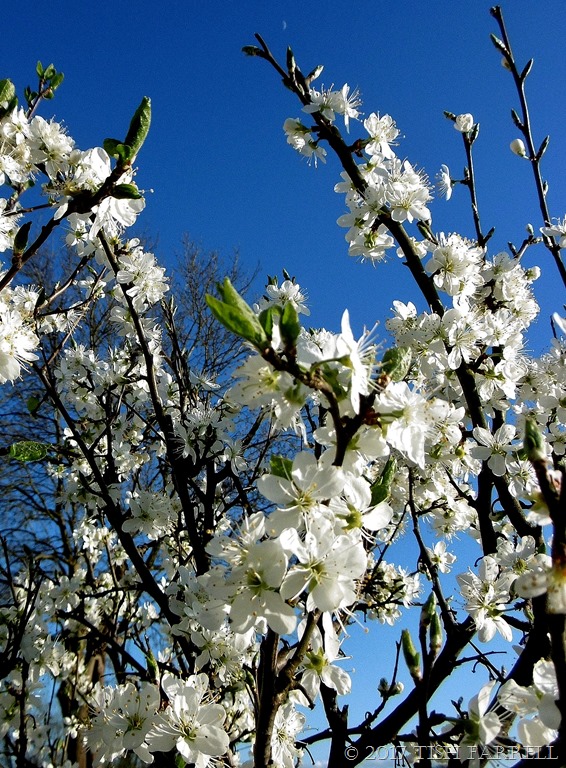
This week at Lost in Translation Paula’s theme is ‘vernal’ and she is calling for our spring compositions. So here are a few scenes from my Wenlock garden. Things have been a bit slow this year because we’ve had no rain for weeks and weeks. But today we did – and the garden has come alive with aquilegias and alliums. And I had no time to take photographs because I had a hundred other things to do. Hey ho. So the photos here were mostly taken back in March/early April: ornamental cherry, crab apple, and damson – the flowers of fruit to come.

IMG_4318

P1070556

Tulips’ Last Hurrah And A Gardening Legend

P1070763

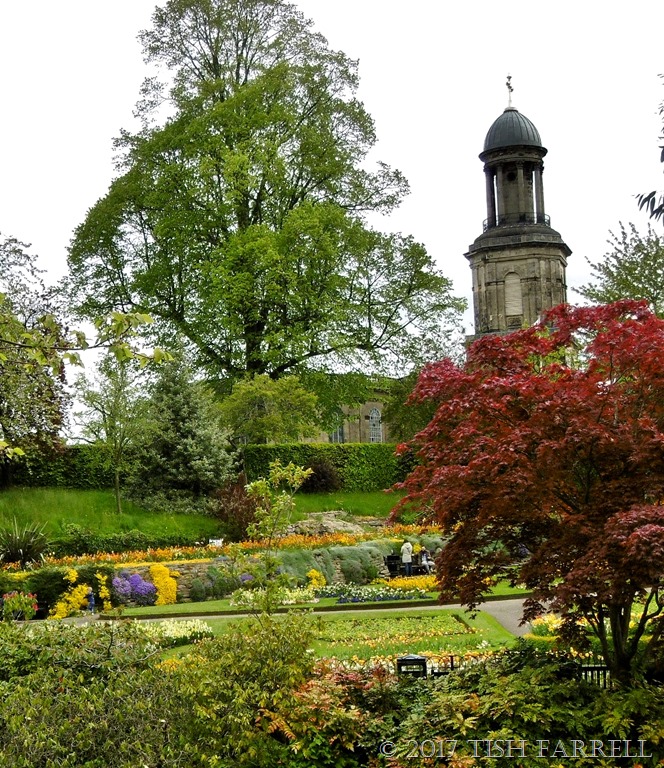
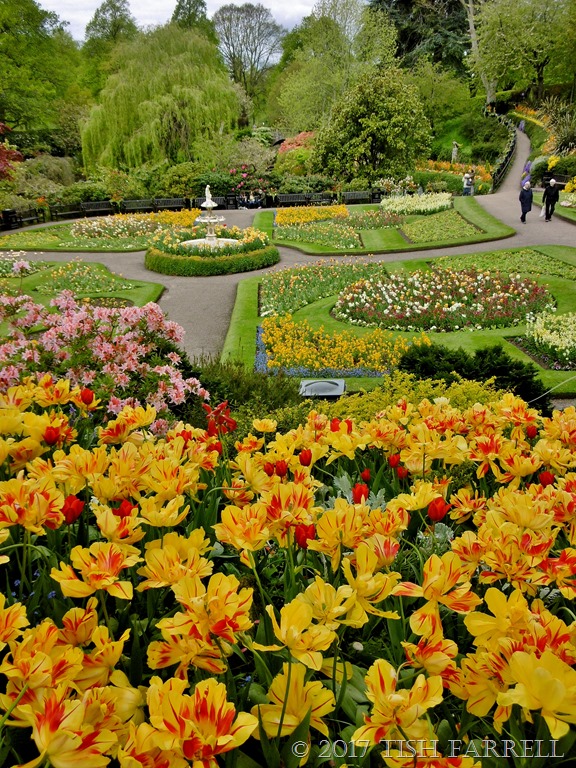
What show-offs – the lot of them. But what a joyous display and just at the moment when most of the other tulips are fading. I spotted these yesterday on a chance visit to The Dingle, in the Quarry, Shrewsbury town’s lovely riverside park. This place was a popular haunt in my teenage years – for meeting up with friends and for the covert smoking of cigarettes. (Naughty us, polluting the place with Consulate smoke).

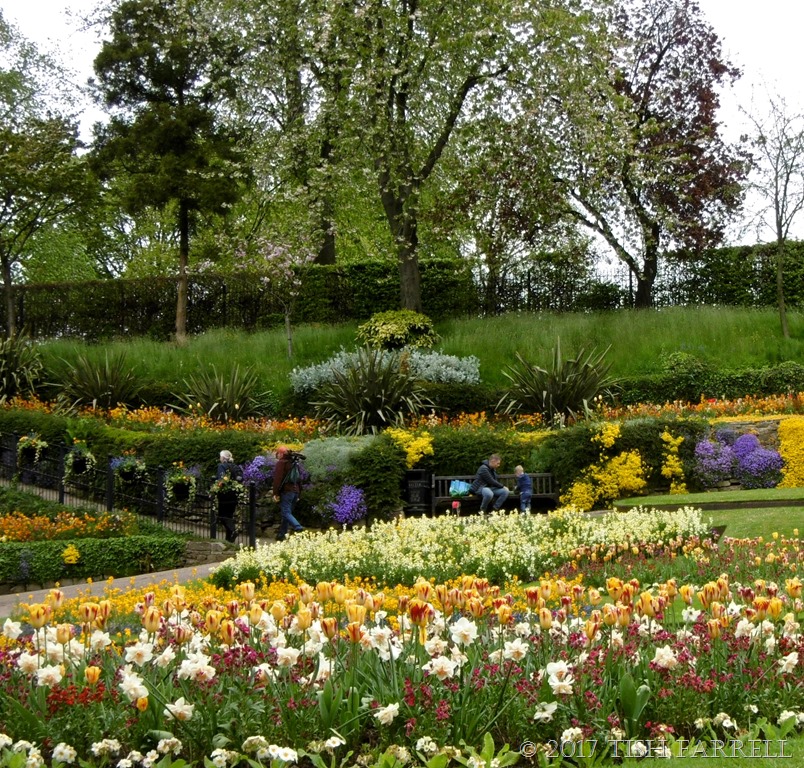
The Dingle was made out of an old stone quarry, and in many ways is very much a municipal garden with its regimental planting of bulbs and bedding plants. The bosky-dell setting works its magic though, and there was certainly no denying the cheeriness of the colour-scape under yesterday’s gloomy sky. BTW that’s St. Chad’s church in the background – in case you’re wondering. It is notable for having the country’s largest circular nave. Also Charles Darwin was christened there in 1809. Less notably, my Priory Girls Grammar School, along with the Priory Boys, used to traipse here every November for our founder’s day service. It goes without saying that the most exciting thing about the event to us girls was BOYS.

P1070706

But back to the gardens.

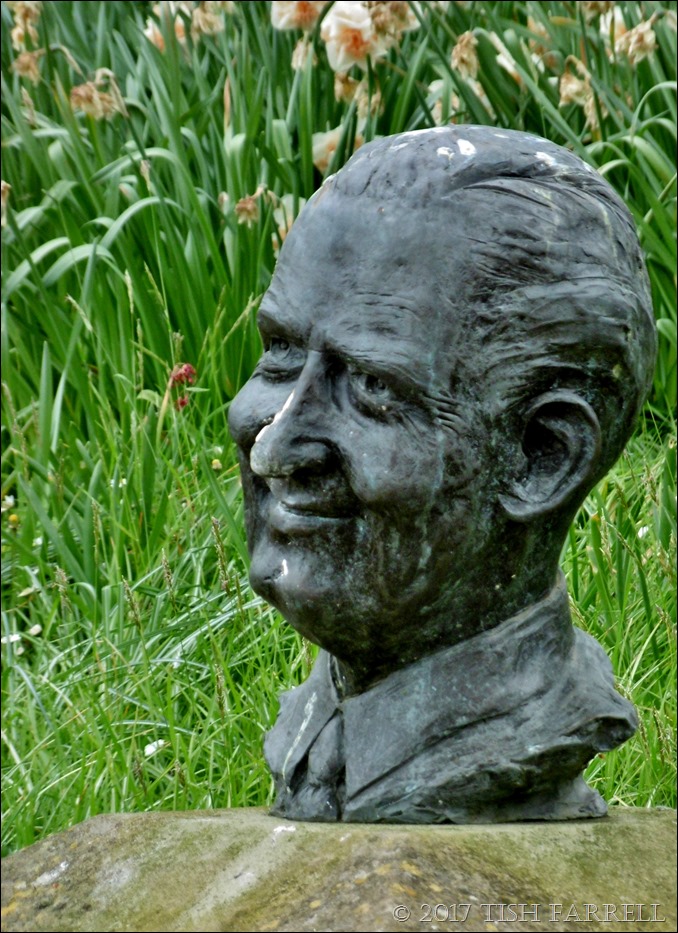
The Dingle’s formal layout was created by Britain’s first TV celebrity gardener, Percy Thrower. He was Shrewsbury Parks Superintendent from 1946-1974 and very much associated with the famous annual Shrewsbury Flower Show which is still held in the Quarry every August. As a fifties child I remember watching Percy on the BBC. My father was a great admirer, so I followed suit and held Mr. Thrower in high regard even if I didn’t need the gardening advice. At that stage I was into growing oak trees from acorns, and he didn’t seem to cover that particular topic. Mostly I learned to associate gardening with kindliness and a genial practicality, qualities that the sculpture in the next photo captures too. I was touched to find him smiling out over his creation. And that his collar and tie were just as I remembered them.

P1070774

I think he would be pleased that there has been no attempt to veer from  his original concept and ‘update’ the planting scheme. And although, in the main, this is not my style of gardening, I can still admire it. I could also see how much pleasure it was giving to people of all ages – a truly hidden haven since there is no view of the interior from the surrounding park. You have to step inside one of several gateways to ‘discover’ it.

P1070767

P1070773

P1070709

It makes me think: every person on the planet needs access to a garden – whether it be untouched wilderness, manicured parkland, cultivated arbour or even a window box. We need to keep in touch with the growing world that heals, soothes, inspires and nourishes us. Which also makes me think that good old Percy Thrower, who did so much to encourage everyone to garden and to appreciate plants was truly a bit of a hero. Please go and say hello to him if ever you are in Shrewsbury.

Jo’s Monday Walk If you haven’t yet joined Jo on one of her fabulous walks (and you never do know where she’ll be going next), then please put on your hiking boots and follow the link.

A Good Crop All Round ~ Thursday’s Special At Hopton Castle And Brampton Bryan

P1010224

This week at Lost in Translation Paula asks us to show her photos that we have cropped to reveal detail or improve the composition. I have to say that I crop most of my photos, and certainly architectural subjects almost always benefit from a trim.

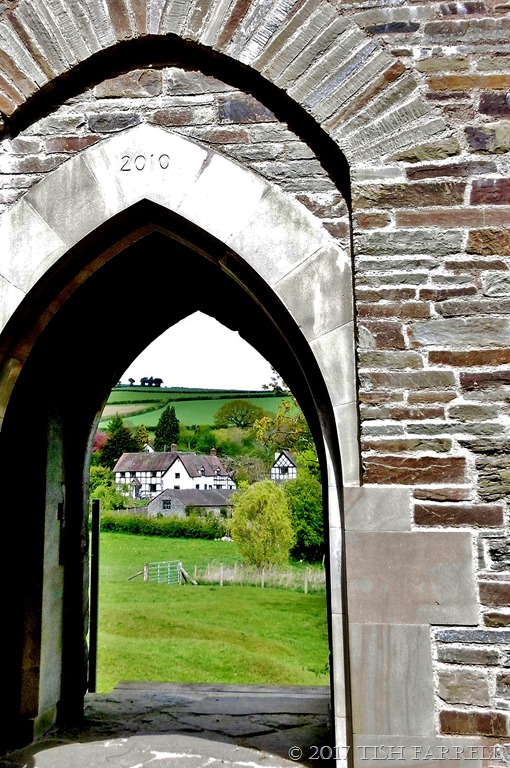
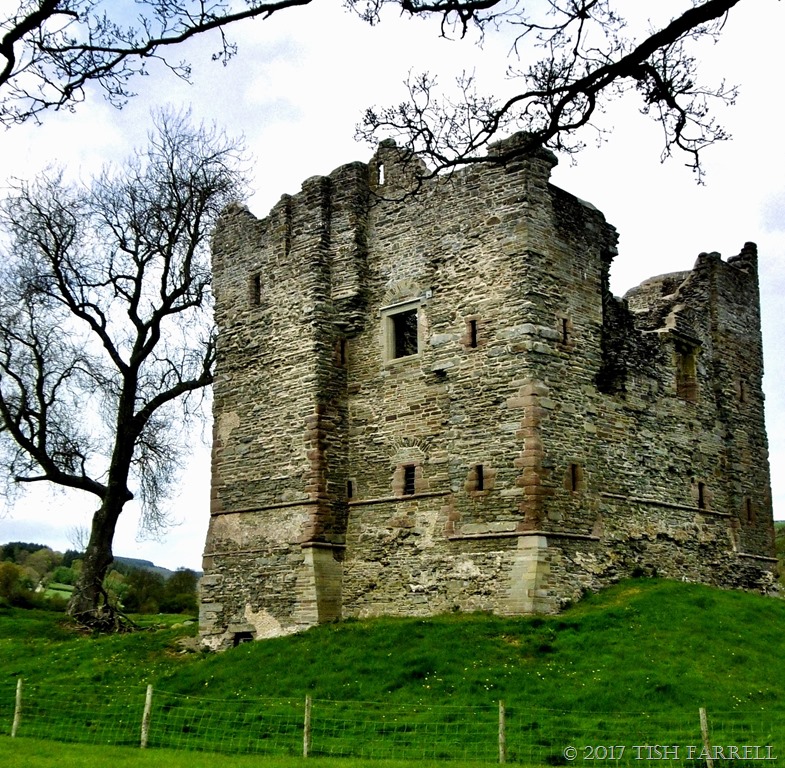
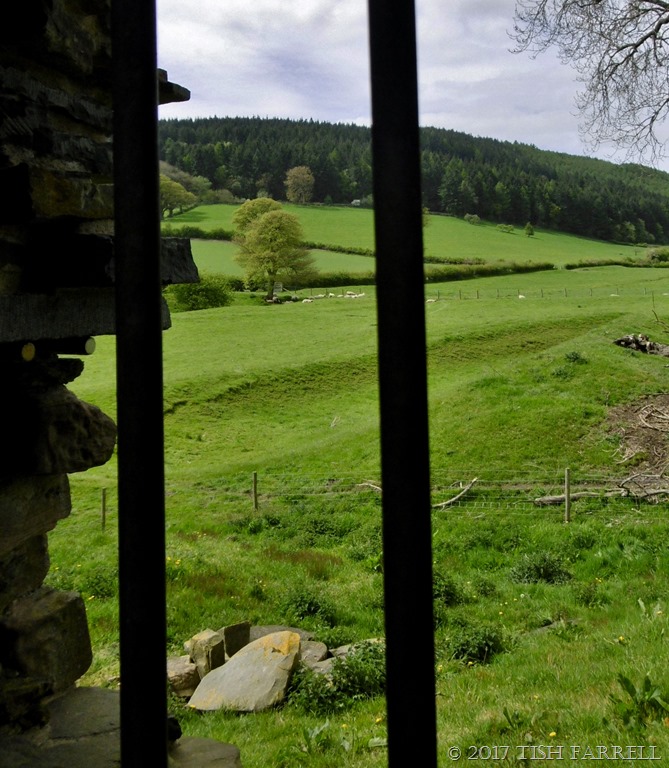
Here are some cropped shots in and around Hopton Castle. This mediaeval ruin stands in a rural and rather remote corner of Shropshire near the Herefordshire border, one of a cluster of castles built either to keep the Welsh neighbours in their place or as a piece of lordly showing off. Today, Hopton is romantically and rustically picturesque, although once it was the site of a bloody Civil War siege.  In one of my earlier Thursday’s Special posts I featured the restoration of the monument.

P1010241

P1010225

*

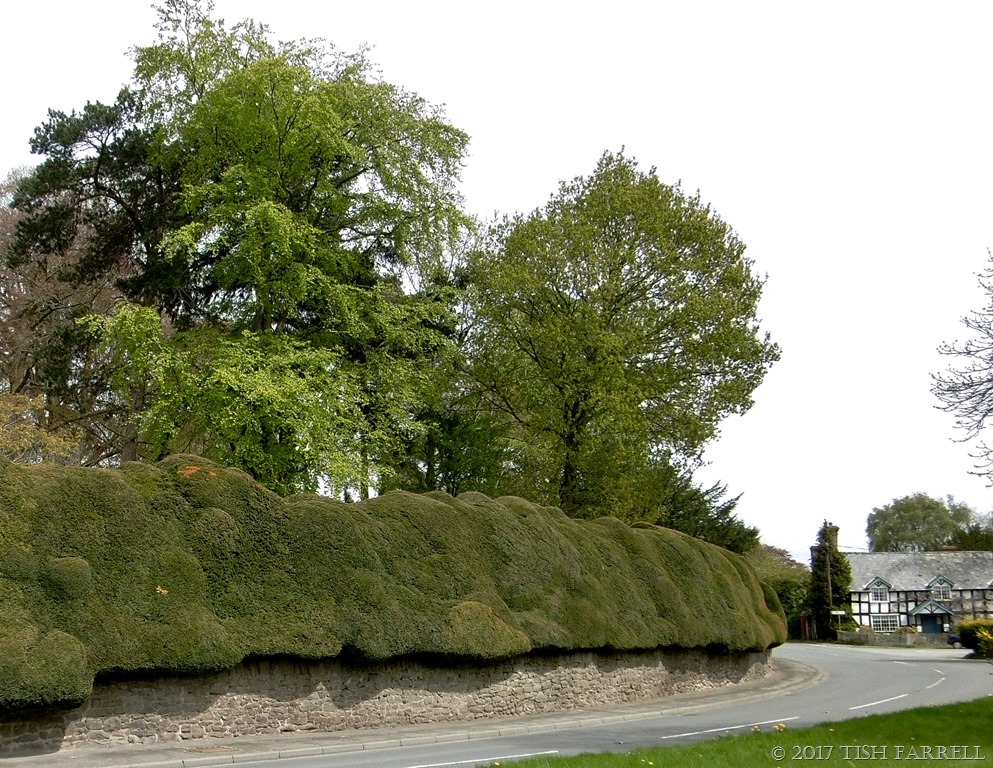
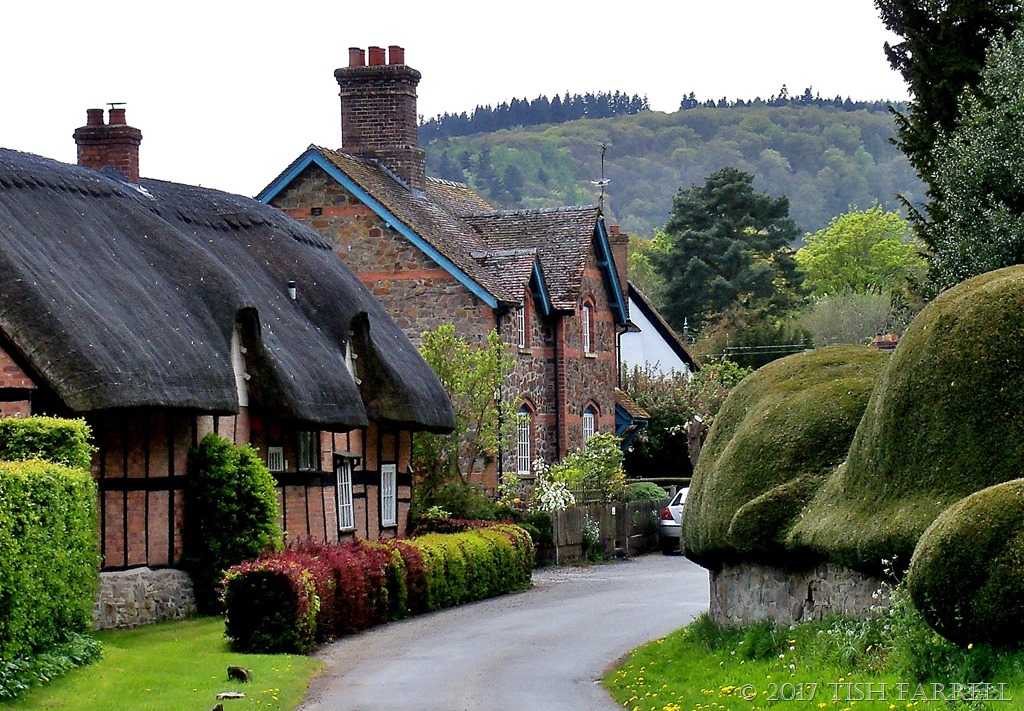
Not far from Hopton and just over the border into Herefordshire is the little village of Brampton Bryan. One of its most noteworthy features is the free-form yew hedge that shelters the owners of Brampton Bryan Hall from the gaze of passing hoi polloi  and the inhabitants of the pretty estate village. The light was not good, but I think cropping the images has made them passable – at least for ‘guided tour’ general nosiness purposes:

100_5423

P1010257

100_5437

100_5421

100_5424

The Harley family who own the estate, including the village properties with their blue doors, has been around the place since Domesday. Their present home behind the hedge was built after the Civil War in 1660, and remodelled in the 18th century. I snatched a glimpse over the rear churchyard wall, but though imposing it was not very captivating, at least not compared with this next view of their own personal castle ruin. It is not open to the public so I couldn’t get a better photo.

100_5431

I can’t help thinking how very wonderful it would be to have one’s own castle ruin out in the apple orchard, never mind the stately pile.

Thursday’s Special: Section

Collision Course? Present And Past In Conwy

IMG_4120 - Copy

This week at Black & White Sunday Paula asks us for an ‘After and Before’ – i.e. a colour photograph converted to monochrome. She wants us to use this device to look at our work with fresh eyes. It is an interesting exercise.

This shot was very spur of the moment’, and into the sun to boot – taken as the bus to Llandudno swung round a sharp bend down and past Conwy’s mediaeval town walls. But I liked the juxtaposition of ancient and new,  the impressively static versus the transient. For some reason I also like the ‘one way’ traffic road sign – as if it might mean something other than the obvious.

Overall, as a composition I’m not sure what to make of it, but I keep looking at it just in case it might have something important to say, and I think the monochrome version has a certain drama. The first version is in ‘Cyan tone’ according to my Microsoft editing programme. This next one is what happens when you press the ‘Black & White’ option:

IMG_4120

And here’s the original:

IMG_4120 - Copy (2)

Now over to Paula’s at Black & White Sunday for more ‘Afters’.

Tulips Raising The Roof At Attingham

P1070635

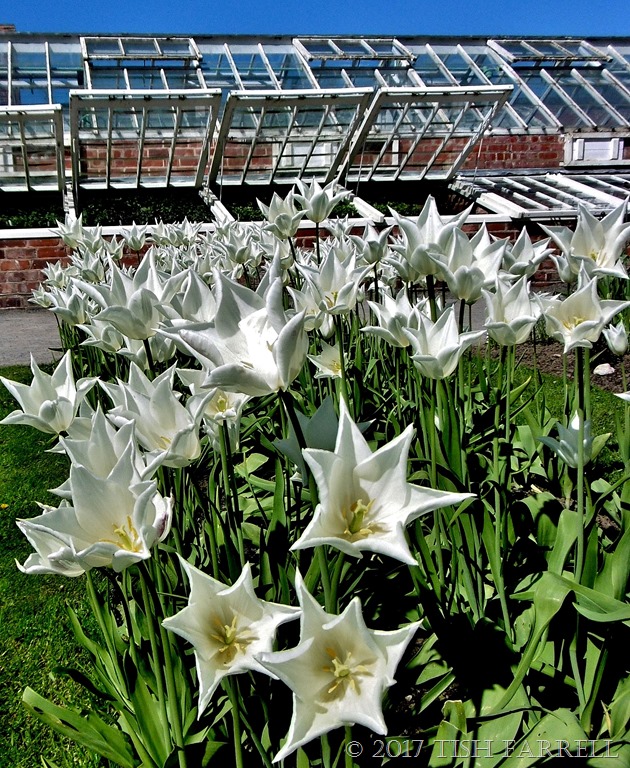
We thought we’d make the most of the sunny day and popped over to Attingham Park at lunch time. Half the world had the same idea and the place was alive with happy families and happy dogs roving over the parkland. There were fallow deer to see, bluebell woods, trees burstingly green, stream banks golden with marsh marigolds, and in the walled garden’s frame-yard these very shouty tulips. My goodness but they had a lot to say for themselves.

Six Word Saturday

#SixWordSaturday #6WS