This Made Me Smile ~ Once Upon A Time In Kenya’s Highlands

img20241008_11580324ed2

It seemed the greatest gift for this nosy writer when Graham said I could go with him to survey the Kikuyu farms just north of Nairobi. Yes, yes and yes. I would be delighted to look for smutted Napier Grass. And hold the clipboard. And  manage one end of the tape measure.

We were all set then, along with Njonjo, senior driver for the Kenya Agricultural Research Institute, where Graham’s crop protection project was based.

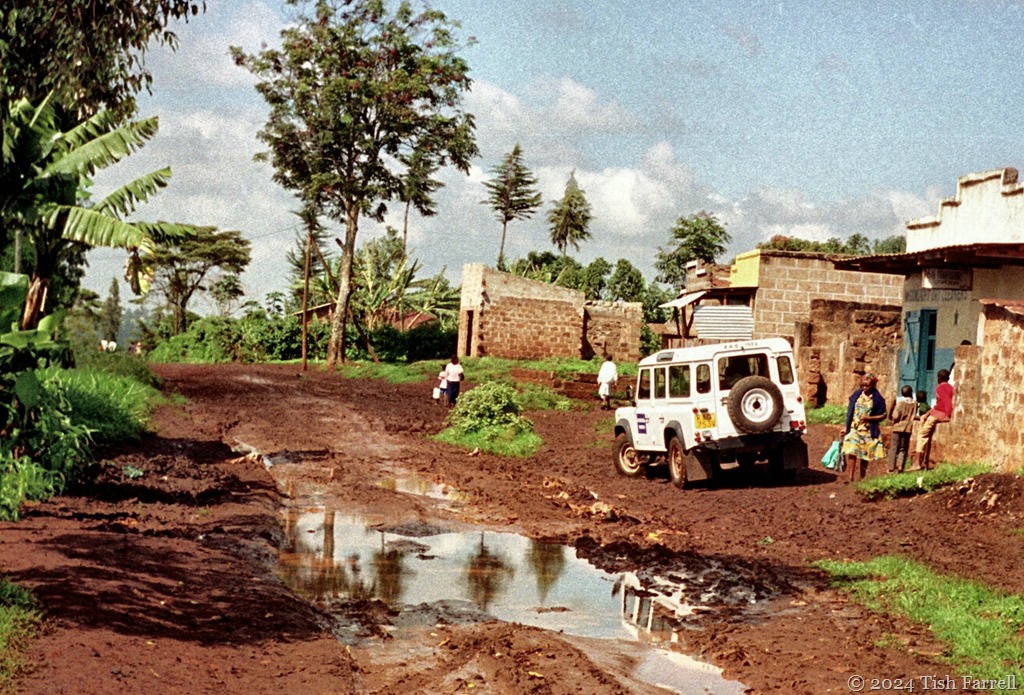
It was the time just after the late 90’s El Nino rains. The Rift escarpment roads were terrible, many of them washed away. In other places great chasms had opened up, or the roads were strewn with boulders brought down the hills by flash floods.  But this was also home territory for Njonjo. He had ancestral land there. A farmer then, when he was not employed as a driver. He anyway handled the Land Rover with great skill, and astonished us, too, by simultaneously negotiating giant pot holes and spotting plots of smutted grass growing many metres from the roadside behind kei apple and winter jasmine hedges.
img138 ed

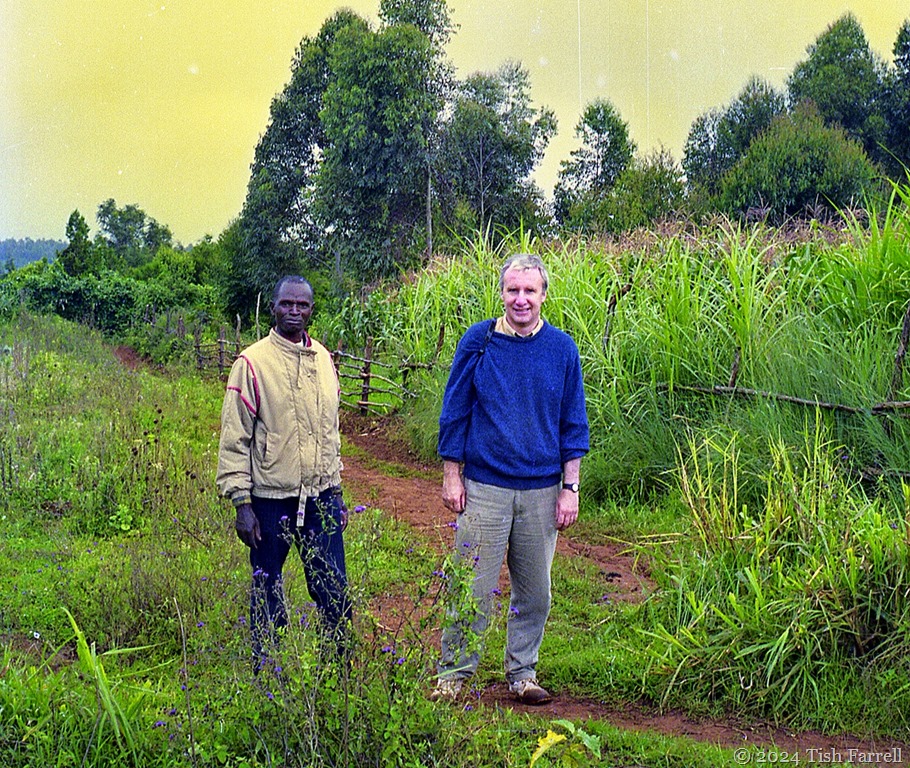
Njonjo and Graham

*

trading centre after El Nino rains ed

Trading centre after El Nino rains

*

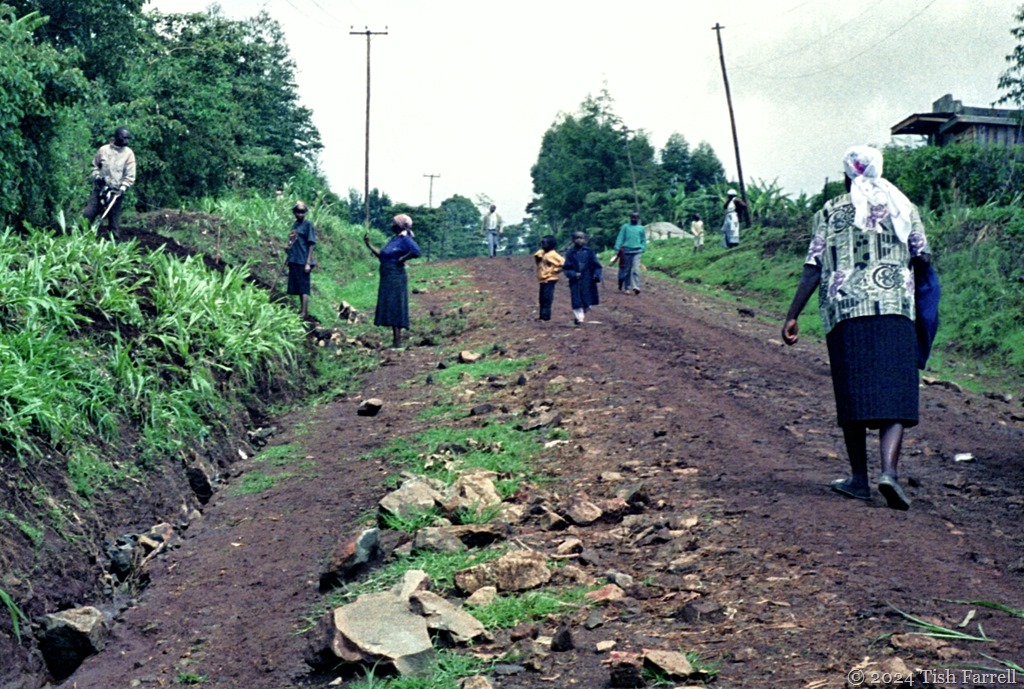
Rift lane after July downpour

*

Of course, after a fine spell, the roads baked hard into gullies and corrugations. This next photo shows one of the Rift Valley lanes on the edge of the escarpment. You can just make out the valley bottom through the far haze:

Rift lane 2ed

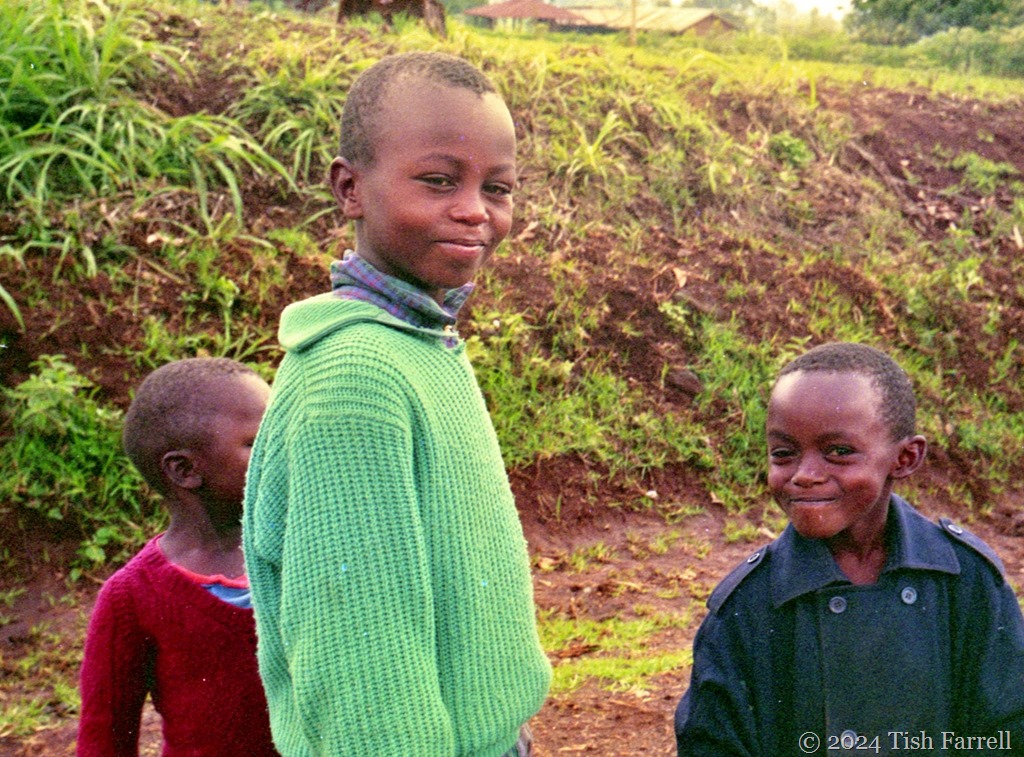
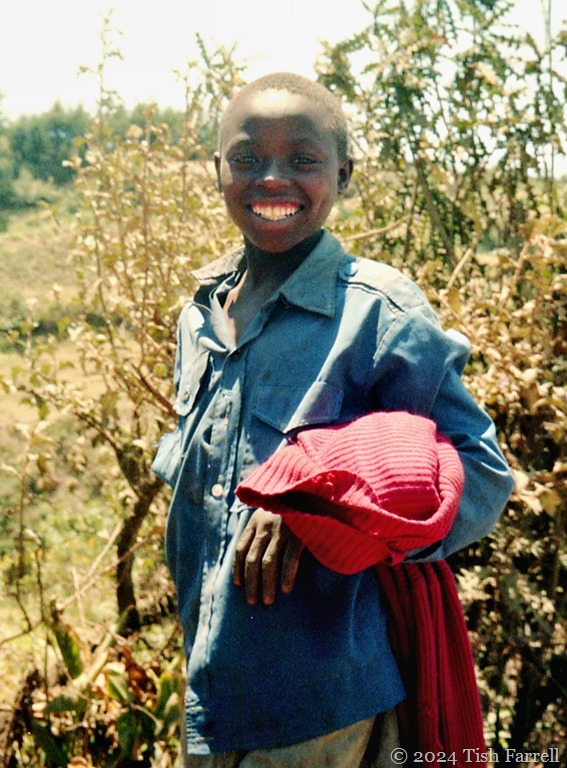
I don’t recall why we were all out of the Land Rover at this point. Probably Njonjo was asking directions. Even locals have problems finding their way across the ridges. Anyway, this was the moment I met this lovely young man:
img125ed

*

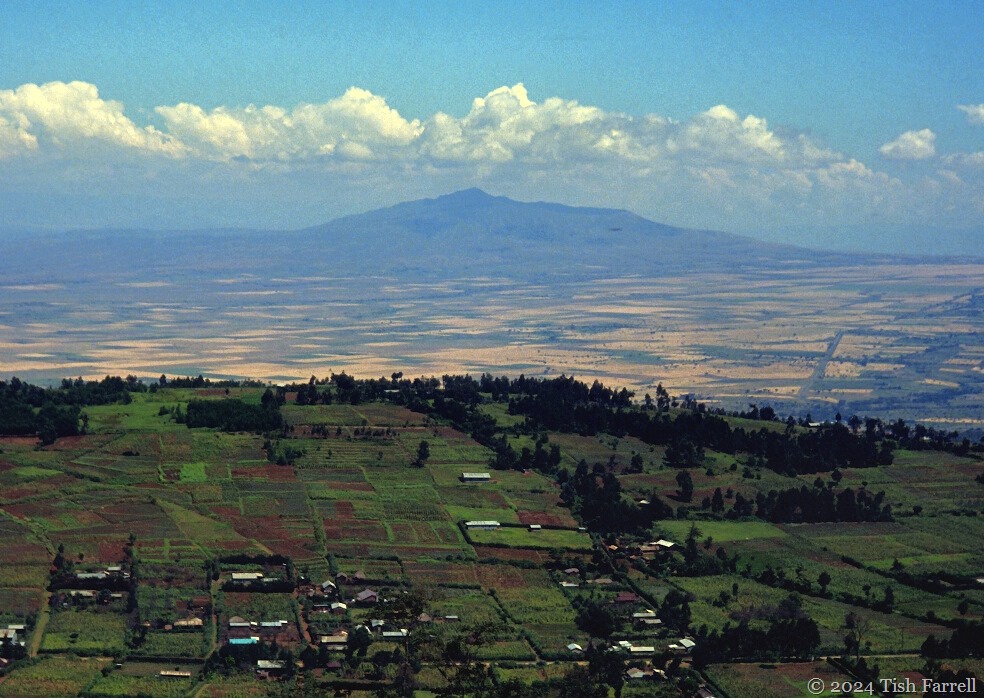
Rift Valley from Escarpment ed

Small-holder farms at Escarpment, in the Rift’s shadow, Mount Longonot in the background

*

As we jolted and slid along the country lanes, Graham was using a GPS to select farms at random. When a location was chosen, Njonjo then took further charge of operations and went to  find the owner of the farm, and talk them into admitting a couple of wazungu , who would like to look at their Napier Grass.

Over the weeks of the survey it became a matter of pride that no one turned us away. In fact the opposite was often overwhelmingly true. Wherever we went, we were met with great courtesy, mugs of tea and presents of farm produce: plums, pears, sugar cane, a cockerel. We had brought useful information that must be reciprocated. Njonjo was particularly adept at fending off serial invitations to lunch, and did so without us seeming too rude. Otherwise the job would never had been done.
img194ed

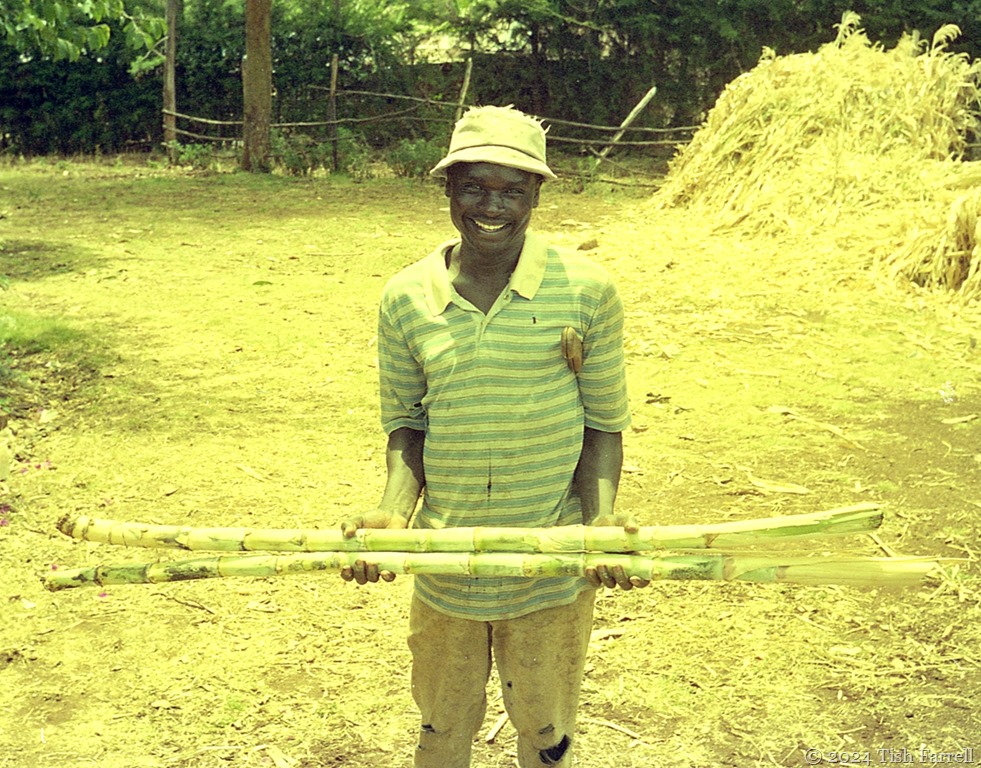
This farmer gave us sugar cane

*

Mrs Njuguna's Farm ed

One chilly morning Mrs. Njuguna served up mugs of hot chocolate before we went to examine her napier grass plot

*
napier grass and farms

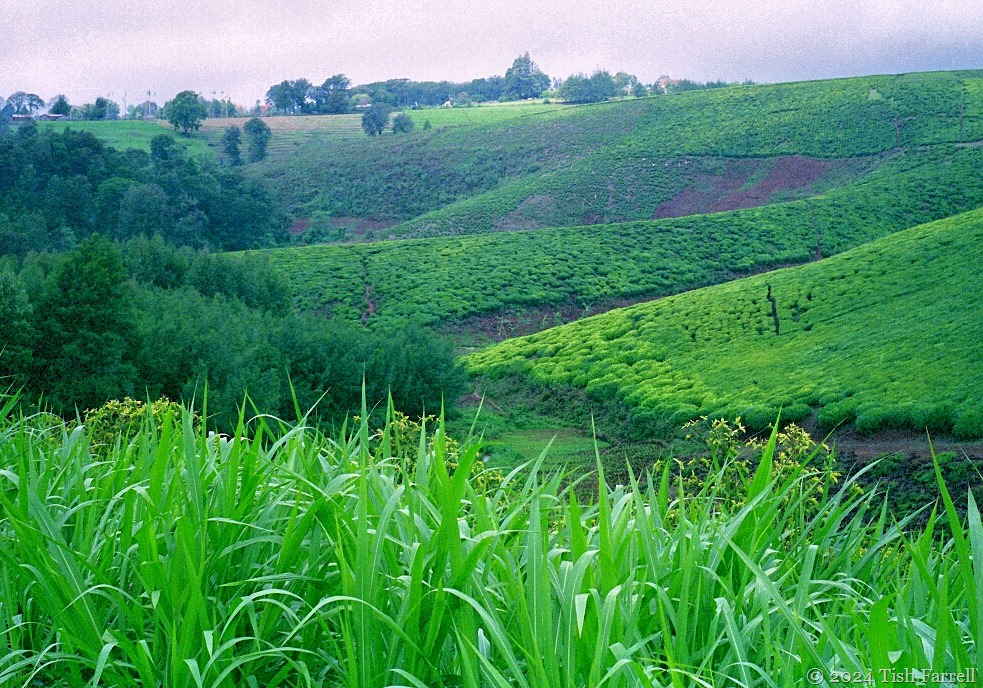
tea fields and napier grass

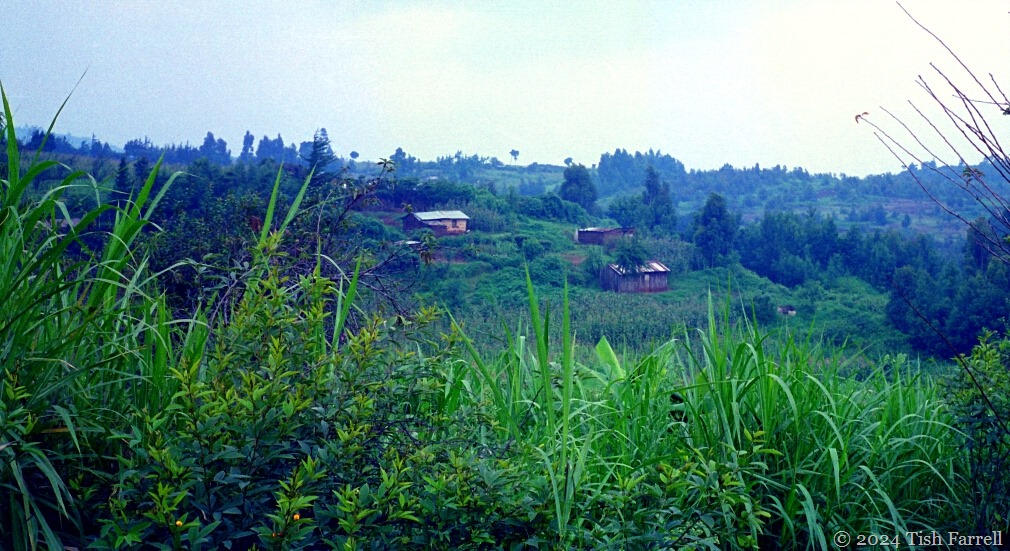
Napier Grass (foreground in both photos)  is an essential  animal food crop for small-holder farmers who zero graze their stock. Zero graze means they have no access to pasture, but grow plots of grass wherever they have space, including on roadside verges, and then crop and deliver the grass to their animal pens. (Commercial tea gardens in the background). Most farms (shambas) are on ancestral land that has been subdivided down the generations and may be only a few acres or less.

*

By now you’re probably wondering what Napier Grass smut looks like. You will also have gathered that in this context, smut has nothing to do with off-colour jokes or questionable practices. (That said, everyone found it hugely amusing that Graham was doing a part-time doctoral thesis on smut). It is in fact a fungal disease that attacks grasses, including maize and sugar cane. On Napier Grass it becomes visible when the plant begins to flower; the florescent parts look as if they have been dipped in soot.
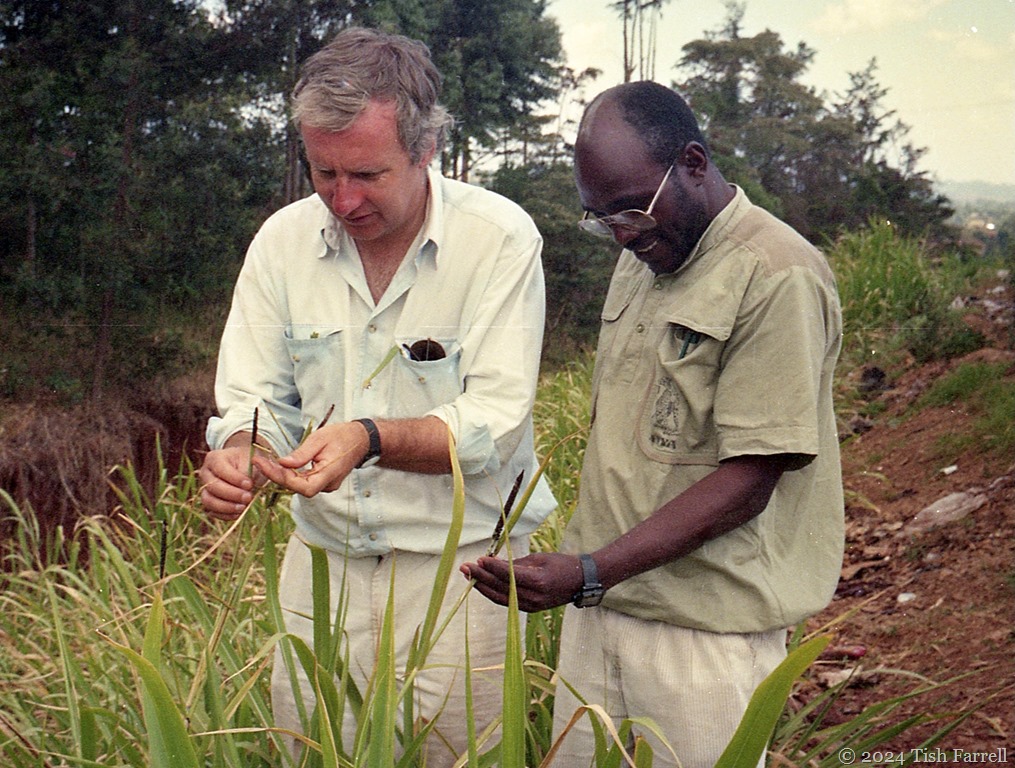
Graham and Jackson best

Two happy plant pathologists: Graham with Dr Jackson Kung’u admiring smutted grass growing on a road reserve in Nairobi, as spotted across a busy dual carriageway by Njonjo.

*

The diseased grass isn’t apparently harmful to the animals that eat it, but there are serious implications for farmers who rely on it for zero grazing. In time, smut weakens the plant and so less and less leaf mass is produced. The spores spread on the wind, although Graham thought the most likely source of infection was due to farmers unknowingly giving cuttings of infected plants to their neighbours. The only solution is to dig up the plant and burn it.

Farmers, predominantly women, were keen to hear anything and everything Graham could tell them. Impromptu roadside smut seminars became a feature, Njonjo providing lectures in Kikuyu or Swahili for those who did not speak English. Graham also distributed information sheets. We never seemed to have enough!
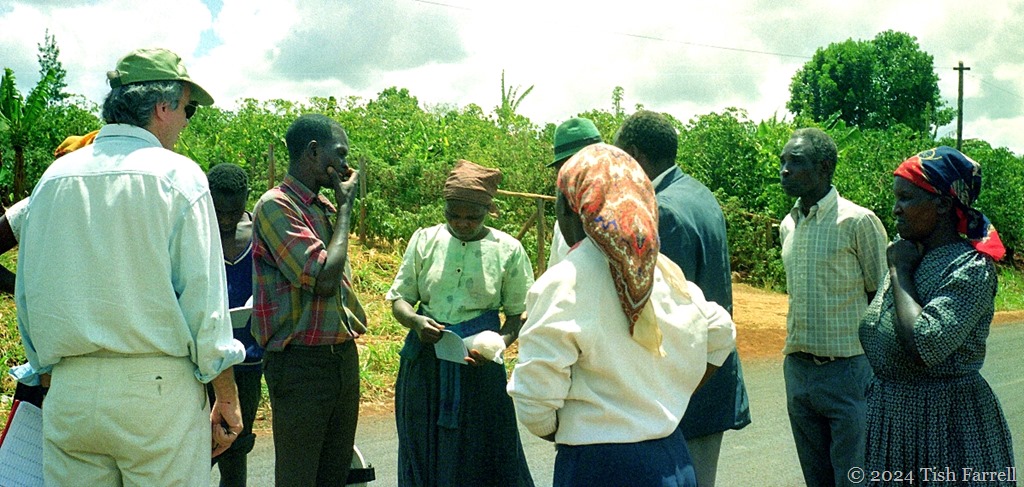
impromptu smut workshop

*

On some of the farm visits, it was inevitable that Graham would be consulted about other plant diseases that farmers had noticed. Here there’s some problem with the fruit trees.
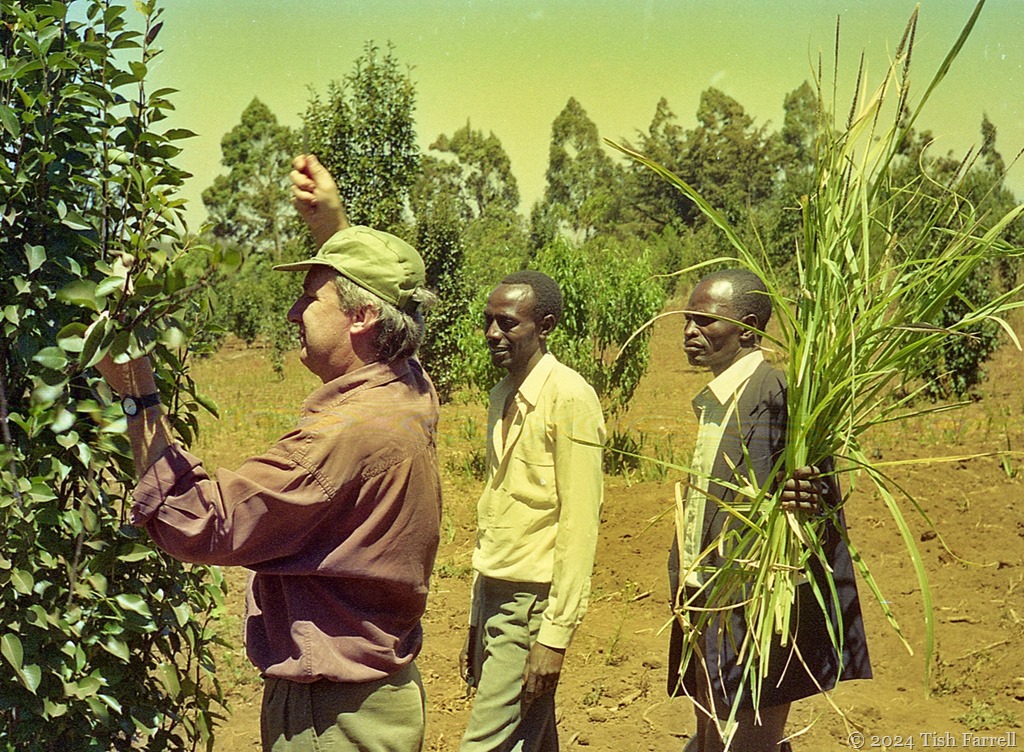
img080 ed1

The farmer’s daughter watches us. Her father had handed her one of Graham’s smut information sheets: the school girl in the family…
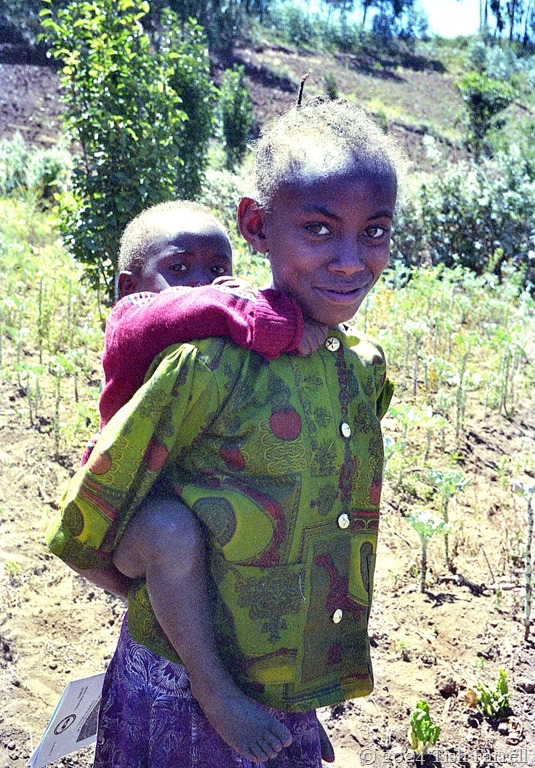
img097ed

*

napier grass on the Rifted

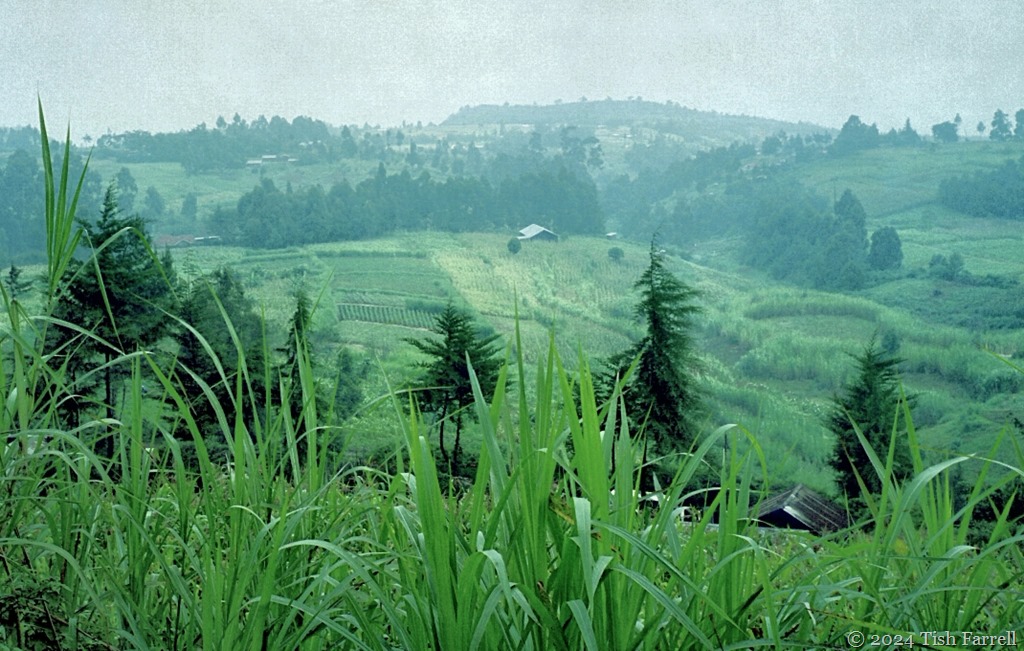
The Kikuyu uplands are mostly 5-6,500 feet above sea level, the settlements strung out along ridges. Although at the tropics, early mornings and evenings can be cool, and especially in June and July, when there may also be fine rain and fog. Some of the highest settlements at around 7,000 ft are in the frost zone, the landscape’s bleakness, with bracken growing along the roadside, reminding me of Scottish uplands.
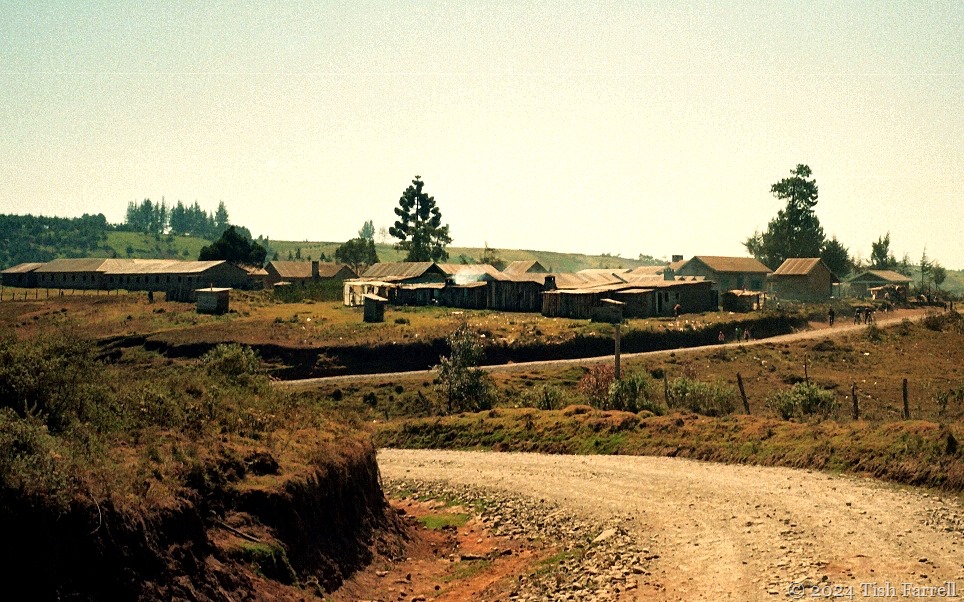
Kikuyu farmstead 11 ed

*

All in all, Graham’s smut survey was among the highest highlights of our seven year stay in Kenya. Although not everyone was always keen to speak to us:
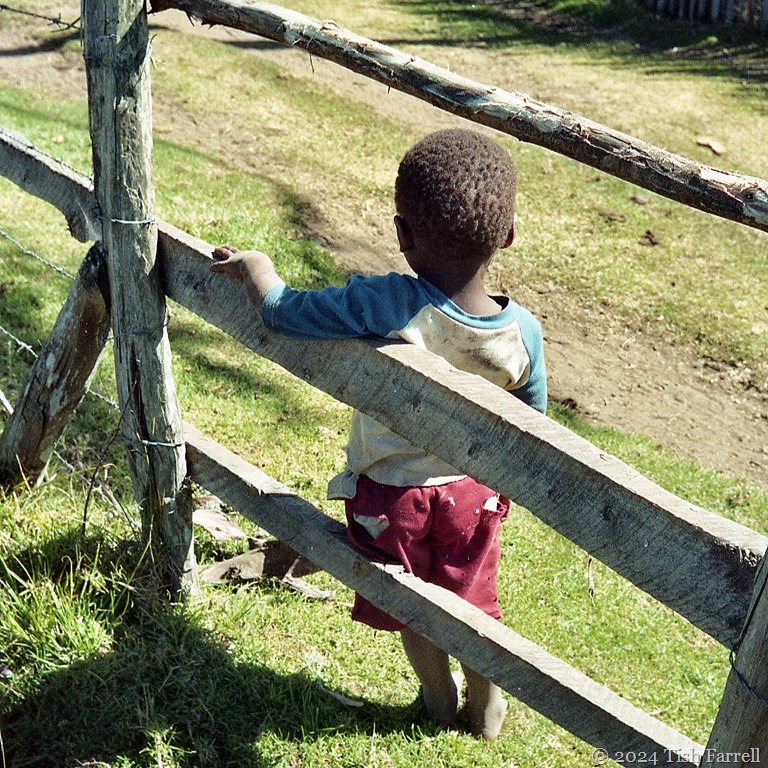
img161ed

copyright 2024 Tish Farrell

Lens-Artists: This made me smile   Ann-Christine is making us all smile with this week’s theme.
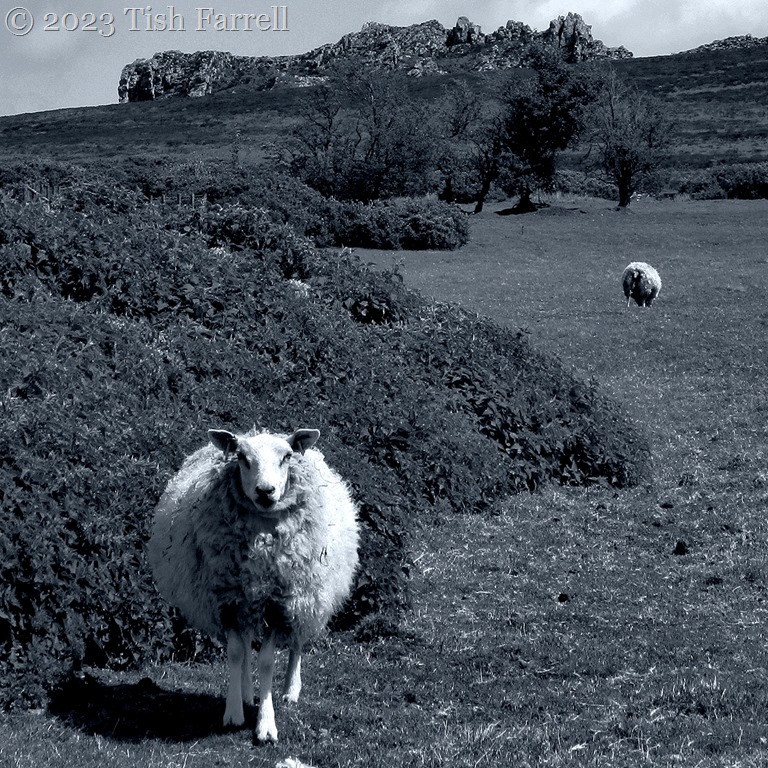
Nice To Meet Ewe…

Stiperstones 2

*

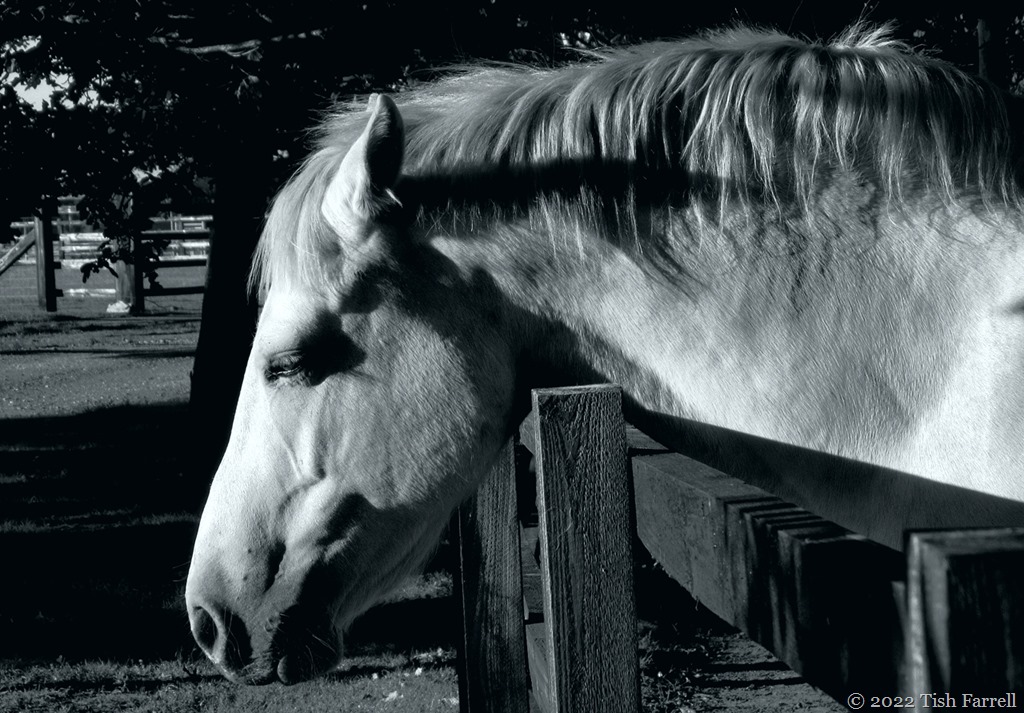
The sheep eyeing me here is posing so neatly beneath the rocky outcrop of the Devil’s Chair. She is clearly untroubled by that landmark’s eerie and supernatural  associations.

This is a stunning landscape, the hills rolling westwards out of Shropshire and into Wales. But it is no easy place to live, the ground marginal, rocky and exposed to all weathers. These days, many farming families struggle and must deploy much ingenuity to keep a viable foothold in the small upland communities, sheep being the primary source of income. Yet, as managed wildernesses go, this is surely priceless terrain; rightly protected and designated an Area of Outstanding Natural Beauty.

It is also a landscape that has been inhabited across five and more millennia. The prehistoric people who lived here left us many signs of themselves – their cycles of living and dying, their field systems and burial cairns, house circles, standing stones, hillforts and henges. The fields, in particular, appear to be at altitudes too exposed for successful cultivation. But then there is also evidence from various post-glacial times indicating the climate was warmer than today, particularly during in the Bronze Age. So perhaps those prehistoric farmers did enjoy their place in the upland sun and a spell of good growing and grazing.

Shropshire hills

There are other historical ironies. The whole locality is riven with old lead mine shafts and workings, some dating from Roman times, but most belonging to the lead mining heyday in the 1850s when the nearby Snailbeach Mine employed 500 men and was known as the richest land per acre in Europe. It is hard to comprehend this now.  Other valuable minerals were also extracted: barytes (the main source of barium used in the taking of X-rays), zinc, calcite, fluorspar and even some silver.

Now lamb chops are the primary resource along with farmhouse B & Bs catering for holiday hikers and cyclists. But also, we can be glad to hear, after many difficult years, hill farmers are now being given credit and support as they continue to farm environmentally protected landscapes.

Here’s a nice story of smallholder Hare Hill Farm and how its owners are making a living with sheep and vegetable growing.

*

a

*

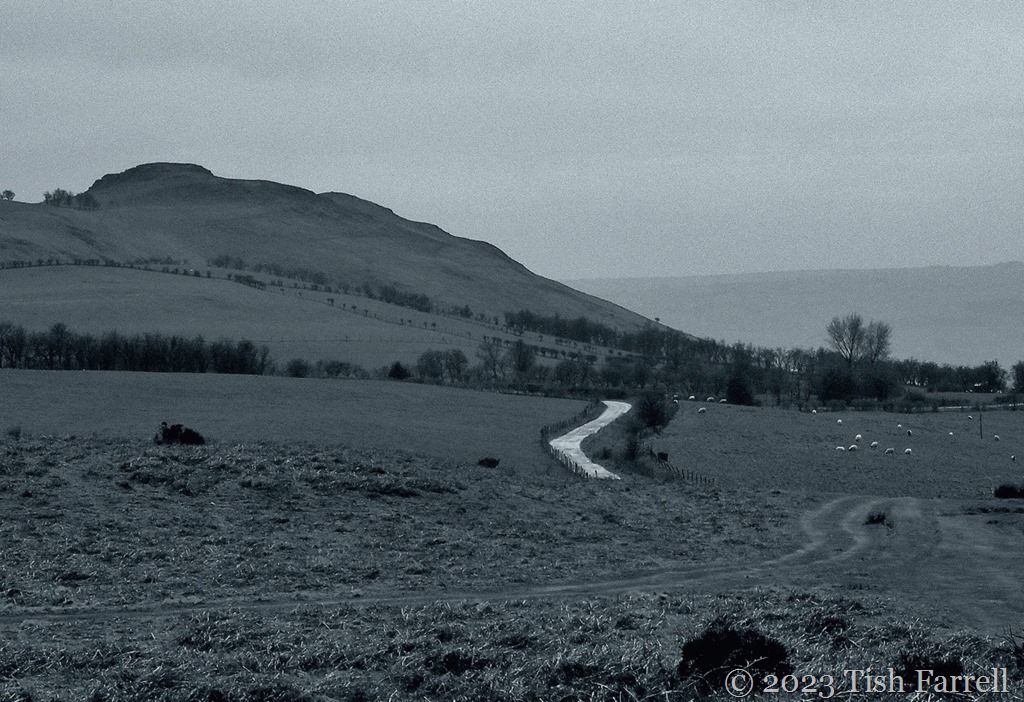
Corndon Hill, Powys border sheep country.

Photo taken from Mitchells Fold Stone Circle

*

P1080526

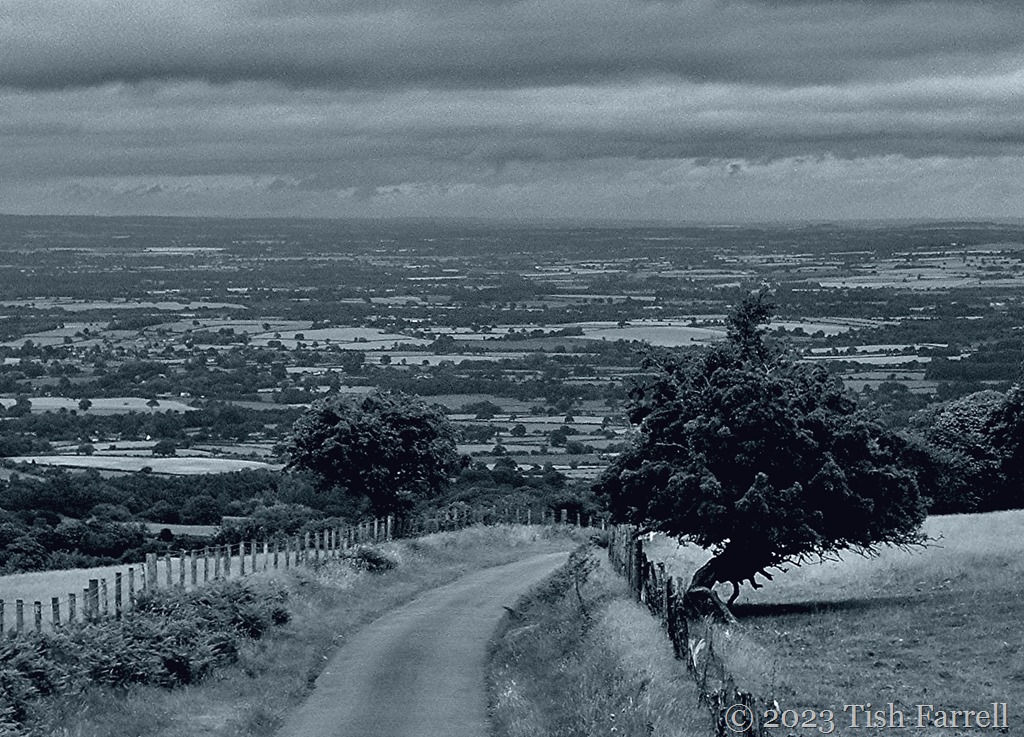
By contrast, the easterly parts of Shropshire below the hill country, are plain-like. As you can see, it is largely farm fields and scattered habitation. Most production is arable (wheat, barley, hay, oil seed rape, root crops including sugar beet, maize) with some beef, pig and dairy farming.

Photo taken from Shropshire’s most famous hill, the Long Mynd.

*

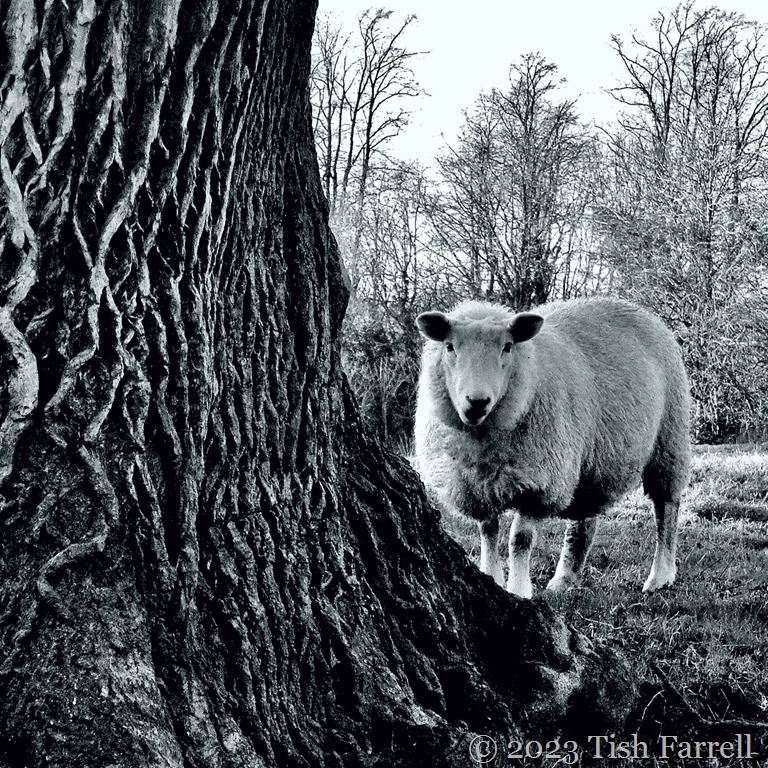
And now for a favourite sheep photo. One of a flock of sheep, so I was told, brought from Wales to Much Wenlock for a spot of sheltered winter grazing on the Wenlock Abbey estate.

sheep

*

To find out more about Shropshire’s Area of Outstanding Natural Beauty and all the things that go on in our beautiful uplands, take a look at the AONB site HERE. Lots of stunning photos.

*

Cee’s Black & White Photo Challenge: all things farm related

The Night Ploughing

IMG_5690

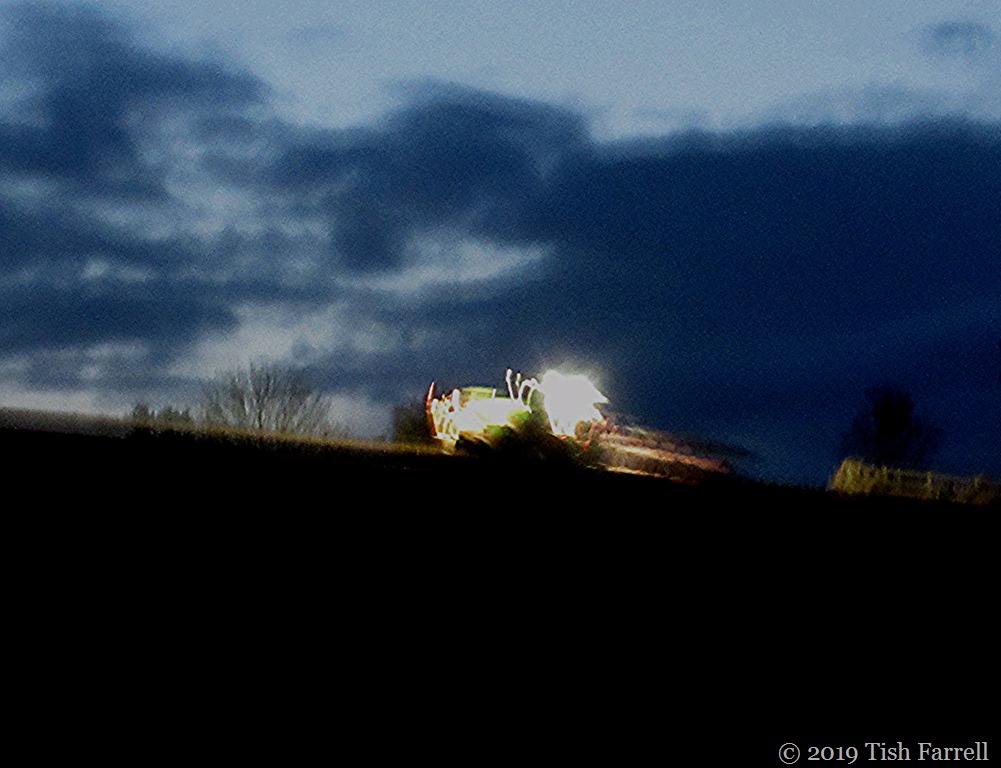
It was the strangest thing – to look out on the nightscape behind the house where there are no roads or houses as far as the Edge, which itself drops a thousand feet through near vertical woodland to farm fields below on the Shropshire flatlands, and see what looked like searchlights moving doggedly through the darkness. The sight induces a frisson of fear. Iron Curtain watch towers spring to mind; H.G. Wells and War of the Worlds: are these Martian invaders patrolling the hinterland? Have the Thought Police hacked into my anti-establishment cogitations and are now tracking me down?

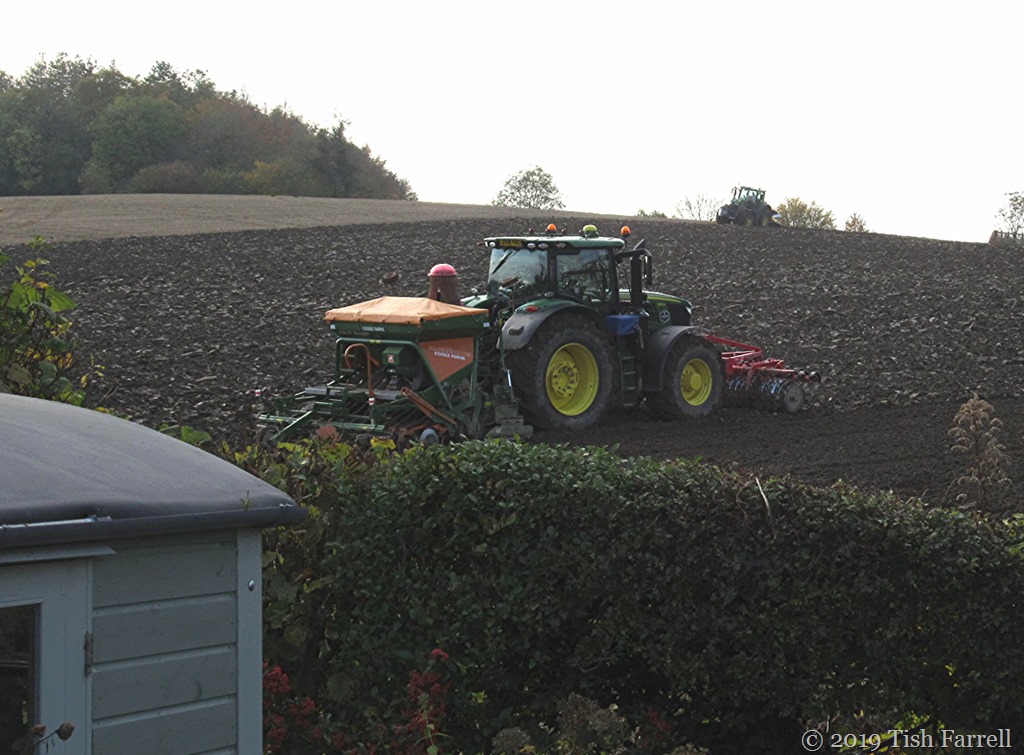
Of course a second later, common sense regained, I knew exactly what was going on, though it was still surprising – this spot of nocturnal November farming, presumably intent on finishing the job before the next round of deluge. The two tractors had been out working on Townsend Meadow since early afternoon. One tractor was ploughing. I watched it moving up and down the field, the glint of steel blades, the rig periodically disappearing from view over the brow of the hill. The other tractor was working back and forth across the ploughed-in wheat stubble, it equipped with high-tech agri-gear fore and aft – (and I’m assuming) seed drilling and then harrowing.  I’ve yet to discover what crop was being sown. Doubtless there will be shoots any time now.

IMG_5689

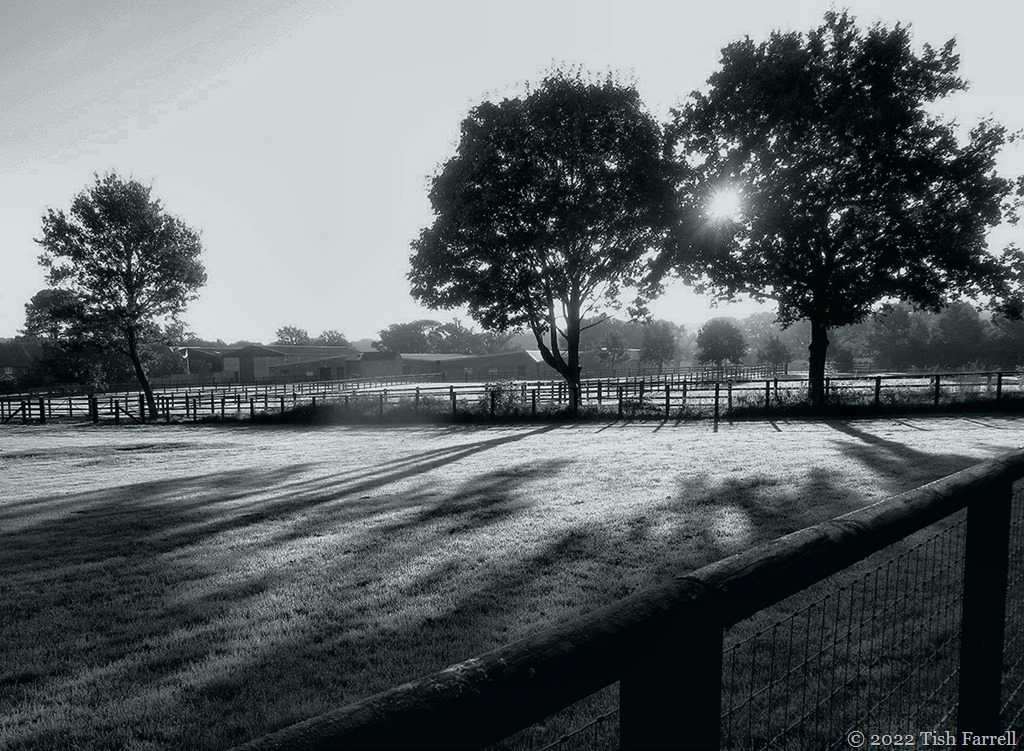
But in the meantime, on my most-days slither and slide along the path to the allotment, I’m astonished how very spirit-lowering is the lustreless expanse of darkly sodden earth after months of pale and textured gold. No more taking short cuts across the field or fossicking for pot shards and clay pipe bits either. I’ve also noticed that the tenant who currently has the field in hand, has reduced the strip of uncultivated headland between our home boundaries and the crop by a good 2 or 3 metres. We always understood that the headland was there as a flash-flood reducing measure, to say nothing of providing a swath of bio-diversity. Only time and heavy rainstorms will reveal the consequences or not of this little development.

IMG_5678

IMG_5681

IMG_5659

The day before ploughing and drilling – 3rd November.


copyright 2019 Tish Farrell

More From The MacMoo Clan

IMG_0732

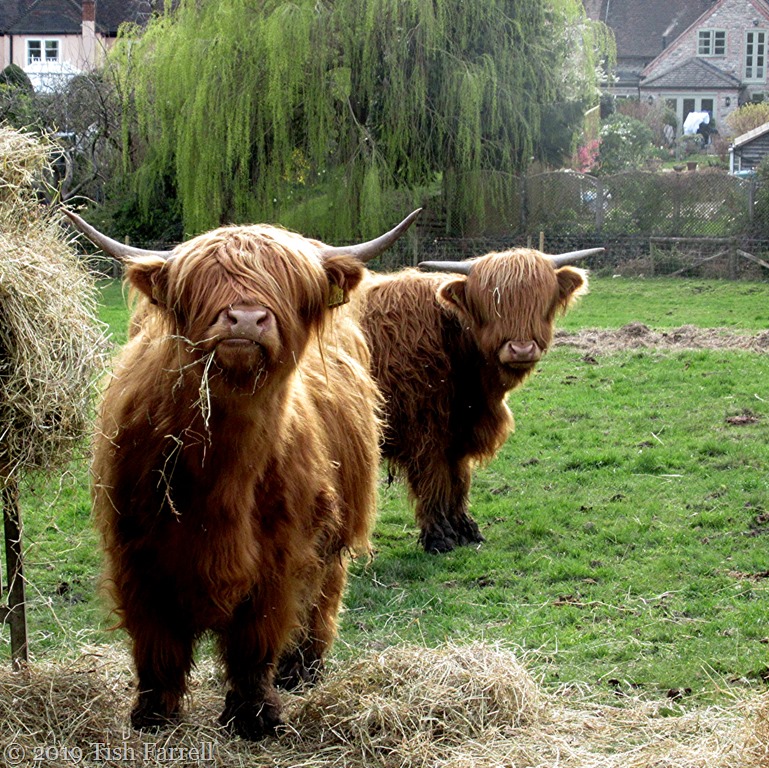
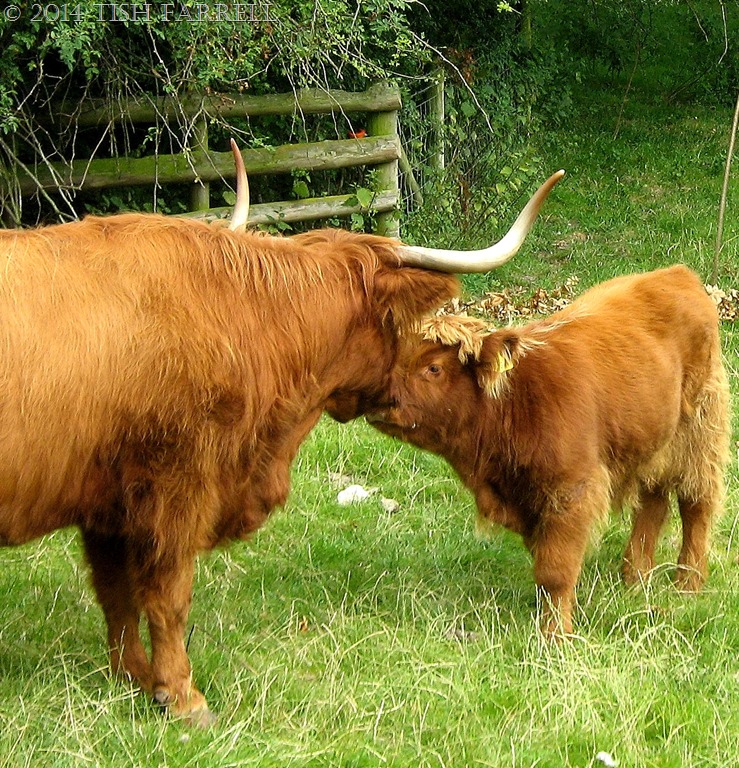
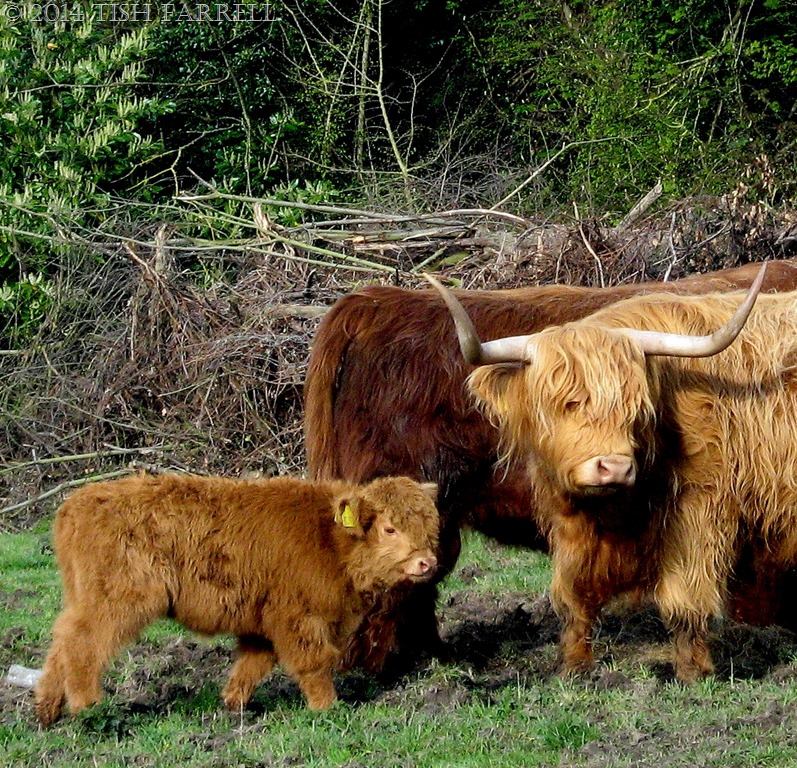
It doesn’t take much to keep us Farrells amused, or should that be amoosed. Anyway, since the highland cattle took up residence in the Cutlins meadow, it has added a whole new dimension to popping to the High Street for some milk. I can report that Mammy and infant MacMoo who featured in earlier posts, have been moved to pastures new, and now we have only four junior MacMoos with whom to pass the time of day. But they are pretty obliging when it comes to a photo shoot, although all in all, they would much rather eat hay. Just like us, then, it seems they are easily pleased.

IMG_2010

Spiky Squares #25

Combine With Me ~ Wooing Wenlock Style

P1020090 - Copy (2)

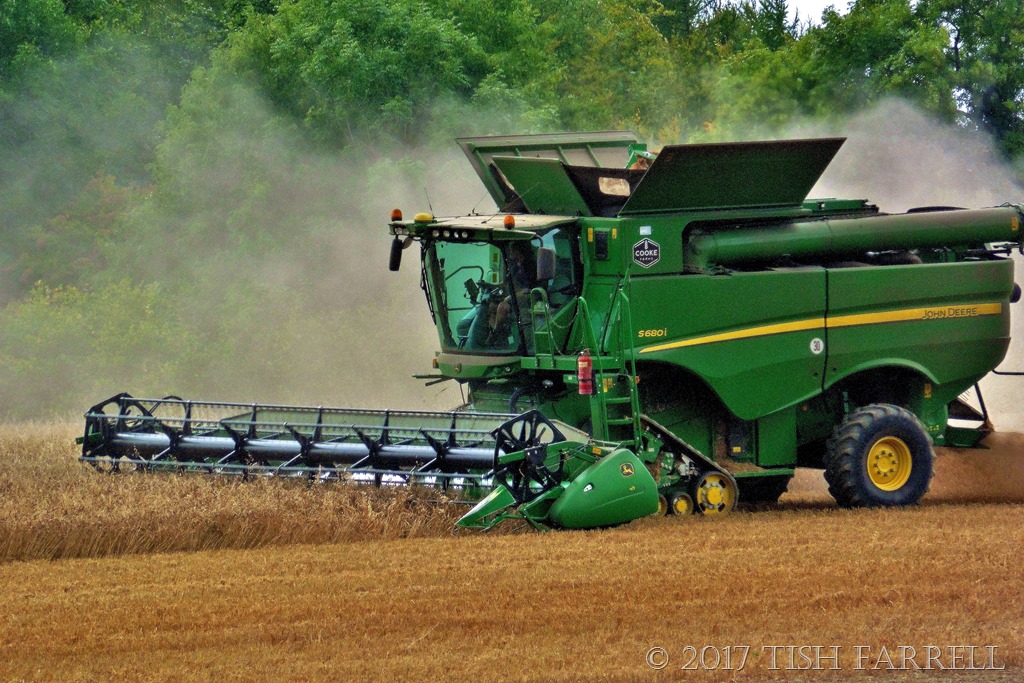
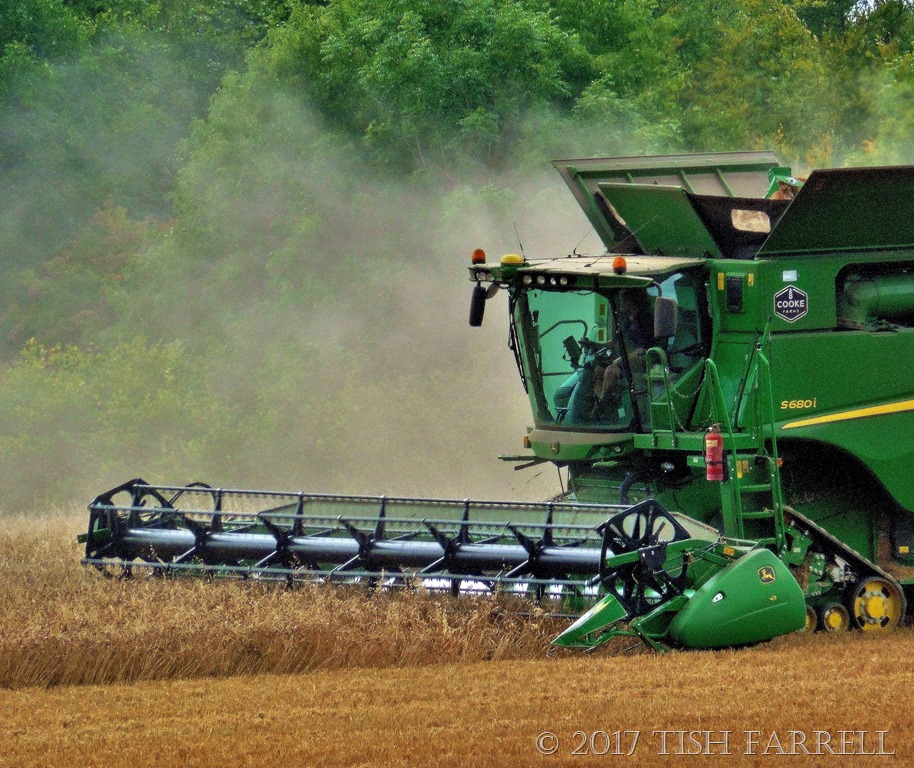
I mentioned that the wheat was being swept off the field on Tuesday afternoon. And as I’m actually rather impressed by seeing combine harvesters in action, and the dust they make, I took a few photos from the bedroom window. But when I looked at them later on screen, I was amused to see a shapely pair of legs nudged up against the combine driver’s jeans.  Aaaah. Greater love hath no young woman than to spend the day out harvesting with her lad.

P1020090

And for those who also have a yen for combine harvesters…

P1020081

P1020089

Have i Got Moos for you

IMG_1359

IMG_0940

IMG_0936

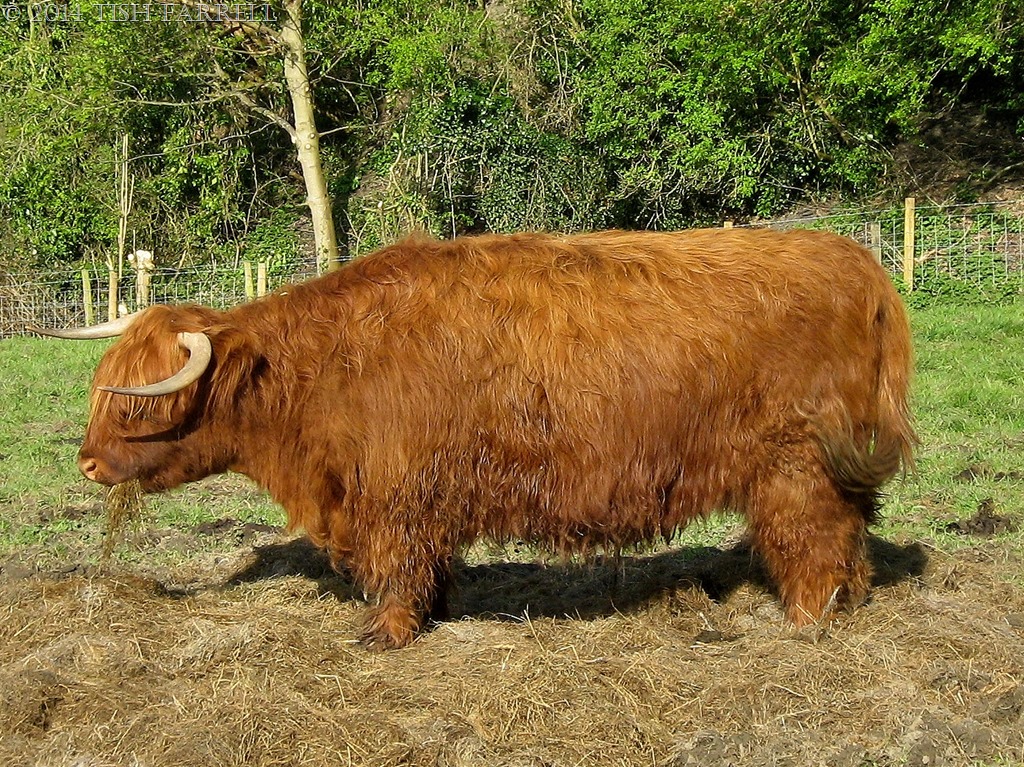
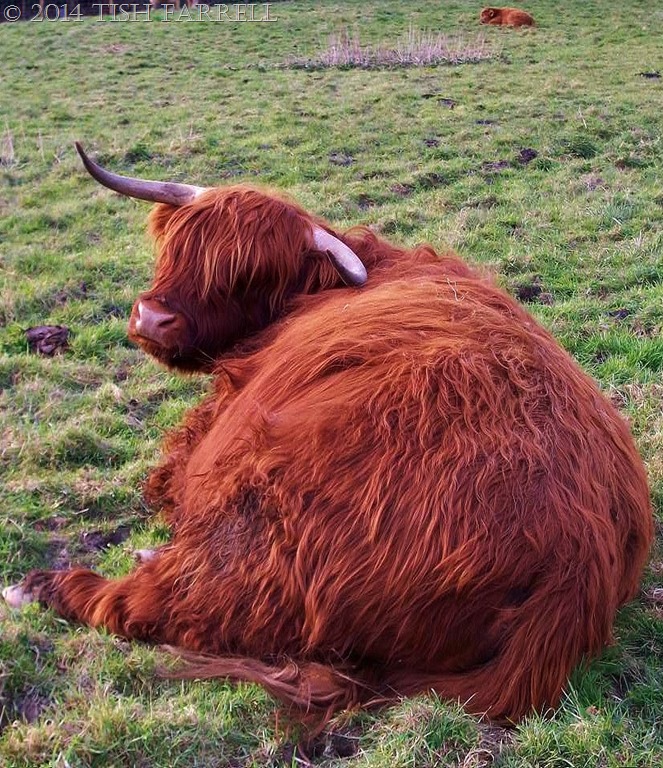
To my eye these Highland Cattle definitely have a frayed look. Their shaggy coats are of course designed to fend off the bitter rain-filled gales of their West of Scotland homeland. They are also one of Britain’s oldest breeds, and all-round tough guys. They are long-lived; they thrive on the poorest grazing, and cows produce  up to 15 calves in their lifetime. This sturdy durability also explains why the breed has been exported world-wide – even to the barren uplands of the Andes. This bunch, however, is having a very cushy life in Much Wenlock, both weather- and food-wise. It’s nice to come upon them on our walks around the town’s surrounding fields. You never know where they will be next, which is a cause of much a-moos-ement on the part of the Team Leader aka Graham, who has formed a deep affection for the great, hairy beasties. (We simple souls are easily pleased out here in the shires.)

100_5314


For more info: The Highland Cattle Society


DP Photo Challenge: fray

Where’s my backpack challenge: orange