Pentre Ifan Revisited

IMG_4583r

These few massive stones are all that remains of a 5,500 year old chambered tomb. Originally it extended some 120 feet (36 metres), the whole structure covered by an earth mound. It must have looked spectacular, dominating the uplands above Cardigan Bay. When I took this photo I was also taken with the rather searching stance of the man at the fence. I spoke to him later. He told me he had been so keen to reach the monument after parking his car, he had dived across the nearest farm field instead of discovering the official footpath, and thus found himself on the wrong side of a barbed wire fence. He was trying to see if he could climb over. We both decided it looked too risky. And then he told me about his awe-inspiring visit to the Great Pyramid. A man clearly much moved by ancient places.

For more photos: Scenes from the realms of ancestors


Cee’s Black & White Challenge: stones or bricks

Look Out! Ghosts On The Line

IMG_5495cr

Last week the Severn Valley Railway had a fit of the Sleepy Hollows: witches, ghouls and other scary entities popping up all over the place; ghosties wiffling off platform lampposts, skellies rising from station gardens, mega cobwebs and evil pumpkin faces. There was even a huge red devil to give you the willies if you were thinking of catching the train from Kidderminster. It was schools’ half-term holiday of course, so there were plenty of kids ready to go in for some serial screaming at Bewdley Station’s gruesome set pieces. It all added to the fun of trundling along on a steam train. We spent the whole day doing it – up and down the 16 mile line – Bridgnorth, Hampton Loade, Highley, Arley, Bewdley, Kidderminister, and back to Bridgnorth in time for tea.

Here’s a gallery of things we saw on the way, mostly through the train window – a very flooded River Severn for one, and also a most surprising sight in rural Worcestershire. But you’ll have to wait till the end for that.

And last but not least in the way of motley scenes and sightings on the Severn Valey Railway: elephants at Bewdley Safari Park.

IMG_5595

Six Word Saturday

The Changing Seasons ~ October In And Out Of The garden

IMG_5250

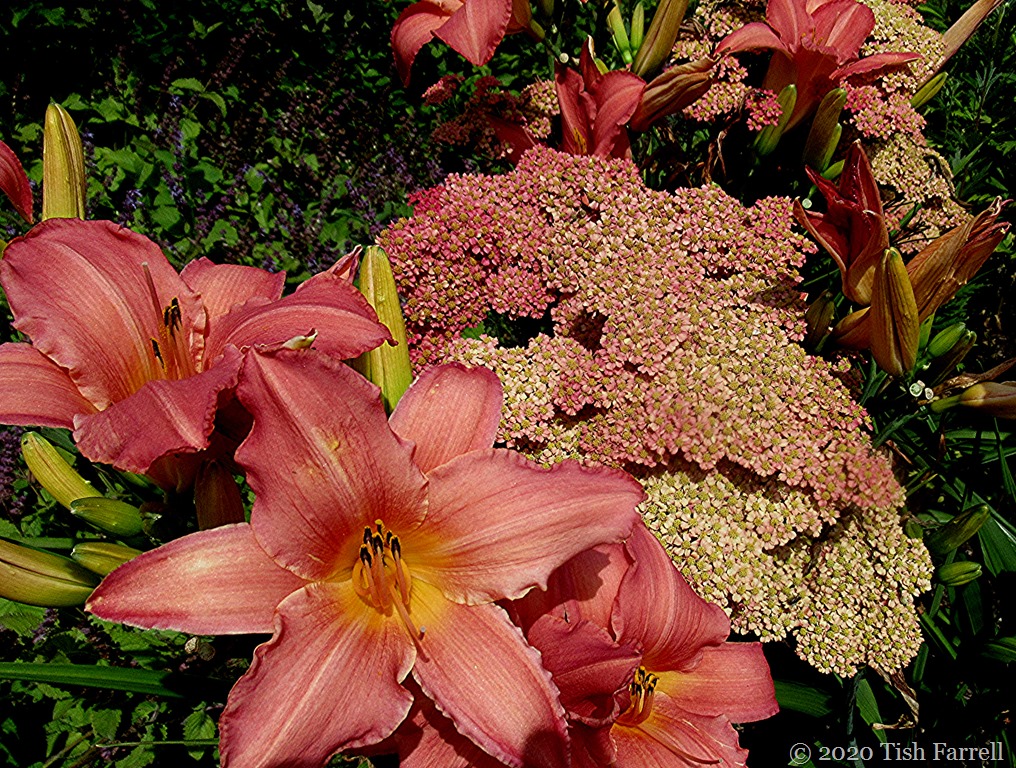
It’s been Michaelmas madness over in the guerrilla garden. November today and these stalwart daisies are still going strong, the late flowering white ones being especially vigorous. I rather hated them when they were inside the garden. They wanted to take over, and when they weren’t doing that, they flopped everywhere.  But now set free along the field boundary, they have come into their own: pale drifts that seem faintly luminous in the autumn light.

IMG_5309

There have been all sorts of other unlikely hangers on. Cosmos for one. And then a couple of weeks ago the shrubby convolvulus sprouted a host of buds, and now they’re popping open, each day several new silvery white flowers with pale pink stripes. They’ve not been put off by days of downpours, gusty winds or early morning frost. The perennial sunflower Helianthus Silver Queen, with her tall sprays of lemony flowers, has been putting on a show too. She seems to think October is her month to bloom.

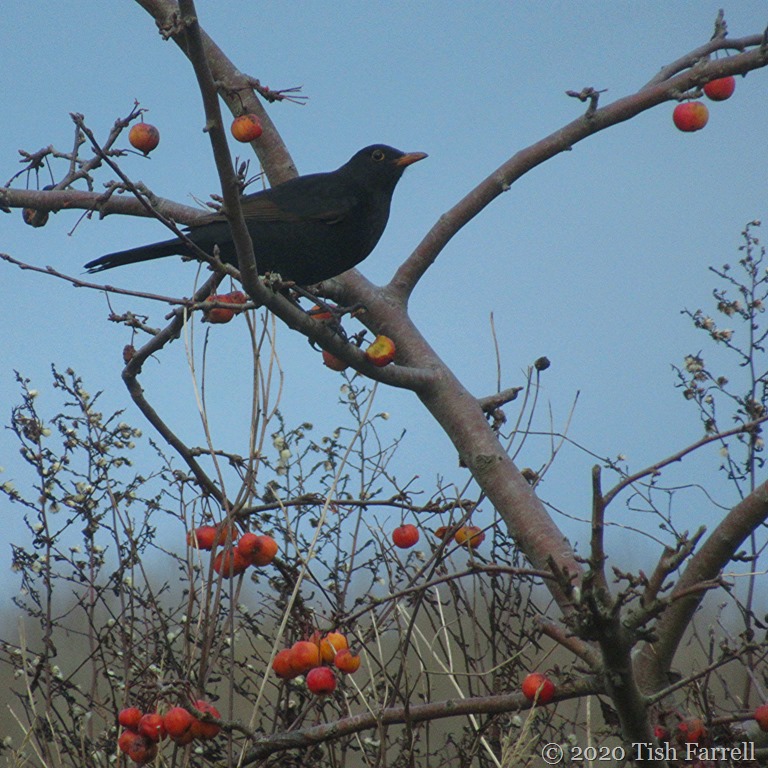
Out around the town the lime trees are turning to gold and beginning to shed their leaves. England tends not to go in for spectacular vistas of autumn colour – more a case of subtle fading through many shades of rust and amber. But this year the Coxes apple tree in the garden made some very red apples – good enough for wicked queens to entrap the likes of Snow White. They weren’t many though and now they’ve mostly  been eaten in a Tarte Tatin.

The Changing Seasons: October 2019

Another Thrown-Away Field Treasure

IMG_5400

I find it hard to credit that this pretty little Victorian ink bottle was a throw-away item, of no more value than the empty juice cartons, tins and the general supermarket packaging trash that we junk attempt to recycle. They were cheap of course, perhaps a penny or two. The base is only 1.5 inches square (4 cms). When it was bought it would have had a cork stopper, suitably sealed. But once opened it was eminently functional. The neck is angled for easier nib dipping and then there are ridges across the top for resting one’s stick pen, and the ridged sides and heavier base would also make spillage less likely.

The one in the photo was found behind our old privies when we were having a hedge of alien snowberry dug out. Graham had a fine time pretending he was on Time Team and excavated quite a little stash – mostly medicine and condiment bottles. But this is my favourite find. It reminds me of Roman glass and I love the colour. I haven’t been able to get its innards quite clean of Silurian clag, but it’s just the thing for a single small flower, a rose bud for instance, one that some careless gardener has knocked off while not paying due care and attention.

IMG_5406


Line Squares #30

Further Lines Of Enquiry In Townsend Meadow

IMG_5394

In the last post I featured the clay tobacco pipe gleanings that I’ve been picking up from Townsend Meadow, the broken stems and bowls of pipes discarded by haymakers, harvesters and ploughmen of times past. Or dropped by lime burners, tanners and quarrymen on their way to restore lost bodily fluids in one of Wenlock’s many inns. But there’s another explanation too, and this could also account for the pot shards I’ve been finding in the field. Up until the not too distant past, broken domestic items were usually thrown into farm cesspits, privies and middens. Later they would end up spread over the fields, mixed in with manure.

IMG_5398

My trek across the field follows a broadly similar route, give or take a metre or two. These shards are all separate finds, though not found too far apart, and I think they could belong to the same dish. My trawl on the internet tells me these are examples of comb decorated slipware. Once they would have made a broadly rectangular loaf or baking dish of a type common in the late 18th century. Very handsome pots in fact.

IMG_5393

IMG_5397

The shards with the yellow swirly pattern on a dark ground are also from slipware loaf dishes made in the late 18th century. They come in round and rectangular versions. You can see stunning examples of these and other English pots at the John Howard Gallery.


Line Squares #29

Pipe-Lines

IMG_5329

Much to my surprise the field behind our house hasn’t been ploughed yet. This is good news for the birds: lots of wheat gleanings to forage amongst the stubble. And gleanings for the erstwhile archaeology student too (that would be me). Since late September I’ve been walking back and forth to allotment across Townsend Meadow, and as I go I pick up the remains of old clay pipes; the residue of ploughmen-past.

After rain the bowls look like bird skulls emerging from the mud. I dig them out and bring them home to wash. The bits are mostly quite plain, except for indistinct maker’s stamps on the bowl bases. But then, most unusually, I found a stem with a well known manufacturer’s mark  on it: W.Southorn & Co, Broseley.

Clay pipes were made in this corner of Shropshire from the late 1500s when Sir Walter Raleigh introduced the nation to tobacco. In the 17th century there was a pipe works on Much Wenlock’s High Street, but at this period it was the Southorn works in King Street, Broseley, a few miles from Wenlock, that was much more  famous. As well as work-a-day models they produced the most elaborate creations including the delicately long Churchwardens (for a long cool smoke). In fact so great was the international reputation of the factory the pipes themselves came to be known as Broseleys. It was thriving trade too, the fragility of the product doubtless stimulating repeat orders. During the 19th century Southorns employed 90 workers.

The works were still in operation until the early 1950s. The pipe kiln there could hold between 75,000 to 100,000 pipes for each firing which lasted 4 days. When the factory closed, the place was simply left, remaining just as it was when the last worker closed the gate behind him. I remember walking past it in the 1970s and ‘80s. It still belonged to the Southorn family then, but remained, much like Miss Haversham’s wedding breakfast* in a time warp all its own. The premises are now in the care of the Ironbridge Gorge Museum Trust.

There is some extraordinary 1938 archive film of the works HERE.

* Great Expectations Charles Dickens

Line Squares #28

Power Lines ~ Ironbridge Switch-Off

IMG_5200

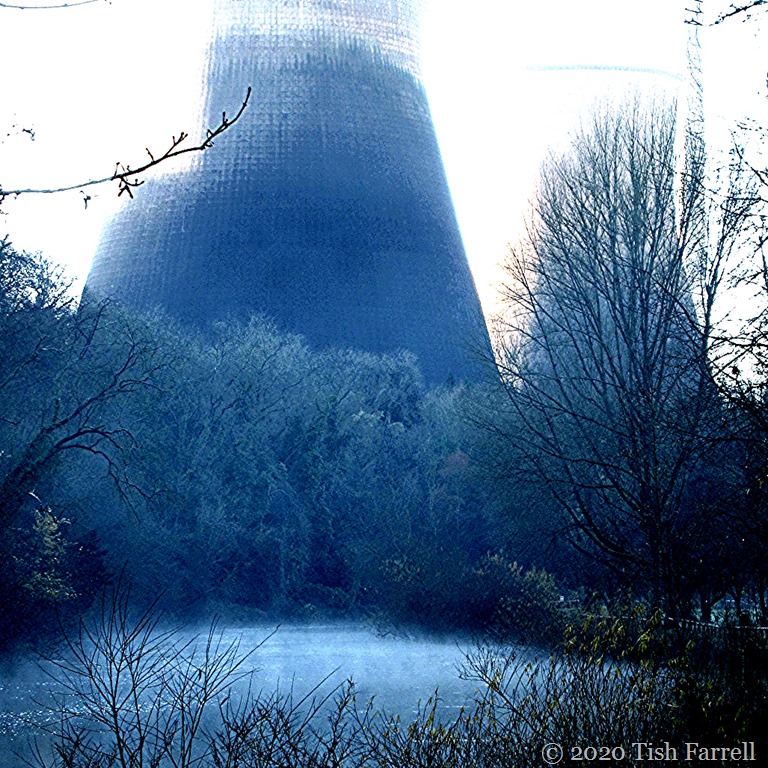
Ironbridge Power Station has run out of steam, its huge cooling towers presently stark monuments to the era of dirty energy, an era that kicked off in this very valley, the Ironbridge Gorge, where in millennia past the River Severn turned its back on the north and, turbo-charged by glacial melt-water, drilled its way through inconvenient uplands and headed south, thereby exposing strata whose properties ingenious humankind would one day find well suited to industrial enterprise.

Limestone. Ironstone. Coal. Fire and brick clay. These were the materials revealed by Severn’s pre-emptive workings. They provided the means for the building and fuelling of blast furnaces. The first iron works in nearby Coalbrookdale were run by monks and lay workers of Wenlock Priory. After the Dissolution of the Monasteries in 1540, there was a massive sell-off of monastic land and facilities around the Gorge to London merchants and get-rich-quick gentry all keen to make iron; or mine coal; or extract natural bitumen that also occurs here.

The Gorge and its tributary valleys were, in their way, covert places, and later proved attractive locations for 17th century iron masters set on pioneering new technologies: coke-fired casting; fine boring of cannon; trialling of new materials in new constructions that would astonish the world and change it and us forever.

But back to the power station that now no longer burns trainloads of coal to feed the national grid. It sits on a floodplain at the head of the Gorge, a World Heritage Site no less, the Ironbridge Gorge. A local lordly landowner once observed to me that the discharges of warm water from the cooling towers heated up the river along his stretch of bank by one degree, thus ruining his salmon fishing; the salmon, he said, did not care for warmth and rushed on by. To his credit his lordship did not seem too bothered. At least for now the river is subject only to natural forces when it comes to temperature.

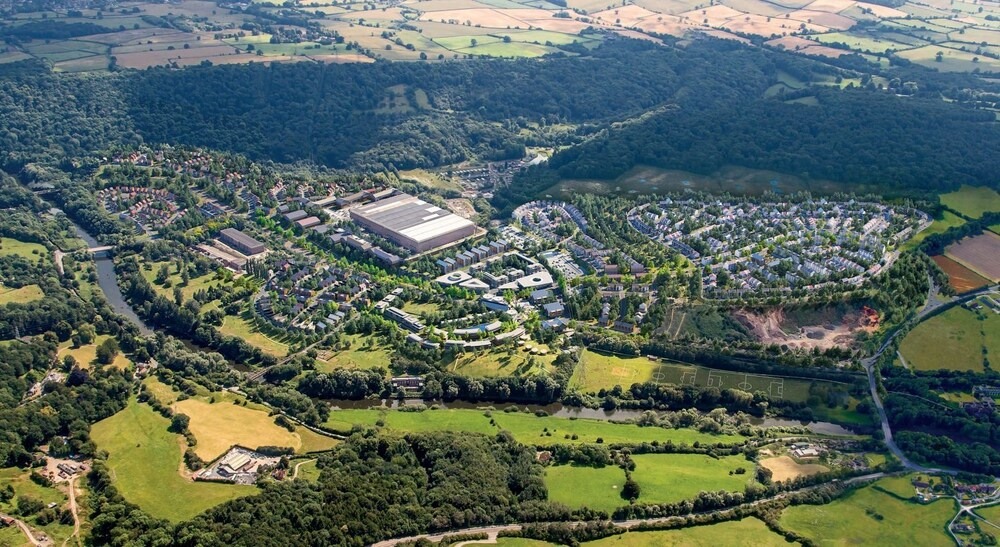
Soon the demolition teams will move in, and trainloads of furnace ash will be shipped out along with countless tons of strategic reserves of gravel which happen to occur on the site. And down will come the four cooling towers – and what a sight that will be. Then the plan is to build 1,000 homes and create a business park to create thousands of jobs, and all beside a river with a history of monumental flooding, and on a site with all manner of embedded pollutants, and in a geographical cul de sac with only two narrow lanes either side the river by which to access the outside world. The head of our local authority that is championing the scheme is on record saying that he won’t let considerations of climate emergency get in the way of the county’s need for economic growth.

It takes one’s breath away – this Age of Bonkers!

Line Squares #23

How To Look Like A Lord In The 13th Century ~ Build Yourself A Castle

IMG_5164cr

We were here last week with accompanying drizzle (so apologies for the gloomy vistas). This is one of Shropshire’s best loved historic gems – Stokesay Castle near Ludlow. Well, all right. It’s not so much a castle as a fortified manor house, though it does have a very huge moat. And it is one of the best preserved 13th century edifices of its kind in England. Pretty much everything still here was built between 1285 and 1290, and the only substantial later addition is the very impressive timbered gatehouse out front. This was built in 1640, and is seen in the next photo from the doorway of the Great Hall.

IMG_5130

The man who built Stokesay Castle was Laurence of Ludlow, a commoner and tradesman, but one of the richest men in England. Like his father before him, he was a big wheeler dealer in wool, the nation’s main export of the time. He did his trading face to face too, travelling to Europe  – to the Low Countries and to France – operating out of premises in Shrewsbury and in London, selling vast consignments of Shropshire-Herefordshire fleeces which were of the most excellent quality.

His business acumen earned him royal favour. He became Edward I’s financial advisor, and when the king needed funds for his war with France and thought to raise them by seizing all the nation’s wool, Laurence devised a very self-serving cunning plan. ‘Sire, why not triple the tax paid by the wool growers.’ And King Edward did. The wool growers were badly squeezed while the wool merchants got off unscathed. And so when in 1294 Laurence drowned in a sea-storm, en route for Europe to deliver wool and money to the Edward’s allies, there was self-righteous jubilation among the wool producers, or so it was written at the time:

‘Because he sinned against the wool-growers, he was swallowed by the waves in a ship full of wool.’

Anyway, here is what Laurence built with his wool money and where his descendants lived for the next 200 years before the house passed into the hands of other families. This is the Great Hall with its magnificent cruck (A-frame) beams. This is where most of the household business (including feasting) would have taken place.

IMG_5119

The hair-raising medieval staircase leads up to the timbered apartment seen in the header. This was probably the guest quarters. As you will see, they are spacious premises and once kept warm by a very substantial fireplace, now sadly lacking its 13th century canopy:

IMG_5131

IMG_5132

*

Here are the stairs from the downward perspective. The timbers were dendro-dated to the 1280s.  Anyone who suffers from vertigo should look away now:

IMG_5138

IMG_5125

Back in the Great Hall you must imagine that these windows were probably unglazed but protected at night by wooden shutters. There was a central hearth with no chimney, and so the smoke would have hung about in the rafters. The small window above the doorway allowed the ladies of the house to keep an eye on things from the privacy of the solar (coming up next).

The solar was ‘done up’ in the 17th century with the addition of some very fine panelling and a very extraordinary over-mantel above the fireplace. Not at all the sort of thing you’d expect in a polite drawing room, nor the garish decoration of the original carving that English Heritage have re-created in one of the room’s interpretation panels.

IMG_5101

IMG_5098

IMG_5102

I always find myself quite interested in the toilet facilities. I think I spotted two garderobes or privies on my way round. Usually in castles and big manor houses the outflow simply went out through the external wall, dropping into the moat, or over the ramparts. At Stokesay one of the loos has a very fine view of the moat, now waterless. A draughty experience I should think.

IMG_5105

IMG_5156

IMG_5147

IMG_5079

Stokesay is in the care of English Heritage

Line Squares #22


Kalamata Layers

P1020448

Late September and the locals had abandoned Peroulia Beach because, they said, ‘it was too cold’. Even to us Brits the sea was a touch cooler than hoped for. Still, you can’t come to Greece and not have a swim. And the glass-clear waters of the Messenian Gulf were so beguilingly blue. And then there was the backdrop view – the Mani that never quite came into focus all the time we were there, the rugged scarps of the Taygetos ever mirage like. Perhaps we dreamt it.

P1020643

Lens-Artists ~ Layered  This week Amy wants to see layered looks.