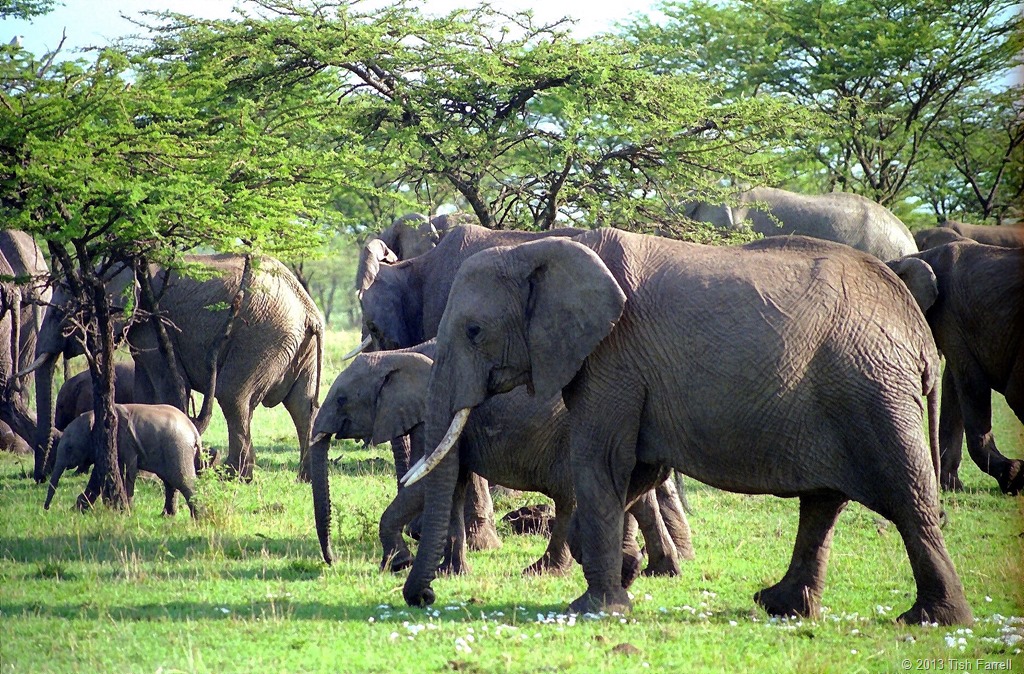
In the Rift: in and out of focus

WP Photo Challenge: Focus

Rift Valley from Escarpment

You may have seen a version of this photo in an earlier post, but it’s worth another look for various reasons – all of them to do with FOCUS. This shot was probably taken late morning. The farmsteads of Escarpment are shadowed by the Eastern Rift behind. Out under the sun, the old volcano Longonot flattens and drifts into mistiness. Your brain tells you that your are witnessing a mirage.

You can climb up Longonot if you want to, and walk around the rim. (We never did.) Inside the crater, Rider Haggard-style, there is a wonderful hidden forest filled with wildlife. In the middle distance, but not quite visible, runs the old road from Nairobi to Naivasha, built by Italian prisoners of war in WW2.

But to come back to the foreground, and the largely Kikuyu community of Escarpment, this is one of the places where, in 1997-8, Team Leader and Nosy Writer carried out some of the Team Leader’s doctoral fieldwork on SMUT. Smut is a fungal disease that attacks Napier Grass, an important animal fodder crop. If you didn’t read the smutting post, coming up is a photo of the smut team in action, complete with some Rift Valley fog which usually happens during Kenya’s cold season in June and July.  Here it provides  the soft-focus-background-look without need of any technical jiggery-pokery.

napier grass sampling 3

Team Leaders Njonjo and Graham weighing clumps of Napier Grass. The object to establish a disease assessment scale for estimating the food loss of a smut-infected field.

*

Actually, the real leader in Operation Smut was Njonjo. He’s the one holding the bundle of Napier Grass. His family’s land is in Escarpment, much sub-divided between himself and his brothers. When we visited his home he told us that his own holding was about a quarter of an acre. This was one reason why he worked as a driver for the Kenya Agricultural Research Institute and was not as a full-time farmer. He had children to educate, and his land alone could not support them all.

*

napier grass on the Rift

Napier Grass in the foreground with Escarpment farms beyond. This important crop is grown on road verges and field terrace boundaries to feed ‘zero-grazed’ stock. The small size of most farms  (some less than an acre) means there is insufficient ground for both pasture and cultivation.

napier grass and farms

Kikuyu farmstead on a drizzly El Nino day.

*

And if you are wondering why Kenyan farms are so very small (several acres in the fertile Central Highlands would be considered quite large for many families) then that’s old colonial constructs for you. Kenya may have been an independent nation state for fifty odd years, but the colonial concept of land management and ownership, along with many other inappropriate British institutions, is alive and well.

Because that’s the thing about British institutions – they are sneakily feudal and thus very hard to unpick. Even in Britain, most of the population is generally unaware that most of the nation’s land is owned by a small number of people who are fully committed to keeping it that way. Ownership in the form of title deeds coupled with an elitist sense of superiority and personal entitlement based on heredity fortify their position. Increased urbanisation is in their interest; it keeps hoi polloi out of the deer parks and off the grouse moors (unless of course they are paying high fees to be there.)

In Kenya much of the population still occupies plots that were part of the designated Native Reserves back in the 1900s.  Since those days the population has increased many-fold, and family farms have been subdivided to point where they cannot easily support one family. This situation underpins much of the creeping poverty that you will see in Kenya today. It is the reason why at least 75% of the nation’s food is grown by women smallholders.

*

Wundanyi market 2

Women selling their excess garden produce at Wundanyi market, Taita Hills.

*

These essential growers are the rural wives who stay on what remains of family land to grow what they can, while their husbands  migrate to the towns to work in shops, hotels, and as drivers,security guards and house servants. These men will return home maybe once or twice a year when they have their annual leave. At such times they will help with the harvest and undertake house repairs. This is also the reason why most parents struggle so hard to educate at least some of their children – so they do not have to live this way.

*

When the British occupied British East Africa at the end of the 19th century, they treated the territory in much the way a British landowner would manage his inherited estates. There was the presumption of absolute ownership. All indigenous people who hunted for a living were labelled poachers and treated accordingly. Land was divided into Native Reserves and Forest Reserves and latterly there were also Game Reserves. All the land that had not been alienated for European settlement was Crown Land unless it was Native Reserve land. By 1914, five million acres had been allotted for European settlement. The Maasai had also been removed from their fertile grazing lands on the Laikipia Plateau and relegated to the poor land that is now known as the Maasai Mara.

001

European owned wheat fields, Laikipia, below Mount Kenya. Taken from a plane window hence the haze.

*

Under colonial rule, Africans could not leave their Reserves unless it was to work for Europeans. Hut and poll taxes were imposed to force them to do so. When overgrazing and land erosion became evident in overcrowded Reserves, well-meaning British Agriculture Officers informed the locals that they were doing everything wrong. Farmers were urged to plant in a European way, to grow strains and varieties of crops to suit British markets. In particular, the growing of nutrient-, water-guzzling maize over traditional, more nourishing crops such as millet was promoted. There was the enforced terracing of land and the confiscation of stock animals without compensation if deemed to be in excess.

Meanwhile, large blocks of the best settlement land were taken  up by British settlers, including a number of British aristocrats whose descendants still live on large estates in Kenya. After the 1st and 2nd World War, British veterans of the officer class were actively encouraged to settle the so-called ‘White Highlands’ around the Rift and grow cash crops. When many sold up at Independence, their tea and coffee estates were taken over by European corporations. Other settlers who wished to leave at that time were bought out by the British Government who then apparently handed over the bill to the new Kenyan government. The new nation state thus started out in debt, having paid to get its own land back. It was not a good beginning.

Scan-130601-0006.jpg

A beautiful corner of Lord Delamere’s estate of Soysambu at Elmenteita in the Rift Valley. The pink dots on the soda lake are flamingos.

*

the-castle2.jpg

Egerton Castle, built in Njoro in the Rift Valley between 1930-40. Its owner was the Fourth Baron Egerton of Tatton, Cheshire. It is now part of Egerton University and used as a wedding venue.

*

However you look at it,then, the land situation in Kenya does not present a pretty picture, and this is only a brief, soft-focus version. After the British left in 1963, Kenyans might have been able to leave their Reserves without passes, and walk on whichever side of the street they chose, but the Crown Lands concept of absolute possession has dogged the country ever since. Crown Land became state owned land; colonial institutions became state institutions. And as I said, such constructs are hard to unpick. Nor would the Kenyan elite wish to unpick them, any more than the British nobility would wish to surrender their hereditary land rights to the masses. As the fourth President, Uhuru Kenyatta (and son of the first President Jomo Kenyatta) takes office, so the thorny issues of land grabbing and wrangles over title deeds continue.

tea fields and workers' houses_thumb[140]_thumb

A  tea estate with workers’ quarters near Nairobi.

Limuru tea fields in the long rains

*

Today, ordinary land-poor Kenyans must look out on the large farms and estates still owned by the descendants of European settlers, or the ranches and flower factories of the Kenyan elite, or at the plantations of the multinationals whose profits go to foreign shareholders, or even at the great wildernesses set aside exclusively for wildlife, and wonder what Independence has brought them. Under colonialism most people were excluded from the wealth creating process except to provide manual labour. Today it seems that not much has changed.

*

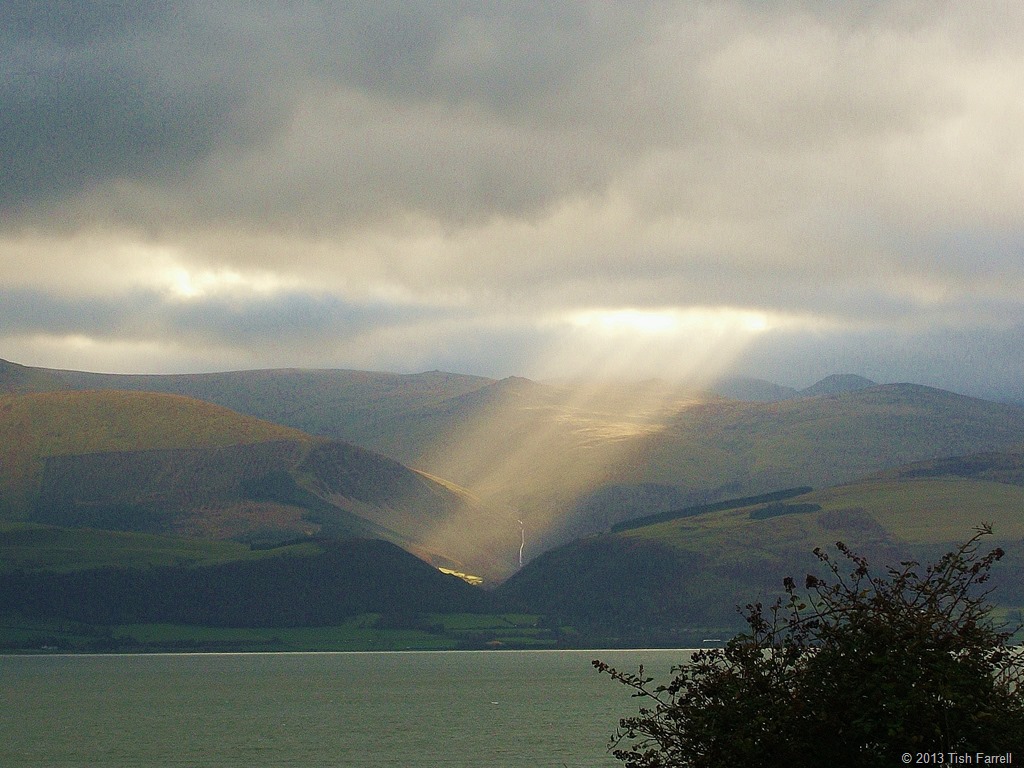
Rift Valley and Longonot from Escarpment (2)

http://flickrcomments.wordpress.com/2013/08/27/iii-challenge/

© 2013 Tish Farrell

Grand girl, great prospects…?
Eve trig 1

Pitch Hill, Cranleigh, Surrey

*

Don’t you feel the rush of energy as you look at this photograph? An impulse captured, hopefulness personified. The gaze is so sure, the balance perfect with no hint of a wobble. It makes you ask: what is this young woman surveying? How does she see her future? And with a stance like that, isn’t it bound to be glowingly brilliant?

If I tell you that the year when this snap was taken was 1937, whatever  image you have just conjured will fragment into uncertainty. With hindsight we can see what her young eyes cannot: soon there will be war, some six years of it.

This, then, is my aunt, Evelyn Mary Ashford, who was ninety in June 2013. I have told the story of the 1942  train bombing that she miraculously survived here.  But since I wrote that post I have found an aftermath photo of the actual incident.

IMG_0001

Photo from War on the Line by Bernard Darwin, Middleton Press

Evelyn, then, was the daughter of the Head Gardener at Redhurst Manor, Cranleigh, one Charles Ashford of Twyford Wiltshire, and Alice Gertrude Eaton, a former accounts cashier from Streatham, London. My father, Alex, was born nearly thirteen years earlier than Evelyn, and by the time she was born, her parents were middle-aged, and my grandfather’s hair already white. This is how I remember him too, for he was long-lived, although a Victorian through and through – a passionate gardener and meticulous horticulturalist typical of that era.

100_3764.jpg

The Ashford Family c. 1930

Grandpa Ashford 1952

Charles Ashford c1952 in his late 70s going rough shooting with Smudger.

Evelyn was around fourteen years old when the Pitch Hill photo was taken. I imagine it was my father who captured her on the trig point. The week before her fourteenth birthday she wrote an essay for her English homework. It is called “I had sixpence…” and gives a surprising insight into this particular village girl’s mind.  Seventy six years on, it still has resonance.

“Money! What a lot that word means today. Everyone is out for as much as they can get, the businessman in the City goads his employees on to fight for supremacy and money.

What would I do if were a millionairess? How should I plan my life?

First of all I would find a home, not just anywhere, but where I should be happiest. Preferably I should live in Devonshire. To be out on the open friendly moors, with the tang of sea in my nostrils, warm streams of pure air fanning my cheeks and the sound of the sea breaking upon the rugged rocks.

Another thing that I would delight in, is travel. To see the great places of the world renowned for mighty deeds and people. Rome, Venice, Athens, those beauty spots of the world. The ruined Coliseum, the forum, the mighty arena once thronged with sturdy, carefree Romans, with swinging togas. The gondolas, moonlit canals and gay masques of Venice, that city of song and laughter…

To return to England and my Devonshire home. One of my favourite pastimes would be reading. A large shady room with deep armchairs, soft long piled carpet that deadened all sound and a baize door, with shelves packed full with books on all sides, a veritable sea of books. Kipling, Stevenson, Edgar Wallace, Horler, ‘Sapper’, Dickens and all those famed authors. That would be the domain of my heart. What strange people would flock down from the shelves to meet me: Sam Weller, Drummond, Pickwick, Jim Hawkins, Kim, Tommy Tradles, Madam Defarge and lord of them all, Sidney Carton.

Oh! But I am thinking only of myself. My money would not be spent on myself along. There are millions of others who would know none of the joy I have experienced. I mean to make myself prominent in government affairs; to get into Parliament if I possibly can. The working class must have more freedom for they are hemmed in on all sides by government officials. What do we pay taxes for but to keep fat officials in the lap of luxury? That is what I would be all out against…”

She concludes by saying that on her death all her wealth would be shared equally between her chief friends and interests.

 And of course she is not dead yet, although she is very poorly, and she no longer communicates on this plane of existence. All her young and adult life, she did whatever she could to help other people, this despite feeling sorely thwarted by a lack of education. My grandfather made her leave school before she could sit for her Primary School Certificate, and anyway would not have been able to afford for her to go on to high school. Instead, she looked after my grandmother, and then was apprenticed to Gammon’s Drapers in Cranleigh, working a twelve-hour day. 

100_3758

Evelyn with my grandmother in the 1940s.

Like so many bright women of her generation, her true talents were never fully nurtured or allowed expression. She married a man, a war-time sweetheart, whom she once described as “a good man”, but who was in no way a kindred spirit. Their married life was also blighted for the first fifteen years by having my grandfather living with them. This was  a terrible trial by any standards, for he allowed them no privacy, and Evelyn found herself endlessly torn between father and husband.

But for all her domestic ups and downs, she never stopped learning, any way she could, or passing on the things she had learned. Now, though, her gaze looks inward rather than out into the world. Perhaps she is back in the walled garden at Redhurst, watching her father in the big glass houses, propagating primulas or grafting peaches, or getting her knickers green, sliding on the velvet lawns that were cut by garden boys leading the  big horse-drawn mower. Or perhaps she is thinking of the young American bomber pilot whom she did not marry, but to whose family she wrote breathlessly chatty letters about doodle bugs and food shortages during the last years of the war. “Dear Momma and Pop” those letters begin…

100_3759

Evelyn around 4 years old in the Redhurst kitchen garden where her father ruled.

*

The legal profession talks of ‘lack of capacity’ when it comes to consider the fitness of people like Evelyn to participate in the man-made fiscal world. She lacks capacity. She does not talk. She cannot read or write anymore. A couple of years ago when we first went to see her in the Welsh nursing home where she lives, and before her so-called capacity had totally shipped out, she was able to tell us that she was happy enough there because she had “so much to think about.” So I’ll second that, Evelyn Mary Ashford Gibbings. In my mind’s eye I stand on a trig point too, and I salute you for a life well lived. For although you never realised your entire capacity, at least  in the sense that I understand it, as a creative person exploring their full potential, you are  still a hero. Hurrah! Hurrah! Hurrah!

100_2835.jpg

Evelyn feeding the gulls, unknown date and location, possibly 1940s.

http://flickrcomments.wordpress.com/2013/08/13/ggg-challenge/#comment-44669

copyright 2013 Tish Farrell

Witch-catching in the Shropshire wilds

Naturally, suffering as I do from Out-of-Africa-itis (some of you may just have noticed this)  any mention of ‘wild’ instantly conjures the sweeping Mara grasslands and herds of wildebeeste.  Or scenes of Zambia’s South Luangwa as featured in the last post (here). But then I thought it was time I took more joy in the place where I actually live  and, indeed, grew up – the wonderfully rural county of Shropshire. And for those of you who do not know England, Shropshire is in the Midlands, along the border with Wales. Also as I have mentioned in other posts, this segment of Great Britain was once (400 million years ago) to be found somewhere off East Africa. Shropshire’s rocks are thus among the world’s oldest, and its hills a magnet for geologists from all over the planet.

My home county, then, is largely farming country – dairy, sheep, and arable – the population living in scattered small settlements and market towns, many dating back to Roman times and the early Middle Ages. But there are also many wild places, especially up in the hill country overlooking Wales. One such place is Mitchell’s Fold, a Bronze Age stone circle.

Scan-130804-0041

This bleakly sited  monument comes with a strange legend attached – the tale of a wicked witch and a fairy cow. And so one December day Nosy Writer and the Team Leader set off to explore. Winter seemed a good time to go searching for the spirits of the past. The photographs, by the way, are all Graham’s. Nosy Writer said she could not possibly take her gloves off in such frigid conditions.

The site itself is near the Welsh Border on Stapeley Hill, south west Shropshire. The stone circle was created between three and four thousand years ago, and originally comprised thirty stones of local dolerite. Today, only fifteen are visible. Some were perhaps re-purposed by subsequent generations; others buried. Often such circles were regarded with superstitious dread, particularly during the Middle Ages.

Scan-130804-0012

In the prehistoric past, though, the place was not so isolated as it appears today. In the vicinity are two other stone circles, although one of these, known as Whetstones was blown up in the 1860s. The other, Hoarstones, was said by locals to be a fairy ring, where on moonlit nights, six ‘fairesses’ would dance. There are also numerous cairns and a long barrow, and, not too far away,  the Bronze Age stone axe factory of Cwm Mawr whose finely carved mace heads were traded far and wide across England and Wales. Of the reasons for this and the other circles, all is shrouded in mystery. All that may be said is that once these upland places were of great importance to the people who laboured to make them.

Scan-130804-0039

But what about the witch-catching story, I hear you ask. Well that I can tell you. It goes like this.

Once, when there was a terrible famine in the district, the fairies took pity on the starving peasants and sent them a snow-white cow. The cow was kept in a circle of stones on Stapeley Hill, and, as with all such gifts, there were strict conditions as to usage. Every person was allowed to milk the cow by turns, but only so long as  the cow was never milked dry, and each person took no more than one pail full.

Everyone followed these instructions, and all went well until the wicked old witch who lived nearby grew envious of the peoples’ good fortune. Why had they not called on her to solve their problems? Her name was Mitchell, and out of sheer spite, she thought up an evil plan.

And so one night, when all honest folks were asleep in their cottages, she approached the cow and began to milk it. The only thing was, the bottom of her bucket was full of holes. She milked and milked until the cow was dry, thus breaking the fairy charm. At once the cow sank into the ground, never to be seen again. But Mitchell did not escape either. She had challenged the forces of good too far and found herself trapped inside the stones. And when the people came next day and saw their fairy cow gone,  and they saw the false pail and pool of wasted milk, they knew exactly what the witch had done. So just to  make sure she never escaped, they walled up old Mitchell inside the stone circle, where she was said to have finally starved to death.

Scan-130804-0008.jpg

And just in case you are wondering, no, this is not Mitchell’s ghost in the photo, but me, wrapped up in many post-Africa layers. And beyond me, the Welsh hills.

Finally, here are more scenes of Wild Shropshire – in particular, the hills known as the Stiperstones, which featured often in the novels of Shropshire writer, Mary Webb. The last photograph shows one of the Stiperstones’ natural ‘cairns’, just visible from Mitchell’s Fold. These bleak hills also feature in many local legends, but they will have to wait for another post.

Scan-130804-0006

Scan-130804-0018

Scan-130804-0026

Elephants, E-books and Enticing Reluctant Readers

Two at once challenge – DP : Reel Talk and Frizztext’s  EEE

Everyone who comes to this page is a reader. Bloggers love to read as well as write: poems, flash-fiction, memoir, novel excerpts, reportage, long pieces, short pieces; it’s how the blogweb works: exchanges to entertain, enchant, enthuse, encourage and elucidate.

Some of my stalwart followers and followees boldly read and create in second and third languages, which for me who only has proficiency in English is a great source of admiration and envy. And if that’s not enough ‘Es’ already, I have some more. But first a question: what about those (old and young) who find reading a struggle? What about those who find a page loaded with text a total turn-off, or the average sized paperback too daunting in scale to broach?

And to answer my own questions, this is where the book cover below comes in, because one of the things I do besides loitering in cyberspace is to write good stories for unkeen teen readers, (or for anyone else I can corner for that matter).

Shades covers for REPRO Batch 2_Layout 1

Cover: copyright 2013 Ransom Publishing.

The title of this new edition of my very short book Mantrap clearly begins with ‘M’ ( which means you can look forward to more mentions further down Frizz’s alphabet.) So what is it doing here now? The elephant is of course the excuse I needed to write this piece, also the fact that Ransom Publishing will shortly be bringing out  an e-book version for Amazon Kindle and Apple, as well as a paperback edition. It is part of their Shades series. Full details of this and other books in the series can be found HERE. The series is being printed as I write this and will be launched in August.

Interest-wise, the stories are aimed at readers of twelve years and upwards, but whose reading ability is deemed to be a few years younger. The text is a piece of short fiction but presented in a novel format i.e. 6,000 words divided into several chapters, and over 64 pages. There is plenty of white space on the page.

Banner 

Ransom publishes a wide range of fiction and non-fiction for all ages. Personally, I think the Shades’ quick-read formats are ideal for just about anyone who wants a good story, but has limited time to read it. You can slip these nice little books into your pocket. However, this is not so much a sales pitch as an explanation: the why, where and how this story about ivory poaching came into being. There’ll be an excerpt at the end.

I can also tell you precisely where the Mantrap story began – under a baobab tree. And here it is, the very one:

South Luangwa - mighty poachers' baobab

The fact that it was in leaf at the time was perhaps auspicious. Baobabs are usually bare. This one could be a thousand years old. We stopped under it for a noonday picnic after a get-up-while-still-asleep and go on a dawn game drive. The location is South Luangwa National Park in Zambia. It is a glorious place with parkland vistas, much shaped by the local elephants who knock down the thorn trees, but rarely the baobabs, to encourage the growth of their favourite food – grass. 

The other great shaper of the territory is the mighty Luangwa River as it endlessly carves new meanders through the bush country.

South Luangwa - dawn walk and hippos

*

As the river shapes a new channel, so the old meanders are left behind, some becoming stagnant lagoons where hippos wallow amongst the cabbage weed. The local people call such places Luangwa waffa or Dead Luangwa.

South Luangwa - lagoon with cabbage weed 2

But back to Mantrap. It was while I was standing under the baobab, and peeling a very English hard-boiled egg, that our guide happened to point out the narrow strips of wood that had been driven unobtrusively  into the tree’s hard, smooth trunk. 

South Luangwa - mighty poachers' baobab 2

“It’s a poachers’ ladder,” the guide told me. “Ivory poachers. This tree has been a look-out post for years.” He went on to tell me how earlier that week an elephant had been killed nearby. The tusks had been taken, but then later, when the coast was clear of poachers, the local villagers had come to grab the meat.

My spine tingled:  horror and pity, and not only for the elephant. I knew that rural Zambians were  in a poor state. This was the reason why we had come to Zambia. Team Leader Graham was responsible for the logistics of delivering EU food aid to drought-stricken villagers. (See Letters from Lusaka.) Also, elephants and other game can destroy a farmer’s whole crop in a single night. The conservation of wild game, then, and the protection of neighbouring people’s livelihoods are matters  not easily resolved.  Game parks across Africa generally do not have fences. Animals move about at will, and many farmers are maimed or killed by buffalo, crocodiles, hyenas and elephants. Their families rarely receive compensation.

South-Luangwa-Zambian-homestead.jpg

We, however, belonged to the fortunate segment of the world’s population that had no shortage of food and also the leisure to take a few days holiday, staying in a small tented camp run by Robin Pope Safaris. On the way to our campsite from Mufuwe airstrip we crossed a dried up river where a girl was digging deep into the sandy bed in hopes of scooping out some water. In the gardens of a nearby farmstead, the maize was blown to dust. It was hardly surprising that there was a poaching problem in the district. People were starving.

But then to my  mind, there’s a big difference between hunting antelope and small game for the pot, and particularly when the park and surrounding licensed hunting blocks occupy the local people’s former hunting territory, and the obscene and pointless slaughter of elephants solely for their ivory.

South Luangwa - young elephant

Yet the temptation to some locals must be enormous. They have families to support, children to send to school, medicine to buy. Big business cartels, especially in the Far East, are apparently more than glad to arm and fund local hunters in the pursuit of ivory and rhino horn. This means that park rangers are at great peril. Many are murdered in their attempts to protect wildlife so tourists like us may come and stare, and snap away.

One way to combat poaching is to give people good reasons to protect the game. Robin Pope’s Safaris have pioneered schemes to involve local communities in conservation.

Helping communities to gain from tourism

*

So these, then, were some of the things I wanted to explore in my story. What emerged was a life-and-death adventure that had its beginning the moment my fingers touched the rungs of the poachers’ ladder.

Here then is an excerpt – the opening scene. It is dawn in Luangwa. Hunger has finally driven Danny and his father, Jacob, into the National Park to hunt antelope. But Danny is a schoolboy, not a hunter; it is not surprising that, in his panic, he makes a mistake – a mistake that lands them in the clutches of a corrupt ranger who has a far more dangerous quarry in mind.

Chapter One: The Kill

Impala. A small herd among the sausage trees. Jacob stopped dead and held up a warning hand. Danny froze on the spot and this time, without a sound, dropped behind a potato bush. He peered through the leaves, fixing on a big ram. He was about twenty paces away, grazing the yellow grasses, his harem of females all round. Danny’s eyes stung with longing. There was that beautiful ram. So near, and yet so far. The smallest sound might send him bolting. Out of reach!

Danny willed Jacob to shoot. Now, Dadda, now. Then nearly howled when the ram raised his lyre-shaped horns and sniffed the breeze nervously. The ram had scented them. He had. Danny prayed and prayed. Please let our luck change. Please let Dadda shoot. Then we can get out of here. Before the sun comes up. Before the park rangers start their patrol. Before we’re caught and sent to jail…

And finally, here’s a short clip that shows Luangwa in all its rain-soaked glory. One of the earth’s most beautiful places, and over four hundred species of birds.

© 2013 Tish Farrell

Links:

http://dailypost.wordpress.com/2013/07/29/reel-talk-writing-challenge/

http://flickrcomments.wordpress.com/2013/07/30/eee-challenge/

Fresh strawberry and rhubarb cordial

WP weekly photo challenge: fresh

100_4181

Fresh to me means produce straight from  my allotment, pesticide-free and naturally fed plants. I’ll give you the recipe for the cordial at the end, but first I’m going to show off some of my harvest, which despite the burning heat-wave we’ve been having, and my erratic watering, seems  to be doing pretty well.  The strawberries have been delicious – warm off the stem, or made into ice cream. We even outfaced the heat by having some in a crumble (i.e. baked with a butter-sugar-flour crumb crust) and served with some Greek yoghourt.

100_4110

And now the raspberries and blackcurrants are beginning to ripen which means it’s time to make jam with the raspberries and coulis with the currants, or Summer Pudding with both.

100_4193

100_4194

And then there are gooseberries to make into gooseberry and ginger chutney, and gooseberry fool, or gooseberry sauce to have with grilled mackerel.

100_4198

On Saturday night, after a hard day’s picking, weeding and sowing, we had steamed artichokes served with crushed garlic in melted goat’s butter.

100_4095

And on Sunday night, after digging up some Charlotte and Red Duke of York potatoes, picking French and broad beans and broccoli, I steamed the vegetables and dished them up with salsa verde and a few grilled rashers of Wenlock Edge Farm bacon. Bliss.

100_4197

100_4200

And now I’ve teased your taste buds to extremes, here is the recipe I promised you:

Strawberry and Rhubarb Cordial

4 sticks of rhubarb chopped

300 gm/10 oz ripe strawberries, hulled and cut in half

320gm/11oz caster sugar

1 litre/1.75 water

juice of 2 lemons

Place fruit in heavy based pan, add sugar and simmer on low heat for 10 minutes. Add water and increase heat slightly. Cook for a further 15 minutes until the fruit is soft.

Leave to cool then strain through a sieve, pressing the pulp into the syrup. Add lemon juice and store in the fridge. To serve, dilute with chilled sparkling water, and add a sprig of mint if this appeals.

OR make a damn fine cocktail with some prosecco or other dry sparkling wine. I haven’t tried this myself yet, but I just know it will be wonderful – bellinis with bells on.

*

And finally a shot of the marigolds and sweet peas that I grow amongst my vegetables to make the bees happy, and me happy when they have pollinated everything else.

100_4175

Happy summer to everyone who takes the

time to read my blog – lovely

people all of you.

Carnations, crooks and colobus at Lake Naivasha

Even locals told us that  anything could happen in Kenya.  And  so one Lake Naivasha morning, when I thought I was  alone in the grounds of an old safari lodge, I was both surprised and unsuprised when a young man suddenly stepped out from the papyrus swamp clutching two bunches of carnations. Fifty bob, madame, he said after the customary greeting. He seemed nonplussed  when I started to laugh.

“Do you always keep your carnations in the papyrus,” I asked.

“Yes,” he said.

“What, waiting for people like me?”

“Yes,” he said.

Scan-130602-0001

This exchange seemed to seal the deal. I didn’t even bother to haggle. And although I have no idea why I would have 50 bob on me in such a place, I bought a bunch. Given the general lack of wazungu humanity in that particular location, I also wondered  how long he had been waiting for the likes of me to come along; or how long he would have been prepared to wait for a customer. Or if I was just the unexpected thing that happened to him, rather than he to me. (You could tie yourself in knots second guessing). The rest of the lodge guests, I knew, were male entomologists, engaged all day in seminars and workshops; only I was free to wander about the hotel’s straggling  grounds buying flowers for which I had no particular need.

*

Scan-130716-0012 (3)

*

We had driven up the Rift from Nairobi the day before. Team Leader Graham was to attend a four-day international conference on the Larger Grain Borer. Along with his Kenyan colleagues there were some forty delegates from such places as Honduras, Mozambique, Italy, UK, Benin, Zimbabwe.  Anyone who has read my post, Letters from Lusaka Part 1,will know that this small maize-grinding beetle, aka LGB, was introduced into Africa in a consignment of US food aid in the 1980s. Its natural habitat is in South and Middle America where it also has natural predators to keep it in check. In Africa it has no natural enemies and can thus eat itself silly while villagers, deprived of their staple crop, starve.  Seventeen years on from this conference, it is still a problem.

So: while delegates debated what might be done about the ravages of this particular storage pest, Nosy Writer, like some latter-day colonial ‘mem’, dilly-dallied about the lake shore and its hinterland. At the time I was recovering from some strange digestive malady, so wandering and bird watching were all I could cope with. When the young man popped out of the papyrus I was still weighing up whether or not I should be deterred by the sign I had just read amongst the fever trees.  I could anyway hear the hippo grunting, and having once been charged by a big angry bull in Zambia was already a little wary. The appearance of a boy with a bouquet, then, seemed like a piece of magic.

Scan-130602-0003

When I asked him where he got the flowers, he told me there was a flower factory ‘next door’. (Many international growers have their flower factories around the lake. There are strawberry and asparagus growers there too). At the factory (think acres of pink poly-tunnels under the tropical sun) he gathered the discarded side stems and inferior blooms from the refuse heap and made them up into bunches. Later, when I told this to Graham’s Kenyan boss, Gilbert, he told me that export stems had to be between 70-100 cm long, which meant there were probably plenty of rejects.

He also told me that the factory ‘next door’ was reputed to be owned by one of Kenya’s top crooks, a notorious Kenyan-Asian wheeler-dealer. Gilbert then added that he also owned the safari lodge where we were all staying. I could only blink in response. It seemed like another of those ‘anything can happen in Kenya’ moments; another of the endless moral conflicts. Here were a bunch of diligent, respectable scientists all funded by international development money patronizing the establishment of a member of the criminal elite who, from behind a front of untouchable respectability, was bleeding the nation on breathtakingly colossal proportions.

It’s the moment when you say, oh, bloody hell, I can’t cope with this, and go back to reading a book or bird watching, or listening to the plaintive call of a pair of fish eagles resounding off the water, or to the companionable  grunting of hippos.

Scan-130716-0012.jpg

Scan-130716-0010-2.jpg

I also tried to distract myself from thoughts of the flower factories around the lake. There was talk of them abstracting too much water, and polluting the only freshwater lake in Kenya’s Rift with pesticide residue  – all so the citizens of London, Paris, Amsterdam can buy the perfect, but scentless, long-stemmed rose, or metre-long carnations. Of course these places provide work for scores of labourers, and increasingly there are well qualified Africans in managerial positions.

The companies probably provide clinics and primary schools too, but the bulk of the profits from these huge concerns go to Europe and to their shareholders, not to Kenya whose human and natural resources are being exploited in the meantime. Then there’s the row about multi-nationals not paying local taxes. It’s the same old story – colonialism in a new form – the need for cheap labour to justify the cost of the daily absurdity of flying fresh-cut flowers out of Africa.

How do you begin to unpick all this. I can’t. It is easier to bird watch, and there are hundreds of species around the lake to look out for.

Scan-130716-0013

Scan-130716-0008.jpg

Scan-130716-0014-2.jpg

Scan-130716-0011 (11)

From the top down: pelican, bee eater, pied kingfisher, goliath heron – just a few of the 400 bird species around the lake.

*

There are the fishermen too, seine netting and scooping up buckets of freshwater crayfish, although accidentally introduced carp is now the dominant fish species.

Scan-130716-0011.jpg

Scan-130716-0011-6_thumb.jpg

*

And finally every afternoon around four, a family of colobus monkeys come to the lodge garden and play on the guest cottage roofs. It’s easy to tell yourself that this is paradise.

Scan-130716-0012 (2)Scan-130601-0007.jpg

Refs:

Urban society and the fishery of Lake Naivasha, Kenya – Balancing ecosystem and stakeholder demands by Phil Hickley, Mucai Muchiri & Ros Boar

Kenya Birds Lake Naivasha

Flower power keeps Kenya’s Lake Naivasha blossoming – video Guardian 2012

Kenyan flower industry’s taxing question Guardian 2011

P.S. I took the carnations home to Nairobi where they lasted a further ten days. Excellent rejects.

© 2013 Tish FarrellScan-130602-0002Scan-130602-0004

The Golden Hour on the Rift Plains

  1. http://dailypost.wordpress.com/2013/07/12/the-golden-hour/

First off, before the best bits, I should say that there’s a bug in the Word Press system, so dear followers and followees, please check your SPAM for any comments from me or other afflicted bloggers and (only if you want to of course) upspam them. Otherwise, on most blogs, my comments are currently going straight to SPAM. It’s a cunning way to stop us from talking to each other. Curses on the joyless little bug that is doing this.

Now for some late afternoon views of big cats and other animals in the Maasai Mara.  This photo shows just how easily lion conceal themselves in quite short grass. Here, as sunset approaches they are becoming watchful, although they could scarcely care less about us watching them. Soon it will be time to go hunting.

Scan-130520-0011

*

Mara lioness 2

Just to the right of the lioness is another lion. It makes you appreciate how intrepid are the Maasai who daily have to graze their herds, and also fetch firewood and water out on these plains. (For more about this you can read my short story ‘Flight’ HERE. It was one of the Bath Short Story Award winners and tells the story of a Maasai girl’s life in this extraordinary land.) Doubtless the herders keep an eye on where particular prides are spending their sleeping hours, but even so, walking into a laid-out lion seems a distinct and chilling possibility.

*

Scan-130520-0017

Scan-130520-0018

Scan-130520-0021

Mara at dawn 2

Mara grassland 4 (2)

Which Way in Africa: It’s Often Hard to Know

http://www.ceephotography.com/2013/07/10/cees-which-way-challenge-week-1/

More views from our time living in Africa. For more of the stories behind the photos, you can follow the links.

*

Scan-130429-0003

Village path, Shela, Lamu Island, Kenya

*

Scan-130429-0102

It is easy to get totally lost in the by-ways of Stone Town, Zanzibar

*

trading centre after El Nino rains

Or totally bogged down during the rains. This road is in Kenya’s highlands in Central Province, taken when we were out on the farms surveying crops for smut fungus.

*

Scan-130603-0061

Village path down to Tiwi Beach, Mombasa, Kenya

*

Sable Road in the dry season 2

Sable Road, Lusaka, Zambia, where we lived in 1992-3. This was taken in the dry season.

*

Scan-130703-0009

Heading for Uganda from DR Congo. Or maybe not…

http://www.ceephotography.com/2013/07/10/cees-which-way-challenge-week-1/