Letters from Lusaka Part 1

Notes from an aid nomad’s life in Zambia

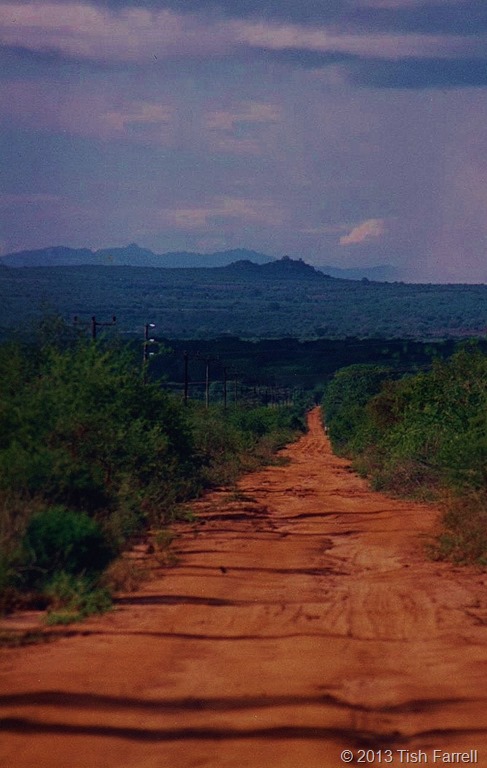
Cairo Road - looking north

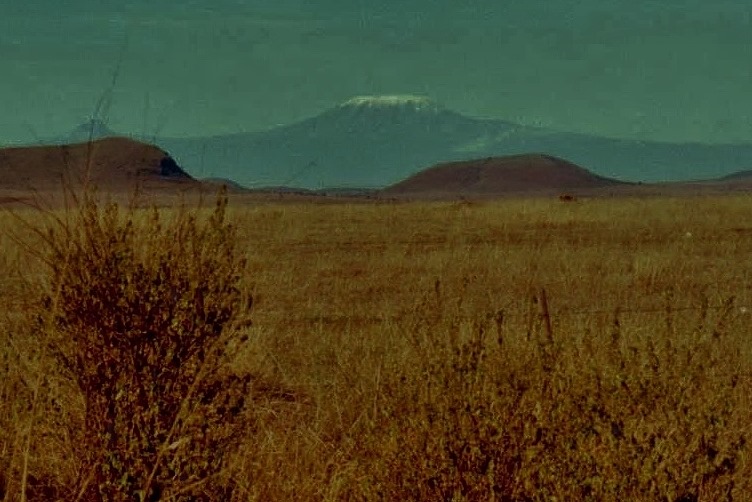
October 1992 and I’m expecting to start a new life in Medway, Kent, but instead I find we are off to Lusaka. It is hard to take in. I am barely back in England after nine months in Kenya where we lived out of a Land Rover, plying the Mombasa Highway. My heart is still in the Ngong Hills, the knuckle-shaped peaks that were my last view of East Africa before the plane rose through the clouds and headed for London via Bahrain. In that moment I find myself weeping for the loss of the Ngongs, recognising, with a twinge of shame, I would never weep like this for my homeland.  

Due to ticket problems I have to travel back to the UK alone. G will follow the day after. When we say goodbye at Nairobi airport there is no inkling of another overseas contract. Yet two days later when we meet up in England, the first thing G says is: how would you like to go to Zambia?

Zambia, I echo blankly. How would I know if I want to go there? But with barely a pause, I say yes; I’m up for it. I’ll find out later if I’m going to like the place. Besides, whatever happens, it’s bound to be interesting.

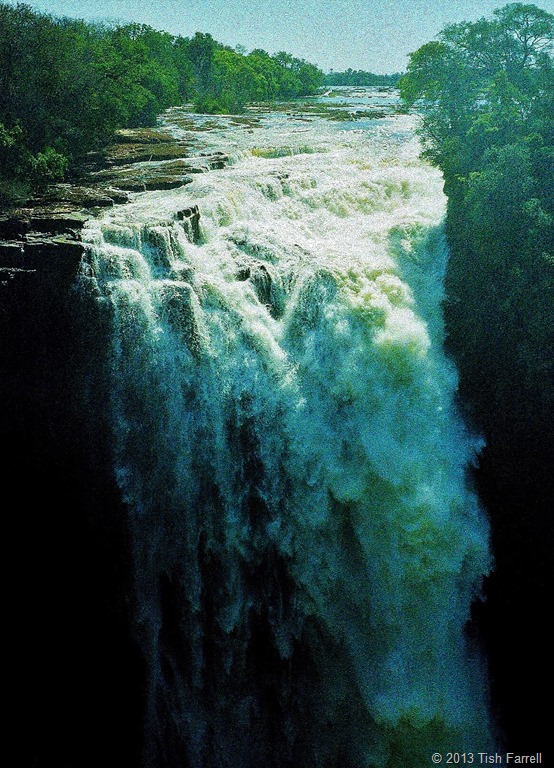
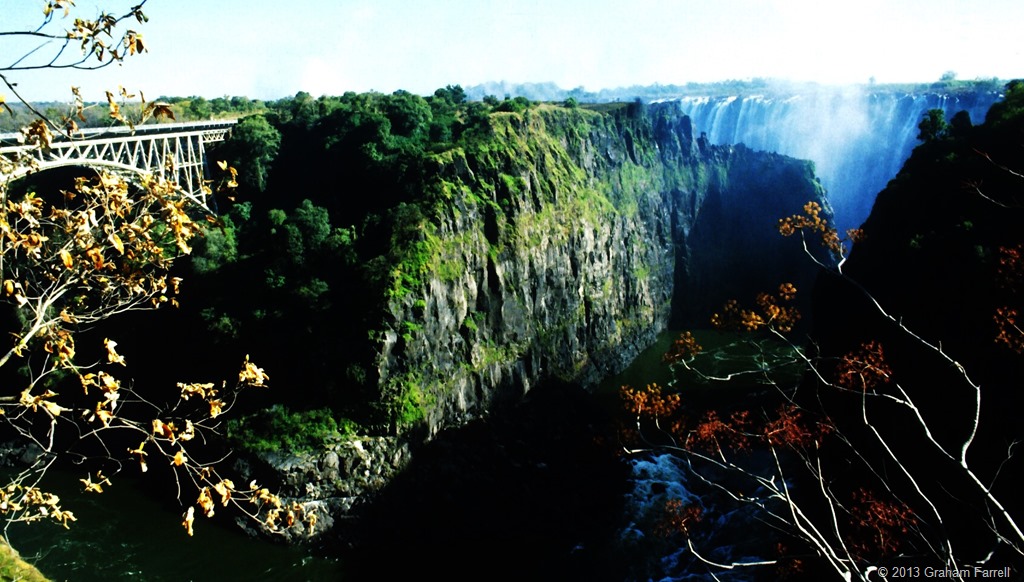
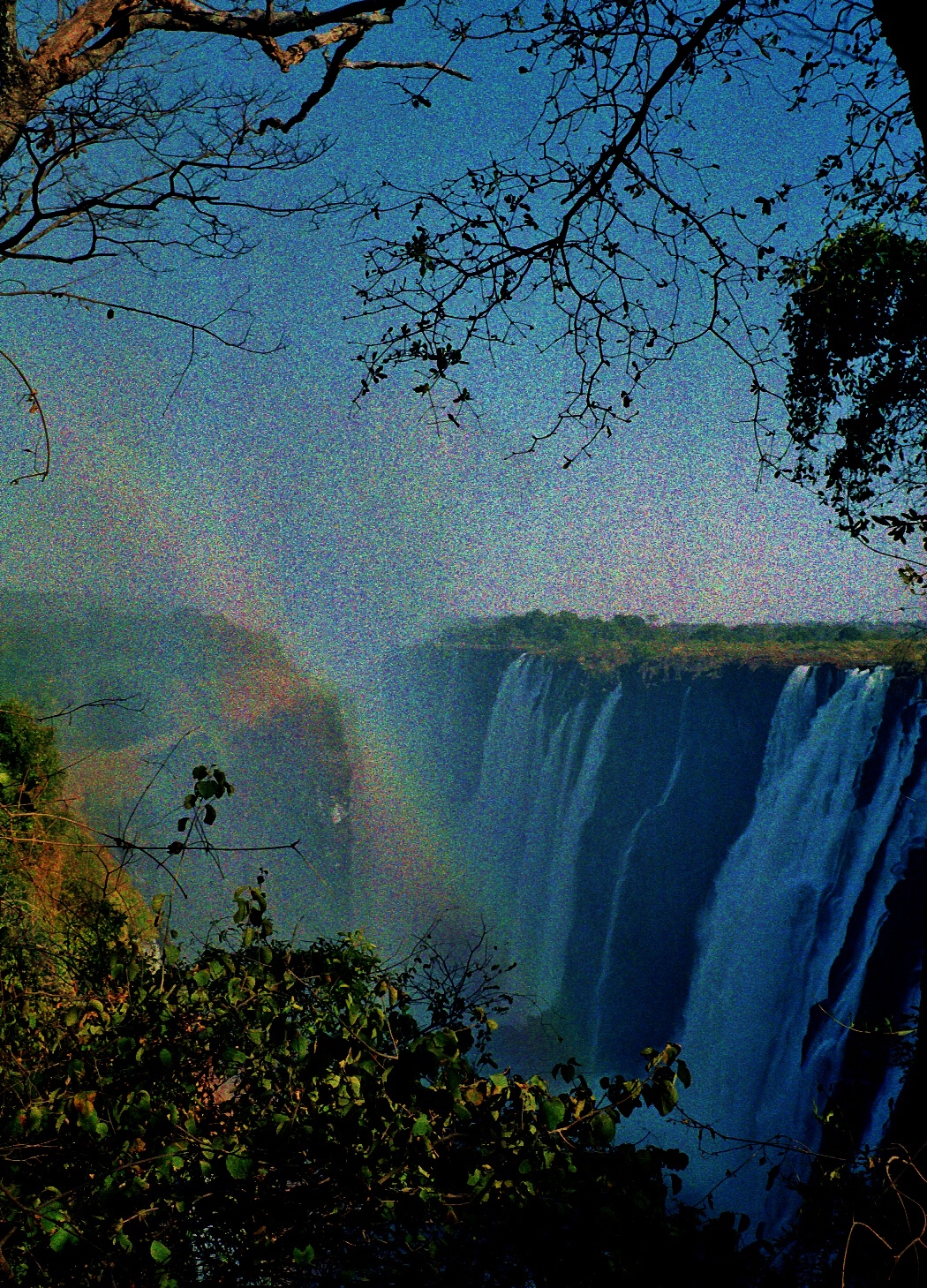
When we tell friends and family where we are going, they also look blank. Zambia, they say. What did it used to be? It is only months afterwards that I see how loaded is this seemingly simple question, how unfathomable the answer. What indeed did Zambia used to be – before it was Northern Rhodesia – before David Livingstone passed through it in search of lost souls and the Nile’s source, and claimed the falls known as Mosi oa Tunya (The Smoke that Thunders) for Queen Victoria; before the south’s Zulu Wars that pushed many displaced communities across the Zambezi?

We’re expected to leave within the month, but due to various administrative foul-ups, this stretches to two. It gives us time to unpack our Kenya life, catch up on dental work, have the jabs we have not already had, say hello and goodbye to relatives, and to get married. This last event takes place briefly before a handful of guests in a Bridgnorth building society office where the registrar has occasional premises. Our little marriage party finds itself queuing for attention alongside Friday morning withdrawers and depositors. It all seems fittingly bizarre for a life that no longer fits the norm.

At this point I am still no wiser about our destination. In these pre-Google days there is little time for research. To my annoyance, too, I find there are no handy books on Zambia, not in the public library, nor in the bookshops. By the time we come to leave, we have only the sparse Foreign Office briefing notes to go on. They speak of the climate and the kind of clothing we will need, and of the possibility of having to take a driving test if we want to drive in Zambia. No clear picture of the country emerges. I am becoming increasingly irritated at the lack of information, as well as at my own ignorance. How can I, an English woman, not know a thing about a land that Britain ruled and exploited for over sixty years, a land we only quitted in 1964 while I was in still at school? Why wasn’t it on the curriculum along with Cicero and Chekhov? How can the existence of a former protectorate pass so swiftly from the protecting nation’s consciousness? How can it become so very unimportant?

Then suddenly it’s too late for righteous indignation; it’s all down to family farewells, and wondering if the right things have been packed, when there is no way of knowing what the right things should be. Of necessity, it becomes a matter of travelling hopefully and telling ourselves that the contract is for ten months only. And ten months isn’t long, is it?

*

So, November 1992 and we fly into Lusaka with the rains. It seems like a good omen – to arrive with rain. There has been severe drought over southern Africa for at least a year. Crops have blown to dust, rivers run to sand, and the granaries lie empty. In remote districts, we later learn, villagers have been surviving on a diet of wild mangoes. To add to their misery, the wildlife is hungry too. In one district villagers have been barricading themselves into their homes. The local lions have developed a taste for canine flesh and are breaking down house doors at night in order to snatch the dogs from the midst of their terrified human families.

And of course, this is why we are going to Zambia; famine is taking us there. G has been seconded from the Natural Resources Institute in Kent to the E. U. Delegation in Lusaka to supervise the distribution of European Union food aid to starving Zambians. The country’s then new President, Frederick Chiluba, tells the Head of Delegation that he does not trust his ministers to do the job. The consignments of maize meal and cooking oil must therefore be distributed through church missions and the Red Cross. Zambia is a big country, the size of France and the Low Countries combined. G will be in charge of logistics: checking the contents of grain stores, getting trucks on the road and ensuring that loads reach their intended destination. His boss at NRI is sure he is fitted for the task, although he has never done anything like it before.

Food aid consignment 4

Food aid awaiting distribution in a Zambian warehouse.

*

In Kenya, as a crop storage specialist, he had been dealing with another kind of food crisis – the spread of a voracious pest that gobbles up maize – the Larger Grain Borer. This beetle is a native of South and Central America, and (ironically) came to Africa in the 1980s in a food aid consignment from the United States. It has no natural predators in its new homeland and, across a continent where maize is many peoples’ staple crop, it also has all the food it can eat. If a grain store is infested you can hear the jaws of these tiny creatures gnawing the cobs to dust. In Zambia we find the beetles are already there too, spreading out into villages along the line of the Tazara Railway that links land-locked Zambia to the port of Dar es Salaam. The Chinese built the line in the 1970s to provide Zambia with an external trade route through Tanzania after Ian Smith’s Unilateral Declaration of Independence in Southern Rhodesia cut the country off from all points south. Now the Tanzam is a handy vector for crop pests and thus, through such unintended consequences, is the frequent folly of donor good intention compounded. It is the sort of thing that happens in African countries all the time. It makes us question then (as we will do many times over the next few years) the ethics of our presence on the continent.

*

That November morning, then, as we make our descent through grey skies into Lusaka International Airport, I note only how flat and tamed the landscape looks: large square fields of European-owned ranches (Lonrho, for one, is a big player here); service roads and farm buildings laid out in orderly grid patterns. It is also very green and looks more like France than the Africa I have come to know. I suppose I feel a little disappointed. It is bush country that I have fallen in love with, the smell of it triggering some ancient genetic memory that tells me that such landscapes mean home.

Once down on the tarmac, and as a matter of courtesy so we will not get wet in this welcome downpour, a bus arrives to ferry us the short distance to the low white terminal building. Our fellow travellers are European businessmen, each shouldering his laptop bag. By contrast, a tall African in a well-cut suit emerges from the First Class cabin wielding only a shiny new golf club. It seems utterly incongruous, as if he has just stepped out of a London taxi after visiting a golfing shop rather than flying half way across the world. It crosses my mind that I like his style.

By now I am both jet-lagged and deeply anxious about the forthcoming immigration process. Still fresh in my mind is the stony-faced inscrutability of Kenyan officialdom when I twice visited the notorious Nyayo House immigration department to extend my three-month travel visa; I recall the hours left in limbo, sitting amongst distressed Somalis and Ethiopians, all trying to secure sanctuary away from troubled homelands. But suddenly I see it’s not going to be like this. The officers, as they take their seats at the immigration desks are all smart young women. They are laughing and chatting and, when we hand them our passports and paperwork, they are still smiling, and at us.

Next we have our first, but fleeting taste of the diplomatic life, as G’s new boss steps up and introduces himself. His name is Bernard. He is French, frenetic and instantly engaging. He whisks away our paperwork and deals with it in minutes. There is then a worrying delay before we can claim our bags. Bernard tells us that British Airways on this route are well known for leaving cases behind in London. Finally, though, we have our luggage and are propelled into Bernard’s Peugeot, Bernard talking non-stop. He apologises for his poor English, saying that this is his first posting to an English-speaking country. Mauretania and Madagascar were his previous postings. Worryingly, he adds that he hopes we will speak some French. Beside me, looking wan, G winces; he does not fly well. He can barely speak. When he does, it is to utter a customary response in KiSwahili. I’m beginning to feel hysterical.

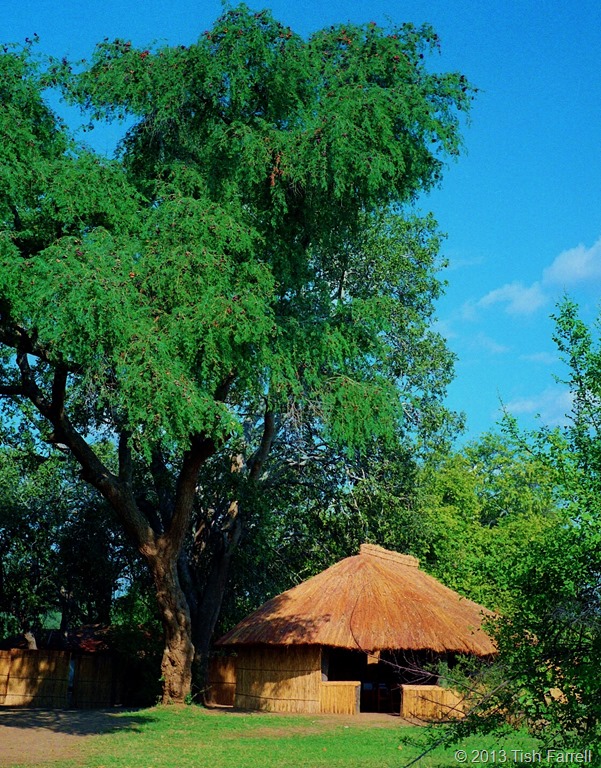
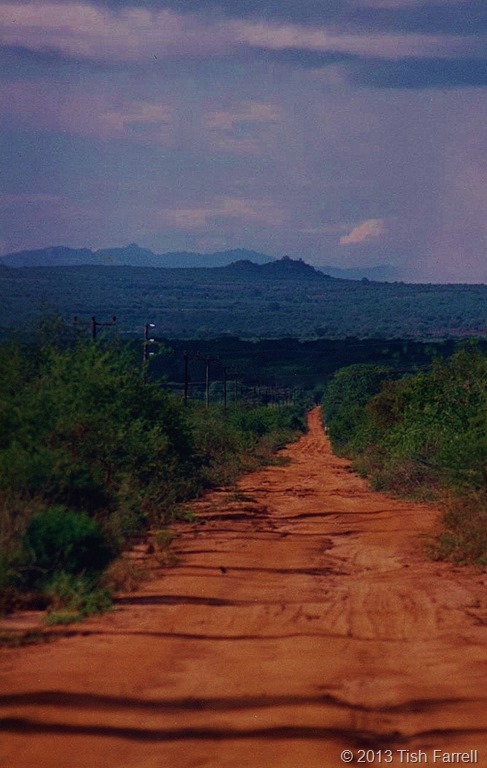
Soon, though, all smooths out as we cruise along the Great East Road into Lusaka. There is little traffic (not like Nairobi), and the place has a small-town provincial air – wide streets lined with jacarandas shedding mauve petals and acacias with russet coloured flowers, red-roofed villas. We pass the turn to the University of Zambia, the entrance to Lusaka’s agricultural show ground. The side walks are filled with people walking – young men in loose shirts and smart front-pleated pants striding out, country women in ankle-length chitenge wraps, city girls in high heels and sleekly cut frocks, and who seem to flow along the street. There are roadside stalls selling garden surplus – mangoes, tomatoes, okra, spinach.

E C Delegation

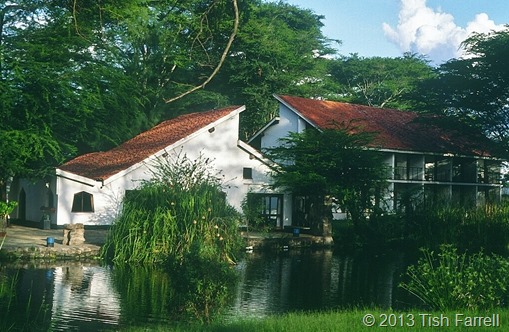
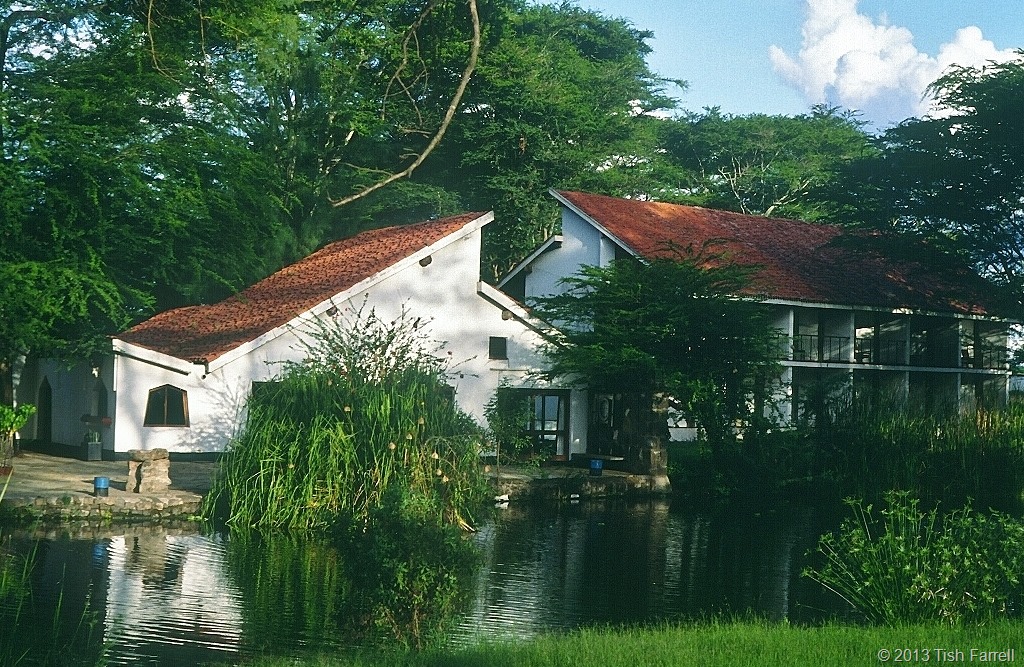
EU Delegation, Lusaka

*

And I am just thinking that I can cope with this when we swing into the grounds of the five-star Pomodzi Hotel, and Bernard’s car is instantly lassoed in chains whose ends the hotel porter quickly padlocks to an adjacent post. I have never seen nor imagined anything like this. Bernard explains that this is a necessary procedure even though it will only take a few minutes to escort us to reception. I see that other guests’ cars are similarly chained. It is then that my one sure piece of Zambia information surfaces. All along we have been ignoring it, that in that year of 1992 the country has a big security problem. Some months later the reasons for this become clear, but for now I am struggling to absorb this apparent evidence of an expected car-jacking – in broad daylight, and in such orderly and upmarket surroundings. I gaze, bemused, at the tail-coated porter who is now ushering us into the hotel foyer. After the humid warmth of outside, the hotel is frigid with air conditioning. The reception area is cavernous, all grey-white marble. A trolley appears and our cases are stacked upon it. They look shamefully shabby in these austerely smart surroundings. The porter politely motions me towards a comfortable armchair while G registers. This always takes ages, and by now it is lunchtime and I am hungry and yet too tired to want to eat. Then suddenly there are Englishmen everywhere. They seem to issue as one from the lift.

“Hello. I’m David…Peter…Tim…Paul…Alan. We’ve not been introduced but…”

As welcoming committees go, it is well meant but too much, and I wonder if I’m responding sensibly. They turn out to be G’s fellow consultants from the Natural Resources Institute, out on short-term missions relating to crop storage and food security. They include G’s head of section, the man who seconded him to the E.U. Delegation. He’s just off to Zimbabwe, and hardly have we reached our room than the phone rings, and G is summoned to an impromptu meeting and a trip round a Lusaka grain store that has flooded, none of which has anything to do with his present posting. He goes off looking terrible while I collapse on the bed, trying to come to terms with my new surroundings.

Here we are back in Africa, back in the so-called developing world, here to help deal with a food crisis. Yet now I find myself in a room that has more of comfort and opulence than I’m used to in England. There is a huge colour television that shows American and British world service programmes. There is a telephone by the bed and another beside the lavatory. The ivory tiled bathroom has abundant hot, clean water and piles of soft white towels. The flask of drinking water is chilled. We have our own veranda. The room service menu offers club sandwiches, burgers and steaks. A polite notice on the writing desk requests guests not to tempt the staff by leaving their valuables unattended.

This is a hotel designed not so much for travellers and tourists, but to cater for the expectations of international entrepreneurs. Its luxury is hard to reconcile with the hardship that G has been brought here to relieve. This is only the first of the multiple contradictions that we will encounter over the next ten months. We learn not to dwell on them, and so become part of the contradictions.

*

Now in Lusaka, we find ourselves dropped into a diplomatic no-man’s-land. Although G works for a British government institution and has been deployed by them on official business, neither the EU nor the British High Commission want to altogether acknowledge our presence in the country. We gather that the BHC has some bee in its bonnet about the cost of air-lifting us back to the UK in the event of some great ill befalling us. This is a puzzling response when all G asks for is some anti-malarial pills. They are not keen to give us any, since this establishes responsibility.

There is also a problem about finding us somewhere to live, this despite the fact that both missions have their own staff accommodation. We have been sent out with a stash of travellers’ cheques to pay for ten months’ rent and to buy a car, but house rents in Lusaka are twice the allowance we have been given. A Delegation secretary, a white Zambian, takes pity on us and directs us to a small company compound of eight houses where local Zambian Europeans and Asians live.

There is one house vacant, and we can just about afford it. The accommodation is very lowly by diplomatic standards, and full of dog-haired furniture, but we still manage to upset BHC consular etiquette because the compound has a swimming pool. Only officials of the higher orders may be allocated houses with pools. BHC staff kindly let us know of our gaff at social functions, although we wonder what it has to do with them since they were so unwilling to acknowledge our existence. Clearly the swimming pool has got under somebody’s skin.

Sable Road - our house by the pool 2

Home on the Sable Road compound.

*

Then, when we are among EU Delegation officials and their white Zambian staff, we are constantly regaled with tales of car-jackings, house break-ins, muggings and murder. At his house, Bernard has been newly issued with a gun and a short-wave radio to summon security in case of attacks by the locals. We presume that we are not important enough to warrant this scale of protection. When, after some weeks, I return to Zambian Immigration to renew my passport, and once more am treated with only good-hearted African courtesy, I consider switching my nationality to Zambian.

To be continued…

http://dailypost.wordpress.com/2013/07/07/daily-prompt-travel/ Daily Prompt: Rolling Stone

© 2013 Tish Farrell

A Word A Week: Boat (Up the Congo)

http://suellewellyn2011.wordpress.com/2013/07/02/a-word-a-week-challenge-boat/

Scan-130703-0003 (3)

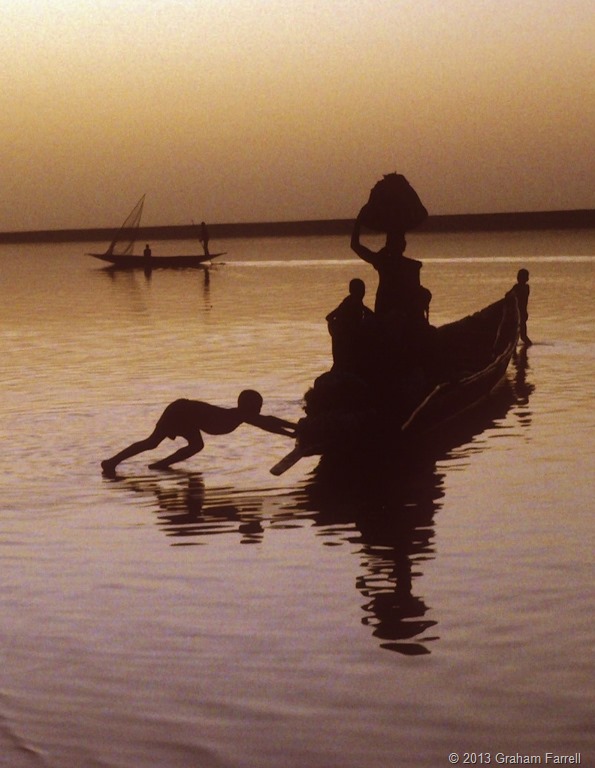
Pirogue on the Congo River

Long ago before Team Farrell was an entity, Team Leader Graham went on an overland trip. This six-month journey across Africa included a voyage on the Kinshasa-Kisangani ferry, which ever since has been a big source of envy for Nosy Writer. Out of sheer spite then, I have stolen some of Graham’s photographs for this post.

Scan-130703-0003 (2)

The slab-sided ferries that ply the thousand miles along this, the Democratic Republic of Congo’s super highway, provides motive power for all manner of other vessels which hitch a ride, lashing themselves alongside. The ferries have often been described as a floating cities or, more rudely, as floating slums. Along the route, traders from riverside villages paddle out to sell passengers their produce: monkey meat, crocodiles, fish and fruit, soap and palm oil.

Scan-130703-0004-3_thumb.jpg

Scan-130703-0004-2.jpg

Scan-130703-0006-2.jpg

But I’m afraid I have a more serious motive for posting these photos. Say the word Congo, and it  inevitably invokes the overdone journalistic cliché that is used to “explain” every crisis on the African continent. Yes, hear it comes – the Heart of Darkness. Of course I would hope that when Joseph Conrad gave his novella this title in 1902, he was not meaning to cause further injury to the peoples of this afflicted region. Because the fact is, this trotted out phrase does injure them. It injures because it gives non-Africans a quick and dirty explanation for everything that goes wrong in African countries. It also casts the blame firmly on the inhabitants, and so distracts us from the grave assaults that outsiders inflict, and have inflicted, on Central Africa for the past four hundred years.

The problems in the Congo have always been about resources, the longstanding assumption held by the get-rich nations that the whole African continent is there purely for the purposes of pillage. Better still, what has been, and is still perpetrated there, largely goes unseen by citizens of the outside world. All is wrapped up in company names that have some very serious investors, people whose names you would not expect to see there.

So first, from the 16th century, there were the Atlantic slavers, in order of importance – the Portuguese, British, French, Spanish, Dutch, and Americans. Their human cargo was snatched from hearth and home in millions – and all so traders and plantation owners might grow rich from their captives’ labour.

Added to this was the elephant slaughter – the tusks hacked out for piano keys and billiard balls, or for some exotic display by the rich. Then there was the added advantage that slaves captured for sale could also be used to carry ivory out of the forest.

By the 1870s the Congo had become the private colony of King Leopold II of Belgium, this act of unbridled piracy courtesy of Welsh-born Henry Morton Stanley, whom the King then commissioned to secure the region for his sole exploitation and rapine. During Leopold’s rule, the world demand for rubber rocketed. Leopold’s private police forceForce Publique – was used to create terror among the Congo villages, beating, killing, cutting off limbs if the locals did not keep up their deliveries of wild rubber. (There are  photographs). In an essay called Geography and Some Explorers, Conrad comments on what he himself saw in 1890 when he captained a company steamship; on what went on under the royal patronage of the so-called International Association for the Exploration and Civilisation of the Congo. He calls it

“the vilest scramble for loot that ever disfigured the history of human conscience and geographical exploration.”

In his book King Leopold’s Ghost, Adam Hochschild discusses evidence that suggests that around half the Congo Free State’s population died during Leopold’s rule, that is around 10 million people. Also it should be remembered that while the Atlantic Slave Trade had ended, the Congo was still being plundered from the east by the notorious Swahili-Omani slaver,  Tippu Tib (see my post on the Swahili here). Slavery did not end in East Africa until the beginning of the 20th century.

Finally, though, the barbarity of Leopold’s regime was exposed. The campaign begun by American Civil War veteran, historian and minister, George Washington Williams in 1889 was taken up later by Irish born, British diplomat, Roger Casement and E.D. Morel, an activist and journalist who had first learned of the atrocities while working as a shipping clerk for a Liverpool company. In 1908, Leopold was forced to relinquish his money-making empire, and the Congo Free State became a Belgian colony.

That period of colonial history does not have a specially elevating history either. In 1961 it drew to a close with the assassination of the first Prime Minister of the newly independent state, Patrice Lumumba, this apparently with CIA support. There then followed the decades of unchecked resource looting, by the army officer who had captured Lumumba, and who was surprisingly promoted to President, a position that was backed thereafter by the US and Britain.

Today, the plunder for Congo’s resources goes on. Throughout Eastern Congo there has been fighting ever since the Rwanda’s Hutu massacres of the Tutsi in 1994. Several million Congolese have died during this last decade. The aftermath of the genocide that spilled over into DR Congo has simply gone from bad to worse, as one war lord succeeds another.

And it is still all about controlling country’s resources. The CIA fact book lists the following:

cobalt, copper, niobium, tantalum, petroleum, industrial and gem diamonds, gold, silver, zinc, manganese, tin, uranium, coal, hydropower, timber.

In its D R Congo profile, the BBC blandly observes alongside a photo of toiling Congolese miners:

“A contest for DR Congo’s vast mineral wealth has fuelled the fighting in the country.”

It does not observe that these resources are fuelling conflict solely because they are in huge demand outside Africa. Nor does it mention that the weapons and aircraft used in these conflicts are made outside Africa, and have been peddled  in there by European arms dealers, for example, apparently by one Viktor Bout. This particular purveyor of death was convicted in the US in 2011, although not for the havoc he has probably wrought in DRC, but for endangering US citizens by arming Columbian fighters who might injure or kill US military.

It is also interesting that the CIA list of Congo’s resources does not include coltan (columbite-tantalite), the major conflict resource after diamonds. This is used to make capacitors, the essential components of mobile phones, laptop computers and play stations. Currently there is  a ‘No blood in my cell phone’ campaign in the Democratic Republic of Congo, to persuade consumers to put pressure on cell phone manufacturers not to use resources from conflict zones. That is one approach, but also what the Congo needs is fair pay for all its resources, from international conglomerates downwards. In recent times, farmers in the Eastern Congo war zones have not been able to farm because of marauding militias. Their one way to make a living is to grub up coltan and sell it to middle men who then sell to western markets. The proceeds are used to buy more western arms.

And so when it comes down to it, whether we know it or not, we all risk being complicit in the Congo mayhem. You could argue that independent nation states should take responsibility for their own problems, but then the Congo has never, ever been independent – at least not from outside vested interests. Much of the country is still hugely impenetrable, with the capital Kinshasa a long way from most of it. So it is that the potentially richest state on earth, has the poorest people struggling there to make a living. And where there is endemic poverty, there will always be gross exploitation. It is also impossible to assess the traumatizing effects of centuries of people-theft, or of the atrocities wrought by other agencies on those left behind. It is also impossible to comprehend the full extent of the brutality that ordinary men, women and children have had to endure.

As the Congolese priest-activist, Abbé Jean Bosco, says in the Blood Coltan film cited at the end, it’s as if the Congo has  been trapped by God’s gift of natural resources. Other people come and take them, and so instead of improving Congolese lives, the resources bring only unhappiness. He says stop the piracy, and let the world AND the Congo benefit from this mineral wealth.

So where then is the Heart of Darkness? I let you decide.

© 2013 Tish Farrell

For more on the Congo:

Tim Butcher Blood River

Adam Hochschild King Leopold’s Ghost

Lieve Joris Back to the Congo

Henry Morton Stanley In Darkest Africa

Michela Wrong In the Footsteps of Mr Kurtz

Fiction:

Barbara Kingsolver The Poisonwood Bible

Film:

Blood Coltan http://youtu.be/in0A8SFL3XM

Thierry Michel Congo River (in French and English)

Frank Piasecki Poulsen Blood in the Mobile


AAA Challenge: A For Allotments

http://flickrcomments.wordpress.com/2013/07/02/aaa-challenge/

100_3831

A is for Allotment, and here is mine.  I inherited the shed from previous allotmenteers. It leans and snails roost in it. Last year I found a 1725 halfpenny in front of the door. The Team Leader has to come at regular intervals, armed with hammer and electric screwdriver, to keep the old place upright. He does the same for the tenant – me that is, not the snails.

When I’m not writing, this is where you’re most likely to find me, so  thank you, Frizz, for your ‘A’ prompt. I’ve been toiling on this plot for around six years now, and when I first started, the soil was as heavy as lead. Gardening on the shores of the Silurian Sea is hard work. In between the layers of soil from a decaying tropical sea (c. 400 million years ago) is bentonite clay. As a substance this may have many useful properties. In the allotment, it is a guaranteed pain in the back. When remotely damp, it clings to the bottom of your wellies until you have giant’s feet. In dry weather, it goes crusty and it’s like digging through bricks.

I have learned recently that this unappealing greyish clag is formed from volcanic ash. Sometime when Much Wenlock was lying down on the Equator, all those aeons ago as our world was shaping itself, there was a volcanic eruption of unimaginable proportions. I now grow my beans and peas its degraded outpourings. Below are some pickings from last year’s crop, so you can see it does work – with effort.

007

I grow several varieties of broad bean including the lovely rose coloured ones which go pale mauve when lightly steamed. They don’t seem to mind growing in the heavy soil.

100_3421

I’m afraid my plot looks a bit rackety, tidiness being sacrificed to the time needed to dig, weed, and keep the wretched pigeons away. Almost everything has to be netted or covered with enviromesh at some stage during its growing. Recently I have been following ‘Garden of Eve’ and suffering severe poly-tunnel envy.

100_3833

To improve the soil, I grow areas of green manure, in this case mustard, but also phaecelia, buckwheat and alfalfa. It can be sown late summer or early spring and then dug in before it goes to seed. The difference in the soil afterwards is truly remarkable.

100_3834

Comfrey grows itself all over my plot. I tear it up and use it to protect seedlings or newly planted young plants. I also fill old compost bags with it, cut the corner off the bags seal up the top with a peg, and balance them over buckets lined up inside my leaning shed. As the leaves rot down the resultant brown gunky liquid collects in the bucket. It can then be diluted with water – 15 parts water to 1 part comfrey to make a really good crop feed. Comfrey  also has valuable therapeutic properties, and has been used to mend injuries for centuries, hence the folk name ‘knit bone’. The bees like it too.

100_3794

Unlike me, my fellow grower, Phoebe, has a beautifully neat plot. She also kindly mows my path. And that’s one of the wonderful things about allotments, not only can you grow delicious food (pigeons willing) but you meet such lovely, generous and creative souls up there.
100_3792

Phoebe has created these simple baskets across her plots at intervals. The uprights are embedded directly in the soil and the sides made with dogwood and hazel whips. Her aim is to use them for the rotting down of pernicious weeds like dandelion and couch grass, and then grow marigolds on top while this is all happening underneath. Gardening artistically.

100_3417

This is the allotment’s insect hotel to provide attractive accommodation for over-wintering insects. Also courtesy of Phoebe who begged some pallets from the local timber merchant. When he knew what they were for, he delivered them free to the allotment.

100_3787

This is the view from my plot. I can hear the clock of Trinity Church chime as I work, and the mewing of honey buzzards over the fields behind.

100_3795

I call this the Garden of Eden tree, also The Tree of Life,  because it has gloriously red apples in September. Phoebe created the wild flower garden in the foreground – lots of pink campion this year.

The bunting makes the raspberries look very festive and sees off the birds.

Below are two blogs that are well worth following for lots of useful gardening advice.

http://gardenofyvonne.wordpress.com/ Garden of Eve

http://peopleexcitedaboutcoexistence.com/ People Excited About Co-Existence

And when you’ve grown the produce, here are two great cooking blogs. ENJOY!

http://fromthebartolinikitchens.com/ From the Bartolini Kitchens

http://nourishingchow.wordpress.com/ Nourishing Chow

http://flickrcomments.wordpress.com/2013/07/02/aaa-challenge/

© 2013 Tish Farrell

Anyone for CGI – Iron, that is?

Travel theme: Ripples

100_3714 - Copy (2)
Ripples through time, ripples of iron: Ailsa’s prompt gives me the chance to show another shot of Bage’s Flaxmill-Maltings, the world’s first iron-framed building and eighteenth century blueprint for the skyscraper.

Recently, fellow blogger Frizztext in his post on Frankfurt Mainhattan spoke of “skyscrapers to sharpen the corporate identity”, a stunningly acerbic phrase, and Charles Bage certainly had something of the sort in mind when he built the flaxmill. The whole thrust of his design was to overcome a long-standing and costly problem for mill owners: the propensity of flax and cotton mills to go up in flames. There was certainly big money to be made in proving such a design. For one thing it meant industrialists could build bigger, taller factories, the better to exploit larger numbers of needy workers including orphans.

However, the iron-clad tower above (and whose rusty corrugations I confess to enhancing with some digital tinkering), belongs to the building’s later phase when it was used for malting barley for the brewing trade. I confess, too, to a yen for corrugated sheet iron. You could put it down to a childhood spent in rural Cheshire where the curved iron cladding of Dutch barns formed striking landmarks across the flat farmland. It was usually painted black.

St Chad's Gospel Mission Church, Blists Hill, Madley

St Chad’s Gospel Mission Church, Blists Hill Open Air Museum, Shropshire. Photo: Creative Commons David Dixon

Corrugated Galvanised Iron is anyway a brilliantly useful structural material. It was invented in the 1820s by Henry Palmer, architect and engineer to the London Dock Company. Cheap, and relatively easy to transport, it has been used all over the world to rainproof grass huts, make instant pioneer homes and water tanks, and to clad colonial godowns and administrative offices. One useful property is that it is pest proof. At least I think termites can’t quite manage to recycle it. It is ideal for prefabricated buildings, requiring little skill to erect. Furthermore, as it rusts, it creates its own art installations across the landscape. There are of course downsides in the tropics, rusting being one of them. Also iron roofs convert buildings into ovens during the hot season, and into tin drums in the rainy season.

I bet all you travellers out there (and especially those of you who live in Australia and New Zealand) have some good CGI shots too. Here are some more of mine.

Kenya:

Kikuyu farmstead 24

Kikuyu Farmhouse, Central Highlands

Kikuyu farmstead 5

Kikuyu Farmhouse, Central Highlands

Karen coffee garden gift shop and restaurant, once part of Blixen estate

Karen Blixen’s Coffee Farm Manager’s House, Karen, Nairobi

Scan-130429-0019

A farm in the Ngong Hills at Denys Finch Hatton’s grave site

And in Stone Town, Zanzibar:

Scan-130429-0049

Zambia:

Ndola Red Cross

Zimbabwe:

Harare colonial house

Colonial house, Harare

Lamu, Kenya:

Scan-130428-0031

Seychelles:

Scan-130624-0010

Victoria, Mahe

Bee-line

Word a Week: vibrant

100_3915.jpg

Click on the image to enlarge. This photo was taken blind (because the sun was shining on my camera screen), and on a happy snapper Kodak Easyshare. So I cannot take much credit for any of this. But isn’t it good to see so many bees, and especially after hearing of all the pesticidal threats to their existence. So a big cheer for the bees. We cannot live without them. Love the way you can see the fluttering wings.

My writer’s mind, much like  my garden, is often chaotic and full of weedy overgrowth. And so this morning, as a ready excuse not to tackle the former, I decided to go into the other weedy place in pursuit of something for the ‘A Word a Week’ challenge. I also thought I would try to overlook the fact that Sue, who set the challenge is very annoyingly enjoying tropical wonders in Malaysia while manfully coping with WFDS – wi-fi deficiency syndrome.

Apart from which, this is just the other excuse I’ve been looking for to show off some of the rampant vegetation in my small but multi-level flowerbeds. So welcome to my garden on the Edge of Silurian Shores.

100_3860

Wild stock and Welsh Poppy. These came from my batty Aunt Miriam’s Devon garden. She is no longer with us, but doubtless is dead-heading and pruning and stealing cuttings somewhere in the big garden in the sky.

100_3874

Verbascum, columbine, Patty’s Plum poppies

100_3887

This white foxglove has grown itself in the path along with the pink and white columbine. I love plants that do their own gardening.

100_3797

Pasque flowers going to seed at sunset – much like the photographer.

100_3681

Variegated Lemon Balm not only smells delicious when you brush by it, but it makes a wonderful soothing tea if you are feeling stressed. Also good in Pimms and shredded finely on strawberries. Or in salads and tabbouleh.

100_3677

Japanese Crab Apple in bloom a few weeks ago. Already there are thousands of tiny apples forming. You can see  what they look like in autumn here. Wonderful for crab apple jelly, and of course emergency winter rations for the black birds.

100_3859

Allium.

100_3804

The garden coming into the kitchen, though a certain amount of vigilance and exclusion must be deployed. Having suffered an invasion of leopard slugs on my counter tops and in the spaghetti, I definitely draw the line at all forms of molluscs coming in too.

100_3847

Townsend Meadow behind the garden and looking towards Wenlock Edge. For geology lovers this  upthrust limestone ridge was once the bed of the tropical Silurian Sea i.e. c.400,000 million years ago. At that time this piece of ground was lying somewhere off East Africa.

100_3849

And because one look isn’t enough, another view of an oriental poppy, freshly opened, but not quite pressed.

Finally, a Bee Movie. And for all those who follow Frizz on Flickr Comments, please note the sound effects. Don’t they remind you of something?

‘B’ Movie

The Great Earthly Curves Mystery: what, when and why?

100_2257

I could also throw in a ‘who ’ and ‘where’? So what’s your best guess on the identity of this marvellously curvaceous earthwork? No forward peeking. Here’s another shot.

100_2254

While you’re pondering, I should say that in a former life, in a long ago era that my knees think could well be the Lower Paleolithic, I studied Prehistory and Archaeology. That’s a clue.

Okay. Here’s the whole thing.

Aerial_photograph_of_Maiden_Castle_19351_thumb.jpg

1935 and 1937 aerial photographs taken by Major George Allen and  in the possession of the Ashmolean Museum.

Both images are in the public domain.

Aerial_photograph_of_Maiden_Castle_from_the_west_19371.jpg

These, then, are the ramparts of Maiden Castle, one of  Britain’s most famous Late Bronze Age – Iron Age hill forts.  After two thousand years of wear and tear, the whole structure seems to have simply grown from the natural contours of  the Dorset uplands. Of course when they were first excavated, with simple picks, incalculable people-hours, and much project management, the banks would have been higher still, and the ditches more sharply ankle-breaking; in their pristine state of freshly exposed chalk, they would have glistened white across the land and been visible for miles. 

And so in the past this place would have looked utterly magnificent, and other-worldly too, perhaps the equivalent of seeing a shimmering giant spaceship looming over the countryside; and perhaps that was the point. Or at least one of the reasons for its existence. This place was not only defensive, a signifier of tribal authority, but probably also the place of seasonal sacred gatherings, a place of pilgrimage in some sense.

In fact a metaphysical aspect for this location is indicated across four millennia. The first human activity dates from around 4,000 BC when people of the Neolithic or New Stone Age built a prominently sited enclosure. The banks were low and hardly banks at all. Nor were they continuous, so it seems unlikely that it was made for defence. It appears to have been a place where people gathered for social and sacred reasons rather than in times of enemy attack. The burials of two children that were found there date from this time.

Then around 3000 BC, after the enclosure was no longer used, a large ditched barrow was built. It apparently contained no burial, but may still have been a meeting place and important ritual landmark. Again, both the enclosure and the later barrow would have been bright white when newly made.  Over three thousand years later, in late Roman times when Roman beliefs had fused somewhat with local beliefs, a small Romano-British temple was built there.

In between, the site was used by Bronze Age farmers who left behind traces of their fields, then around 600 BC the first hill fort was constructed. At first it was much like the many other hill forts that were being built at this time across Britain. It was not especially impressive, and enclosed around 6.4 hectares (16 acres). But around 450 BC it underwent a massive expansion, involving the enclosure of two hill tops. The defended area increased to 19 hectares (47 acres) which, the English Heritage guide tells visitors, is equivalent to 50 football pitches. Also at this time the defences became very complex, and the banks were raised to a height of 8.4 metres (28 feet). In other words, it was an extraordinary feat of engineering and manual labour. It was a statement of power, capacity and authority. It was a place that people looked up to in every sense.

Maiden Castle is also unusual is that, unlike many other hill forts, there is evidence that people lived there. These people were the Celtic Durotriges. Excavations have revealed that they  lived in thatched round houses, grew wheat and barley which they stored in granaries and kept sheep, pigs and cattle. Doubtless they would have had horses for transport and oxen for ploughing. Iron was worked on the site. Then there were the piles of round stones, strategically placed around the fort. These were probably used for slingshot, and suggest that  an attack was expected.

File:Celtic-roundhouse-1994.jpgReconstruction of an Iron Age round house. Photo: Creative Commons, WyrdLight.com

*

It appears, too, that  the expected siege did take place. During the 1930s excavations of Maiden Castle, Sir Mortimer Wheeler uncovered part of a cemetery. Of the 52 bodies excavated, a number showed signs of a violent death. This, Sir Mortimer concluded, was evidence of an attack by Vespasian’s legionaries during the Roman invasion of AD 43. In 2009, a burial site with 50 decapitated bodies was discovered not far from Maiden Castle during road building, and according to Roman historical accounts, Vespasian conquered some 20 hill forts across the Durotriges’ territory.

By the time the Romans arrived, Britain had long been a prosperous country inhabited by a number of different Celtic tribal groups. It was not a backwater as we might imagine. The Romans, after all, were coming for a reason, not out of idle curiosity. For two hundred years before the invasion, Celtic traders had well-established markets in Europe.

File:Scuto Battersea BritMu252a.jpg

Iron Age Shield found in the River Thames at Battersea Bridge, London. Photo: Creative Commons, Wikipedia.

Their inlaid gold-, silver- and ironwork was exquisite (and endlessly curvy)  – torcs, brooches, shields, swords. They made fantastic weather-proof felted capes. They exported surplus grain from the numerous farmsteads whose traces still remain across Britain’s landscape. They sold slaves, and hunting dogs. In return, they imported amphorae of olive oil and wine, amber and ivory jewellery. It was a moneyed economy.

File:Britishmuseumsnettishamgreattorc.jpg

Gold torc from the Snettisham Hoard, Norfolk. Photo; Creative Commons, (Wikipedia).

Below is an example of a Durotriges gold stater. Coin experts point out that it shows an abstracted Celtic version of the head of Apollo (left) and a dismembered horse (right).  The finds of such coins have been used to plot the extent of Durotriges territory – that is, from East Devon, across Dorset, and including southern Wiltshire. By AD 70 they had become Romanized, and were part of the Roman Province of Britannia. The process of urbanizing the Durotriges occurred, then, not at Maiden Castle, but down on the banks of the River Frome at what is now Dorchester. During this time the hill fort was apparently abandoned, and not apparently used again  until the building of the 4th century temple.

 Celtic_gold_stater_Durotriges_tribe[1]

Photo: Creative Commons:  Numisantica (http://www.numisantica.com/)

But to come back to the curvy earthworks and their purpose. Many archaeologists have argued that hill forts of Maiden Castle’s scale and impressiveness belong to the category of defensive tribal strongholds known as oppida. These are found across Europe – from Spain to the Hungarian plain.  In other words, they could be described as proto-towns.

Yet this notion of incipient urban development does not fit the the hundreds of British hill forts that show absolutely no sign of permanent occupation, nor of warfare for that matter. Because there is one BIG disadvantage to occupying a hill fort for any length of time, and that is access to fresh water. The need to bring it in makes the occupants highly vulnerable in all sorts of ways.

All that can be said with certainty is that these structures were of huge importance to the people who built them. The effort that went into their construction, the periods of rebuilding over several centuries tells us this. We can also surmise that the cultures who produced them were prosperous and highly organised. Building these hill top structures required people-power, and from a population who mostly lived elsewhere in defended farmsteads. The building of them could only happen when there was no demanding farm work, probably between planting and harvest time, when digging conditions were favourable. But then if the Celts were known to trade in slaves, then presumably they also had their own.  Perhaps these impressive monuments were built by slaves?

Another thing that we often make mistakes over, is that non-industrialised people do not, and probably never did, divide up their reality into strict divisions of sacred and profane as we do. All reality is sacred in some sense. From our position of self-appointed technologised loftiness we often refer to such belief systems as ‘superstition’, while engaging with our own spirits of consumption in shopping malls and coffee shops. But if people did not occupy these hill forts permanently, then for practical purposes, whether as defensive retreats or the meeting place for the seasonal ceremonies of scattered Celtic clans – the need for a striking location that everyone could find would be paramount. A place where beacons could be lit and seen for miles, where raw rock ramparts would float in the sky like a mirage.

Perhaps there was indeed a need to feel secure from enemies and wildlife while serious rituals were being conducted. But then high banks may also be used to contain sound as an amphitheatre does – the chanting of storytellers, the pronouncements of seers and leaders. Also a hilltop is closer to the spirit world, to God, the Creator, to Heaven; it is a place half way between the mundane and the sublime. And just because a sacred thanksgiving is going on, it does not exclude the possibility for horse trading and dowry negotiation, or for storytelling contests and trials of warrior strength, or displays of obedience from hunting dogs.

So: the great earthwork mystery remains largely unsolved. Perhaps it does not matter. When we visit such places we know they are special; if we allow ourselves to respond, that is enough. With that thought in mind, it is fitting to end with a literary connection. Maiden Castle of course loomed large on the creative landscape of Thomas Hardy, famous son of Dorchester. In the Mayor of Casterbridge, the hill fort provides a dramatic setting where would-be lovers seemingly meet by chance.

“Elizabeth, as has been said, often took her walks on the Budmouth Road, and Farfrae as often made it convenient to create an accidental meeting with her there. Two miles out, a quarter of a mile from the highway, was the prehistoric fort called Mai Dun, of huge dimensions and many ramparts, within or upon whose enclosures a human being as seen from the road, was but an insignificant speck. Hitherward Henchard often resorted, glass in hand, and scanned the hedgeless Via — for it was the original track laid out by the legions of the Empire — to a distance of two or three miles, his object being to read the progress of affairs between Farfrae and his charmer.”

iron_age_bury_ditches_cpat_470_470x300[1]

Bury Ditches, Shropshire

Once in Zambia: in memoriam

Mara boys 2

On the Road in Africa

You could say that both this image and the survival of its medium (old film)  is fleeting. The original photo was taken from a passing Land Rover on a dirt road. As you can see, I’ve been playing about with it. But it struck me, too, that there is a deeper meaning here. Life can be all too fleeting in the non-industrial world, and especially on bad roads. See for instance Jujufilms , a blog that shows both the dark side and wondrous vivacity of Nigerian life.

But this reminds me of another kind of disaster. When Team Farrell was living in Zambia in 1992-3 there was too much dying going on  – from famine, TB, malaria and cholera. And then there was one especially tragic event that touched all Zambians. Our passing connection with it began when we did something that we have never done since – we went to a football match. On 30th January 1993 Zambia was playing Namibia in the World Cup qualifying round at Lusaka’s Independence Stadium.

The reason we were in Zambia was because  in November 1992  Team Leader, Graham, had been seconded from the Natural Resources Institute, Kent, to the EU Delegation in Lusaka to manage the distribution of European food aid to upcountry Zambians. There had been a bad drought in southern Africa during that year, and President Chiluba, who had recently succeeded Kenneth Kaunda in the first multi-party elections since Independence in 1964, did not trust his ministers to distribute the maize flour and cooking oil fairly, or even at all. Instead, he said, international donors were to use Missions and NGOs to reach the starving villagers.  And so this was Graham’s own mission – organising food deliveries to far flung corners of the Zambia.

Famine, though, was not the only problem at that time. There were guerrillas from Mozambique spilling over Zambia’s remote eastern borders to predate on poor villagers. Then from the north came the unpaid members of Mobuto’s Zairian Army. To make up for a lack of salaries, they would drive down into the Copper Belt, or even as far as Lusaka, for a spot of night-time looting and pillaging. (It will be remembered that Mobutu was another dismal world leader put into power by Western governments). Last but not least, Son of Kaunda, doubtless suffering the loss of the family power-base, was plotting a military coup.  All seemed precarious, then, a situation made much of by British-born locals and EU diplomats who never tired of telling us of their hair-raising confrontations with rapacious gunmen stealing even their curtains, or how our Suburu would surely be car-jacked if we were silly enough to drive into the city.

Going to a football match, then, suddenly took on an element of foolhardiness. It was one of Graham’s colleagues, David Walker, visiting Zambia for a short stint of crop storage consultancy, who said we must go. And since his enthusiasm was so infectious, go we did, although it took much persistence to get tickets; none of the European Zambians had any idea how we might buy them; nor could they imagine why we would want to. It was Wilfred, the EU Delegation’s driver who told us when and where to go for them.

And so, come match day, on a hot Saturday afternoon, we set off in the Suburu that was ‘bound to be car-jacked’. Independence Stadium is a little way from the city, out on the Great North Road. There were no signs, only two brick gateposts in the middle of nowhere. We simply followed the trucks and pick-ups jammed with excited fans, and the thousands and thousands of pedestrians. It was a real family outing – mothers, fathers, children, alert but placid babies tied to their mamas’ backs.

When it came to parking, Graham soon struck a deal with two boys to ‘guard’ the car. A young police woman politely asked if, Madam, could she see what I had in my basket, and briefly explored our picnic. Soldiers checked our tickets. And as the ugly concrete stadium filled, the Namibian team entertained the crowd with a synchronized warm-up to rhumba rhythms.  The only dint in the general good humour came  when a Zambian team official began to announce line up changes over the PA system. The whole stadium groaned.  “Now just listen!” said the official in the manner of a thwarted school teacher. And everyone did, while he spelled out the reasons for the substitutions.

At five minutes to kick off, the presidential motorcade swept round the ground, releasing the diminutive President Frederick Chiluba in front of the grandstand to greet the teams. The military band struck up the national anthems, the President was installed in his executive armchair, and the TV camera woman atop her scaffold was ready to roll. Zambia needed four goals to qualify. There was a general air of speculative optimism: was it too much to ask? But fifteen minutes in, with the first goal scored, everyone was certain. Their heroes would not fail. This was the team that had thrashed Italy 4 –0 at the 1988 Seoul Olympics. This was the team set on winning the first Africa Cup of Nations trophy. They were going places, taking with them, Zambians’ highest hopes.

It was not the greatest match.  There were groans, then laughter at many missed chances. Being no football expert I would have to say that the Namibian team’s best moment had probably been during the rhumba warm-up. But when the fourth Zambian goal was scored the stadium exploded with cheers of delight – everyone on their feet, babies held above the crowd so that their infant eyes might witness the scene of victory. A man in front of us  then threw up his arms and began to dance. And when that was not joyful expression enough, he turned, shaking our hands as he moved along the row. “My own young brother,” he said in disbelieving tones. “It was my own young brother who scored the fourth goal.”

The match won, the fans left quietly. We returned to the Suburu that had not been car-jacked, and paid the boys their kwacha. Leaving by car, though, was not so easy. We found ourselves locked in a vast sea of humanity. As we slowly edged forward, people rested their arms on the car window sills in a companionable way, exchanged a few words with us. Finally, a kind policeman waved us out onto the Great North Road where we joined the dash of fan-filled trucks, the smelly old bus that was transporting the military band back to barracks, and finally the Zambian team bus, that pulled alongside before overtaking. “My God!” Graham cried. “We’re in the procession.” We gave the team a cheer. It had been a thoroughly good-hearted afternoon.

Three months later the entire Zambian team was dead. On 27th April they were on the way to play Senegal when their plane crashed off Gabon. We had been out of the country when it happened, and returned to a nation that had had the stuffing knocked out of it. President Chiluba declared a week of national mourning. The radio played only funereal music and, on the 3rd May 1993, Zambia’s team and Zambia’s hopes were buried in state on ground near Independence Stadium. The tens of thousands of people who attended wept. The President wept – real tears, not like the ones his predecessor was wont to weep. 

“Today we inter our heroes,” he said, “but we do not bury their dreams and aspirations.”

And so the building of a new team became a touchstone for the greater struggle of building a new nation. I thought of the man who had danced his joy and shaken our hands, and wondered how he was. Cool Britons that we were, we had not asked his brother’s name.

Now, twenty years on, Zambia is a nation on the up, and when the Zambian people finally receive the full value of the mineral wealth extracted from their land by international companies, they will surely do a lot better. But when it comes to the 1993 disaster, the families of the dead team and air crew still do not know why the crash happened. The aviation report is yet to be released. Somehow it means the grieving just keeps on going.

© 2013 Tish Farrell

File:Lusaka Heroes Acre - memorial.jpg

Heroes Acre Memorial, Lusaka

Francis Alisheke / zambianfootball.net  Wikipedia Commons gabon+pyra.jpg

Memorial to the 1993 Zambian team. Both photos: Lusaka Times

Footballers
Efford Chabala (goalkeeper)
John Soko (defender)
Whiteson Changwe (defender)
Robert Watiyakeni (defender)
Eston Mulenga (midfielder)
Derby Makinka (midfielder)
Moses Chikwalakwala (midfielder)
Wisdom Mumba Chansa (midfielder)
Kelvin “Malaza” Mutale (striker)
Timothy Mwitwa (striker)
Numba Mwila (midfielder)
Richard Mwanza (goalkeeper)
Samuel Chomba (defender)
Moses Masuwa (striker)
Kenan Simambe (defender)
Godfrey Kangwa (midfielder)
Winter Mumba (defender)
Patrick “Bomber” Banda (striker)

Coaching staff
Godfrey “Ucar” Chitalu
Alex Chola
Wilson Mtonga (doctor)
Wilson Sakala

Others
Michael Mwape (FAZ Chairman)
Nelson Zimba (public servant)
Joseph Bwalya Salim (journalist)

Crew
Colonel Fenton Mhone (pilot)
Lt Colonel Victor Mubanga (pilot)
Lt Colonel James Sachika (pilot)
Warrant Officer Edward Nambote (fitter)
Corporal Tomson Sakala (steward)

Peaceful wildlife, unpeaceful writer

Travel theme: peaceful

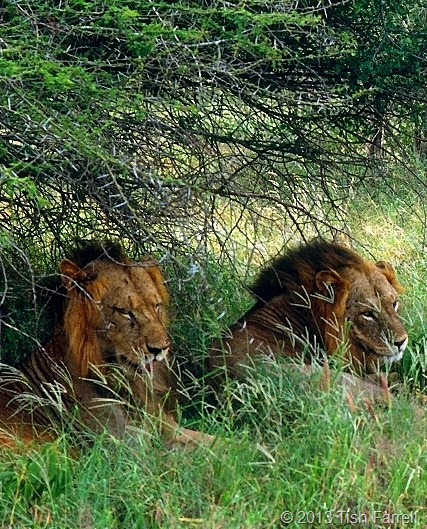
lions-in-the-Taita-reserve-1992.jpg

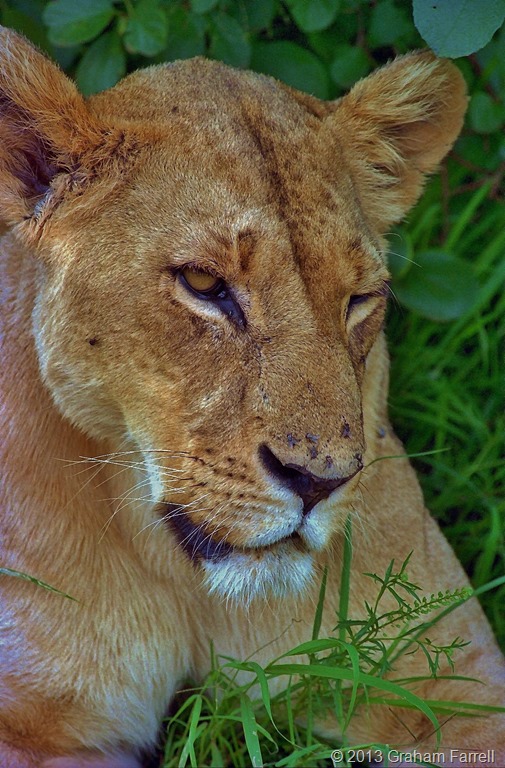
Okay, I confess. I’m using Ailsa’s weekly photo challenge for a piece of shameless self-publicity. Because today I’m feeling anything but peaceful. I’ve just heard that  my short story ‘Flight’ won third place in the International Bath Short Story Award, sponsored by Writing Events Bath. Of course it’s set in Africa as most of my fiction is. To read ‘Flight’, follow this link then scroll to the foot of the page. Twelve of this year’s short- and longlisted stories are to be published by Hearst as an e-book anthology under a new imprint UkEditBooks in November. So all you fiction writers out there, seasoned or novice, submissions for the 2014 Bath Short Story Award are OPEN 1st November 2014. Go for it!

Now to calm things down I’m posting some shots of some very languor-inducing wildlife. Besides which, big cats do ‘laid back’ like no other, and quiet small elephants are a joy to behold on any occasion. And as for Grevy’s Zebras composing themselves so stripily, what else is there to say but ENJOY!

Scan-130608-0004

Grevys-zebra.jpg

©2013 Tish Farrell

Travel theme: Peaceful

The Medicine Man


medicine man mundo mugo (2)

My scanning of old negatives from Kenya and Zambia days in the 1990s is an on-going task – both tedious and oddly compulsive. Sometimes I hit the batch scan button so I can hoover or iron at the same time. Once in a blue moon I look up from such a task to find that a particularly striking image has materialized on the screen – something I had forgotten entirely. To see it again is almost shocking. This was such a photograph. In some ways I wish I had not taken it.

The location is the Outspan Hotel in Nyeri, Kenya, and the subject, a performer, dressed in the manner of a Kikuyu medicine man or mundu mugo circa 1900 when European ethnographers and missionaries began to take photographs of Kenya’s peoples. The Outspan itself is also a colonial construct, built by Major Eric Sherbrooke Walker in 1928. He later built Treetops, a small game-viewing lodge a few kilometres away in what is now the Aberdares National Park. In the beginning this truly was a tree house, complete with a platform overlooking a waterhole. It was here, in 1952, that a safari-ing Elizabeth Windsor learned that her father, George VI, was dead and she was now Queen Elizabeth II. Not long after this, freedom fighters in the predominantly Kikuyu-led Land and Freedom Army (generally referred to as Mau Mau) burned Treetops down. Today its successor is an imposing affair, several storeys high, but still looking out on the waterhole where game comes to drink at dawn and dusk.

The two hotels are on the standard tour bus itinerary. Visitors are bussed up from Nairobi to the Outspan for lunch, and in the afternoon they transfer to Treetops. For their entertainment in between there are performances at the traditional Kikuyu village in the Outspan’s garden. The intention is that the visitors will learn something about the human locals before they spend a sleepless night watching out for elephant and leopard at Treetops’ floodlit waterhole.

For most of the day, then, the village is shut, hidden behind a bamboo screen. It comprises a couple of thatched round houses, a granary and a blacksmith’s workshop. The place only bursts into life after lunch when a troupe of young dancers, wearing the polite and thus fully clothed version of traditional undress, put on a brief but lively song and dance show. As one of YouTube’s videos of this show indicates, some of the audience completely misunderstand what they are seeing and think the performers are real villagers who actually live in the thatched round houses. In consequence, they marvel at the dancers’ good English, despite the fact that English is Kenya’s official language.

Context, as they say, is everything, and it is perhaps not surprising that such confusions arise. What is real and what is not? What is authentic and what is concocted from cherry-picked elements of a little remembered past? Even born and bred Kenyans may ask this question of the bizarre circumstances that often arise in a country where multi-cultural idioms too often collide.

After the singing and dancing, visitors may look around the village houses while the young performers try various ways to part them from their cash. The inevitable curios appear. I say, No thank you. I live in Nairobi. A young man grins and suggests that I might like to give them money for beer. A girl hushes him. I begin to suspect that some of them are already a little high. I say kwa heri and move away.

And it’s then that I see the old man, perched on his elders’ stool. At his feet, on a goatskin, are the trappings that suggest the medicine man’s profession. I greet him in the customary way: Hello mzee, how are you? But he does not respond, either to my words or to my presence. This is quite extraordinary behaviour for a Kenyan. The exchange of common courtesies at every meeting – whether with friends or strangers – is de rigeur. At first I conclude that he doesn’t speak Ki-Swahili, but only Kikuyu. Then I wonder if this is all part of his role play. Medicine men and women were august individuals who once wielded great sacred and psychic authority; they would be above casual chitchat with the likes of me. Finally it occurs to me that he might once have been a real medicine man, but can no longer practise his trade.

Then I do the tourist thing and take that photograph.

So why does it still worry me all these years on? Why do I find the Kikuyu Village experience, beyond its light entertainment value, so distasteful?

In some ways the whole thing is well meant, and whatever tourist resort you go to in Kenya there is likely to be ‘the traditional dancing slot’ at some point, usually between the hot buffet lunch and the game drive. Nationally too, much store is set by remembering the old songs and dances, and every afternoon on Kenyan television there would be performances by school children around the country. After all, songs and dances are, like the story-telling tradition, a strong part of any culture’s identity. But then do they work outside the context that gave rise to them? Do they still have intrinsic meaning beyond the exotic outward show for tourists’ delectation?

Perhaps I am only offended by my impulse to want to photograph everything – look, snap, move on; another form of plunder? Perhaps that old man’s withdrawn, sad look more than pricks my conscience. But then perhaps he also feels ashamed of what he does to earn a few bob every day? Might not pretending to be medicine man bring its own form of psychic retribution?

I suppose it comes down to respect. This man looks old enough to remember the last vestiges of his people’s ‘elder days’ before colonial rule finally changed everything. He probably grew up in a house like the ones in the Outspan village. Most likely he would have been born on a Native Reserve, euphemistically referred to as African Land Units. These were demarcated in the early 1900s by the British colonial administration, ostensibly to protect native territories from encroachment by future European settlement. This was especially necessary for the Kikuyu of Central Province. They occupied prime land in the cool highlands that were thought the ideal place to settle by the white pioneers who lived in mortal fear of the sun’s actinic rays and thus had to wear flannel layered spine pads and solar helmets to protect themselves.

Even so, the Kikuyu lost out. When the reserves were being surveyed, the population had been decimated from small pox and famine, and the survivors had fled to relatives in the north. The unoccupied lands quickly returned to bush, and so were deemed virgin territory by the land surveyors. When southern Kikuyu families at last returned to their homesteads they found their land taken by British would-be coffee farmers. This was one of the issues that fuelled the 1952 uprising, this after King George had failed to deliver the justice that Kikuyu elders thought their heartfelt letters to him would surely yield.

Now I suppose this piece is timely for two important events. The first is that the sixty year reign of the British sovereign who became queen while she was in Kenya is now being celebrated. The other, and to me, more important news is that the British Government has just apologised to the Kikuyu victims of the 1950s colonial detention camps, with each of the 5,000 complainants receiving around £2,000 in compensation for torture and mutilation. Most were imprisoned without trial.

And so perhaps finally what this portrait of the old medicine man is telling me is, that all too often we rich, technologized northerners are too ready to judge by appearances, the outward trappings of costume and regalia, and thus come to all the wrong conclusions. We have done this since we arrived on the African continent. I do not know this mzee’s true story, and in a way that seems typical of much of the industrial world’s relationship with the people of the Africa. We tell our own stories in which they feature, but we rarely want to know what really happened. Perhaps it’s time we asked. We might learn something to our advantage.

copyright 2013 Tish Farrell

Windows in Wenlock

In response to Frizztext’s  ‘Tagged W’

Here are some scenes of the town where I live, Much Wenlock, a settlement continuously lived in for the last thousand years. For more of its history see my post Of Silurian Shores.

100_3616

The town grew up around a medieval monastery. This is the tower of Holy Trinity church which survived Henry VIII’s Dissolution of the Monasteries in 1540. It has been our parish church since around 1100 AD. Originally it was part of the monastic complex.

The Priory ruins are now owned by English Heritage. This twelfth century Cluniac Priory was once one of the largest religious houses in Europe. It was built on the site of a much earlier abbey founded in the seventh century by St Milburga, daughter of King Merewald of Mercia. England’s Norman rulers wished to cash in on the sanctity of St. Milburga’s remains as well as making a big architectural statement on the Saxon landscape.

This is street is called The Bullring, once the place for bull-baiting, a popular local sport until the early 19th century.

043

The Guildhall was built around 1540 as the court house to replace the monastic court after the Dissolution. Town Council meetings are still held here. The ground floor is used for various markets. In this photo, taken in 2012, townspeople are celebrating Much Wenlock’s Olympic Games connections. See Of wolf farts, windmills and the Wenlock Olympics.

041

The George and Dragon is one of the few survivors of the town’s once numerous inns and public houses. The town’s main industries were limestone quarrying, lime burning and agriculture – all hard-working pursuits guaranteed to build up a thirst.

100_3609

Raynald’s Mansion (above) on the High Street dates from around 1600.

Ashfield Hall, also on the High Street, was built before 1421. It was possibly built on the site of St. John’s Hospital for ‘lost and naked beggars’. For a time is was the Blue Bell Inn and then a lodging house for itinerant labourers. (A History of Much Wenlock by Vivien Bellamy.)

100_3621

These ogival windows are a local ‘speciality’.

And some of my windows.

Looking down on the town from the south west, Windmill Hill top right, The Wrekin top left.

© 2013 Tish Farrell