Making Eden: new patterns for living?

003.jpg

Is this how you picture the Garden of Paradise: that mythic, perfect place from which shame caused humankind to be forever banished? Probably not.

Personally, I do not have time for dogma founded on guilt, but I do have time for the Eden Project, one of Britain’s most ambitious Millennium schemes that in the year 2000 saw an abandoned Cornish china clay quarry transformed into a world-famous visitor attraction and charity. 

The photo above, raided once more from the Team Leader’s files, was taken that year inside the Rainforest Biome. This extraordinary Sci-Fi structure is  apparently twice as high as Big Ben, and planted with more than 1,000 species. In this  audacious new world, pests and diseases are managed with an array of biological controls, including bugs that eat other bugs, birds and lizards. It is an on-going experiment in life management.

The man behind Eden in all senses is Tim Smit, Netherlands-born, British entrepreneur. He conceived the idea while working on the restoration of the Lost Gardens of Heligan also in Cornwall. Both these enterprises have not only enthused and informed millions of visitors from all over the planet, but injected millions of pounds into Cornwall’s struggling economy. Like an infinity of interlinked hexagons, it has been having a multiplier effect.

File:Tim Smit (6509919409).jpg

Eden’s creator, Tim Smit. Photo: Creative Commons (source Tim Smit)

*

And what is Eden Project saying to us?


plants give us our food, fuel, materials and medicines”

“plants are part of a wider ecosystem that provides our water and air”

“the natural world can be beautiful, relaxing and inspiring”

001.jpg*

AND THAT:

“In a changing world, we need imagination and enterprise; we need to foster our skills and talents; we need communities to get engaged in inventing new, more sustainable ways of living together.”

*

As a belief system to live by, I can accept all of these propositions. Now see the video of some Eden’s ideals in action:

Arch Wizard of Wales: Clough Williams-Ellis “Architect Errant”

Surely only a wizard could have conjured this  place – or so I thought, aged six, when we, the Ashford family first made pilgrimage to Portmeirion on the North Wales coast.

100_4683

“Cherish the past. Adorn the present. Construct for the future.” This was the life-long credo of Clough Williams-Ellis, the man who dared to build an Italianesque village on a beautiful Welsh headland.

*

It was like stepping into a living picture book or melting through the mirror into Looking Glass Land. The houses were the rich, powdery, pastel shades of Loveheart sweets (does this strange confection still exist?). There were mythic frescoes in places were a child might least expect them, and best of all, a shell grotto that was just like the Little Mermaid’s deep-sea garden.

It was enchanting from the moment we stepped through the gatehouse entrance. How could there be so much colour, so many decorative flourishes to catch the eye, so many mermaids – here on a wooded Welsh headland with the lowering grey sky above? And the weather was gloomy on that first visit; I was forced to wear my dull brown mac over my pretty summer dress. The photos taken that day show me looking pensive and withdrawn. But I did love the place, and was quick to register the tones of admiration in my parents’ voices whenever they uttered the name of the man who had conceived this folly to beat all follies – Sir Bertram Clough Williams-Ellis, self-taught architect and champion for the preservation of rural Britain.

Clough Williams-Ellis (left) with Frank Lloyd Wright at Portmeirion in 1956

*

Of course he built Portmeirion to prove a point: that a beautiful site could be developed without wrecking  it. When he bought the land in 1925  he described it as “a neglected wilderness.” There was “a pale mansion, a hundred years old, spread along the balustraded terrace on the sea’s edge.”

That house became the Portmeirion Hotel, and some of its associated cottages were integrated in the village plan. The two previous owners from the 1850s onwards had planted the site extensively with specimen oriental trees and exotic plants, many of which still survive. The planting, along with the building of a close-knit hillside village continued from 1925 under Clough’s direction for the next fifty years.

Many of the original plans still exist. The first phase of development was influenced by Clough’s interest in the Arts and Crafts movement. Later buildings followed Classical lines. He also made use of what today we refer to as architectural salvage, and indeed he called Portmeirion  “a home for fallen buildings.” With this architectural bricolage are references to some 5,000 years of architectural history from around the world. Critics of modernist inclination thus tend to overlook Clough’s contribution to architecture. This is a mistake. On our most recent visit to Wales we discovered his Caffi Morannedd Cafe at Criccieth, a few miles north of Porthmadog.

100_4741

Caffi Morannedd by the sea at Criccieth

*

Of course it was at Portmeirion that I first learned there was such a thing as architecture, and that this was something altogether more momentous and wonderful than drawing pictures of “our house” as one endlessly did at primary school.

Clough was also intent on giving people pleasure. He fought all his life to create and preserve beauty, which he called “that strange necessity.” But this did not mean that he was against development. “Enterprise by all means,” he said in 1931 when he was Chairman of the Council for the Rural Protection of Wales, “but reasonable, seemly development where it is in the public interest and nowhere else.”

And oh how fine it would be if English planning authorities were ruled by such objectives, instead of developer aspiration.

100_4627

As a child, I liked the way the houses seemed to have grown out of the rocky hillside, and that there was a mysterious “smugglers’ path” through a tunnel of overgrown rhododendrons that led to a secret sandy cove and the little tin lighthouse on the headland. It was all such fun, and created by a man who, like any magician, or indeed a wizard, wanted everyone to take delight in his illusions.

And now, since this post was prompted by Sue Llewellyn’s Word A Week arch challenge, here are some more views of Portmeirion – naturally with arches of all kinds in mind – all taken last week in Wales under mostly sunny skies.

 100_4672.jpg

100_4692

Unicorn Cottage: this illusion of a stately home is in fact a bungalow

*

100_4643.jpg

Arch with a view: glimpse of the estuary below the village

100_4645.jpg


IMG_0676.jpg

100_4631

In the foreground, behind the palms, is the colonnade from a Bristol bathhouse built in 1760. Another view below.

100_4636.jpg

*

100_4661

There are cafes and restaurants in the village, and cottages to let.

*

100_4666

Mermaid Cottage was already on the site when Clough bought the land. It was built in the 1850s, and Clough adorned it with the canopy and added the palms for the Mediterranean look.

100_4668.jpg

*

100_4680

*

100_4667

The Hercules Gazebo, complete with cast iron mermaid panels, serves to disguise a generator.

*

100_4672

*

100_4673

*

100_4674

The Prisoner, the cult TV series of the late 1960s starring Patrick McGoohan, was filmed at Portmeirion. It put Portmeirion on the map and its association with the place is still celebrated.

*

100_4677

Arches at all angles.

*

100_4691

Archway to the Piazza and (below) the Piazza itself below.

100_4693

*

IMG_0670

The village from the estuary.

IMG_0660

The arc of the Dwyryd Estuary taken from the esplanade at the Portmeirion Hotel

*

4363309520_fcd2edd736[1]

Clough Williams-Ellis 1883-1978  Photo: Polandeze Creative Commons

A man who lived creatively in all senses, and whose work has delighted millions.

copyright 2013 Tish Farrell

References:

http://www.portmeirion-village.com/en/visit/clough-williams-ellis/chronology/

http://www.brondanw.org/english/history/portmeirion.html

http://www.100welshheroes.com/en/biography/sircloughwilliamellis

Looking for Giles aka Private Victor Rowles 1896-1915

IMG_0568

It began with a locket owned by my great grandmother, Mary Ann Williamson Rowles, nee Fox. And it began with a long ago memory of her daughter, my grandmother, Lilian Shorrocks, telling me of a much loved younger step-brother. She said that he had died during the Great War, that he was shot while getting off a boat.

I was seven or eight at the time and did not understand what she was talking about, but I registered the sorrow at a young man pointlessly lost. I pictured him walking down a gang-plank from an ocean-going liner. For some reason I imagined he was wearing a brown suit as someone shot him. Perhaps grandmother had said the word Gallipoli. I can’t be sure, but all my life its utterance has somehow resonated, though without my knowing why.

Recently, I did find out why, and still find myself astonished that I can discover more of this forgotten ancestor’s too brief life by simply trawling the internet. Of course, as Su Leslie so often shows on her excellent family history blog, Shaking the Tree, discovering one nugget of information often raises a dozen other mysteries. But then that only makes the search all the more beguiling.

DSCF9333

The locket is now mine and it contains the plaited hair of all Mary Ann’s five children, including her step-son, Robert Shorrocks. The other children are my grandmother and her two siblings, Mary and Tom, born from great grandmother’s first marriage to Thomas Shorrocks of Farnworth, Manchester. And finally there is Giles, the youngest. He was born in 1896, a year after Mary Ann married widower, Charles Rowles, a master mariner and captain of a pilot boat on the Manchester Ship Canal.

It is Giles’ photograph in the locket. He is an impressive looking boy. The direct gaze, yet self-contained. I find myself wondering if he looked like his father, for we have no photo of Charles Rowles. My grandmother did not care for him, keeping only his big seaman’s chest which I also have. Otherwise, she threw out most of the family memorabilia that came down to her. She kept the locket though, and Mary Ann’s fine collection of miniature Shakespeare’s plays and poets. There is also a single faded photograph of my great grandmother, taken some time before she was married. My own mother always said that she had eloped.

Mary Ann Williamson Fox was a farmer’s daughter, her family having been yeoman farmers for generations. In fact they claimed to have lived on the farm called Callow since the 11th century. Family  mythology  also had it that a Fox ancestor was employed by the Eyre family as steward, the Eyres having been given land in Derbyshire for services rendered to William the Conqueror. Later the Duke of Devonshire from his grand house at Chatsworth became the landlord, and Mary Ann, at seventeen, is said to have opened the Chatsworth tenants’ ball with the Duke, she being the daughter of the oldest tenant-family  on the estate. For a long time the buttons of the dress she wore were fondly kept. Blue silk-covered ones, I was told.  I don’t know what happened to them.

IMG_0007

Mary Ann Williamson Fox in her late teens c. 1880

*

IMG_0005

Callow Farm, Hathersage, Derbyshire where the Fox family lived from at least the 1700s, and where Mary Ann was born. This photo was taken in the 1970s.

*

How it was that country girl Mary Ann came to fall for a spindle manufacturer from Bolton, Manchester is the first of many mysteries. My grandmother said that her mother fell for the first townie she saw in a stove-pipe hat. Maybe he was in the area on business. In any event, Thomas Shorrocks was a widower, ten years older than Mary Ann, and with a young son, Robert. Mary Ann was 22 and they were married by special license at St Michael’s church, Hathersage, with her elder brother, Robert and his wife, Edith, as witnesses.

Thomas took his young wife from the wilds of the Derbyshire peaks where she was used to riding at will, and jumping farm-gates on her pony, to live in the gloomy streets of Farnworth. There, the ever darkly clad mill women regarded  Mary Ann’s country print dresses with deep suspicion.

The Shorrocks lived in a modest terraced house on Kildare Street, although Mary Ann did have a servant, a girl she had brought from Hathersage. Soon there were three more young children, offspring whom Thomas Shorrocks apparently made a point of avoiding, staying out of the house until they had gone to bed. My grandmother said she did not know him. Then disaster struck. In 1893, only seven years into the marriage, Mary Ann was left a widow. Not only that, in the same year, the Shorrocks family company that, in 1861 had employed 32 men and 22 boys, was declared bankrupt. Perhaps it was this that finished off poor Thomas at the age of 39.

It is not clear where Mary Ann was for the next year or so, but in 1895, Warrington licensing records show that she had taken over the running of the Old Red Lion inn in Hollinfare, (also called Hollins Green) a farming village near the Manchester Ship Canal. The inn, as was common in rural areas, had also once been run as a farm. It thus came with pasture, cow sheds and stabling.

1338650_1cb923401.jpg

The Old Red Lion today has seen extensive alterations in the 1960s and 1980s. It was one of the oldest inns in the village, and already in existence by the 1670s. Although Giles was born there in 1896, I’m not sure he would quite recognize it today.

*

Family legend says that the Fox family arranged for Mary Ann to take over the inn so she would have a roof over her head and an income to support her family. In fact it seems she took over the license from one George Fox who had been landlord there since 1894. This could have been either her father, George Brayley Fox, or her younger brother, George. Her father had sold up the farm stock in 1892 due to a depression in agriculture, and then given up the tenancy on Callow Farm.  After 1893 there were no more Foxes at Callow, a circumstance that made the local and regional press in that year.

001

Derbyshire Times & Chesterfield Herald 25 March 1893

*

When Mary Ann took over the inn in Hollinfare she called herself Mary Ann Williamson using her Christian names, and dropping the Shorrocks. Perhaps she wanted to escape the taint of bankruptcy. A year later she was getting married to Charles Rowles. Perhaps, when he was not piloting cargo ships into Manchester, he visited the inn. Again, he was considerably older, this time a widower with two grown-up daughters. According to my grandmother, the existence of these two young women was a surprise to everyone. They apparently came and ruled the roost for a time.

In 1901, Mary Ann exchanged inns with another woman licensee, and moved to the Bowling Green Inn at the top of the village. The inn no longer exists, and Hollinfare’s community centre now occupies the site. The reason for such a move is unclear, but perhaps the premises had more living accommodation. By now Mary Ann’s rather simple-minded younger sister, Louisa, was living with her and helping with household duties. It is likely,too, that their father also came to live there at some point, since he is buried in Hollinfare’s little cemetery, along with Mary Ann.

And so we come to Giles. In 1903, when he was seven, his father died. In 1909, when he was thirteen, Mary Ann died. Her death certificate suggests she was by then living with her step-son, Robert Shorrocks in Moss Side, Manchester. He witnessed her death from heart disease. She was 46.

What happened to Giles at this point is another mystery. The 1911 census shows the four Shorrocks siblings living in Moss Side. Robert is head of household and Aunt Louisa is still taking care of household duties. By now Robert is 28 and an insurance agent. My great aunt Mary and grandmother Lilian are in their early twenties and listed as ‘blouse finishers’. The youngest brother, Tom, was 19 and a railway clerk. Giles, though, is not with them. He is now 15 years old and trainee clerk with a shipping broker far away in Cardiff. He is living with his father’s widowed sister-in-law, Louisa Rowles and her two adult children. In 1912 there’s the possibility that he took passage to Halifax, Canada on the SS Hesperian, but there is no conclusive evidence.

When he appears again it is 15 October 1914. He is 18 and 7 months and enlisting in the Australian Imperial Force in Melbourne, Australia. He calls himself a sailor (all the Rowles men had sea-faring connections). AND he has changed his name to Victor. The enlistment papers give Louisa Rowles of Cardiff as his next of kin. He specifically denies ever having served an apprenticeship. (Did he run away to sea to escape being a clerk?)

But why the change of name? My own guess is that Giles seemed too soft a name for mariner. His military papers show he was 5 feet 5 inches. Perhaps a little on the short side too, so may be he felt he had something to prove. We’ll never know. There is no one left to ask.

He joined the 14th Battalion AIF and would then have gone to Broadmeadows for training, before embarking for Egypt on the Berrima in December 1914. After further training in Egypt, the 14th took part in the April landing at Gallipoli. So began the gruesome, fruitless, bloody siege. All we know is that he survived to take part in the August Offensive. This involved the Australian and New Zealand Army Corps moving up the coast to attack two peaks of the Sari Bair range while the British and French forces defended Helles.

Giles was presumably wounded while trying to land for the second time in 5 months on this torturous, wretched shore. The next record is 8 August 1915 when Private Victor Rowles no. 1402 is admitted to the hospital ship Devanha with gunshot wounds. He died at 10pm on 10 August and was buried at sea, 2 miles east of Mudros Harbour, Lemnos.

An inventory of his effects was made in 1916. It comprises “one brown paper parcel” which includes a cigarette case, pipe, letters, photos and a handkerchief. These were apparently sent to Aunt Louisa Rowles. Later, in 1919, official records say she received a memorial plaque and scroll. It is not clear what happened to his medals: 1914-15 Star, British War medal and Victory Medal.

Giles is commemorated in his ill-fated name of Victor at Lone Pine Memorial, Turkey and on the Australian War Memorial at Canberra. In the quiet little cemetery at Hollinfare, his passing is marked under his given name of Giles. Perhaps his step-siblings added the inscription to his parents’ and grandfather’s stone.  It commemorates “Pte Giles son of the above Charles and Mary A Rowles, who died of wounds received at the Dardanelles on August 1oth 1915 aged 19. He hath done what he could.”

DSCF9350

But in the end, and despite all the family tragedies, I would like to think that Giles had some happiness in his short life: when he went to sea; or in his early days in Hollinfare. My grandmother adored him, and her older sister Mary was said the kindest soul. I feel sure they would have ‘mothered’ him, probably beyond a boy’s endurance. Step-brother, Robert Shorrocks also appears  to have been everyone’s rock, including his step-mother’s. Certainly in old age he was still very close to my grandmother and grandfather.

Of her childhood days, grandmother told of how they used to raid the inn pantry for tinned fruit, and eat it secretly out in the garden. Then  they would slide down the steep banks of the Manchester Ship Canal, getting their knickers green. There were annual visits by the dancing bear and his man whom Mary Ann allowed to stay in the inn stables.

27338[1] - Copy

I would like to think that this photo of Hollinfare boys around the Coronation Tree included Giles. In the background is St. Helen’s chapel where Mary Ann could well have married Charles Rowles in 1895. These propositions, along with many others, remain to be verified. The search for Giles/Victor Rowles continues…

#nogloryinwar

© 2013 Tish Farrell

Marvellous Multicoloured Maine


I read somewhere that most Americans, when asked, said they would like to live in Maine. I’m not surprised. This time last year we were setting off there with high hopes. We were not disappointed.  Our American cousins had given us the use of their magical beach house in Ocean Park, Old Orchard Beach. Later we would go to their farm in Richmond where they keep alpacas. So here’s a tribute to colourful Maine, and big thank you to Jan and Craig Wanggaard.

Travel theme: Multicoloured

074a

078

100

110

IMG_0062

IMG_0063

IMG_0047

IMG_0050

IMG_0126

Portland 10

OOB9

IMG_0129

IMG_0164

IMG_0216

IMG_0239

Portland Headlight 3

IMG_0315

IMG_0326

IMG_0328

The Farm 16

The Farm 6

073b

IMG_0057

And finally, a sea-faring ‘garden gnome’. When I posted this photo on my Face Book page, FB wanted to me to tag and say (quote) “who this person” was. Any guesses?

IMG_0099

Sydney Harbour Bridge reflected from the Sydney Opera: an unusual point of view


http://dailypost.wordpress.com/2013/09/06/unusual/

Scan-130703-0024


We have a copy of this photo on our landing wall, taken by the Team Leader some years ago. I suppose it’s a case of familiarity  making you forget to look at things with due care and attention. In fact, come to think of it, I may have scanned the slide back to front and upside down. But then that should be OK too for this particular challenge, and whichever way, I think it deserves a more appreciative audience. The man who caught this image by chance doesn’t seem to think that it’s up to much as a photograph. What do you think?


Kevin, Kudu and Kirinyaga


006

004

003

005

002

Kevin was the talented young naturalist who was our guide and driver when we visited the Lewa Conservancy Trust, north of Mount Kenya, many years ago. At sundown it was he who spotted the kudu in deep cover long before they emerged from the brush for us to see them. Wildlife photos tend to give you the wrong idea of what game spotting is really like. Often the sightings are frustratingly vague and fleeting. The second kudu shot is not really in focus but then it shows how it was – beautiful creatures melting silently into the bush.

In the final photo you can see Grevy’s Zebra, a special focus of the conservation effort at Lewa. Kevin said he called them Micky Mouse because of their rounded ears. Their stripes are much finer than the common Burchell’s zebra.

In the far distance are the misty spires of Mount Kenya, which  local people also know as Kirinyaga. The mountain top is one of the dwelling places of Ngai, the Creator of All, and has been considered a sacred place  for centuries – long before missionaries set foot in East Africa and tried to teach them about one God.

Lewa was once a colonial cattle farm, but now it is a private conservation enterprise working alongside local communities to improve the quality of life for humans and animals alike. In consequence, they have an impressive anti-poaching record. See the video below and take heart in the fact that conservation in Africa can also be a success story.


 http://flickrcomments.wordpress.com/2013/09/10/k-challenge/

Letters from Lusaka: Part II

100_4437

In 1992-1993, during the first years of Zambia’s multi-party democracy, we were posted to Lusaka, Zambia’s capital.  The Team Leader was charged with distributing European Union food aid to drought-stricken Zambians. (Part I is HERE). For the first couple of weeks, and the irony was not lost on us, we lived in the 4-star Pomodzi Hotel, in air-conditioned luxury.

*

Notes from an aid nomad’s life in Zambia

While we are still at the Pomodzi I do the unthinkable as far as white locals are concerned. I walk out of the hotel grounds and down a couple of avenues to the Ridgeway Hotel. One of the visiting NRI chaps has told me that it has a good gift shop, and there may be the possibility of finding some local books.

I set off on the basis that as I am not travelling by car, I will not be car-jacked. I am not. I buy a wonderful Tonga basket and a small olive-wood elephant for luck, but there are no books. I do find a map though – Lusaka one side, Zambia on the other. I study the country’s boundaries, trying to make sense of colonial cobbling that created a nation whose North Province lies to the east of its Central Province.

The country nestles in the heart of southern Africa between eight countries. In outline it resembles a foetal chick curled on its back within a protecting shell. In reality, though, I soon learn that Zambia has no such protection. It simply has too many borders and not enough military personnel. There are only some 300, 000 taxpayers in a population of eight million, which is not enough to pay for more soldiers. The north-west border with Zaire is lethally porous. Members of President Mobutu’s own unpaid armed forces regularly drive into Zambia’s Copper Belt and conduct armed pillaging campaigns against innocent drivers and householders. Sometimes they come as far south as Lusaka.

*

002

Pomodizi Hotel

*

We are told that when driving at night we must never stop at red traffic lights (locally known as robots), since this is the moment that car-jackers will choose to pounce. Over in Eastern Province the threat comes from the conflict in Mozambique as RENAMO guerrillas cross the border to shoot up Zambian buses and steal food. In Western Province UNITA fighters from Angola’s war terrorize Zambian villagers. Famine, then, is only one cause of death; there are many others, and the mineral resources that Cecil Rhodes sought so hard to control through his dark-hearted dealings with local chiefs are high on the list.

100_2135

AIDS awareness down on Cairo Road.

*

Then there is malaria and tuberculosis, and as the rains bucket down through December, the cholera season begins. Overflowing septic tanks and pit latrines are polluting the city’s boreholes. At first, oblivious of such dangers, we eat out at downtown restaurants. We are down in Livingstone, near the Zimbabwe border, G checking out the contents of grain stores, when I am stricken with amoebic dysentery. Again it is the Delegation secretary who comes to the rescue and directs us to the mining companies’ private clinic, downtown on Cairo Road. The diagnostic facilities there are impressive, the British-born doctor patronizing. But after a three-day course of very large pills, I recover. I am lucky. Of course I am.

*

Sable Road - compound pool

Six or so houses share the gardens, including a very small pool.

*

We like our little house. It is red brick, single storey with a sheet iron roof that, during the rains, resounds as if someone is firing bullets into a host of upturned buckets. The living room has French doors opening onto a tiny high-walled garden. There is a big avocado tree in the corner where African sparrows come twittering in to roost in late afternoon. Above the wall, when it is not raining, arcs the blue Zambian sky. To the rear, a small kitchen gives onto a walled back yard and a patch of grass. There are two bedrooms, a tiny study and a bathroom. Outside the front door is a communal garden and terrace – garden seats set by a small swimming pool, a tall palm that rustles endlessly in the high plateau breezes, a sweet scented frangipani tree. No house overlooks any other and there are shady walk ways in between each property.

Sable Road our sitting room

Home in Sable Road

*

The gardens are tended by a gentle young man called Stephen Nyangu. His name suggests erstwhile connections with the Nyanja royal clan. But Stephen’s situation is a far cry from tribal pre-eminence. He sweeps, mows, weeds, plants, prunes and waters six days a week, from seven in the morning to five in the afternoon. Then he cycles the couple of miles to his compound home in Leopard’s Hill Road where he lives with his wife and four children. The gardens he cares for bloom strangely under sub-tropical skies with tea roses, violets, pansies, Sweet William and Madonna lilies. He also washes all the cars and hefts all the dustbins to the big compound gate to be emptied once a week. For this he earns twelve thousand kwacha a month, about eighteen pounds. He has no leave beyond national holidays, and after work he runs a cigarette stall.

014

Stephen Nyangu works day and night to keep his family.

*

On my first day in our new home, it is Stephen who knocks on my door. “Good morning, madam. My name is Stephen. If there is anything you want me to do, I am just out there.” He gestures in the general vicinity of the pool. “Call me.” He is the only person on the compound who bothers to introduce himself. In ten months we scarcely see any of the other tenants beyond the Sikh couple who live next door. They nod to us. They have two much pampered, miniature Pomeranians and a maid called Isa. Isa looks a good-hearted soul and she works in several of the other households on the compound once she has done her daily tasks for the Sikhs. These include much furious chopping at seven a.m. Perhaps she is chopping for the Pomeranians. When she is left in charge of them for three months while their owners go on leave, she grows so fed up with their insistent yapping that one day she yells SHUT UP. And so shocked are the indulged little canines, that they do just that. I want to hug Isa.

I further decide that my house is scarcely big enough to justify even a once-a-week cleaner, this despite the constant slick of red dust that blows in every day. I thus do my own housework.

Our compound is on Sable Road in Kabulonga, the heart of the diplomatic quarter. Our next door neighbour is the Egyptian Embassy. At night the guards fire off rifles. We never do know what is going on there, and sometimes it sounds like a siege. Our compound is one of the least fortified on the road. The iron gate has open railings instead of sheet metal armour plating, and our day guard, Sammy, always leaves it unlocked  anyway during the day, while he plays draughts with a neighbouring house-guard. He’s a bit  nonplussed by my habit of going out on foot, and at first dashes from his game to open the gate as if I were a passing vehicle. We soon come to a silent arrangement whereby we greet each other, I open the gate for myself and he keeps on with his game. 

We soon discover that our household security provision falls short of official standards. European Union and British High Commission employees are advised to have internal security gates installed, external security lights, roof siren, alarm buttons, window bars, a pack of Dobermans and ridgebacks, a two-way radio and armed twenty-four-hour guards. The fortification of a property may cost around £5,000. Somehow we survive without most of these devices, although the top of our garden wall, which also forms the rear of the compound, is quite high and is further cemented with shards of broken glass.

015

Sable Road in the dry season.

*

The nights, though, can be nerve-wracking. Rounds of automatic gunfire are common after dark. Some European locals, we hear, have made a ritual of standing on their front lawn at 9 pm every night and shooting off their sporting rifles – just to let “the thieving bastards” know what’s what. These are the same people who will tell you that, when they are not trying to relieve you of all your worldly goods, the Africans are really very charming. But gunfire aside, it is anyway hard to sleep in the perpetual gloaming of the security lights dotted around our compound. The insects, too, grow louder as the night draws on, and then the dogs wake us.

Elite suburban living

Expatriate living: guard house and armoured gates.

*

I call it the Kabulonga Howling. It begins with a solitary keening which swells into a relayed dog lament that spreads from compound to compound until a monstrous crescendo resounds across the suburbs. Once reached, it quickly subsides, to be replaced by the insistent beat of Zambian disco music, thrumming away beyond our perimeter wall. We have no idea who lives behind our glass-spiked rampart. I have tried standing on the brick barbeque in the back yard, but I still cannot see over the wall. Instead, I often hear a Zambian boy badgering his little sister whose name is Lorna. Lorna is always being ordered to do something or other. There is meek compliance in her little voice. It is the lot of many Zambian women to defer to men, and my heart aches for her. One day I find an arrow in the back garden – a stiff plant stem tipped with a bent Mosi beer bottle cap. For a moment I examine it like Robinson Crusoe finding unsettling signs of life on his confining island shore.

By day G. drives off early to the EU Delegation. It is only five minutes’ drive away. I begin to tend the back garden, sowing beans, courgettes, carrots. Things quickly sprout, but the land snails are as big as my fist. I write and read, although finding books is a challenge. We can find no bookshops in Zambia since the nation can no longer support a publishing industry. Once a week we drive down to the British Council on Cairo Road to borrow books from their library. We do this, ignoring white Zambians’ warnings that our Suburu will be car-jacked if we park anywhere downtown. Whenever we go to the library, most of Zambia’s students seem to be studying hard, filling every seat. It is hard to gain qualifications in a land without books.

Newsprint , too, is hard to come by. Newspapers sell out quickly each day and I have to rely on G. bringing the Delegation copy home at lunch-time for quick scan through. Soon we hear that four Zambian Daily Mail accountants have been arrested for ripping off their own company’s limited newsprint stock and selling it to a rival newspaper.

Then there is the challenge of household shopping. Our local shop is Kabulonga supermarket where I frequently search the shelves to the strains of  Michael Bolton’s The Lady in Red. A beautiful girl in cobalt blue chitenge and matching head-cloth that is  tied with great flourishes, is often on the till. She has the poise of a princess.
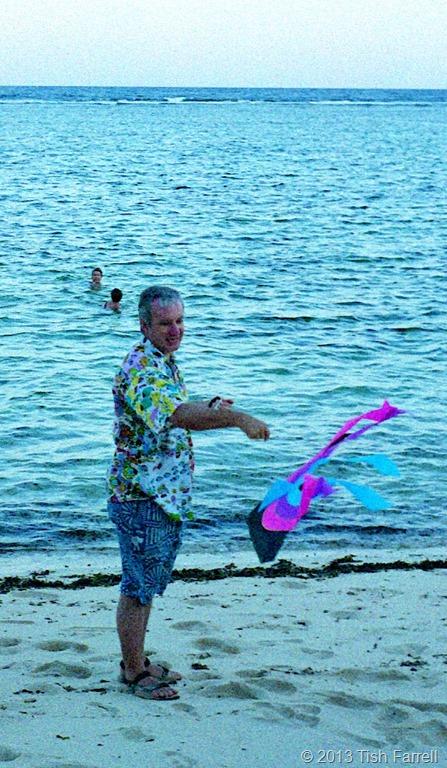
When it comes to shopping, it is a matter of buying whatever is in stock and then thinking of something to do with it. Treats include cartons of delicious and imported Ceres grape juice, and jars of sweet pickled beetroot. The local yoghourt comes in big tubs, plain or strawberry. Other staples include corned beef and South African wine. The supermarket smells of countless forms of perfumed cleaning products that at Christmas time are parcelled up into gift packs to make the ideal gift, along with small bales of second hand clothing.

Kamwala roadside furniture market

There are plenty of roadside artisans. We bought our bed from traders in  Kamwala Market

*

There are of course shopping opportunities everywhere along Lusaka’s streets – cigarette and second hand clothes stalls, a man selling bread, another with his scrawny hens, fish from a freezer connected to nothing, caterpillars dried or roasted, large woodland mushrooms the colour of cygnet down, little pyramids of tomatoes. If I buy two piles of tomatoes from the young woman in the photo, she gives me an extra tomato as a “special gift”, and then wraps the lot in computer print-out.

001

I also walk down to the Maluwa Cooperative in the hopes of something more interesting than beetroot and corned beef. Again I never know what I will find there: perhaps, if I’m lucky, a good mission-reared chicken in the cold cabinet, or button mushrooms, some Gouda cheese, broccoli, new potatoes, French beans, bunches of roses. If he catches me walking, an elderly white Zambian in a pick-up, (his ‘boys’ in the back), always insists on giving me a lift. He means well, and it is easier to comply with his desire to save me from imagined predations of Zambians than to argue.

But I like it out on the road. There is so much life there outside the high walled, razor-wired residences of the elite. People greet me. A taxi driver trying to mend his broken-down car offers me a lift, presumably in hopes that if I agree, his vehicle will conveniently right itself. I grin and say no thanks. I like his style though. As I step out again on the dirt road that has lost its asphalt, my footprints are impressed in the dust among the countless prints of others.

*

G. spends his days rushing round to meetings with aid agencies. There are fears that donations of free maize will dissuade farmers from planting their own crops, despite the good rains. Too much free maize is also likely to depress the economy, and this must be avoided. Much is given out as payment for working on public enterprises such as road building or making bricks for the building of clinics. Unemployed women, in particular, are keen to do such work. Receiving a sack of mealie meal, sugar, beans and cooking oil in return for their labour gives them independence from menfolk who might otherwise take any cash earnings. G. also has to travel down south to Choma and Kalomo to oversee the distribution of EU maize by the Red Cross. There are more trips out east and to the Copper Belt.

011

Villagers coming to collect cooking oil and maize meal from Red Cross food aid distributers.

*

012

A farmer shows Graham his empty granary.

*

In March G. comes home saying there is a bit of flap on. Brussels has phoned the E.U. Delegation saying that the BBC has reported a coup in Zambia: is everything all right there, they ask. The diplomats scratch their heads. No coup has been observed, but a few days later it is clear that something has happened. Major Rezi Kaunda, son of the long-serving and recently supplanted, ex-president, Kenneth Kaunda, has been arrested. He is reported as being under armed guard. Further details explain, somewhat bizarrely, that he is sitting in the yard of Woodlands police station with his flask of tea and a radio. Fourteen plotters in all have been arrested both in Lusaka and the Copper Best. These include the editor-in-chief of the Zambia Times.

Later we hear that an incriminating document, The Zero Option, has been seized. It gives detailed plans of how members of the UNIP opposition old guard, led by Rezi, intend to make Zambia ungovernable by fuelling a crime wave, infiltrating the unions and government departments. It is mooted that this campaign of destabilisation has already been instigated and is responsible for the alarming crime wave.

President Chiluba has only been in office for a little over a year. His Movement for Multi-Party Democracy defeated Kenneth Kaunda in the first democratically held elections since Independence in 1964. Kaunda Senior had been in power all that time, but on defeat, chose to bow out gracefully. Meanwhile Frederick Chiluba claims that he is on a clean-up mission of this potentially rich, but now run-down state. He declares a limited State of Emergency while order is restored.

We all breathe a sigh of relief. No need for the emergency evacuation that the High Commission is so unlikely to provide for us. Besides, G. still has much work to do, and there’s so much I still want to discover. One thing I am itching to know is how this copper-rich nation, with its deposits of sapphires and amethysts and airy upland mopane forests is one of the poorest on earth. Why are its impoverished, beleaguered but hard-working peoples being so ruthlessly structurally adjusted by the World Bank? I am beginning to suspect that the spirit of Cecil Rhodes is restless and abroad once more, but that, as they say is another story.

Eastern Province

Zambia is often called ‘the air-conditioned state’. It comprises an upthrust, tilted plateau some 5,000 feet above seal level. The natural vegetation is mopane woodland. This view was taken along the Great East Road.

Lusaka agricultural show - miniature railway

Lusaka agricultural show - kids

Lusaka agricultural show - Boy and copper belt truck tyre

Kids at the Annual Lusaka Agricultural Show. 1993’s slogan is ‘Produce to Prosper’. Produce and get a fair price  from multi-nationals would be my preferred slogan.

*

© 2013 Tish Farrell

Meet Joe Sabuni P.I. aka Joe Soap

001

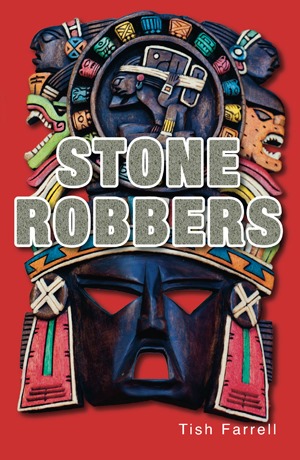
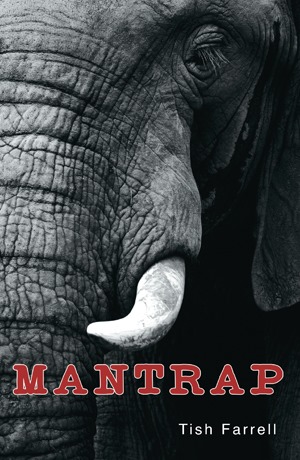
Perhaps it is Jonas Kilimani’s choice of alias that makes things go so badly wrong in Mbogo sub-location. Or maybe he’s just not cut out to be a sleuth. Or it could even be his bad choice in suits. But whatever the cause, everyone is running rings round ‘Joe Sabuni’, and it all starts when his Uncle Micah sends him upcountry to track down a man who owes him money. It’s not much of a job, but Jonas is desperate to impress. He has college loans to pay back, and rich girlfriend, Keziah, to keep happy. And if he pleases Uncle Micah, maybe the man will give him a real job, as he’d long ago promised…

Cover artwork: Bob Harvey

*

Okay, I am taking advantage of Frizztext’s JJJ-challenge for another piece of self-publicity. Also I think Jonas Kilimani deserves to be better known. He’s a really nice guy, and I’m glad I created him. He actually began life as a tiny notion while I was out on Kenya’s farms surveying smut-infected grass with the Team Leader. (For  more about smut see earlier post HERE). It’s amazing how one thing leads to another, and all apparently unrelated. There is no smut in Joe Sabuni by the way. Or maybe just a smidgeon – involving the dreadful Keziah of course.
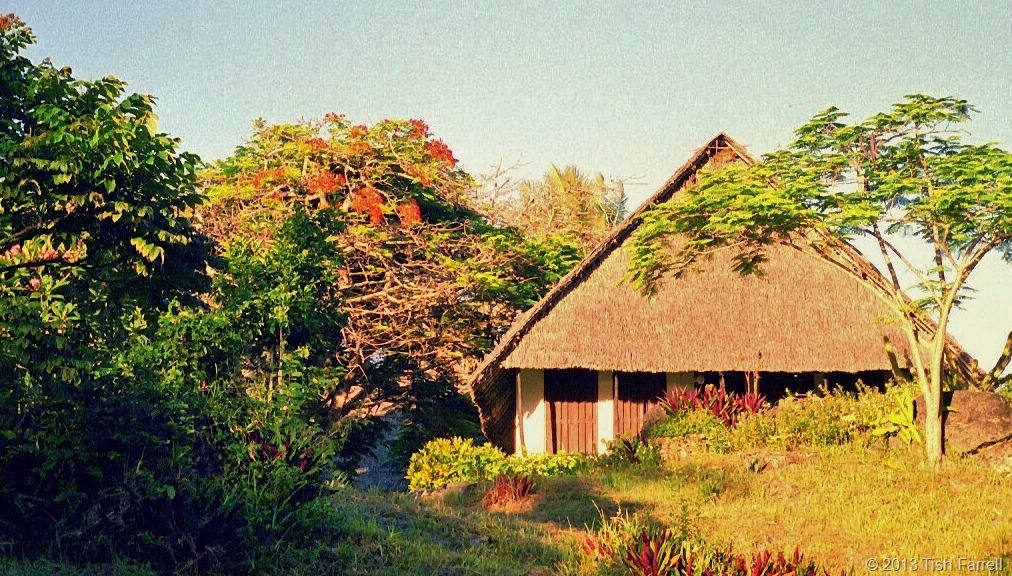
I began writing stories for the African children’s literature market while we were living in Kenya in the 1990s. I think it was fury that started me off. There had been an article in the local press about children’s books, and the lack of locally written ones. It included a quote from a school girl saying she did not know there were stories with African heroes and heroines.

My first reaction was bewilderment. (The fury came later.) I began to look along the shelves of Nairobi’s bookshops. I could see that the girl had a point. Most of the locally produced fiction comprised folk tales, which I, as an outsider, had until then been more than happy to see and buy.

Now I began to regard them with fresh eyes. If I were six or nine or thirteen years old what would I think about such books? The design was often minimal, the paper quality poor, the stories wholly unrelated to modern day living, since the texts had mostly remained frozen in some colonial time when an avid ethnographer had recorded them. And so by comparison with these dry looking tales, would not the imported British and American paperbacks seem infinitely more glamorous and slick?

And yes, for sure, there would be no African kids featured in the rows of Enid Blytons or the Nancy Drew and Hardy Boys mysteries, or in the Ladybird versions of Snow White and Sleeping Beauty. For these, I discovered, were at that time the mainstay of the children’s section. Even the school curriculum  English literature texts were books like Gogol’s Government Inspector or Dickens.

In fact, given the era when all these books were written, there would be no dark faces in them at all. That the stories were written in times long past would not necessarily be apparent to young Kenyan readers. I remember a ten-year old girl telling me that her dream was to ride her bicycle on country lanes and go wherever she pleased just as the Famous Five did. It was hard to know what to say to this. It seemed such a lovely dream.

Anyway, all this started me wondering what it might be like to only read books about children who were nothing like me AT ALL. How would that make me feel about myself: that I wasn’t cut out for hero-dom?

Of course the reason for all the imported revamped  titles was because they were far cheaper than mainstream market books, and parents were more likely to be able to afford them. There is anyway a resistance to buying fiction, since stories are considered an unnecessary luxury when parents have to spend so much on school textbooks every year.

And so we start getting to the heart of the problem. Kenyan publishers, like many others across the continent, struggle along producing textbooks, often in collaboration with British publishers like Oxford University Press, Macmillan and Longman. They can’t afford to produce much fiction, and that means there are not many local fiction writers. Classic authors like Ngugi Wa Thiong’o and Meja Mwangi are few and far between, and Ngugi has anyway long lived abroad in America. The best Kenyan writing, then, is mostly to be found in the country’s excellent newspapers, and they are aimed at adults not children.

As a writer, though, I learned a lot from the late Wahome Mutahi and his hilarious Whispers column, and also from the trenchant political analysis of John Githongo. The end result was Joe Sabuni P.I., a humorous teen short novel set in the fictitious city of Greenvale, somewhere in East Africa. It is published in the Heinemann Junior African Writers Series, now a Pearson imprint.

One of my best moments came a few years ago when I learned that the book was also to be used in Zambian schools, and not only in English, but translated into 6 Zambian languages. This I gather was funded by the World Bank. Someone had the surprising idea that people learn to read best in their own language. I wonder how they came to think such a breath-taking thought.

Because that’s another thing, most African children who go to school do not learn in their vernacular, but in the language of whichever colonial power once ruled them. In Kenya the curriculum is conducted in English and the East African lingua franca, Ki-Swahili, although the vernacular may appear in the study of arcane oral literature texts.

I think this is what Ngugi wa Thiong’o means by ‘colonization of the mind.’

Of course you could say what on earth is an English woman doing writing for African kids in their second or third language? It’s a good question. As I said it was fury that drove me. I wanted to tell contemporary stories that showed Kenyan kids their own wonderful selves, and in situations they might recognize. That these stories have also proved popular in other English-speaking countries such as Zambia and Zimbabwe is a bonus. A couple have won prizes of which I am inordinately proud.

You can read a sample of Joe Sabuni P.I. on Google HERE. Please forgive the fact that Google copywriters can’t spell the word ‘rotten’. And nor can Amazon.

© 2013 Tish Farrell


Far away in Africa

Where’s My Backpack: Distance

002 (2)

This shot of Kilimanjaro, which is actually miles and miles away, was taken from Kenya’s Mombasa Highway near Kibwezi just after the rains. Below it are the green cones of the Chyulu Hills on the approach to Tsavo. Like Mount Kenya, this huge old volcano is very elusive. Sometimes it will fill the sky, other times it is more like a mirage. The next shot was taken in the early morning during the dry season. The mountain often appears with the sunrise, but twenty minutes later you will see nothing at all in the space that it occupied.

003

*

010

This dirt road is heading back towards the Mombasa Highway from Kenya Agriculture Research Institute’s Range Station at Kiboko. Buffalo lurk in the thorn scrub, and much else besides.
*

dawn on Tiwi with dugout

Early morning on the reef at Tiwi Beach, South Mombasa. The dug-outs belong to the local Digo fishermen, who make a living selling their catch to tourists staying that the local beach villages. (See Beaches – Mombasa)

*

Capricho and palms

A glimpse of Maweni Beach Cottages, built in the local style: coral rag walls and high makuti roofs thatched with coconut palm. Many of the local coconut plantations are ailing, due to too much tapping of flowering shoots to make the local brew tembo.

*

Mara grassland 3

Mara grasslands and, in the distance, the Ololua Escarpment.

*

Scan-130426-0029.jpg

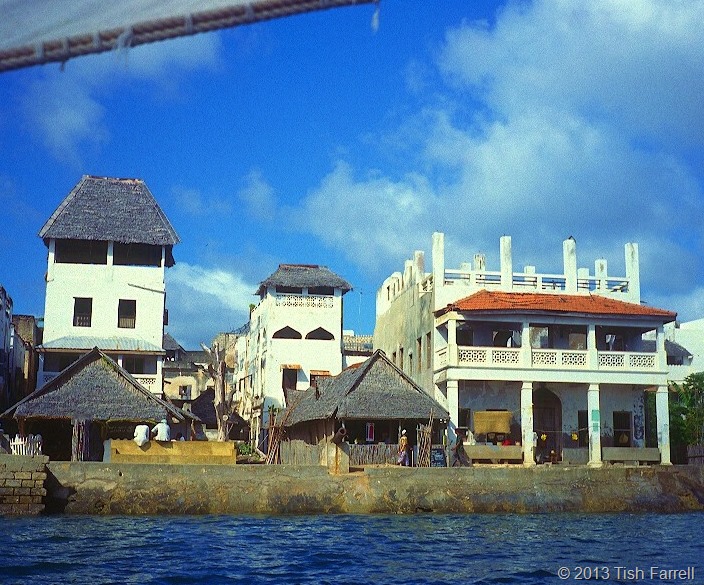
A room with a view, the ‘penthouse suite’ of the erstwhile Island Hotel, Shela Village, Lamu. This room had three whole walls of windows – the absolutely most perfect place for Nosy Writer to survey local life.

*

Scan-130429-0005

“I had a farm in Africa, at the foot of the Ngong Hills.”

Karen Blixen Out of Africa

The view that Karen Blixen saw from the veranda of her home outside Nairobi.

*

001

The Mombasa Highway just north of Kiboko. This shot was taken as we were heading to Nairobi about sixty miles away. The arid scrubland is part of Ukambani, home of the Akamba people, but Maasai come to trade here too. It was unusual to see the road with absolutely nothing and nobody on it.

And finally back up the Rift, north of Nairobi, a view across Lake Elmenteita of Lord Delamere’s Nose. This was the name the Maasai gave to the exploded volcano on the lake shore. Lord Delamere was one of the first white settlers in what was then British East Africa. I leave it to you to imagine what his nose looked like. Before Lord Delamere arrived to occupy this part of Africa, the hill was known as the Sleeping Warrior.

001 (2)

© 2013 Tish Farrell