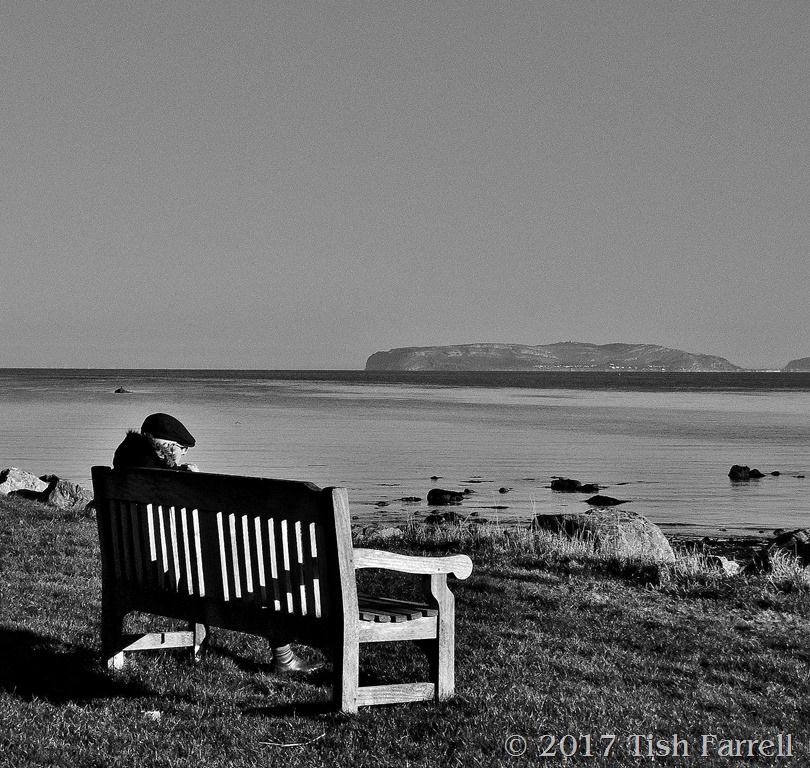
It’s hard to believe that I took this photo nearly a year ago – a late December day on the shore of Menai Strait on Anglesey. There’s a view of the Great Orme across the water. Everywhere so still. Not a cloud in the sky. And sunshine warm enough to sit in.
I don’t know who the man on the bench is. He was reading a book quite surrounded by this view. There’s something of an optical illusion about it – the dark cap above the seat back (echoing the nearby black rocks in the water), his foot below the seat, yet the corporeal lack of him in between head and toe, where the sunlight seems to pass unimpeded through the bench slats. Curiouser and curiouser, said Alice…
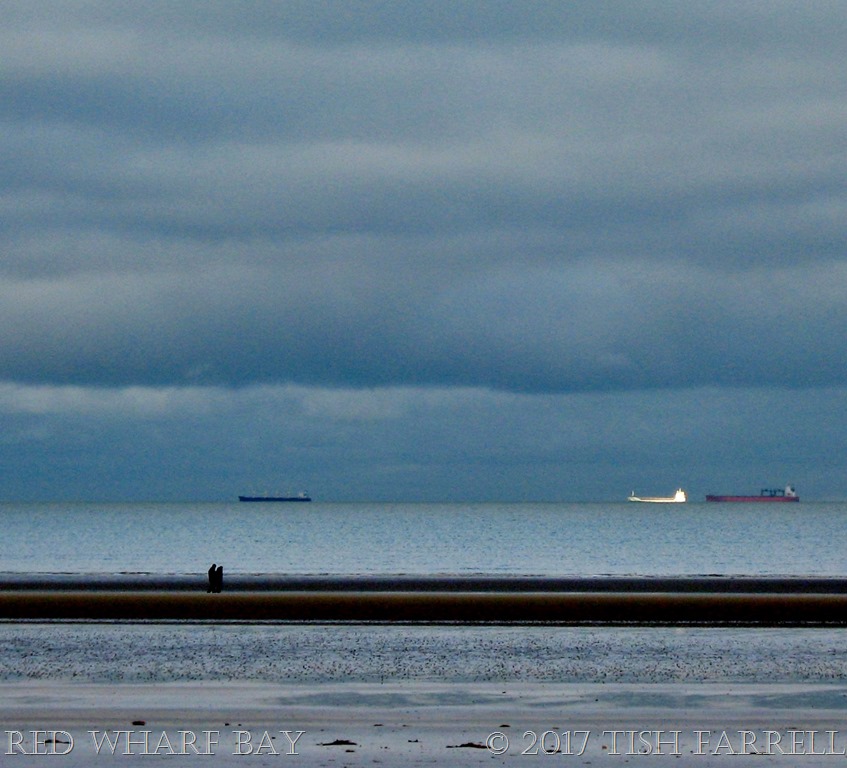
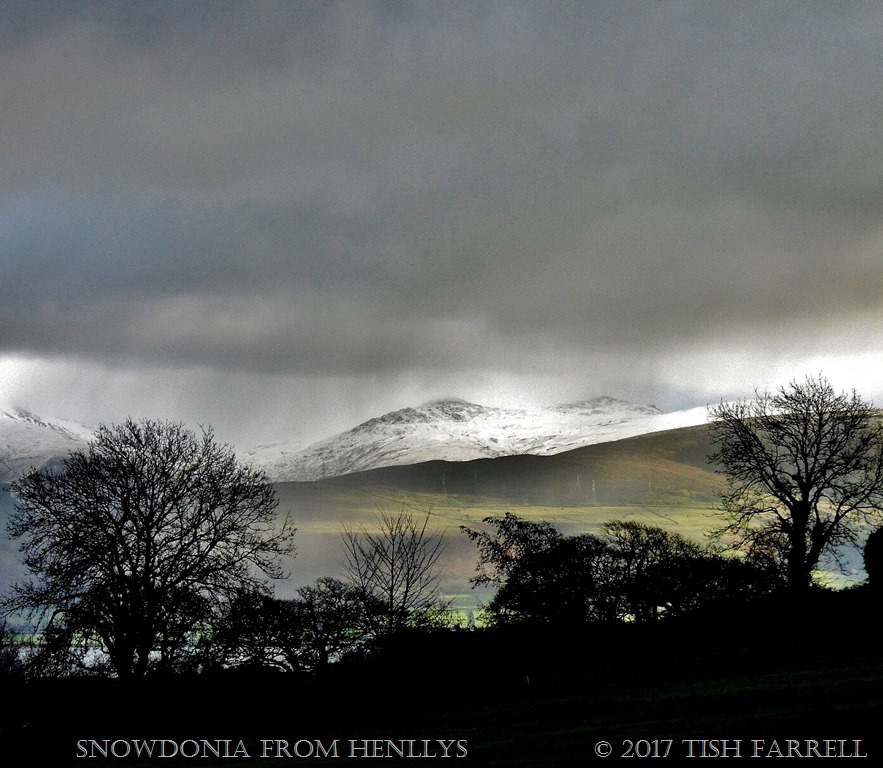
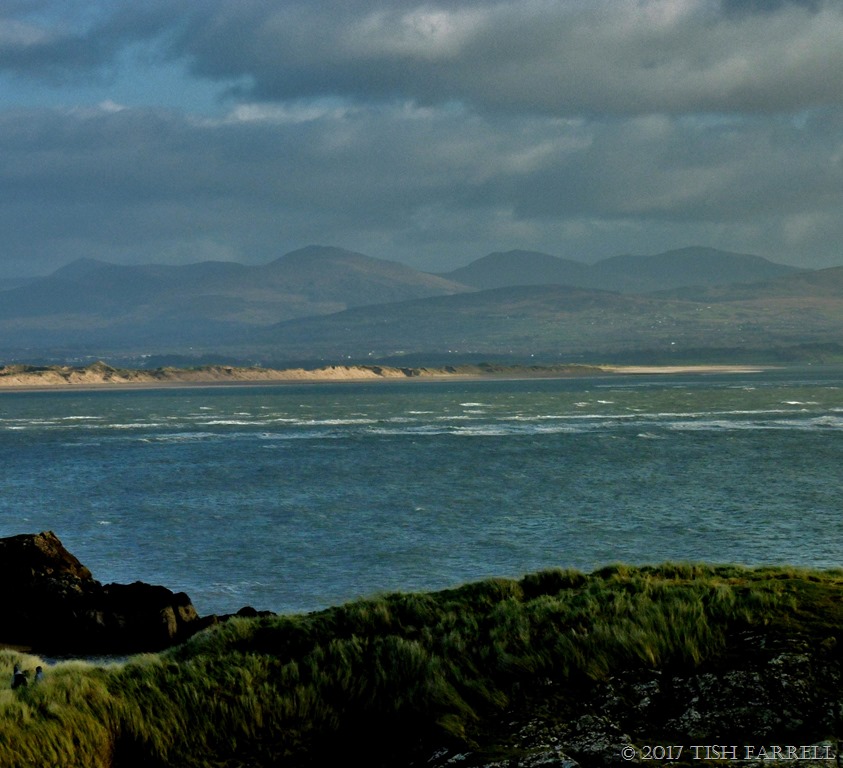
You can’t beat the Welsh island of Anglesey for good cloud effects – and especially over the Menai Strait and mainland mountains. These are all winter views.
Please visit Paula for more of her August’s pick-a-word prompts.
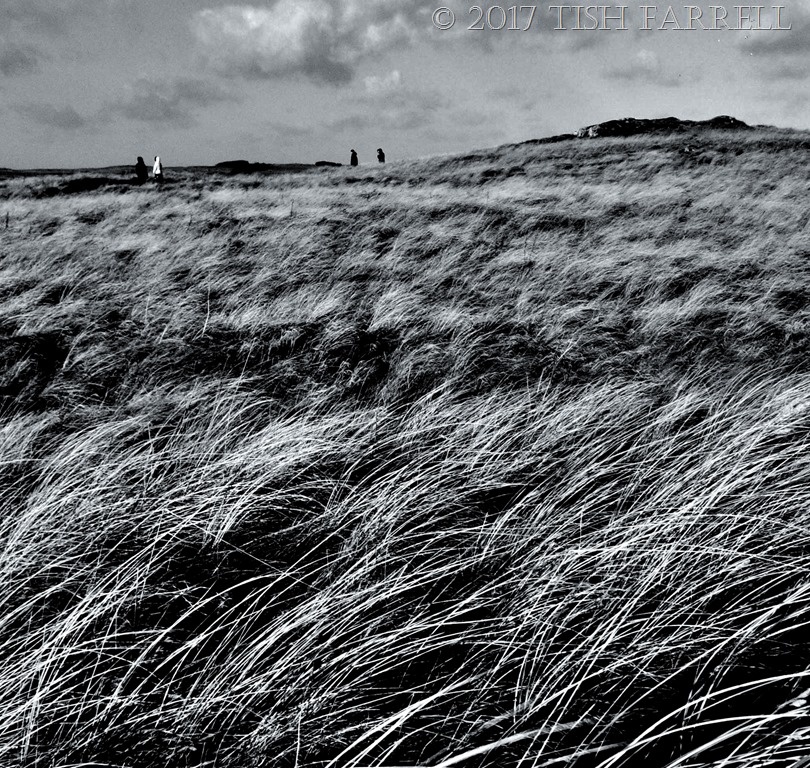
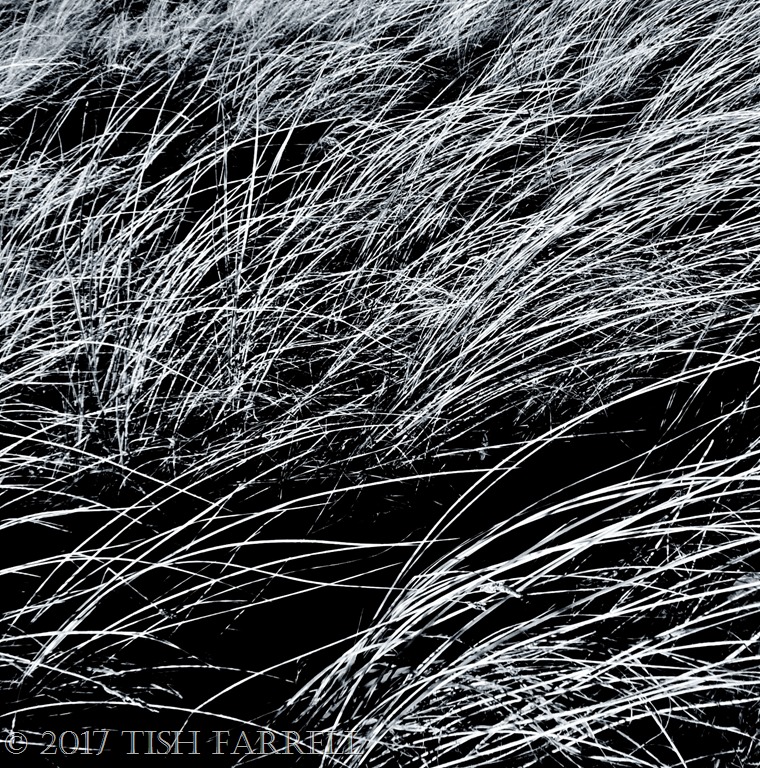
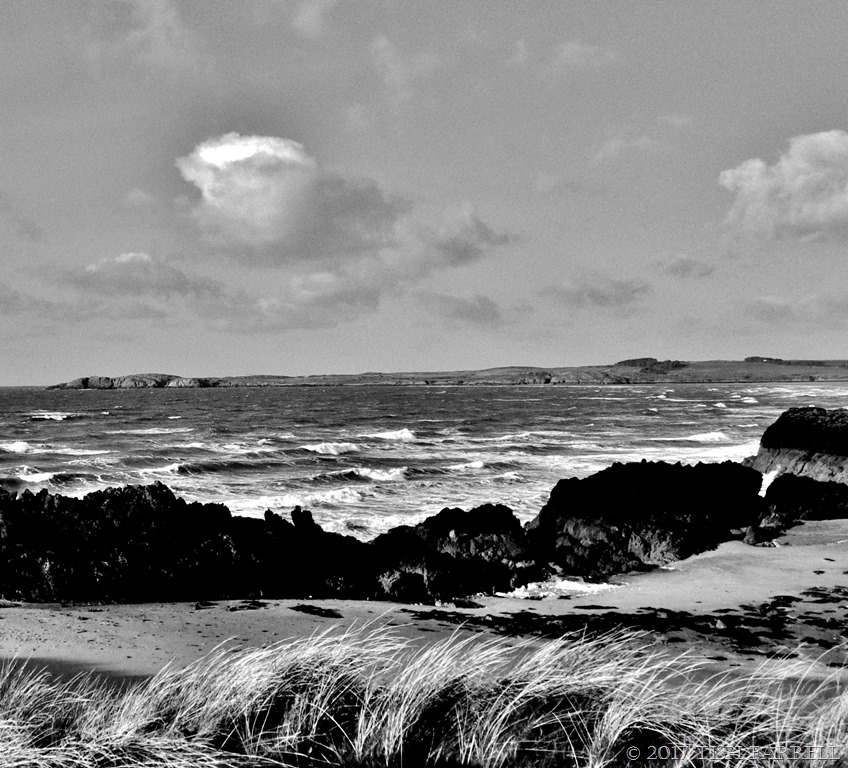
I’ve chosen a very literal interpretation of Paula’s theme at Black & White Sunday. First of all I thought you could not get any ‘lower-lying’ than at sea level, at least not without immersion in said sea. And then I thought of Marram grass being laid low in the gale, and how I was attracted by its bowing texture.
*
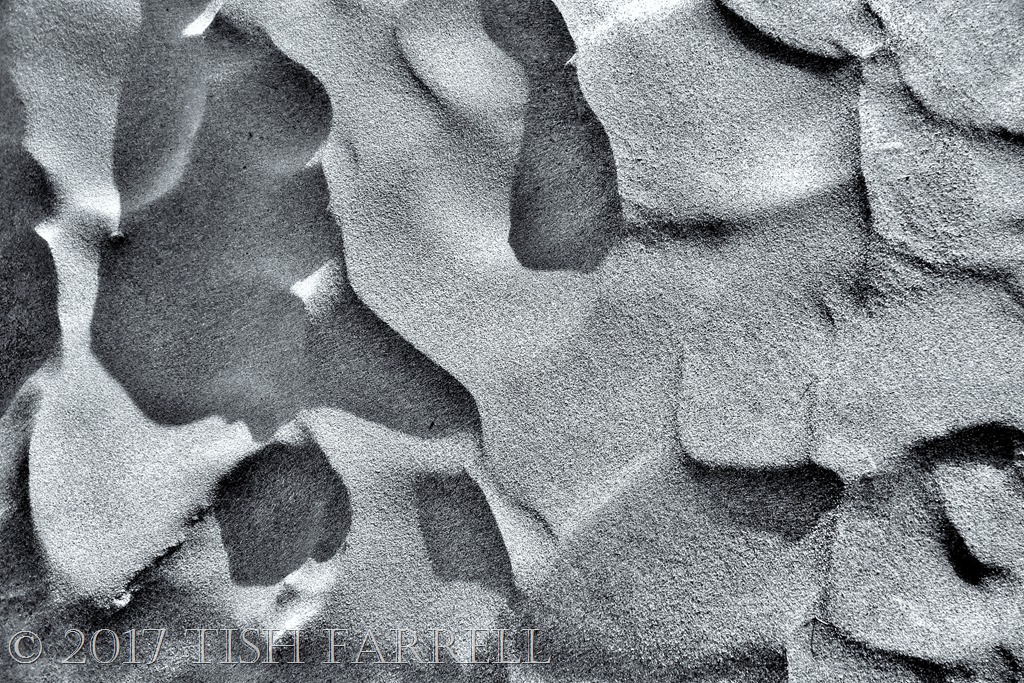
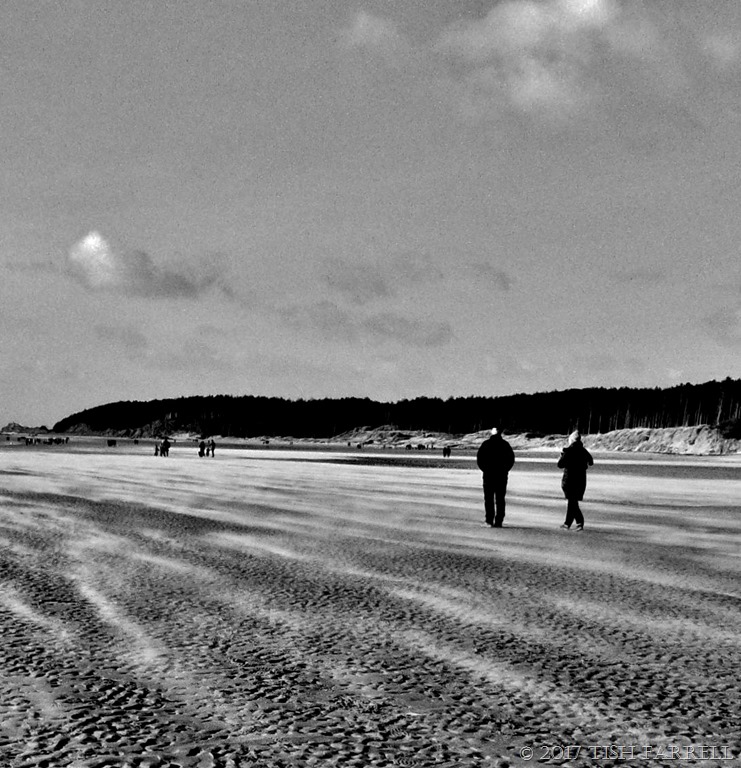
And then I thought of the sand beneath our feet:
These photos were taken last Christmas on a beach walk to Llanddwyn Island on Anglesey, North Wales. You can see more about the island HERE.
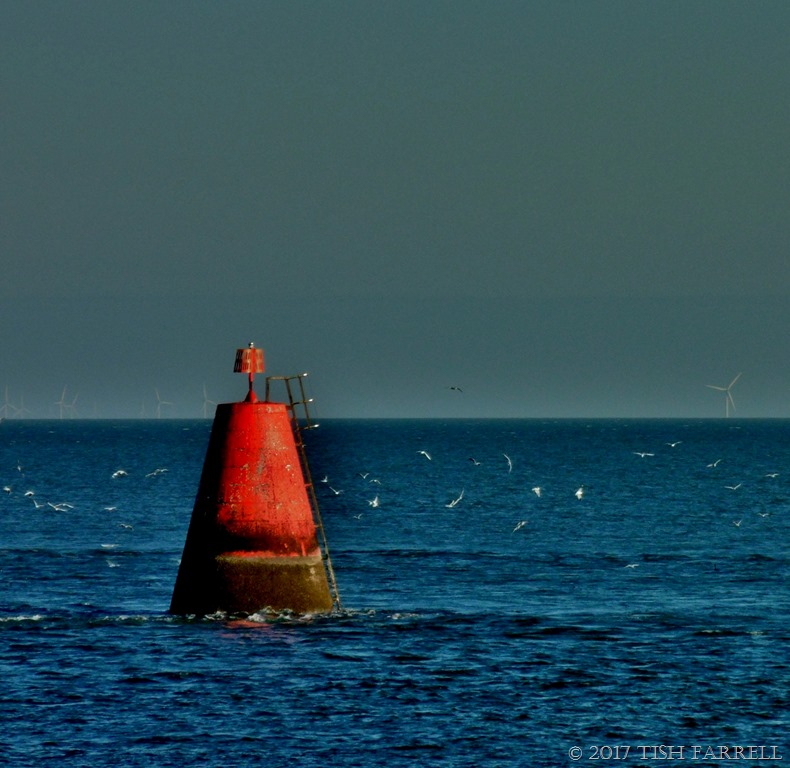
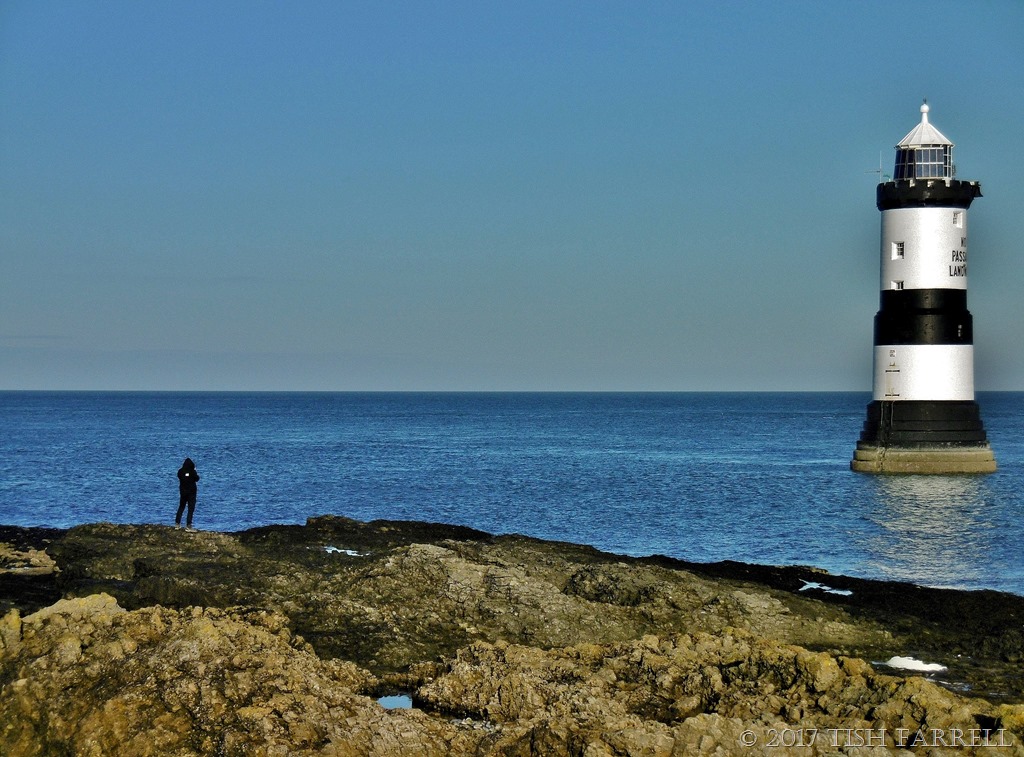
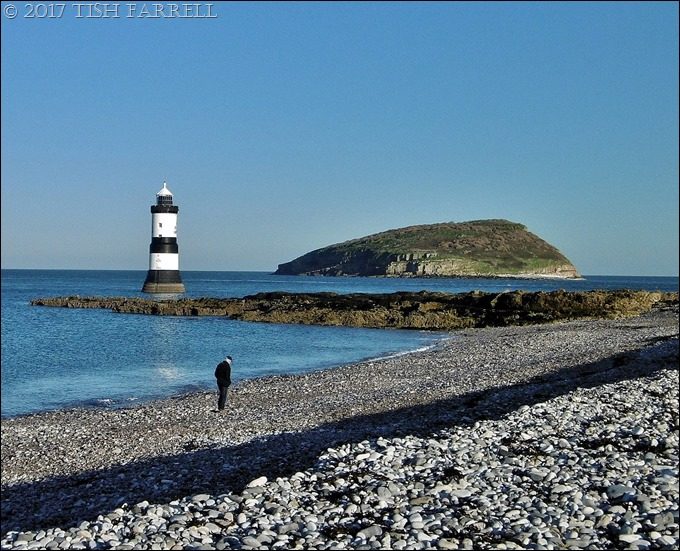
This buoy at Penmon Point, on the Menai Strait in Anglesey tells shipping to be vigilant – the channel between the main island and Puffin Island is too shallow for passage. The lighthouse says so too in a big notice on its topmost white stripe (out of shot):
This month Paula’s pick a word at Lost in Translation includes: branching, vigilant, pomp, hooked and continual. So I’m laying claim to them all – distantly branching wind turbines off the Great Orme, the need to be vigilant in these waters, the hooked profile of the bay, and the continual ebb and flow of the tide. And as for pomp, well I think the lighthouse has plenty of it.
But for a truly outstanding interpretation of these prompts, please visit Paula, and enjoy her Venetian gallery.
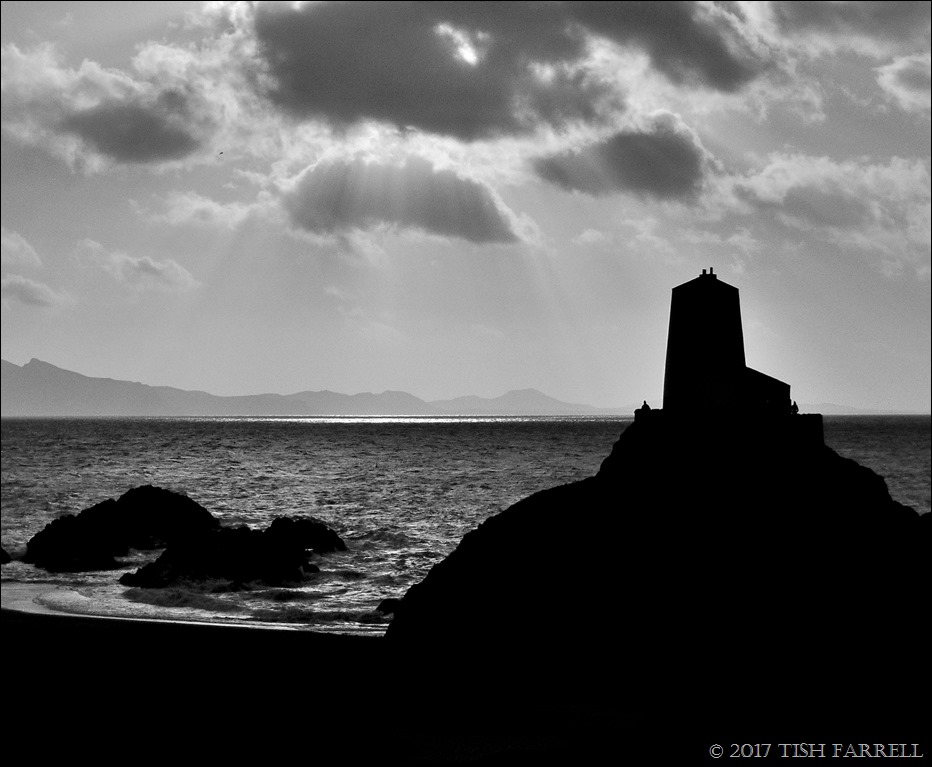
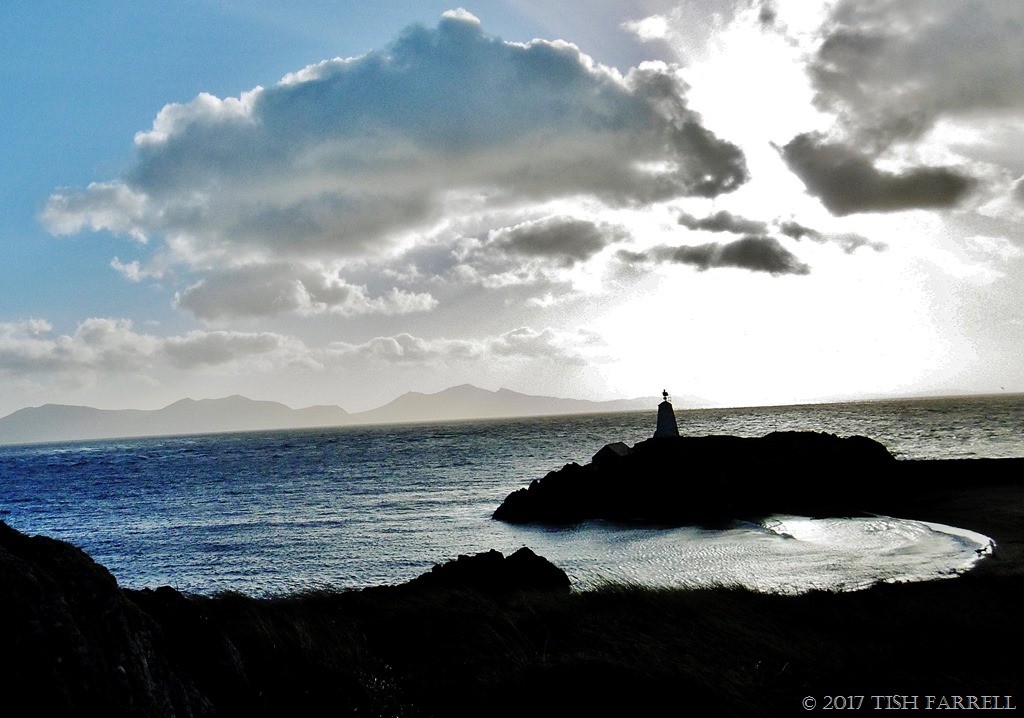
It’s back to Llanddwyn Island on Anglesey for my response to this week’s prompt from Paula. Darkness and light – the stuff of fiction writing, but also the source of many diversions from the work-in-progress to play with my camera’s monochrome setting. The hazy uplands in the background are the mountains of mainland Wales. The island in question is in reality a long thin promontory heading out to sea from Newborough Beach, and has, since Dark Ages times, been associated with St Dwynwen, Welsh patron saint of lovers. You can read more HERE and HERE.
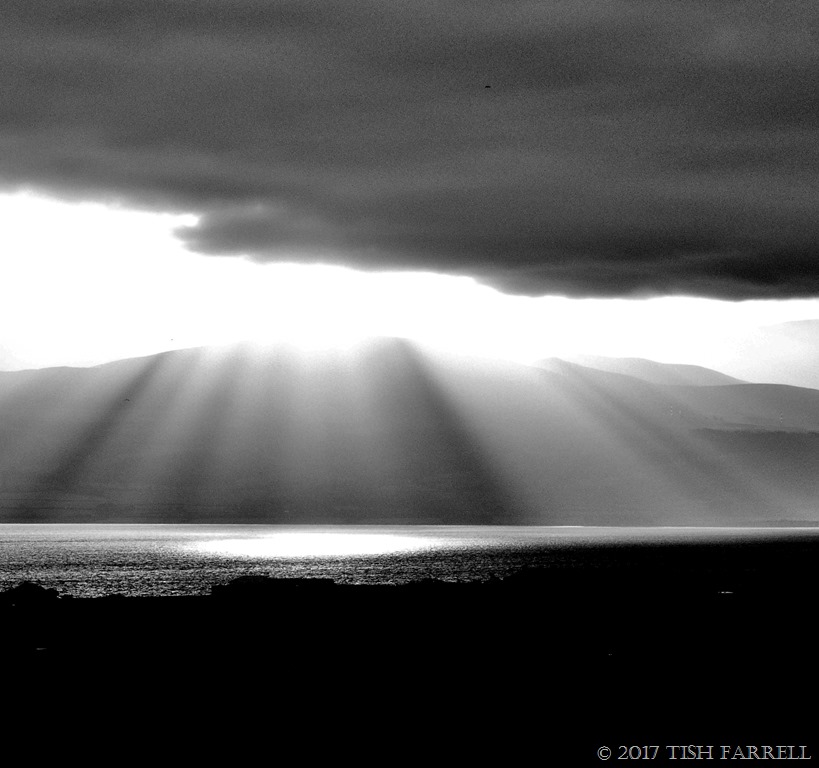
And now for a more abstract rendition of darkness and light: an early morning view across Menai Strait, taken from the fields above Beaumaris. Here on Anglesey, the sun in winter regularly puts on these mystical lightshows – shining searchlights through banks of low cloud on to the water. This particular shot was taken with quite a lot of zoom and then cropped.
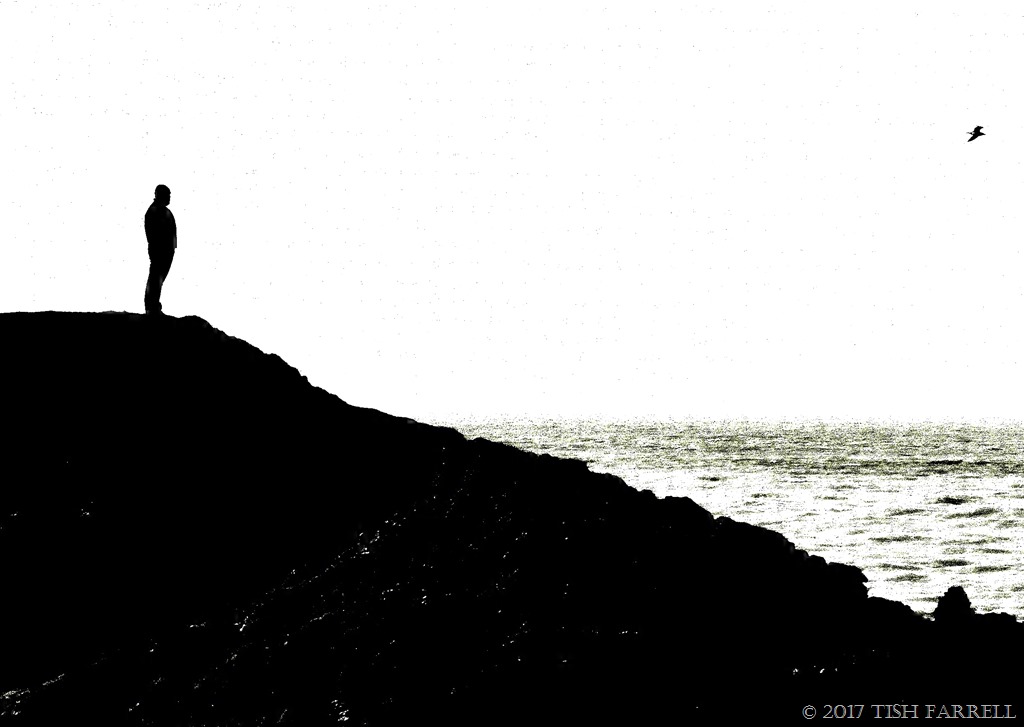
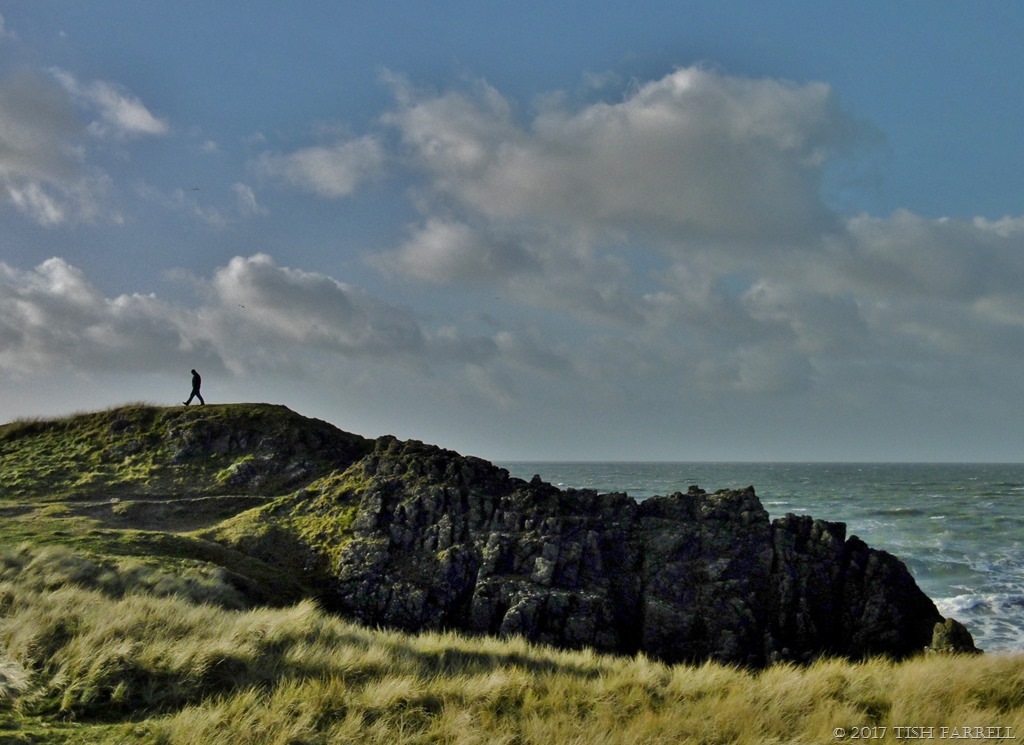
Here’s another view of, and from Llanddwyn Island, taken on our recent trip to Anglesey. It was snapped on high zoom in high wind and thus has pixilation tendencies, much like the snapper, some might say. So I edited it to exaggerate the silhouette effect. I anyway like the stance of this unknown man on the cliff top. He is so well rooted against the gale; so absorbed by the seascape.
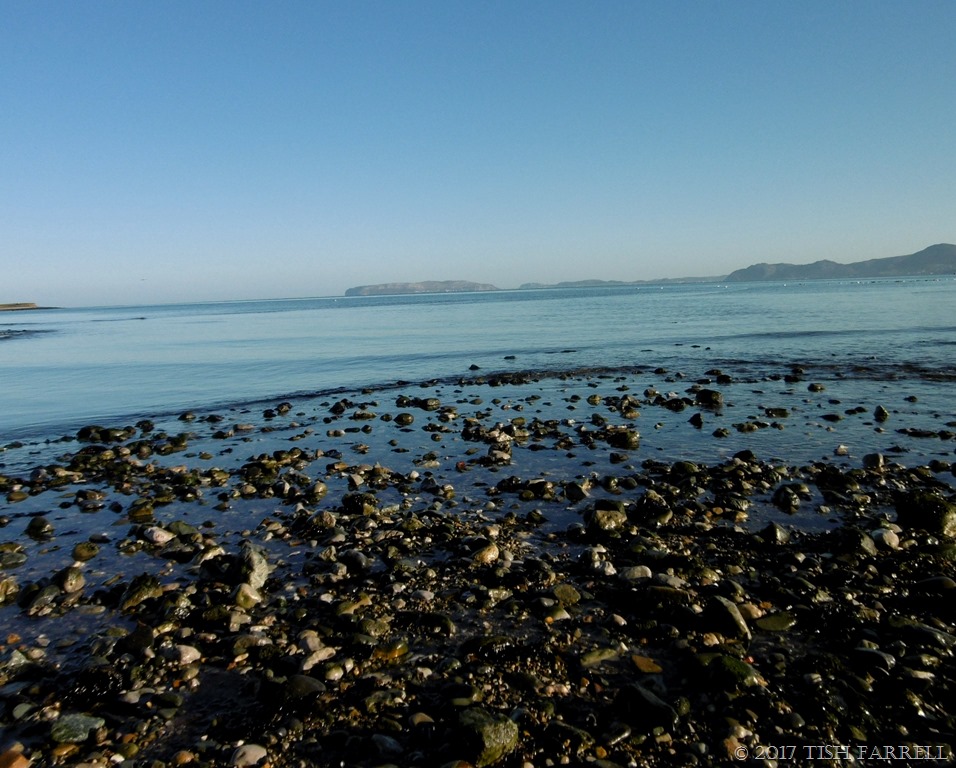
What a blessed scene. We could scarcely believe our eyes – a sea so still, so blue, and sky to match; the Great Orme slumbering on the horizon, and all this happening just last week on the Menai Strait, North Wales.
I love winter beaches whatever the weather, but this vista seemed to awaken a whole new plane of perception. I could see why the Celtic Druids made Ynys Mon their stronghold. You never do know what the light will do next. It is transporting.
The little boy and his dad seem caught up in the magic too. So it’s a good thing that the Great Orme is slumbering; for this Viking name for the limestone headland means sea serpent, and we don’t need him abroad disturbing the tranquillity.
It’s an odd thing, though, about that particular promontory. The weather along the Strait may be foul, but more often than not, there’s a beam of sunlight slanting down on the Great Orme. Perhaps it is all part of an enchantment that keeps the mighty serpent dormant. Sleep on, Great Worm. Dream and dream between sky and sea.
Thursday’s Special This week Paula has given us five words to fire up our New Year imaginations. I’m using two of them here – the sea permeated with sky colours, and the limpid waters of Menai Strait. Follow the link to find out more and to see Paula’s fine photos.
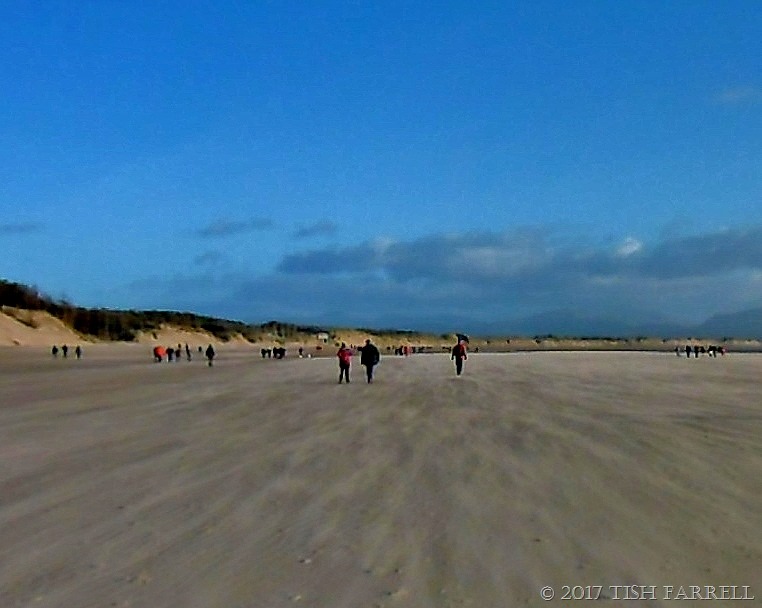
It was blowing a gale, wind like ice on our faces. But that did not stop us – nor a hundred like-minded souls, all intent on the secular pilgrimage of walking off Christmas Day excesses, giving the family dogs a much needed airing, and heading to Llanddwyn Island while the tide was on the ebb. Anyway the sun was out, the light crystal bright, and the mountains of mainland Wales across Menai Strait looking their dreamy best. So why wouldn’t you head for the sea shore.
Newborough Beach was positively crowded. Not only that, the sands were coming to meet us as we set off to the island. It was the strangest experience, which along with eyes full of wind-tears played havoc with one’s perceptions. It was rather like going backwards on a forward moving pavement.
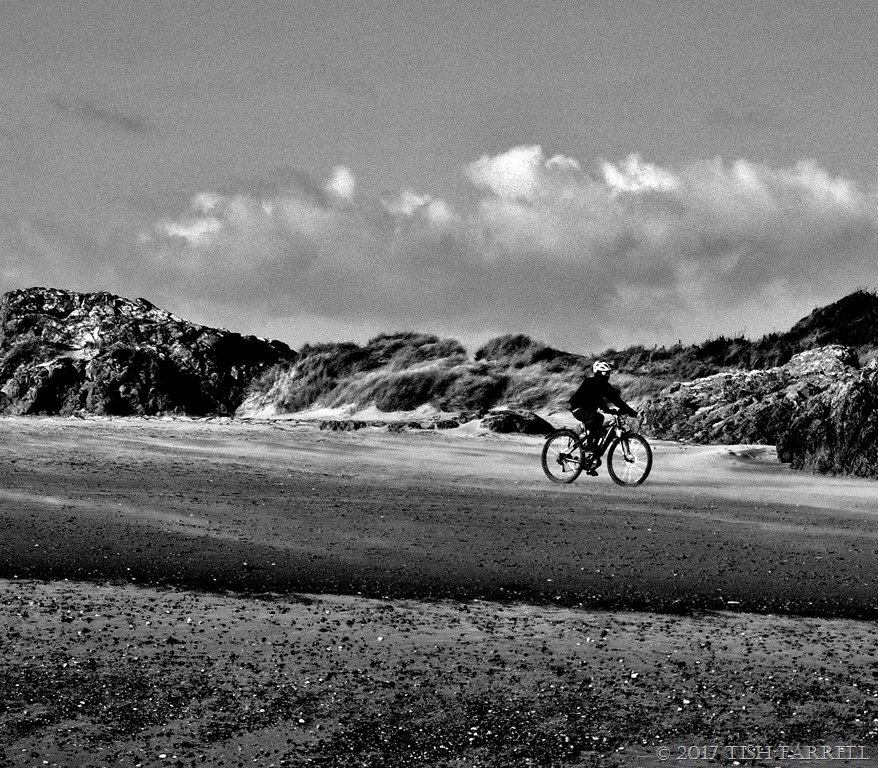
And so at this point, seeing a chap on a bicycle seemed most surreal. But then why not ride your bike on the beach? So much space. No grouchy motorists on your tail. All that sand for a soft (well soft-ish) landing.
I’ve written about Llanddwyn (roughly pronounced ‘hlanthwin’) Island before. We were here two years ago, on Christmas Day, but then the tide was too high for us to reach the island.
In fact it is not an island at all, but a long, slender peninsula, poking out into the Irish Sea like some dragon’s tongue. And it was here that St Dwynwen, daughter of a Welsh king, withdrew from the world to form a convent. This was in the fifth century, around the time that Roman rule in Britain was coming to an end. You can read her story at the link above, although there are many versions, and they mostly have to do with spurned or thwarted love, and so are used to explain how she came to be the Welsh patron saint of lovers. Her day is celebrated each year on 25th January.
During the Middle Ages, as poets and pilgrims were drawn to Llanddwyn Island, so the accounts of their visits helped grow Dwynwen’s reputation for mystical powers of healing and divination. Even her well was said to be inhabited by sacred eels, and through the cunning reading of their movements, you might predict the future. On the other hand, if the waters boiled up during your visit you could be assured of love and good fortune.
We, however, were not enticed from the path to see this for ourselves. A very pungent odour wafting our way suggested something had died there. Perhaps the sacred eels? Instead we took the cliff path and enjoyed the thrill of stepping out above a stormy sea.
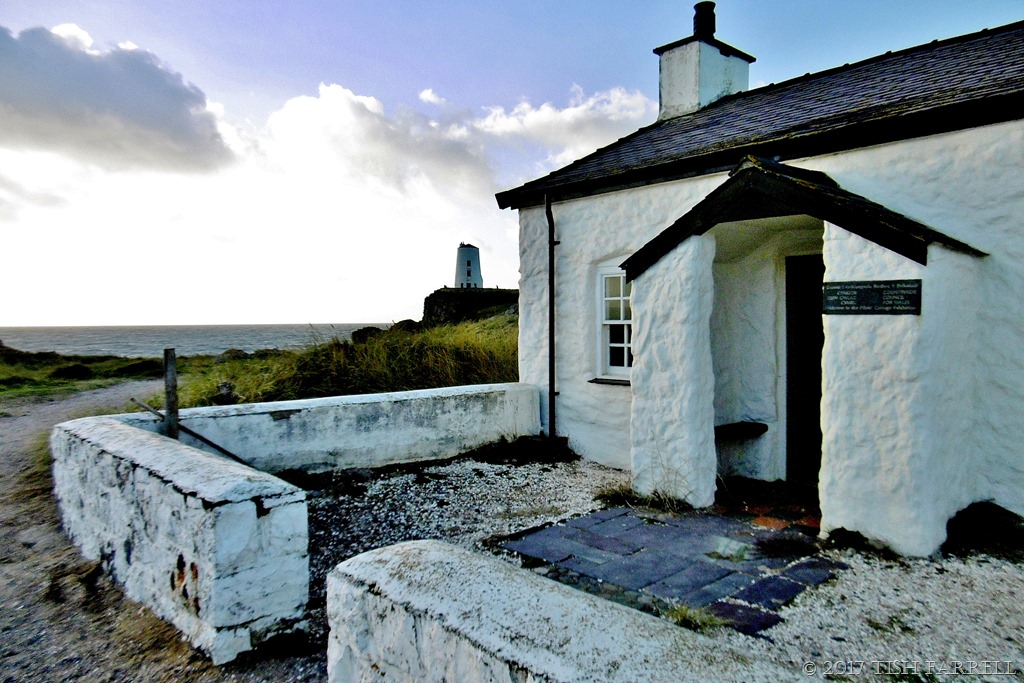
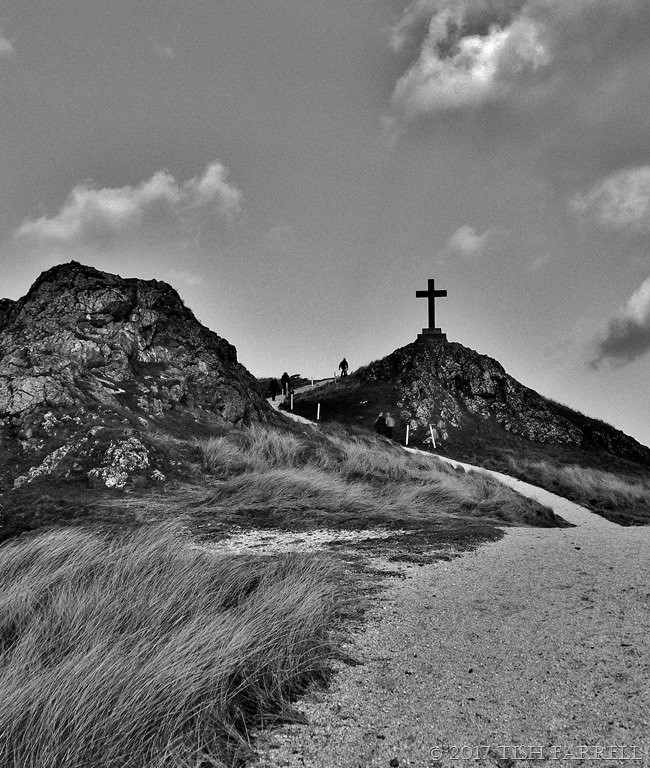
There is anyway much to explore on this small promontory. At every point, as the sea recedes, there are enticing coves – some rocky, some sandy. There are many man-made features too: a Celtic cross of nineteenth century vintage, another marking Dwynwen’s death in 465 C.E. There are the ruins of a Tudor church built on the site of Dwynwen’s own church which she apparently built herself from beach stones, and so doubtless did not stand the test of time and wild Welsh weather. There is also a beacon, a lighthouse and three cottages built for the lighthouse keepers and their families. In the nineteenth century the export of Welsh slate was a thriving industry, and the lighthouse served the slate ships in particular, keeping them off the dangerous Menai Strait sand bars.
On the long walk back up the beach, the wind was behind us. Now we were walking with the moving sand. But it was still a very odd experience.