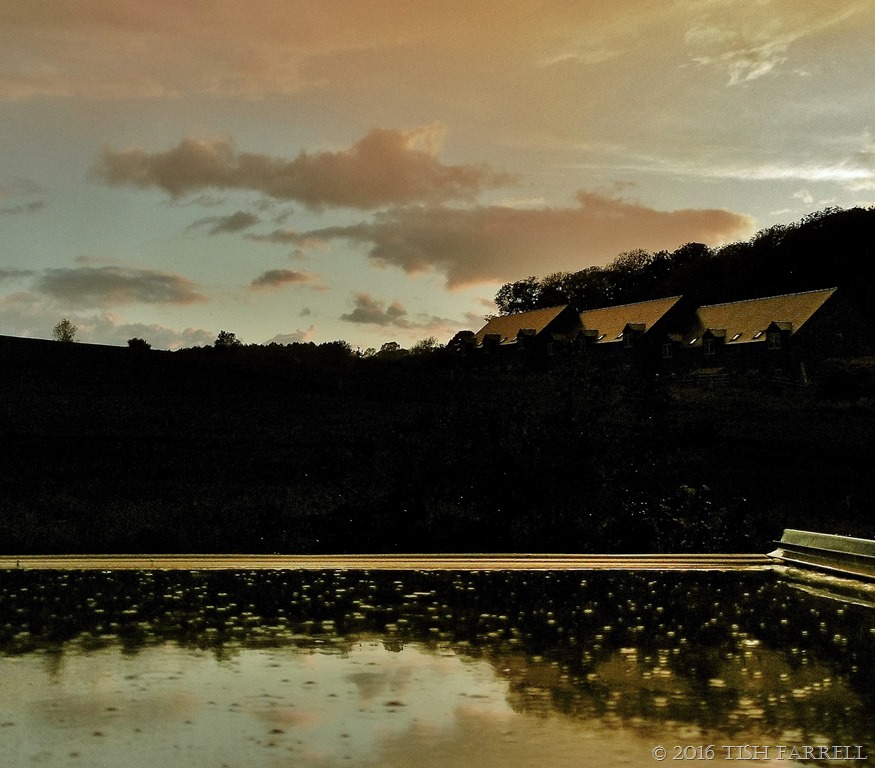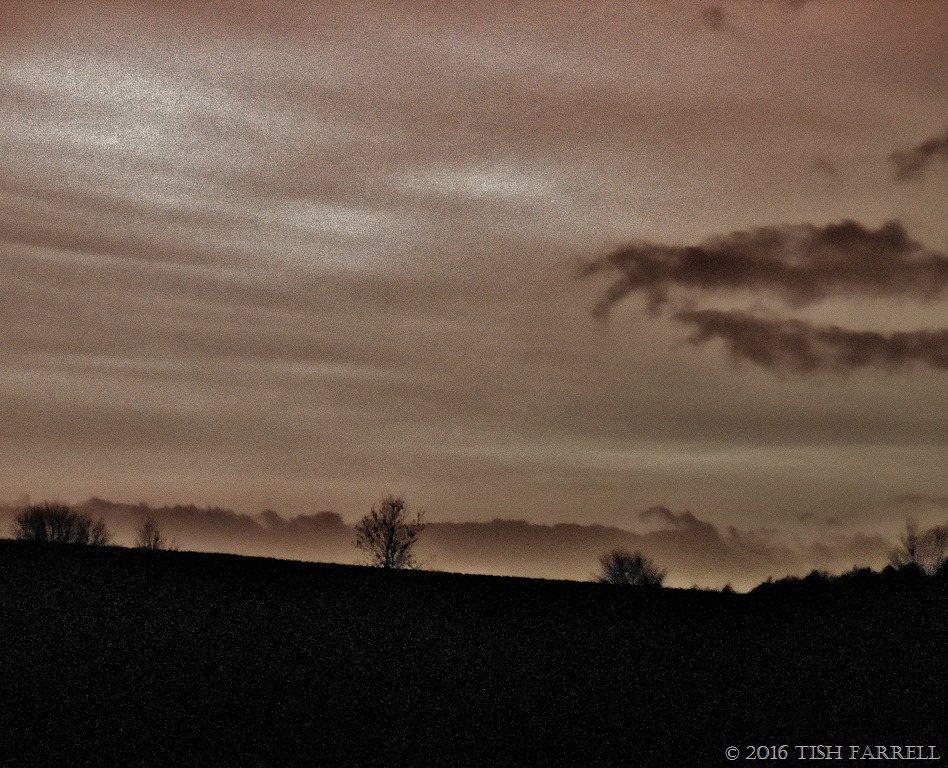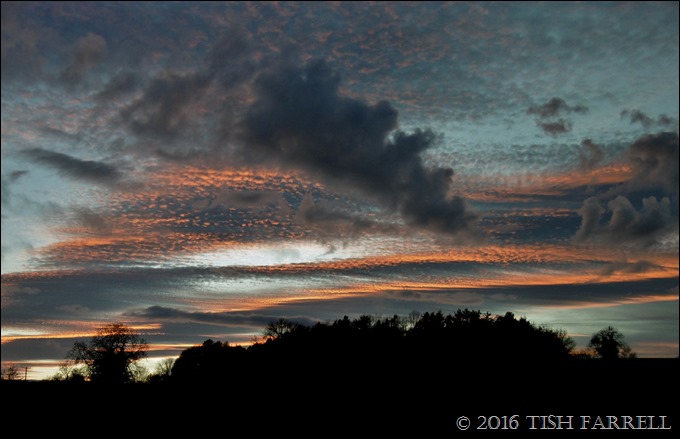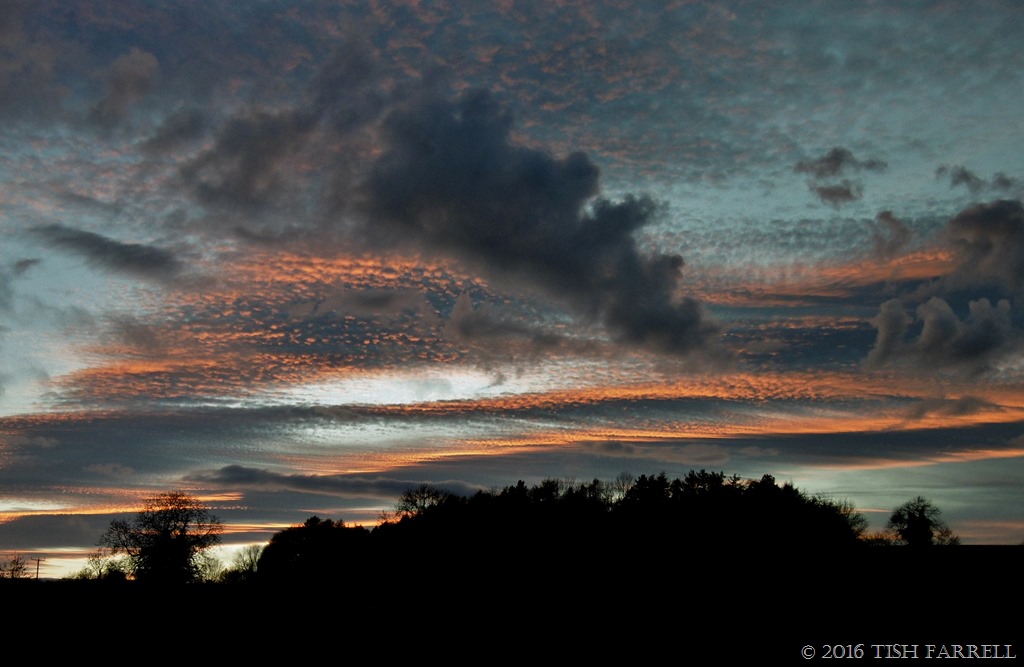
Hard to know which of us was on mind altering substances – me, my camera, or the Wenlock Edge Sky-painter. Perhaps all three of us. Anyway, I was tramping along the margins of Townsend Meadow, having been to the allotment for a trawl of Tuscan kale and cabbage tree greens. It was around 4 p.m. but already going dark, and I had paused briefly to watch three little girls bouncing so joyously on their garden trampoline in a hectic communion of after-school-steam-lettingoffness – when it suddenly occurred to me to turn around. And this is what I saw. It took my breath away. So of course I had to snap it and pass it on.
Wenlock Edge
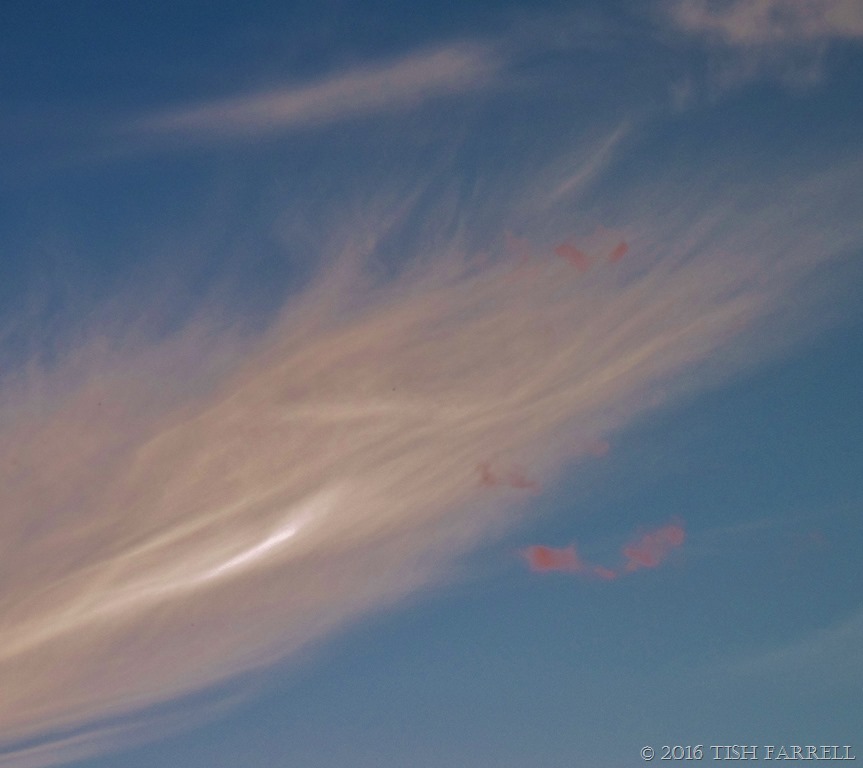
Thinking Pink Over Wenlock Edge: Thursday’s Special
All right. All right. Call it art theft if you like. I’ve captured one of the Wenlock Edge Sky Painter’s quirkier pieces and am passing it off as my own. But then who could resist stealing that rose petal cloud? We all of us need one now and then. So please, be my guest. Cast off in the blue. Drift and dream. Who knows where it will take you.
*
Thursday’s Special This week Paula asks us to think pink. Please waft over there for more pink thoughts.
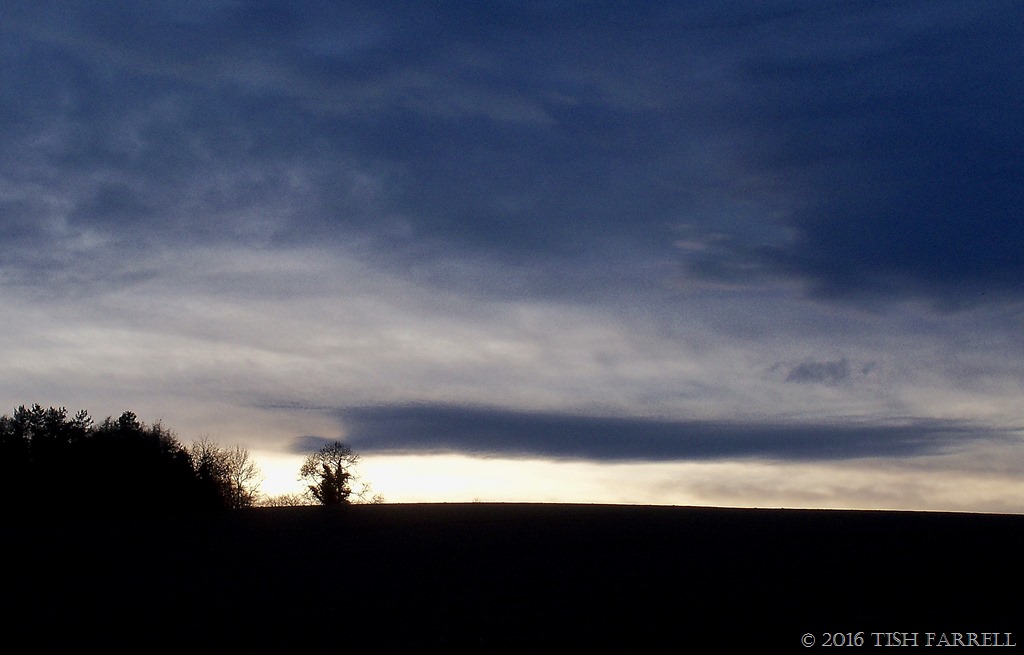
Nightfall Over Wenlock Edge
This photo was taken from the field path in Townsend Meadow behind our house, a scene captured one day last winter when I was late home from the allotment. I often stop at this point on the path to take photos. The ash tree silhouette always catches my eye, whatever the season, and I love the way the day seems to slip behind the hill as night shuts down on top and shadows creep up to meet it. It’s a bit like a stage set. Or it could be Rip Van Winkle Land.
*
Be inspired by things of the night over at Paula’s Thursday’s Special: Nocturnal
Linden Walk The Movie. Action: Bird Call, Wind Rush, Sunlight Through Lime Trees…
Enjoy!
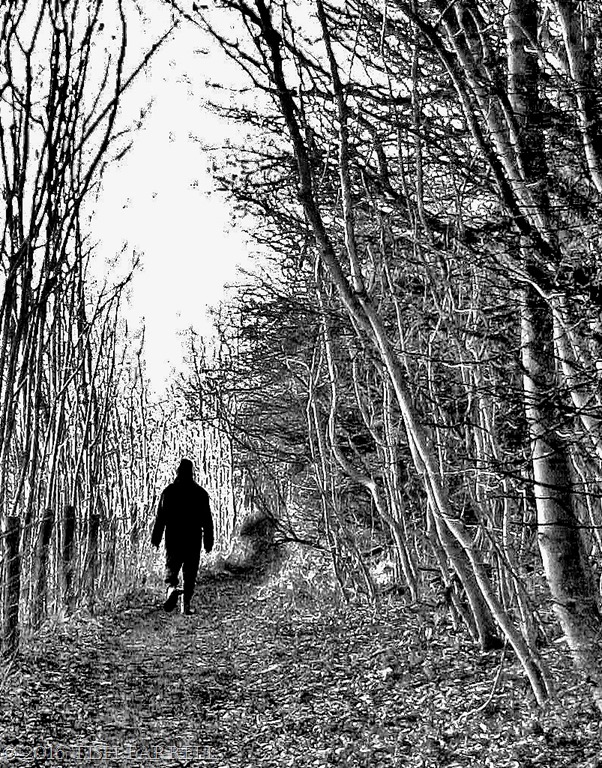
The Winter Walker
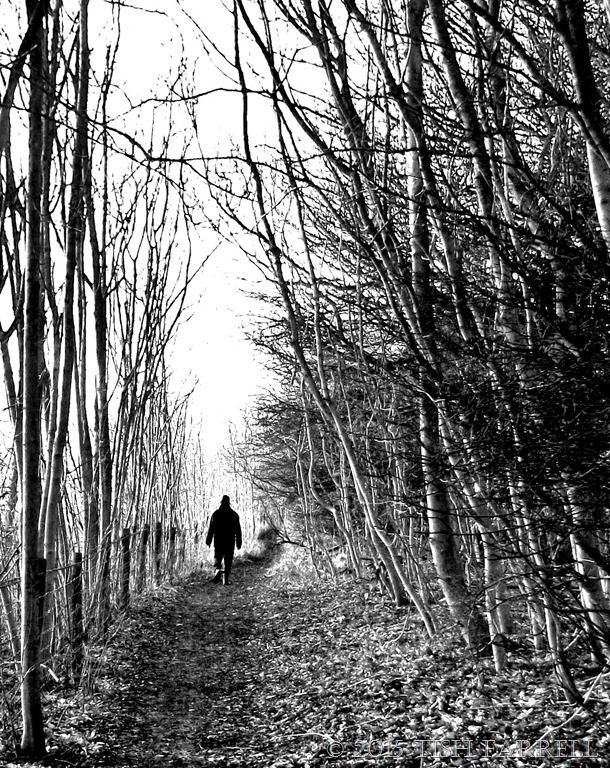
You can step back through time on Wenlock Edge. The trackways across the ridge-top have doubtless been trodden by itinerant traders since Stone Age times. In fact if I didn’t know that the lone figure on the path ahead of me was Graham, I might tell you that this is the shade of a six thousand year-old stone axe merchant, or a four thousand year-old Bronze Age smith. Or closer to our time, say two thousand two hundred years ago, it could be an Iron Age farmer trekking through the woods.
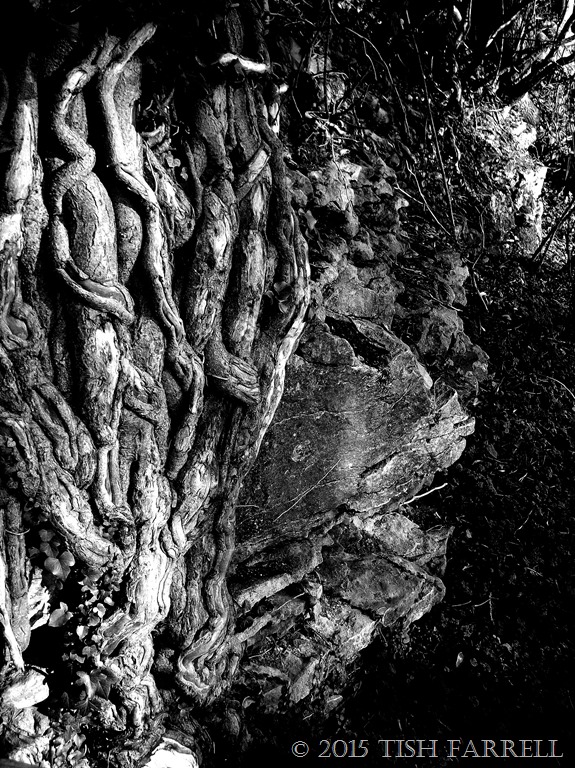
There are also traces of Roman farms either side the Edge, and from the Middle Ages until modern times the limestone from which the Edge is formed would have been quarried for building and for iron making, and also burned in kilns to make lime mortar and fertilizer. And then there is the 400 million year geological history of the Edge itself – starting in times before fish had evolved, let alone mammals. (I won’t mention the four foot long giant water scorpions that lived back then).
But landscape as a portal to the past – it’s an intriguing notion.
*
This week at Black & White Sunday Paula’s guest, Lisa Dorenfest, gives us the theme of ONE. Please go and see her stunning photo, and Paula’s own response to the challenge.
Views From The Silurian Sea
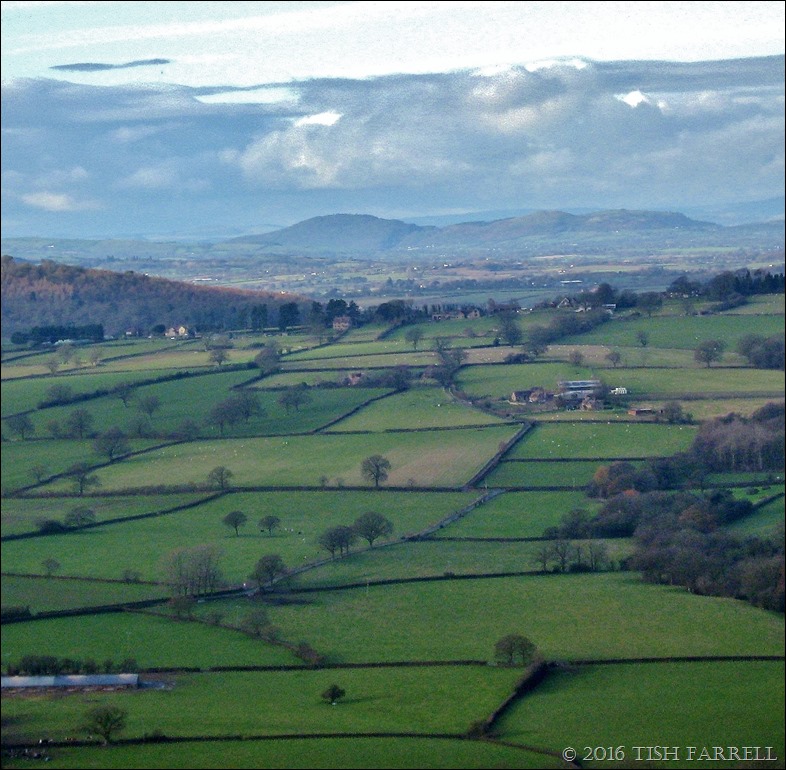
I dare say the farm fields were neither so large nor so orderly when Africa explorer, ‘Livingstone-I-presume’, Henry Morton Stanley looked out on this Shropshire landscape. For looked at it he would have when he came as a guest to The Abbey home of the Milnes-Gaskells of Much Wenlock. Stanley’s hosts were enthusiastic tour guides and brought all their visitors to Wenlock Edge to admire the view.
Those of you who come here often will know that Wenlock Edge is an 18-mile limestone ridge that runs across southern Shropshire. It is very much a local landmark, and its geology is of international scientific interest. The Edge as we know it now was formed by the uptilt of fossilized strata that were once the bed of the Silurian Sea.
Some 400 million years ago, this shallow tropical sea, that pre-dated even the advent of fish, and long before terrestrial life had evolved, once lay off East Africa near today’s Comoros Islands. You can find out more about it in an earlier post: Old Stones of Wenlock: Repurposing the Silurian Sea
On Sunday I posted an African landscape. Today is my ‘Out of Africa’ landscape, both of itself (because this chunk of Britain once lay in African waters), and on account of the photographer (that would be me) who has yet to get over leaving that continent.
But it goes to show how landscape intimately affects who we are, both physically and spiritually. It feeds our imagination, and shapes the lives we lead in a multitude of ways. Its resources may provide the basis for our livelihoods, and will have shaped communities and culture over countless generations before us. If we fail to value it, we will ultimately lose the best of ourselves, our true heritage. In Shropshire we owe great thanks to the National Trust and Shropshire Hills Area Of Outstanding Beauty, organizations that strive to creatively engage and reconnect people with the earth beneath their feet, and the natural beauty around them. More power to their purpose.
copyright 2016 Tish Farrell
*
Day 7 of my Nature Photo Challenge shots. Thanks once more to Anna at Una Vista di San Fermo who started me off on this jaunt.
And view 2 in the Daily Post weekly photo challenge: Landscape

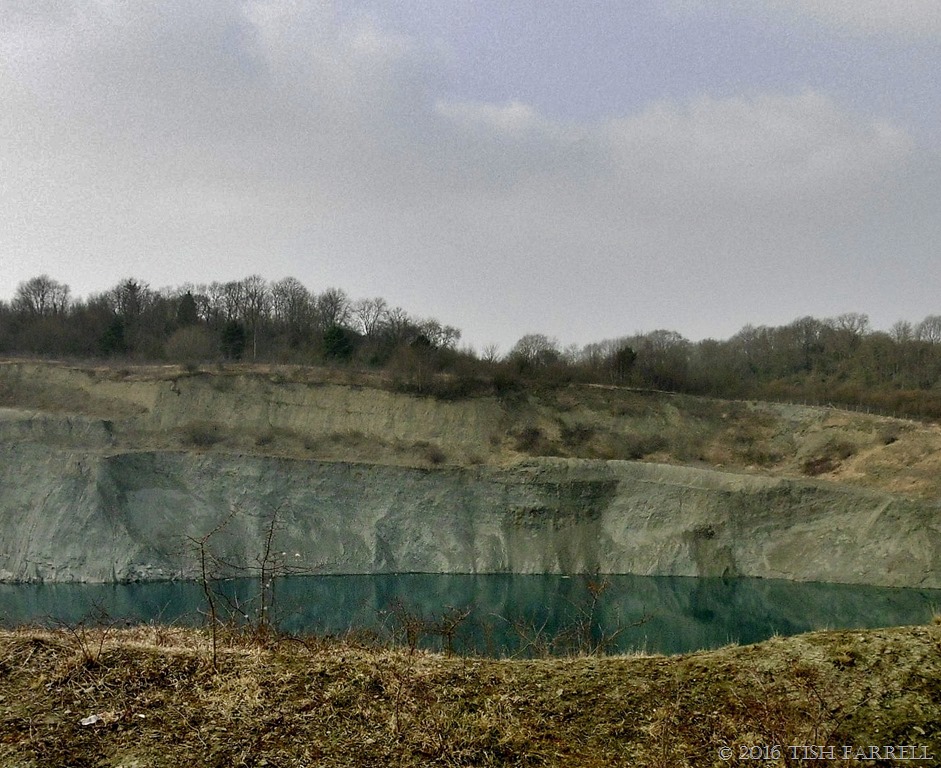
The Old Quarry ~ Thursday’s Special
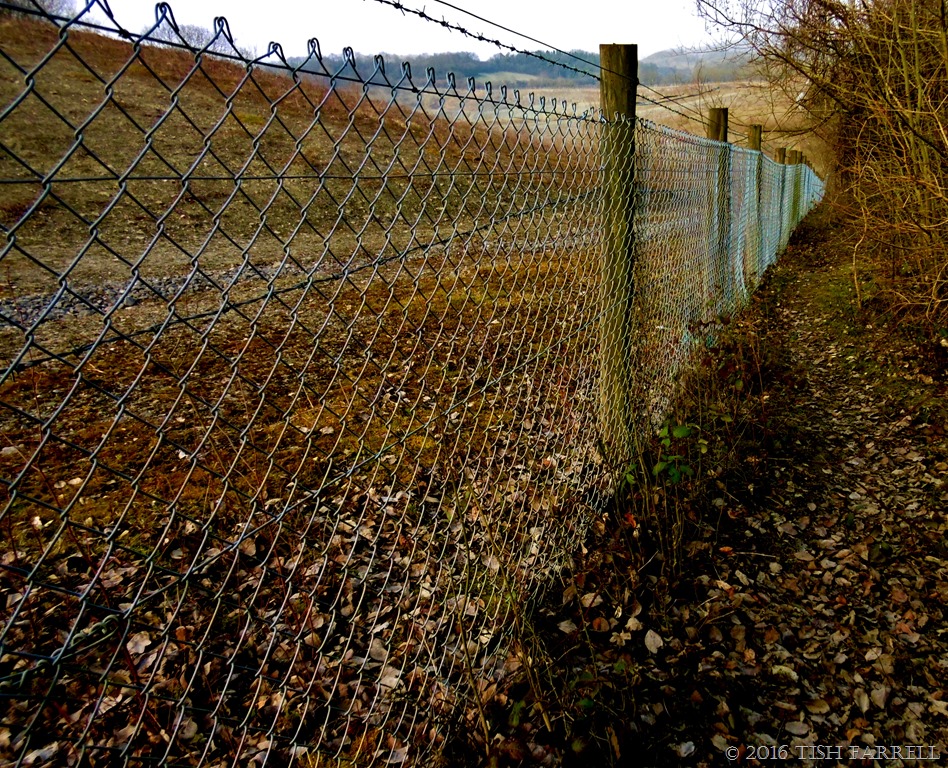
I’ve always found quarries disturbing places – the wholesale delving into the earth, the ravaged landscapes left behind. And yes, I know we need the resources. (Our own house is built of this fossilized Silurian Sea, although actually I’d be just as happy with brick or timber).
Shadwell Quarry behind Much Wenlock’s Windmill Hill is only one of the many old limestone quarries along Wenlock Edge. These days they are no longer worked but host various business enterprises that simply need a large amount of storage space. Quarry owners are supposed to do some restoration after the blasting has stopped, but I’ve not noticed much of this actually happening.
These photos show how slowly recolonization of quarried land takes place. (For an aerial view go HERE.) It has been twenty years since Shadwell was decommissioned.
The water in the quarry bottom is also a strange blue, almost turquoise at times, coloured by the limestone deposits. At over seventy feet deep, it lures tipsy young men to prove their manliness by diving in from one of the man-made cliffs while their mates film the act and post the videos on You Tube. Last summer I spotted gangs of school leavers heading off behind Windmill Hill. They were armed with ghetto blasters and towels and I overheard them saying they were ‘going to the beach’.
It’s interesting how people’s perceptions of places differ. One sees ‘exciting resort’; another oppressive dereliction – albeit with strains of desolate grandeur.
*
I’ve written more about the history of Wenlock’s limestone quarrying at Hidden Wenlock #4
This week at Lost in Translation Paula’s theme is ‘forbidding’. Please call in there if you want to take part in the challenge. She suggests many possibilities for interpretation.
On reflection: can there be too much of it?
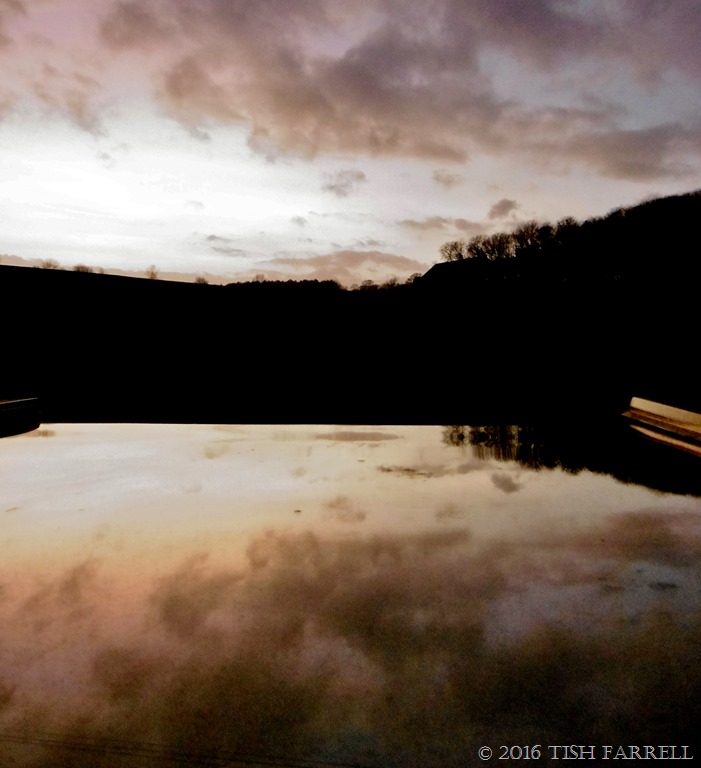
Writers are past masters of diversionary tactics. This particular writer spends a considerable amount of avoiding the work in progress. She is not sure why. But staring out of the window is definitely a popular pastime. On the other hand, who wouldn’t want to stare at a sky like this, the sun going down behind Wenlock Edge.
Then I discovered something really neat as I was trying to snap it. My office has a cabin bed in the corner under the roof light. So I clambered on the bed, and opened the window to the horizontal to give myself a makeshift ‘tripod’. I then set the Lumix to sunset mode and rested it on the back of the window. And this is what happened.
Who’d’ve thought avoiding writing could be this much fun. But there’s a lesson here too. Sometimes we overthink the pieces we are working on. Sometimes we need to loosen up and play. And ask questions. Definitely ask questions. E.g. What would happen if I let my characters think for themselves, and stopped trying to control them? What if I let them go play? What might they not come with? Something magical, diverting, extraordinary? Do I have the nerve to let them go?
copyright 2016 Tish Farrell