After The Harvest Around Much Wenlock

It’s the brief window of opportunity that comes when the wheat has been cut, and we Wenlockians can go in for a bit of unbridled scampering in the fields. Well, if not scampering exactly, at least walking up the hill behind the house for some fresh vistas of the town and its surroundings. I need to be quick. If past years are anything to go by, the ground will be harrowed and re-sown in the blink of an eye, so while I have the chance, I’m passing on some post-harvest views. I’ll also leave you with a paradox, because although we have good views around the town, within it there is an officially recognised deficiency in public open space; many of the footpaths that we use are permissive, that is to say, they are open only at the landowner’s discretion. In more ways than are often realised, feudal England, with its roots in patterns of Saxon landownership, still remains.

P1020123

Here you can see three of the town’s medieval relics, from middle left to right: the priory ruins, the priory gate tower, and the parish church that was once part of the priory. The town grew up around the priory, its residents subject to its rule, both in terms of paying tithes and providing labour. The monastic domain was considerable, based on the possessions of the 7th century Saxon Abbess Milburga. Her lands extended several miles – beyond the River Severn and the Ironbridge Gorge and into Madeley in Telford in one direction, and to Broseley, near Bridgnorth in the other. She was also the daughter of a Mercian king, and the setting up of religious houses ruled by princesses appears to have been a common and cunning Saxon strategy for maintaining control over the territory claimed by their regional kingdoms. After the dissolution of the monasteries in 1542, the monastic estate was sold off to members of Henry VIII’s court and merchant opportunists. Today, most of the land around the town is still in the possession of two large landowners. We are however fortunate that a good stretch of Wenlock Edge is owned by the National Trust which provides everyone with free access to a very special place.

P1020130

P1020111

The Red House, and a ghostly farm labourer off for an evening pint at the George and Dragon Inn?

*

P1020120

P1020121

I’m old enough to remember the days when the post-harvest straw was stacked in teepee-like stooks, and the wheat grains had to be detached from their ears in a hulk-like threshing machine. The farmer whose house we rented when we lived in Cheshire, would have the itinerant threshing man park his contraption the other side of our garden wall. I remember a sense of menace when I looked out of the bedroom window and find it had arrived. Once in action, it would throb hideously all day, spewing out great storms of petrol fumes and wheat dust.

*

P1020122

P1020114

Didn’t Rumpelstiltskin spin this stuff into gold?

*

P1020100


Six Word Saturday

Combine With Me ~ Wooing Wenlock Style

P1020090 - Copy (2)

I mentioned that the wheat was being swept off the field on Tuesday afternoon. And as I’m actually rather impressed by seeing combine harvesters in action, and the dust they make, I took a few photos from the bedroom window. But when I looked at them later on screen, I was amused to see a shapely pair of legs nudged up against the combine driver’s jeans.  Aaaah. Greater love hath no young woman than to spend the day out harvesting with her lad.

P1020090

And for those who also have a yen for combine harvesters…

P1020081

P1020089

Thursday’s Special ~ July and August photo recap


This week Paula wants to catch up on the photos we posted over the past two months. A quick trawl through the picture archive shows that my posts have been all over the place – both in space and in time: memories from our years living in Kenya, a trip to New York, more recent wanders in Wales, Derbyshire, Cornwall, and the nearby Shropshire hills, then allotment and garden shots around Wenlock. I’ve grouped them by colour:

And finally some monochrome:

Well, that was fun, Paula. Thank you!

Thursday’s Special: July-August recap Please call in at Paula’s for a photo-treat.


The Weather On The Edge ~ Black & White Sunday

cropped bw

I often snap this view before I dive through the gap in the field hedge and into the allotment. I’ve said before how fascinated I am by the movement of weather beyond the brow of the hill. Sometimes I think it looks as unreal as a theatre backdrop, and especially so on blue-sky days. But as I am writing this, the sky is leaden, and the air full of chaff from the combine harvester as it thunders up and down the hill. Farm machinery these days is so over-sized and overbearing, the wheat cut and threshed in one process. The whole field will be cleared in an hour.

Anyway, that’s beside the point. This is an exercise in photo-editing, courtesy of Paula at Black & White Sunday. This week she asks us to show her a colour photo that has been transformed into monochrome – and ‘after and before’. Below is the original:

P1080678 - Copy

Please visit Paula at the link above for more afters and befores.

Changing Seasons ~ Is It August Or Autumn In Much Wenlock?

P1010872

Much like this thistle down in the field behind the allotment gardens,  I’m feeling wind-blown; swept off course somehow; as if I’ve woken from a Rip Van Winkle deep-sleep and found myself in another time. I’m not the only one either. Others I’ve spoken to feel equally unsettled and disorientated.

One moment, around mid-June we were having sun-shiny suppers out in the garden, the evenings still warm after sunset; summer stretching  ahead and full of promise.

Next it was all change – to cool, wet and windy. It seems as if autumn  has been here for weeks. The fields above the town are harvested and already ploughed. The still-standing wheat has a grey look as if it has been  left in the field too long (or had too much Roundup). The apple trees are shedding apples, leaves are turning colour,  and the Linden Walk has browning drifts of fallen lime tree seeds.

The question is: has autumn come to stay, or will there be another shot of summer just when we least expect it. In November maybe?


This slideshow requires JavaScript.

The Changing Seasons Please visit Max for his take on Norway’s changing season, and also to catch up with the challenge rules.

Big Behind, Little Behind

elephants_0001

Well, it had to be done didn’t it. This week Ailsa’s theme is BEHIND, and this was the first photo I thought of, taken in the Maasai Mara years ago.  It’s been a while I think since I last posted it, and bears  a re-run.

Also as behinds go, you can’t get much bigger (or wrinklier for that matter) than jumbo-size, and the elephant babe looks so sweet, standing behind its mama. I thought everyone might like an aaaaah moment.


Ailsa’s Travel Theme: Behind

Five Minutes With Munchkins, A Batonga Basket, Then A Bit Of A Yarn ~ Regular Random

IMG_5928

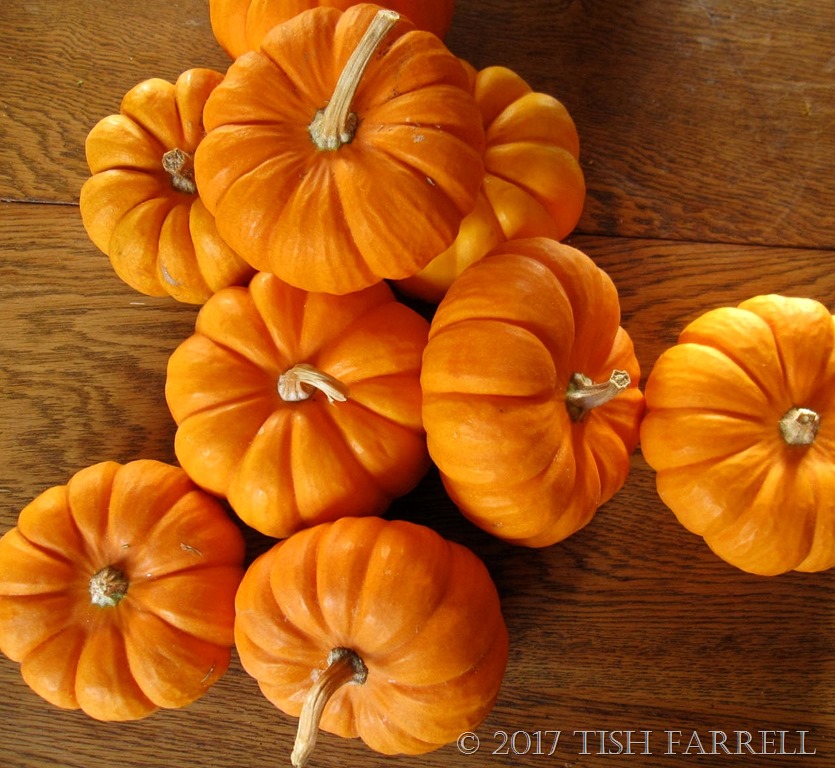
Here we have two of my passions-distractions for the price of one: growing stuff and an enduring yen for baskets. I’ll tell you about the latter in a moment. Here it is though – a personal treasure – bought when we were living in Zambia – a basket made by the Batonga people.


The Batonga, these days, live either side Lake Kariba (it forms the border between Southern Zambia and Northern Zimbabwe, but once they lived in the upland valleys along the Zambezi River.  This was back in the days when their traditional homeland was not flooded by nearly two hundred miles of Lake Kariba. In the late 1950s the Zambezi was dammed in order to provide hydro-electricity for what were then the British colonies of Northern and Southern Rhodesia and Nyasaland.

Prior to their expulsion from their homeland, they lived by fishing, hunting, stock rearing and agriculture, and in fact had a subtle farming system which embraced both risk and caution. In other words, they exploited different ecological niches from the valley tops to the river flood plains. In the marginal upland areas they grew cow peas, ground nuts and different strains of millet and sorghum, reliable drought-resistant crops that ensured a living. On the flood plains they took a risk with water-hungry maize. If the river did not flood too badly and wash their crop away, then they would be in for a  bumper harvest with surplus to sell. They also made use of the damp clefts of tributary streams in order to grow squashes. Doubtless their varieties produced much bigger specimens than my fist-sized munchkins.

So: they were a resourceful people, but deemed primitive by the colonial administrators because their possessions were few and made mostly  from handy natural materials. Yet this paucity of paraphernalia had survival advantages too. When disaster struck – tempest, drought, raiders or epidemic, they could up sticks and start out afresh in a safer spot. They could not, however, escape the will of the colonial administration, or the rising flood waters that came with the building of Kariba Dam. They were moved from their ancestral lands against their will, and somehow, by all accounts, the British administration with little money set aside for the task, overlooked the need to make more than token restitution for the huge physical and spiritual loss of a displaced people. In effect they had become refugees in their own land. Meanwhile, the game department took great pains to rescue the wildlife that had become trapped on islands as the flood water backed up.

Back then, in 1959, the Batonga said the lake (by then the size of Wales) would take its revenge.  At the time this seemed unlikely. The dam’s engineers had purposely built it on a bed of black basalt. But  some fifty years on, it was discovered that the force of water down the spillways had undermined the dam, creating a huge crater. Repairs were badly needed to avoid collapse and a tsunami in Mozambique.

The BBC reported on this catastrophe-waiting-to-happen in 2014. And at last the repair work appears to be underway, scheduled to start last month at an estimated cost of nearly $300 million – funds courtesy of the EU, World Bank, African Development Bank and the Swedish government, and one key objective being to avoid a humanitarian disaster.  In the meantime one can only wonder how the Batonga people have been getting along all these years, and whether their communities actually have access to the electricity supply for which they were uprooted. I’m guessing they may not. But if you want to lend them some support you can buy their baskets on-line HERE

Regular Random  Please visit Desley Jane for the challenge rules. and see her own five minute photo-shoot.

Our Very Own Treasure ~ Wenlock Books

P1010709

Aren’t we lucky to still have our own independent bookshop when across Britain such places are sadly becoming a thing of the past. So here it is, Wenlock Books, a landmark on the High Street, and housed in a wonderfully restored 14th century building. Its owner, Anna Dreda, is passionate about book selling, and has nurtured it and us for over twenty years, creating a haven for book lovers of all ages, from infants upwards. Downstairs the shelves are brimming with crisply published new books, while upstairs you can sit in cosy corners surrounded by ancient timbers and read the pre-owned and antiquarian books. Or if you are nosy like me, you can look out of the window on to the street below and surreptitiously see what Wenlock’s citizens are getting up to.

Also when you pop into Wenlock Books for a good browse, don’t be surprised if you are offered a cup of tea, or invited to join one of the reading groups that meet around the big upstairs table. The most recent book on the go in the Slow Reading Group has been George Eliot’s Middlemarch wherein those taking part, week by week discuss a single chapter over coffee and biscuits. The next slow read starts in September with Graham Greene’s The Power and the Glory. That month too there will be the Children’s Book Launch,  starting with local writer, Sarah Griffiths, who will be reading  her book Douglas’s Trousers  to 2-8 year olds.

It will not surprise you, then, to learn that the bookshop has won national awards. Anna was also the founding force behind the hugely successful Wenlock Poetry Festival which over several years has hosted poets of international standing, and has Britain’s former Poet Laureate, Carol Ann Duffy as its patron. (You can what poetry lovers get up to in the town HERE.)

This year the festival has taken a break. Anna also has been very unwell, but I’m glad to say, she tells us that she is feeling very much better.

So all best wishes, Anna, for your continuing good recovery.

In the meantime, if you go to the Wenlock Books link, you can meet Anna in a splendid 3 minute video. You can also have a snoop inside the bookshop and see just why it and its owner are so very much loved and appreciated by all of us.

Black & White Sunday: Traces of the Past

“What Are Those Blue Remembered Hills”?

Anyone who saw July’s To The Mysterious Stiperstones post might just recognise those distant heather-covered hills. Last month they were captured under looming skies, but this was how they looked yesterday when we went to Wentnor.

This off-the-beaten-track South Shropshire village must have some of the best views in the county – the Stiperstones to the west, and the Long Mynd to the east, and nothing but rolling farmland in between. The nearest towns are Church Stretton and Bishops Castle (6 and 5 miles respectively) but take note: Wentnor miles are at least twice as long as other people’s miles. It is a world all its own.

P1010829

*

Coming up next is a glimpse of the Long Mynd looking east from the village. The name, unsurprisingly, means long mountain. It does not allow itself to be photographed in one shot.

P1010823

And here’s the northerly end, taken from the car park of the village pub:

P1010855

Talking of which, this was the objective for the outing – lunch at The Crown at Wentnor along with our best Buffalo chums, Jack and Kathy. The last time we four had been there, Graham and I were still living in Kenya, and only briefly in the UK on annual leave. We decided it had to be a good twenty years ago. How time flies.

P1010833

After lunch we wandered about the village, and paid a visit to the parish church of St. Michael. None of us are subscribers, but when out together we often seem to find ourselves in country churchyards. Besides, Wentnor church is welcoming, and vistas within and without most picturesque. In fact I was so taken with the charm of the kneelers along the pews,  I thought I might even like to join the people who had made them in a spot of hymn-singing – All things bright and beautiful of course; nothing like some tuneful gratitude as harvest festival time approaches.

P1010792

P1010805

P1010809

P1010813

The church was rebuilt in the 19th century, although parts date from the 12th century. I was particularly struck by the craftsmanship of the ceiling, and have never seen anything quite like it before. It made me think of the ornate wooden Viking churches of Norway.

Out in the churchyard with its ancient spreading yew, there were views of the Long Mynd and the hills towards Clun and Radnorshire:

P1010821

P1010818

P1010820

And it was all so very quiet with few signs of the locals as we wandered up and down the lane; only a couple of horses waiting for new shoes from the travelling blacksmith, the village noticeboard, old barns and cottages. And then the skies turned threatening and it was time to leave, back to the real world beyond the Mynd.

P1010839

P1010793

P1010830

P1010837

P1010845


N.B. The title quote is from A E Housman’s A Shropshire Lad  no. XL


Into my heart an air that kills

From yon far country blows:

What are those blue remembered hills,

What spires, what farms are those?

That is the land of lost content,

I see it shining plain,

The happy highways where I went

And cannot come again.

Six Word Saturday