Kenya’s Prolific Green Highlands ~ Thursday’s Special

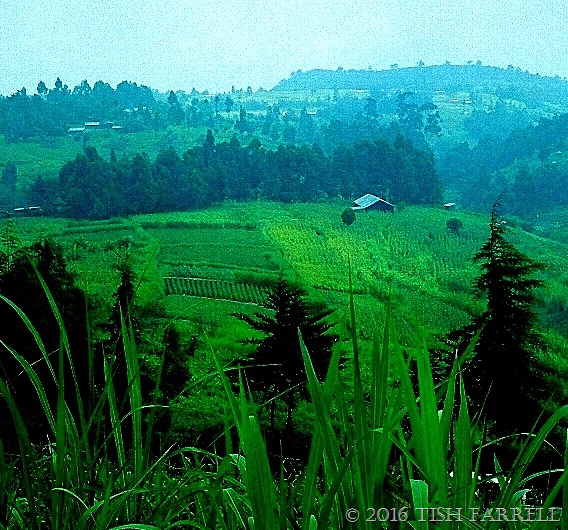
napier grass on the Rift

Prolific

Nothing could have prepared me for my first glimpse of Kenya’s fertile uplands all  those years ago when I ran away to Africa. I’d flown out from Paris on the overnight Air France flight to Nairobi. It was my first long-haul flight, a good eight hours, and I did not sleep a wink despite being served a very delicious small-hours’ supper, and having a whole row of seats to myself.

I was pent up with the prospect of meeting up with Graham, whom I had not seen for some weeks, rather than wondering about my destination. Quite ridiculous I know. I was flying blind, having done not a scrap of  research on Kenya. In fact I had set out armed with only my brother-in-law’s comment: you’ll either love it or hate it; there’s no in between.

And so early one February morning as the great jumbo jet slid down the valleys of Central Province towards Nairobi, I could scarcely believe my eyes. Volcanic hillsides unfolded beneath us – every scrap of earth burgeoning green to their summits, the patchwork plots of Kenya’s smallholder farmers. Before we set down at Jomo Kenyatta International I was already in love. I did not know then that this was the start of an eight year affair with a land that could not be more different from my Shropshire homeland. I am still infected.

Some years after this arrival, when Graham was combining his project work at Kenya Agriculture Research Institute with some field work for his doctorate, I had the chance to visit many of those highland farms and meet the farmers and see at first hand the kind of crops that they were growing so prolifically – maize, tea, bananas, fodder grass, squash, beans, potatoes, plums, apples, cabbages and kale. This photo was taken on one of these expeditions, and like me it has aged somewhat. But it was the first image I thought of when I read through Paula’s list of word prompts as this week’s Thursday’s Special. Do drop in there to join in the ‘pick a word’ challenge.

For more of my Kenya story see also:

Valentine Day’s Runaway

Looking for smut on Kenya’s Highland Farms

See How Her Garden Glows ~ Thursday’s Special

IMG_1019

Here at our house on Sheinton Street – also spelled Shineton at the other end of the road, we try to live up to our location with as much shining and glowing as we can muster. This year the yellow tulips have certainly done their stuff, but now they are gone, and we’re waiting on the oriental poppies to keep the glow going.


Thursday’s Special: Glow

Please visit Paula to vote on last week’s park entries, and to add to this week’s glow

Strawberry Fields Forever In Central Park

New York 143

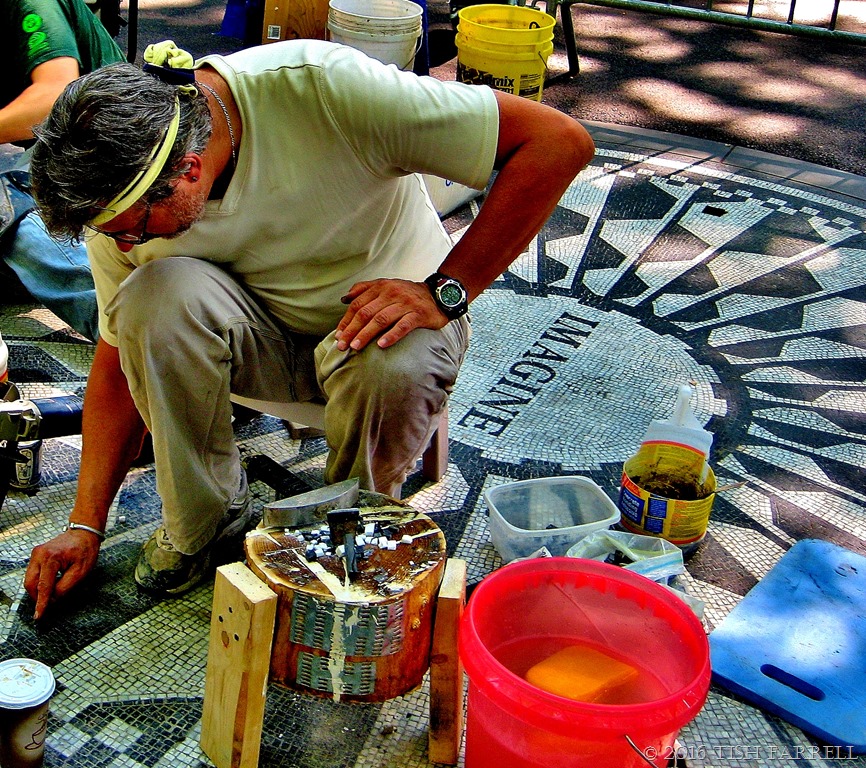
It was so hot when we visited New York a few years ago we spent most of our time in Central Park, drinking ice coffee at every available opportunity. There’s anyway so much to explore. On one of our forays we set out to find the Imagine mosaic, laid in tribute to John Lennon who created the song, and was so sadly murdered outside the nearby Dakota Apartments.

It took some finding too, even though we thought we knew exactly where it was. Part of the problem, we discovered, was that it was surrounded with barriers to shelter the two artists who were painstakingly working on its restoration. I didn’t mind not seeing the mosaic in its pristine form. The fact that it was being so actively cared for, given the song’s message, was heartening.

This elegant artwork lies in the middle of Strawberry Fields, a two and a half acre oasis of quiet also dedicated to the memory of John Lennon and his work. It is a designated Garden of Peace, and 120 countries contribute to its upkeep.

It is a very beautiful place to visit, so not to be missed on any New York trip. You can find out more details HERE.

*

Paula’s theme this week at Thursday’s Special is ‘Park’

Blowing Big Bubbles In Bishop’s Castle ~ Thursday’s Special

100_7331

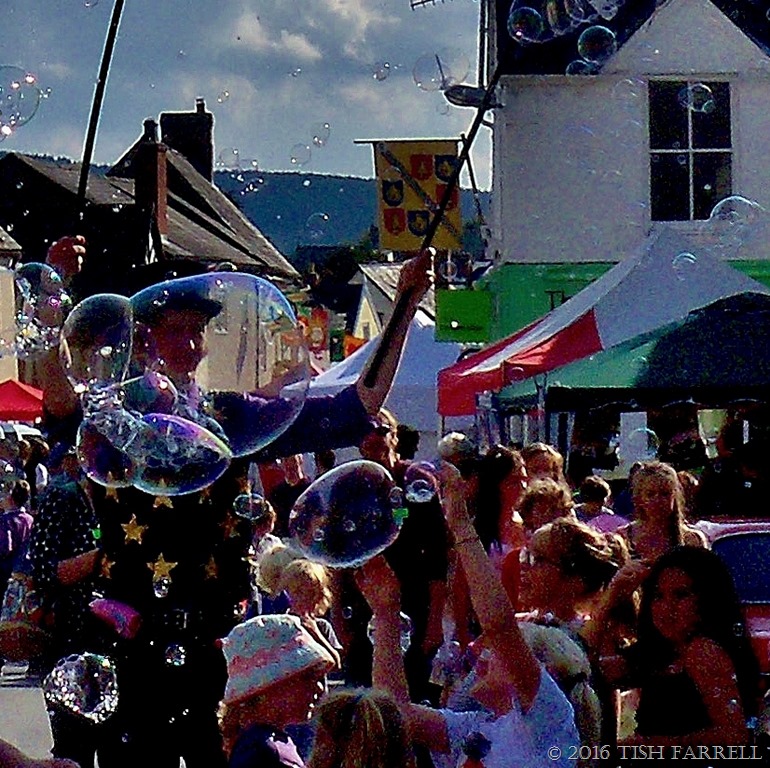
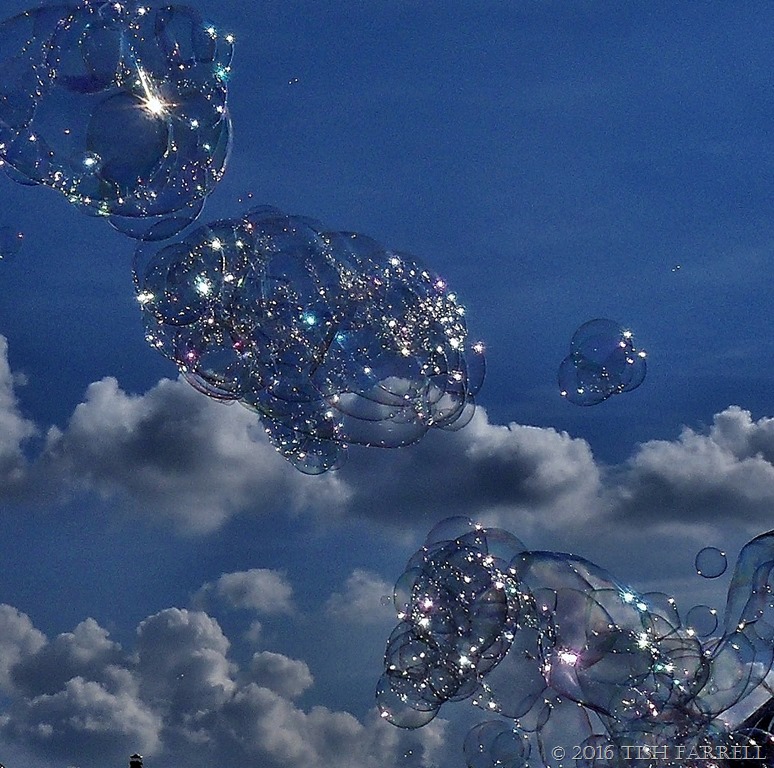
There screams of delight when Tall Will The World’s Tallest Bubbleologist began his magic. In fact it was rather like a bubble-version of the Pied Piper. As long as Tall Will was making bubbles the children were in hot pursuit. Everyone wanted to catch their own bubble. Of course I ran after him too. Never was more high-octane joy created than from Will’s bucket of agitated soap solution.

100_7323

These photos were taken at Bishop’s Castle’s Michaelmas Fair last September. There were all kinds of magic there: it’s that kind of place, with or without the fair. You can see more at Summer Came Back On Saturday And Took Us To The Fair.

*

Paula’s theme this Thursday is ‘inflated’. Please pay her a visit. You won’t be disappointed. Promise!

Scattered Leaf And Light At Croft Castle ~ Spring Happening

P1030871

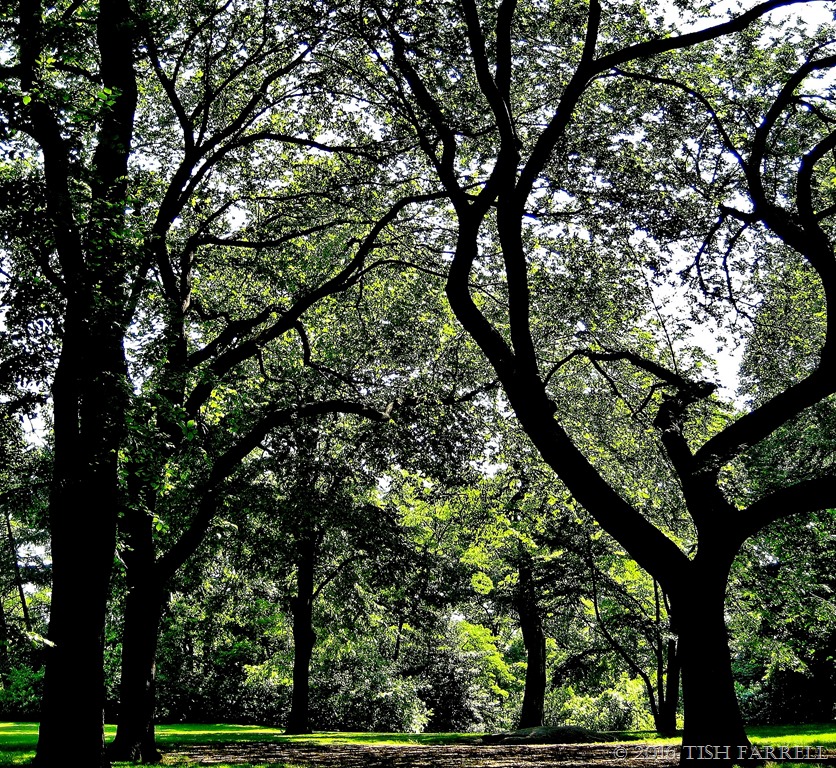
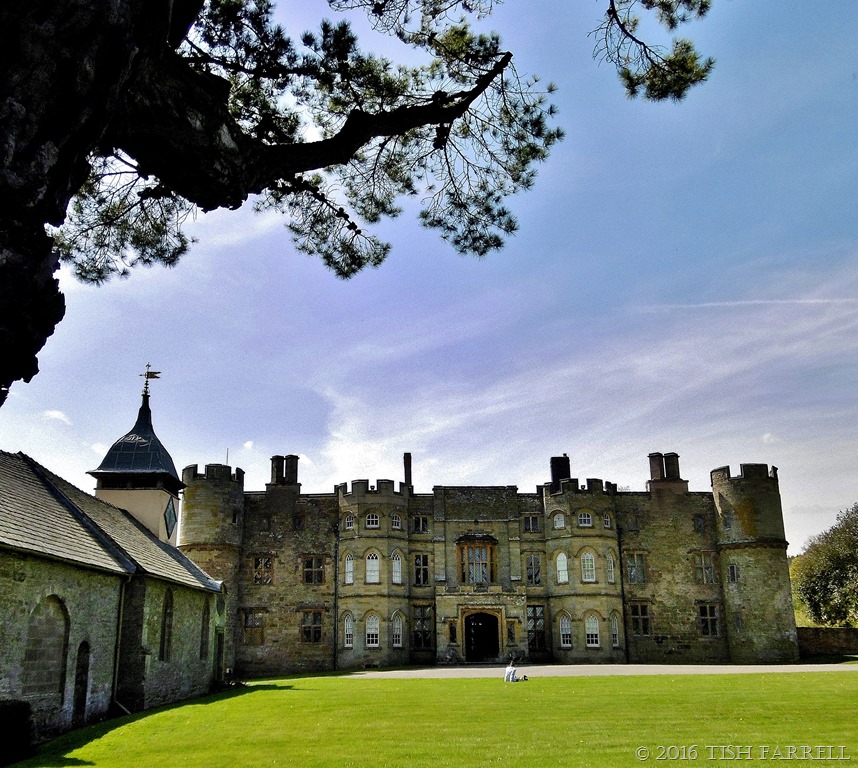
Yesterday our Thursday outing took intrepid Farrell Safaris over the Shropshire border and into Hereford. Our destination was Croft Castle in the wonderfully named village of Yarpole. The house is a castellated fifteenth to eighteenth century fantasy with magnificent turrets (only for show) –the whole set in glorious parkland of veteran trees. The present house replaced an 11th century castle, and the Croft family who occupied it then, continued to preside over this corner of England for nearly a thousand years. All is now in the care of the National Trust. And if anyone reading this intends to visit, then take a good tree book. And also your walking shoes as there are several long walks including one to the Iron Age hillfort of Croft Ambrey.

I’ll post more about Croft another time. For now I’m trying to keep on theme with Paula’s Thursday’s Special. This week it is ‘scattered’ so please pop over there for more renditions.

Now for a scattering of tulips in the walled garden:

P1030917

And oh well, I know you really wanted to see the Castle, so here it is framed by the branches of a very ancient conifer. There’s some good cloud-scatter too.

P1030889

Not Any Old Bridge ~ But The World’s First Cast Iron Bridge Built By Abraham Darby in 1779

P1000831

For this week’s Thursday’s Special Paula is asking us to focus on traces of the past.  For those of you who have not seen my earlier posts on the Ironbridge Gorge, this bridge was the first to be made from cast iron, and in a single arch that spans the River Severn in Shropshire. It crosses the Severn Gorge just a few miles from my house, and is a World Heritage Site.

The height of the bridge was dictated by Quaker Ironmaster, Abraham Darby’s desire to show off – not only to prove the versatility and potential of cast iron, but also to build the first bridge on the the Severn that would allow the river’s big sailing barges (Severn trows) to pass under with out lowering their sail masts. One up on all the river’s stone bridges then! And what a sales (sails) pitch it was too, for people to see his bridge with a fully rigged sailing barge passing beneath it.

He also built the bridge in one of the most spectacular parts of the Gorge, and on the site of a treacherous ferry crossing. Before the bridge was built people had to cross between the two industrial settlements of Broseley and Coalbrookdale in a coracle, an ancient skin covered craft that was used by local poachers.

The bridge itself is a curious construction. If you look closely at the iron framework you can see that although Abraham Darby was breaking new ground (and in its day the Iron Bridge was definitely a world wonder), the building techniques include the kind of joints that people would expect to see in carpentry: mortise and tenon joints and dovetails.

It is hard to know if Darby was erring on the side of caution by sticking to tried and tested construction methods, or simply being innovative in ways that weren’t too innovative for people’s sensibilities. After all, one of the best ways to make people accept and welcome the new, is to start from something they already know and recognise. In such ways does the past follow us into the future.

P1000843

copyright 2016 Tish Farrell

Traces of the Past

Passing Glory ~ Three Old Roses

100_7676

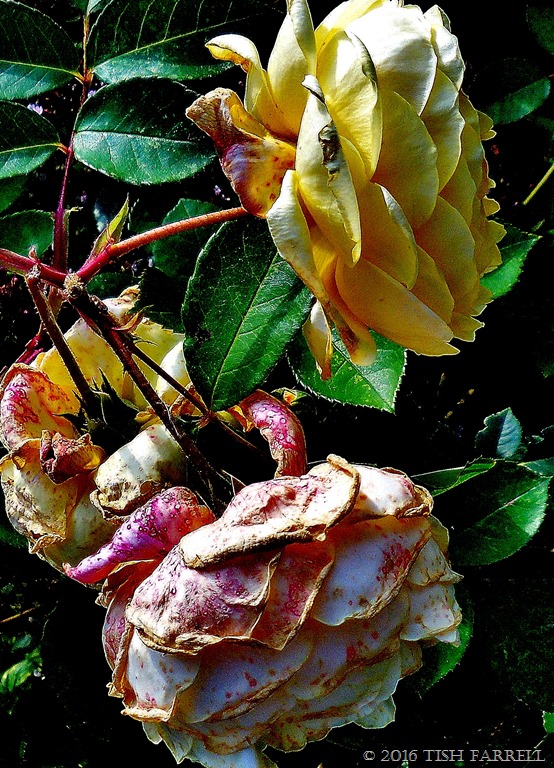
This lovely rose grows up the wall in our back garden. Please meet Gloire de Dijon, also known less picturesquely in English as Old Glory. It’s a cross between an unknown tea rose and Souvenir de la Malmaison, an old Bourbon rose, and was introduced to the world by one Pierre Jacotot in 1853. He lived in Dijon, France, a place also famous for its mustard.

When the rose is fully opened it has dense whorls of pale peachy-pink petals that change colour as they age. Their scent is mesmerizing – notes of clove and jasmine that transport me back to Zanzibar where jasmine sprigs were nightly placed beside our plates at the hotel where we ate dinner.

And once the roses have passed their best, even dead-heading them is a delight – crushing fading petals  between my hands, inhaling their last fragrance that also soaks into the skin, and can be smelled for hours.

Like Sue Judd at WordsVisual, I’m drawn to the aesthetic of decaying plant life. I think there is great beauty here – these lingering shades of erstwhile glory.

*

Thursday’s Special: Three of a kind

Please visit Paula to see her own lovely study for this challenge. And definitely go and see Sue Judd’s stunning daffodil study at the link above

Nice By Night ~ Hotel Negresco

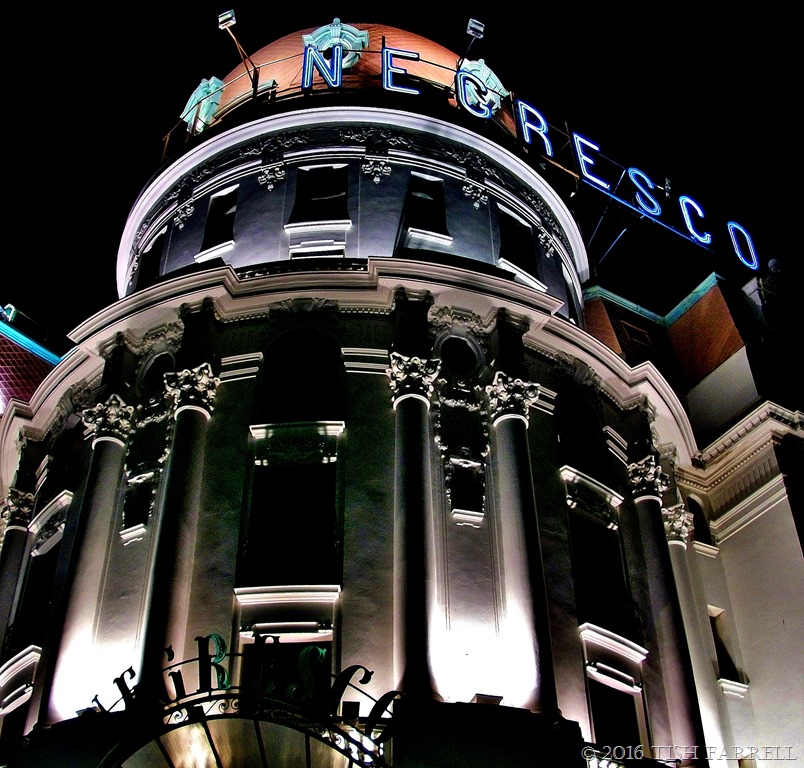
Hotel Negresco, Promenade des Anglais

“If only I were at Nice, I would recover.”

So said Queen Victoria on her deathbed in 1901. She has a point. Who would not feel better after a stroll along La Promenade des Anglais, one’s gaze filled with the perfect Côte d’Azur blue of the La Baie des Anges. For a monarch, who had made a career of mourning  the death of her consort, Prince Albert, Nice was the one place where she sparked into life. She would travel there under the name of Lady Balmoral, and go exploring the backstreets of Nice in a donkey cart. The Hotel Negresco, however, was after her time, opened in 1913. It dominates the La Promenade des Anglais. Past guests include Salvador Dali, Princess Grace of Monaco,  Duke and Duchess of Windsor, Ava Gardner, and Edith Piaf. This night shot looking up to the characteristic terracotta cupola, and the cool blue of the illuminated sign, somehow sums up the Nice-ness of Nice.

*

Thursday’s Special

This week Paula’s guest is Cardinal Guzman. He challenges us to post some night photography, and provides lots of useful tips.

The Old Quarry ~ Thursday’s Special

P1000657

P1000646

I’ve always found quarries disturbing places – the wholesale delving into the earth, the ravaged landscapes left behind. And yes, I know we need the resources. (Our own house is built of this fossilized Silurian Sea, although actually I’d be just as happy with brick or timber).

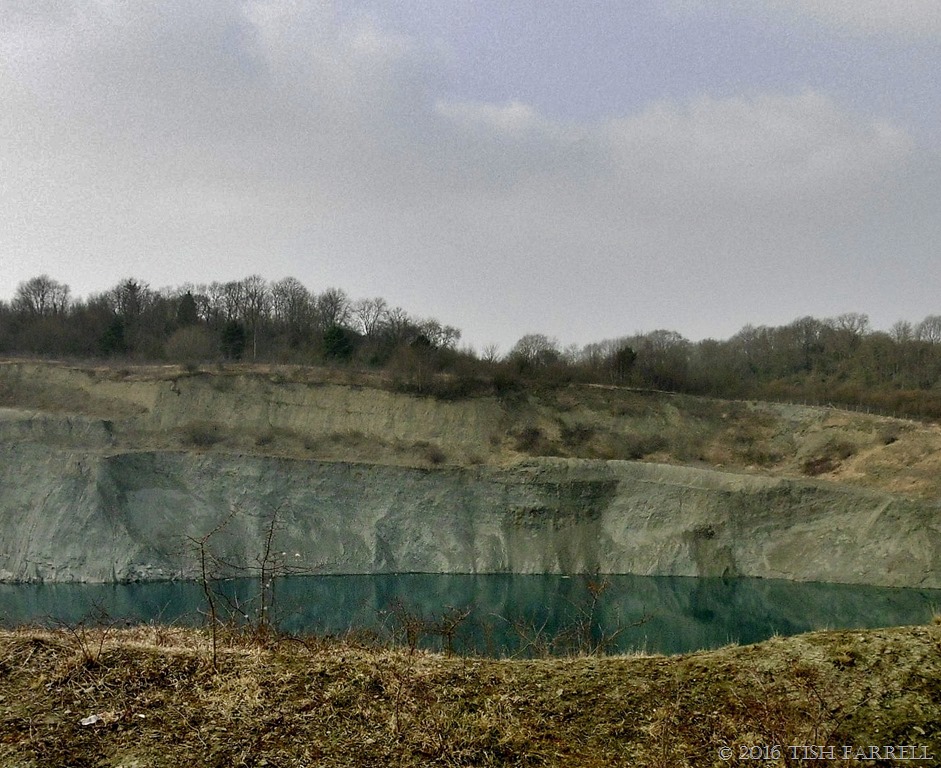
Shadwell Quarry behind Much Wenlock’s Windmill Hill is only one of the many old limestone quarries along Wenlock Edge. These days they are no longer worked but host various business enterprises that simply need a large amount of storage space. Quarry owners are supposed to do some restoration after the blasting has stopped, but I’ve not noticed much of this actually happening.

These photos show how slowly recolonization of quarried land takes place. (For an aerial view go HERE.) It has been twenty years since Shadwell was decommissioned.

The water in the quarry bottom is also a strange blue, almost turquoise at times, coloured by the limestone deposits. At over seventy feet deep, it lures tipsy young men to prove their manliness by diving in from one of the man-made cliffs while their mates film the act and post the videos on You Tube. Last summer I spotted gangs of school leavers heading off behind Windmill Hill. They were armed with ghetto blasters and towels and I overheard them saying they were ‘going to the beach’.

It’s interesting how people’s perceptions of places differ. One sees ‘exciting resort’; another oppressive dereliction – albeit with strains of desolate grandeur.

P1000661

*

I’ve written more about the history of Wenlock’s limestone quarrying  at Hidden Wenlock #4

This week at Lost in Translation Paula’s theme is ‘forbidding’. Please call in there if you want to take part in the challenge. She suggests many possibilities for interpretation.

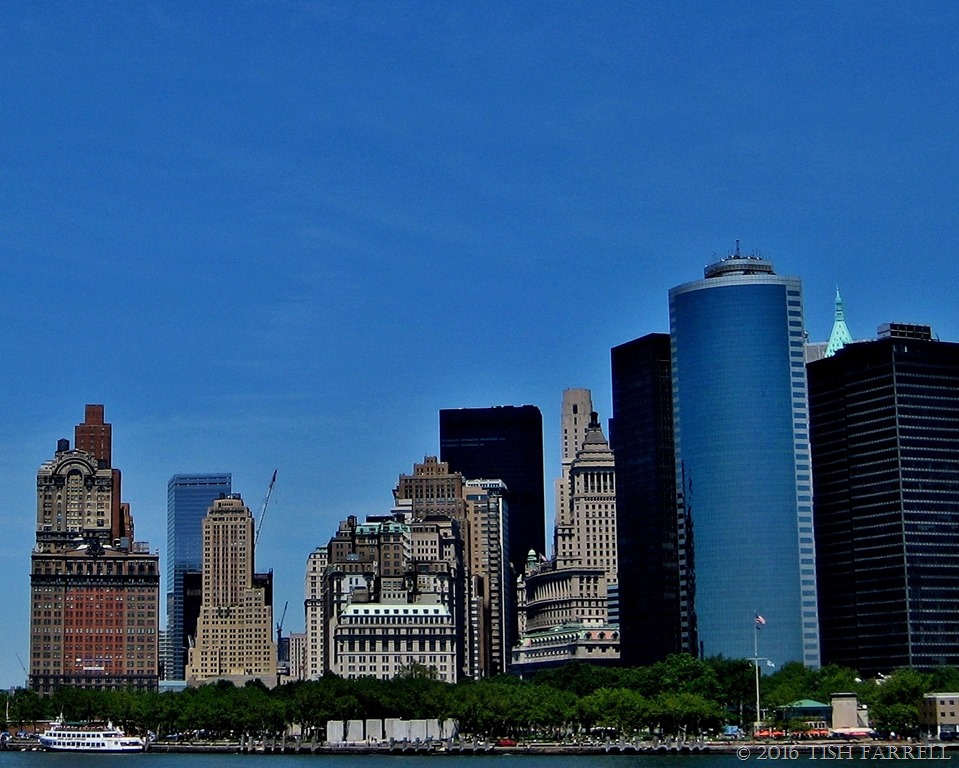
Tall Story? Downtown Manhattan From The Staten Island Ferry

New York 009

Doesn’t time just fly. I can’t believe that it’s nearly eight years since we sailed into New York on Queen Mary 2, star of the Cunard fleet. The Atlantic crossing takes seven nights, and seasoned Cunarders will be quick to tell you that this voyage is a crossing (The Crossing in fact) not a cruise. We docked at dawn in Brooklyn after a long and majestic glide up the Hudson River. The Statue of Liberty glowed through the mist. It was May, and a heat wave was brewing.

Over Brooklyn and the dockside cranes a huge red sun was rising. It gave a surreal glow to the instantly recognisable (to us that is) corporate blue and yellow of the new IKEA store (America’s first if I remember rightly). It was set to open the following month, and we later noticed much associated fanfare on bill boards around the city. Free sofa cushions came into it somewhere. I also remember feeling a bit offended that I’d been at sea a week, all pent up for the grand sail-by of the Statue of Liberty and that first stunning glimpse of the Manhattan skyline, only to have this bland blue furniture shed be the next landmark imprinted on my mental landscape.

They should definitely move it.

Anyway, for those visiting NYC by plane rather than ship, you can have the grand ‘sailing into New York’ moment for free, and thus as  many times as you like, on the Staten Island Ferry. Pick your moment for the best shots. Sunset would be good.


Thursday’s Special: tall  Please sail over to Paula’s for more tallness.