Vintage Zimbabwe

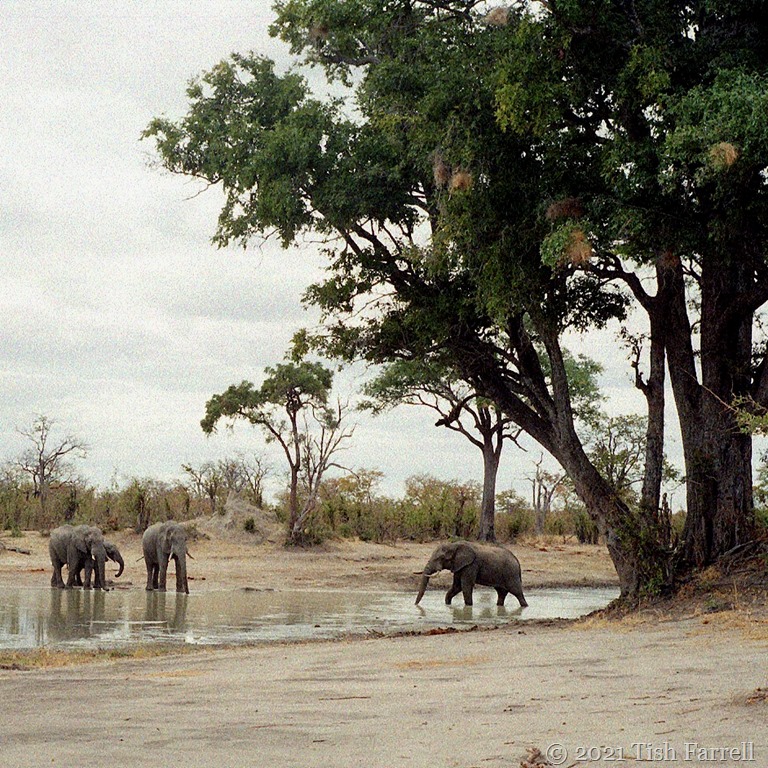
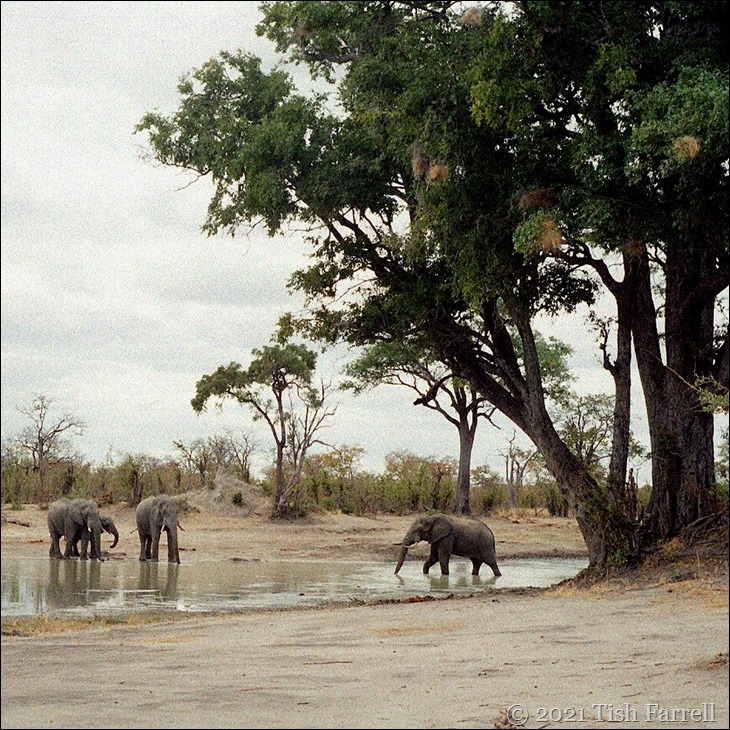
Hwange - waterhole and elephants 4sq

Late 1992-3 and we were living in Lusaka, Zambia, Graham on secondment from the Natural Resources Institute in Kent to the European Union Delegation – his job to manage the logistics of food aid deliveries to drought-stricken parts of Zambia.

These were exciting times. As we arrived, long-term presidential incumbent, Kenneth Kaunda (he who had led Northern Rhodesia to independence in 1964) had recently ceded to Frederick Chiluba, the first elected president after the return to multi-party democracy. Which sounds positive, but it also involved the International Monetary Fund structurally adjusting the nation, causing hikes in staple food prices, and stopping free schooling and medical care for the poor so they could become even more hard done by.

Then there were the international corporations who continued not to pay taxes on their exploitation of Zambia’s copper mines. Then Kenneth Kaunda’s army officer son, Rezi, had thoughts of starting a coup and was said to behind much of the criminal activity in the capital, and then over in the neighbouring Congo (or so the story went) President Mobutu had neglected to pay his army thus causing them to come on regular night-raiding missions to the diplomatic quarters of Lusaka.

One could have become very anxious, but actually, none of this was my experience of Lusaka. It always seemed rather sleepy under the wide blue skies of breezy white clouds, the locals ever quick to smile and share a joke.

Anyway by July ‘93, winter in southern Africa, we thought we needed a holiday, and headed south for the then peaceably prosperous neighbour-state of Zimbabwe. We drove on near empty roads all the way to Harare. Back then that city  seemed like a wonderland, the epitome of sophistication compared to Lusaka where the downtown stores had empty shelves and all seemed stuck in a 1950s time-warp.  And after Harare we set off across Zimbabwe – nothing booked ahead – empty roads. The only downside was a gloomy day or two when we were in Hwange National Park and my little camera could not cope with low light levels. Still, it just about managed to capture the elephants under this very large acacia. They turned up while we were eating our picnic lunch.

Photo: Hwange National Park, Zimbabwe.

Tree Square #29

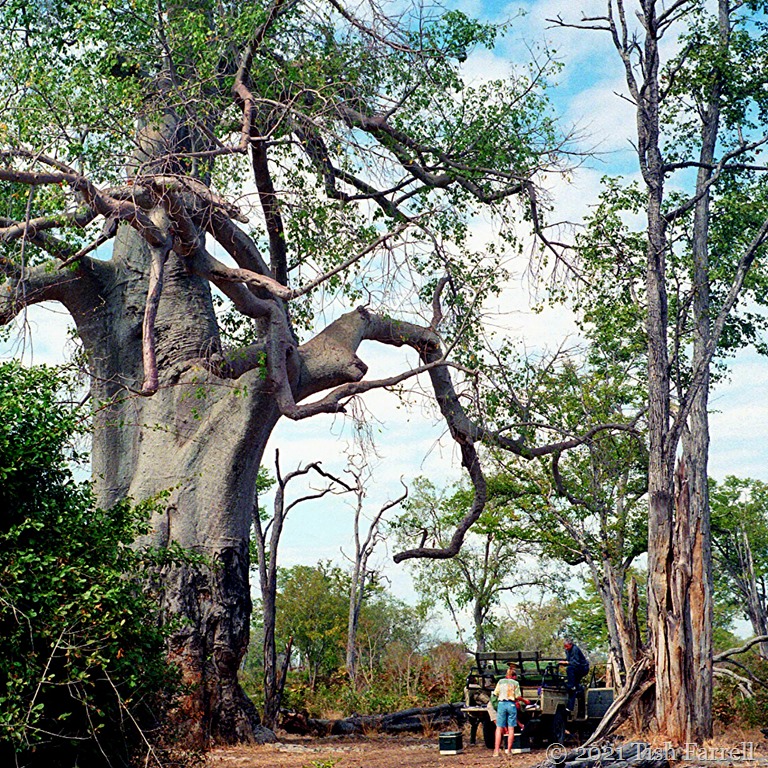
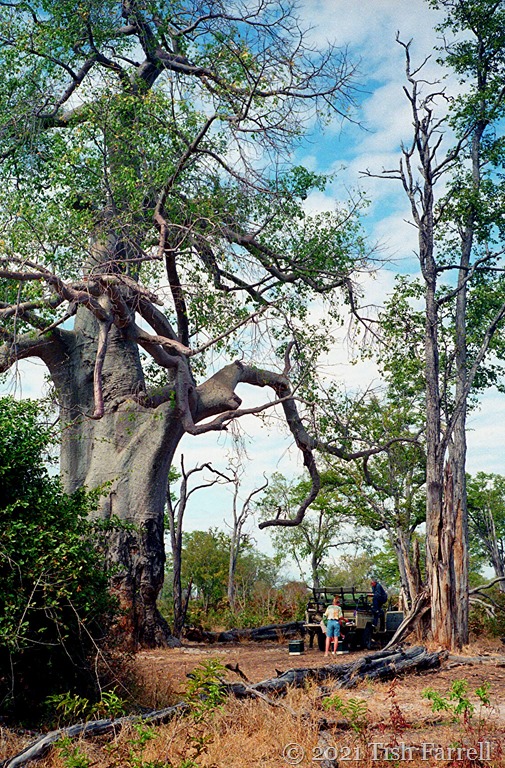
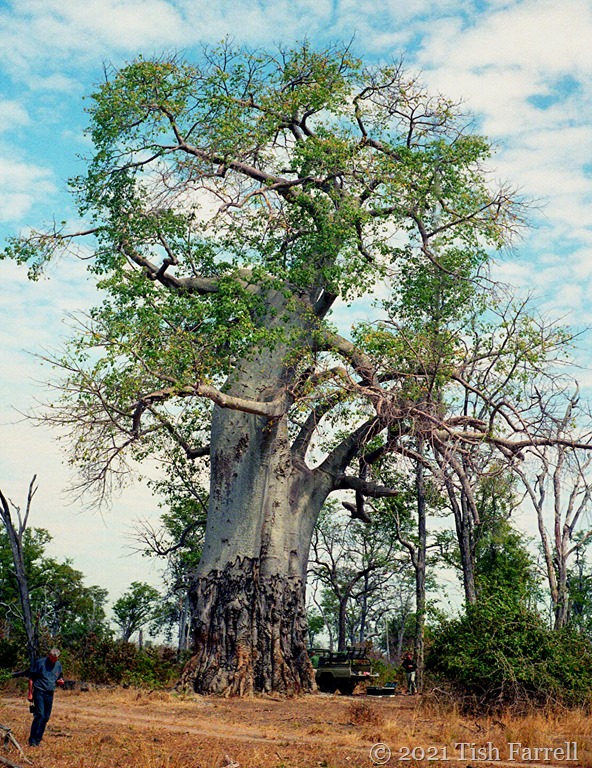
A Very Big Baobab

023

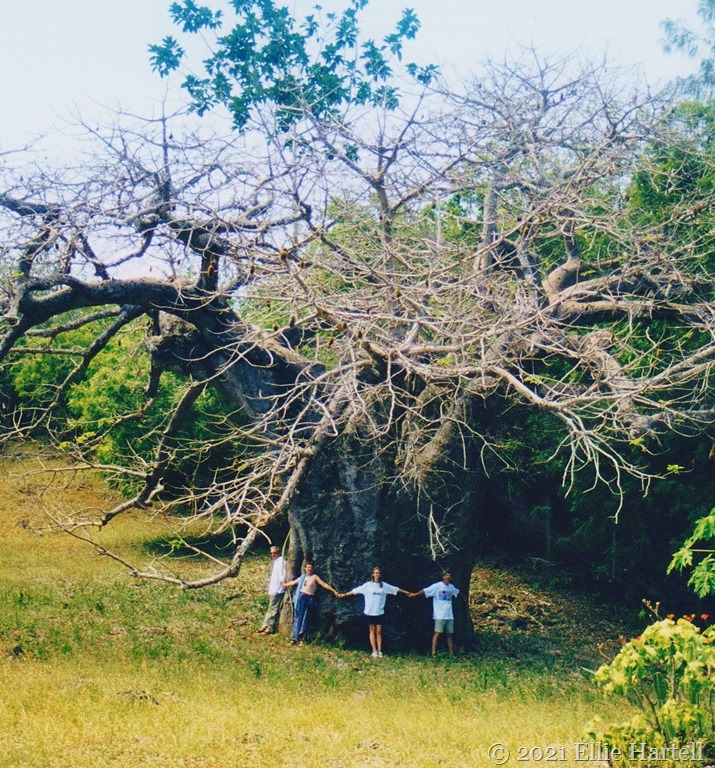
A Christmas holiday with chums down on the South Mombasa coast, and one very sturdy baobab, Adansonia digitata. It’s a tree with many surprising properties: a drought tolerant soft wood that is also fire resistant. It may also live for up to 3,000 years and grow an astonishing 25 metres in girth. The fibrous bark stores water and provides emergency dry season fodder for elephants and elands. Humans also work the fibre to make ropes, twine for basket making and cloth.

Baobabs are leafless for most of the year, which doubtless gave rise to the many traditional tales of an upside-down tree with its roots in the air (planted by creator, or the devil, or hyenas who are always getting things badly wrong). When they do happen, the leaves are large and finger-like and villagers harvest them as vegetables. In the flowering season the branches hang in fleshy cream flowers that only open at night, smell somewhat foetid and are pollinated by bats and bushbabies. The resulting fruits – large woody capsules – contain seeds that are eaten by wild and domestic grazers alike, while the white, cream of tartar like pulp that surrounds them is a good source of vitamin C and used in juices and beer-making.

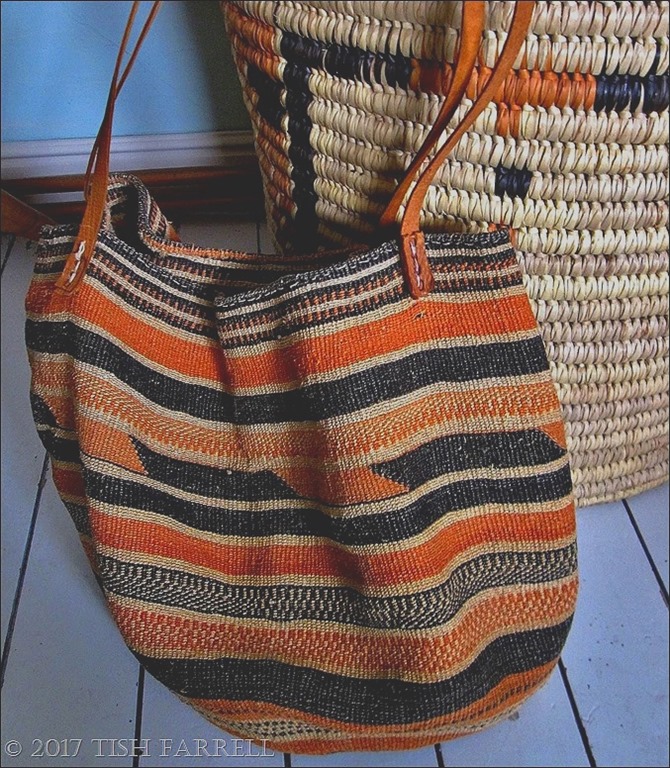
One of my best African treasures is a Kenyan kiondo  bag made in the traditional way from baobab fibre. These days the baskets are more commonly woven from sisal cord. Either way you can see how they are made at an earlier post HERE.

img_3923_thumb

Tree Square #20

On The Reef ~ Tiwi Beach

Sq Tiwi 1201

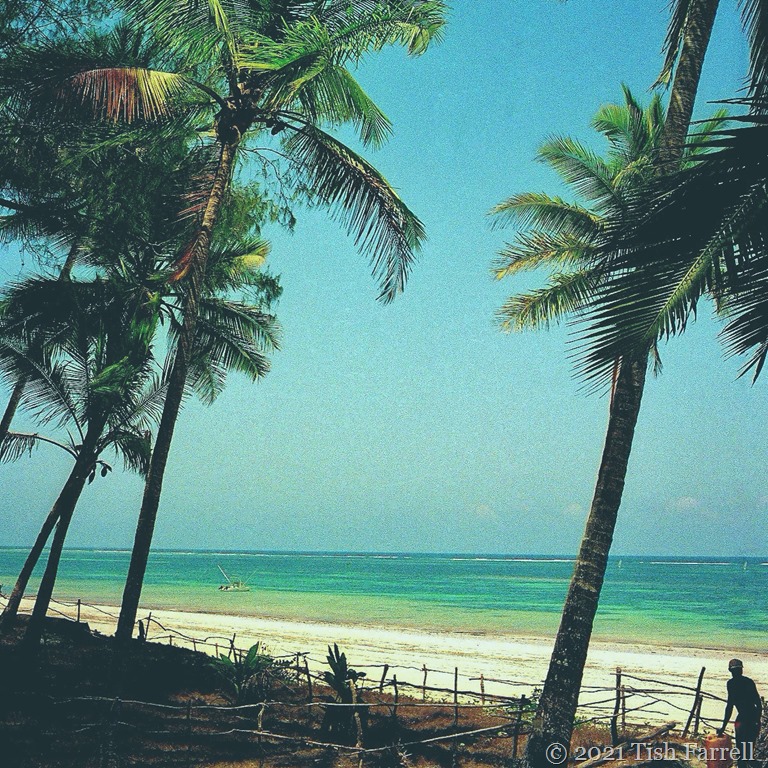
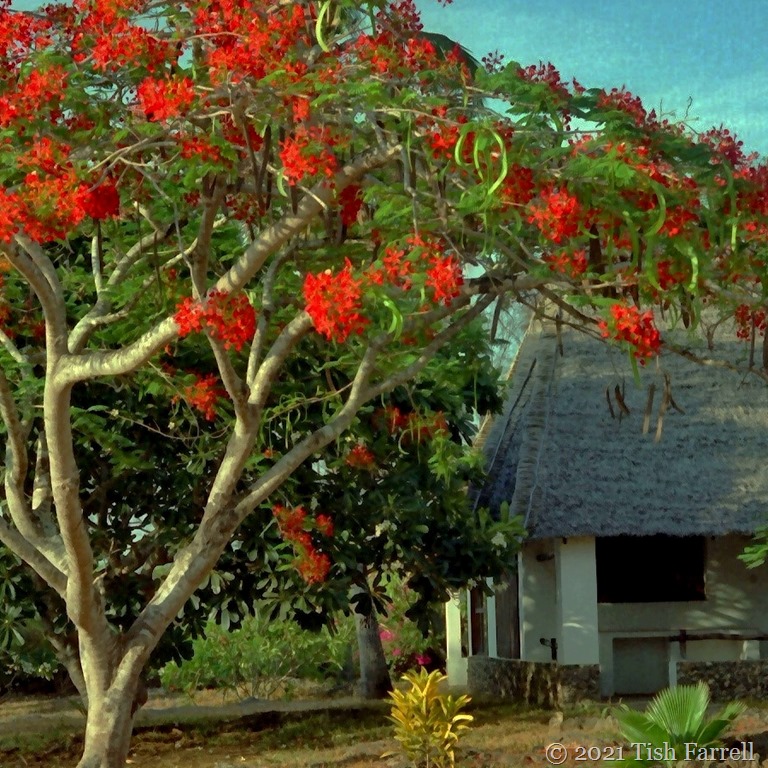
In bygone days of Nairobi living we often made the long-haul drive down the old Mombasa Highway to the south Kenya coast. After 300 miles and six and more hours of judder and roar in the Land Rover, humping in out of potholes, getting covered in dust and smothered by truck fumes, being broiled in the queue for the Likoni Ferry, which once boarded you could never feel quite sure of making touch down, to arrive at last on Tiwi Beach felt like stepping into heaven. There were rarely many people there, not even in the Christmas high season, just a couple of beach cottage enclaves, the  local farmers calling round with fruit and vegetables for sale, the Digo fishermen bringing parrot fish and lobsters, and the unbroken soundscape of ocean pounding on reef, fluting notes of the water bottle bird, soft ting-ting of a bicycle bell when the vegetable seller came calling, the breeze in the coconut palms.

Sq flame tree 2

Madagascar Flame Tree and beach cottage

*

Life in Colour: greener shades of blue

Tree Square #11

Trees For Everything On Zanzibar

zanzibar 7

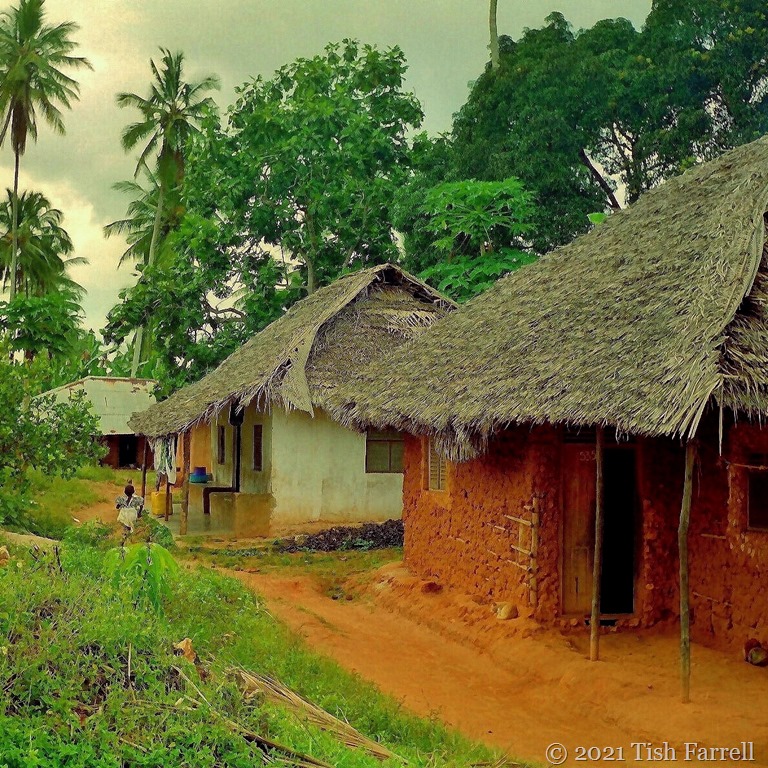
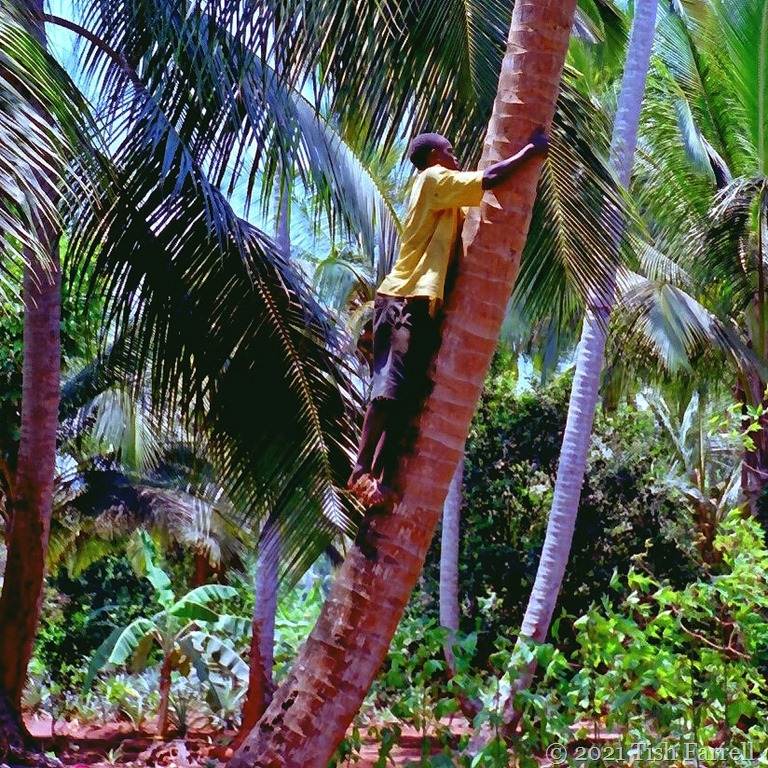
While I’m in East Africa arboreal mode, I remembered Zanzibar could not be beaten for its array of fabulous trees – from giant mangos and jackfruits to its plantations of spice-bearing nutmeg, cinnamon and cloves trees. On the family farms there are papaya, orange, banana and coconut groves, not only sources of family food, but also crops for market. And the leaves of the coconut palms can be turned into all kinds of useful recyclable household essentials – roof thatch, baskets, screens and sleeping mats.

Scan-130429-0074

The Coconut Harvester

*

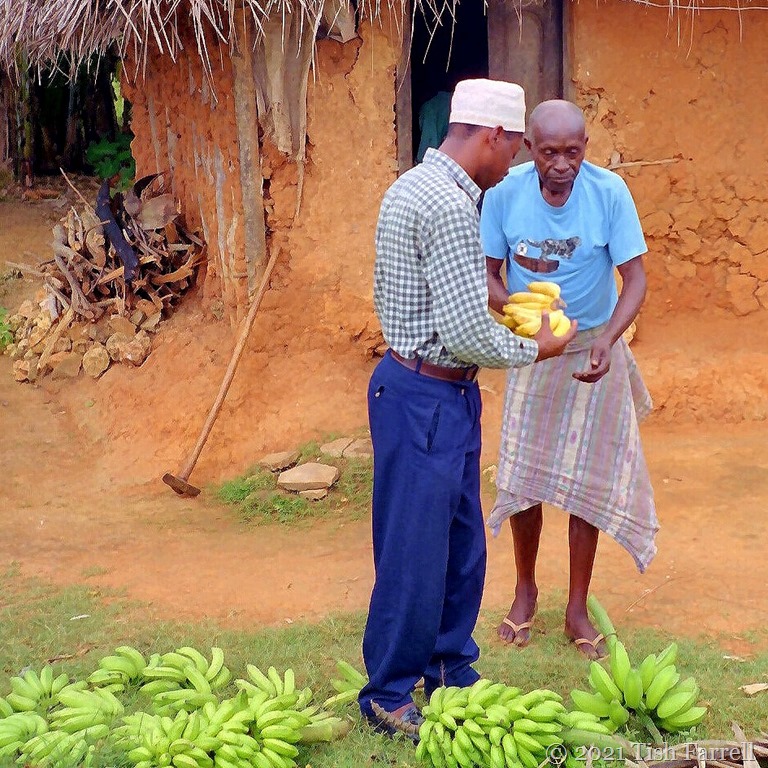
Island guide, Hari, doing a deal at the farmhouse door.

Scan-130429-0014

*

Roadside spice farm stall:

Scan-130429-0008

*

Jackfruit tree:

zanzibar6

*

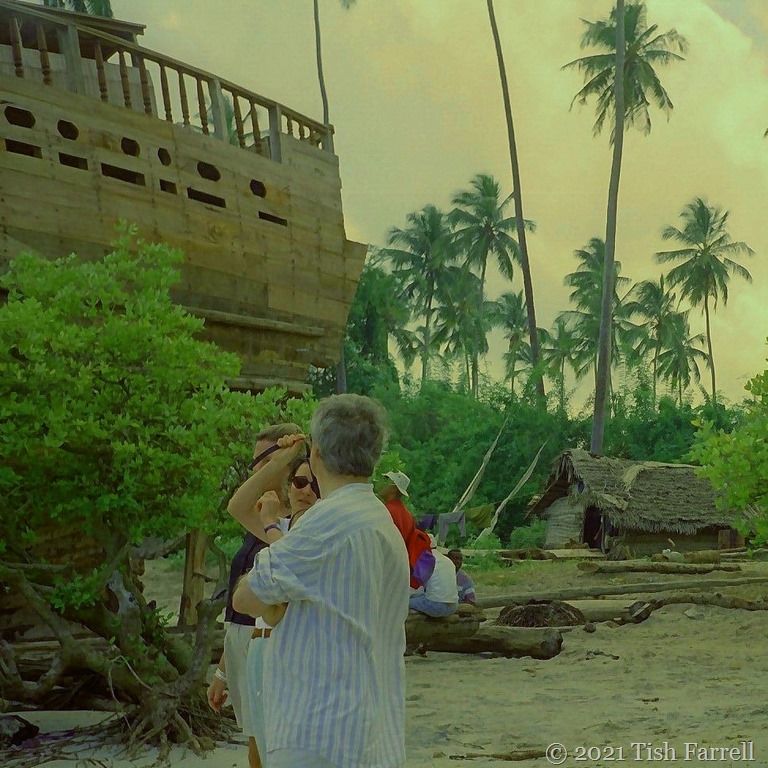
Maruhubi boat builders’ beach with an ocean going dhow under construction:

zanzibar

*

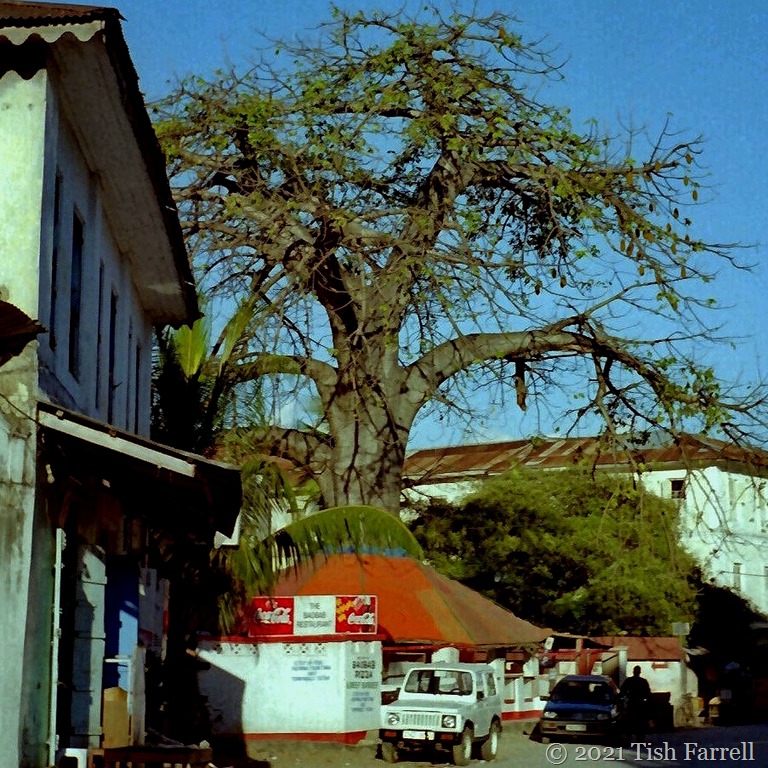
And then there are the baobabs. This one coming up is a little unusual – apart from being in leaf which only happens now and then, it’s providing the structural wherewithal for a Stone Town pizza joint:

zanzibar 4

Tree Square #10

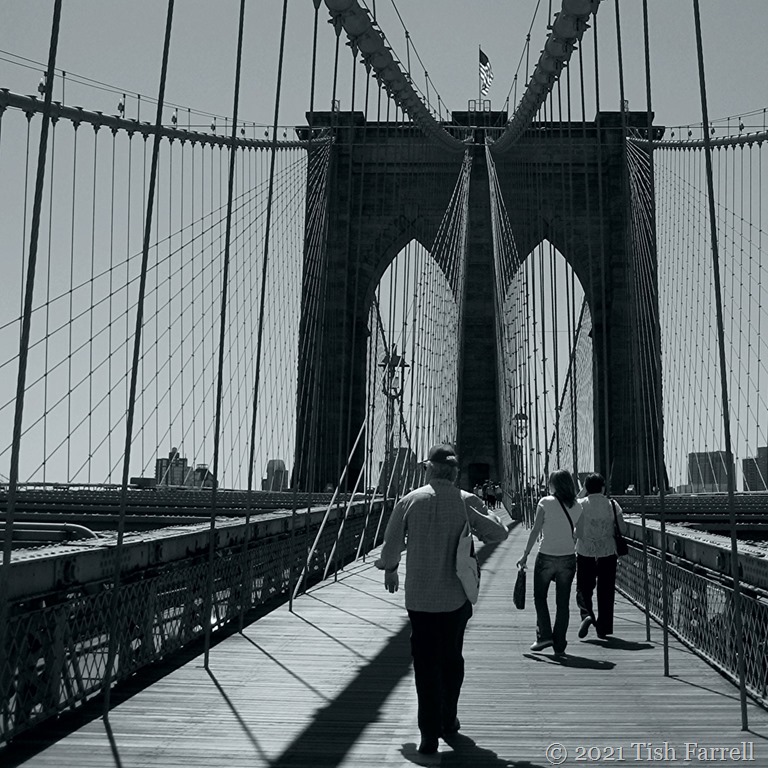
High Noon On Brooklyn Bridge

Brooklyn Bridge

Our early June arrival in New York coincided with a heat wave – 100 degrees F and every degree making its presence felt. We had thought that standing over the East River might have a cooling effect, but it didn’t. And so we did not bother to exert the energy required to cross the bridge to Brooklyn, only went midway then retraced our steps. Our New York-born friends were astonished when we told them. ‘You mean you didn’t cross the Brooklyn Bridge? You only walked half way?’ ‘Yep. Too hot.’ There were disbelieving looks. But then there was a stunning view of downtown Manhattan coming back.

IMG_0328

Cee’s Black & White Photo Challenge: triangles, diamonds, squares

The Path To Harakopio Revisited ~ Life In Colour

IMG_2463

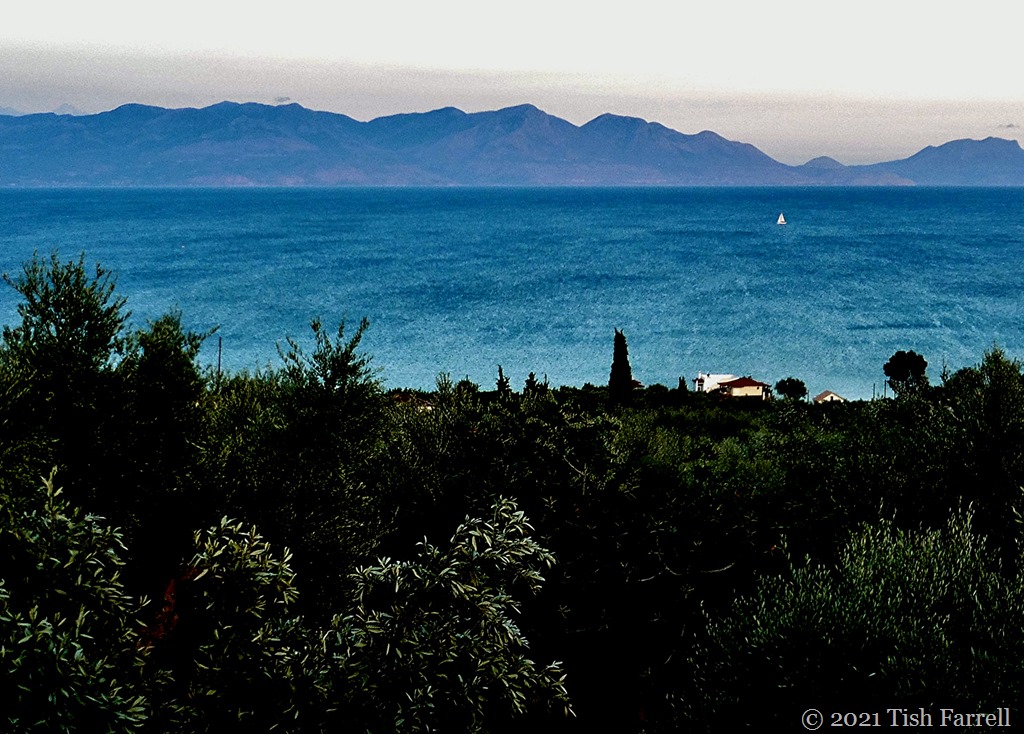
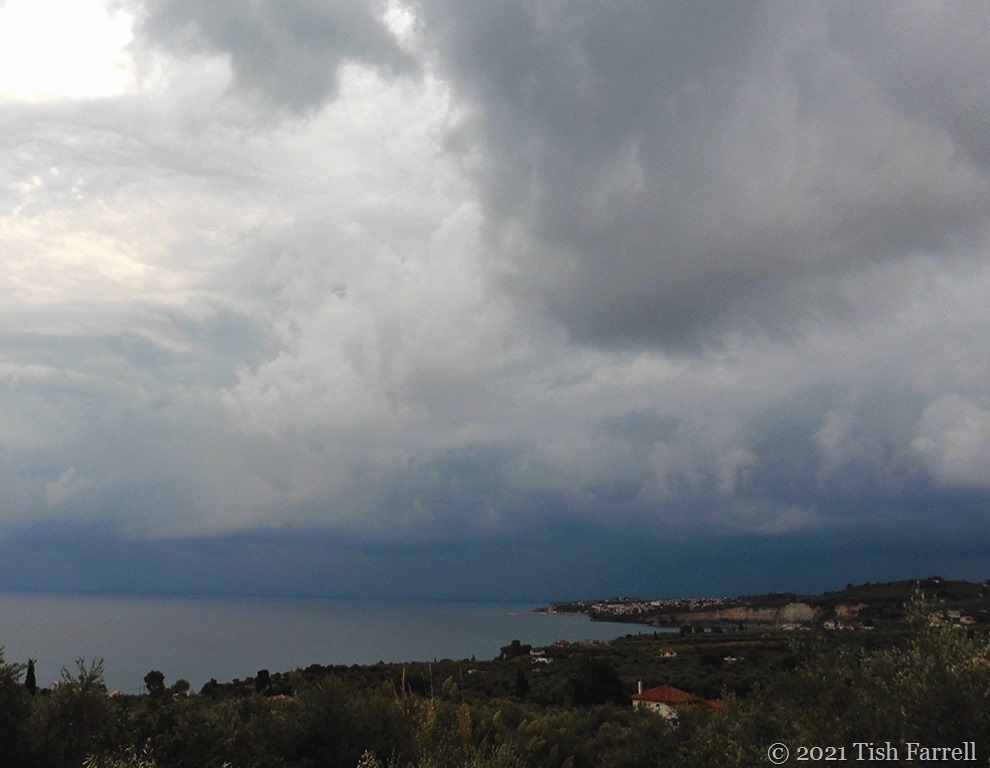
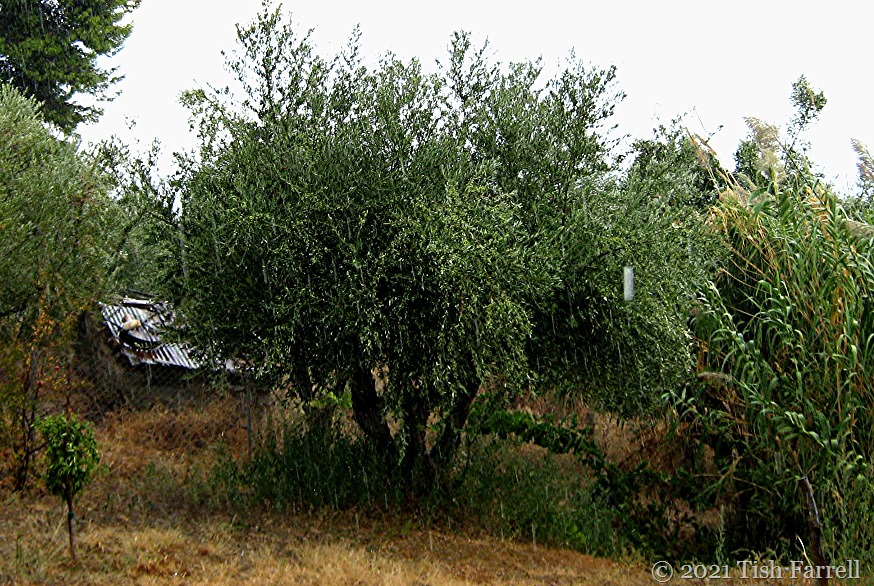
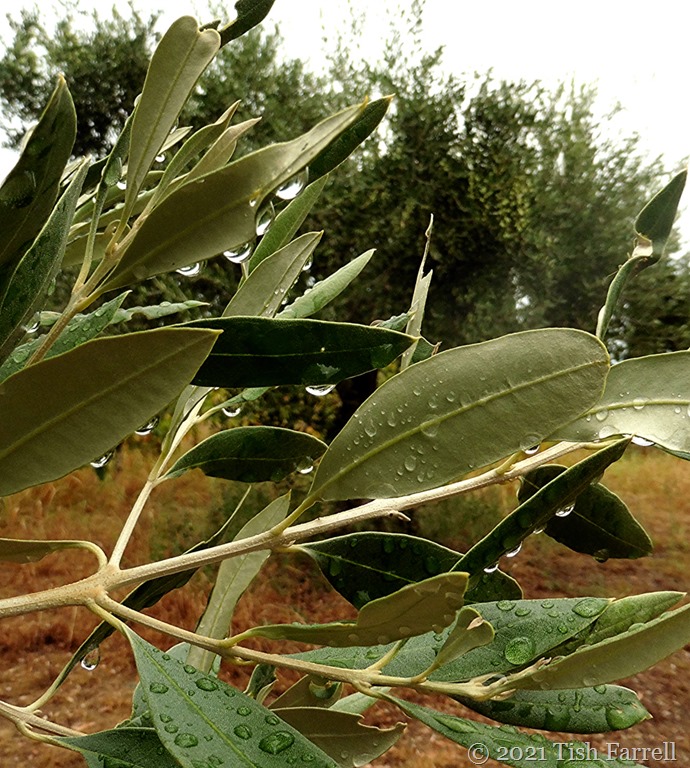
Summer left on our first day in Greece. We might have woken to hot and dazzling sunshine, but by lunchtime the storm clouds were building over the strait. And then came the deluge, torrenting off the pantiles on our cottage roof. Maria, the cottage owner, said it was the first rain in months and after the broiling summer (that we’d only just missed) the olive groves and vineyards were desperate for a good watering. So it was hard to feel too hard-done-by as, before our eyes, the parched Kalamata land sucked up the downpour.

P1020643

IMG_2412cr

P1020659
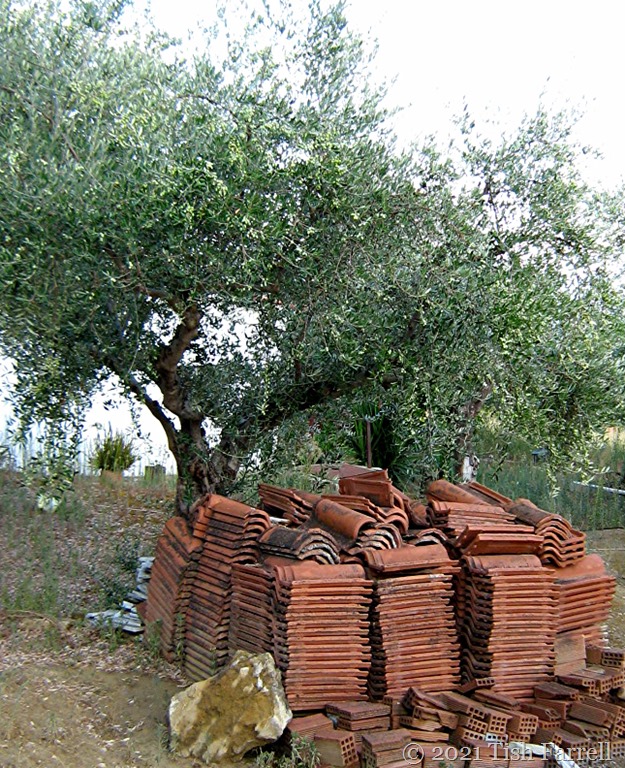
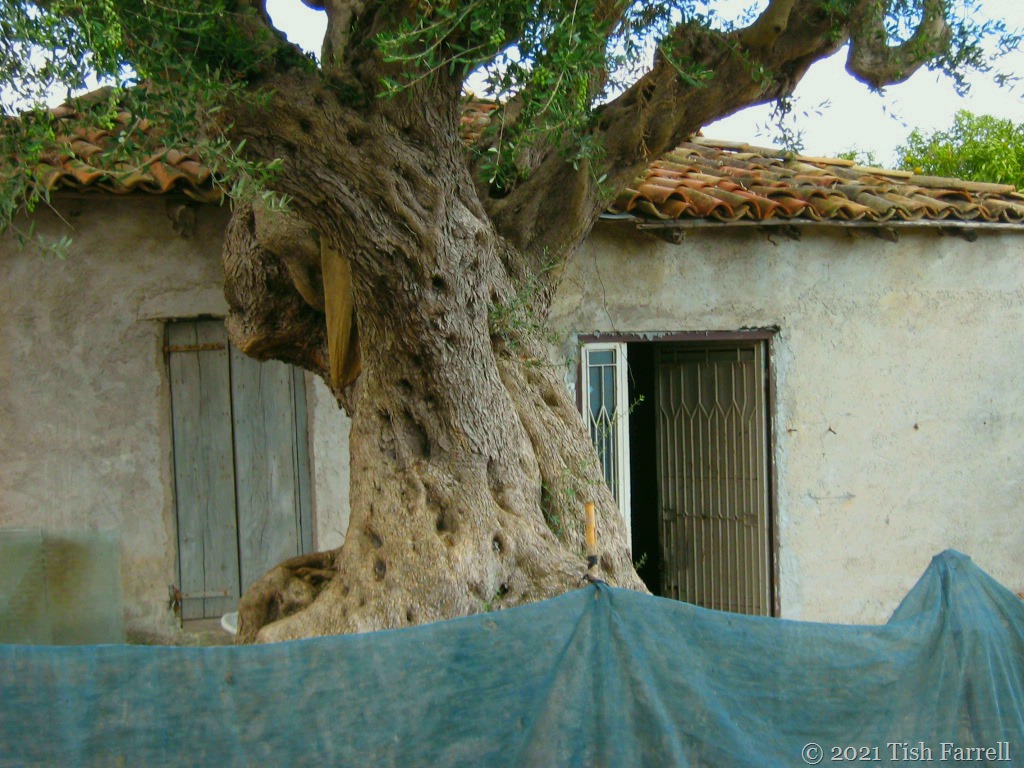
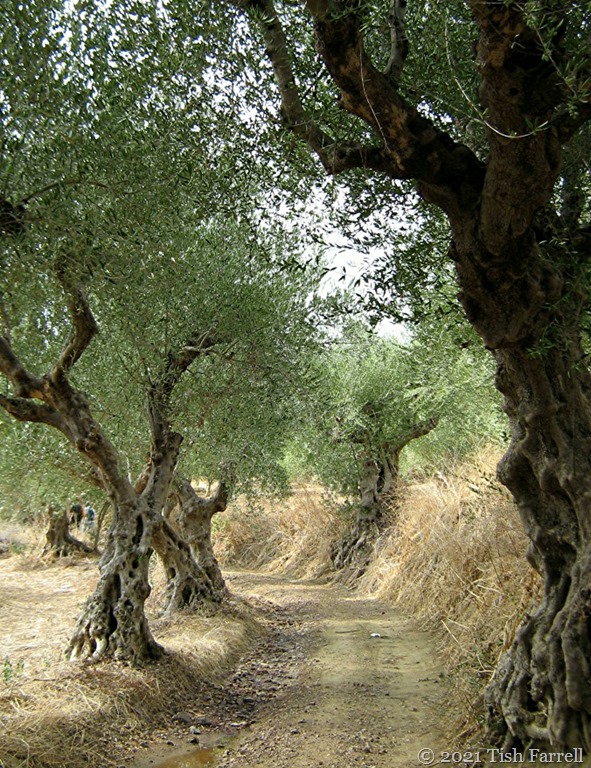
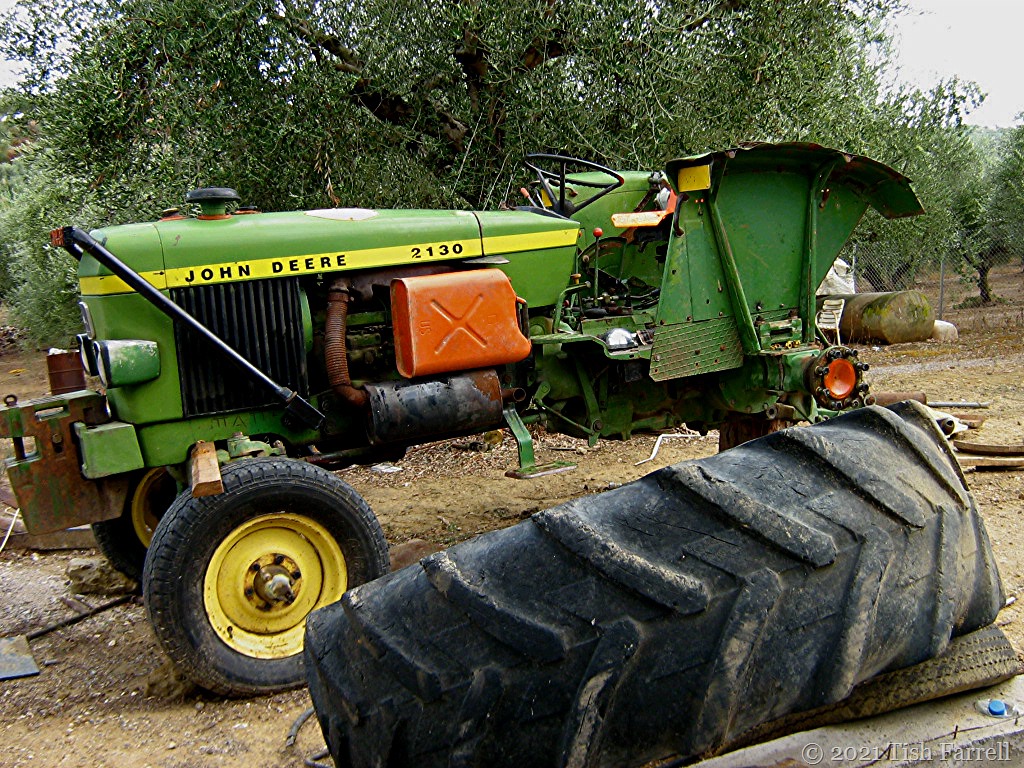
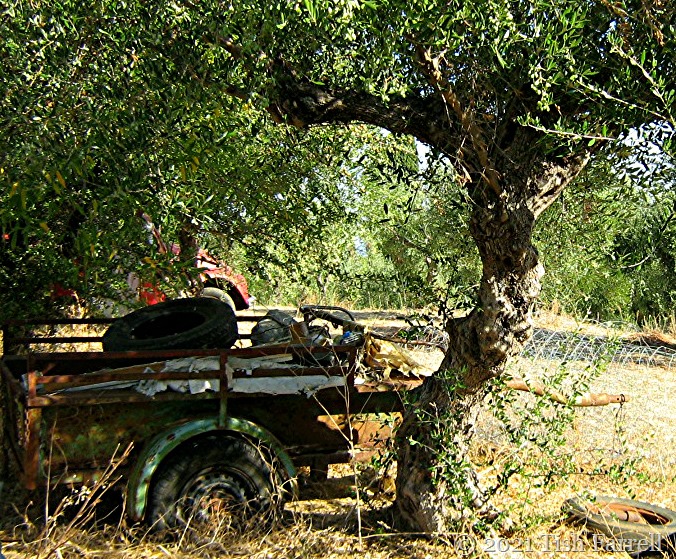
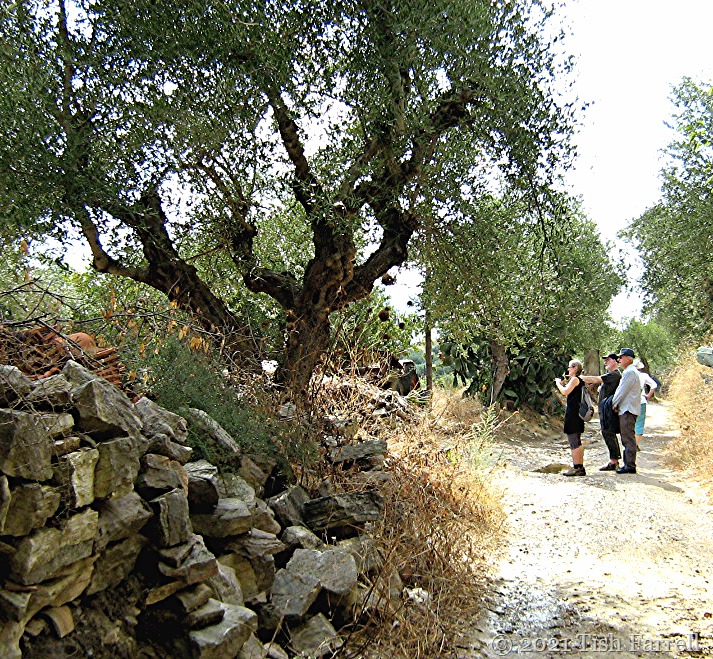
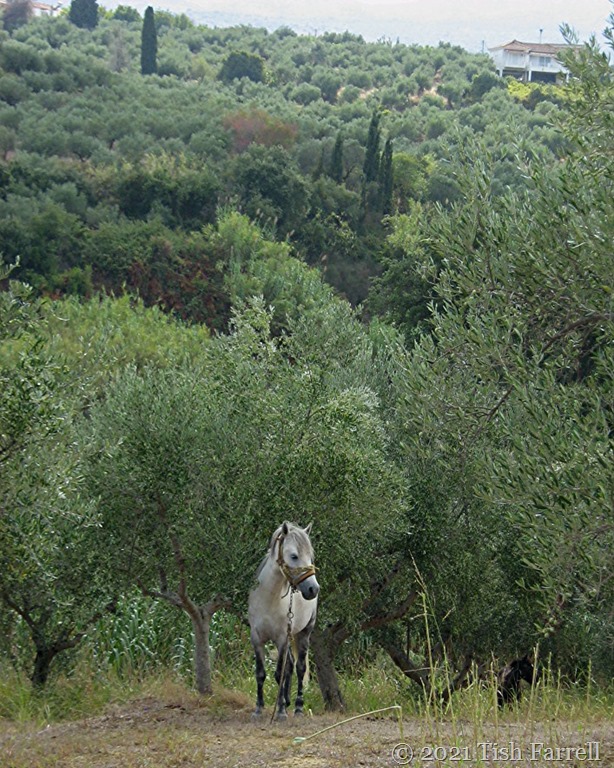
The thunder racketed around for a couple of hours, and finally rumbled off in late afternoon, leaving us with still threatening clouds but, by then, a pressing need to stock up on provisions. We had been told that the nearest supermarket in Harakopio village was an easy two-mile walk. And so it was: a tranquil path between small farms and ancient olive groves; no traffic; only the scent of damp leaf litter and sometimes the delicate fragrance of tiny cyclamen along the verges. There was farm clutter of course along the way, but that goes with the territory. Hens scrattled about under the trees and handsome dogs kept watch over their people’s domains. There was a rather nice horse. Now and then the sun almost shone and I fell in love with gnarly olive trees that looked at least as old as Odysseus.

IMG_2441

IMG_2424

IMG_2343cr

IMG_2448

IMG_2507

IMG_2443

IMG_2496

IMG_2468


Life in Colour: green

Lions Resting Up

201sq

This photo records my first close encounter with lion-kind. I still find it hard to believe I was there.  I’d not long arrived in Kenya, not so much tourist as camp-follower to Graham who was out there on a short-term consultancy. He had recently returned from Mexico where he’d been studying the habits of the Larger Grain Borer (LGB), a tiny maize-devouring beetle which had been imported into Africa from the Americas in a cargo of food aid. The alien beastie had by the 1990s spread across the continent along the lines of rail and road and was busy infesting grain stores in Taita near the Tanzanian border and also in Ukambani in southern Kenya.

Graham was there to provide technical support to a British funded project that was planning to introduce a predator-specific beetle to control the LGB spread. For several months we had no home base. Instead there was an endless back and forth along the Mombasa highway between Nairobi and the coast, Graham spending two or three days at a time at research sites in Kiboko, Taita Hills and Mombasa. I went along for the ride.

At the coast we stayed in beach cottages. At Taita there was a rest house in the hills, but when it was booked up, we stayed at the extraordinary Taita Hills Hilton, a four-star safari lodge in the middle of nowhere. It came with its own private small game reserve, a former colonial sisal plantation run back to bush. (For anyone who’s read William Boyd’s An Ice cream War  this was the territory – between the Mombasa railway and the Taveta border).

Taita Hilton pool terrace

And so, one Saturday afternoon when Graham had finished working, we took ourselves for a game viewing drive around the Taita reserve. Left to our own devices we would not have seen the lions. But some rangers on patrol stopped us. ‘Have you seen the lions,’ they said. No? ‘Come. Follow us.’ They hived off into the bush in their sturdy truck. We followed (carefully) in the works’ Peugeot 307 saloon (!) And there they were, two lions under a thorn bush. Who’d have thought it!

Square Up #17