Llanddwyn Bound ~ Crossing To The Isle Of Lovers

P1060383

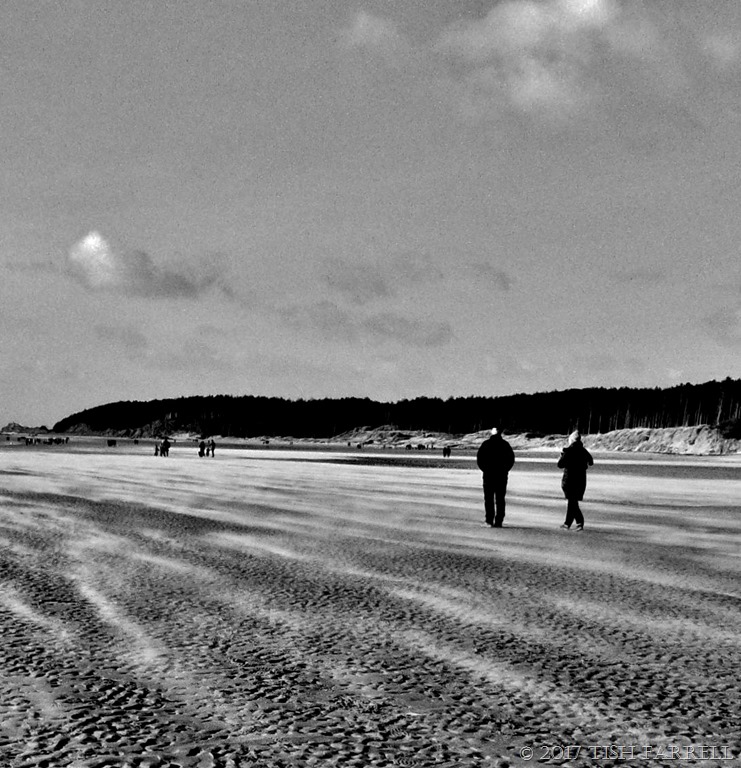
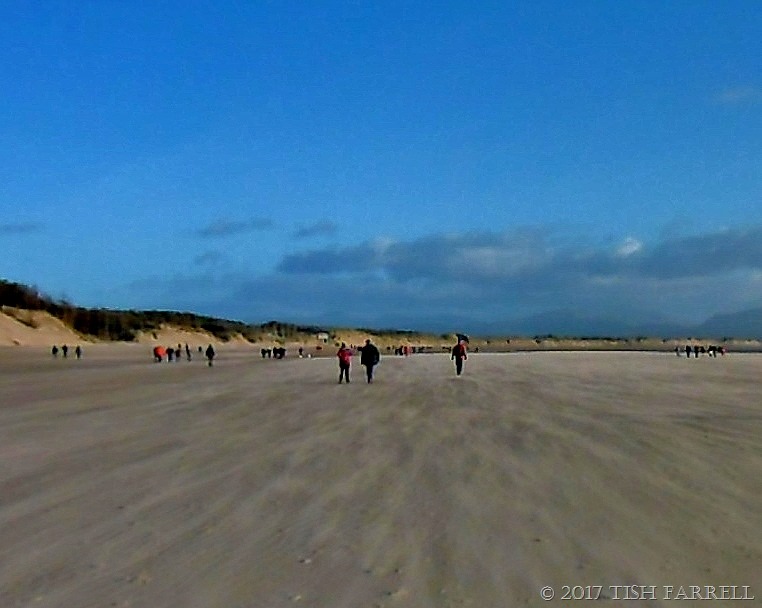
It was blowing a gale, wind like ice on our faces. But that did not stop us – nor a hundred like-minded souls, all intent on the secular pilgrimage of walking off Christmas Day excesses, giving the family dogs a much needed airing, and heading to Llanddwyn Island while the tide was on the ebb. Anyway the sun was out, the light crystal bright, and the mountains of mainland Wales across Menai Strait looking their dreamy best. So why wouldn’t you head for the sea shore.

Newborough Beach was positively crowded. Not only that, the sands were coming to meet us as we set off to the island. It was the strangest experience, which along with eyes full of wind-tears played havoc with one’s perceptions. It was rather like going backwards on a forward moving pavement.

P1060353

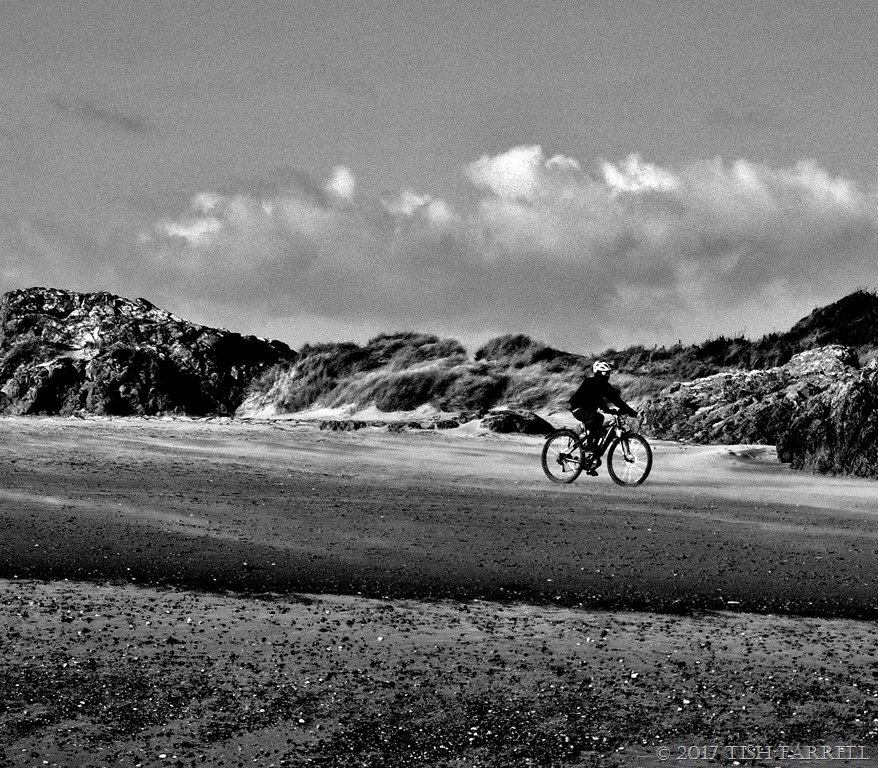
And so at this point, seeing a chap on a bicycle seemed most surreal. But then why not ride your bike on the beach? So much space. No grouchy motorists on your tail. All that sand for a soft (well soft-ish) landing.

P1060354

I’ve written about Llanddwyn (roughly pronounced ‘hlanthwin’) Island before. We were here two years ago, on Christmas Day, but then the tide was too high for us to reach the island.

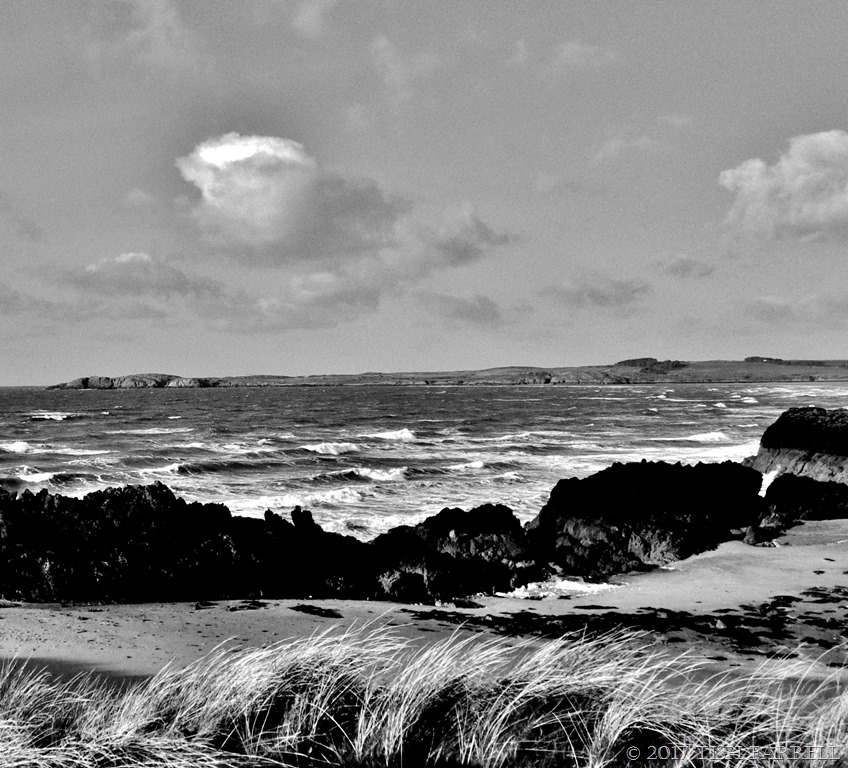
In fact it is not an island at all, but a long, slender peninsula, poking out into the Irish Sea like some dragon’s  tongue. And it was here that St Dwynwen, daughter of a Welsh king, withdrew from the world to form a convent. This was in the fifth century, around the time that Roman rule in Britain was coming to an end. You can read her story at the link above, although there are many versions, and they mostly have to do with spurned or thwarted love, and so are used to explain how she came to be the Welsh patron saint of lovers. Her day is celebrated each year on 25th January.

During the Middle Ages, as poets and pilgrims were drawn to Llanddwyn Island, so the accounts of their visits helped grow  Dwynwen’s reputation for mystical powers of healing and divination. Even her well was said to be inhabited by sacred eels, and through the cunning reading of their movements, you might predict the future. On the other hand, if the waters boiled up during your visit you could be assured of love and good fortune.

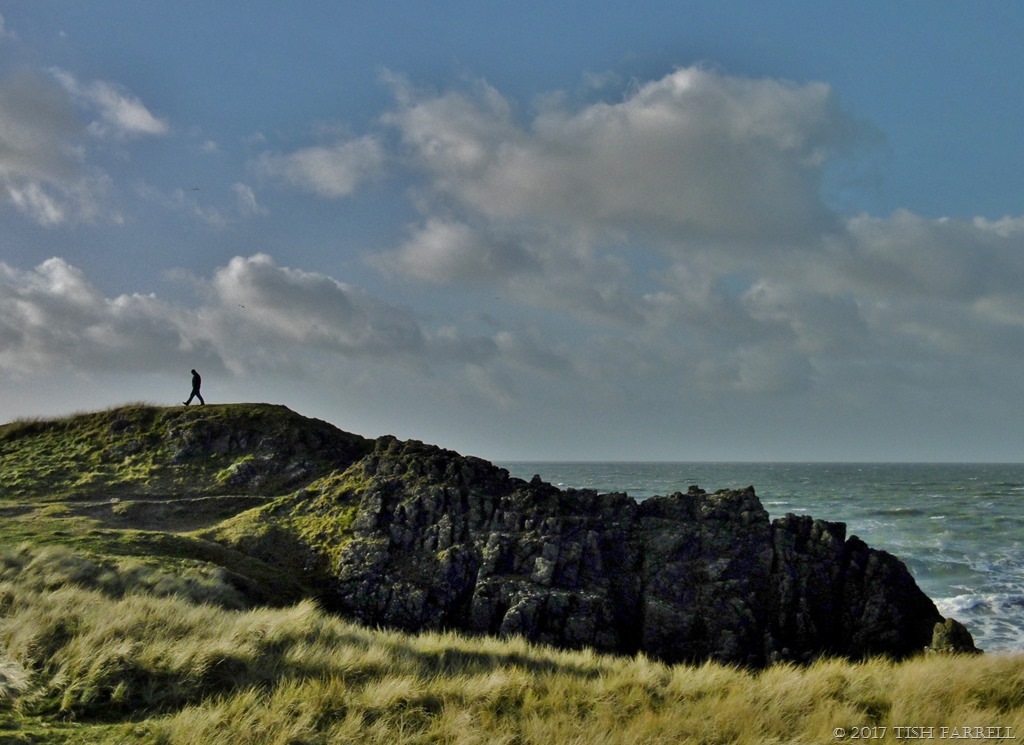
We, however, were not enticed from the path to see this for ourselves. A very pungent odour wafting our way suggested something had died there. Perhaps the sacred eels? Instead we took the cliff path and enjoyed the thrill of stepping out above a stormy sea.

P1060364

P1060368

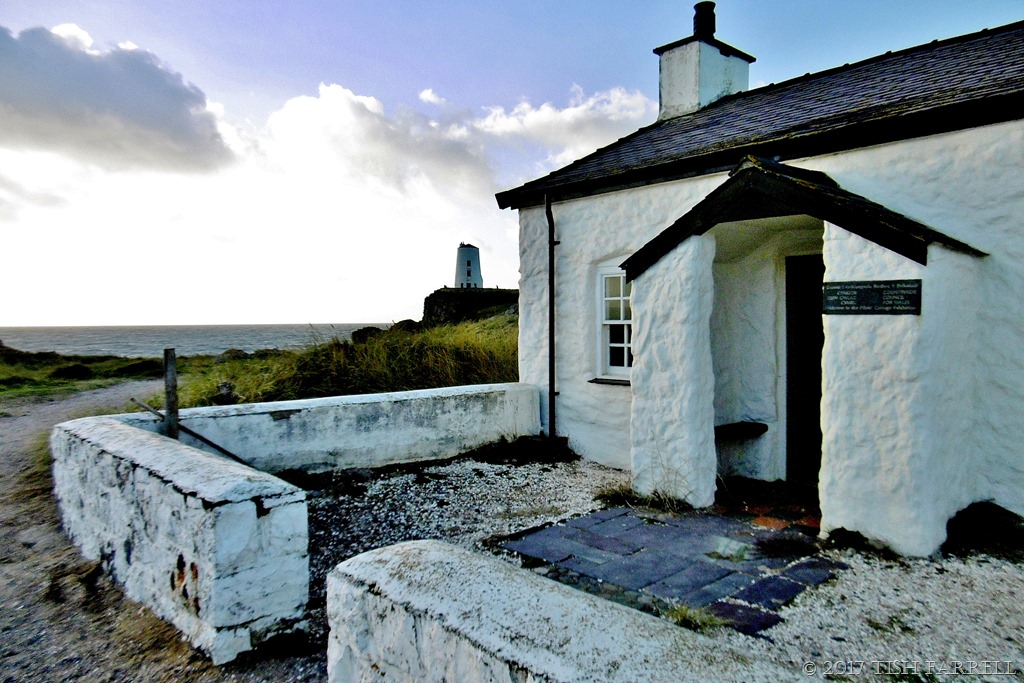
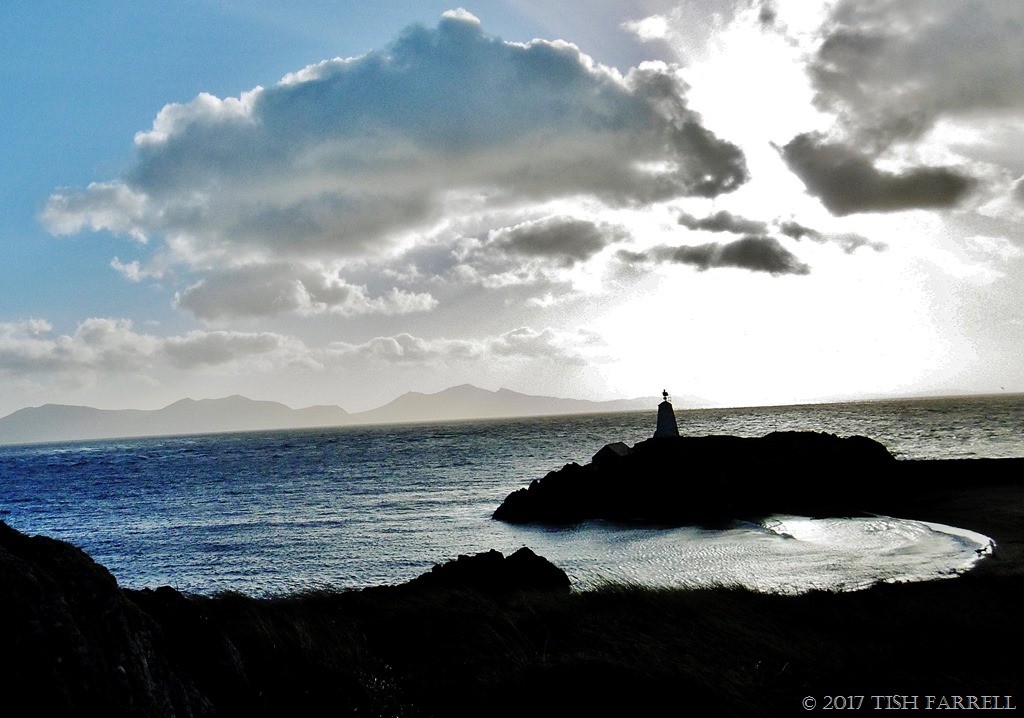
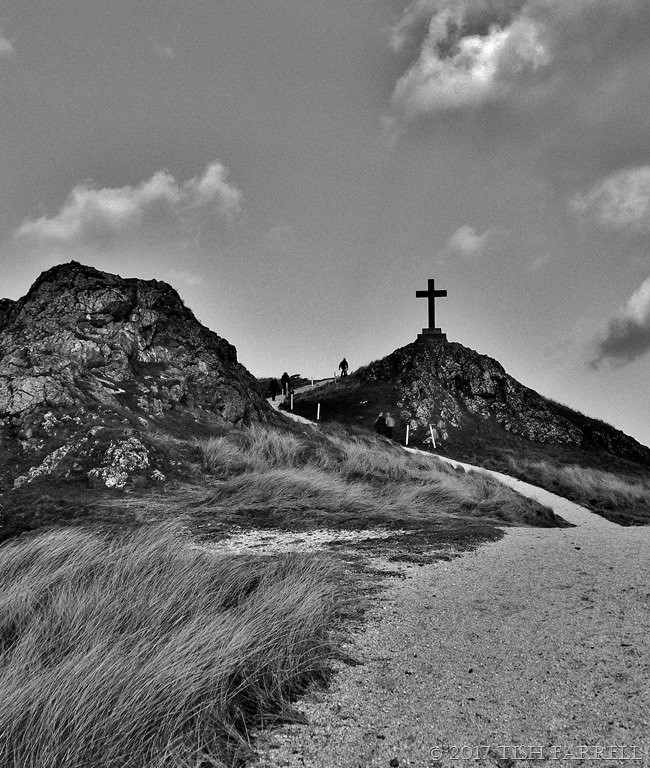
There is anyway much to explore on this small promontory. At every point, as the sea recedes, there are enticing coves – some rocky, some sandy. There are many man-made features too: a Celtic cross of nineteenth century vintage, another marking Dwynwen’s death in 465 C.E. There are the ruins of a Tudor church built on the site of Dwynwen’s own church which she apparently built herself from beach stones, and so doubtless did not stand the test of time and wild Welsh weather. There is also a beacon, a lighthouse and three cottages built for the lighthouse keepers and their families. In the nineteenth century the export of Welsh slate was a thriving industry, and the lighthouse served the slate ships in particular, keeping them off the dangerous Menai Strait sand bars.

P1060394

P1060396

P1060379

On the long walk back up the beach, the wind was behind us. Now we were walking with the moving sand. But it was still a very odd experience.

P1060409

Crossing

To The Day Ahead ~ Mombasa Beach Safari

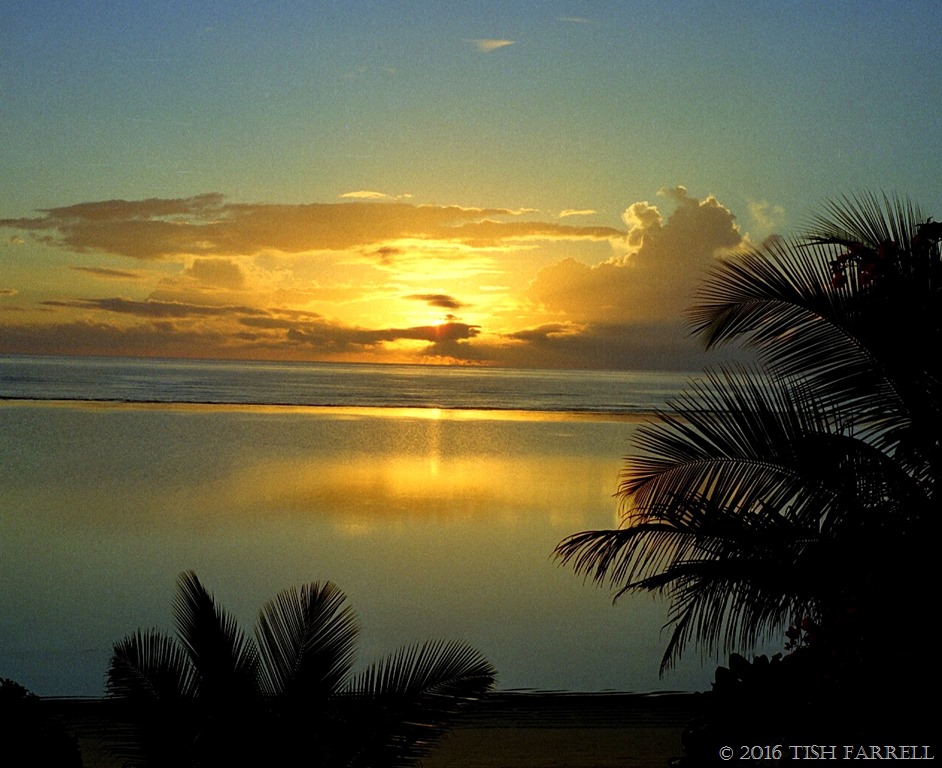
sunrise on the reef

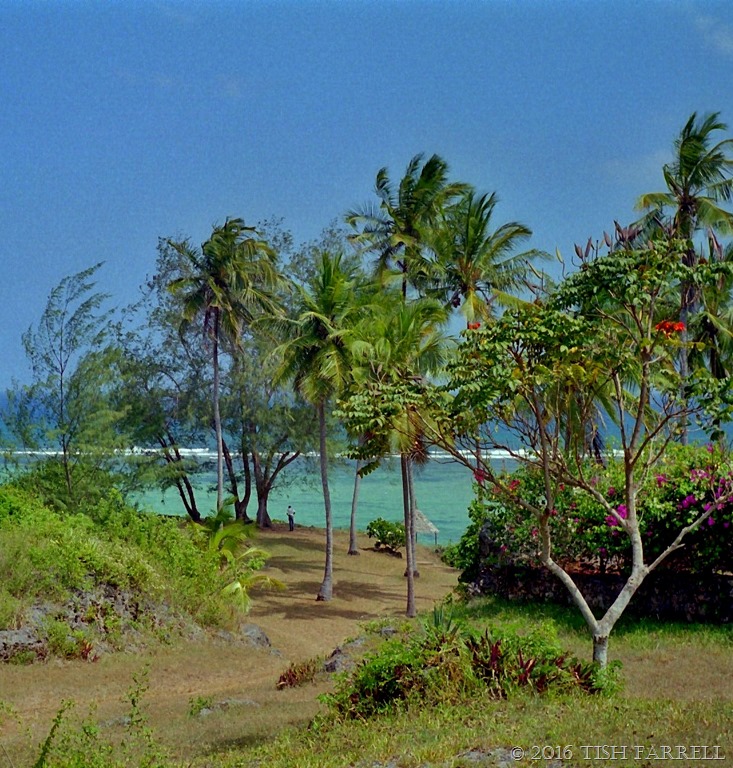
When we lived in Kenya during the 1990s we used to spend Christmas in a beach cottage on the south Mombasa coast. Much of the anticipation (not to say anxiety) surrounding this annual safari usually revolved around wondering if we would get there at all.

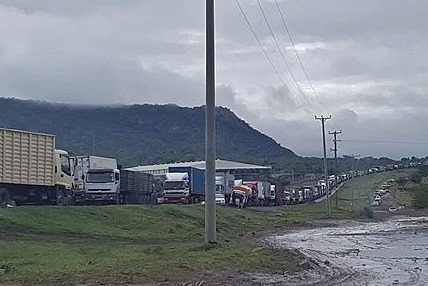
Mombasa is a good 300 miles from Nairobi and, in our day, the existence of the Nairobi – Mombasa highway was not to be taken for granted. December is the rainy season, and there were times when sections of the road were washed out. On one occasion when we were heading south, mudslides had created a huge traffic jam not far from Nairobi. Trucks, buses, tour vans and cars were double parked for tens of miles all across Ukambani’s rain-soaked bush country.

Villagers along the route thought all their market days had come at once – so many captive customers to be plied with cups of tea and fresh picked mangos from their shambas. All opportunities for making a few bob were quickly grabbed, and wherever you looked, gangs of of grinning lads were hard at work, pushing grounded vehicles out of the mudslides. Meanwhile the line of vehicles stretched on and on, out across the plains.

And it was then that our Land Rover Defender came into its own. You forgot that it generally leaked, juddered, clanged and banged while rearranging your spinal column and internal organs into ever new and painful configurations. This beast could walk on water. Well almost. Anyway, who needed a road? Not Team Leader Graham (aka My Man In Africa). He simply engaged equatorial swamp-drive, and took to the bush, picking his own route alongside the blocked highway.  Being English, I quailed before the thought that we were committing some major traffic offence. This, after all, was ‘undertaking’ of epic proportions, outdoing the maddest of matatu drivers. And just to give you an idea of Mombasa highway jams here’s a Kenyan press photo from April this year – a twelve-hour hold-up:

Mombasa Highway Nation Newspaper

http://nairobinews.nation.co.ke/news/caused-monster-traffic-jam-mombasa-road/

*

And so what with events like this, and the other usual highway hazards of broken-down trucks, police road blocks, jay-walking buffalo and the inevitable Likoni Ferry hold up, it was always a huge relief to finally find ourselves trundling along the cliff top track to Maweni Cove. Soon there would be paddling in warm lagoon waters, white coral sands sparsely populated, a cooling sea breeze on the headland, and the sound of the Indian Ocean roaring on the reef edge. Eggs and vegetables would be delivered to our door by a sweet Digo man on a bicycle. The fishermen would call by daily with fresh-caught lobster and parrot fish, and if you gave them a knife and chopping board, they would clean the fish for you. All of which meant that even when we were actually there,  it always seemed like a dream.

Scan-130603-0010Scan-130603-0001

Anticipation

Echo Of Time Past ~ Hunter’s Lodge, Kiboko

IMG_0024

I’ve not done an Old Africa post of a while, and this photo is rather the worse for wear. But perhaps that is fitting in all sorts of ways.

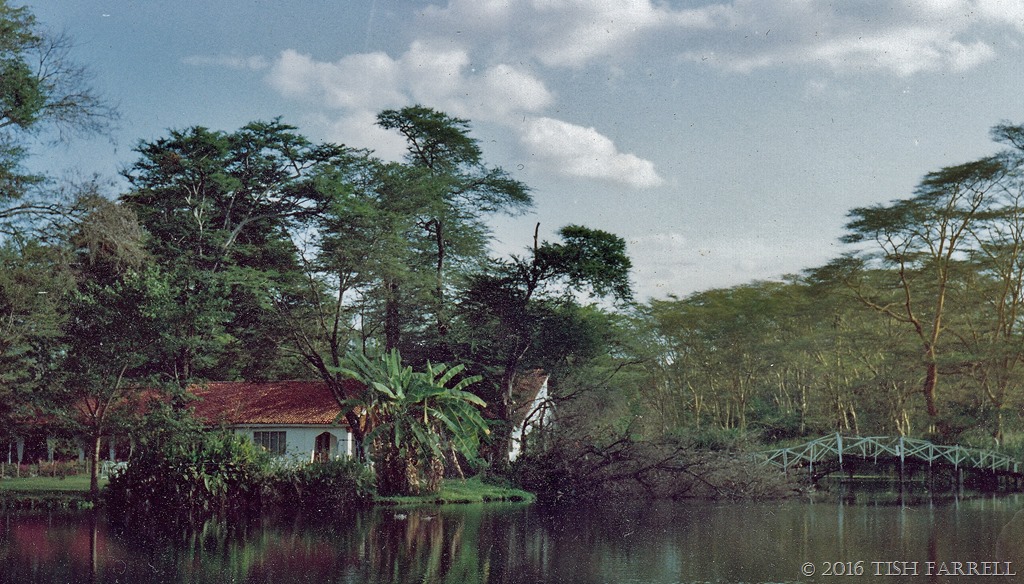
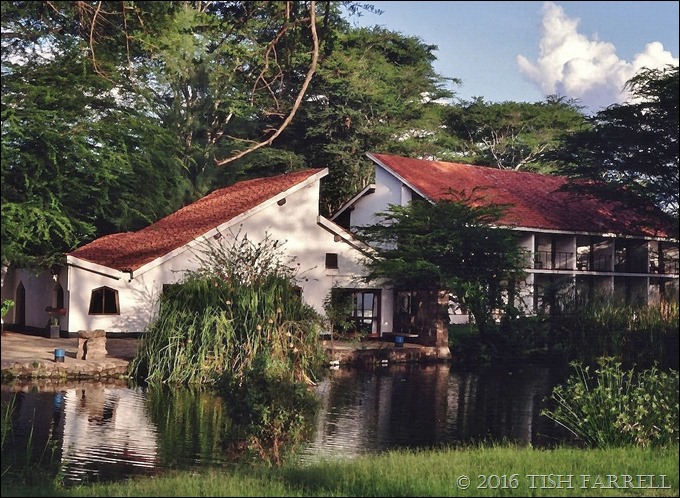
I also thought I’d post an excerpt from our 1990’s travels in Kenya – an account written not long after my arrival in 1992. During the eight years we lived there, we had many sojourns at Hunter’s Lodge on the Nairobi – Mombasa highway. Graham was overseeing a research project at the nearby field station and had to make regular visits. The Lodge had been built by great white hunter, John Hunter, around the late ‘50s – early ‘60s – his retirement home after a long career of game control, grand safaris and general  rhino and elephant slaughter.  He saw no irony in choosing a spot that had once been his favourite place for watching elephant at a sunset waterhole on the Kiboko River. He dammed the stream to make an ornamental garden lake for his guests’ pleasure. And instead of elephant, the place attracted a marvellous array of birds. The soundtrack here, then, is endless weaver bird chatter in the papyrus, and the clatter of stork beaks up in the fever trees. Oh yes, and the nonstop whine of crickets…

*

Monday 17th February, my two bags packed once more and Graham’s few belongings assembled, we set off for Kiboko. Although it was still early morning, the sun was already beginning to scorch my arm through the open car window; sweat trickled down my spine. But I was pleased to be on the move again; and Graham, who was watching me from the side-lines – to see how I would react to a new land, confined himself to saying that he hoped I would like the lodge where we would be staying for a few days.

I imagine I will, but at that moment it was not my main concern. I was excited at the prospect of my first safari. Too opulent a term for us perhaps, conjuring up an entourage of well-provisioned trucks each manned with a local African guide and tracker, bullish Europeans in khaki shorts, legs the colour of seasoned olive wood above long woollen socks, bush-hatted and safari-jacketed, a powerful rifle to hand to fend off attacks by a raging buffalo. But no, there was none of this; just a couple of bags and a few supplies for the field station in the boot of a modest Peugeot saloon. And anyway, in Swahili safari simply means journey, and so it was the journey itself that I was looking forward to, even if it only involved a few hours’ drive down the Nairobi-Mombasa highway.

We left the city by the same route I had come from the airport two days earlier. Now I could take it in with a more focused eye: the newspaper and magazine sellers out in force, and stepping between the traffic with all the ease of those who have taken up walking the plank for a living and survived to tell and retell the tale; the avenues of yellow blossomed acacias; the screens of puce pink bougainvillea; palm trees; throngs of citizens everywhere, waiting, milling, buying, selling, chatting, reading, walking; the welter of city centre multi-storey office blocks in as many styles, from oriental chic to Dallas smoked glass; the air heavy with dust and oily exhaust fumes and the smell of roasting maize cobs.

And as we head south out of Nairobi, through the flatlands of the industrial zone you feel that you could be leaving any city anywhere in the developed world. There is a Slumberworld bed centre, another for well-known names in bathroom and sanitary ware, a detergent factory, a Toyota showroom, a cut-price cash-and-carry warehouse, builders’ yards, air freight offices, the outposts of many a multi-national company, all neat brick buildings flying their corporate banners behind well-tended and irrigated flower beds.

At this point, you can only just glimpse the plains beyond. It is easy to think you are on familiar territory: the industrial estate, a modern major thoroughfare with white lines, UK road signs, traffic police operating speed traps, Esso service stations, driving on the left. The British-born may believe too quickly that they know all the rules, the received codes of behaviour that pertain here. After all, it did used to be “ours”; you would expect some sense of familiarity.

Or would you? The British of old empire days were not overly concerned about establishing decent infrastructure in the countries they colonized (“standards” maybe) beyond building railways to ferry their administrators and export their hard-won commodities, or erecting imposing edifices that represented the institutions of law and taxation used to control indigenous peoples, who though in their own land, found that it was no longer theirs. And so, having built the Uganda Railway across Kenya Colony, the British seem to have fallen short when it came to road building. For much of their sixty-year stay, the road between Nairobi and Mombasa port was three hundred miles of gut-twisting dirt corrugations that, if you were lucky, took a day and more to traverse. It was only on the last lap of occupation in the 1960s that the tarmac was laid, reducing journey time to a mere seven or eight hours.

And so quite quickly I see that we should not set too much store by apparent similarities, and the seeming familiar artefacts. The things that we British recognise now in Kenya are not necessarily the issue of what we left behind. Or, if there are remnants of our abandoned institutions, then it does not follow that they have exactly the same meaning or function for modern Kenyans. Therefore, lest they lead us astray or cause us to make wrong assumptions, we should ignore their supposed messages altogether; think of them as laying a false trail, for this is Africa and, as the locals would often tell us, anything can happen here.

It soon becomes apparent, too, that when the highway itself was being built, every effort was made to ensure that the ‘surface’ went as far as possible. There is only a thin skin, a makeshift causeway to hold the bush at bay. And while some stretches have been recently upgraded, for the most part it is rag-edged and pot-holed and, south of Nairobi, gives way altogether to a several mile detour on dirt road.

And even though it is not a busy road by European standards, it is one of Africa’s major transport routes, the main users being massively laden freight lorries hauling their own weight and the same again in trailers hitched on behind. Bales of iron rods from the Mombasa rolling mills; crates of Tusker beer; petrol in rusty tankers as battered and misshapen as badly squeezed toothpaste tubes; cargoes of maize; transporters filled with new white Japanese cars. That their drivers think they will ever make it to Uganda far to the north, or to Zambia way down south through Tanzania, or even to the next market pull-off twenty miles away often seems to be an act of supreme faith. Many of course do not survive the test, but are pulled off the road, the cabs bowed to the ground like broken-winded beasts, their drivers sprawled out asleep between the wheels to avoid the sun’s glare while waiting for rescue or inspiration.

***

Much of the first hour out of Nairobi was thus spent leap-frogging trucks, and it should be said that African lorry drivers are very courteous, using their right indicator if it is not safe for you to overtake, the left when it is. Once past, I would watch them in the wing mirror, grinding along slowly in our wake, their exhausts billowing out evil-smelling clouds that lingered in black fog banks for many yards behind. But we were out in open country now, to the west the pale grasslands of the Athi Plains extending and merging into the distant blue horizon, to the east and south the land falling away into thorn scrub valleys, undulating hills and blazing outcrops of red igneous rock.

There were problems of perception here as well. The landscapes which the road bisects are on too vast a scale to fit a single frame; to absorb. Always too much foreground, so that the mind switches off and dismisses the whole as featureless bush: thorn scrub followed by thorn scrub, stretching as far as the eye can see, across plains that are scarcely interrupted by the scatter of old volcanic peaks – which would be impressive, if only you could find some sense of proportion.

That is one perspective. Another might be to take heart at the sight of so much space, to acknowledge the inherent grandeur of mile after mile of untamed, uncultivated, unbuilt-on land that yields only sporadic evidence of human activity beyond the margins of the road. Yet a third might be to wonder at the apparent absurdity of driving down a main road along with Mercedes, Land Cruisers and BMWs and seeing ostriches loping away beneath the spans of power lines beside the highway, or to pass by a large farm field fenced off against the bush, and to realize that in amongst the well-contained herd of grazing domestic cattle are also Thompson’s Gazelle and hartebeest.

***

Nearly three hours out of Nairobi and we are bowling across the lowland plains, through the large dusty market settlements of Sultan Hamud and Emali. It is much hotter down here and the tarmac, straight and undulating before us, at one moment fragments into a heat haze and in the next, reforms, only to fragment again with each successive horizon. The bush now presses in against the bare dirt verges; it seethes with insect call; a callous thrust of sharp-tempered thorns. Yet not wholly impenetrable for this is Maasai country and, through occasional breaches in the bush, I could see baked terracotta drovers’ trails, worn and smoothed, season to season, by hoof and heel. We begin to see Maasai herders at the roadside too, men draped in their distinctive tartan shuka shawls. Always red.

Lads hare past on bicycles, the shawls now red capes caught up in the breeze and their cattle prods poised in hand as if heart-fired charioteers on the charge. And then there are the women, striding out along the track, tall and self-possessed; handsome heads shaved and dressed with strings of small coloured beads whose blues and greens mean God, and heaven and peace.

But as for us, we were by now hot and wet and dusty; our clothes welded to our backs. As we passed beneath an arch of tall fever trees, the first shade on the road in a hundred miles, we realized the urgent need for coolness; to stop being bounced and shaken and broiled. Only a little further. It was the next stand of fever trees that was to become our landmark over succeeding months. Here the Akamba woodcarvers have their stalls; here is a large petrol station with a cafe that sells bottles of chilled mineral water (the percolated snows of Kilimanjaro, or so the label suggests). This is Kiboko. And this is where we turn off the road for Hunter’s Lodge.
 

021 - Copy

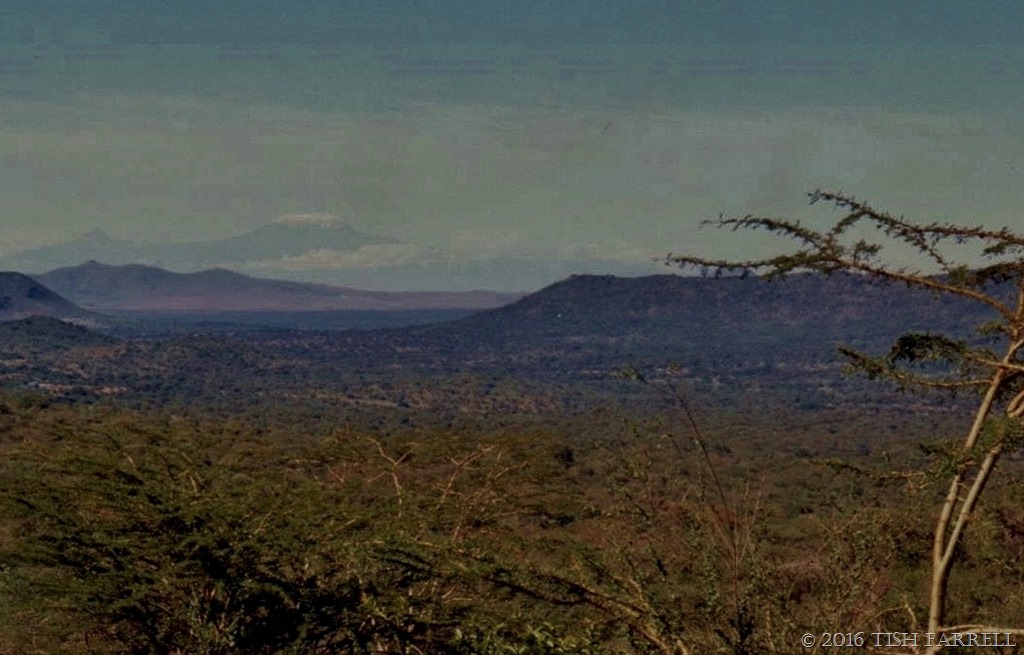
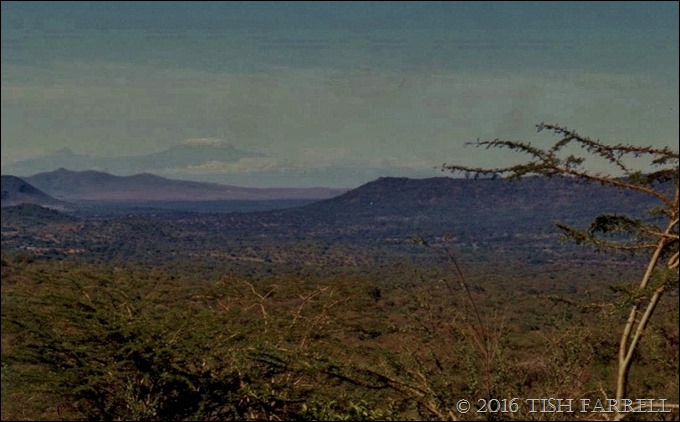
A misty, mysterious Kilimanjaro pushes through the clouds. Its appearances are usually fleeting, caught here from the Nairobi-Mombasa highway, where the road descends to the lowland plains of Ukambani.
212

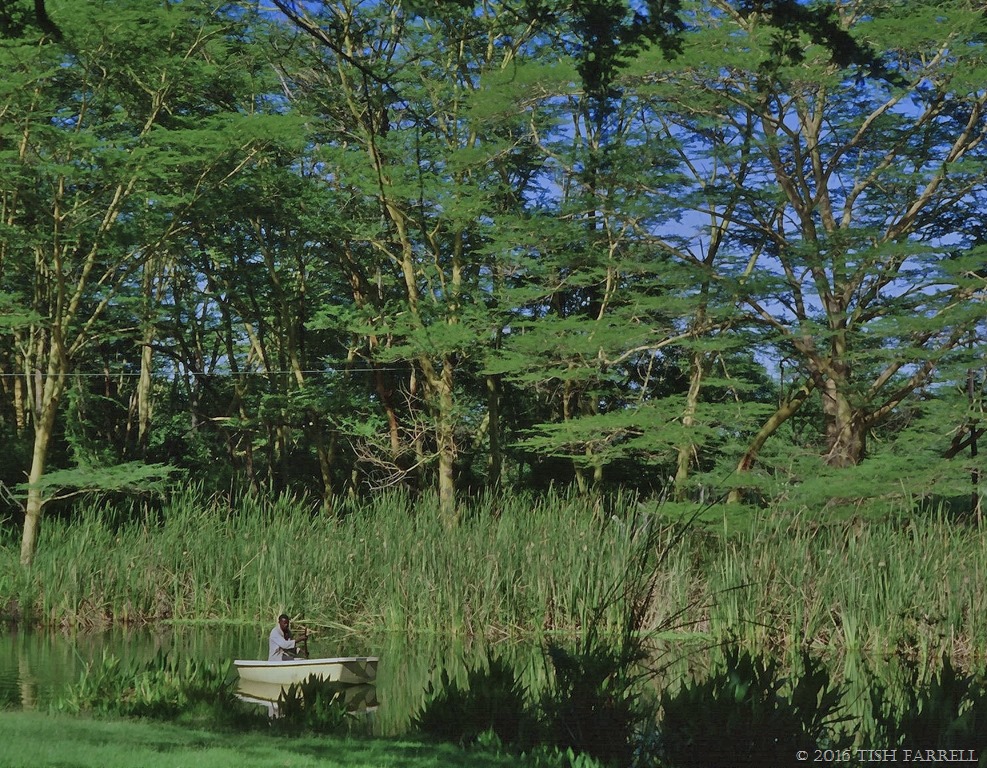
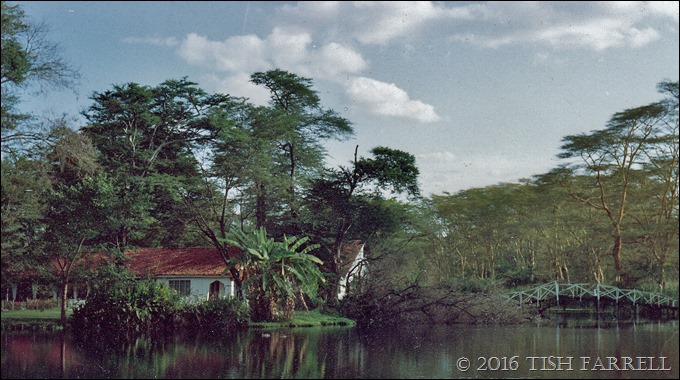
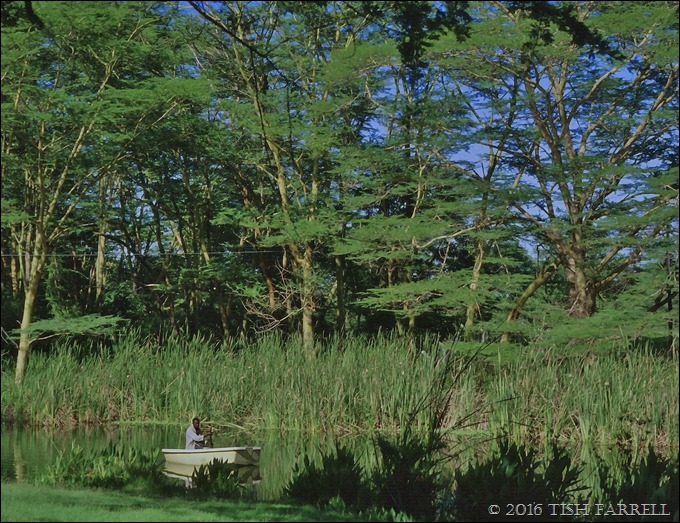
The pool at Hunter’s Lodge – a bird-watcher’s paradise; or just plain paradise. I spent hours just watching.

*
018

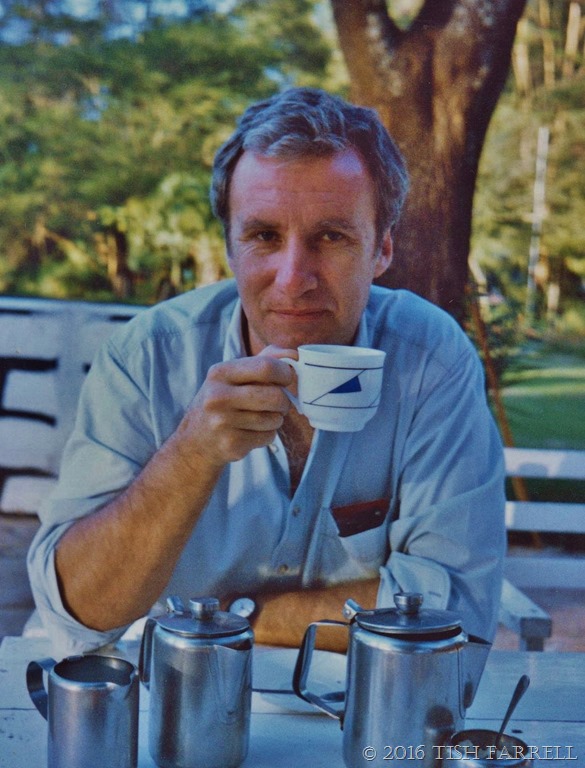
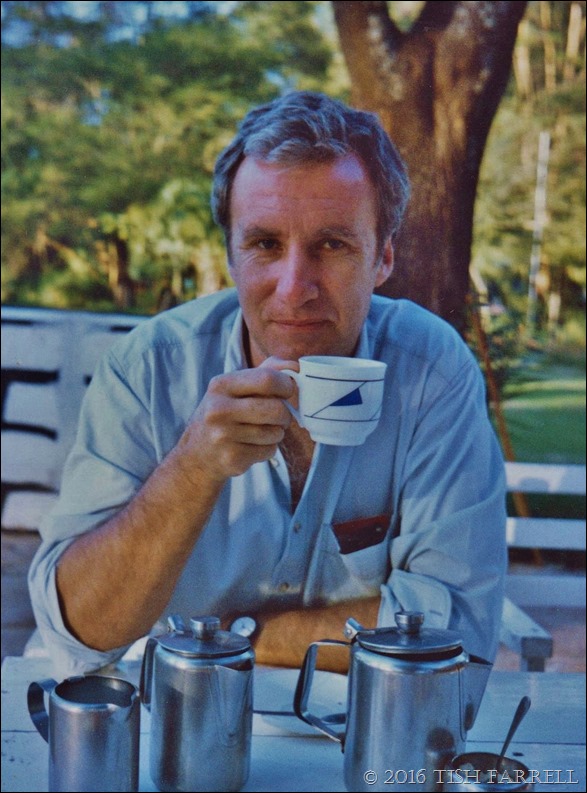
It became a ritual. So you might call afternoon tea on the bar terrace a libation. We were usually accompanied by the resident peacock who liked to steal the sugar if he got the chance. The tea tasted sulphurous from the local volcanic spring water, and the milk needed sieving because it was delivered daily by the Maasai, and the hotel staff subjected it to heavy boiling before serving. Even so, we always looked forward to it – the interlude before twilight and the firefly fly-past over the pool, and the prelude to supper and a chilled Tusker beer.

*
227

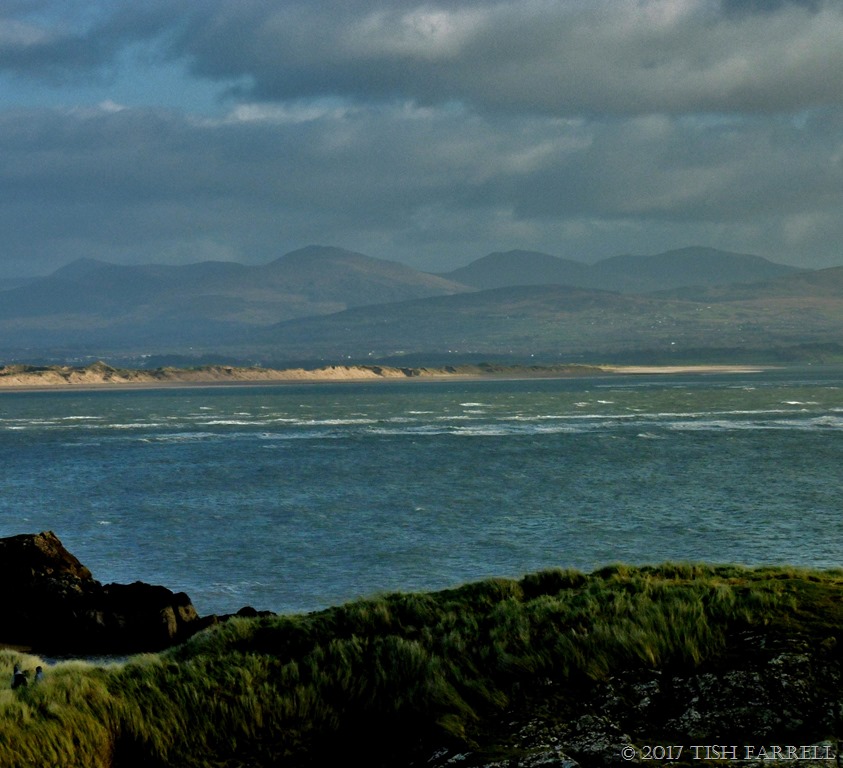
Paula at Thursday’s Special prompted this post with her December ‘pick a word’. So here we have aquatic echoes, an amiable Graham with chai libation, and a misty mountain protrusion. Cheers, Paula! Please visit her for further sources of inspiration.

Framed On Lamu

Scan-130428-0113

I said in my last post that we seem only to go to the seaside at Christmas. It was a habit begun when we lived in Kenya through the 1990s: December is the high holiday season, and heading for some Indian Ocean beach cottage was what all Aid-industry wazungu did.  Coral beaches glistened. The sea was warm, and fresh fish, mangos, papaya, eggs and sun-baked tomatoes arrived daily at your cottage door courtesy of the local Digo traders.

We have of course been repatriated for many years, but somehow we still have not re-shaped ourselves for northern latitudes. Perhaps being blown inside out on a midwinter Welsh or Cornish beach only serves to burnish memories filled with clattering leaves of coconut palms, the roar of surf on reef, and the ‘ding-ding’ of the vegetable seller’s bicycle bell. Oh yes, and of a Christmas Dinner that only involves a barbecued lobster, salad, and a glass or two of Tusker beer.

Mostly we spent Christmas at Maweni, on the south Mombasa coast, joined there by UK friends and family, who still remember these as the best Christmases ever. One year, however, when we had no visitors, we took the Christmas Eve flight out of Nairobi’s Wilson Airport, and made for Lamu. We were booked in for four nights at the Island Hotel in the heart of Shela village.

Our Air Kenya plane was small, a couple of dozen passengers aboard, and our journey just over an hour. We took off over the city’s sprawling tin towns, banked over the grasslands of Nairobi National Park, then turned towards the sun, or would have done if it had been at all visible through the lowering cloud. Beneath us the bush country of Eastern Kenya looked comfortingly or uncomfortably close, depending on your inclination, though either way the unending view of brown scrub soon grew monotonous. Also the flight’s chosen altitude, which seemed neither quite up nor down, played havoc with my Eustachian tubes; I tried to spot elephants to distract myself from the accompanying earache, though had no luck on either front.

We touched down on Manda Island airfield in gathering storm clouds – inky black -and were ushered into dhow taxis at the airport jetty, quickly sorted by the Swahili boatmen according to destination: Shela village or Lamu town. Our baggage followed on our heels, piled up on push carts, and was just as swiftly stowed – all highly efficient.

By now the storm meant business. It was starting to rain. Our dhow rocked unsteadily at its moorings. The crew hoisted an awning to give us some shelter, and it was at this point it occurred to me – as I sat, unexpectedly shivering in the tropics, with the sky shut down to the sea, and rain like knives – that all the swift efficiency I was witnessing might also be seen as a general urgency.  We had to cross the Strait before the storm grew any worse, a voyage of around twenty minutes. I remember thinking, as the engine sparked into life, it sounded all too puny for our purposes.

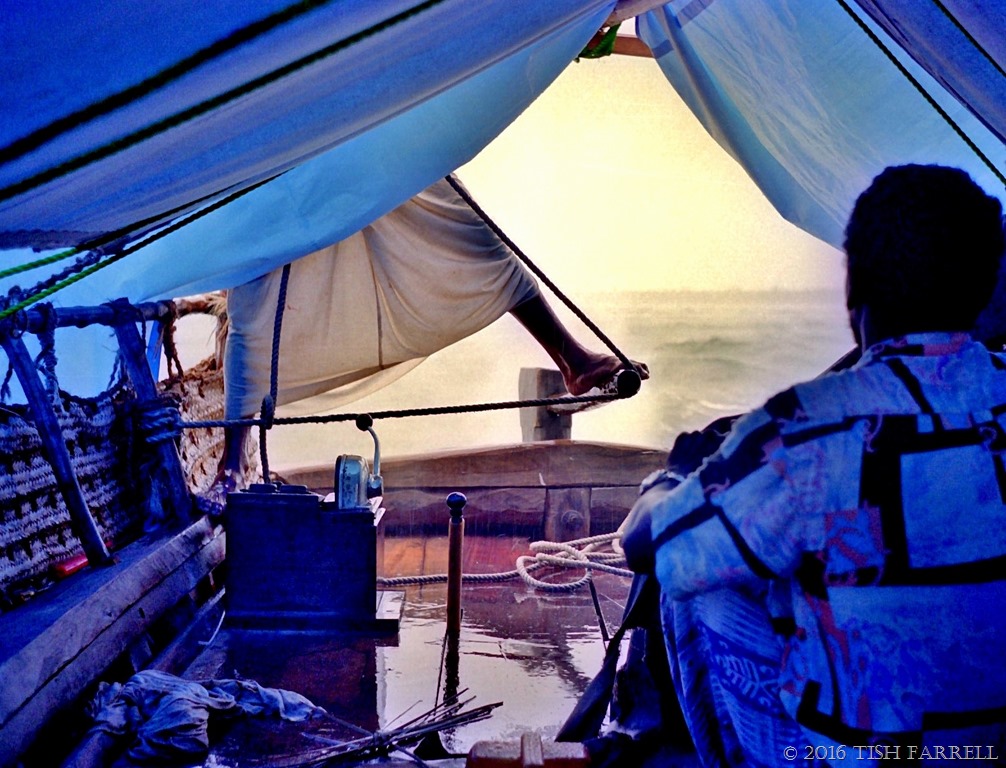
Finding ourselves crammed under the awning with several other travellers we could not see much, which was probably as well. When the sea is choppy, Lamu dhows sit alarmingly low in the water. This brought on another interlude of would-be distraction as I attempted to take a few photos. This shot of our boat captain is one of my favourite Lamu photographs. I’ve posted cropped versions of it in other posts. I like the way his kikoi sarong mimics a dhow sail.

In the end there was no real cause for anxiety (if one overlooked the lack of life belts), and we weren’t afloat long enough to feel too queasy. The storm came to nothing and by the time we put in at Shela harbour the rain had stopped. Within the sheltering arm of the bay there was no wind either. Now as we were handed ashore we began to melt in the sudden humidity. All seemed airless, sticky, sultry, otherworldly in the kind of vaguely luminous gloom that conjures the tropics’ tristesse of Somerset Maugham. It was hard to get one’s bearings. I felt myself slither into sheep-mode: please someone take me to where I need to go.

And being Kenya, where hospitality is always top of the list, someone did.

Our guide led us up winding pathways – past overgrown gardens and abandoned houses where the coral rag walls steamed darkly. The air was spiked with salt and jasmine. My ears were still troubling me and my footfalls echoed strangely on the sand covered alleyways. I was hearing the world as if through a long drain pipe. It did not help.

My heart sank too as we were led further into the maze of dark streets and tall village houses where the air became thicker and hotter. I had visions of four stifling, mosquito ridden nights. And then we were there – shown into a dark vestibule straight off the street. It could have been a merchant’s house in a Sinbad tale. And finally when we were shown to our room, four floors up, I knew I’d been given the best Christmas present possible.

They called it the penthouse suite. And roof-top it was – with a high makuti thatch, woven from palm leaves. But here any expectation of luxury ended, at least in western eyes. The room was certainly huge, but it housed only a bed – an antique Lamu contrivance that was too short for a tall man and too narrow for two people to sleep comfortably side by side. Sleeping in shifts would be called for then.

Scan-130428-0123

The Penthouse Suite

*

Leading off the main room was a little sitting area with deck chairs, and next door, a concrete cubicle wherein a cold-shower shower could be had. In fact there was only one complete wall that went from floor to ceiling, and seemingly made so in order to provide a place to hang the door. Otherwise the walls were mostly windows, or rather, they were large spaces open to the elements.

And here was the luxury. The breeze. It blew through the room, bringing not only coolness, but also seeing off the mosquitoes. It was like being at sea. Or having one’s own look-out post, for in three of the four quarters we could survey the intimacies of Shela village life.

One of our views took in a neighbour’s rooftop bedroom one floor down. Sometimes the bed would be occupied. At other times only a bright kikoi lay abandoned on the simple rope-strung frame. Under the eaves there was a store of big yellow pumpkins. It felt like a privilege to have one’s stranger-closeness deemed so acceptable by Shela folk. And indeed, over those four days we received nothing but smiling kindness from the people we met there.

You can read more on this at: Christmas on Lamu: Views of Swahili Community

For now here’s a rear window view – first as I took it, framed by the thatch and wall, and then cropped to within an inch of its life, using the house walls and roof as the frame. My camera was a little Olympus trip, and the time: before digital was invented.

Scan-140802-0004

Scan-140802-0004 (2)


Frame

Magnificent Magical Mawddach

P1040909

We drove through one hundred miles of rain to reach it. From South Shropshire to the Welsh coast clouds piled on clouds and the rain dashed down the windscreen with only brief interludes of drizzle. Climbing and climbing the precipitous road through Dinas Mawddy, sky and mountains closed in, reminding us that we humans are rather puny ineffectual things, and that the motorized carapace that transports and shelters us may just  not be enough in a land like this. Even the sheep, inured to the place, stand hunched and motionless on the hillsides, backs to the downpour.

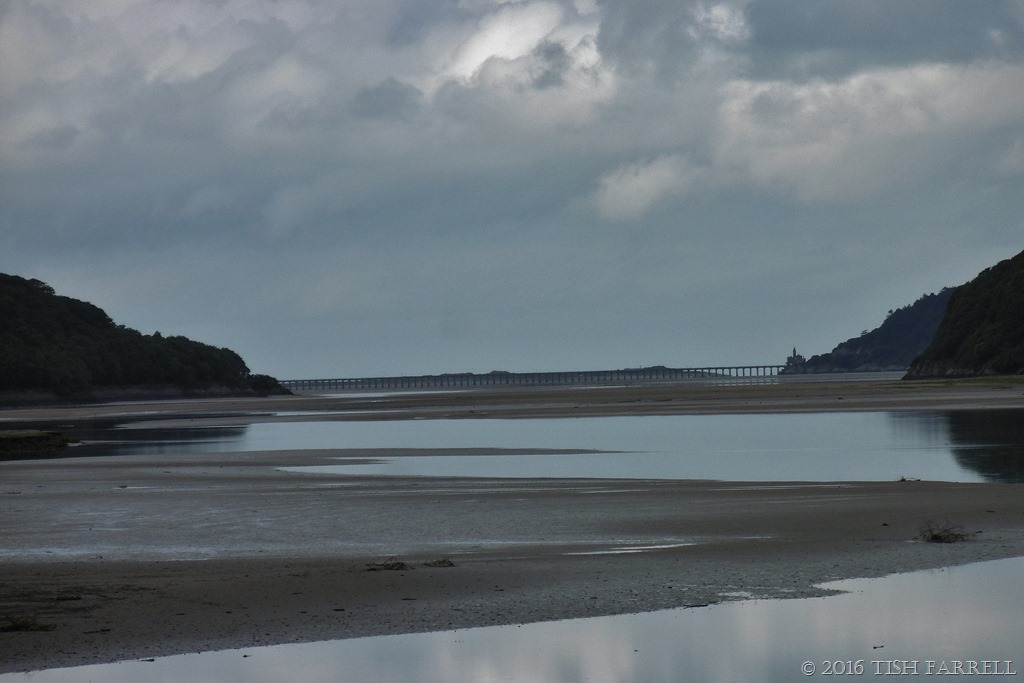
And then at last we’re here, on the banks of the Mawddach Estuary, just downstream of Penmaenpool, and the rain recedes,  leaving stillness and shadow, the slow curves of the river, Welsh Black cattle grazing the salt marsh, a buzzard calling, canoeists returning to base, and on the far horizon the knowledge of the sea, though unseen,  marked by a sudden flush of brightness out in the bay.

P1040911

copyright 2016 Tish Farrell

Curve

#SnowdoniaNationalPark


Strawberry Fields Forever In Central Park

New York 143

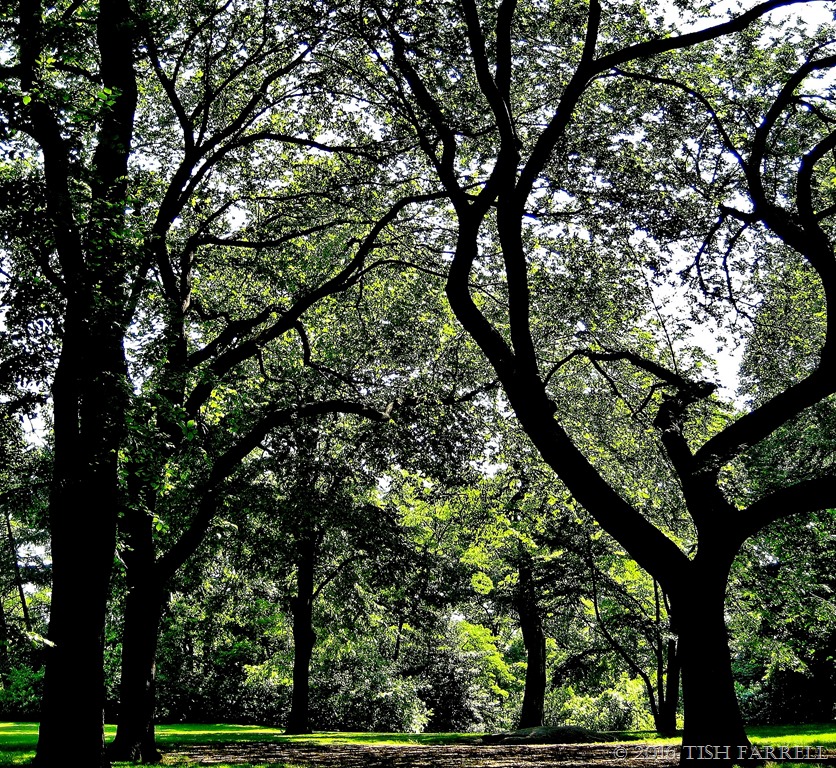
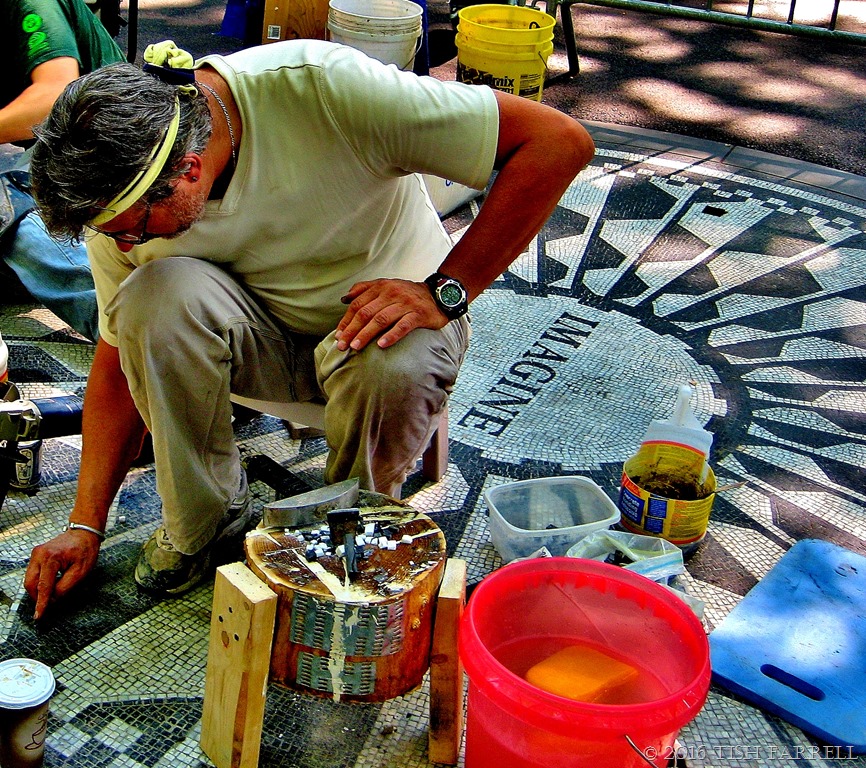
It was so hot when we visited New York a few years ago we spent most of our time in Central Park, drinking ice coffee at every available opportunity. There’s anyway so much to explore. On one of our forays we set out to find the Imagine mosaic, laid in tribute to John Lennon who created the song, and was so sadly murdered outside the nearby Dakota Apartments.

It took some finding too, even though we thought we knew exactly where it was. Part of the problem, we discovered, was that it was surrounded with barriers to shelter the two artists who were painstakingly working on its restoration. I didn’t mind not seeing the mosaic in its pristine form. The fact that it was being so actively cared for, given the song’s message, was heartening.

This elegant artwork lies in the middle of Strawberry Fields, a two and a half acre oasis of quiet also dedicated to the memory of John Lennon and his work. It is a designated Garden of Peace, and 120 countries contribute to its upkeep.

It is a very beautiful place to visit, so not to be missed on any New York trip. You can find out more details HERE.

*

Paula’s theme this week at Thursday’s Special is ‘Park’

Admiration Maasai-style

Masai_Julie_171

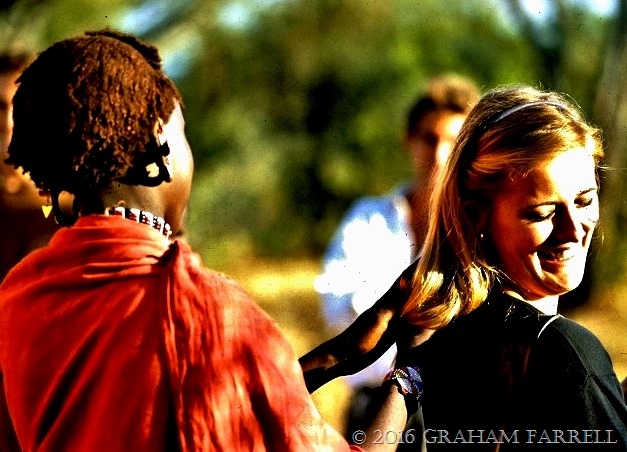
This shot of one of Graham’s fellow travellers was captured long ago in Tanzania when he was on an African overland trip. I find the gentle, almost reverential way in which the young Maasai moran is holding  the girl’s hair very touching. There is some irony too. Usually when a Maasai warrior turns up anywhere, it is he who is the focus of everyone’s admiration. It goes with the territory: the glowing red shuka and the fine beads. He even expects it.

 
Admiration


Nice By Night ~ Hotel Negresco

Hotel Negresco, Promenade des Anglais

“If only I were at Nice, I would recover.”

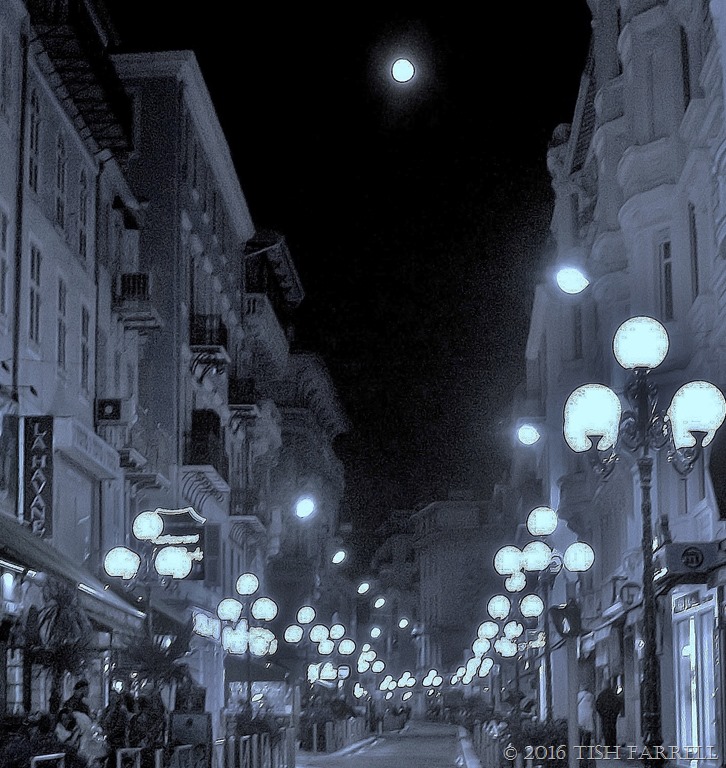
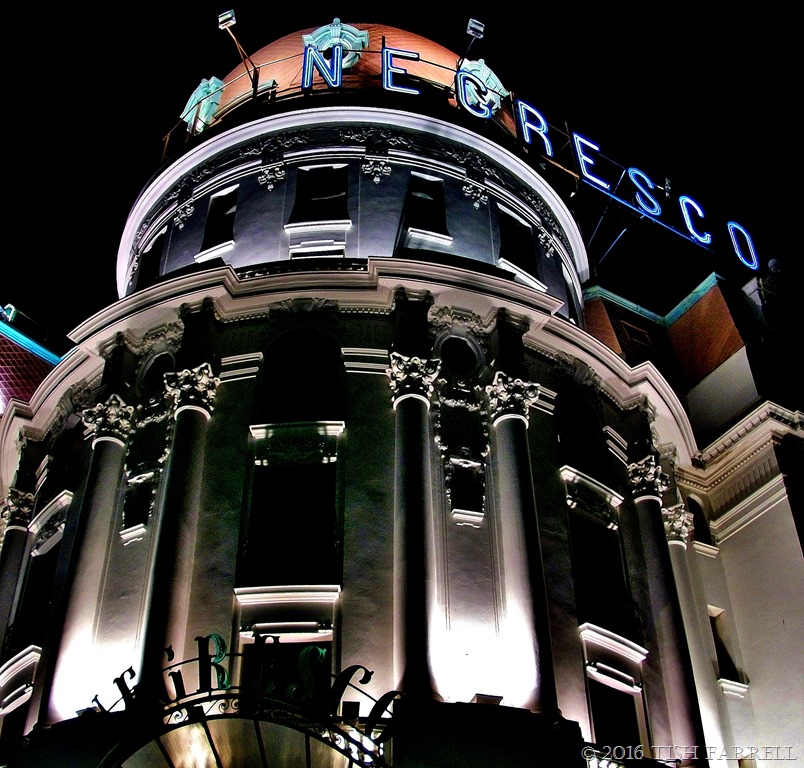
So said Queen Victoria on her deathbed in 1901. She has a point. Who would not feel better after a stroll along La Promenade des Anglais, one’s gaze filled with the perfect Côte d’Azur blue of the La Baie des Anges. For a monarch, who had made a career of mourning  the death of her consort, Prince Albert, Nice was the one place where she sparked into life. She would travel there under the name of Lady Balmoral, and go exploring the backstreets of Nice in a donkey cart. The Hotel Negresco, however, was after her time, opened in 1913. It dominates the La Promenade des Anglais. Past guests include Salvador Dali, Princess Grace of Monaco,  Duke and Duchess of Windsor, Ava Gardner, and Edith Piaf. This night shot looking up to the characteristic terracotta cupola, and the cool blue of the illuminated sign, somehow sums up the Nice-ness of Nice.

*

Thursday’s Special

This week Paula’s guest is Cardinal Guzman. He challenges us to post some night photography, and provides lots of useful tips.

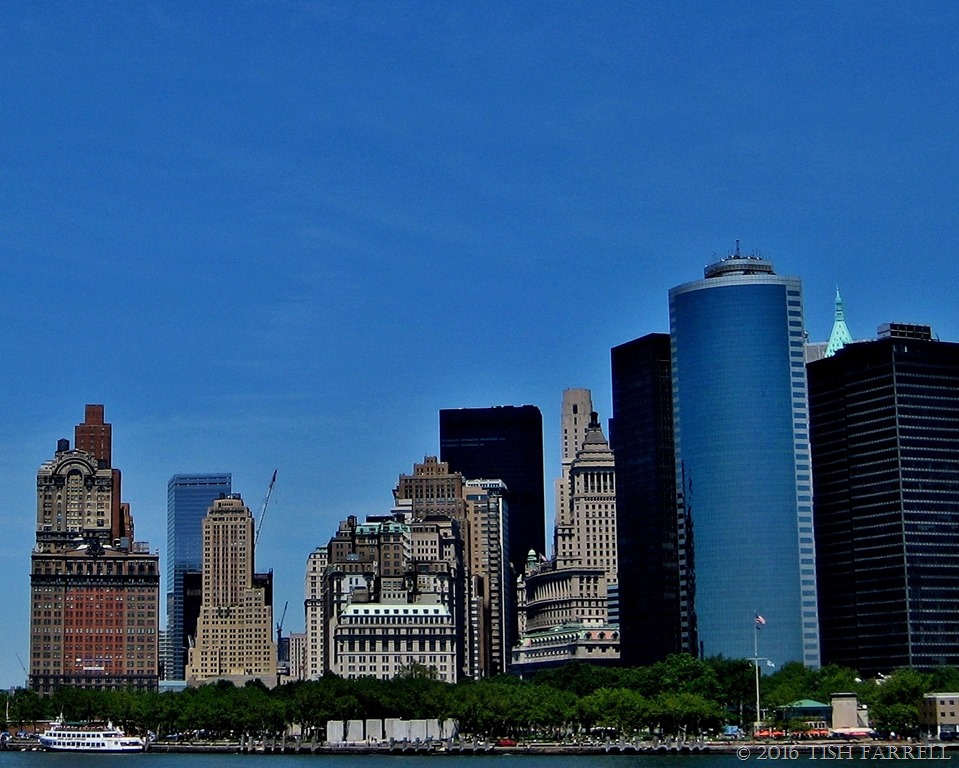
Tall Story? Downtown Manhattan From The Staten Island Ferry

New York 009

Doesn’t time just fly. I can’t believe that it’s nearly eight years since we sailed into New York on Queen Mary 2, star of the Cunard fleet. The Atlantic crossing takes seven nights, and seasoned Cunarders will be quick to tell you that this voyage is a crossing (The Crossing in fact) not a cruise. We docked at dawn in Brooklyn after a long and majestic glide up the Hudson River. The Statue of Liberty glowed through the mist. It was May, and a heat wave was brewing.

Over Brooklyn and the dockside cranes a huge red sun was rising. It gave a surreal glow to the instantly recognisable (to us that is) corporate blue and yellow of the new IKEA store (America’s first if I remember rightly). It was set to open the following month, and we later noticed much associated fanfare on bill boards around the city. Free sofa cushions came into it somewhere. I also remember feeling a bit offended that I’d been at sea a week, all pent up for the grand sail-by of the Statue of Liberty and that first stunning glimpse of the Manhattan skyline, only to have this bland blue furniture shed be the next landmark imprinted on my mental landscape.

They should definitely move it.

Anyway, for those visiting NYC by plane rather than ship, you can have the grand ‘sailing into New York’ moment for free, and thus as  many times as you like, on the Staten Island Ferry. Pick your moment for the best shots. Sunset would be good.


Thursday’s Special: tall  Please sail over to Paula’s for more tallness.