This week Cee suggests we consider things from unusual perspectives.
monochrome
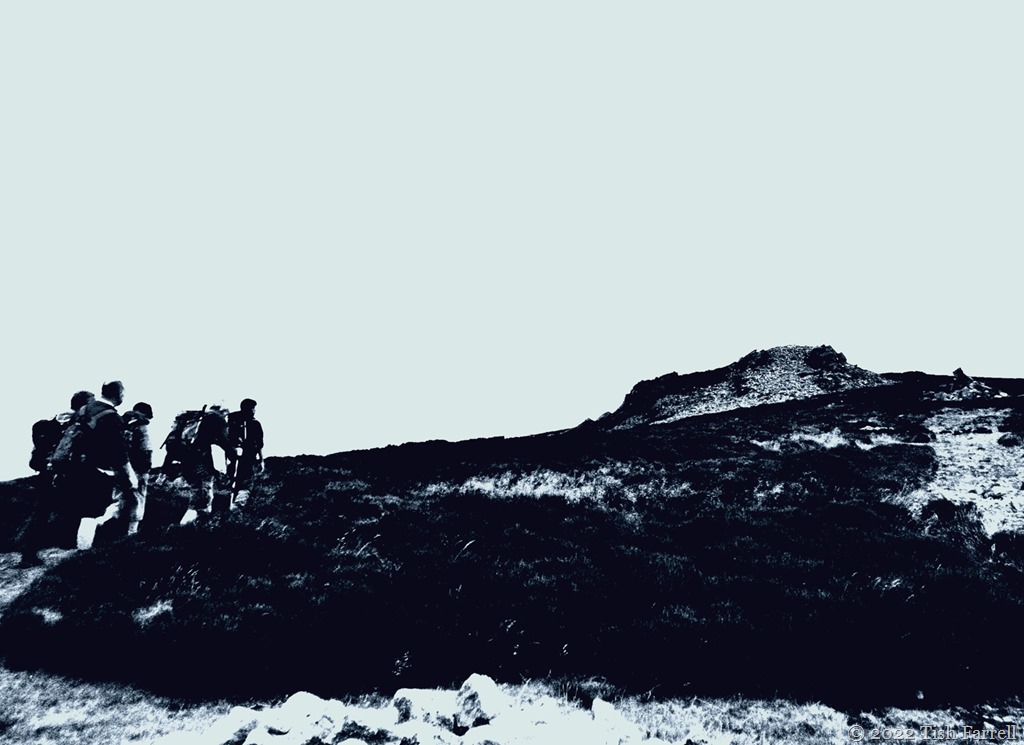
Spot The Photographer?
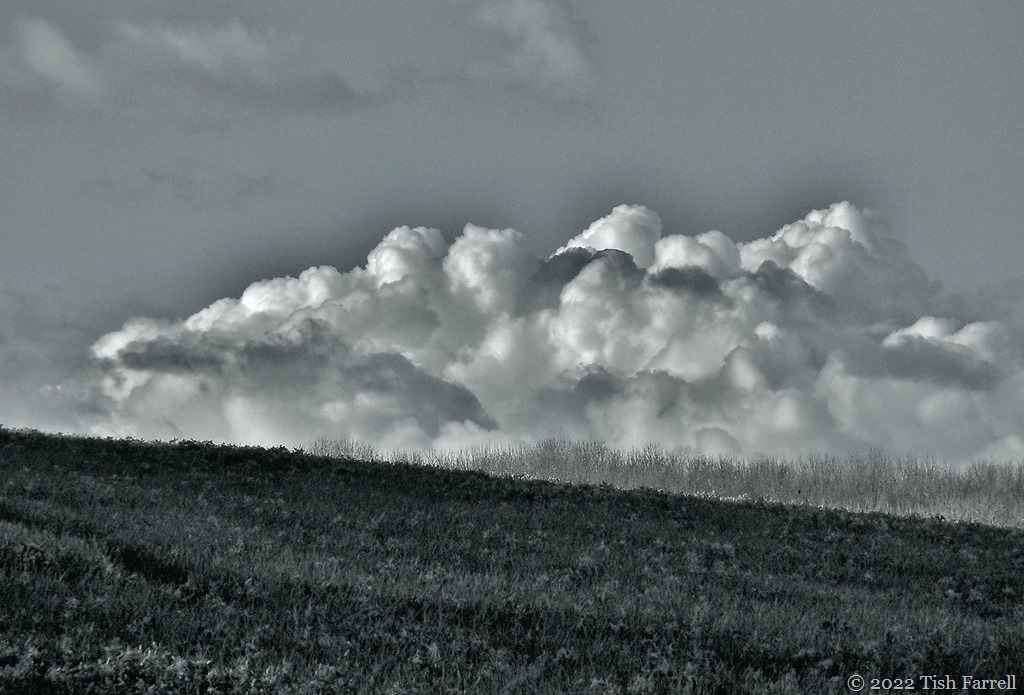
Cloud Watching Over Townsend Meadow
“Clouds pass and disperse.
Are those the faces of love, those pale irretrievables?
Is it for such I agitate my heart?”
― Sylvia Plath Elm
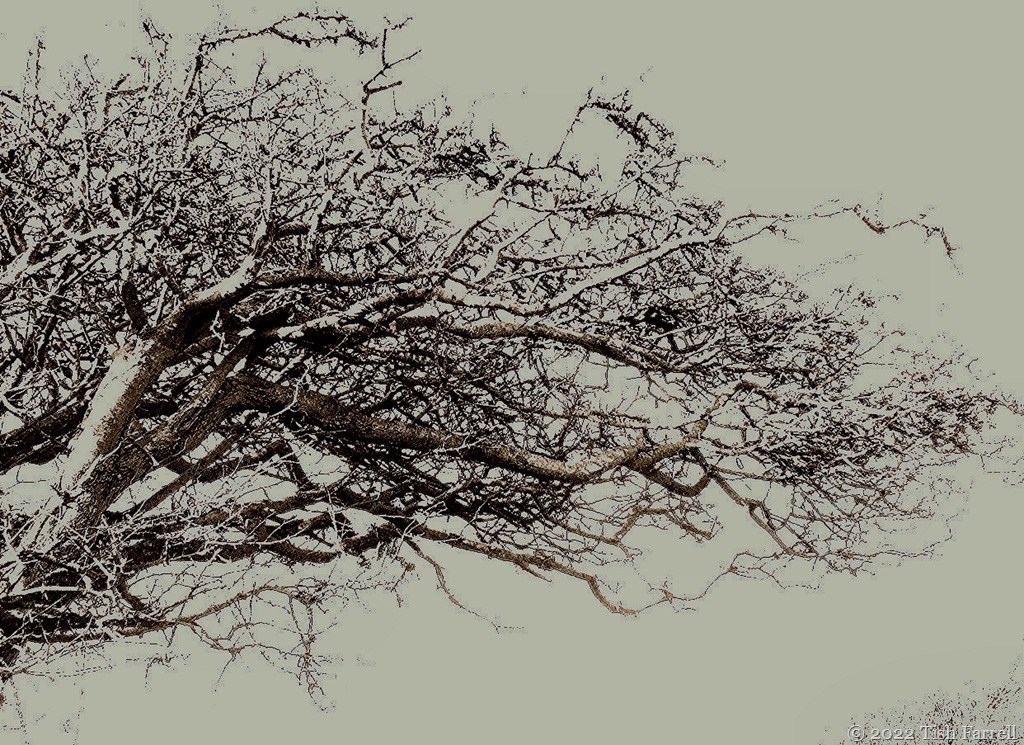
Wind-Lines Past And Current
These photos were taken during our blustery stay on Anglesey, North Wales, back in early January. The hawthorn tree in the farm hedge has been sculpted and stunted by the prevailing sea gales over decades. In its dormant state it is now so rigid a structure that the winter blasts have little apparent effect. By contrast, the grasses were bowing flat in the bed outside the converted chapel where we were staying. One knew how they felt.
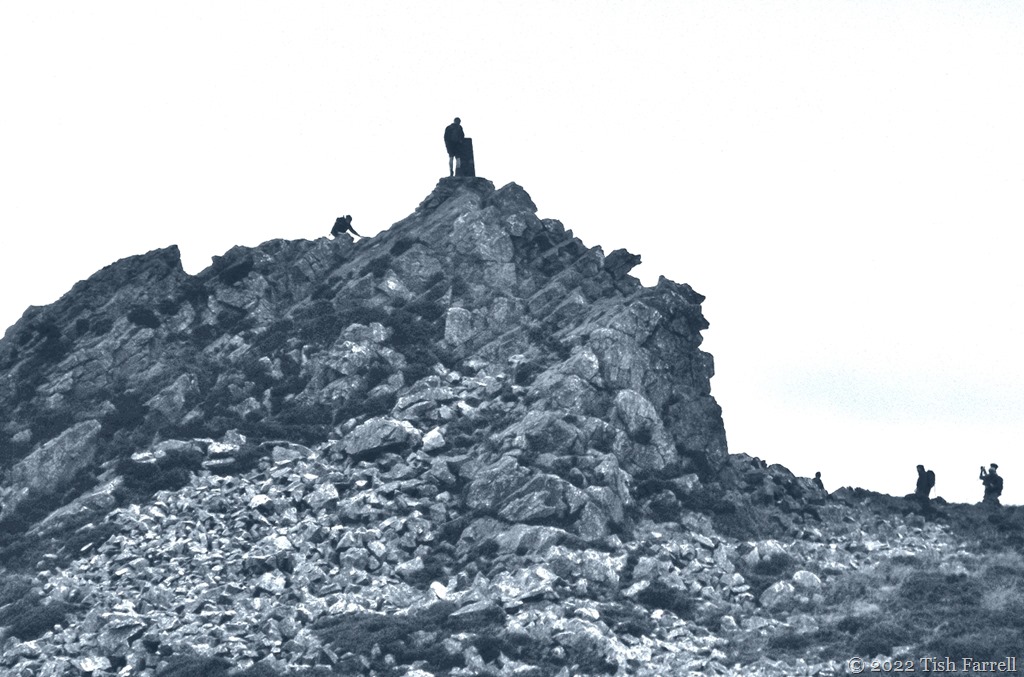
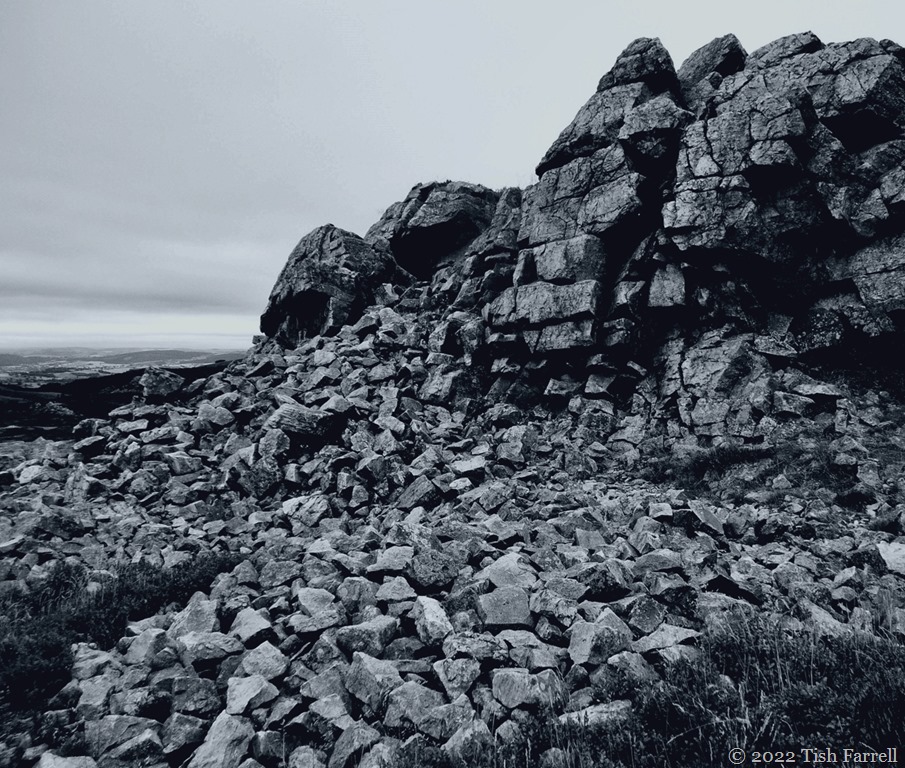
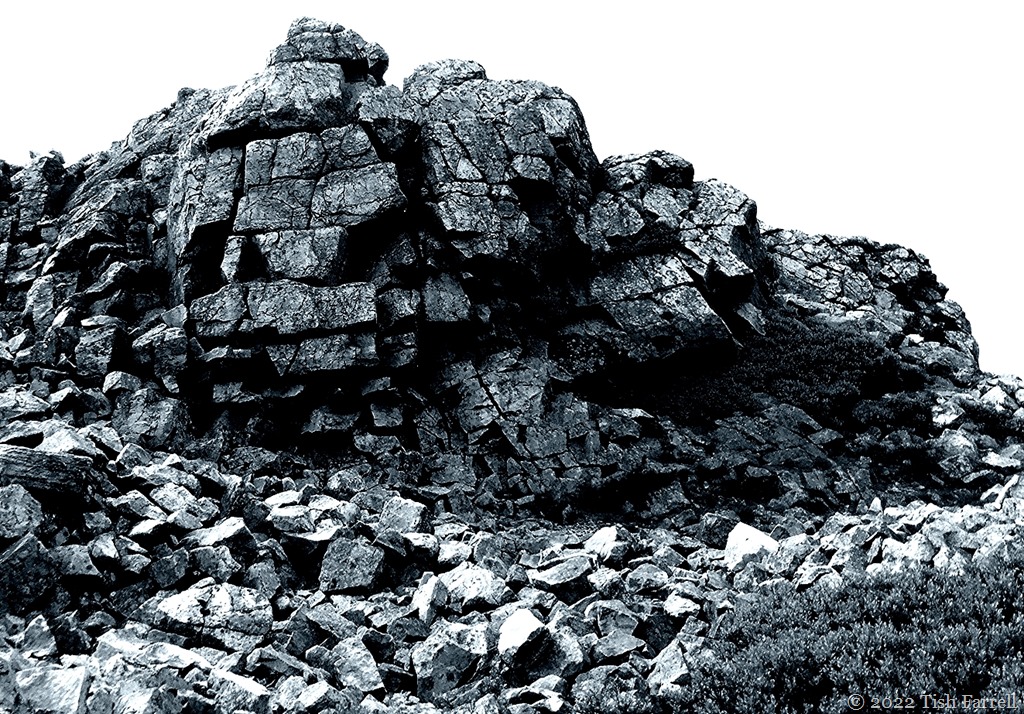
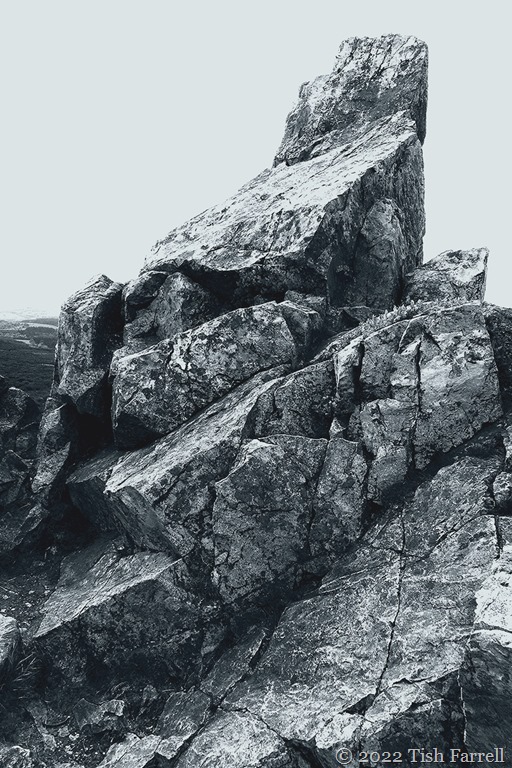
Rocks, boulders, Stiperstones
Shropshire’s mysterious Stiperstones featured in a recent Square Odds post. Here are more shots in monochrome, plus a few facts for geology lovers.
The grey-white rock of the ridge is quartzose sandstone known as the Stiperstones Quartzite Formation, created some 480 million years ago in the Ordovician era.
The tors and the rubble-like surroundings we see today are the work of more recent events in the last Ice Age (c. 115,000 – c. 11,700 years ago). During this time, the eastern edge of the Welsh ice sheet was nudged up against the Stiperstones, not covering it, but causing the quartzite to fracture during periods of intense freezing followed by thawing.
The highest point (Manstone Rocks) is 536 metres (1,759 ft) above sea level, making it the county’s second tallest hill after Brown Clee. The ridge extends some 8 kilometres (5 miles), the summit crowned with a series of six distinctive outcrops.
For geology buffs there is a detailed overview of Shropshire’s 700 million year geological history by Peter Toghill HERE.
This next photo: men on Manstone Rock, the highest point on the Stiperstones…
Cee’s Black & White Photo Challenge: rocks, boulders, stones
The Bridge At Aberffraw
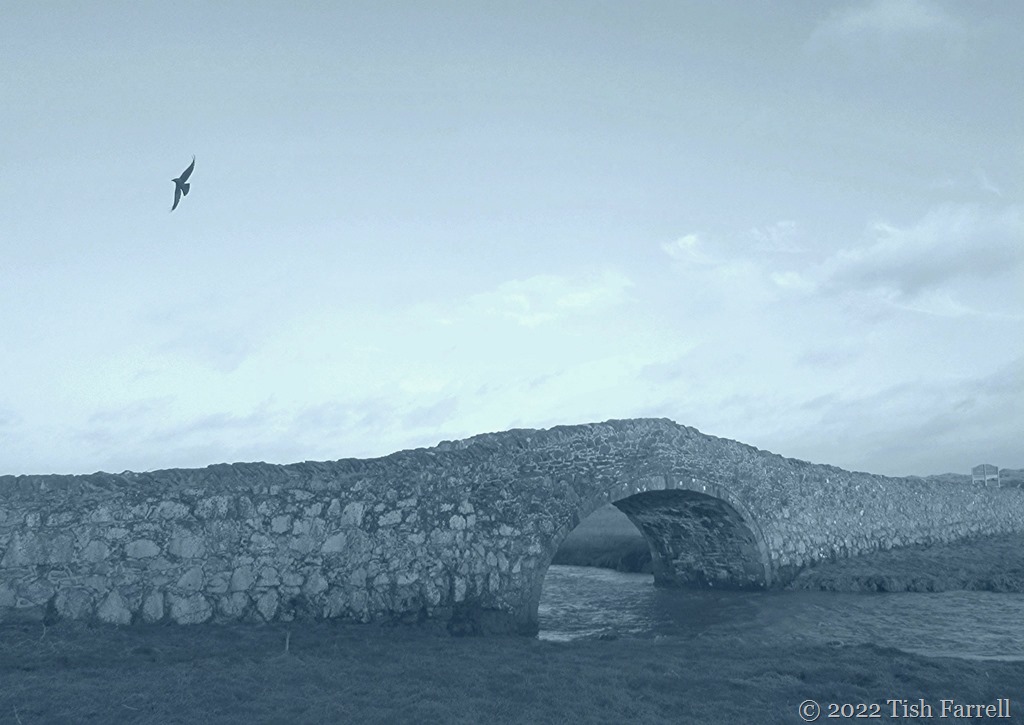
This seventeenth century packhorse bridge in the Anglesey village of Aberffraw is quite a landmark and much photographed (on sunny summer days). You can see why it catches the photographer’s eye, but on a bleak and windy January day, I’m thinking it’s the local jackdaw that adds a certain something to the scene.
There was also a jackdaw ‘fly-by’ when I visited the village church, another of Anglesey’s ancient places of worship, St Beuno’s. As with ‘the little church in the sea’ in the previous post, parts of it date from the 12th century.
It was by no means the earliest church in Aberffraw. That was built some five centuries earlier by St. Beuno himself, though no traces of his work remain. As with many early Christian places of worship it was probably a simple thatched and timber-framed structure that would leave few signs of itself. But in their time, both these churches probably served as royal chapels to the Princes (and Princesses) of Gwynedd who in the early Middle Ages held court close by. Their palace likewise left little trace of its existence, having been dismantled and its parts dispersed after England’s King Edward I invaded Wales (1277-1282). Although I did read that it was discovered belatedly that the village council houses had been probably been built over the site. The way things change!
In Matching Stripes?
Day’s end and a gathering of Grevy’s zebra, the largest and most northerly race of zebra-kind. It was a chance encounter. For two hours Kevin, our Chagga guide had been driving us along the dirt tracks of the Lewa Downs reserve. It was new territory to us; our first trip to northern Kenya from our then home-town of Nairobi. The landscapes were breath-taking, sweeping rangelands, pale grasses, beetling gorges, the distant gauzy backdrop of the Matthews Range.
Earlier we had stopped to follow a Greater Kudu family on foot. They were moving in single file up a steep bush trail. We lingered under a thorn tree and in the late day light, watched as they melted one by one into dappled cover. Then it was back to the truck and more trail bashing, the only sign of wildlife, massive piles of elephant dung on the track, and some torn up thorn trees where the herd had passed.
We scanned the bush country all round for a glimpse of them, but they were gone, or at least we could not see them, which is not the same thing. Elephants are invisibility specialists. No matter. As I said, the country was magnificent, the light like liquid amber, and the air filled with the soothing scent of acacia blossom. Lemony with tones of jasmine. As ever, out in the bush, all felt like a dream.
And by now, too, the sun had dropped behind the mountains, the light fading fast. We headed back to camp, and it was then, as we rounded a bend on the trail, we met the zebra. There was only just enough light left to take their photo, but they obligingly stood perfectly still.
And just in case you’re wondering what the difference is between Grevy’s and the plains zebras, here’s another sundowner scene, this time from the Maasai Mara far to the south:
These are Common or Burchell’s Zebra, smaller than the Grevy’s. Their all-over, widely spaced stripes are thicker; ears pointed to Grevy’s endearingly round. Their social habits are different too, the plains’ zebra living in family groups with much grooming between members while their cousins appear to move in less structured gatherings.
But what about the stripes, you may ask: is every zebra’s livery unique?
It is hard to be sure from the Grevy’s portrait, though I’m thinking it’s highly likely. But when it comes to the plains’ cousins, I have told the tale before of how once in Zambia, on a New Year’s Day game drive, a rather tipsy guide waxed lyrical about the very particular patterns on each zebra’s ‘butticles’, and how it was by such means that zebra offspring recognised their respective mamas. I don’t know about the last bit, but these two photos from Nairobi National Park certainly prove a point, final blurry butticle shot aside: the stripes truly do not match.
The Standing Start
Looking In Looking Out On Wenlock’s Old Railway Line
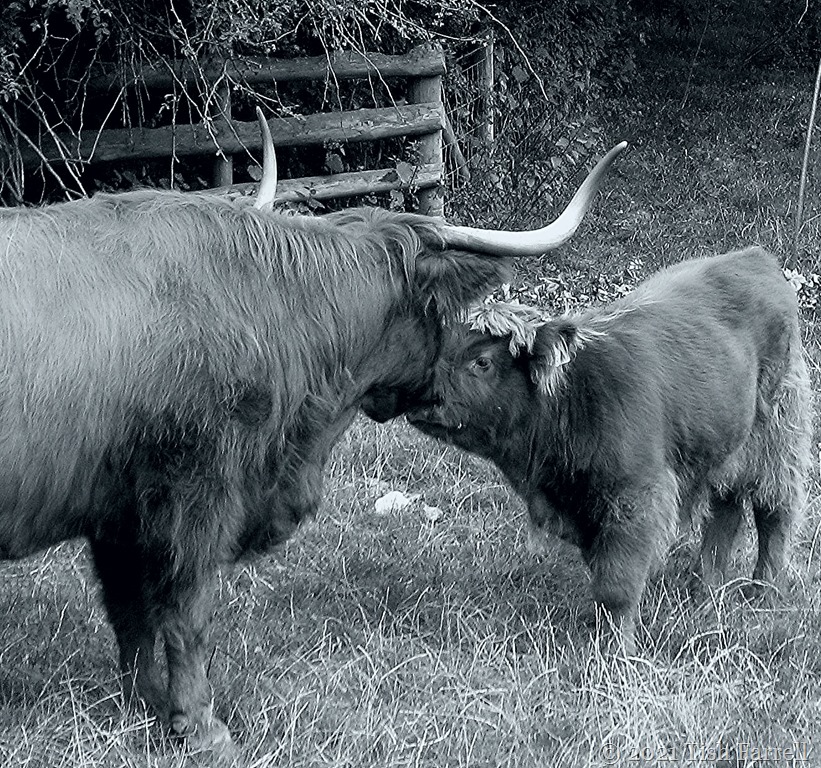
The old railway line that runs for a couple of miles on the edge of town is a local treasure. If you are outward bound, and up for a really long hike, it is the starting point for a host of other footpaths. You can head for the Severn Gorge, or go cross country through farmland searching out ancient signs of lost medieval villages. The towards-town stretch runs past the outskirts of Shadwell Quarry and then on below the Linden Walk, terminating abruptly above the Cutlins meadow where the highland cattle are often found grazing.
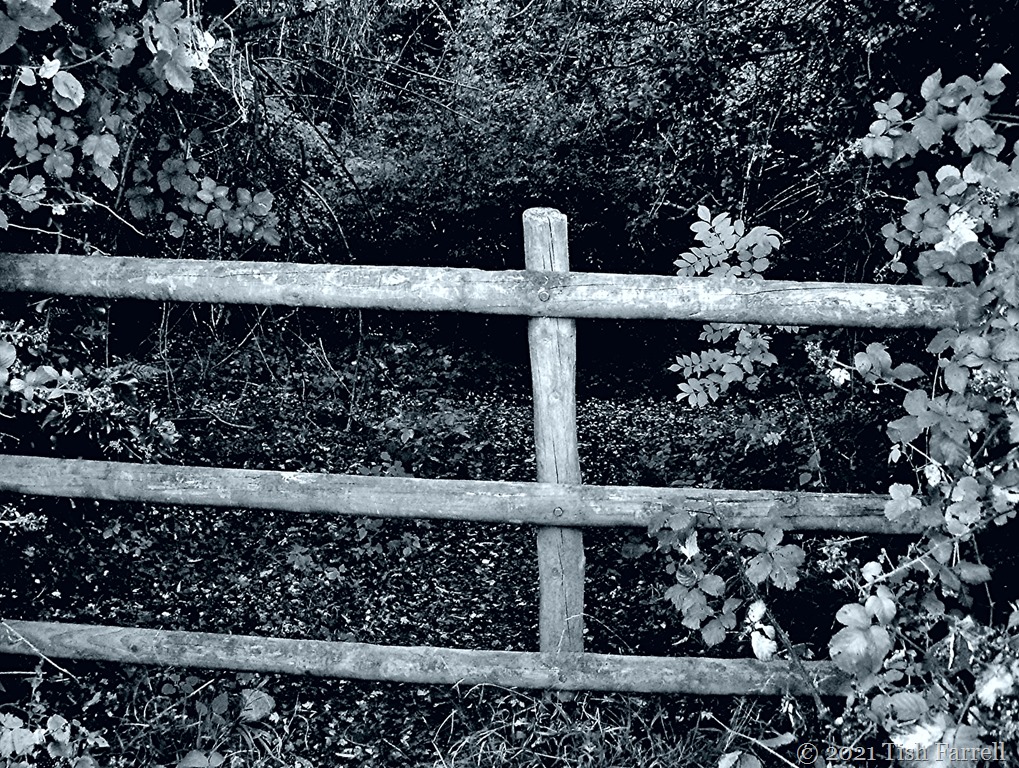
For much of its length the old line is a shadowy arcade of ash, hazel and crab apple trees. Bosky in other words. In spring there are masses of tiny white violets among the ferns, later a scattering of orchids and wild strawberries. Now and then someone comes along and clears back the tree branches and ivy to stop total junglification. There are scarcely any views out. The fence in the first two photos is the main ‘window’ of opportunity.
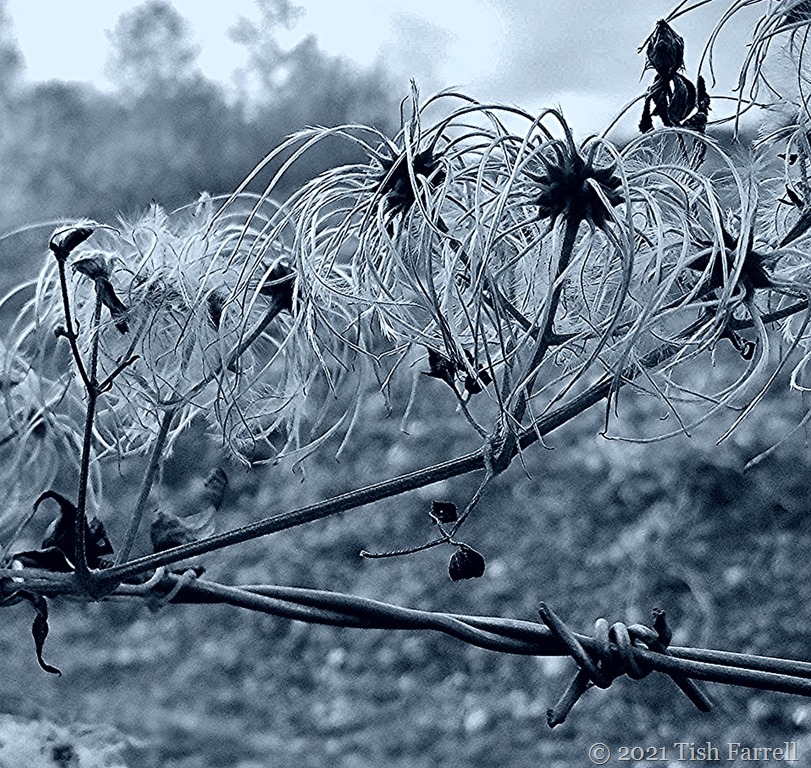
On the northerly side you have to a bit of clambering above the trees to glimpse the quarry peripheries. Not very scenic, but I quite like the starkness of these next two winter shots – wild clematis (Old Man’s beard) and barbed wire and then the detention camp look of the perimeter fence.
*
And finally one I’ve posted before – the gate at the entrance of the Linden Walk. At this point the railway line is in a cutting to the left of the trees.
Bridge Over The River Teme
Dinham Bridge in the Shropshire market town of Ludlow is not as old as looks suggest. It was built in 1823 and is sometimes attributed to Thomas Telford, who in earlier decades had been Shropshire’s Surveyor of Public Works. But it seems unlikely that this is one of his bridges; around this time and for several years before he was most often to be found far away in his Scottish homeland, very much taken up with the mammoth enterprise that was the construction of the 60 mile-long Caledonian Canal.
On the other hand, Ludlow Castle, seen here above the bridge, is every bit as old as it looks – over a thousand years old in fact. Work began on the hillside promontory in 1075 and continued over the next hundred years. It was a key defensive position aimed at keeping the nearby rebelling Welsh suitably subdued. The town grew up below its walls from the 12th century onwards, all laid out in the manner typical medieval town planning.
Meanwhile the castle continued to play its part – in the Wars of the Roses, and the English Civil War. It was also the place where, Arthur Tudor, Prince of Wales and Henry VIII’s older brother died in 1502, a circumstance that later had much to answer for. In the November of the preceding year, Arthur and his new bride, Catherine of Aragon, had gone to Ludlow Castle for their honeymoon. They were both 15 years old, and had been betrothed since infancy. You can read more of that story in an earlier post Honeymoon Destination Anyone?