At The End Of The Day

P1050519c

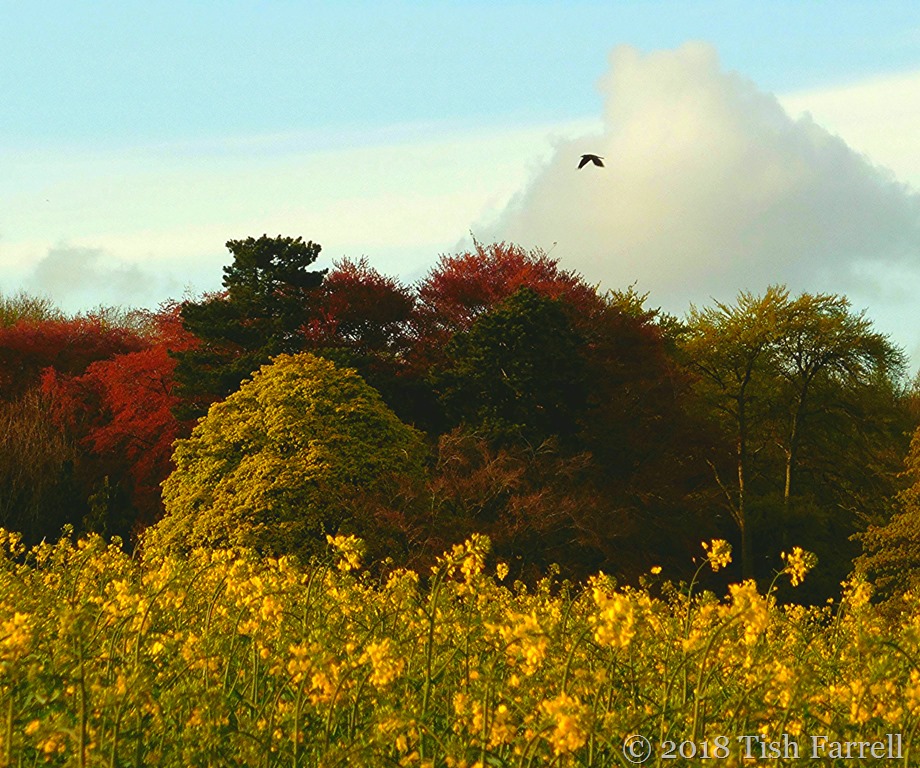
Townsend Meadow was all aglow a couple of evenings ago and not only that, I walked home from the allotment in sunshine that was warm. On the other hand, I had just mowed three of my allotment paths, which are all uphill, so perhaps I was simply overheating. Anyway this is how things were looking this week in the field behind the Farrell domain – until the gloom and rain resumed. The oil seed rape (canola) is on the cusp of flowering. I’ve just caught the forward blooms here; most of the field is still green, though it won’t be long. Soon we will have a sea of acid yellow to look out on – always good against a stormy sky, and given the weather forecast we can be sure of having a few of those over the next couple of weeks.

I had rather hoped the farmers were giving this field a rest after a couple of seasons of wheat – maybe putting in a green manure, or leaving it fallow as once happened in the days when farmers took crop rotation and care of the soil to heart. Ah well. The farmers who farm here are tenants who doubtless wish to extract maximum advantage before the actual landowner gets round to building the housing estate he’s been promising us for 2025. Who cares then, about the state of the earth?

Six Word Saturday

April’s Changing Seasons ~ Bleak With Bright Blooming Intervals

Here in Shropshire we’re back to wintery temperatures after last week’s four days of summer. The header photo was taken on Sunday up at the allotment – damson blossom against a stormy sky.

But despite the coolness, plant life seems to be thriving:

Out in the woods:

*

In monochrome:

*

As seen from Wenlock Edge and in the Shropshire Hills (on a hot day last Thursday):

*

And out in the garden:

Who knows what will happen next:

P1050435

The Changing Seasons:  April 2018

Please visit Su to see her changing seasons over in New Zealand

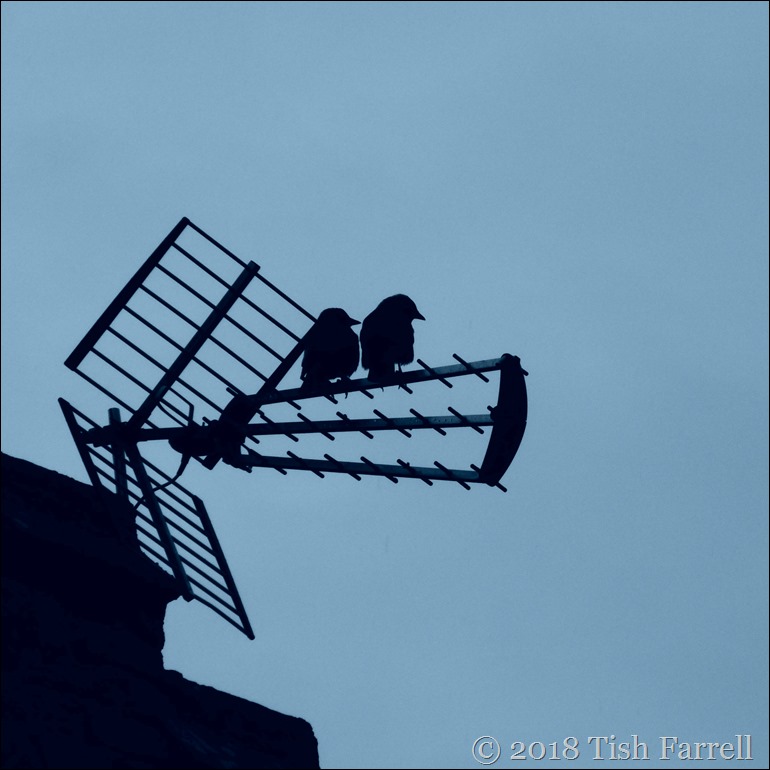
Jackdaws Tuning In

The cawing of rooks and chack-chacking of jackdaws in the grounds of St. Bride’s Castle was deafening. Day after day and no break from the din as the birds whisked round gathering nesting material or scouting out new nesting spots. The jackdaws seemed to have their sights on the castle turrets, while the rooks had commandeered the nearby ash wood where they were busy composing the usual twiggy mounds up in the treetops. So much commotion and it said one thing: SPRING!

March Square #28

In which Six Go Potty In Pembroke With Cockapoo Puppy – holiday snaps #9

Beauty In Unexpected Quarters?

IMG_6787square

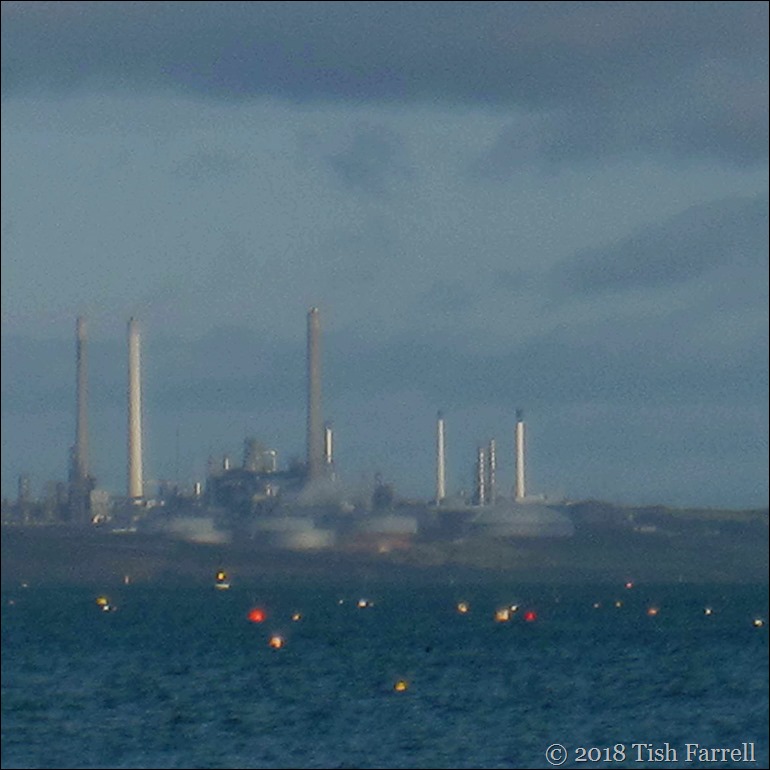
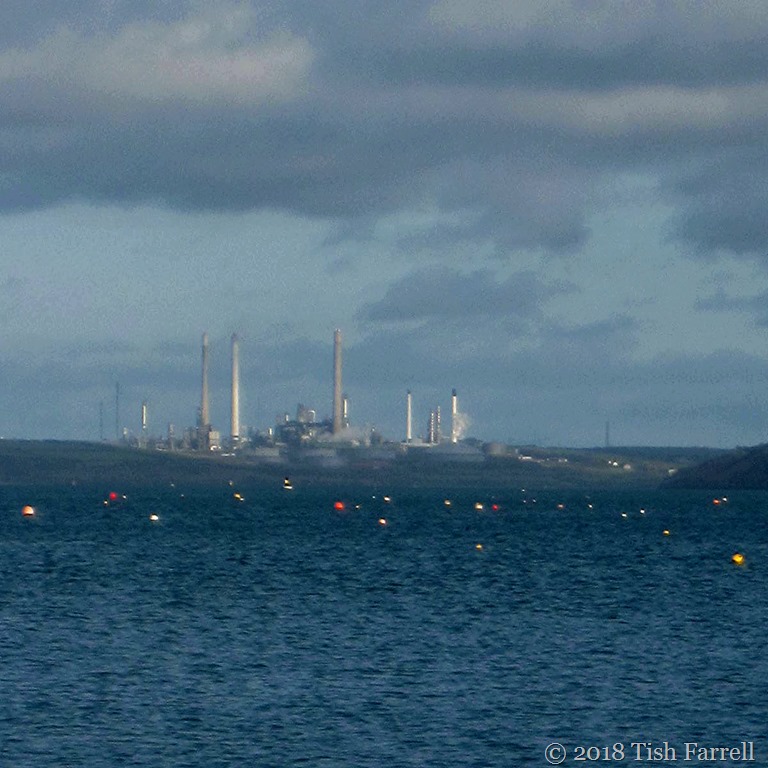
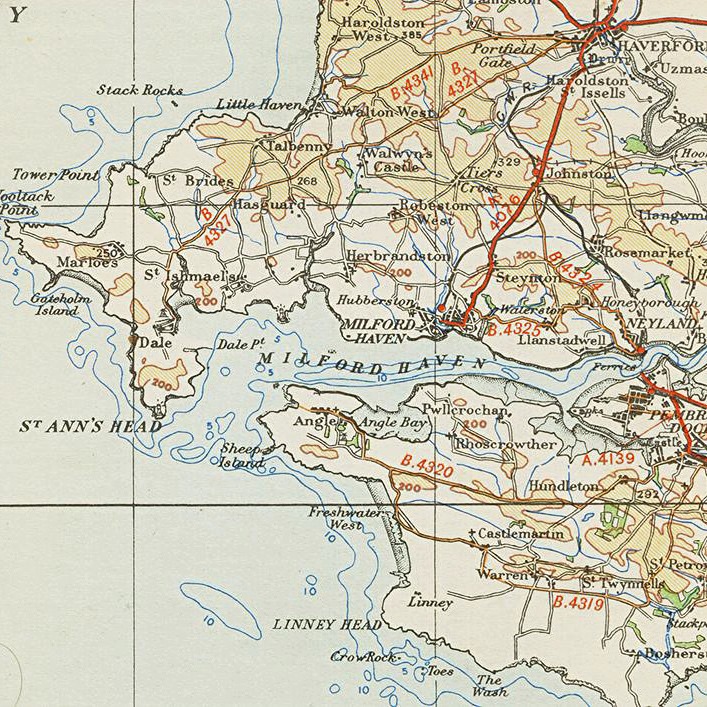
This view was taken from the little village of Dale on the estuary of the Black and White Rivers Cleddau, looking towards the port town of Milford Haven. Twelve hundred years ago, and until the Norman Invasion of 1066, the sheltered inlets of the Haven were the haunt of Viking raiders. In fact if you had been looking out across this stretch of water in 854 CE you might have spotted the 23 ships of a Viking raiding fleet. They were gathered off Milford Haven, under the command of Ubba/Hubba (who incidentally gave his name to the present-day settlement of nearby Hubberston). He was one of several commanders of the Great Army whose various factions invaded the Saxon kingdoms of Wessex, Mercia, Northumbria and East Anglia.

If you had looked again in 1171 CE you would surely have seen at least some of the 400 warships that had converged in the Haven as a prelude to Henry II’s invasion of Ireland. The ships were carrying 500 knights and 4,000 men-at-arms.

Look again in 1597, and there would have been storm ravaged ships of the Spanish Armada. A number made landfall on the Cleddau only to be sent packing back to sea by the Welsh militia. This seeing off also apparently involved some pillaging. One of the damaged caravels was captured by six Welsh boats, and relieved of its gold and silver.

Today, though, instead of long boats and warships, you are more likely to see oil tankers heading for the oil refineries of Pembroke Dock. And sometimes even a cruise ship. The misty installation is a recycled oil refinery, now used for the storage of Liquefied Natural Gas.

1024px-Milford_Haven_harbourmap1946 square

Milford Haven, Pembrokeshire  Ordnance Survey  1946 (out of copyright)

*

IMG_6799

Dale Beach  – never too old to hunt for seashells.

*

March Square  Ordnance Survey map apart, this post’s circles and squares in squares may take a bit of finding: round buoys and storage tanks anyone? Square window panes and spotty backpack? Please pop over to BeckyB’s for more March geometrics.

In which Six Go Potty In Pembroke With Cockapoo Puppy – holiday snaps #7

On The Way To Marloes Sands

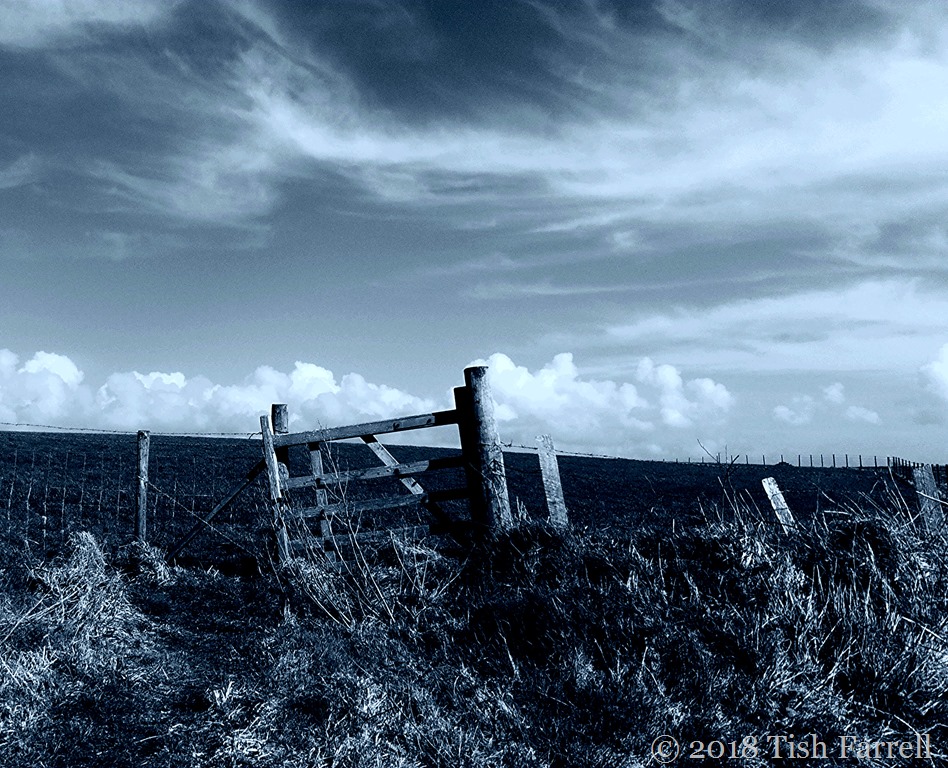
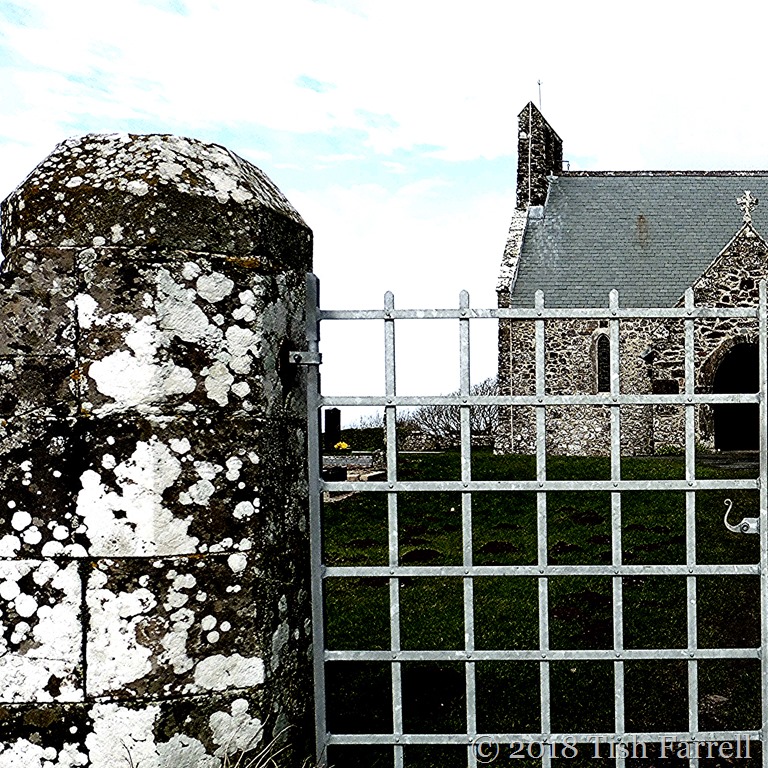
This gateway stands beside the path to Marloes Sands in Pembrokeshire – a scene captured during one of our best outings on a recent family holiday at St. Bride’s. I included the image in my March Changing Seasons gallery, but as several of you good followers remarked on it, I thought I’d give it a ‘featured image’ opportunity. I also thought it fits with Paula’s ‘Way’ theme at this week’s Thursday’s Special.

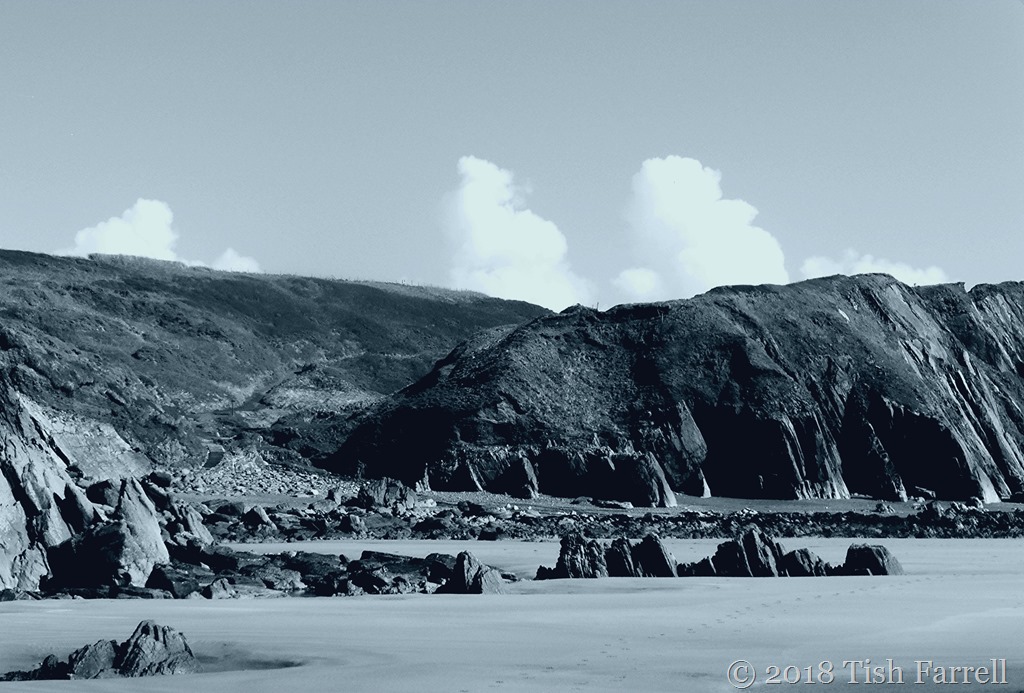
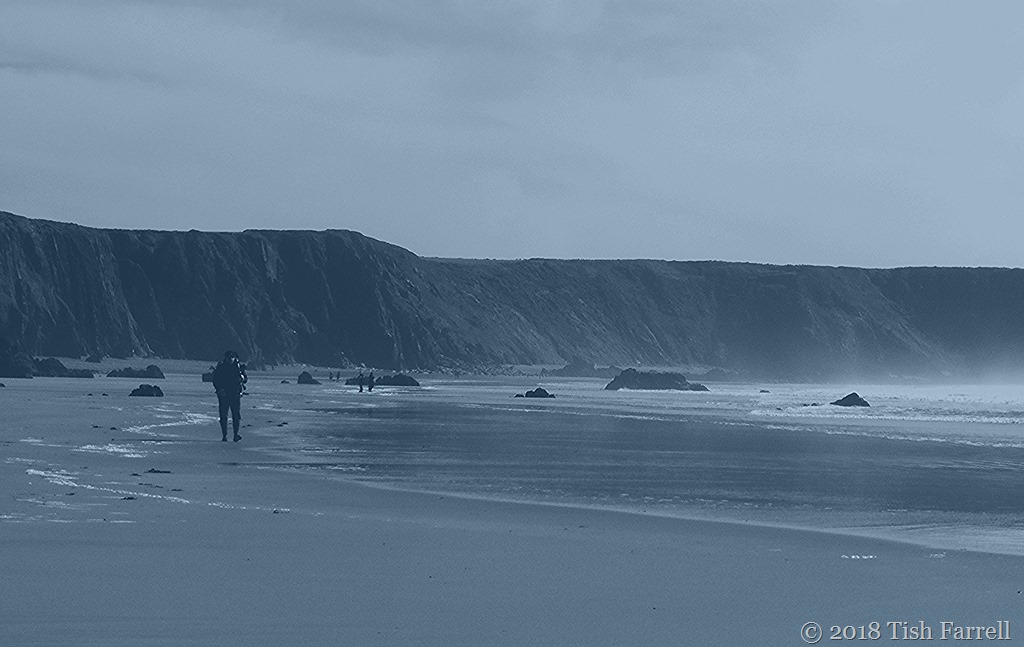
Marloes Sands must count among the world’s stunning beaches, and it is good to know that it, and its approaches are safely in the care of the National Trust. The beach features in my new header photo, taken by he who builds sheds and binds books and only sometimes gets his camera out. His photo is responsible for my theme’s new cool blue look. I pressed the ‘match the header photo’ button in the WP customize menu, and hey presto! It is now causing me to try out my monochrome shots with a ‘blue rinse’ edit.

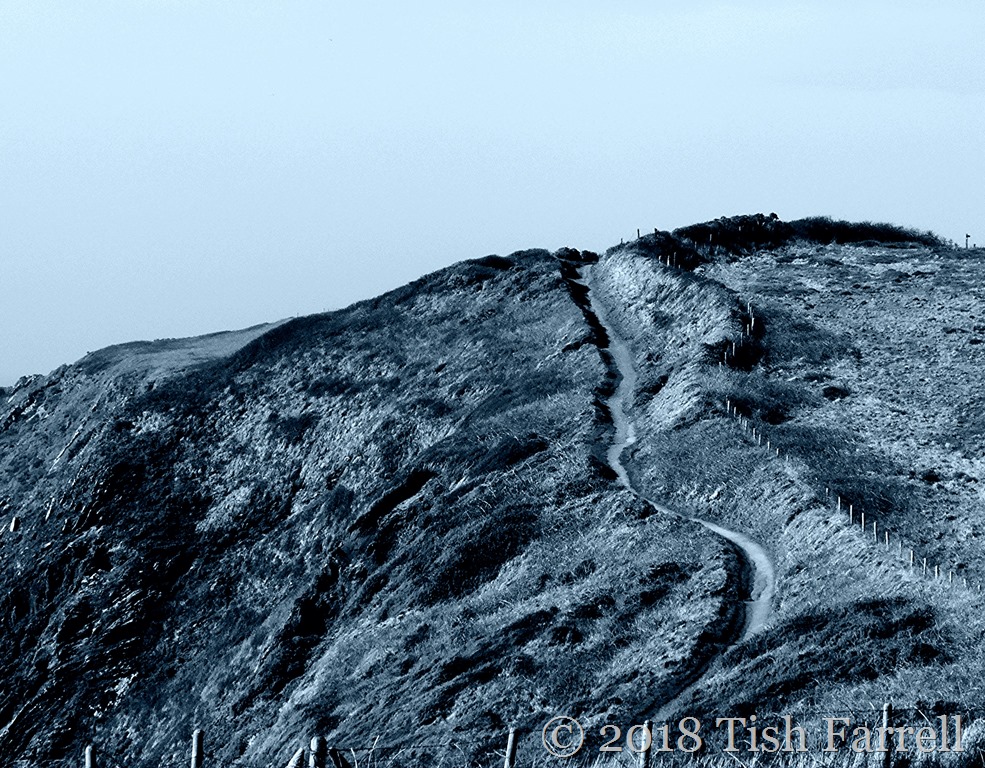
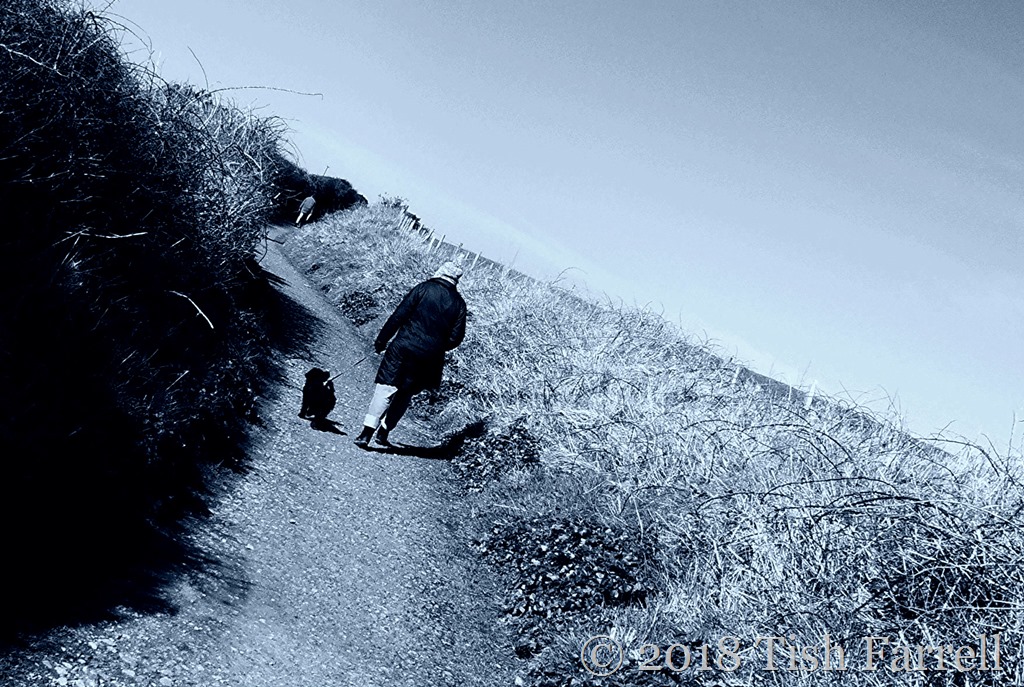
Coming up next is the clifftop path to the beach:

P1050022v

Marloes is best visited on an outgoing tide, because only then are the sands exposed. At high tide you have to scramble around on very big boulders, and it all becomes quickly undignified, if not downright perilous. On the other hand, the beach-side cliffs are always astonishing, their geology monumental and otherworldly, and therefore difficult to capture in their full grandeur.

This is the path down to the beach. You can just make it out left of centre:

P1050070c

And out on the sands, definitely the best way to explore:

c

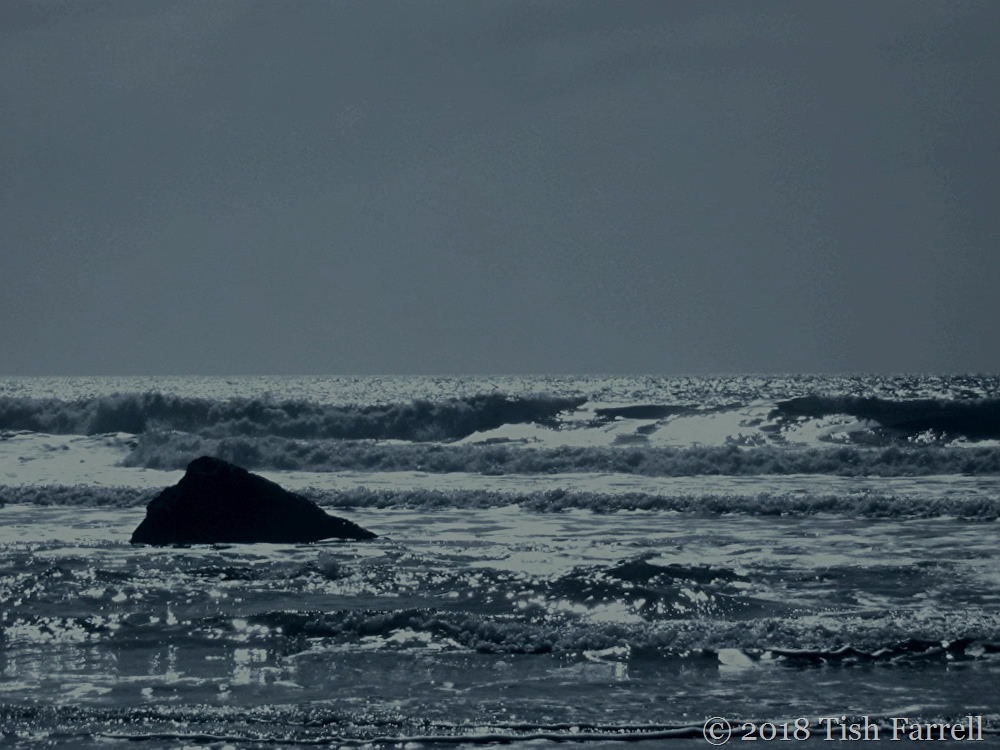
And out at sea:

IMG_3216v

And the path back:

P1050090

Thursday’s Special

In which Six Go Potty In Pembroke With Cockapoo Puppy – holiday snaps #5

The Changing Seasons March 2018 ~ All Wind, Snow And White Horses

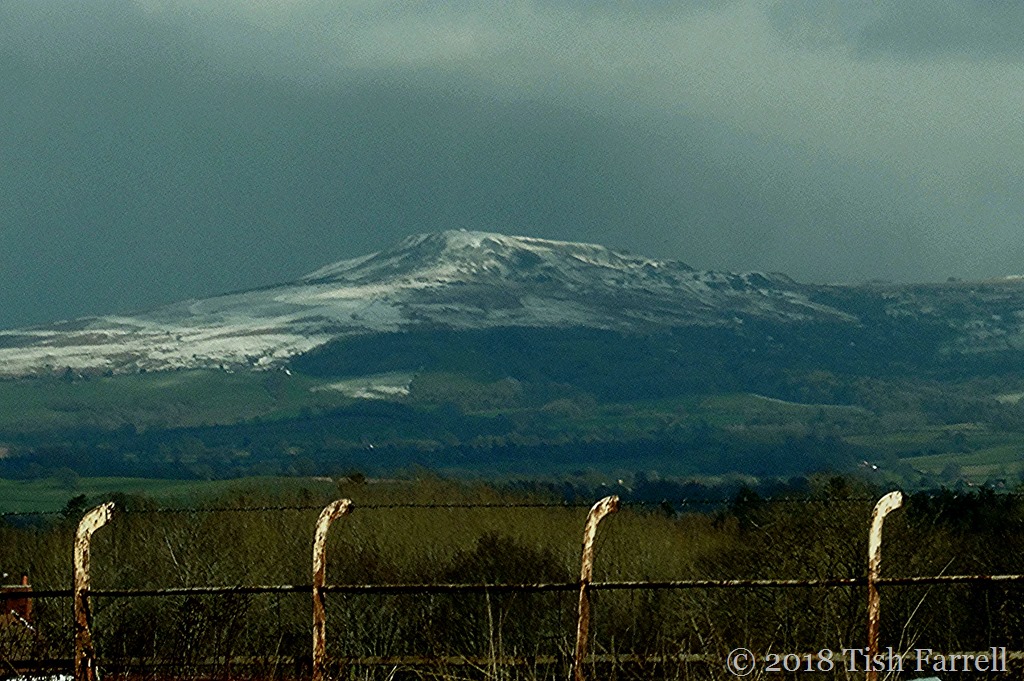
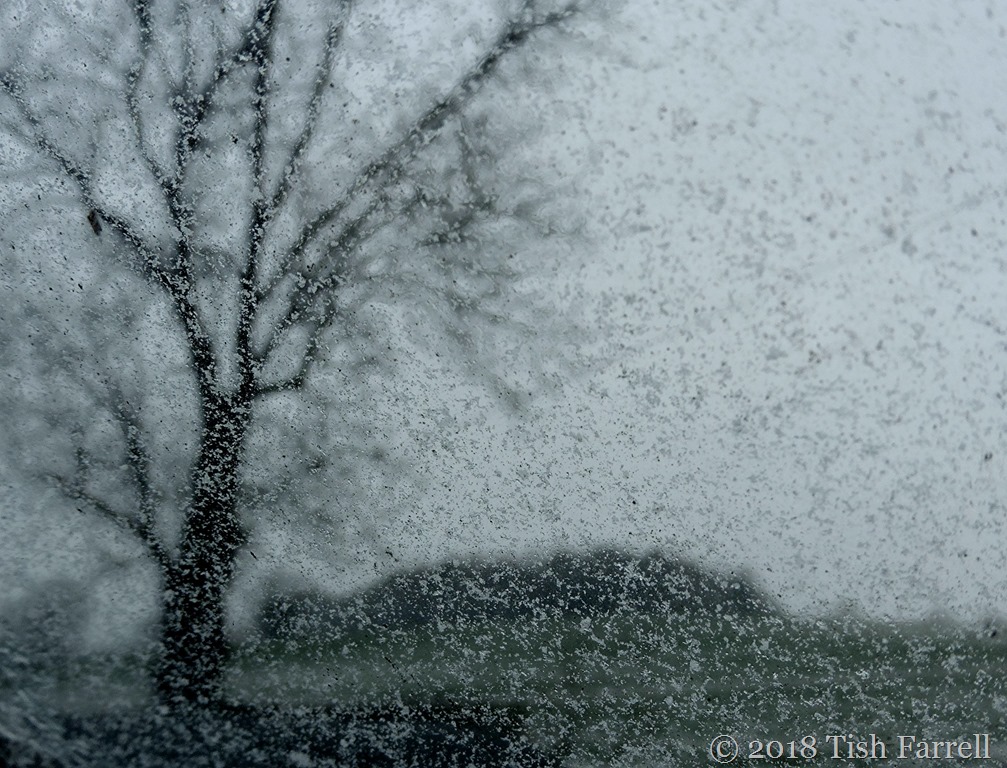
This was the sight that greeted us as we drove back into Shropshire from Wales last Saturday – a snow-dusted vision of Titterstone Clee. A windscreen shot too. Here and there along the country roads there was also some astonishing ice art in the hedges. Temperatures were so frigid that when cars drove through verge puddles  the water splashed up on to the bare twigs and froze in cascades of tiny silver icicles. I’ve never seen anything quite like it, and certainly not in March: Christmas trees all over again. Anyway, March may be summed up in one word: FREEZING.


This slideshow requires JavaScript.

In which Six Go Potty In Pembroke With Cockapoo Puppy  – holiday snaps #3


The Changing Seasons: March 2018

The Little Church By The Sea

It stands beside the Wales Coast Path looking down on St. Bride’s Haven, a rocky cove with a long, long history. The church is also called St. Bride’s and is dedicated to St. Bridget of Kildare who, it is said, arrived on these shores from Ireland c500 CE.  The original chapel dedicated to her is long gone, though before it went, local fishermen used the place for curing herring, for which act of ecclesiastical disrespect, the herring have ever since steered clear of St. Brides Haven.

It’s a good, if fishy yarn.

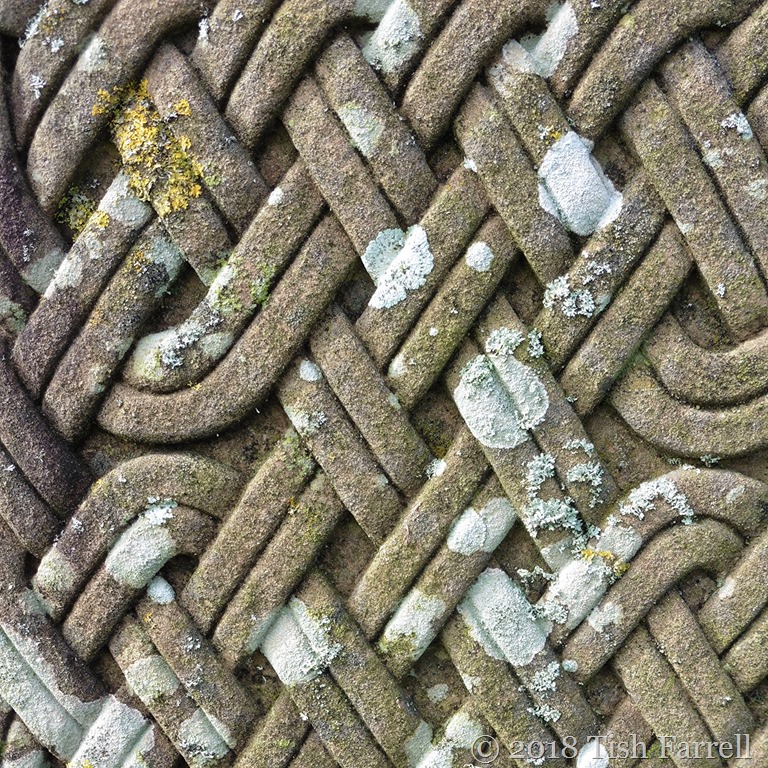
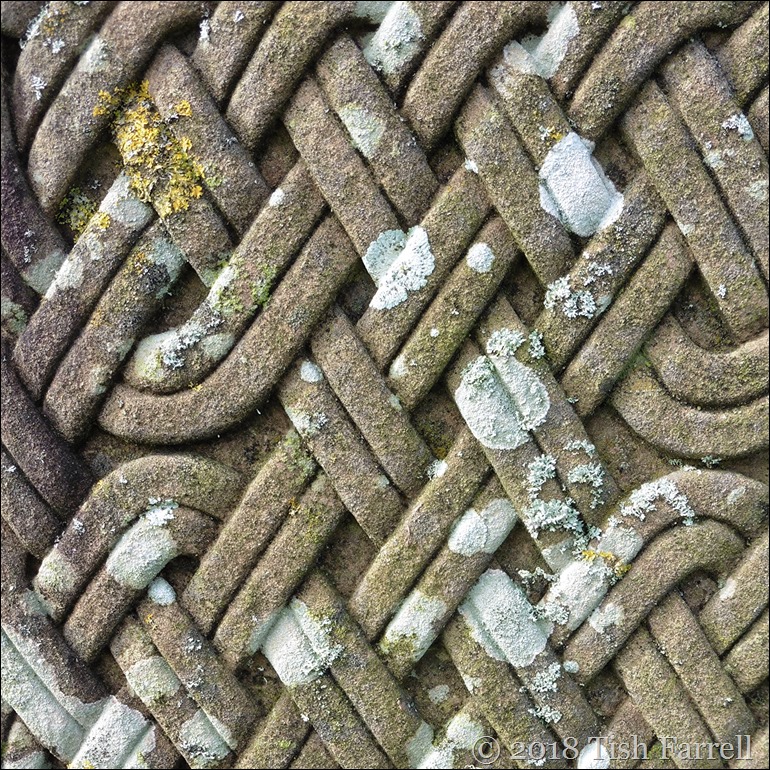
The present church was probably  built by at least the 14th century, during which time it would have served the lords of the neighbouring medieval manor house known as The Abbey, and whose ruins may still be seen in the nearby woods. The old church was then thoroughly renovated in 1868, by which time it was very much the family church of the occupants of St. Bride’s Castle, a great baronial pile built by the Allen-Phillips family in 1830, but subsequently the second home of the Barons Kensington between 1880-1920. The latter marked their passing with monumental Celtic Crosses that rise starkly in the windy graveyard.
P1040672

Between the church and the beach there are the remains of a lime kiln. Lime burning was an important trade in Pembrokeshire from at least the 13th century, the resulting quick lime used to neutralize acidity of farm fields before sowing wheat and barley. It was also an essential material in the building trade – for the mixing of lime mortar and whitewash. For 500 hundred years ships landed on Pembrokeshire’s beaches, coming and going with the tides, and bringing in cargoes of limestone and culm (coal chippings and anthracite dust) to be burned in the kilns. It was a highly skilled process, and a dangerous one.

These days the ships seen off St. Bride’s Haven are oil tankers waiting their turn to put in at the great oil refineries of Milford Haven and Pembroke Dock. Their presence adds to the daily seascape below St. Bride’s Castle.

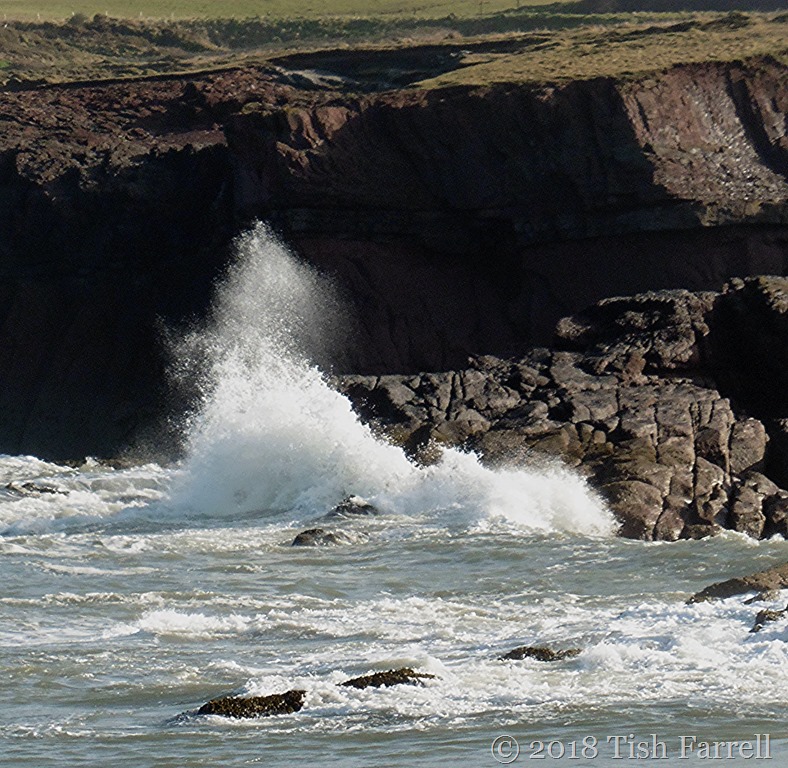
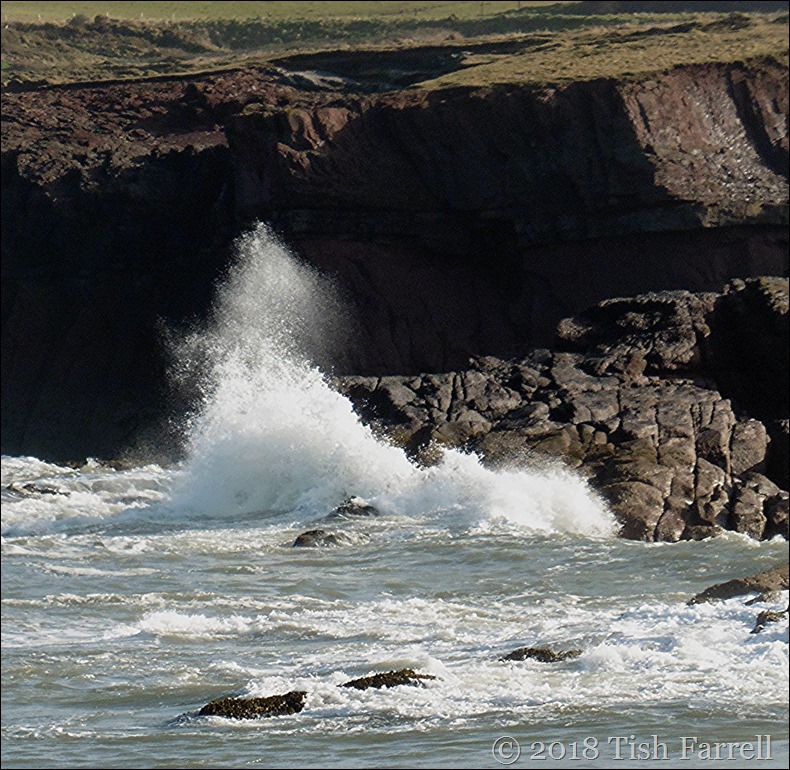
After the Barons Kensington sold up, the Castle became a sanatorium for sufferers of tuberculosis. Those poor souls who did not recover also have their graves in St. Bride’s graveyard. After World War Two it was a convalescent home. More recently the Castle and grounds have been given over to holiday apartments and cottages, the Castle’s public rooms – great hall, library, and billiard room – restored in English country house style for shared use by all the guests. And here we had our week’s family gathering (including cockerpoo puppy), staying in one of the cottages in the old walled garden. The only sounds were racketing rooks and jackdaws busy building their nests in the woods, and more distantly, the crash of surf on the cliffs at St. Bride’s Haven.
P1040924


This slideshow requires JavaScript.

At the start I mentioned that St. Bride’s Haven has a long, long history. So far, time-wise, I’ve only scratched the surface. Later I discovered that if I’d taken the coast path around the cove and behind the cottages I would have come upon an Iron Age hillfort (c 800 years BCE). And more ancient still, near this site had also been found Mesolithic tools (9,000-6,000 BCE). This Middle Stone Age era of the post Ice Age is distinguished by the making of tiny flint arrowheads called microliths – usually around 1 cm in size. These were then mounted on a wooden shaft to create a hunting harpoon. Mesolithic hunters were also very fond of shell fish, camping out at likely beaches as part of their seasonal food gathering round. They thus left archaeologists with that other very exciting prehistoric find – the shell midden. Some are enormous, and were possibly used for several generations.

So next time we go to St. Bride’s I have promised myself a  microlith ‘n midden hunt. It will make a change from gathering seashells.
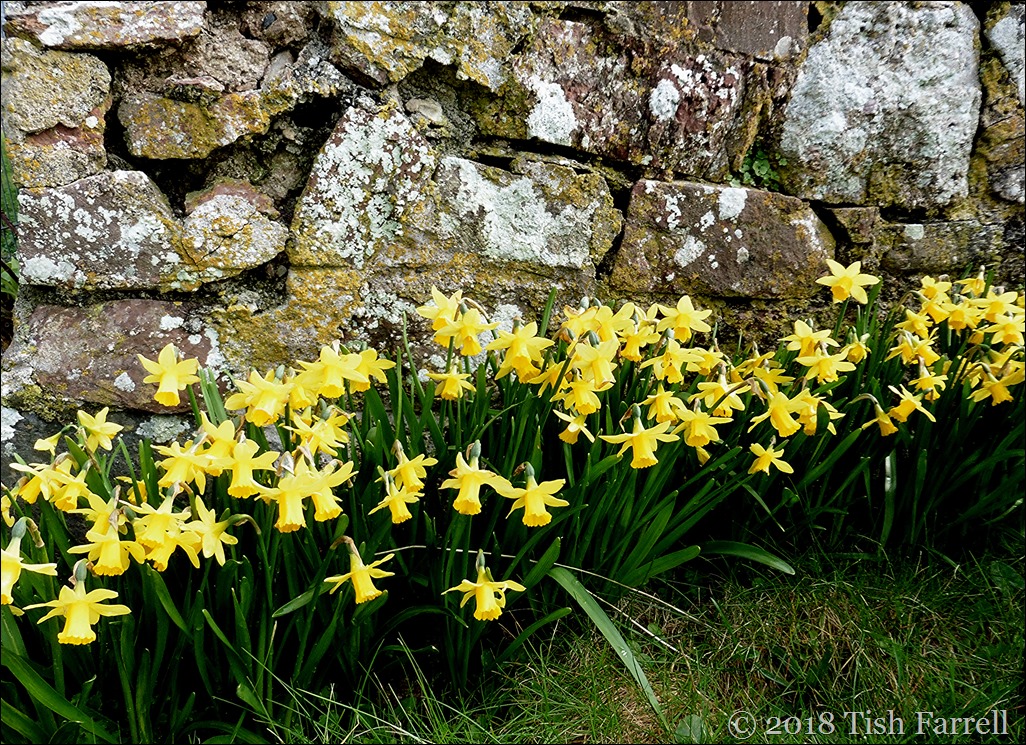
P1040688

In which Six Go Potty In Pembroke With Cockerpoo Puppy  – holiday snaps #2


Jo’s Monday Walk

Please visit Jo for some captivating scenes of Portuguese fisher-folk and a very gentle walk.

March Square #21

And pop over to Becky’s for more March squares and circles in squares.

#MarchSquare20

 

News From The North ~ First Day Of Spring?

P1040333

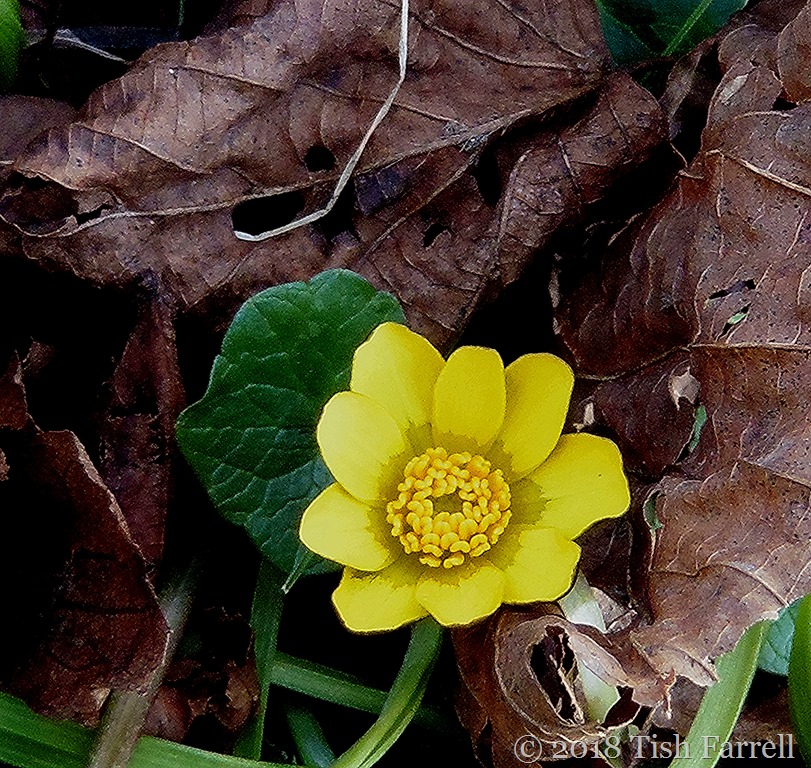
The lesser celandines have been flowering since December, and never mind three lots of snow dumped on them. It’s all very confusing. To me the opening of these sunny little flowers has always signalled the start of spring, so I’m posting this photo to mark its official, if not the actual arrival on our side of the planet. Am also hoping that Siberia will recall her wind-hounds, and double-quick. Enough icy blasts already.

*

Some slightly wonky circles in a square for Becky’s March Square #20
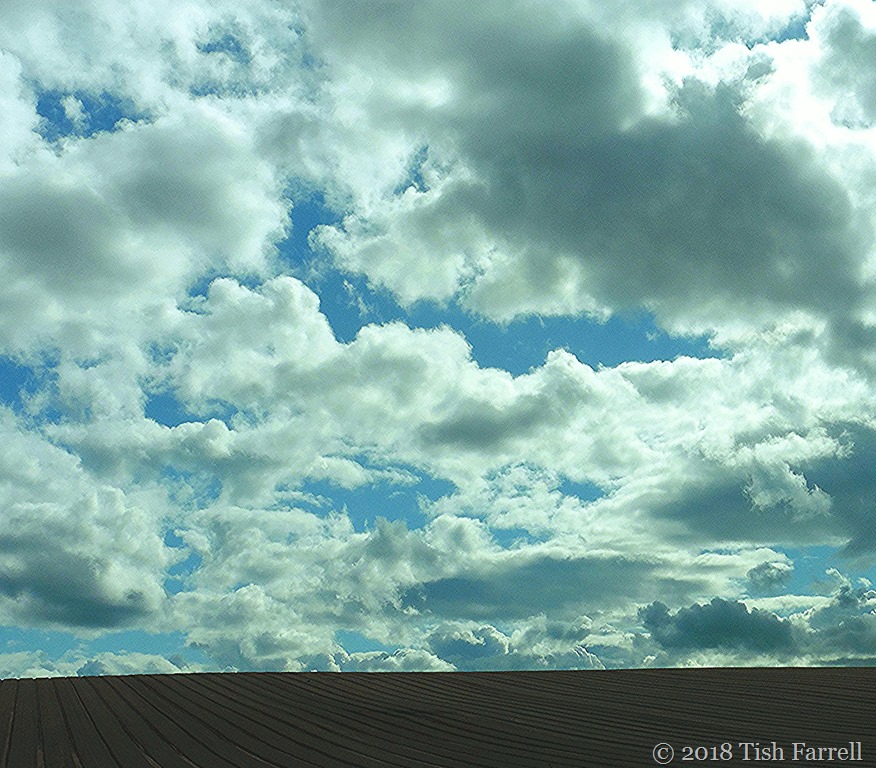
It’s Been A Long Winter ~ Thursday’s Special

At least this morning we have bright sunshine, although even before I looked out of the window I could tell from the clarity of light there would be frost too. There is. Indoors, I keep peering at my tomato seedlings and thinking, ‘why did I start you off so soon?’ They say they don’t know either. Ah well, when it comes to gardening, as with much else, all one can do is travel hopefully. Meanwhile, fingers crossed, we’ve seen the back of these wintry scenes. You can click on an image to also see these in carousel format.

Thursday’s Special: Wintry

Winter On The Menai Strait ~ Soulful Sunday

P1060459

I’m posting this photo, taken one December morning on the North Wales island of Anglesey (Ynys Mon) to remind myself that winter in the British Isles can sometimes be blissful. In fact we have experienced perfect winter weather days on this island on several occasions – cold certainly, but utterly still and dazzlingly bright with hardly a cloud in the sky, only the calls of seabirds and waders echoing over the water.

Ynys Mon is of course an island brimming with spirits. It was the last stand of the Celtic Druids against the Romans (see Island of Old Ghosts); there are the cells and wells of early Christian hermits, and many a prehistoric chambered tomb dating from the Neolithic and Bronze Ages. There are also all manner of mythical connotations too. In the centre of this shot you can see the Great Orme across the Menai Strait at Llandudno. It was named by the Vikings, the word orme deriving from the old Norse for a sea serpent. In this view you can well see why they came up with it.

All in all, then, I thought this view added up to a suitable contribution for Ali’s new meme: Soulful Sunday. Please visit her blog The Mindful Gardener – a must-go-to spot for anyone who loves gardens or gardening or marmalade flapjacks. There are also some glorious pictures of the Kent countryside in yesterday’s snow

The Mindful Gardener: Soulful Sunday