Through A Hedge Backlit

IMG_0637 sepia

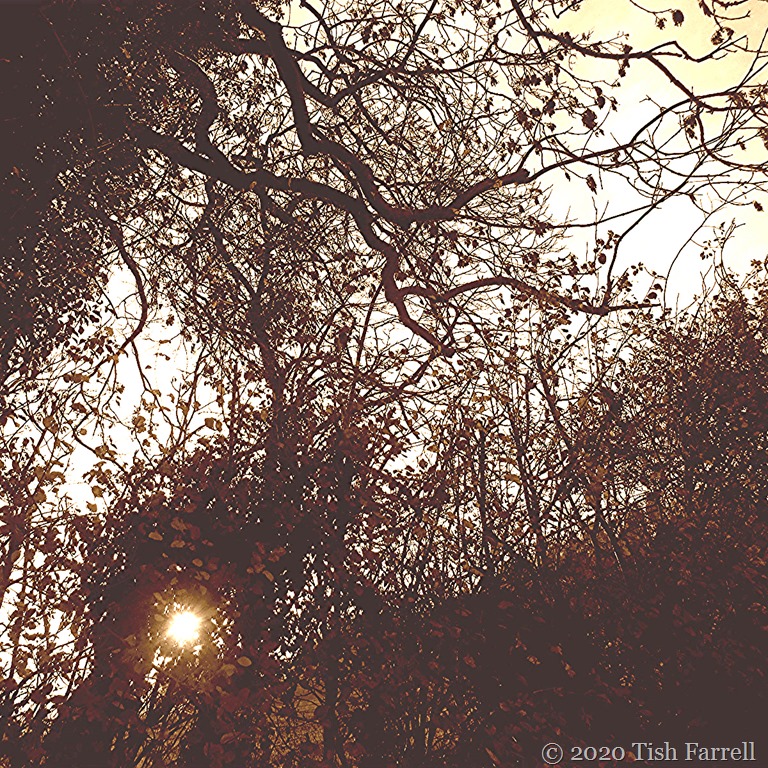
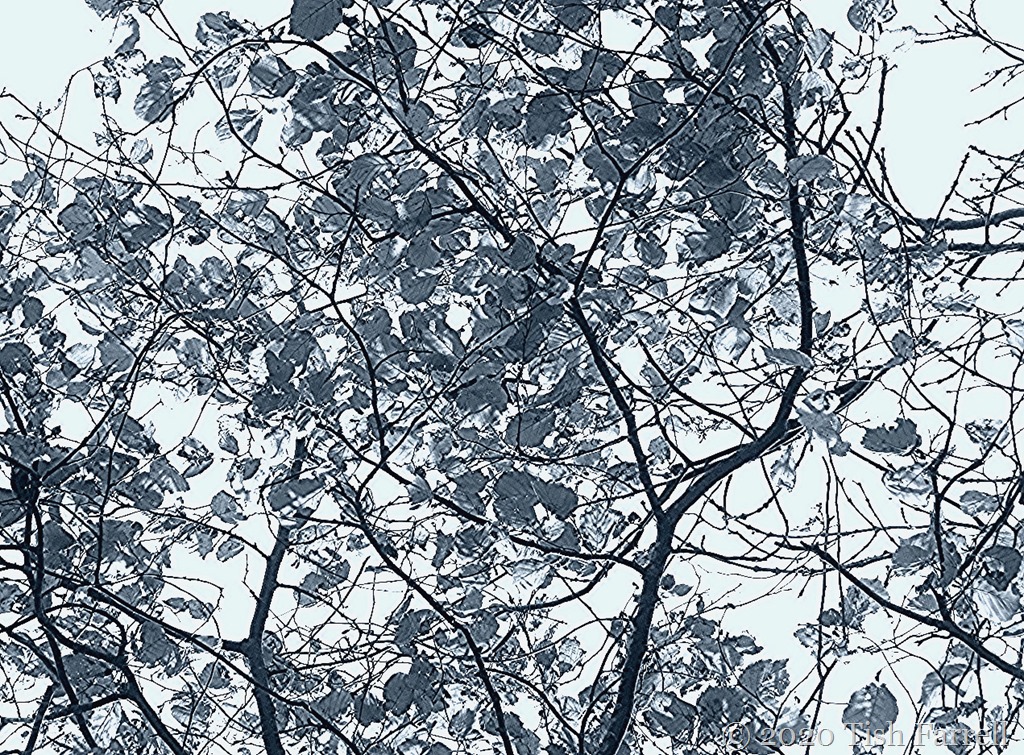
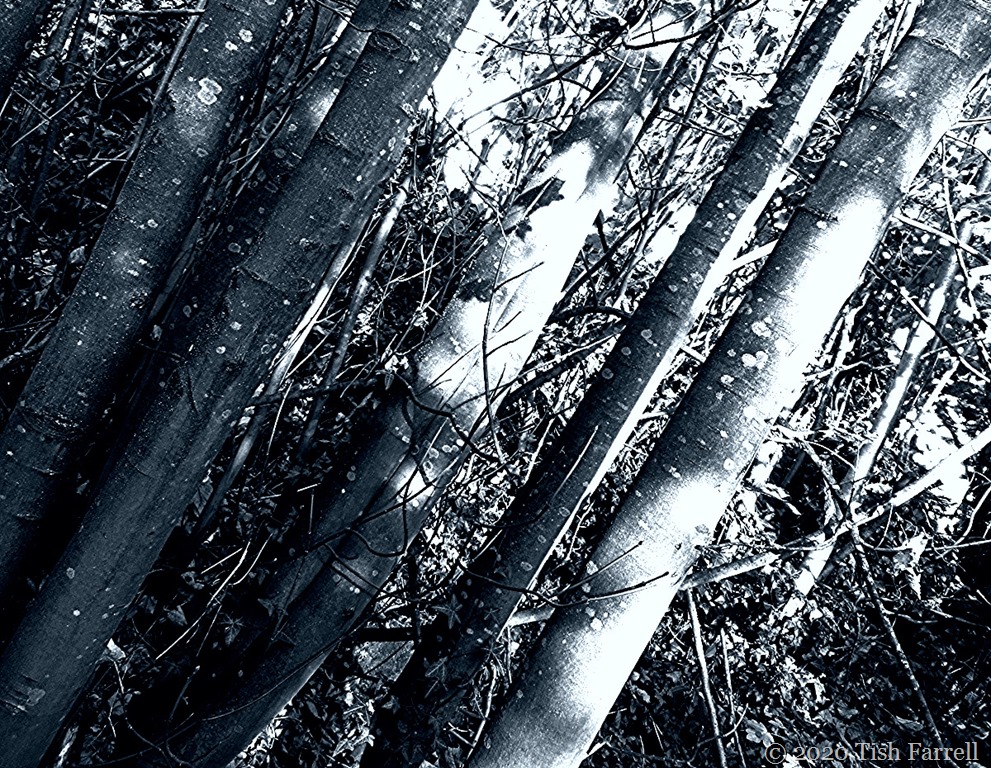
I took these photos yesterday, late afternoon, as I was going gardening. The hedge runs up beside the allotment, the south-westerly boundary to Townsend Meadow behind our house. As I reached the gap under the ash tree, the unofficial gateway to my garden plot, the sun burst through the hedge bottom. So I ditched the compost I was hauling, and fished out my camera. I was still thinking about the leaf photos in my last post, and decided monochrome could work here too, this time catching the plant-life silhouetted in the lowering sun. I added the sepia glow in the edit. In the northern hemisphere, sunshine in November always seems a specially precious gift, brimming with untapped possibility.

IMG_0635 sepia

Lens-Artists: the sun will come out tomorrow  Anvica’s Gallery has set the spirit-lifting theme this week. Go visit!

Season Of Leaves

IMG_0580

As a Halloween ‘babe’ (I use the term retrospectively) one might expect a new broomstick for one’s birthday (and actually a good old fashioned witches’ besom would be quite useful) but this year I received a very smart leaf rake – pale ash handle topped by the most elegant splay of shiny stainless steel tines. In fact the new rake is so artily attractive, I was rather  reluctant to take it up to the allotment.

But then yesterday, it being sunnily fine after recent gales and deluges, and with signs of copious leaf fall everywhere, the need to gather the makings for next year’s leaf mould overcame me. Armed with two big bags and rake I set off across the field, intent on making a start on clearing the lane beside the allotment where, the day before, I had swished through a sea of field maple leaves.

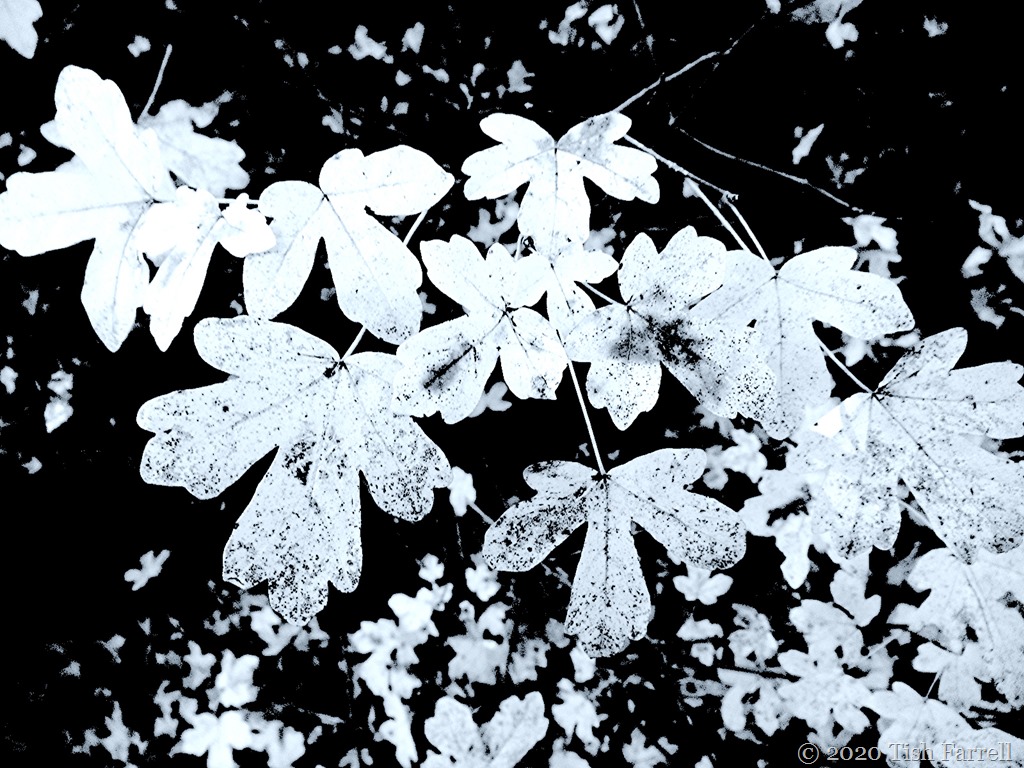
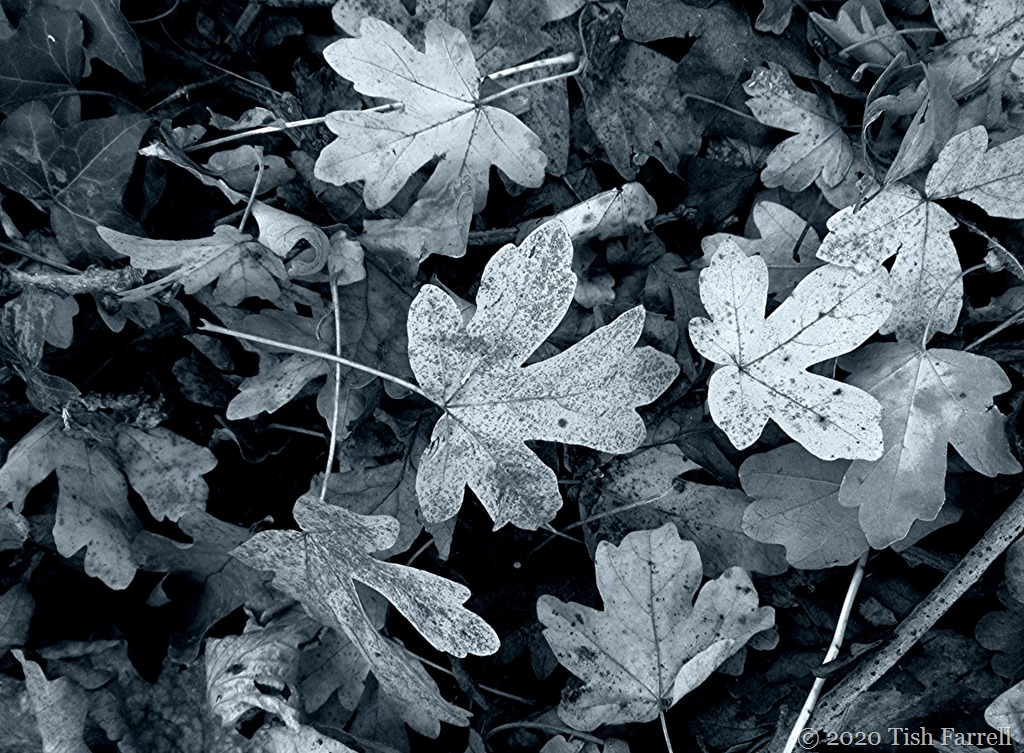
And then just as I was leaving the house I grabbed the camera too, switched it to monochrome mode. I remembered that Jude at Travel Words had set us a photo assignment to look for patterns in black and white. So here are the results of killing two birds with one stone. I also have two very full leaf ‘silos’ on my allotment plot.

IMG_0566

IMG_0568

IMG_0572

2020 Photo Challenge #44  Jude gives us lots of pointers and some striking examples of black and white composition.

The Changing Seasons: This Was October

IMG_0251

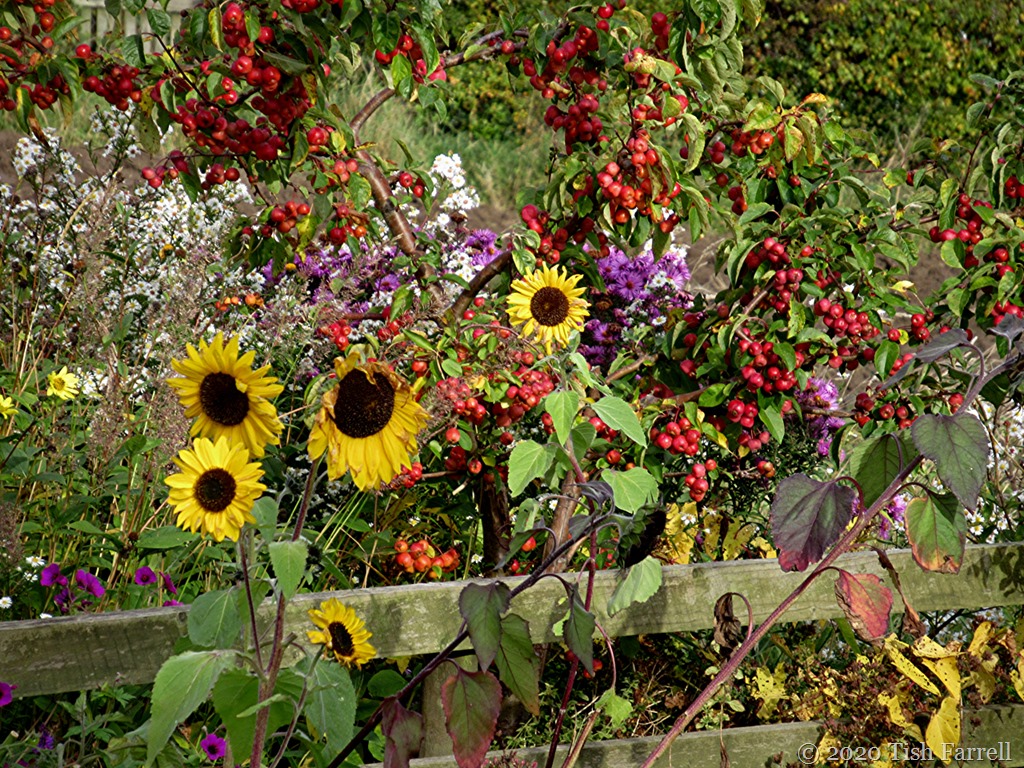
Until today’s storm and bluster ‘the garden over the fence’, aka the guerrilla garden was still doing its stuff on the floral front. The rosy crab apples have of course been stealing the show, followed by the Michaelmas daisies (white, mauve and purple), Anne Thomson geranium (heliotrope) and a scatter of late lemony Silver Queen helianthus. Now all looks blown away, though a few pink cosmos behind the old privies are hanging on.

IMG_0245

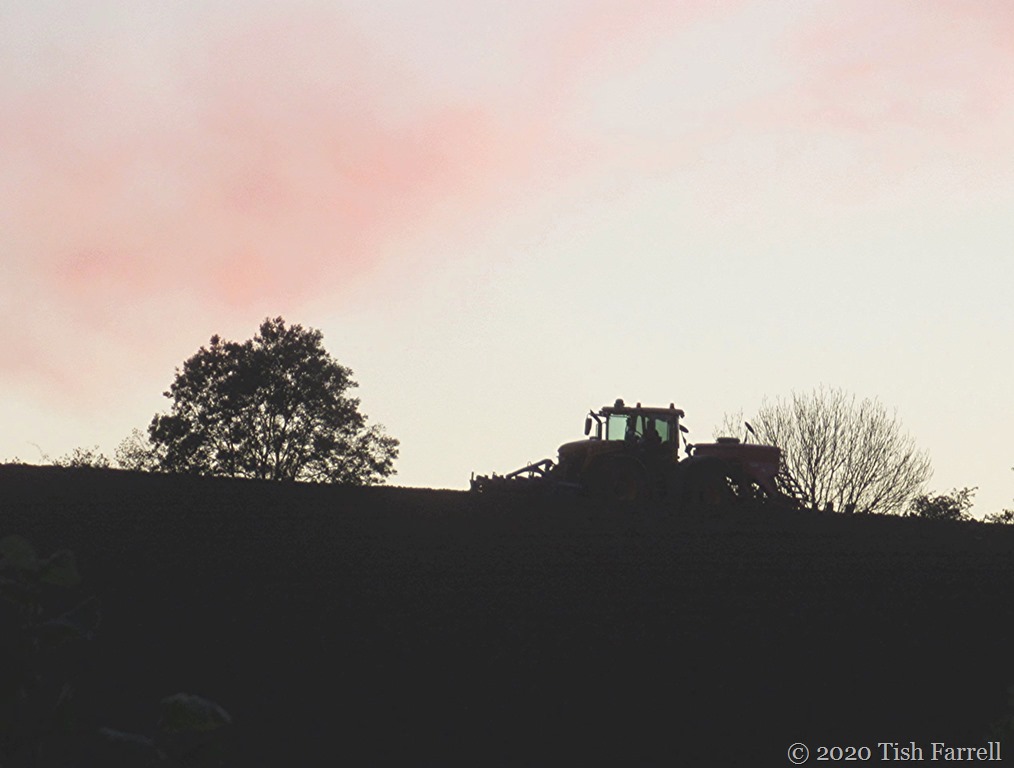
Beyond the garden, out in the field, all has been ploughed, and already the new crop, winter wheat again by the look of it, has started to sprout. In fact all around the town the hillside fields are a haze of new growth while the hedgerow trees and woody margins turn to old gold. But then much like last autumn we have had far too much rain, which in turn means us Wenlockians take to country paths at our peril – slithering in Silurian clag that threatens a serious upending at every step. The following photos, then, reflect only the surprise sunny intervals.

*

Up at the allotment it’s now the season of gathering in and tidying, mulching and compost turning. This year many garden crops did not thrive as expected. I have no explanation for this, except we did have several weeks without rain in the spring and hand watering never quite makes up for it. But then this has been the pattern for several years now, and I had taken precautions with plenty of mulching.  After the brief hot spell in May the summer was generally lacklustre, often cool and windy, and light levels low.

And this in turn has me wondering that there is more to weather than CO2, on which of course all our plant life, and therefore us, wholly depend for existence. Something’s up with the sun. It seems to be having a quiet phase. We’ve also apparently had an El Nino event out in the Pacific, which usually makes for cold-wet La Nina after-effects. And then the earth’s magnetic field is having a wander across the hemispheres; the jet stream has been meandering all over the place, and lots of geothermal goings on have been happening under the ocean beds at the poles.

All of which is to say the time is clearly out of joint (all ends up), and this an over elaborate excuse for failed sweet corn, rubbish broad beans and a disappointing runner bean crop.

Anyway, failures apart, there is still much to pick – leeks, greens, carrots, beetroot, parsnips outside; salad stuff and a few tomatoes in the polytunnel; lots of apples on communal trees. On my cleared beds the green manure crops are growing well and there are still bumble bees in the flowering phacelia. I’ve broken into last autumn’s stash of fallen leaves and found some brilliant well-rotted leaf mould for mulching the raspberries. And I’ve sown over-wintering field (fava) beans for next year’s early summer picking, and they’re already sprouting. And that’s the great thing about gardening – the onward cycle of growing and nurturing, the continuous big ‘do-over’.


The Changing Seasons: October 2020

Going Kinda Nutty

IMG_0417

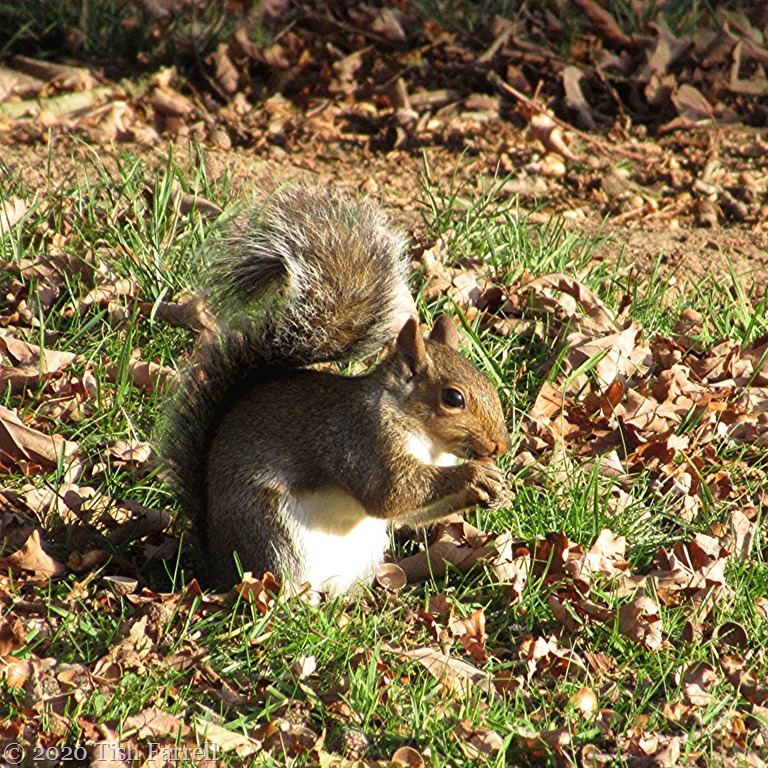
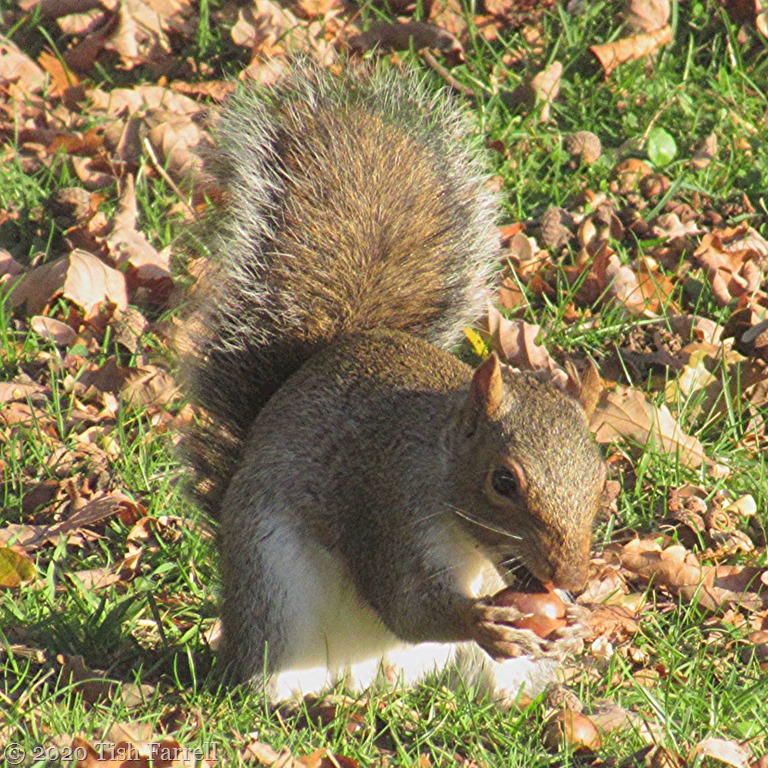
I’m back on home turf and in the current time zone for today’s wildlife squares. They were snapped in the Linden Field earlier in the week during a sudden spell of dry weather. Everywhere I looked along the Windmill Hill perimeter there were grey squirrels scurrying, nibbling, delving, tail whisking, scooting up and down the big oak trees. Acorns, acorns acorns – the big autumnal stuff ‘n store imperative in action. Squirrels being kind to themselves.

IMG_0424

IMG_0432

IMG_0415

IMG_0426

KindaSquare #30

Frosted Ferns

P1030430c

Part of me wants the frost to hold off. Part of me would welcome some frigid temperatures in the parsnip bed so we can start eating them. But mostly I hope the winter cold will save itself for January. This photo was taken a couple of years ago, maybe three. It was early December and we were spending a few days in Hay on Wye, the world capital of second hand books. It was only an hour and half drive from Wenlock and we set off in mild, don’t-need-a-coat weather. By the time we arrived, a heavy Arctic chill  had descended on the land. You could have sworn that the Snow Queen had just whisked through the Welsh Marches, or that we’d somehow stepped through one of the wardrobes in Hay’s many vintage shops and pitched up in Narnia. Any too-long exposed flesh tingled painfully, as if one had nicked one’s finger ends and drawn blood. Serial stops for hot chocolate were called for, and it was hard to leave the town’s many welcoming, if steamy cafes, for a trawl around the catacomb-like book stores. Anyway, we survived, and this photo of crisply frozen ferns, captured as we headed home, is a good reminder of that trip. It has its own magic.


Cee’s Black & White Photo Challenge: Nature’s Patterns

Feeling Kinda Growly

sq Marsh Pride male 1

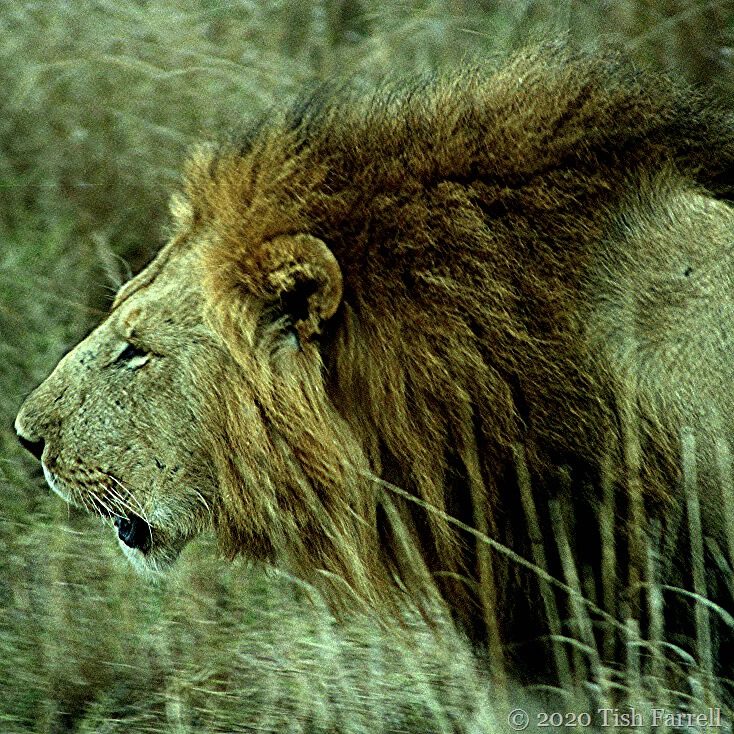
We found ourselves driving through the midst of the Mara’s Marsh Pride at high noon, its members surprisingly active given the usual lion habit of spending the day lying around. They had made a kill, an antelope of some kind, and the ‘under-lions’ were still eating: one very elderly male and three females – while the dominant male prowled the perimeter, exchanging grunt-like roars with another male who was lying in the grass. They seemed quite unconcerned as we stopped to watch, no interruption to the grunt exchange caught here in the photo. Rather puts one in one’s place in the animal scheme of things.


KindaSquare #24

Exemplars Of The Stripy Kind

sq Grevy's zebra 2 - Copy (2)

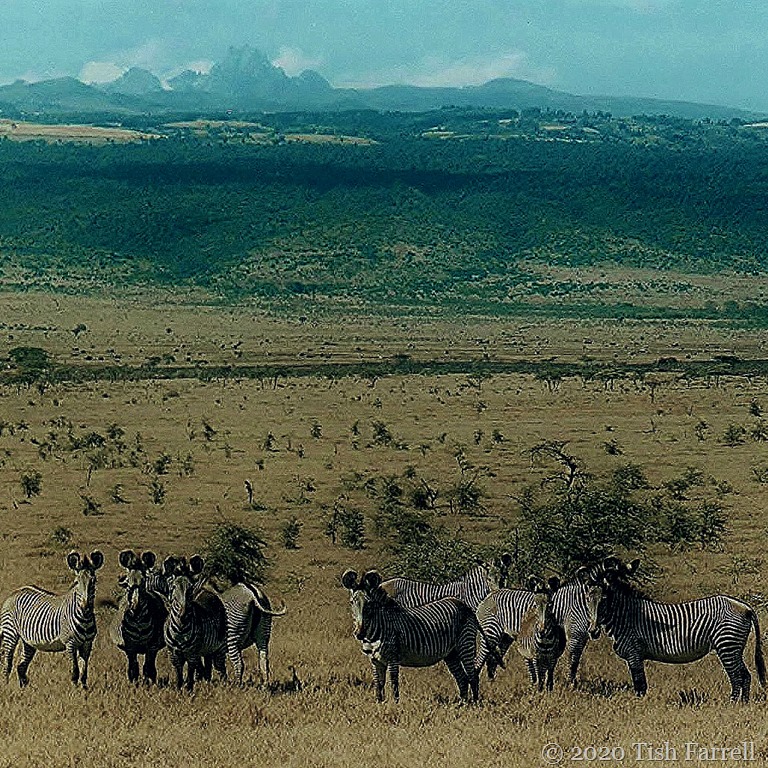
The light was almost gone when we came upon this gathering of Grevy’s zebras. They are the largest and most northerly members of the zebra family, distinguished by their large round ears, close-set stripes, and plain white undercarriages. They inhabit the dry savannah and bush of northern Kenya and southern Ethiopia.

When we spotted them again there was too much light – full on midday sun. But you can see the tip of Mount Kenya in the background. Astonishing to know it is 17,000 feet tall and that this is all you see of it from Lewa Downs.

002sq

KindaSquare #23

Kindness To Rhinos

sq Scan-140827-0009jpeg

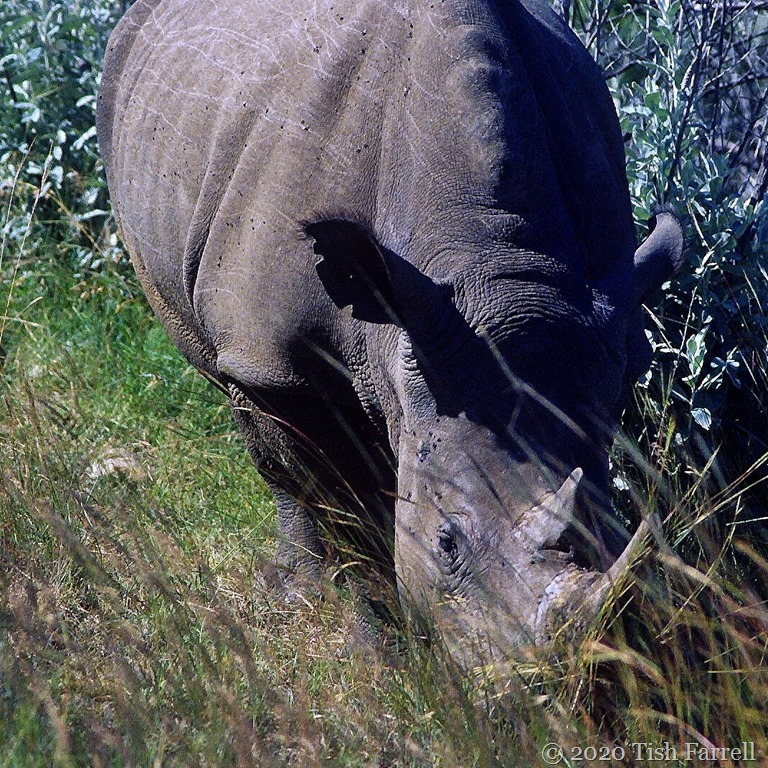
Read any huntin’ shootin’ travellers’ accounts from Kenya’s colonial days and you’ll have rhinos charging from every bush. A single day’s trek through the wilderness could yield half a dozen such hair-raising encounters. Rhinos can be very dangerous, and exceedingly unpredictable, but it makes me think. In times before British aristocrats turned the plains of Tsavo into their private hunting grounds, or game control officers decreed rhino clearance a matter of  necessity, rhino numbers must have amounted to tens of thousands. Big Game Hunter, John Hunter, claimed he’d dispatched over one thousand in the course of his shooting career, this mostly to free up settlement land. A single man and one who loved wildlife!

In the 1970s there were said to be 20,000 rhinos in Kenya. Then came poaching. Numbers plummeted to three hundred. Finally enlightened conservation initiatives were begun in the 1980s and numbers are now above 700, with protected populations in several of the national parks. One thriving private initiative is Lewa Downs in Northern Kenya – a former colonial ranch transformed into a wildlife conservancy. It’s an enterprise of breath-taking scale – not only securing vast rangelands for animals (including 169 black rhinos), but also working with local communities to improve livelihoods, health care and education.

Watch the video and be amazed.

https://youtu.be/b8YGoV5obhk


KindaSquare #22

So Hard To Like Hyena-Kind, But…

sq Scan-140826-0027jpeg

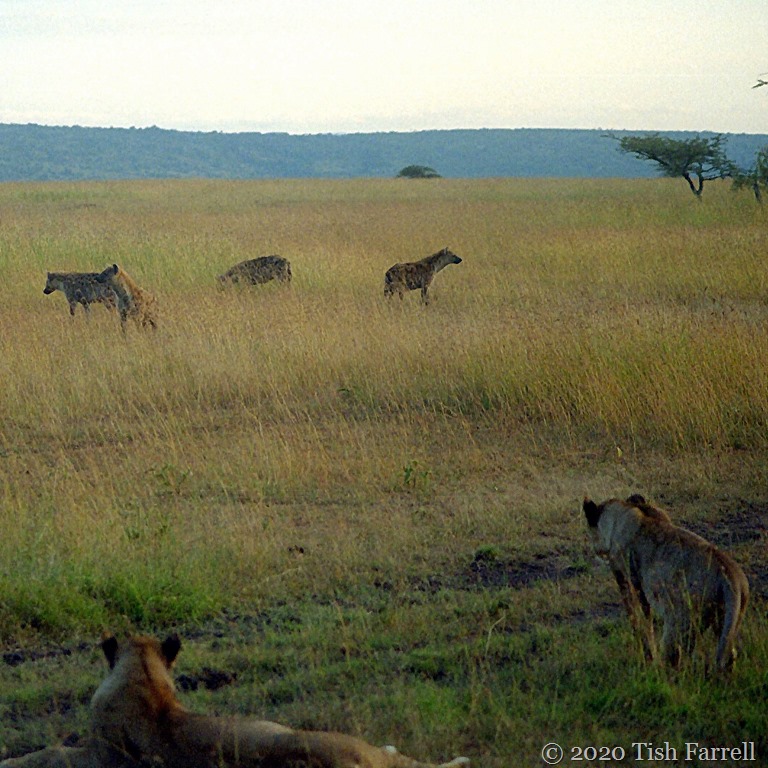
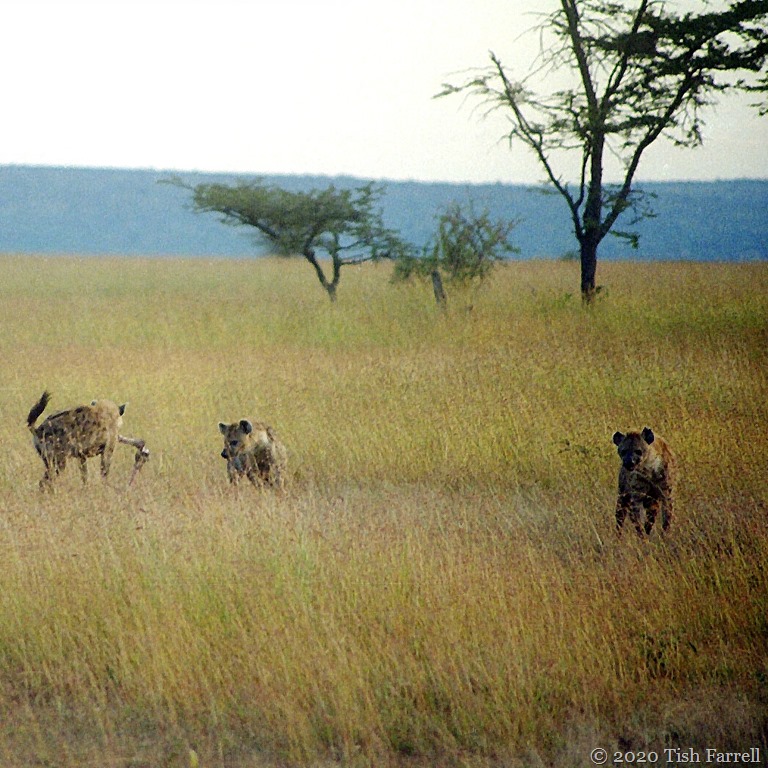
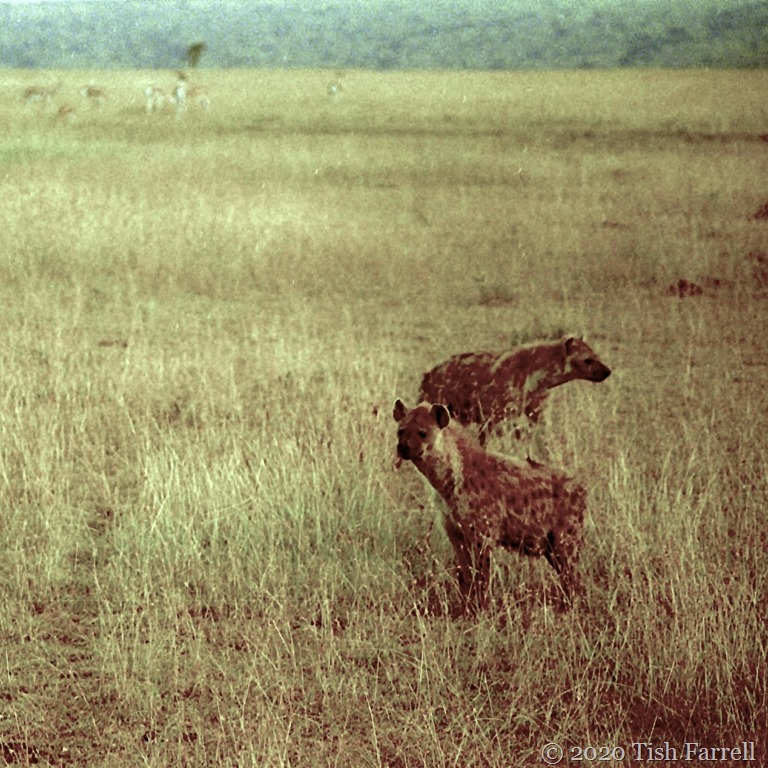
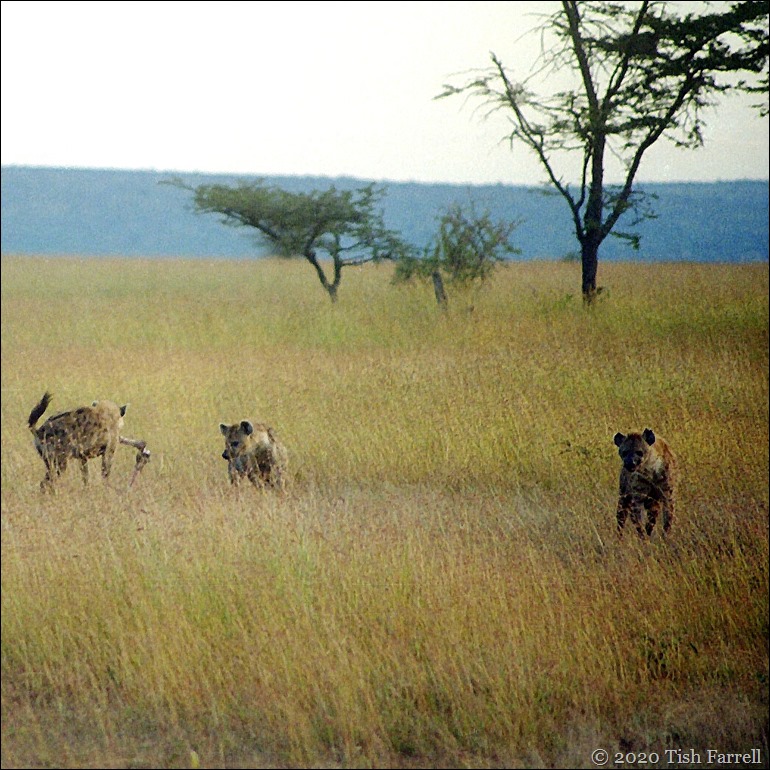
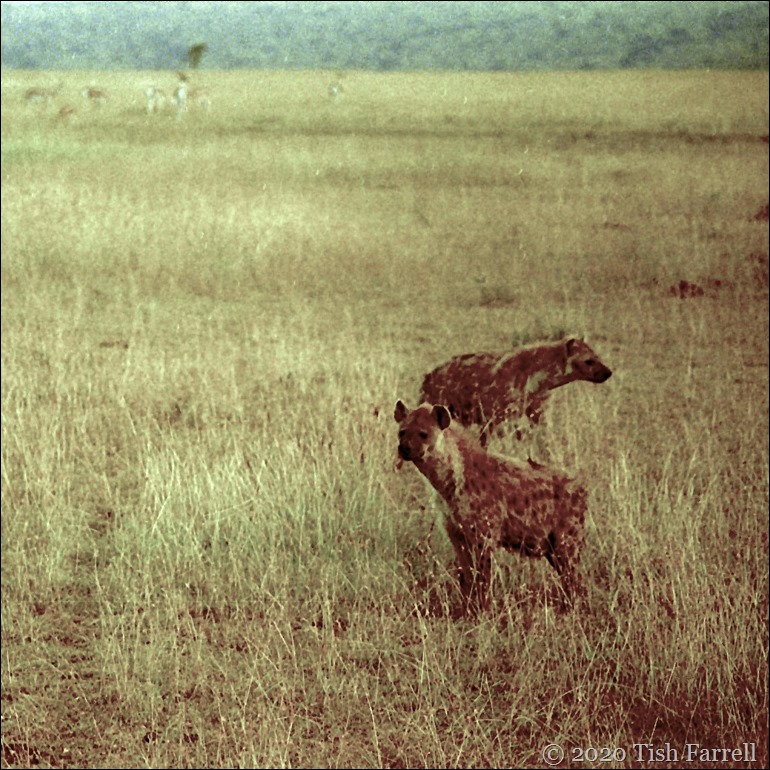
…they are interesting animals, though you certainly would not want to meet one at close quarters. That they are purely scavengers is a myth. They are powerful killers too, and don’t mind the odd human. The spotted hyenas in the photo (taken early one Mara morning) are the largest of the three hyena species, and come with the strongest bone-grinding jaws of any land predator. They live in clans of 5 – 30 individuals and recognise one another by scent.
sq Scan-140826-0026jpeg

Further interesting features include the facts that females are larger than males. They remain in their natal clan for life, are dominant over the males while the largest, most aggressive of them rules over all hunting and territorial defence tactics. The dominant female’s sons outrank all other clan members, and remain in the clan longer than their male age-mates. In the end, though, all the males born from clan females eventually leave to live in nomadic male groups until they can join a new unrelated clan, though this only happens after a trial period wherein they must demonstrate appropriate submissiveness to the new female boss.
sq Scan-140826-0005jpeg

They look ungainly creatures, so low-slung-short-legged in the rear, but this shambling appearance is deceptive too. They can break into a gallop, and sustain speeds of up to 30 miles per hour (48 kph) over distances of  a mile and more. They will chase down adult wildebeest and zebra until the prey is exhausted, and then duly disembowel them. Many pounds and kilos of meat will be gobbled at one go, and every bone crushed and consumed to extract the marrow. I remember once in Zambia, on a pre-dawn drive seeing a hyena so well fed, it could barely drag its stomach home to its den. I’ve read too, that these contents will be turned around within 24 hours, giant meat-grinder style, and the end product droppings quite white from all the processed bone.

Hm. I’m not winning over friends for hyenas, am I?  Still, they do clear up the place when in scavenging mode, as they are in these photos, though the lions were not keen to share their leftovers. But then hyenas, along with other predators, doubtless also help to keep herd animals healthy by recycling the weakest members, and the pursuit itself, predators on the hooves of herbivores, may have a key role to play in the maintaining  the Serengeti-Mara eco-systems.

These grasslands of 10,000 square miles support a million and a half wildebeest, which every year, along with large herds of zebra, migrate between wet- and dry-season pastures. Zimbabwean ecologist, Alan Savory, contends that a key role of predators is to keep herbivores bunched and moving, and that this in turn ensures the continuous sustenance and recovery of the grasslands that in turn support the herds. A virtuous circle then.

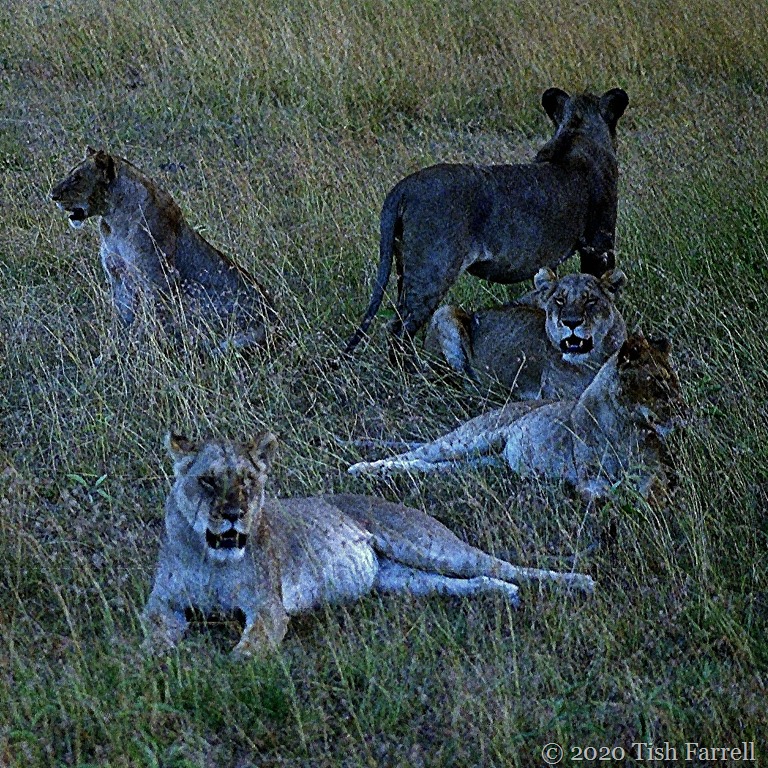
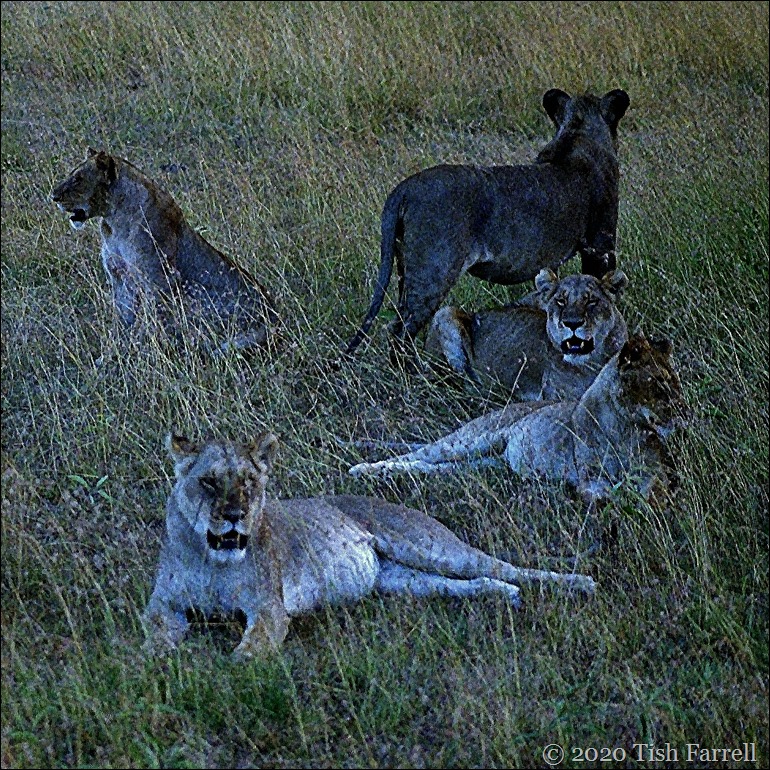
So: hyenas do have their place in the natural order of things. All the same, I think I’ll end this post with a photo of the lions who were most determined not to share even though they had  clearly had a very good breakfast:
sq Scan-140826-0008jpeg - Copy


KindaSquare #21

Kinda Chilling Cheetah Style

sq Scan-140727-0031
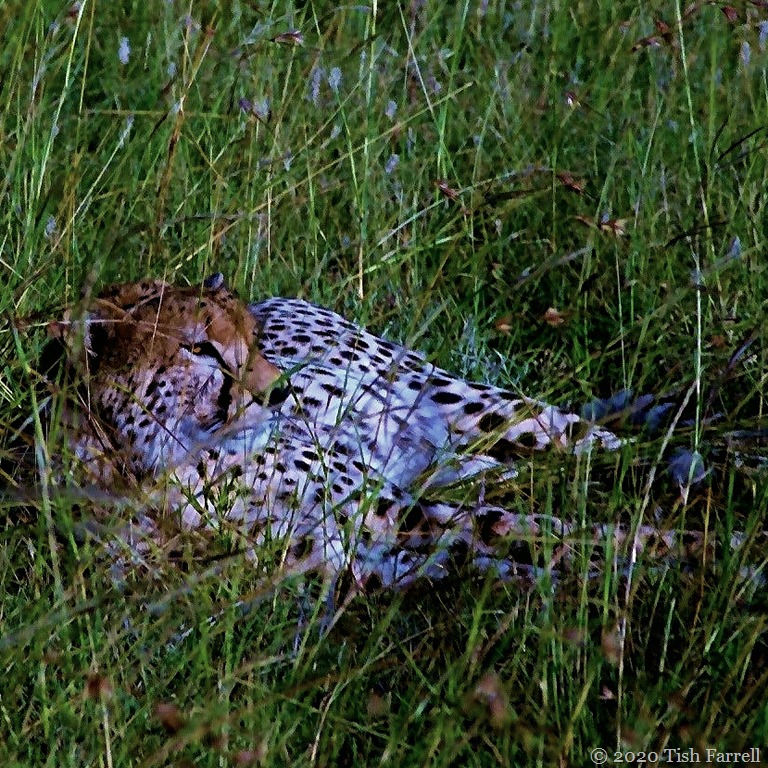
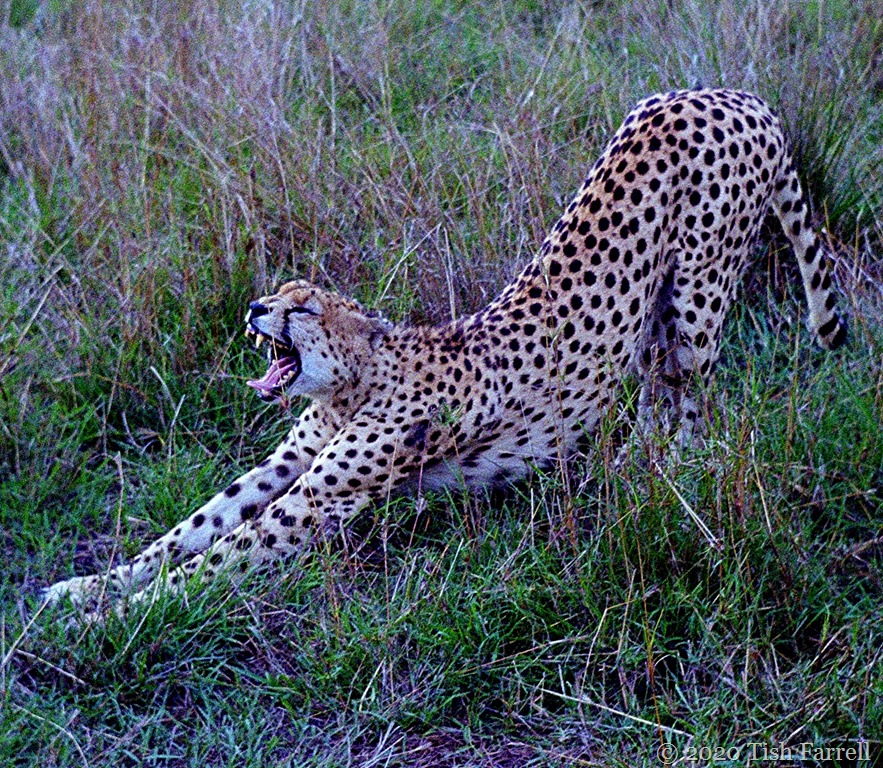
They look like tears, the mascara-esque markings running from a cheetah’s eyes. It’s one of the ways you know that you are not looking a leopard in the face, which is usually a good thing if lack of distance is an issue. Cheetahs are anyway more agreeable, at least to human kind, with attacks in the wild apparently unknown. Their paws are more like dog than cat paws, though they do have a vicious dew claw which they use to snag and trip their prey, mostly small antelope of the Thomson’s gazelle variety.

Female cheetahs, like leopards, lead solitary lives except for mating or cub rearing. There can be six cubs in a litter, which places high demands on a mother’s hunting skills. The cubs are weaned at three months, but at around six months she starts teaching them hunting techniques, catching and releasing young gazelles for them to practice on. Even so they remain dependent on her for another year, the family’s hunting range extending as much as 400 square miles.

The species is of course famed for its astonishing speed – up to 70 mph (112 kph) at full tilt and with a stride of 23 feet (7 m). Though it’s hard to imagine this particular cheetah has any thoughts of imminent ‘lift off’. She simply lay there, quite ignoring me, while I leaned out of a truck took her picture. Though after a bit she did get up and demonstrate the ‘cat stretch’. Oooh ye-ees. Feel that spinal column flex and lengthen.

cheetah 6


KindaSquare #20