Stone-smitten ~ Saxons awestruck by ancient spa

100_5013

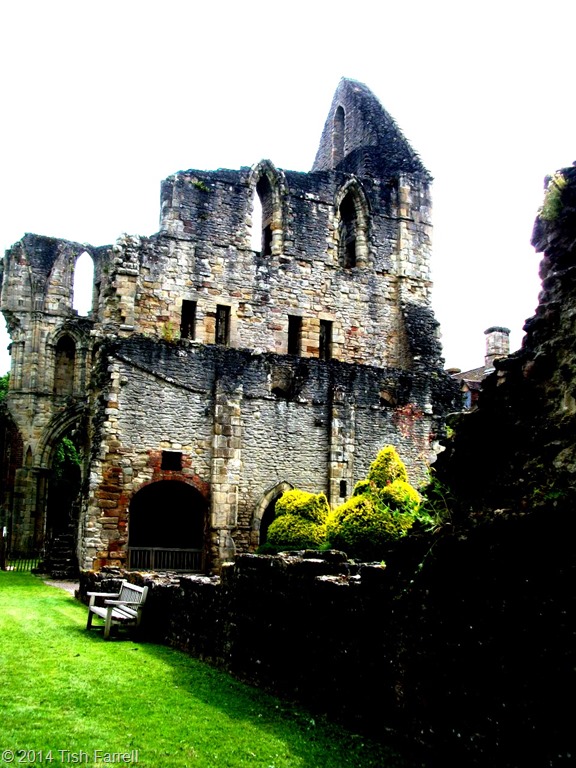
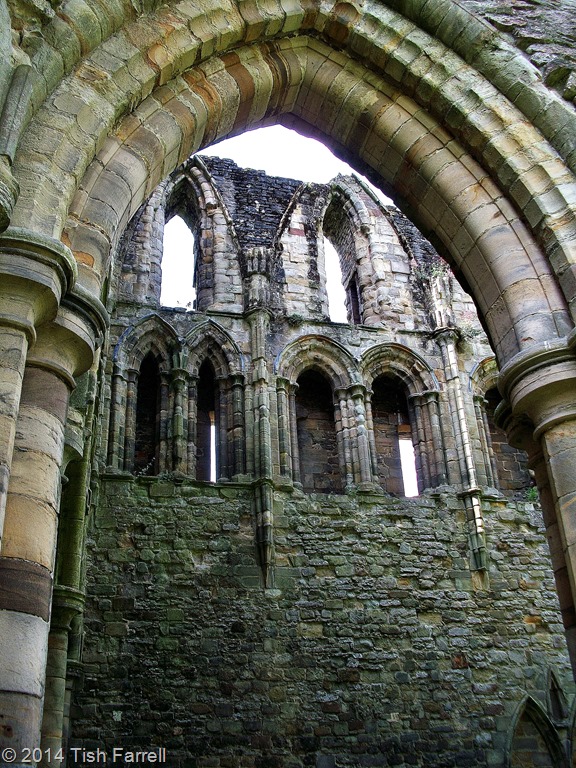
It’s silly, I know, but I tend to think that valuing heritage is a rather modern concept, very British – probably kicking off in the eighteenth century with all those landowners filling their bosky domains and deer parks with Grecian grottoes and Roman temples, and Lord Elgin using diplomatic privilege to ‘save’/ make off with the Parthenon’s marbles. So years ago, when I first discovered this Saxon poem in Penguin Classics’ The Earliest English Poems,  I was both amazed and captivated.

Even in its fragmentary, fire-damaged state, and some thirteen hundred years after it was written, the words come powering through.  It has been well translated of course by Michael Alexander. In his introduction he says he believes it to be a description of  the ruined Roman spa city of  Bath – Aquae Sulis (Somerset, England), and written some 300 years after the Romans left Britain. I’m posting it as a source of inspiration for all poets writing in English. All those alliterative compound nouns – showershields and gravesgrasp – don’t they just hit the mark!
*

The Ruin

Well-wrought this wall: Wierds broke it.
The stronghold burst…

Snapped rooftrees, towers fallen, the work of Giants, the stonesmiths mouldereth.

Rime scoureth gatetowers

rime on mortar.

Shattered the showershields, roofs ruined,

age under-ate them.

And the wielders and wrights?

Earthgrip holds them – gone, long gone,
fast in gravesgrasp while fifty fathers
and sons have passed.

Wall stood,

grey lichen, red stone, kings fell often,

stood under storms, high arch crashed –

stands yet the wallstone, hacked by weapons,

by files grim-ground…

…shone the old skilled work

…sank to loam-crust.

Mood quickened mind, and a man of wit,

cunning in rings, bound bravely the wallbase

with iron, a wonder.

Bright were the buildings, halls where springs ran,

high, horngabled, much throng-noise;

these many meadhalls men filled

with loud cheerfulness: Wierd changed that.

Came days of pestilence, on all sides men fell dead,

death fetched off the flower of the people;

where they stood to fight, waste places

and on the acropolis, ruins.

Hosts who would build again

shrank to the earth. Therefore are these courts dreary

and that red arch twisteth tiles,

wryeth from roof-ridges, reacheth groundwards…

Broken blocks…

There once many a man

mood-glad, goldbright, of gleams garnished,

flushed with wine-pride, flashing war-gear,

gazed on wrought gemstones, on gold, on silver,

on wealth held and hoarded, on light-filled amber,

on this bright burg of broad dominion.

Stood stone houses; wide streams welled

hot from the source, and a wall all caught

in its bright bosom, that the baths were

hot at the hall’s hearth; that was fitting…

……………..

Thence hot streams, loosed, ran over hoar stone

unto the ring-tank…

….It is a kingly thing

…city….

Copyright Michael Alexander 1966

*

You can buy an e-pub copy at this link:

The Earliest English Poems Penguin Classics 

The Earliest English Poems

Anglo-Saxon poetry was produced between 700 and 1000 AD for an audience that delighted in technical accomplishment, and the durable works of Old English verse spring from the source of the English language.

Michael Alexander has translated the best of the Old English poetry into modern English and into a verse form that retains the qualities of Anglo-Saxon metre and alliteration. Included in this selection are the ‘heroic poems’ such as Widsith, Deor, Brunanburh and Maldon, and passages from Beowulf; some of the famous ‘riddles’ from The Exeter Book; all the ‘elegies’, including The Ruin, The Wanderer, The Seafarer, The Wife’s Complaint and The Husband’s Message, in which the virtu of Old English is found in its purest and most concentrated form; together with the great Christian poem The Dream of the Rood.

*

Frizz’s tagged ‘S’ for more bloggers’ stories

Rooti-toot-toot, it’s spring at the allotment: up close and vegetal

100_5367

Well the old shed has made it through another year. A couple of bits have fallen off, but last year’s application of internal bracing by the Team Leader, aka Graham, has kept its tendency to list in an easterly direction in check. Would that we all had such a bracing. Over the winter it housed a poor mummified mouse, and snails still go to roost in there. I’m not showing you the inside, though. You definitely do  not want to see in there.

100_5374 (2)

Instead, here is the ancient greengage tree with its delicate blossom. Already I’m wondering if it will give us some fruit this year. Greengages are notoriously temperamental, and after the magnificent crop in my first year of allotmenting that had us, and all our friends and relations, dribbling with delight over bucket loads of luscious harvest, it has borne very little. That was seven years ago. Maybe this year is the year then.

100_5362

There are loads of jobs to do, not least digging. The endlessly wet autumn and winter meant that winter digging was impossible, so there has been much to catch up on. Meanwhile the weeds are literally having a field day, which makes this the the season of dandelion beheading. (Sorry, dandelions). They are sprouting up all along the paths between everyone’s plots, and I’m afraid I find great satisfaction in slicing off these cheery faces with my strimmer. Their replacements are anyway there the next day, beaming vigorously.

100_5637

Then there is the comfrey forest to manage. This plant I crop and cherish. You cannot have too much of it, and it obligingly grows  itself in a huge clump beside the shed. If you cut it down after flowering, it will grow again and again during the summer.

Comfrey, as I have mentioned before, is the organic gardener’s dream plant. It comes in other shades, pink to purple through blue. Its ability to mine otherwise inaccessible  nutrients from the soil (dynamic accumulation I believe this is called) and repurpose them in its foliage make it an endless source of cost-free fertilizer. It is one of the reasons why you can’t look in my shed. I do my brewing in there. And no. It’s not what you think.

100_5645

For those who missed an earlier post on this, I stuff old compost bags with the comfrey’s  top growth, seal them with clothes pegs, cut a hole in the corner of each bag, and prop it over a bucket and wait. In the warmth of the shed the vegetation soon rots down, giving out a dark and evil looking liquid that collects in the buckets.  This stuff is pretty smelly, although nowhere near as pungent as the slimy residue left in the bag, which then ends up on the compost heap. The liquid I  decant  into old plastic bottles, and use as a feed through the growing season. It is 3 times richer in potassium that farmyard manure, but it must be diluted 1 part comfrey essence to 15 parts water.

The blurry bee above would not stay still for the shot, but that’s another good thing about comfrey. Bees like it. As I took this, I spotted at least 4 different kinds: a honey bee and three bumbles of varying liveries and sizes. Having written of the dire things that are happening to bees, it’s heartening to see so many at the allotment doing their work. Thank you, bees.

100_5647

The mild winter has meant that many crops simply kept going without dying back. Yesterday I noticed that my globe artichokes have already made globes almost big enough to eat. In May? What is going on?  But thank  you, artichokes.

100_5611

The Swiss Chard has been magnificent too and kept us going through the winter with fresh new leaves. It is only now going to seed. Nor did I sow it in the first place. It seeded itself around my plot from my neighbours’ plot. Thank you,  Pete and Kate.

100_4188

And now you can look at my Red Duke of York spuds, their foliage just pushing through the soil. I love the purple flush on the new growth.

100_5631

And next are my over-wintered field beans (rather like broad beans I am told, but smaller and tastier). This is the first year I have tried them. The metre tall stems are covered in blossom from tip to root, and the scent is glorious. The bees are busy here too.

100_5620

100_5619

*

And last but not least, the strawberries are flowering like crazy…

100_5616

And the Welsh Onions are bursting into bloom beside the Lemon Balm, although I’m not sure whether I should be stopping them from doing this. On the other hand they will look rather splendid as the flowers open, and of course make lots more seed.

100_5613

And finally, the brightest face of all at the allotment, other than mine after too much digging. This is yet another lovely plant that grows itself up there with no help from me, and flowers into the winter. Its petals are lovely in salads, and it makes a good herbal tea that is said to improve pretty much any condition. I can believe it. Simply looking at this flower does you good: the orange goes right through your eyes and into your immune system. A big hand then, for the marigold. TARRAAAAH!

IMG_1137

© 2014 Tish Farrell

Please go to all these places for lots more brilliant stories:

Frizztext’s tagged ‘R’

Ailsa’s Travel Challenge ~ Close-up

DP Weekly Photo Challenge ~ Spring

On watch at Elmenteita–the lake that blows away

003 - Copy

The light changes every second across the lake. From dawn till dusk there is always something to watch at Elmenteita in Kenya’s Great Rift. There are over 400 species of birds to spot for one thing – among them the endangered white pelican that breeds there. The main stars, though, are the surely the huge flocks of flamingos, both lesser and greater varieties, that turn swathes of the lake to rose-petal  pink. Even a passing glimpse  from the nearby  Rift highway  is enough to catch the breath. A pink lake – how can that be?

Scan-140503-0002

We came here often while we lived in Nairobi, staying at Delamere tented camp on the lake shore – a quirky, step-back-in-time establishment within its own nature reserve. The camp, itself was wholly unobtrusive -16 large tents, each sheltered by a thatched canopy and set out beneath fever trees that, here and there, hosted a sturdy canvas hammock.

The tents were functional – two wood-framed beds, simple cupboards, rattan chairs all locally made. They came, too, with a plain little bathroom attached out back – running water, flush loo and shower – all facilities that would still be an unobtain-able luxury to millions of Kenyans. Inevitably, knowing this added to the discomforting ‘them and us’  awareness that accompanied us pretty much everywhere. 

005

For us wazungu, then, Delamere Camp was an idyllic spot. I once spent a week here by myself while G was at a conference. There were no other guests for most of that time, external and internal tourism having been hit both by El Nino rains that had caused weeks of havoc, and by widely reported bouts of pre-election violence.  Manager, Godfrey Mwirigi, treated me as if I were his personal house guest.

I thus spent my days and nights being driven around Soysambu nature reserve in a safari truck with zoologist, Michael Kahiga as my expert guide, or taken on early morning bird walks through  the bush, or on late afternoon hikes up through the sage-scented leleshwa brush to Sogonoi cliff-top to watch the sun set over the lake with a glass of wine in my hand. This, the daily late afternoon pilgrimage to the sun-downer cliff, was a pleasing piece of  hospitality thought up by  Paul Kabochi, the camp’s ethno-botanist. I have written about him in an earlier post, but here he is again on the lake shore at dawn.

Scan-130602-0001

On this solitary sojourn I was sorry to find that he was away setting up another camp. He is a man whose great fund of knowledge is sadly missed, and I would have been glad to have had another chance to speak with him.  Instead, I talked to Godfrey about tourism. He kindly ate his meals with me so that I did not have to  sit in the dining room alone.

Between times, hot water bottles and extra blankets appeared like magic in my bed, or indeed in the truck for the evening game drives. (Nights in the Rift can feel frosty). And all the time I watched and watched until my brain ached with sensory overload.

Scan-140502-0013

The camp overlooked the lake and the remnant volcanic cone that has long been known by the Maasai as the Elngiragata Olmorani, the Sleeping Warrior.  During colonial times it acquired a further name – Lord Delamere’s Nose, this apparently in tribute to the impressive dynastic proboscis of the third baron Delamere who, in the early 1900s, and as one of the first pioneer colonists, acquired  19 hectares (46,000 acres) of shore-land around the  the east, north and west of the lake.

His brother-in-law, Galbraith Cole, son of the Earl of Enniskillen, farmed the southerly shores at Kekopey. He was a man who was later exiled from British East Africa because he shot dead one of his labourers for stealing a favourite sheep. He later sneaked back to Kekopey disguised as a Somali, and his mother, Countess of Enniskillen successfully pleaded his cause. At the age of 48, and looking out over the lake, he shot himself, unable to bear the constant pain of his rheumatoid arthritis.

001

The descendants of these early settlers still live and retain most of their lands (including estates at nearby Lake Naivasha). In fact the only way to gain access to Elmenteita is to book into one of the exclusive safari lodges that now stand on the land that belongs to these old colonial families. This sense of British aristocratic exclusivity inevitably strikes a sour note. Doubtless these landowners will say they are custodians and that, without their dutiful care, the place would be wrecked by ramshackle trading operations and squatters, and the wildlife decimated.

001

Even in my home town in Shropshire we are still ruled by such feudal argument. ‘Keep Out’ signs exclude the people of Much Wenlock from the ancient Priory parkland that is  now owned by one family. In Great Britain we take for granted (or are even unaware of) the power of the self-appointed, self-aggrandizing elite who own most of our countries’ lands.  I imagine, though, that many people would be surprised to know that super-squiredom is also alive and well  in East Africa.

Scan-140502-0023

Before the British annexed East Africa in the 1890s, and all the (deemed) unoccupied territory became the property of the British Crown, and the locals obliged to stay forever  on the land where the British happened to find them,  land usage and territorial ownership was a much more fluid affair. For instance, up in the Rift highlands, and going back hundreds of years, the Kikuyu farmers had negotiated the legal acquisition of new land with the indigenous Okiek hunters, whom the Kikuyu judged to be the land’s original owners. Over the centuries this process of colonisation caused an occupational creep: as land became exhausted or overcrowded, so clan scions left their fathers’ homesteads and sought out fresh territories for their own families to cultivate. It is a similar story over much of the continent as the Bantu agriculturalists sought fresh ground.

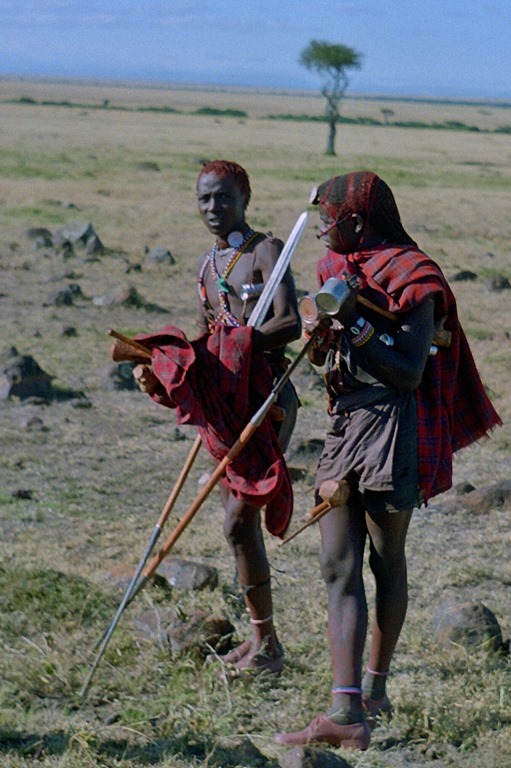
As the boundaries of  allotted farm and pastureland nudged further into the Rift, so there was competition and conflict with the pastoral Maasai. The herders anyway believed themselves masters of the Rift, shifting up and down it as need for fresh grazing and water dictated. The farming communities with whom they traded and inter-married also at times presented an alluring target. This was inspired by the cattle herders’ belief that Enkai, the creator, had bequeathed all the cattle on earth to the Maasai. For young warriors intent on proving their courage and amassing cattle to augment family honour, armed cattle raids on their farming neighbours were a matter of necessity.

It is interesting, then, that colonial aristocrats such as Delamere, who established large stock ranches in the Rift, were inordinately admiring of the Maasai, seeing them as nature’s aristocrats. It is also tempting to put this down to a congruence of world vision: recognition of a mutual case of droit du seigneur? In fact in those early days, Delamere was the only white man for whom the Maasai would deign to work, although this did not stop them from making off with large numbers of his sheep and cattle.

Scan-140502-0067

That the Rift was once Maasai territory is indicated by the many place names – Naivasha, Nakuru included – that are European renderings of Maa originals. Elmenteita derives from  ol muteita,  meaning  “place of dust” and, from time to time, this shallow soda lake does turn to dust.  At the best of times it is only around 1 metre deep. It shrinks and expands depending on the rains. But when not blowing away to dust, it extends over some 19-22 square kilometres.

The alkaline waters are rich in the crustacea and larvae that the greater flamingos feed on, and in the blue-green algae that the lesser flamingos syphon up through the top of their bills. The former have white plumage with a pink wash; the latter are more the colour of strawberry ice cream. Both honk, and grunt and mutter in a continuously shifting mass. All night you can hear them as you lie awake in your tent.

Scan-140503-0058

A view to dine for: Losogonoi Escarpment and the lake shore

*

But it is not only the bird life that make this place so special. The traditional ‘big five’ may be lacking in this part of the Rift, but it is still home to Rothschild giraffe, eland, buffalo, zebra, ostrich, impala, gazelle and a host of smaller game – aardvark, zorilla, porcupine, African wildcat. Since our time in Kenya much has changed at Soysambu. In 2007 the private Delamere Estate began operating as a not-for-profit conservation organi-zation called Soysambu Conservancy.

Delamere Camp has long gone. In its place is a new enterprise, the very expensive Serena Elmenteita Luxury Camp, a sort of out-of-Africa manifestation with bells on, the kind of set-up that intrudes a different kind of exclusivity on this piece of Kenya. But then of course there’s always the usual argument: that the provision of luxury on this scale does at least provide many, many jobs for Kenyans. Across the lake, however, something of the original Delamere Camp ethos has been re-created at the Sleeping Warrior Eco Lodge and Tented Camp – all within the Soysambu Conservancy.

In fact things have not been going well with the Delamere family. The sheer mention of the name has been enough to evoke great fury among many Kenyans. In 2005 and again in 2006, Thomas Cholmondeley, sole heir of the 5th Baron and Soysambu’s manager, admitted to shooting dead an African. The first case involved a plain clothes officer working for the Kenya Wildlife Service, apparently on the Soysambu farm to investigate a poaching incident. Cholmondeley says he thought the man was robbing his staff. Action against him was dropped.

In the second case, he caught a group of poachers with a dead impala, and said he was shooting at their dog when he fatally wounded one of the men. Later he claimed it was his friend, Carl Tundo, who had shot the poacher, and that he was covering for him. The whole sorry story was featured in the BBC Storyville film Last White Man Standing. Later the charge of murder was changed to manslaughter, and in any event Cholmondeley spent 3 years in Kamiti Maximum Security Prison, Kenya’s toughest jail. To many, though, it was thought to be far too lenient a sentence. The high profile media coverage also  reminded  millions of landless Kenyans that certain individuals had in their sole possession unimaginably vast estates. The old skeletons of racism and colonial oppression came rattling out of the cupboard to fuel the general furore, as the poacher’s widow asked for justice.

And so what in the end are we left with – a beautiful place enmeshed in tales of human intrigue, slaughter and misadventure.

I know I was lucky to spend so much time there when I did, and to see it through the eyes of the Kenyan naturalists who were my guides. I hope that many of them still work there – for Serena or Soysambu. They taught me how to watch out in that landscape: to recognize tracks of genet cat and mongoose, to poke through the little piles of dik dik droppings that marked this tiny antelope’s territory, to identify a black-breasted apalis or shy tchagra, to listen for the calls of the red-fronted tinkerbird, to know that an infusion of bark from the muthiga or Kenya Greenheart tree is good for toothache and stomach upsets, and most especially not to fall into aardvark holes as I was walking through the thornscrub.

Finally then, a few glimpses of Soysambu’s beautiful creatures.

Scan-140502-0042

Scan-140504-0002

Scan-140504-0003

Scan-140504-0004

Scan-140504-0005

Scan-140504-0009

Scan-140503-0036

Photos from bottom up:

Superb starling comes to breakfast

Waterbuck females

Dik Dik (one of the smallest antelopes, slightly larger than a hare)

Saddlebill stork, impala in the background

Eland (the largest of Africa’s antelope) and ostrich

Burchell’s zebra

Rothschild giraffe

Scan-140502-0046

© 2014 Tish Farrell

A Word A Week Challenge for more stories

Much lettered at Much Wenlock’s Poetry Festival


100_5560

These letters are knitted (I think I was responsible for the red ‘E’) and here they are adorning the cherry tree on the Church Green. This is the Wenlock Poetry Festival’s ‘Poetree’ (artistic licence rendered photo-wise) and, during this now annual April event,  everyone may compose, or write verses from their favourite poem on a luggage tag and hang it on the tree for others to read.

This year the tree has joined in the general creativity by bursting into bloom. In previous years it has been quite bare.

IMG_1050

IMG_1038

IMG_1116

IMG_1105

IMG_1032

The festival embraces the entire town, using venues at Wenlock Pottery, Methodist Church, the George and Dragon Pub, Tea on the Square Cafe, and The Edge Arts Centre. Besides the three-day programme of readings, talks and workshops with top British poets, there are verses to be found all over the place. Nearly all the shop windows host one, and they include works by local amateurs as well as the more famous.

IMG_1026

IMG_1100

And then there are the ten Dada Poetry Orienteering spinners (including 2 mystery ones) sited about the town. They comprise phrases culled from printed matter – from the Declaration of Human Rights to a tea wrapper. Visit some or all and, with random spins of the pointer, create an on-the-spot composition.

100_5594

And when inspiration needs a further boost, then there are refreshments on hand, not only at the Poetry Café in the Priory Hall, but at the town’s ancient inns, and traditional tea rooms.

IMG_1080

IMG_1058

And here we come to the heart of the festival, the town’s famously much loved independent book shop, Wenlock Books. Its owner, Anna Dreda, has been the primary driving force behind the festival, enticing, Carol Ann Duffy, Britain’s Poet Laureate, to be the festival’s founding patron. The festival is now in its fifth year, and involves the efforts of many dedicated volunteers who put in many months of work to ensure its continuing success.

And so for a small town of less than 3,000 people, we are astonishingly well-lettered, and much of this is down to Anna, who throughout the year (and quite apart from the poetry festival) lures young and old into her lovely shop to take part in reading groups, listen to stories being read, or chat with authors. Coffee and biscuits are ever on offer, and sometimes even a Tea and Toast Breakfast. Last year, too, Anna was invited to meet the Queen during a celebration of British contemporary poetry.

IMG_1054

Anna Dreda.

Anna Dreda of Wenlock Books

*

Sadly, you have just missed this year’s festival, but now that you’ve glimpsed a little of what’s on offer in Much Wenlock, check out the festival website below and make a date for next April. But before you leave, a few more views of lettered Wenlock:

IMG_1069

IMG_1071

100_5579

IMG_1079

100_5606

See you at the sixth Wenlock Poetry Festival 2015


Related:

Wenlock Poetry Festival

Wenlock Books


Go to Daily Post Weekly Photo Challenge for more LETTERS

Panthera leo: top predator, or would that be us? Happy Earth Day!


lion_Ngorongoro_178

“The earth is the mother of all that moves, and is the common bond between the generations that have been, are , and are to come.”   

Kikuyu ethic

Happy Earth Day

Frizz’s tagged ‘P’ challenge

#earthday


Uluru on top of the world: one view, several perspectives

“Then the earth itself rose up to  mourn the bloodshed—this rising up in grief is Uluru.”

Norbert C Brockman Encyclopedia of Sacred Places

*

Scan-140419-0006 - Copy


This striking eruption of earthly sorrow is only one of the stories that the Anangu people of Australia’s Northern Territory tell about the origin of Uluru (also known as Ayers Rock). Uluru is a sacred place in their tribal land. It is now part of the Uluru-Kata Tjuta National Park, which since 1985 has been jointly managed by the Australian Government and the Anangu people. In Brockman’s version of the origin story he says that back in the time of ancestral spirits, two tribes were invited to a feast. But on the way, the guests became captivated by a group of Sleepy Lizard Women and lingered at a waterhole where Uluru now stands. The party hosts took umbrage at their guests’ nonappearance and, feeling insulted, sang evil into the mud they were moulding until it sprang to life as the dingo. Next, a terrible battle broke out and all the tribal leaders were killed. The spilling of their blood caused Uluru to rise up.

Scan-140419-0006 - Copy (3)


Geologists will of course give another explanation. They will say that Uluru is an inselberg, literally an island mountain, a sandstone dome that is the sole remnant after the slow erosion of a mountain range. Tourist guides will tell you that it is Australia’s most famous natural landmark, that it rises over 300 metres above the flat desert scrub, that the tough trek to the top is 1.6 km, and the walk around the base over 9 kilometres.

As I write these facts and figures, I feel myself becoming irritated. Surely they are not the point. I begin to see a little of why the Anangu people do not want people scrabbling all over the place. Come there, by all means, they say. But do not climb. Watch and listen. This is the place where several songlines intersect, and where many sacred ceremonies are performed. It is filled with great meaning and resonance.

Scan-140419-0006

Genetic studies have shown that Australia’s indigenous people arrived in that land some 50,000 years ago. In all that vast expanse of time, and until the arrival of Europeans, their cultural view was presumably uninterrupted. They lived a hunter-gathering life well fitted to a demanding environment. There were people living around Uluru 10,000 years ago. What to European newcomers appeared utterly undeveloped and primitive, was rich in metaphor and codes of conduct. And if I have rightly understood what the Anangu people say (see the links below), then physical reality, metaphor, and time itself are meshed as one. Past, present and future are all part of the becoming that began with the first ancestral spirits.

Scan-140419-0006 - Copy

In the beginning, then,  the earth was flat and featureless. Next came the spirit ancestors who took the forms of people and animals. In their wanderings across the surface of the world, they instigated acts of both creation and destruction. These brought into being the physical landscapes we see today. They are journeys of becoming, iwara or songlines, and through them was engendered  the law, tjukurpa (chook-orr-pa).  These are ethical pathways, ways of being and doing that honour the interconnectedness of all things; the relationships between plants, animals, humans and the land itself.  The law is remembered and passed on by elders to the rightful inheritors through song, art, stories and ceremonies.

One can see, then, why the Anangu people might feel that the word ‘dreamtime’ does not do justice to the meaning of tjukurpa (law). To the European mind the term suggests something fey and otherworldly. Yet in the physical sense Anangu law is absolutely worldly; it is about showing responsibility towards the land and all living things; honouring existence. This, I would suggest, is the kind of moral geography that we ‘Rich-Worlders’ could do well to acquire—and PDQ? Our trail of destruction across the planet speaks for itself. Our presumption of being ‘on top’ in the civilization stakes is more than a little flawed. We forgot a few hundred years ago to leave only our footprints.

Scan-140419-0006 - Copy


For more about Anangu culture go HERE and HERE and HERE

copyright 2014 Tish Farrell

Weekly Photo Challenge: on top

Seasons’ Round in Nice, Cote d’Azur


“…there is less rain and wind at Nice, than in any other part of the world that I know; and such is the serenity of the air, that you see nothing above your head for several months together, but a charming blue expanse, without cloud or speck.”

Tobias Smollett Travels Through France And Italy 1764

*

100_1234

Umbrellas beside the Promenade des Anglais, round-topped palms and the cupola of the Hotel Negresco against a china blue sky. Where else but Nice.

*

Nice is pretty much a year-round travel destination, a fact first discovered in 1731 by members of the English aristocracy. Lord and Lady Cavendish were the trendsetters in question, and from the time of their visit onwards, anyone who was anyone began to spend the winter season there. By 1860 there were 704 foreign families wintering in this way. Of these, 252 were English, and 128 were Russian. There were lesser numbers of well-heeled Germans and Americans. The arrival of the railway in 1864 further helped to boost upper class tourism, making it possible to leave London Bridge Station at 7.40 on a Monday morning, and reach Nice by Tuesday suppertime. 

The benign climate and shiny bright days also made it popular with convalescents,  the “pale and listless English women and listless sons of nobility near death” as French historian Paul Gonnet described them. Very soon then, and in response to this influx of moneyed people,  Nice the fishing port transformed itself into Nice the fashionable resort for Europe’s elite. 

Among that elite was an elderly Queen Victoria. She travelled under the name Lady Balmoral, although heaven knows why. There could have been no failing to notice her arrival, coming as she did in her own train, accompanied with up to a hundred staff, and her Scottish pipers piping her in. Full warning of her advent was further marked by the forward arrival of her bed.  In 1895 and 1896 she spent her spring sojourn in The Grand Hotel, Cimiez just outside Nice. But for the next three years she and all her royal household would occupy, through March and April, the entire west wing of the Hotel Excelsior Regina Palace.  This was a brand new hotel, built with the Queen specifically in mind, it being well recognized that Lady Balmoral’s continued patronage of Nice did much to boost local business and encourage tourism. By the end of the 19th century the city’s population  reputedly increased by 80,000 during the winter months.

100_1299

One wing of the vast Hotel Excelsior Regina Palace, now apartments.

*

One of the things that most people know about Queen Victoria is that she was tiresomely dreary for years after Prince Albert’s death. When in Nice, though, she underwent a complete  transformation, girlishly taking part in local festivities, driving around in a donkey cart that allowed her to explore byways  too narrow for her carriage, inviting the scarcely respectable Sarah Bernhardt to put on a private performance, handing out presents to all and sundry. In fact she brought with her to France a trunk filled with watches and chains, pens, inkstands, portraits and cigarette holders. These she bestowed on all ranks – from hotel staff upwards, while keeping account of who had received what so she would not give anyone the same thing twice. On her death bed she famously said, “If only I were at Nice, I would recover.”

Hotel Negresco, Promenade des Anglais

In the 20th century, the Cote d’ Azur became the haunt of the avant-garde: Matisse, Picasso, Stravinsky, Diaghilev, Ernest Hemingway, Henry Miller, Gertrude Stein, Chagall. In later life Matisse had a studio in the The Hotel Excelsior. But for travellers and tourists, the hotel to stay in was, and still is  for that matter, Le Negresco.

It was built by Henri Negrescu (later Negresco), son of a Romanian innkeeper,  and opened for business in 1913.  In the first year the hotel made a profit of 800,000 francs in gold, but then came war, and Negresco turned the place into a hospital. He died, penniless, a few years later. His hotel, though, goes from strength to strength. Its past guests include Louis Armstrong, Salvador Dali, Princess Grace of Monaco, Queen Elizabeth II, Duke and Duchess of Windsor, the Beatles, Ava Gardner, James Dean, Frank Sinatra, Edith Piaf, and Michael Jackson.

When we visited Nice a few years ago we saw no one famous in the bar or foyer. In fact it was all rather quiet. We decided to have dinner in the hotel’s very bizarre brasserie, La Rotonde. As you can see, it’s an inside-out carousel in overdone pink.

100_1348

La Rotunde bistro at the Negresco

La Rotonde brasserie, Hotel Negresco

*

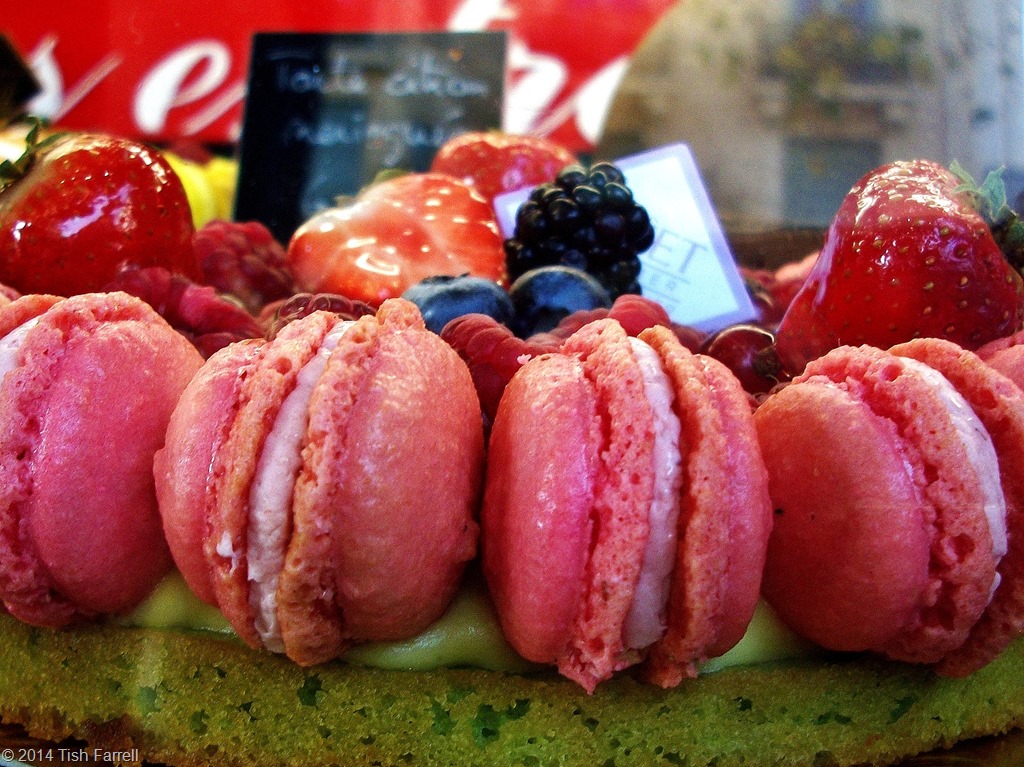
Every hour, parts of the decor come to life, fairground style, while a life-size figure of a girl in an ill-fitting smock and straw hat rotates in the centre of the dining room. We found it all rather  perplexing, and the food was not good enough to distract us from feeling we were in the wrong place. In fact there were much nicer things to eat, or at least look at along the streets of Vieux Nice. And as it happens, most of them were round.

100_1380

100_1374

100_1386 (2)

100_1383

100_1382

100_1384 (2)

bonbons


Easter Greetings Everyone


AILSA’S TRAVEL CHALLENGE: ROUND

A Word A Week Challenge: Round for more round posts

Nancy Merrill Photography

Snap Thoughts

It’s not what you look at that matters


Reference:

Michael Nelson 2007 Queen Victoria and the Discovery of the Riviera

© 2014 Tish Farrell

Of Monumental Mysteries

“The past is a foreign country: they do things differently there.”   L P Hartley The Go-Between      

Scan-130804-0007


Scan-130804-0012

So what’s the mystery here? No, not that strange woman in a Welsh felted hat doing tai chi. (Actually,  I think I may be in the process of ‘grasping the sparrow’s tail’ Yang-style long form. I’ve rather forgotten).  I remember, though, the icy winter’s day, and the absolute stillness, and the hazy blue views of Wales over the border from my Shropshire homeland, and the feeling that this circle of ancient stones was a special place; that it stirred in me the sense that doing tai chi here would be a good thing.

I have written before about Mitchell’s Fold Bronze Age stone circle,  and you can find the witchy legend associated with it  HERE.  Historically speaking, little is known about the stones  beyond the fact that they were raised some 4,000 years ago. The surviving fifteen stones form a rough circle, although there may have once been as many as thirty. The tallest survivor is said to have originally been one of a pair, and so formed some kind of gateway or threshold at the circle’s edge.

These henges are, on the whole, unfathomable. There is no knowing how the people, who toiled to build them, made use of them, or what their precise significance was in their daily lives. The elevated location of Mitchell’s Fold, with its sweeping vistas, suggests to us a sacred function. There are also possibilities that the stones’ particular alignment served as some kind of calendar, marking solar and lunar events. And, for more prosaic purposes, in a world without maps and SatNav, prominently sited megaliths may also have provided travellers with landmarks to keep them on course through the upland wilds. The Bronze Age was, after all, a time of intinerant smiths and artisans who covered great distances to trade their goods and services.

Scan-130804-0041

This is borne out by the fact that not far from Mitchell’s Fold, just over the Welsh border in Powys,  is the Cwm Mawr Bronze Age axe factory. The distinctive looking axe-hammers that were made here have been found across Wales and England, their discovery demonstrating an extensive trading network. Nor is this henge an isolated monument in the immediate landscape. There are numerous cairns and two further stone circles nearby. This seemingly remote place, then, was very busy some four millennia ago.

As a Prehistory undergraduate, also in times long past, I spent three years in Sheffield University lecture theatres looking at images of barrows, chambered tombs, henges, hillforts, cist burials, urn cremations and other ancestral relics. This being the era of slide projection, the photographs were often shown upside down and back to front; it became a standing (or otherwise) joke, looking at remains from an inverted position. The fact is though, however you looked at them, their intrinsic meaning  could  not be divined. All that might be said is that these mysterious constructions were of immense importance to our forebears. We know this because of the great effort involved in their making; these were people who, by our standards, had very limited technology.

033

And so here is another example of megalithic mystery. This is the late Stone Age (Neolithic) Lligwy burial chamber on Anglesey in Wales. Excavation in 1908-9 uncovered the remains of 15-30 people, along with pottery that provided the dating evidence. It is estimated that the capstone weights 25 tonnes. This is truly mind-boggling. How did people without cranes lift this monstrosity onto the supporting stones? How  many people did it take? Wasn’t the population in prehistory supposed to be small?

Of course experimental archaeology has demonstrated that much may be achieved with the cunning use of tree trunk rollers and various simple pulley devices combined with muscle power. But even so,  the Lligwy burial chamber is surely  a triumph of human will  over an absence of hydraulic lifting gear. In this era people had only stone tools.

So yes, the past is a foreign country, and people did do things differently there, and in ways we cannot possibly know. And if I learned anything from three years of studying Prehistory and Archaeology it was not to judge people by their limited toolkit. These people were as intelligent as we are, maybe more so, since there was a greater need to apply it at all times.

Our current understanding of these  monuments may be fragmentary, wrong-headed even, but shouldn’t this be all the more reason to keep these ancient places safe? At this present time in England our heritage is daily under threat from a government that wishes to build its way out of  recession.  Worse still, current laws allow developers to take local authorities to judicial review  if their  planning applications are refused.

To avoid  incurring huge costs to the public in legal representation, local authorities are now being pushed to grant planning permission in close proximity to unique monuments.  At present, in Shropshire, the setting of  2 major sites  is under threat: Old Oswestry Iron Age hillfort, and the post-Roman Offa’s Dyke. Why this is happening is of course absolutely no mystery at all.  The past has cachet. It is a highly sellable ‘commodity’. Let’s sell it off, why don’t we?

© 2014 Tish Farrell

Related:

Valuing the Past: How  much for Old Oswestry Hillfort?

Open to Offa’s: yet another piece of Shropshire’s heritage at risk  in The Heritage Journal  along with many other excellent articles


Weekly Photo Challenge: Monument

Colourbridge

Life is great

Leya

Travel Garden Eat

PonderTheIrrelevant

The Human Rights Warrior

FRIZZ’S TAGGED ‘O’  GO HERE FOR MORE ‘O’ STORIES