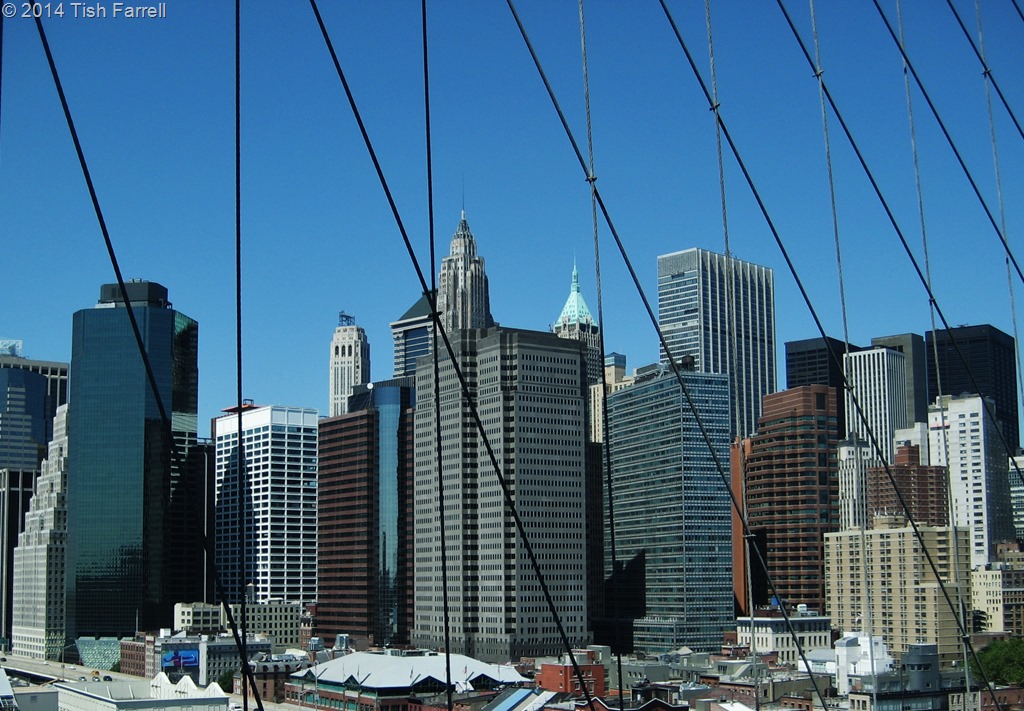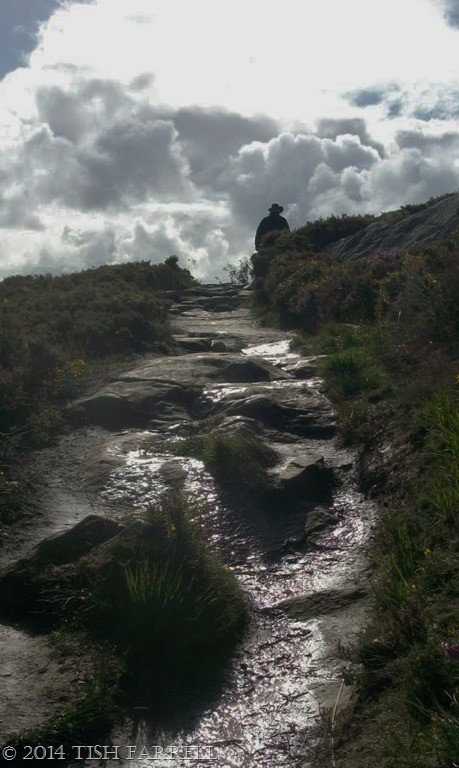
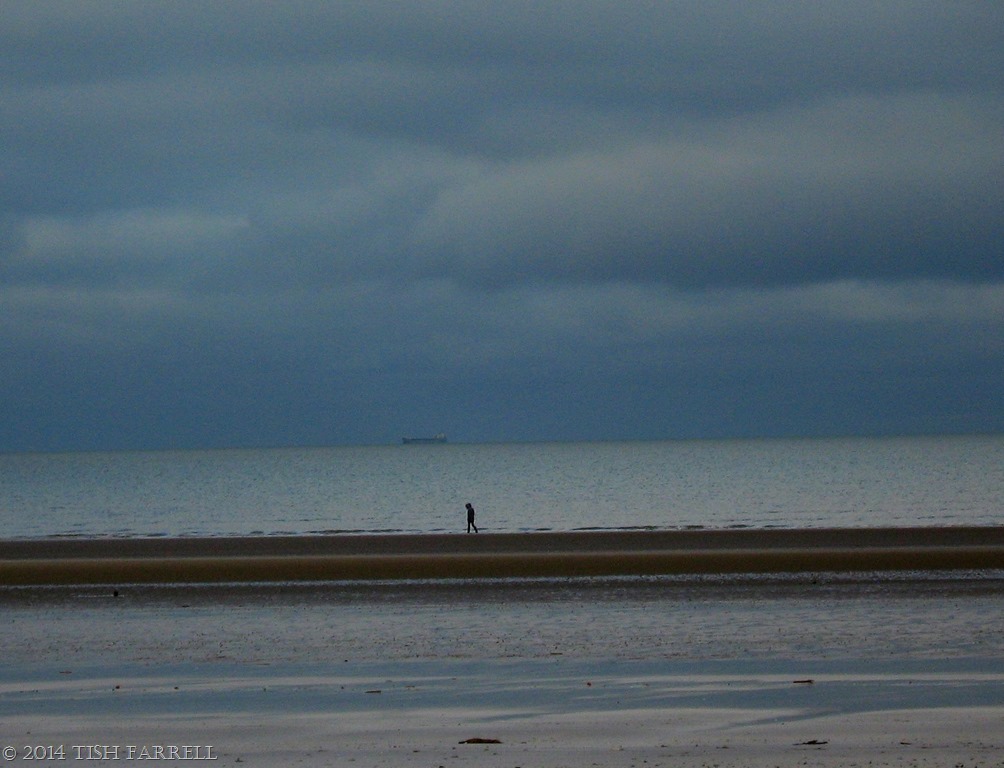
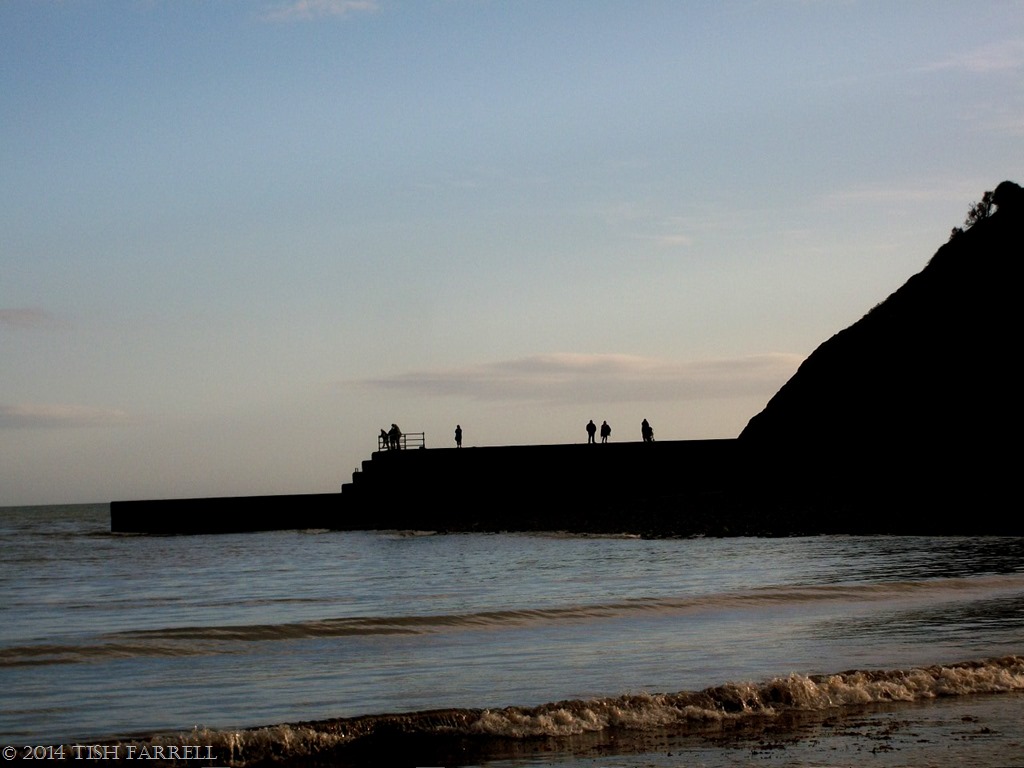
I love the stark expanse of landscape in all these shots, the inconsequence of humanity; and also a certain sense of mystery…

I love the stark expanse of landscape in all these shots, the inconsequence of humanity; and also a certain sense of mystery…
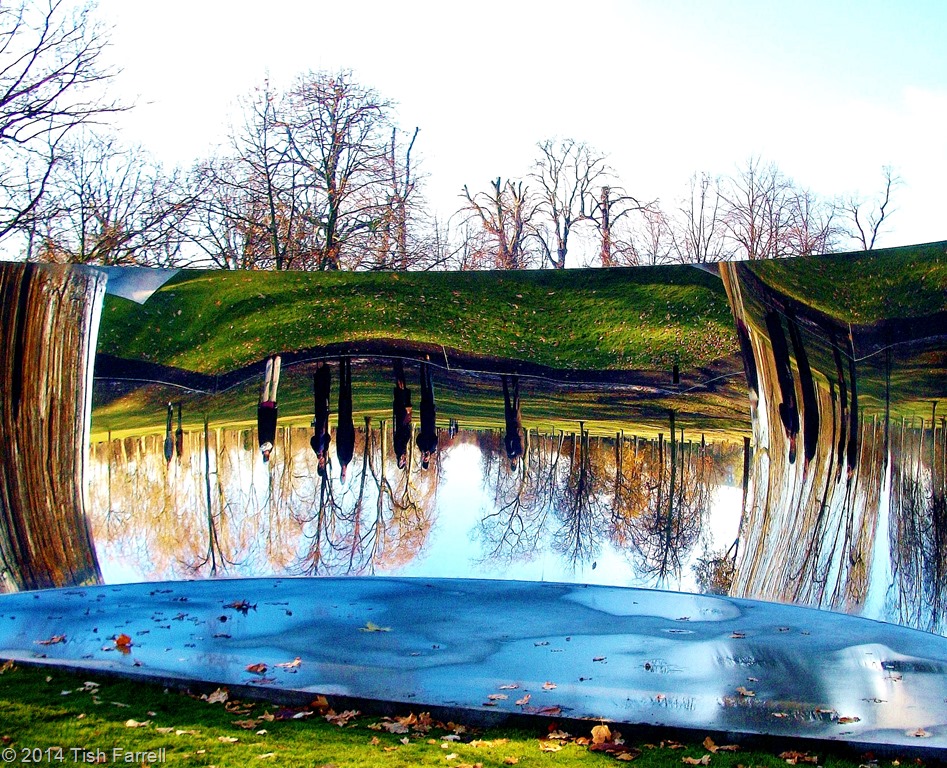

These photos of the C-Curve by Indian sculptor, Anish Kapoor, were taken on freezing cold winter’s morning in London’s Kensington Park. The marvellous stainless steel creation was one of four Kapoor pieces sited across the park for the Seeing the World Upside Down exhibition hosted by the Serpentine Gallery and Royal Parks in 2010-2011.
Some of you will have seen these shots in earlier posts, but I thought they were perfect for Cee’s challenge for all sorts of reasons. For one thing, the stark silhouettes of trees say ‘winter’, but the bright sunlight also says that life goes on; and the trees themselves, though dormant, are still full of life. I also like the reflections of the couple and the trees in the puddles on the plinth, and the reflections of the puddles in the sculpture. It is all so playful, yet reflective too – and in every sense.
Cee’s Fun Foto Challenge: water or the season of winter Go here to see more bloggers’ takes on this challenge
![Makokos-Floating-School-NLE-2[1]](https://tishfarrell.com/wp-content/uploads/2014/08/makokos-floating-school-nle-21.jpg "Makokos-Floating-School-NLE-2[1]")
Photos © 2014 NLÉ
![Makoko_approach-960x550[1]](https://tishfarrell.com/wp-content/uploads/2014/08/makoko_approach-960x5501.jpg "Makoko_approach-960x550[1]")
And what is this extraordinary structure?
Why, a floating school of course. It is also a prototype building created by Nigerian-born architect, Kunle Adeyemi and his Amsterdam-based company NLÉ. Adeyemi has more plans too, ones that will relieve the dire conditions for the 100,000 people who currently live in this, Nigeria’s Makoko slum. The fishing settlement in Lagos Lagoon has been there since the 18th century. To cope with changing tidal levels, the shanties are built on stilts, rising from the lagoon mud; the main way to get around is by boat. There is zero sanitation, and consequently much disease. Life expectancy is reckoned to be less than 40 years.
For the past two centuries Makoko slum dwellers have adapted to tidal changes, but now climate change, with rising sea levels and increasingly extreme weather events, is putting them at grave risk.
Recently the Nigerian authorities have addressed their plight by demolishing many of the stilt-built dwellings, making the inhabitants homeless. There will be re-development naturally – not for the poor who have long lived there, but to replace their community with flashy lagoon-view high rises. Makoko as it stands is deemed a blot that must be erased. It is an interesting approach to social deprivation: to make it worse.
![_61618156_a1zaixbb[1]](https://tishfarrell.com/wp-content/uploads/2014/08/61618156_a1zaixbb1.jpg "_61618156_a1zaixbb[1]")
*
See instead Adeyemi’s vision:
![NLEs-floating-school-casts-anchor-in-Lagos-Lagoon_dezeen_14[1]](https://tishfarrell.com/wp-content/uploads/2014/08/nles-floating-school-casts-anchor-in-lagos-lagoon_dezeen_141.jpg "NLEs-floating-school-casts-anchor-in-Lagos-Lagoon_dezeen_14[1]")
Now doesn’t this make your heart sing? Homes to live for.
And here is where it begins:
![ml_schoolatSea_Makoko_d2_600[1]](https://tishfarrell.com/wp-content/uploads/2014/08/ml_schoolatsea_makoko_d2_6001.png "ml_schoolatSea_Makoko_d2_600[1]")
Diagram courtesy of NLÉ.
Makoko floating school, then, is literally the flagship of NLÉ’s proposed waterborne city. The structure was designed and built in collaboration with the Makoko Waterfront Community and with input from Dutch naval architect, Erik Wassen. It is movable, and capable of dealing with storm surges and flooding. The triangular frame which is mounted on 256 floating plastic barrels makes it very stable and with a capacity to keep 100 people safe in storm conditions. PV cells on the apex generate solar power, and there are facilities to recycle organic waste and harvest rainwater. Most importantly of all, it was built using the techniques and skills of local craftspeople. It is a building that fits with people’s view of themselves. And it is beautiful.
![Makoko-Floating-School-5-606x400[1]](https://tishfarrell.com/wp-content/uploads/2014/08/makoko-floating-school-5-606x4001.jpg "Makoko-Floating-School-5-606x400[1]")
Photo © 2014 NLÉ
The school has three levels with a capacity for 60 -100 pupils. The 1st level is an open play area for breaks and assembly. Out of school hours this space may be used by the community. Level 2 is an enclosed space for 2-4 classrooms, and Level 3 has a partially enclosed workshop space.
The only fly in the ointment of NLÉ’s scheme for Makoko’s regeneration is the fact that Nigerian authorities say the floating school is an illegal structure, and should not be there. NLÉ are currently in negotiation with Lagos state government and are said to be optimistic that no immediate action will be taken.
I for one hope that this African solution to an African problem will be seen for what it is – an amazingly wonderful, life-giving, life-enhancing scheme of which Nigeria should be heartily proud. The floating school addresses both present need and future uncertainty, and in ways that its community can reproduce and embrace. It has inherent sustainability. It is a pattern to build on, adapt, develop, replicate, but on an individual human scale that everyone can understand. And as time goes on, we may all have need to tap into some of NLÉ’s ingenuity if we wish to continue living well and safely on our home planet. Town Planning that gladdens my heart and gives me hope, and believe me, that does not often happen.
text copyright 2014 Tish Farrell
Further info:
![Kunlé-Adeyemi_1c_Photo-by-Reze-Bonna-293x400[1]](https://tishfarrell.com/wp-content/uploads/2014/08/kunl-adeyemi_1c_photo-by-reze-bonna-293x4001.jpg "Kunlé-Adeyemi_1c_Photo-by-Reze-Bonna-293x400[1]")
The Architectural Review Jan 2014
http://www.nleworks.com/case/makoko-floating-school/

Today, 10 August 2014, is World Lion Day, and I’m posting this photo of a rather threadbare old lion. He might look world-weary lying here in the Mara oat grass, but he still conveys a sense of the powerful creature he once was. Of course in these days when humanity and wildlife increasingly compete for territory, it is wishful thinking to hope that all lions might live out their natural life span in the wilderness they have left to them.
DP weekly photo challenge: texture
SHOT AT GALLIPOLI, BATTLE OF LONE PINE, 8TH AUGUST, 1915
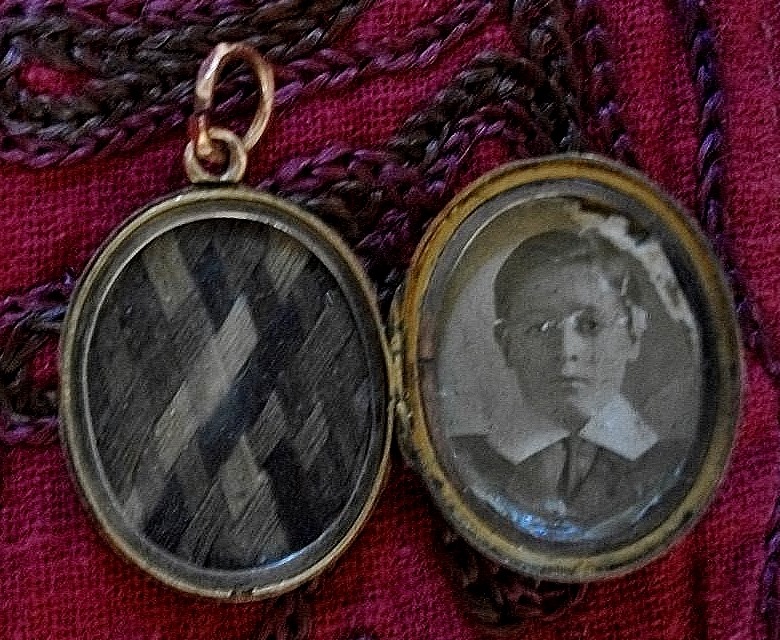
 My Great Uncle Giles (Victor) Rowles left little trace of himself on this earth. There is only this childhood photograph inside my great grandmother’s locket. For one thing he lived so briefly. Nineteen years. For another, he does not even have a grave. He was dropped from a hospital ship into the Mediterranean, two miles east of Mudros Harbour off the island of Lemnos. This happened around 10pm on the 10th August 1915 two days after admission. I know this only from the First Australian Imperial Force (1st AIF) records that the Australian National Archives have posted on the internet. I thank them for their dedication and care in making these records so freely available. I have written what little I know of Giles Rowles in two earlier posts, but I have reason to repeat it. On October 15th 1914, Cheshire born Giles (he later, and for unknown reasons, changed his name to Victor) enlisted in the 14th Battalion AIF in Melbourne, and then went directly for training at Broadmeadows. On 22 December 1914 he embarked for Egypt on HMAT ‘Berrima’, arriving there for further training in January 1915. In April the 14th Battalion took part in the landing at Gallipoli, and so began the hell-on-earth siege that achieved nothing but the pointless deaths of thousands of brave young men – Australian, New Zeleanders, French, British and Turkish.
 ![480_2[1]](https://tishfarrell.com/wp-content/uploads/2014/08/480_21.jpg "480_2[1]")
Landing at Anzac Cove 1915. Photo: localhistory.kingston.vic.gov.au
*
Conditions at Gallipoli were unspeakable; it was a case of death by sniper, grenade or disease. Giles survived long enough to also take part in the August Offensive. This involved the Australian and New Zealand Army Corps moving up the coast from where they had been dug in for months to attack two peaks of the Sari Bair range while the British and French forces defended Helles. Giles it seems was hit by a Turkish sniper. In the military records he is listed as Private Victor Rowles no. 1402, admitted to the hospital ship Devanha with gunshot wounds. Two days later he was dead. There are several mysteries here. The first is how did this English lad end up volunteering with the AIF in Melbourne? The last certain record I have of Giles on English soil is from the 1911 census. He is listed as 15 years old and working as an apprentice clerk for a shipping broker in Cardiff. He is living with his widowed aunt, Louisa Rowles of 10, Despenser Gardens, where his older cousins, Beatrice a spinster, and John, a shipping agent also live. He is named after his uncle, Louisa’s late husband, Giles, a mariner. The Rowles family, it seems, have generations of seafaring connections. Giles’ own father, Charles, was a retired ship’s captain, and thereafter a pilot on the Manchester Ship Canal. He was my great grandmother’s second husband. As a young widow with three small children and a stepson, Mary Ann Williamson Shorrocks (née Fox) ran the Old Red Lion Inn and farm in Hollinfare (Hollins Green), Cheshire. Her father or brother, (both were named George Fox), had taken up the license in 1894, a year after selling up the family farm of Callow in Derbyshire. At this time Mary Ann would have still been in mourning for her first husband. He had died in his late thirties, a bankrupt shuttle manufacturer. It seems that the Fox family had secured the inn on Mary Ann’s behalf to ensure she had an income. It stood beside a then busy thoroughfare to Manchester, overlooking the new Ship Canal, which doubtless explains how the pretty young widow soon came to catch the eye of one Charles Rowles. 
Mary Ann Williamson Fox at Callow Farm, Hathersage, Derbyshire sometime before her first marriage to Thomas Shorrocks, a Bolton spindle manufacturer.
*
The sea captain was much older than Mary Ann, a widower with two grown-up daughters. They married in 1895, but by 1903, when Giles was only seven years old, Charles Rowles lay buried in Hollinfare’s quiet little cemetery. Six years later, Mary Ann joined him. She was forty six. She had died of heart disease at her stepson’s house in Moss-side, Manchester, where her simple-minded sister, and the three Shorrocks children (including my grandmother) also lived. Whether Giles went to live with his Rowles relatives before or after his mother’s death is not known. Certainly he would have finished at Hollinfare village school at twelve years old, and the photo in the locket could well date from that time. It seems likely that the chance of a secure career in the shipping business prompted the move. In 1912 there is a passenger list record for one G. Rowles travelling as labour to Halifax, Canada on the SS Hesperian, but there is no conclusive evidence that this is Giles. I could anyway find no evidence of his arrival in Canada, although if he had signed on as crew, he could have sailed onwards to Australia. A comment by a now deceased aunt repeated the family story that he had chosen to settle in Australia, and this line of enquiry remains to be followed up. By the time Giles enlisted in Melbourne, he had changed his name to Victor. On the enlistment papers he calls himself a sailor, and responds to the question of whether he had ever served an apprenticeship, with a decisive ‘NO’. And perhaps this is the reason for the change of name. Perhaps he broke his apprenticeship, and used the knowledge gained in the shipping office to find a ship and run away to sea? The Broadmeadows medical officer records him as being eighteen years and seven months, 5 feet 5 and a quarter inches, and 135 pounds in weight. His complexion is described as ruddy, his eyes green and hair brown. His only distinguishing marks are two vaccination marks on his left arm. The reason he has given Aunt Louisa Rowles as his next of kin is also a mystery. She was not in fact a blood relative, and I know for a fact that his Shorrocks half-siblings adored him. It must have been they who had the tribute to Giles added to his parents’ gravestone in Hollinfare.  On his death, records say a brown paper package containing Giles’ few effects – a handkerchief, pipe, cigarette case, manicure-set, letters and photos, was later sent to Aunt Louisa, followed by his three service medals, a memorial scroll and plaque. All these items are now lost. He is nonetheless commemorated in his ill-fated name of Victor at Lone Pine Memorial, Turkey and on the Australian War Memorial at Canberra. On his parents’ and grandfather’s stone in Hollinfare it says: “Pte Giles son of the above Charles and Mary A Rowles, who died of wounds received at the Dardanelles on August 10th 1915 aged 19. He hath done what he could.” And why am I posting this story once again? Well surely someone knew Giles Victor Rowles? He must have had mates – at sea, at Broadmeadows, at Gallipoli. Did not some girl love him? Doesn’t his name occur in a fellow private’s letters home? Is there not some diary entry that mentions him? Doesn’t anyone know what happened to his medals? The photo in his mother’s locket shows a boy with determination. His gaze is direct. He looks cherished. And it is his photo in the locket, and not one of his half-siblings. On the other side of the locket, delicate strands of hair from all five children – Robert (stepson), Mary, Lilian, Thomas Shorrocks and Giles – are woven together. Mary Ann would have been able to identify each child from the varying shades of blond and brown. This small locket, then, contains the only physical evidence of Giles Rowles’ existence.
  #nogloryinwar
copyright 2014 Tish Farrell
BY ALL MEANS SHARE THIS POST, BUT PLEASE ACKNOWLEDGE MY COPYRIGHT
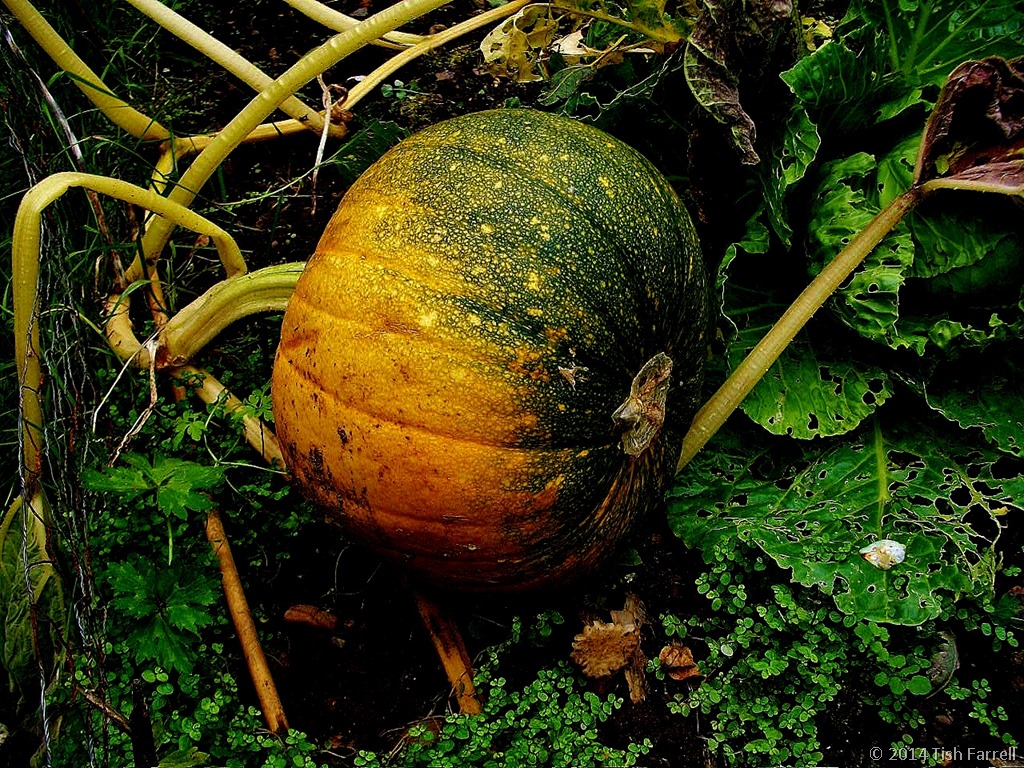
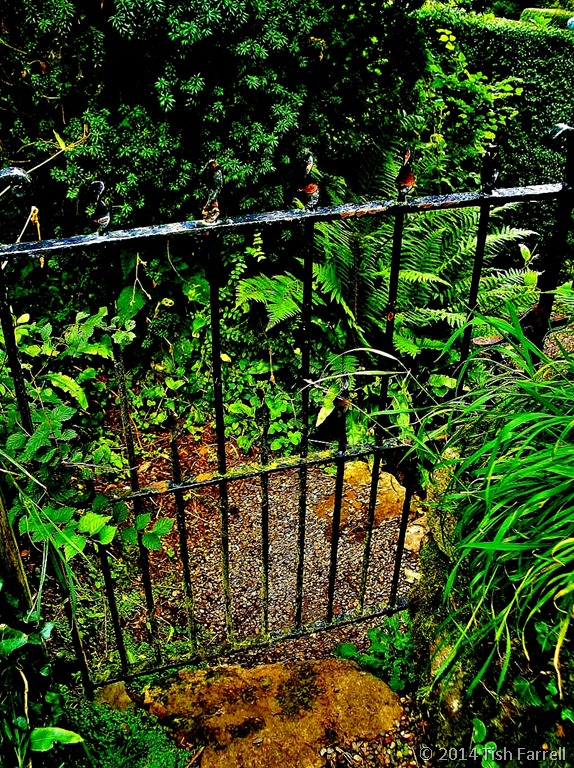

I feel there is a sense of ‘drawing in’ in all these photographs; of summer’s end and winter on the way: a sense of season’s decay before renewal.

You can’t have a good party, even one with a negative cast, without some games. And here are a few that might unblock the block. And if they seem a tad childish, who cares? So much writer’s block is down to that domineering, sneery, superior, judgemental inner critic. Time to banish the rotten killjoy and play.
It’s in the cards…
This first game takes quite a bit of preparation, but this in itself will help with the loosening up process. Since you need lots of paper cut into small pieces, it is a good thing to do with several similarly afflicted friends. You are aiming for something credit card size. Three different colours might make it more interesting. How many ‘cards’ you have is up to you, but the more you have, the more possibilities you create.
Divide the cards into three equal piles. These will be your 3 main story ingredients: protagonist, place, artefact. Work through each pile, writing down one possible protagonist on each of the protagonist cards, then the same for the ‘place’ and ‘artefact’ piles. DO NOT think about these. Write down first thoughts.
My first thought protagonists are: Captain Cook, Death, a leopard, Miss Marple, a hoover salesman. Places could be: ice cream parlour, the morgue, planet Europa, the subway, the Gobi desert. And artefacts: a Bronze Age sword, a hat stand, thimble, memory stick, goldfish bowl…
Shuffle the cards in their individual piles and place face down. Every player deals themselves a card from each pile, and weaves the three prompts into a story. The dafter the better. This is all about letting go.
Story-time ~ old lamps for new…
Everyone has a favourite fairy story, but how about turning it on its head. And inside out. Or back to front. Why not re-tell Cinderella from the point of view of one of the mice who gets turned into a fine white horse so he/she may help pull the heroine’s coach to the ball. How does the mouse feel about this transformation. Is it a grave disappointment to return to mousedom at midnight? Or what about Aladdin’s genie? How does he feel about all the conjuring, and being ordered about by a mere youth? Perhaps he’s a female genie who colludes with the wicked magician to retrieve the lamp…Think laterally.
Out of the hat…
Making funny hats is an excellent party activity. You’ll need lots of disparate makings: card, sellotape, coloured pens, scrap fabric, glitter…Create from anything to hand – viking helm, coronet, turban, veil or fascinator. When finished, put it on, or swap it for someone else’s, and then conjure the hat’s owner. Who are you? Where you off to in that hat?
Have Fun!
copyright 2014 Tish Farrell
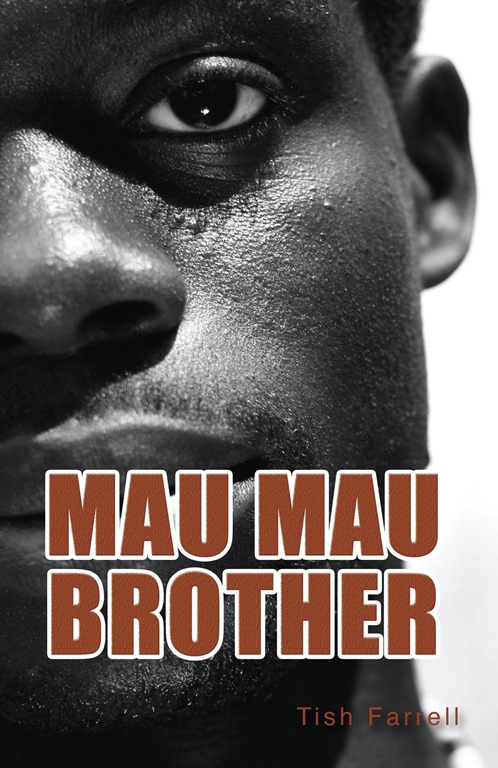
An exciting little parcel arrived last week – copies of my latest quick-read for teens (or even for adults) in Ransom’s Shades 2.0 series. It’s a small, neat book. Pocket sized. As per the Shades’ format, it is a novelised short story, the text broken down into brief chapters, the whole designed for readers who find bigger books, and dense text too daunting to tackle. The pages have much white space, and the story’s 5,000 words are spread over 64 pages, which of course makes it easier for anyone to read. The aim is to build reading muscles and so (hopefully) nurture a love of books.
But if the books are small-scale, there is nothing ‘slight’ about their content. Their themes are of adult interest too. As a writer I can think of no bigger challenge than to woo readers who would probably rather not read. It unavoidably demands your crispest most affecting prose.
I knew, too, that historical fiction can be off-putting to many teen boys. In Mau Mau Brother, then, I used first person, present-tense narrative to make events more immediate. The story tells of the 1950s uprising against British rule in Kenya as seen through the eyes of fifteen-year-old Thuo. This perspective on what happened is not widely known outside Kenya; the British authorities deliberately destroyed many records. But for Thuo there many kinds of war – not only with the British, but also with the African Home Guard, and even with his own freedom fighter brother whom he blames for all his troubles. But in the end, the biggest war he has to fight is with himself.
And now for an extract:
The British are bombing Kenya’s highland forests to flush out the freedom fighters. Thuo and his family have been driven off their farms and made to live under curfew in a fortified village. Their every move is ruled by the African Home Guard. Then one night Thuo’s elder brother, Kungu, a seasoned fighter, finds his way to Thuo’s hut. He is wounded, and sick, and Thuo is faced with the starkest choice – to inform on his brother, or risk detention and death to help him.
After the plane goes, Njonjo whispers that he’s overheard the Home Guards talking.
‘They know Kungu is near,’ he hisses. ‘Tomorrow the British soldiers will sweep this part of the Reserve.’
That night we sit in our hut ,weighed down with fear, expecting the worst. I am stunned when Kungu says, ‘I must leave now.’
‘But how?’ I cry.
This time I am more scared for him than for me. His brow glows with sweat. He still cannot walk properly.
‘The way I came, through the barbed wire.’
‘But the ditch. The stakes.’
‘I will roll down. Crawl out. Like a cockroach. Have no fear, little brother.’
‘But where will you go?’
‘A cave I know. I once shared it with a she-leopard.’
I shiver. A window on hell has just swung wide. I see the big cat’s yellow eyes, the white fangs. Then I see the falling bombs, hear elephants screaming, the rifles’ crack-crack, feel the breath of a pseudo-gangster on my neck.
The words fly from my mouth before I can stop them. But, once said, I cannot take them back.
‘I’m coming too.’
AVAILABLE ON AMAZON
FOR MORE ‘E’ WORDS STORIES
copyright 2014 Tish Farrell
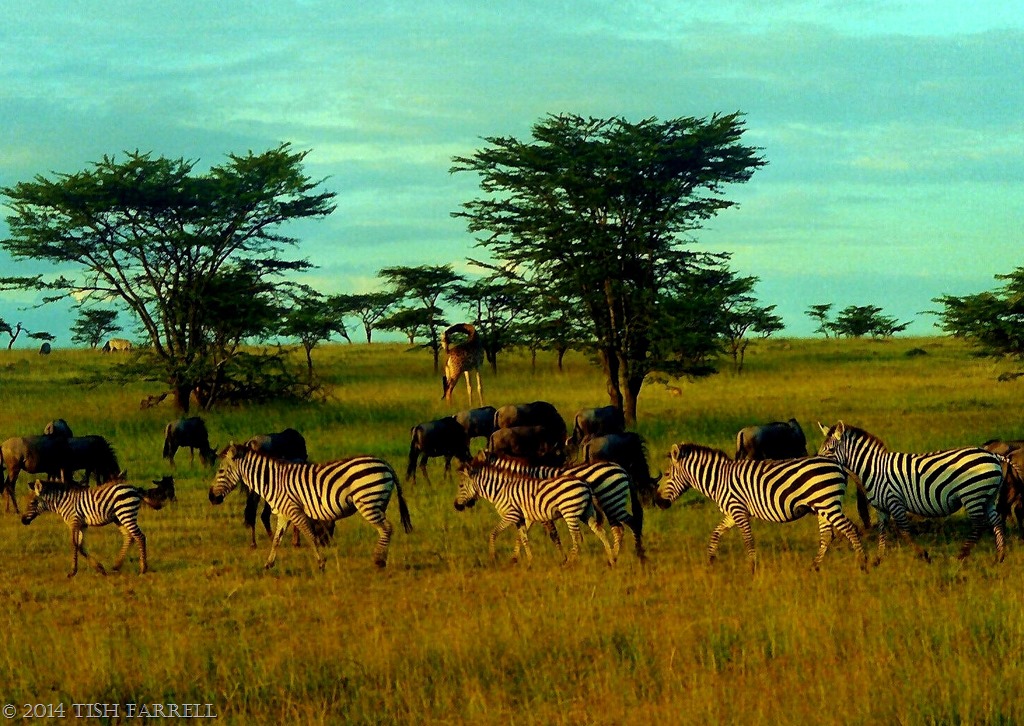
Night comes swiftly at the equator, usually at 6 to 6.30 pm. But around 5 pm there is that perfect moment when the light is like molten honey. This shot was only a quick snap, taken after a game drive, and as we were heading back to camp on the Mara River. Our driver-guide was intent on one last go at spotting a leopard. For our part, we were simply entranced by this scene. Even at the time it seemed as if we had stepped into an oil painting. Besides, this was the most game we’d seen in one place all afternoon. Because that is something that wild life films tend not to show you: that you can drive for hours across the African bush and not see a single animal.
There is also more going on in this scene than is immediately obvious. Behind the zebra are some wildebeest; then the giraffe between the thorns. I’m not sure what the pale animal is on the top left horizon, but from its size I’d say it is probably an eland. Then if you look carefully just below the right hand bough of the right hand thorn tree, you might make out a brown dog-like shape. Hyena. There will doubtless be others in the grass. Once it was thought they were only scavengers, moving in on big cats’ kills. But now they are known to be hunters too. They prey on gazelles and larger antelope. Even a lone hyena can bring down a full-grown wildebeest, and pack away 15 kilos of meat at one sitting. They have jaws like industrial meat grinders, and believe me, to come upon one at close quarters, is not recommended.
Sunday Stills: Crowd Work
copyright 2014 Tish Farrell