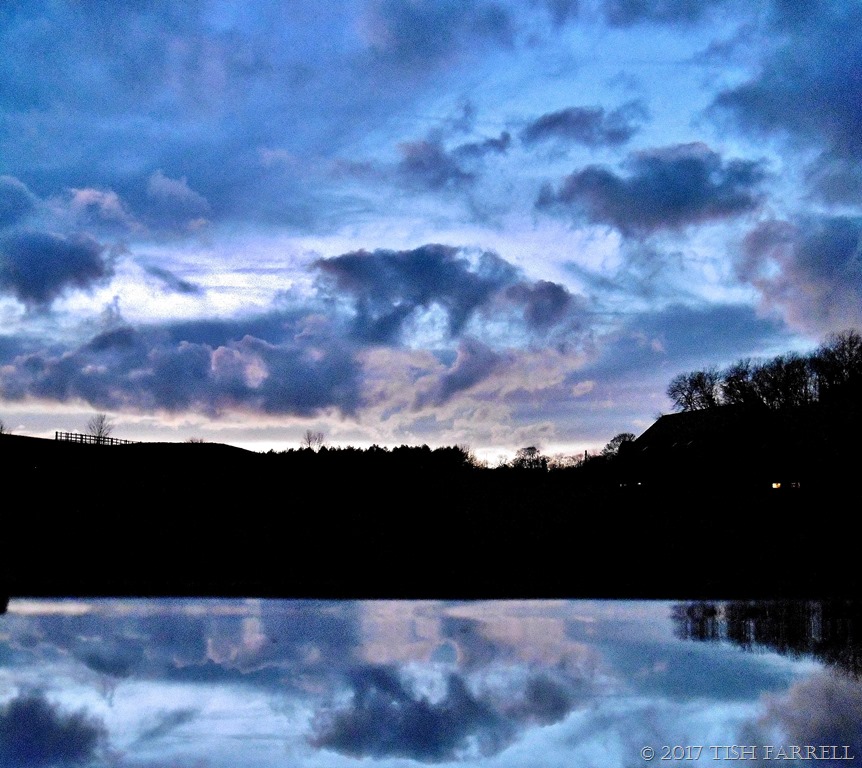
The view from my office window two nights ago, captured by placing the camera on the back of the open roof-light window.


The view from my office window two nights ago, captured by placing the camera on the back of the open roof-light window.
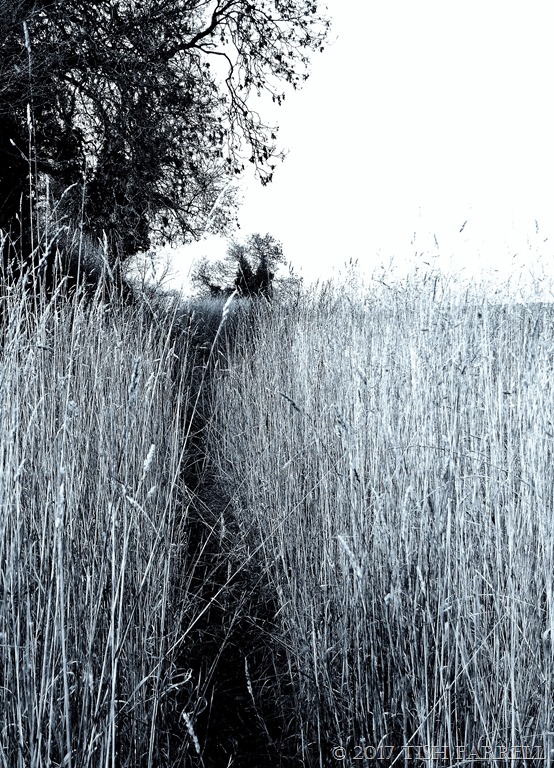
Here is a well worn path of my daily comings and going along the margins of Townsend Meadow. The visible sign: the trail of gardening not writing.
There’s an unofficial gap in the hedge beside the first ash tree, and that’s my way into the allotment. The farmer leaves a swath of uncultivated ground on two sides of the field to soak up rainstorm run-off before it hits the houses at the bottom of the hill. For a couple of years these abandoned areas were simply left to grow, hence the nose-high grasses still standing in winter. But last summer, just before the wheat harvest, the weedy wilderness was mowed. Now the only signs of my passing are muddy boot impressions among the fallen ash leaves – not quite so photogenic.
Black & White Sunday: SIGN Paula says to interpret this prompt any way we like.
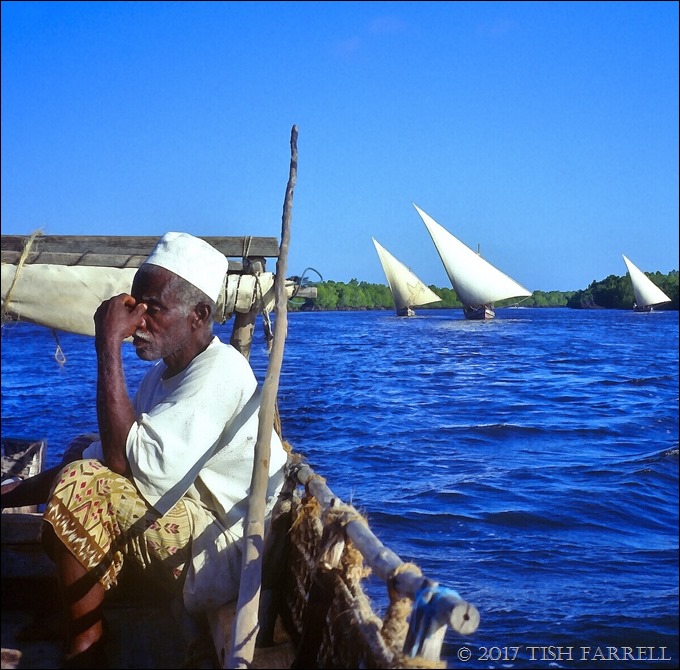
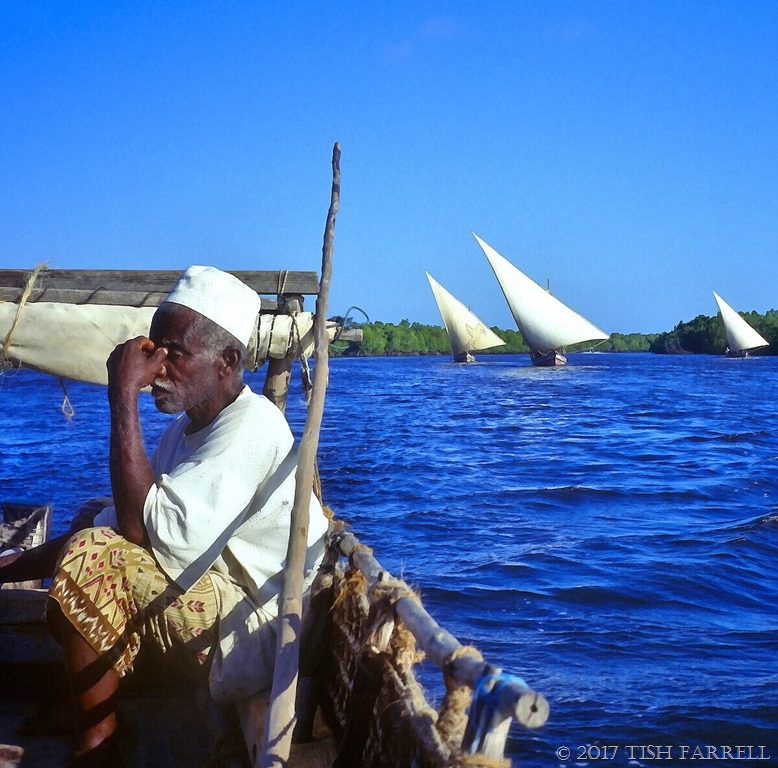
As in the previous post, this is a Christmas photo, but one taken long ago when we were visiting Lamu off the Kenya coast. I’ve posted it before, but make no excuse for showing it again. It is one of my favourite photos, and one caught in a split second with my Olympus Trip. I think the gods of photography were smiling on me.
The gentleman so absorbed is Mzee Lali, the owner of the sailing dhow. He spoke no English, nor said a word to us that I recall on our day trip out to the reef. The conversation was dominated by his nephew, Athman, who, as a speaker of English, Kenya’s official language, could hold a captain’s licence, and so take tourists out on sailing trips.
He told us that Lali was born on Pate, one of the more remote large islands in the Lamu archipelago. He knew everything there was to know about sailing, Athman said. But because he spoke no English he could not take the necessary two and half year captain’s course, and so obtain a licence.
Somehow this photo echoes the dilemma of island elders. They belong to another world in another time.
copyright 2017 Tish Farrell
Weekly Photo Challenge:Solitude
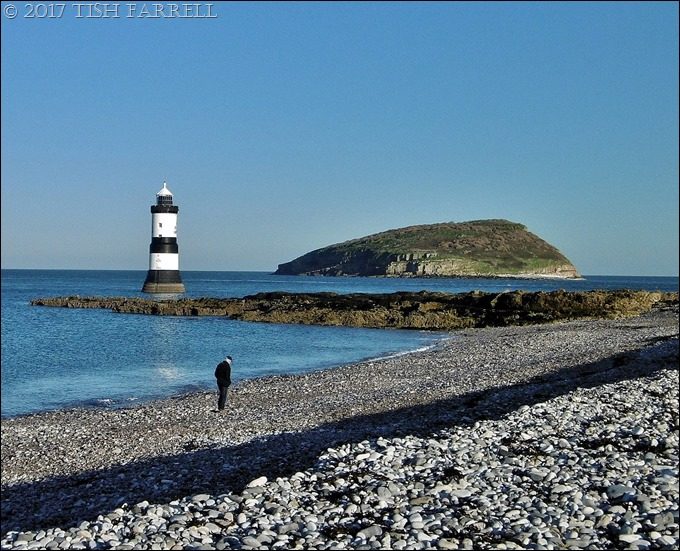

Another Christmas shot from Ynys Mon, North Wales: Penmon Point Beach with Trwyn Du Lighthouse, and sea bird haven, Puffin Island, beyond.
Weekly Photo Challenge: Solitude
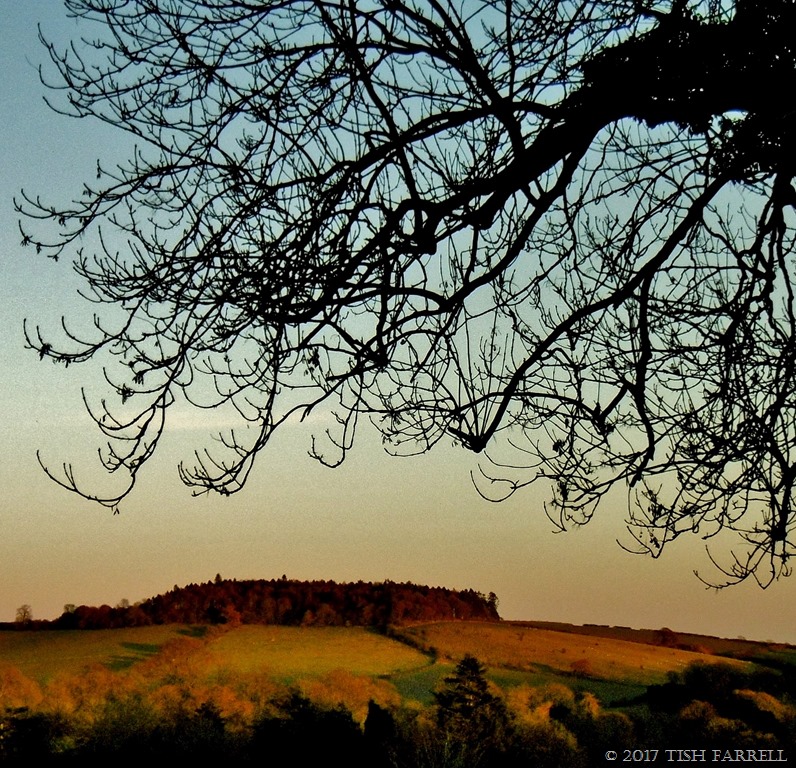
These late day views overlooking Wenlock were taken back in December. Many of the trees, especially the oaks, beeches and field maples, had hung on to their leaves, which in turn were gathering in, and reflecting the winter sun. Looking at these photos now makes me appreciate how well treed we are in our hollow beneath Wenlock Edge, this despite two thousand years of farming.
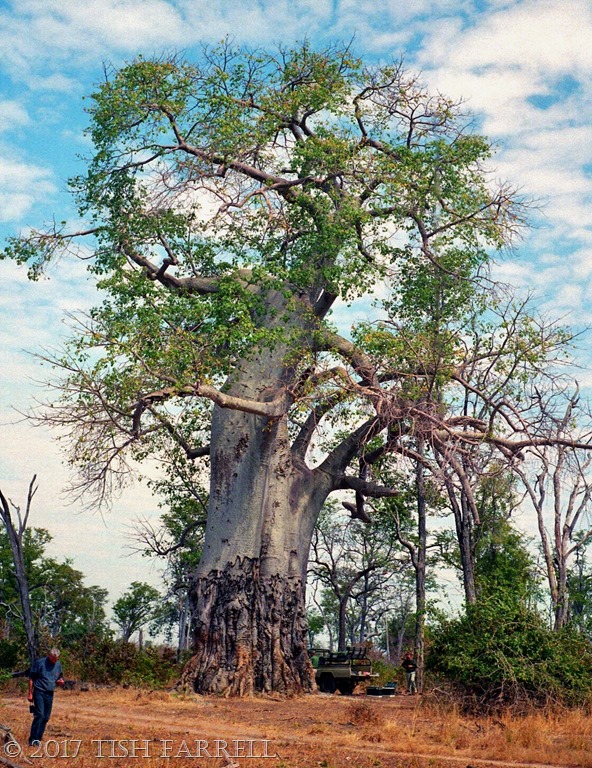
But then you simply cannot have too many. Our shamanic ancestors were wise in their conception of the world tree at the heart of all existence: trees are essential to our survival. Without them we would have a lot of problems breathing. According to science writer Luis Villazon at the BBC’s Science Focus each of us requires around 740 kilos of oxygen per year, which amounts to 7 or 8 trees’ worth.
But that’s not all. As well as providing us with the air we breathe, trees also stabilize, create and replenish soils. They support biodiversity. They affect the climate including rainfall patterns, and their destruction rapidly leads to desertification and soil erosion. They provide us with many useful products, and in the future we may come to rely on them as a source of essential and cheap medications to which everyone can have ready access.
In the light of all these arboreal gifts, going out and hugging a tree now seems an eminently sane thing to do. In fact I recommend it. At the very least, it will lift the spirits. The tree might like it too.

Please visit Paula for her February Pick A Word and be inspired. There is a choice of five prompts, each of which she illustrates superbly: radiating, alimentary, frontal, arboreal, remote.
copyright 2017 Tish Farrell
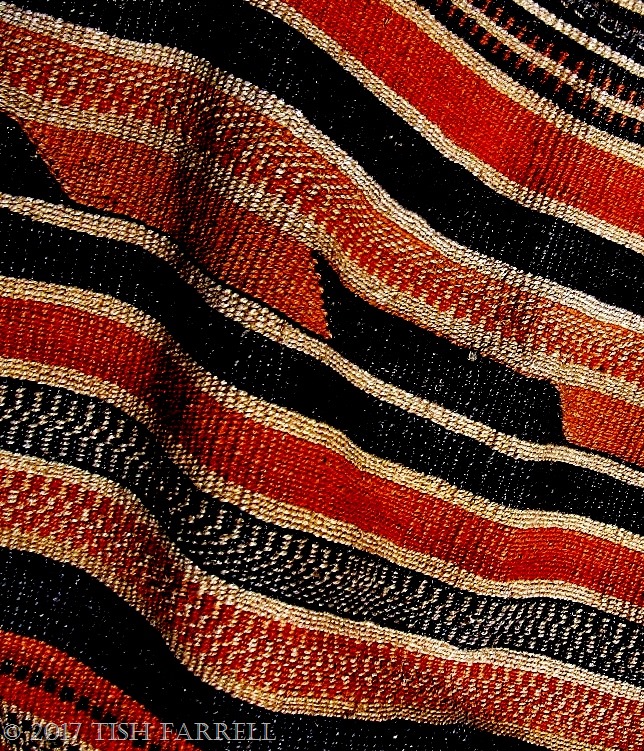
I could have written about my compost heaps, and repurposing of fallen foliage into leaf mould, but I’ve already done that HERE and written the poem. Instead, I’ve chosen an example of some traditional Africa repurposing – far more interesting and pleasing to look at.
Kenya is famous for its string bags or kiondo. These days they are usually woven from sisal string, the sisal grown on vast plantations. But in the past the twine was much finer and fabricated from baobab and wild fig bark. One of my treasures from our Kenya days then (and as far as the Team Leader is concerned, I have rather too many such treasures) is this more traditional bag made from baobab fibre. I bought it from a curio seller at the annual Nairobi Agricultural Show in 1997. I think I paid 500 shillings for it, around five pounds at the time.
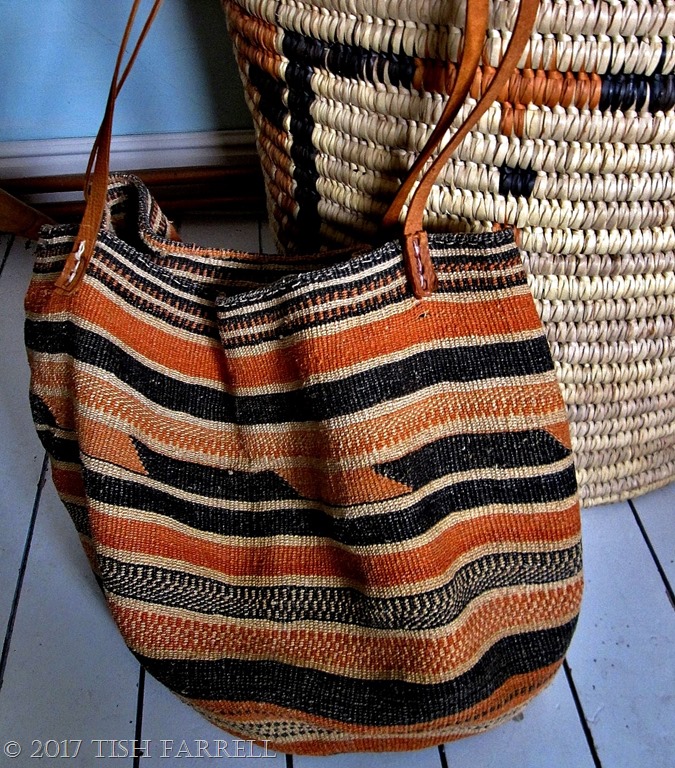
Baobab trees may appear impenetrable entities with iron-like skins, but their trunks are deceptively fibrous, and especially so in old age and after elephants have done some determined shredding work on them. Even so, the twine to make a bag like this would have taken much preparation. The main process involved chewing the fibre until it could be rolled out to the required thinness. Two strands would be worked one after another, and then twisted together to produce the final cord. This was then dyed using natural pigments, the cords cut to suitable lengths to create the warp threads, and work begun from base of the bag, moving outwards as the weft thread spirals round.
Whether or not the materials have changed, methods of construction remain much the same. I have seen women striding out along the Mombasa highway, their work in progress flowing from their arms like some giant deconstructed spider’s web. You will see what I mean in the next photo. It was taken in the early 1900s and shows a young Kikuyu woman at work:
![withprehistoricp00rout_0187[1]](https://tishfarrell.com/wp-content/uploads/2017/01/withprehistoricp00rout_01871.jpg "withprehistoricp00rout_0187[1]")
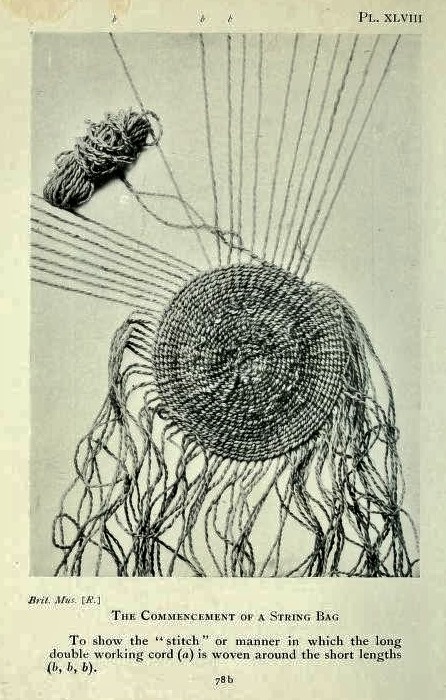
Both images are from what I feel is the inappropriately titled 1910 monograph With A Prehistoric People by W Scoresby Routledge and Katherine Routledge.
*
And there you have it – a beautiful, but eminently useful bag, painstakingly constructed from baobab parts. I consider it a work of most artful repurposing and, as with many traditionally crafted everyday artefacts, it also strikes me how people untouched by western mass-production, daily and routinely made art out of necessity and utility. There is an intrinsic aesthetic here, which is why I take issue with the term ‘prehistoric’ used in this early twentieth century context. People who work with their hands in this way continuously nurture and exercise their creative intelligence and powers of discretion and visualization. This also makes me think that one day we technophiles might wake up and regret the loss of such facilities and skills; we might recognize, for instance, that their passing signals a lack of general competency?
copyright 2017 Tish Farrell
It had never occurred to me until last week that sheep might have opinions. Being brought up within the purlieus of a Cheshire farm and on a picture book diet that included many iterations of Little Bo Beep, I knew they could be wayward. Also a close confrontation with a lamb in my formative years was the source of one of my first big life lessons: disillusionment.
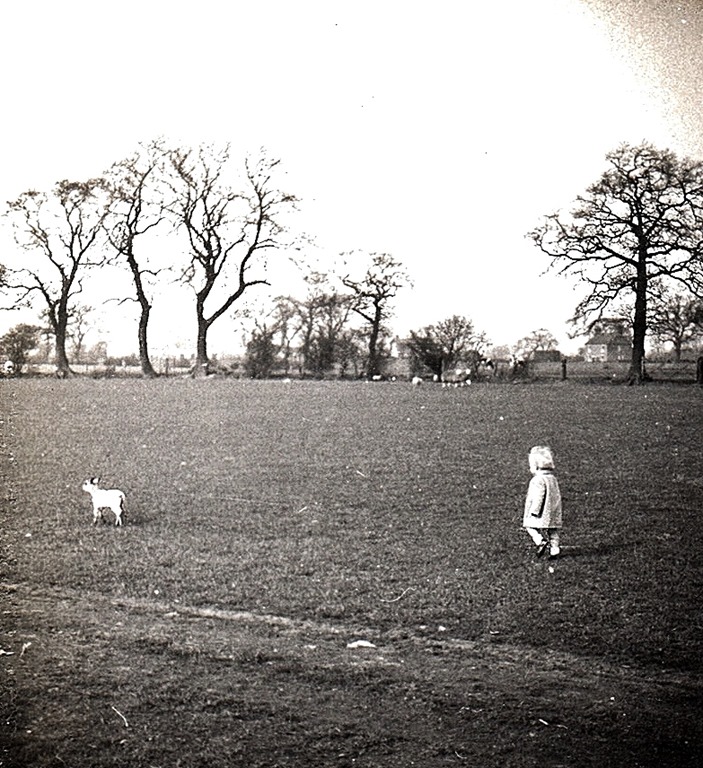
That is to say, it was the moment when I found out for myself that things aren’t always what they seem. This revelation was unexpectedly visited upon me around the age of two. I had tottered determinedly across the field near our house, intent on grabbing a lamb. I had not encountered one at close quarters before, and I was spurred on by a sense of eager expectation that I still recall. Capturing one took a little time, but oh, woe. Where was the warm, cuddly creature I had imagined it to be? What was this clammy, rubbery thing I had grasped so firmly by the neck ? I was not impressed, and quickly abandoned the enterprise, feeling very let down. There was also some inkling, for which I had no words at the time, that I had been somehow set up by my parents. Didn’t they know how lambs actually felt?
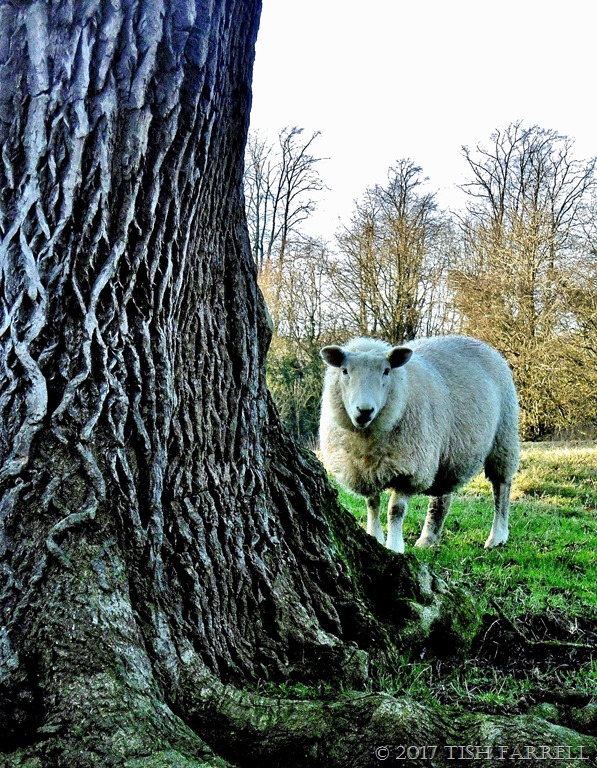
Then last Wednesday, after a good tramp around the Wenlock countryside the tables were turned: I found myself the object of ovine scrutiny. I stared back, fully expecting the sheep to shy away as they usually do, but no, it went on giving me ‘the look’. In fact it gave me the distinct impression it was not impressed by what it saw. I felt quite self-conscious. Hmph, I muttered. Who’d’ve thought it, being made to feel sheepish by a sheep; clearly more to them than meets the eye. And so followed another important, if belated life lesson, and one of the hardest to grasp: do not be quick to judge. Or even better, Mrs. Farrell: do not judge at all, lest the boot ends up on the other foot.
On the other hand, perhaps the Wenlock sheep somehow divined a closet lamb strangler when it saw one.
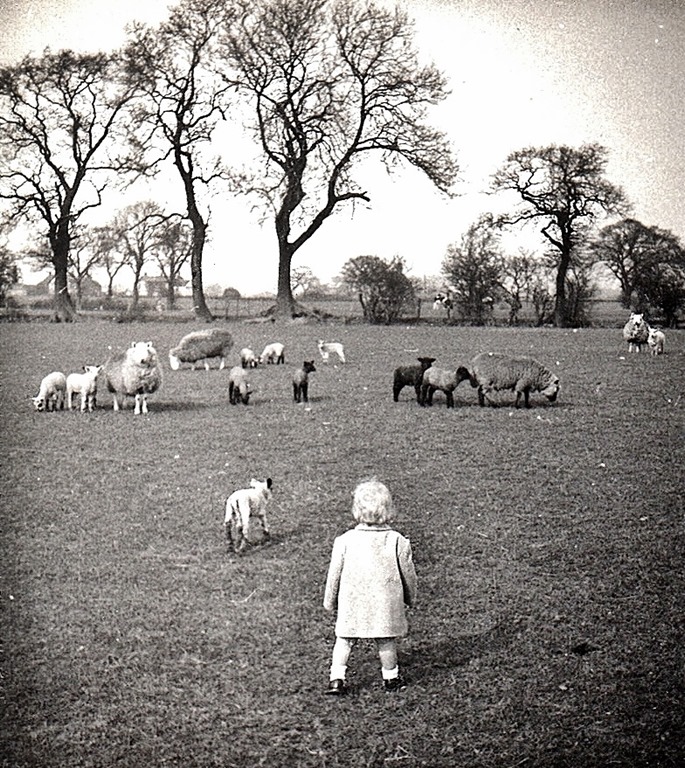
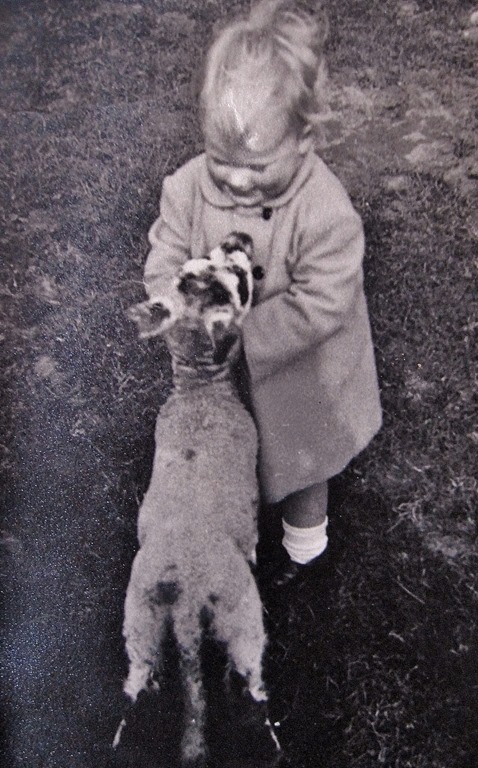
copyright 2017 Tish Farrell
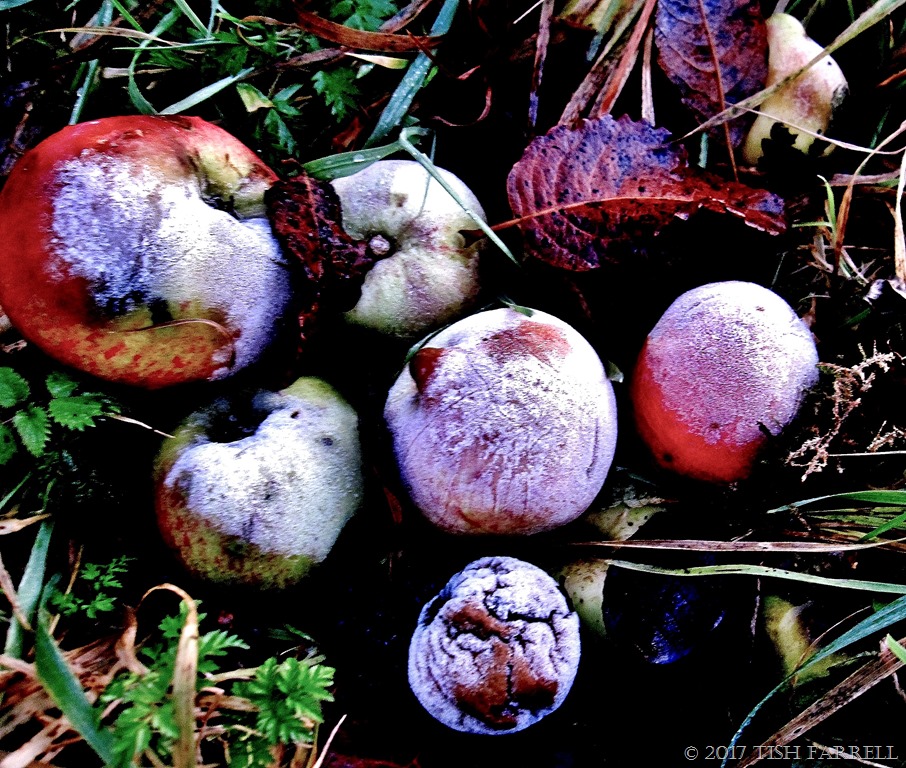
This first photo was taken in December before the blackbirds had begun to feast on the stash of windfall apples out in the field. My last post featured a shot of how the apples look now. Yesterday when I was passing by, there was a whole flock of blackbirds pecking away – at least four and twenty. I’ve never seen so many all once that weren’t in a pie or singing song of sixpence! They didn’t stay to have their photos taken.
Paula’s prompt this week is seasonal. Please take a look at her inspiring photography:

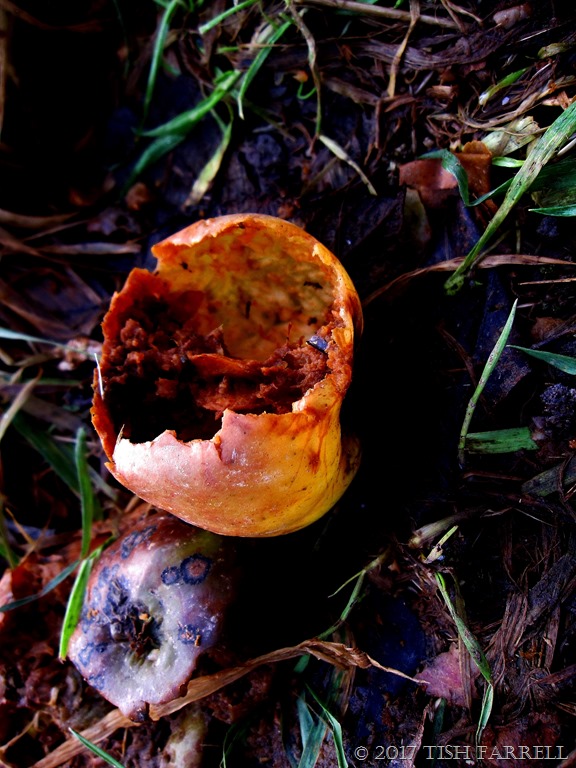
The field path behind the house is littered with skeleton apples – windfalls thrown out from a neighbour’s garden. The apples were whole, if a little bruised, back in October when they were tossed there, but it is only this month that the birds have been truly feasting on them. Blackbirds mainly. Little by little the flesh is being pecked away until all that is left is the thinnest skin, and perhaps some fibrous filaments around the core. I was thinking of fellow blogger, Sue Judd at Words Visual as I shot and edited this ‘still life’. She captures beauty in decay with great flair. Anyway this painterly edit sums up January for me.
But then today I decided to go the long way round to the allotment. There was misty sunshine, and so the chance to get enough shots to make a gallery in line with Cardinal Guzman’s alternative version for his monthly challenge. Pay him a visit to find out more.
The long way round involves going up Sytche Lane that skirts the field behind our house. In the top corner Shropshire Council is busy digging us an attenuation pond to slow down the flash flooding when a storm hits our catchment. The town has a long history of flooding, and the Sytche Brook, a generally nondescript trickle of a watercourse, can become treacherous, and has been known to add considerably to the deluge that hits the town centre from neighbouring hillsides. Another pond is being built at the other end of the town. Neither are seen as total solutions, and some would argue that these measures are not suitable in a steep catchment such as ours. Only time will tell. In the meantime, the big digger driver posed to have his photo taken before I trudged onward through the mud.
The path behind the excavations then wends on along the field boundary and into a wood. You are right above the town here, so in the gaps between the trees are some good viewpoints for photos. From the wood I can then drop down to the allotment.
The following gallery shows all the things that caught my eye today. These include – apart from the ‘views’, Jenny’s watering can hung in a cherry tree, Simon’s wheel barrow, Phoebe’s budding rhubarb, my leaning shed with globe artichoke, and Ron’s much smarter blue shed. On the way home the sun was setting in the wood.


copyright Tish Farrell 2017
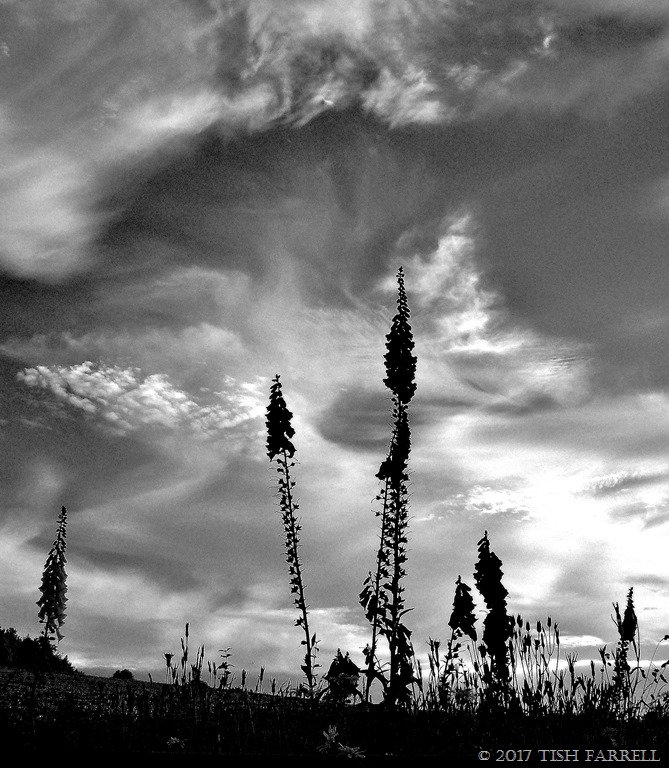
This Sunday at Lost in Translation, Paula asks us to show her a black and white version of a colour original. This summer shot was taken from the back of our house looking towards Wenlock Edge as the sun was going down.
Just over the garden fence we have a strip of ground that grows itself each year – mostly self-seeded foxgloves, columbine, corn cockle, moon daisies and opium poppies along with some perennial lemon balm, spearmint and oregano. It’s a treat waiting to see what will happen there every summer. Just thinking of this brightens a rather gloomy January day here in Shropshire.
Now here’s the original colour shot: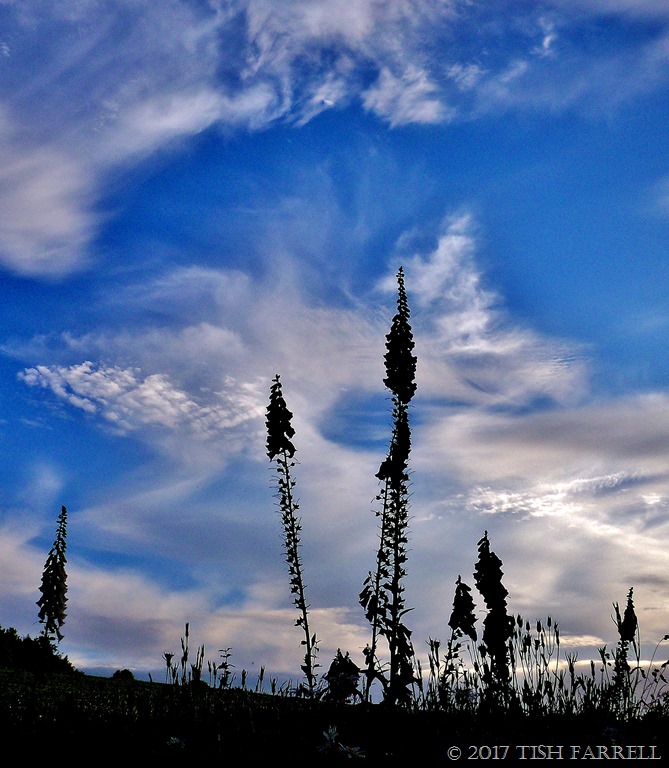
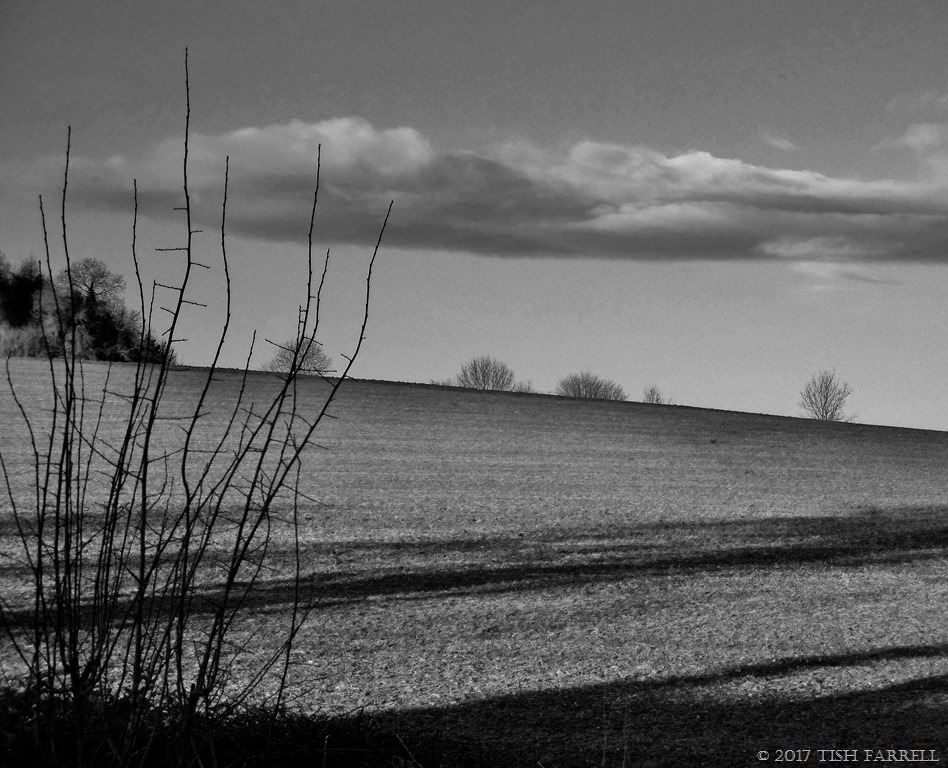
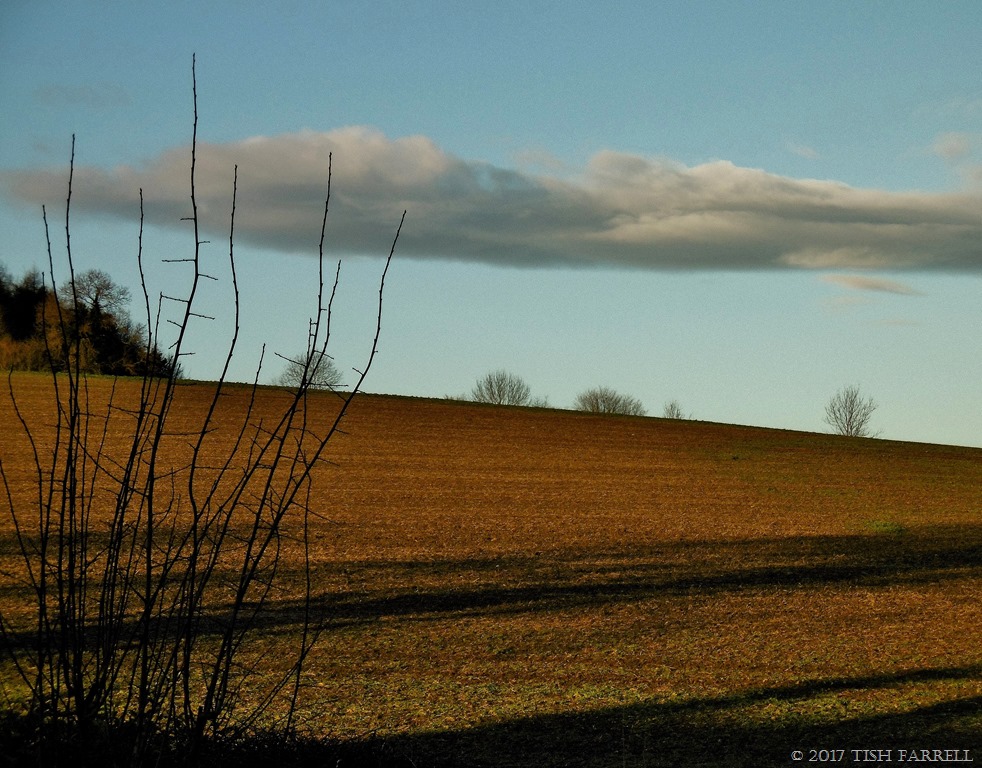
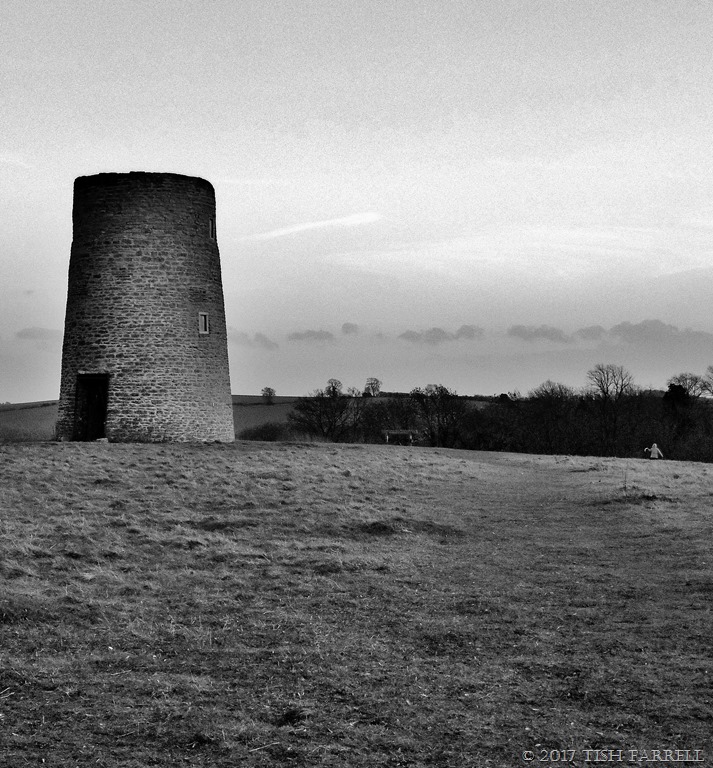
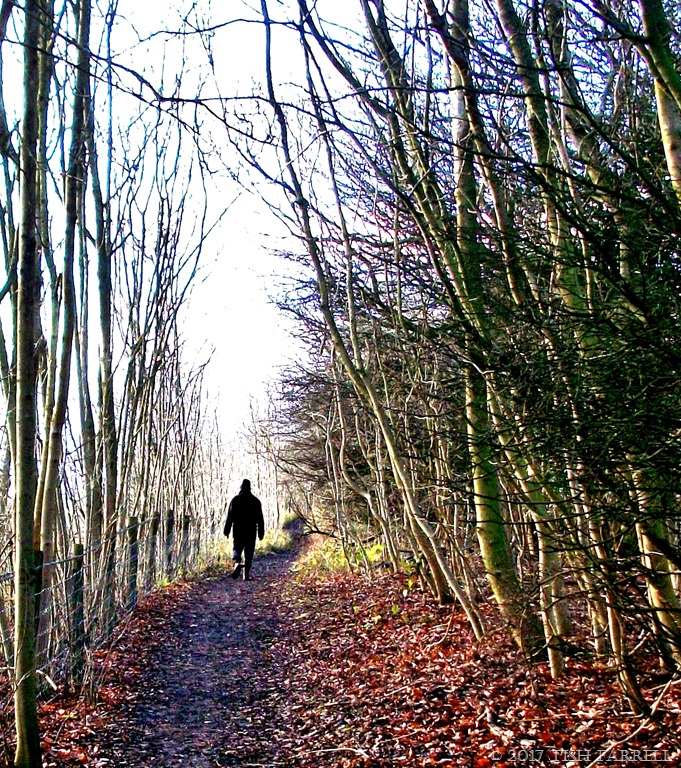
And now I can’t resist posting some more transformations in and around Much Wenlock. Clearly, some work better than others, but in any event, as Paula says, it helps one to see with fresh eyes: