Meet T’owd Man ~ AKA The Old Man Of Wirksworth

IMG_3500

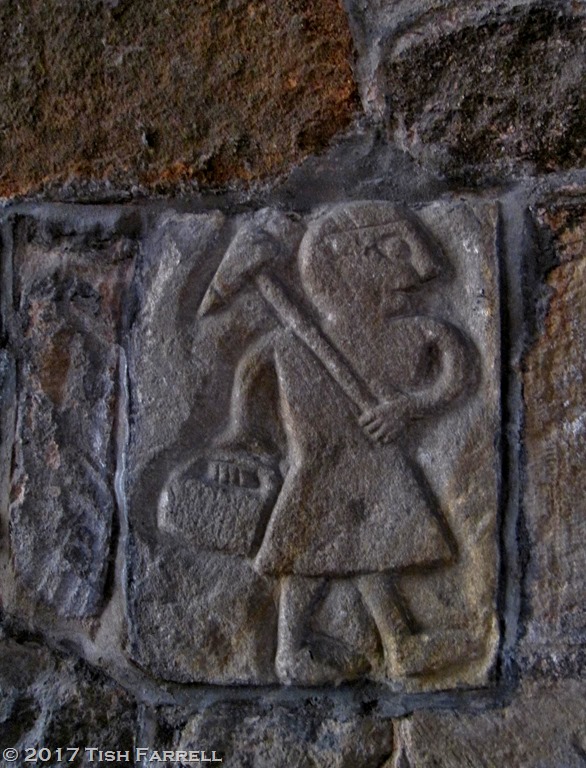
He is said to be 800 years old, or thereabouts, this mythic little figure of a lead miner with his pick and kibble (basket). He is presently to be found embedded in the wall inside St. Mary’s Church in the Derbyshire Peak District town of Wirksworth. But this was not his original home. He once lived in the nearby village of Bonsall, where he was found during the restoration of the 13th century  parish church of St. James. This was in 1863, and it was then that T’owd Man found his way (along with other pieces of interesting medieval stone work) into the garden of one Churchwarden Coates.

This highhanded commandeering of the local lead miners’ talisman did not please the general populace, who wanted him restored to sacred territory. Somehow in the argy bargy he ended up being firmly mortared into the wall of St. Mary’s Church in Wirksworth instead – where he has remained ever since for his own good and general safekeeping. He has also become the town’s ‘unofficial’ symbol, so you can pay him a visit, AND get the tee shirt.

But this story of general displacement is making me wonder. What  if T’owd Man is a good deal older than is currently thought.  I’m assuming his 13th century date was given him because he was found in a church of 13th century origins. But to my eye he could easily be a Saxon carving. What if the medieval builders of the Bonsall church had also recycled him?  (There are in fact many examples of Saxon carving within St. Mary’s, all re-deployed from an earlier church. See my post Expressions of Power  ~ Secular and Spiritual? for more of the background history).

Lead mining was a key industry in the area from at least Roman times. There is also documentary evidence of its importance in Saxon Wirksworth. In 835 the township was ruled by Abbess Cynewaru, and in a missive of that time she states that she was every year sending a gift of lead valued at 300 shillings to Christ Church, Canterbury. Much later in the Domesday Book of 1086 the entry for Wirksworth includes 3 lead works.

Wirksworth was in fact the centre for the trade. It was a hard and dangerous business. The miners were also a maverick lot. Many were yeoman farmers who combined hill farming with lead working, and some grew extremely rich on the trade, although many died from explosions in the mines, and the general toxicity of working with lead.

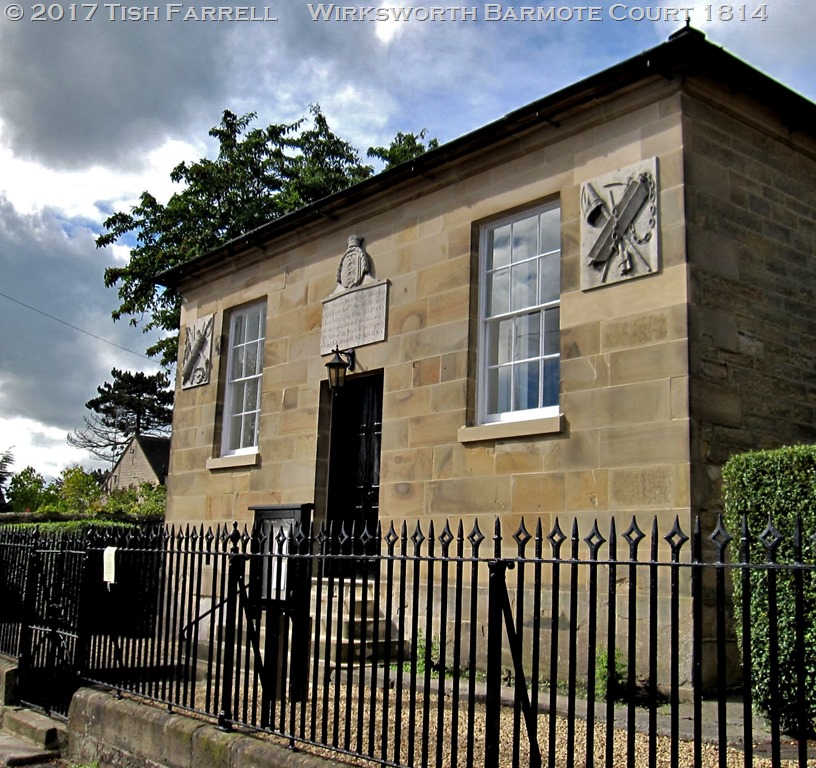
All the miners’ activities were subject to a system of rigorous rules and regulations overseen by the Barmaster of the Barmote Court. This court was held in Wirksworth for at least 7 centuries, and had its origins in Saxon Burg Moots (moot is Saxon for gathering or assembly). The last version of the court or Moot Hall still survives. It was built just out of the town centre in 1814 to replace a grander Moot Hall that stood in the Market Place. It seems the noisy behaviour of the miners, and the congestion they caused in the town centre, led to the earlier building being demolished.

IMG_3436

Wirksworth is a fine town for a visit. Its many surviving seventeenth and eighteenth century houses attest to the general prosperity of the place over many decades.  When the lead ran out in the 19th century, limestone quarrying replaced it. Rivers were harnessed to power cotton mills, and so the industrial age kicked in. And if this smacks too much of ‘dark satanic mills’, don’t you believe it. The town sits in glorious countryside, in the heart of England, in fact at ‘its very navel’ as one-time resident D.H. Lawrence put it. Here, then, are some more views from England’s very green and pleasant navel:

This slideshow requires JavaScript.


copyright 2017 Tish Farrell

Thursday’s Special ~ Traces of the Past Check in here to see what Paula and other bloggers have posted.

Moving Pictures ~ Wales Through The Windscreen

P1060737 (2)

P1060737

P1060737 - Copy (2)

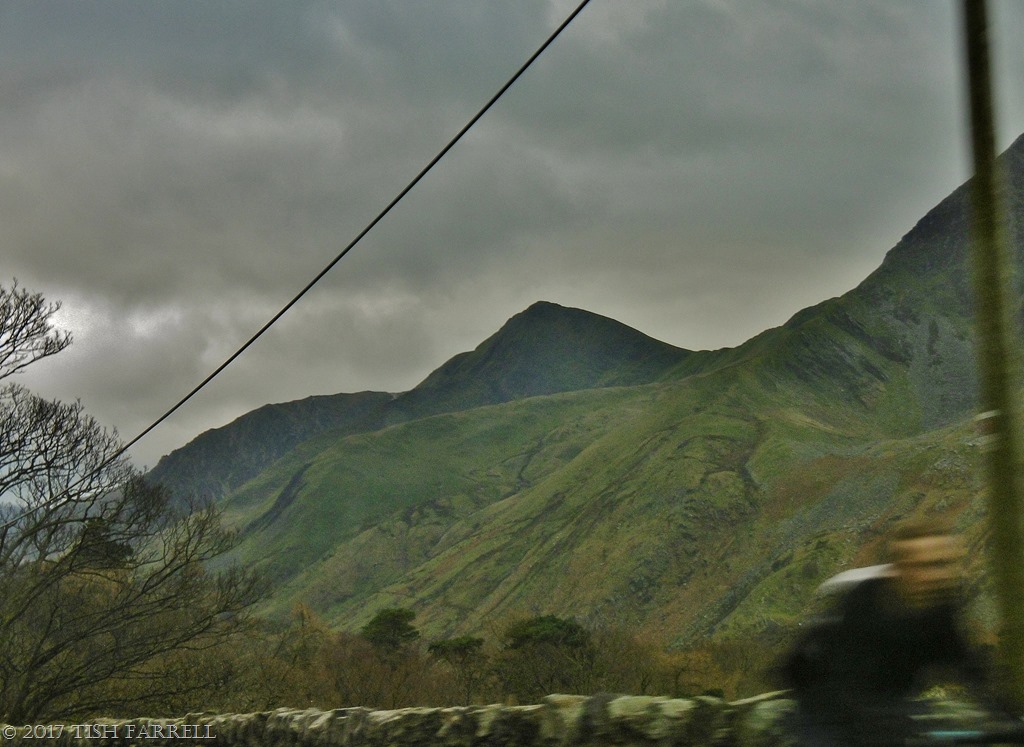
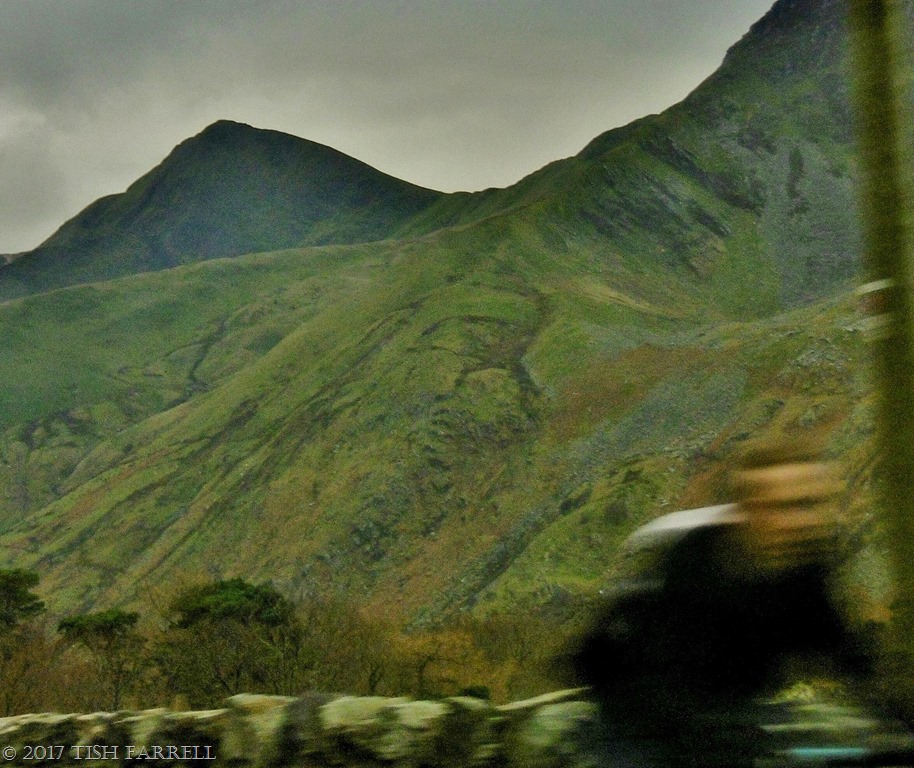
Nowhere does brooding gloom like Wales on a wet winter’s day. This happenstance shot was taken on New Year’s Eve as we were motoring home from Anglesey. I’d propped my camera briefly on the car dashboard as we’d headed through the mountain pass to Capel Curig. Then randomly pressed the shutter and so caught the cyclist.

This week at Lost in Translation Paula asks us to show her ‘unfocused’. She kindly says she doesn’t mind ‘happy accidents’, so here is mine.

A Sea Full Of Sky

P1060448

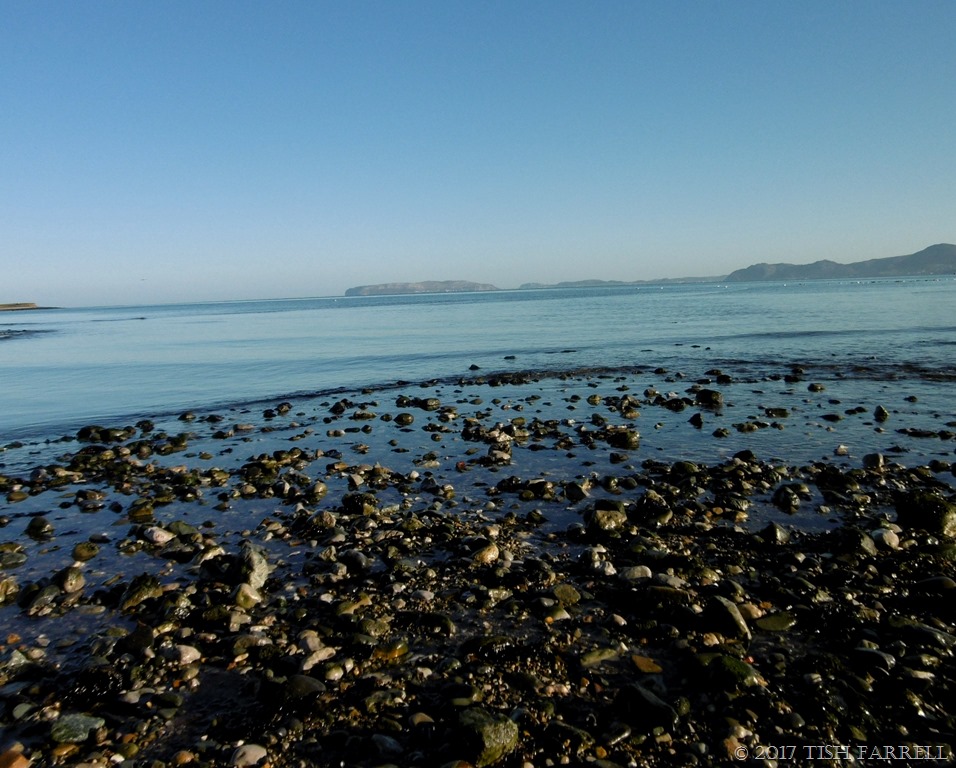
What a blessed scene. We could scarcely believe our eyes – a sea so still, so blue, and sky to match; the Great Orme slumbering on the horizon, and all this happening just last week on the Menai Strait, North Wales.

I love winter beaches whatever the weather, but this vista seemed to awaken a whole new plane of perception. I could see why the Celtic Druids made Ynys Mon their stronghold. You never do know what the light will do next. It is transporting.

The little boy and his dad seem caught up in the magic too. So it’s a good thing that the Great Orme is slumbering; for this Viking name for the limestone headland means sea serpent, and we don’t need him abroad disturbing the tranquillity.

It’s an odd thing, though, about that particular promontory. The weather along the Strait may be foul, but more often than not, there’s a beam of sunlight slanting down on the Great Orme. Perhaps it is all part of an enchantment that keeps the mighty serpent dormant. Sleep on, Great Worm. Dream and dream between sky and sea.

P1060459 - Copy (2)


Thursday’s Special  This week Paula has given us five words to fire up our New Year imaginations. I’m using two of them here – the sea permeated with sky colours, and the limpid waters of Menai Strait. Follow the link to find out more and to see Paula’s fine photos.

Last Year At The Allotment ~ Seasonal Highlights

Now is the time of year when gardeners head for their seed catalogues and start making plans for the growing season ahead. Seed potatoes must be ordered, and preparations made (i.e. brain put in gear so as not to miss appropriate time slots) for crops that must be sown early. It is also a good moment to review which of the last year’s crops grew best, and most importantly, which we most enjoyed eating.

Actually all the produce was delicious. We had loads of Early Onward peas, courgettes and salad greens. Beans thrived – French, borlotti, fava, runners, and Cherokee, as did the globe artichokes, raspberries and Swift sweet corn. In the polytunnel the Black Russian tomatoes, and yellow cherry variety were the most prolific. I also grew some very good pink onions in there, and thus saved them from alium beetle attack which did a lot of damage in the outdoor crop.

There’s still stuff to eat on the plot too – Brussels sprouts, Italian broccoli, Tuscan kale, parsnips, and early purple sprouting to come.

And now as I look at these photos, I sense the horticultural sap rising. Soon it will be time to go out and get growing – all over again. For the gardener’s work is never done. Yippeeeeee!

 copyright 2017 Tish Farrell

Thursday’s Special: 2016 Retrospective   Please visit Paula for her own fine retrospective, and be inspired.

Sometimes In Life It’s Hard To Know Which Way Is Up

IMG_1906

IMG_1906

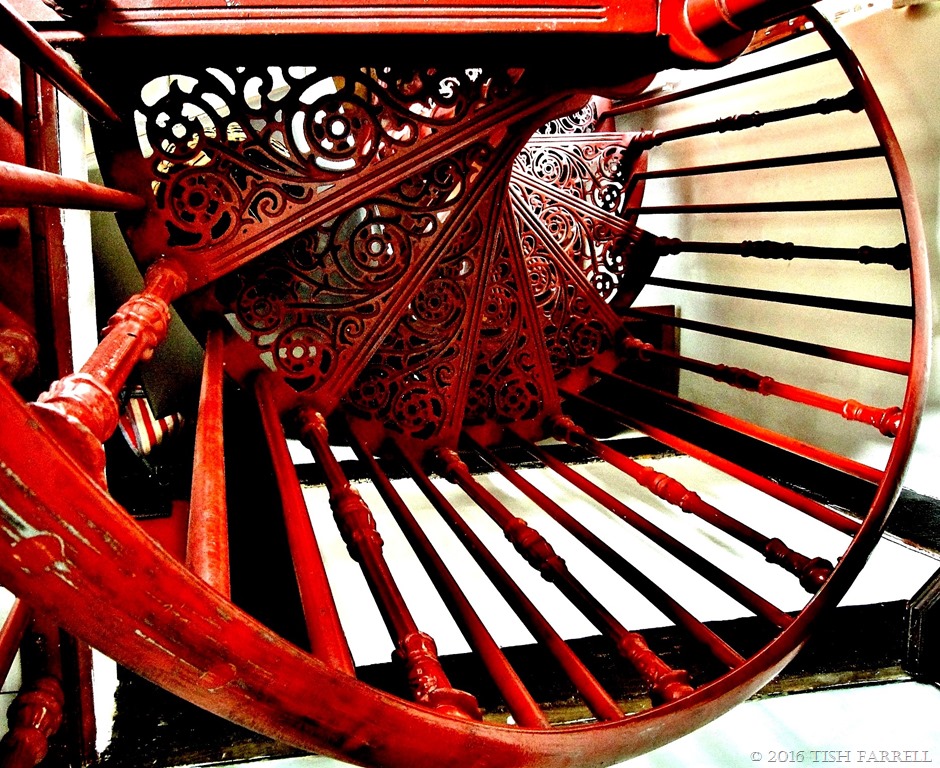
Last Thursday Paula at Lost in Translation gave us two weeks to come up with a conceptual photo. I’m afraid my brain is a bit sluggish at this time of year, so this is the best I could conjure.  However, I did enjoy playing on our spiral staircase. Our cottage being an 1830’s square extended into a 2001 rectangle, has two sets of stairs – one either end of the house, and both of them hopeless when it comes to moving items of furniture from one floor to the next. Also Graham and I go round and round the house missing one another. And then, just sometimes, I move so fast, he thinks there are two of me, simultaneously upstairs and downstairs. In fact recently he spotted me in triplicate. I’m not sure which of us should be the most worried by this phenomenon.

The stairs in the photo are in the corner of our kitchen. You might just be able to spot the oven gloves. An unintended inclusion, if matching.

Thursday’s Special

Echo Of Time Past ~ Hunter’s Lodge, Kiboko

IMG_0024

I’ve not done an Old Africa post of a while, and this photo is rather the worse for wear. But perhaps that is fitting in all sorts of ways.

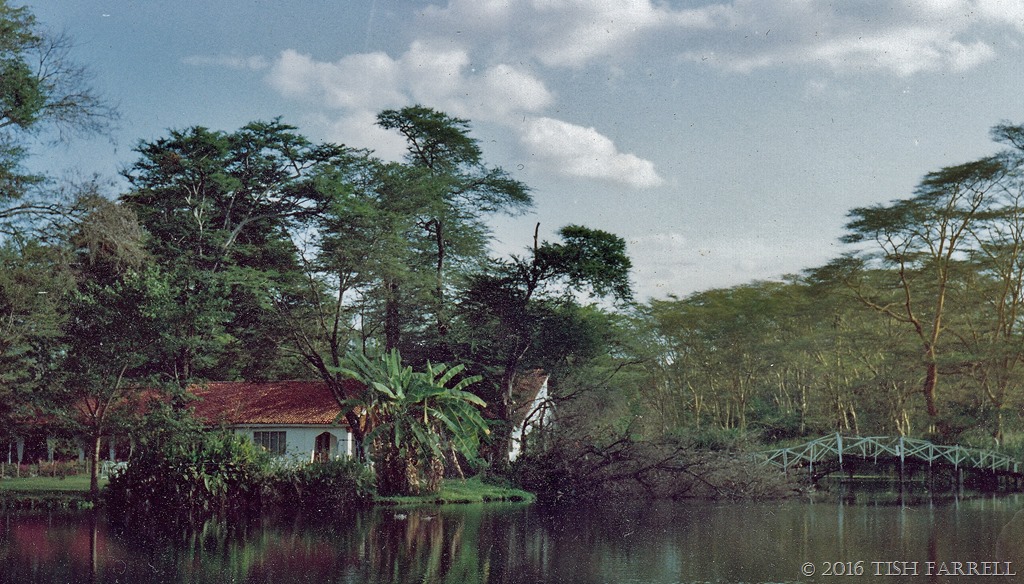
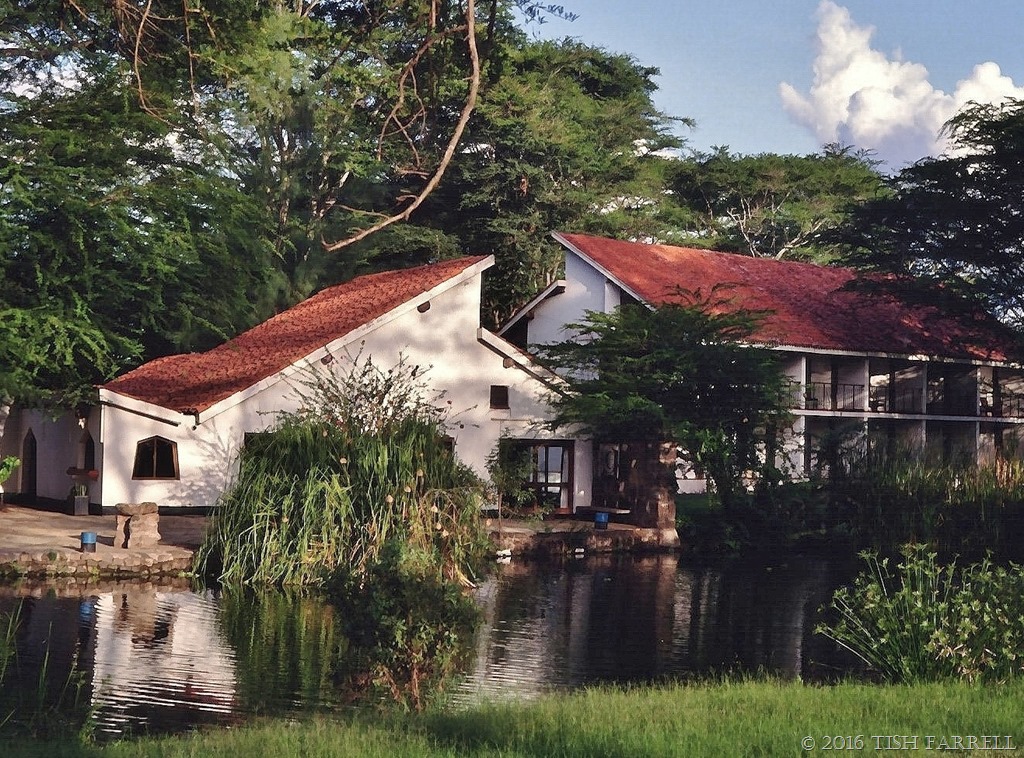
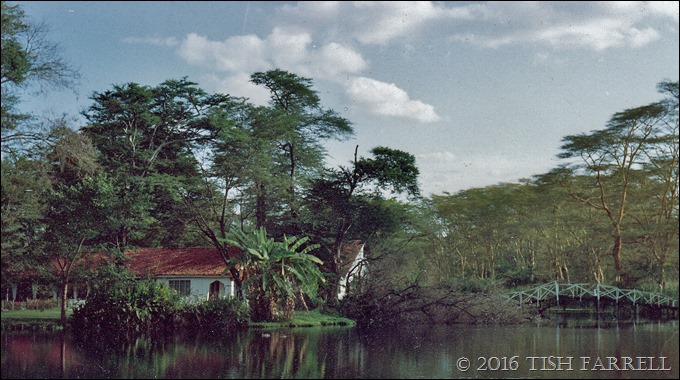
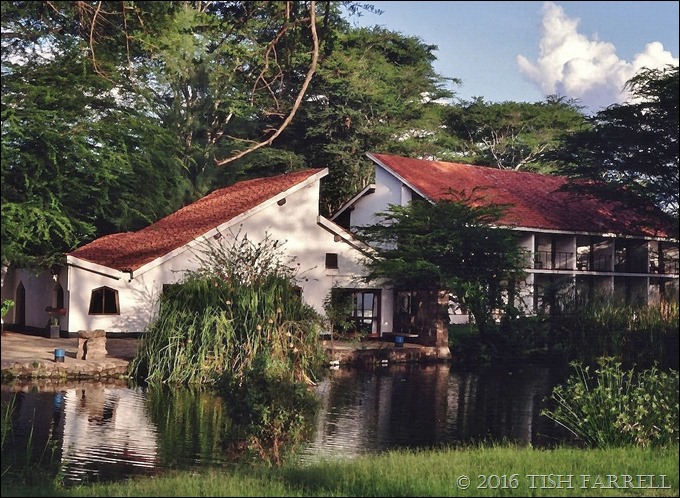
I also thought I’d post an excerpt from our 1990’s travels in Kenya – an account written not long after my arrival in 1992. During the eight years we lived there, we had many sojourns at Hunter’s Lodge on the Nairobi – Mombasa highway. Graham was overseeing a research project at the nearby field station and had to make regular visits. The Lodge had been built by great white hunter, John Hunter, around the late ‘50s – early ‘60s – his retirement home after a long career of game control, grand safaris and general  rhino and elephant slaughter.  He saw no irony in choosing a spot that had once been his favourite place for watching elephant at a sunset waterhole on the Kiboko River. He dammed the stream to make an ornamental garden lake for his guests’ pleasure. And instead of elephant, the place attracted a marvellous array of birds. The soundtrack here, then, is endless weaver bird chatter in the papyrus, and the clatter of stork beaks up in the fever trees. Oh yes, and the nonstop whine of crickets…

*

Monday 17th February, my two bags packed once more and Graham’s few belongings assembled, we set off for Kiboko. Although it was still early morning, the sun was already beginning to scorch my arm through the open car window; sweat trickled down my spine. But I was pleased to be on the move again; and Graham, who was watching me from the side-lines – to see how I would react to a new land, confined himself to saying that he hoped I would like the lodge where we would be staying for a few days.

I imagine I will, but at that moment it was not my main concern. I was excited at the prospect of my first safari. Too opulent a term for us perhaps, conjuring up an entourage of well-provisioned trucks each manned with a local African guide and tracker, bullish Europeans in khaki shorts, legs the colour of seasoned olive wood above long woollen socks, bush-hatted and safari-jacketed, a powerful rifle to hand to fend off attacks by a raging buffalo. But no, there was none of this; just a couple of bags and a few supplies for the field station in the boot of a modest Peugeot saloon. And anyway, in Swahili safari simply means journey, and so it was the journey itself that I was looking forward to, even if it only involved a few hours’ drive down the Nairobi-Mombasa highway.

We left the city by the same route I had come from the airport two days earlier. Now I could take it in with a more focused eye: the newspaper and magazine sellers out in force, and stepping between the traffic with all the ease of those who have taken up walking the plank for a living and survived to tell and retell the tale; the avenues of yellow blossomed acacias; the screens of puce pink bougainvillea; palm trees; throngs of citizens everywhere, waiting, milling, buying, selling, chatting, reading, walking; the welter of city centre multi-storey office blocks in as many styles, from oriental chic to Dallas smoked glass; the air heavy with dust and oily exhaust fumes and the smell of roasting maize cobs.

And as we head south out of Nairobi, through the flatlands of the industrial zone you feel that you could be leaving any city anywhere in the developed world. There is a Slumberworld bed centre, another for well-known names in bathroom and sanitary ware, a detergent factory, a Toyota showroom, a cut-price cash-and-carry warehouse, builders’ yards, air freight offices, the outposts of many a multi-national company, all neat brick buildings flying their corporate banners behind well-tended and irrigated flower beds.

At this point, you can only just glimpse the plains beyond. It is easy to think you are on familiar territory: the industrial estate, a modern major thoroughfare with white lines, UK road signs, traffic police operating speed traps, Esso service stations, driving on the left. The British-born may believe too quickly that they know all the rules, the received codes of behaviour that pertain here. After all, it did used to be “ours”; you would expect some sense of familiarity.

Or would you? The British of old empire days were not overly concerned about establishing decent infrastructure in the countries they colonized (“standards” maybe) beyond building railways to ferry their administrators and export their hard-won commodities, or erecting imposing edifices that represented the institutions of law and taxation used to control indigenous peoples, who though in their own land, found that it was no longer theirs. And so, having built the Uganda Railway across Kenya Colony, the British seem to have fallen short when it came to road building. For much of their sixty-year stay, the road between Nairobi and Mombasa port was three hundred miles of gut-twisting dirt corrugations that, if you were lucky, took a day and more to traverse. It was only on the last lap of occupation in the 1960s that the tarmac was laid, reducing journey time to a mere seven or eight hours.

And so quite quickly I see that we should not set too much store by apparent similarities, and the seeming familiar artefacts. The things that we British recognise now in Kenya are not necessarily the issue of what we left behind. Or, if there are remnants of our abandoned institutions, then it does not follow that they have exactly the same meaning or function for modern Kenyans. Therefore, lest they lead us astray or cause us to make wrong assumptions, we should ignore their supposed messages altogether; think of them as laying a false trail, for this is Africa and, as the locals would often tell us, anything can happen here.

It soon becomes apparent, too, that when the highway itself was being built, every effort was made to ensure that the ‘surface’ went as far as possible. There is only a thin skin, a makeshift causeway to hold the bush at bay. And while some stretches have been recently upgraded, for the most part it is rag-edged and pot-holed and, south of Nairobi, gives way altogether to a several mile detour on dirt road.

And even though it is not a busy road by European standards, it is one of Africa’s major transport routes, the main users being massively laden freight lorries hauling their own weight and the same again in trailers hitched on behind. Bales of iron rods from the Mombasa rolling mills; crates of Tusker beer; petrol in rusty tankers as battered and misshapen as badly squeezed toothpaste tubes; cargoes of maize; transporters filled with new white Japanese cars. That their drivers think they will ever make it to Uganda far to the north, or to Zambia way down south through Tanzania, or even to the next market pull-off twenty miles away often seems to be an act of supreme faith. Many of course do not survive the test, but are pulled off the road, the cabs bowed to the ground like broken-winded beasts, their drivers sprawled out asleep between the wheels to avoid the sun’s glare while waiting for rescue or inspiration.

***

Much of the first hour out of Nairobi was thus spent leap-frogging trucks, and it should be said that African lorry drivers are very courteous, using their right indicator if it is not safe for you to overtake, the left when it is. Once past, I would watch them in the wing mirror, grinding along slowly in our wake, their exhausts billowing out evil-smelling clouds that lingered in black fog banks for many yards behind. But we were out in open country now, to the west the pale grasslands of the Athi Plains extending and merging into the distant blue horizon, to the east and south the land falling away into thorn scrub valleys, undulating hills and blazing outcrops of red igneous rock.

There were problems of perception here as well. The landscapes which the road bisects are on too vast a scale to fit a single frame; to absorb. Always too much foreground, so that the mind switches off and dismisses the whole as featureless bush: thorn scrub followed by thorn scrub, stretching as far as the eye can see, across plains that are scarcely interrupted by the scatter of old volcanic peaks – which would be impressive, if only you could find some sense of proportion.

That is one perspective. Another might be to take heart at the sight of so much space, to acknowledge the inherent grandeur of mile after mile of untamed, uncultivated, unbuilt-on land that yields only sporadic evidence of human activity beyond the margins of the road. Yet a third might be to wonder at the apparent absurdity of driving down a main road along with Mercedes, Land Cruisers and BMWs and seeing ostriches loping away beneath the spans of power lines beside the highway, or to pass by a large farm field fenced off against the bush, and to realize that in amongst the well-contained herd of grazing domestic cattle are also Thompson’s Gazelle and hartebeest.

***

Nearly three hours out of Nairobi and we are bowling across the lowland plains, through the large dusty market settlements of Sultan Hamud and Emali. It is much hotter down here and the tarmac, straight and undulating before us, at one moment fragments into a heat haze and in the next, reforms, only to fragment again with each successive horizon. The bush now presses in against the bare dirt verges; it seethes with insect call; a callous thrust of sharp-tempered thorns. Yet not wholly impenetrable for this is Maasai country and, through occasional breaches in the bush, I could see baked terracotta drovers’ trails, worn and smoothed, season to season, by hoof and heel. We begin to see Maasai herders at the roadside too, men draped in their distinctive tartan shuka shawls. Always red.

Lads hare past on bicycles, the shawls now red capes caught up in the breeze and their cattle prods poised in hand as if heart-fired charioteers on the charge. And then there are the women, striding out along the track, tall and self-possessed; handsome heads shaved and dressed with strings of small coloured beads whose blues and greens mean God, and heaven and peace.

But as for us, we were by now hot and wet and dusty; our clothes welded to our backs. As we passed beneath an arch of tall fever trees, the first shade on the road in a hundred miles, we realized the urgent need for coolness; to stop being bounced and shaken and broiled. Only a little further. It was the next stand of fever trees that was to become our landmark over succeeding months. Here the Akamba woodcarvers have their stalls; here is a large petrol station with a cafe that sells bottles of chilled mineral water (the percolated snows of Kilimanjaro, or so the label suggests). This is Kiboko. And this is where we turn off the road for Hunter’s Lodge.
 

021 - Copy

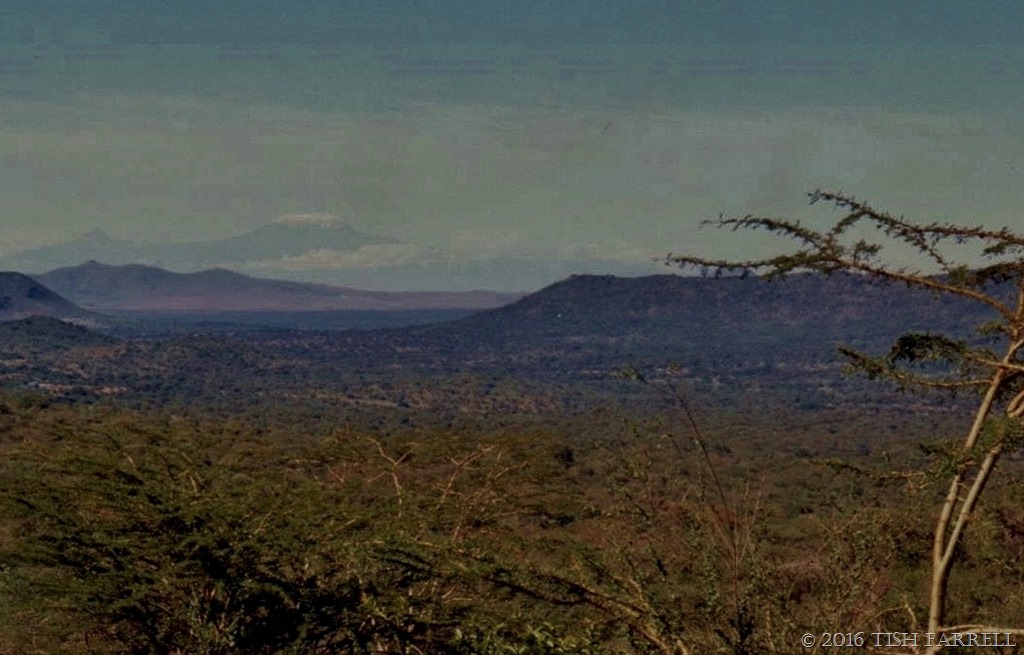
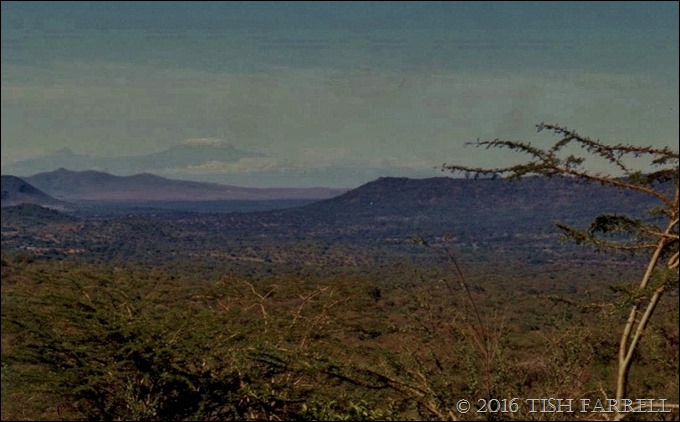
A misty, mysterious Kilimanjaro pushes through the clouds. Its appearances are usually fleeting, caught here from the Nairobi-Mombasa highway, where the road descends to the lowland plains of Ukambani.
212

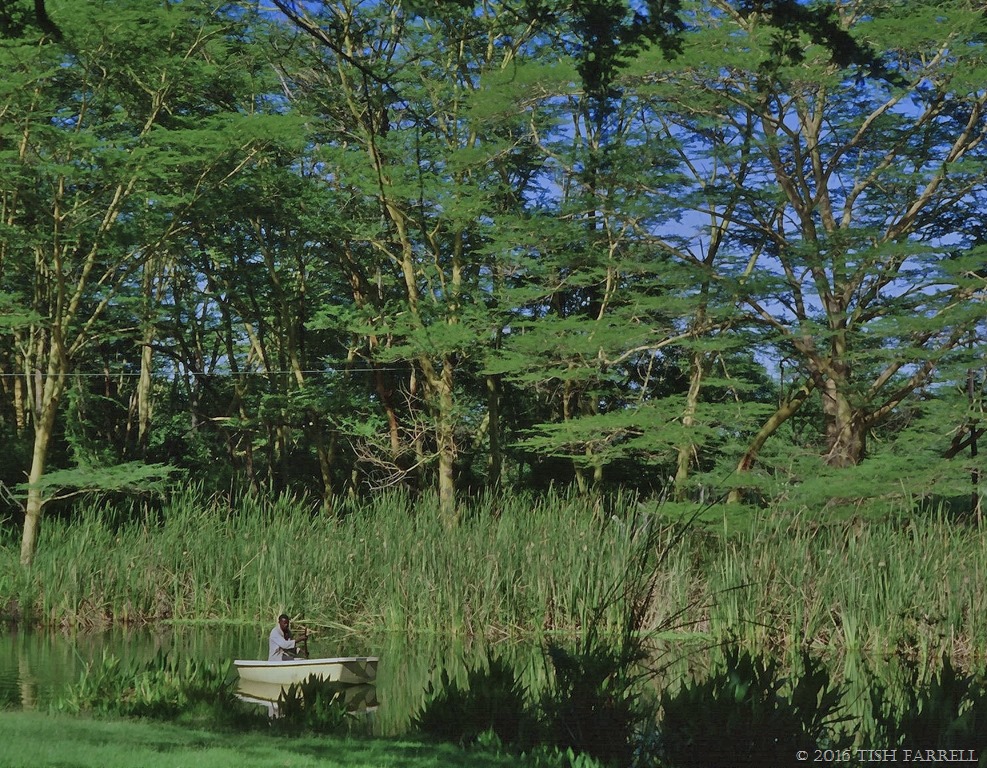
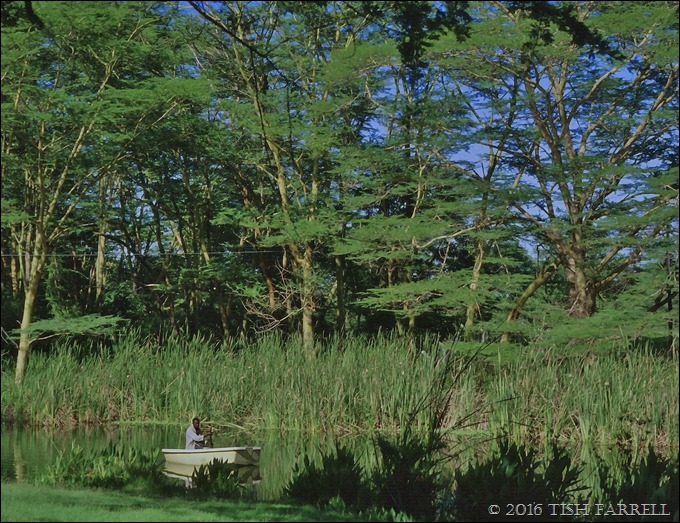
The pool at Hunter’s Lodge – a bird-watcher’s paradise; or just plain paradise. I spent hours just watching.

*
018

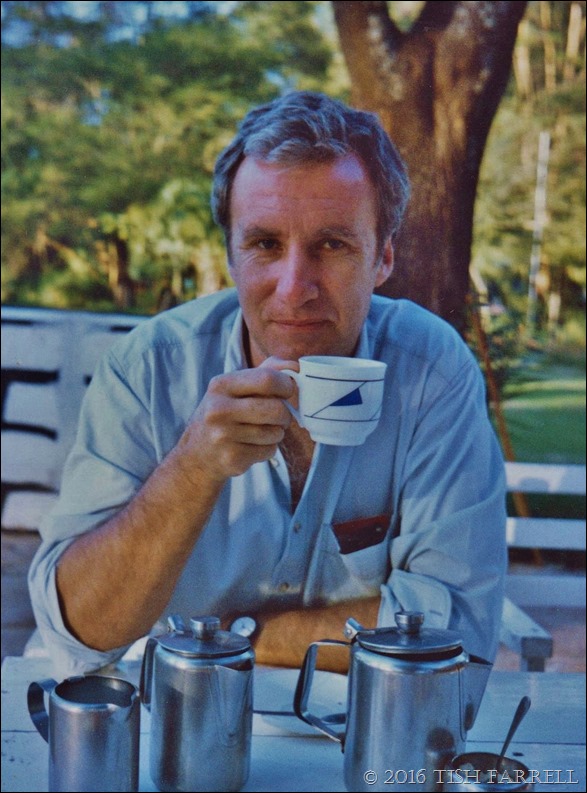
It became a ritual. So you might call afternoon tea on the bar terrace a libation. We were usually accompanied by the resident peacock who liked to steal the sugar if he got the chance. The tea tasted sulphurous from the local volcanic spring water, and the milk needed sieving because it was delivered daily by the Maasai, and the hotel staff subjected it to heavy boiling before serving. Even so, we always looked forward to it – the interlude before twilight and the firefly fly-past over the pool, and the prelude to supper and a chilled Tusker beer.

*
227

Paula at Thursday’s Special prompted this post with her December ‘pick a word’. So here we have aquatic echoes, an amiable Graham with chai libation, and a misty mountain protrusion. Cheers, Paula! Please visit her for further sources of inspiration.

Twilight On The Sytche ~ Night Views From My Room

P1040221

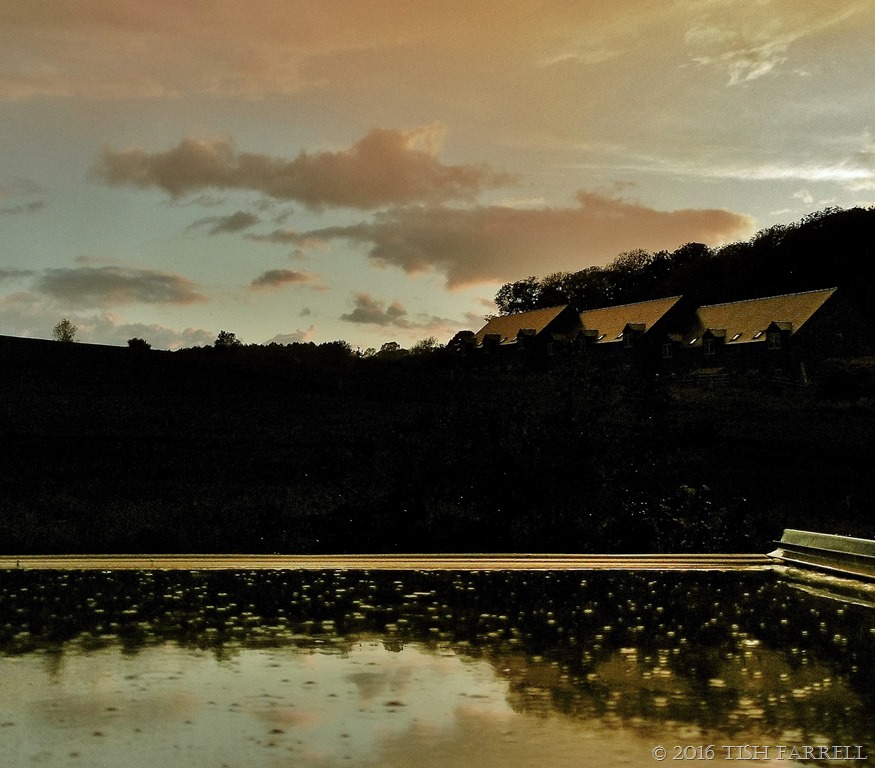
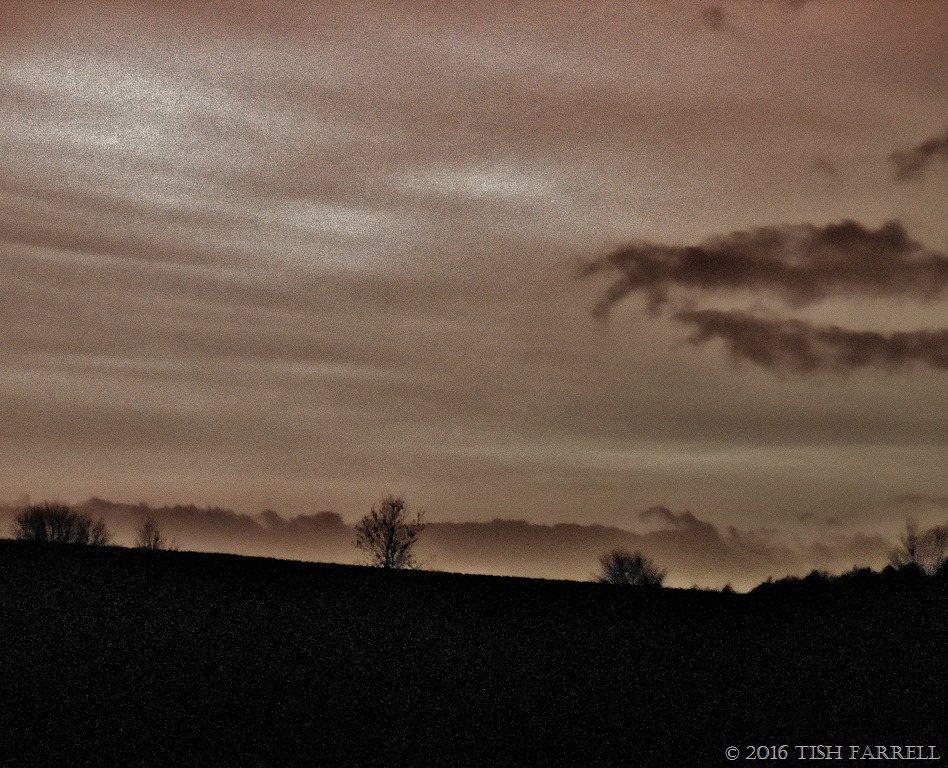
If I stand on the bed in my office, I can open the roof-light and place my digital camera on the glass. It makes for some quite interesting twilight effects, and means I can use zoom and more zoom – i.e. as in playing, not writing. But then all writers/creators need to do lots of playing: it’s all part of nourishing the imagination. The knack, of course, is knowing when to stop, and get down to some hard graft. Not today, I’m afraid.
P1030053

P1030054


This Thursday at Lost in Translation Paula asks for twilight, and who are we to refuse her.

Looking Back: Traces Of The Past

IMG_3305

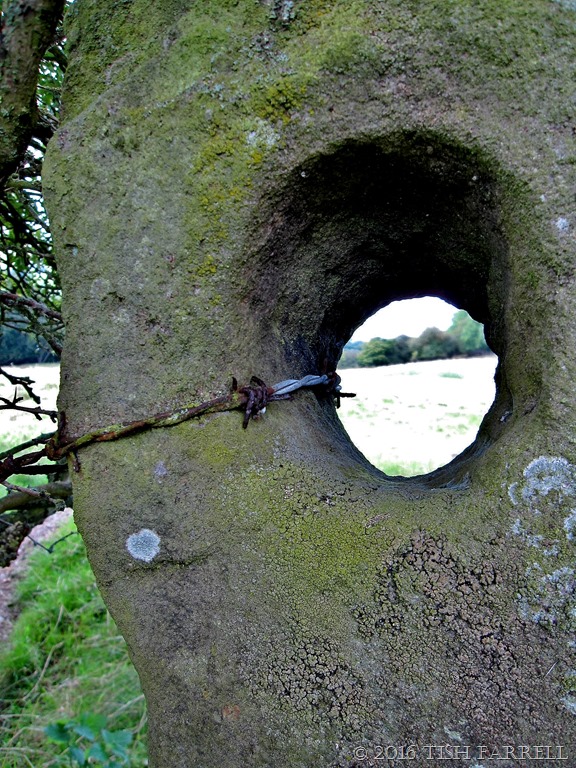
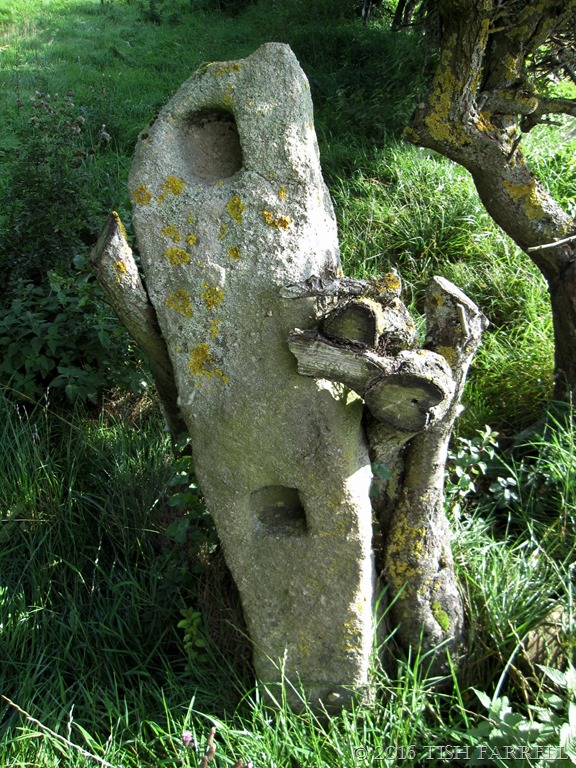
I took this photo on a whim, just to see how it would turn out. This old farm-field post was one of several on the footpath to the Hathersage stepping stones that cross the River Derwent just outside the town. For those of you who read my earlier Derbyshire posts, you’ll know I was on a quest to follow in my great grandmother’s footsteps, taking the path that she once took from Callow Farm and into Hathersage.

I don’t remember ever seeing stone posts like this before, and don’t know how old it is. But I think it’s safe to say that this and others were there in the late 1880s-90 when Mary Ann Fox passed by to do her shopping.

IMG_3285

You can read more of her story at Stepping Stones Through Time and Stronghold – The Telling Of Family Tales

There was also another idea running through my head when I took the photo – a far cry, too, from Derbyshire and my ancestors. When I saw the hole in the stone I was reminded of the 1960s young adult novel The Owl Service by Alan Garner. It is set in Wales and explores the rival affections between three teens through a parallel tale from the Welsh medieval story cycle of the Mabinogi.

It’s a great story, both the original and Garner’s use of it. Here’s a quick version of the myth.

The magician Gwydion makes a woman, Blodeuwedd, from flowers. She betrays her husband Lleu with a man called Gronw who tries to kill Lleu with a spear. He turns into an eagle and escapes. However, rough justice allows Lleu to have his turn to throw a spear at Gronw who may only use a stone for protection. Lleu throws the spear so hard, it passes straight through the stone and kills Gronw, and to punish Blodeuwedd for her part in all this, the magician Gwydion turns her into an owl.
So the first shot is my photo version – the stone of Gronw.

copyright 2016 Tish Farrell

*


If you want to post some of your own ‘Traces of the Past’ please visit Paula at Lost in Translation

#ThursdaysSpecial

Thinking Pink Over Wenlock Edge: Thursday’s Special

P1010530

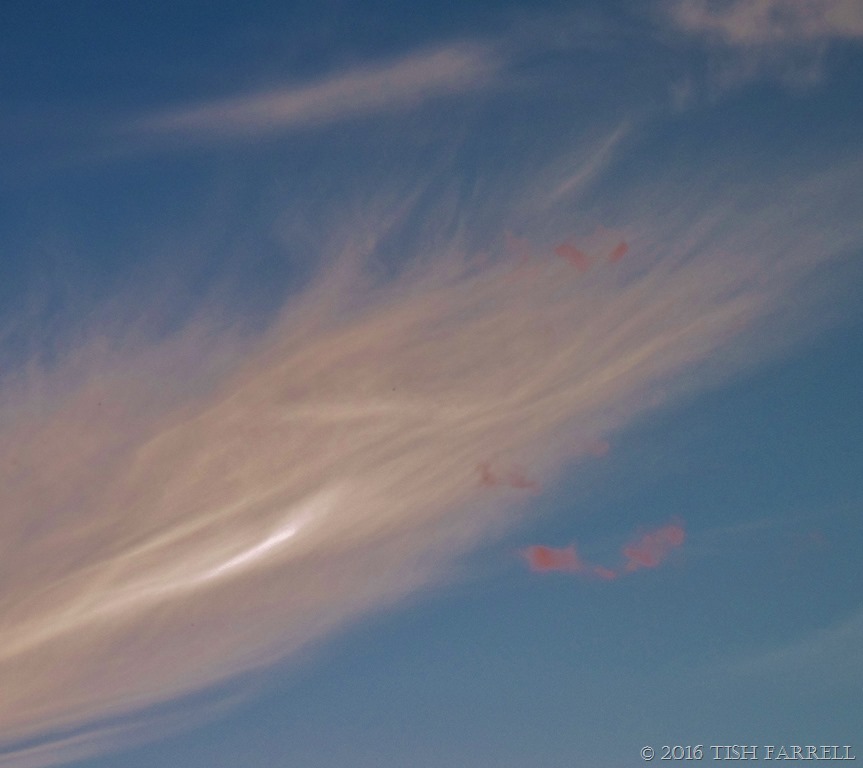
All right. All right. Call it art theft if you like. I’ve captured one of the Wenlock Edge Sky Painter’s quirkier pieces and am passing it off as my own. But then who could resist stealing that rose petal cloud? We all of us need one now and then. So please, be my guest. Cast off in the blue. Drift and dream. Who knows where it will take you.

*

Thursday’s Special  This week Paula asks us to think pink. Please waft over there for more pink thoughts.

Thursday’s Special: Double Trouble?

P1040105

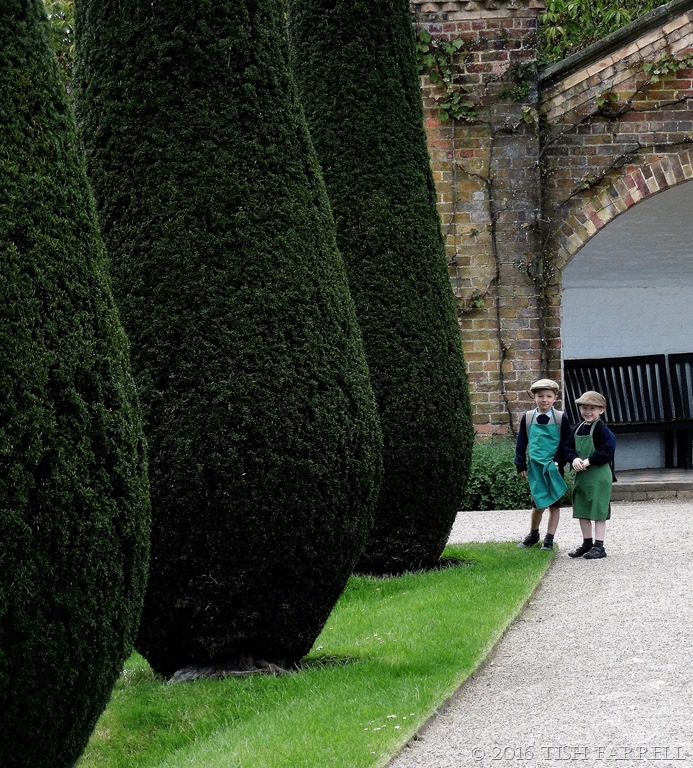
I was in the formal garden of Erddig stately home, thinking of photographing the avenue of shapely yews when these two young men walked into the frame. They lingered, clearly wanting to be photographed in their costumes as 1900s serving lads. Then the kitchen maids arrived  to send them back to their duties, and they were gone. On the other hand I could have captured a time slip: a  pair of fleeting Edwardian ghosts?

Now here’s the yew avenue I was aiming to snap.

P1040104


Thursday’s Special: Double

#ThursdaysSpecial