Thursday’s Special ~ Best Shot 2017

P1020331

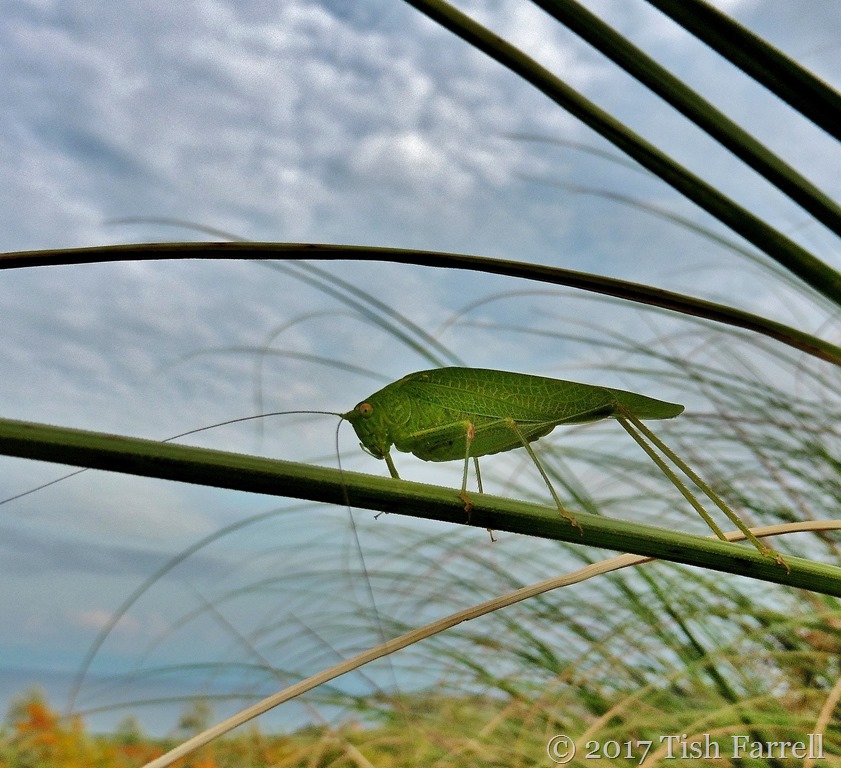
This week Paula asks us to post our best photo from 2017. I wasn’t sure where to start, but decided to reprise the cricket which, the first time around, Ark kindly identified as a Katydid or bush cricket. It is certainly my most surprising shot of the year – both for its clarity and the fact the cricket appears to have been watching me while I organised myself with the camera. I also like the curving grasses and the bands of light and shade, and the way the cricket appears to be super-illuminated. But best of all, it reminds me of Kalamata, and the mesmerizing views of the Taygetos and the Mani across the Gulf of Messinia for I find myself still badly smitten with the Peloponnese. Ah, well. Maybe next year…

Thursday’s Special

Darkness And Light ~ Thursday’s Special

P1000056 - Copy

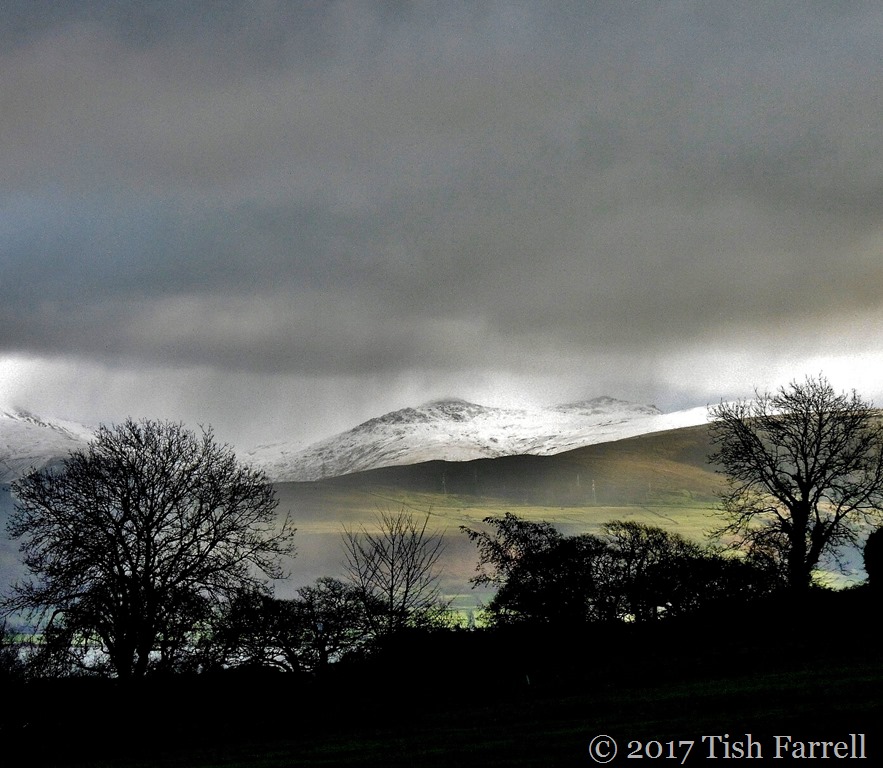
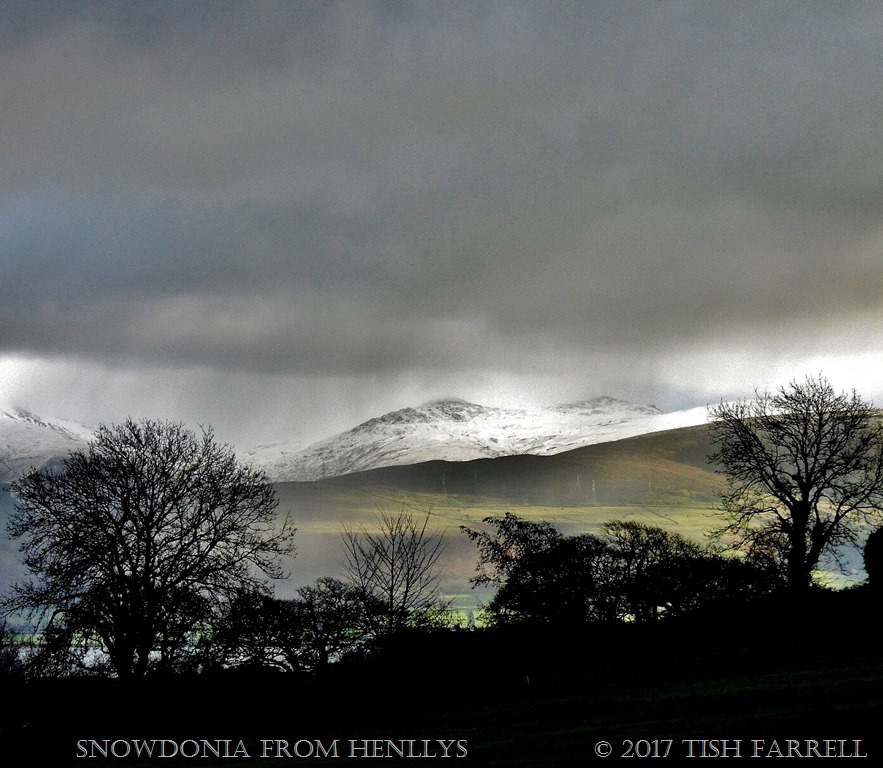
Solstice – the longest night – a time for drawing in; earth quietness; immanence; a conjuring of new possibility.

This photo was taken a few Decembers ago – the view from the island of Anglesey looking across the Menai Strait to Snowdonia on mainland Wales, terrain of antique tales of shape-shifting princes and magicians, their black deeds and bloody conflicts.

Thursday’s Special ~ darkness and light

Today It’s Snowing In Wenlock


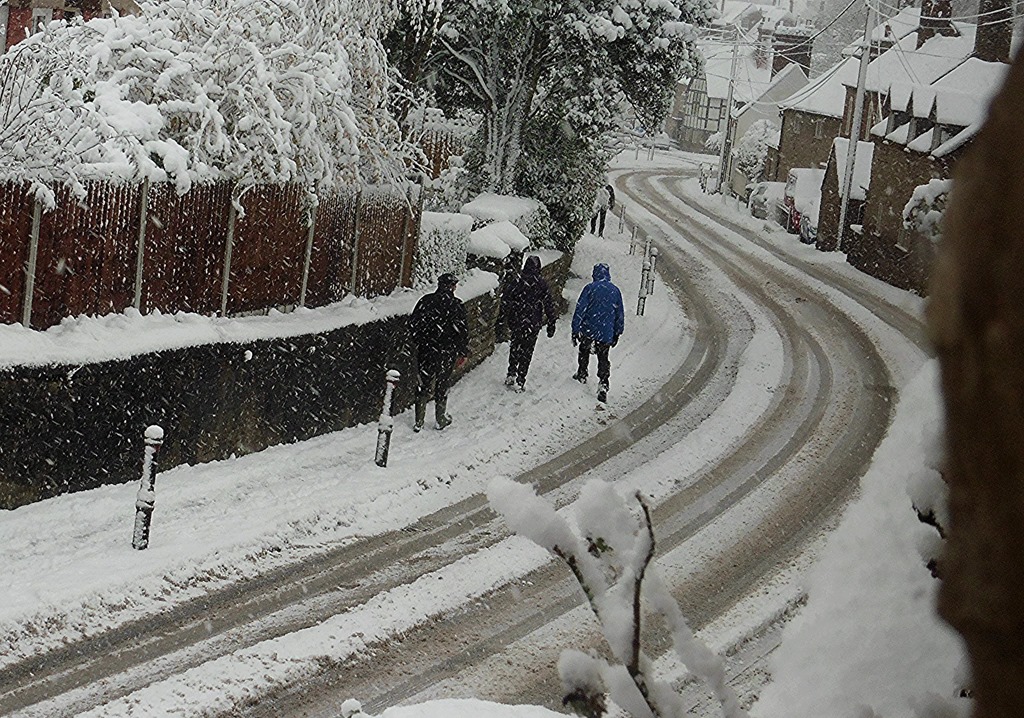
We wake this morning to the kind of quietness that is only made by falling snow. I’m instantly thrilled – aware of the mood shift. Yesterday I felt like vestige-of-road-kill. Now I am fizzing like a firework. How did that happen?

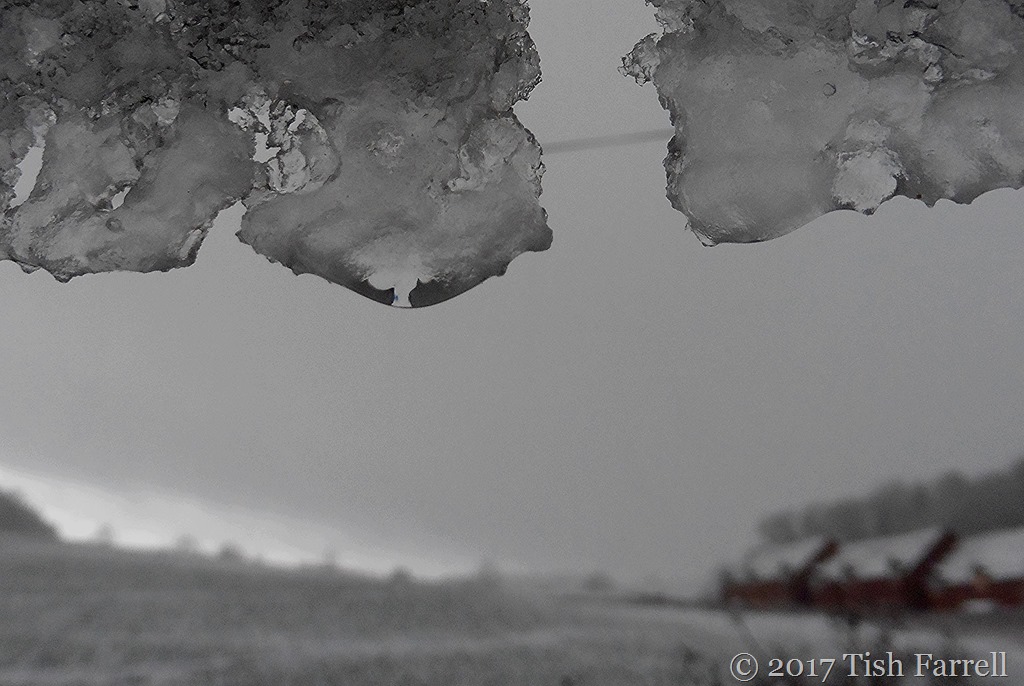
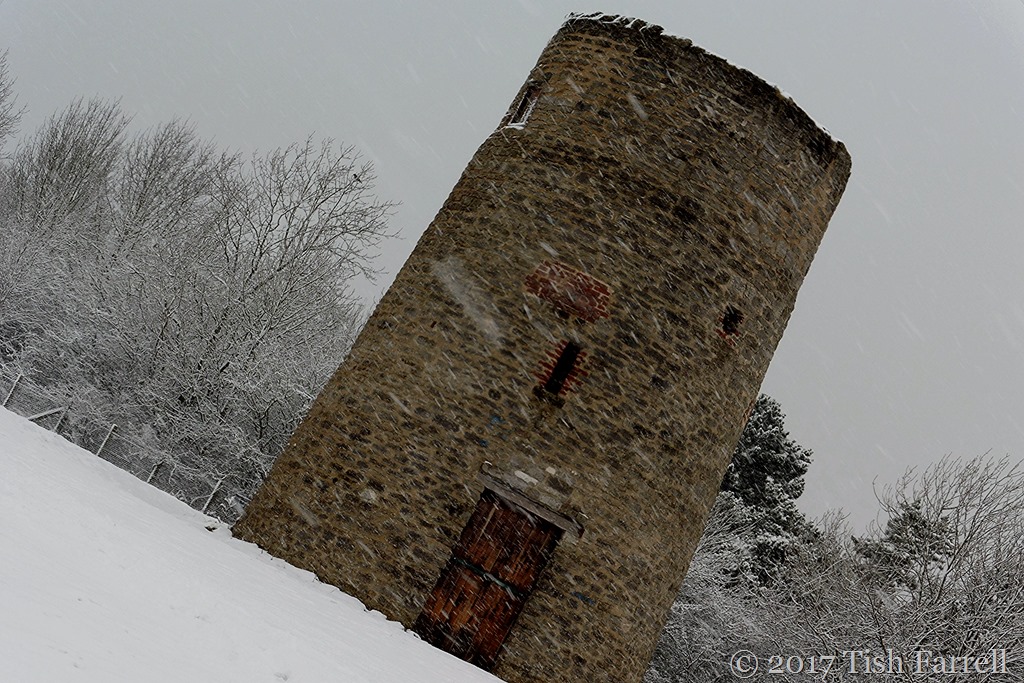
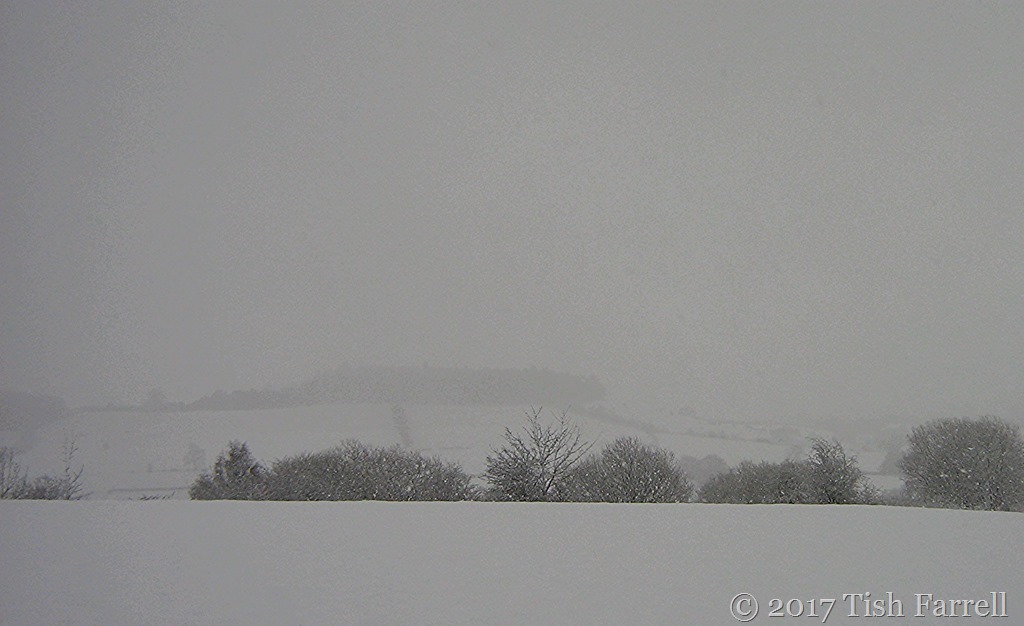
At 8 am the landscape looks like a scene from a post nuclear winter, and as I tell Jo, when I take the header photo, I do not need the monochrome setting.

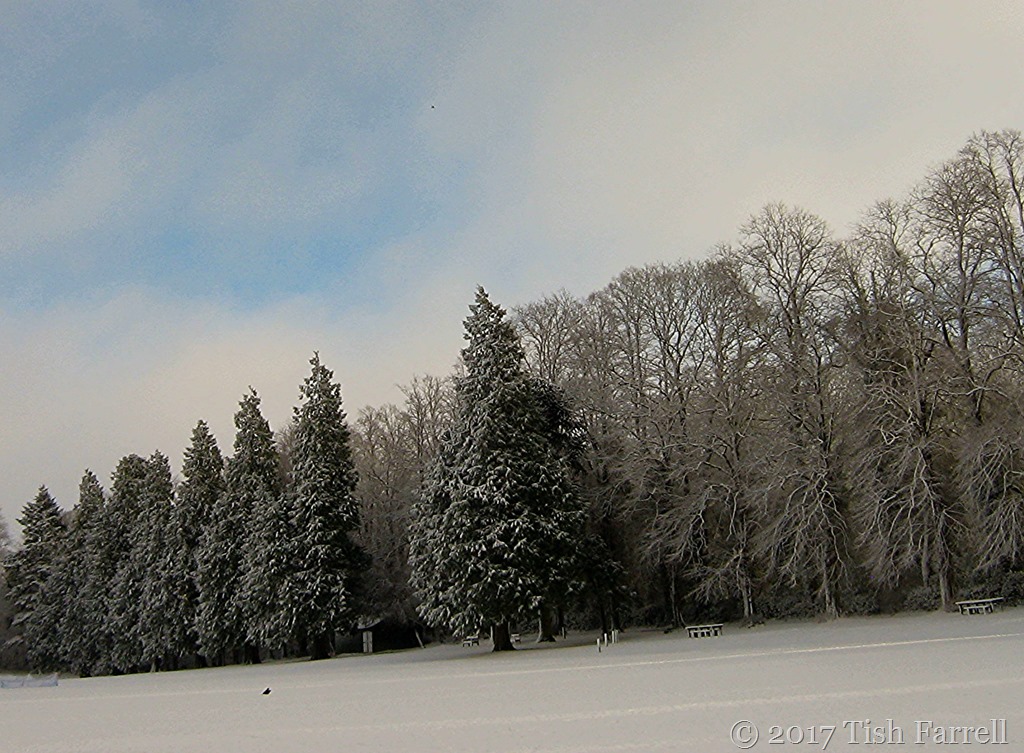
But by 10 am the sun is out, and the field at the back of the house is all of a sparkle.

P1030615

I’ve not yet had breakfast, but I have to go out there. I wrap up in many layers, jump into my wellies. He who is sitting on the sofa reading The Guardian on his laptop, and still wearing his dressing gown, thinks I am nuts. I promise him toast on my return, dash out of the house and head for the Linden Field.

IMG_2987

But even as I cross the playing field to the Linden Walk I know I’ve missed the moment –at least as far as the light is concerned.

P1030633

As I pick my way up Windmill Hill, the blizzard begins, although I am briefly distracted from the change in the weather by three woolly dogs – large and small. They too are thrilled by the snow and have to tell me so. Icy muzzles push into my hands. Brrrr. Thanks a lot, dogs.

P1030662

They bound away after their people and are soon lost from sight. It is then that I notice the weather is closing in fast. The wind is vicious. Much too cold to linger. IMG_2989

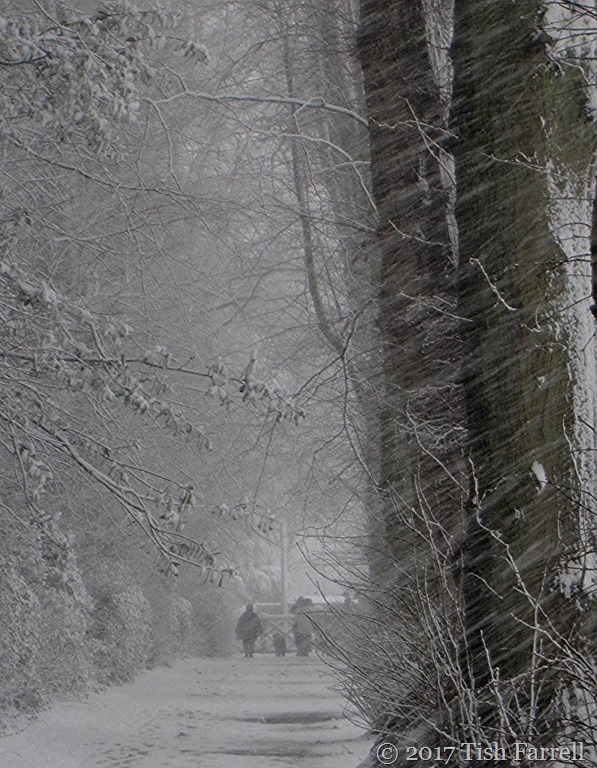
I retreat from the hill the long way round – this to avoid an unseemly slithering, bottom-first.  By now it is hard to see where I’m going. Not only that, I’m turning into the Abominable Snow-Woman. Even the Linden Walk, when I reach it, offers precious little shelter. Goodness! This is the most exciting weather we’ve had in ages.

IMG_6506a

But still, enough mucking about in the elements. There’s toast and Greek honey and good hot coffee to be had at home. Besides, any further inclinations to snap snow scenes may be catered for from the comfort of my desk and the window next to it.

Also I’ve remembered that I told Jo the snow wouldn’t last. My mistake. We’ve had several inches in the past few hours. But the best thing is that there is far less traffic out on Sheinton Street, and what there is, is moving so slowly that it is wonderfully quiet. Reminds me that it’s time to put in another request to the Council for a 20 mph speed limit. It’s interesting how a spell of disruptive weather can remind one of what really matters re life and well being.

P1030677

Thursday’s Special: sequence


She Knows Where She’s Going ~ Thursday’s Special

P1030278b

We’ve just returned for a two-day trip to Hay-on-Wye, the second hand book capital of Great Britain, if not the universe. This ancient, tiny town stands on the banks of the mighty River Wye, on the Welsh side of the Wales-England border and, astonishingly for so small a settlement, has 23 book shops. Some are small and specialist – catering for poetry  enthusiasts, natural historians and sleuthers of good murder mysteries; others are labyrinthine emporia, the size of college libraries – where all topics are covered. Many sell new books too and also, since the advent of the famous annual Hay Literary Festival, have upped their game from being the fusty, dusty places I remember from years ago, and transformed themselves into smart bookish resorts where you can curl up in a big leather armchair and spend the whole day reading. Richard Booth’s Bookshop even has its own cinema and very popular cafe. Treats all round then.

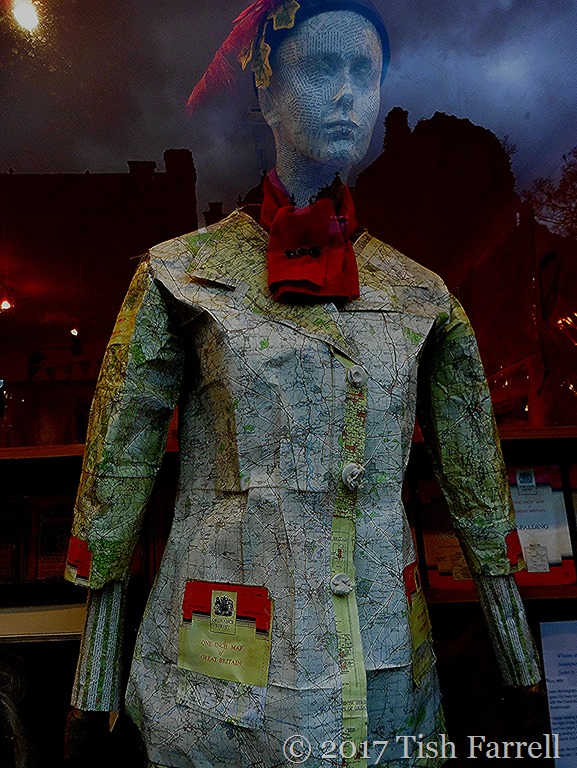
This photo was taken through the window of Mostly Maps and I think it covers all Paula’s word prompts for her December pick a word. Here we have the portrayal of a young woman by a non-human mannequin. She has the most sagacious looks too, clad in the re-worked remains of old ordnance survey maps. There are more remains reflected behind her – the dark silhouette of Hay Castle ruins. And then, here and there, are small stellar bursts from street and Christmas lights. Tarrah!

Now please visit Paula to see her and other bloggers’ cunning interpretations:

Thursday’s Special: pick a word in December

P.S. There will doubtless be more about Hay and our meanderings along the Wye in upcoming posts

Inside The Old Fort At Pylos ~ Thursday’s Special

IMG_2592

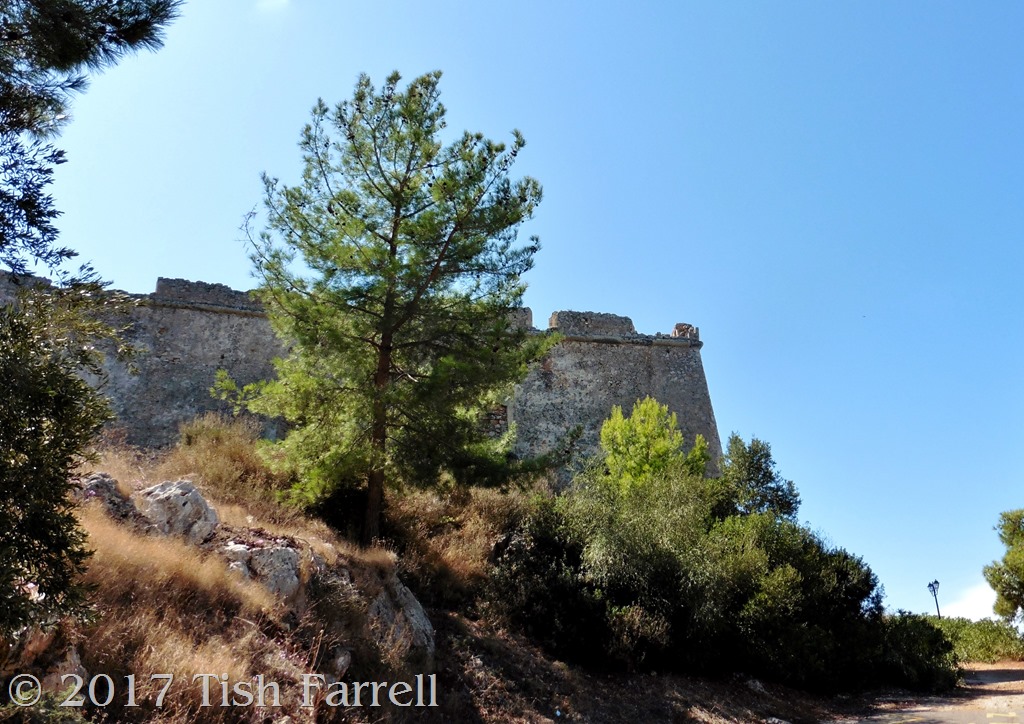
The Ottoman fort at Pylos is monumental, and comprised of an outer defensive wall and a citadel. It was built after the Turkish invasion of 1500, and apart from two brief interludes – one Venetian, one Russian, was held by the Ottoman regime until the Greek War of Independence in 1821. Even at the last lap, Ibrahim Pasha and his Turko-Egyptian army  proved hard to oust, and after an initial surrender of the fort in 1821, it was reoccupied by them in 1825, and hung onto until 1828.

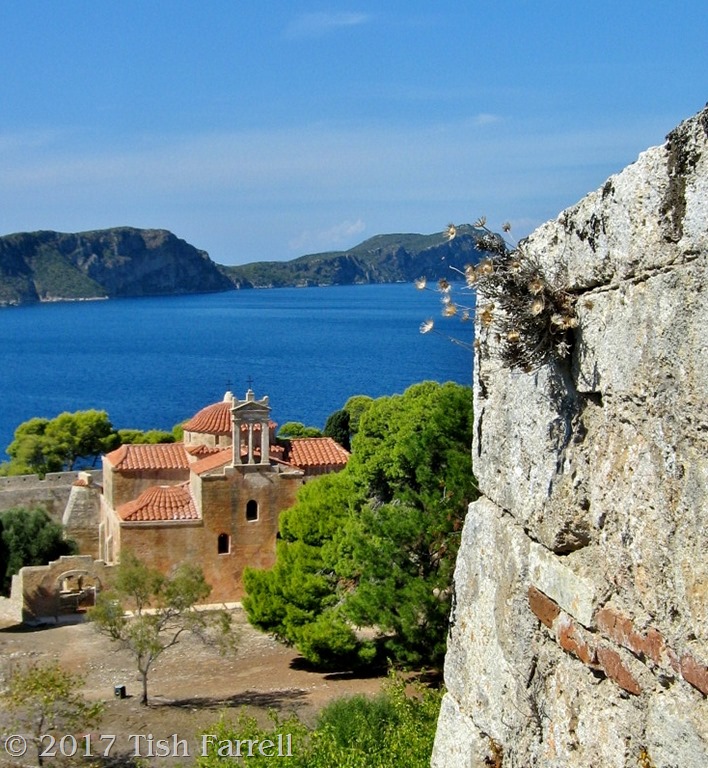
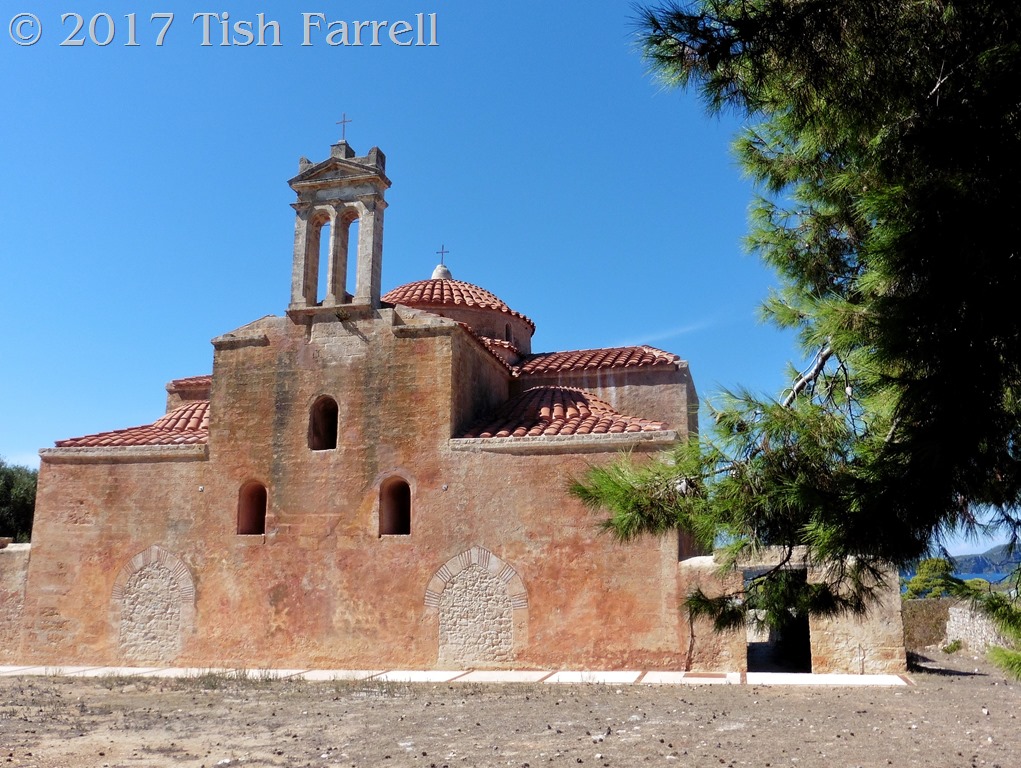
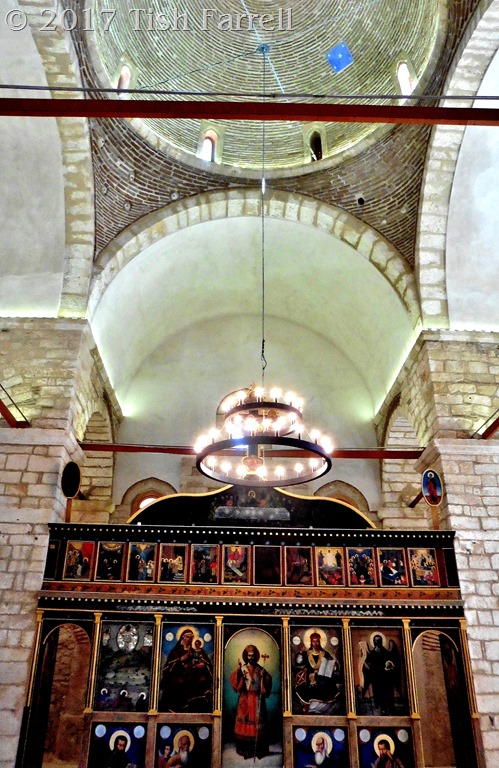
The first photo was taken from the citadel, which during occupation by the French in the 19th century was used as a prison. The church you can see below is the Church of the Transfiguration of the Saviour, and was originally built as a mosque around 1573. Under the brief Venetian rule of 1675 to 1715  and during the Orloff Revolt of 1770 it served as a Christian church, and it is in this capacity that it was restored by the Greek Government between 2011 – 2015.

P1020547

*

P1020572

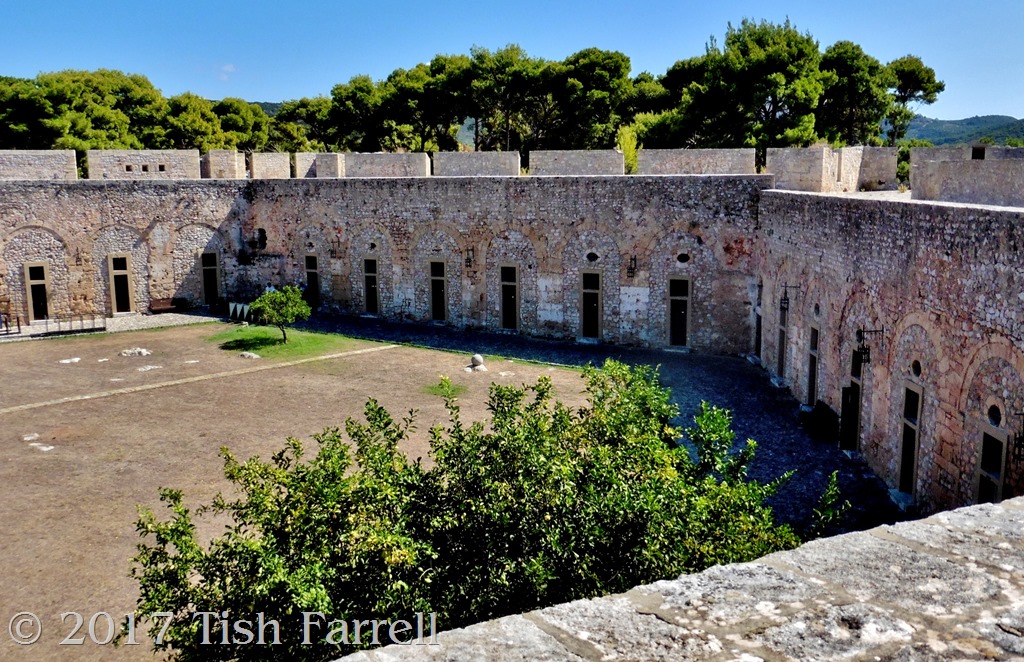
Inside the citadel, and the nineteenth century prison cells.

*

P1020571

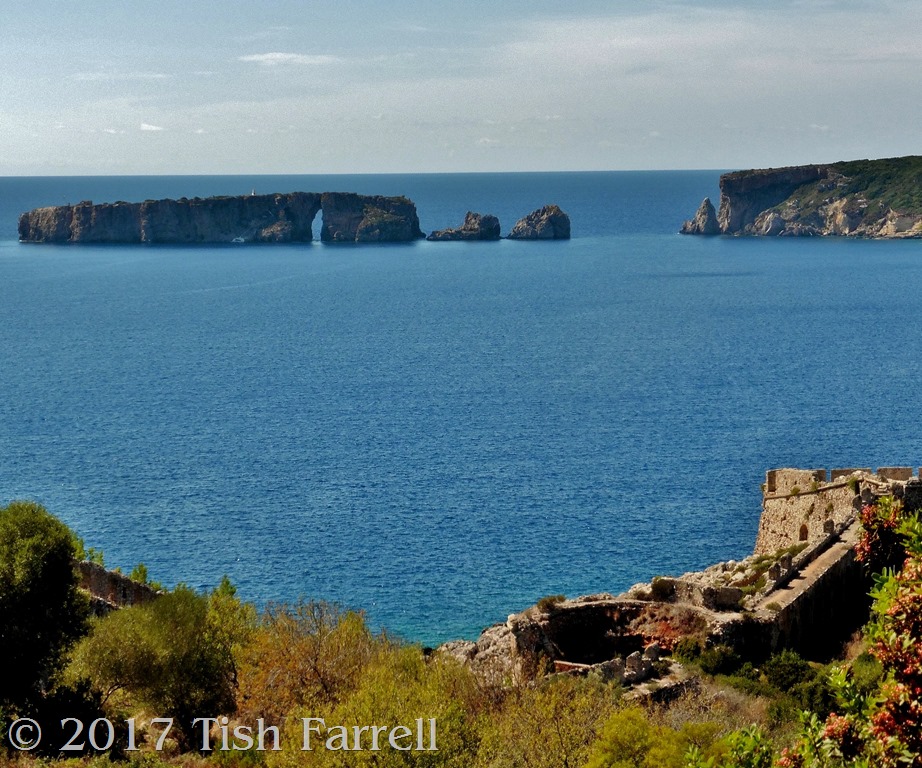
Looking down on the outer defensive wall and the sea-arch beyond.

*

P1020533

The outer walls on the seaward side. The hillside was heavy with the scent of pine trees, and cyclamen were growing everywhere among the cones and fallen castle debris.

*

P1020556

Inside the Church of the Transfiguration of the Saviour.


Thursday’s Special: Traces of the Past Please visit Paula to see her fine view of Alnwick Castle.

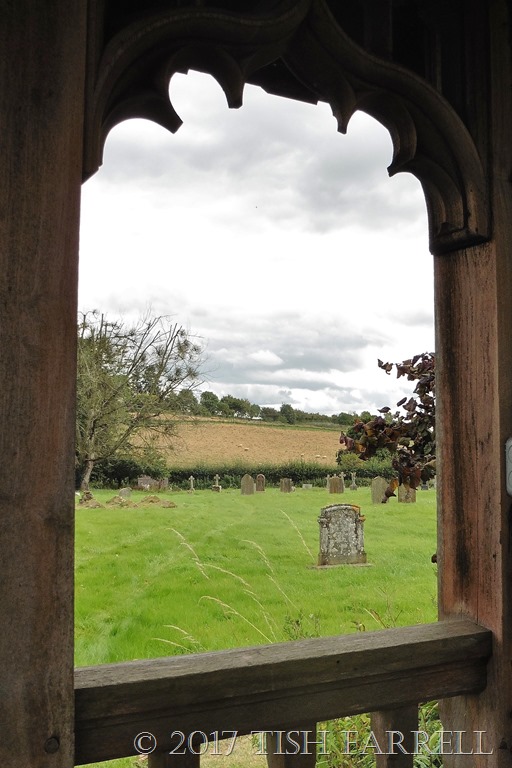
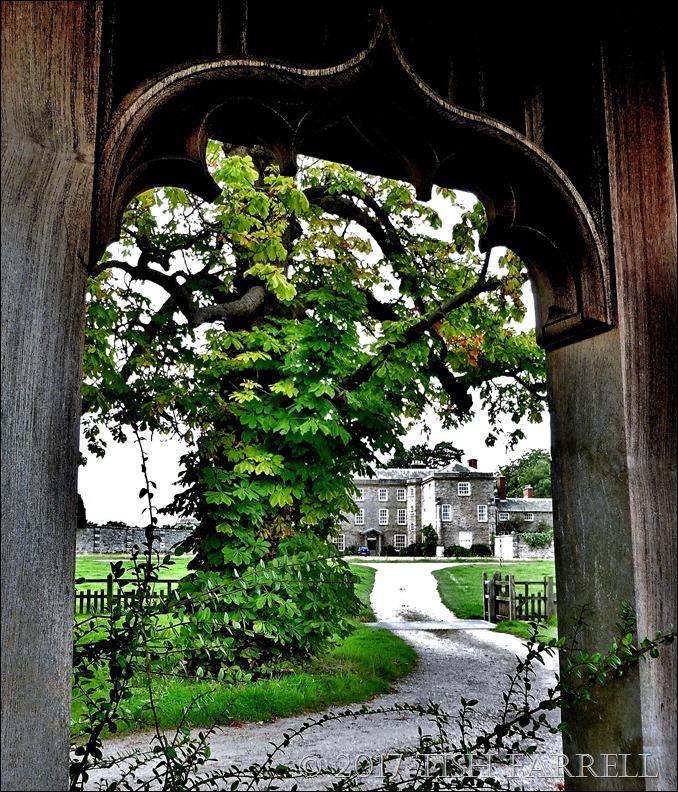
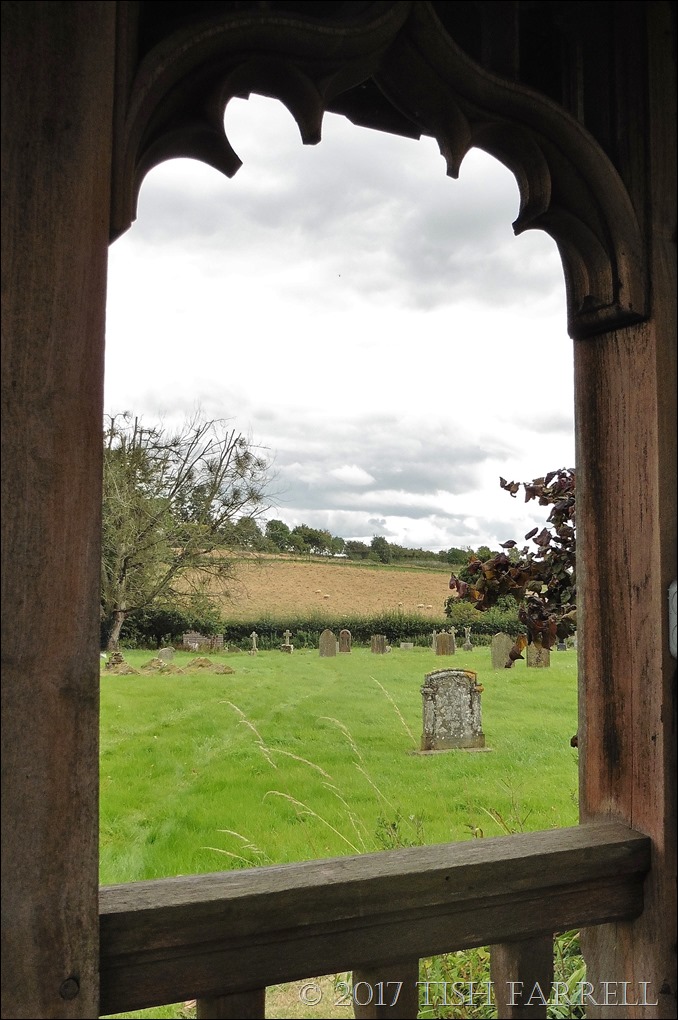
Views From the Morville Lych Gate

P1010959

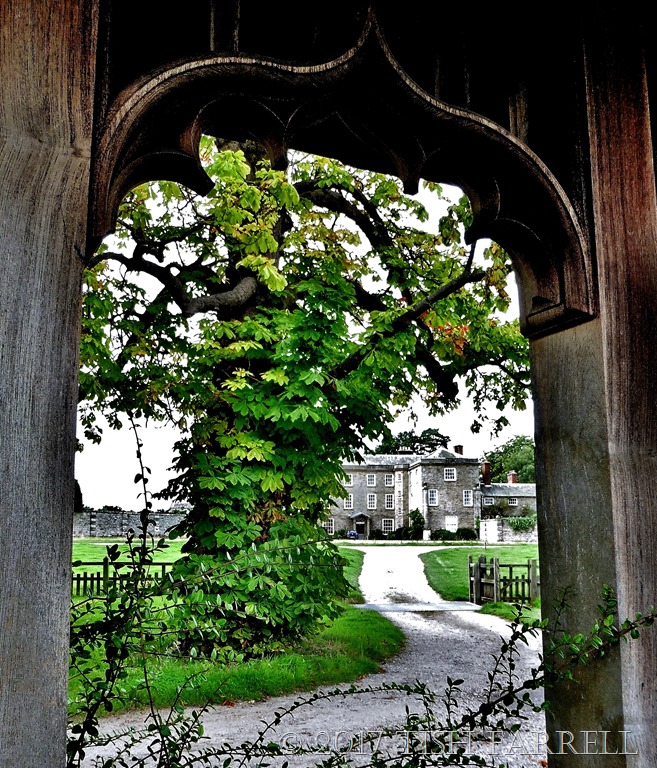
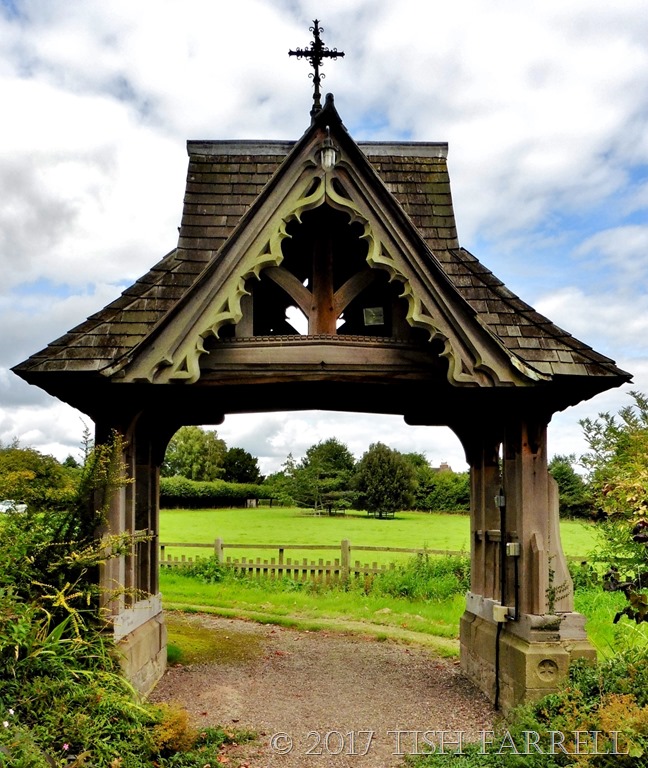
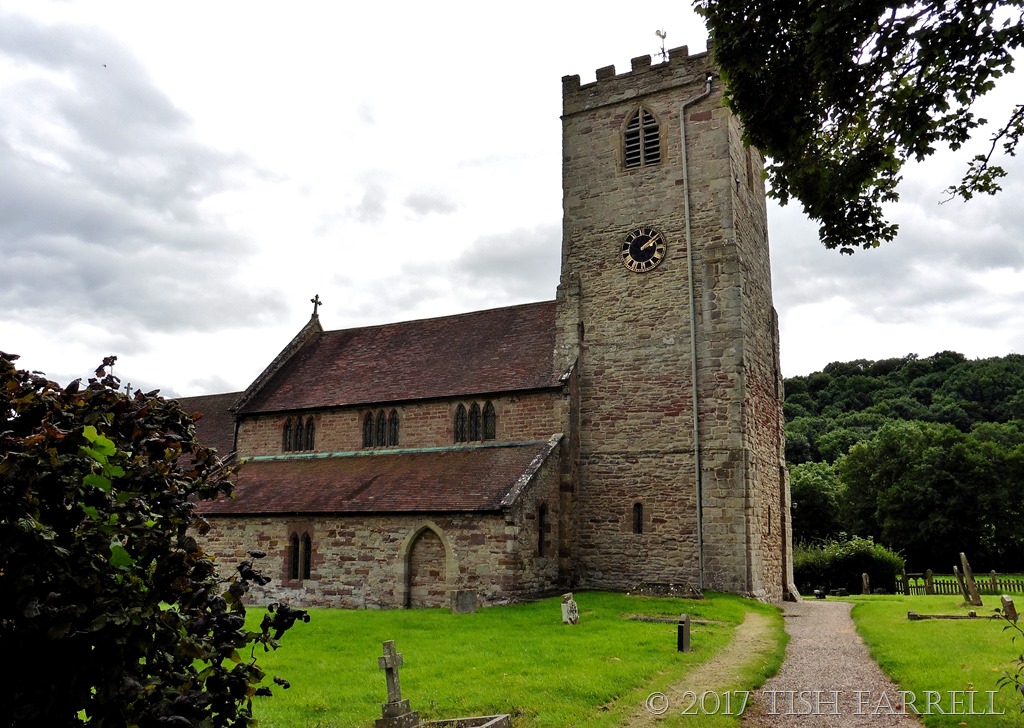
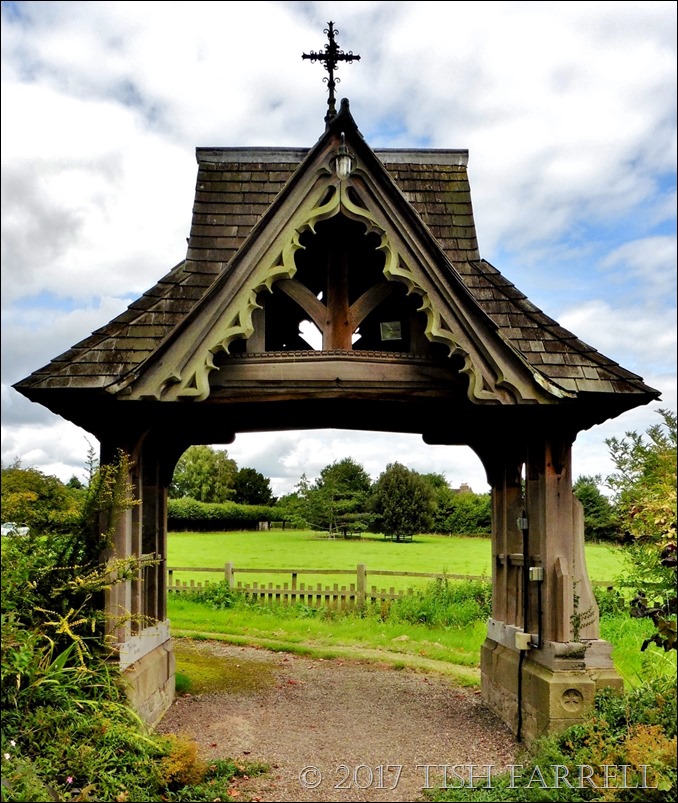
The lych gate is of course the corpse gate, the covered entrance wherein the dead might be laid until a funeral could take place in the parish church. In the past there was often a several day wait for this essential ceremony, during which time the deceased must be shielded from bad weather, robbers and worse.

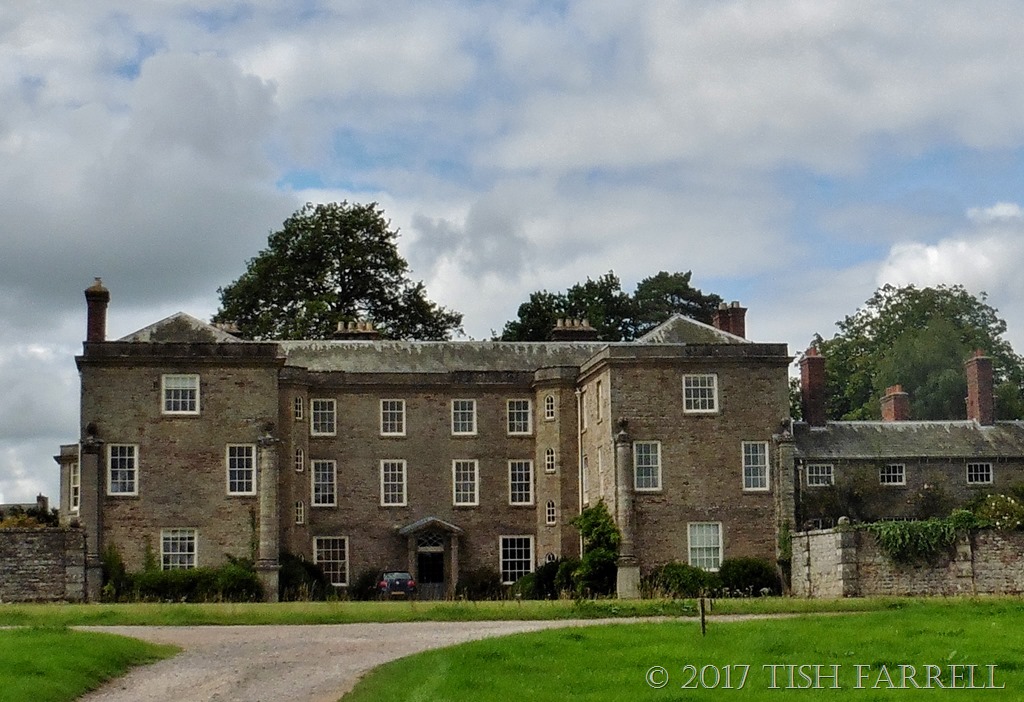
This particular lych gate stands on the path to Morville’s parish church of St. Gregory.  Morville, itself, is a small hamlet on the main road between Much Wenlock and Bridgnorth, and like Wenlock has a monastic past, although the church is all that remains of this period. I suspect that the fabric of the actual monastery may well have been re-purposed in the building of the next-door Morville Hall, which began hot on the heels of Henry VIII’s Dissolution of the Monasteries in the 1540s.
P1010964

In Saxon times the place was a thriving manor, and after the Norman invasion of 1066, continued to be so, its existing church and associated  lands bandied about as pieces of valuable real estate in deals between kings, earls and churchmen, its native inhabitants bound by fetters of superstitious dread and the obligation to provide wealth and labour for their overlords.

The Norman earl Roger de Montgomery took over Morville (along with most of Shropshire) in 1086. Here he had built a Benedictine monastery, an outpost for his more prestigious Shrewsbury Abbey some twenty miles away. He also had Wenlock’s Saxon priory remodelled on a monumental scale, and ordered the building of numerous other religious houses in every adjacent small community across the county.

I do not think this extensive building programme had much to do with piety. This was first and foremost about stamping Norman authority over the land. It was also an overlord’s means to control people, the wealth they created, and by the ordering of good works from the wealth accrued, so ensure his own place in heaven. It was his insurance policy in an era when everyone lived with a mortal terror of hell and the devil. As Baldrick in Black Adder might say it was a very cunning plan – political, physical and psychic control all of a piece – a top-down wealth management strategy.

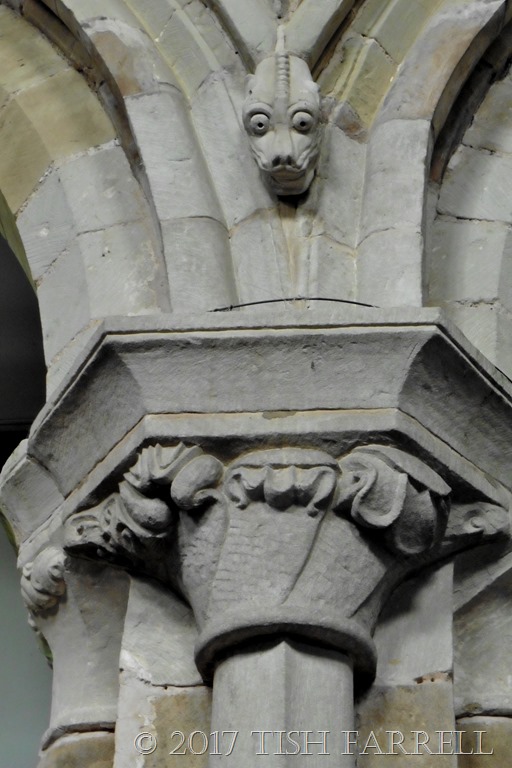
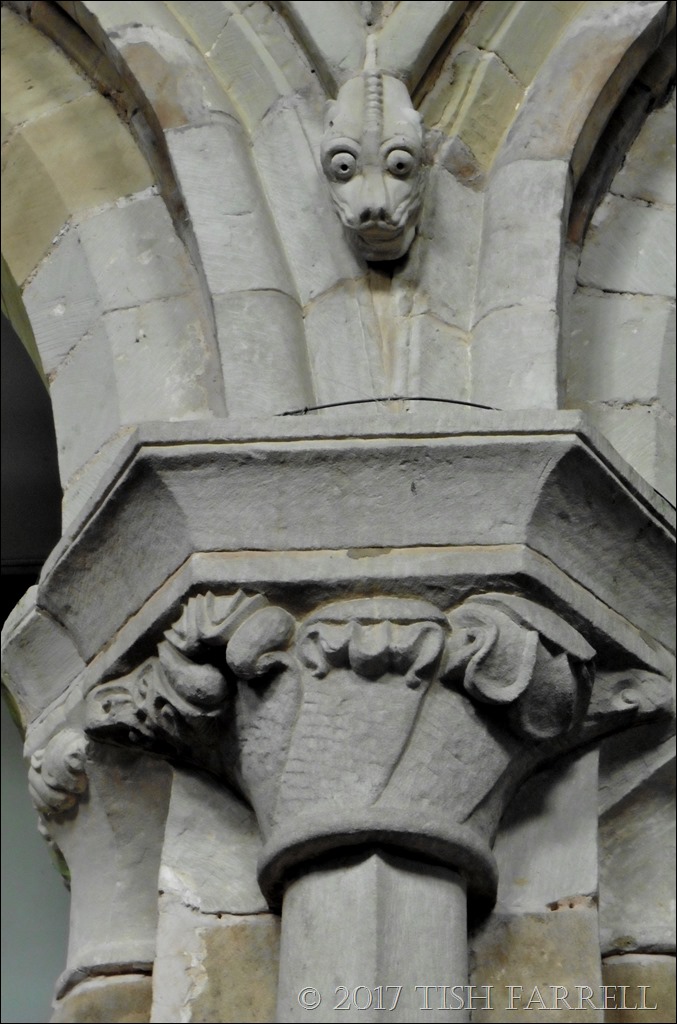
If you go inside the church you may see, as you will in many old churches, the evidence of the psychic tyranny. The present building dates from the 1100s. Between the column arches on both sides of the nave, serpents slither down – an early medieval manifestation of ‘fake news’ perhaps? Imagine having them breathing down your neck every Sunday from infancy to grave. There was no opting out of the experience. Your very soul was in peril should you try to, and anyway this and the other snakes are endlessly hissing at the horrendous cost of becoming an outcast.
P1010985

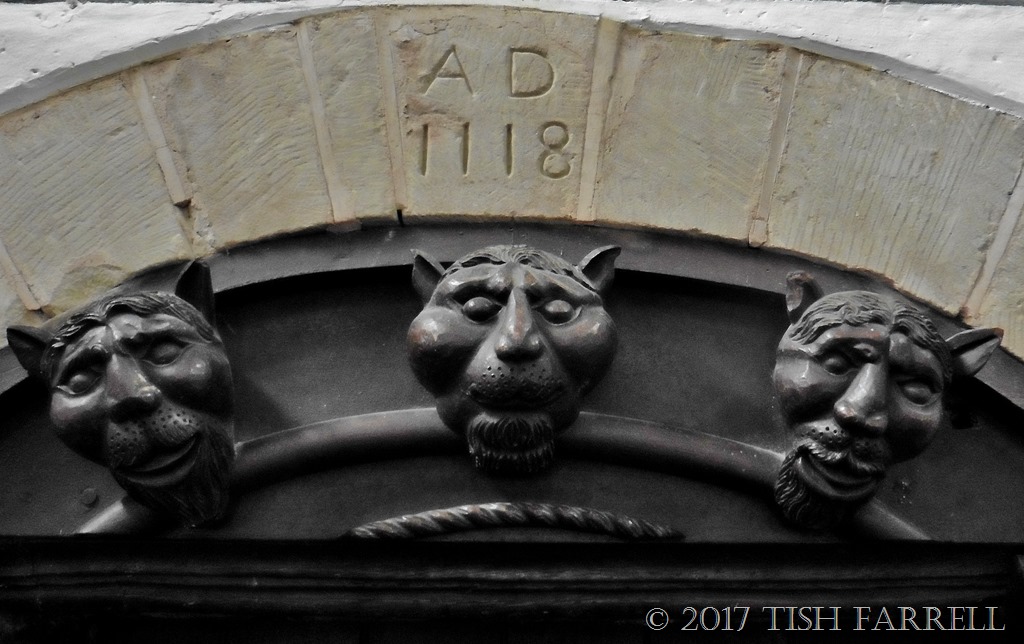
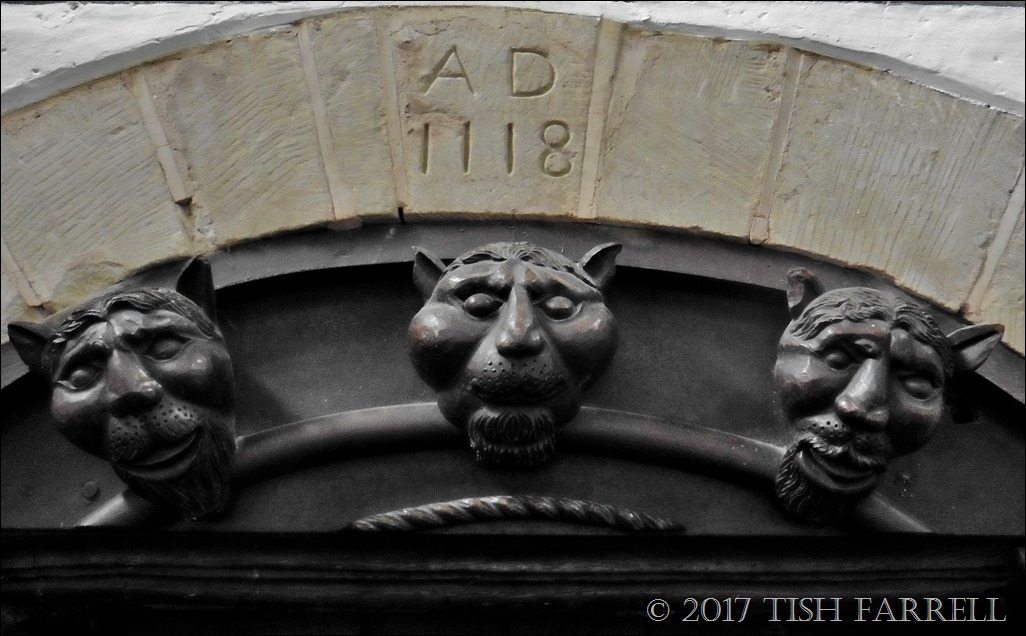
Even when the service is over – the mysteries of it conducted in a language you do not know, you are sent on your way by this jolly trio, just to reinforce the sense of threat for the rest of the week:
P1010983

*

Today, the church in its country churchyard and the nearby hall  are quintessentially scenic. My senses tell me that this is a lovely spot. But I confess, too, that increasingly I struggle with the rustically picturesque and the meaning I take from it.
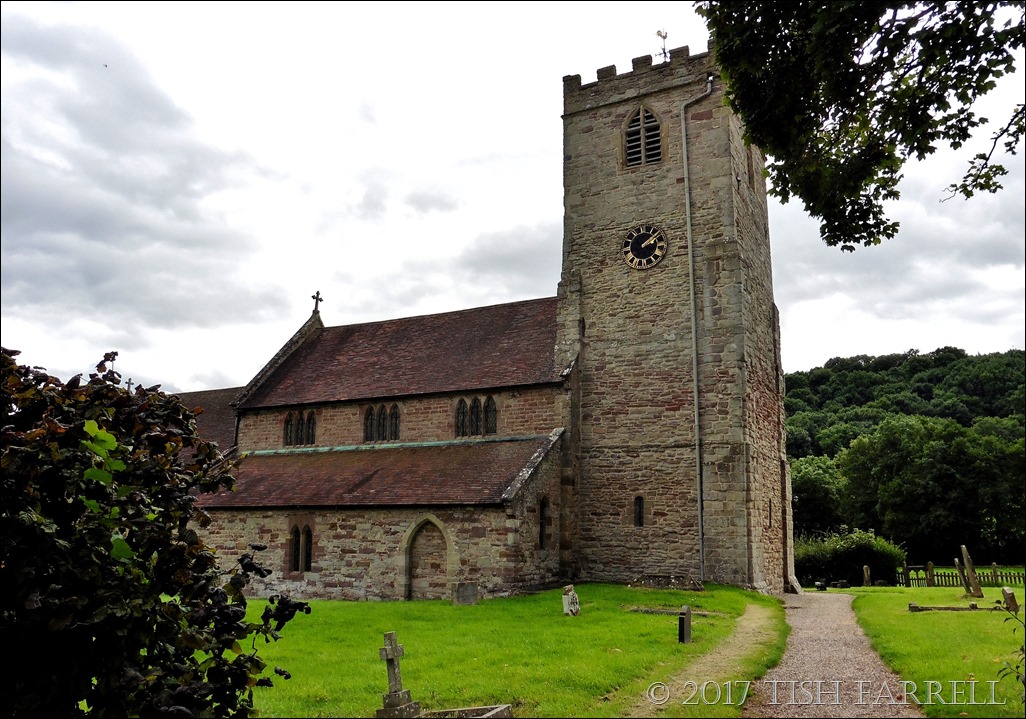
P1010963

*

For one thing, I still detect traces of susceptibility. The view of the hall, though presently owned by the National Trust, is still likely to induce a fit of the Downton Abbeys…P1010953
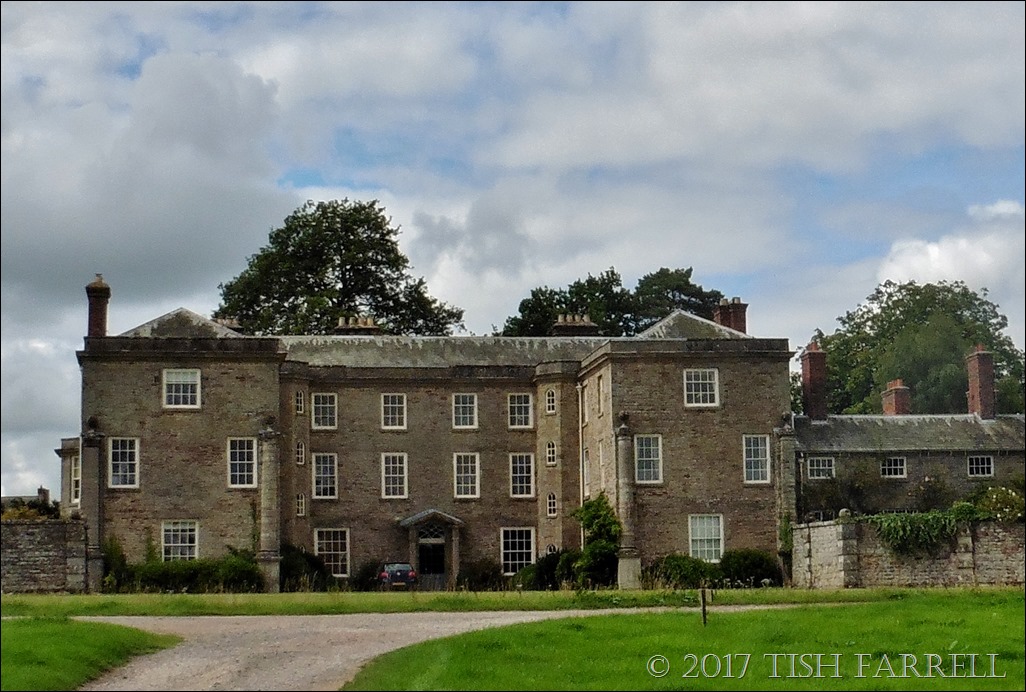
…that ultimately distasteful sense of nostalgia for a fake past of benign lords and grateful retainers. We may have Henry VIII to thank for loosening a little the stranglehold of the ruling elite, and broadening the class of major players to include merchants and professional men, but nearly five hundred years on, most of the country is still owned by small and powerful factions including the monarchy.

The fascinating thing is most of us don’t seem to notice, or realize how the way land continues to be controlled affects our lives in critically fundamental ways – the cost of a home – to buy or to rent – and the acceptance of ever-rising property ‘values’, the acceptance of mortgages for life. It is not for nothing that these holdings are referred to as ‘land banks’, or that any release of land for development is minutely managed to ensure maximum return from high priced, often poorly built, overcrowded properties.

We no longer have to plough milord’s fields, or give him our tithes in wheat and eggs, or bow to his whims, and tug forelocks, but the vestiges of feudalism are alive and well and residing in Britain, and more particularly, idling in its well-worn seats in the House of Lords, currently the focus of ‘a bit of a scandal’ as reported by the Electoral Reform Society. Of course we could do something about all this – if we really wanted to – if we stopped romancing about the past and started planning for a present that embraces everyone’s needs. It’s an interesting thought anyway.
P1010961

Thursday’s Special: Traces of the Past

copyright 2017 Tish Farrell

Back To The Stiperstones ~ Or Slow Under The Surface, And What On Earth Were The Luftwaffe Doing Here?

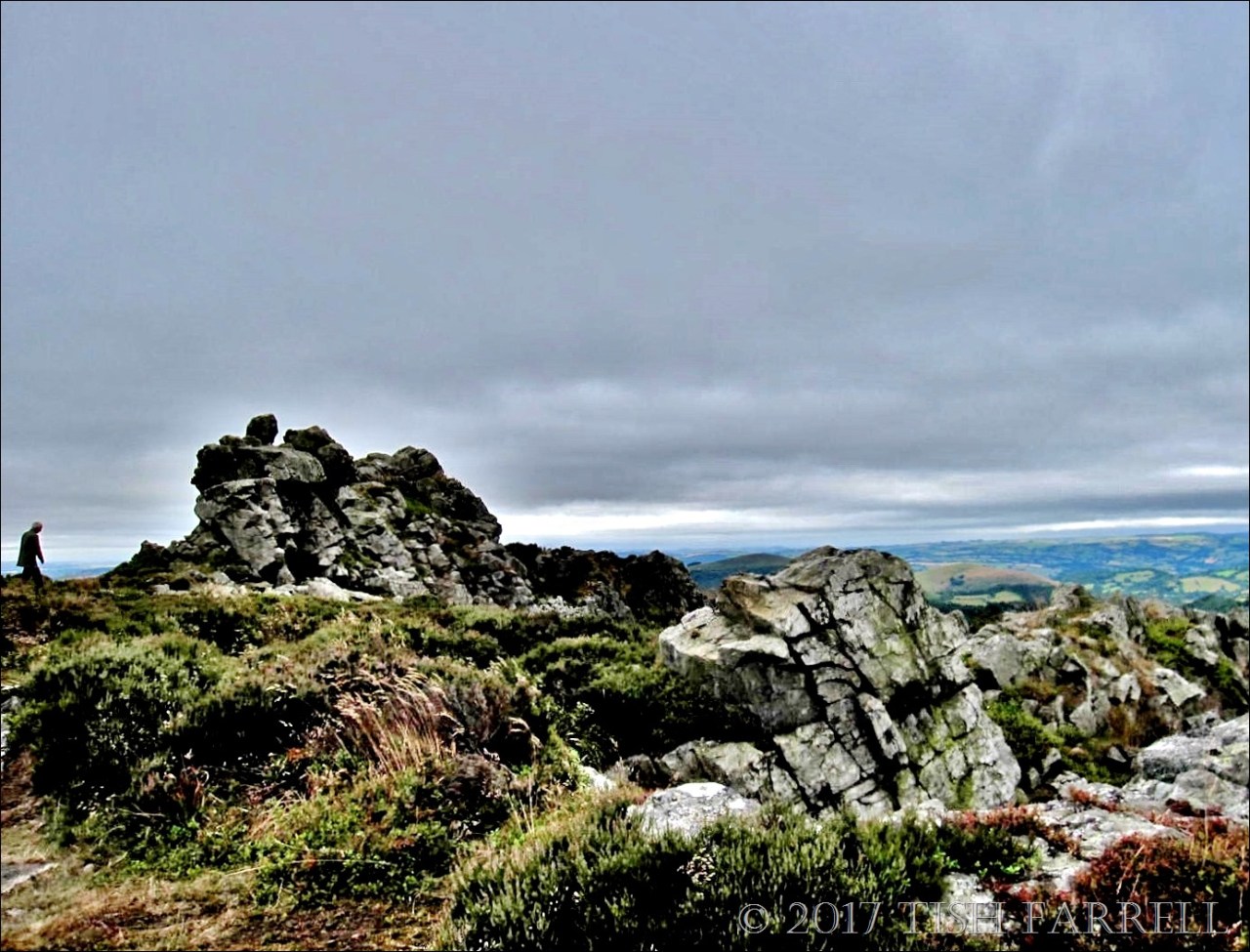
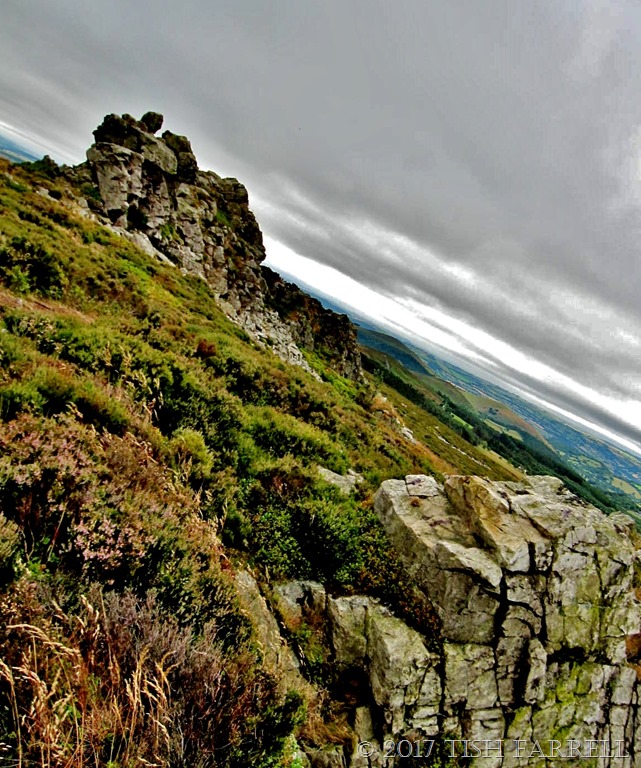
This week at Lost in Translation, Paula’s prompt is ‘SLOW’. So here is another vista from our recent trip to South Shropshire’s Stiperstones (see also the previous post.) And the reason I’ve chosen it is because I cannot think of anything slower than the trans-global  journey of the landmass on which these hills sit. It has been travelling an inch a year for 450 million years, moving up from its source on the southern shores of the Iapetus Sea, 60 degrees south of the equator and roughly where the Indian Ocean is today. I’m not sure if the land beneath our feet is still heading north, or if one day Shropshire will be in the Arctic.

That’s quite a thought.

The other aspect of slow-going to be seen in these photos is the gradual weathering of the folded, upthrust former beach from which this 5-mile ridge is mostly formed. Much of the shaping began with the last Ice Age when the glaciers extended across Shropshire.

A far more recent, and somewhat bizarre reshaping apparently took place during World War 2, when the Luftwaffe, flying over the north end of the Stiperstones, mistook the rocks of the Devil’s Chair outcrop for a town with ammunition dumps, and duly bombed the place. How they came to this conclusion is hard to understand. Even in the heyday of the local lead mining industry, the communities were small and sparse and tucked into hillsides and valleys. There has never been a town in these parts. Perhaps in the dark the strangely glowing quartzite exercised some mystical, mystifying interference in pilot perception. Who knows?

It is anyway another good yarn to add to the tales of witchcraft and devilry that, in the human imagination of ages, enmesh these bleak uplands.

IMG_5519

We certainly saw no signs of bombing, though it might be hard to spot among the heaps of fragmenting quartzite. These particular shots were taken at Cranberry Rocks at the southerly end of the Stiperstones. We did not make it as far as the Devil’s Chair; it was too hard underfoot and too windy. But we do mean to make another visit one day soon, and tackle the hill from the northern end. We just have to remember not to go when mist threatens, or we might come on the Devil himself, brooding nastily on his craggy, Luftwaffe-remodelled throne.


copyright 2017 Tish Farrell
Wandering Around Cotehele House In The Rain ~ Traces Of The Past

IMG_4619

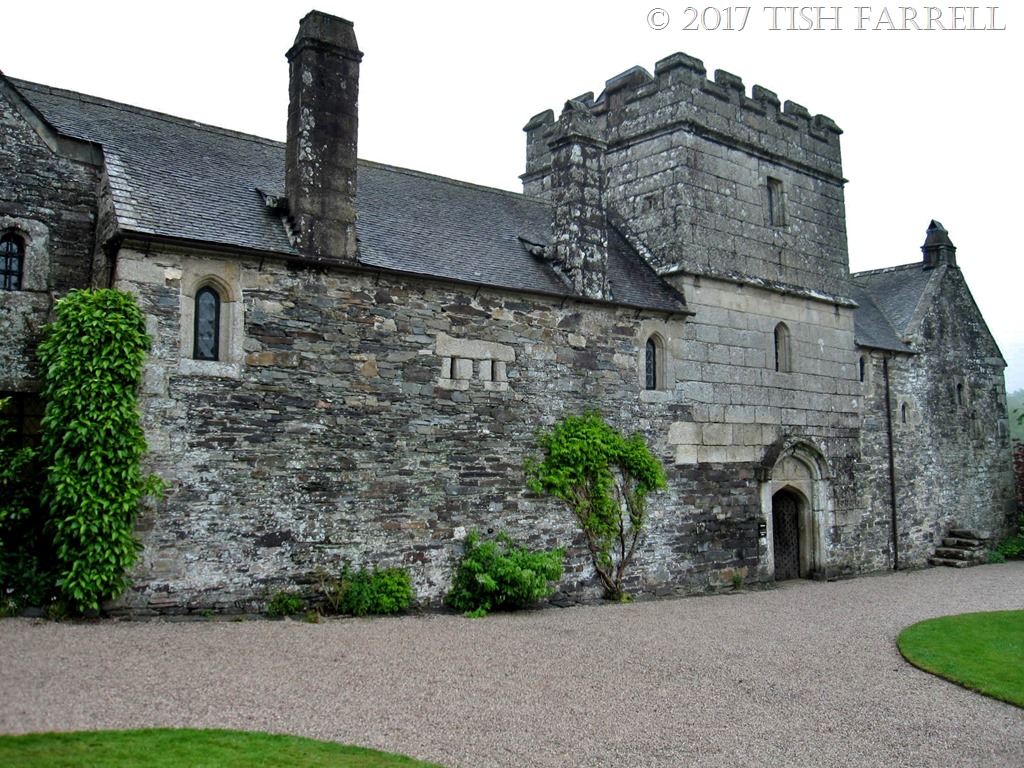
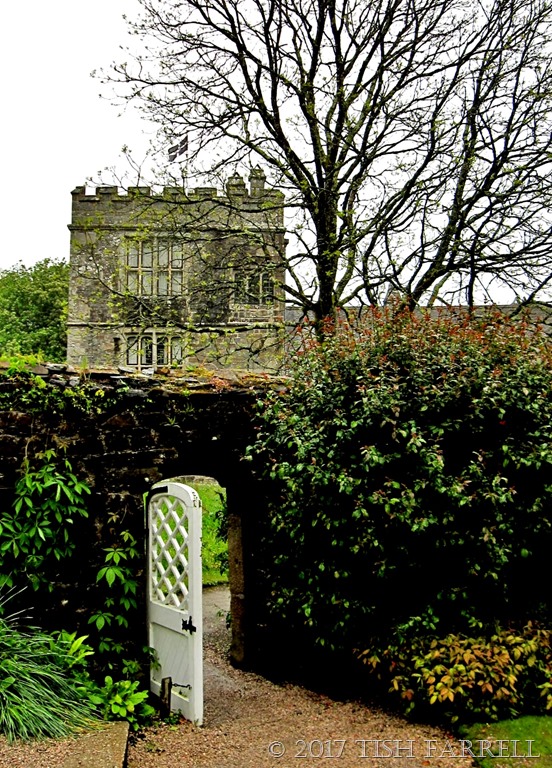
Cotehele House in the Tamar Valley in Cornwall began life around 1300 when it was owned by a family of the same name. Fifty years on, a marriage delivered it into the Edgcumbe family who owned it for the next (almost) 600 years. These new owners remodelled the house in the 15th, 16th, and 19th centuries, as well as building themselves another (their principal) house further down the Tamar River at Mount Edgecumbe.
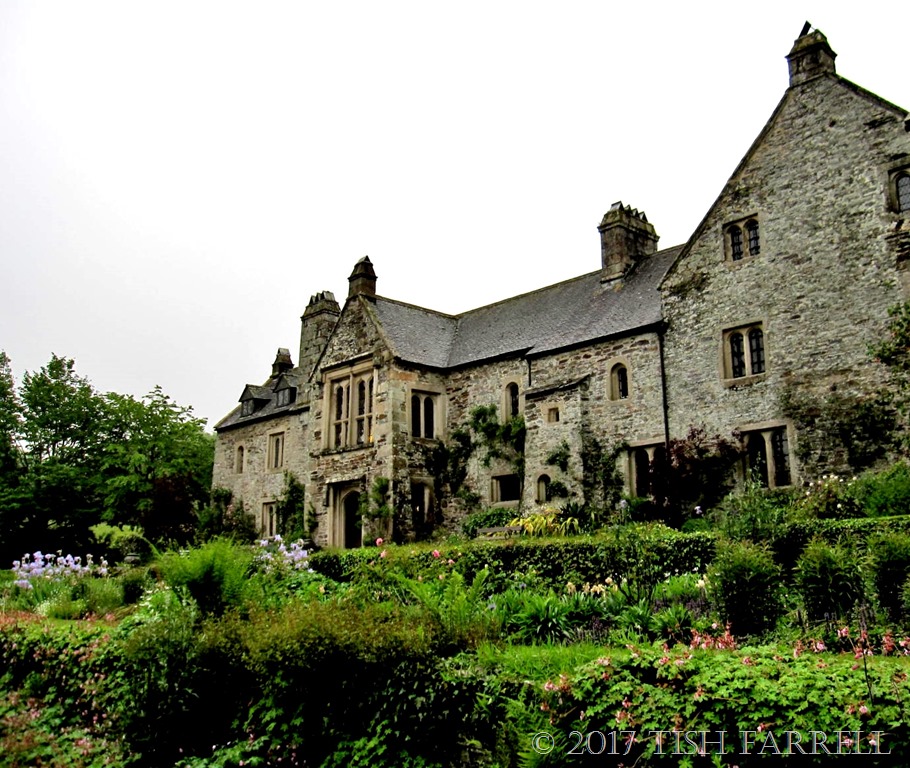
In 1947 the 6th Earl gave the house to the nation in lieu of death duties, and it is now owned by the National Trust, one of their more atmospheric  properties. It was particularly atmospheric on the rainy May day when we were last there, and also on the rainy December day when we went there to see the famous Christmas garland.

IMG_4664

15th century Gatehouse

*

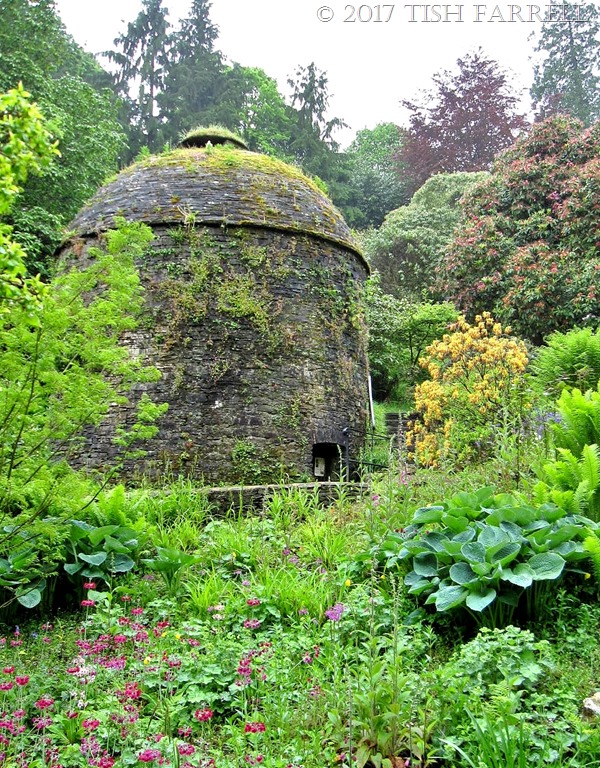
The house has extensive grounds. In the 16th century there were two parks and orchards. The 1730s estate map also shows a bowling green, and the dovecote of the first photo. This dates from around the end of 16th century. The lantern top provided access for the birds, which were of course cropped for meat.

The gardens we see to today were most shaped in the late 19th and early 20th centuries and extend to around 6 acres: lovely even on a wet, and gloomy Cornish day.

IMG_4636

IMG_4608

IMG_4655

IMG_4638

IMG_4623

Thursday’s Special: Traces of the Past

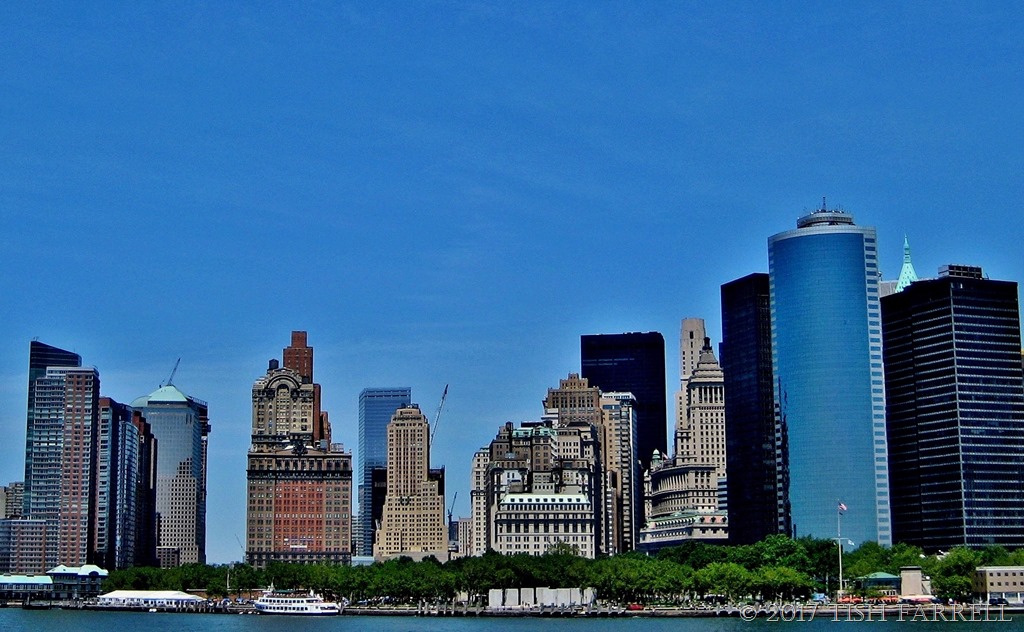
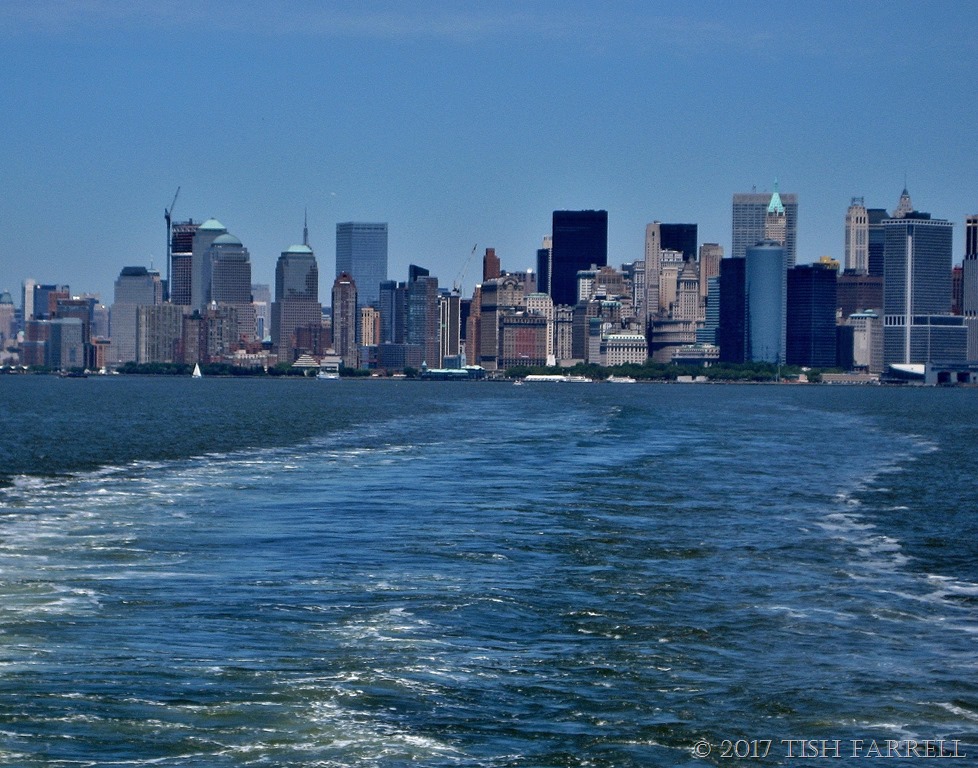
Manhattan From The Staten Island Ferry

Our trip to New York a few years ago coincided with a heat wave. It was too hot to think or walk far from the iced coffee stalls in Central Park, or the cooling air conditioned corridors of the Met. The other best place to be was riding the Staten Island Ferry.  Nice breeze. Stunning views of Manhattan and dead cheap.


Thursday’s Special: please visit Paula and pick a word that inspires you. I’m going for ‘soaring’.