Musings On Time Past ~ What Do We Make Of It?

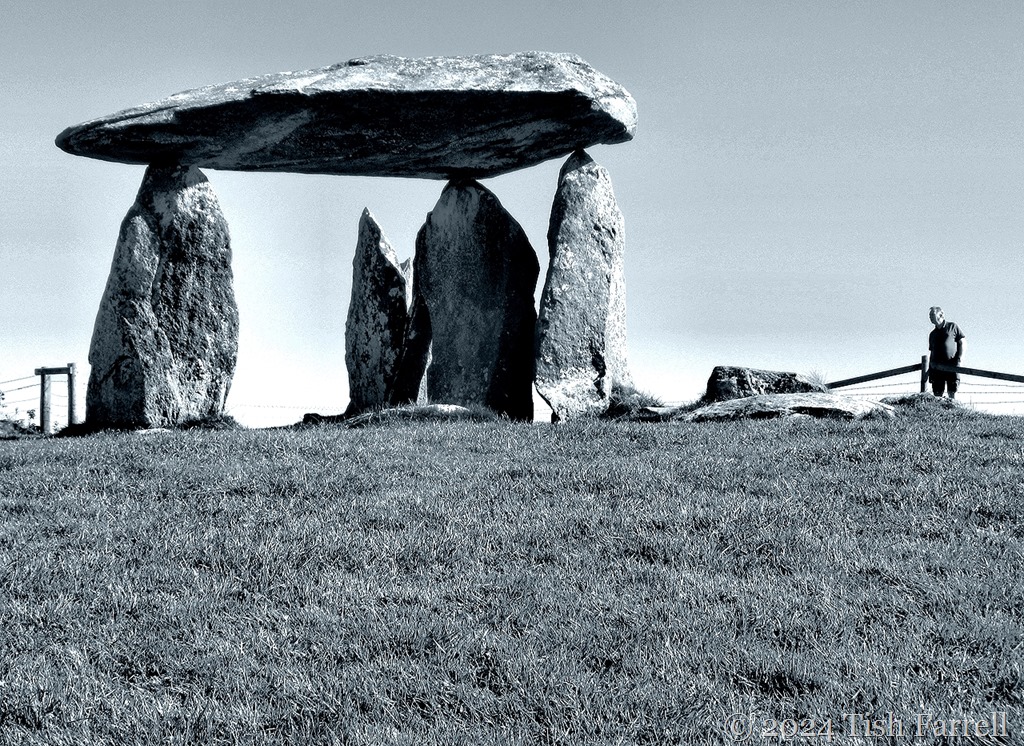
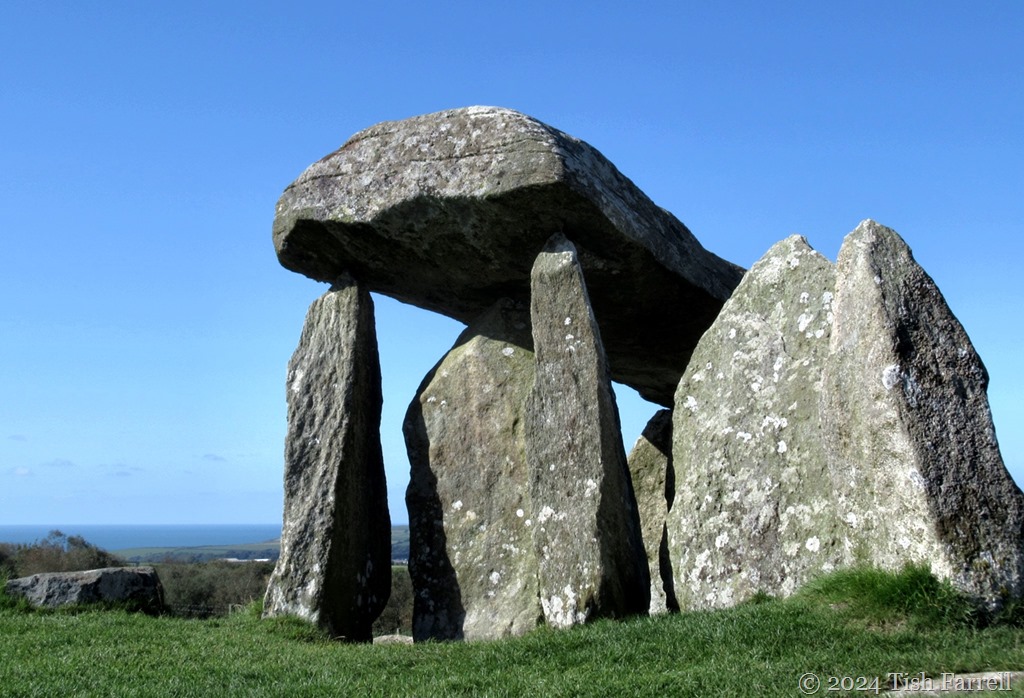
pentre ifan

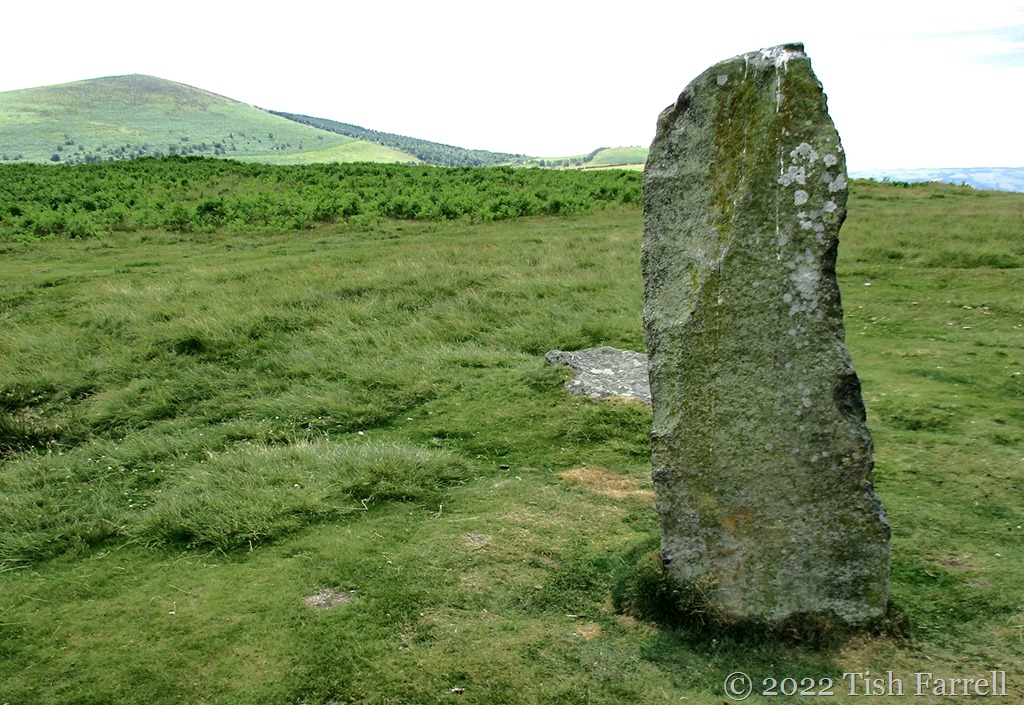
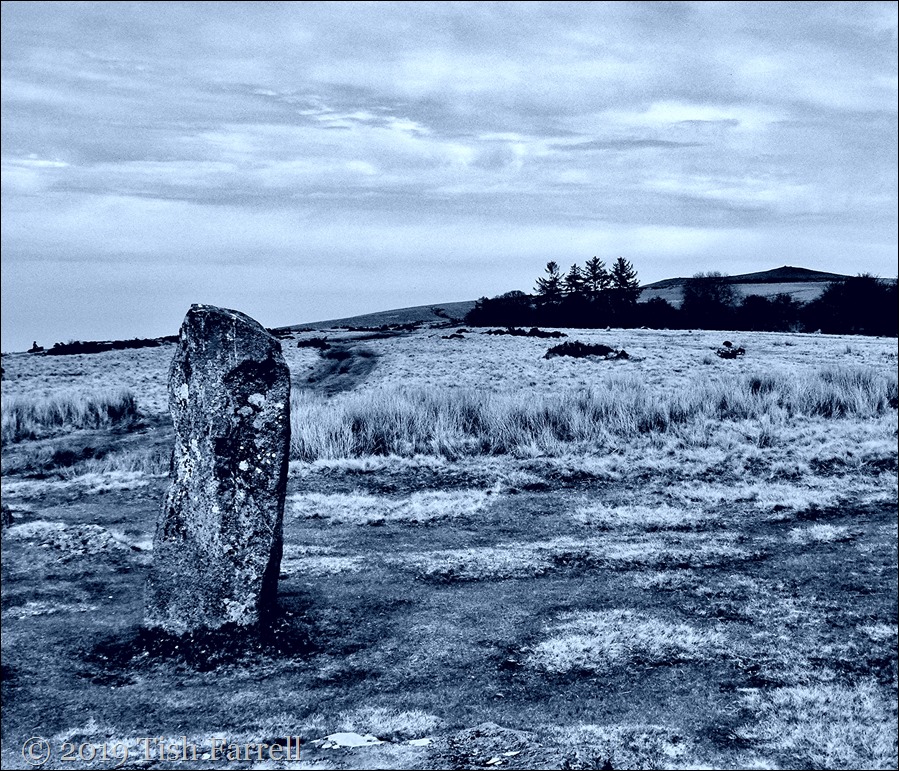
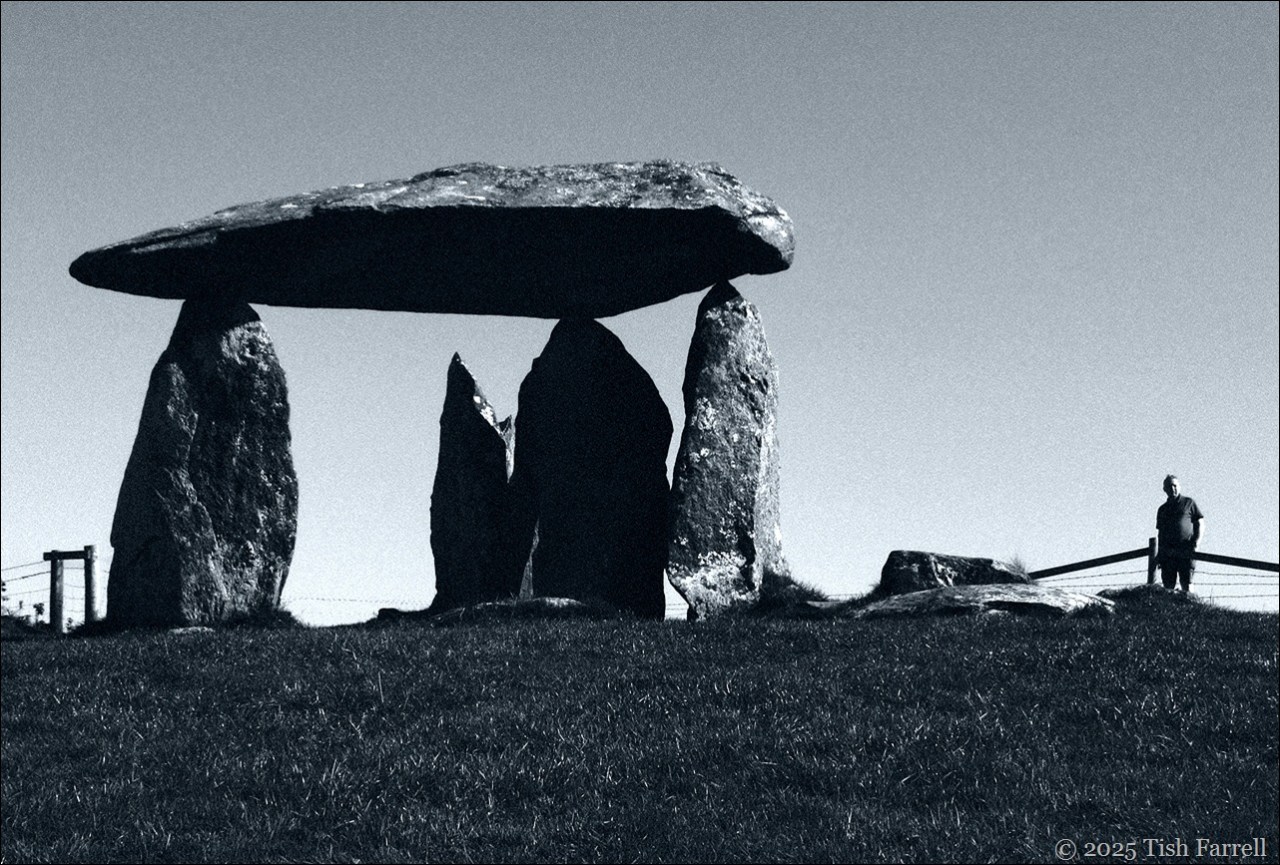
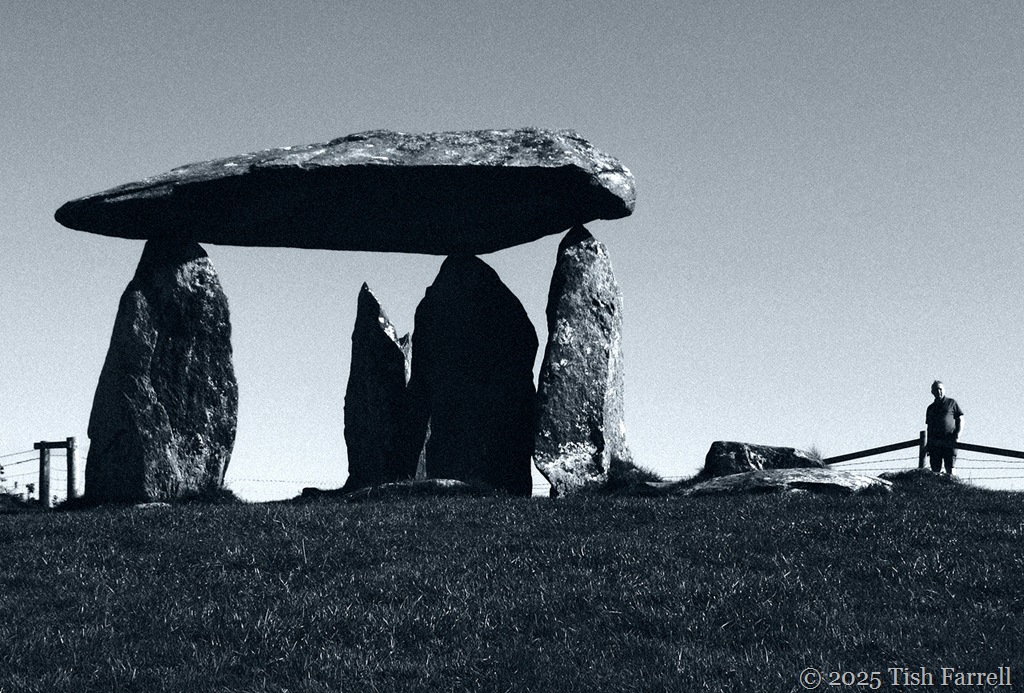
Remains of Pentre Ifan chambered tomb, Newport, Pembrokeshire c. 3,500 BCE

*

We humans have problems with time: too much of it; not enough; the wrong kind for a planned action or pronouncement; then there’s ever that tale of elders who forget what they had for breakfast, but recall in minute detail events of decades past.

We try to pin it down of course, have long done so with all manner of devices. Most likely the late ‘Stone Age’ people who constructed Pentre Ifan above, had contrived the means to keep track of it. For instance, the placement of so-called standing stones, the particular configuration of megalithic circles, the siting of tomb entrances, whence to observe the movement of stars, the angle of the sun, and so know where they stood in relation to the earth’s perceived cycles. A time to plant; to make a journey; to hunt; to trade; mark seasons for rites and festivals.
Mitchells Fold

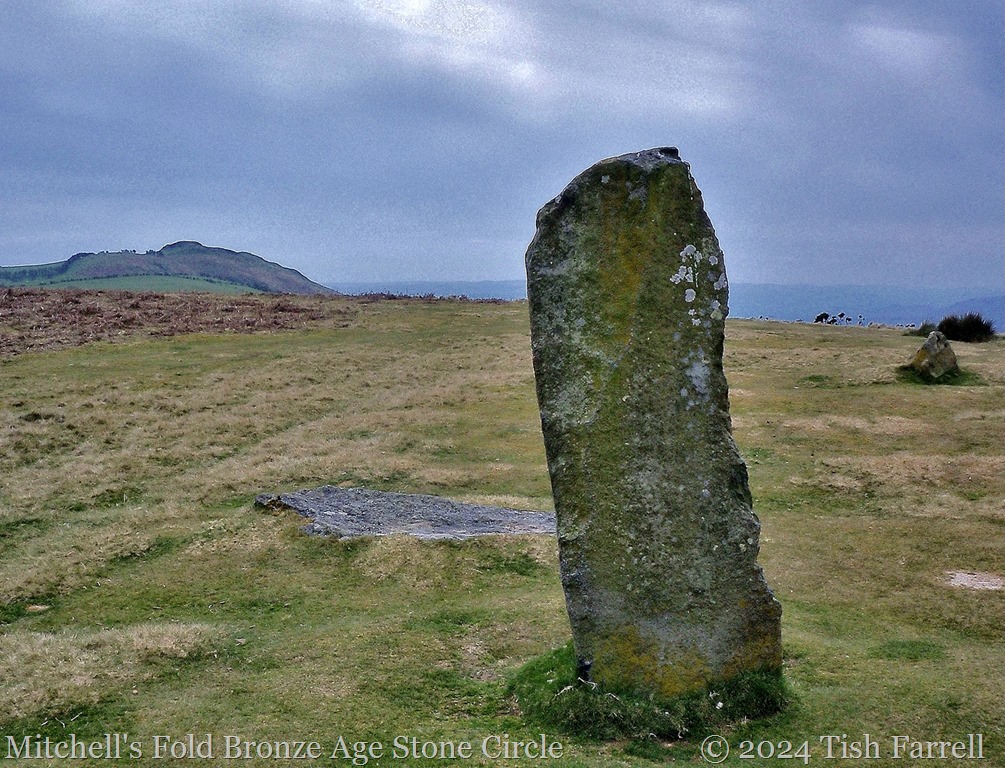
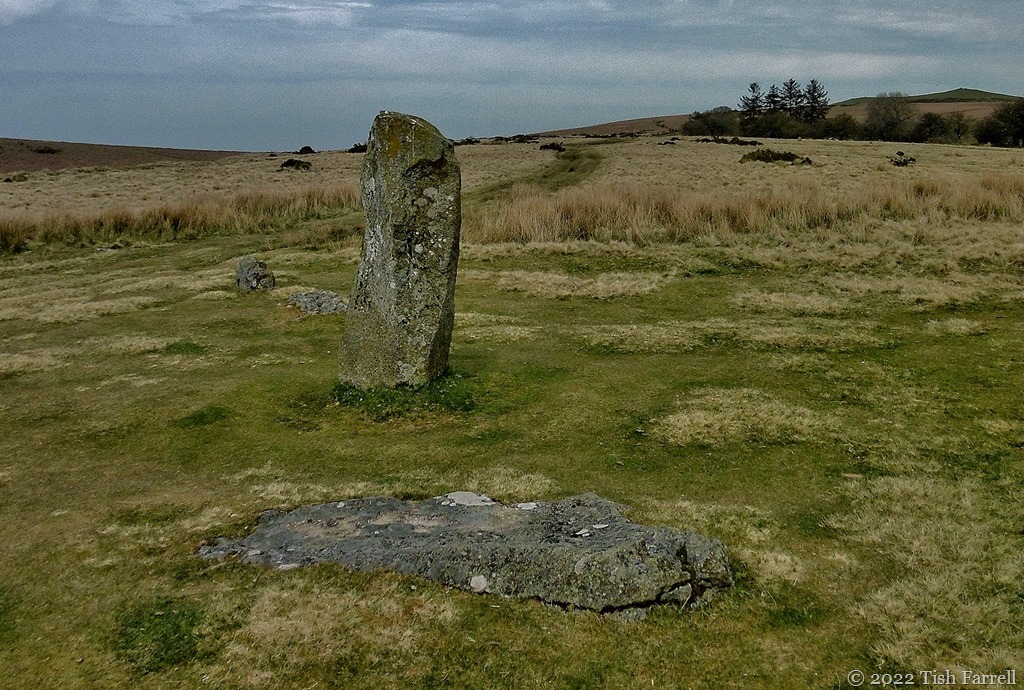
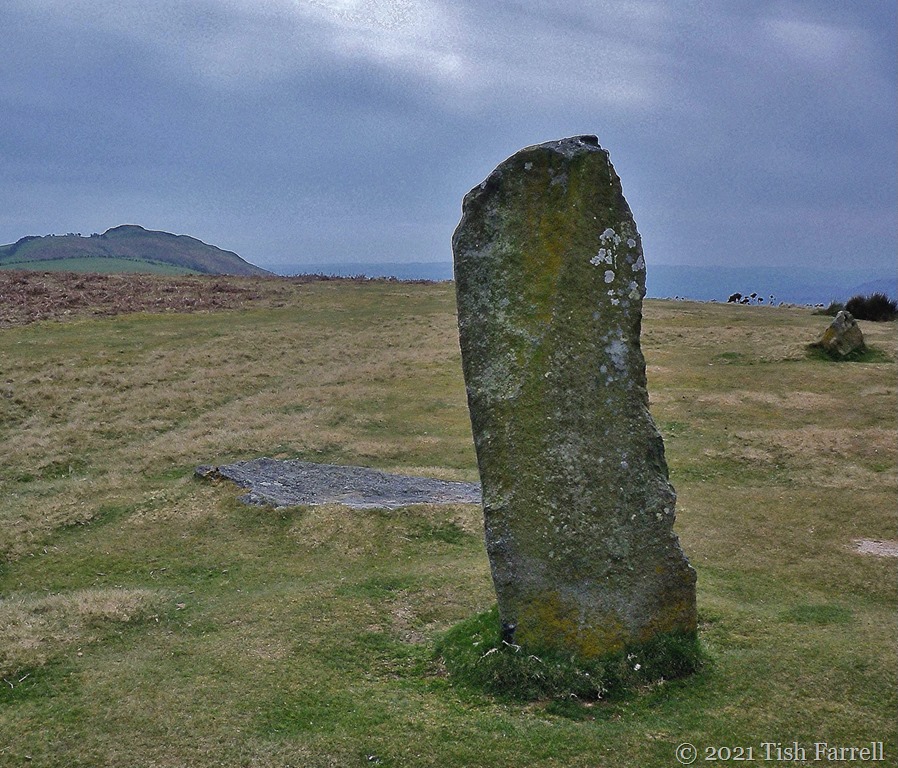
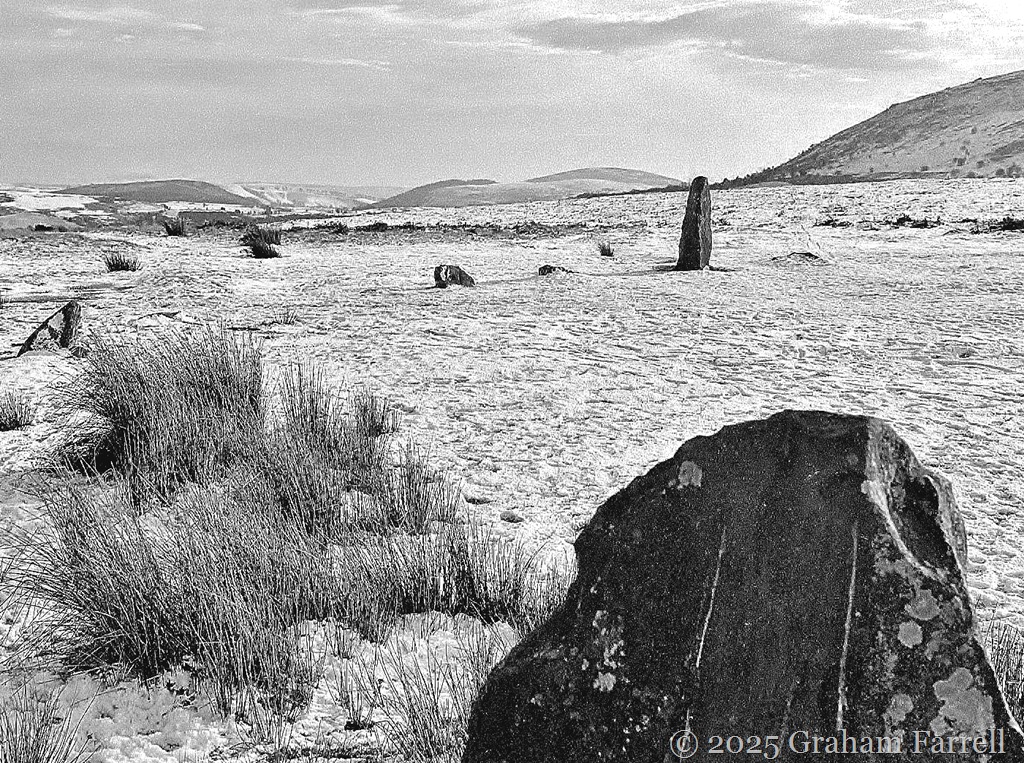
Mitchell’s Fold Bronze Age stone circle, Shropshire-Powys border

*

We don’t know who these prehistoric (pre-literate) people were. There is no apparent connection between us and them. How do we even begin to grasp what five and half thousand years actually means. Most of us, unless we spring from some dynastic household that records family pedigrees down the centuries, or derive from some close knit community where little has changed for generations, cannot name our four pairs of great grandparents without the help of genealogy.com. We certainly have no true idea of how they lived day to day, unless they kindly left us their diaries; and even then…

As L.P. Hartley says in the opening of his novel The Go-Between: ‘The past is a foreign country; they do things differently there.’ And for most of us, too, our generations of ancestors left no mark, but were ever caught up in ‘big people’s’ histories; the machinations of church and state.

*

There are anyway far bigger pasts than our human one. Here in my home county of Shropshire, in the borderland known as the Welsh Marches we have  some of the planet’s oldest parts. Seven hundred million years old, in fact.

Set against such a monumentally unimaginable timescale, the history of humanity, including that of our primate ancestors, is not even a magnified dot on the horizon.

This is what Peter Toghill has to say about the Marches geology:

The beautiful landscape of the Welsh Marches
is underlain by a rock sequence representing ten of
the twelve recognised periods of geological time…
This remarkable variety, covering 700
million years of Earth history, has resulted from
the interplay of… (1) erosion and
faulting which have produced a very complex
outcrop pattern; (2) southern Britain’s position near
to plate boundaries through most of late
Precambrian and Phanerozoic time; and, most
importantly, (3) the incredible 12,000 km, 500
million year, journey of southern Britain across the
Earth’s surface from the southern hemisphere to
the northern, caused by plate tectonic processes
.

An introduction to 700 million years of earth history in Shropshire and Herefordshire

*
P1030691

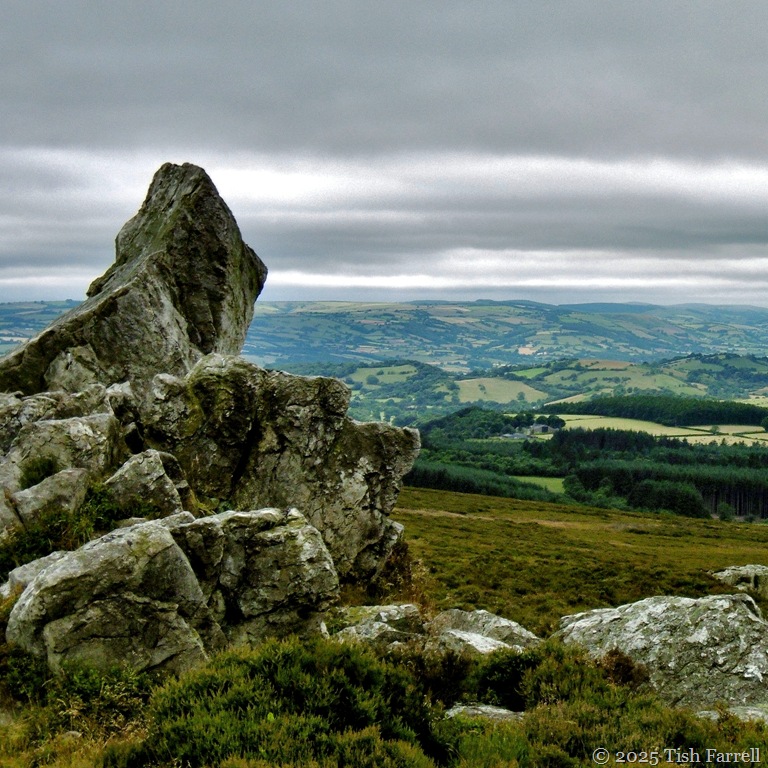
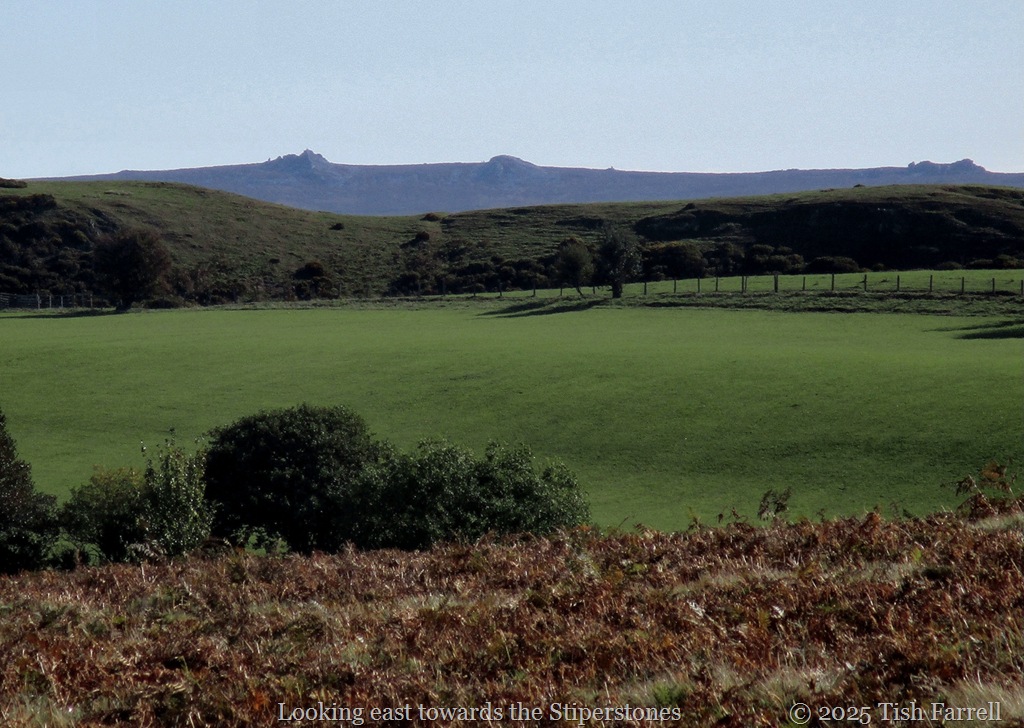
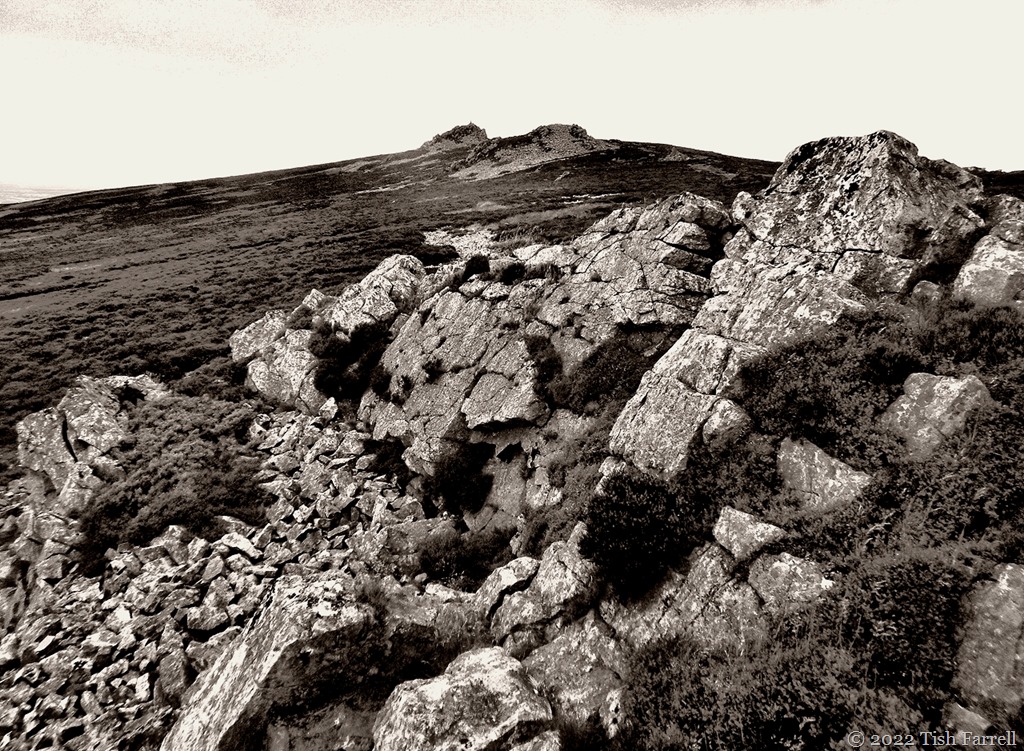
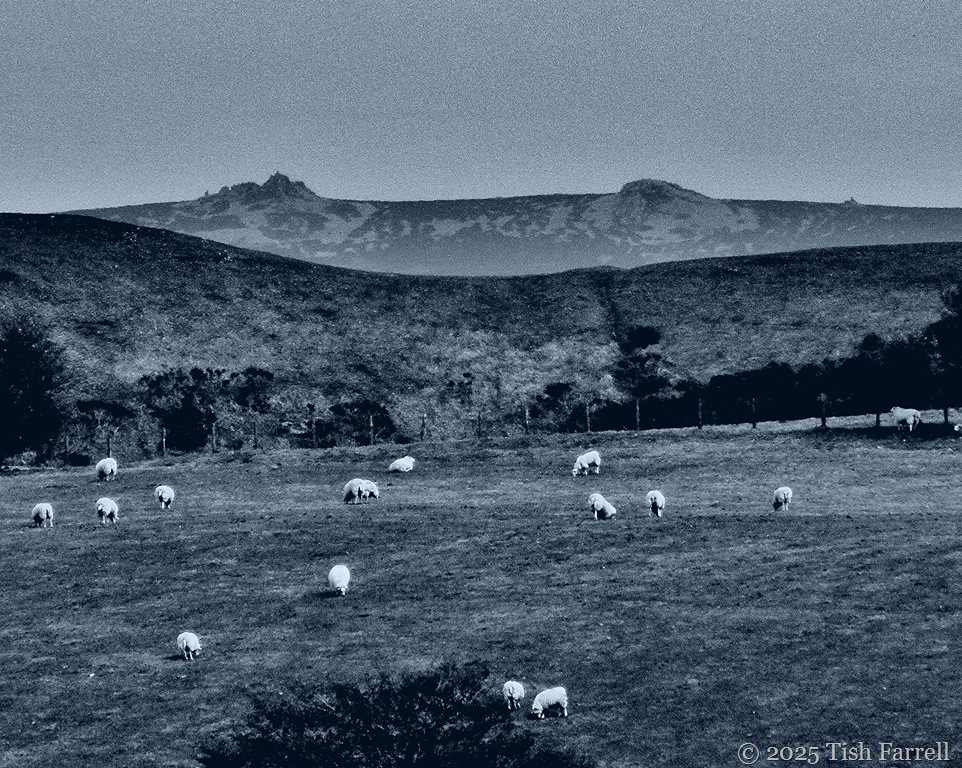
This distant view of the Stiperstones from Mitchell’s Fold stone circle, shows two of the Ice Age tors along the five mile summit, (Manstone the highest point on the left). This hill was probably formed from the laying down of quartzite sand when the whole of Southern England lay in the southern hemisphere, somewhere near the Comoros Islands in the Indian Ocean. That was around 500 million years ago, about the time when it began to move north. The tors themselves were exposed far more recently, by the repeated freezing and melting of glaciers that nudged up against them during the last Ice Age (115,000 to 12,000 years ago).

*
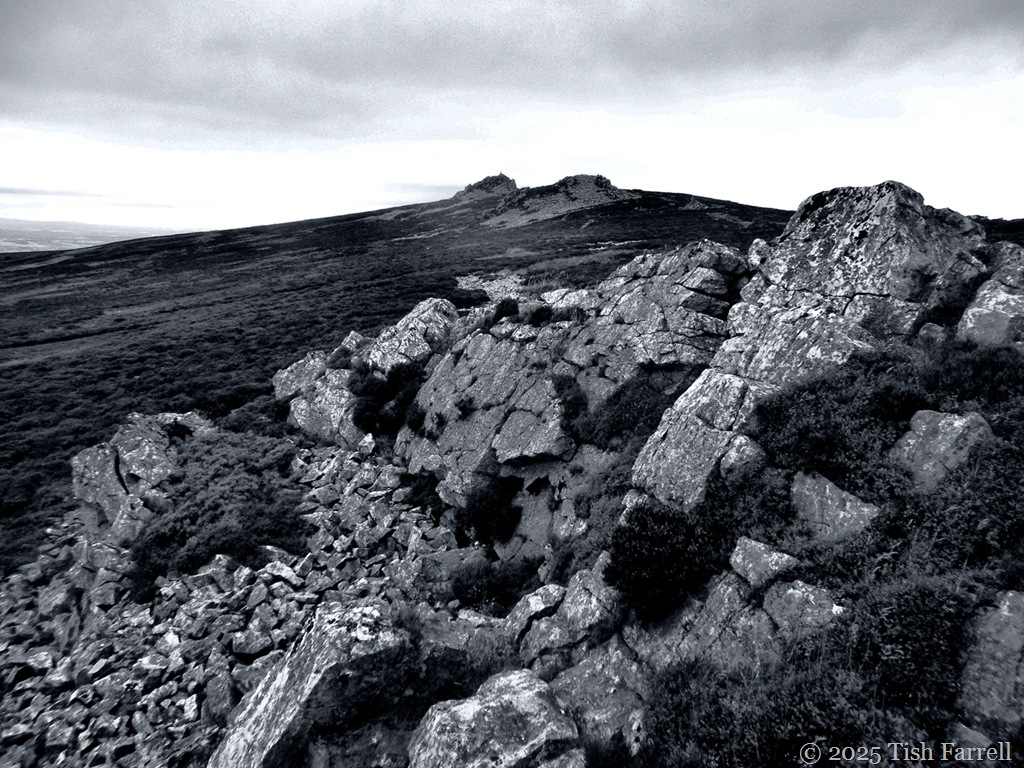
Stiperstones shaped by ice sheets freezing and melting

P1080553cr

Makes me think we humans sometimes think too much of ourselves and what we think we have achieved. Maybe the planet has the edge on us by a few hundred million years. It’s certainly done some momentous shunting and shifting.
Lens-Artists: Ancient

A Bronze Age Circle And Some Mystic Brume

Mitchells Fold and brume

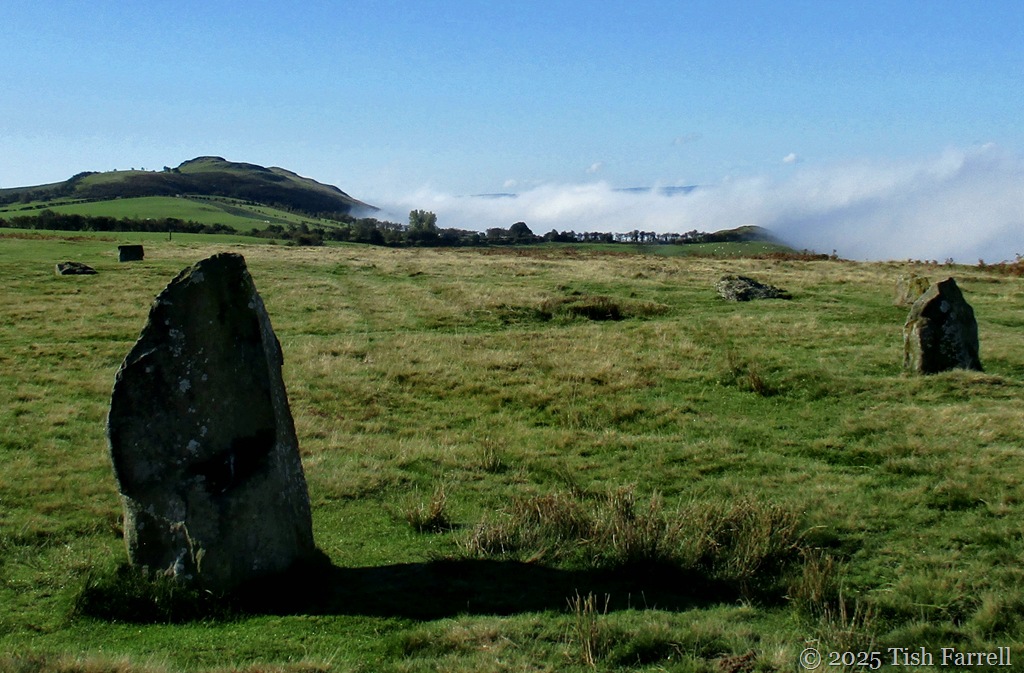
It’s a year or so since we last visited Mitchell’s Fold stone circle. I’m not sure why it’s taken so long to go back there. It’s only six miles from home and such a fine spot, sitting high on Stapeley Hill, with the Stiperstones to the east, Corndon Hill to the south and Wales rolling out in the west. Somehow we had let the summer go by when a sundowner visit would have been perfect for capturing light, communing with ancestors and gazing out on those wide Welsh vistas.

As it was, we waited until late September. And so last Friday, and well before coffee time, in hopes of some good light, we set off. The sky was clear, the sun brilliant and the air autumnally crisp. As we drove out of Bishop’s Castle, I conjured the landscape photos I would take up on the hill; those views into Wales…

path to Mitchells Fold

Except when we set off on foot up the Stapeley Hill track I soon saw I wouldn’t. Westerly vistas were off.

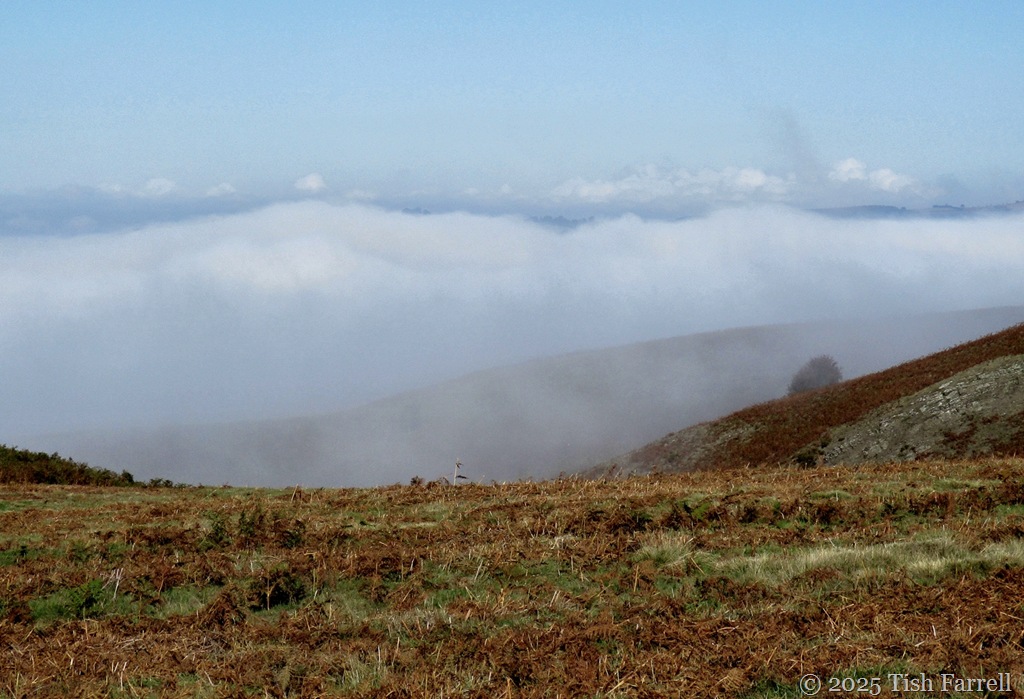
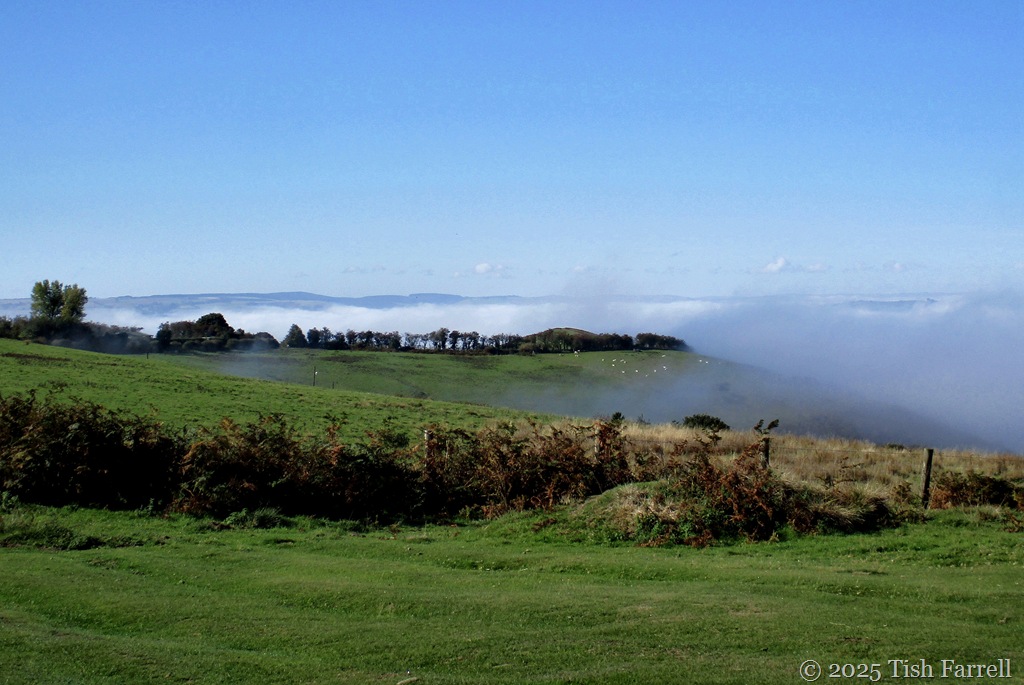
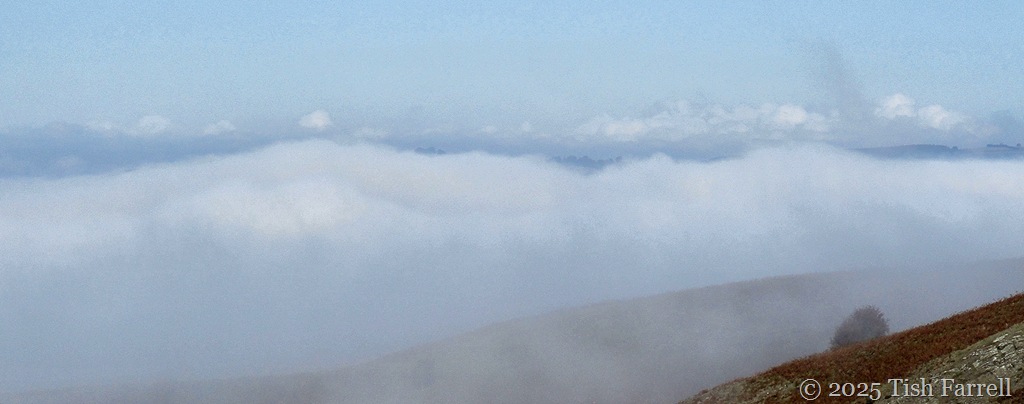
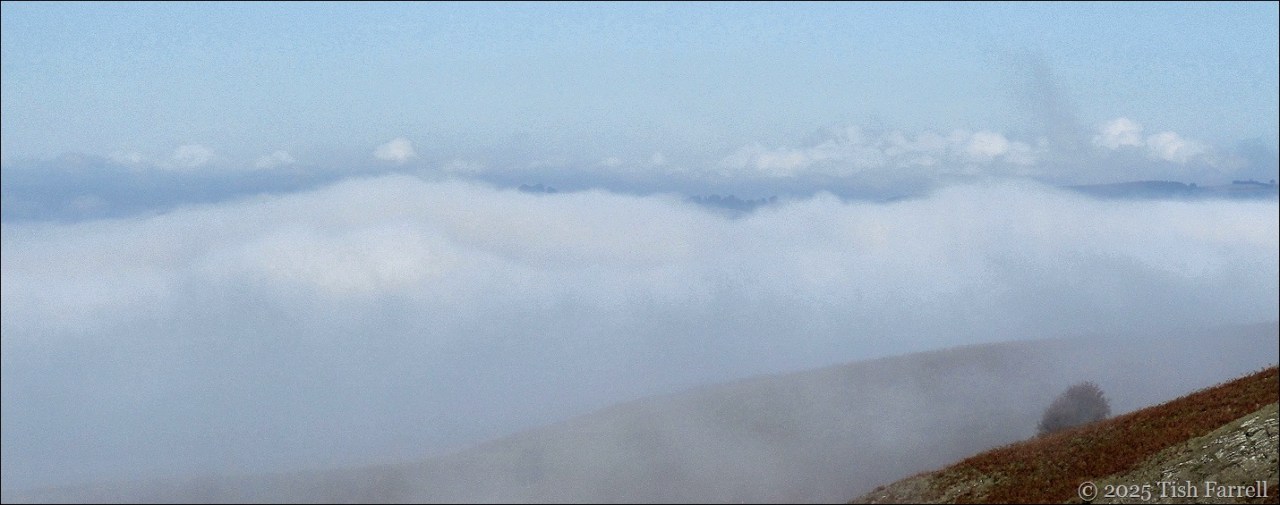
The uplands might be bathed in sunshine, but the low lying reaches had been invaded by rivers of mist, also known in literary circles as brume. We watched as this mysterious atmospheric phenomenon flowed by, whiffling up hillside clefts and gullies, some of its manifestations distinctly pink. At closer quarters you could see through it as if looking through gauze.

Brume

*

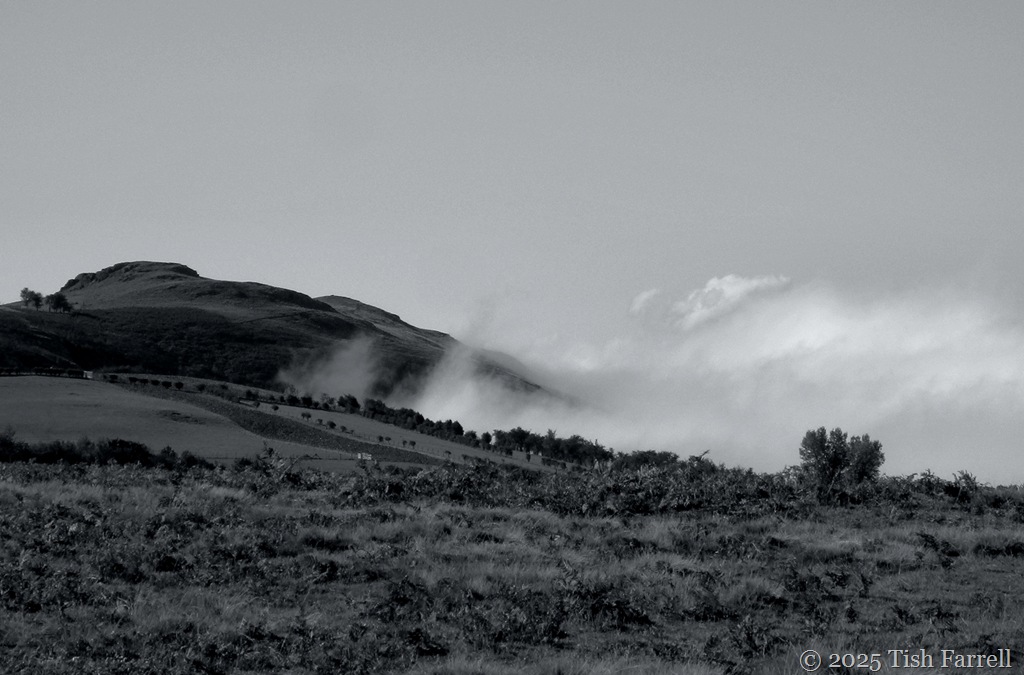
Seen in monochrome setting, there’s almost the sense of spray, as in breakers crashing against a rocky cliff-face…

Brume monochrome

Of course this all added a frisson to the mystery of ancient stones.

I’ve written about them several times, including in a much older post Witch-catching in the Shropshire Wilds which mentions the myth associated with the place. But very little is known of them other than there were once 30 or so standing (now only 15 and some of them are recumbent.) And that they were sourced locally and hauled in place over 3,000 years ago. We can guess, too, that this was a place of great significance to local people (temple or gathering place?) for we know, too, that nearby hills (Corndon, the Stiperstones) have on their flanks many remains of Bronze Age burial cairns. There is also a lone standing stone and a supposed robbed burial cairn not far from the circle.

A landscape, then, of many meanings; the kind of meanings where sacred and profane coalesce, the subtleties of whose interconnectedness we offspring of industrial culture often fail to grasp, confusing the sacred with dogma. 

Brume 2

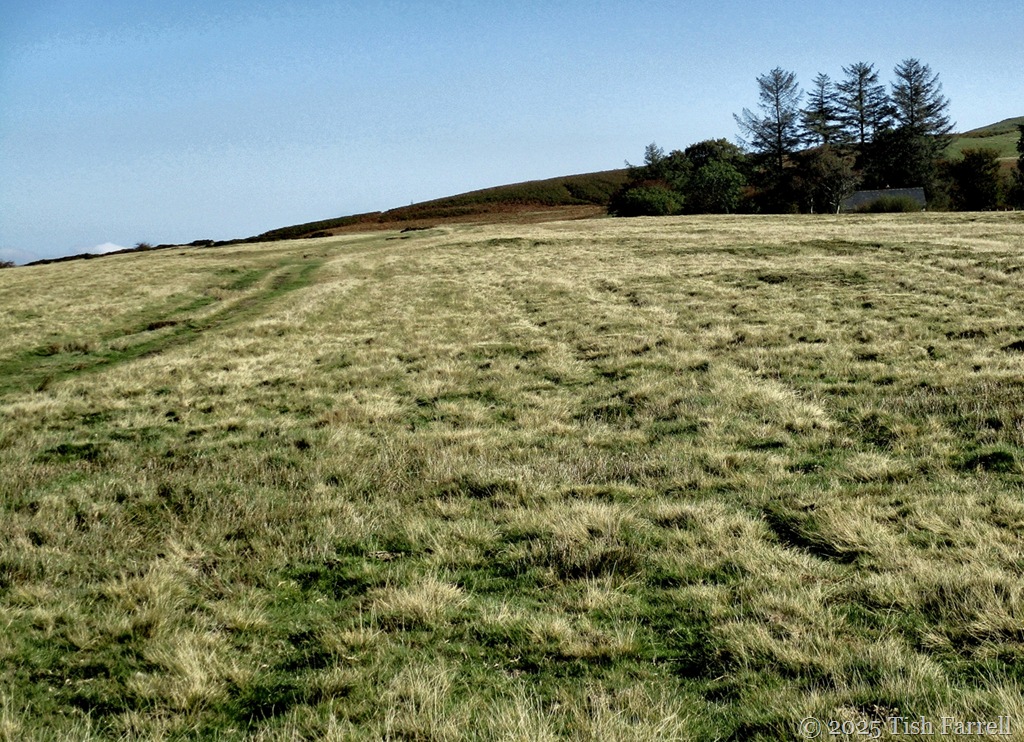
Around the stones, there are traces of more recent human doings. You can see them in the photos: the remnant ridges and furrows of a mediaeval field system. And also running through the middle of the circle, the ruts made by carts and, in particular, the stage coaches that are said to have run this way between our county town of Shrewsbury and Aberystwyth in mid-Wales. Can you imagine?

In a way, I find this last historical glimpse more exciting than the stones. Just think how it would be, racketing around in a draughty coach, being hauled over this bleak hill on a grey winter’s day, some real fog closing in and looking out on these standing stones…it could be a scene from Jane Eyre.

Mitchells Fold coach route

Mitchells Fold coach road

*

For now I’ll leave you with some more non-wintery views:

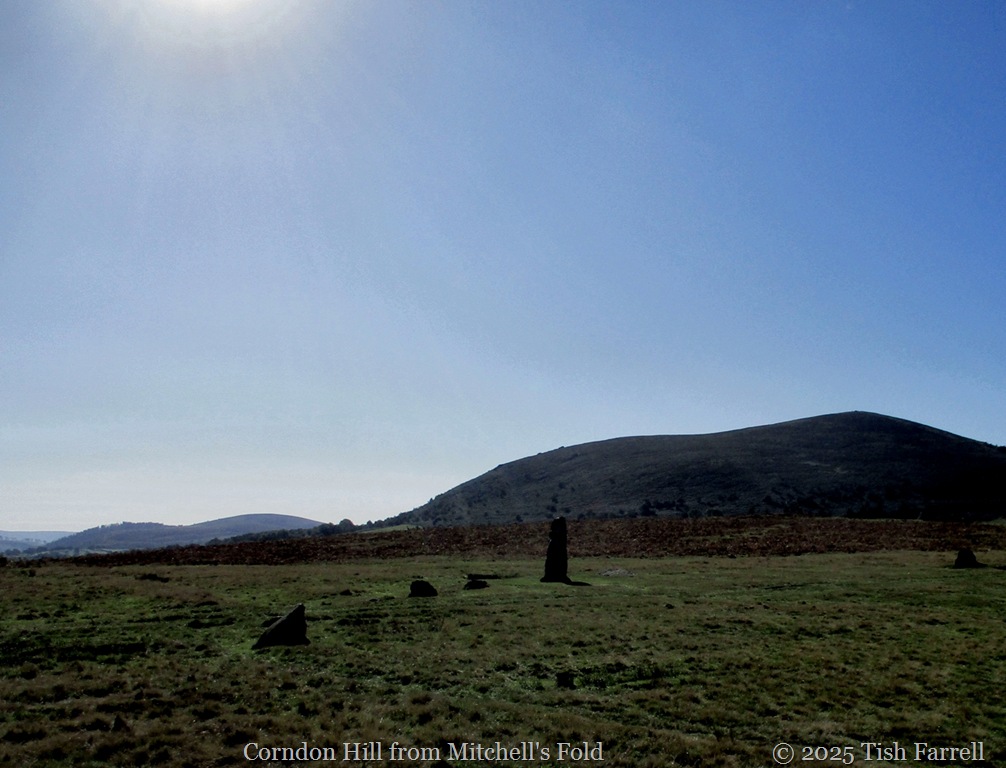
Mitchells Fold and Corndon Hill

Stiperstones

towards Bishop's Castle

*

Copyright 2025 Tish Farrell

Brume header


Mad About Megaliths

2

It’s an old passion, the love of old stones, already set in before my first decade on planet earth. My memory tells me it had something to do with Saturday afternoon drives along Cheshire lanes and mother announcing that the unusual row of cairns along one such lane were the ancient Celtic graves of sacrificed virgins. Sometimes she could be most unsuitable. The story wasn’t true anyway, but it sparked a yen for things prehistoric.

P1030697ed3

Mitchell’s Fold Bronze Age Stone Circle, Shropshire

*

My second decade thus found me sitting in the basement lecture rooms of Sheffield University Arts Tower, looking at slide shows of standing stones, cairns, cists and chambered tombs, the subjects frequently screened upside down. The lecturers in the small Prehistory Department, couldn’t seem to fathom the loading of the slide carousel (it became a standing joke). And then they didn’t seem to think it mattered which way up we looked at things.

P1070984ed

They were probably right. After all, there is very little one can say about these ancient structures and configurations. We might be able to hazard a date for their construction from some excavated artefact found nearby. And we know that tombs were tombs from the human remains found within them.

We also know that these sites must have been hugely important to the people who constructed them. (Think physical effort needed to heft the stones; antler picks and stone axes the only available technology). And then there is the siting of the monuments which, in nearly all cases, strongly suggests pre-literate humanity’s elemental connection with landscape. Place had MEANING; all of it doubtless sacred in ways we no longer grasp.

But when it comes to knowing who the people were, and how they lived and what they believed – the rituals and customs honoured over generations – then the stones remain stonily silent.

And I think that’s what I like about them. They are mysterious. Utterly mysterious.

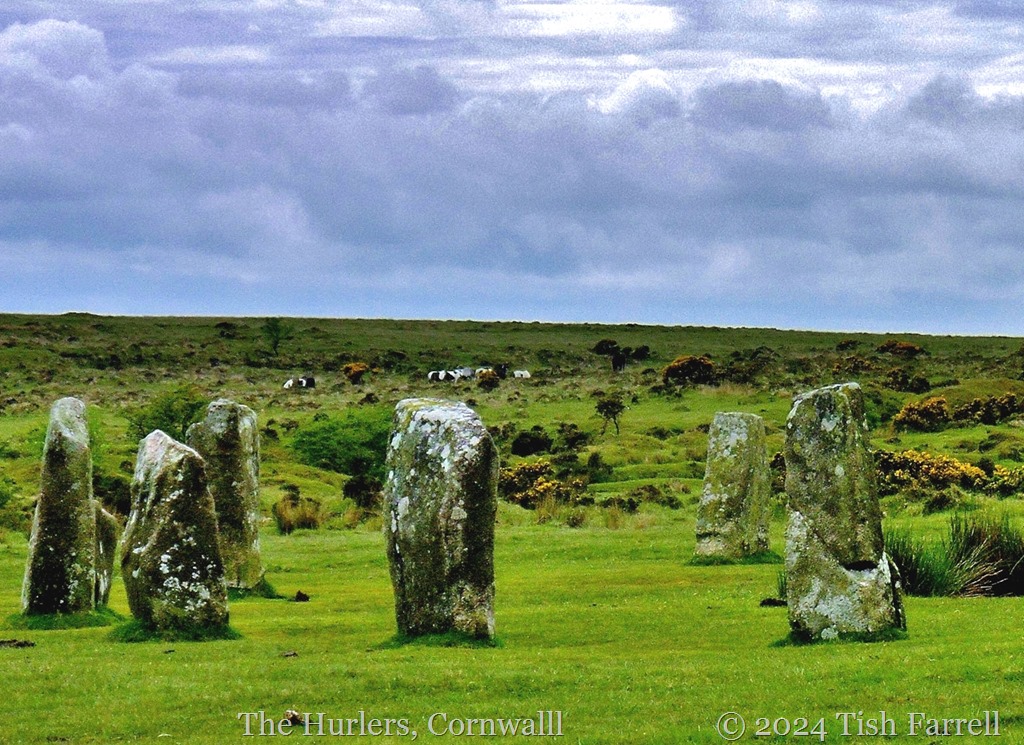
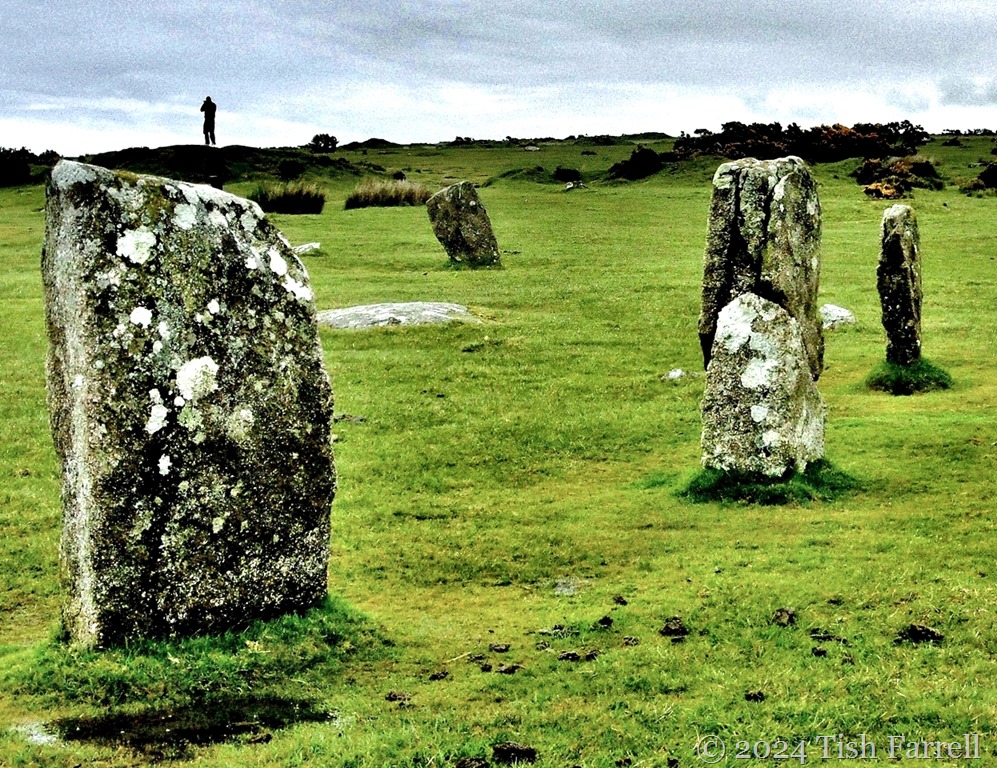
Here’s another photo of  The Hurlers stone circles on Bodmin Moor, Cornwall. (The obvious mystery here being who or what is that seeming pendant figure on the horizon?) The Hurlers are said to date from the late Neolithic, early Bronze Age (so around 2,500 BCE) and they are unique in that the site comprises three perfect circles set in a row. (Impossible to photograph without a drone). But that’s not all. P1070982ed

*

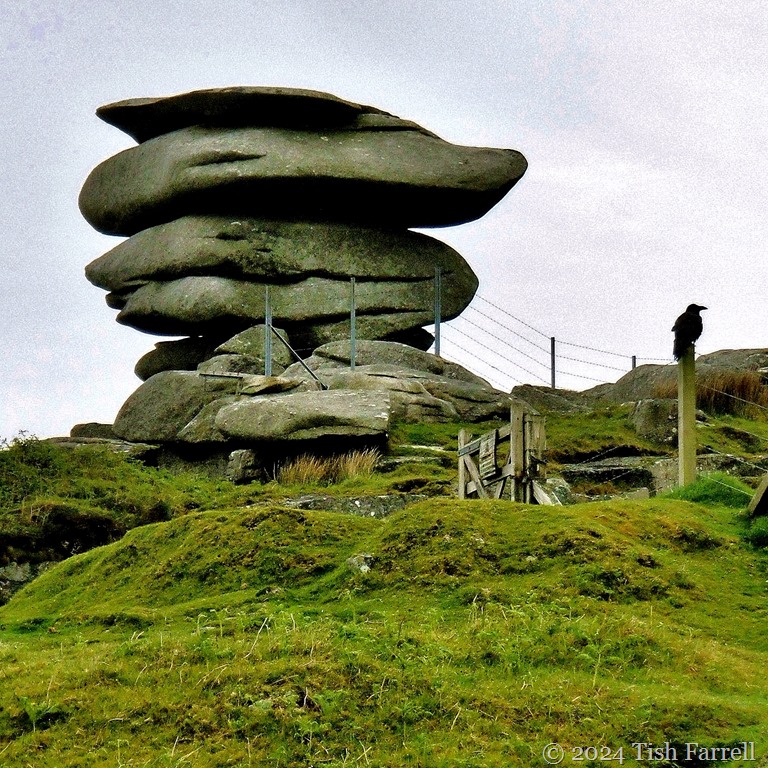
The circles line up with a striking natural feature – the Cheesewring granite tor (Keuswask in Cornish), which of course makes one wonder if it somehow featured in the circle ceremonies, if only as a beacon site to gather in communities from across the moor.

P1080012ed

*

In Pembrokeshire, West Wales, there are numerous megalithic sites. One of the most striking is Pentre Ifan chambered (dolmen) tomb c. 3,500 BCE. The capstone is seventeen feet long and thought to weigh around 16 tons.

IMG_4581ed

*

The finished tomb would have been covered with a huge mound of stone and earth, and the whole constructed in sight of the sea and  Mynydd Carningli (Mount of Angels).

Pentre Ifan

Pentre Ifan 2

You can read more about Pentre Ifan in a previous post HERE.

Lens-Artists: Rock Your World   This week Donna sets the theme with photos of some fabulous rocky subjects. Go see!

Mysterious In Monochrome: The Shropshire Borderlands

P1030697sepia

This week at Lens-Artists, Anne from Slow Shutter Speed asks us to think about monochrome and black and white photography. Click on the link below to see her post.

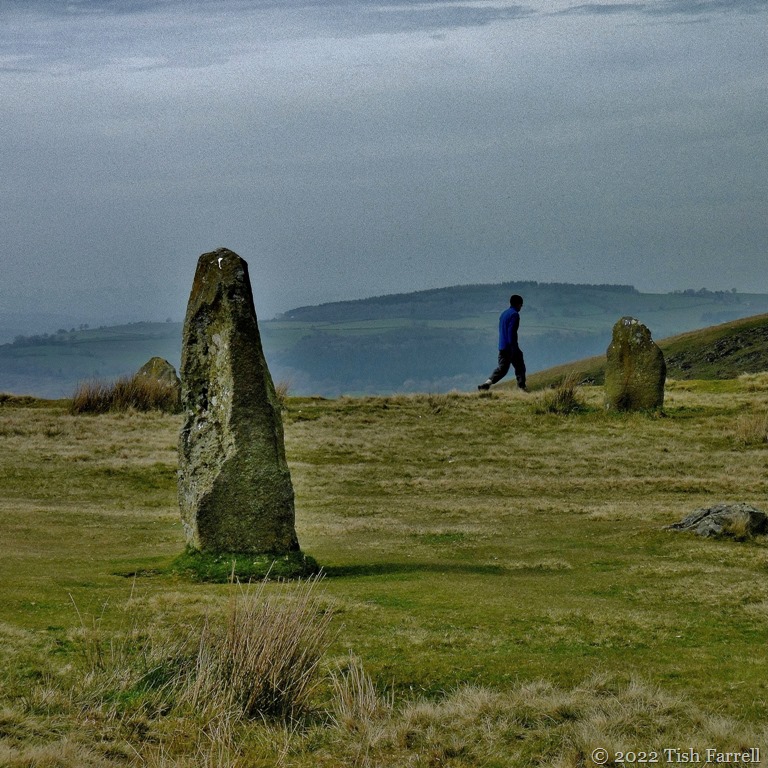
My first photo here was edited from a colour image, although however it comes, it’s an odd composition. It was taken at Mitchells Fold, the Bronze Age stone circle on the border with Wales, and I was only aware of the passing figure as I snapped the shot. I neither saw him arrive, nor leave the scene. Gives one a bit of a shiver.

These next two shots were taken with my Lumix point and shoot (before it gave up the ghost), using the ‘dynamic monochrome setting’. It was midday, and in high summer, but the light was penumbral; as if the sun had been switched off. Again very strange, although you can well see why these hills inspired tales of the Devil and gatherings of evil ones whenever mist shrouded the heights.

sepia

P1080542mono

*

This last photo was again taken on the Stiperstones, but on a brilliantly sunny day – a view of the Devil’s Chair (edited from colour). It looks like a ruined citadel, the quartzite rocks catching the sunlight.

IMG_0542bw

Related post: To Shropshire’s Mysterious Stiperstones

Lens-Artists: Black & White or Monochrome Please visit Anne at Slow Shutter Speed. She’s given us a snappy little essay on this topic.

Cool Cool Convolvulus But Hot On The Plot

IMG_0957ed

We’re having a two-day heatwave here in the UK, temperatures in the 30s. That our summers for the last few years have been fairly heat-free seems to have erased memories that in times past we also had heatwaves. I remember baking to a crisp day after day on a Welsh beach back in the mid-1950s, and that was in May. And then there was the prolonged drought of 1975-76 when, due to severe water shortages, bathing with a friend was the catch phrase du jour. Wikipedia says this about that year:

Heathrow had 16 consecutive days over 30 °C (86 °F) from 23 June to 8 July[ and for 15 consecutive days from 23 June to 7 July temperatures reached 32.2 °C (90 °F) somewhere in England. Furthermore, five days saw temperatures exceed 35 °C (95 °F). On 28 June, temperatures reached 35.6 °C (96.1 °F) in Southampton, the highest June temperature recorded in the UK. The hottest day of all was 3 July, with temperatures reaching 35.9 °C (96.6 °F) in Cheltenham.

Whatever the weather, this gardener usually tries to avoid going away during the main growing season. At the best of times, watering the allotment vegetable plots and polytunnel seems too big an ask of fellow allotmenteers, and especially so during a dry spell. Summer for me, then, means garden watch. And so with the promise of a hot day ahead, this morning I was off to the allotment at 6 a.m. to see what rescue remedies might be needed after yesterday’s heat.

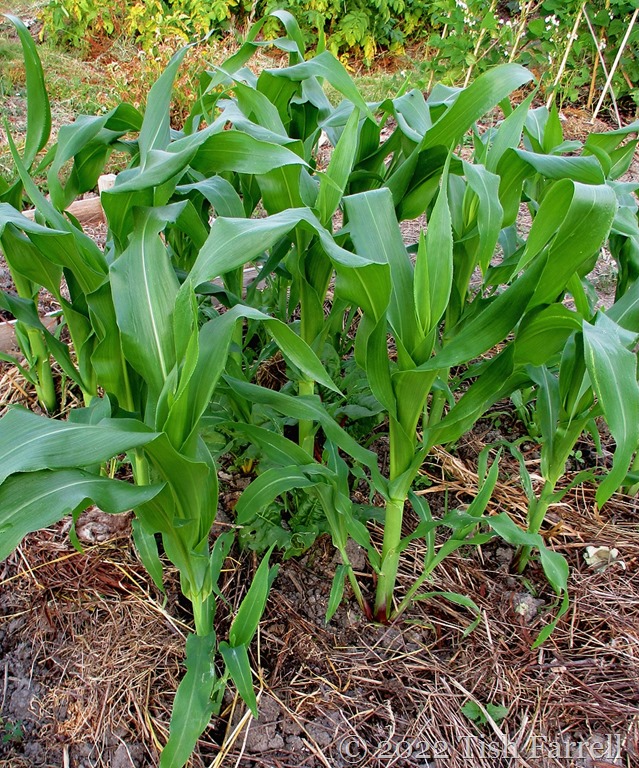
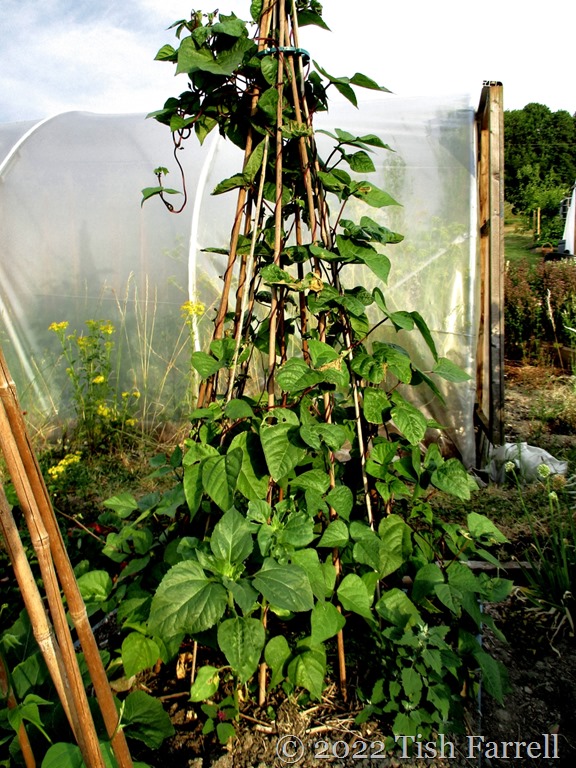
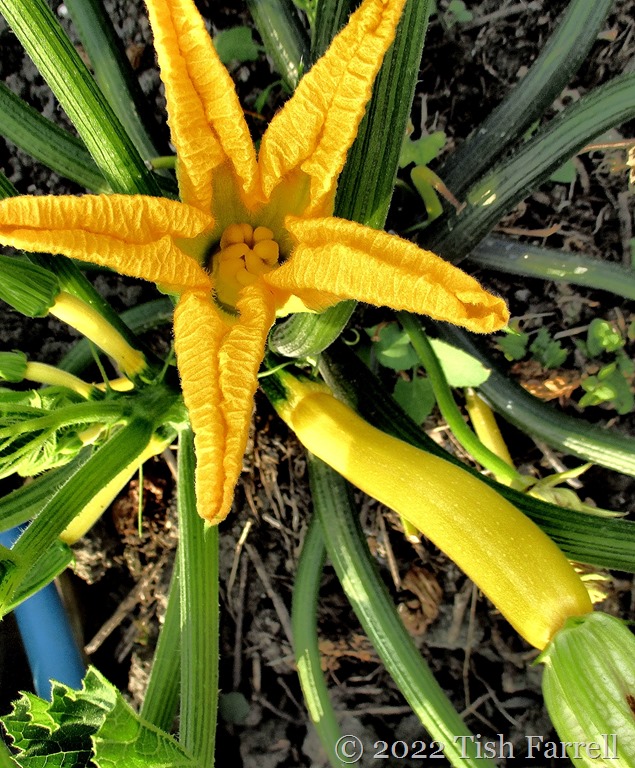
I needn’t have worried. The polytunnel (a sweat-inducing structure even in coolish weather) was fine. I’d left both doors open and the tomatoes, cucumbers and aubergines, lettuce and herbs looked happy enough. Meanwhile out on the plot, and since I was there, I damped down the mulch around the climbing peas and beans, courgettes and sweet corn, then picked raspberries that were looking a bit cooked, and gave vulnerable beetroot and leek seedlings a good soak.

IMG_0892

IMG_0919

IMG_0942ed

IMG_0929

IMG_0913ed

IMG_0910

*

And then I wandered around and took these photos, and was home by 8 a.m., by which time it was definitely warming up.  The BBC forecast says 35 C now at midday, though the Norwegian Met Office site YR (which I usually follow as it’s pretty good) says 34. In any event, it will be a much cooler 22C max tomorrow, and in the 20s for the rest of the week. I just hope we get some meaningful rain showers along with the returning coolness.

*

IMG_0956ed

*

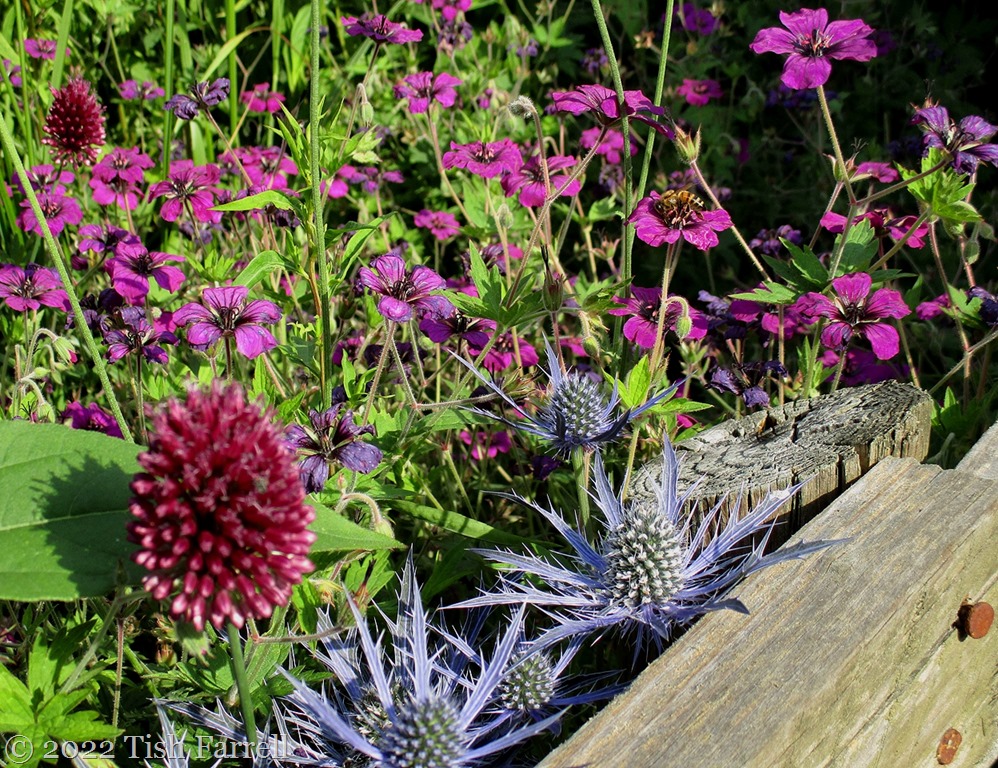
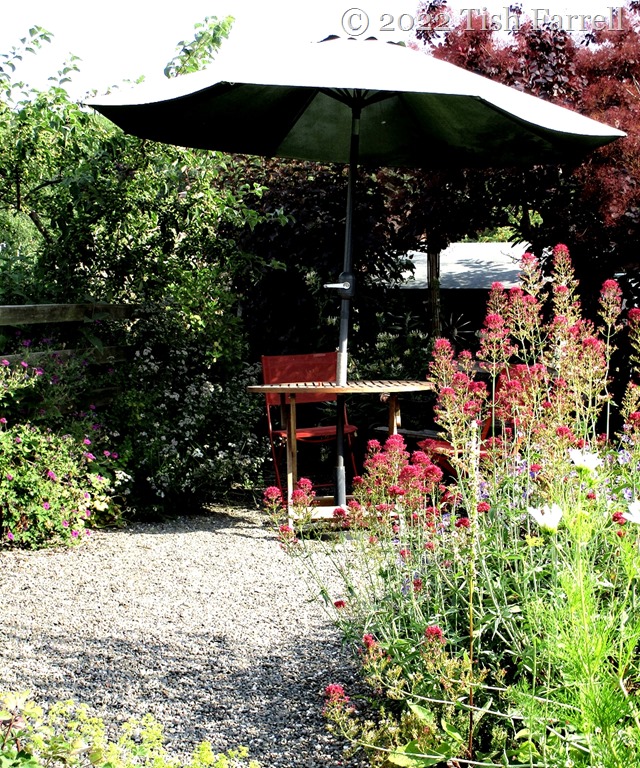
Back in the home garden, the borders are definitely struggling  through lack of rain. I can’t begin to water everything. The driest area is over the back fence in the guerrilla garden. Plants there simply have to take their chances, but even so, the tansy and golden rod are running rampant, towering over my head, and the late flowering Michaelmas daisies and helianthus are catching up. Meanwhile Ann Thomson geranium is holding her own against the lot of them. She may get cooked each day, but she’s still comes back flowering each morning. Oh, for such repeat resilience.
IMG_0970ed

IMG_0969

IMG_0966ed

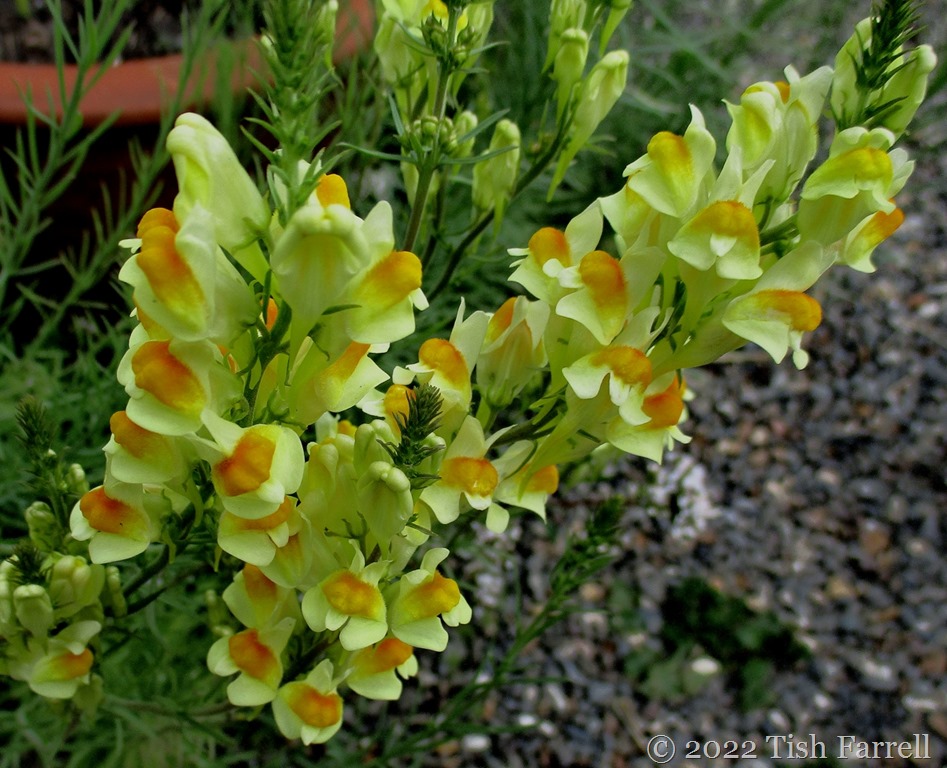
And this summer in the garden I’m really pleased to find that one of my favourite  wild flowers, yellow toadflax, has decided to colonise the upstairs path. I grew it from seed a couple of years ago, and now it’s taken off. I first fell in love with it as a child, on trips into the Shropshire hills where it grows along the lane verges in high summer…

IMG_0961ed

*

And talking of the Shropshire hills, I’ll leave you with summer views of the Shropshire-Wales borderland, taken a week or so ago on a visit to Mitchell’s Fold prehistoric stone circle.

IMG_0865ed

IMG_0862ed

Lens-Artists: Summer Vibes

This week Solaner has set the challenge.

Who Is That Hooded Man?

P1030697resized

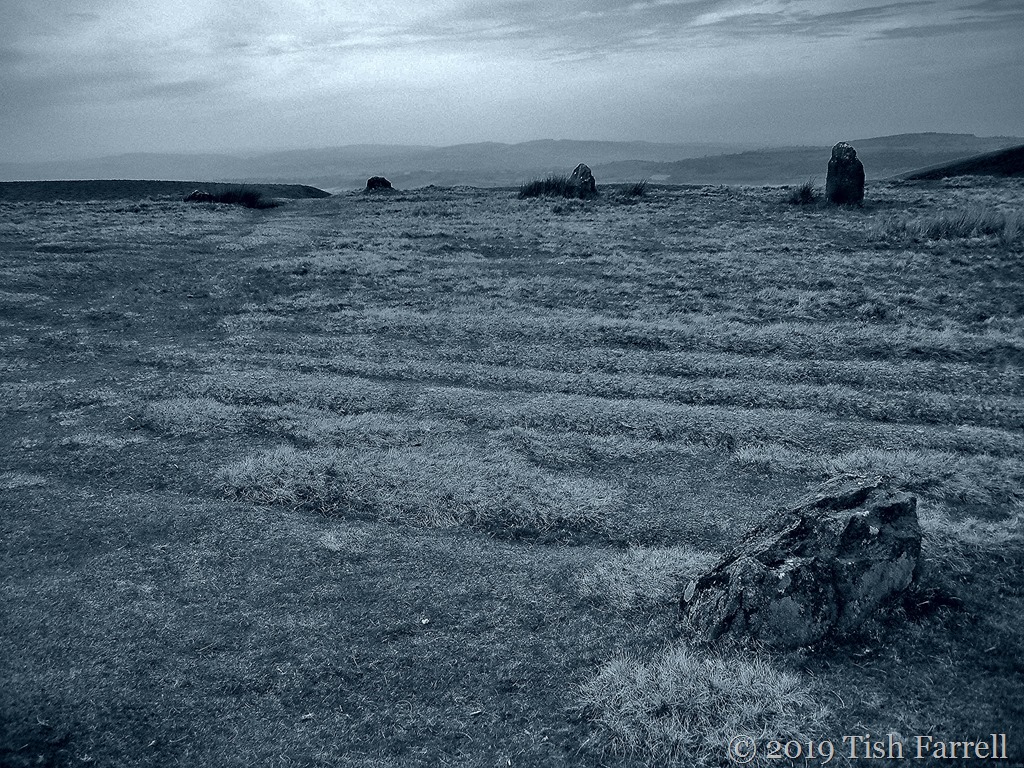
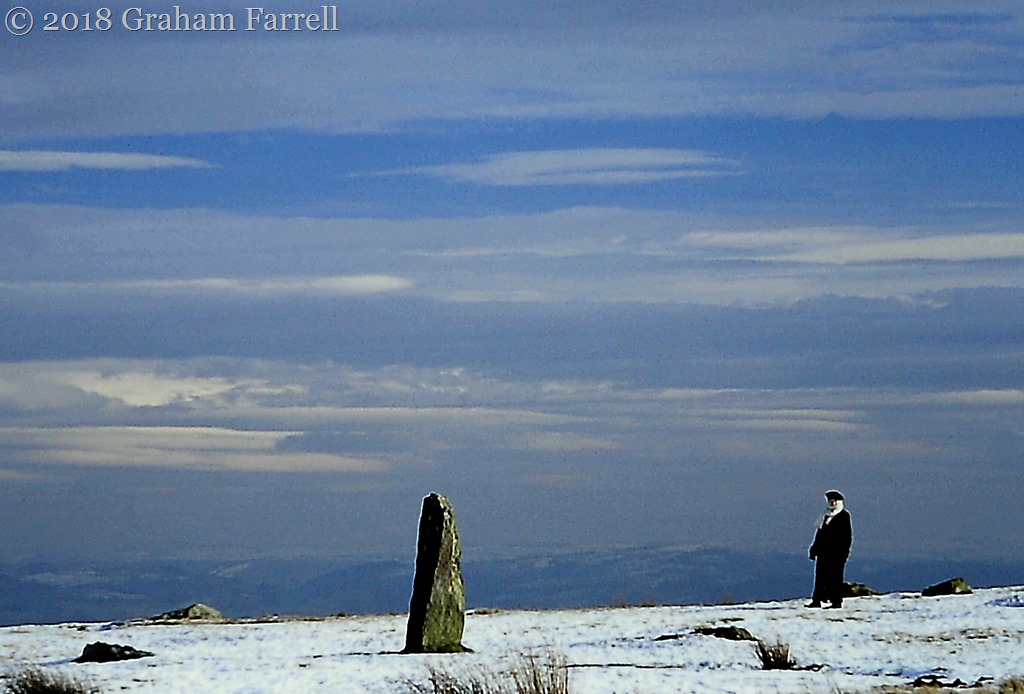
Yesterday you saw Mitchell’s Fold stone circle in winter light – an ethereal gloaming. This photo is the late spring version. Well, almost. We set off there in warm weather, but by the time we arrived, a weirdly luminous gloom had descended and there was a perishing wind. I was struggling to make the best of the flat light that made the standing stones look dull. I was also trying to show more of the circle which proved difficult with many of the stones fallen flat. I didn’t even notice this chap arrive, but suddenly there he was striding through my shot. And when I looked again, he was gone. It’s at times like that you start thinking a grasp of quantum physics might help.
The other thing you can see between the stones of this four-thousand-year-old circle are signs of Mediaeval ridge and furrow ploughing. A surprising discovery on this exposed upland, but then there is plenty of evidence that Britain’s climate was much warmer back then, i.e. before the descent into the ‘Little Ice Age’ of the seventeenth-eighteenth centuries.  The way things change.  And so much we don’t know.

P1030686cropped

IMG_2184

The Square Odds #4

And Another Odd Capture

373sq

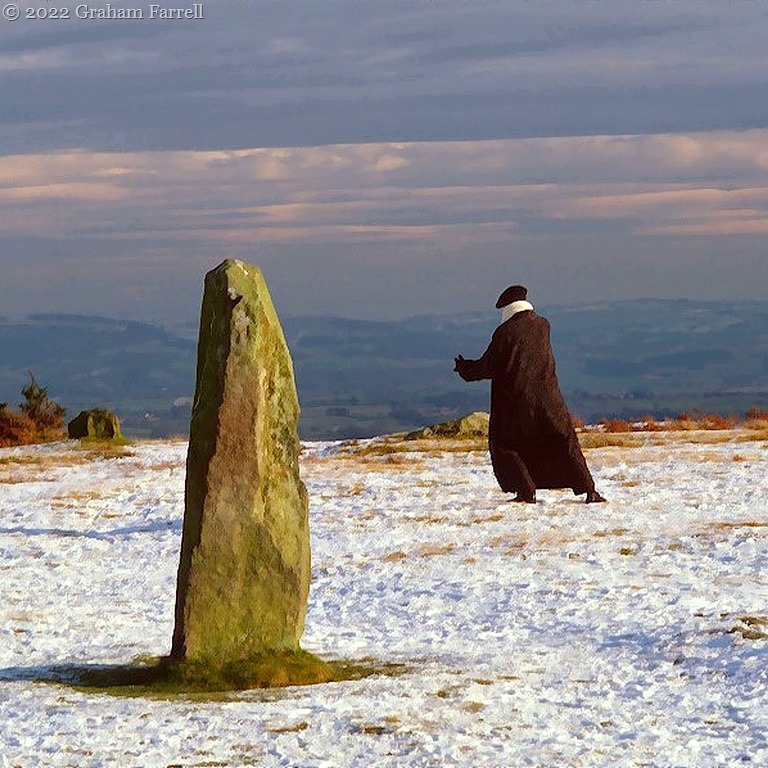
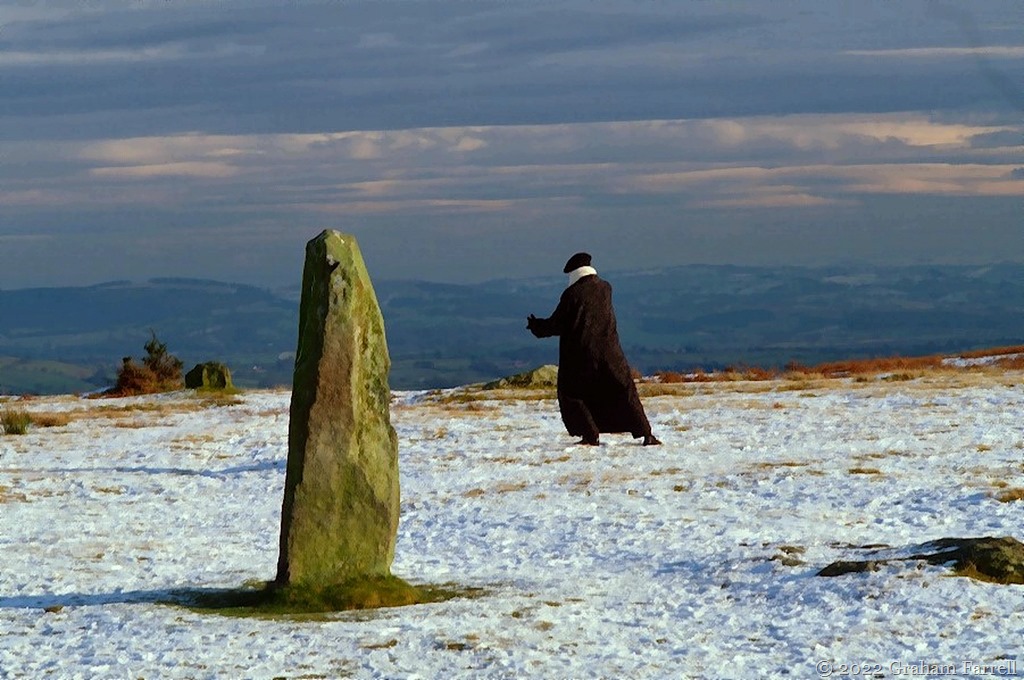
It’s hard to know how to follow yesterday’s yarn about my recent small-hours radio ‘haunting’, but since Shropshire landscapes cropped up in it, I thought I’d have a ‘rummage’ through that particular photo file. And so I found this one of me, courtesy of he-who-builds-sheds-and-greenhouses in the days before he did such things.

It must have been taken in the second winter after we left our life in Kenya. We had settled in Rochester, Kent. For the eight years we’d been living in Africa, Graham had been employed by the Natural Resources Institute (NRI), once the scientific arm of British Government overseas aid, but now part of the University of Greenwich. Its offices were based in the old Chatham dockyard, just up the road from Rochester. (Odd factoid: both locations have strong Charles Dickens connections). And so Graham was returning to base, though he had never had a desk there. It was a strange situation.

Neither of us wanted to be there. For one thing we were overwhelmed by the hemmed-in urban congestion of the Medway five towns: Strood, Rochester, Chatham, Gillingham and Rainham massing together so closely so that once in their midst, you could not see out or move for traffic. The one source of local relief was the River Medway that wound between them. We had bought a house there – in one of the new riverside developments that were sprouting up along its banks.

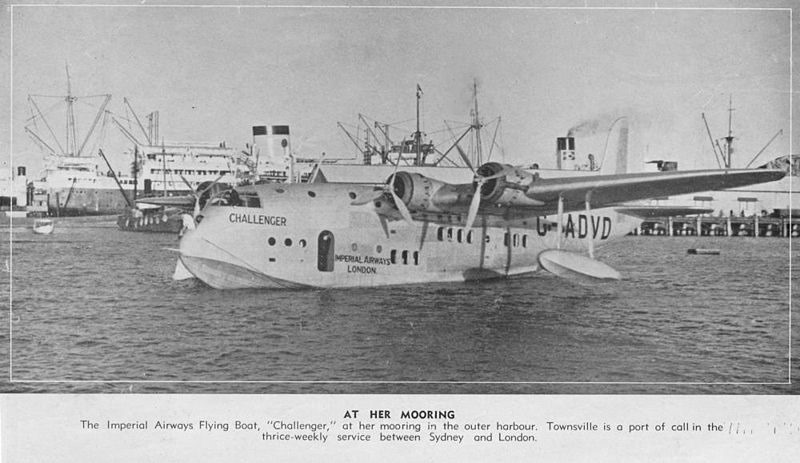
A little oddly too, our particular townhouse enclave was on the site of the old Short Brothers Empire flying boat factory, the craft that had served Imperial Airways during their 1930s pioneering of air travel to Africa, India and beyond. Later Imperial morphed into BOAC (British Overseas Airways Corporation), and I remembered that some of the first flights to Kenya used to land on Lake Naivasha and, while the crew put-up in the cottages of the Naivasha Country Club (where we ourselves had once stayed), travellers to Nairobi would have to complete the last sixty miles by dirt road.

The connection was a small ‘haunting.’ Added to when one of our first house guests, an expat friend from Nairobi (actually an Englishman who had settled in Australia)  told us that his father had been a steward with Imperial Airways. (This was the same person who, on another visit from Australia, came to stay with us in Much Wenlock, and on arrival told us he had a cousin living up the road).

Imperial Airways flying boat 1937 public domain

*

But back to the header photo. One of my adjustment strategies to UK life was to go to T’ai chi classes. This then explains the pose. I think I am in the throes of grasping the sparrow’s tail.

But what of the location?

One reason we didn’t want to be living in Kent was because family and friends were mostly faraway in the West Midlands: Shropshire and Staffordshire – and between them and us was the evil M25 London orbital car park motorway. We could access it in either direction from Rochester. It never made any difference. The jams seemed to last for days.

But then the photo shows we must have broken out. Here we are in Shropshire in late December 2001. It is one of the county’s most mysterious locations: Mitchell’s Fold, a Bronze Age stone circle, sitting on the borderland with Wales. I don’t remember now why we chose to be driving round the Shropshire hills in such wintery weather, but there’s more about that visit and the circle’s folk lore associations with wicked witch Mitchell here: Witch Catching In The Shropshire Hills

373

Copyright 2022 Tish Farrell

The Square Odds #3

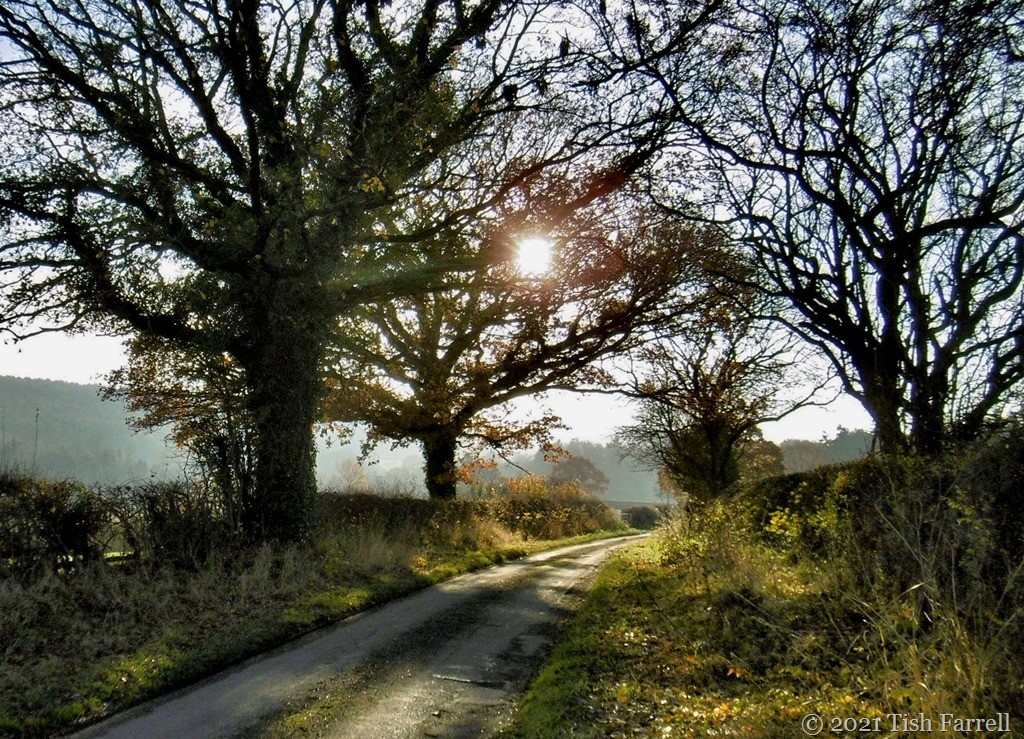
Taking The Back Roads In The Shropshire Hills

P1080526

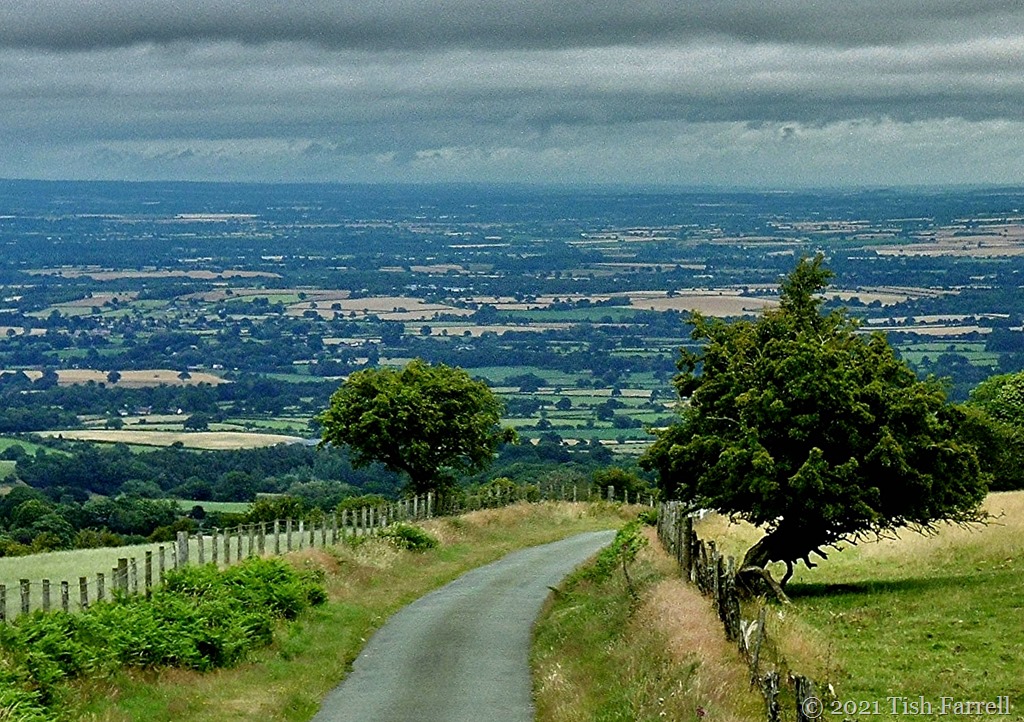
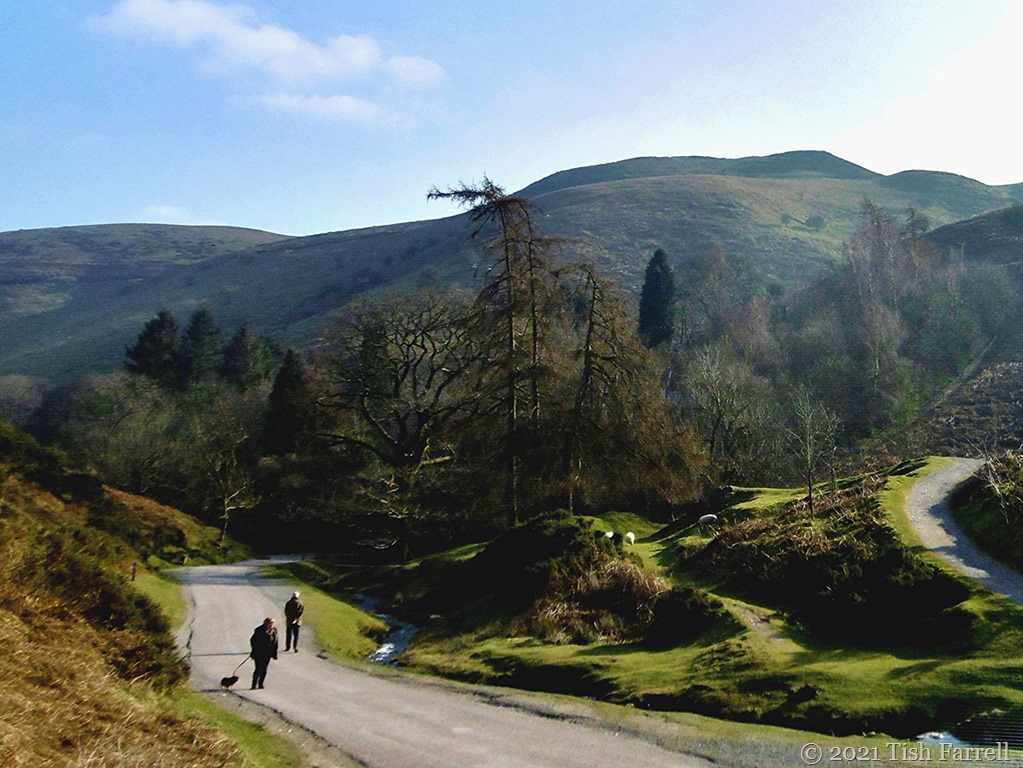
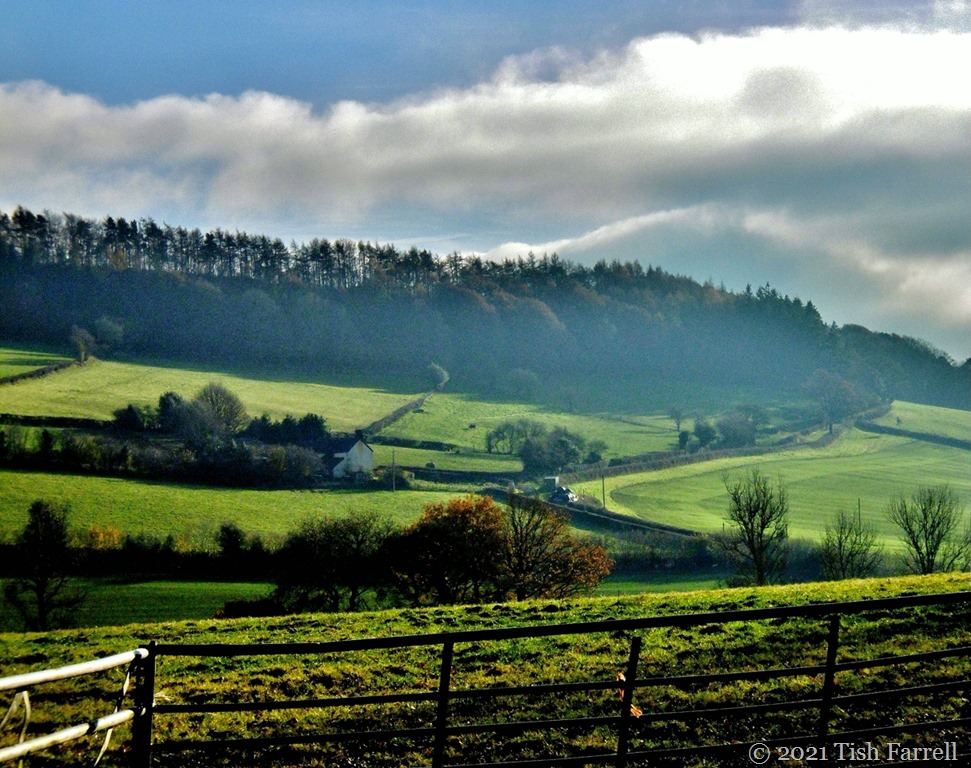
My home county of Shropshire is farming territory and so, with only two main towns (Shrewsbury and Telford), five smaller towns, and very many villages, hamlets and isolated farms, there are far more by-ways than highways. Sometimes the back roads start off well, asphalt sealed and marked on the map, only to deliver you, after much meandering, into a farmyard midden or sheep field. This is a particular feature of the upland tracts of the South Shropshire Hills. Sometimes, too, after you’ve been driving on a narrow lane for several miles, thinking you are well on course, you may find the tarmac sprouting weeds. Sometimes it runs out of asphalt altogether yet clearly progresses as a dirt track that must go somewhere. Other times it may simply devolve to a footpath with retreat the only option.

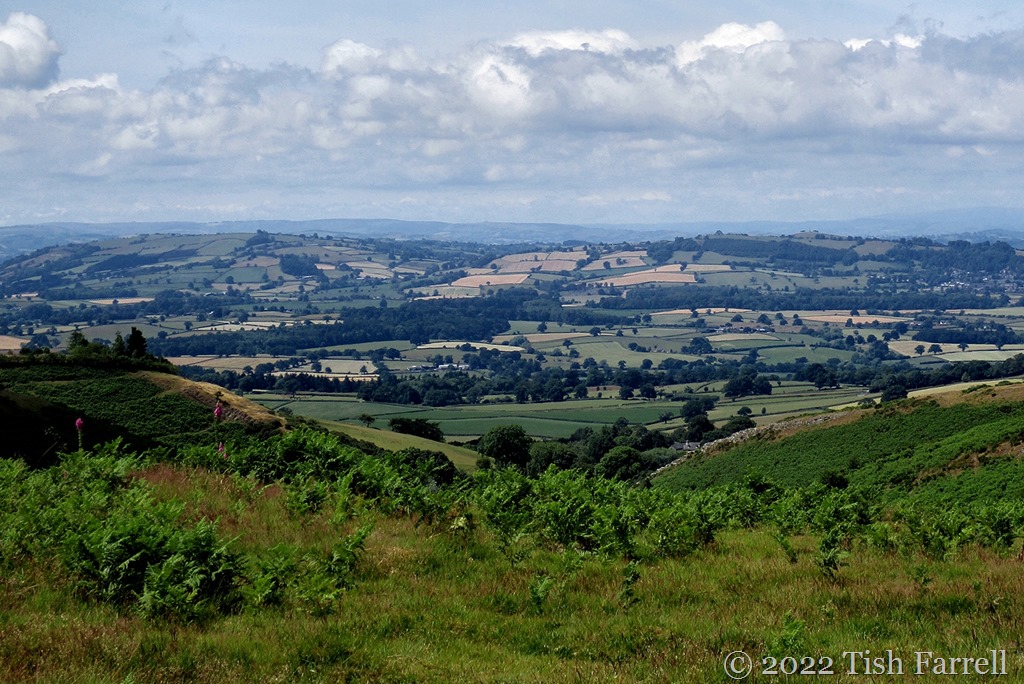
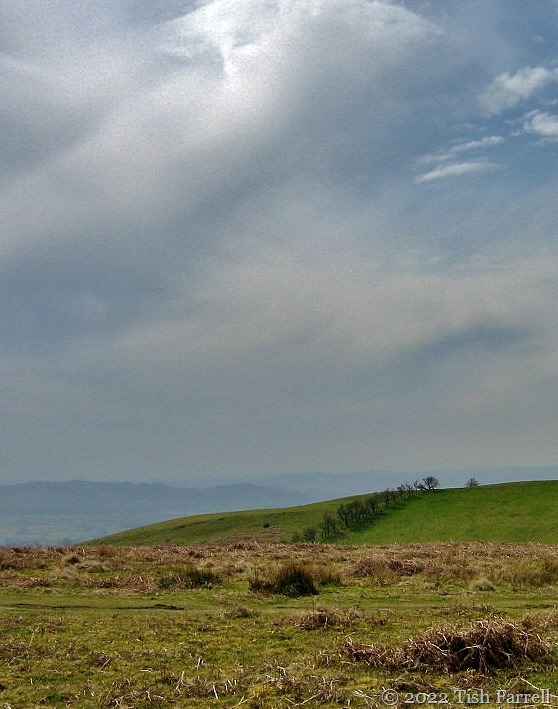
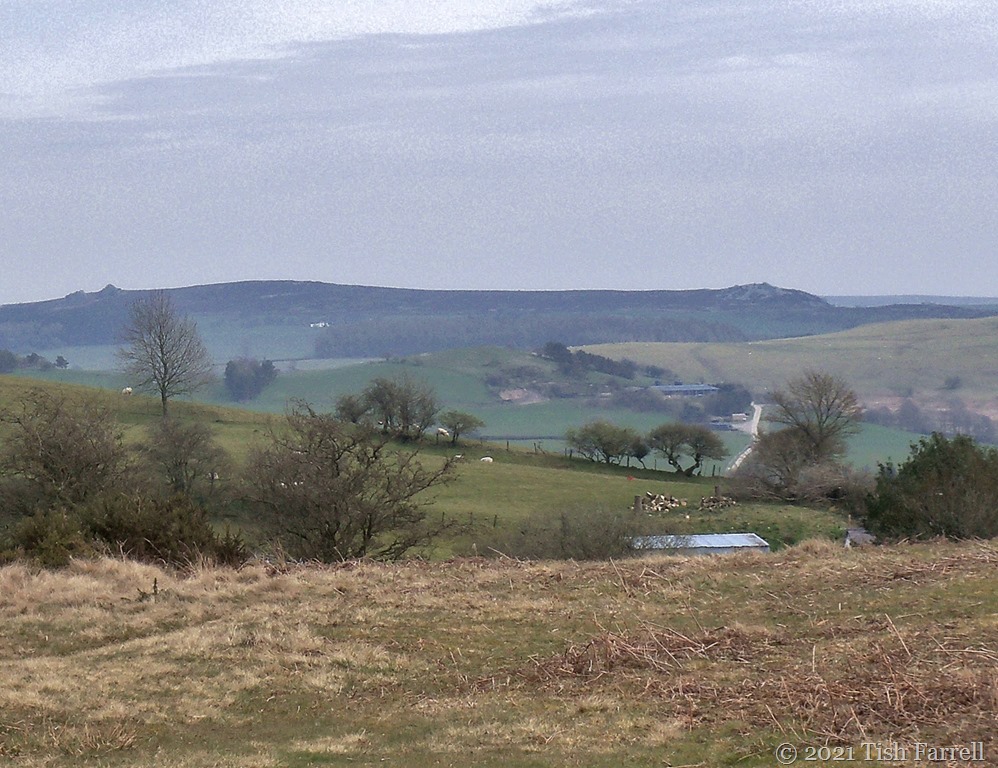
The top photo shows the great divide between the north and south of the county. In the foreground is a hill lane crossing the Long Mynd. The vista beyond is the North Shropshire Plain which in due course runs into the Cheshire Plain, fertile dairy terrain both. By contrast, the hill country is very much about sheep.

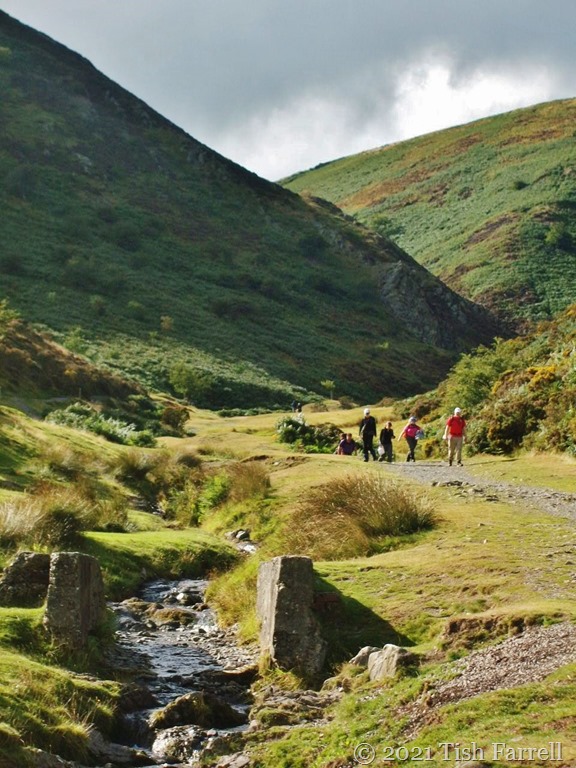
The next location is definitely the haunt of sheep, but also of walkers, day-outing picnickers and school parties studying environmental matters. This is Carding Mill Valley, the largest of several combes that cut into the Long Mynd’s flanks, and thus through some of the world’s oldest geology.  This particular lane may begin looking intentional, but then it simply gives up and becomes a rock strewn defile with trickling streamside accompaniment. Boots not wheels for onward progress.

P1030466

100_4417

*

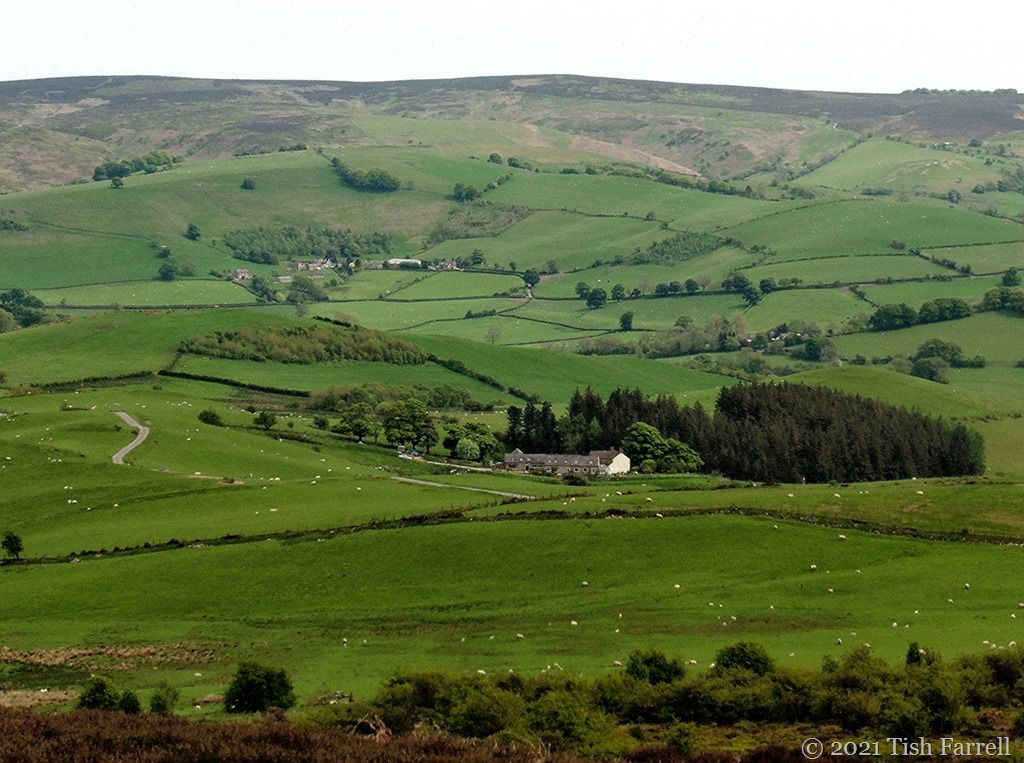
Now we have moved on across the Long Mynd, and are looking at its westerly slopes as seen from Shropshire’s most mysterious hill country, the Stiperstones, place of mine shafts and lead workings. One of the Stiperstones’ craggy tops is said to host the Devil and his court whenever the fog descends. Such be-misted gatherings of wicked entities obviously won’t enjoy views like this one.

P1050960cr

*

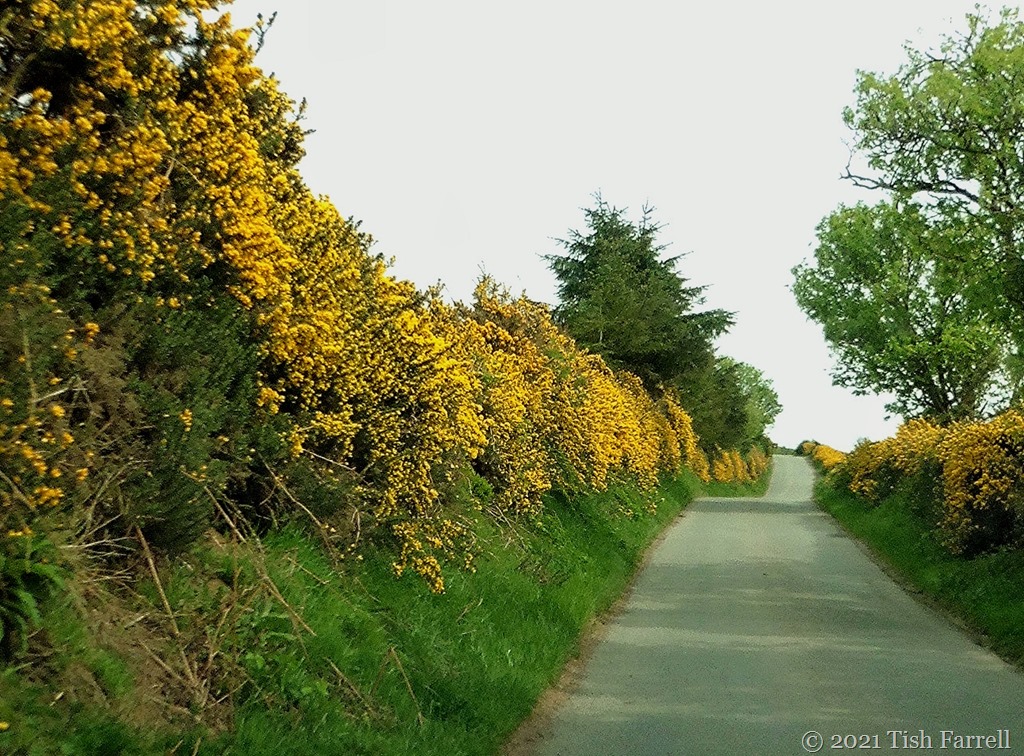
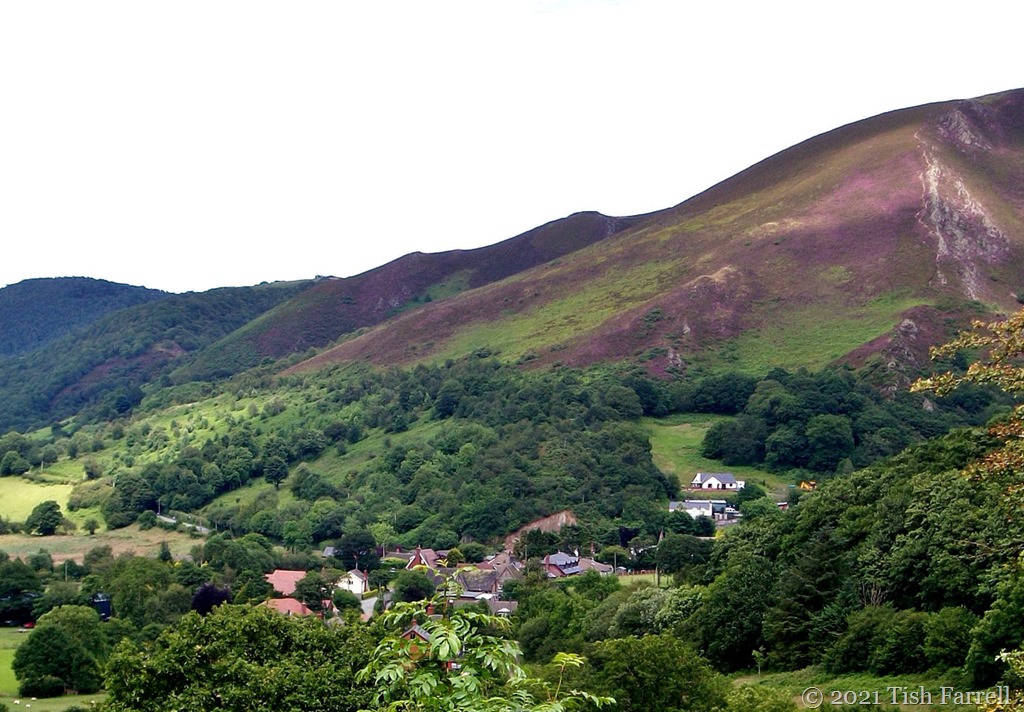
These next three views are of and around the Stiperstones: gorse along the lanes in high summer, and heather blooming on the hillsides.

100_9482cr

P1060022cr

029

*

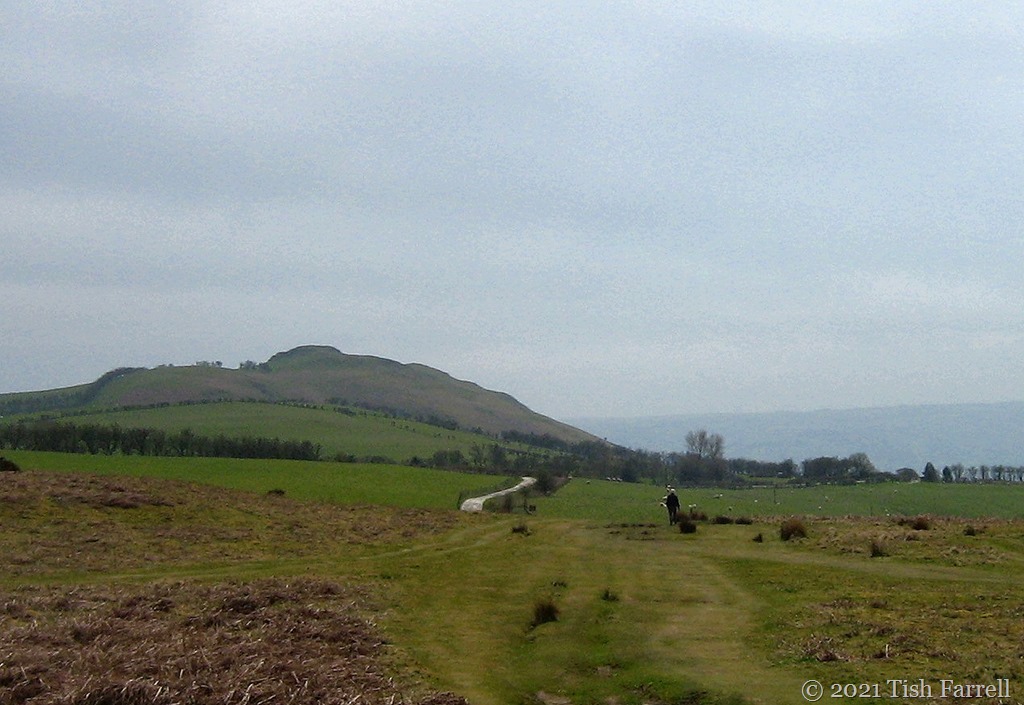
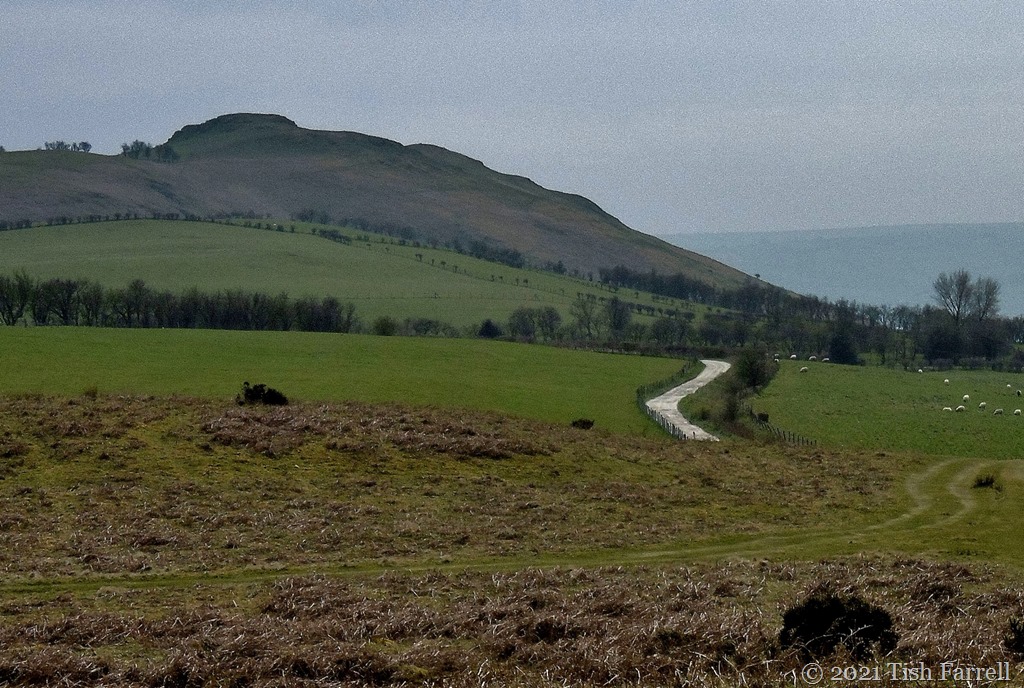
We’re close to the Welsh border now. Corndon Hill in the background, and the white lane we’ve driven along…

IMG_2182cr

P1030701cr

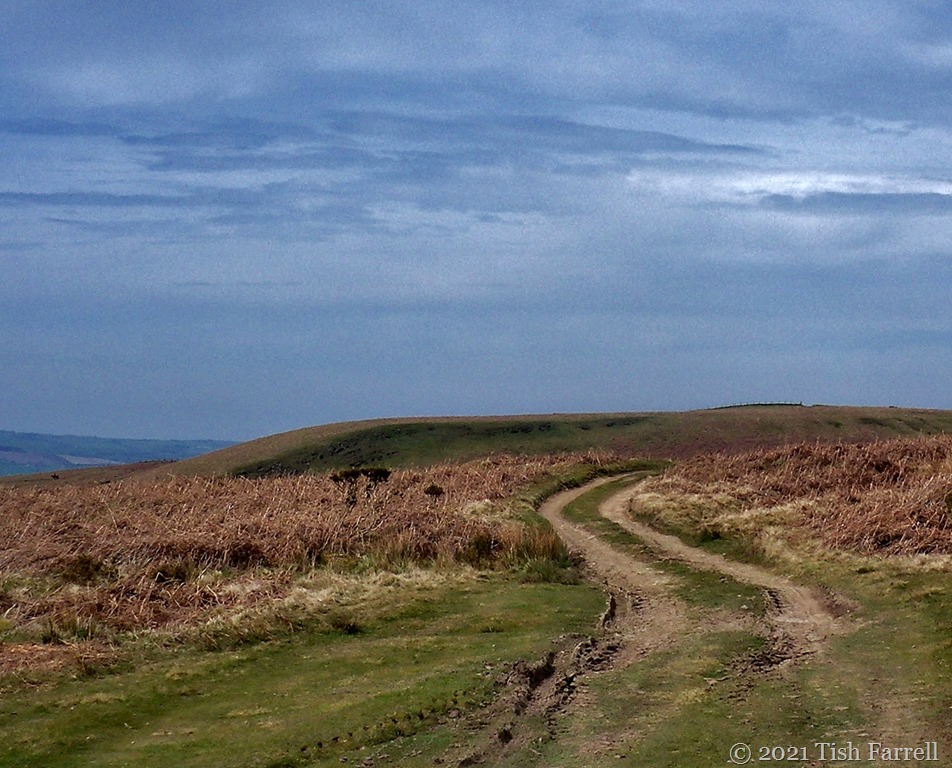
…which then becomes one of those tracks that still looks to be going somewhere. In fact as we left the car to walk, we were passed by a police patrol car. It sped by us over the hill in a manner that suggested routine activity, doubtless taking the unpaved route into Wales.

100_9486

We weren’t going that far, at least not terrestrially, though we were going back in time, following 6,000 year-old footsteps to Mitchell’s Fold, the remains of a Bronze Age stone circle.

100_9479cr

*

These final photos are closer to homes, the lanes below Wenlock Edge, near Easthope.

P1060056

P1060098cr

Lens-Artists: along back country roads  Beth at Wandering Dawgs wants us to take to the by-ways.

Borderlands ~ Distance In Time And Space

P1030690a

We’re in border country here – between the Shropshire Hills and Wales  and I’m standing inside a Bronze Age stone circle, Mitchell’s Fold, looking in a northerly direction. And if the circle is a little raggedy  after three millennia, then its location is surely still impressive.

*

Here is the southerly view towards Corndon Hill on whose flanks are the remains of several prehistoric burial cairns. To the right are the hazy Welsh uplands.

a

*

This westerly view towards Wales shows more of the Bronze Age circle. Several of the stones have been laid flat or damaged, and this apparently happened long ago. Perhaps when the land through the circle was being worked. You can see here the rig and furrow outlines of medieval fields. I think the climate must have been milder back then or they grew very tough crops.

100_9480

*

Now looking east, the furthermost ridge is one of Shropshire’s most mysterious and curiously named hillscapes: the Stiperstones with its lunar Manstone and Devil’s Chair outcrops. This ridge is formed from quartzite laid down some 480 million years ago.

P1030691

All these places loom darkly in local legends and folklore. I’ve told the story before of Mitchell, the wicked witch for whom Mitchell’s Fold is named. You can read about her grim deeds and sticky end in an earlier post: Witch Catching in the Shropshire Wilds which also comes with snow-scene photos courtesy of he who no longer uses his camera.

Cee’s Black & White Photo Challenge: In the distance

Starting As I Mean To Go On ~ The Big De-Clutter, Or This Writer’s Extra-Convoluted Displacement Activity?

PICT0029

Well not so much de-cluttering as re-arranging, though somehow I’ve ended up with a whole BIG EMPTY drawer beneath the cabin bed in the office. I should of course see this as a great achievement on day one of 2018, but I’m afraid the whole process has made me very ratty. Not a good way to start the year.

One problem is I find myself at the end of the line for two branches of family memorabilia – in particular the material evidence of the lives of two deceased aunts – maternal and paternal. I was very fond of them, Miriam and Evelyn, and we three had much in common. Both were passionate gardeners, readers, writers, watchers, makers, generous authors of many small kindnesses. And both were keen on family history, gathering in whatever they could in the days before Ancestry and Find My Past.

I now have their gleanings – barely readable notes, diaries, photographs – all the makings of good stories if only someone could knock the stuff into a shape that would mean something to family others. That someone has to be me. And I think I should do it, because if I don’t, no one else will. And that’s when I start getting cross. Imposition looms like a heavy, wet fog. Hmph.

The moving of the auntly archive from the pine blanket chest in one bedroom to the pine chest of drawers in another bedroom (so facilitating the BIG emptying of the office drawer into the now empty pine blanket chest) leads to encounters with my own archive. The aunts kept most of the letters I wrote to them during our eight years in Africa. They are very detailed letters. I need to revisit them. Well I do, don’t I? Then there are all the Africa photos and negatives. I never did finish scanning them.

More long-winded tasks loom.

Not only that, when you start shunting stuff around the house, and arguing with yourself over what should be kept, and what should not, you then find all sorts of diversions.  And yet the whole point of the de-cluttering process was so I could free up the office, create clear spaces for laying out the notes relating to some of the several unfinished writing projects that have long lodged on my brain’s back boiler.

Which is where this photo comes in. As I was sorting through boxes and folders, I found a forgotten scan of it, taken by Graham many New Years ago at the Bronze Age stone circle, Mitchell’s Fold in the Shropshire borderland. You will notice that my blog header is cropped from another scanned version of it. That’s me all huddled up in many layers. But I love the huge wintry sky above me, and the blue hills of Wales stretching far, far away behind me. It’s reminding me that this is where my head needs to be. Never mind the clutter. It’s a piece of very elaborate self-sabotage. Off to the realm of imagination, that’s where writers need to be.

Thank you, Julie Riso, for reminding me of where the best paths are.

copyright 2018 Tish Farrell