Coming Home From The Allotment

IMG_0093

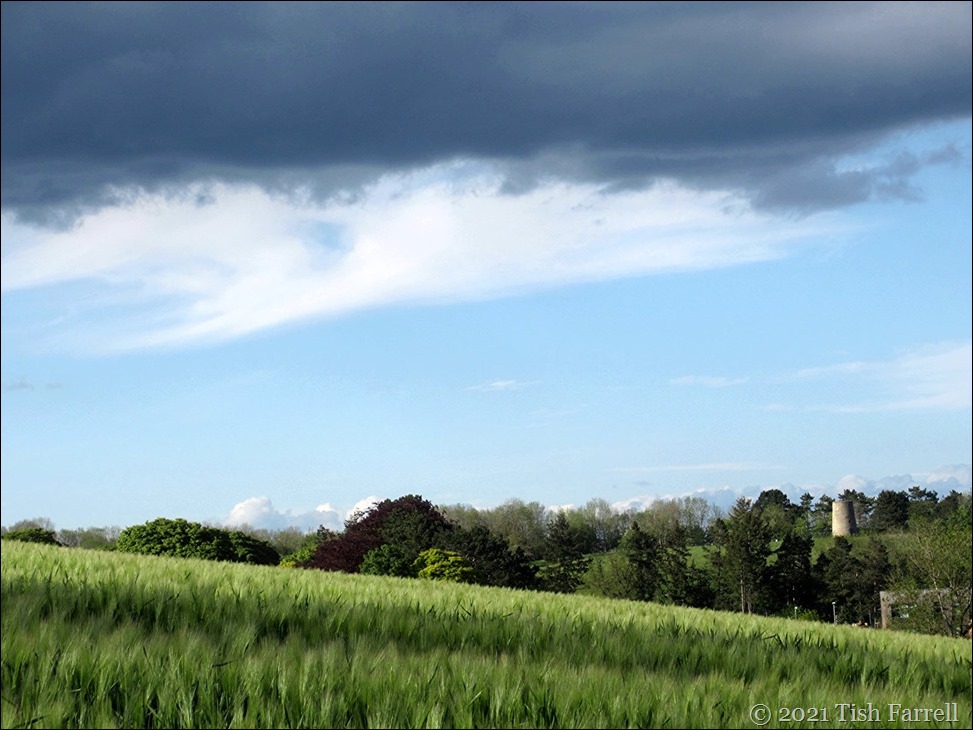
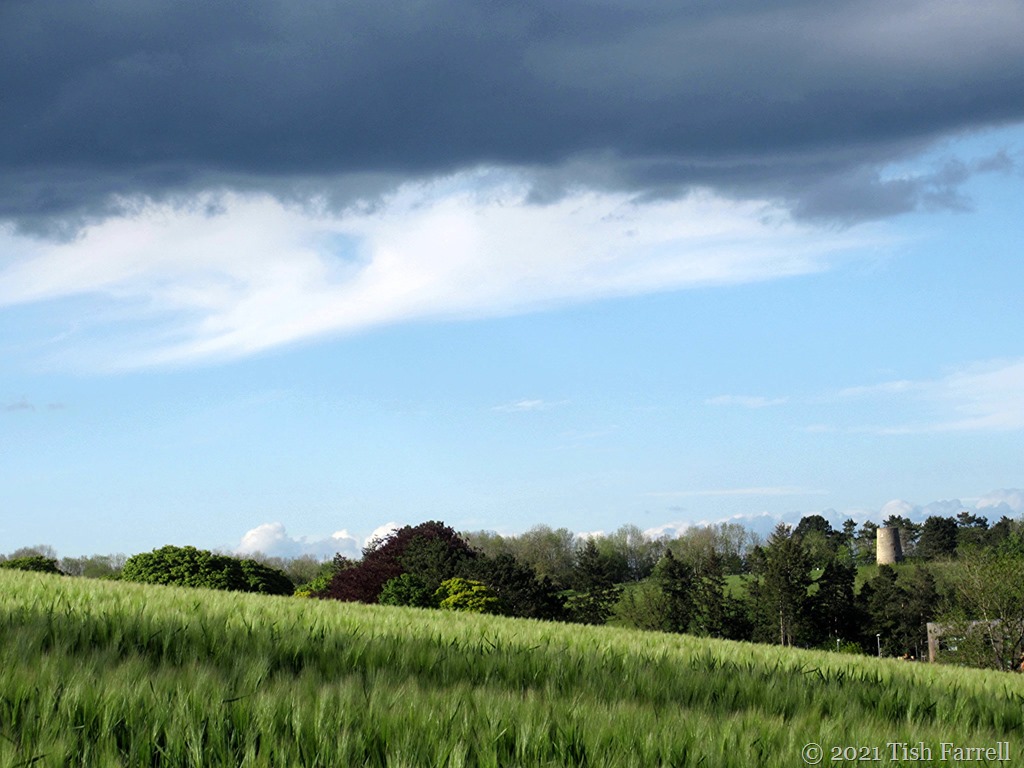
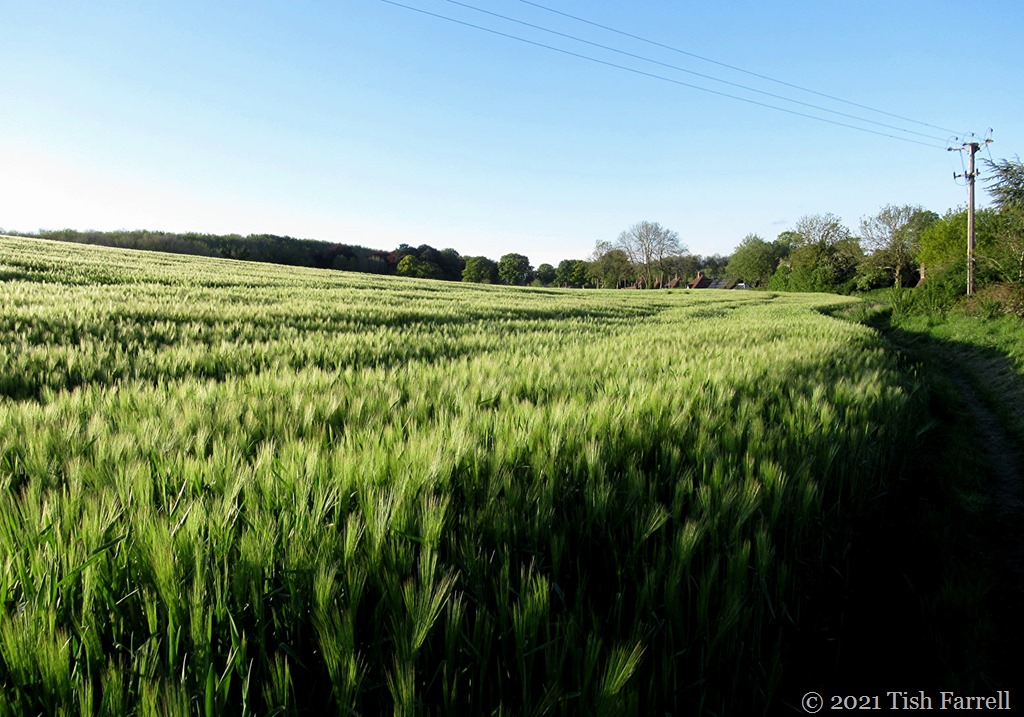
At last! Spring has arrived. Or perhaps I shouldn’t tempt fate by proclaiming it. Anyway, after freezing wind and deluges, here’s the proof of brightness, photo taken two evenings ago. You can see Windmill Hill in the distance. And as for Townsend Meadow and this fluffy looking crop – this year the over-wintered plants that I took for wheat, have recently transformed into barley, their feathery top-knots tall and shimmering in the sunshine. I am in love with the field – the way the light dances over it.

IMG_0122

IMG_0132

Lens-Artists: blue and green

This week Tina asks us to find inspiration in blue and green. Please go and view her (as ever) stunning work.

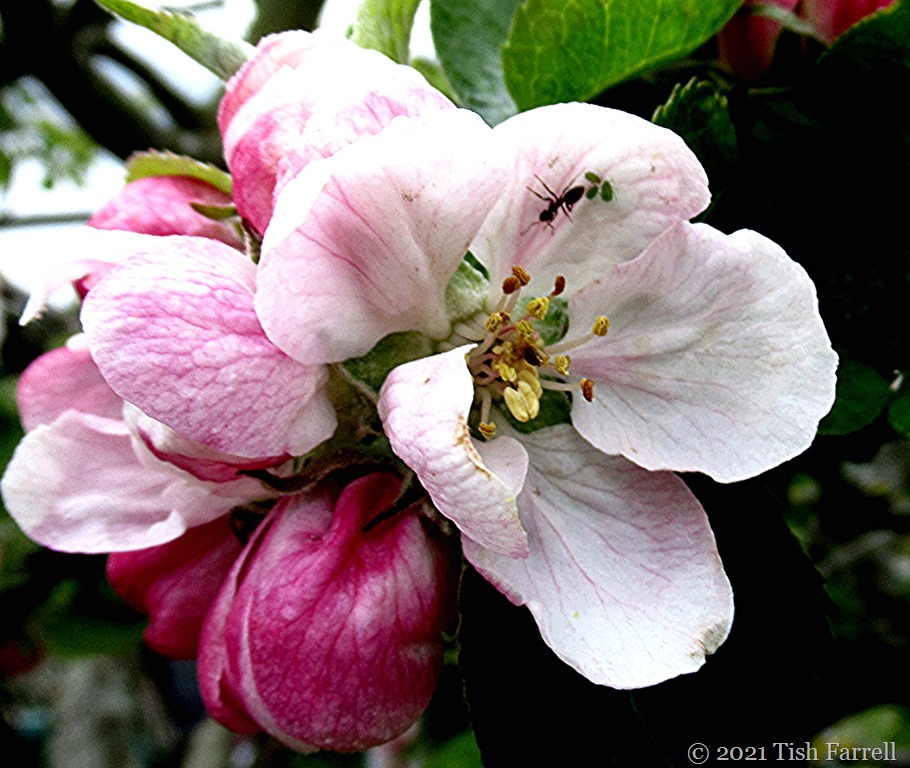
Ant takes up aphid herding inside a Bramley apple flower

IMG_3330ant and aphids

Ants and aphids have a good deal, otherwise known as a symbiotic relationship. Ants protect the aphids in return for giving them a squeeze, or at least stroking them with their antennae, in this way encouraging the voracious plant-consuming pests to excrete their honeydew waste. And ants can’t get enough of it. So they herd and manage and protect their aphid herds, moving them from harm’s way, seeing off predators, in  particular ladybirds, whose eggs they will destroy.

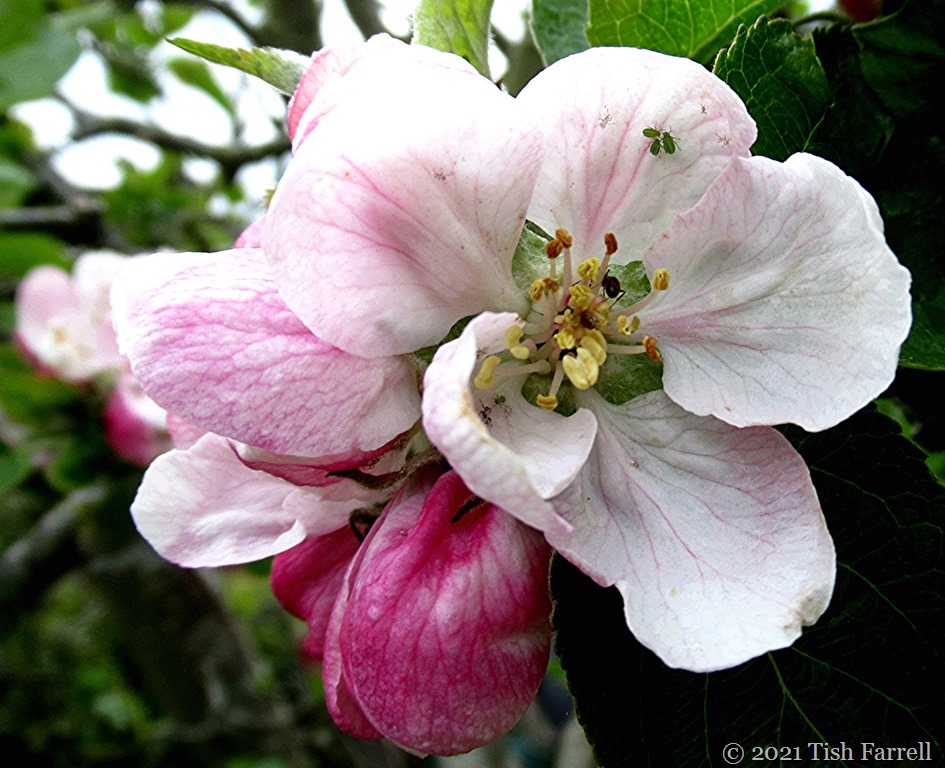
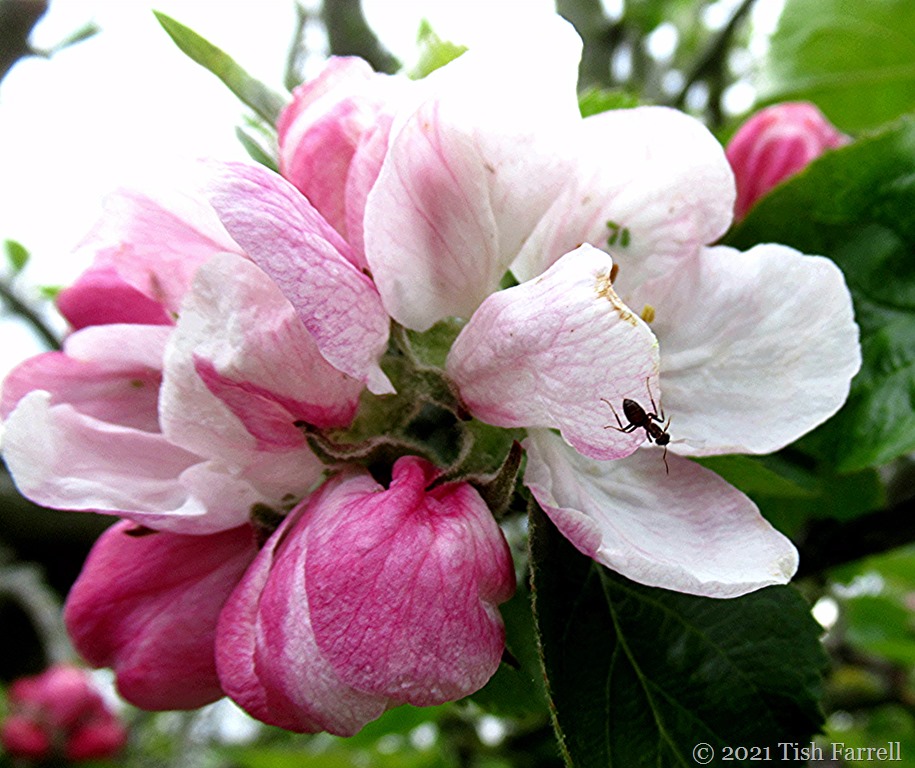
In the next photos you can see the aphids have been ‘parked’ while the ant goes off to forage in the blossom and then patrol the ‘perimeter’.

IMG_3334

IMG_3336

Fascinating what one finds on the way home from the allotment. The photos were taken one evening last week so not the best light conditions.

Lens-Artists: Focusing on the details  Patti asks us to look at the finer points.

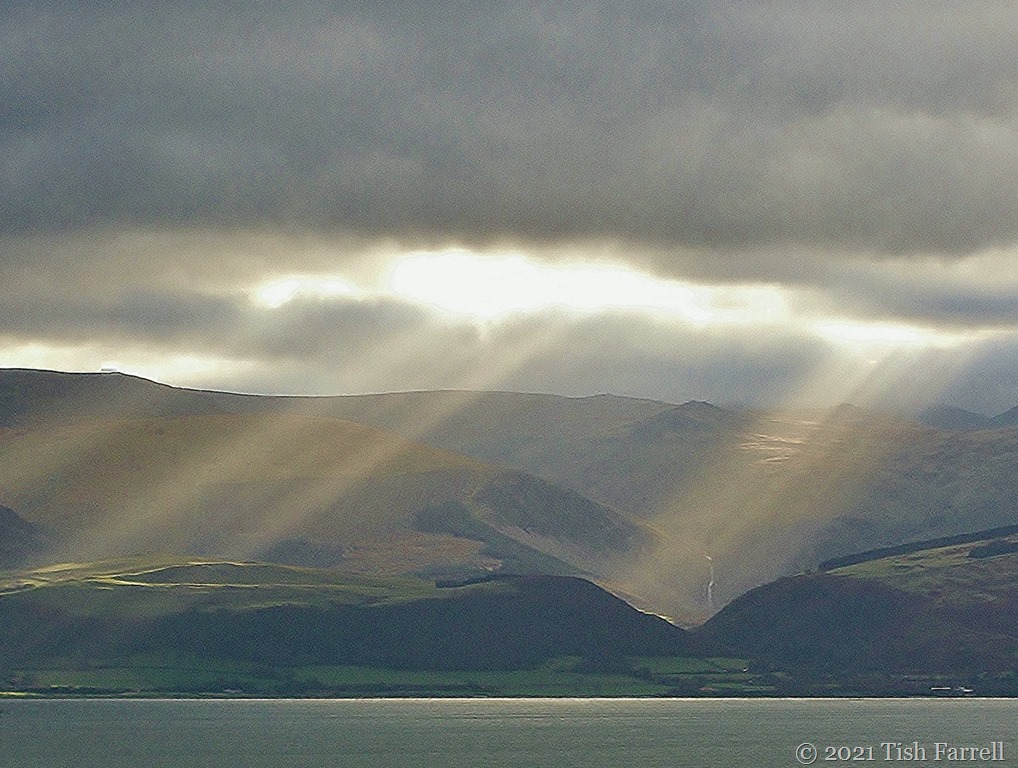
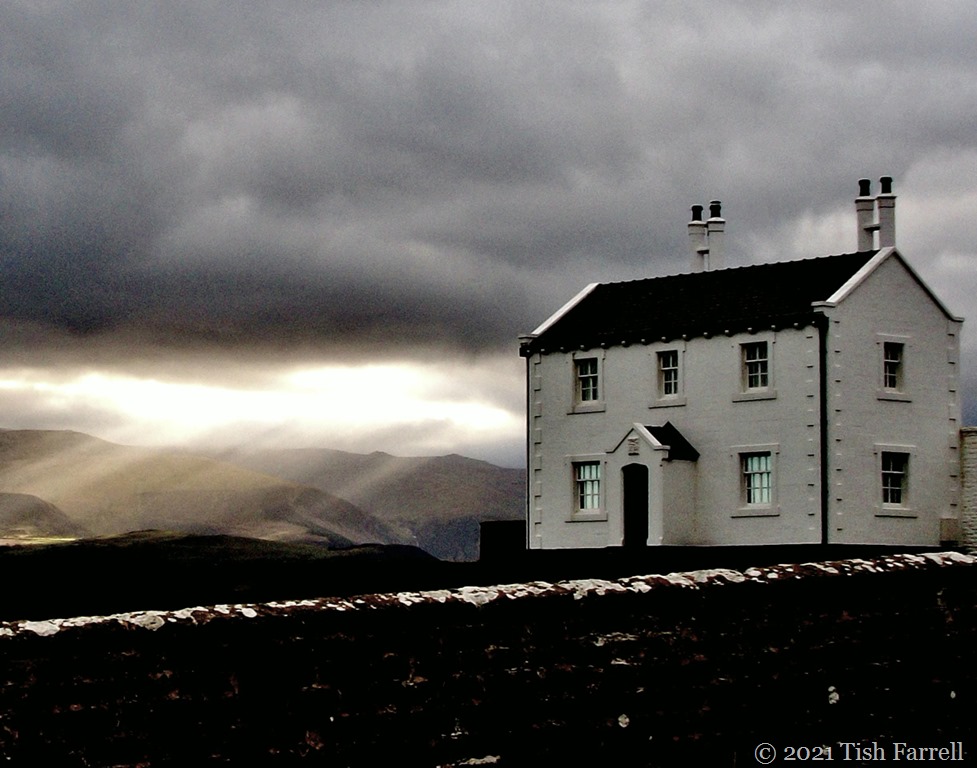
Catching the Light ~ Menai Strait In Winter

P1060525

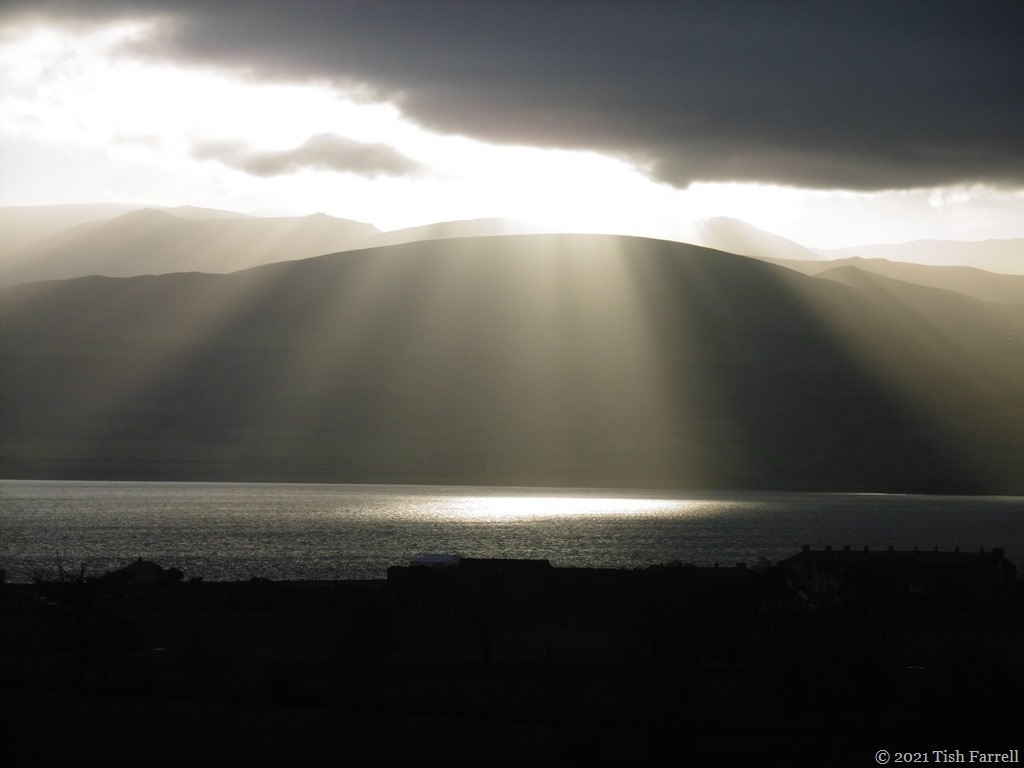
This week Amy at Lens-Artists has set us a fine task – the pursuit of natural light. It’s one of the aspects of photography that fascinates me most; especially when it’s in short supply. Anyway, I instantly thought of the strange light effects that happen across the Menai Strait between the North Wales coast and the island of Anglesey, caught here during various December sojourns on the island. All the views are looking towards the Welsh mainland and Snowdonia.

004

013

100_5196 - Copy


Lens-Artists: Natural Light

Squared Up Views Of Wenlock’s Antique Buildings

100_3612cr

The small town of Much Wenlock has been continuously occupied for at least a millennium. It grew up to serve the demands of Wenlock Priory. In  Saxon times there would doubtless have been a smallish population of servants and slaves to do the menial tasks around the monastic domain. There were also local providers of goods and services with weekly fairs pre-dating the Norman Conquest.

St. Milburga was the first prioress whose name we know. Her father, the Mercian king, Merewald, sent her to France to be educated for the role. From around 670 CE she returned to preside over a double house of monks and nuns who lived and worshipped in separate quarters. She also commanded large estates – from the Severn Gorge to the Corve valley. This was very much a pattern for Saxon princesses – ruling over human souls and securing physical territory.

The original monastic house was greatly expanded in the years preceding the Norman invasion of 1066. Saxon Earl Leofric and his consort, Lady Godgifu (Godiva) footed the bill. But their considerable improvements were not good enough for the new Norman earl, Roger de Montgomery. From 1091 the place was taken over by incomer French monks from Cluny and it was they who, over succeeding centuries, undertook the work on the buildings whose ruins survive today. (See last week’s post for a tour of some of the ruins).

The town’s big break came in 1101 with the apparent discovery of St. Milburga’s bones in the ruins of Saxon women’s chapel. This convenient fortunate find put Much Wenlock on the pilgrims’ map, kick-starting a thriving service industry to cater for the many visitors. So were sown the seeds of the busy market and manufacturing town, and though still under monastic authority, the early Middle Ages saw the rise of freemen and burgesses and the growth of an urban elite.

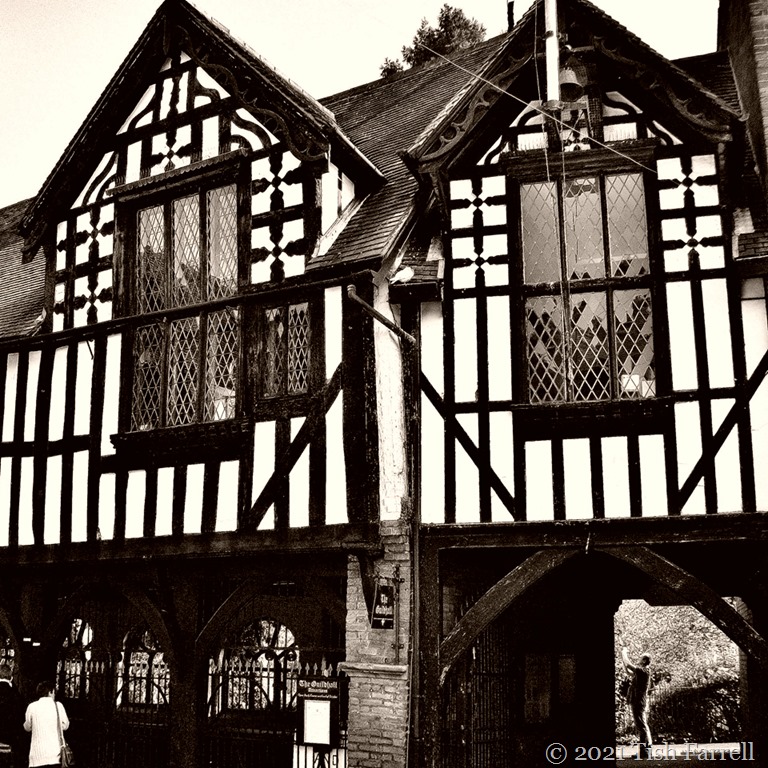
With the Dissolution, the Prior’s dictate and ecclesiastical court rulings were exchanged for secular management by bailiff and burgesses – tanners, weavers, wool merchants, the new owners of monastic lands. In 1540 they built the town’s Guild Hall and later added the debating chamber where the Town Council still holds its meetings. They also set about building grand homes for themselves, enhancing and expanding earlier structures.

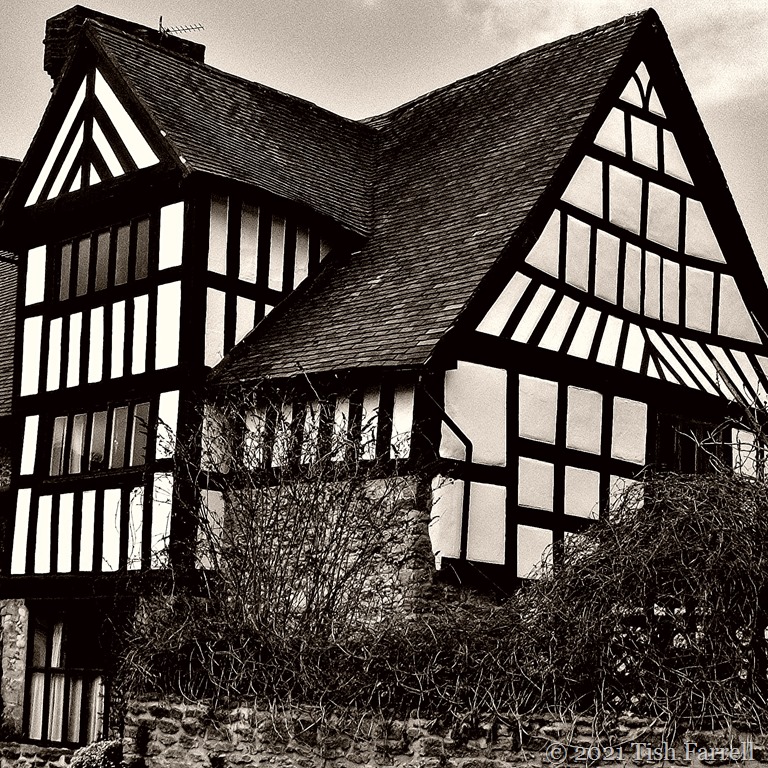
The header photo is Ashfield Hall, rebuilt in the 1550s by local worthy, Thomas Lawley, who extended an earlier stone building with the eye-catching timber-framed wing. In 1642 it was better known as the Blue Bridge Inn, and it was here that Charles I apparently spent the night during Civil War manoeuvres.

Here’s another view of Ashfield Hall. It is said to have been built on the site of St. John’s Hospital which was run by monks in the 1280s for the benefit of ‘lost and naked beggars.’ It had gone by the 15th century though evidence of its existence lived on in the street name of Spittle (hospital) Street, later renamed the High Street.

100_6387sq

*

100_5540cr

Much Wenlock’s Tudor Guild Hall is still used as a market hall (downstairs) and a museum and council chamber above. Sitting in the heart of the town beside the parish church t is absolutely the town’s ‘signature’ landmark.

P1010699sq

*

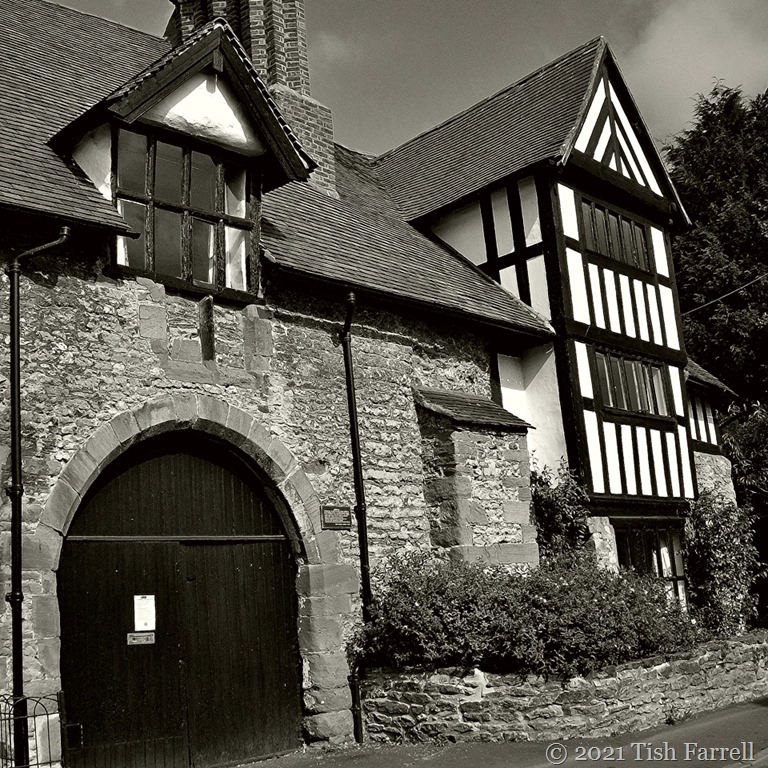
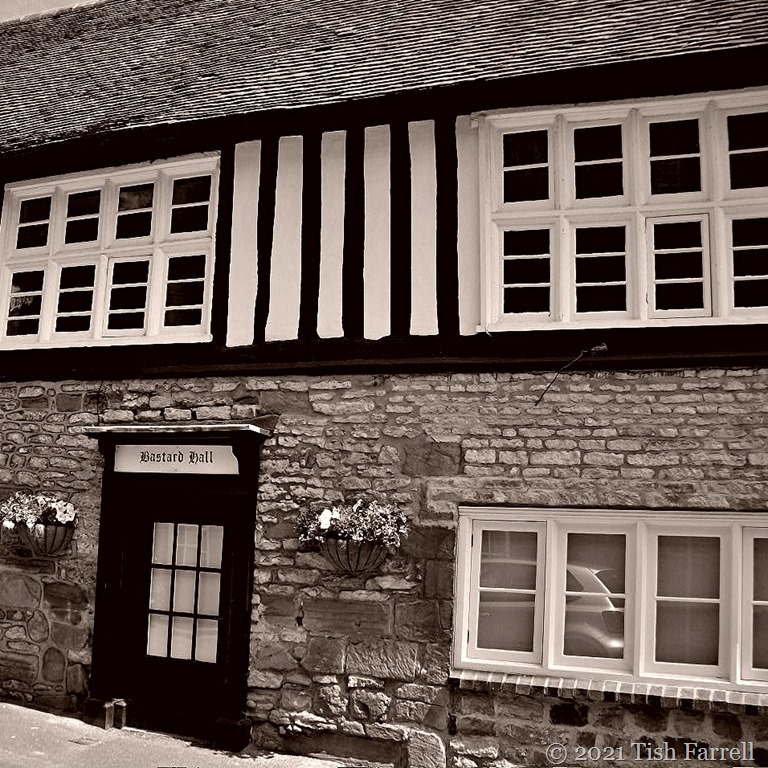
The Bastard Hall up the street from the Guild Hall has seen many phases; its stonework certainly suggests some repurposing of priory ruins. It and its attached neighbour were the subject of an early Time Team television programme, the latter found to be housing the remnants of an early medieval hall. See link at the foot of this post for the full programme and insider views.

100_6031 (2)

*

100_6264

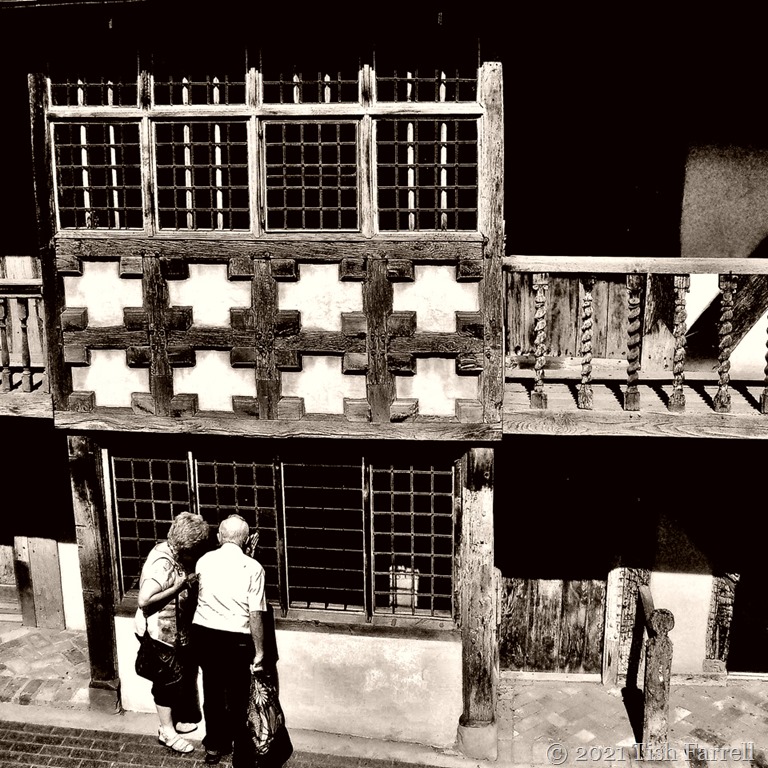
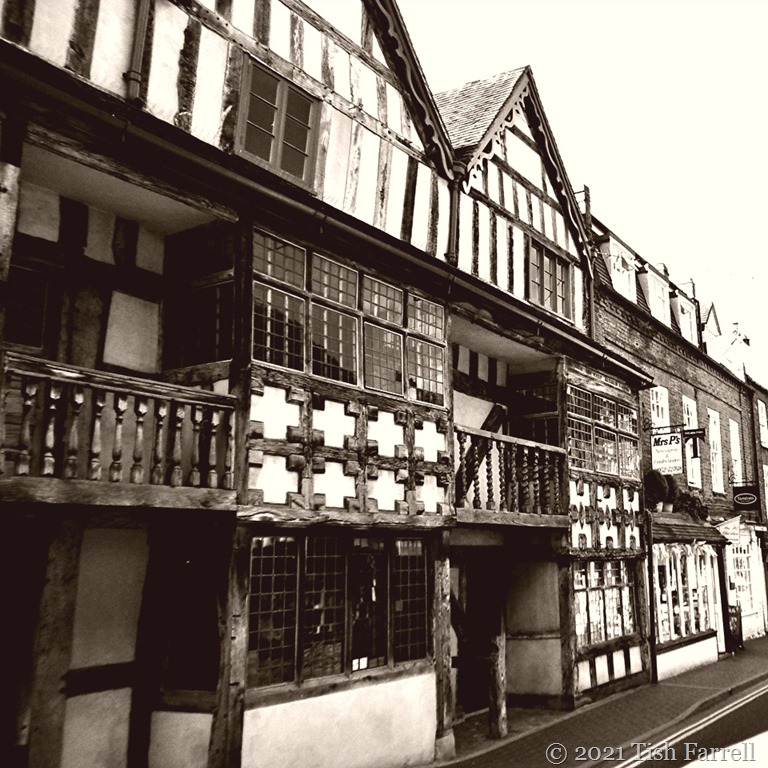
Reynald’s Mansion is perhaps the most singularly impressive building on the town’s High Street. The striking timber facade was built onto an existing medieval house in 1682. For a time it was the town’s butcher’s. The post with cross-bar by the front door was used to make hefting heavy loads easier.

P1010717sq

*

This small architectural round-up was inspired by Ann-Christine at Lens-Artists. Striped and checked is her challenge this week.

Square Up #26

Lens-Artists: striped and checked


Inside the Guild Hall and more about Bastard Hall: Time Team in Much Wenlock in 1994:

Time Team Season 01 Episode 03 The New Town of a Norman Prince. Much Wenlock, Shropshire UK – YouTube

Did We Dream Great Zimbabwe?

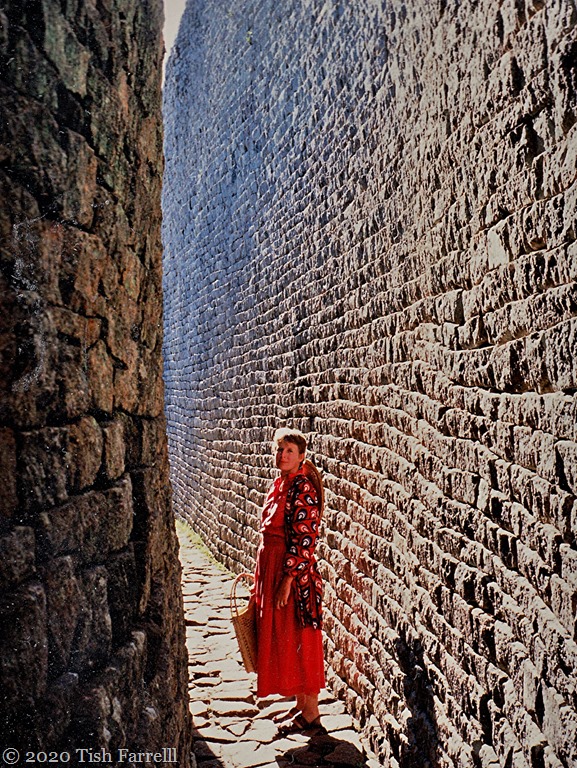
4_0003 Great Zimbabawe2

Great Zimbabwe inside the great enclosure

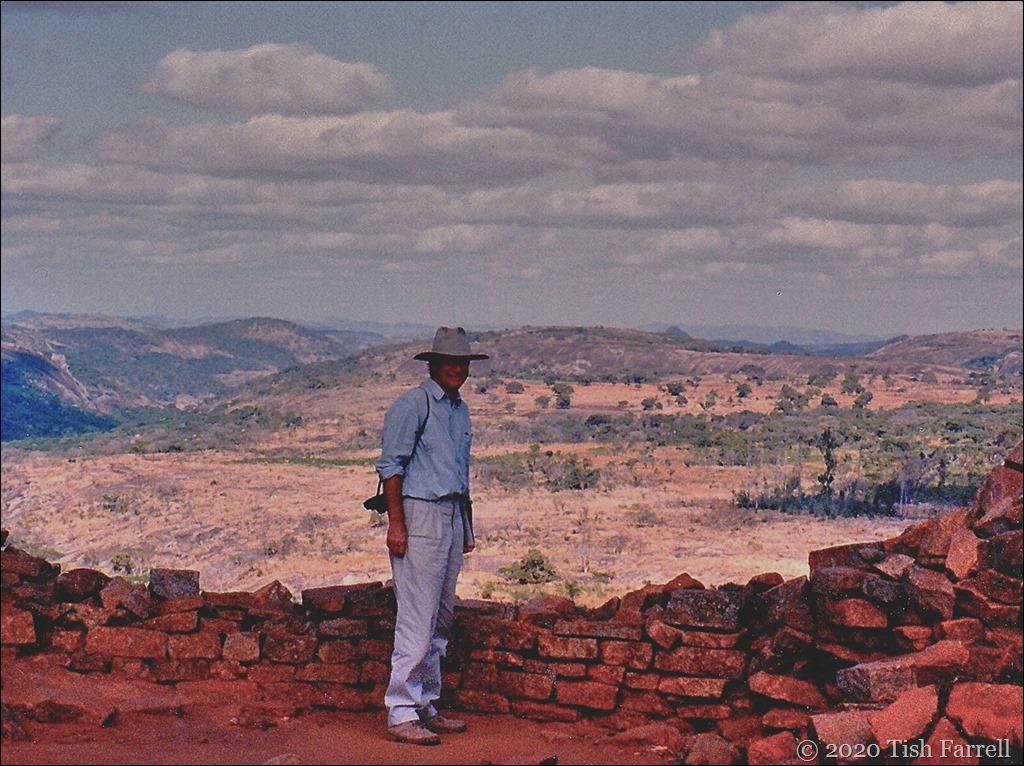
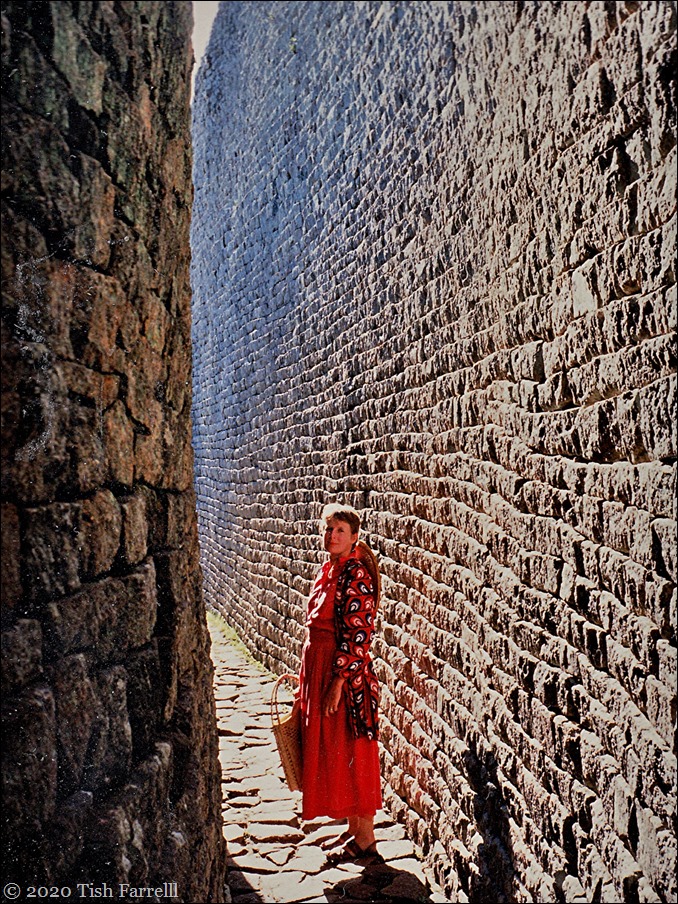
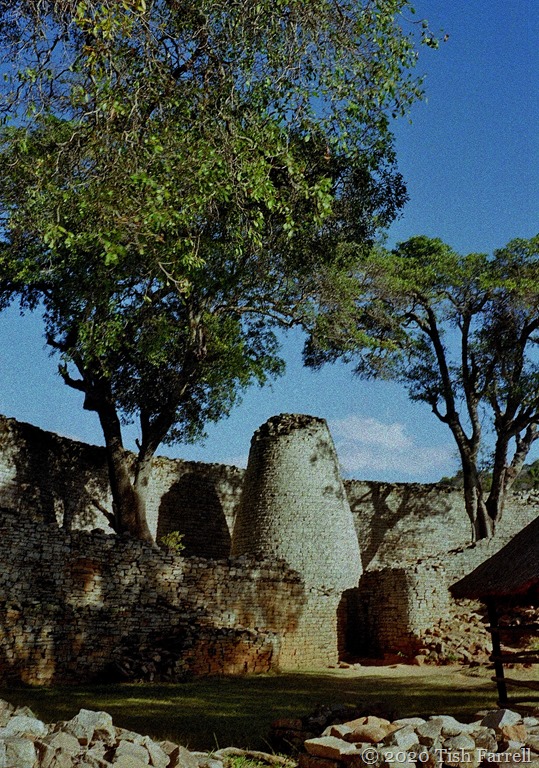
I’m thinking we did dream it. These vintage scenes look unreal. I remember it as a perfect day, though more drowsy English summer – the sort we like to think once happened – than an actual African afternoon. It was July, southern Africa’s winter, the daytime temperatures cool enough for me to be wearing my Zambian cotton jacket, at least in the shadows within the Great Enclosure. Strangely, we had the ruins to ourselves, us and our two companions. For a time, before starting our exploration, three of us had sat outside on the grass, our backs against the enclosure’s monumental, drystone wall. The air was still; the granite warm.

We were living in Zambia at the time, but were on a two-week road trip across Zimbabwe. This ancient African city was a high spot on the itinerary. Yet the conversation below the great wall wound on; quite unrelated to the place we were. Crickets chuntered. Time passed. A sense of treading water. Soon we would have to move on to find somewhere to stay for the night. It was all unknown territory. We had nothing booked. There was a moment when I thought if I don’t break free of this reverie, my one-time chance to see this place will be lost. It almost was.

*
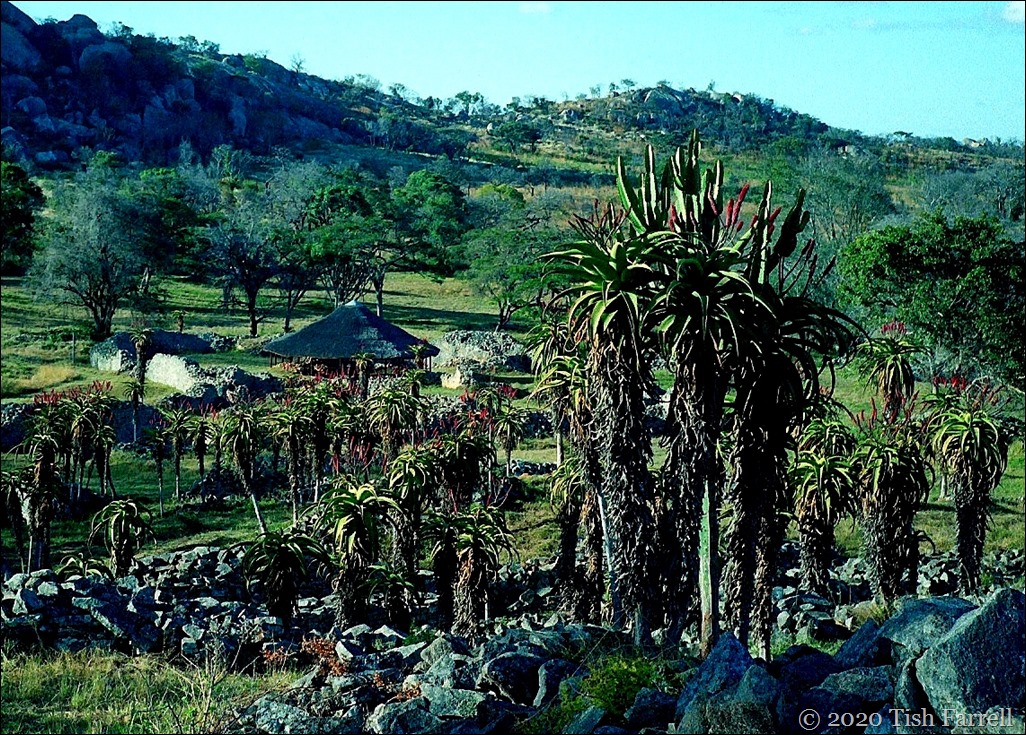
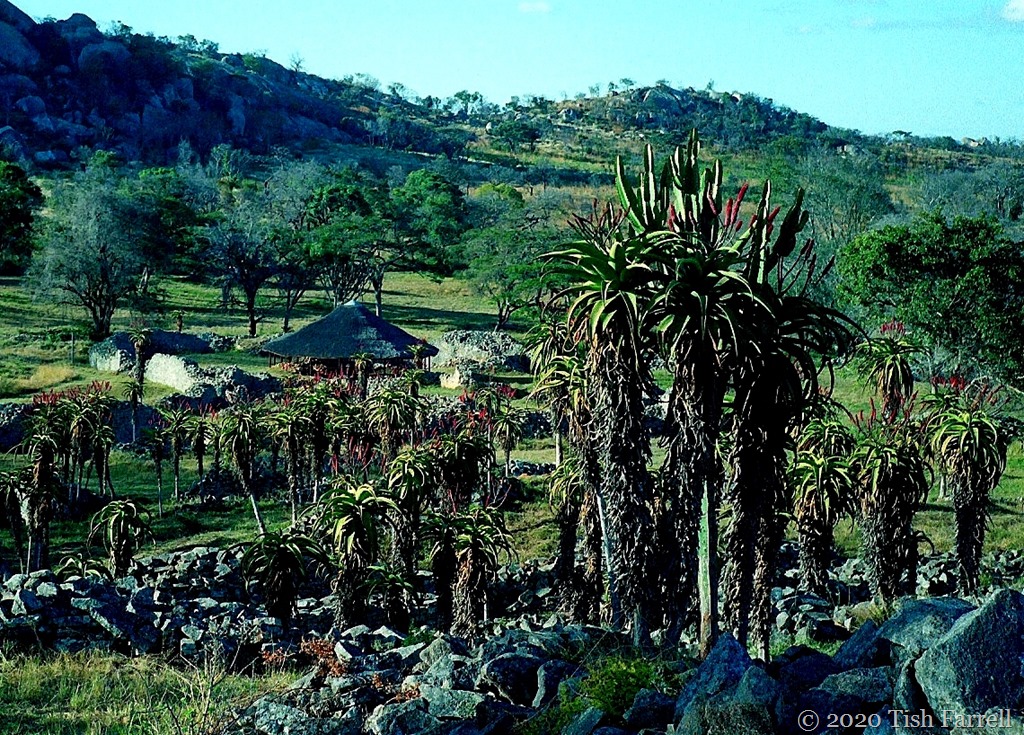
Great Zimbabwe general view

Amy at Lens-Artists asks us for precious moments. It was hard to choose from our eight-year stay in Africa. It often felt we were present for all of it – all senses always switched full on. But Great Zimbabwe was certainly one of highest high spots. I still have that jacket too, stitched by hand from cloth bought in a Livingstone store, near Victoria Falls.

Many of you have seen these photos before, but I’m sure you don’t mind another look. I’m also reprising the text of a long-ago post for those who want to know something about the ruins.

Great Zimbabwe

No one knows exactly why this great African city  was abandoned. For some 350 years, until  around 1450 AD,  Great Zimbabwe had been a flourishing merchant centre that drew in from the surrounding country supplies of gold, copper, ivory, animal skins and cotton. The city’s entrepreneurs then traded these goods on to the Swahili city states of Sofala and Kilwa on the East African coast. (You can read more about the Swahili HERE). In return, the traders brought back luxury goods including jewellery,  Chinese celadon dishes and Persian ceramics.

The city’s ruins cover 80 hectares, its many stone enclosures commanding the southern slopes of Zimbabwe’s High Plateau watershed between the Zambezi and Limpopo Rivers. The site is well watered with good grazing throughout the year. It is above the zone of the deadly tsetse fly that can infect both cattle and humans with sleeping sickness; and the plateau’s granite scarps provide plentiful building stone and other raw materials.

Even so, these favourable circumstances do not explain why this settlement rose to such particular prominence. Great Zimbabwe was not a singular phenomenon. Contemporary with it,  and across the High Plateau region, are the remains of at least a hundred other mazimbabwe (houses of stone) settlements. Several were large enough to have been the capitals of rival states. Others may have been satellite communities occupied by members of Great Zimbabwe’s ruling lineage.

So who were the city’s builders?

During Zimbabwe’s colonial times, and until independence, the  Rhodesian government actively supressed  evidence that Great Zimbabwe was built by Africans.  Many of the other stone ruins were destroyed or re-purposed by European settler farmers. The official view claimed that the city was Phoenician, and that the Queen of Sheba’s fabled kingdom of Ophir had been discovered. Archaeologists, however, have long demonstrated  that it was the cattle-owning Karanga Shona who built Great Zimbabwe. The first phase of stone building began around 1100 AD. Thereafter, the city’s rising fortunes and successive building phases suggest its increasing control of the ancient High Plateau trade routes to the Swahili cities of Sofala and Kilwa.

Gold was the key commodity, and it is likely that it was Great Zimbabwe’s successful cattle production that provided it with the trading power to secure gold supplies from mines some 40 kilometres away. The more prosperous the city became, the more sophisticated its demonstrations of prestige. In around 1350 AD  the Great Enclosure of finely dressed stone was built. This huge elliptical structure with its mysterious platform and conical tower is thought to be the royal court. There is no indication that the walls were defensive. This was  a regime confident in its power and authority.

IMG_0889

Peter Garlake’s reconstruction of the Great Enclosure Platform from Life at Great Zimbabwe,  Mambo Press 1982

Then why did the city decline?

There are various explanations: the people had let their herds overgraze the land; they had cut down all the trees; there was a prolonged period of drought as may happen in southern Africa. But somehow none of these theories quite explain why, after 350  flourishing years, a community of perhaps 20,000-plus people should simply pack up and leave. Did all these farmers, herders, miners, craftspeople, soldiers, traders, accountants, court personnel and the city’s rulers  leave on a single day, or did the city die slowly?  The archaeological evidence does not say.

But we do know there were disruptive external forces. In the 15th century the Portuguese invaded the Swahili coastal city of Sofala. They were on the hunt for gold and so pressed inland with Swahili guides. Their interfering presence drove the trading routes north, giving rise to the Mutapa state. This new state may well have been founded by people from Great Zimbabwe. Certainly by the time the Swahili traders were coming up the Zambezi to trade with the Shona directly, the old trade route through Great Zimbabwe was no longer used. At this time, too, we see the beginning of another Shona city state: the construction of the stone city at Khami near Bulawayo in southwest Zimbabwe. In the following centuries this became the centre of the Torwa-Rozvi state whose other major cities during the 16th and 17th centuries included Naletale and Danangombe.

And so into history…

Of course with the Portuguese incursions comes the first documentary evidence. From the early 1500s Zimbabwe’s royal courts enter the historic record in the accounts of the Portuguese conquistadores. In 1506 Diogo de Alcacova writes to his king, describing a city  of the Mutapa state

“called Zimbany…which is big and where the king always lives.”  His houses are “of stone and clay and very large and on one level.” Within the kingdom there are “many very large towns and many other villages.”

The Portuguese historian Faria y Sousa also describes the King of Mutapa’s great retinue which included the governor of the client kingdoms, the commander-general of the army, the court steward, the magician and the apothecary, the head musician “who had many under him and who was a great lord”. Also noted were the vast territories over which the king ruled, the revenues and subject kingdoms of the king’s several queens.

And suddenly we have a true glimpse of what this land called Zimbabwe might have looked like in the past, a bustling, mercantile, metropolitan culture, supported by gold miners, farmers, cattle herders and craftspeople. And so it remained until well into the 18th century, albeit with a shift of Shona power to the southwest and the Torwa-Ruzvi state as the Portuguese presence caused increasing instability. Then in the 19th century came new invaders – the Nguni, the Ndebele and the British.

This centuries’ old heritage of royal courts is not a picture that the likes of Cecil Rhodes or, the later Rhodesian government of Ian Smith ever wanted anyone to see. And so in the end this is not so much a story of a city abandoned by its people, but of a people wilfully excluded from their past.  In 1980 when Zimbabwe became an independent state, some of this past was reclaimed: the new state took its name from the first great Shona city, and  adopted for its flag and coat of arms, an image of one of the city’s ceremonial soapstone birds. These are small steps forward, but there is still a long way to go before the world sees the indigenous histories of the Africa continent in their true perspective, or acknowledges their intrinsic cultural worth.


References: The classic work on the excavations of the city is Peter Garlake’s Great Zimbabwe 1973. For an overview of the mazimbabwe culture see Innocent Pikirayi’s The Zimbabwe Culture  Alta Mira Press 2001. For a broader historical perspective Randall L. Pouwels The African and Middle Eastern World, 600-1500 Oxford University Press.


Lens-Artists: Precious moments

Apple Snaffling

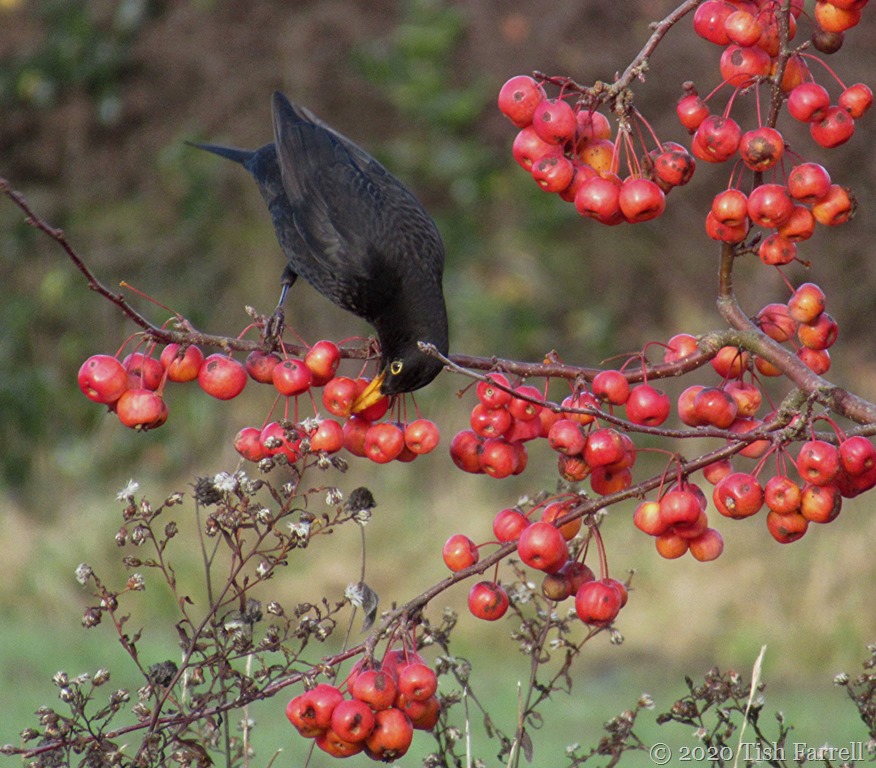
IMG_1083

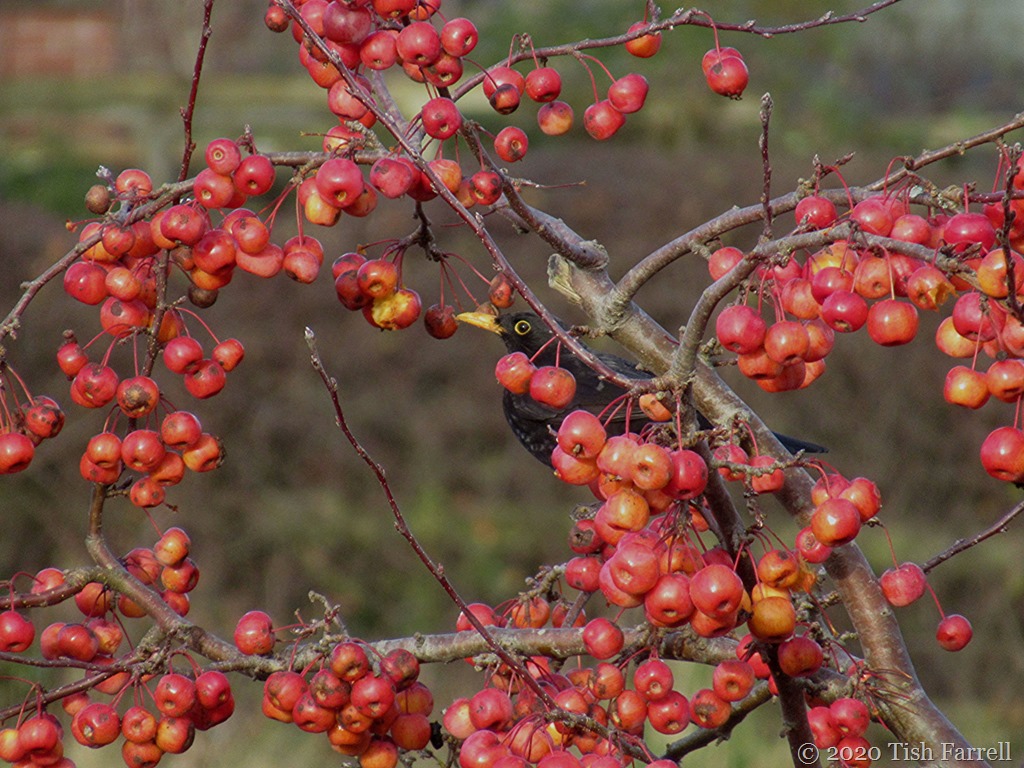
For the last couple of days this male blackbird has been tucking into our garden crab apples. He has a technique. Using his beak like a dagger, he jabs downwards with great vigour, slicing off morsels. Sometimes, though, he ends up with a mouthful he cannot swallow, which then requires a descent to the garden path where sets about cutting the apple down to size. All part of the morning’s seasonal entertainment at the Farrell establishment.
IMG_1089


Lens-Artists: ‘A’  This week Patti asks us for subjects that start with the letter ‘A’.

My World In Sepia

IMG_0885s

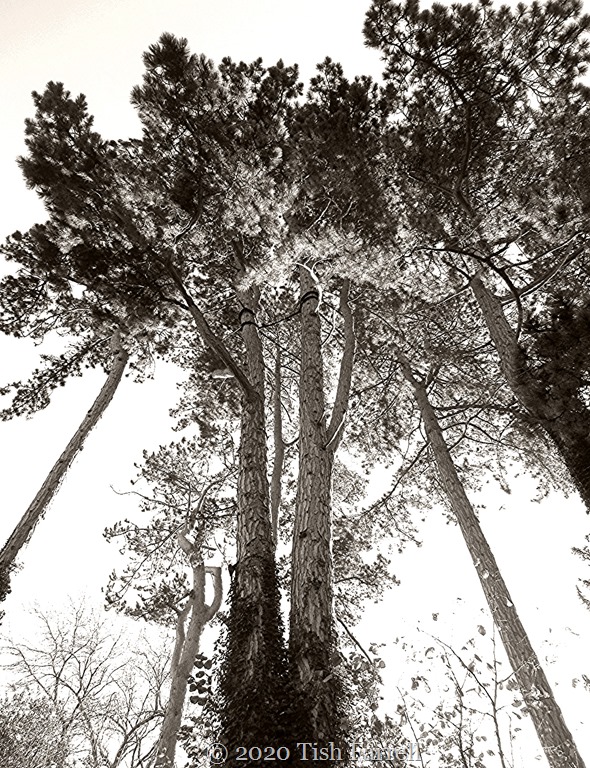
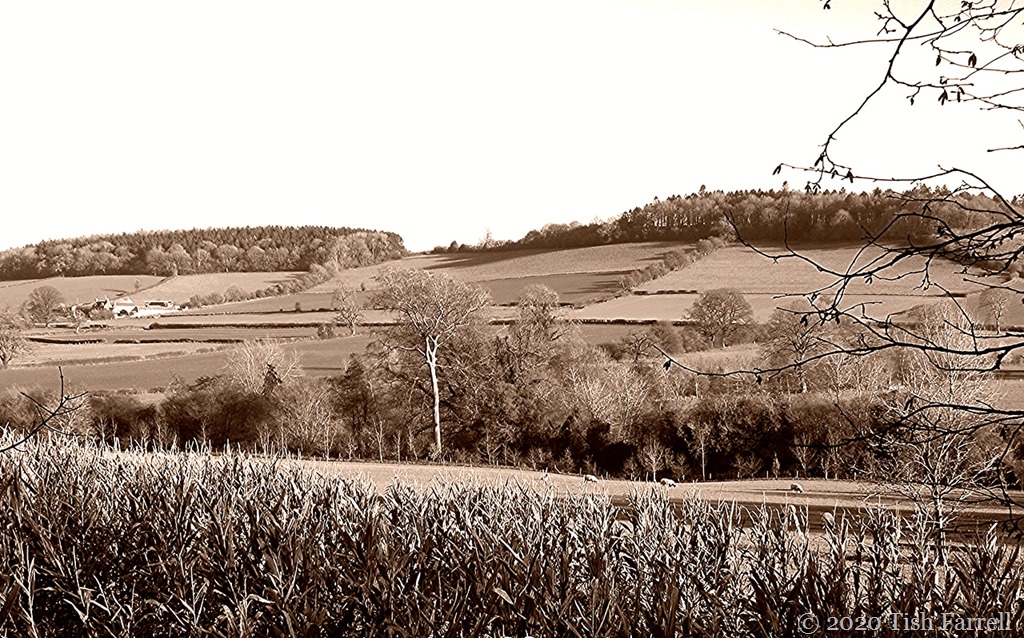
I seem to be having a ‘sepia season’ just now. It’s suiting my mood. And I anyway like the ‘antique’, slightly mysterious cast it gives some of the shots. I took them earlier in the week – along the lane from the Wenlock Priory ruins. The magnificent Corsican pines tower over the Priory visitor entrance, the place shut up for months now. I’ve no idea how these trees came to Shropshire, but I’m guessing that the Milnes Gaskells who once lived in the Prior’s House, or The Abbey, as they called it, may have planted them. This would be back in the days when Henry James was a repeat visitor and the priory ruins were something of an extended garden feature for his genteel English hosts.

The next two photos provide views of what was once the Priory ‘parkland’, now mostly owned by Wenlock Estates, a family trust, and grazed by sheep. In the Priory’s heyday the monks apparently had a high old time, hunting on horseback across their extensive domain. And not only that. One wild young monk, William Broseley, headed a gang of bandits, Wild West style, and Prior Henry de Bonvillars in 1302 was charged with raiding and horse stealing over on the Welsh borders.

Sheep were also an important monastic commodity, the wool a source of great wealth in the early Middle Ages. In 1284 another slippery Prior, John de Tycford, caused consternation and monkish fury within the sacred confines when it was found he had robbed the house of its wealth through a spot of canny futures dealing. He managed to sell seven prospective years of wool and then make off with the loot. Things are much more peaceful here these days.

IMG_0890

IMG_0892s

IMG_0896s


Lens-Artists: You Pick It This week our excellent hosts, the Lens-Artists, invite us to choose our own topic.

Through A Hedge Backlit

IMG_0637 sepia

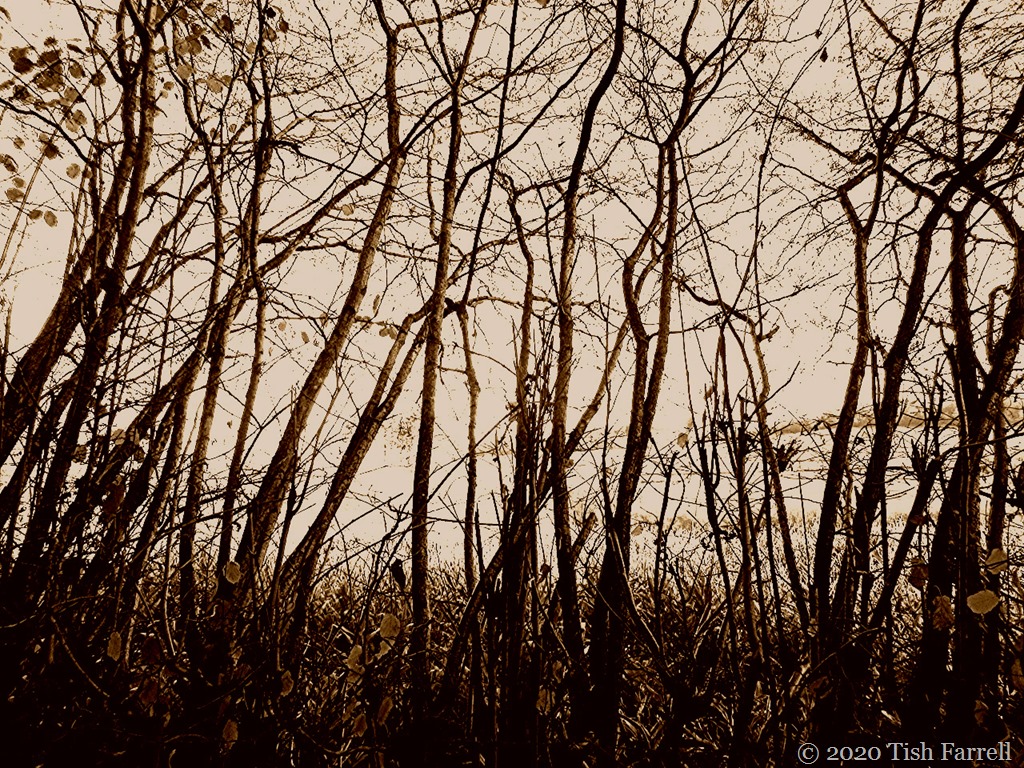
I took these photos yesterday, late afternoon, as I was going gardening. The hedge runs up beside the allotment, the south-westerly boundary to Townsend Meadow behind our house. As I reached the gap under the ash tree, the unofficial gateway to my garden plot, the sun burst through the hedge bottom. So I ditched the compost I was hauling, and fished out my camera. I was still thinking about the leaf photos in my last post, and decided monochrome could work here too, this time catching the plant-life silhouetted in the lowering sun. I added the sepia glow in the edit. In the northern hemisphere, sunshine in November always seems a specially precious gift, brimming with untapped possibility.

IMG_0635 sepia

Lens-Artists: the sun will come out tomorrow  Anvica’s Gallery has set the spirit-lifting theme this week. Go visit!