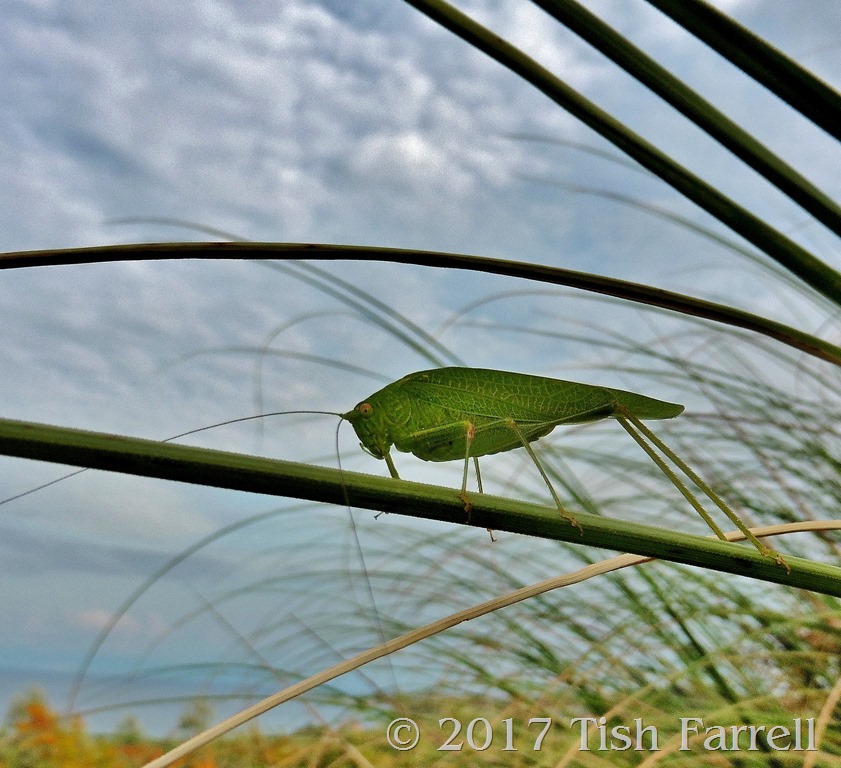
Six Word Saturday Pop over to Debbie’s for more six-word posts and an astonishing view of Alice. And just in case you wanted to know, this cricket was spotted in the garden of the Iconpainter’s Villas in Greece.

Six Word Saturday Pop over to Debbie’s for more six-word posts and an astonishing view of Alice. And just in case you wanted to know, this cricket was spotted in the garden of the Iconpainter’s Villas in Greece.

copyright 2017 Tish Farrell
Six Word Saturday ~ Please visit Debbie at Travel With Intent for more six-worder photo posts.
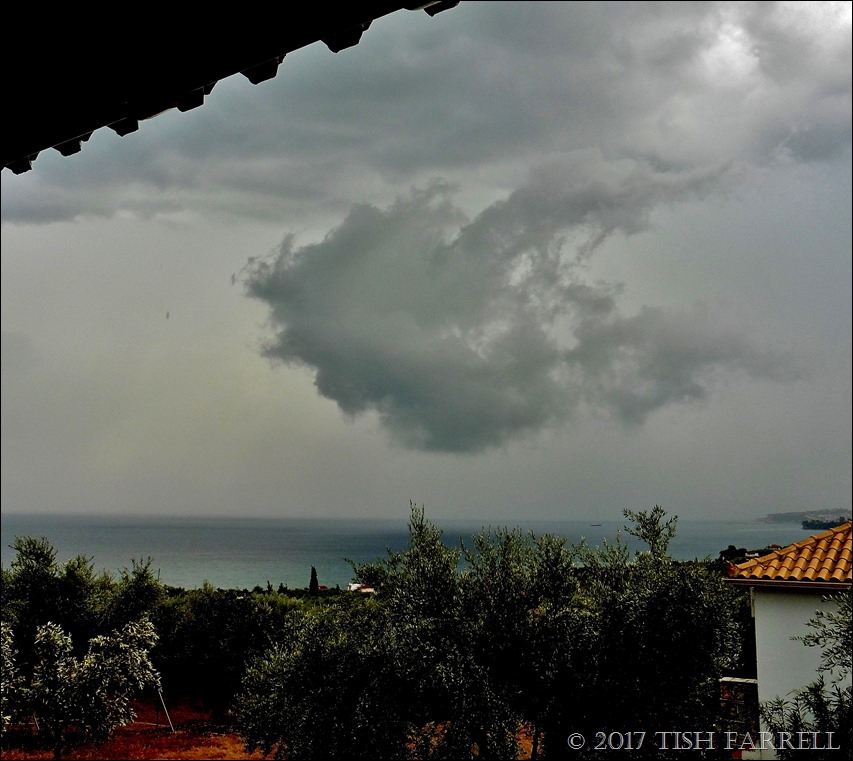

We’d tried to overlook the fact that rain and storm had been forecast during our seven-day trip to the Peloponnese. But here it came, quite dissolving the Mani peninsula, stilling the waters of the Gulf, giving them an ominously bruised look.
But then the drama of light and mood more than made up for the downpour, and once we had learned that the rain was responsible for boosting the oil content of the olives, and that the locals were pinning their hopes on a good harvest come November, it seemed churlish to feel resentful. Besides, Kalamata olive oil is some of the best there is. More power to its production and all who grow it is all I can say.

P.S. I was sure I had posted this on Monday for Ailsa’s Travel Theme: Storm thus preceding Peroulia Dreaming #9 with the brolly.
But this morning I found I hadn’t. So here it is (with apologies for a few extra words) for Debbie’s Six Word Saturday
N.B. There will be a brief break in transmission at Writer On The Edge, so I won’t be talking to you for a while. Will be back soon though.
Six Word Saturday In the meantime, please visit Debbie. She has a cracker of a photo for today’s 6WS.
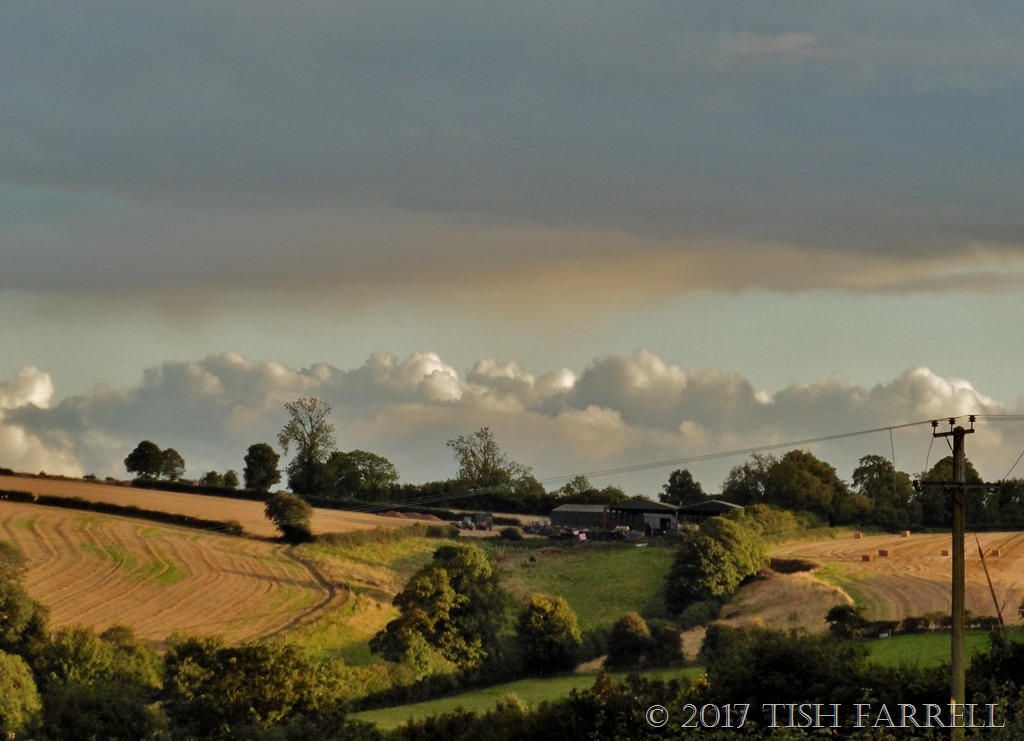
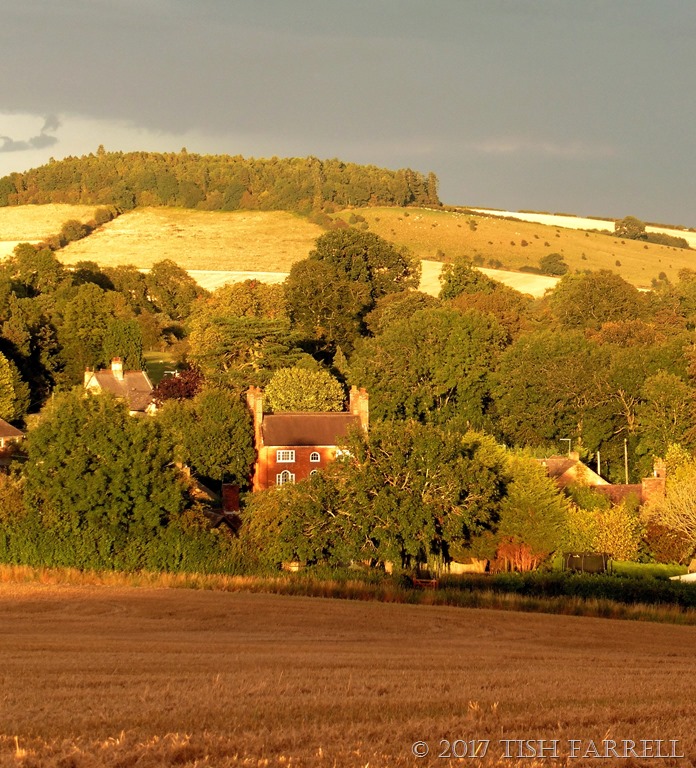
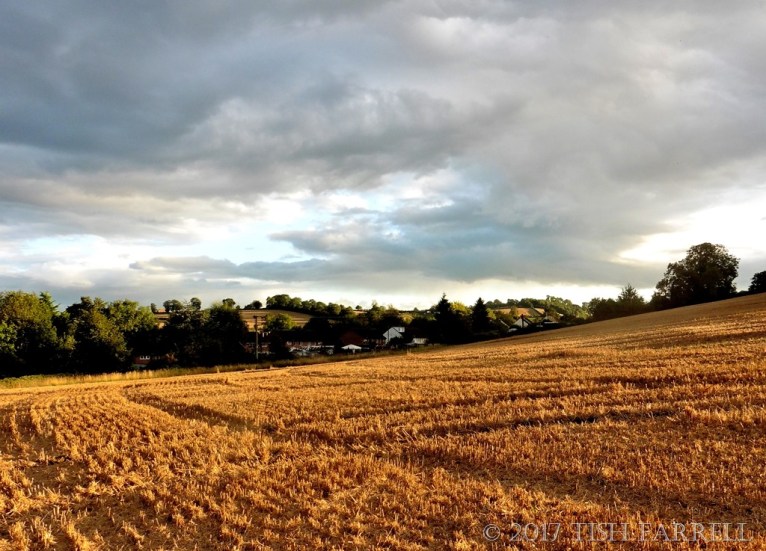
It’s the brief window of opportunity that comes when the wheat has been cut, and we Wenlockians can go in for a bit of unbridled scampering in the fields. Well, if not scampering exactly, at least walking up the hill behind the house for some fresh vistas of the town and its surroundings. I need to be quick. If past years are anything to go by, the ground will be harrowed and re-sown in the blink of an eye, so while I have the chance, I’m passing on some post-harvest views. I’ll also leave you with a paradox, because although we have good views around the town, within it there is an officially recognised deficiency in public open space; many of the footpaths that we use are permissive, that is to say, they are open only at the landowner’s discretion. In more ways than are often realised, feudal England, with its roots in patterns of Saxon landownership, still remains.

Here you can see three of the town’s medieval relics, from middle left to right: the priory ruins, the priory gate tower, and the parish church that was once part of the priory. The town grew up around the priory, its residents subject to its rule, both in terms of paying tithes and providing labour. The monastic domain was considerable, based on the possessions of the 7th century Saxon Abbess Milburga. Her lands extended several miles – beyond the River Severn and the Ironbridge Gorge and into Madeley in Telford in one direction, and to Broseley, near Bridgnorth in the other. She was also the daughter of a Mercian king, and the setting up of religious houses ruled by princesses appears to have been a common and cunning Saxon strategy for maintaining control over the territory claimed by their regional kingdoms. After the dissolution of the monasteries in 1542, the monastic estate was sold off to members of Henry VIII’s court and merchant opportunists. Today, most of the land around the town is still in the possession of two large landowners. We are however fortunate that a good stretch of Wenlock Edge is owned by the National Trust which provides everyone with free access to a very special place.


The Red House, and a ghostly farm labourer off for an evening pint at the George and Dragon Inn?
*
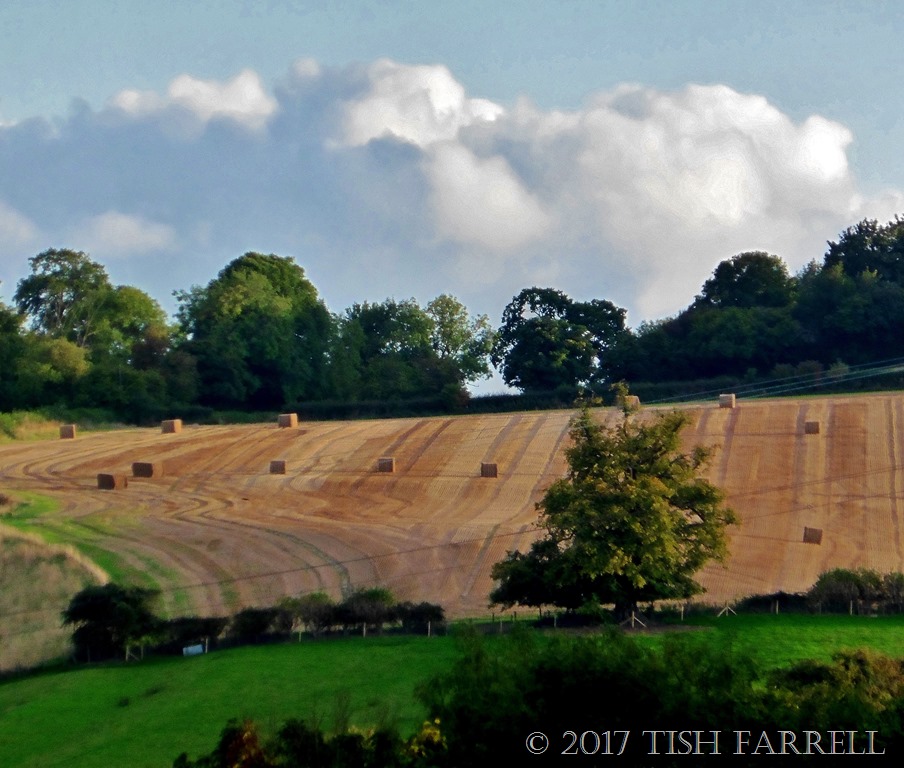
I’m old enough to remember the days when the post-harvest straw was stacked in teepee-like stooks, and the wheat grains had to be detached from their ears in a hulk-like threshing machine. The farmer whose house we rented when we lived in Cheshire, would have the itinerant threshing man park his contraption the other side of our garden wall. I remember a sense of menace when I looked out of the bedroom window and find it had arrived. Once in action, it would throb hideously all day, spewing out great storms of petrol fumes and wheat dust.
*
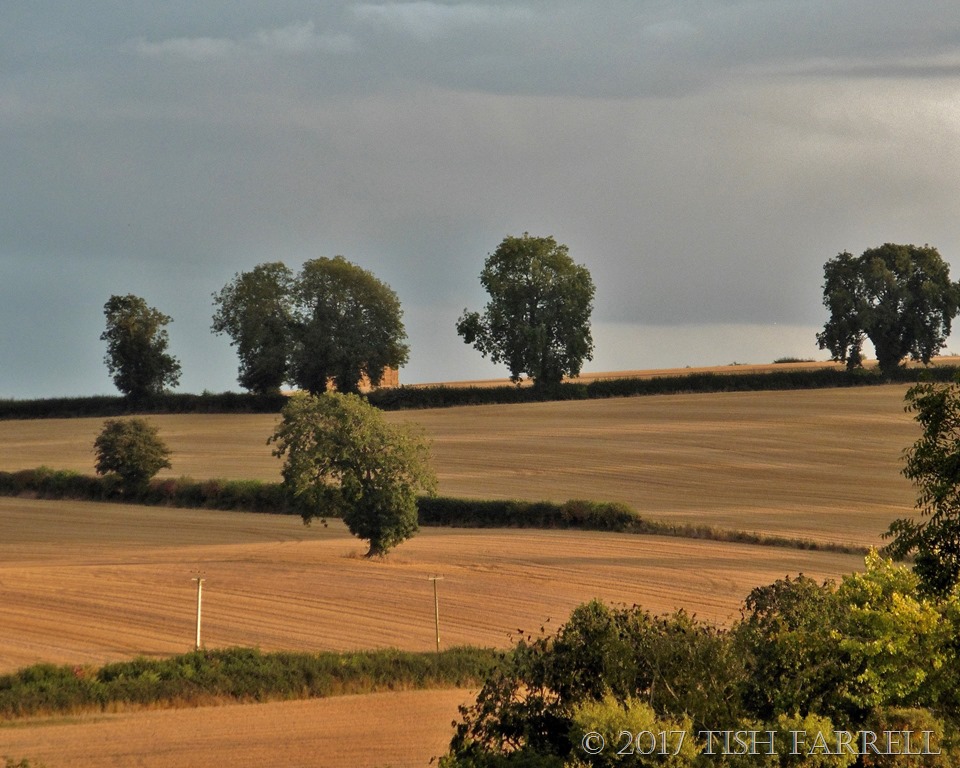

Didn’t Rumpelstiltskin spin this stuff into gold?
*
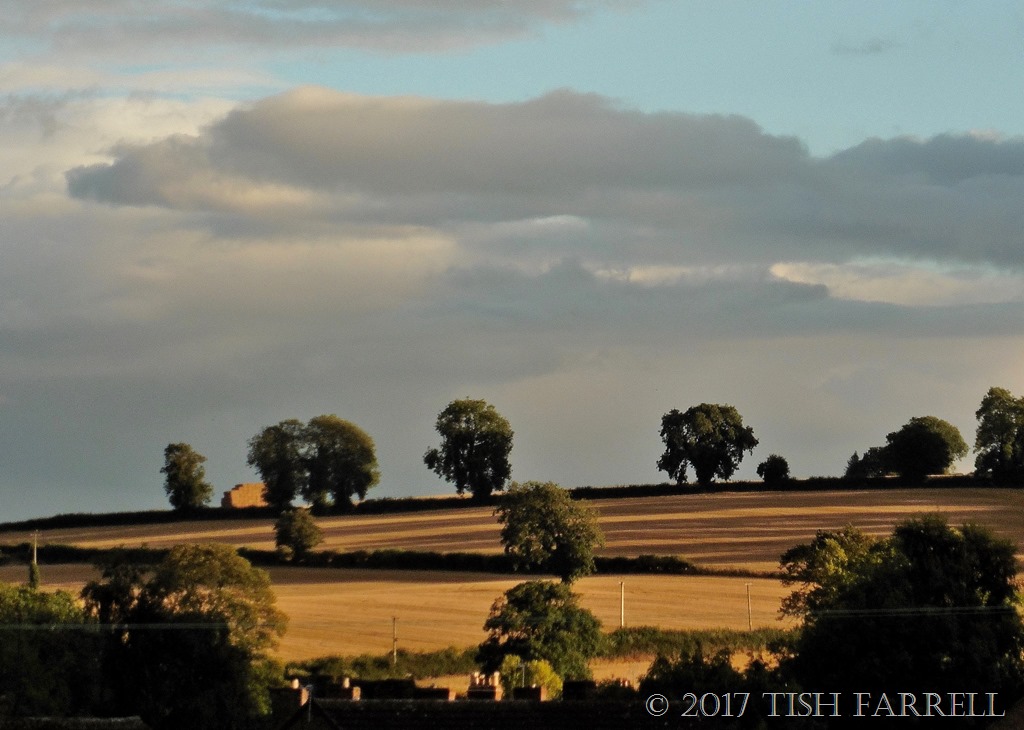
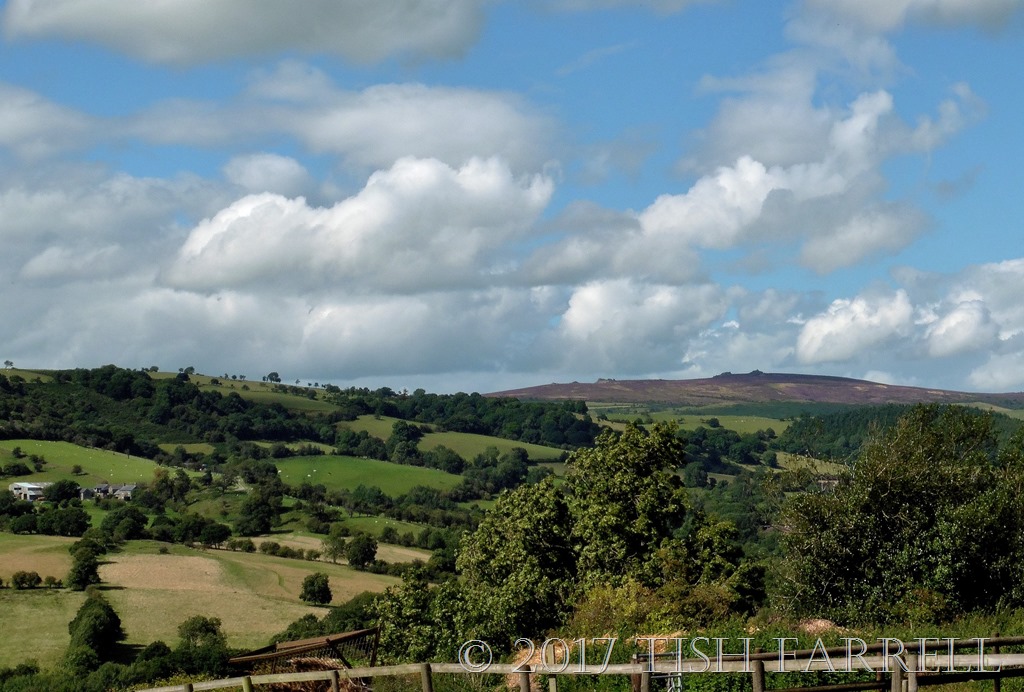
Anyone who saw July’s To The Mysterious Stiperstones post might just recognise those distant heather-covered hills. Last month they were captured under looming skies, but this was how they looked yesterday when we went to Wentnor.
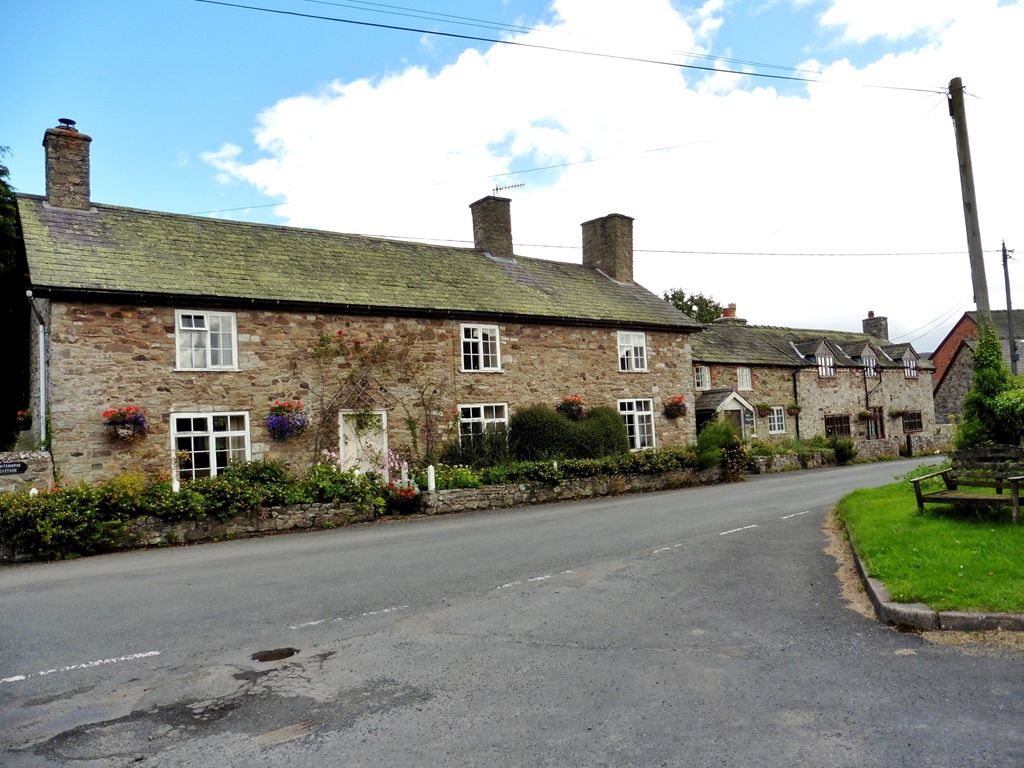
This off-the-beaten-track South Shropshire village must have some of the best views in the county – the Stiperstones to the west, and the Long Mynd to the east, and nothing but rolling farmland in between. The nearest towns are Church Stretton and Bishops Castle (6 and 5 miles respectively) but take note: Wentnor miles are at least twice as long as other people’s miles. It is a world all its own.

*
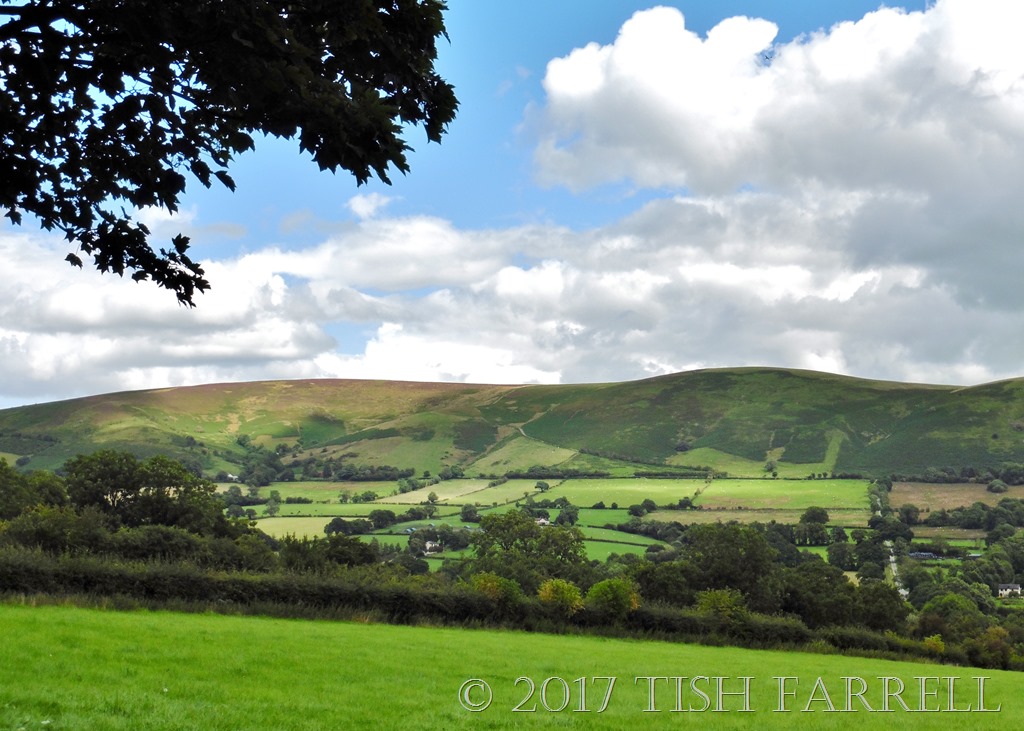
Coming up next is a glimpse of the Long Mynd looking east from the village. The name, unsurprisingly, means long mountain. It does not allow itself to be photographed in one shot.
And here’s the northerly end, taken from the car park of the village pub:
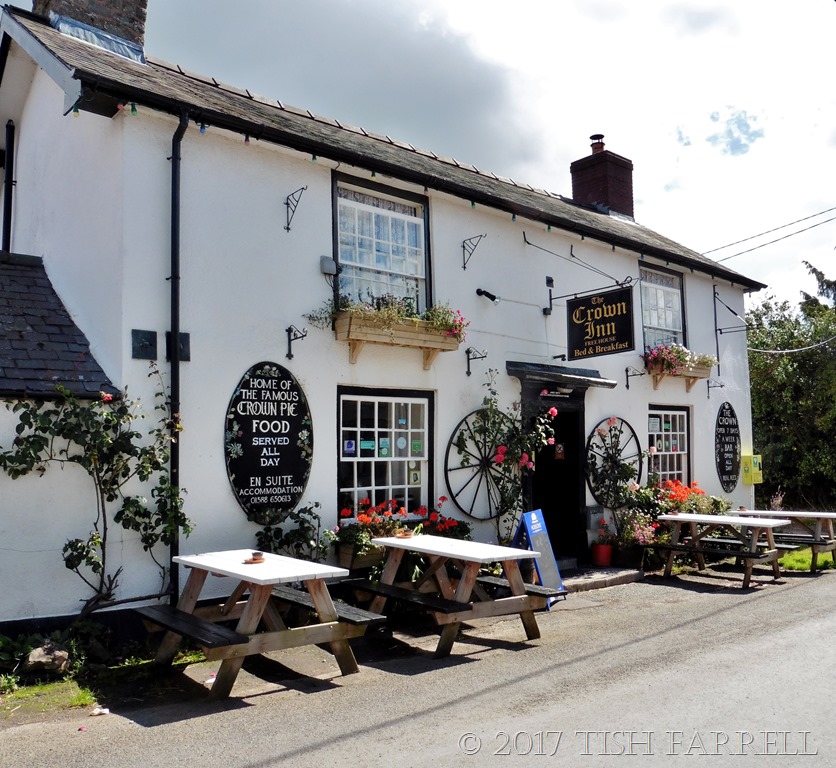
Talking of which, this was the objective for the outing – lunch at The Crown at Wentnor along with our best Buffalo chums, Jack and Kathy. The last time we four had been there, Graham and I were still living in Kenya, and only briefly in the UK on annual leave. We decided it had to be a good twenty years ago. How time flies.
After lunch we wandered about the village, and paid a visit to the parish church of St. Michael. None of us are subscribers, but when out together we often seem to find ourselves in country churchyards. Besides, Wentnor church is welcoming, and vistas within and without most picturesque. In fact I was so taken with the charm of the kneelers along the pews, I thought I might even like to join the people who had made them in a spot of hymn-singing – All things bright and beautiful of course; nothing like some tuneful gratitude as harvest festival time approaches.

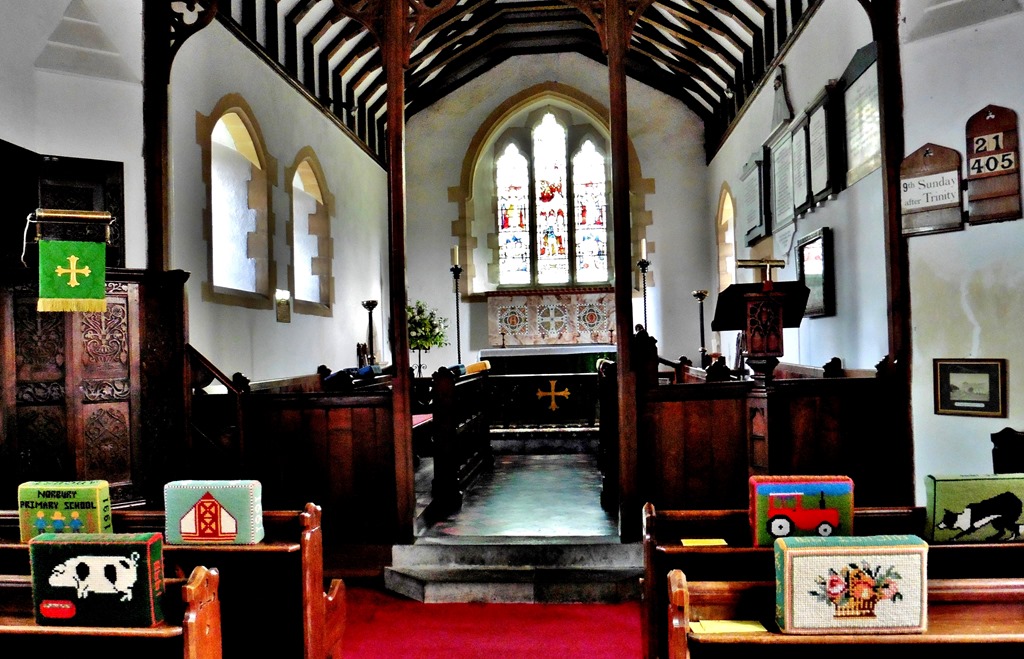


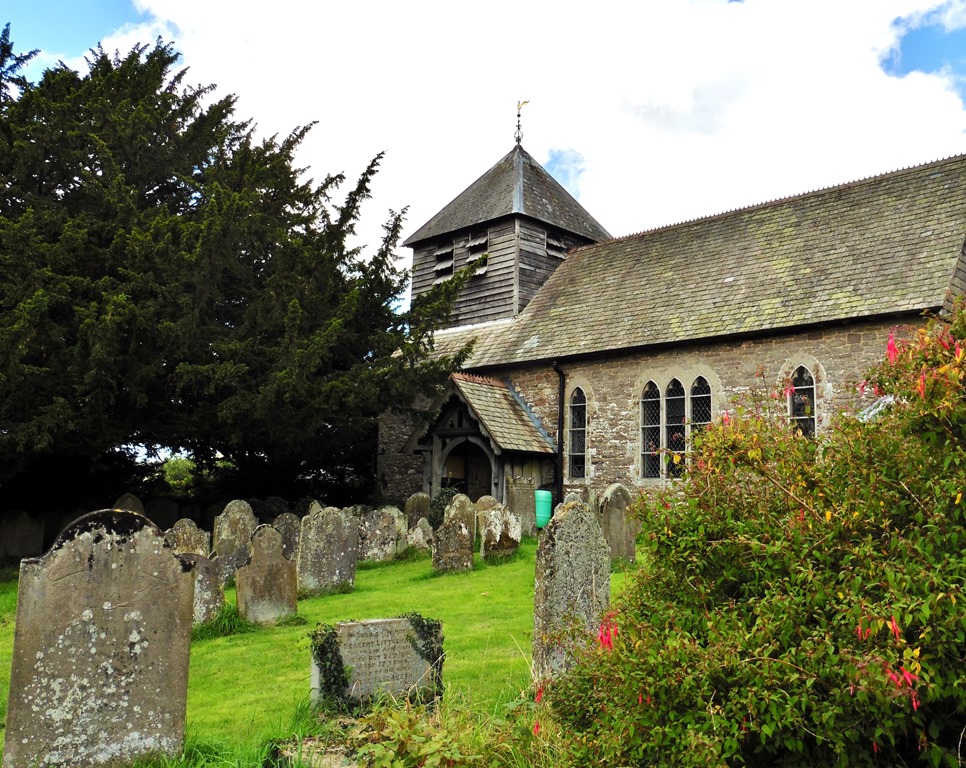
The church was rebuilt in the 19th century, although parts date from the 12th century. I was particularly struck by the craftsmanship of the ceiling, and have never seen anything quite like it before. It made me think of the ornate wooden Viking churches of Norway.
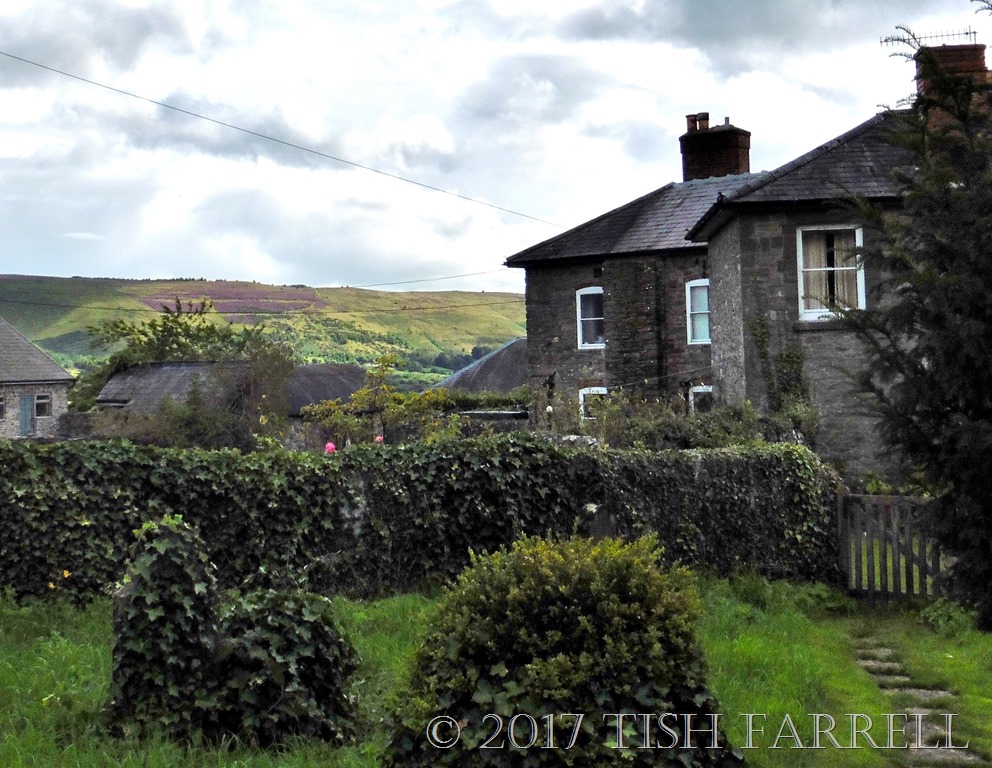
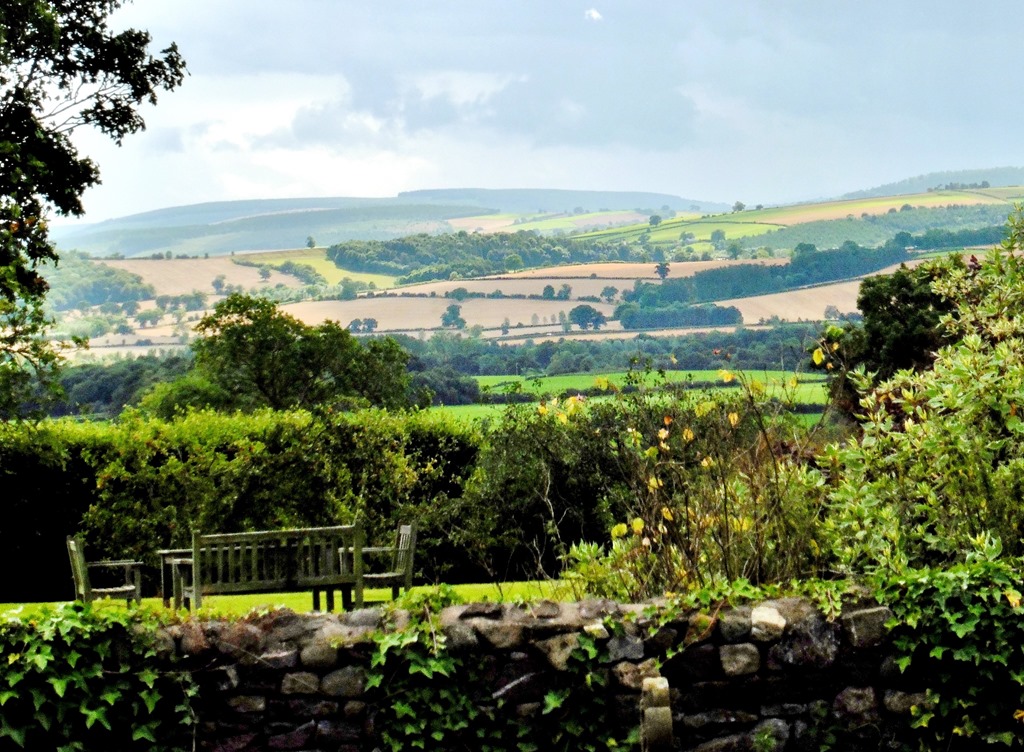
Out in the churchyard with its ancient spreading yew, there were views of the Long Mynd and the hills towards Clun and Radnorshire:

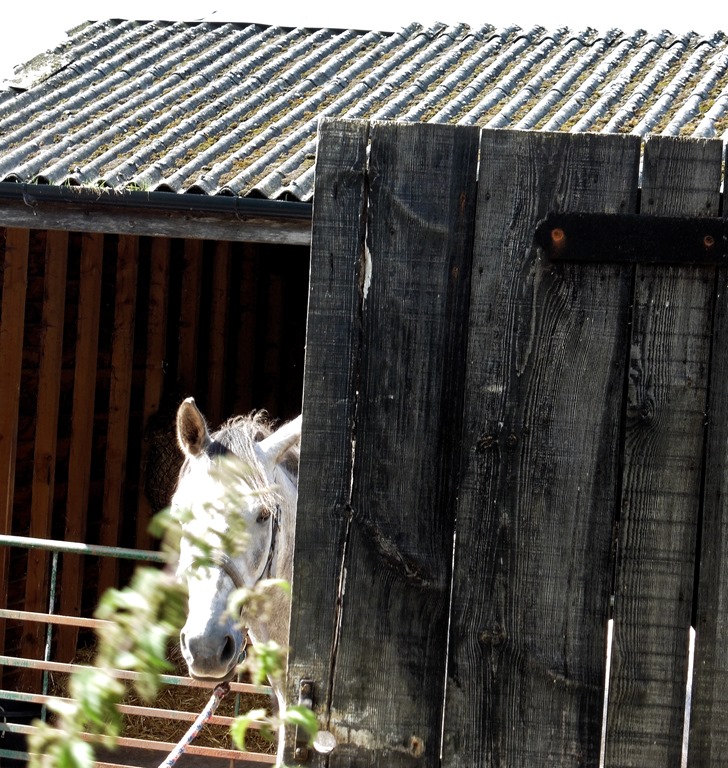
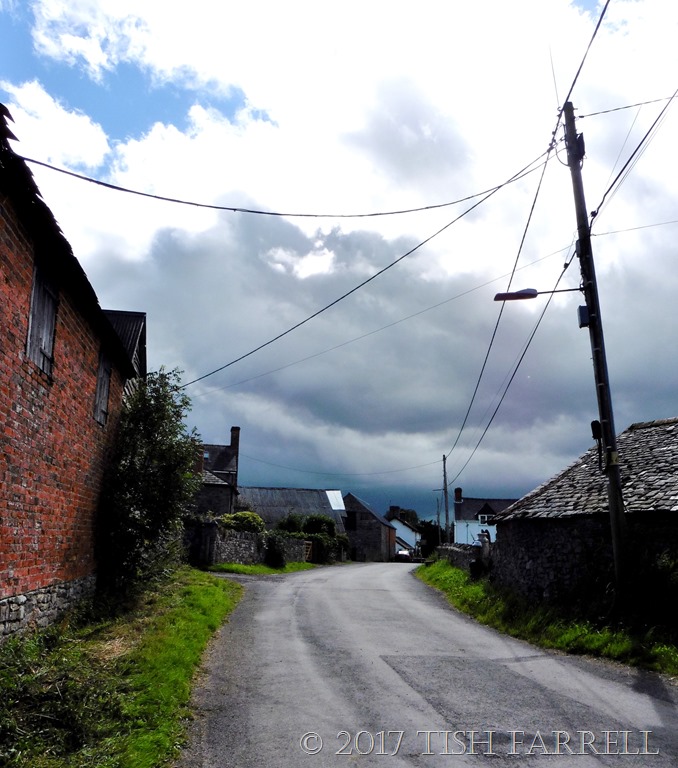
And it was all so very quiet with few signs of the locals as we wandered up and down the lane; only a couple of horses waiting for new shoes from the travelling blacksmith, the village noticeboard, old barns and cottages. And then the skies turned threatening and it was time to leave, back to the real world beyond the Mynd.


N.B. The title quote is from A E Housman’s A Shropshire Lad no. XL
Into my heart an air that kills
From yon far country blows:
What are those blue remembered hills,
What spires, what farms are those?
That is the land of lost content,
I see it shining plain,
The happy highways where I went
And cannot come again.
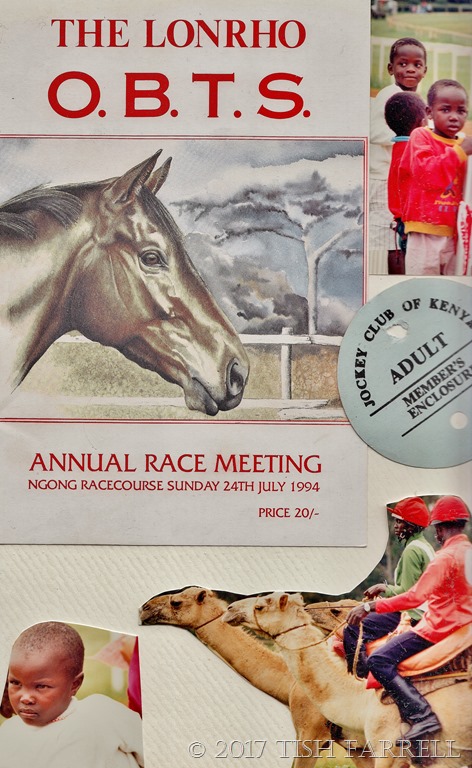
After I had posted the Kenya diary excerpt yesterday (see previous post), I found I could do passable scans from one of our old albums. So here are the photos of ‘A Day At The Nairobi Races’ – two 6WordSaturday titles for one then.

Members of the Police Anti-Stock Theft Unit from Kenya’s Northern District – completing the race that never was.
*
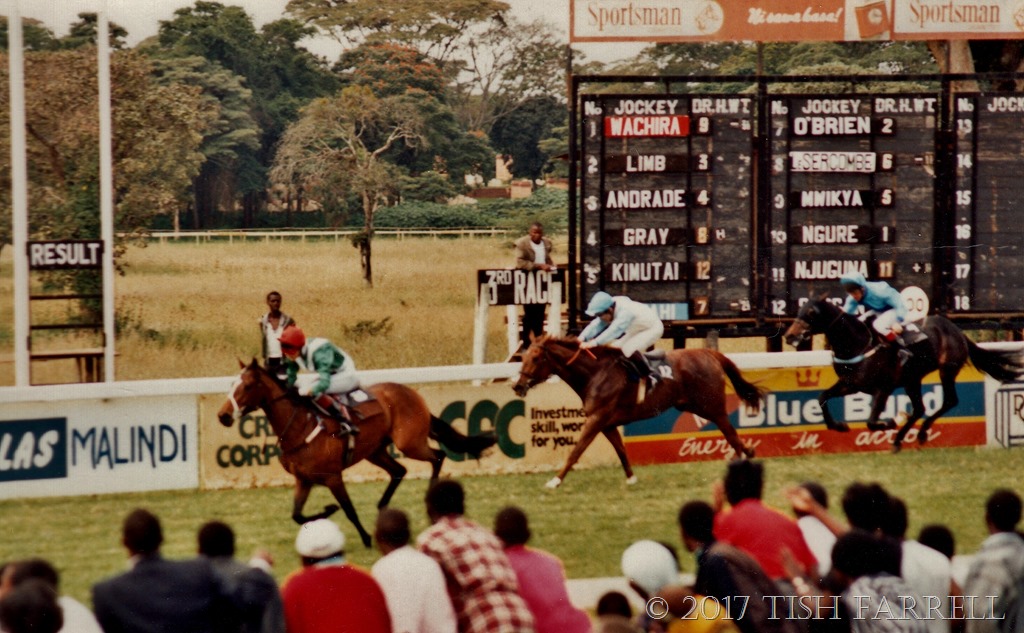
The real racing begins which reminds of an even more historical account of the Nairobi races.
In 1931 Evelyn Waugh arrived in Kenya during Race Week which was by then a colonial institution. I gather it took place between Christmas and New Year when the smart-set settlers left their upcountry farms and headed for town. Every night was party night at the Muthaiga Club. Here are some excerpts from Waugh’s day out at the races from Remote People:
I found myself involved in a luncheon party. We went on together to the Races. Someone gave me a cardboard disc to wear in my button-hole; someone else, called Raymond, introduced me to a bookie and told me which horses to back. None of them won…
Someone took me to a marquee where we drank champagne. When I wanted to pay for a round the barman gave me a little piece of paper to sign and a cigar.
We went back to Muthaiga and drank champagne out of a silver cup which someone had won.
Someone said, ‘You mustn’t think Kenya is always like this.’
And some sixty years on to 1994 when these photos were taken…
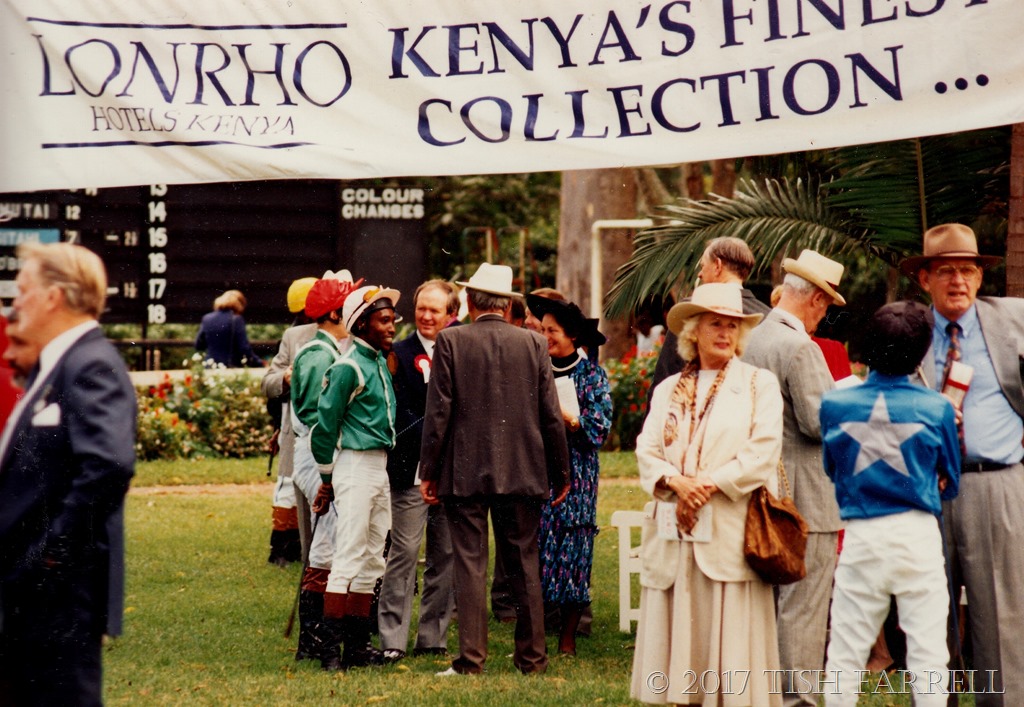

The Steward’s Enclosure. The colours of the day were red and white, and the lady in the red and white hat won ‘best outfit’.

The Chief Steward
*
*
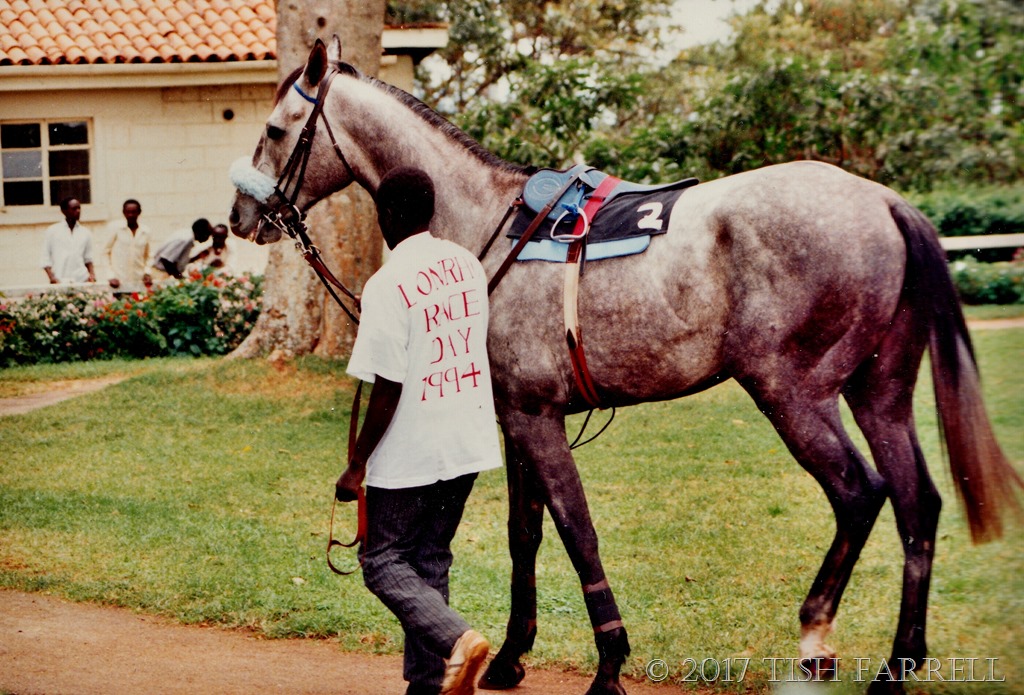
But when it comes to the old colonial residue, one key thing has obviously changed. In 1963 Kenya won independence from Britain. But here’s the catch. As colonial private interest dwindled, so came the invasion of the multi-nationals. The American corporation Del Monte was one of the first. They took over Kenya Canners and the Thika pineapple plant. Another big investor was the Anglo-African giant Lonrho, here sponsoring the races. This entity started out in 1909 as the London and Rhodesian Mining Company. During the ‘60s Lonrho bought up British firms throughout Kenya including the Standard newspaper, farms, distributors, wattle estates, and a large vehicle importer*. During the ‘90s Lonrho also owned some of the country’s most prestigious tourist hotels including The Ark, the Norfolk Hotel and the Mount Kenya Safari Club. There’s a postscript to this later.
Now back to the album:
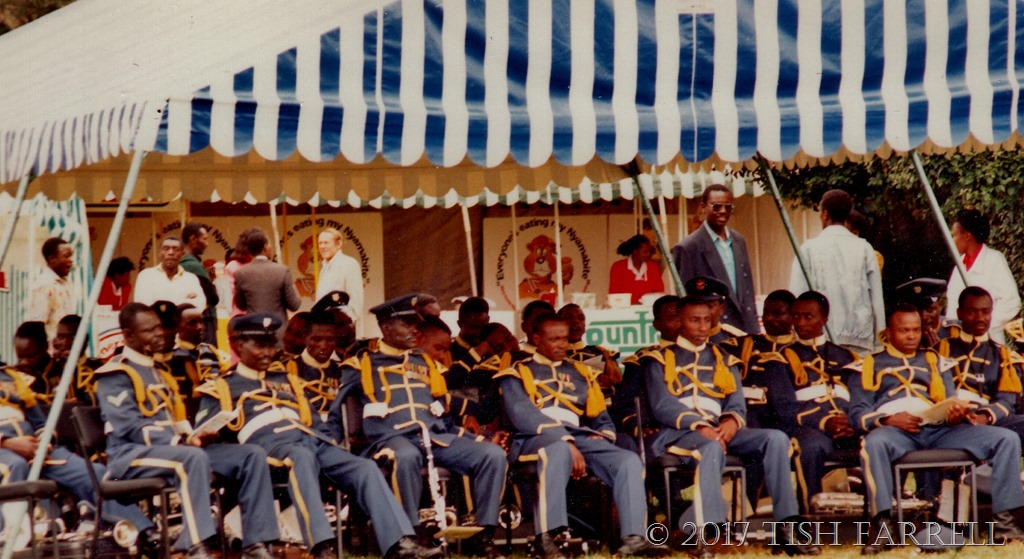
The Kenya Air Force Band waiting for their next stint between the races
*
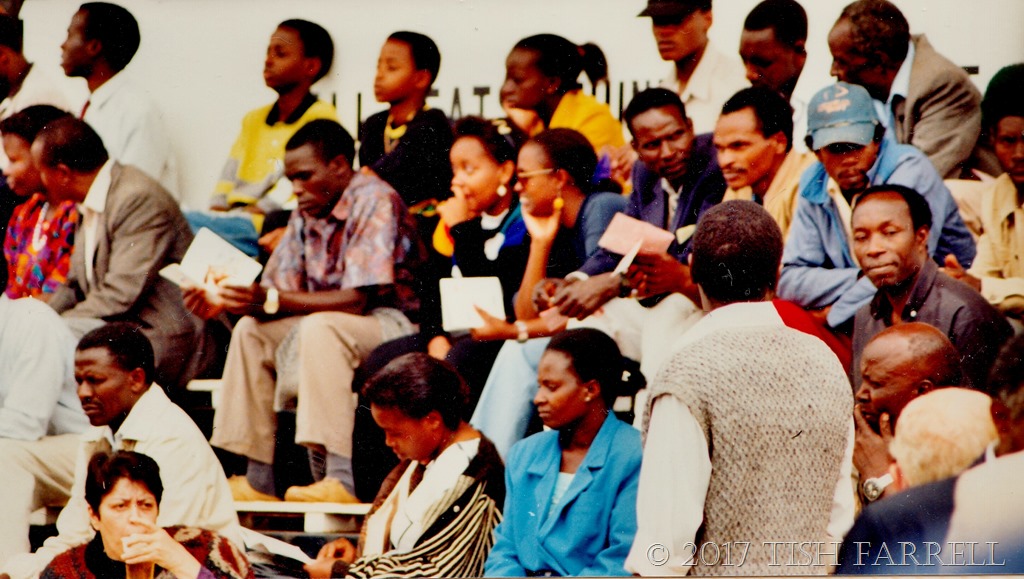
The main grandstand
*
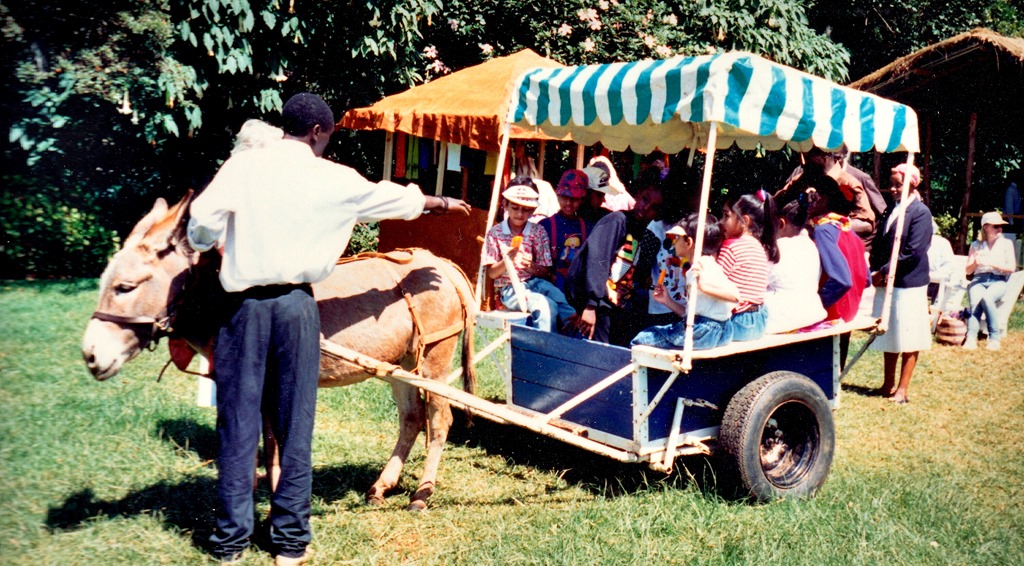
And for the children – donkey cart rides, face painting and Mr. Magic

Postscript: from the Standard newspaper 15 May 2005
John Kamau reports:
Nairobi — The once politically-connected Lonrho Plc has finally called it a day in Kenya after selling its last five prime properties to Saudi-billionaire, Prince Alwaleed bin Talal.
In what may be one of the largest take-overs in Kenya in recent history, Kingdom Hotel Investments, owned by Alwaleed, on Wednesday took over the historic Norfolk Hotel, Mount Kenya Safari Club, Aberdare Country Club, The Ark and Mara Safari Club. Alwaleed also owns the famous London Savoy.
All of which prompts me to ask who actually does own Kenya these days?
copyright 2017 Tish Farrell
Six Word Saturday Please pop over to Debbie’s at Travel With Intent. She has posted some fabulous shots of the Forth Bridge – another example of how historical constructs can long endure, some far more useful than others.
*Charles Hornsby 2013 Kenya: A History Since Independence
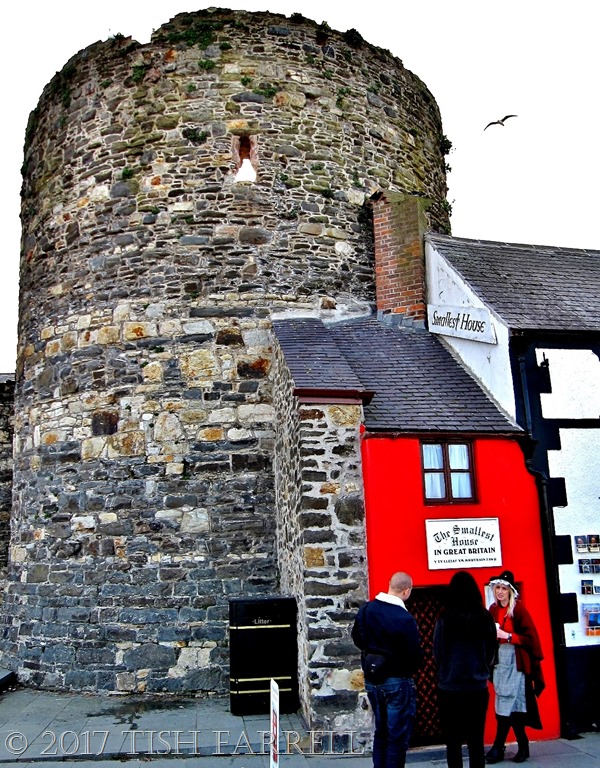
Doubtless there are poor souls, objects of London landlord avarice, who are currently forced to live in smaller premises, but for many a year Quay House in the Welsh castle town of Conwy has claimed the title of Great Britain’s smallest house.
Local tales say it was built in the 16th century, but the official heritage listing says it was built as a fisherman’s cottage around the late 18th century or early 1800s. It nestles in a crevice beside Conwy’s Castle’s outer walls (they were built 1283-89 by Edward I). One room up, one room down, the vital statistics are 3 metres ( 10 feet) high, 2.5 metres (8 feet) deep, and 1.8 metres (5 feet 9 inches) wide. The last occupant was one Robert Jones – a fisherman, and since he was 6 feet 3” tall (190 cm), he was unable to stand upright in either of his two rooms. He lived there until 1900 when the council condemned the place as unfit for habitation.
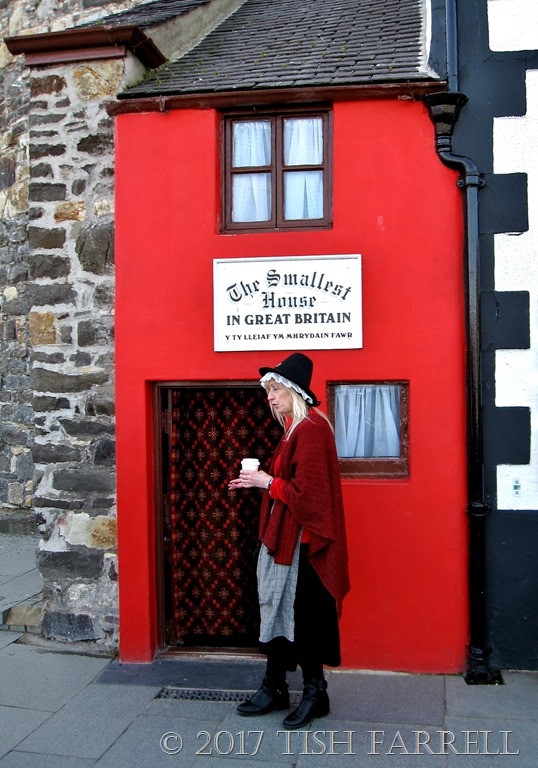
The little house, though, is still owned by Robert Jones’ descendants, the property inherited down the female line, and the present owner continuing to run it as a tourist attraction. Inside, on the ground floor there is only room for an open range and a bench with storage space along one wall. A ladder provides access to the upstairs single bed and tiny fireplace. The guide wears what passes for the traditional dress of Welsh womenfolk sans styrofoam accessory.
You can read more about the sights of Conwy and surrounding area here.
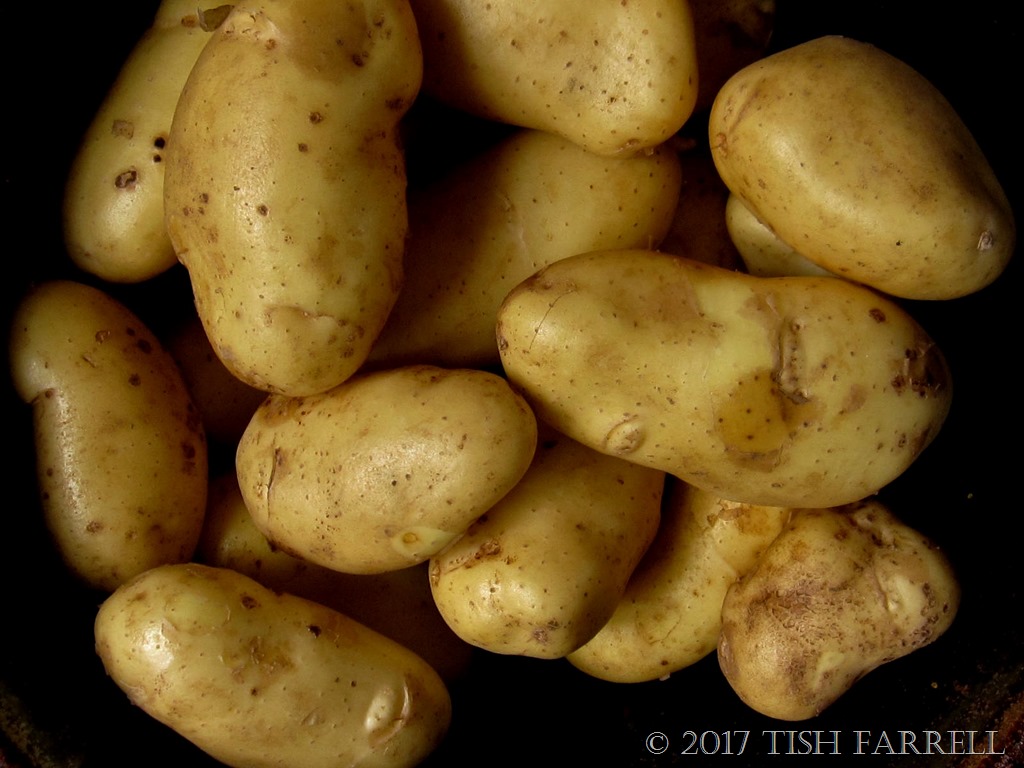
Next to my excitement in turning over a well-rotted compost heap, comes the joyous anticipation of lifting the first potatoes. Will they have grown well? Will the slugs and other pests have got in there first and had a feast? But no. Here they are – somewhat irregular in shape due to the long, long dry spell with only two or three rain showers to spur them on – lovely Belle de Fontenay.
This is an heirloom variety introduced in France in 1885. Pale yellow, firm, waxy – ideal for steaming or boiling, their flavour apparently improving with keeping , although I cannot verify that bit as we generally eat as I dig. And as well as arriving early, these pommes de terre have other obliging qualities. They don’t mind what kind of soil they are grown in, and they seem to love my allotment, which given its unyielding soil, is a huge plus.
This year I planted most of the potatoes on the ground I’d covered with several inches of partially rotted compost back in the autumn. I also sprinkled in some biochar and fish, blood and bone meal before planting in April. This was a half and half no-dig enterprise, in as much as the overwintering compost cover saved me from having to dig over the whole plot as I would have done in the past. I didn’t dig trenches either, just a row of holes, one for each potato.
The ultimate no-dig method would be to simply bury the spuds by hand in the compost layer, thereafter adding more compost to earth them up. But then that requires an awful lot of compost.
Anyway, compromise is everything when it comes to allotment gardening.
The spuds in the photo were delicious, steamed and shared last night with good friends from Buffalo, Jack and Kathy, who come each year like swallows to spend the summer in Wenlock. Also on the menu was Chicken Hymettus (recipe below), and also from the allotment, finely sliced greens (Tuscan kale, Swiss chard, beet leaves, Greyhound cabbage), Onward peas, lightly steamed, and served with a walnut and parsley pesto sauce.
Hymettus Chicken (serves 4)
chicken portions cut in half if large – I used thighs as they were
limes – juice and zest of 3 (or 2 lemons)
saffron strands – a good pinch
oil and butter for frying
honey – 2 tablespoons preferably light and runny though I used gooey dark African
thyme – 2 teaspoons fresh chopped/ 1 level teaspoon dried
mint – 2 tablespoons chopped
salt and pepper
almonds flaked – a handful
Prick skin of chicken pieces, place in shallow dish and pour over lime juice and zest. Marinate in the fridge for 1-2 days, turning meat occasionally.
When ready to cook, put saffron in a cup and add 4 tablespoons boiling water and leave for 20 mins.
Lift chicken from marinade with slotted spoon and fry in butter and oil till golden brown all over.
Strain saffron and mix liquid with honey and the remaining marinade. Pour over chicken, add thyme (I actually used Greek oregano), half the mint, and salt and pepper. Cover and simmer very gently for 45 minutes, or until the chicken is tender. Toast the almond flakes and to serve, sprinkle over the dish with the rest of the mint.
This recipe works well cooked a day in advance and then reheated.
copyright 2017 Tish Farrell
