Nor was it the kind of day when one might expect any of these things to cross one’s path. Truth was I was in a bit of a stew on Saturday morning. He who dismantles wooden builder’s pallets and shares my house was off to Shrewsbury on a half-day’s book-binding course. I thought this very excellent. It always makes a good change putting things together rather than taking other things apart (otherwise known as pallet scrattling, although I should add that some of the scrattled pallets have been recycled into various sizes of book press and spine stitching frames so, unlikely as it sounds, there is congruence between the two activities).
The reason I was in a bit of a stew was because I had decided that, since he was headed for the big bad town, albeit to the suburbs, he could drop me off somewhere near the centre for a few hours’ shopping. The source of my concern was that scrattling and binding skills do not necessarily add up to a navigational facility. I was thus at pains to devise routes that could be followed in my absence. And no, we do not have Sat Nav. And yes, I think it’s time we did.
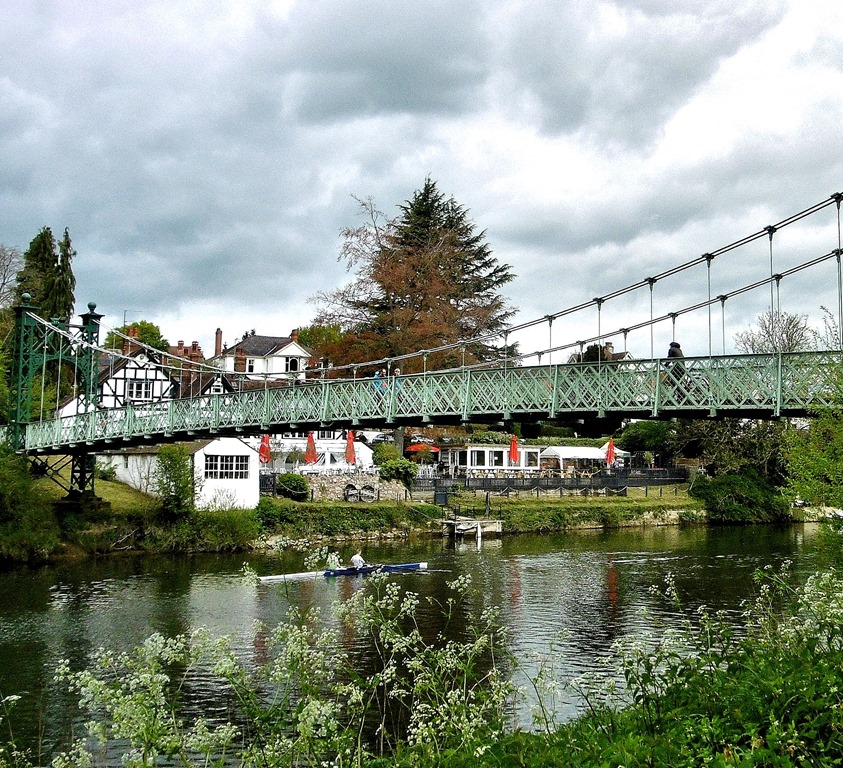
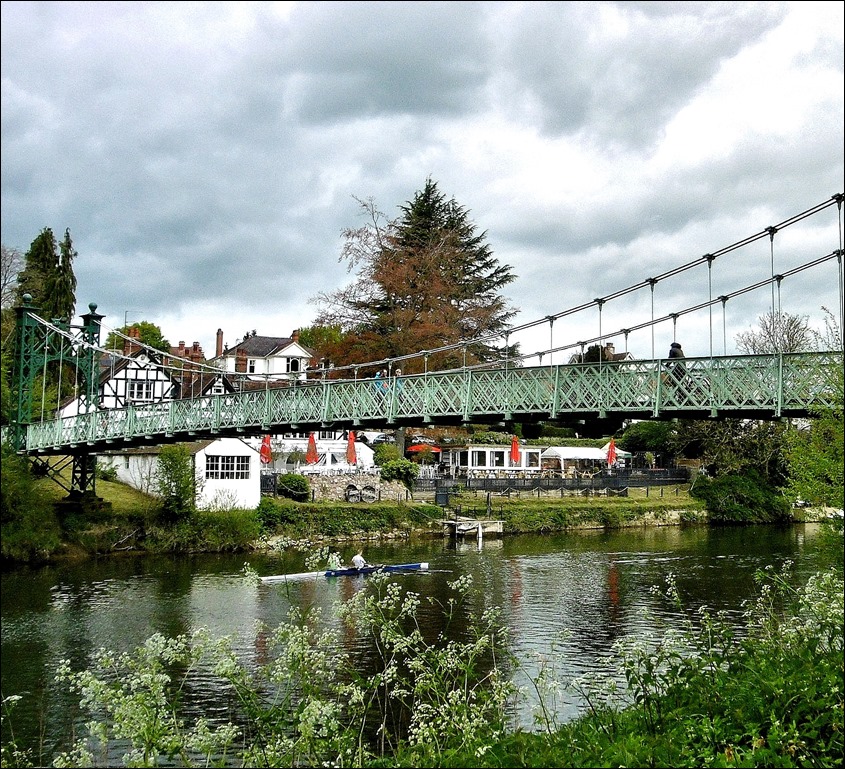
Except, if it had not been for my overanxious machinations, which made for a simple non-deviating route for him, and a long walk for me, I would not have opted to be dropped off by the Porthill Bridge, one of the town’s several Victorian suspension bridges (Shrewsbury is on a hill within a loop of the River Severn), and I would not have had all these unexpected encounters in Shrewsbury Quarry, otherwise known as the town park.
Here’s the footbridge. It’s rather fine, apart from the earth-tremor sensation when you reach the middle:
*
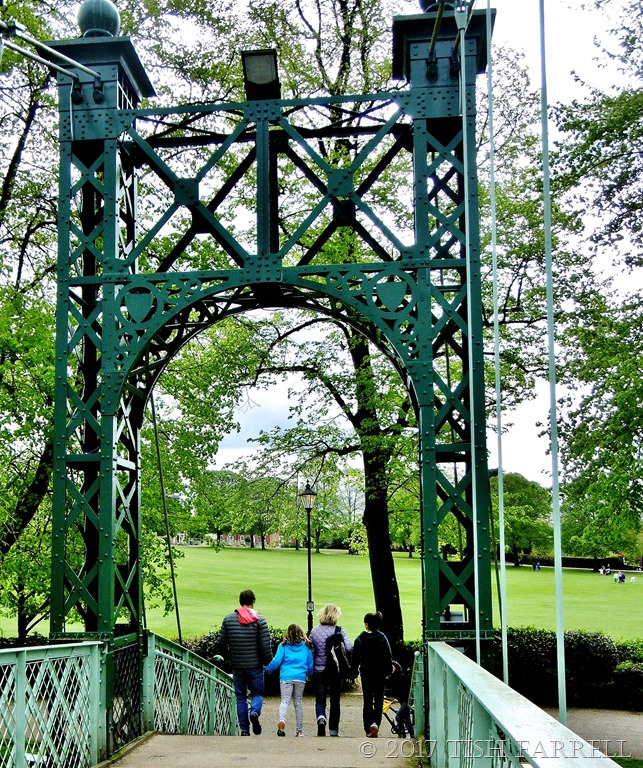
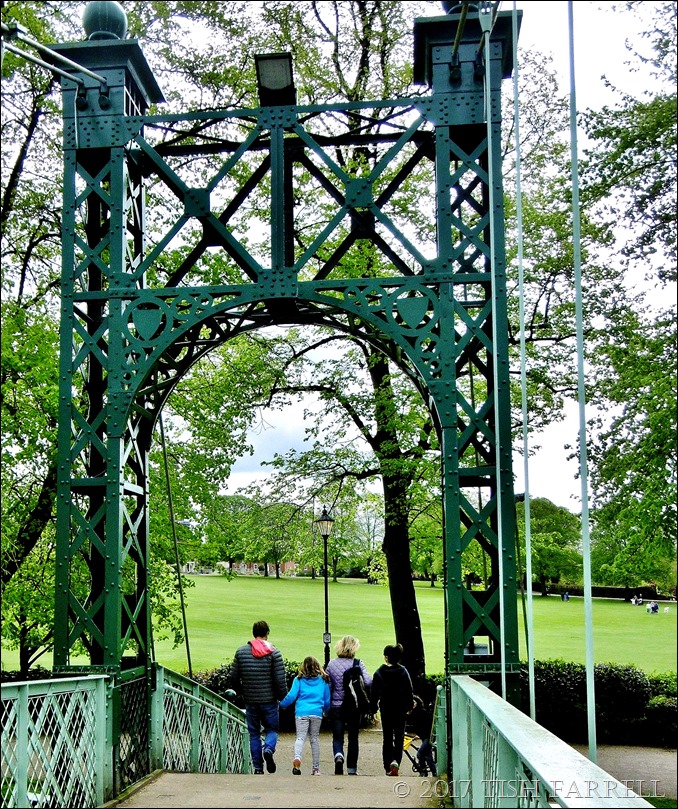
And here’s the first glimpse of The Quarry once you’ve recovered from vertigo:
*
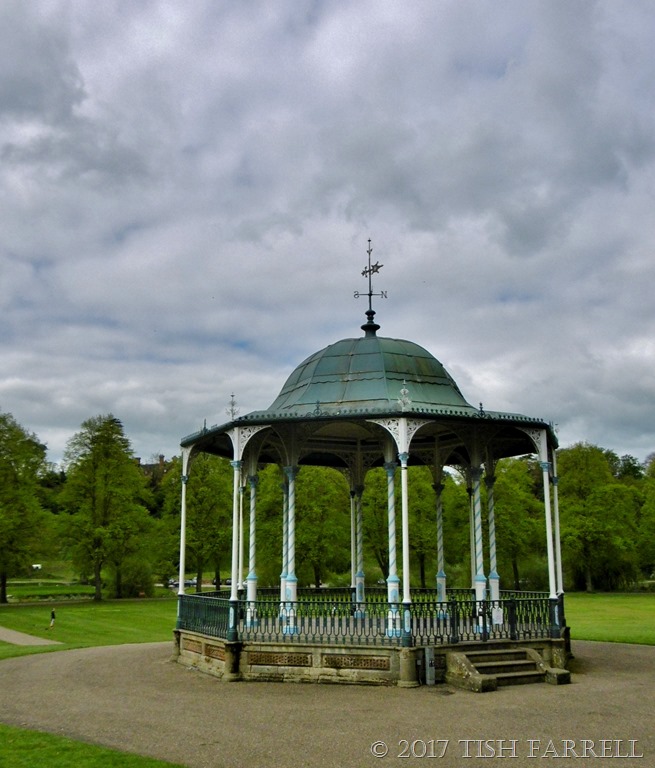
And another view looking towards the river, complete with Victorian bandstand:
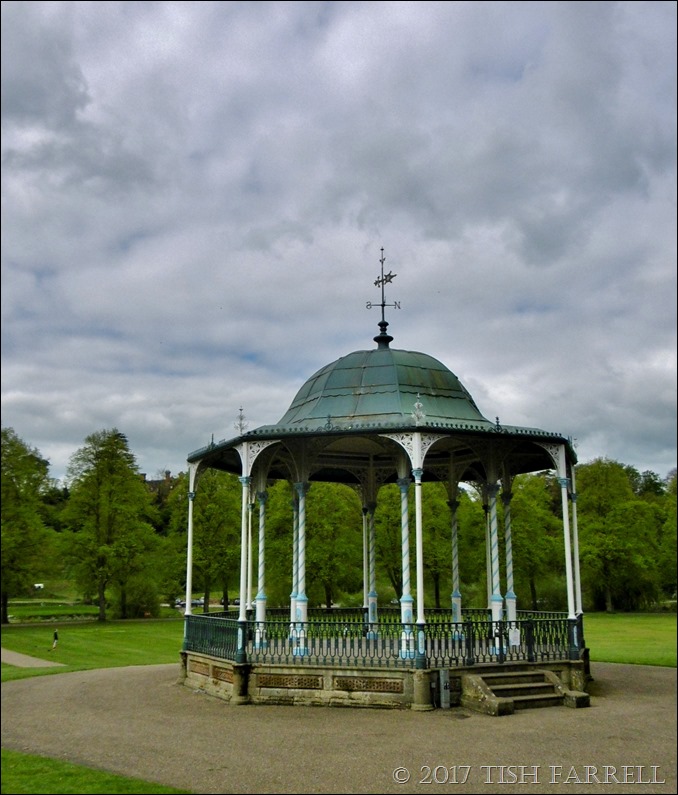
As you can see the park is mostly swathes of grass crisscrossed by pleasing avenues. The riverside walk is the nicest, and enables you to access one end of the town from the other without meeting a car, though watch out for the bicycles. For two days in August (this year the 11th and 12th), Shrewsbury Flower Show covers the whole park. In fact it is quite a legend – the world’s longest running flower show. It has its origins in the medieval guildsmen’s annual celebrations – more of which in a moment.
For now please conjure tents, pavilions and marquees, a floral riot of three million blooms, some astonishing displays of vegetables, the bandstand bursting with serial military bands, and each day topped off with a stupendous firework display.
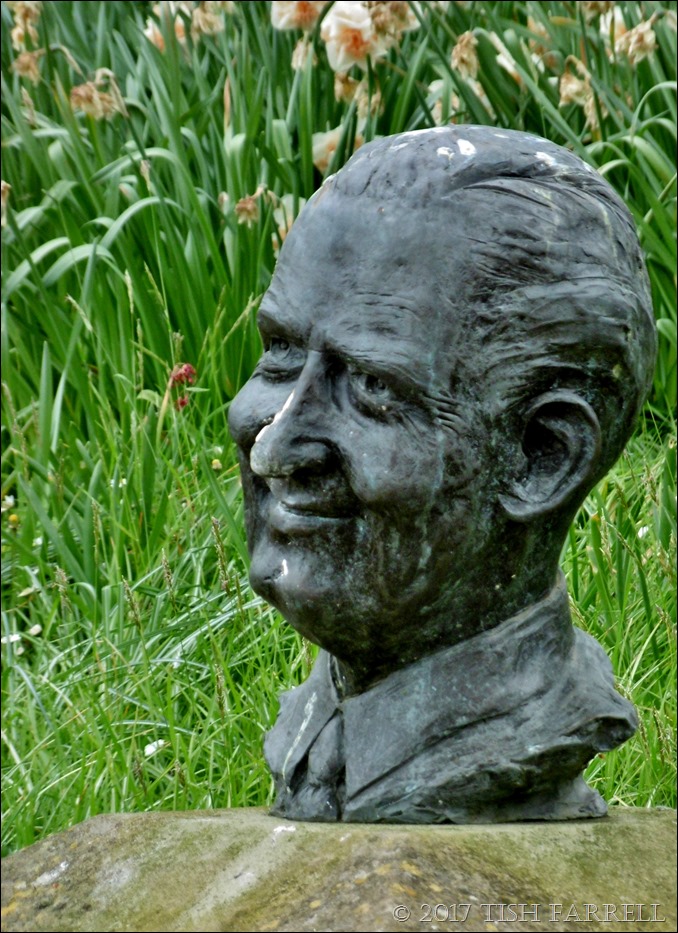
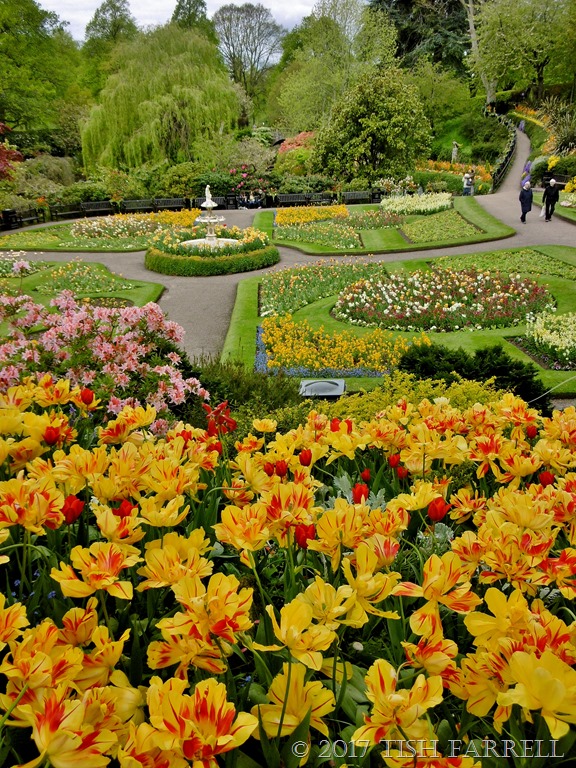
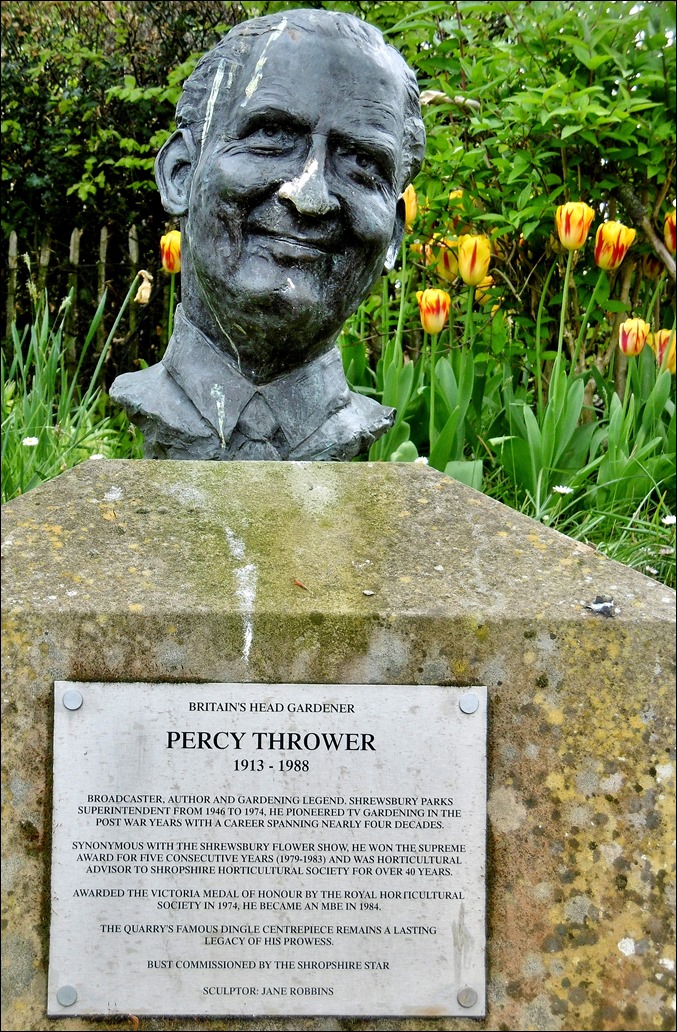
Uphill from the bandstand is one of several gateways into the Dingle as mentioned in the last post. This submerged garden with its small ornamental lake was made from an abandoned stone quarry back in Victorian times, but today’s planting very much celebrates the life and times of Percy Thrower, Britain’s first TV gardener who was Superintendent of Shrewsbury Parks 1946-1974.
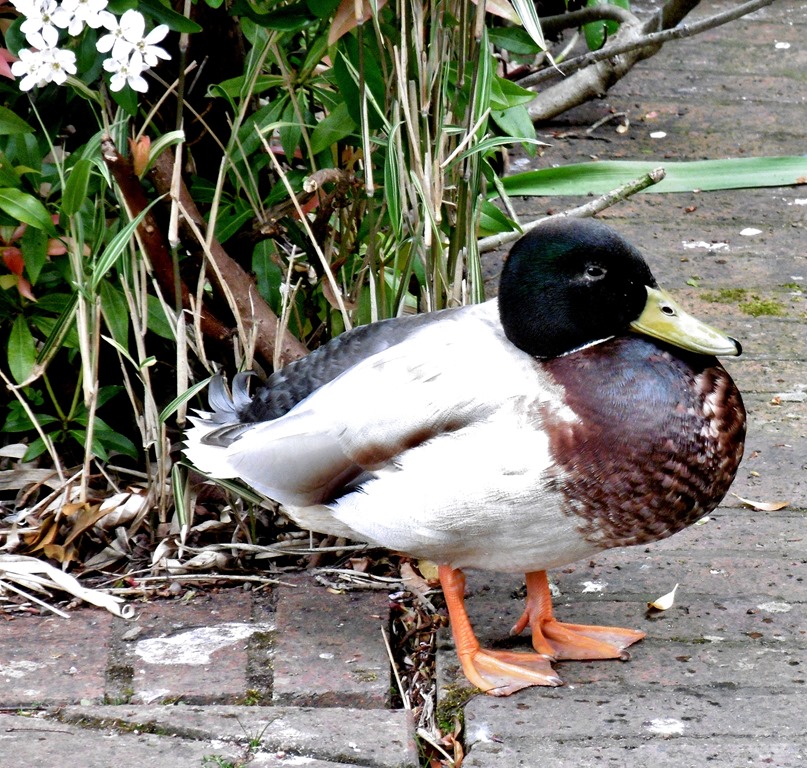
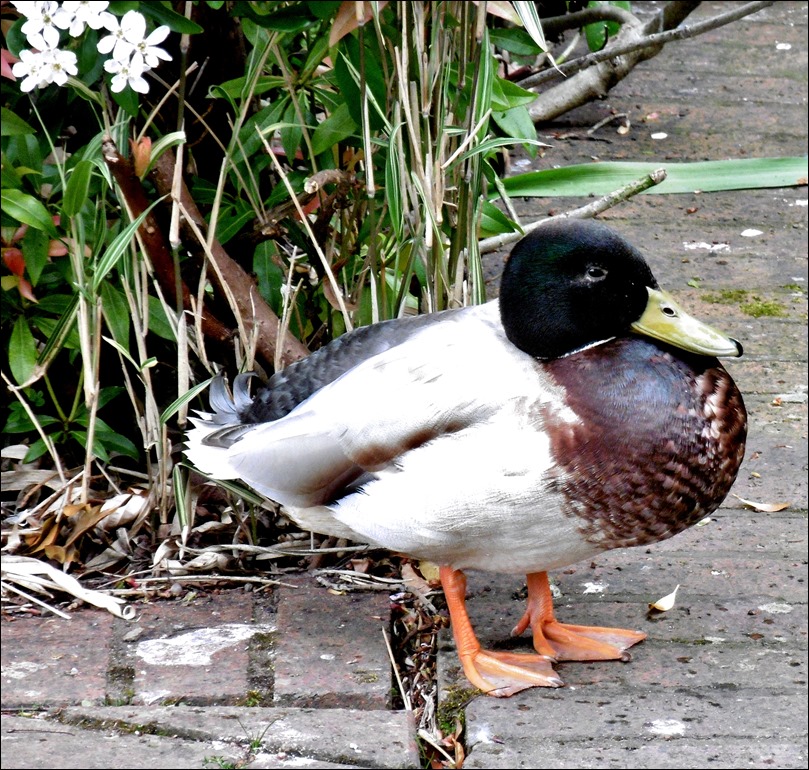
I only went in there by chance. I’d walked across the park to take a photograph of the bandstand and, by the time I’d done that, I’d rather forgotten about going shopping. Then I began to notice a gathering of chaps all clad in dark coloured anoraks. They were down by the Dingle pool and armed with photographic lenses as big as rocket launchers. There was air of enthusiast-expectation – as in train-spotters waiting for the Flying Scotsman to steam by. Twitchers, I thought: they who pursue rare breeds of birds to add to their list of rare birds already spotted. I looked from lenses to ornamental pool and back again. They clearly hadn’t lugged in all that kit to snap the Dingle ducks. They could leave that to me:
I stared at the island in the pool, the spot on which every lens was trained. All I could see was part of a white-grey undercarriage of what appeared to be a largish bird. It was standing very still, most of it hidden in a rhododendron. My first thought, bizarrely, was ‘penguin’ and for a daft few moments I wondered how a penguin could possibly have arrived in Shropshire. Climate change? Surely not.
Then I began to feel a touch offended on behalf of the putative penguin, and with all the peering that was going on. I decided I would not ask the twitchers what they were waiting to see, but do a circuit around the pool and see if whatever it was would reveal itself on my return. That seemed more fair, less paparazzi-like. And if it didn’t appear so be it. Poof. Talk about taking moral high ground.
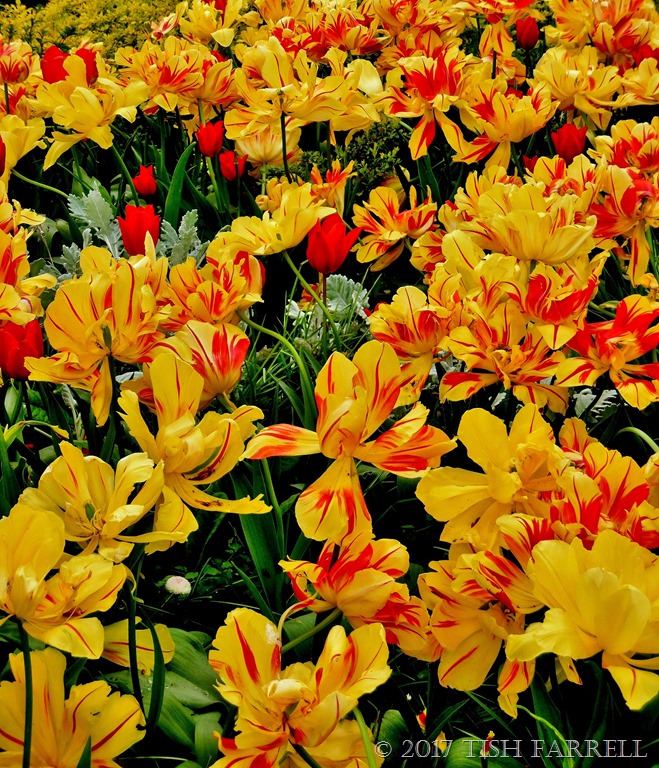
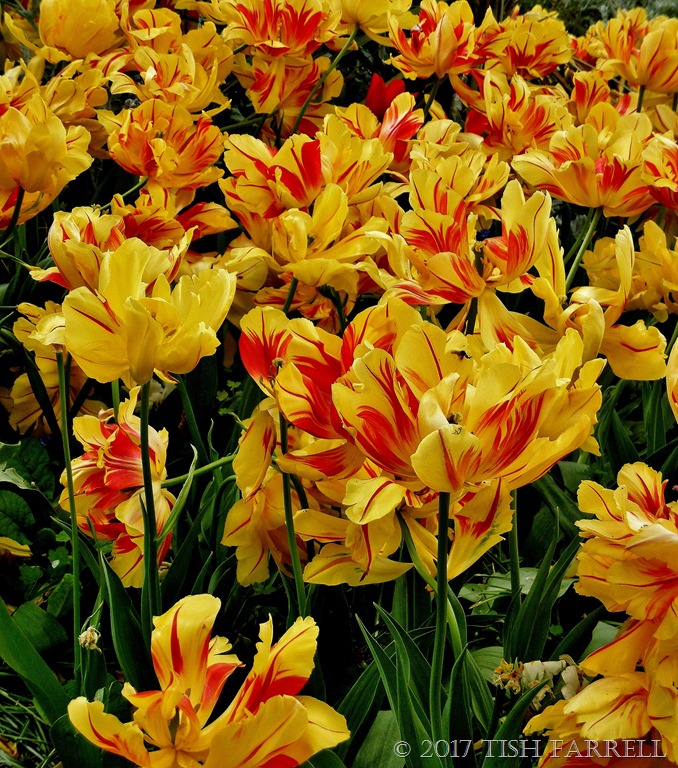
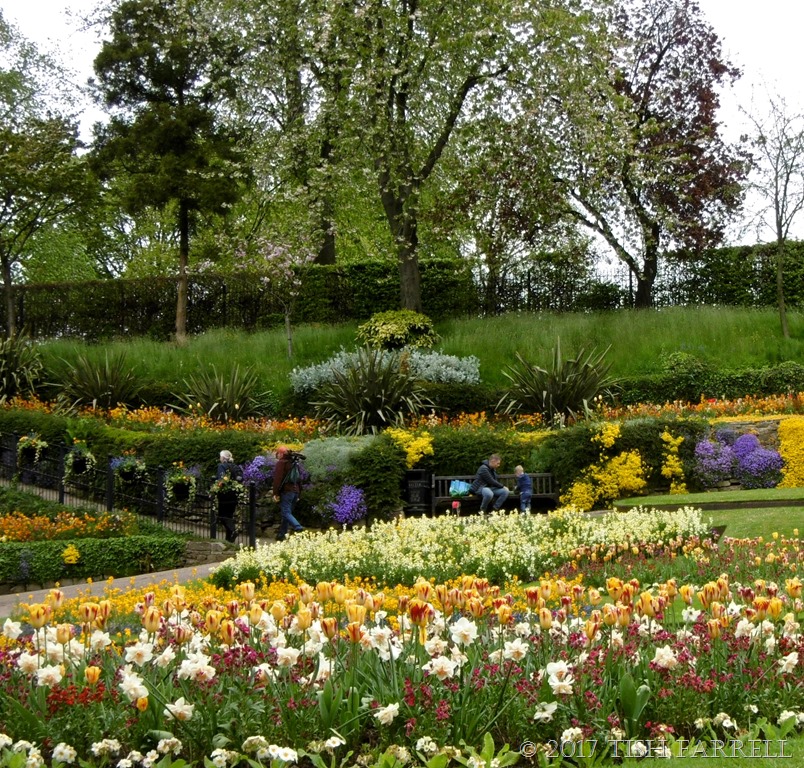
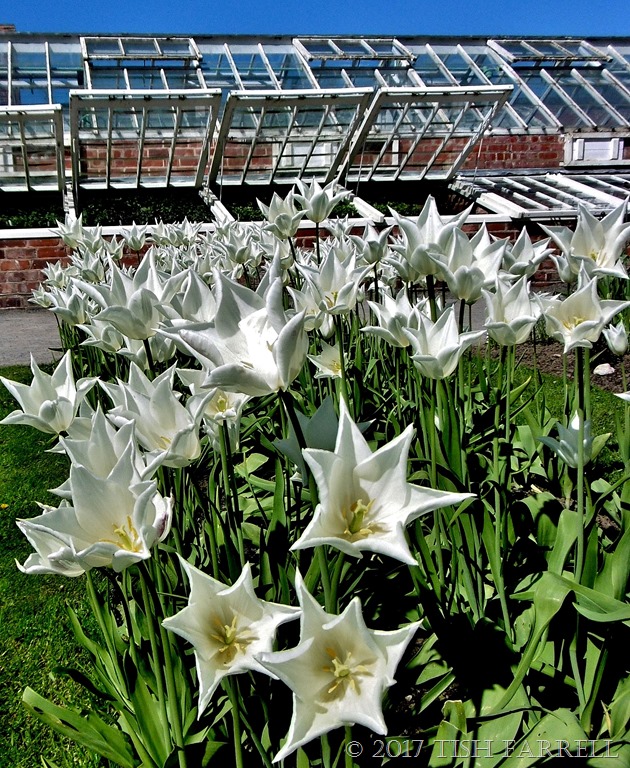
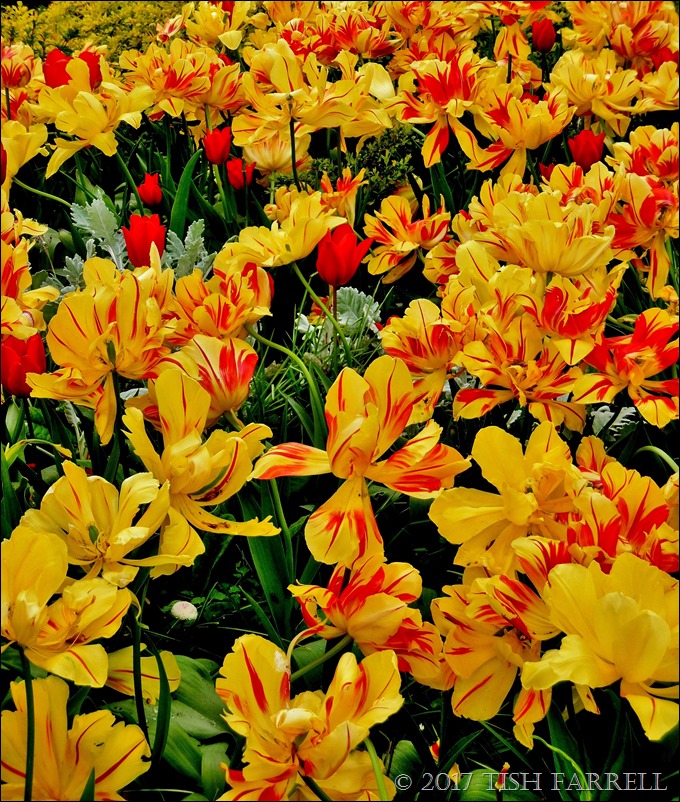
Next it was the tulips that caught my eye, as in the previous post, but you can see them again:
*
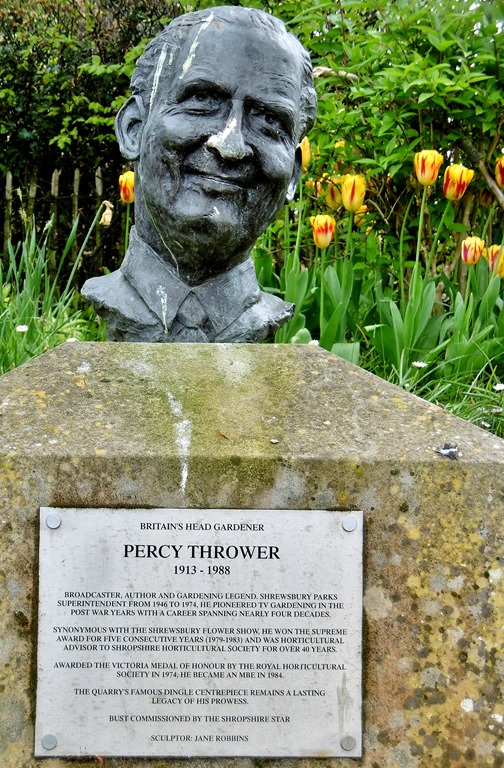
And then I said hello to Percy Thrower, and wished I had a bucket of soapy water to give his face a good wash: dirty birds!
*
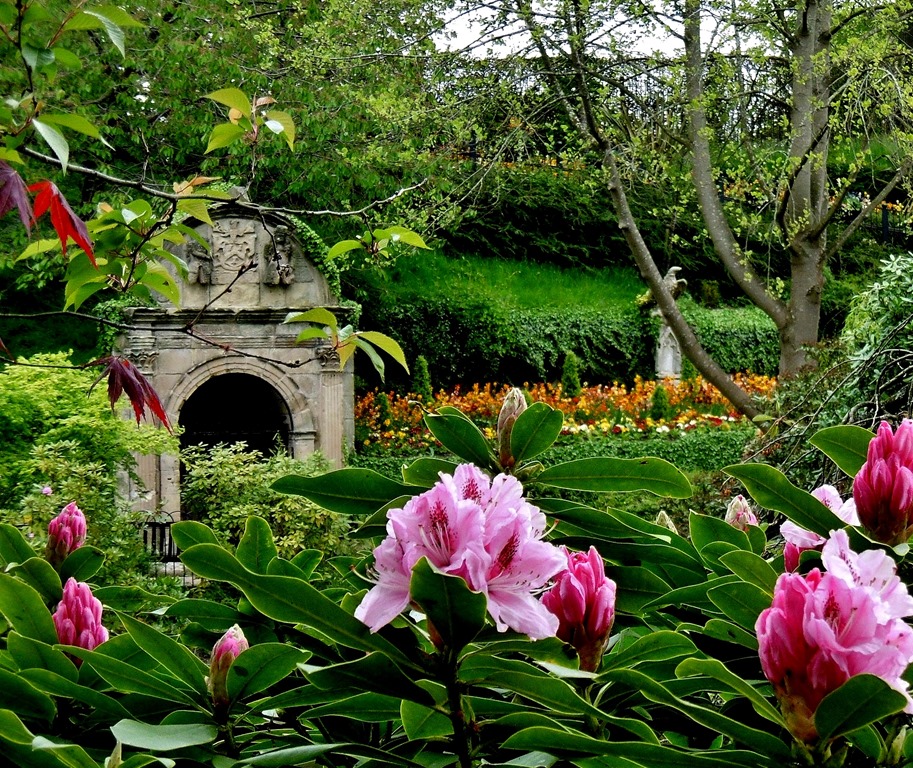
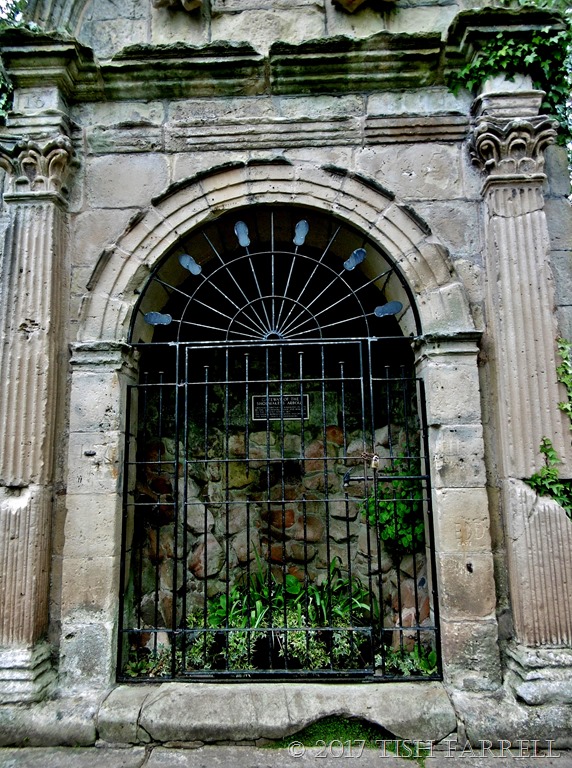
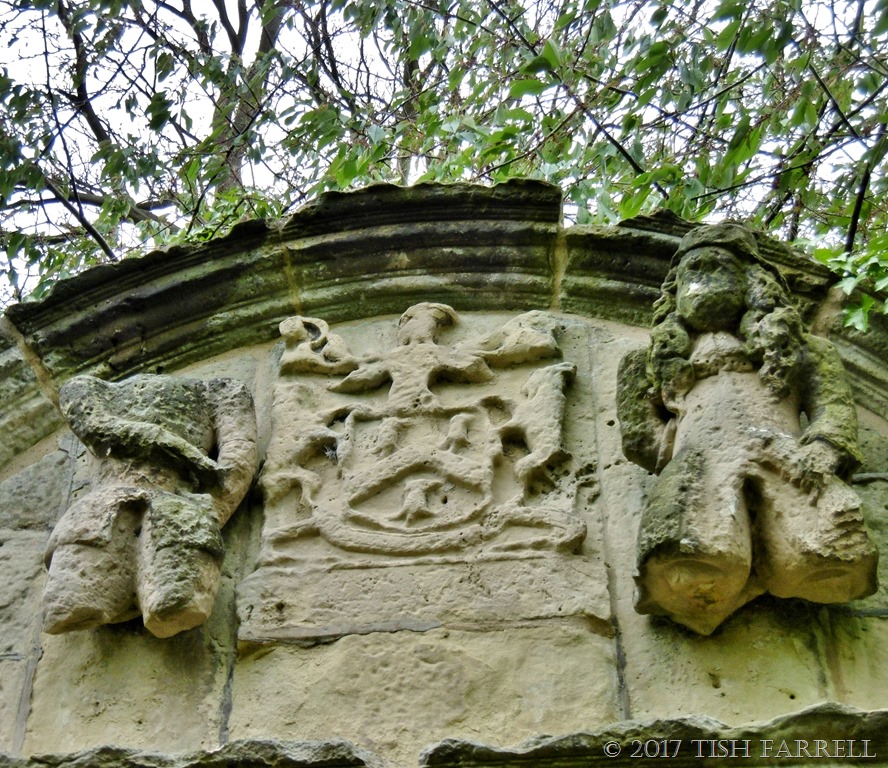
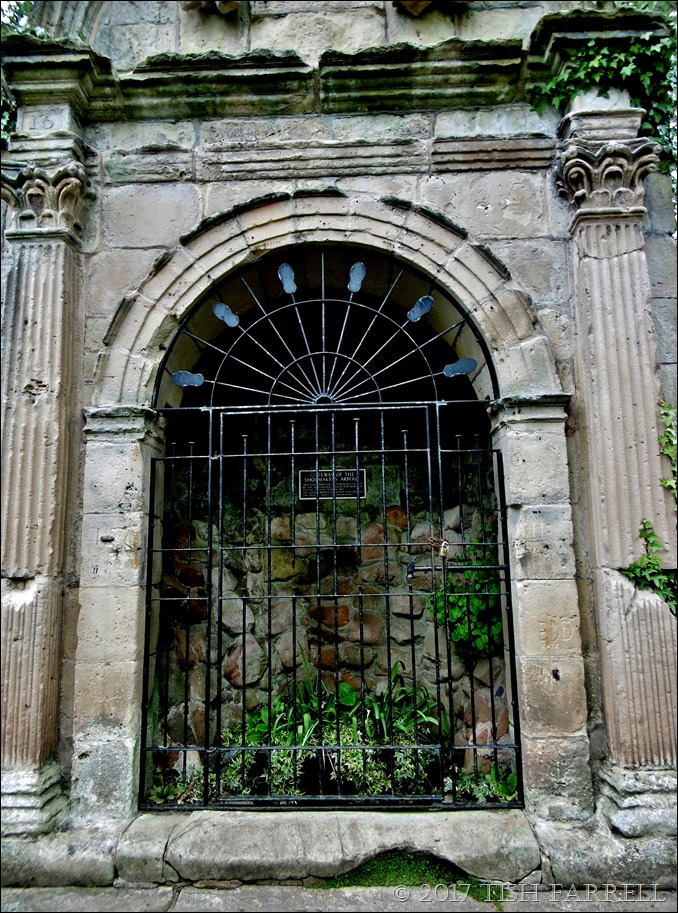
And next I wandered round to the Shoemakers’ Arbour, a place that used to intrigue me as a child. No adult back then seemed able to explain exactly what it was. The plaque on the wall of the structure says that, what looks like a piece of romantically contrived garden architecture, was in fact the gateway to an arbour built by the Shrewsbury Guild of Shoemakers in 1679. It also tells me that it was originally sited across the river in Kingsland, but moved to the Dingle in 1877. There is no further explanation, though presumably the reason it was rescued was precisely because it made a nice piece of romantically contrived garden architecture.
*
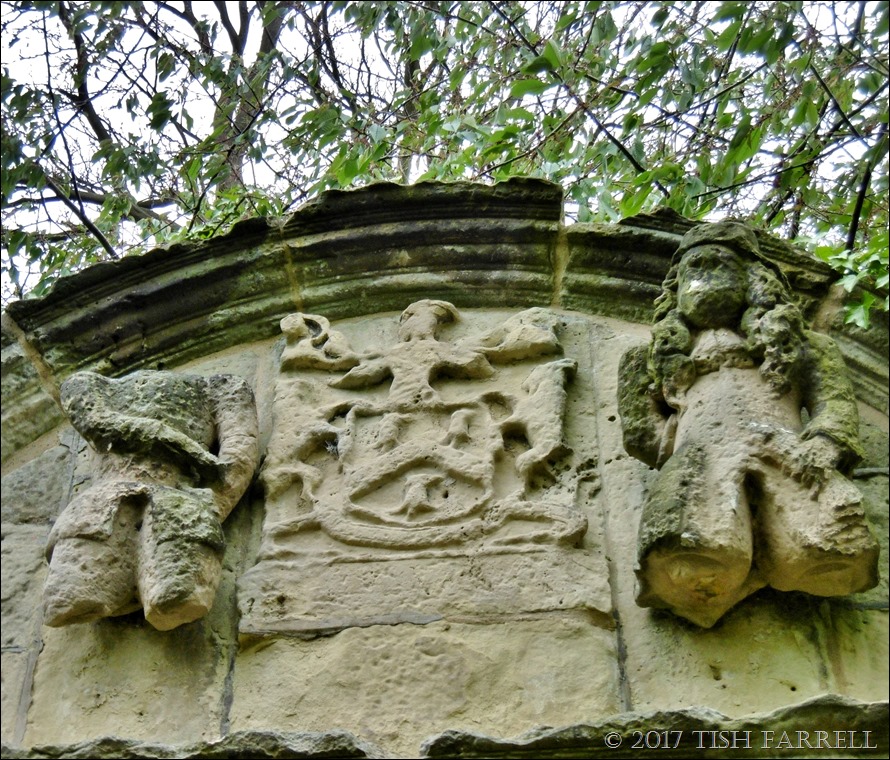
On the pediment (see also the header photo) are the remnant images of Crispin and Crispian, the patron saints of shoemakers:
But what I wanted to know was – what was all this stuff about guilds and arbours, and what did shoemakers do inside them anyway – get well and truly cobbled?
Later, after a little delving, I discovered that celebration and jollification were indeed the purpose, and all part of the annual town celebrations, the very same that gave rise to the present day Shrewsbury Flower Show.
So the story is this.
Across the River Severn from the Quarry is a part of the town called Kingsland (now an enclave of grand Edwardian houses and Shrewsbury School). In the late middle ages it was common land administered by the town corporation. Here the town’s guilds would erect arbours for an annual gathering. In the early days these arbours were wooden framed pavilions, but by the 17th century the guilds were allowed to build permanent single storey structures – much in the style of medieval feasting halls. Each also had a cottage with a court and hedged garden.
On show day – always the second Monday after Trinity Sunday – and after the guilds had processed through the town, all would repair to their various arbours for much merrymaking. Here too each guild would entertain the mayor and his officers, and one imagines that the worthies may well have been legless by the time they had visited all eleven guild arbours.
The Shoemakers’ Arbour thus shared the ground with, among others, the guilds of bakers, tailors, carpenters, glovers, weavers and joiners. You can read more about medieval guilds here, but they were basically trade associations, or cartels formed by skilled artisans with the intention of guaranteeing craft standards and setting wages somewhat like a trade union.
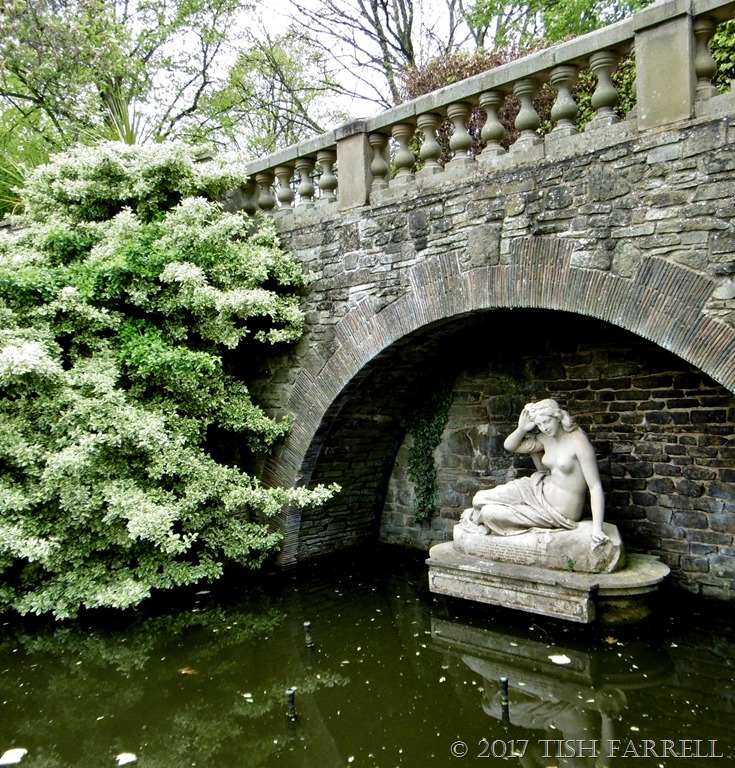
Now that’s all sorted, back to my wander round the Dingle, and just in case you are now imagining a large rambling place, it truly only take five minutes to walk round if you don’t stop to look at things. Which makes it all the more odd that after I’d moved on from the saintly shoemakers I found myself in a part of the garden I did not remember. (How could that be? I spent so much of my youth in this place.) Anyway, I had taken a little off-shoot from the main path, and this brought me to a small pool. And here she was: Sabrina – the River Severn’s very own goddess:
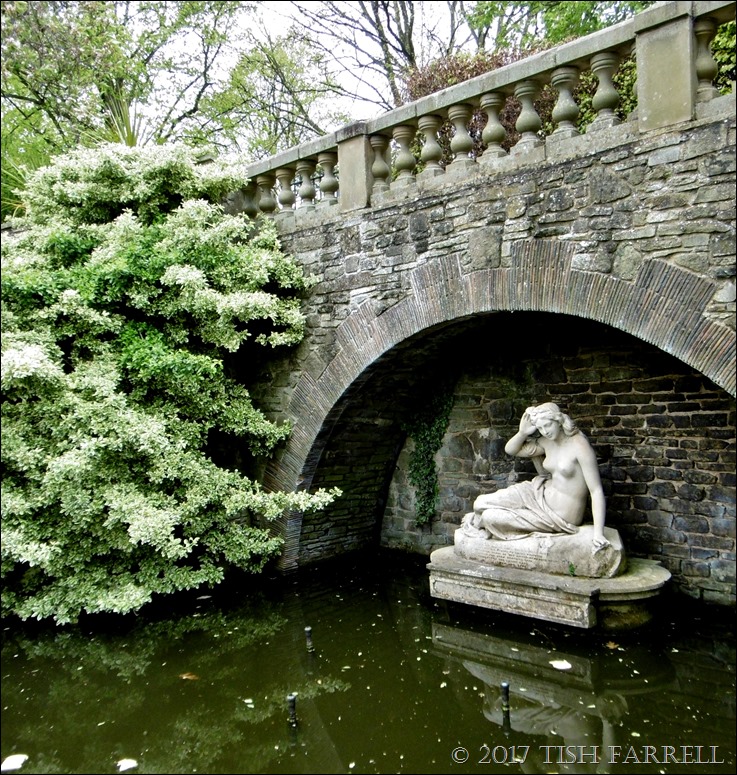
Sabrina is her Roman name, but the two main stories associated with her are of pre-Roman origin and told by 12th century historian Geoffrey of Monmouth. The Celtic tale tells of three sisters, water nymphs who meet on Plynlimon (Pumlumon in Welsh), the highest point of the Cambrian Mountains in mid-Wales. They each decide to pursue their own route to the sea. One sister wants to reach it as quickly as possible and sets off due west, so forming the Ystwyth River. The second sister prefers the rolling hill country, and wends her leisurely way, so becoming the Wye. And the third, Hafren, takes the longest route of all, 180 miles, and becomes the Severn. She wants to have a good look at all the fine towns and cities and stay close to the haunts of humankind.
Hafren is the Welsh name for the River Severn. A single ‘F’ is pronounced as ‘V’ in Welsh. She is the Welsh goddess of healing. And the other story about her is rather grim. It is very ancient, and tells of an early English king, Locrinus, who marches to the North England to fight off the invading Huns. Amongst his prisoners is a German girl, Estrildis, with whom he falls in love. But he is pledged to Gwendolen, and a king must keep his promises. Being king though, he also devises a way to keep Estrildis as his mistress, and for seven years hides her away from his queen in a subterranean dwelling. They have a child of course – Habren or Hafren.
And then Locrinus makes a big mistake, and runs off with his beloved. The enraged Gwendolen raises an army and marches against him. He is slaughtered and Estrildis and Hafren are ordered to be drowned in the Severn. In tribute, however, to the guiltless child, the queen orders that the river be named after her. So there we have her: Hafren, Severn, Sabrina.
The notions of her healing powers may go back to earliest Celtic times, since we know that water played an important part in the Celts’ spiritual thinking. The Romans too honoured watery places and often adopted the deities of the occupied peoples. You will find a more detailed and fascinating discussion of the myths and legends associated with the River Severn HERE
The statue was carved by Peter Hollins of Birmingham in 1846 and donated to the people of Shrewsbury by the Earl of Bradford in 1879.
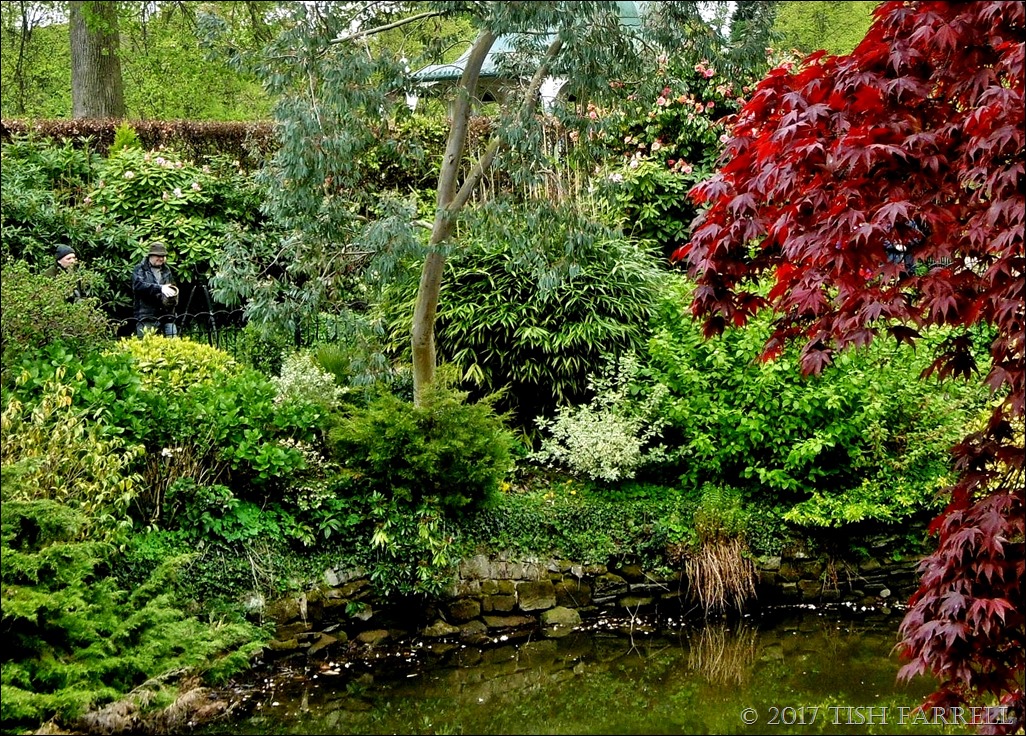
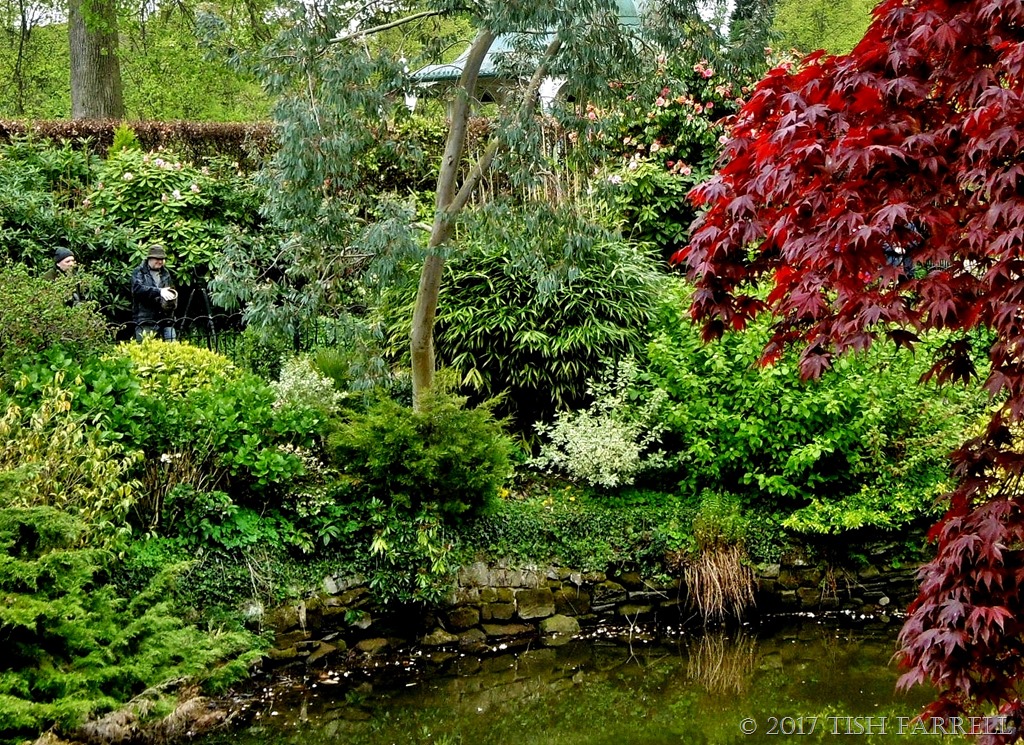
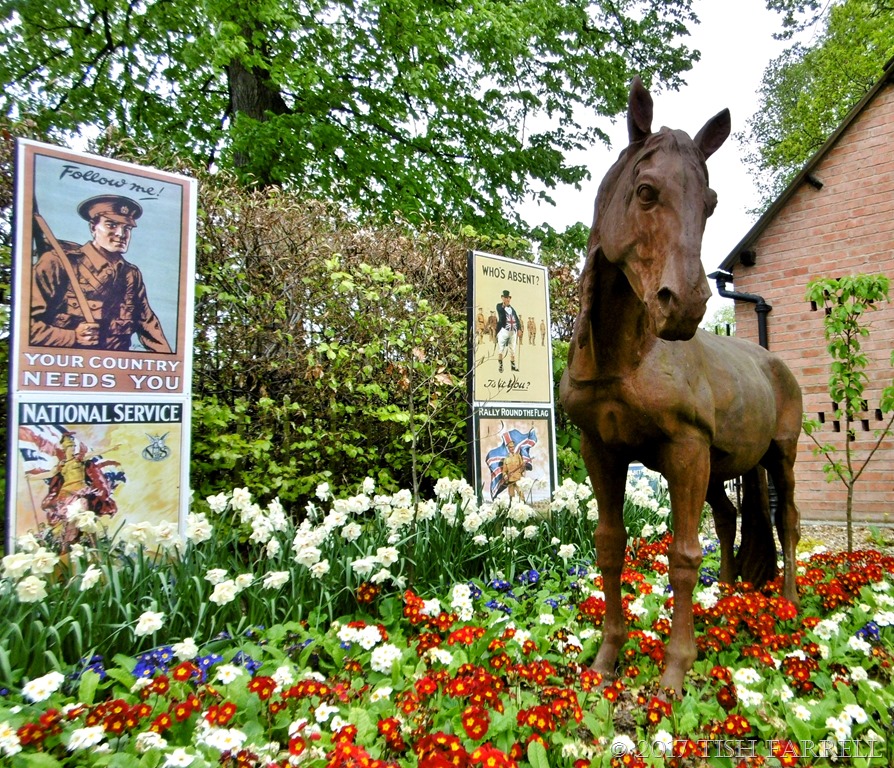
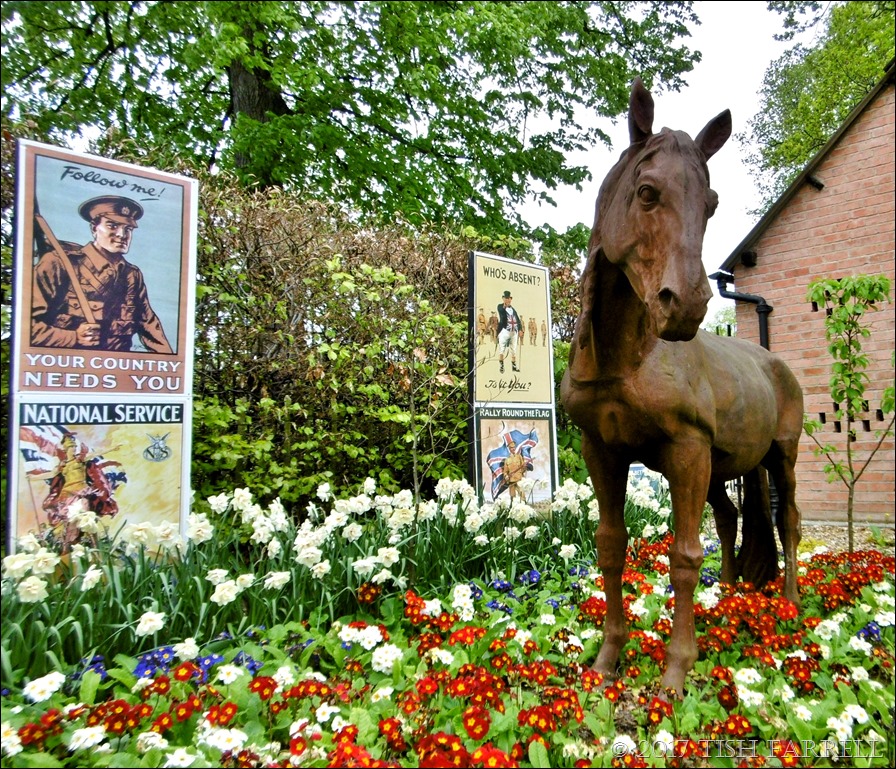
By now I’m back with the twitchers. Can you spot a couple of them? But there is still nothing happening on the penguin front and I am now diverted by a life-sized iron horse, and can’t think how I missed her on the way into the Dingle. There she is amongst the municipal rows of polyanthus, the town’s commemorative tribute to Flanders Field of the Great War, and of course to all the brave horses who served man and country.
But suddenly things are stirring behind me. The twitchers are all a flutter. Hey-up! I hear. The penguin must be on the move.
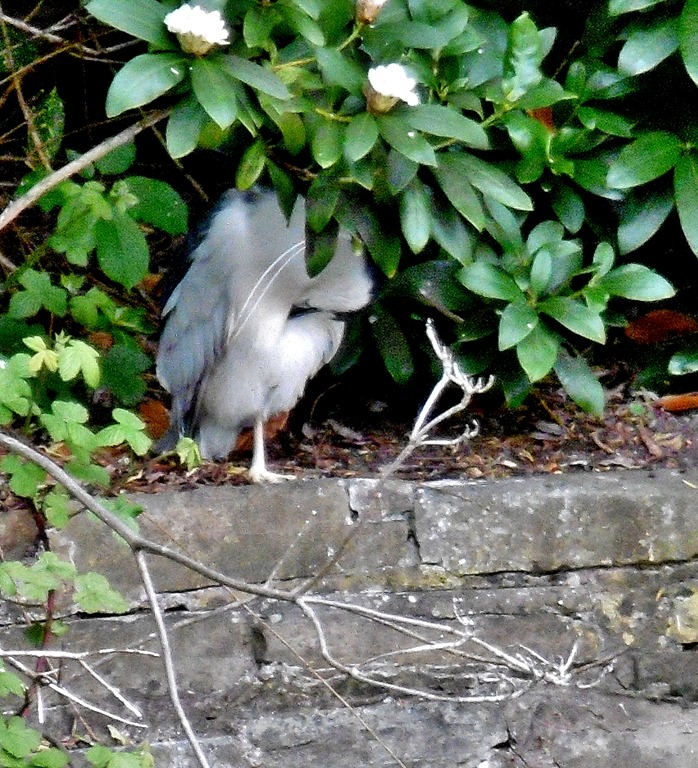
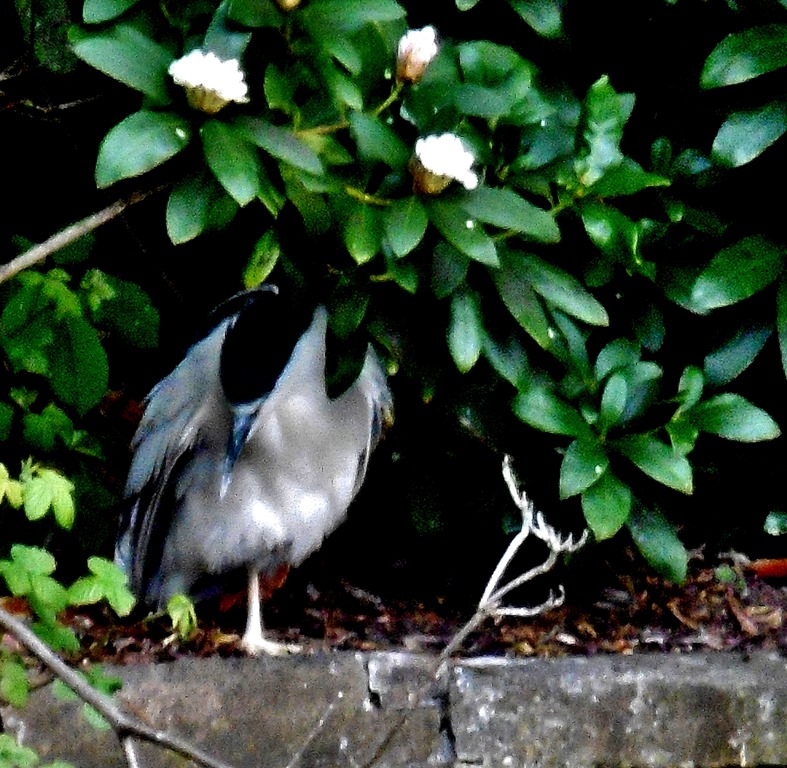
I’m disappointed though. I’m only armed with a little Lumix, so these next shots are pretty poor, though good enough to show that the penguin theory was indeed very silly.
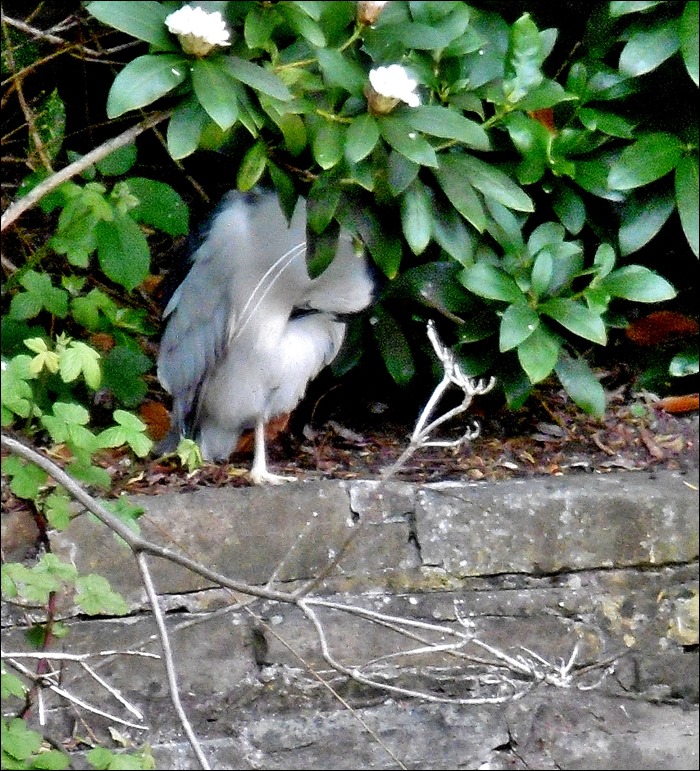
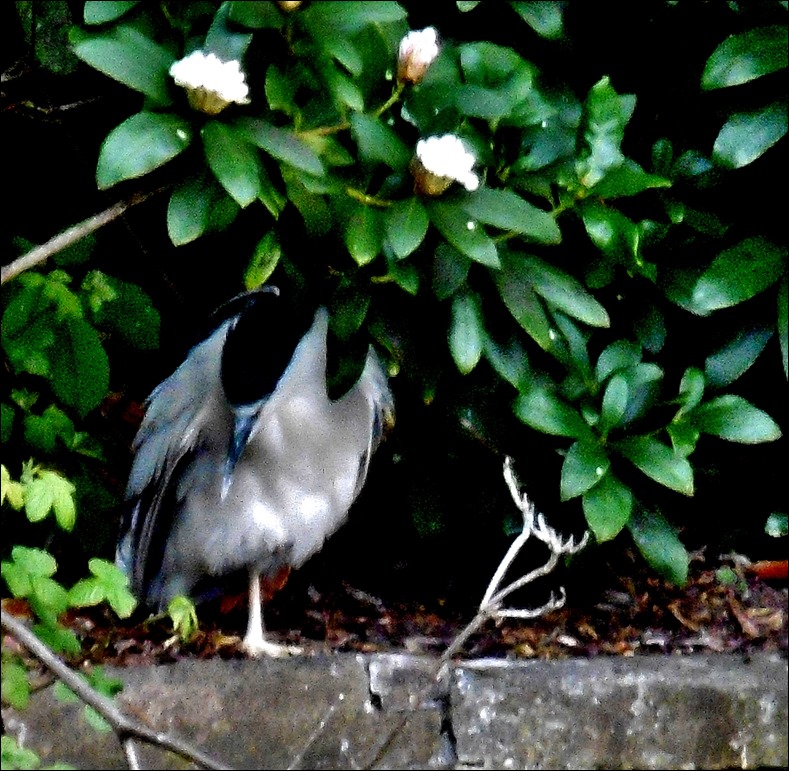
What we have here is Nycticorax nycticorax – a Night Heron, and indeed a most unusual visitor on UK shores. It is more usually found in warm, tropical regions and I think the first and last one I saw was at Hunter’s Lodge in Kenya. I didn’t wait to see if the penguin it was prepared to reveal itself fully. I decided the clue was in the name. The entry for Night Heron in my Field Guide to Birds of East Africa says: ‘Mainly nocturnal, keeping to dense waterside cover by day.’
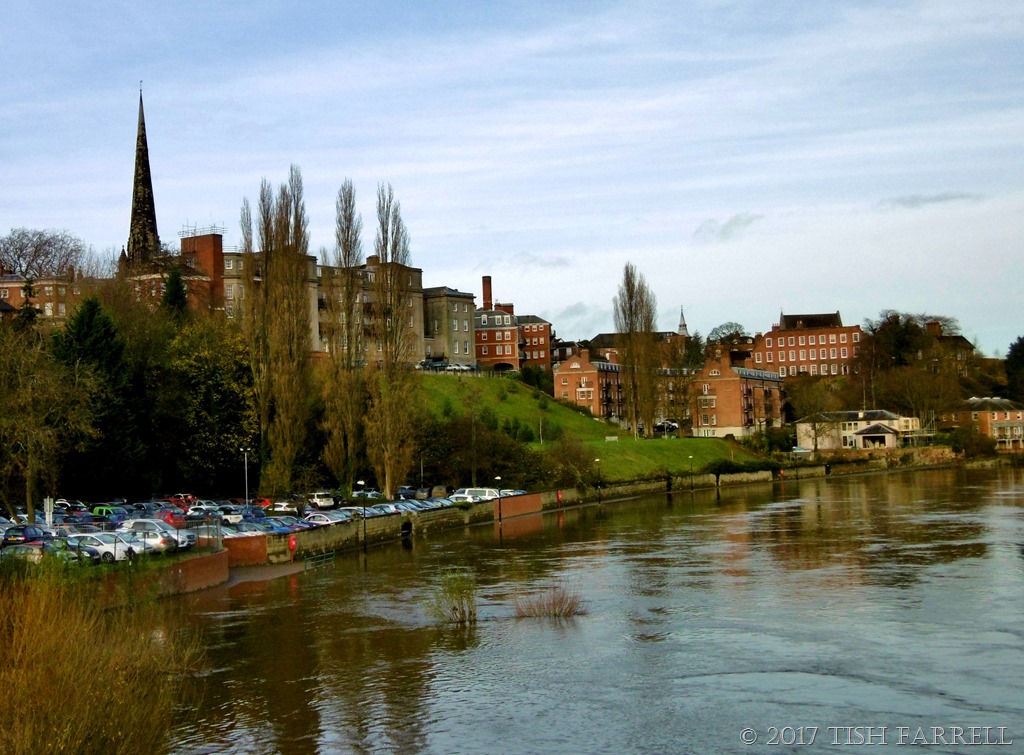
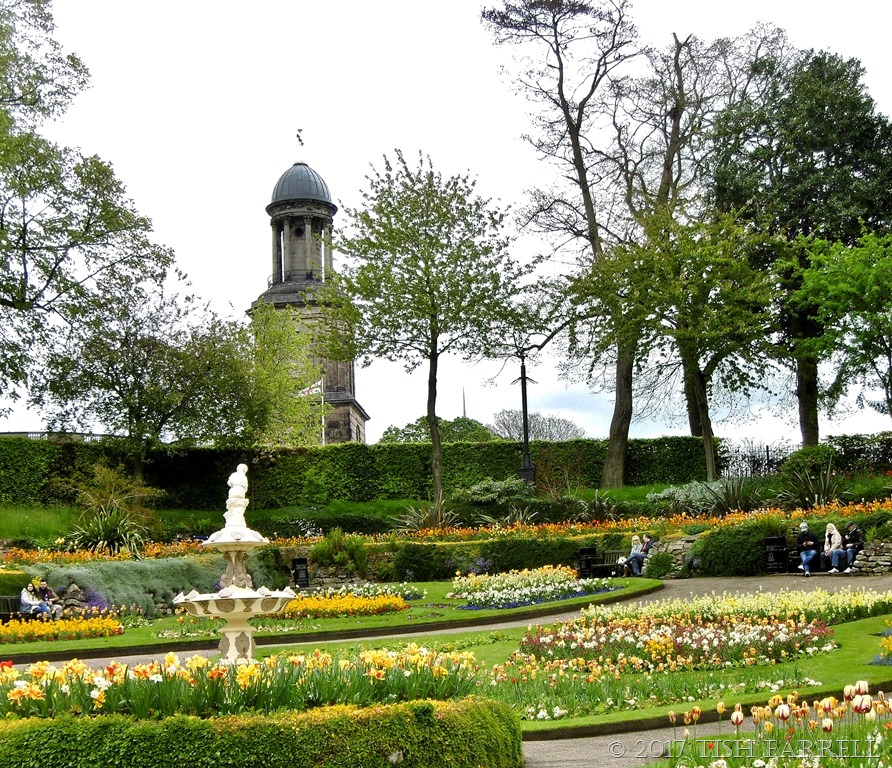
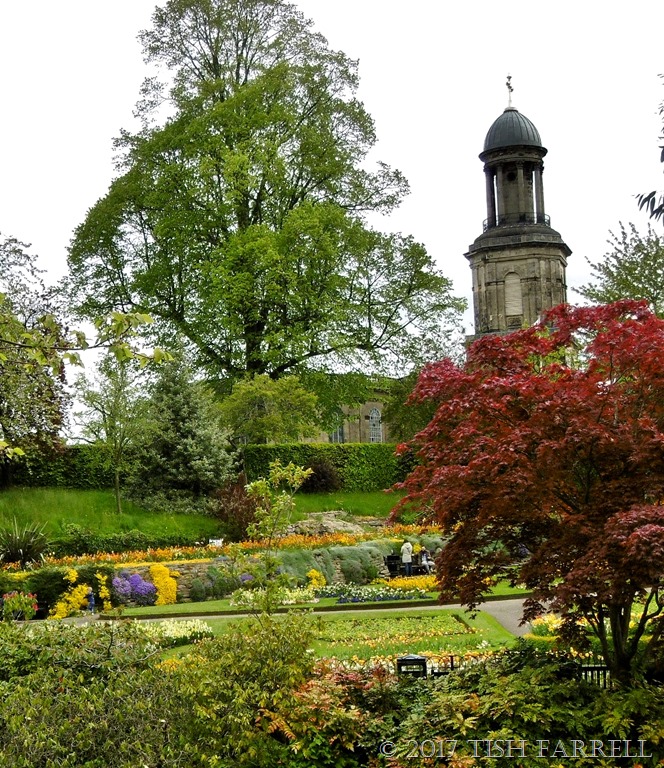
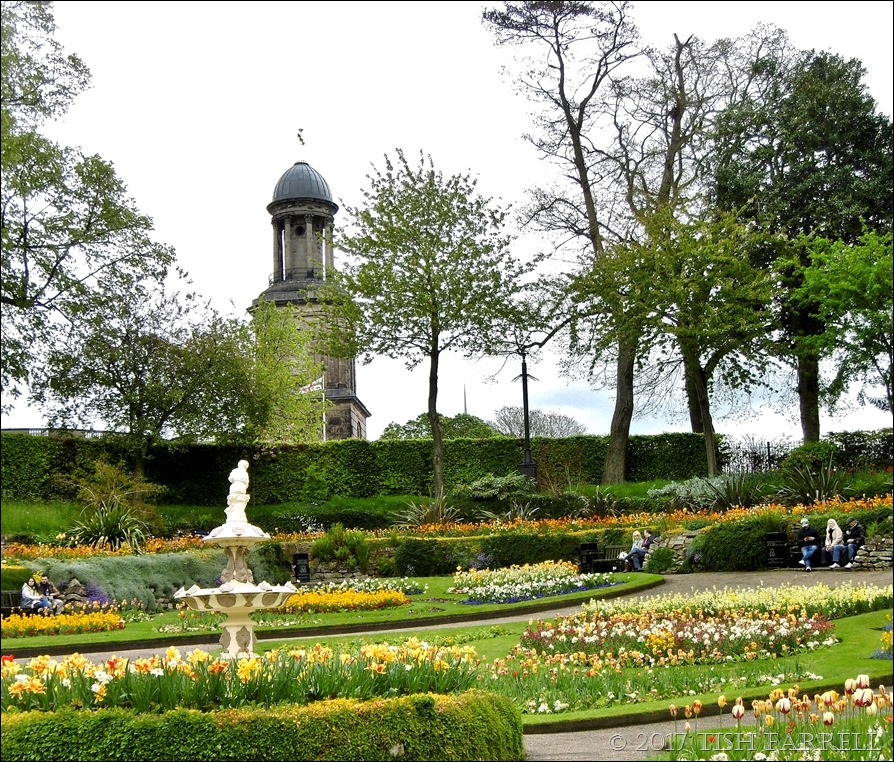
But at least the mystery is solved. I cut back across the Dingle, skirting around Percy’s ‘parks & gardens’ flower beds, the tower of St. Chad’s on my horizon:
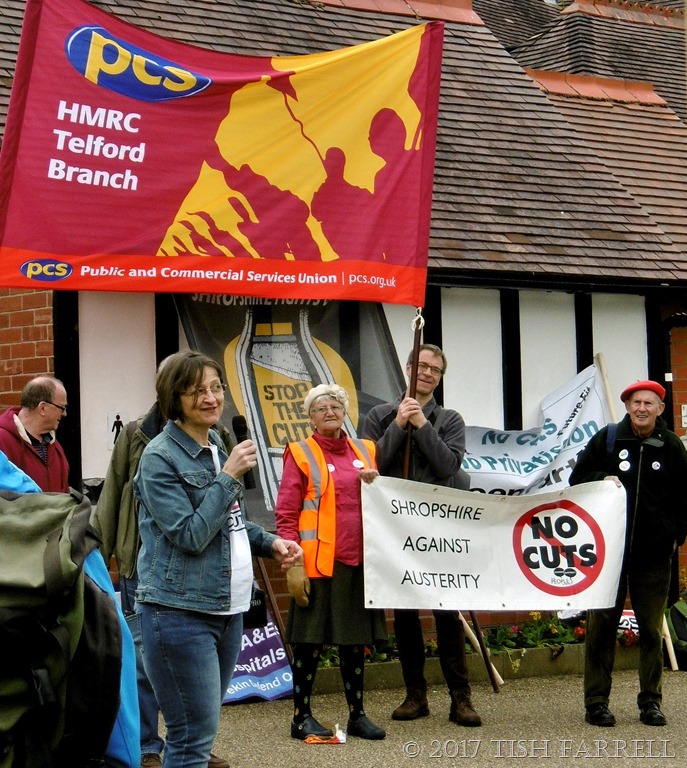
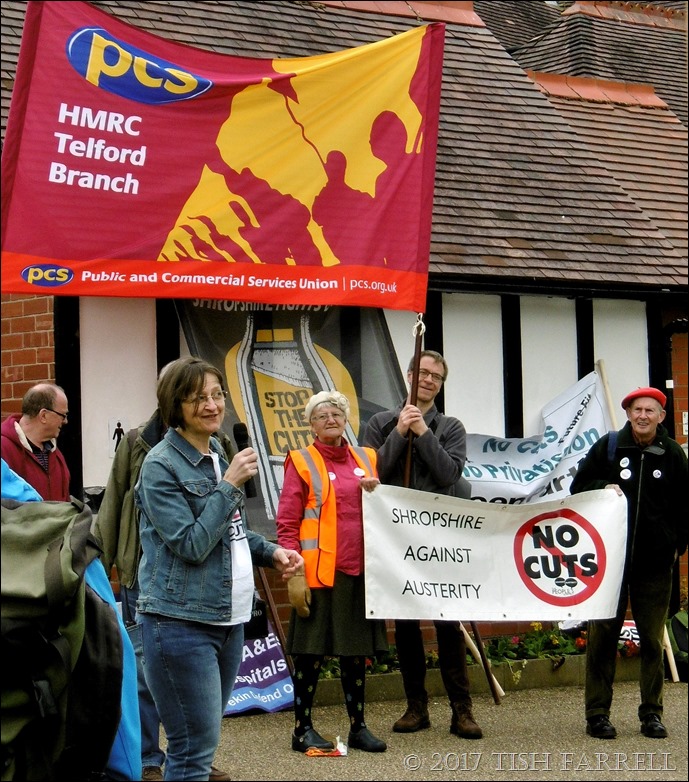
And out again in the Quarry, I next find myself joining in with an ‘Anti-Austerity’ – Labour Party Rally outside the Horticultural Society’s park lodge . Here are people who want to stop cuts to state schools that are lowering teaching standards and to protect all that is good about the National Health Service. I look around the assembled crowd. They look like decent people. Their words are sincere, heartfelt. I stick around and do some clapping. Shopping? What shopping?
copyright 2017 Tish Farrell