Moving Day Snowed Off!

IMG_2583

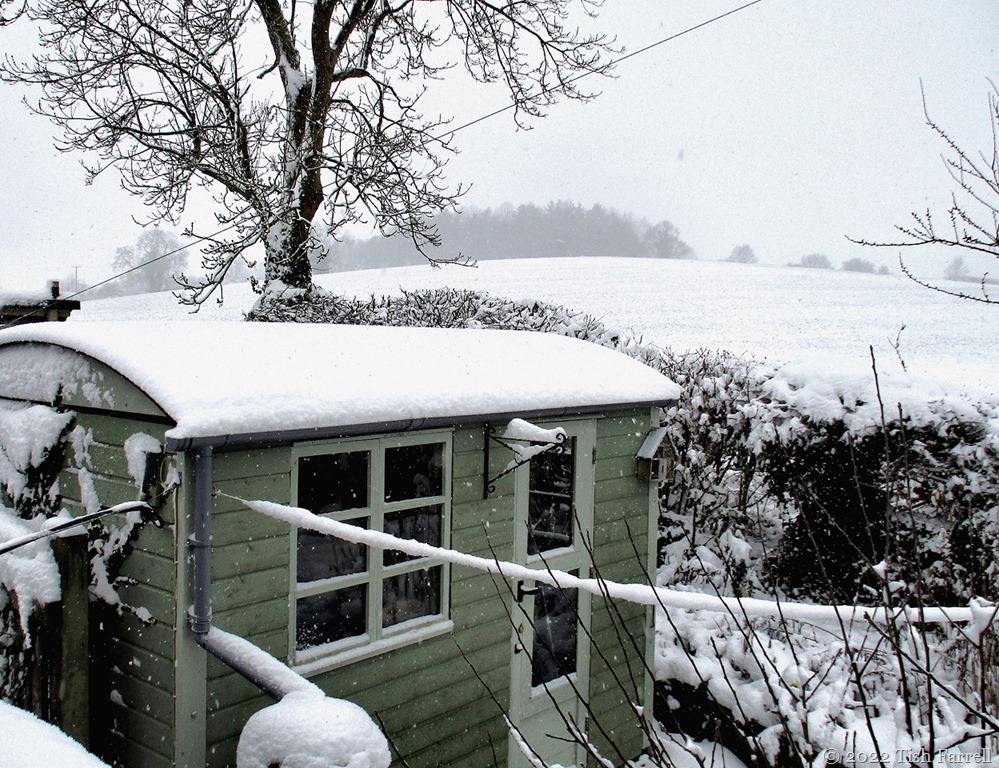
The snow that was supposed to stop yesterday (according to the weather oracle) didn’t. There was a good six inches this morning – the slushy, slippery stuff that causes havoc on untreated roads. And havoc there was. The removal trucks did try valiantly to reach us this morning, but found themselves caught up for two hours in traffic jams of accidents and breakdowns on the highway down the Severn Gorge. And even if they had managed to reach Wenlock, the bottom of our street was blocked by two huge lorries that strangely, and within minutes of each other, had broken down; there was no way out to Broseley.

Now at lunch time, it’s raining not snowing; the road is almost slush-free and the broken down trucks vanished. Graham, after reinstating the internet connection, has retreated for a nap (on the mattress on the bedroom floor), having been awake half the night, and I’m pondering on what bare minimum needs to be unpacked for an unanticipated camp-over. (My last ditch packing up session early this morning saw stuff popped wildly into nearest bags and boxes, thus leaving some items untrackable).  The movers are rescheduling jobs and plan to be with us tomorrow. Meanwhile, we have the trusty wood burner and a stash of logs. Our lovely neighbour, Josie has brought us chocolate cake and a bottle of wine. And later we may well treat ourselves to dinner out at one of Wenlock’s hostelries.

So as they say: tomorrow is another day. And hopefully the snow will soon be on its way out.

IMG_2584

Primrose Peace In The Midst Of Moving House

IMG_2575

Some of you may have noticed that I’ve not been around much in the last few months. And the reason? The Farrells are on the move, out of Much Wenlock and into next-door Broseley (ten minutes drive away), leaving the edge of Wenlock Edge for a new edge atop the Severn Gorge and above the world’s first cast iron bridge (1779).

In fact the Iron Bridge will be in walking distance of the new house, although maybe only on the outward foray. The Gorge is so steep, a bus ride back could well be called for. Anyway, this is what’s been going on – house selling, possessions culling, allotment retreating and finally, in the last three weeks, the hair-raising dash to find a rental property before the new owner moves in. Phew and double-phew. (Who knew that renting anywhere these days is so fraught with difficulties).

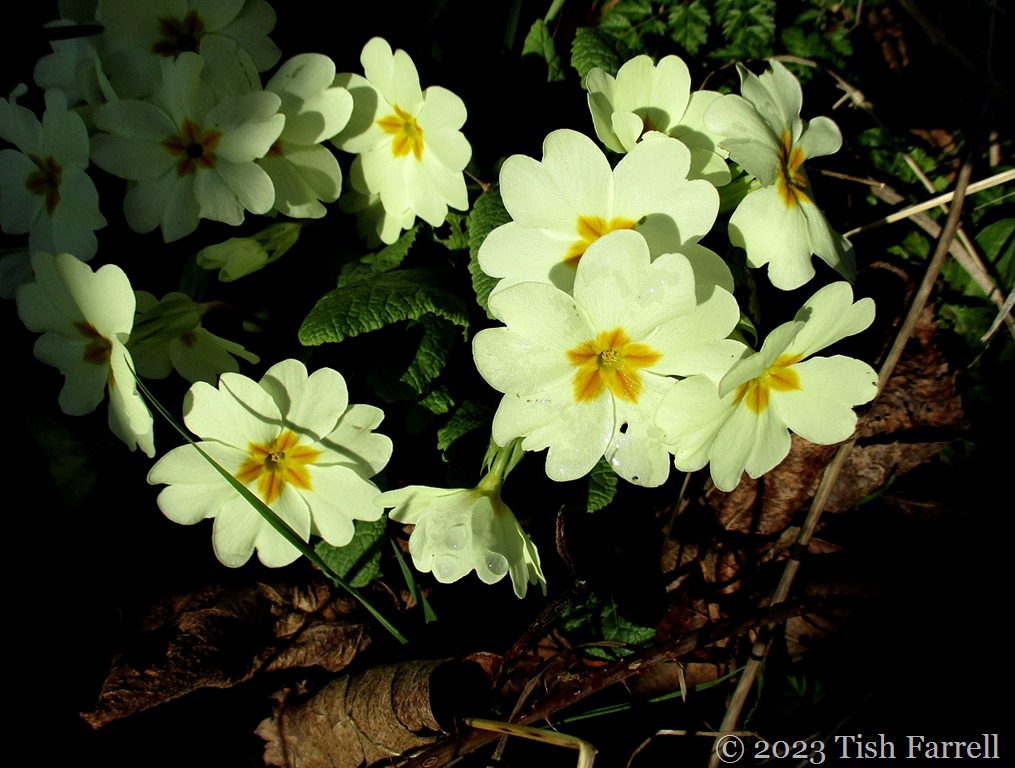
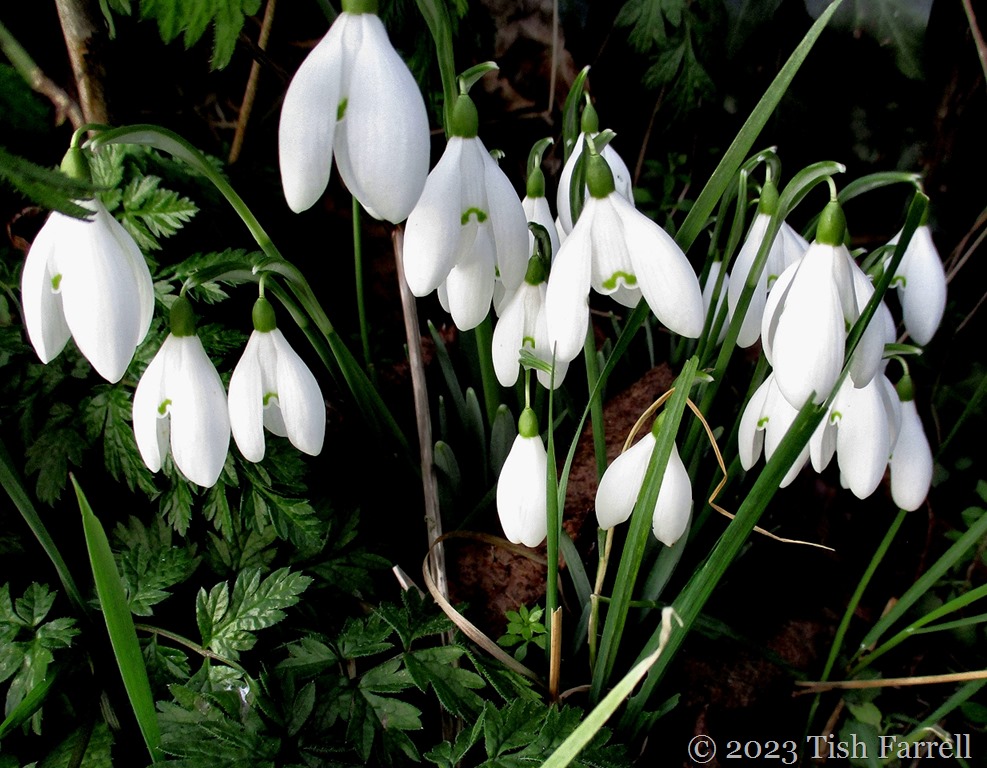
We began this whole moving process over a year ago, and it scarcely needs saying that it’s been very stressful. It’s definitely been a matter of snatching peaceful moments as and when. And of course, for gardening types, spotting signs of spring is always a welcome distraction from domestic chaos.  I was busy repatriating allotment tools when I first noticed the primroses along the hedge bank beside Townsend Meadow. This was around the end of January, and I was surprised to see them flowering so early (neck and neck with the snowdrops). Clearly, unlike Mrs. Farrell, neither mind the frigid temps we’ve been having.

IMG_2550

*

Some of you may also be wondering why we’re moving when there’s no obvious necessity. On anxiety-ridden days I have been wondering this myself. But then I have long been hankering for a home with a vegetable garden attached as opposed to one a field’s walk away.  Not that I won’t miss the walk, or the views above the town, or the raven that flies cronking over my polytunnel in the late afternoon, or the chats with fellow allotmenteers.

But I will be glad to leave the allotment’s dispiritingly claggy Silurian soil, the endemic pests and weeds typical of free-for-all community gardens and the outrageous numbers of snails. And of course, I am getting on a bit! I would like to nurture my soil, not do battle with it. Nor do I really want to dash across the field for the lettuce I forgot to pick earlier.

So the plan: to rent for a time in Broseley while looking for a place to buy – hopefully somewhere over Wenlock Edge into South Shropshire and closer to dear younger sibling, the hill country, and also to better functioning public transport systems.

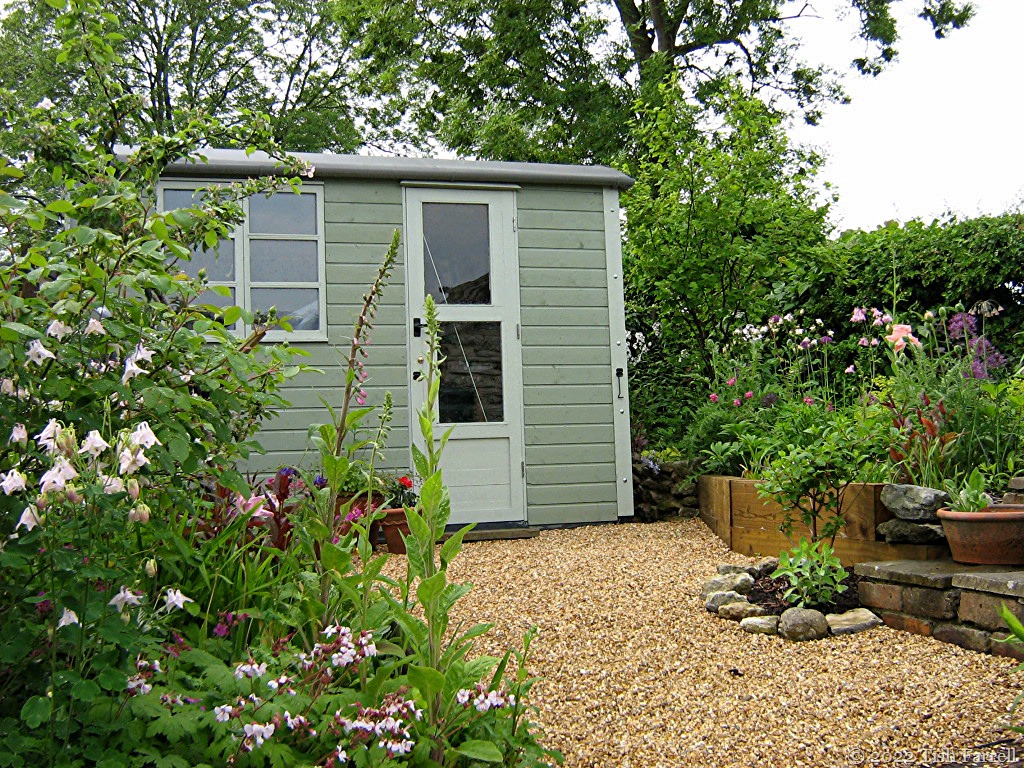
And yes, I will be sad to leave our upstairs-downstairs garden, and Graham his custom-made, super self-built shed. We’ll also miss our quirky cottage (though not the spiders). I’m sure, too, we’re going to feel more than a touch stranded in a rented house that’s not at all our style, to say nothing of the daunting prospect of moving TWICE.

IMG_3493

Summer garden and Graham’s peaceful place freshly built

*

But then Broseley is a very fascinating old town, whose maze-like streets (jitties) of higgledly-piggledy cottages, reflect the arrival of immigrant miners way back in the 1590s when the town’s population of 5,000 was apparently much the same as today’s. The other key industry was clay pipe making, the products exported around the world, and the pipes themselves referred to as ‘Broseleys’.

Here’s a nice taster of what’s to explore from Broseley Historical Society.

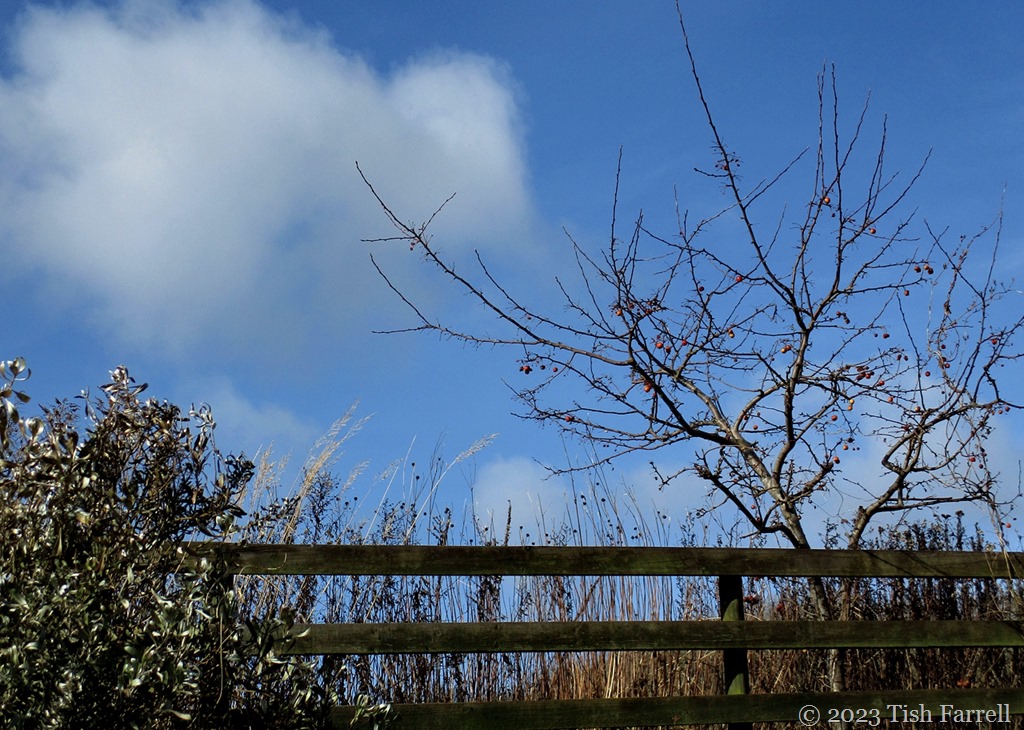
Meanwhile, as the packing cases pile high in the living room, and sixteen years of covert dust alarmingly reveals itself, out in the garden, all is still wintery, the crab apple tree eaten bare and the guerrilla garden over the fence very endy.

IMG_2551

*

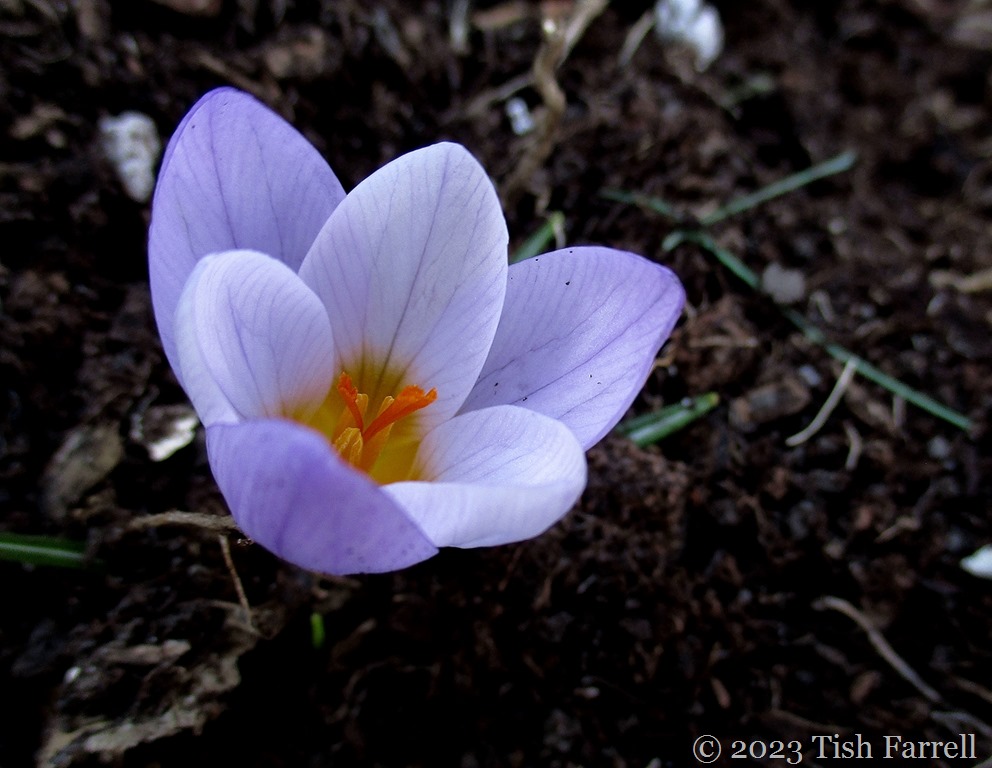
But then in the shady corner behind Graham’s shed there’s  a small scatter of miniature crocuses. So soothing to spend a few quiet moments with them before the big move at the end of the week (with the added thrill of forecast SNOW!)

IMG_2559ed

Lens-Artists: Finding Peace This week Tina’s theme could not be more apt here on Sheinton Street.

Days Of Frost And Sun And More Upended Reflections

IMG_2534ed2a

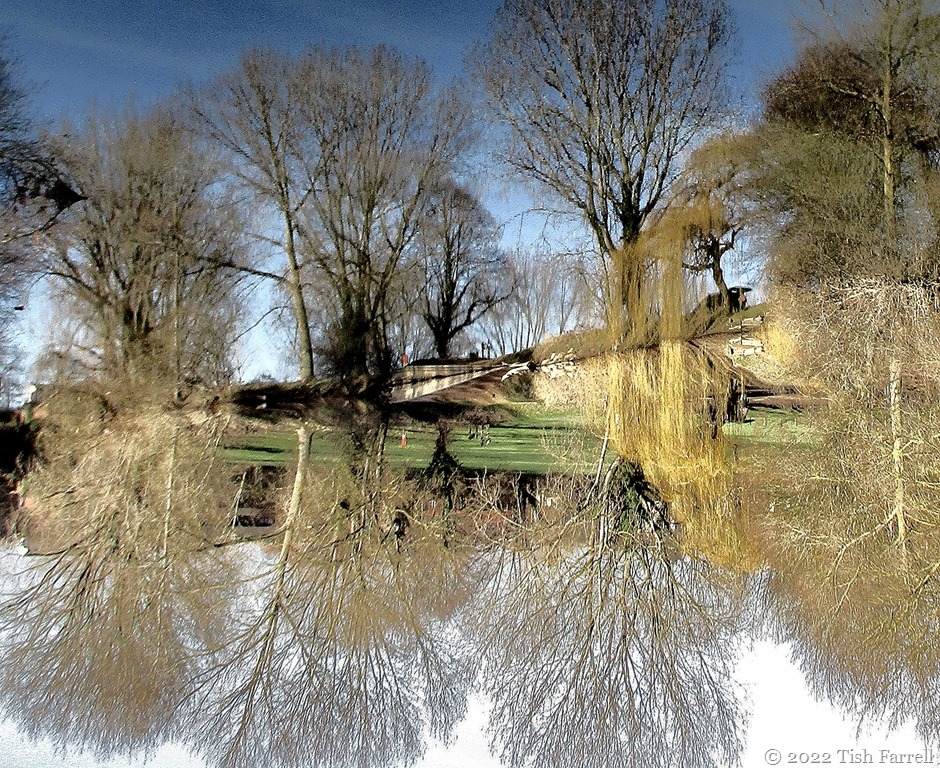
This week the weather gods are treating us to hoar frosty nights and chilled, sun-filled days. The wind has dropped too – ideal conditions, then, for watery reflections. So here’s a flipped image of the River Severn, and a mysteriously vivid mirror-world that, in this photo at least, looks more real than reality. Strange how that can happen.

*

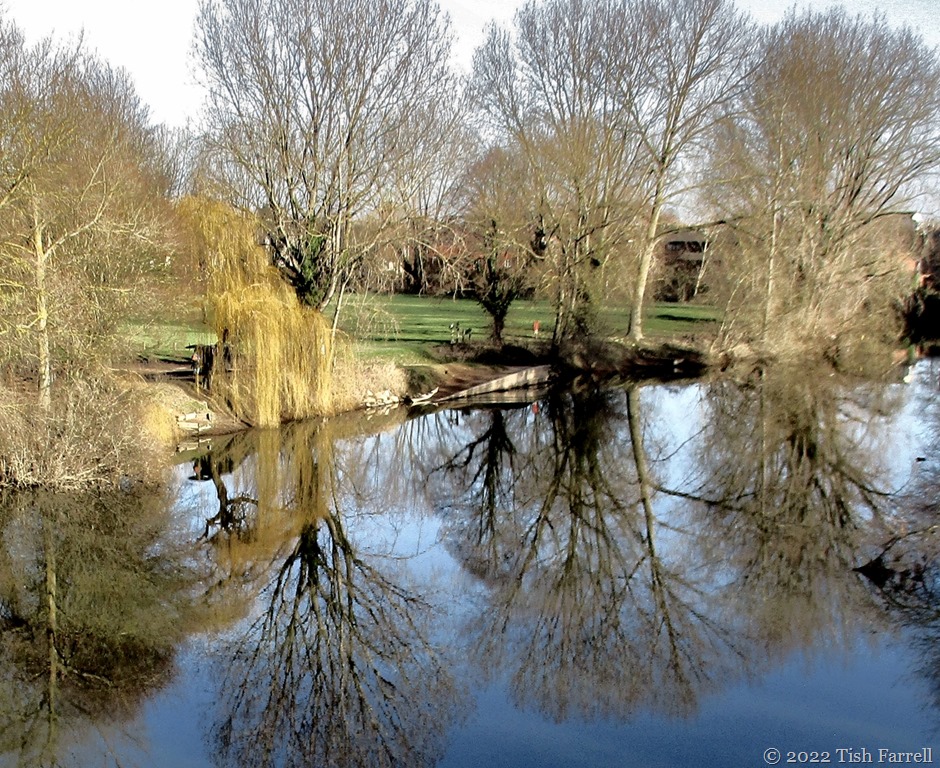
The photo was taken yesterday afternoon on a trip into Shrewsbury, our county town. Here it is restored to uprightness.

IMG_2534ed2

*

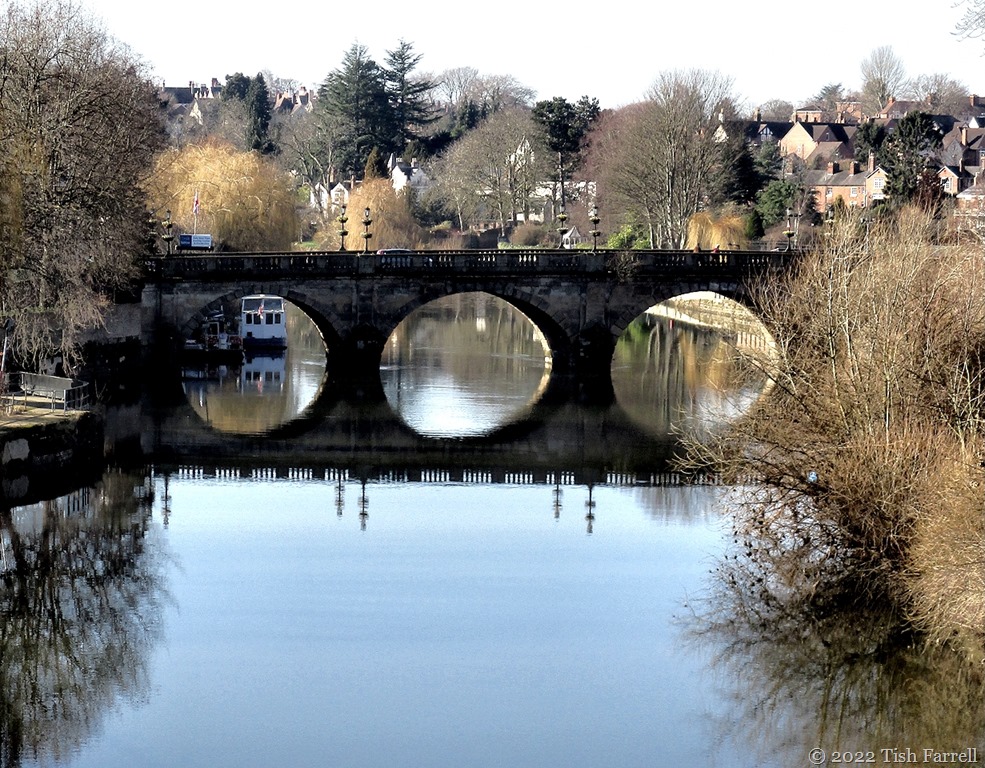
And now the upstream view, showing off the Welsh Bridge, the town’s westerly exit. (There is also an English Bridge over the easterly stretch):

IMG_2538ed

The Severn is Britain’s longest river (220 miles). It rises in the mid-Wales mountains and then meanders down England to the Bristol Channel and thence into the Celtic Sea. At Shrewsbury it all but encircles the town centre, a hilltop settlement of ancient Saxon origins and ever a busy centre for trade and manufacturing. The river was once its super highway, woollen cloth and wool being  key export commodities from which great fortunes could be made. These days the riverside parks and walks are a precious resort for tranquil pursuits (and reflection) away from nose-to-tail traffic that clog up the mediaeval streets. Interesting the ways things change.

More sun and frost promised tomorrow.

The Shortest Day And A Trip To Ironbridge

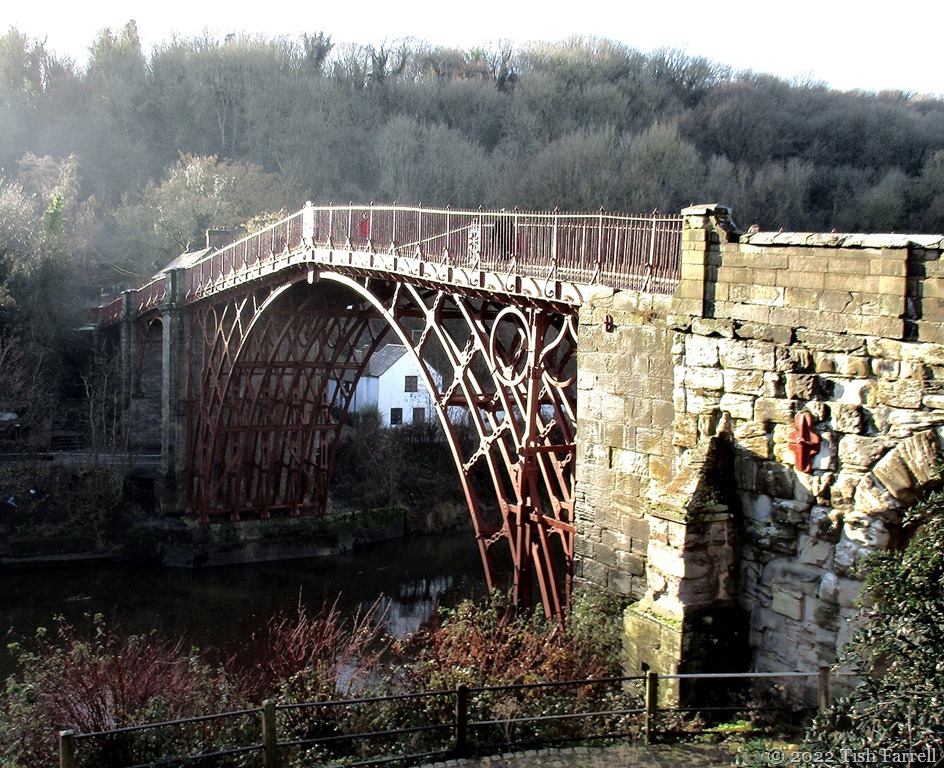
IMG_2185edIt seemed like a good way for the Farrells to mark the winter solstice – a little wander through Ironbridge town and over the bridge itself. It was anyway a glorious day, and the bridge was looking its festive best in its ochre-red livery.

A fine exemplar of Shropshire’s heritage.

Those of you who come here often will know that this is reputedly the world’s first cast iron bridge, built by Abraham Darby III and opened for the carriage trade and other toll paying traffic in the New Year of 1781.

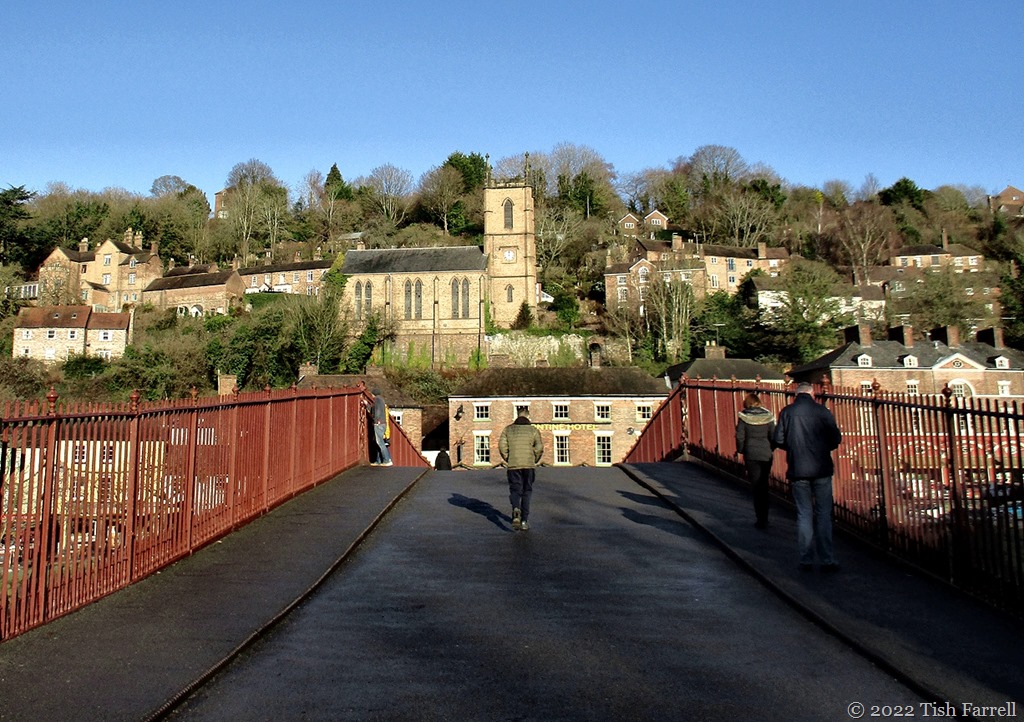
Of course, as was intended all along, it became the sightseeing phenomenon of the age. Everyone who was anyone had to come, look and pronounce on this pioneering wonder. The Coalbrookdale Company of ironmasters were naturally well prepared. They had also built the Tontine inn, a smart hostelry at the foot of the bridge.

Here it is with its mint green shutters, and still open for business. Also if you squint, you can ‘see’ the church clock is just striking noon. Can  you hear the chimes ringing out on the cold December air?

IMG_2192ed

*

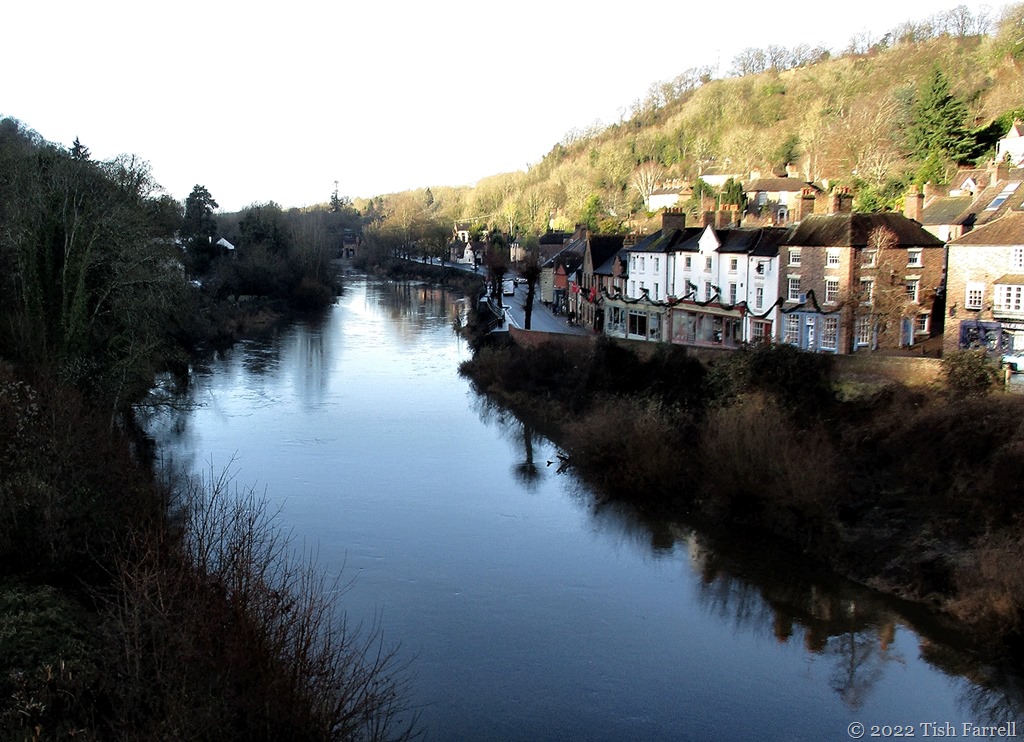
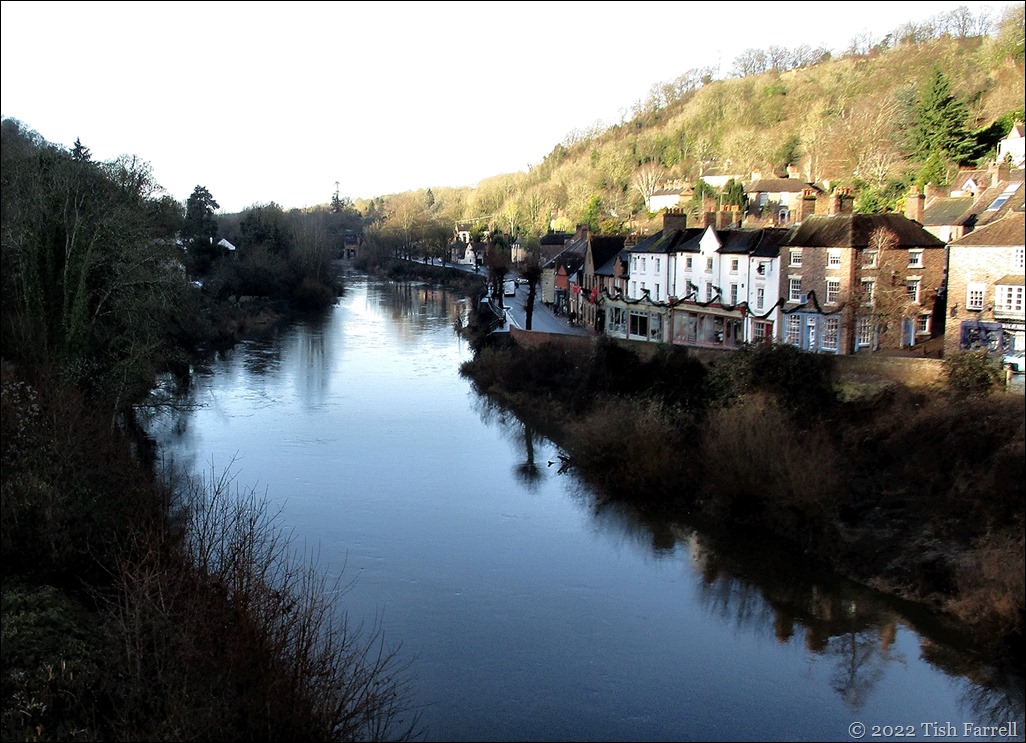
The middle of the bridge is a good spot to stop for views of the Severn Gorge, now a World Heritage Site.
IMG_2195ed

Once, this upstream view would have been filled with busyness. There were boat builders’ yards along the left bank. Then there was the river traffic itself, Severn trows, the great sailing barges up from Gloucester and Bristol, putting in at the Coalbrookdale Company’s warehouse, just visible at the river’s vanishing point. The trows brought in luxury goods: fine glassware, casks of port, Madeira, Spanish wines, sugar, molasses, serge cloth, the latest hats and bonnets, peach wood for cabinet making, blocks of marble, tobacco, salt fish.

On the return voyage the trows took on consignments of pig iron and castings of every kind, in particular the iron cauldrons, latterly known as missionary pots. They came in all sizes from the family porridge pot to large scale containers for industrial processes. They were rarely, if ever, deployed for the braising of missionaries.

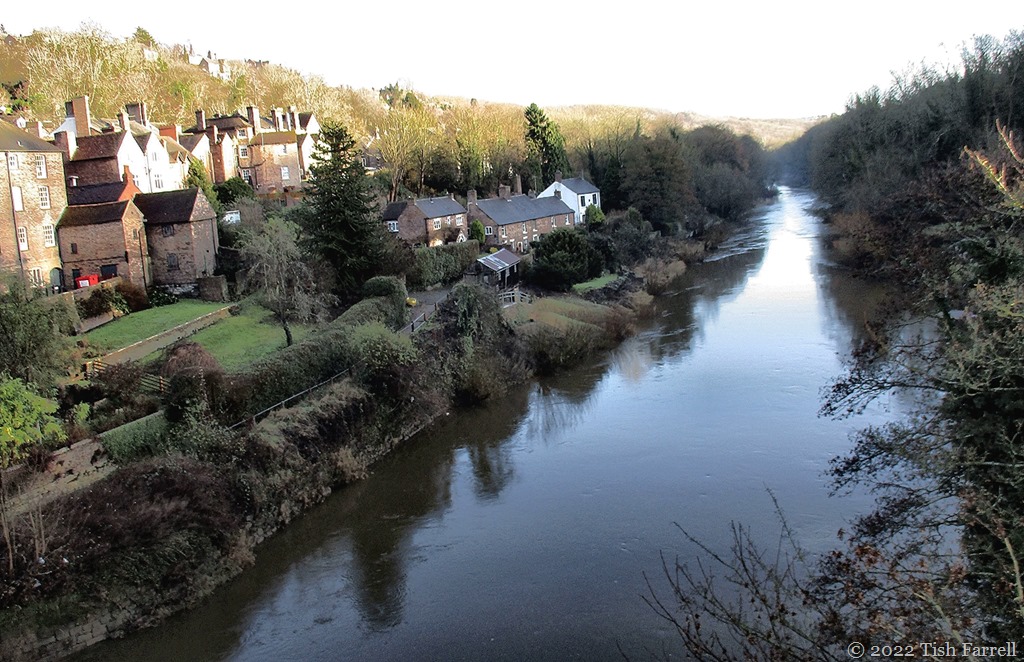
IMG_2197ed

This downstream view suggests unchanging tranquillity, but think again. Come the February flood season, the force of water rushing down from Wales and through the Gorge can be devastating. Even these days, with flood defences in place, there can be extensive overflow.  The Great  Flood of 1795 saw every Severn bridge damaged or taken out. Only the Iron Bridge remained unscathed.

Times of drought brought other perils. Large sandbanks formed and well loaded barges could find themselves grounded, often for weeks at a time. Such eventualities were catered for by a string of inns along both banks.  And these were not only places of respite for the stranded. The riverside taverns were also said to be the haunt of industrial spies, out to gather company secrets over a jug or two of ale.

IMG_2193ed

IMG_2184ed

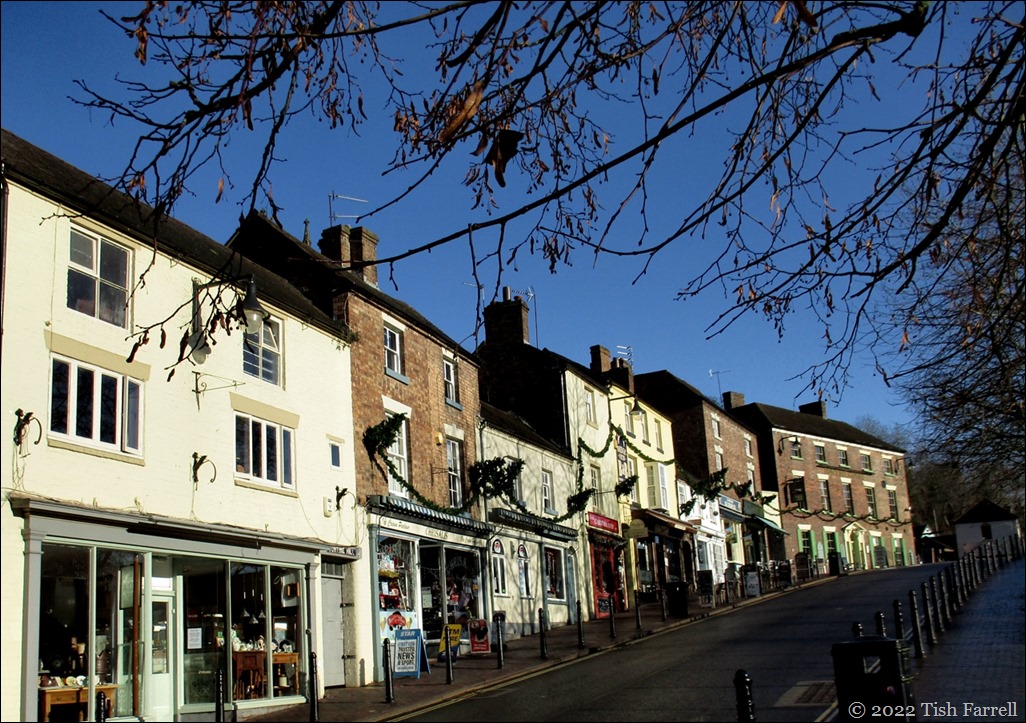
On Wednesday noon, 21st Dec. 2022, the Wharfage slumbered in the winter sunshine. There was barely a sign of a Christmas shopper. No coach and horses clattering up the hill to the Tontine. No carts unloading and loading precious goods in transit. No crowds of merchants’ clerks checking the cargo lists, or shouts of boat masters cajoling their crews. Or the pounding of the steam hammer at the riverside ironworks, that caused the men who worked it to grow deaf; the thud and thud and thud rebounding down the Gorge. Some things change for the better.

Happy New Year One And All

And whatever our beliefs, or lack of them, a strong prayer for more sanity and truth will not come amiss

Zero Degrees And Getting Colder

IMG_2147ed

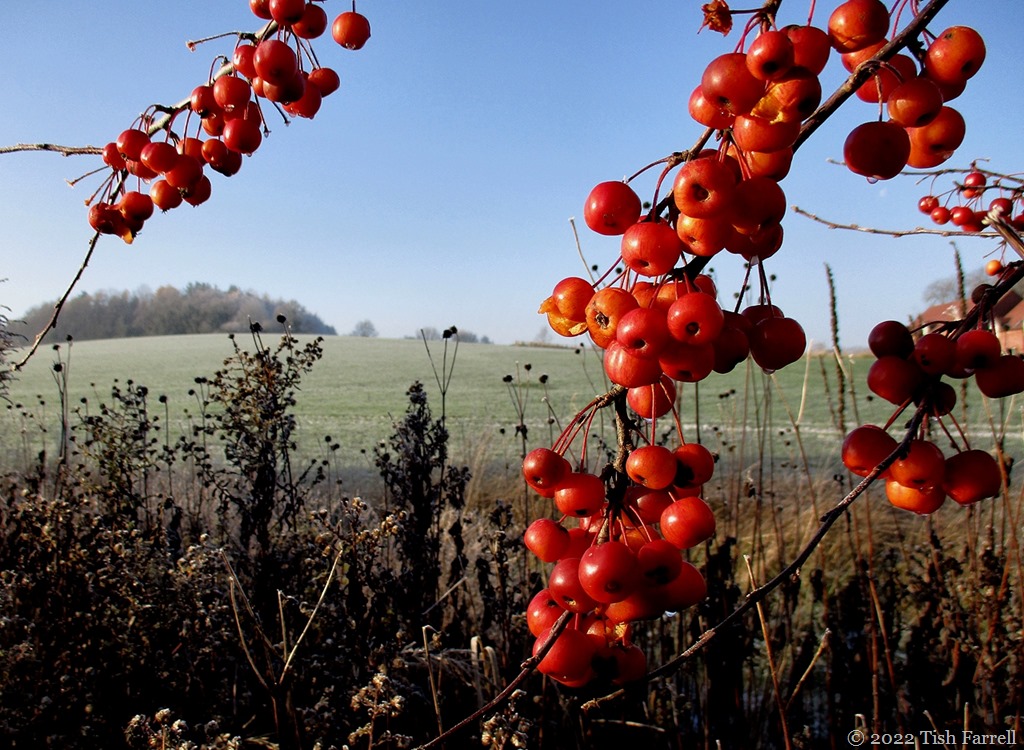
This morning over the garden fence: frosted crab apples and brilliant sunshine. The weather people tell us there will be more frost tonight and tomorrow (temps around –5 C), but slightly milder weather over the weekend.

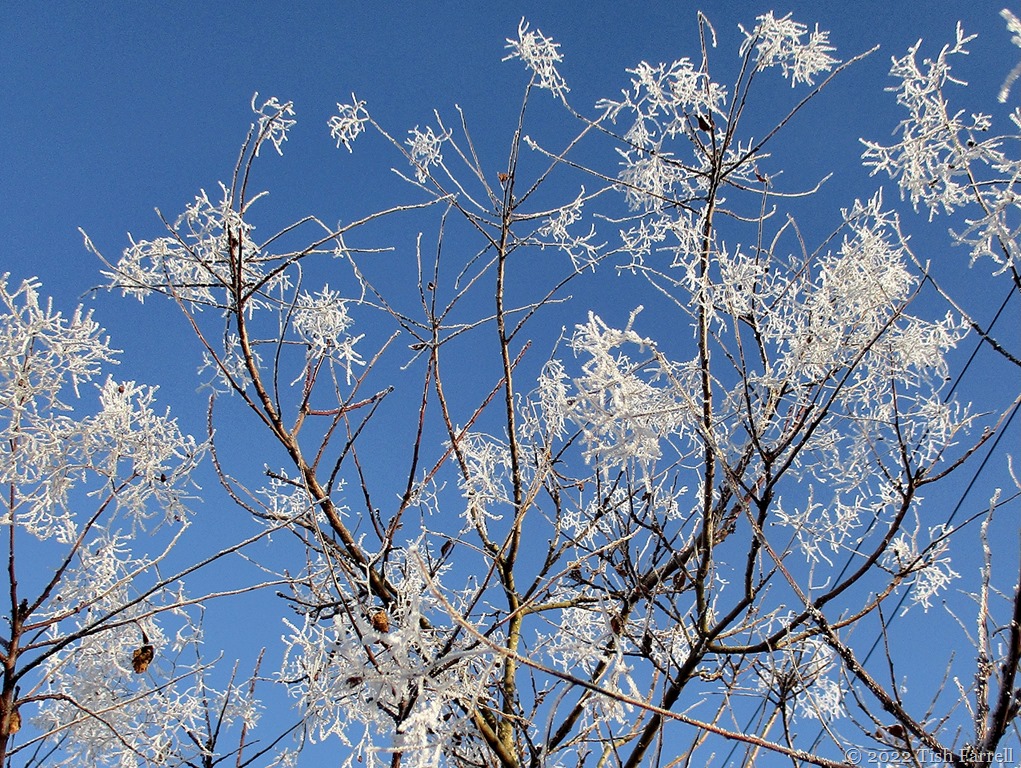
In the meantime, I’ve been enjoying the frost-art around the garden, and especially the glistening spent flower heads of the Smoke Bush (Cotinus coggygria). Truly a tree for all seasons.

IMG_2141ed

*

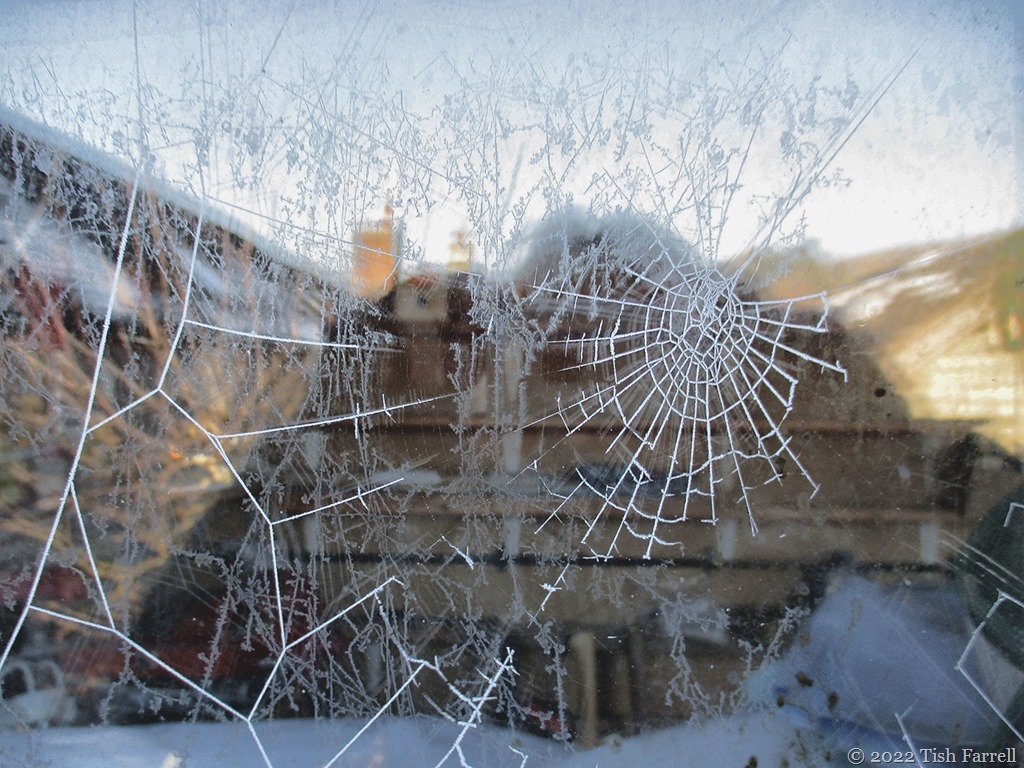
And then there were the spider installations on the garden shed window:

IMG_2133

*

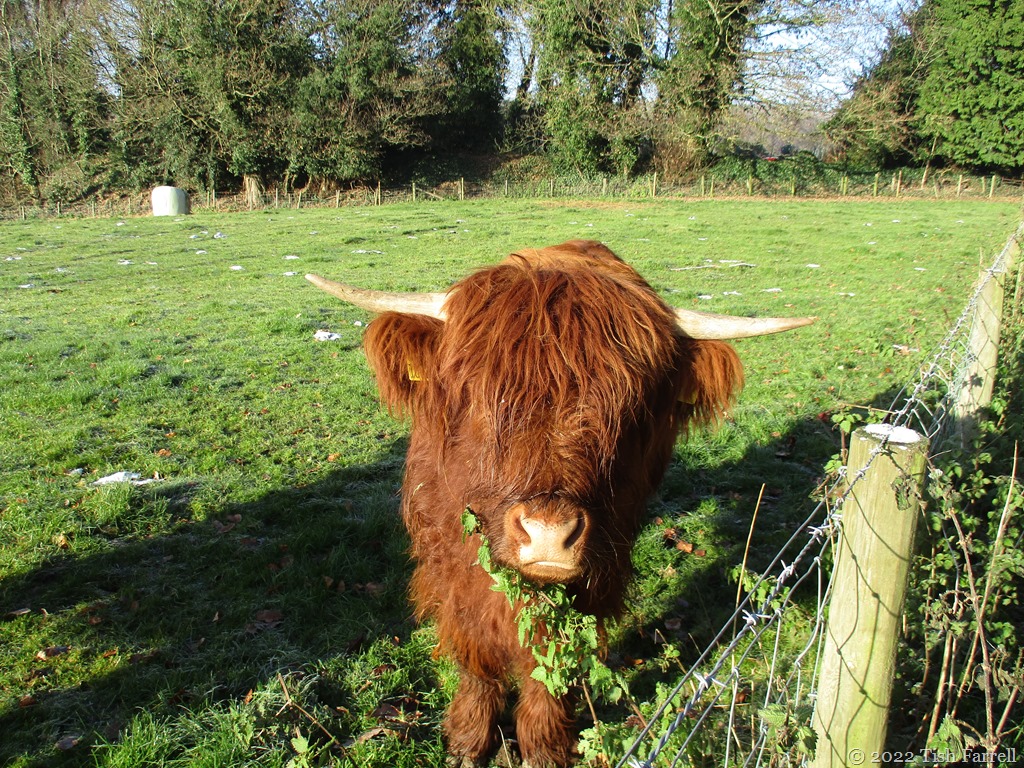
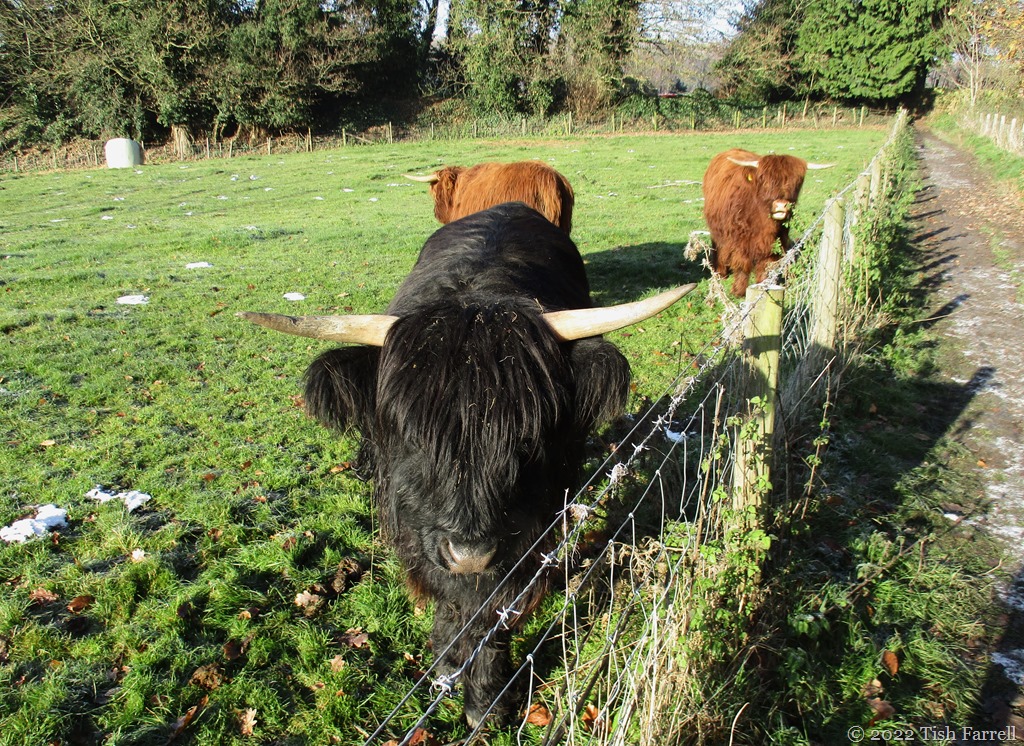
We also checked on the MacMoos this morning. They seemed in meditative mood, soaking up the sunshine.

IMG_2156

f

*

IMG_2165ed

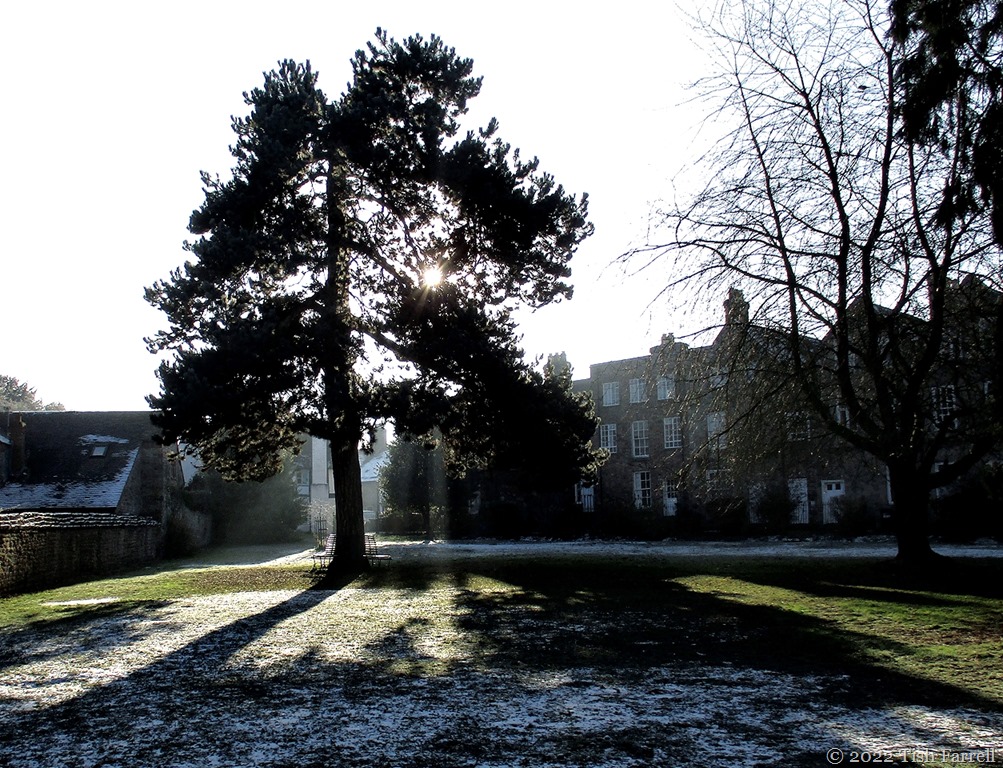
Much Wenlock’s Church Green this morning

*

And finally before lunch there was a quick tramp to the allotment, the wheat field iron-hard, and hard on the feet too, even in boots.

IMG_2181ed

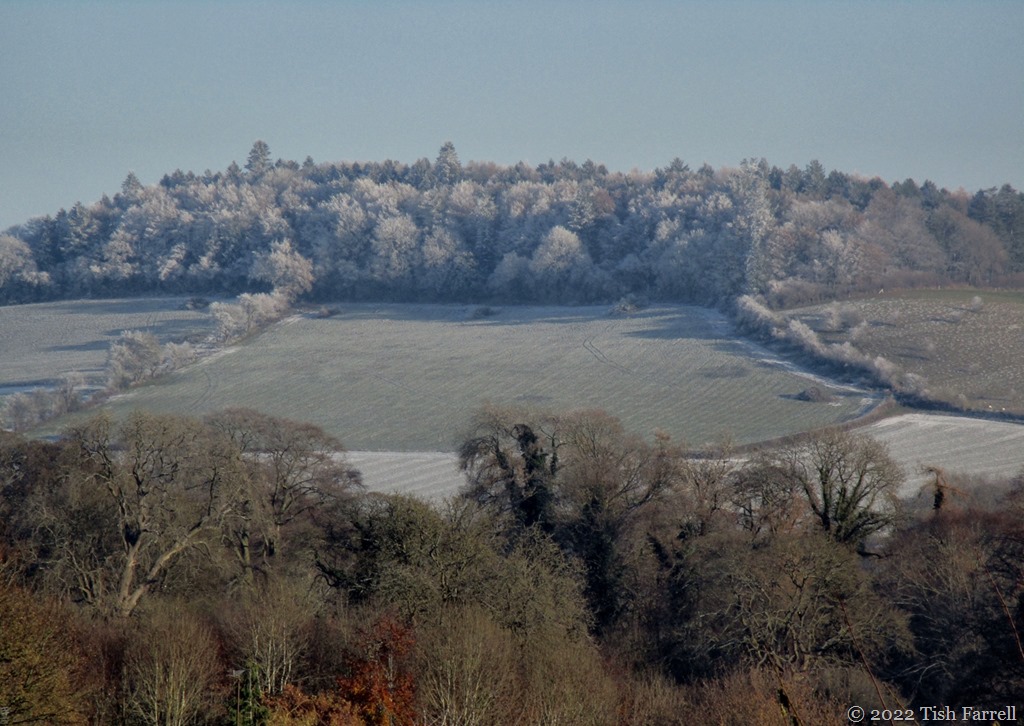
Townsend Meadow

*

IMG_2178ed

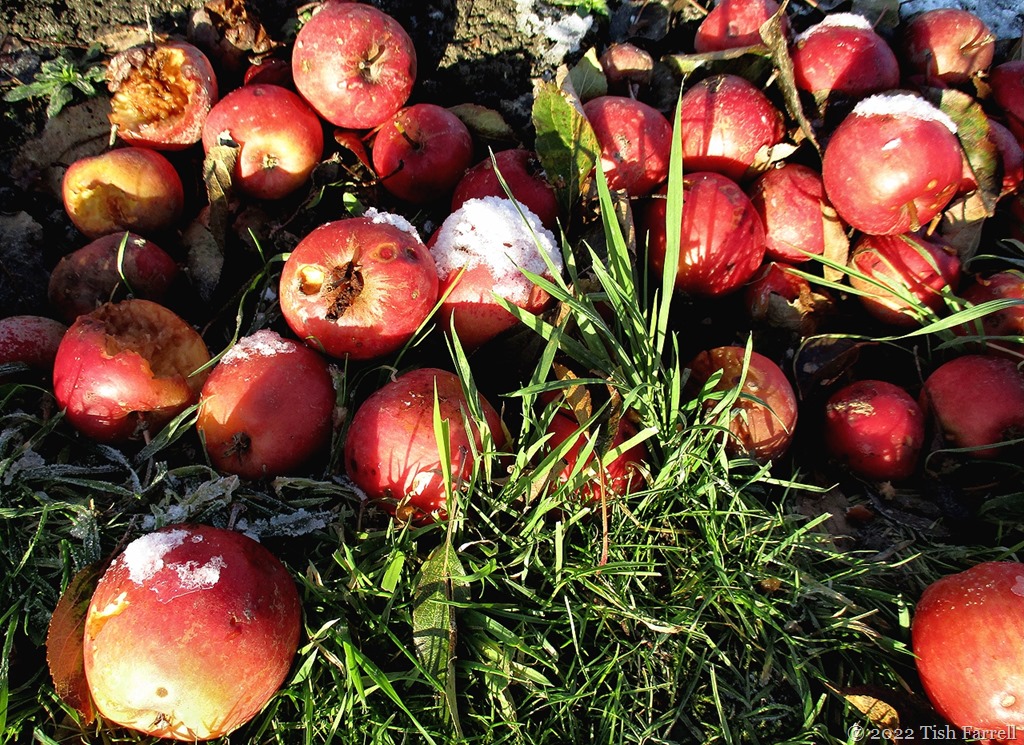
Allotment windfalls – the robins are enjoying them

*

IMG_2173ed

Stiperstones ~ On The Diagonal

P1080561sep

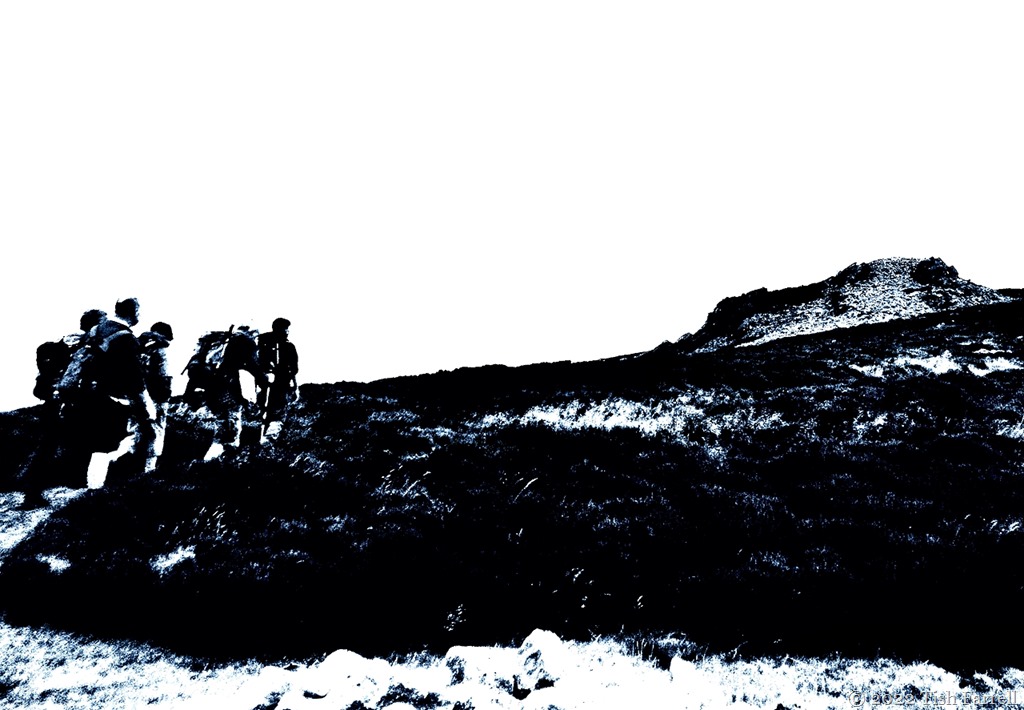
In an earlier post HERE I said the Stiperstones ridge has to be one of Shropshire’s most compellingly strange landscapes. And that its cragginess was wrought by the scything, crushing and cracking action of ice during the last glacial period some 150,000 – 11,000 years ago. Periods of alternating thaw and freeze also made their mark. But now I’m also noticing another striking feature – the way the geology is so determinedly set on the diagonal, the outcrops’ pitch  a piece of ‘set-in-stone’ evidence attesting to recent epic earth forces.
When I say ‘recent’ I am of course wearing my prehistorian’s hat. Also I should make clear that the word ‘last’ as in ‘the last glacial period’ does not mean ‘final’, or that we have seen the end of ice ages. We are currently in an interglacial period, otherwise known as the Holocene. In the past, ice ages have occurred in regular cycles, beginning in the Quaternary about 2.5 million years ago, coinciding with the formation of the Arctic ice sheet. There is no reason to suppose that that this cycle has stopped. Today’s sudden drop in temperature is also giving me pause for thought. Thank goodness for alpaca leg warmers and woolly socks is all I can say (and that’s in the house).

Now for more Stiperstones diagonals:

P1080553cr3

P1060001dia

P1080554cr2

P1080542ed

Lens-Artists: diagonals  This week Patti sets the challenge and provides an inspiring photo-essay on making the most of diagonal vistas and subjects.

Castle in the Air?

IMG_1975ed

Does this look real to you?

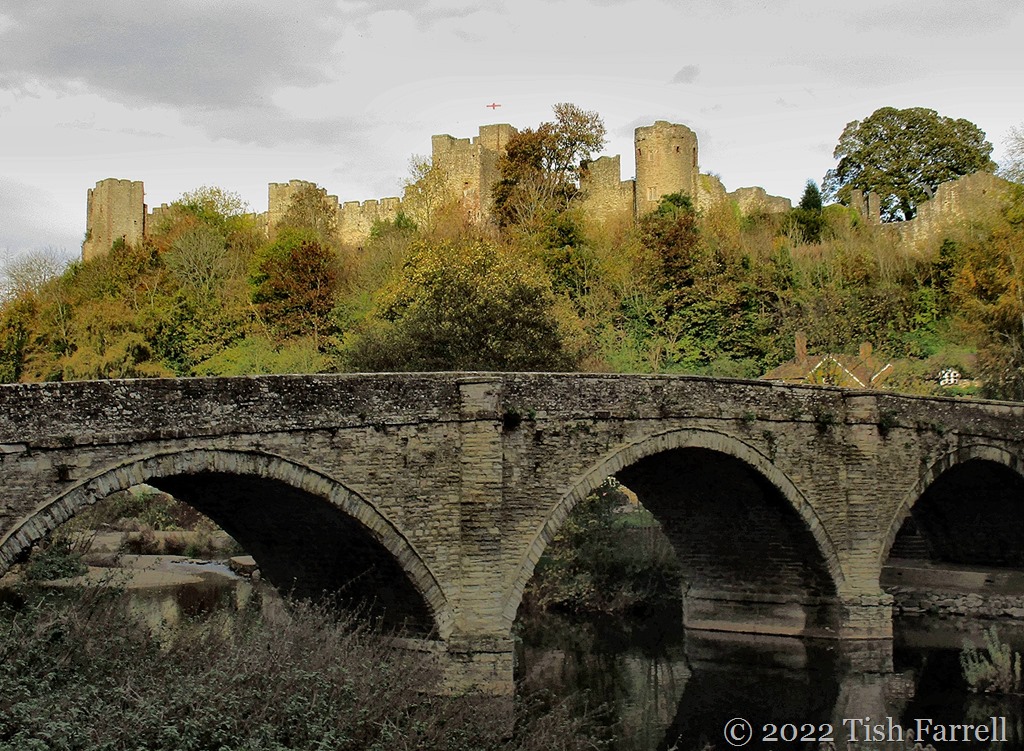
It doesn’t to me, and I was there, a coupld of days ago on All Hallows Eve, taking this photograph. It’s a view I’ve captured before, but somehow these ruins of Ludlow Castle set high above the River Teme, always manage to look like some idealised Victorian watercolour; or a film set; even dream-like. Yet there was nothing dreamy about the conception of this massive fortification. Its construction began in the 11th century with the sole intention of keeping the Welsh princes in their place behind the nearby England-Wales border.

IMG_1983ed

It’s other significance, in my mind at least, is that in the winter of 1501 Prince Arthur Tudor, heir to the English throne and Henry VIII’s older brother, spent his honeymoon here. He had married the Spanish princess, Catherine of Aragon, both of them still in their teens.   You can read more this story here: Honeymoon Destination Anyone?

But in any event, even with the walls intact, and some well tapestried royal chambers somewhere within, it takes a great leap of imagination to consider this an ideal honeymoon venue. Presumably Arthur’s presence  was a political gesture to impress the Welsh neighbours. In any event, it did not end well. It seems that both Arthur and Catherine fell ill with the ‘sweating sickness’, a strange and passing disease of Tudor times. Catherine recovered but by April 1502 Arthur was dead. And the rest, as they say, is history.

My own experience within the castle walls dates back to the late 1960s. It was a summer’s evening and the time of the Ludlow Arts Festival which every year staged a Shakespeare play inside the castle’s massive inner bailey. Open air of course and on very hard wooden seats. My mother had tickets for Shakespeare’s Richard III. It had poured with rain all day, and I (in grumpy teen mode) didn’t want to go. But by early evening the sky cleared and so we set off for Ludlow, armed with cushions and blankets and a flask of coffee.

There was no set to speak of. Only a platform with a throne against the looming backdrop of the bailey walls. Swifts and swallows whisked by overhead, but as it grew dark it was the turn of the bats to swoop and dive around the battlements. And then came Act 5 scene 3 – the night before the battle of Bosworth Field when Richard is visited by the ghosts of all those he has murdered. And out of the shadows, from different spots around the castle walls, echoed the eerie voices. It was thrilling. Unforgettable. And to think I hadn’t wanted to come.

#Lens-Artists: Flights of Fancy  Johnbo has set this week’s challenge. Go see his different approaches for this theme.

On the Road In Much Wenlock ~ ‘A Rip Van Winkle Kind Of A Place’

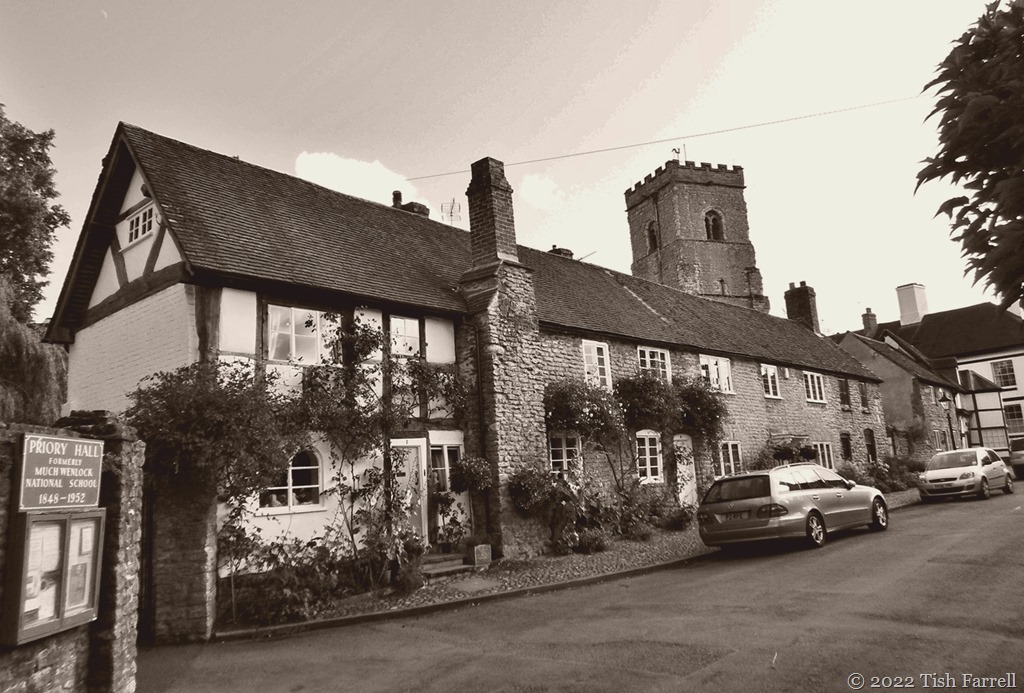
Much Wenlock Sheinton Street towards Holy Trinity Church

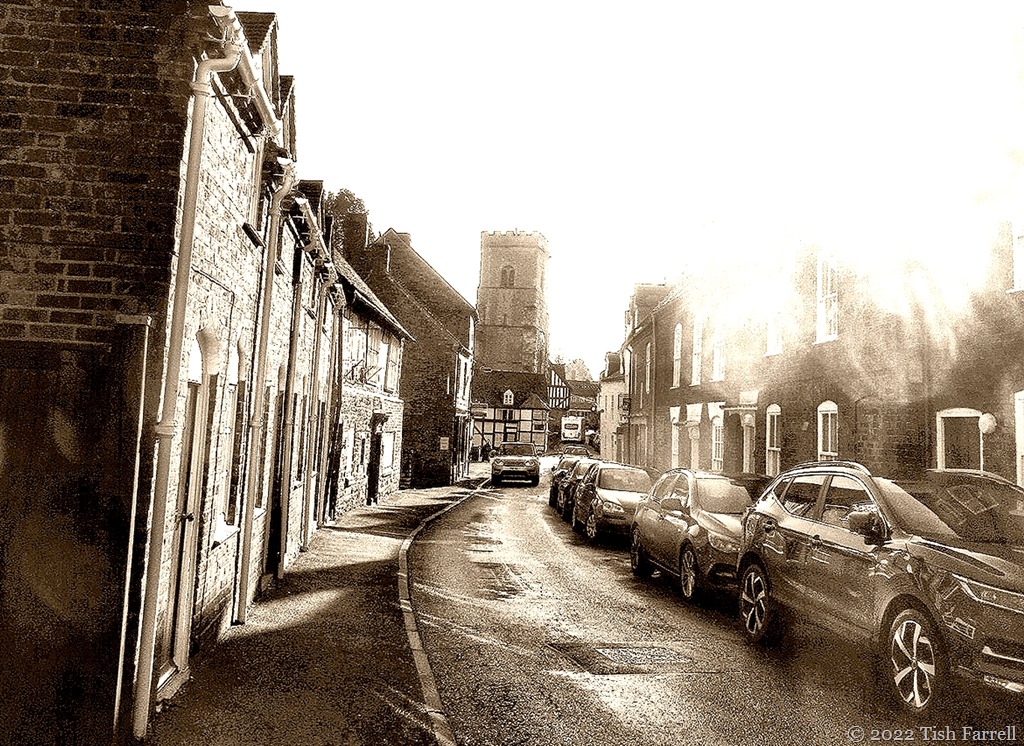
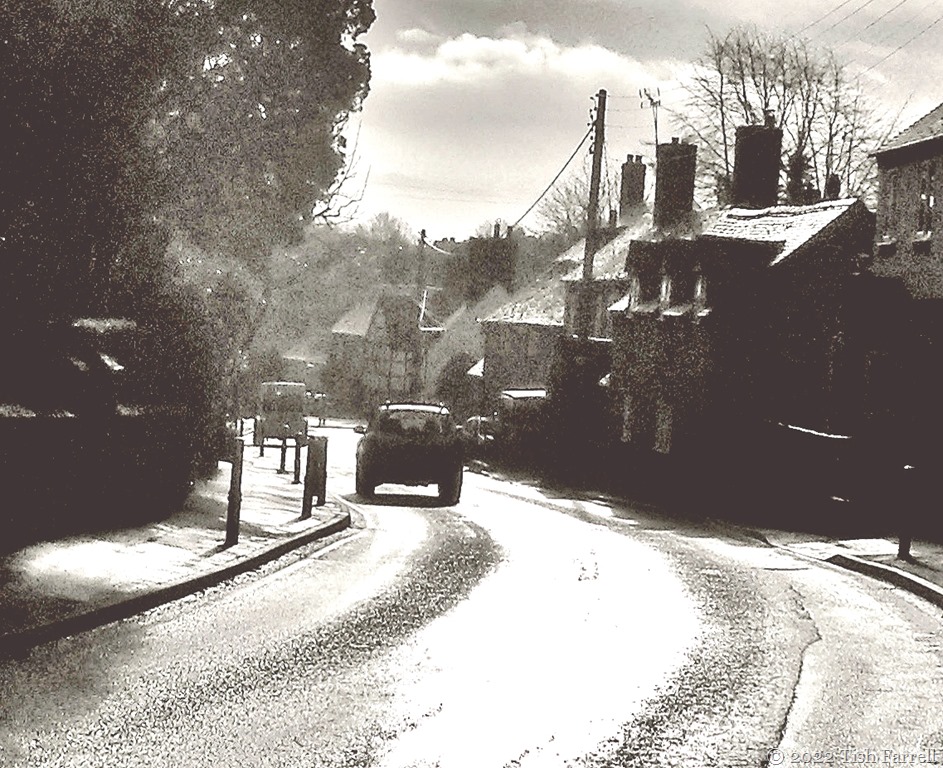
Sheinton Street looking towards Holy Trinity Church

*

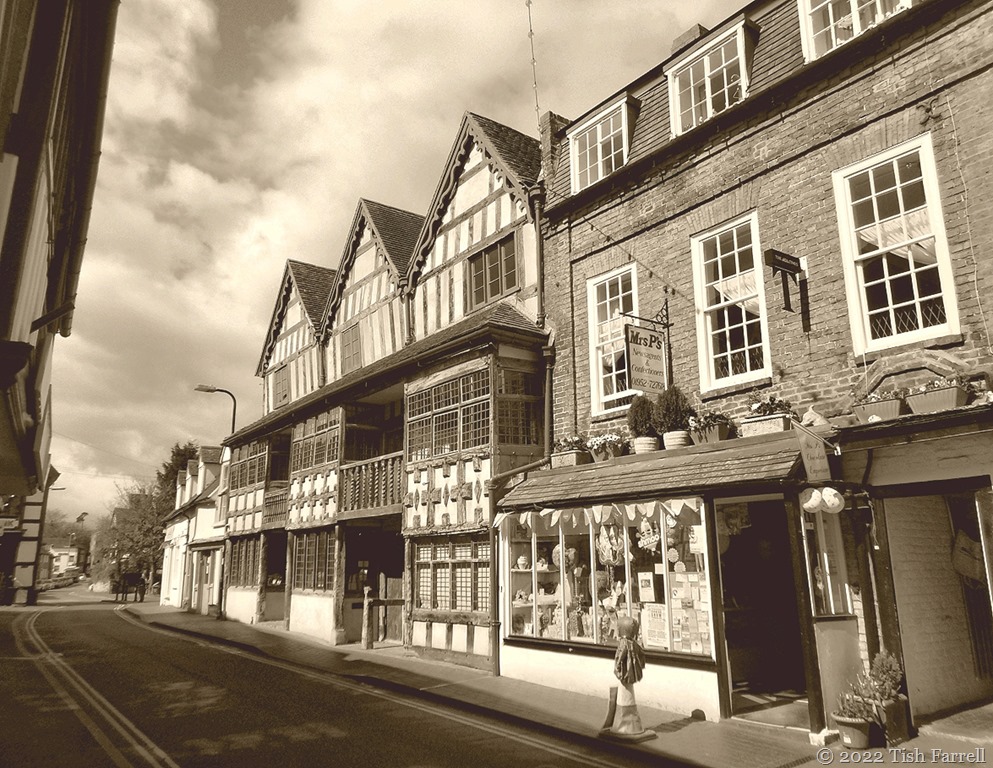
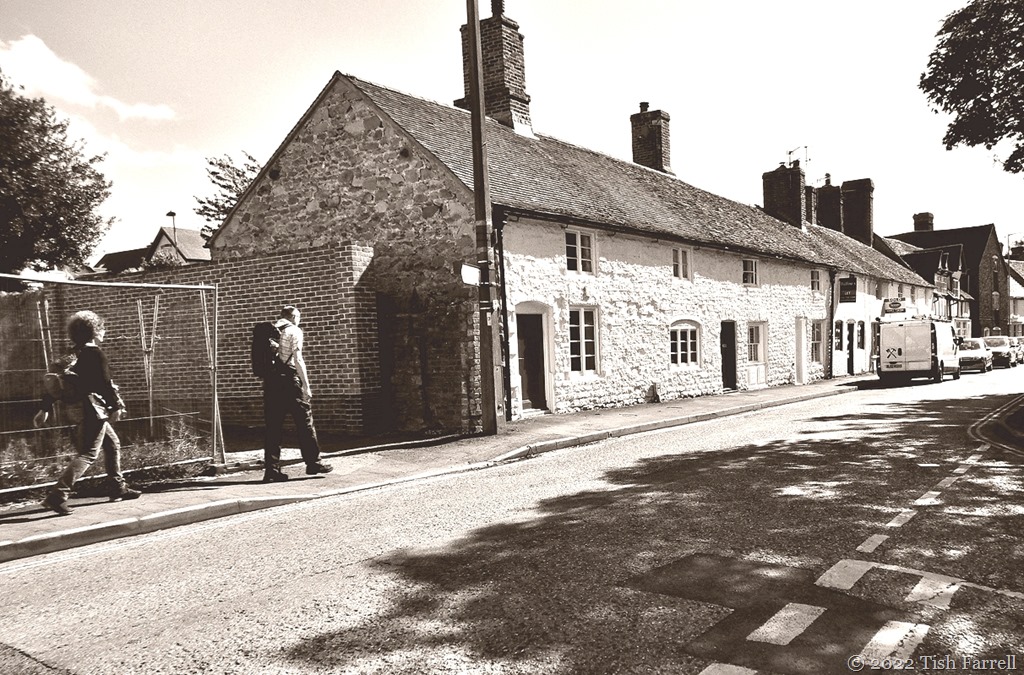
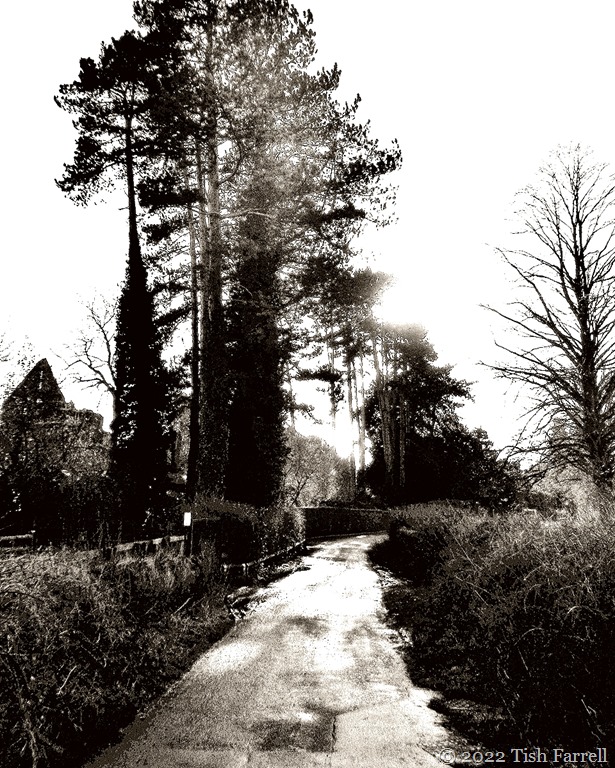
It’s a while since I posted any photos of my home town. These shots are all from the archive, but I had a notion to edit them in sepia tones, along with a touch of over-exposure here and there to accompany  the century-old quotation from Shropshire writer Mary Webb. I mean to say, even with all the cars, it still has that  look. There’s definitely a sense of Winkle time-slippage. This may well have something to do with the fact that this small town has been continuously occupied for  more than a thousand years. And before that, there would have been Romans and Romano-British wandering around the place with the likelihood of a villa/bathhouse on the site of the medieval Wenlock Priory. And before that, itinerant Bronze Age smiths may well have passed through, one of whom lost his stash of arrow and axe heads in the River Severn not far from Wenlock. Or maybe it was a donation for a safe crossing.

Many of the facades you see in the photos have been added on the front of much earlier buildings – this during periods of particular market-town prosperity when there were attempts at gentrification. I say ‘attempts’ because by all accounts even in the late nineteenth century there was a smelly open sewer running through the town. Also the place was regularly doused in limestone dust with every blasting at surrounding quarries. And there would have been some evil smog too from lime burning kilns (this to produce lime for building mortar and fertiliser).

Much Wenlock High Street

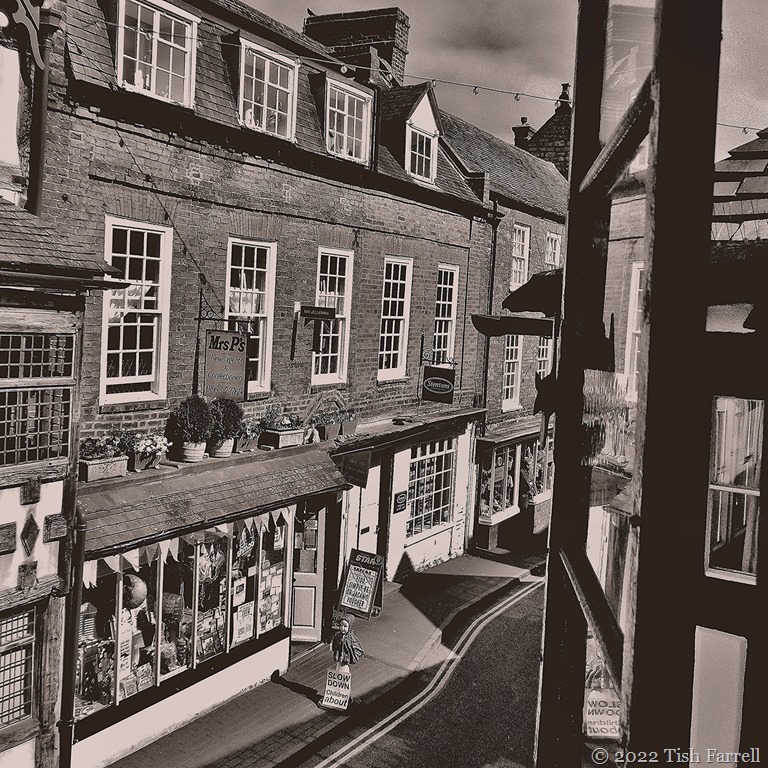
Looking down on the High Street

*

Much Wenlock The Bullring

The Bull Ring where once  the popular sport of bull baiting took place on fair days and holidays

*

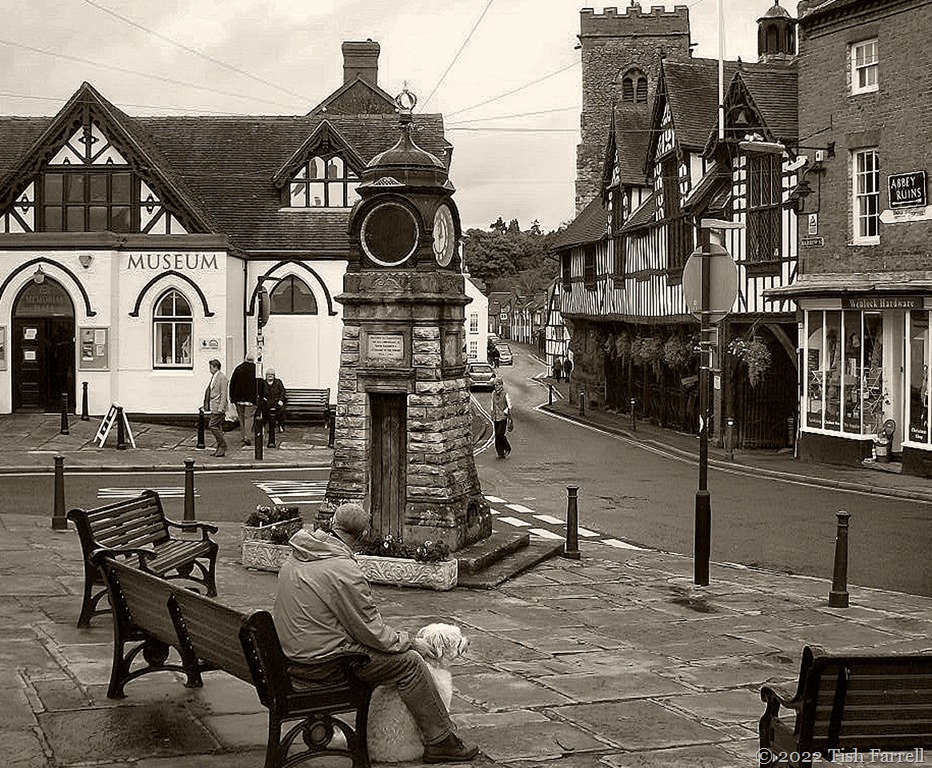
Much Wenlock The Square

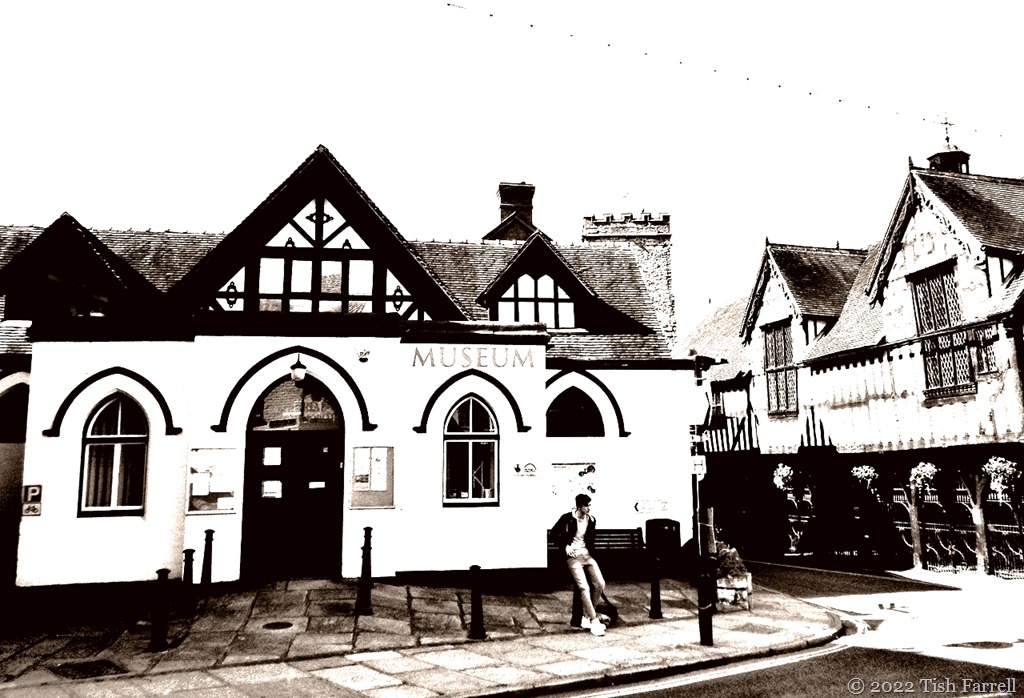
The Square (looking past the church towards Wilmore and Sheinton Street)  with the Museum on the left (once the Butter Market and then a cinema) and the 16th century Guidhall opposite. The assizes were held on the upper floor, the lock-up down below. These days the town council holds its meetings there.

*

Much Wenlock Queen Street

Queen Street and Brook House Farm, one of the last surviving town farms, now ‘done up’ into several desirable residences. I remember it with cattle in the barn.

*

Much Wenlock High Street with Reynalds Mansion

The High Street featuring our star timber-framed residence – Reynolds Mansion, a fifteenth century hall with a grand 1682 frontage

*

Much Wenlock High Street towards Gaskell Corner

Top of the High Street. This row of stone clad cottages contains some very ancient inner parts.

*

Much Wenlock High Street and Wilmore Street with Guildhall

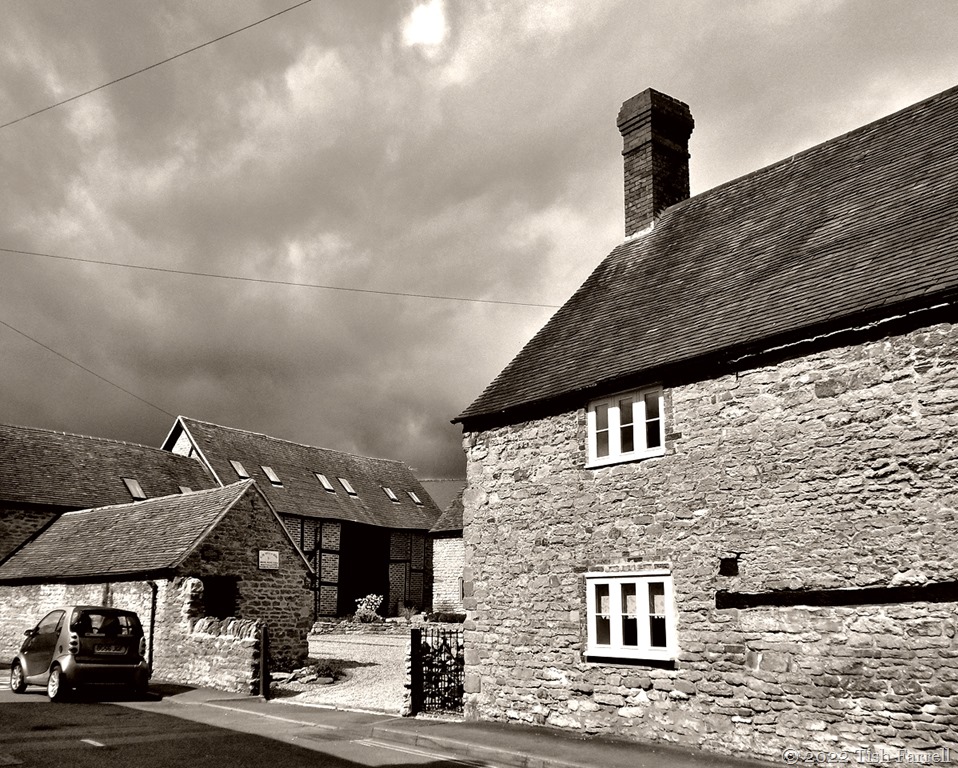
Much Wenlock Sheinton Street towards New Road

Looking down Sheinton Street from the Farrell house

*

Much Wenlock lane beside Priory ruins

Downs Lane beside Wenlock Priory

*

Related: Wenlock: “A Rip Van Winkle kind of a place

Cee’s Black & White Photo Challenge: roads

Over The Home Hill: More Hills

P1050952ed2

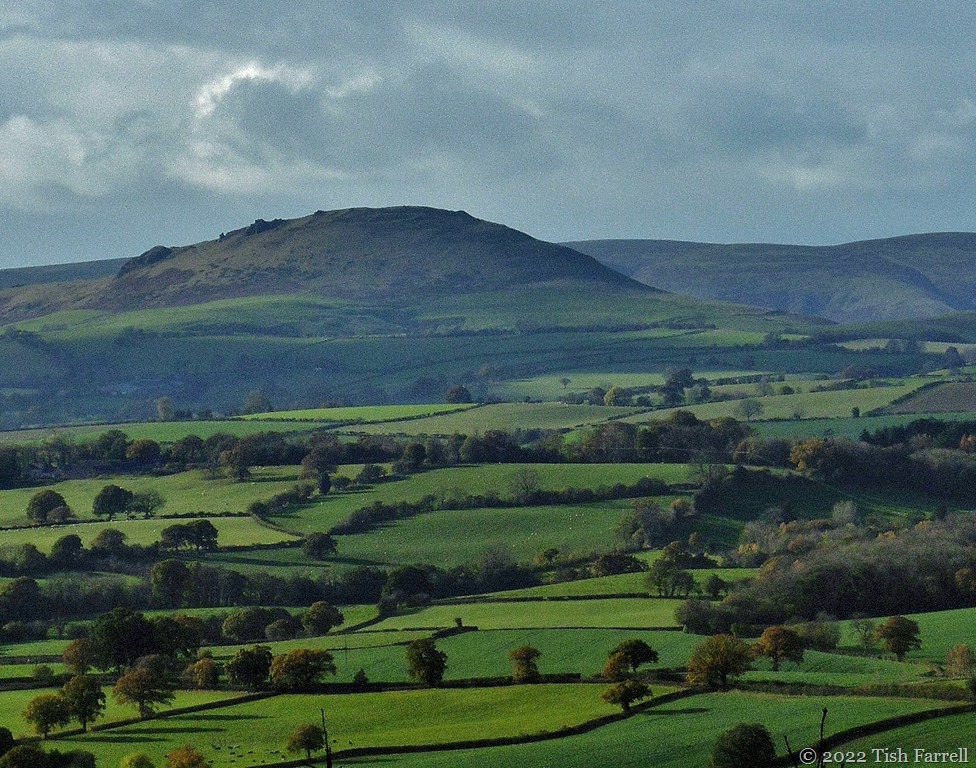
Wenlock Edge behind our house runs for twenty odd miles, a wooded escarpment that bisects the county of Shropshire on a north-east-south-west axis. It’s not always easy to see out for the tree cover, but here and there, a few choice viewpoints give you a glimpse of Shropshire’s other hills, the Long Mynd living up to its name in the distance here. I’m fumbling for the name of the hill in the middle distance (not recognising it from this angle). It could be Caradoc.

*

If we turn right round in the other direction, then we can see Clee Hill:

P1050963ed

*

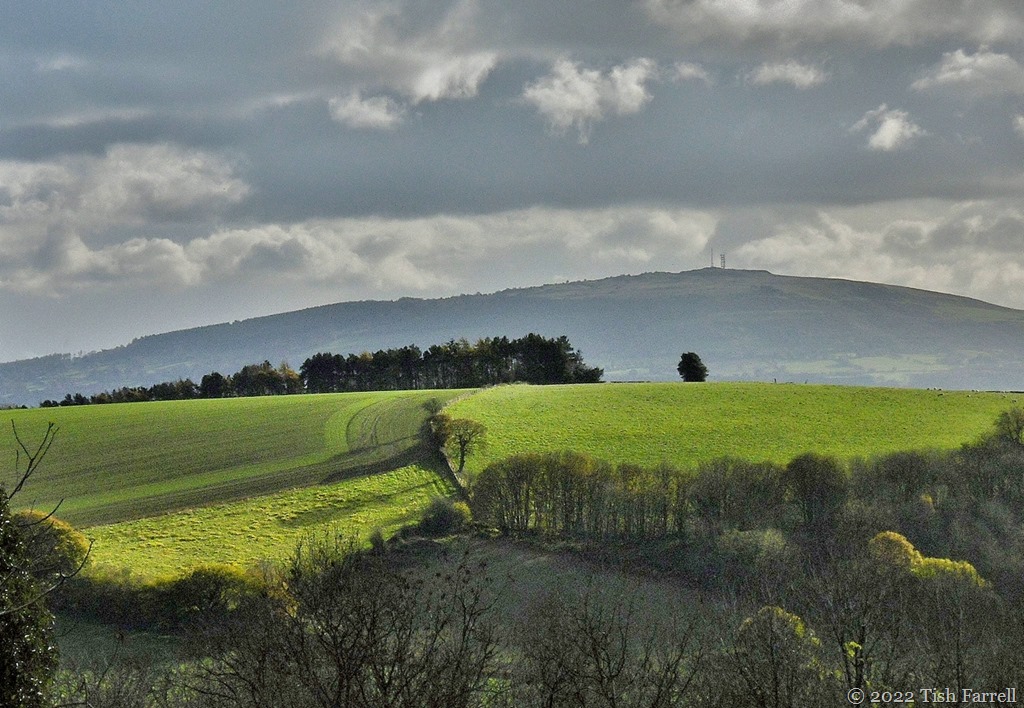
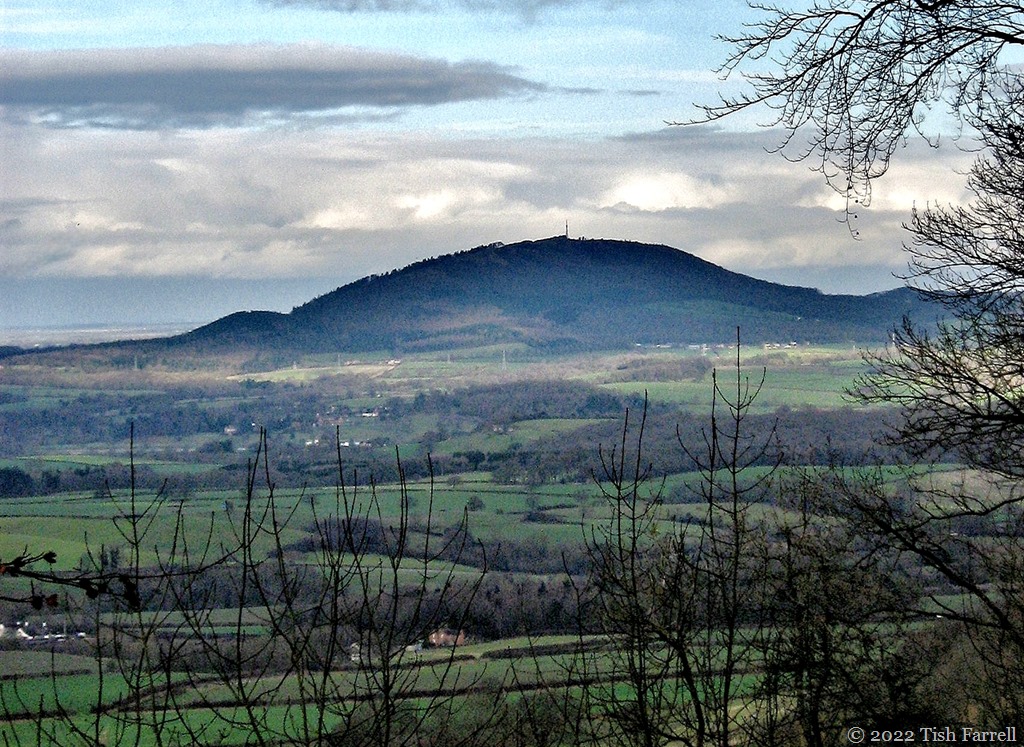
Closer to home, you can take the National Trust footpath out of Much Wenlock and head for the Edge landmark, Major’s Leap, from where, on a winter’s day, you may be treated to an other-worldly view of the Wrekin, subject of many quaint Shropshire tales. (My version here).

IMG_1949ed

*

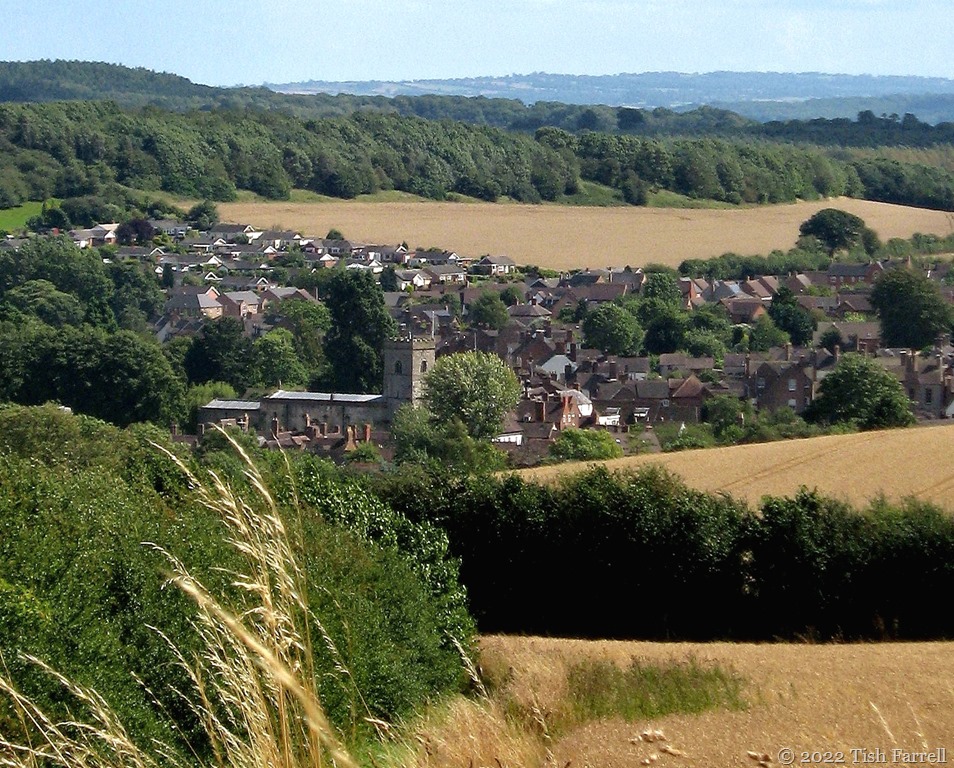
And coming down the Edge footpath behind our house you have a fine view of Much Wenlock hugged round by hills, Walton Hill and Shirlett Forest:

IMG_1373ed

*

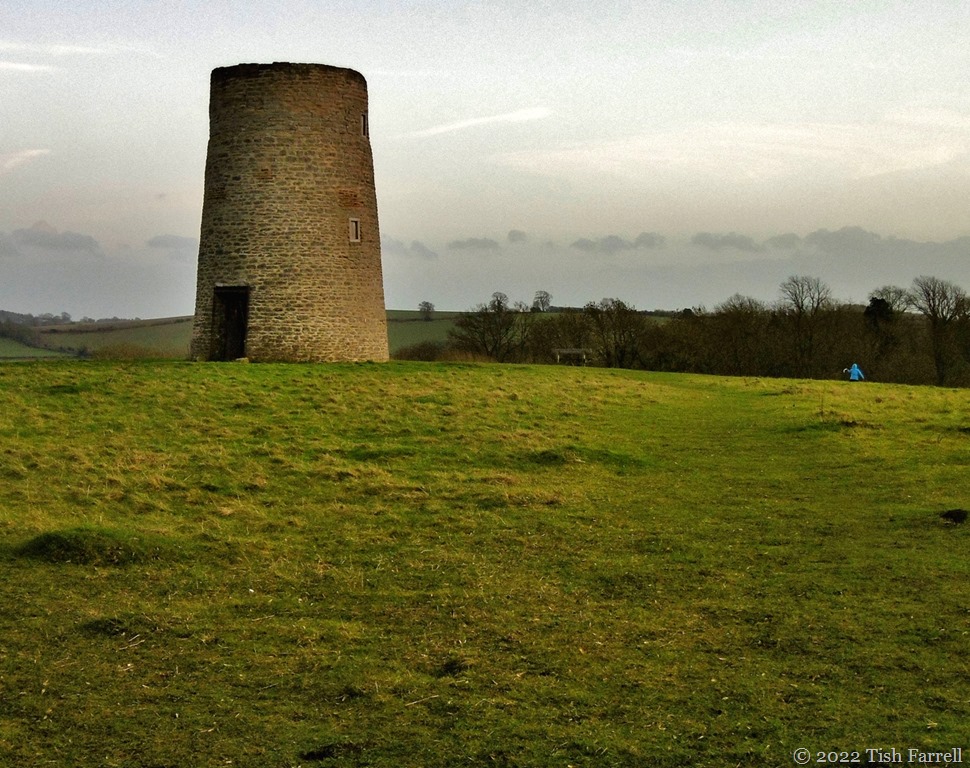
And while I’m showing off our local hills, I can’t leave out the town’s favourite landmark: Windmill Hill with a small turquoise person heading over it:

P1030046ed

Lens-Artists: over the hill  Donna at Wind Kisses has set this week’s challenge.

Stranger Than Fiction

P1080542ed

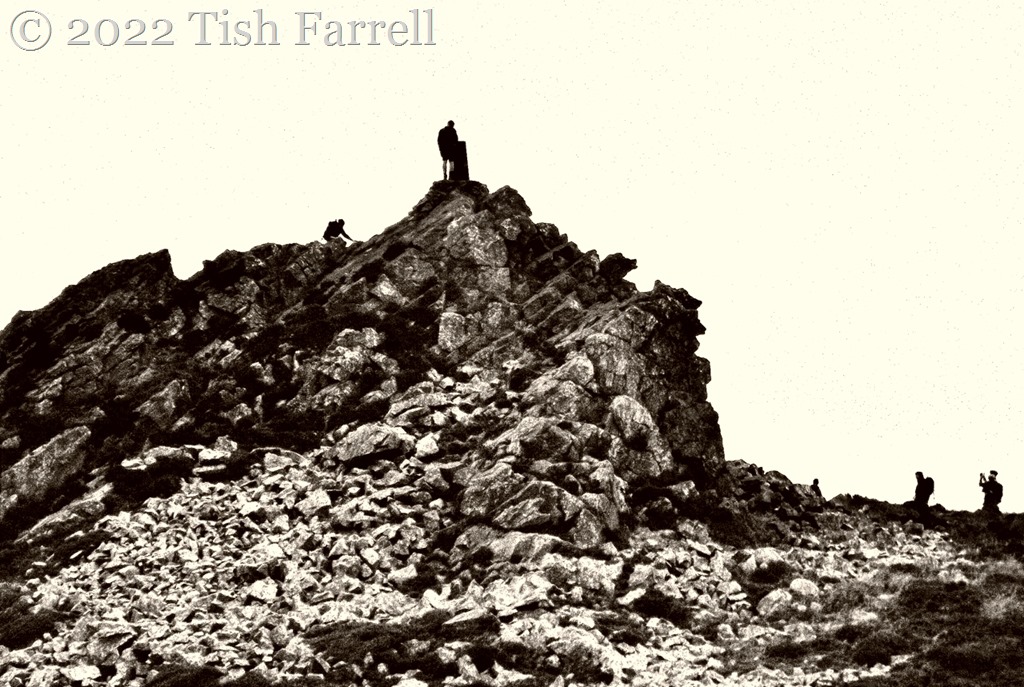
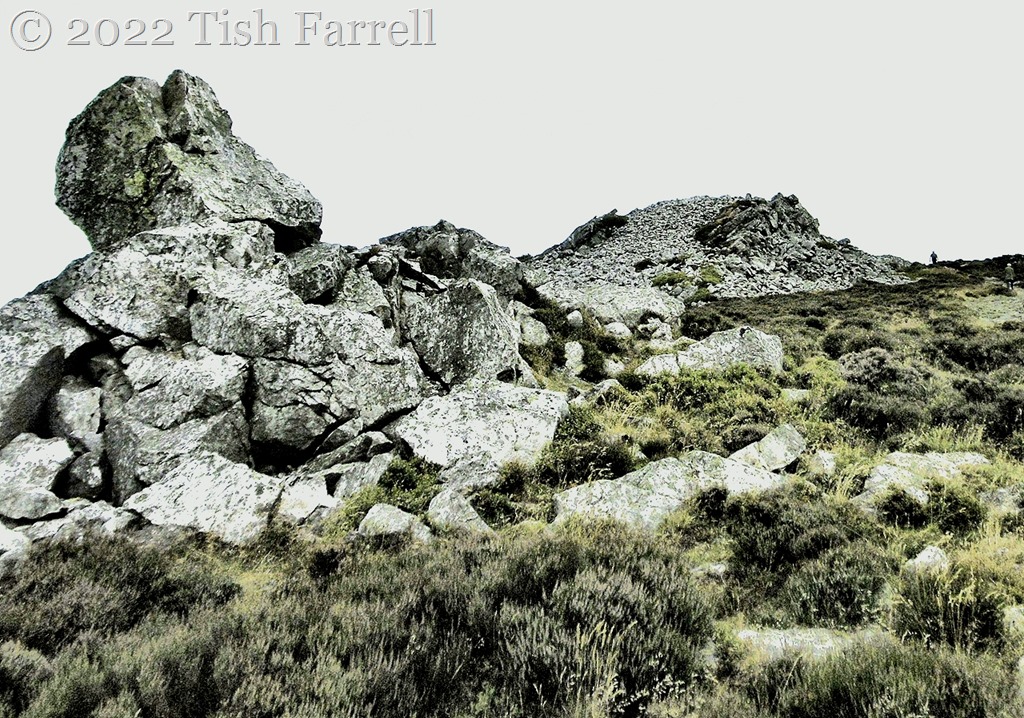
And Shropshire’s Stiperstones with its brooding Devil’s Chair outcrop has indeed provided the setting for several works of fiction: the novels of Mary Webb, Malcolm Saville’s still popular Lone Pine adventure stories for children, and also D.H. Lawrence’s novella St. Mawr. And naturally, given its dramatic looks, it also features in local myths and legends, particularly those associated with Wild Edric, the Saxon earl who refused to surrender his lands to the Norman invaders and stirred up rebellion, allying himself with the Welsh princes of Gwynedd and Powys just over the border.

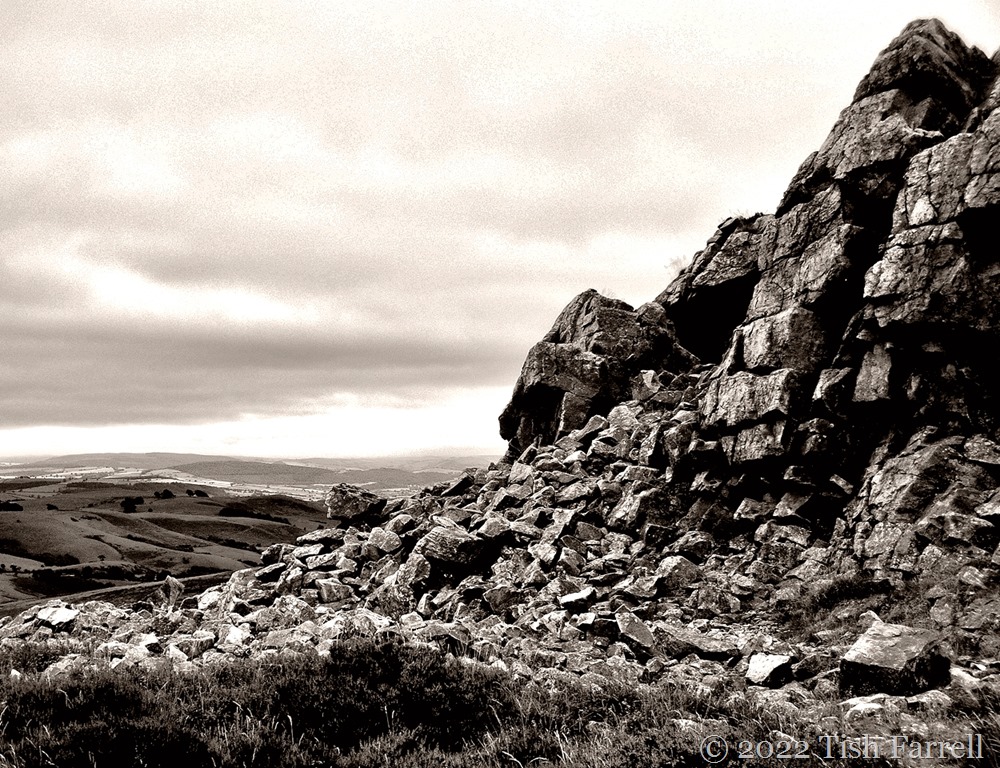
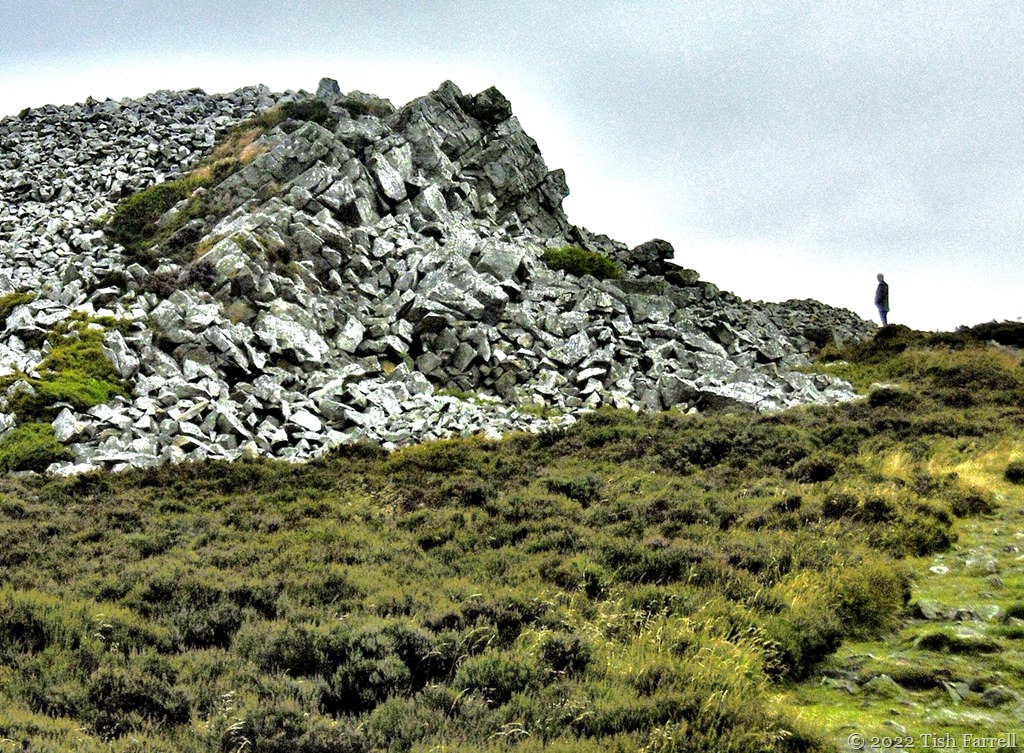
In real life it is an utterly strange place. These photos were taken on a summer’s day, but somehow, when we reached the hilltop, the light leached away. Even so, the grey-white quartzite outcrops seemed to have an unsettling luminosity.  The photos I took using the monochrome setting on my camera are especially other worldly. There also appears to be an odd patch of mist on the next photo. I can’t explain it.

P1080574ed

P1080557ed

*

And in colour, too, the landscape’s disturbing presence is scarcely diminished:

P1080552ed

*

Lens-Artists: Surreal This week Tracy challenges us to post some surreal images, and believe me, she has her own very original take on the topic. Go see for yourselves.