photography
B & W Sunday ~ Stronghold ~ The Telling Of Family Tales

Most families tell tales about their origins: legends of high-born connections, of inheritances lost or missed-out on, of forebears famous or notorious somewhere in the family tree. These stories, the ideas of who we are become strongholds of sorts; a defence against times when others make us feel ‘not good enough’, or just plain dull.
I seem to remember when I was eight or nine telling one very competitive school friend, and as a piece of deliberate one-upmanship on my part, that one of my ancestors was a well known poet and buried in Poets’ Corner in Westminster Abbey. Mother had told me so.
Indeed, Mother told me lots of family stories about her Derbyshire Fox and Bennett antecedents, and because a) she still had her own childhood interpretation of what her own mother had said, and b) was framing them in a way she thought I would also understand, the ensuing narrative, much like Chinese Whispers, came out more than a little garbled. In other words, our family connection to the poet ancestor is probably so much tosh.
From time to time I have little delving sessions on the internet in a bid to clear up the maternal myths, and last year came across two fellow searchers into the Fox family of Derbyshire’s High Peak. It turned out we were each descended from three siblings William, Robert and Deborah Fox, all born at Callow Farm in the manor of Highlow, in the 1770s. And it’s odd, but I find I treasure this present-day, albeit tenuous blood connection, almost more than anything I might find out about our mutual family past. I mean, well, who would have thought it; without the internet, we never would have found each other.
The Fox siblings’ father, George Fox, came from many generations of farmers. Over the years the family appears to have owned several pieces of land in the parishes of Hathersage, Longshaw, Eyam and Abney (one was a sheep run, others were possibly both farms and lead mine workings), but the Foxes, certainly in recent centuries, were mostly the tenants, first of the Eyres at Highlow Hall (pictured above), and later of the Dukes of Devonshire who came to rule much of Derbyshire from their own dynastic stronghold of Chatsworth.
If the Eyre name rings bells, well it is true (just to add another story thread) that Charlotte Bronte was staying with her friend Ellen Nussey in Hathersage in 1845, around the time she was writing Jane Eyre. Mr. Rochester’s Thornfield Hall is said to be drawn from another Eyre family stronghold, North Lees Hall. She and Ellen went visiting there. Other local features are also present in the book, including Hathersage itself, which was apparently the model for Morton, the village where Jane Eyre ends up after running away from Edward Rochester.
My Fox ancestors, it seems, were also good storytellers – fact mixed seamlessly with fiction. When Robert Fox’s son, my great, great grandfather George Brayley Fox was forced to sell up his possessions at Callow Farm in 1892, this piece appeared in the Derbyshire Courier:

My own feeling about this ancestral yarn is that it was a bit of a face-saving exercise for a family that had indeed been part of the local scene for generations. Some of the details may well be based on some misremembered version of reality. Early medieval charters of the 12th and 13th centuries certainly have Foxes farming in pretty much the same location. Now, I and my two fellow Fox hunters are trying to tease the facts from the myths.
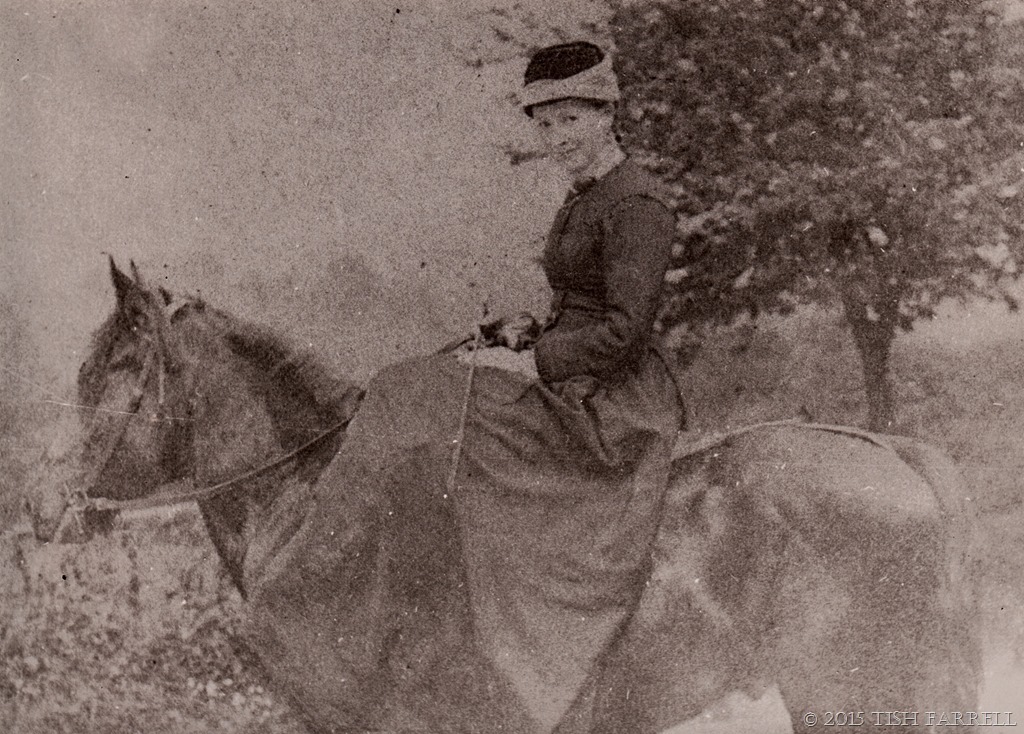
But one thing I do know (because I have the photo), my great grandmother, Mary Ann Fox, rode her pony along the winding lane from Callow Farm. She would have ridden past Highlow Hall on one of her regular missions. Grandmother said she went to Chatsworth Hall to deliver the farm tithe in eggs to the Duke of Devonshire. Here she is c1880s in her late teens, before she was silly enough to run off with a Manchester spindle manufacturer and, at thirty, end up the widow of a bankrupt with three young children and a stepson to support:
And here is Callow farmhouse, the photo taken by a family researcher in the 1970s. It sits on a hillside below Highlow Hall, and looks down on the River Derwent and the small town of Hathersage. If there is a house of 1391 here, as the newspaper article suggests, then it is very well hidden inside a very much later exterior:

But if I said that these images and family tales have not affected how I see myself, then this would not be true, although it is only recently that I have seen this. For some reason, too, in my later years, these particular maternal ancestors seem to mean more to me.
The thing that speaks most loudly is not so much the gentry connections – real or imagined – but the sense of landscape, of the bleak uplands, the rugged scarps of millstone grit, the arcane, but tough world of lead-mining in which all classes toiled from the Eyres downwards; the fact that men and women worked so hard in this land, lived on oat cakes and homemade butter, cheese and ale, reared often very large families, and (in a surprising number of cases) lived into their eighties and nineties.
Somehow the more I uncover of my ancestors’ world, the more it becomes my stronghold, the mental hinterland wherein I am truly rooted. I stand up more strongly, look out across those moors with their prehistoric stone circles, and ancient burial cairns, the stone walls, and the sheep fields. The wind is in my face. My gaze broadens and lengthens. It is like standing on top of the world, looking down the endless spiral of time of which I am a part, and forever will be.
copyright 2015 Tish Farrell
Reference: For more about the Peak District
Black & White Sunday: Stronghold Go here to Paula’s to her and others’ strongholds
Clouds over Kenya
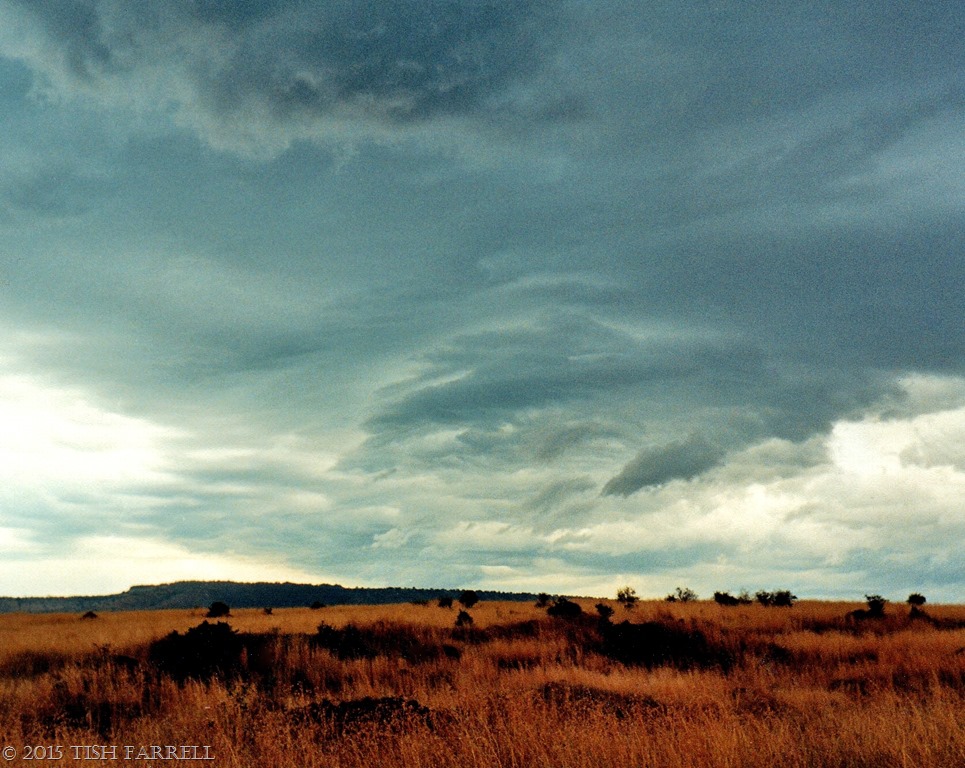
This probably is not the kind of scene most people associate with Africa. It looks more like a stretch of bleak English moorland in December. Anyway Kenya it is, and it was taken one August in a Maasai group ranch conservancy, bordering the Maasai Mara National Park.
May to September is East Africa’s winter, and the skies are often overcast and leaden. The nights, and even the days can be chilly. Kenya, anyway, covers many of the world’s climatic zones either horizontally or vertically – from the hot and arid Northern District, bordering Ethiopia and Somalia, to the alpine heights of Mount Kenya with its glacial peaks. There are also the airy, and rarely too hot, highland plains around Nairobi, and the steamy humidity of the Mombasa coastal strip to the south.
Much of the nation’s weather is determined by the cycle of Indian Ocean monsoon winds. These, unless disrupted by El Nino effects, bring two seasons of rain – the long rains in March to May, and the short rains in November-December. In between, many areas receive little or no rain. Western Kenya, however, receives more regular rainfall courtesy of Lake Victoria Nyanza which makes its own weather. Meanwhile in the fertile Central Highlands above Nairobi, altitude and forest combine to make June and July the season of heavy mists. It’s all a bit dreary, but the mist does have its uses – for instance, ripening the maize crops for the August harvest.
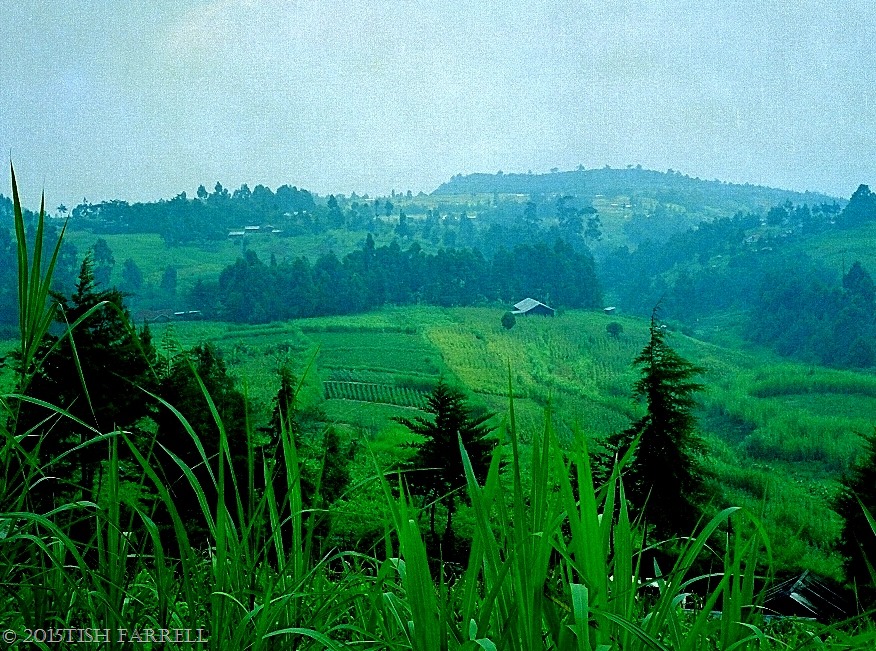
Smallholder farms and July mists in the Kikuyu highlands, north of Nairobi
*
In the late 1990s Team Farrell was often out and about in the Kikuyu highlands, visiting smallholder farms. And the reason we were doing this in the fog season was because the Team Leader, aka Graham, was – besides running an agricultural crop protection project on behalf of Her Majesty’s Government – gathering data for his doctoral thesis on smut. If you want to know more about our smut forays (of the plant variety that is) your can find out more HERE.
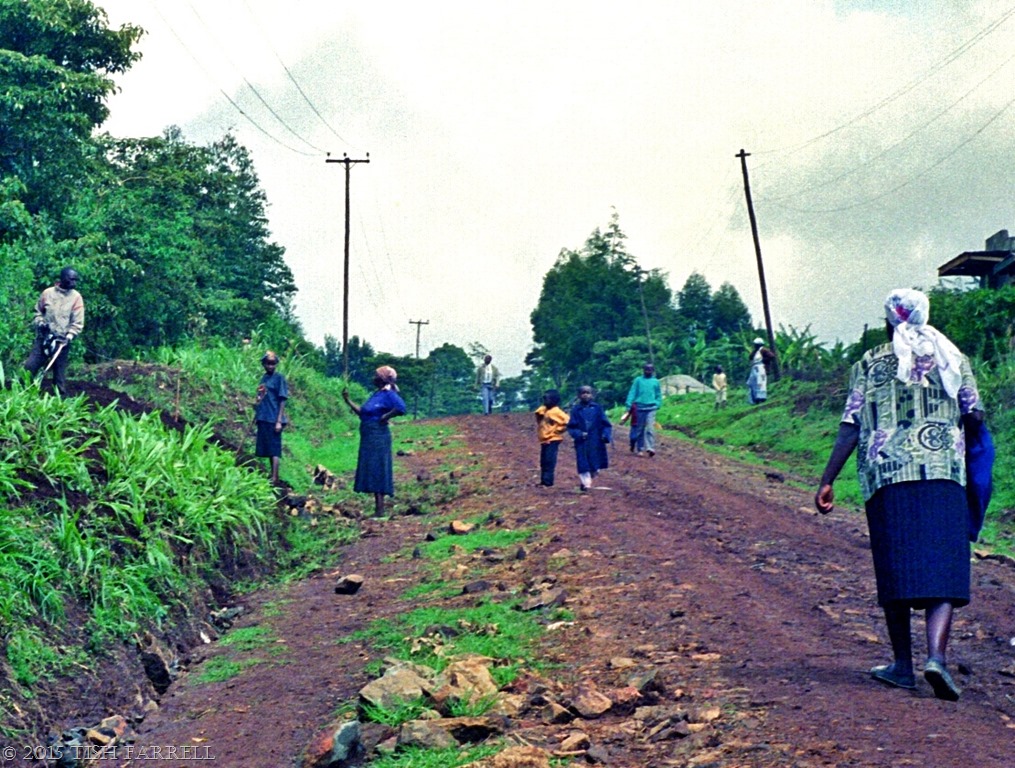
Rural road after an unseasonal July downpour. Poor communications embed poverty, making it hard for farmers to get produce to market before it spoils.
*
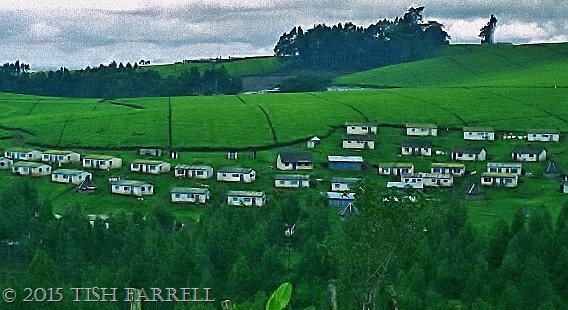
Lowering skies over Limuru’s tea gardens with tea pickers’ housing.
*

Kikuyu farmhouse.
*
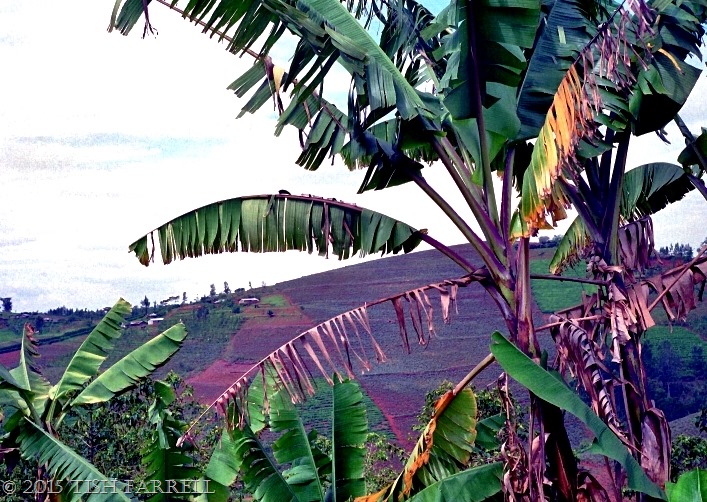
Wintery fields in Muranga where the Del Monte pineapples grow.
*
And just sometimes, even on the gloomiest Kenyan winter’s day, the sun breaks through the clouds:
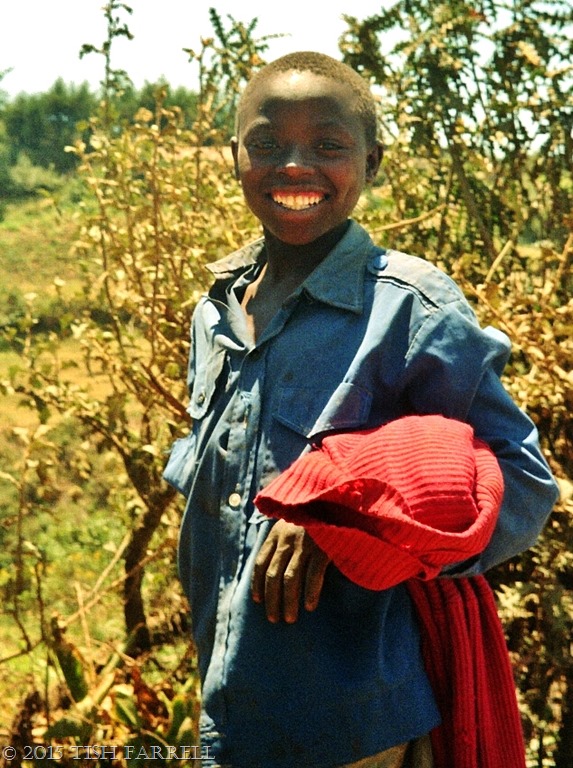
Jennifer Nichole Wells OWPC: cloudy Go here for more bloggers’ cloudy offerings.
Seeking Spring ~ A Walk on Wenlock’s Wild Side
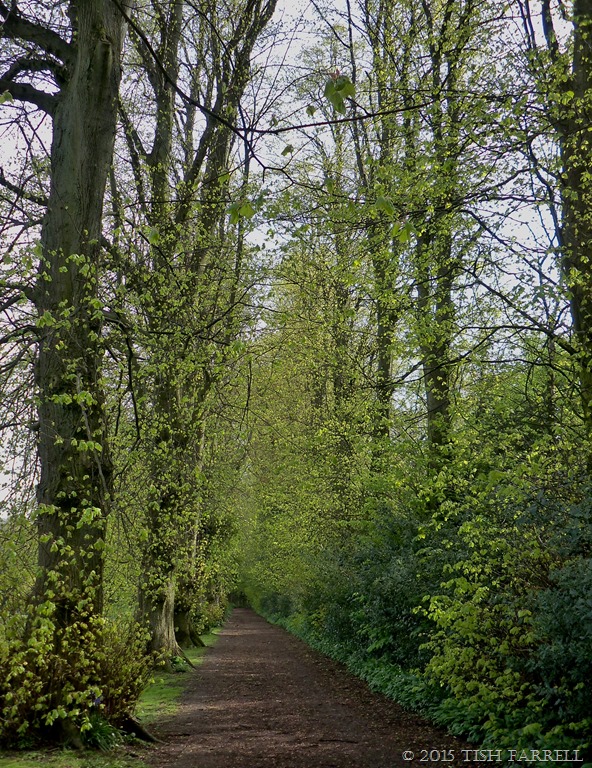
I knew there was only a small window of opportunity. At nine thirty yesterday morning there was sunshine. Go out there at once, I told myself. The way the weather is these days, it might be the last you see of it. Carpe diem and all that.
So seized it I did, and it was certainly warmer to the touch than it has been for many days, and as you can see from the above photo, the ancient, and thus arboreally wise lime trees on the Linden Walk definitely think it is spring. Drifts of green. Blissful.
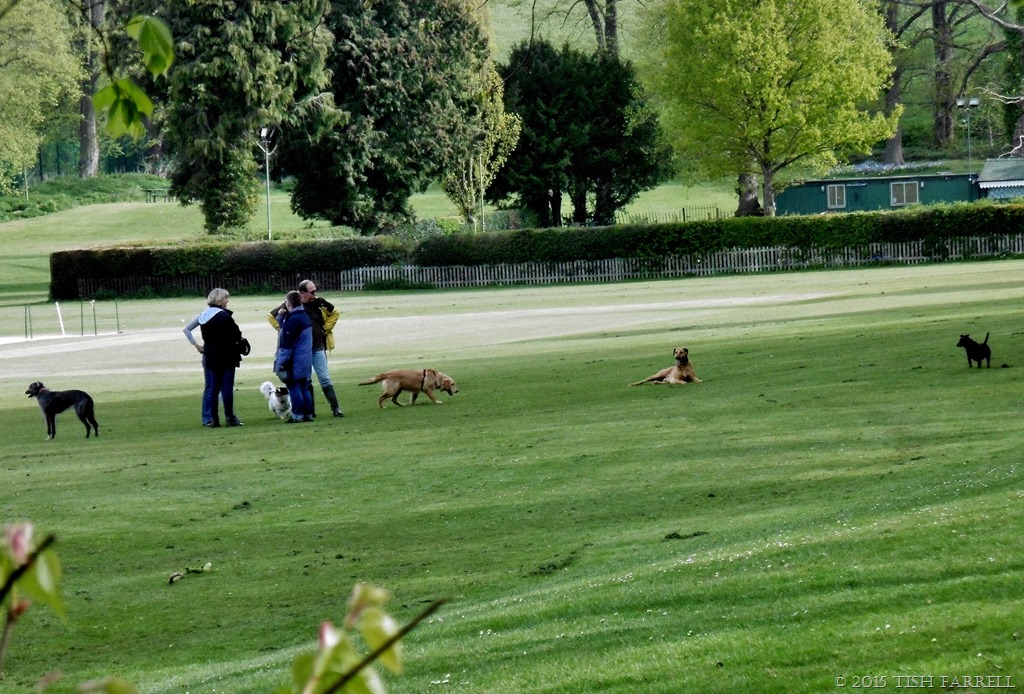
The dog walkers, too, were out en masse, owners chatting amiably on the Linden Field quite as if it were – well, spring. And despite Thursday’s appalling election results (Scots Nationalists excepted) and the return of a government that treats food banks as something to be proud of, and regards the nation as a resource for unbounded fracking, everyone I met seemed pretty cheerful. I will thus make no further mention of Tory attrition and spoil the moment.
The little green building you can see in the background behind the dog walkers is Much Wenlock’s Bowling Club HQ. It occupies a re-cycled railway carriage, a relic from our erstwhile lovely railway that once ran beside the Linden Walk and, until the 1960s, when the wretched Dr. Beeching axed thousands of miles of Britain’s railways, linked Much Wenlock to the outside world. But enough! Too much negativity already.
I headed off behind the Bowling Green to see what was growing on Windmill Hill. This quest was motivated by Meg at Snippetsandsnaps. In response to an earlier post here, she said she would like to see more of what happens on the old limestone pasture on which the windmill stands. I’d mentioned the wild orchids for one thing, so I thought (given our erratic climate) I’d better go and check if they were flowering yet.
They weren’t. Still too early. But the first thing I spotted were the cowslips, also known in Olde Shropshire as cowslops. The richly eggy coloured clumps were growing here and there. In the past they would have grown in yellow meadowsful all around Much Wenlock. I even remember them. When I was a child, my parents would make a point of driving out from Shrewsbury where we lived, simply to visit them. We’d have picnics amongst them.

Once, too, cowslips were an important resource. In the days before modern farming methods seriously reduced their habitat, Wenlock’s school children would absent themselves from class at the National School in order to help with the annual gathering. The flowers were used to make herbal infusions to combat coughs and bronchitis, and in a town regularly doused in limestone dust from the quarries, bad chests would have been a common problem.
Doubtless, too, the town’s doctor, William Penny Brookes, (he who inspired the modern Olympics and planted the avenue of lime trees that we have just walked along), supported such an activity. He practised for the last fifty years of the 19th century and, as well as being a physician, he was also a highly knowledgeable herbalist, having trained both in medicine in London and herbalism at the renowned University of Padua.
And this was by no means quackery in action as some are wont to call herbal medicine. After all, from where does Big Pharma get so many of its notions if not from trying to concoct synthetic (patentable) analogues of the deemed active chemicals teased from botanical compounds? All of which is to say, we lose our plant heritage at great cost to our future well being, to say nothing of the planet’s well being.
Besides which, flowers can mean fun and festivities. Cowslips were also used to make wine, and to strew the paths of spring brides. Mm. Just think of the air filled with their subtle, sunny scent in times when May was WARM.
And talking of warmth and nuptial pursuits, the next thing I came across while snapping cowslips, was a pair of mating molluscs, also known Cepaea nemoralis (Linnaeus, 1758), Britain’s commonest snails. Spring has certainly made this pair frisky, but I will spare you the more intimate shots, and leave you with their rather pleasing Northamptonshire dialect name of pooties. Canoodling pooties then.

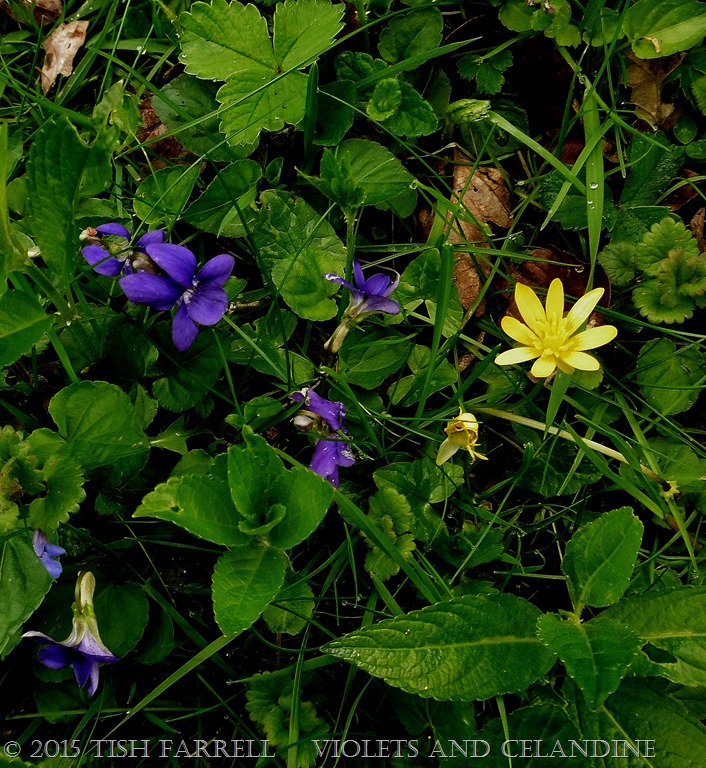
Windmill Hill has more than its open, calcareous pasture. There are wooded flanks to the north and south and here, beneath the trees, I found violets and celandines. You can also see leaves of tiny wild strawberry plants (north of violets), germander speedwell (northeast of the celandine), and sprigs of Dog’s Mercury at the bottom of the shot.
*
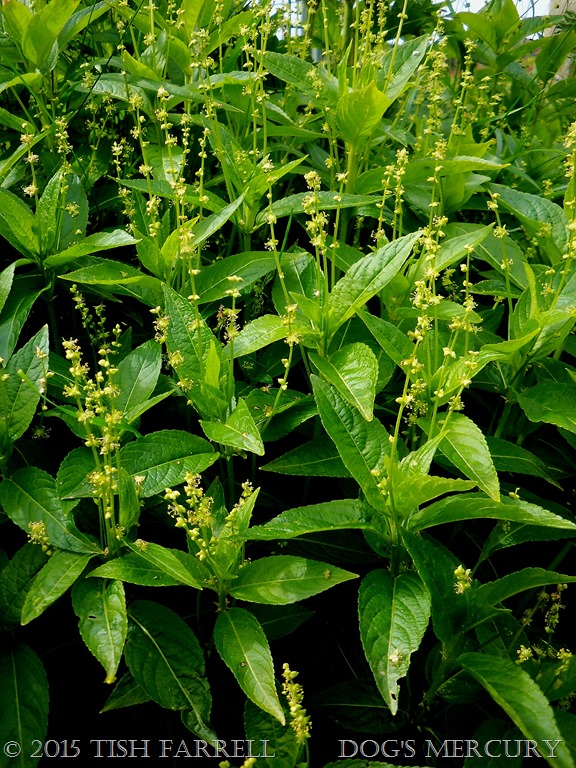
And coming up is Dog’s Mercury (Mercurialis perennis or Boggard Posy) in full flush. This unremarkable looking plant is a member of the spurge family and very toxic, a fact reported in a letter from Shropshire in 1693 and published that year in the Philosophical Transactions of the Royal Society, 203 VIII. The letter gave a detailed account of how one Mrs. Matthews had gathered, boiled and then fried the herb with bacon for her family’s supper. Two hours later there was much purging and vomiting followed by heavy sleeping. Sadly one of her children died after remaining unconscious for several days. Mr. Matthews, however, reported going to work the next day three hours late, but feeling as if “his Chin had bin all Day in the Fire.” He had therefore been forced keep his hat at his side as he worked, filled with water, so he could keep dipping his chin in it.
*
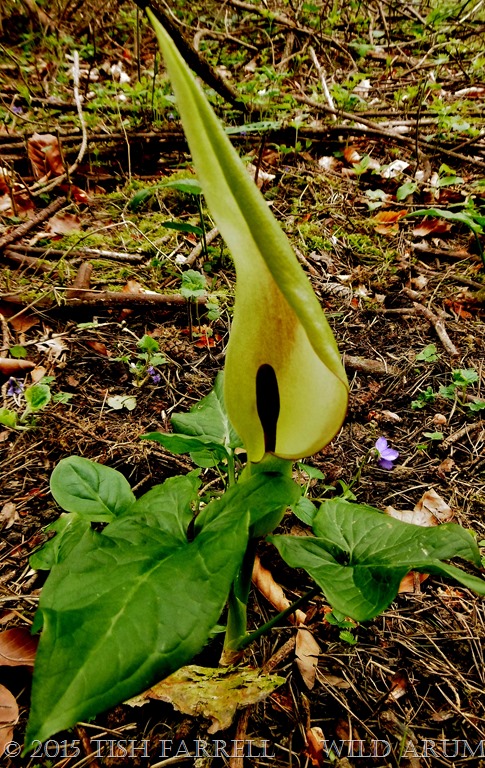
This next plant, Arum maculatum, also has toxic characteristics. And it has a host of intriguing country names, some of them certainly alluding to what William Shakespeare referred to in Hamlet as ‘country matters’. For instance we have Lords-and-ladies, Ladies and Gentlemen (Shropshire version), Devils and Angels, Willy Lily, Cows and bulls, Red-hot-poker. Then there are the more curious Jack in the Pulpit, Cuckoo-pint, Fairy Lamps and Shiners. Its hooded sheaths (spathes) do glow in a faintly sinister, not to say priapic fashion in the shadiest spots. When done flowering, and presumably duly fertilised, the sheath collapses in a disturbing manner. In the autumn, though, there are spires of fire-red berries that light up gloomy days.
As to usage, in the times when people still wore lacy ruffs, the arum roots were crushed to make starch, although the processing apparently gave the launderers nasty blisters on their hands. It presumably did not do much for the ruff-wearers’ necks and faces either. So yes, it’s also good to remember the toxic properties of plants along with their more healthful aspects.
*
And now for something seriously edible, if you like garlic and onions, that is. The Wild Garlic or Ransoms (Allium ursinum) grows in profusion at the foot of Windmill Hill, and especially along the banks of the old railway line. Those who don’t care for the smell will appreciate its vernacular names of Stink Bombs and Stinking Nanny.
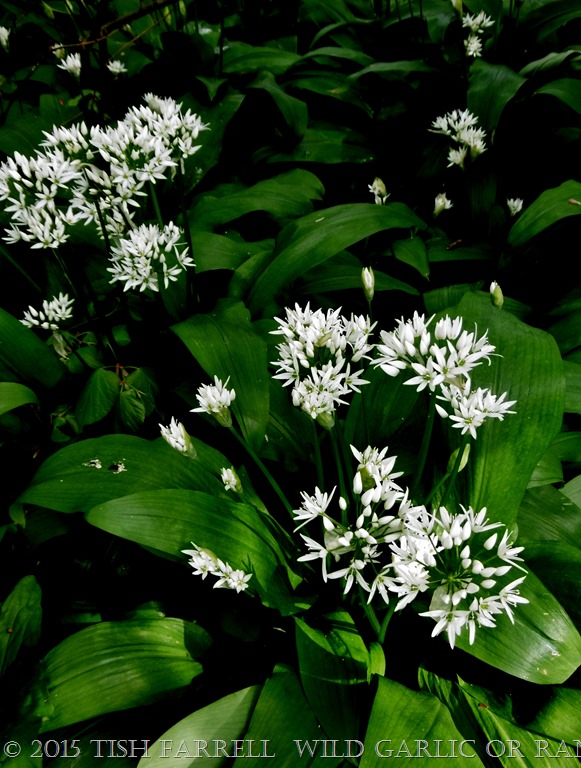
But you can certainly cook, or add to salads, both the leaves and the flowers, and their flavour is not as strong as the smell suggests. Excellent wilted in olive oil with pasta, for instance, or in soups – cream of potato and wild garlic say.
This wild garlic photo was taken while the sun was still shining, and as I said at the start, I knew it wasn’t going to last. Even if I hadn’t read the Friday forecast of rain by noon, followed by more rain all day, the green woodpeckers would have warned me. As I headed down the hill and along the old railway line their cries, known as yaffling, dogged my footsteps. It’s interesting how this member of the woodpecker family likes to alert everyone to a coming downpour. In Africa it is the red-chested cuckoo that performs reliable rainbird duty.

Those yafflers were dead right too. As I turned for home, the sky was leaden, and the first drifts of rain were falling through the trees. Bye bye sun! But then the old railway line is a good place to be whatever the weather. It is one of the town’s most popular footpaths, and it is hard to imagine that along it the Great Western steam engines once came rattling into Wenlock – the Olympic special bringing thousands of spectators to the annual Wenlock Olympian Games on the next-door Linden Field; goods trains from South Wales coming to collect limestone from Shadwell Quarry behind Windmill Hill. These days, then, there a trees as well as leaves on the line (NB for those living outside the UK, ‘leaves on the line’ has long been the old British Rail’s excuse for non-arriving trains.)
Finally, I’ll leave you with a few more shots of botanical specimens discovered round Windmill Hill and along the railway line. Clearly the natural world is busy cracking on – full of vim and vigour – even as I shiver in the cold wind, and hang on to my much layered clothing. That’s good to know though – that nature will out, even if, as time goes on, it may not quite do what we expect.


copyright 2015 Tish Farrell
Reference: Richard Mabey Flora Britannica
This post was also inspired by Jo’s Monday Walk at restlessjo, a great venue for walkers, whether in body, mind or spirit.
Lions before the storm
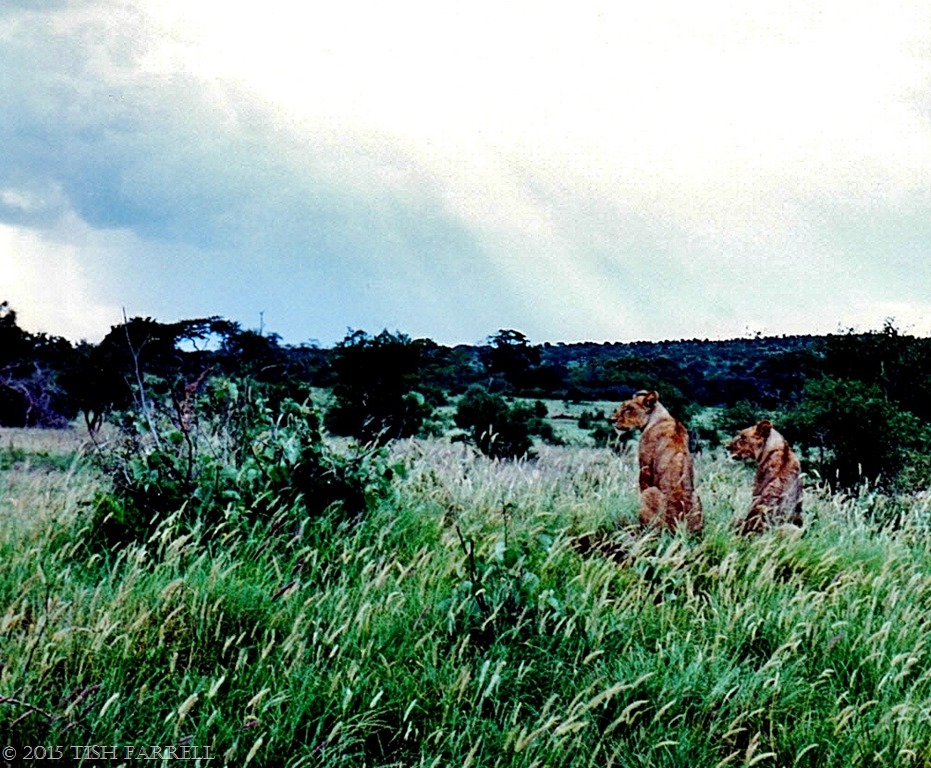
Before the storm we fall in with lion –
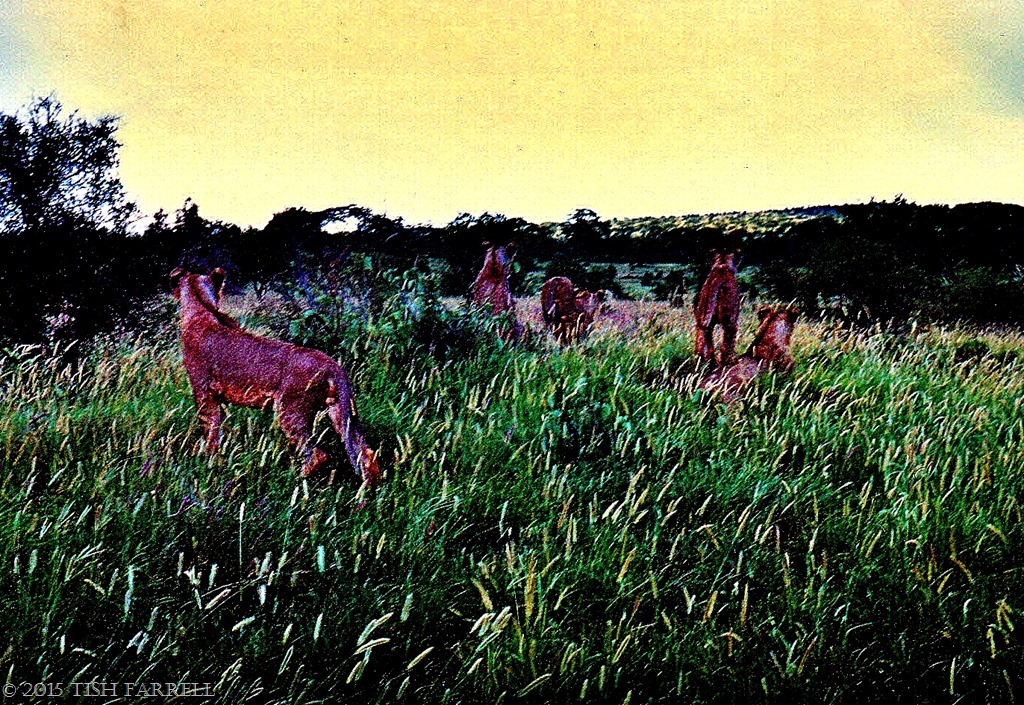
six scions out from the pride.
Unmaned, cub-spotted, they slump amongst thorns,
smug in their big-cat skins.
They know we’re here.
So now we’re adrift on the storm’s swell:
coming like lambs to lay down with lions?
Caught in their lure we listen to their breathing;
the rise and fall of soft flanks.
Our breath marks time.
Waiting – till a drift of rainfall stirs them.
Watching – till they they rise to make their kill.
copyright 2015 Tish Farrell
Is it really spring?
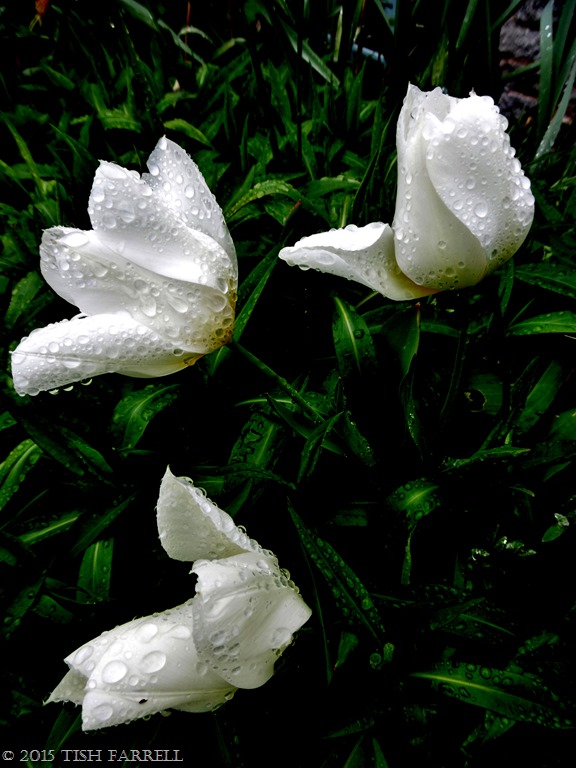
Here at Sheinton Street we are wondering if spring has come. Certainly it looks like spring. We have had daffodils, crocus and cherry blossom, and now the crab apple tree is blooming. But this is not spring as we know it. For one thing the winds have been icy, and unrelenting day after day. For another we completely missed out on April showers, and when they finally came on Saturday night, they came all at once and pounded away what blossom was left on the damson tree. I’ll be surprised if the Shropshire Prune has any fruit this year. Out in the very wet garden on Sunday morning the tulips looked positively shivery. Dishevelled too.

Definitely brrrr all round. There’s an old English saying that advises, ‘Ne’er cast a clout till May is out,’ and I can tell you there will be no clout casting in this house – probably not till July. Time to stoke up the wood burning stove, and see how the baked spuds are cooking.
Happy May, Everyone, Whatever Your Season
Sun Setting Over Wenlock Edge ~ Or Did The Earth Move?

From my house I often watch the late-day sun slip behind the Edge. But which of us is moving: me, or the sun? It’s the sort of displacement-activity question I ask myself when I should be doing something more constructive. It also makes me think about the Edge, the fact that something so apparently static is, of itself, an embodiment of movement; a geological exemplar of extreme process and change.
The limestone ridge on whose foothills we Wenlockians dwell, is 425 million years old. It runs for some twenty miles while rising up to three hundred feet above the land. And so it goes without saying that a structure of this size cannot help but evoke a sense of monumental immobility.
How can it move?
Yet move it has, and move it does, although these days not on quite the colossal scale of the Silurian Age when it was formed. Its constituent parts, the sea-creature fossils that have fascinated the world’s geologists enough to earn them their own Wenlock Epoch, clearly indicate that our Edge is neither where it was, nor what it was in the aeons before fish were invented.
In fact during the Silurian era, and some 200 hundred million years before one cosmic hint of a Stegosaurus or Diplodocus was abroad, the strata that would become Wenlock Edge were quietly forming. Layers of dead and decomposing corals, sponges, sea lilies and molluscs were building up beneath a shallow tropical sea, and in a location somewhere off present-day East Africa and well south of the Equator.
Today, however, this former sea bed is an up-tilted escarpment, a steeply wooded ridgeway of ash, birch, hazel and oak trees. It bisects a temperate, rural Shropshire in the middle of England, which as most people know, is and often feels hugely north of the Equator. The power of tectonic shift and uplift is thus truly marvellous.
For the last couple of millennia, though, it has been humans who have been responsible for the Edge’s biggest movement. They have hacked, drilled, and blasted out the limestone with dogged persistence. At first the spoil would have been carried away on packhorses, then on carts, and finally by train and truck to wherever it was needed. Chunks of fossil sea bed hauled off to build grand monastic houses, feudal mansions, churches and cottages; limestone mortar to make them weather-tight; limestone to burn to make quick-lime for fertilizer; crushed limestone to pour into the top of massive blast furnaces, and so draw the impurities from smelting iron.
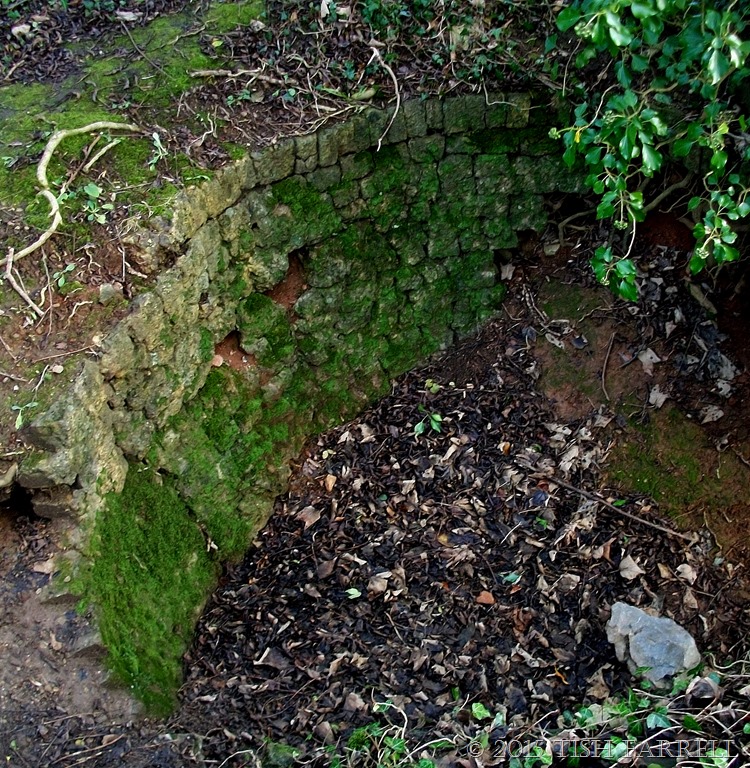
One of the many old lime burning kilns on Wenlock Edge
*
In such ways did Wenlock’s broadcast and reconstituted Edge come to play its part in Britain’s Agricultural and Industrial Revolutions. Yet way before this, in the late 600s AD of Saxon times, it probably also gave us our curious sounding name. In those days it was the habit to paint the early Christian religious houses with lime-wash so they glowed luminously white against surrounding terrain. It was also around this time that Milburga, daughter of a Mercian king, became abbess of a dual monastic house of monks and nuns that stood where the town’s parish church now stands . Gwen/Wen means white, and Loc/Lock means chapel or religious house. So there you have it – Wenlock – the place of the white church.
In more recent times, aggregates for highway construction have been the Edge-product of choice, and supplies are still outstanding in one of the quarries. At intervals convoys of motorway construction trucks come rattling through the town to fill up – and all this so more and more traffic can rush about the place.
The mopping up of the aggregates marks the end of quarrying, although the quarries themselves have now been occupied by other industries – garden fencing and woodchip fuel producers, paint and packaging companies – all taking advantage of the huge spaces left behind by the evacuated limestone.
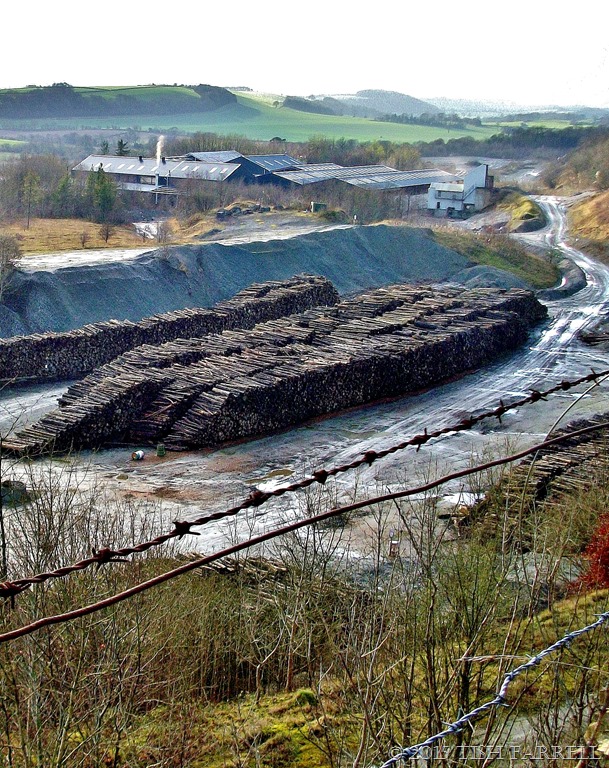
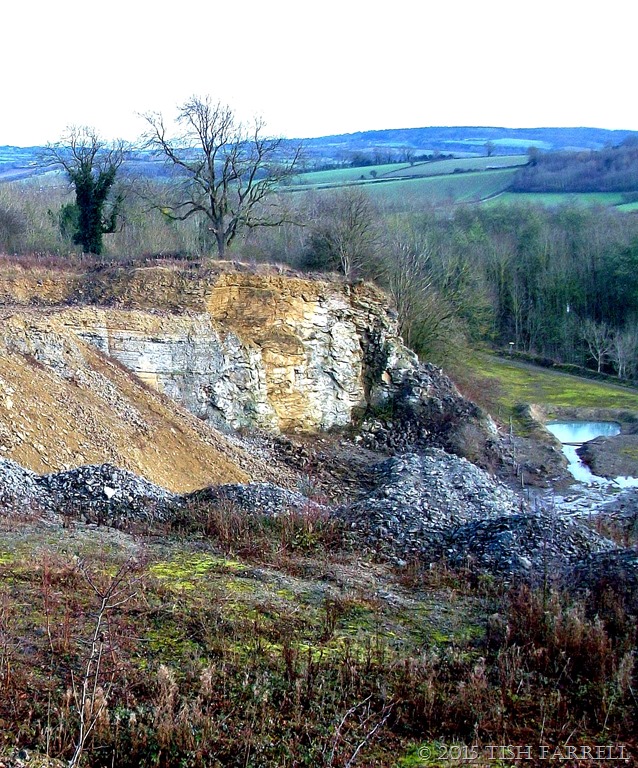
Yet where the old workings and exploded cliff faces have been left to themselves, there are signs that the vegetation is reasserting itself, slowly extending the habitat for the Edge residents: deer, badgers, hares, weasels and mice.
I find the old quarries fascinating in a morbid, Edgar Allan Poe-ish kind of way. Ravens like to nest there for one thing, which adds to their brooding allure. However, if you turn your back on the quarries, and look the other way, through breaks in the tree cover, you will see broad sweeps of Shropshire’s hills and farmland. And this, for most people, is the main reason why the twenty-mile-long vantage point is one of the county’s great treasures. The National Trust who own a long stretch of the wooded slopes, and manage the woods and paths, want to ensure it remains that way – a valued public resource.
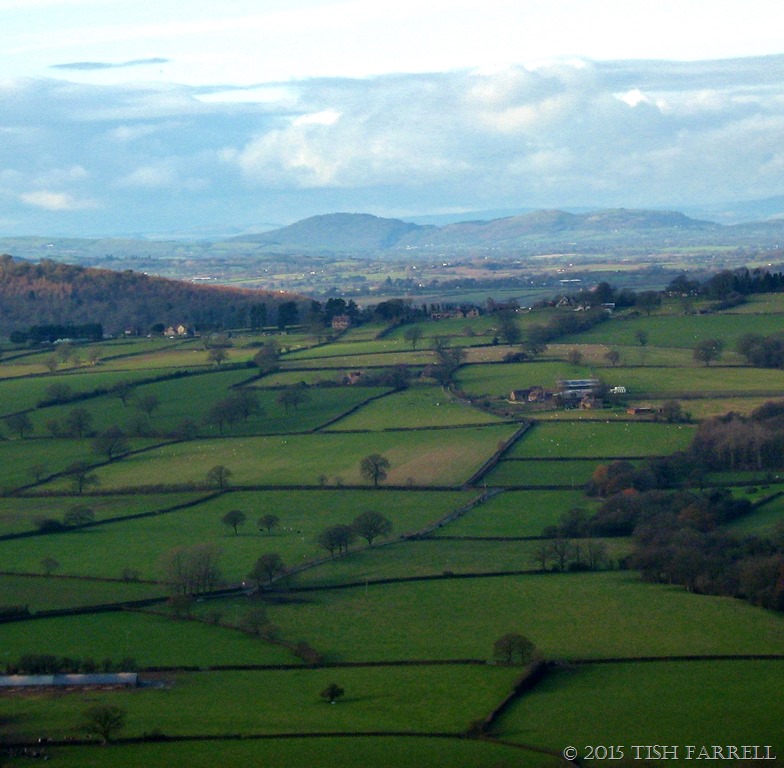
This view looks towards the Welsh borders and, in the past, would have been gazed on by writers such as Thomas Hardy and Henry James, and by Africa’s darkest explorer, Henry Morton Stanley, all of whom were, at various times, guests of the Milnes-Gaskells, Much Wenlock’s erstwhile gentry who lived in the Prior’s House at Wenlock Abbey. The Milnes-Gaskells were good hosts and tour guides and made sure that their visitors always took in the best views.
On reflection, though, I’d say that this particular fieldscape would have looked very different a good century ago – smaller fields, many more hedges and trees back then. Much bigger trees too, for all the huge oaks were culled by the late nineteenth century, and those of us alive today have never seen their like other than in old photos, where their magnificence has been felled and stacked up, ready to serve some apparently pressing human purpose.
Life for ordinary people would have been tough too – with many more labourers working the land, horses pulling ploughs, vistas of scenic rusticity that did not fool Thomas Hardy for one moment. He is said to have been mightily appalled by the impoverished state of Wenlock’s workers.

And so back to the setting sun/moving earth where this post began. The Edge then, is still in motion, although mostly in ways not much noticed by us. The limestone scarps are degrading. Rock becoming soil and mixing with the leaf mould to create new niches and microclimates, the old lime kilns, moss and ivy coated, weathering into the earth, the quarry scars and debris gradually being colonised by trees and plants.
Then there are the kinds of movement that I observe day after day behind our house: the march of clouds, weather; the change of light, dawn , dusk, the stars, the seasons, the rooks and jackdaws going out, and coming home. Everything shifting, transforming, recycling as the earth rotates around the sun. I find that thought – the revolving planet and the endless motion of its life forms – very joy-making. It is good to stand still and watch, and especially as the sun sets, or the earth moves.
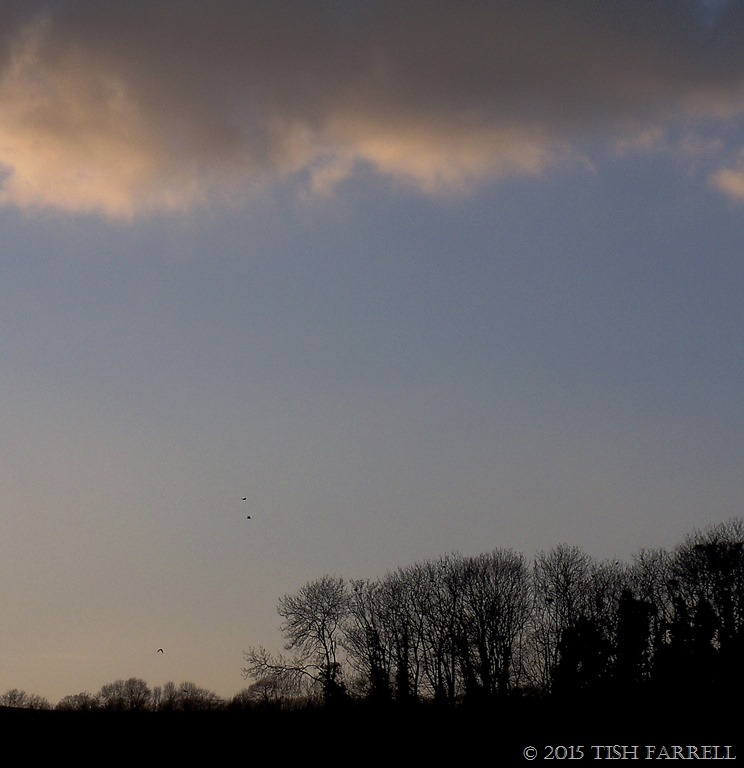
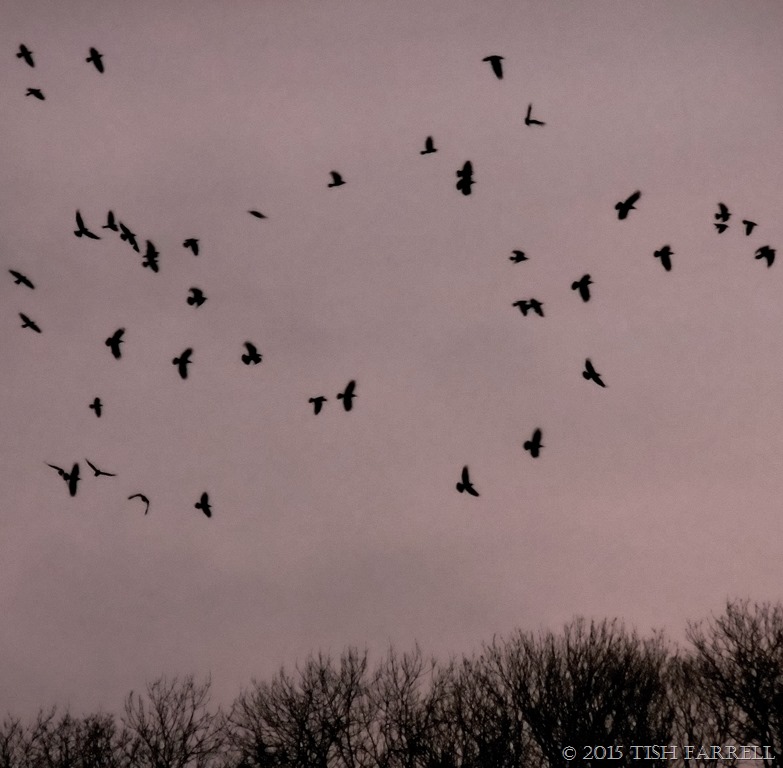
Rooks and jackdaws coming home
copyright 2015 Tish Farrell
A bench with many views and a windmill
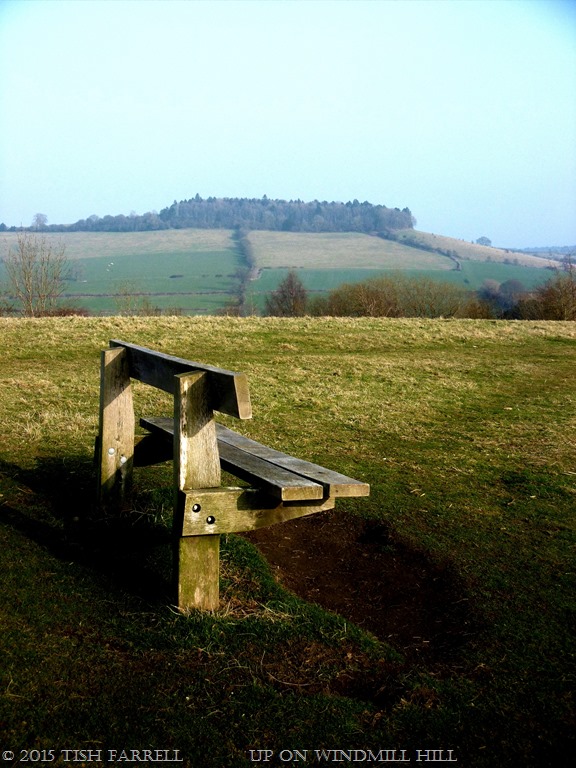

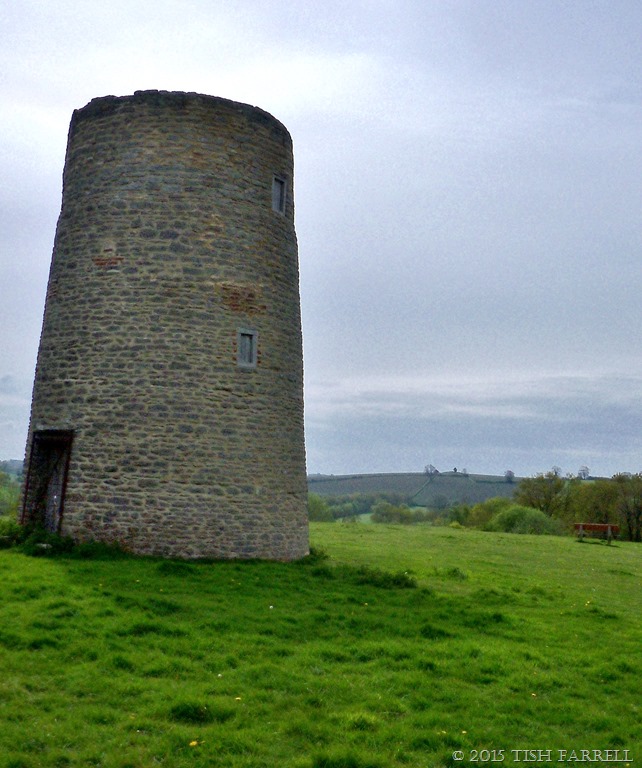
This bench is only a short walk from our house, although a bit of a steep haul up Windmill Hill. The windmill itself is quite a landmark in Much Wenlock, although much about its history, and how it looked when in use, remain to be discovered by the stalwart Windmill Trust whose members take care of it.
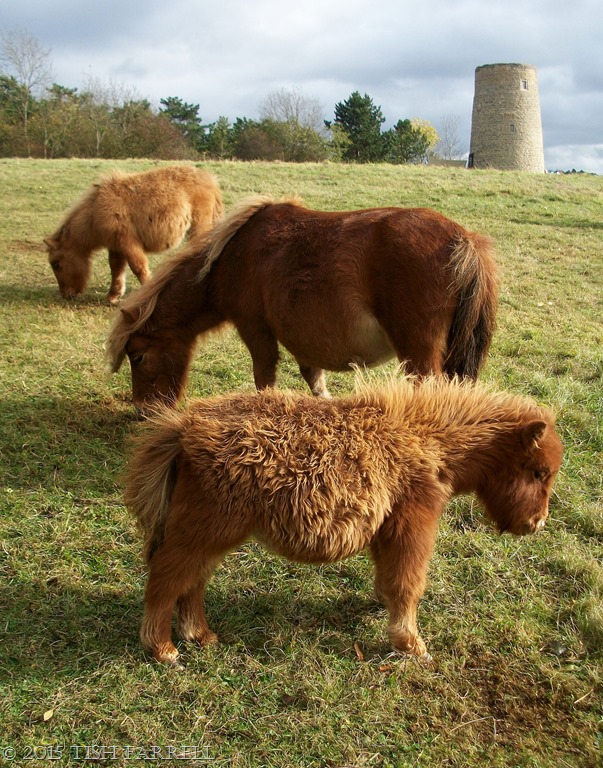
There is always something to see from this bench, quite apart from the views across Shropshire. Even the vegetation is interesting. It is a rare remnant of limestone meadow, and in late spring there will be cowslips and orchids here, wild thyme and primroses. Later there will be agrimony, giant knapweed, St John’s Wort, yellow bedstraw and hare bells. Sometimes the miniature ponies graze here, all part and parcel of preserving the meadow.
*
Recently some of us combined dog walking and watching the eclipse from here. And while we were doing that…
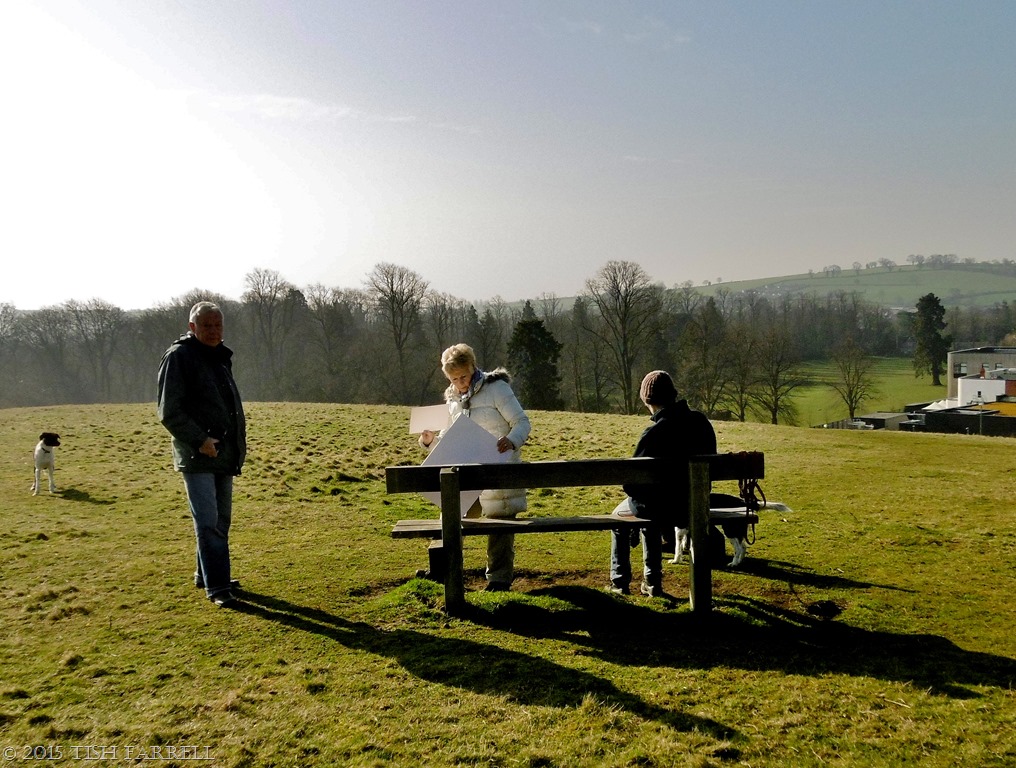
… we also caught a glimpse of local marathon hero Jimmy Moore, apparently eighty years old this year, and still out training.
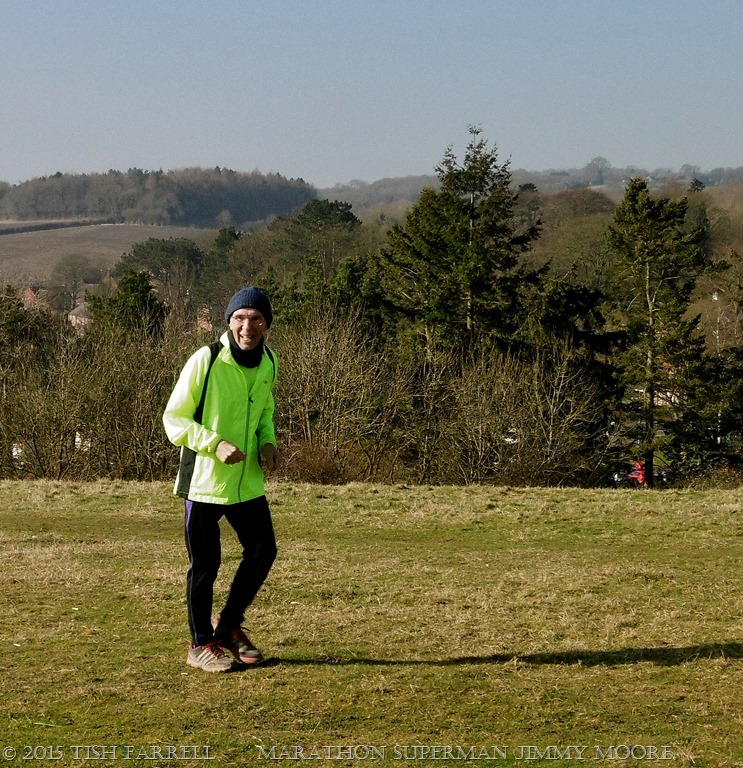
He, more than most, has done so much to uphold the values of the town’s erstwhile physician, William Penny Brookes (1809-1895). Brookes reinvented the Olympic Games in Much Wenlock in the 1850s, and provided the inspiration for the modern Olympic Games. The Wenlock Olympian Games are still held every July on the field below and at the nearby William Brookes School. The three-week series of contests attracts athletes from around the world. Jimmy has also coached many youngsters participating in the Wenlock Games.
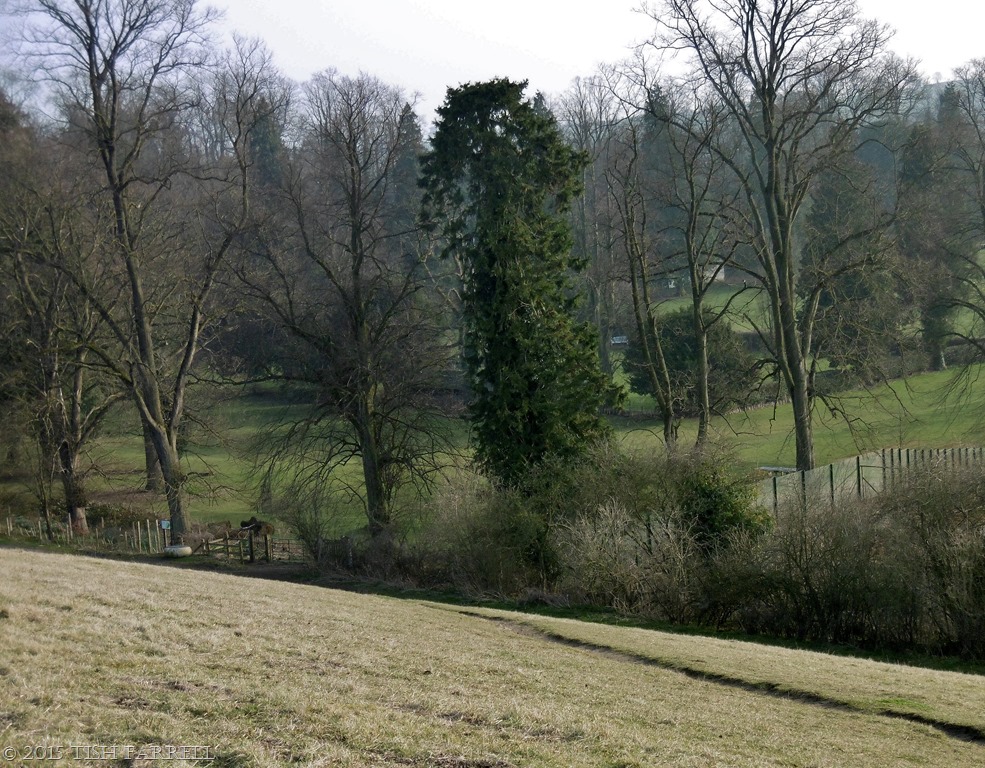

And finally, I thought I’d pass on some Olympian glow on this Monday morning. You can just see the windmill in the background, the William Penny Brookes Academy on the left, and the community’s own Linden (Olympian) Field in the centre ground. Besides, it is not good to linger about, sitting on benches, splendid though their views may be. Latest medical opinion informs us to keep standing up. Or to quote Tom Petty and the Heartbreakers “if you don’t run, you rust.” Walking, however, is probably best for most of us.
Copyright 2015 Tish Farrell
At Travel Words during April, Jude is looking for benches with a view
Present and Past in the Ironbridge Gorge

This coal-fired power station sits at the entrance to the scenic Ironbridge Gorge on the River Severn in Shropshire. Even when you know it’s there, to come upon the four great cooling towers through the trees, is always a surprise. Its days, however, are numbered, and many of us are wondering how the power station powers-that-be will go about recycling the place, and especially on the edge of a World Heritage Site. Just downstream is Ironbridge town, named after the world’s first cast iron bridge, built between 1779-1781 by Coalbrookdale ironmaster, Abraham Darby III. (See my earlier post Bridge, What Bridge)
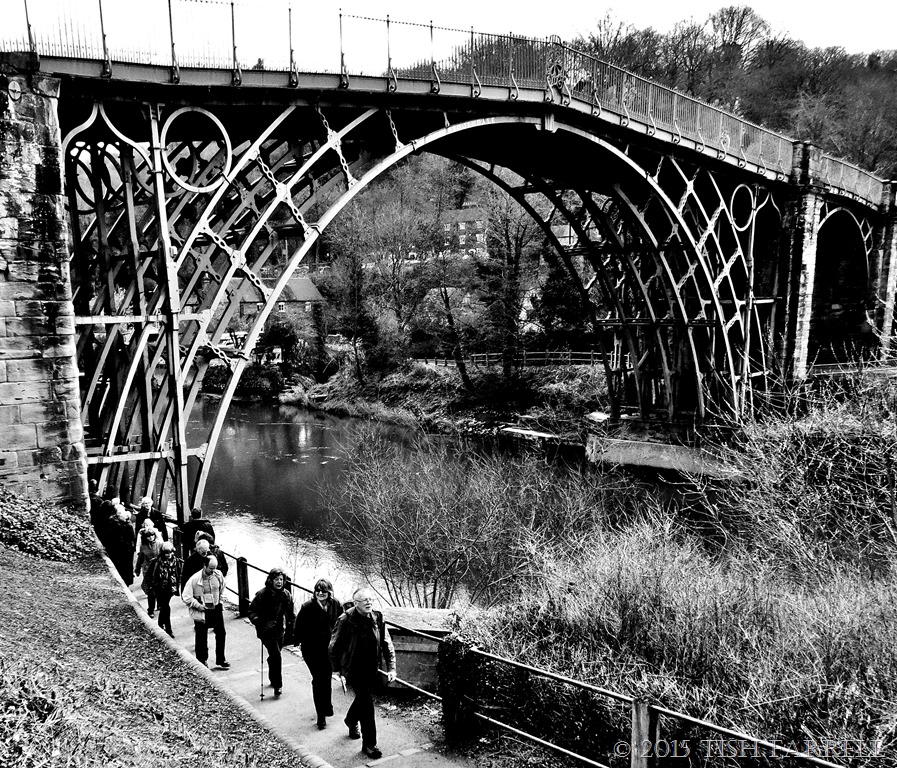
Before this bridge arrived on the scene as an 18th century world wonder, earlier bridges were mostly built of stone, usually with several low arches. The particularly novel aspect of the Iron Bridge’s design, then, was the high single arch, devised to allow the large sailing barges, known as Severn trows to pass beneath without lowering their masts. This was a clear piece of Coalbrookdale Company bravado, since the trows would have had to lower their masts for all the numerous other Severn bridges, both up and downstream of the Iron Bridge.
Looking at the sleepy river today, it is hard to imagine that in 1712, Coalbrookdale’s iron works were exporting 1,400 tons of iron wares downriver. It’s hard to imagine too, that although a hundred miles from Bristol, that the towns of Ironbridge and Broseley (on either side the bridge) were busy inland ports, with boat builders’ yards, and locally owned trows. The trade also went upriver to Shrewsbury which in turn exported cloth from the Welsh hinterland and local agricultural produce.
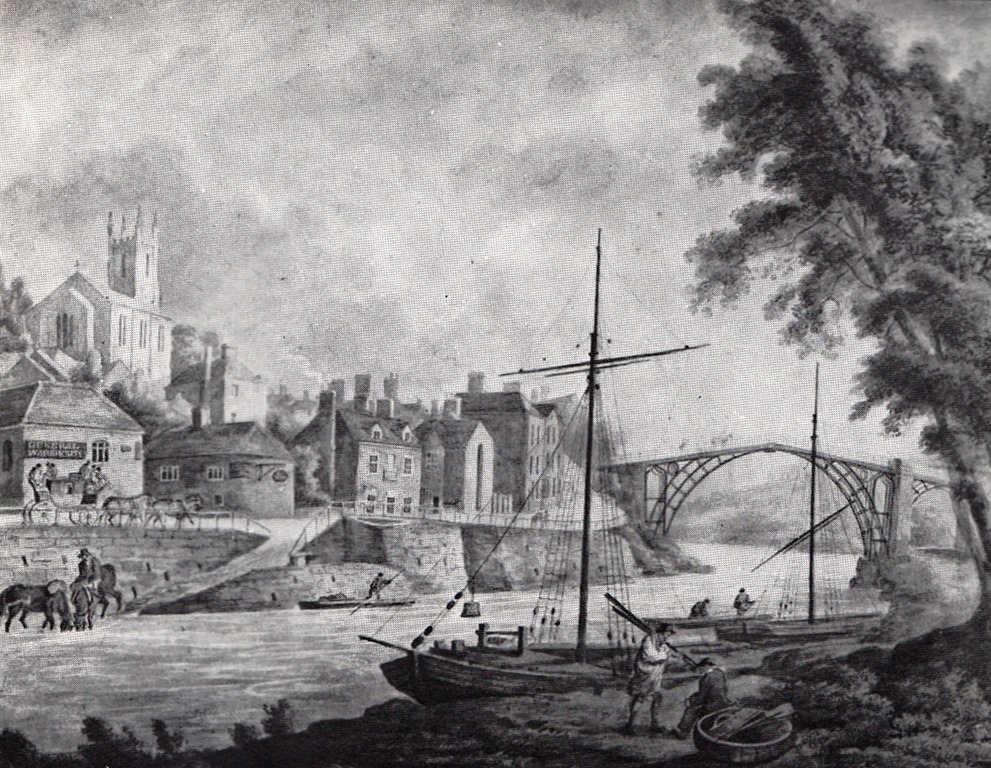
Ironbridge town and bridge, trows in the foreground; attributed to J. Fidlor some time after 1837, Shrewsbury Museum
*
Fascinating details of the trade are preserved in the Gloucester Port Books. For instance, they record one of the Bristol-bound cargoes of the Broseley barge Thomas & Mary in 1722. It included:
10 tons of ironware; 8 tons of cheese; 8 packs of Manchester ware; 2 packs of sadlery ware; 2 hogsheads of oats; 2 barrels of oats; 8 hogsheads of hair; 80 crates of earthenware; 1 barrel of brass; 2 trunks of wearing apparel; 2 boxes of wearing apparel.
An upriver cargo that same year comprised:
40 bags of cotton wool; 40 packs and a truss of cloth; 4 hogsheads of train oil; 1 ton of saltery; 2 barrels of herrings; 5 cwt. of salt fish; 4 cwt. of red lead.
The prestigious nature of the trade is perhaps embodied in the Severn Warehouse, now part of the Ironbridge Gorge Museum Trust. It stands on the river mid way between the Ironbridge Power Station and the Iron Bridge, and was built by the Coalbrookdale Company in 1834 in flamboyant Gothic Revival style. Down its iron rails to waiting barges would have trundled carts loaded with iron castings of every sort, both functional and decorative, heading for markets throughout Britain and across the Empire. It did a particularly thriving trade in iron bellied, so-called Missionary Pots – some holding up to 400 gallons, and thus big enough to hold a missionary or two. They were actually used for processes like soap making and rendering down whale blubber.

But back to those cooling towers. I am rather fascinated by them; as indeed was TV historian Dr. David Starkey, when I was showing him around the Severn Warehouse many moons ago. He was doing some consultancy for me at the time, and when I told him that in 1979, the Iron Bridge bicentenary year, the cooling towers had been lit up at night, he grew very animated, and said it was a pity that this was not a permanent feature. He felt that the power station provided a dramatic analogy of industrial prowess that would help visitors to the Gorge to grasp a sense of the importance of past technological innovation. Some people will of course hate them as ‘blots on the landscape’. But anyway, see what you think. Here’s a shot that Graham took during their nightly illumination in 1979:
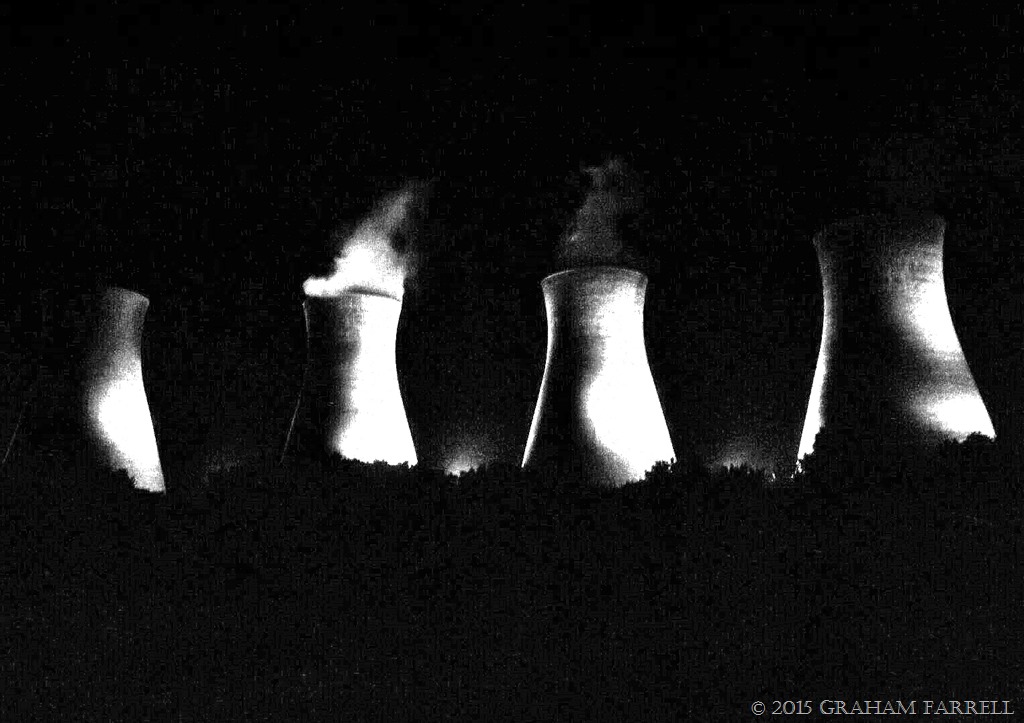
copyright 2015 Tish Farrell
Black & White Sunday Go here for more ‘unusual’ shots in B & W