
Sunset On Desert Sands ~ And Escaping From Kenya

233

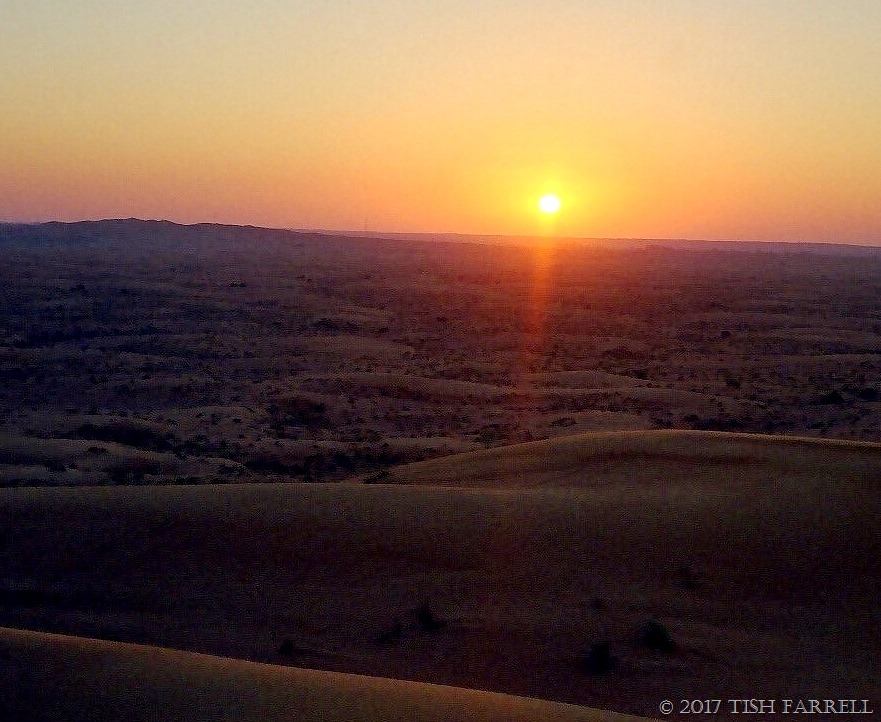
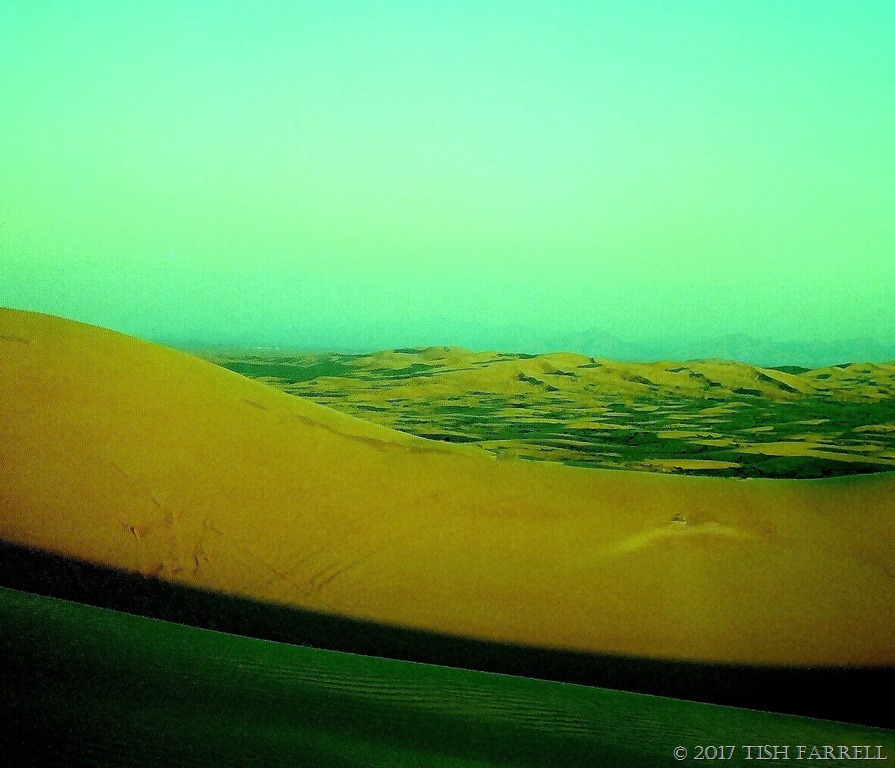
It is a kind of alchemy. As the sun sets, and its glow flows out across the desert, the dunes that in the full light of day had been dun coloured, inert, dull even, transform into waves of molten copper.
235

To drive into the desert in late afternoon was blissful. The emptiness. And more emptiness. AND NO PEOPLE. We had come to Dubai for a break from Nairobi living. Sometimes life there could become too nerve-fraying. During the Moi era, security was always an issue in Kenya. Whenever the political temperature heated up – which was often during the 1990s’ donor push for multi-party democracy – so the crime wave spiked. It was mostly white collar crime too – run by crooked lawyers, senior officials and cops – all people who should know better.

Car-jacking was a speciality, and the diplomatic and aid community were particular targets with their newly imported 4 x 4s that were shipped in with each fresh posting. So it was that High Commission cocktail party talk mostly involved expats’ tales of having their vehicles stolen in hair-raising scenarios, usually by men with AK47s who had followed them into their driveways as they were returning home. Then there were the stories from Graham’s Kenyan colleagues. If they were driving project vehicles they would be car-jacked AND taken hostage for hours on end. We never did understand why car-jackers did this – driving around the city for hours until they finally decided to dump the unfortunate hostage in some god-forsaken wasteland.

Then there were aggravations such as coming home from a four-day seminar to find the house without electricity and the freezer dripping into the hall. In our absence some officious meter reader had been let into the property to read the meter. He misidentified our house number and claimed we had not paid our electricity bill. He then went off with our house fuses, and it  took a week of hideous argy bargy with closed-minded officialdom to have the power restored.

They claimed they had never heard of a meter man taking the fuses with him. Usually, they said, he would simply hide them somewhere handy, to be reinstated once the bill had been paid. In the meantime, nothing in our house worked since everything was electric. And all the security devices which the High Commission insisted we had, pretty much useless.

We have paid our bill, we kept saying to the electricity men. We have the receipt. These were the wrong words. Kitu kidogo were the right words. A little something. But as we didn’t play, we had to wait. Eventually a couple of very pleasant engineers took pity on us, and called in to see what was going on. After remonstrating at the lack of fuses as if this was our fault, they decided to make some new ones, standing on the kitchen stoop by the fuse box, winding wire round spools while admiring my crop of Tuscan kale, a variety they had never seen before but were much taken with. It was nice to have the lights back on. Playing scrabble by candle-light might seem vaguely romantic, but it wasn’t really, not after the first night.

And on top of the power-out dilemma, the weather had been vile – an El Nino special of weeks of endless torrential rain – people drowned, homes and whole villages washed away, impassable roads, the place unnaturally cold and grey and impossibly WET. It made us realise that we had very little to complain of. At least we had a roof over our head, and it only leaked a bit in the sitting-room corner.

But then the long wet spell next promoted an outbreak of ‘Nairobi Fly’ or Nairobi Eye – a rove beetle that causes extremely painful skin conditions if you happen to brush it away with too much enthusiasm, and then use the same hand when touching some area of bare flesh. For a time the whole city seemed under siege from this nasty little bug, the press burbling with horror stories of men whose private parts had become horribly inflamed due to some inadvertent contact. (Er, hem).

So it was good to fly away. It was good to spend a night in the desert even if our Tanzanian guide did lie in the back of the 4 x 4 with the door open and snore all night. It was good to get up at dawn to a bright, crisp day and walk alone through the dunes, and to see for miles and miles, without a soul in sight, only the distant blue spine of Oman’s El Hajar Mountains. It made the spirits soar, all that aloneness, as if you could face anything, though a month there might have truly done the trick.
13

P.S. In case you are wondering, the green areas in the last photo are plots of alfalfa – high octane fodder for Dubai’s racing camels which are also reared in the desert on small camel farms.

copyright 2017 Tish Farrell

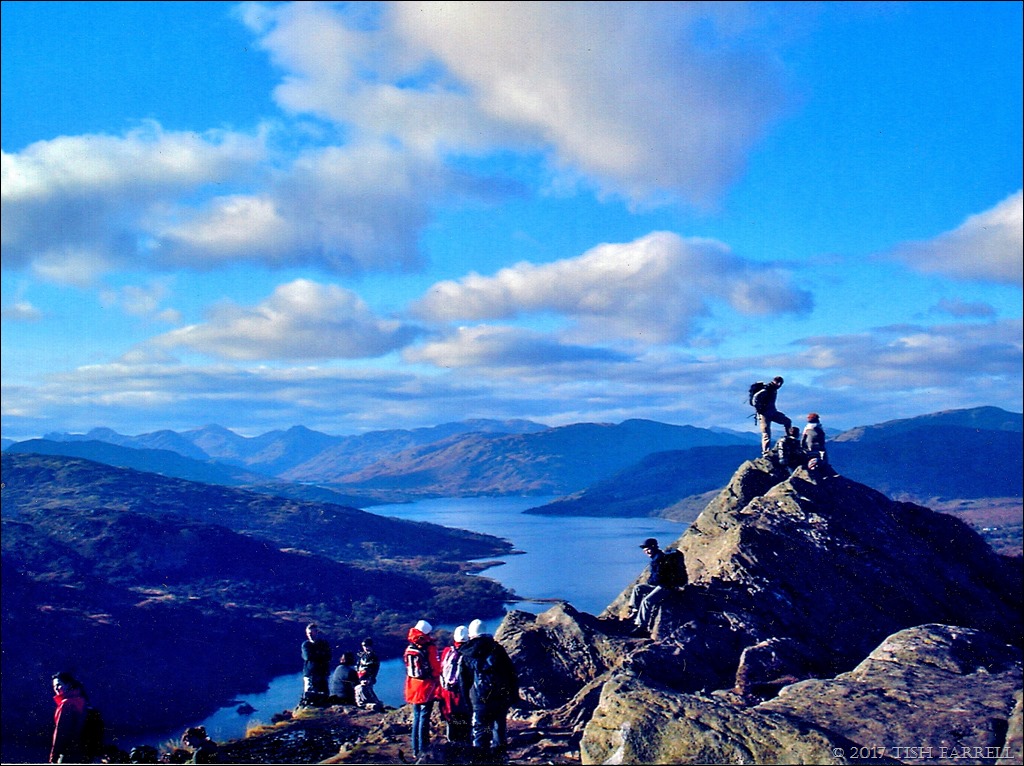
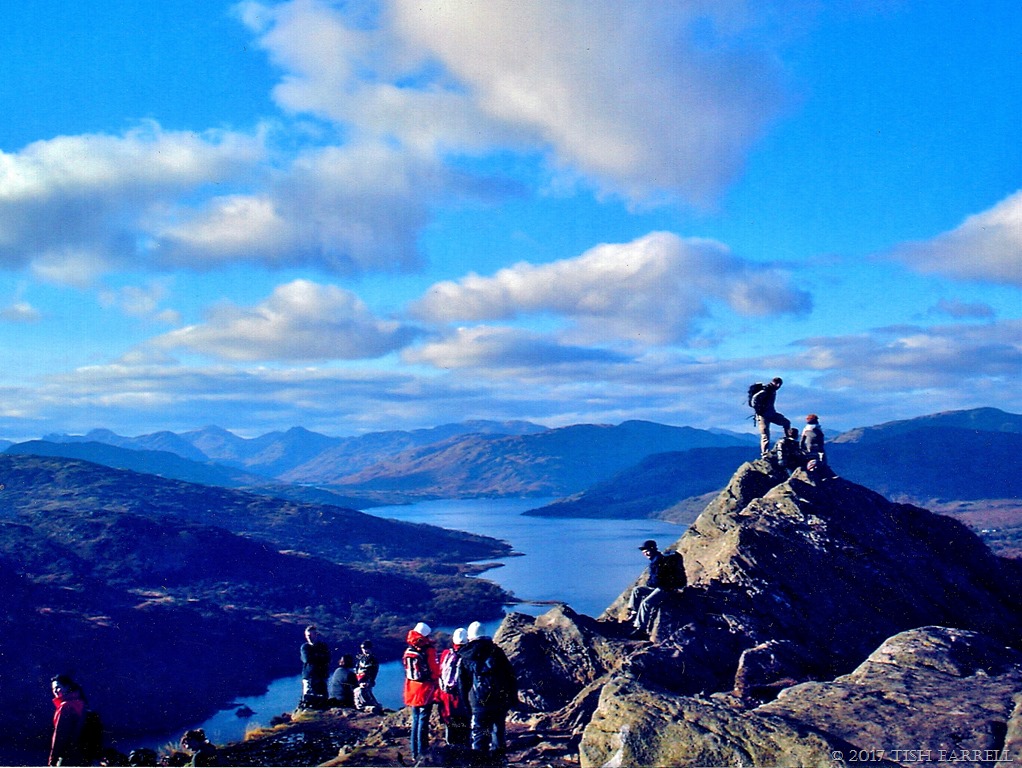
Daily Post Photo Challenge: Atop
“Life, Jim, but not as we know it”?

IMG_3993

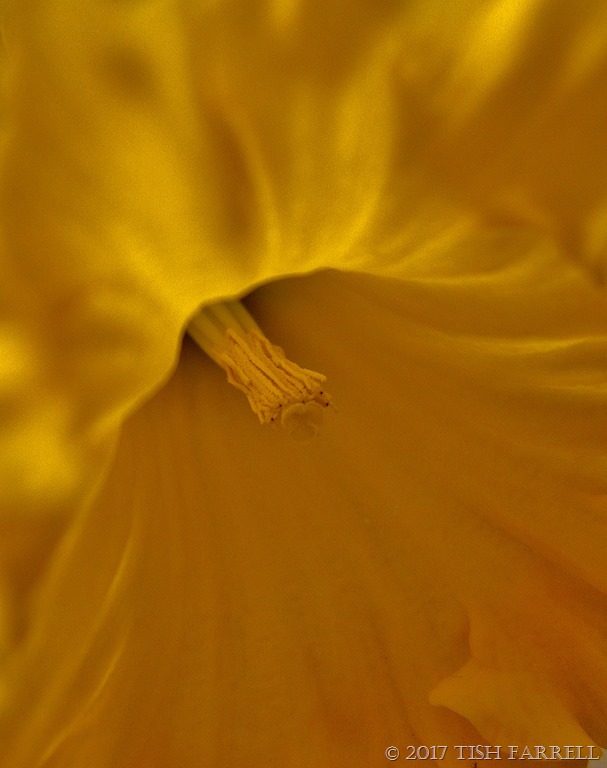
I don’t know about you, but I find this close-up shot of a daffodil a bit disturbing. It was sitting in a jug with other daffodils on our kitchen table, full lit by a pendant light. We’d just had dinner and I thought I’d capture some floral detail.

But somehow daffodils by night don’t quite make sense. And there’s a worrying ‘otherness’ about the too-close-quarters; rather like the first time you looked up someone’s skirt when you were a child.

Hm. It makes me think though – what a wonderful mystery is this thing we call life. And in this case, so very yellow!

Honeymoon Destination Anyone?

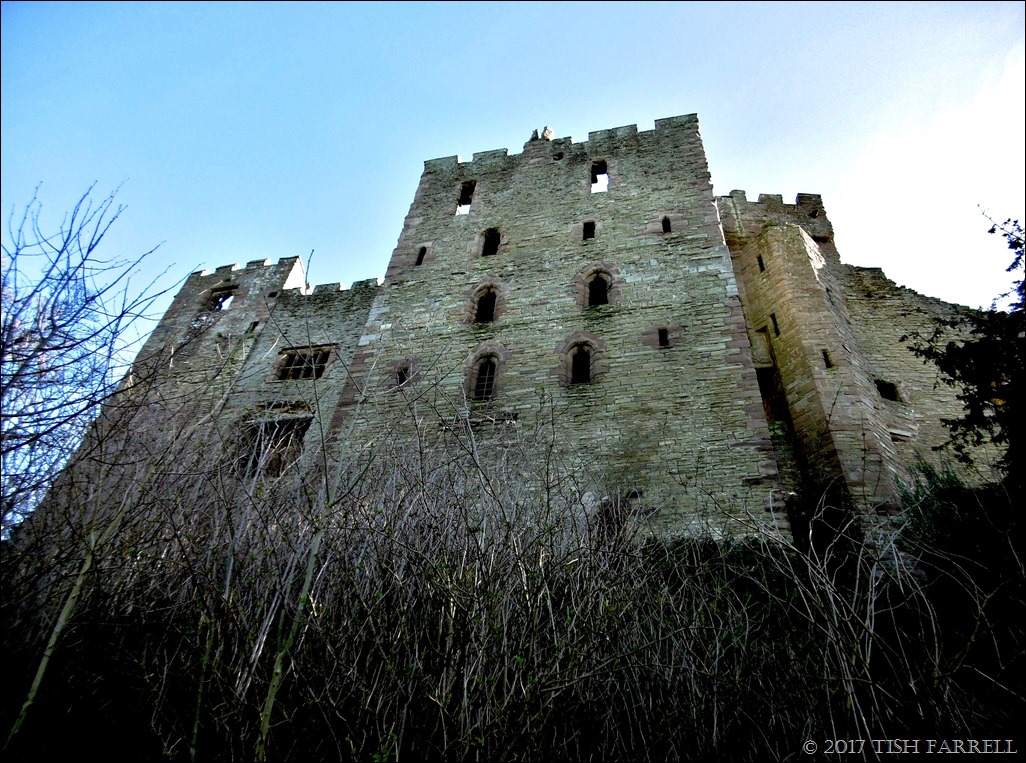
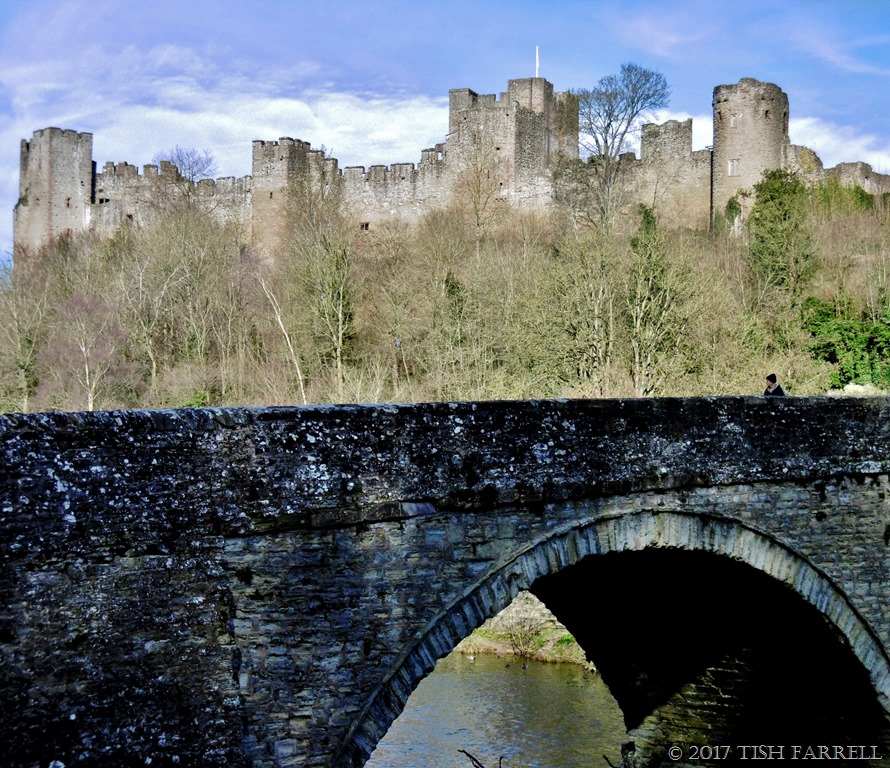
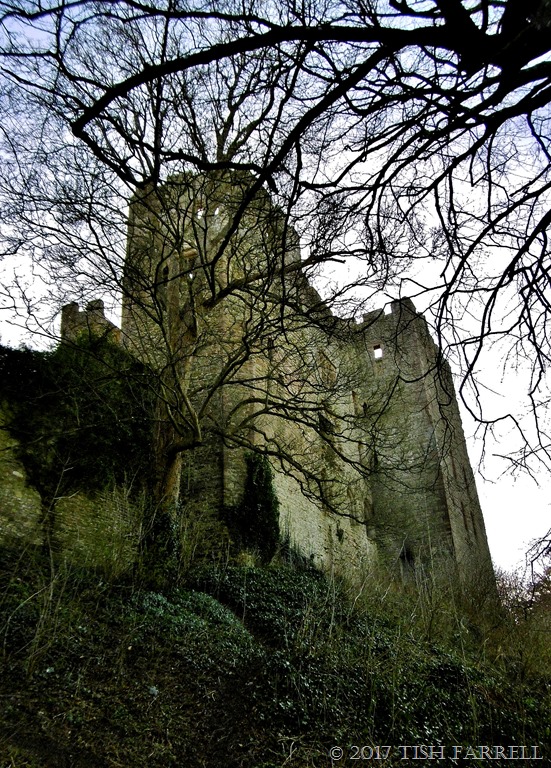
I was thinking of Jude as I took this photo last Thursday. Now she lives under a Cornish sky, but not so long ago this was her stamping ground, and I’m pretty  sure she knows the path I am standing on as I take this photograph. It skirts the cliff beneath the brooding elevation of Ludlow Castle in Shropshire, the River Teme rushing over the weir below.

The other thought that was running through my head was: what a place for a honeymoon. And yes, I’ve mentioned this before. But even with the walls intact, the great hearths lit, and the tapestries well hung and thickly plied, it would have made a daunting venue for post-nuptial celebrations. The bride and groom I am thinking of were only teenagers, and the year was 1501. Fortunately for them, some consideration was given to their comfort and they were lodged, not inside the castle, but just outside the walls in the Castle Lodge.

By then the castle had already been standing for over 400 years. It was built after the Norman Conquest between 1066 and 1085. Its purpose control and domination; its overriding associations with war not love. It had been built on the borderland between England and Wales to keep the Welsh warrior princes in check, and thereafter figured in three civil wars and numerous uprisings. In the 12th century King Stephen and Empress Matilda fought over it. In the 13th century it featured in the Second Barons’ War. In the Wars of the Roses in the 15th century it was a Yorkist stronghold under Richard Duke of York (later Richard III). In fact anyone who was anyone throughout a thousand years of history either pitched up here in person, or had the place in their sights for some political reason or other.

P1070170

And the teenage newly weds? One was Arthur Tudor, Prince of Wales, just fifteen years old, and heir to Henry VII. His bride, a few months older, was Catherine of Aragon, betrothed to him since the age of three. They had been married at St. Paul’s in London on 14 November 1501, only ten days after their first  meeting. Arthur informed Catherine’s parents (Isabella I of Castile and Ferdinand II of Aragon) that he meant to be ‘a true and loving husband’. But from the start there were problems of communication. The couple tried speaking to each other in Latin, but were confounded by their differences in pronunciation.

But then what do such things matter when it comes to state expediency? The marriage was a matter of strategic alliance, and the honeymoon at Ludlow was all about Arthur being seen to stake just claim over Wales.  He was  there on royal business to preside over the Council of Wales and the Marches.

The couple were in Ludlow over the winter months, and one wonders how a girl from the sunny warmth of Spain felt to be despatched  to such a union and to such a place. One hopes they found some joy there, although it would have been all too brief. They both fell ill with the highly contagious ‘sweating sickness’ which was sweeping England at this time.  By April 1502 Arthur was dead, and Catherine swiftly rendered a diplomatically inconvenient widow – a pawn in the foreign alliance game.

Apart from anything else, there were serious financial implications for Henry VII. Ferdinand had only paid half of Catherine’s 200,000 ducat dowry. Now Henry was faced with returning it, and/or suing for the unpaid portion. So it was that Catherine became betrothed to Henry’s second son, Henry, Duke of York, whom she finally married in 1509, thus becoming the first wife of Henry VIII. For 24 years all went well, and then Ann Boleyn came along and it was all damn lies, character assassination, cruel confinement  and social ostracism for Catherine. A sad end indeed for a Spanish princess, our long-time English queen, and Europe’s first woman ambassador.

P1070147

copyright 2017 Tish Farrell

Black And White Sunday ~ After And Before ~ Sam On The Rocks At Penmon Point

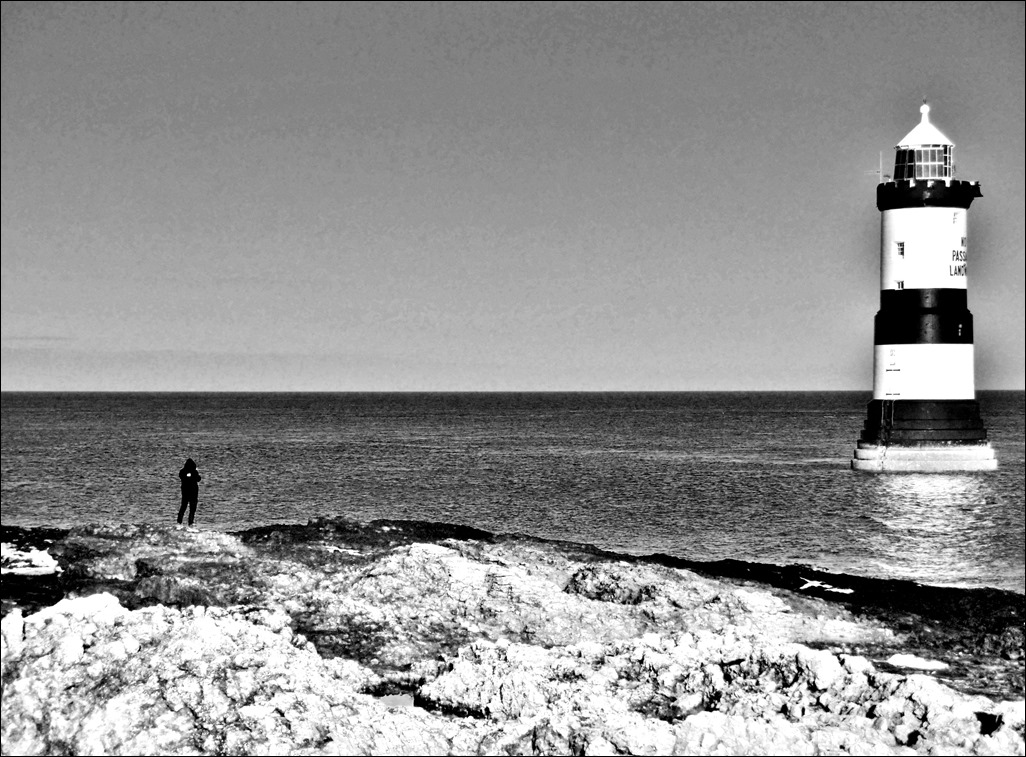
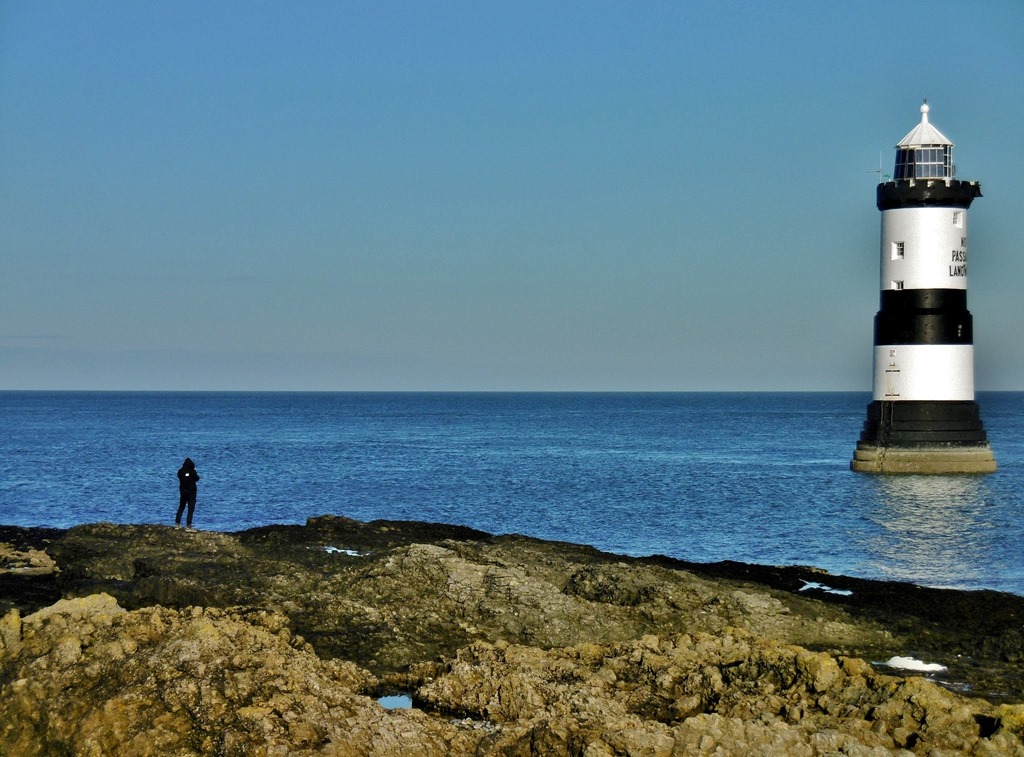
For this week’s Black & White Sunday Paula asks us to show her an original colour shot rendered into monochrome.  It is an interesting exercise, seeing what will work in a different format; and what won’t.  Here I’m trying it out with another shot from the Christmas on Anglesey archive. I’m not too keen on the dark smudges around the lighthouse that’s showing up in both versions. I think I  had the camera on too much zoom; otherwise, I can’t account for them. Strange irradiating substances?

Please visit Lost in Translation for more Afters and Befores.

While I’m here, is anyone else finding WordPress incredibly clunky, or has my PC been sabotaged again by Windows 10?

P1060566

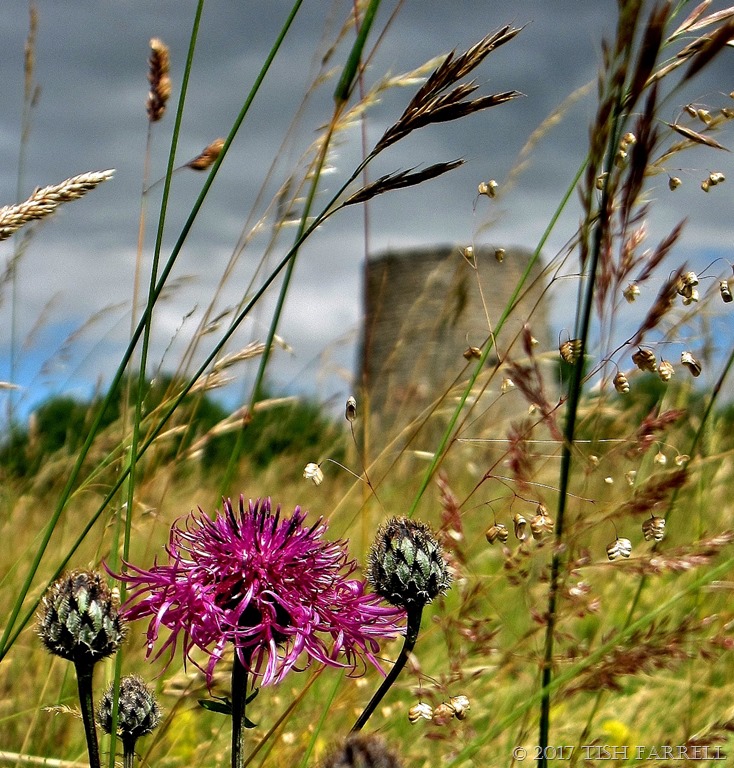
A Matter of Focus ~ Fond Thoughts Of High Summer On Windmill Hill With Greater Knapweed And Assorted Grasses


It’s blowing a frigid gale in Wenlock today; Met Office warnings of 60-80 mph winds as Storm Doris comes tearing through. What a woman! Talk about flighty.

First thing this morning I had to dash outdoors in my nightie to rescue the sweet pea seedlings: they were being blown out of their pots. Not only that, the freshly open daffodils were all askew, and the garden canes whipped off the shed wall into giant Pick-Up-Sticks.  Phew and phew. Just TOO much wind.

So it’s good to think about warmer weather, of lying in the grass on Windmill Hill, and peering at things botanical with the sun on my head. So thank you, Paula, for this week’s Thursday’s Special.

Focus is the watch word, however we care to interpret it,  and it has had me happily trawling through summer days in my own version of A la recherche de temps perdu. Which also reminds me that Marcel Proust used to do his writing in bed. Today, with all the draughts, and in places where we never knew we had them before, this is a very tempting prospect. So I’m wondering if He Who Recycles Pallets Builds Walls And Binds Books would mind delivering sustenance at regular intervals to the office bed where I might huddle under the duvet with my laptop. Seems unlikely somehow.

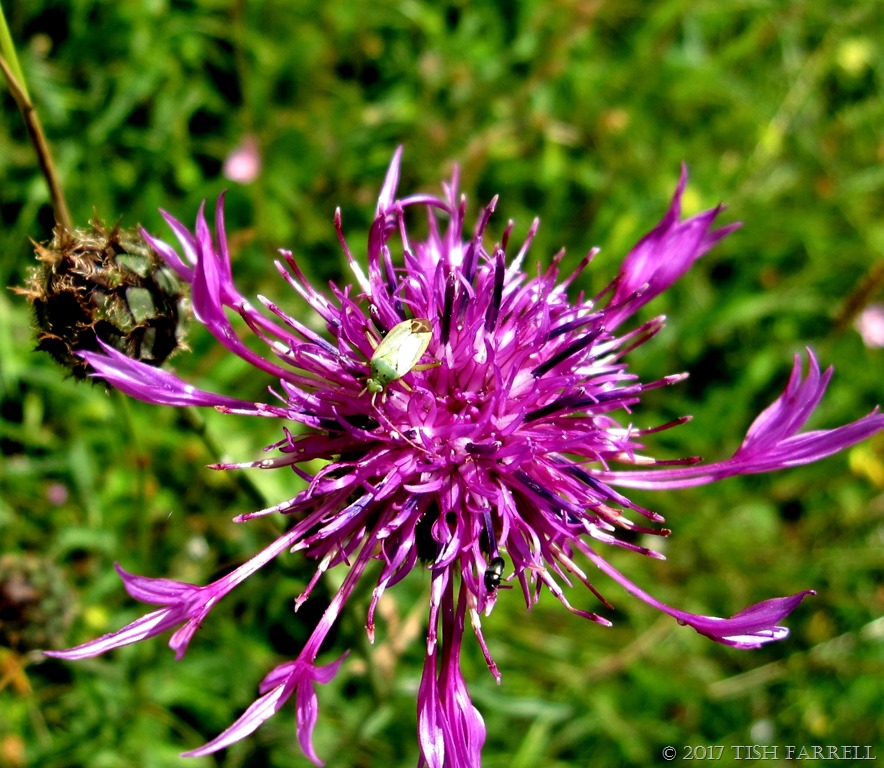
Here’s another shot of the knapweed, this one well and truly open for business along with assorted small bugs:

IMG_2072

February’s Changing Seasons ~ Shots From The Plot


Way-hay – it’s spring, or so it seems, and now I feel I need to garden on the run in order to catch up. Much earth moving must be done at the allotment – all the jobs it was too wet to do in the autumn. All the jobs that it’s still to wet to do now. But at least the temperatures are kinder.

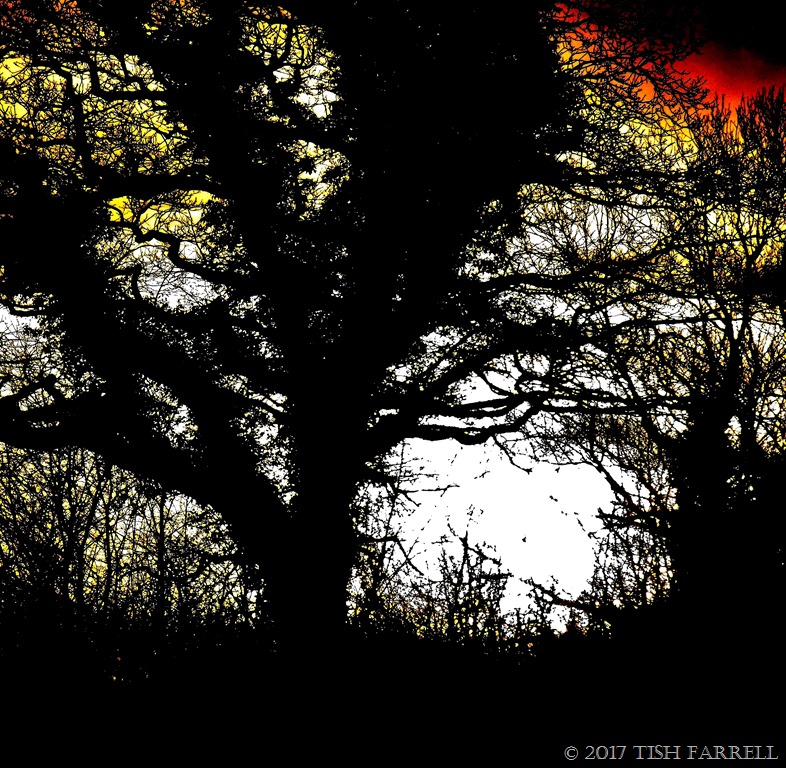
And the light is so promising. I’m celebrating that fact in the re-composed top shot of an allotment sunset, captured through the neighbouring hedgerow.

In fact every day now you can see the over-wintered plant life responding as light levels and temperatures rise: purple sprouting sprouting, cauliflowers hatching inside their leaf-folds, chives shooting, rhubarb unfurling, spinach expanding. Then there are carrots to pull from their bucket in the polytunnel, and Chinese mustard and Russian Kale; the autumn sown lettuce are starting to fill out.

Meanwhile inside the polytunnel a big makeover is also afoot. He-who-makes-raised-beds-out-of-old-pallets has been dragooned  into  commissioned to reorganise the planting zones. Instead of wide beds along each side and a path up the middle, the plan is to have one continuous narrow but deep bed on one side, a narrow raised bed down the centre for tomatoes, and three separate raised beds down the far side.

After two days slog establishing the first and second phases, HWMRBOOOP heroically informs me that the stage 3 separate beds are now ready, flat-pack style, for the final part of the installation. The only problem is that it is now windy and raining and we don’t feel like leaving the house. Also this last part of operations will require shifting tons of soil from the old side bed into the new beds, and there’s only so much heaving and hauling one can do in a week.

I’ve already shunted and prepared the soil in polytunnel beds 1 and 2, turned over three big squidgy compost heaps (my compost making technique leaves a lot to be desired), sifted out enough usable stuff to cover several outdoor beds, while starting a new heap with all the stuff that needs to go round again. I have another six heaps to deal with.

At the moment I have one and half allotment plots, but I’m aiming to dispense with the top half of my oldest plot this March when the rents are due. Ultimately, I’d like to retreat altogether to my polytunnel half plot, by which time I should have a fully functioning NO DIG raised bed/terrace system. The theory is that since this system will be more manageable and productive, a half plot should be more than sufficient for our needs. However, as I’ve mentioned several times in other posts, this approach does rely on making loads of compost every year, and that takes up space. Anyway, one step at a time.

And in between compost turning,  moving the gooseberry bush, and pruning the autumn raspberries, there is always time to take a few photos. So here follows a gallery of shots from the February allotment, one of which makes me realise that my polytunnel now also needs a good wash. Heavens to Betsy – is there no end to the gardener’s toil:

To take part in the monthly Changing Seasons challenge please visit Max aka Cardinal Guzman.

Traces Of The Past ~ And Who Do You Think Lived In This Little House?

P1060173

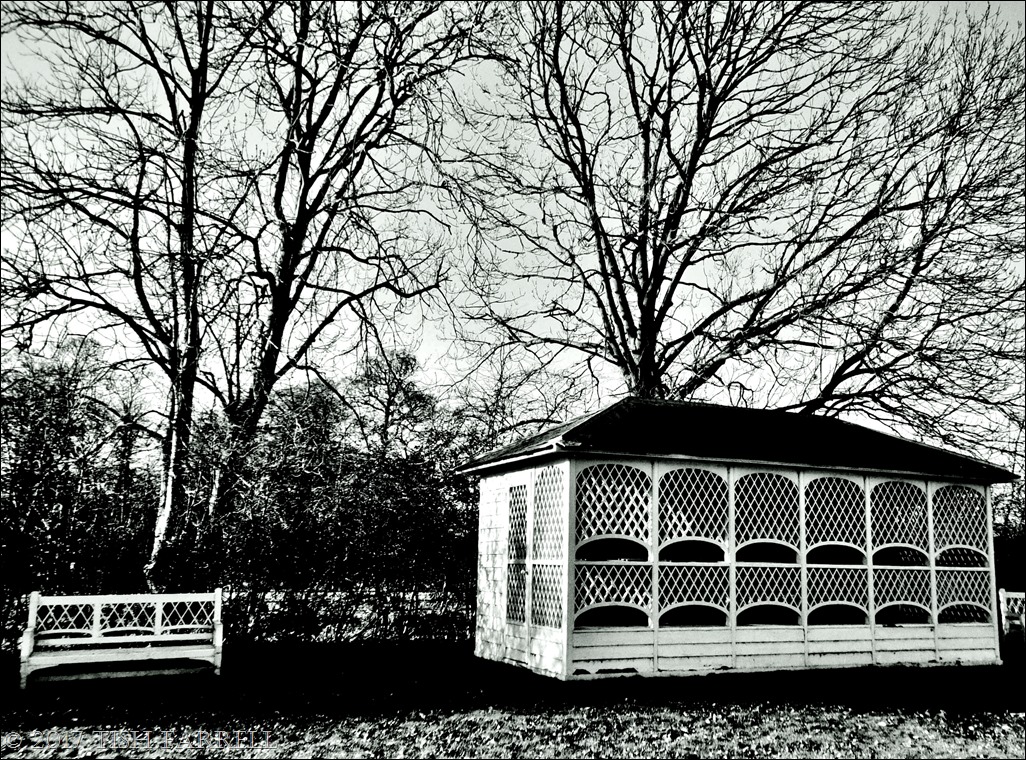
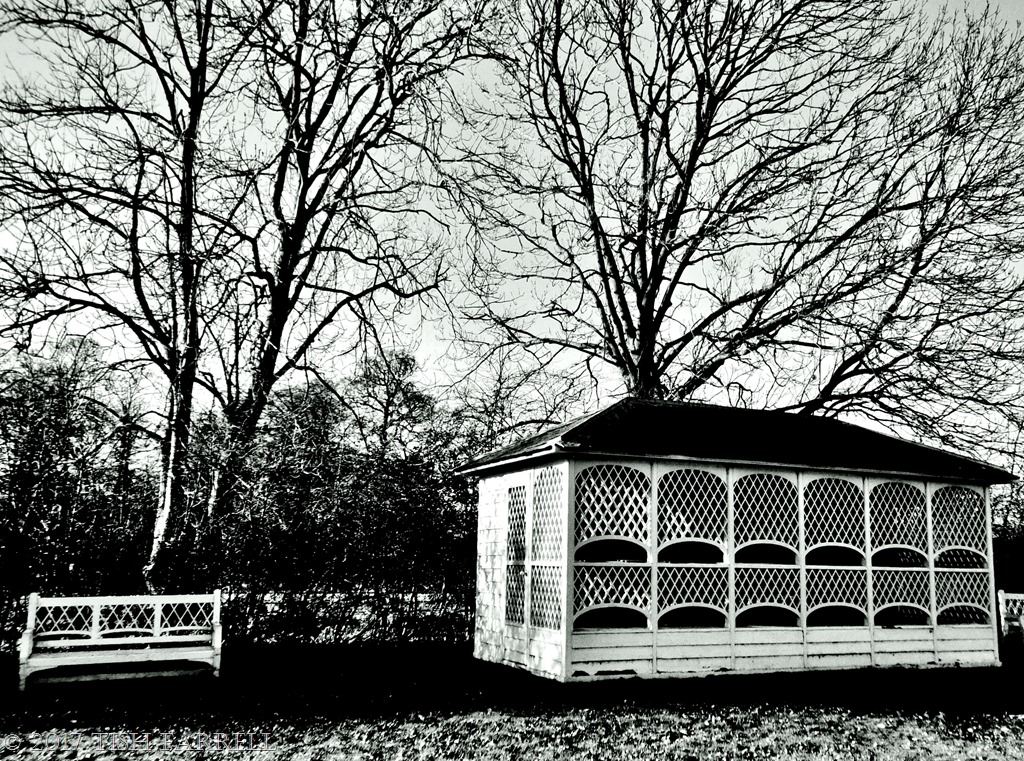
Well, I’d never seen one of these before.  There it was outside the walled garden at Attingham Park, one of Shropshire’s grandest historic houses.  Closer inspection and the spotting of an information panel inside one of the half-moon ‘windows’ yielded the knowledge that it was in fact the bees knees in accommodation – a grand house commissioned specially for the Second Duke of Berwick’s bees.

The house was originally sited in the Duke’s extensive orchards to encourage the pollination of the fruit trees. Behind each opening there would have been a traditional hive or skep – an upturned, domed basket made from coils of straw. This apian ‘des res’ apparently dates from the early 1800s and is only one of two known Regency examples in the country. The great landscape designer Humphry Repton and architect John Nash were both employed at Attingham around this time, and so either one could be responsible for the design.

The hall and park are in the care of the National Trust, and it is currently one of their most visited properties – over 400,000 visitors last year and growing. Millions have been spent on the house, and the next huge project is the recreation of Lord Berwick’s pleasure grounds. Nor have the bees been forgotten. There are a quarter of a million honey bees in the Park, and the Trust has recently established a large, new apiary in the Deer Park. There is also a National Observation Hive in the orchard where you can watch the bees coming and going. Attingham honey may be going on sale soon. So a big cheer to the National Trust for championing the bee cause, this in the face of determined eradication of the species by the Big Unfriendly Pesticide Giants. We’ll all be very sorry if bees become ‘a thing of the past’.

P1060179

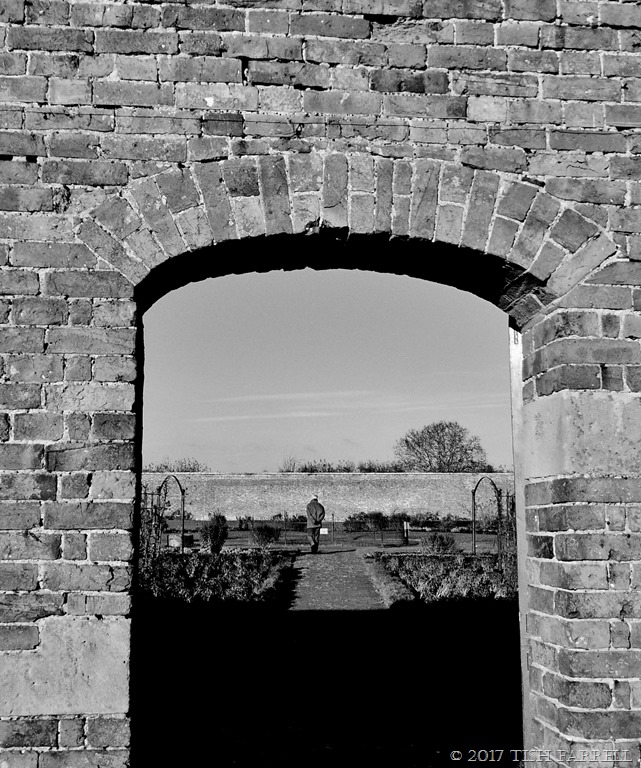
The walled garden in winter: a restoration project in progress. You can just glimpse the orchard beyond the far wall.

Black & White Sunday: Traces of the Past Now visit Paula for her fine entry.

Against The Odds ~ The Wenlock Edge Sky Painter Steals Raoul Dufy’s Paint Box

P1010530

I was in primary school when I fell in love with Raoul Dufy. In those days there was a state schools’ travelling art scheme, and at regular intervals our classrooms would receive a new reproduction of some striking painting. The said artist would then feature in a piece of project work: we would learn something of their life, and diligently copy or create our own versions of the picture.

Vincent Van Gogh featured often, and for a long time I was overly fascinated with the man, the loss of his reason and his ear, and was also visually transfixed by his chair.

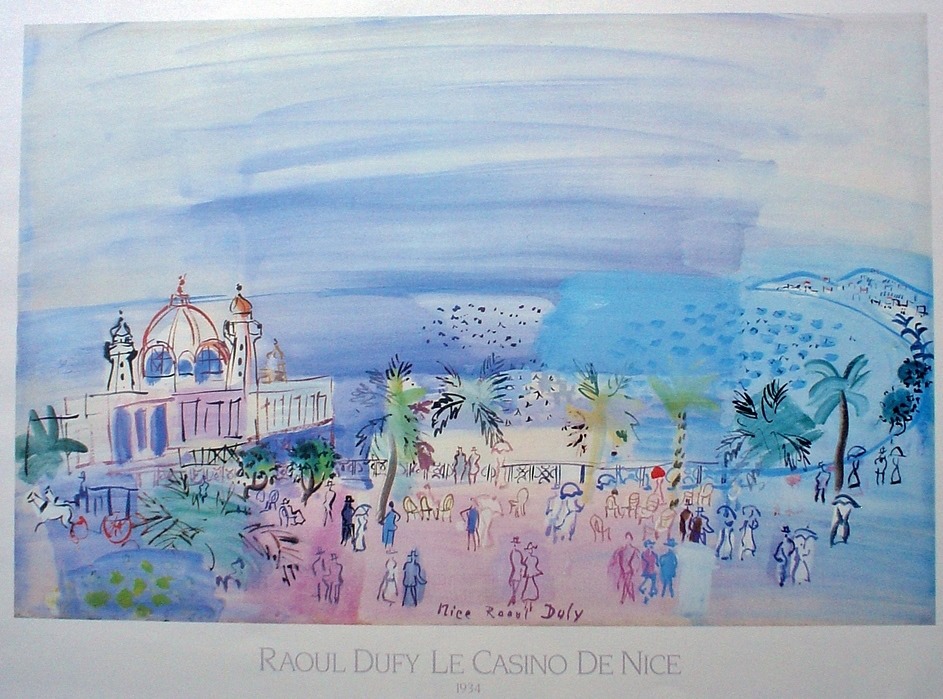
But it was one of Raoul Dufy’s many images of La Promenade Des Anglais in Nice that captured my imagination. As I painstakingly copied the never-before-experienced palm trees, the balustrade, the blue, blue sea beyond, I became aware of quite new sensations: of something excitingly foreign, but above all, and I could not have put this in words at the time, of a sense of unfettered joi de vivre, something I had never felt before, since it was definitely never a sensation to be experienced in my home-life. And so when I see this sky, I have that same sense of the joyous liberation of the spirit, and think that this is possibly all I need to know about the universe. It simply IS. And I am glad to be here.

Dufy Le Casino de Nice

Daily Post  Against the Odds