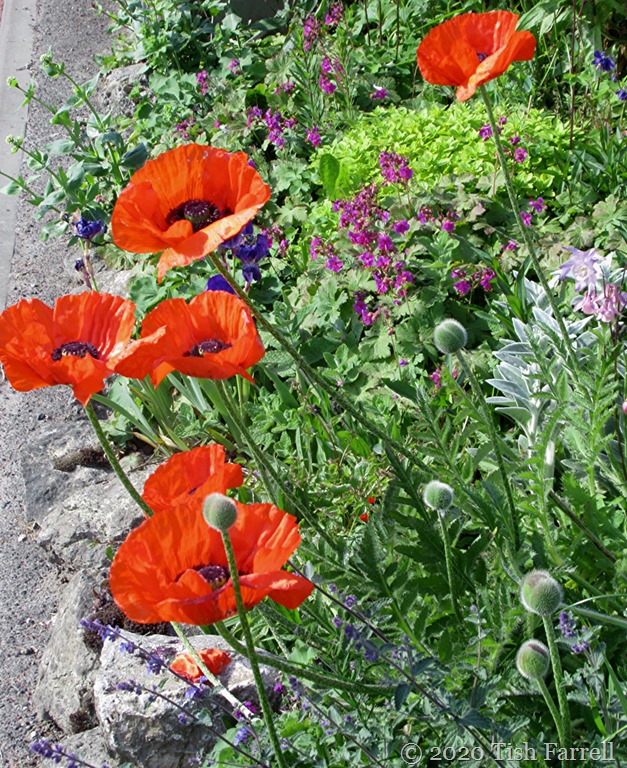
Our cottage faces east and so has full-on morning sunshine, and here it is filling the oriental poppies – a sort of natural neon effect as they sway in the breeze. They are right beside the main road, which is growing busier by the day now that lockdown strictures are easing. But the increase in traffic isn’t cramping the poppies’ style. Lots more buds set to open, and that will definitely please the bumble bees.
Gardens
Today In The Columbine Garden
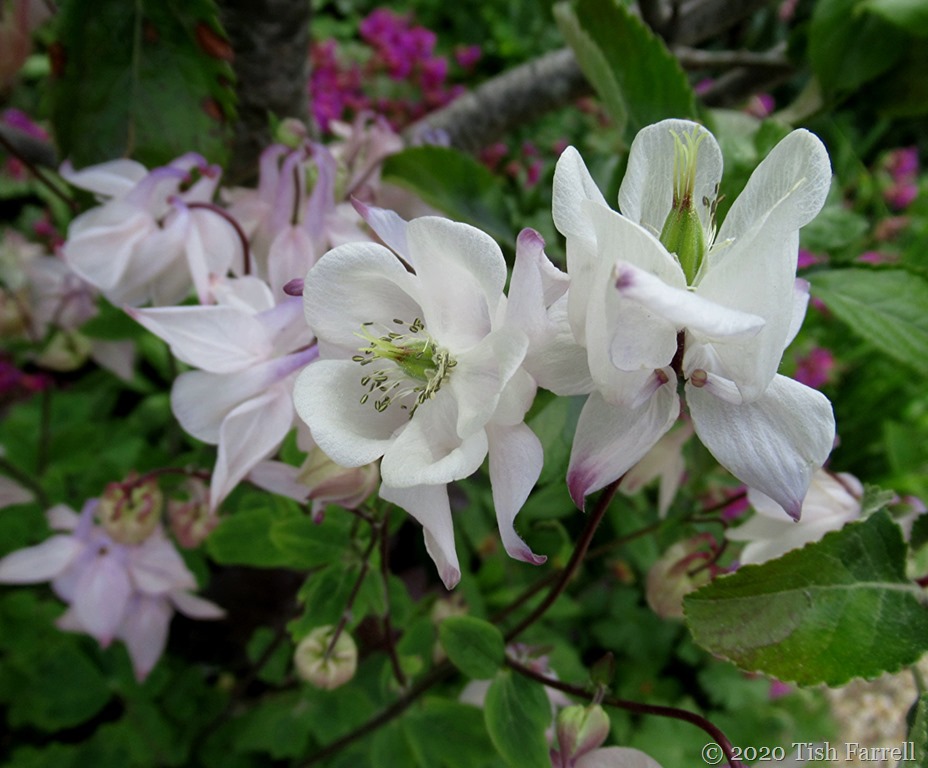
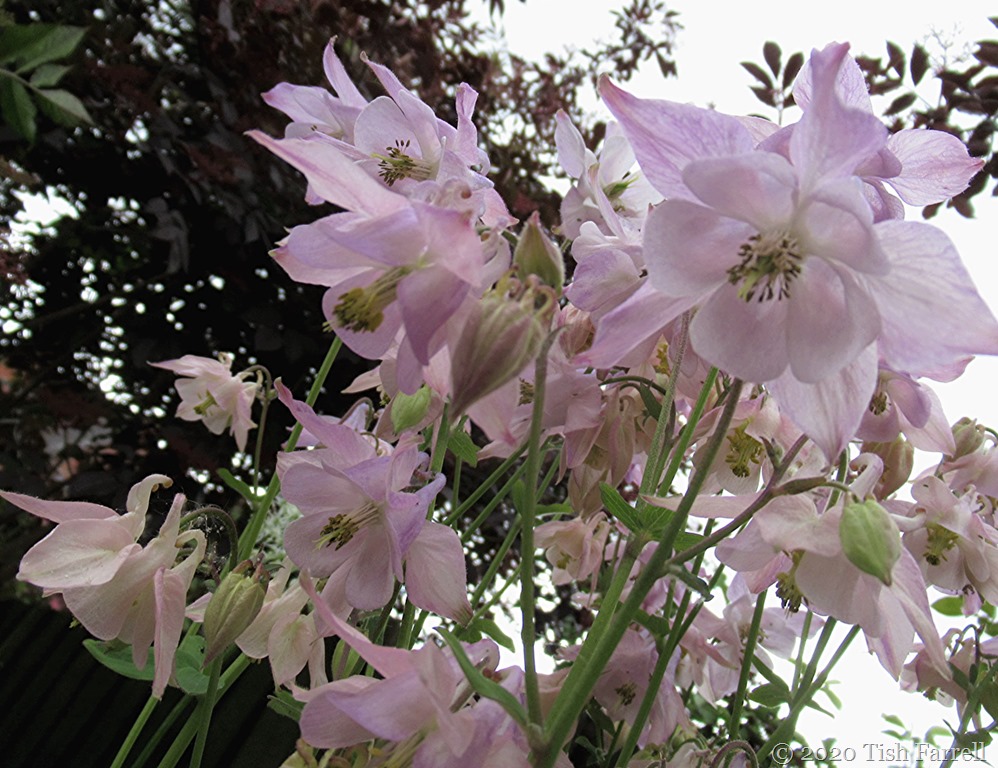
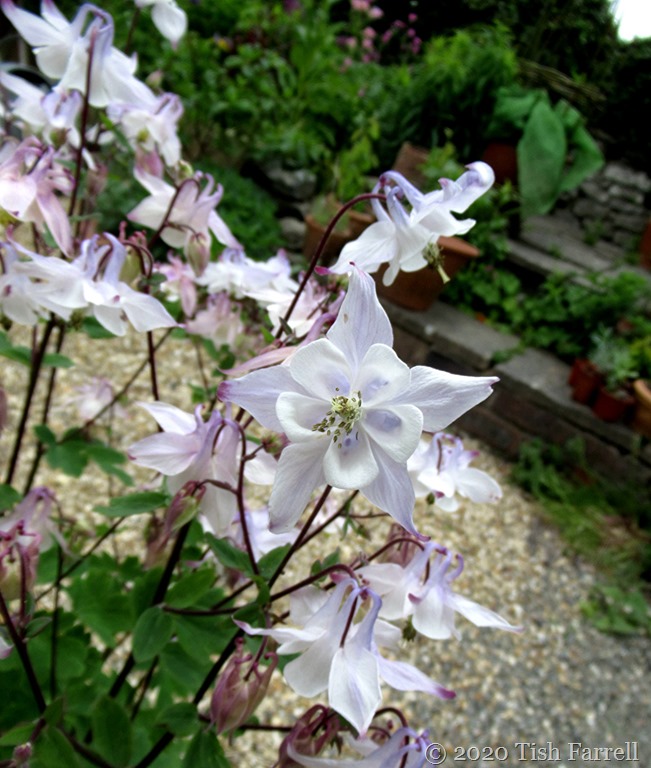
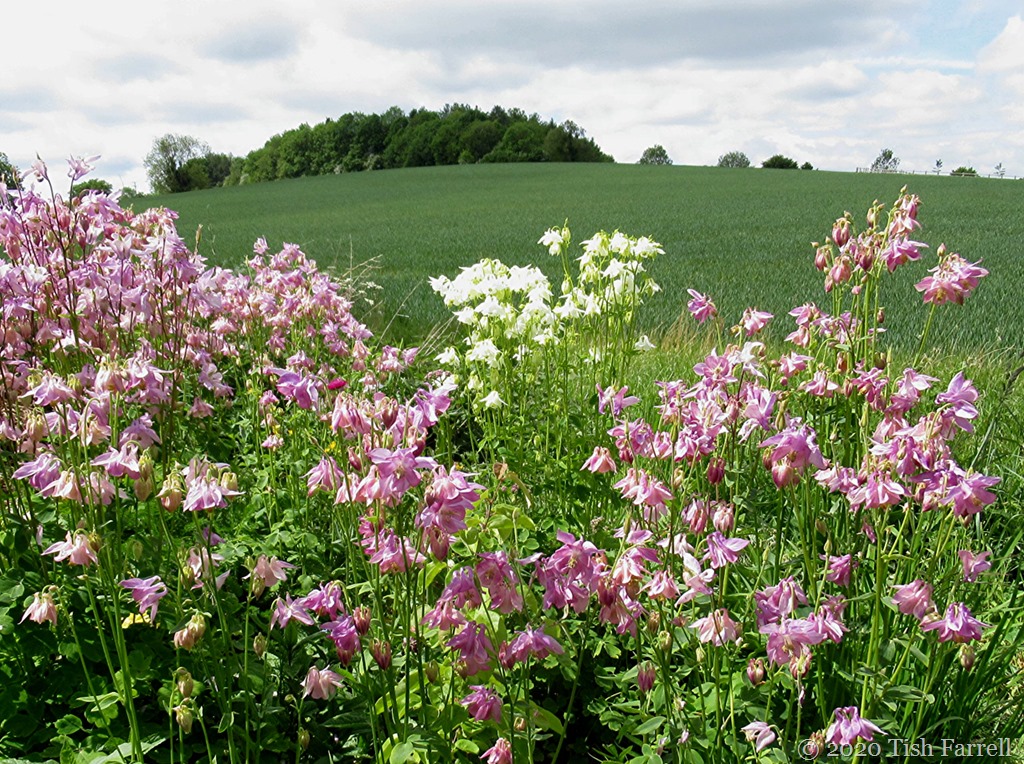
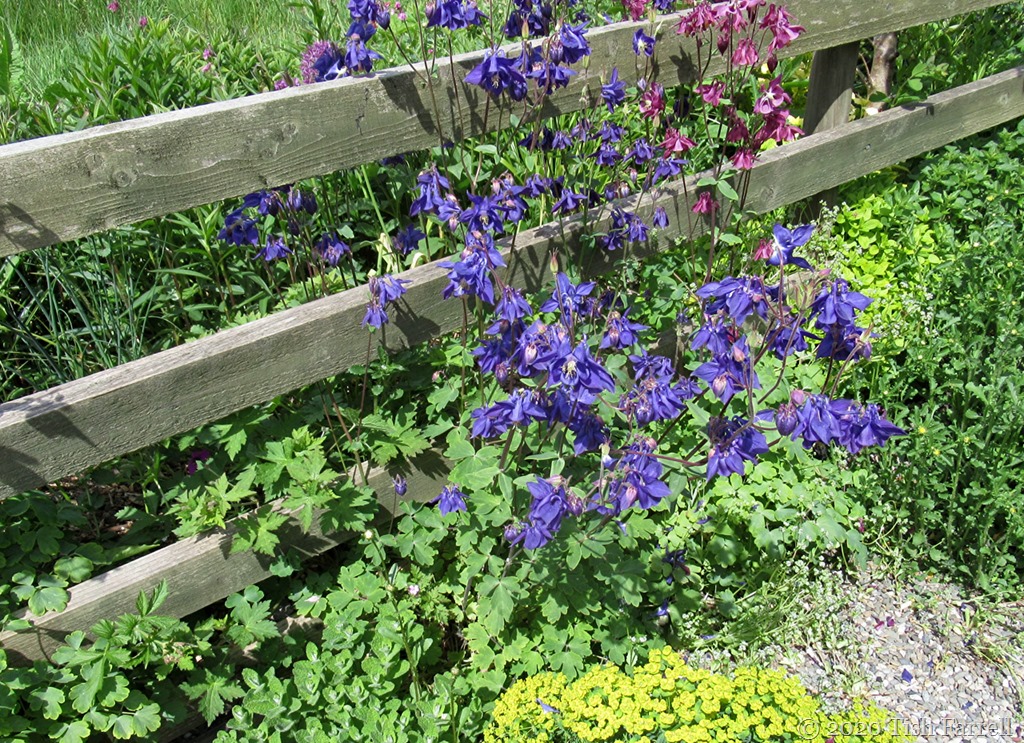
The columbines do as they please in our garden. Over the years they have moved in from who knows where, and done much replicating. I have made only one deliberate introduction which is a lovely lemon one saved from an overgrown plot at the allotment. Every spring we have additional variations in the indigenous colour scheme, this season’s new shade being white with hints of mauve and purple. We also have various pinks, deep violet, burgundy and ivory and some of them have now moved into the front garden that sits beside the road so who knows where they will be off too next. A world invaded by columbines – well, why not?
So here are some garden views – inside back and outside back (guerrilla garden), and lastly our roadside bed which I feel could now serve as a reference plot for the Haphazard School of Cultivation. I’m not sure what the poppies are doing there – shades of Heinz tomato soup. Ah well. They’re looking very jolly – a spot of light relief from Lockdown-itis.
Magic Bean Flowers!
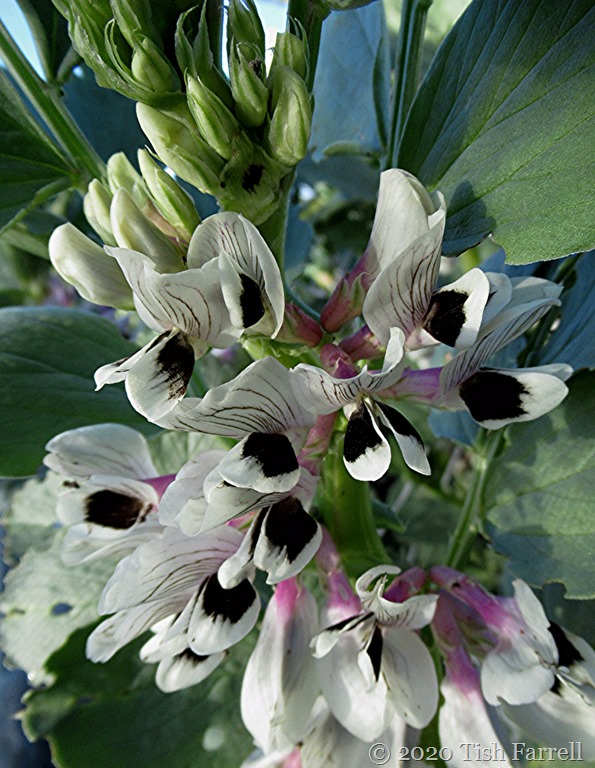
Well they have to be don’t they – magic that is – sporting such snazzy attire. These are the flowers of Field Beans Vicia faba, the same species as Broad Beans. They are usually grown in the UK as animal fodder or a green manure – the latter being sown in autumn and then dug in prior to flowering in the spring. This seems a huge waste to me. The beans produced are less than half the size of their bigger culinary cousins, but the plants are prolific with bundles of pods per stem. In fact (as with Broad Beans) you can harvest the young pods and steam them whole. If you leave the pods on the stem too long the beans can become a bit floury, but then they are excellent for soup. The young beans (Field or Broad) also make their own tasty version of guacamole (I have tried it out on foodie chums who thought it delicious), though it’s a bit fiddly as you need to steam the beans and then remove their outer pale shell before blitzing the green innards with olive oil, garlic, lime and herbs. There’s a recipe HERE.
Bees of course love bean flowers however they come. And of course for us humans they have the most alluring fragrance. When I was taking this photo I also noticed the flowers lower down the stem had already been pollinated and were forming tiny pods. So the bean feast will not be long in coming. In the meantime you can also lightly steam the plants’ growing tips as a green vegetable. It’s anyway advisable to pinch them off about now to discourage blackfly assaults, so they may as well be added to the supper menu. Magic all round then.
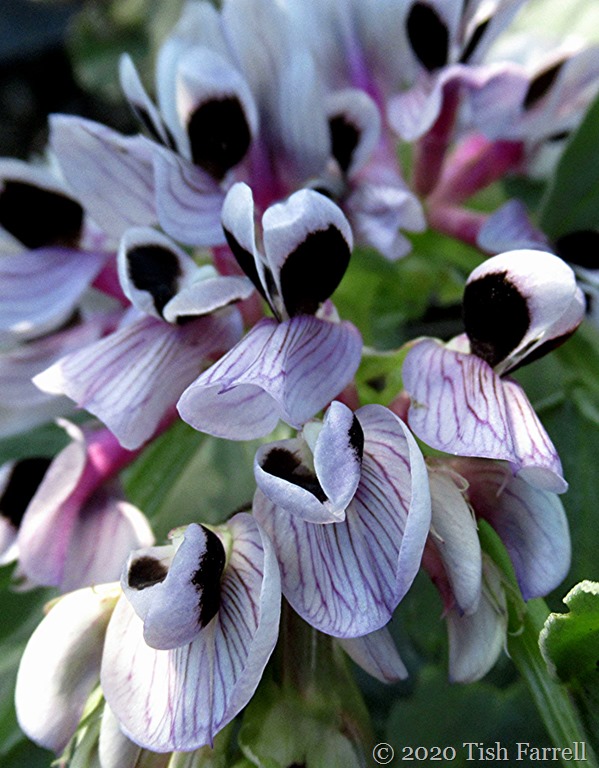
And here are some with purple striped petals:
Bee In My Border ~ The Top-Down Approach
You have to admire the determined aim of this little bee – heading for the heart of the cornflower (Centaurea).
Top Crop ~ The Big Cauliflower Ambush
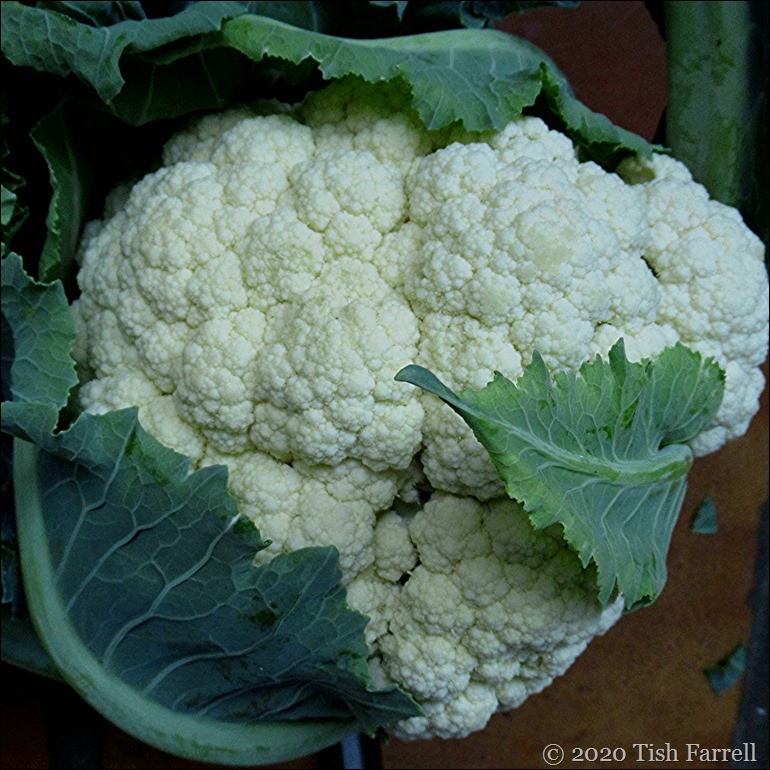
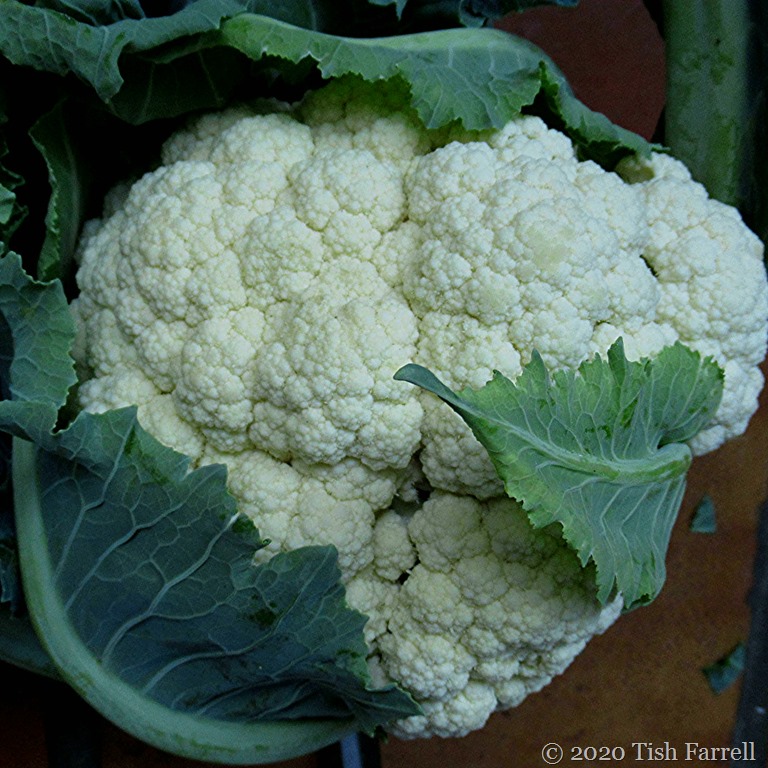
Many may not know this, but cauliflowers are the sneakiest vegetables – not to say the most covert in their growing habits. You may watch over them for months – from plantlet module to big leafy crown; you may peer frequently into their tight green hearts, even peel back a few leaves, and there will not be the smallest signs of a cauli. Then one day – last Monday to be exact -THIS HAPPENS!
I was just leaving the allotment polytunnel after my usual late-day visit, and thought I caught a glimpse of curd in the corner bed. When I pulled back the monster leaves there is was, the size of a football and utterly perfect. How could I not have noticed it sooner? Did it grow overnight like Jack’s beanstalk?
I don’t usually grow cauliflowers in my polytunnel, but back in the autumn when I bought the modules, I had three weedy ones left over from my outside planting, and thought I’d try them under cover. When I go up to the allotment today there may well be two more like this.
The problem with cauliflowers’ sneaky habits when grown outdoors is that by the time you discover curds big enough to harvest, more often than not they have already been found by slugs and earwigs (also sneaky) and been well nibbled under the cover of leafiness.
Anyway, I guess a lot of you might not find cauliflowers especially appealing. But there are many approaches besides the usual cauliflower cheese. Grated raw and briefly sauteed in oil it makes a good rice substitute. Steamed and pureed cauli is also delicious (spot of cream and chopped herbs added). And the whole head can be sliced into 1” thick steaks, given a good olive oiling/seasoning, and roasted in a hot oven for 35 mins, turning after 20mins. I also tried this the other day with celeriac and it was brilliant served with a mushroom strogonoff sauce. I’m thinking one of the polytunnel caulis might be in for similar treatment this evening.
The next photo is just to give you an ideal of the scale of leaf disguise adopted by this paricular cauli. I had to peel off masses take this portrait, and rather wished I had some livestock to feed them too i.e. rather than the compost bin microbes.
Today At The Top Of The Garden ~ Apple Blossom Sunshine And Tiny Tulips And A Very Happy Birthday To Becky
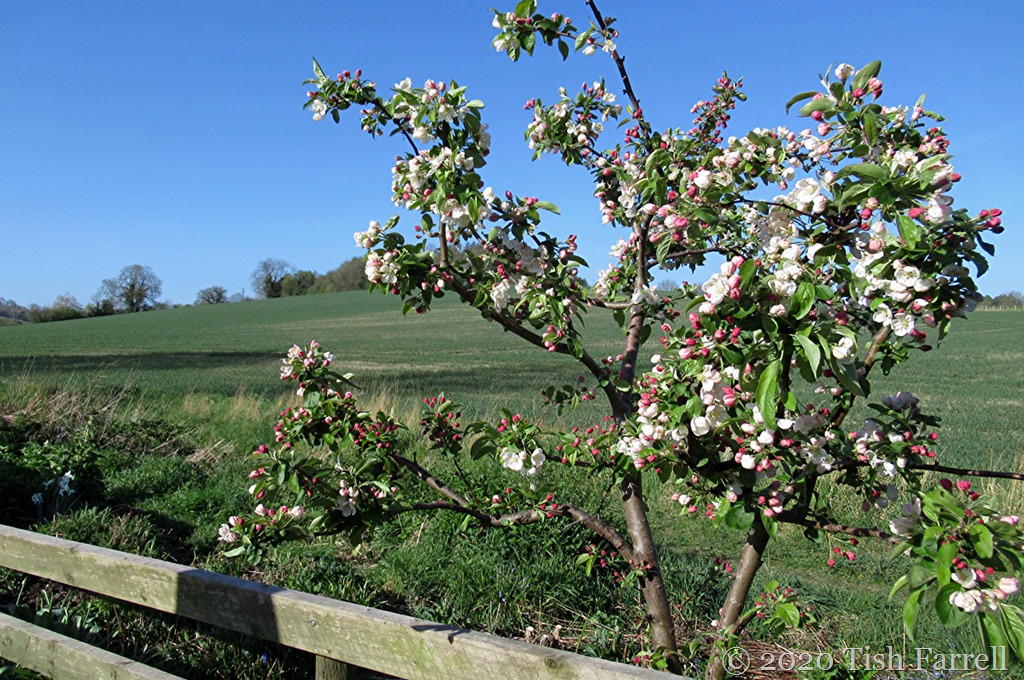
No doubt about it, the Sunshine Deity is showering us with her beneficent rays. You can almost hear the plants crying YIPEEEEE! as they break free from the winter’s rain battered soil, which here in Silurian Sea Wenlock sets like cement. Things are definitely thriving best in the parts of the garden that received an autumnal mulch of tree chippings (gratefully gathered from a big heap in a neighbour’s yard). The front garden by the road is a mass of foliage with bursts of blue and (nearly) black centaurea, and the little crab apple tree that went in a couple of years ago is weeping prettily. I can also see that an allium-oriental poppy break-out is imminent. Any day now!
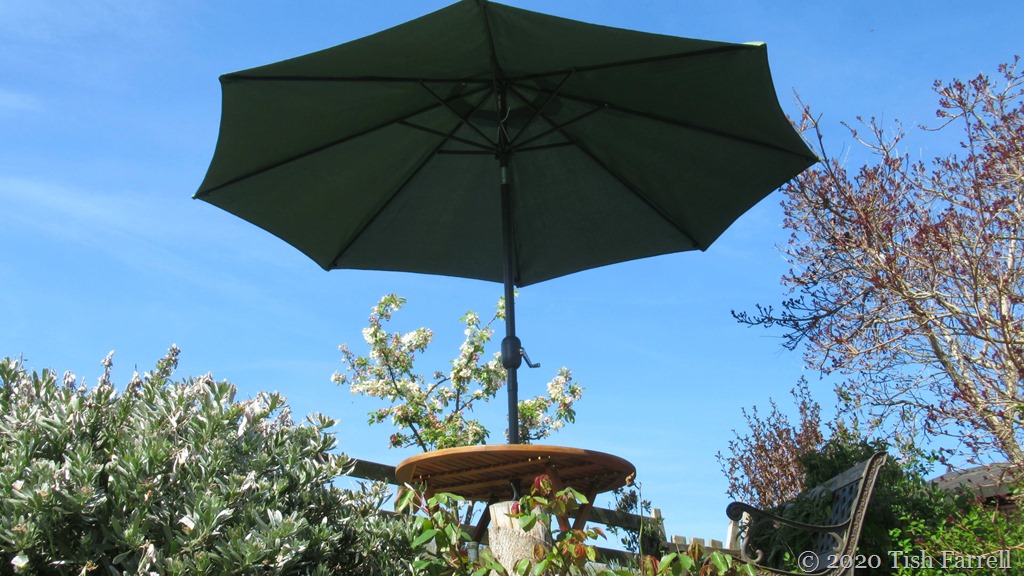
But back to the top garden: the Coxes apple tree is just blooming and underneath it the miniature tulips are saying ‘see me, see me’. It’s all too exciting.
HAPPY BIRTHDAY, BECKY! A TOPPING DAY TO YOU.
Top Of The Morning ~ From The Top Of The Garden
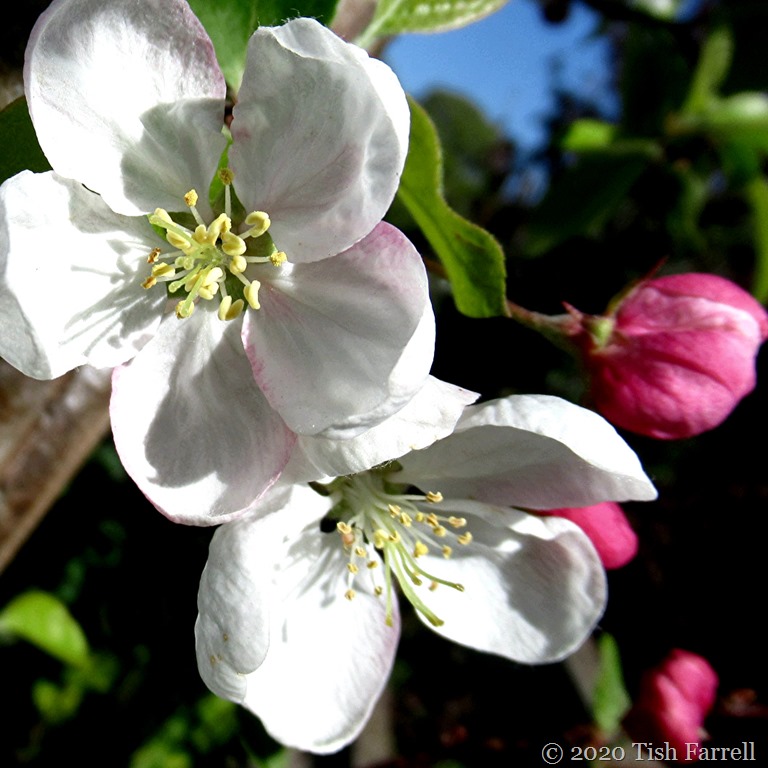
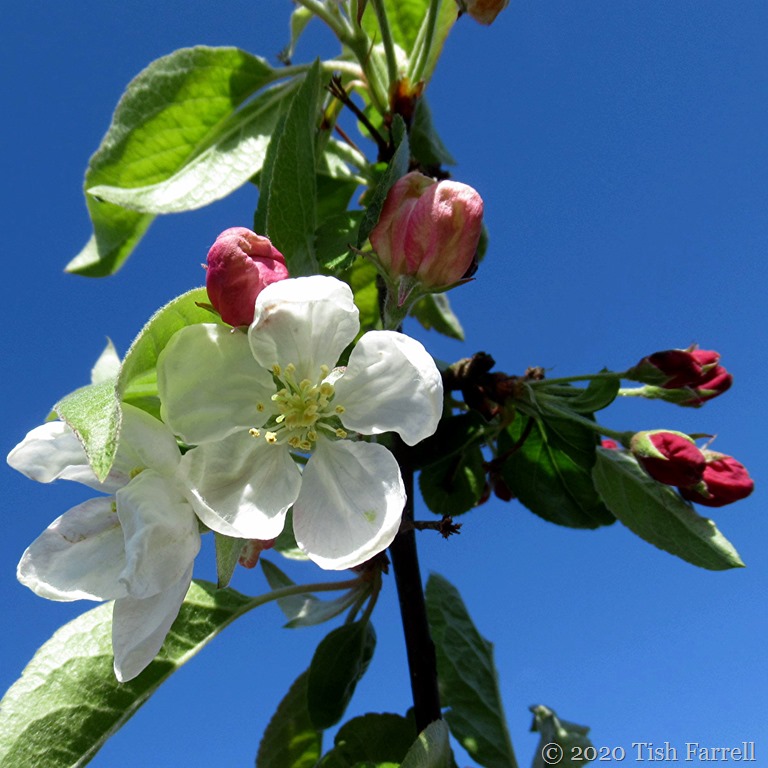
Here she is, our Japanese crab apple tree, Evereste, caught this morning in first flush over in the guerrilla garden. Full-on sun too, though the air is icy. It is both heartening, and yet surreal to see spring vegetation unfolding so graciously around us. Such strange and unprecedented times we’re living through; so many unsubstantiated and unchallenged narratives. Only time will tell which ones are true (or maybe not). In the meantime there are the small certainties, the truth that this apple flower is perfect in its own particular way. And that if a bumble bee happens by to pollinate it, then in October there will be a miniature rosy apple growing here, which in turn will give us pleasure and in December make a meal for a hungry blackbird.
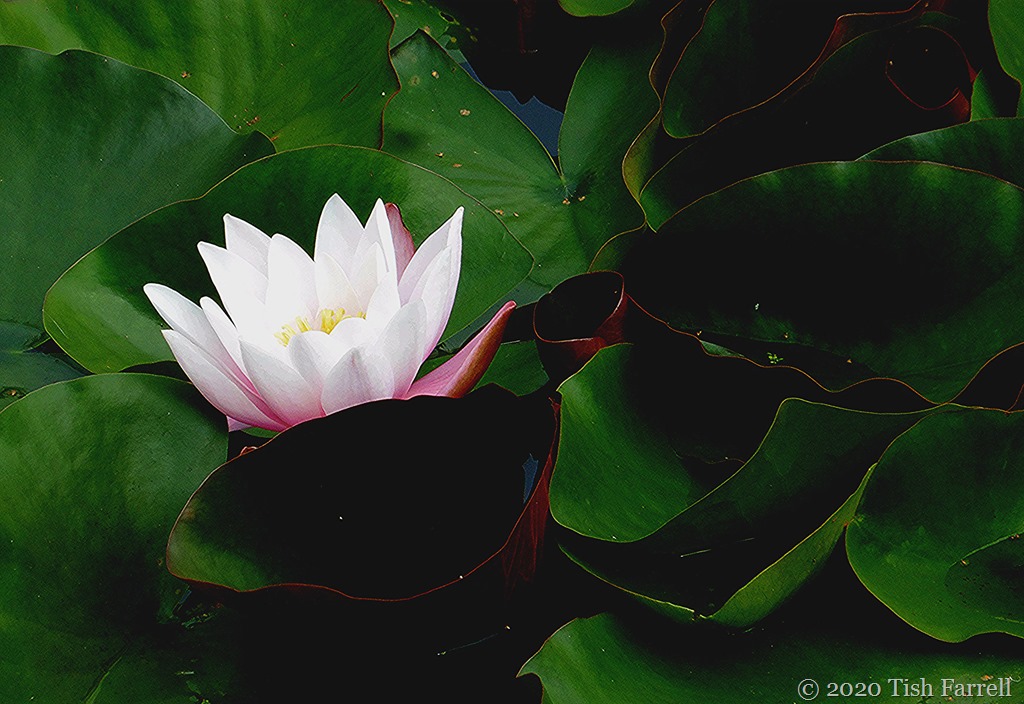
Background Patterns ~ Lily Between Leaves
Month by month Jude at Travel Words is challenging us to join her in a mission to improve her and our photography. February’s topic has been about ‘patterns’, and the final assignment (I’m on the last lap here) has been to use pattern as a background for a more substantial subject. She says it isn’t easy, and she’s right! Anyway, here’s my best shot at it, though I’m thinking my background is too much in my foreground. Further pondering required.
Backwards And Forwards Planning ~ That Would Be Gardening Then
The gardener travels hopefully, always looking ahead. It is the only way to go. But then there are also always ‘the now’ activities, the planning, preparing, nurturing, harvesting, recycling, whichever is appropriate at any given point in the cycle of things.
Knowledge gained from past endeavours – the successes, failures and ‘could-do-betters’ – also informs the way forward. There can be neuroses too prodding you along – is now the right time to sow for the best mid-summer crop? Will this variety or that one provide the best tasting produce/be easier to grow/need staking or otherwise managing? Is it warm enough/too wet/too cold to plant the seed potatoes? What can I do this year to fend off pea moth/allium beetle/slugs/pigeons/carrot fly? What measures can be taken in case of drought/flood/heat wave? What else can be grown to extend the cropping season? What will best dry/freeze/be otherwise preserved over the winter? Shouldn’t I be making more compost/collecting more leaves/maintaining a cycle of green manure growing/weeding? What would the bees, bugs and butterflies like?
So much to think about for the coming year. And while I’m busy doing that, here are some ‘back-to-the-future’ successes from last summer that are spurring me onwards. Remembrance of things to come…
Lens-Artists: Future This week Ann-Christine gives us ‘the future’ as her very thoughtful challenge. Please call in to see her evocative double-exposure images. You’ll be glad you did.
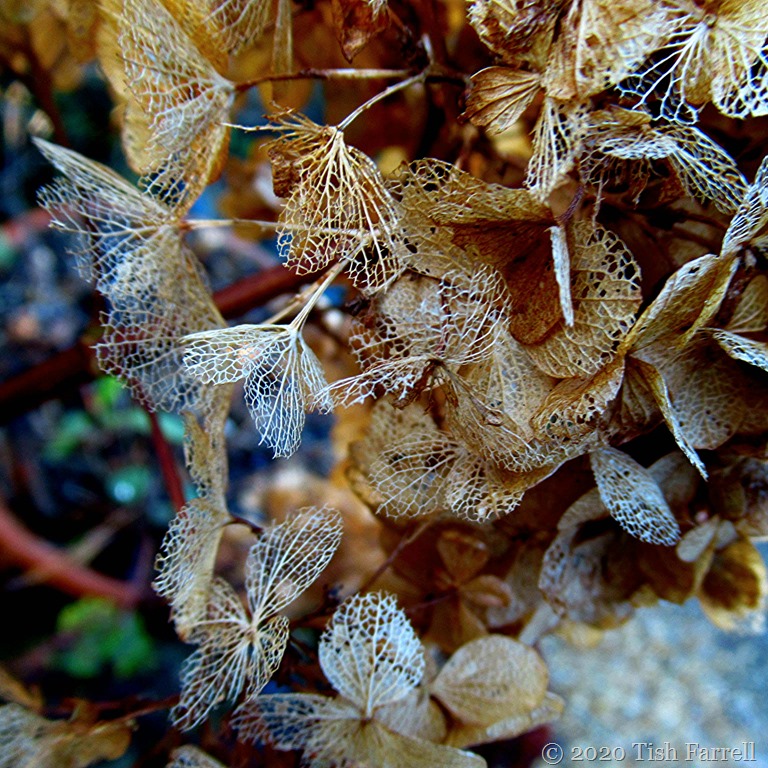
Yesterday In The Garden: Skeleton-Light
I know – another made-up word, and it’s all Becky’s fault down to Becky’s inspiring January Light squares challenge. Anyway, I am justifying this particular piece of word smithery on the grounds that these hydrangea flowers were indeed a product of summer sunlight, and so what we see here on a frosty January morning is a manifestation of residual light as it gently decays. This is my ‘story’ anyway.