In December 1993 we returned to Kenya after nearly a year spent in Lusaka, Zambia (Graham had been overseeing the distribution of European Union food aid during a period of extreme drought in southern Africa). For much of the preceding year he had been in Kenya working with a team controlling Larger Grain Borer, a crop pest introduced to Africa in consignments of U.S. food aid. (Short-term emergency assistance can too often lead to unintended long-term chronic consequences). The reason for returning to Kenya was to wind down the LGB project. Predator beetles had been bred and released in affected areas; it was time to let them do their work and leave Kenyan scientists to monitor progress. We were thus not expecting to be in Kenya long, but somehow that ‘not long’ stretched to January 2000. For some of those years I kept a journal. Here is the first entry:
Sunday 19 December 1993
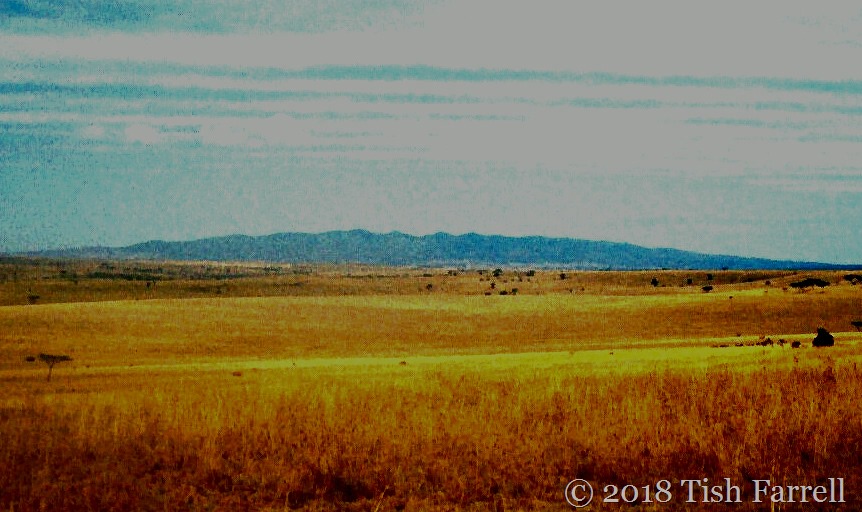
Our first trip out to the Nairobi National Park since our arrival back in Kenya. We had thought of it often while we were away. Of stately giraffes. Yellowing plains beneath the hazy blue of the Ngong Hills (the four peaks said to be the knuckles of a giant’s clenched fist). Groves of fever trees along the Athi River.
Now we have returned well prepared with map, camera, binoculars and a picnic. But as we pull into the main entrance on Langata Road we see that there have been changes since our last visit: the stand of tall eucalyptus trees that lined the approach have been felled, and their ground carved up, exposing the red raw earth of a building site. It looks as if a new wildlife service administration block is nearing completion. We had heard about Richard Leakey’s large loans from the World Bank: this must be one of the newly funded enterprises. But at the entry gate little has changed ; there are still negotiations over the size of the Land Rover and its appropriate tariff and much accompanying paperwork. It is worth it though. As residents, a day’s pass costs us a mere two pounds thirty pence.
Once through the main gate we drive slowly through open woodland and dense shrubby undergrowth. Judder over the sleeping policemen meant to slow you down because it is quite likely that a giraffe will step into the roadway here. Even on to the asphalt. And the presence of a tarmacked road in a game park always takes me by surprise. But in this instance it was probably laid for the benefit of dignitaries going to the famous ivory burning ceremony in 1989. It took place just a kilometre or so within the park, a big show involving President Daniel arap Moi setting light to the retrieved tusks of nearly 2,000 poached elephants, an act intended to demonstrate Kenya’s commitment to conservation. There is a monument to mark the event and a picnic site where you may get out of your car and feel the grasslands wind on your face. The Athi Plains stretch out below.
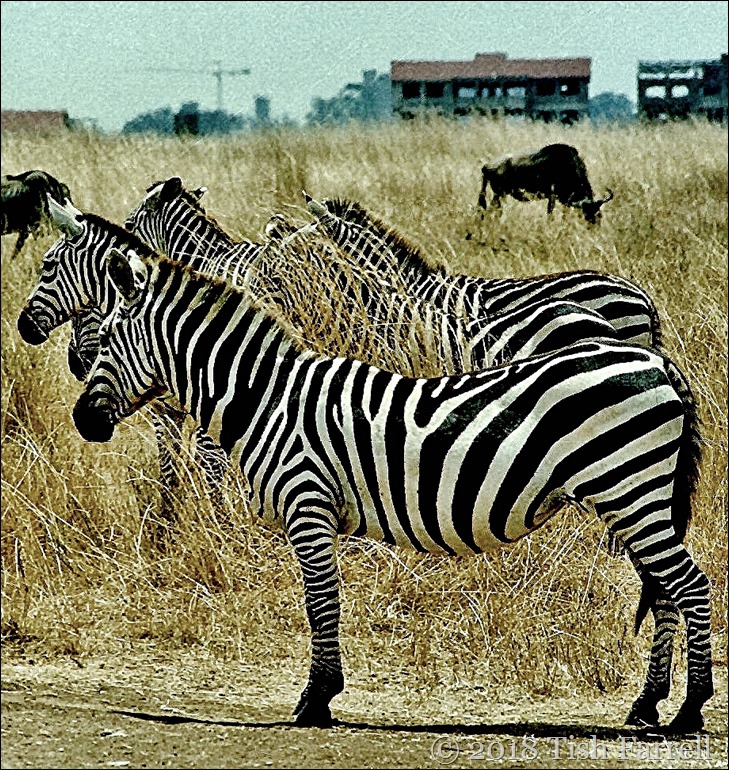
But it is not a wilderness view by any means; perhaps even challenges the sincerity of the grandiose ivory burning gesture. To the north, where a hundred years before there were only empty plains, city high-rises glint in the sun. Directly behind the wire fencing of park boundary there are more recent developments: grey-stone apartment blocks whose half-built elevations have all the charm of a post-war bomb site. Then as we turn towards the plains a large passenger jet takes off from nearby Jomo Kenyatta airport and soars into the blue above us. It seems an unlikely spot for game watching.
But just as we are turning on to the dirt road, a blue Land Cruiser approaches and pulls up beside us. The driver is English. His accompanying family look red-faced and querulous. He, though, is excited. “There’s a lion back there guarding its kill. Just follow the track. There’s a group of four trees. He’s under the one nearest the road.” He pauses. A wrinkle of doubt. He has clearly had a hard morning with cross children. “If you’re interested?” He adds, half query, half-throwaway remark.
We are. We drive off – full of hope. Will the lion still be there?
We drive slowly, scouring a landscape dotted with low bushes, hoping the four stunted thorns will make themselves obvious in this terrain of few landmarks. They do. A stone’s throw from the track lie the remains of a large antelope. But there is no sign of the lion. Any other time we would have driven on, but being forewarned we pause for a better look.
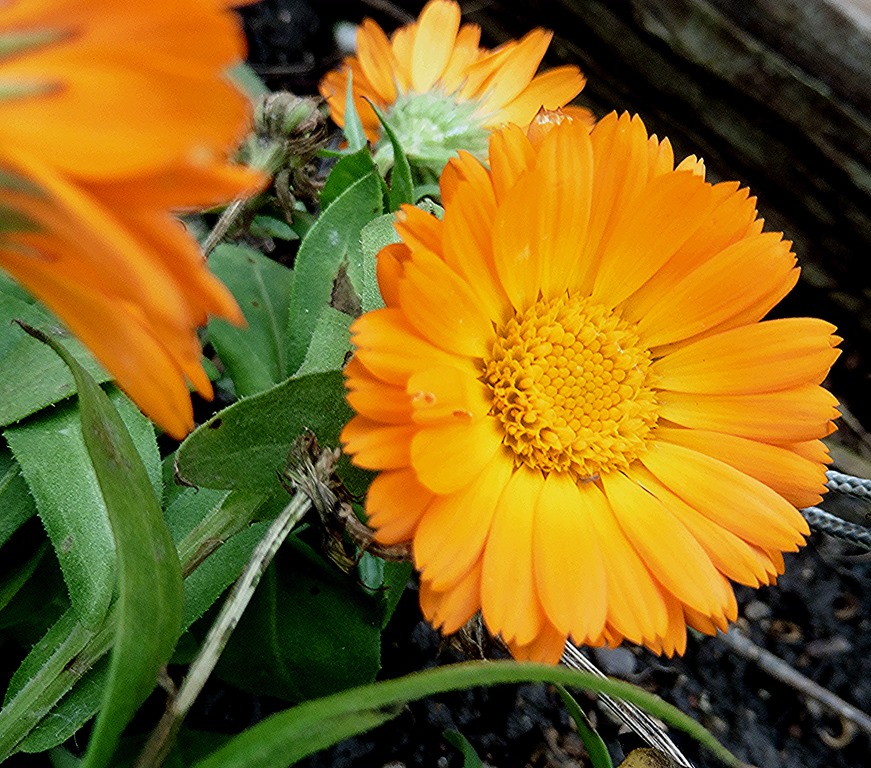
The antelope is lying in the shadow of the little tree. We scan the scene with binoculars. Nothing. But just then a mighty tail flicks up above the grass. Graham turns off the car engine, and in the next moment up comes a mighty head to go with the tail. He fixes us. Yellow eyes. Yellow mane. Then his head flops back into the grass and once more he is invisible. We wait and decide to eat our sandwiches – pastrami and horseradish. Perhaps the lion catches a scent of them for suddenly he is on his feet. He is massive. He is staring at us. He is heading our way. A frisson of fear, despite the sheltering Land Rover. But no. He has merely risen for a stretch. Then he returns to his tree and sits down with his back to us, a posture that reminds me of the yellow labrador I once owned. The similarity is, of course, misleading. Then down he flops. An occasional tail twitch, a momentary fix of an eye, a large yellow lion stretched out in a clump of bright yellow daisies. We leave him in peace and drive on.
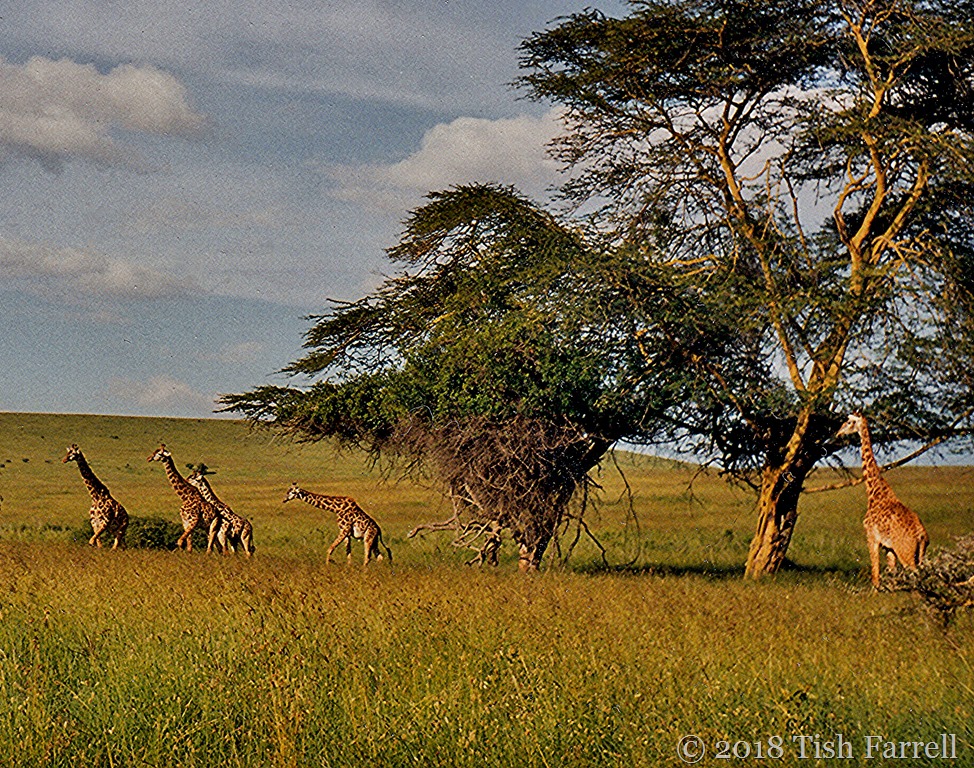
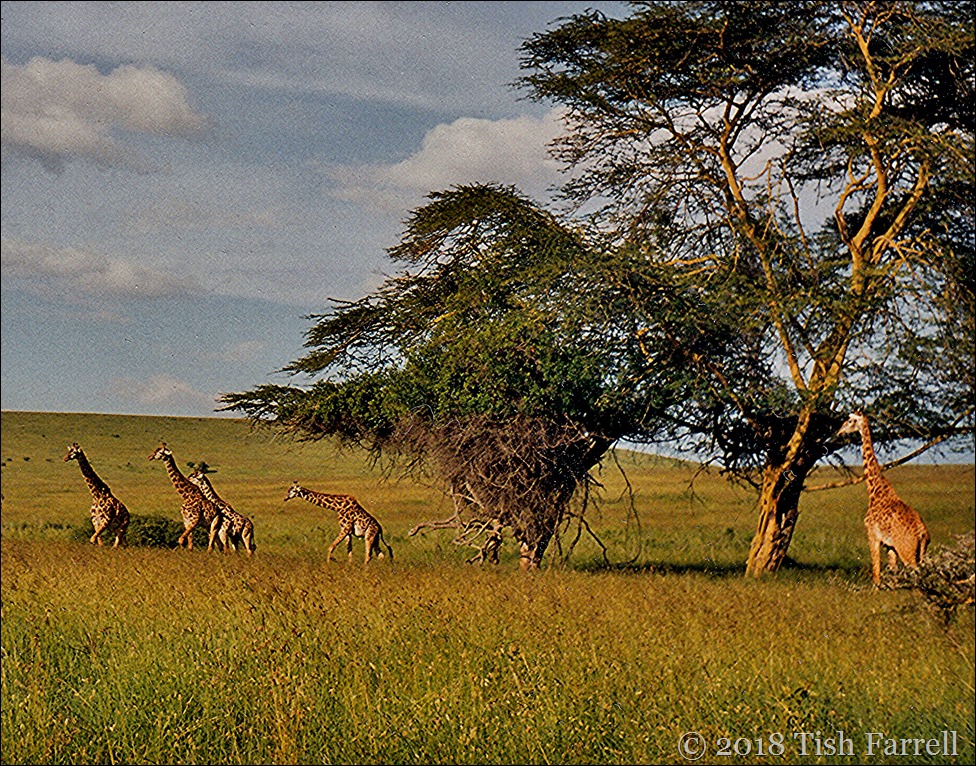
And it is hard to register such sightings. Are they real? Here we are out on a Sunday morning drive. We have just picked up the newspapers from the street vendor, driven past crowds of citizens on their way to church, are barely beyond the city limits. We are not at the zoo, nor in a contained English safari park. The animals that browse and hunt here are wild; they come of their own accord. For although the boundaries with the city are well fenced, there is still an open corridor to the south-west which allows the game access to and from the Maasai Mara. And as we push on along the dirt road we see Maasai giraffes with their lacy butterfly markings, strung out along a low gully, peacefully browsing the short-rains greenery of the acacias. And behind them, towering on the skyline, the garish blue and red construction of the Carnivore restaurant’s water splash.

It puts you in a quandary. Part of you yearns to recreate the illusion of out-of-town wilderness,. Perhaps a planting of quick growing gum trees to screen the areas of urban spread. But then, despite their commonplaceness here, eucalyptus are not natives, and they might just suck the plains dry of their precious moisture. Some indigenous forest trees then. But they would take longer to establish. Would have to be fenced off from the foraging herbivores until they reached maturity. And anyway, how could you possibly blot out the airport and the cement works?
Leave it as it is then; an ungainly halfway house between the natural world and city living. As outsiders we would rather see the plains teeming with wildlife and no ugly signs of human enterprise and industrial development. But it is too late for that. And besides, who are we to complain? Our empire-building forebears had their chance to manage well and wisely this land of plenty. And for the most part they ignored both the needs of its wildlife and, more particularly, the needs of its indigenous peoples.
So no, we have no room to criticise.
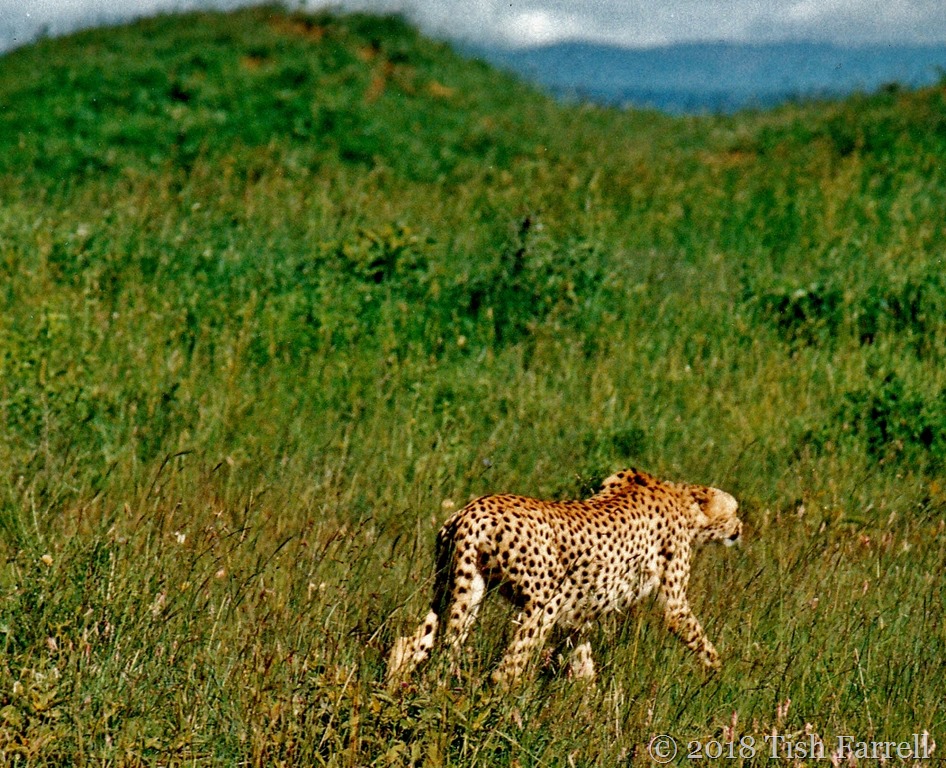
All we can do today is be grateful that we can drive out to the Athi Plains in our car and see a lion, or watch the quiet grazing of wildebeest, gazelle, eland, kongoni, zebra and know too that there is always a chance that we may just spot a family of cheetahs out hunting, or come upon a reclusive rhinoceros browsing quietly. But that within an hour we can be back inside the well-tamed confines of our suburban Nairobi garden, drinking a cup of tea. But perhaps it seems too convenient, too small a challenge; almost as “easy” as the early white settlers had it, when they looked out of the newly installed drawing room windows to find a pride of lions stretched out on the veranda.
copyright 2018 Tish Farrell