Desert Date ~ a real-life tree of life


desert date mulului tree 001

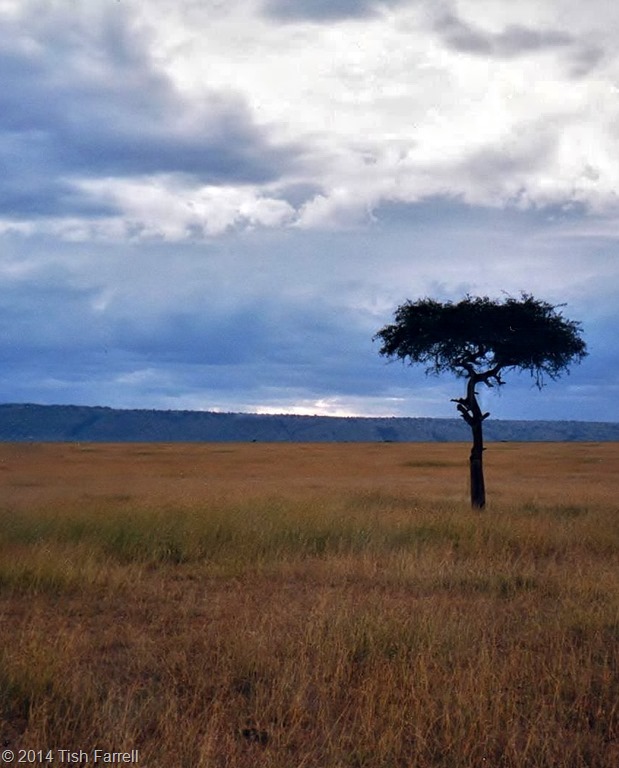
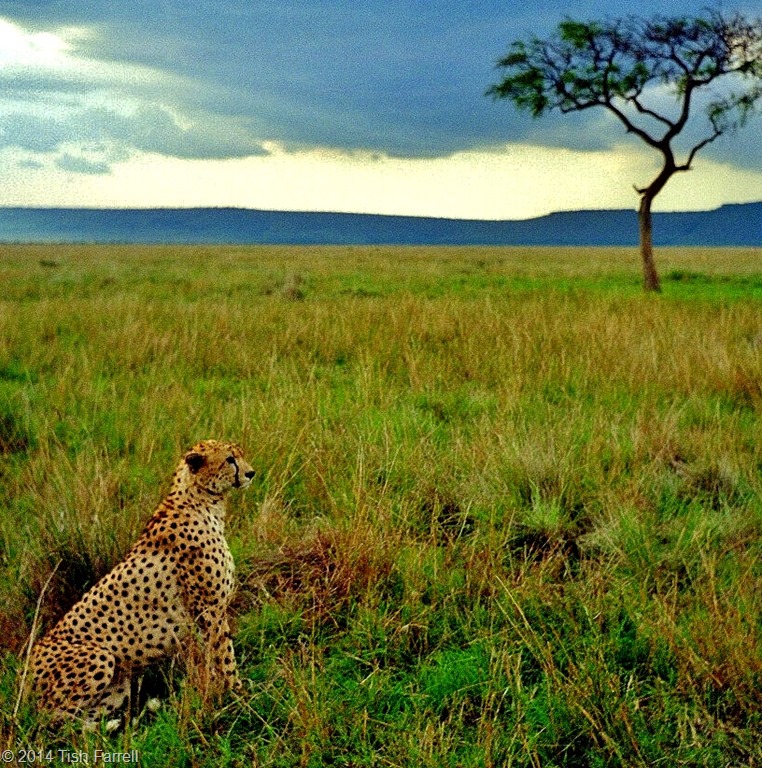
Badda, Othoo, Olokwai, Eroronyit, Mjunju, Kiwowa – are just some of the names that Kenya’s peoples use for this super-tree. Here, in the Maasai Mara, its  lone presence on the grasslands adds a sense of drama. Perhaps the spare silhouette springs some ancestral memory. For if we believe that humankind evolved in the Great Rift, then we must have an ages-old association with this tree, and not only as a source of food, but for firewood, the making of shelters and tools and, most especially, for medicine.

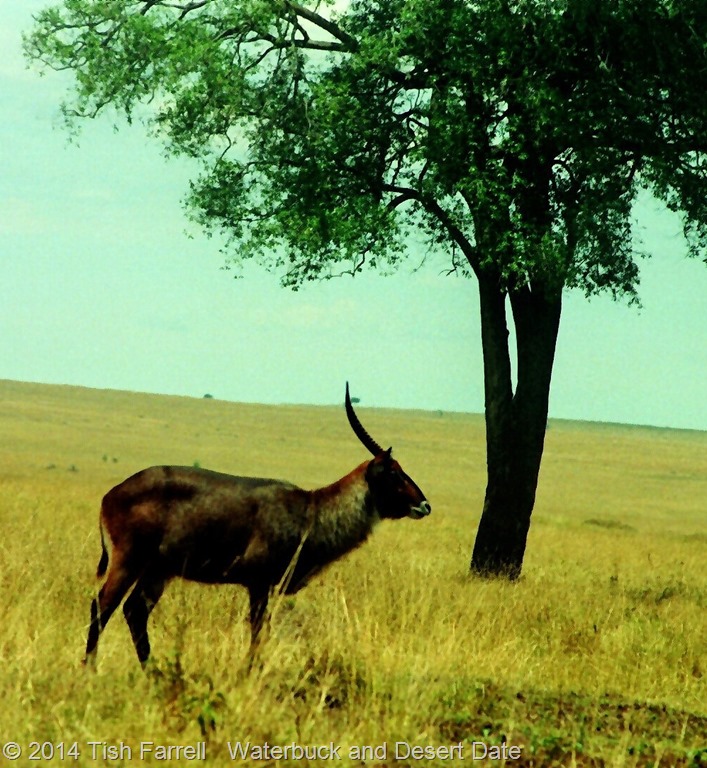
All the photos here were taken in the Mara, but the range of the Desert Date (Balanites aegyptiaca) extends across much of Africa, and into parts of the Middle East and India. But wherever it grows, its multiple uses have long been valued. Much like the baobab, it is a natural pharmacy. Every part of this unassuming tree has been scientifically shown to be packed with pharmacologically active substances.

Saponins are the key compounds. They protect the immune system, decrease blood lipids, lower cancer risk and cholesterol levels. They include diosgenin, from which hormones for the contraceptive pill may be produced. In short, the tree’s parts – roots, shoots, bark, fruits and seeds – have been shown in laboratory tests to have many healing and prophylactic properties: anti-fever, anti-diabetic, anti-inflammatory, antibacterial, antifungal, anti-parasitic, anti-cancer, antioxidant and liver-protecting. (For more scientific details see Bishnu P Chapagain 2006.)

And so it is that the practices of generations of traditional healers, from Africa to India, (and so often sneered at) may now be vindicated: all along they have been barking up precisely the right tree.

cheetah 3

For example, the Pokot pastoralists of northwest Kenya make a decoction of the root to treat malaria. They also boil the root in soup to ease oedema and stomach pains. For heartburn, the Akamba of central Kenya make an infusion of bark.  Throughout East Africa, the root is used to get rid of intestinal worms, and as a general purgative. The bark is used as a fish poison, and when mixed with fruit will kill freshwater snails and copepods that host the parasites that cause Bilharzia and Guinea Worm respectively, both scourges in many parts of Africa. In Sudan herbalists use Desert Date to treat jaundice, and in West Africa the fruit is mixed into porridge and eaten by nursing mothers. The seeds, when boiled, produce an excellent oil that is used in food preparation and to soothe headaches. Over 4,ooo years ago in Ancient Egypt this oil was a prized cosmetic. So much so, that the seeds were placed in tombs beside the dead as if to suggest that, in the afterlife, this was a tree that no one could be without.

Scan-140726-0017.jpg

In fact Balanites thus once grew in profusion along the Nile Valley, and were possibly cultivated. But they are also well adapted to arid and semi-arid conditions, tolerating both sand and heavy clay. Their vertical roots reach down 7 metres, while the horizontal roots may extend 20 metres from the trunk. It can also cope with stock and wildlife grazing (the characteristic canopy is shaped by browsing giraffes), flood, and grassfire. Their boughs and long, thin spines photosynthesize even when the leaves drop off. This makes them a valuable famine food. No matter how dry, each year they can produce up to 10,000 date-like fruits. The flesh is bitter-sweet, but eaten by humans, their stock and most wild game. In fact elephants are one of the main propagators of this species, at least in Africa. While most other creatures spit out the stones, elephants swallow them, depositing them in due course in dollops of ready-made compost.

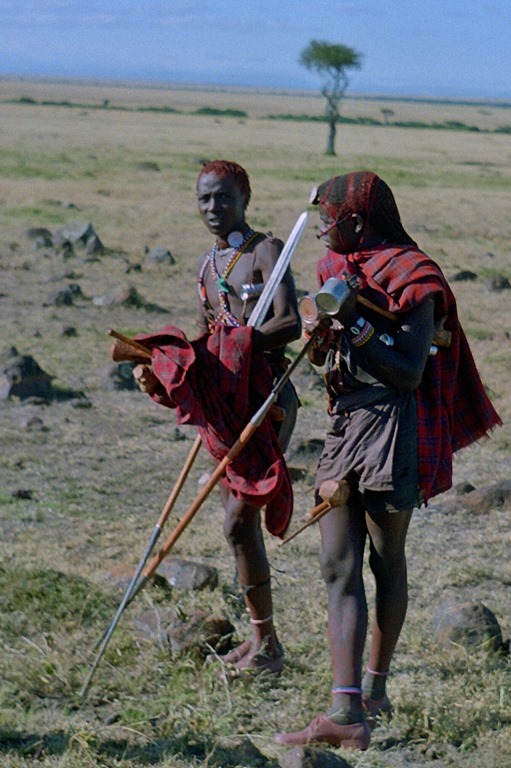
In Kenya the Pokot and Turkana also eat the tree’s young leaves and shoots, boiled, pounded and fried with fat. The Maasai eat the gum, and the Marakwet boil the seeds and eat them like beans. In other parts of Africa the small flowers are stirred into porridge, and the fruit is fermented to make alcoholic drinks.

Scan-140727-0044.jpg

And then there is the wood. This is an excellent cooking fuel since it burns with little smoke. The wood is durable and used for house-building. It is also easily worked to make yokes, wooden spoons, pestles, mortars, handles, stools, combs. Resin from the tree stems is used to stick feathers on to arrow shafts and spear heads to shafts. The Turkana use it to repair cracks in tool handles. And the tree itself may be grown in farmsteads as a living fence that can be cropped for both human needs and livestock fodder. While it is protecting domestic animals and crops it is also fixing nitrogen in the soil.

And now you know why I called it a tree of life. It is ripe for development too, the kind of development that can only enhance existence on the planet. In fact one gasps at how much potential can subsist within a single tree species. AND THIS IS JUST ONE TREE. But doesn’t it show, and with glaring clarity, that instead of destroying the world’s wild places (and for mostly very pointless reasons), we need to protect and learn from them, and learn, too, from those indigenous peoples who still know them intimately and understand where the real treasure lies.

Scan-140726-0004.jpg

 Copyright 2014 Tish Farrell

For my earlier post on the baobab:                                                                                                                                               

Anthology Baobab: African Story Tree

Jungle2Jungle and Bishnu P Chapagain 2006 for more about the Desert Date

Flickr Comments for more ‘D’ words

Meeting with Lions in the Mara


Scan-140726-0004 (8)

It is late afternoon when Daniel, our guide, takes us to the rock-strewn  place where he knows  the lions will be.

Scan-140726-0003 (10)

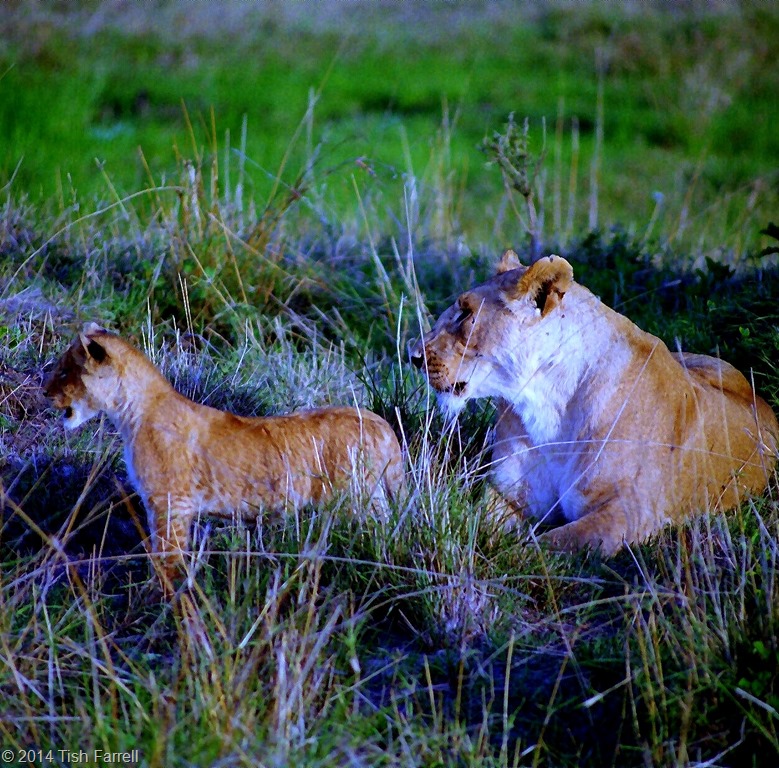
The males are hiding away in longer grass, but the females and cubs are out in the open, enjoying the last of the sun. The light is spectacular. I wonder if the lionesses have chosen this place on purpose: because their young blend in so well with the landscape. In any event, they seem utterly relaxed. This mother (above) simply watches us as she feeds one of her cubs. There is another at her tail, disguised as a boulder, while the third one takes off on a small adventure.

Scan-140726-0013

The quiet proximity of these lionesses is breath-taking, our intrusion on their family life above their notice. We watch them until the sun goes down and it is time to return to our camp on the Mara River.

Scan-140726-0008

Scan-140726-0006 (8)

Scan-140726-0015


Ailsa’s travel challenge: meeting places

Go here for Ailsa’s and other bloggers’ meeting places. Meanwhile, here are a few that caught my eye:


Travel Tales of Life Cinque Terre: Meeting in an Italian Paradise

Third Person Travel

Stefano Scheda

Almost Italian

Container Mania: Maine Make-do and Memories


IMG_1273 (2)

The Farrell domain is full of containers of the rural and artisanal variety – too full, says the Team Leader. He murmurs the word ‘cluttered’. I close my ears. These are artefacts to think by.  They resonate with story.  (See  also Basket Case, the story behind my Nubian mats.)

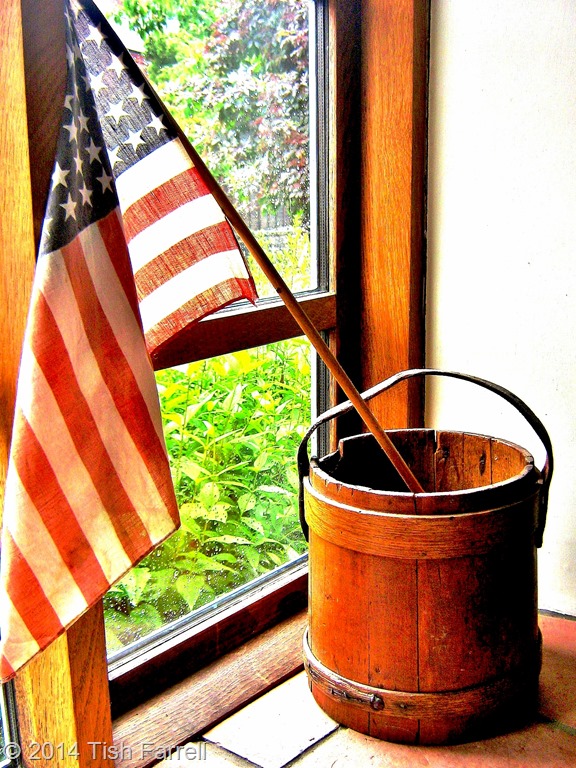
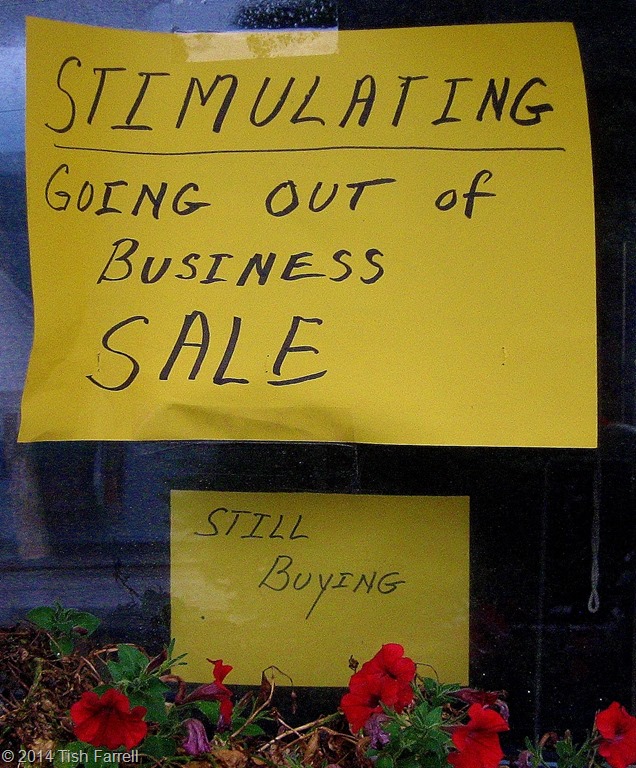
Yet even G was beguiled  by this American sugar bucket or firkin, once used for collecting sap from maple trees.  Not that we knew this when we first spotted it in the Ocean Park antique store in Southern Maine. The elderly owner of this  ‘going-out-of-business’ curio emporium was having a sale. He did not mention the maple syrup, but called the bucket  a farm ‘make-do’, pointing out that the replacement handle was a length of horse harness, and that in its latter days it was probably used for doling out animal feed.

I instantly pictured my own rural upbringing in Cheshire (England). When I was small my parents rented a house on a large farm. I often used to help the farmer’s wife feed the hens, carrying a bucket round the orchard chicken run, and tossing out handfuls of corn to  happy, healthy hens. So you can guess what happened next.

Sold. One ‘make-do’.

IMG_0096

 IMG_0097

 The ‘make-do’ now sits on the kitchen window sill, and further reminds us of the kindness of Cousin Jan who was the reason we went to Maine in the first place. She let us stay in her magical Ocean Park cottage.  (Thank you, Jan and Craig, and happy anniversary to you both).

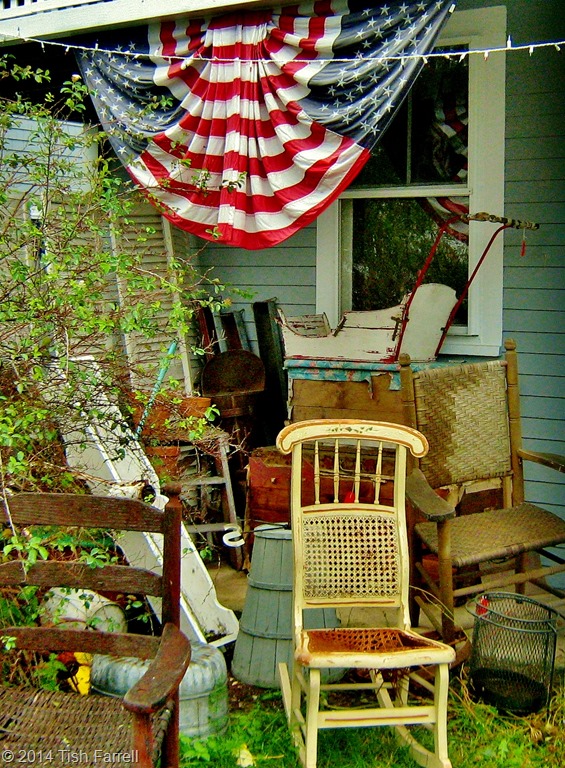
The bucket makes me smile for other reasons too. The Stars and Stripes came free when we bought it – a give-away  on account of the flag’s deficit of stars. It only has 48, and thus pre-dates 1959 and the admission of Alaska and Hawaii to the USA. I recall the brittle humour of the dealer who gave it to me. It turned out he was married to an English woman, who coincidentally just happened to come from G’s home town of Wolverhampton. He said he met her during ww2 when he was stationed  nearby. He was thus a bit of an antique himself, although you wouldn’t have known it to look at him. He said he was giving up the shop to concentrate on doing shows instead.

So there you have it. My justification for container mania (and I haven’t even mentioned the Polish potato basket which I use to store my onions, or the Zambian gourd that holds my cooking salt). This plain, rustic bucket simply goes on accruing meaning, a bit like Rumpelstiltskin weaving gold from farmyard straw. Which of course makes me wonder about the craftsman who made it, and the generations of family members who used it, and the circumstances by which one individual decided that, despite the broken handle, there was still good and useful life left in it, and so applied a length of harness strap to keep it going for another generation or two.

But for G, who would ever de-clutter if I gave him the chance, he has own reasons to be well-disposed towards the make-do.  Now that he knows it was probably once used for collecting sugar sap, he recalls the bright winter days of his Ontario childhood, the crisp air filled with the scent of hot maple syrup. For every year, at the winter maple syrup festival, freshly gathered sap would be boiled up outside in a big vat, and then thrown, sizzling, onto the snow-covered ground for some taffy pulling, and then much delicious eating. He speaks of this memory so vividly that I almost believe it to be my own…

copyright 2014 Tish Farrell

Go HERE for more wordpress bloggers’ containers

“Wheat…fields of wheat…” Musings on the path to the allotment


100_5994

Okay, who knows which film this quote comes from? As an extra clue I give you the line in ‘full’: “Wheat… lots of wheat… fields of wheat… a tremendous amount of wheat…”

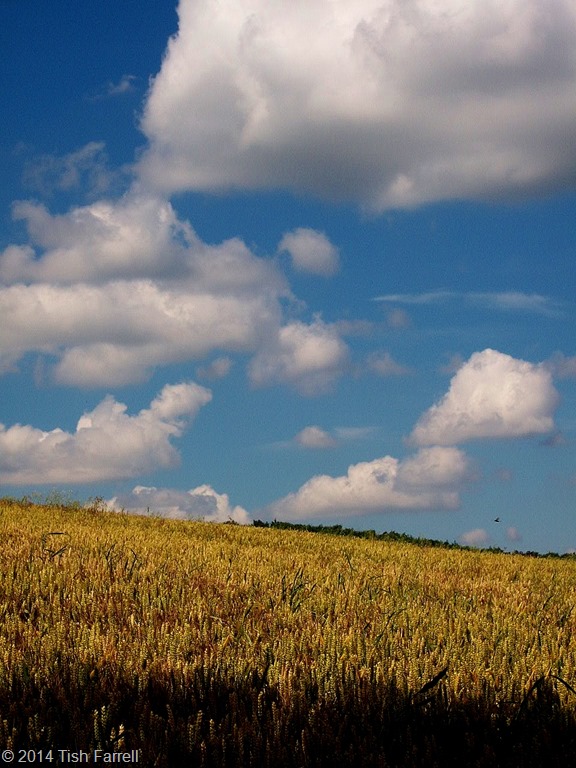
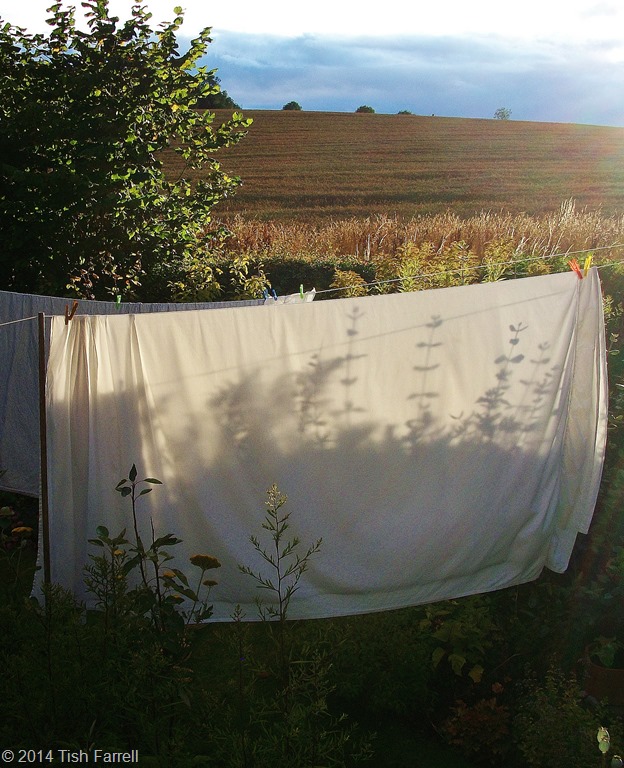
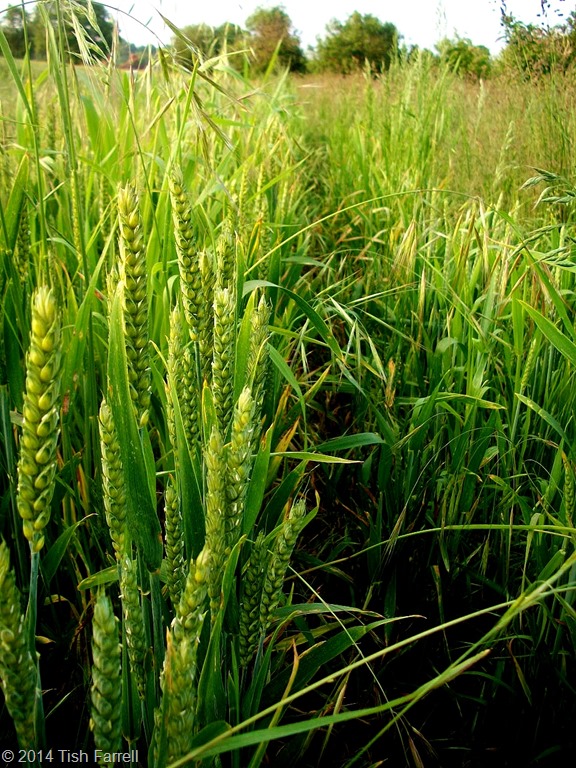
For some reason I cannot explain, this particular exhortation is rather popular in the Farrell household.  The Team Leader is wont to deliver it at unexpected  intervals and with some vigour. This habit even predates the time when we actually came to live beside  a field that often has wheat growing in it. So here is it. The field behind our house. And while I admit it might overstep the bounds of propriety to share my washing with the world, here is another view of the wheat field from our garden. I also think the flower shadows on the sheet rather fine: housework turned artwork?

077 (2)

I have written in earlier posts how our house lies on the edge of Wenlock Edge, a twenty-mile scarp formed from the upthrust bed of a tropical sea – the Silurian Sea in fact. This geological formation is a breath-taking 400  million years old – a place once inhabited by trilobites, and molluscs, and sponges and corals, although it should be made clear that when these creatures lived, the shallow sea in question was not in the northern hemisphere.  No indeed. In its tropical heyday Shropshire lay off equatorial East Africa. We are thus, for all our rustic appearance, a well-travelled county. We also have lots of geology of international importance, but  which I cannot begin to describe because the terminology and chronological expanses confound even me, a prehistorian. The Shropshire Geological Society have  a good site HERE should you wish to know more.

100_2077

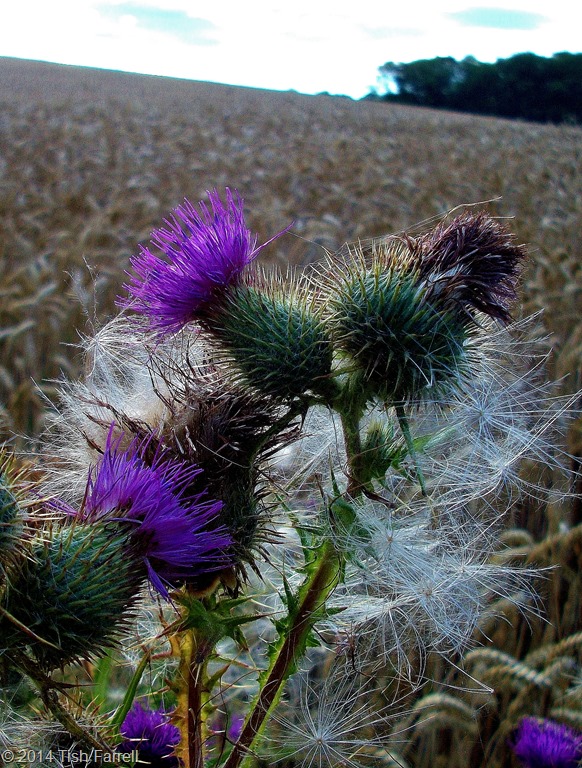
The reason I’m showing you the wheat field is because my path to the allotment runs along the edge of it. I walk back and forth at least once a day. And so when I’m not writing blog posts or fiddling with my novel, this is one of the places where I’m likely to be. There is always something that catches my eye – thistles, the light, clouds, buzzards, the rooks and jackdaws, a neighbour’s three white ducks that regularly escape from their pen to eat slugs along the path, cats on the prowl, pretending I can’t see them.

Even the wheat is quite interesting. It amazes me how it manages to force its way up through a cloddy layer of grey clay that bakes to concrete after a few days with no rain. This soil, too, is a product of a geological event – a deluge of  volcanic ash from aeons ago and that has now broken down into bentonite clay.  It is the same soil in the allotment. Soft fruits seem to thrive on it. Everything else is a challenge. Wheat, though, has apparently been grown along the slopes above the town for generations, hence the name The Wheatlands for some of our now built-upon areas.

100_5840

100_5839

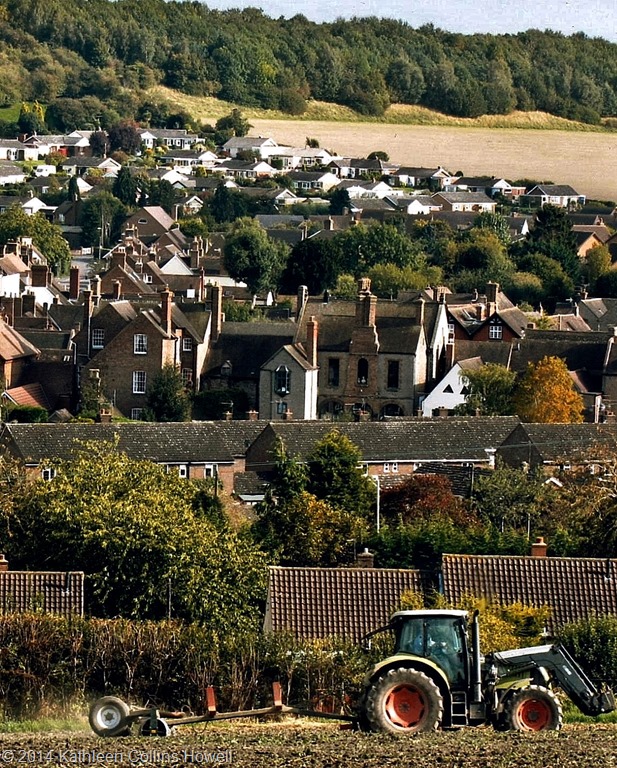
And talking of building, a couple of years ago when the Local Authority called for landowners to put forward development land, our local landowner proposed  this and most of the fields on the Edge side of the town, including the allotments too, gardens  that have been there since the 1940s.  Development on this scale is something that most town residents fervently  hope will not happen. We have already been threatened with up to 500 houses over the next 11 years. This in a town with antiquated drainage, severe traffic congestion, few jobs, poor public transport, and inflated house prices, and one that has seen several new developments of upmarket houses in the last few years.  More crucially, the town sits in a bowl below the Edge and has recently been designated a rapid response flood risk area by the Environment Agency.

001 (2)

More tarmac, roofs and roads that speed up run off from the hills above our homes are the last thing we need.  Some of the newest developments in the town are themselves subject to flooding.

100_5849

 100_5995

All right, I admit it. The landscape behind our house is perhaps not particularly noteworthy of itself, but the light and sky above it are. The uptilted scarp of Wenlock Edge forms a false horizon, so there is always much weather to watch. It changes every second. One day we saw a fire rainbow which we gather is quite rare.

Ironically, it it perhaps because this view from our house is ever under threat, that makes us look at it and appreciate it all the more. But it makes me angry too. I am not opposed to development, but it should be well planned, and enhance the locality, not cause problems for other people’s homes. There appears to be no mechanism in English planning that can ensure the provision of good quality housing at prices people can afford. Density seems to be the only planning criterion, not  homes with green spaces around them, and places for community orchards and gardens, footpaths and cycle tracks and areas where people of all ages can play. All things that boost wellbeing. You would wonder why it is so hard to do.

It is true that  Much Wenlock people have recently voted to have the Local Authority  accept their Neighbourhood Plan, a community compiled document that reflects our aspirations and plans for the foreseeable future. Our Conservative Party MP, Philip Dunne, tells us the Plan will deliver localism to our door, that is, we will have a say in the kind and scale of development that is proposed for our town and parish, development that will protect landscapes, open spaces and heritage while improving the quality of life for everyone. Whether it will, or not remains to be seen, particularly under a government whose recently sacked Secretary for the Environment apparently allowed for the destruction of ancient woodland as long as developers replanted elsewhere.  Bio-diversity anyone?

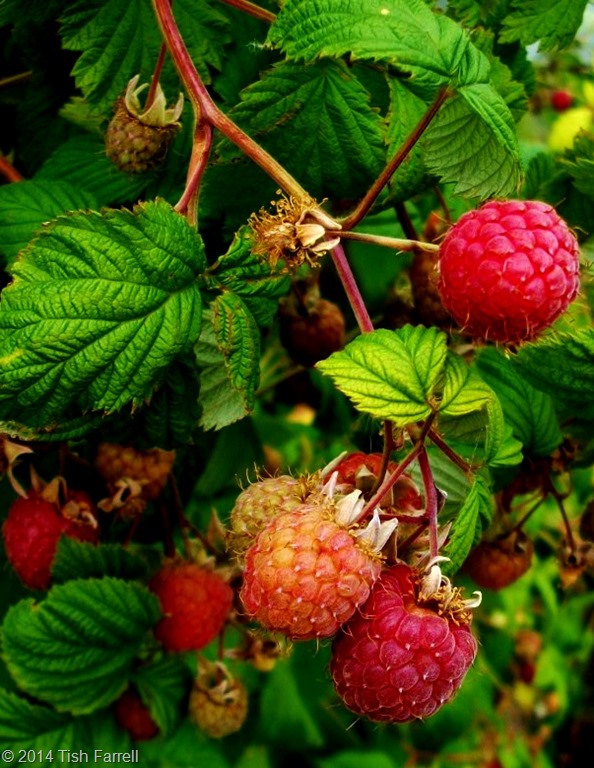
Which I suppose brings me back to the quote; “Wheat…fields of wheat…” You can’t get more of a monoculture than that. Hey ho. So many things to unpick. Think I’ll trundle up the path to the allotment and pick raspberries.

copyright 2014 Tish Farrell

Related:

…of Silurian Shores

Old Stones of Wenlock: repurposing the Silurian Sea

In Much Wenlock an Inspector Calls

100_4193

P.S. The quote is from Woody Allen’s Love and Death


Dhows in Dubai ~ Living Relics


002


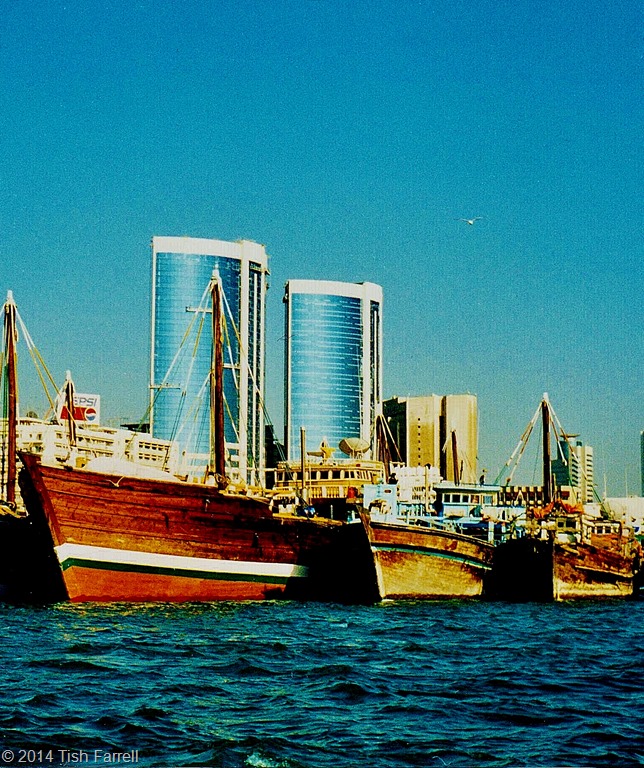
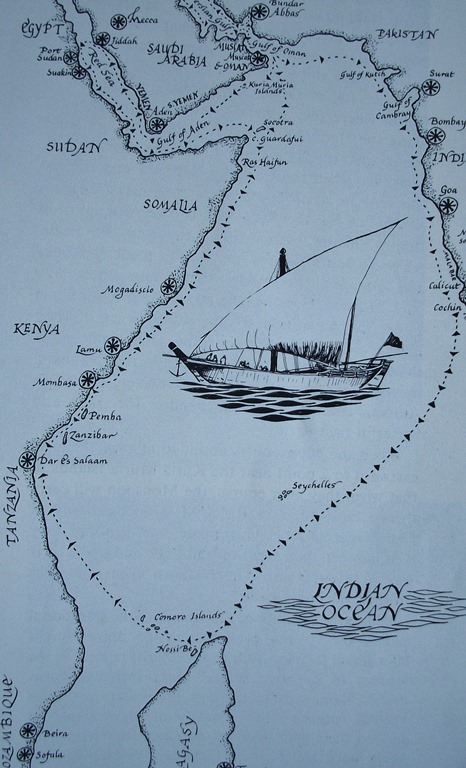
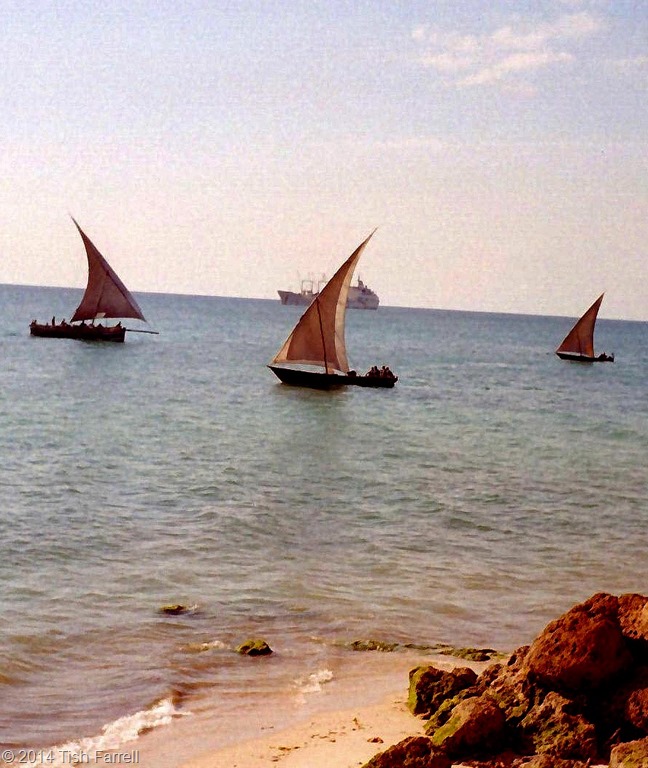
There have been dhows sailing out of the Persian Gulf for India and East Africa for a thousand years and more, following the gyre of monsoon winds. Dates, jewels, fine carpets and chests went one way; ivory, gold, leopard skins and slaves came the other.

These days in Dubai Creek you are more likely to see cargos of Coca Cola, white goods and Japanese cars being loaded on deck. But for all that, and yet among the ever sprouting  high rises, there is still a drift of Arabian Nights’ romance, and more than a hint of Sinbad’s voyaging.

Related posts:

Zanzibar: time’s twists and turns

Weekly Photo Challenge: Culture (The Swahili)

Inside looking out on Lamu Island

*

WordPress Weekly Photo Challenge: Relic Go here for more bloggers’ relics

Life Entwined at Ogunquit

111


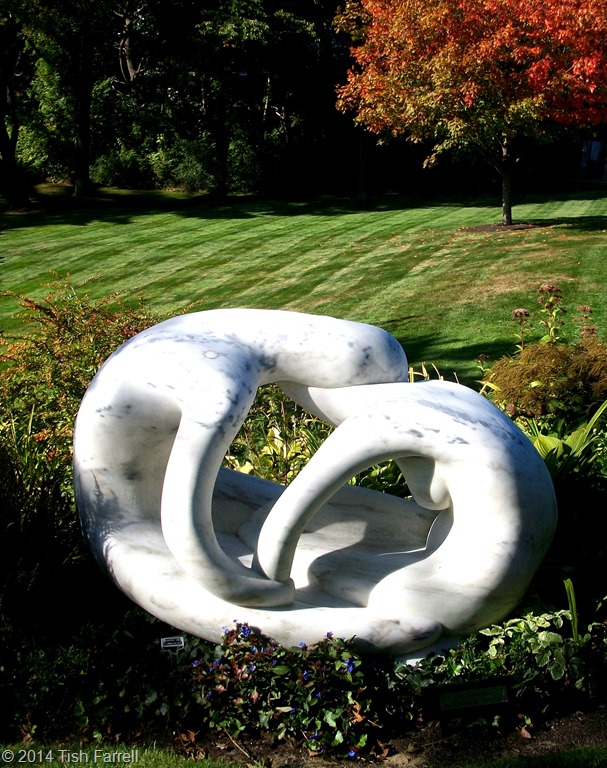
Cee’s ‘Circles and Curves’ challenge is giving me the chance to  show again this work by New England sculptor Antoinette Prien Schultze. ‘Life Entwined’ is circular in every way – suggesting not only the cycle of human life and love, but also the turn of the seasons, the circle of time itself.

It is made from Vermont Danby marble and weighs 4 tons. You can see it in the beautiful shore-side garden of the Ogunquit Museum of American Art in southern Maine. I have written more about the Museum HERE. It is one of the most beautifully situated galleries in the world, and well worth a visit for the setting alone.

Another fine thing about Ogunquit is the Marginal Way, a cliff top path along the rugged shore. It was here I found this natural sculpture which also fits the challenge.

100E3309

copyright 2014 Tish Farrell

*

For more about Ogunquit Museum of American Art see my earlier post:

Only One Ogunquit: the little gallery by the sea

*


Click on the image for more bloggers’ circles and curves

A Long Time Ago in Africa


Scan-130520-0013 (2)

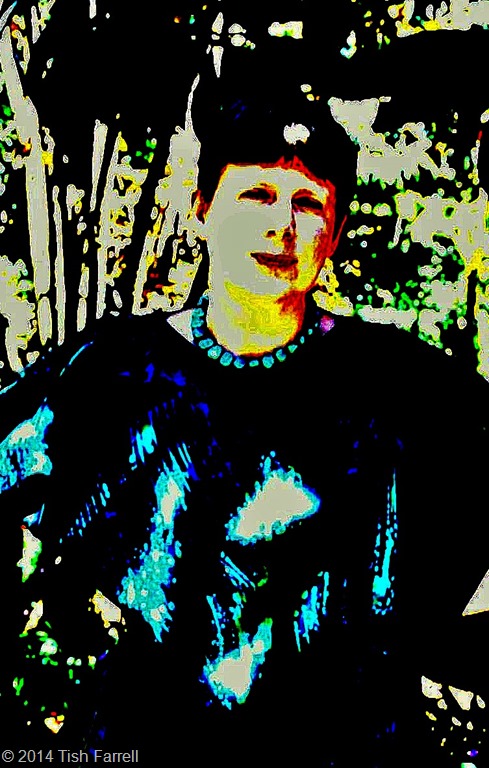
Well this is what happens when you fiddle about in Windows Live Picture Gallery. I rather like the effect – posterized for posterity, an arty rendition of UK expatriate in 1990s Kenya. The original shot is thus pretty old, just like me. I was standing in the back garden of our house in Mbabane Road, in Nairobi’s leafy Lavington district, under the loquat trees. The house is gone now, and I can see from Google Earth that Madison Insurance who owned the compound, have given it over to some development of upscale townhouses. Across the road was  the run-down state primary school. I imagine it is still run down. My days back then had a daily soundtrack of children’s voices – chanting times tables mostly.

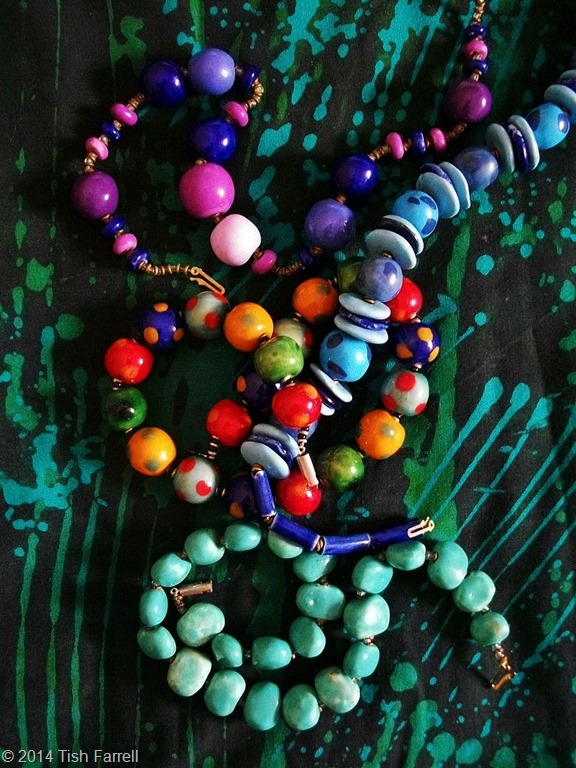
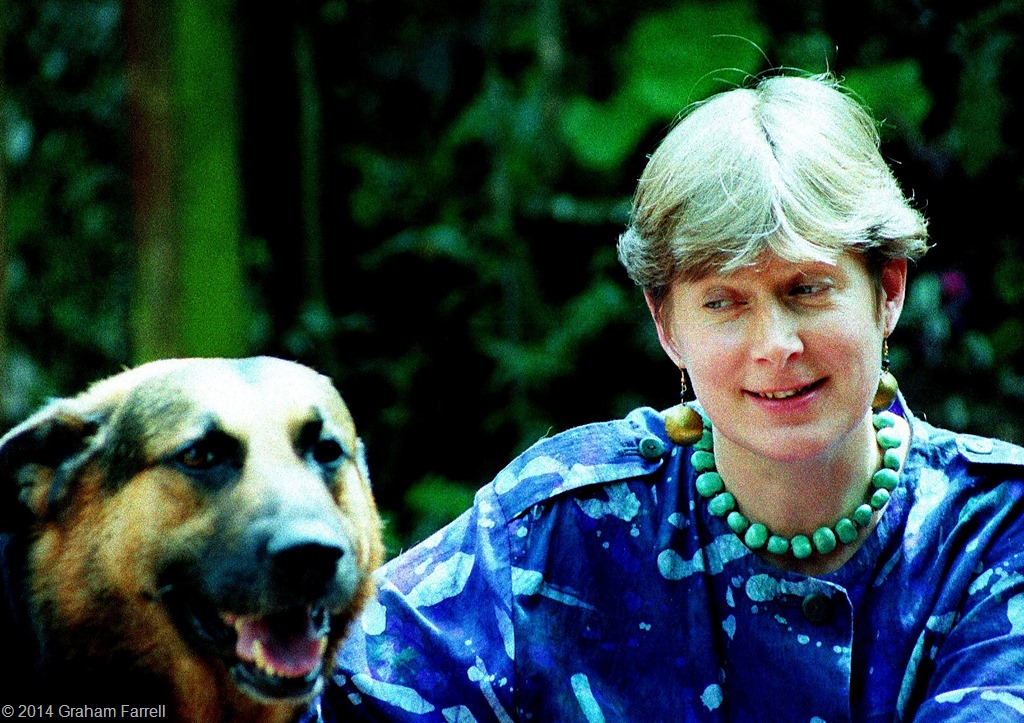
In the photo I’m wearing a self-made suit (tunic and pants) of batik cloth created at a workshop by street boys trying to get their lives together. And I’m wearing a string of Kazuri Beads, glazed ceramic beads, made by women trying build themselves and their kids a future. Kazuri means small and beautiful. The little factory in Karen, Nairobi was a joy to visit. The workshop shelves were lined with glass jars of bright beads, rather like a picture book sweet shop, while at benches in the the airy room, women created beads and threaded necklaces in colour schemes of their choosing. I’m only sorry that I seem to have no photos, but if you go to the link you can see the factory today – much expanded and employing men too.

100_5882

I still have the beads and the suit, and still wear them too, although the batik cloth is a little thin, while I, sadly, am not.

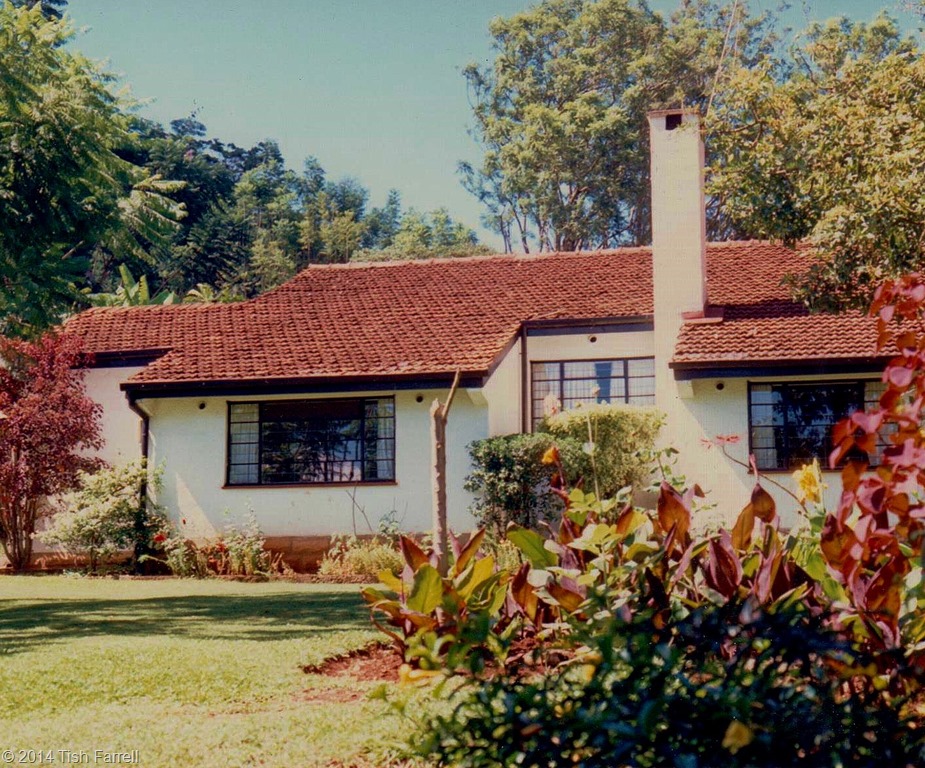
And now here’s a picture of our house – home for seven years.

003 (2)

It came with the usual services that accompany the living quarters of TCOs (Technical Cooperation Officers) working for Her Majesty’s Department for International Development. These included a well secured compound perimeter with lights, a 24/7 security guard, house alarms (checked monthly), internal security gate, barred windows, guard dog, and regular applications of pesticide by Rentokil. Phew. We did not like any of  this much, although we did like Patrick, our day guard, such a tall and gentle man. It was hard to imagine him fending off intruders. He had a farm back home in Western Kenya where his wife stayed in the good stone house he had built for her, along with their three children. He used to go home twice a year to plant or harvest his maize crop.

011

To make up for all the oppressive security, during the day I used to walk around the district on foot, roaming along the avenues. I wasn’t sure what it was I supposed to afraid of, although I did know that people did have their homes broken into, and that expats who insisted on driving large new Land Cruisers were often relieved of them (on their own compounds) by guys with AK47s, and strangely enough, soon after said expats (usually diplomats) had arrived in country and taken possession of the new vehicles via customs and imports at Mombasa port. The word on the street was that these robbers were highly connected. Very highly connected. This situation frequently reminded me of one of my father’s favourite sayings: the fish goes rotten from the head, although one would have been foolish to say this too loudly, or even at all back then.

Farrell Team Leader, Graham, had a works Land Rover for work, but otherwise we drove a battered Suzuki jeep. It had some interesting features. A previous owner had cut a hatch over the back seats, and made a fibre glass lid to go over the top. For game viewing you could simply unclip it. I didn’t drive it much, because that was the really scary thing – Nairobi driving. I often used to ponder if I could get to places by driving on the very wide pavements. Once when I forgot I was in Kenya and slowed at a zebra crossing on a city highway to let a pedestrian cross, the poor woman looked as if she would faint. I was lucky that  the Suzuki and I didn’t get flattened by a Tusker beer truck, while I and the woman stared at one other in a state of frozen confusion, neither of us able to move.

The other thing that used to scare me about driving was that parts used to fall off the Suzuki. G’s nonchalant response to my concern was, ‘Well if you were still going, you obviously did not need it, whatever it was.’

On the whole, then, it was better walking. I could peep through the cracks in the big steel gates that protected ambassadorial and diplomatic residences, and count the excessive number of garbage bags put out for BINS, the private refuse removal company. I’d see street kids and Maasai, greet the security guards who sat out on the neatly trimmed verges and chatted house to house. I was intrigued by the barber who had turned a fallen flame tree into a salon, and  I liked the smells of all the garden trees – cypress, frangipani, the warm musky smell of fever trees. When the rains came the streets would be filled with silvery clouds of termites on their nuptial flight. At dusk, the frogs in the Nairobi River way below our house would strike up frog songs that resounded across the valley. The crescent that adjoined Mbabane Road was called Applecross – a bizarrely English name that evoked pastoral perfection of the sort that had never existed outside colonial settlers’ minds.

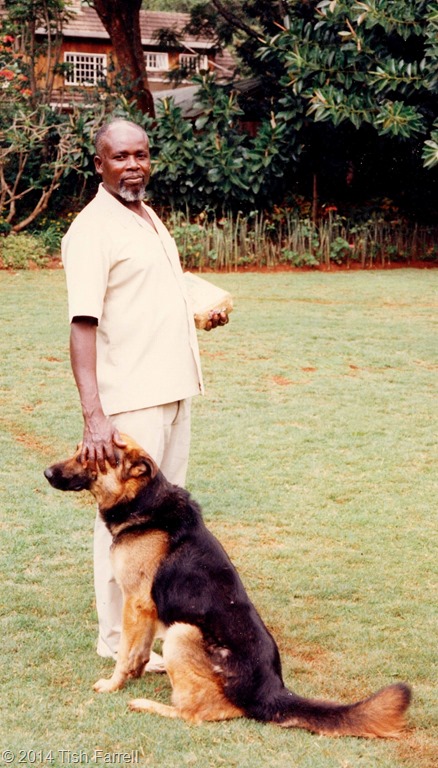
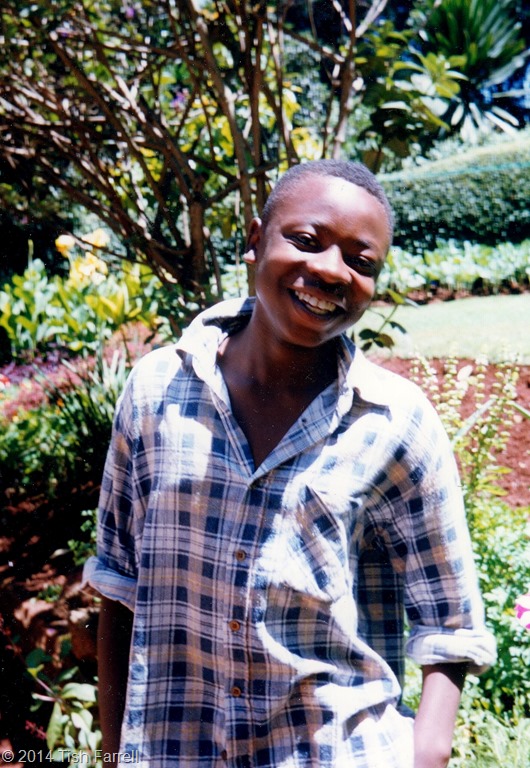
When we took over the house from G’s predecessor we also took on the resident house steward, Sam, whose homeland was in Maragoli in Western Kenya. He had long worked for expatriates, but back home and also on the borders of Nandi he had small farms – three in all. His first wife lived on his ancestral land in what had been the Maragoli tribal reserve in colonial times. He still called it ‘the reserve’. He said he had poor relations on the other smallholdings, but they were not looking after the land properly and this caused him much concern. Apart from home leave, he stayed in Nairobi with his second wife, living in the servants’ quarters at the bottom of the garden. One reason for staying in Nairobi was so his three youngest children and a grandchild who had come to live with him could go to school across the road.

Now meet Sam, with guard dog Kim. We eventually had to hand Kim over to a vet, this after he started attacking children who came to play with Sam’s children on our compound. The vet told us that some German Shepherds were prone to this behaviour, and once begun, this was not a habit that could be broken. She told us she would try to send him to a rescue centre that kept such dogs, but otherwise he must be destroyed.

002 (2)

We did not ask which of these had been the outcome, but after having one sweet little girl’s face stitched up at the hospital we could not risk it happening again. Luckily the dog missed the child’s eye and the wound healed well. Here she is then, Sera, fully recovered with only a hint of a scar under the right eye.Zaina and Sera 2

And next comes Silas, Sam’s youngest son.

012 (2)

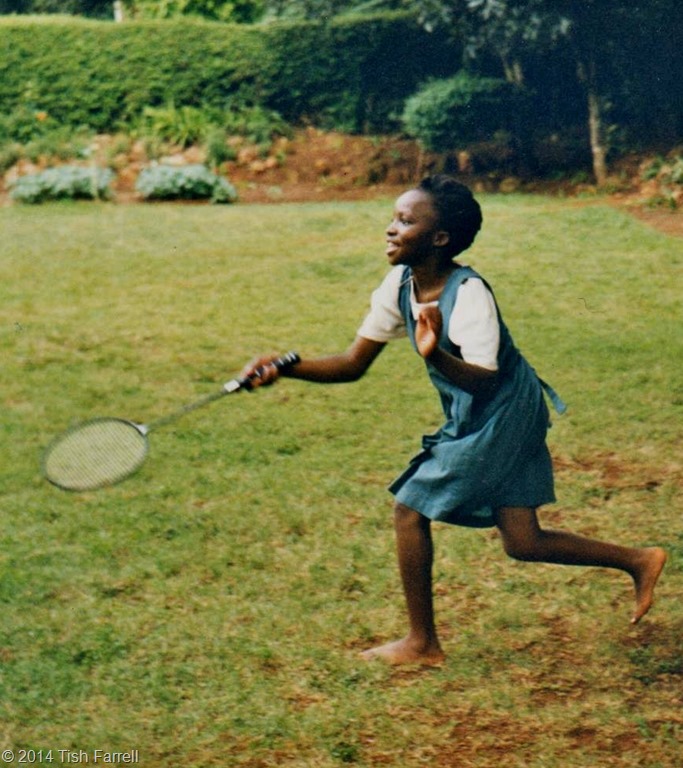
And Sam’s grand daughter, Zaina playing badminton with Silas on the back lawn.

002

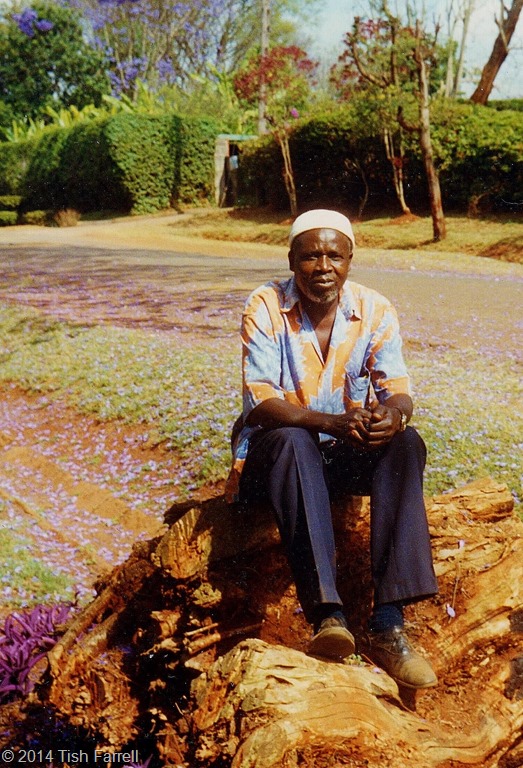
Then Sam off-duty out on Mbabane Road. He only worked half days as we didn’t have enough house work.

010

*

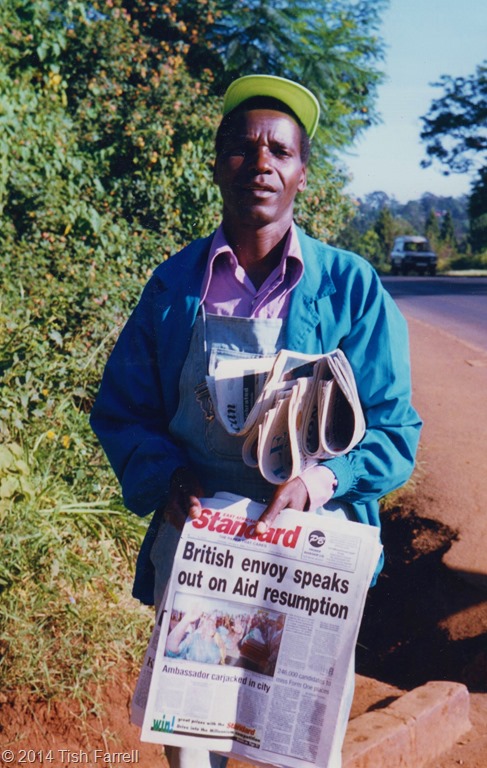
And  this is Francis, who stood every day on the corner of Mbabane and James Gichuru and sold us The Standard and Nation newspapers. He turned the newspaper round deliberately because it was featuring the British envoy, a man somewhat outspoken on Moi regime corruption.

007 (2)

And finally me again, not looking quite so postered  (but oh, so much younger) with poor old Kim, and those Kazuri beads again. Interesting days.

Tish and Kim the dog

copyright 2014 Tish Farrell


Related:

Looking for Smut: Work on Kenya’s Highland Farms

Valentine’s Day Runaway


Flickr Comments ‘A’ words – go here for more bloggers’ ‘A’ tales and photos

Zanzibar: time’s twists and turns


…a gateway to Africa. Through its portals passed not only slaves, spices and ivory, but also missionaries, explorers and conquerors.  

Abdul Sheriff, Professor of History, Dar es Salaam University

Scan-130429-0054

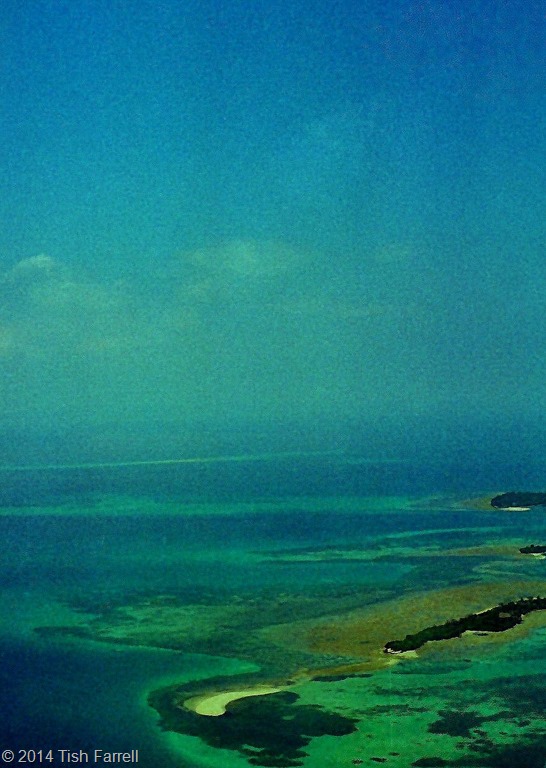
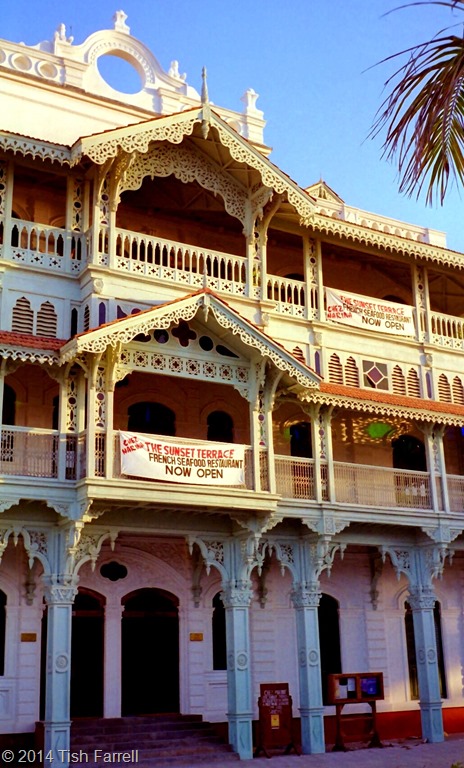
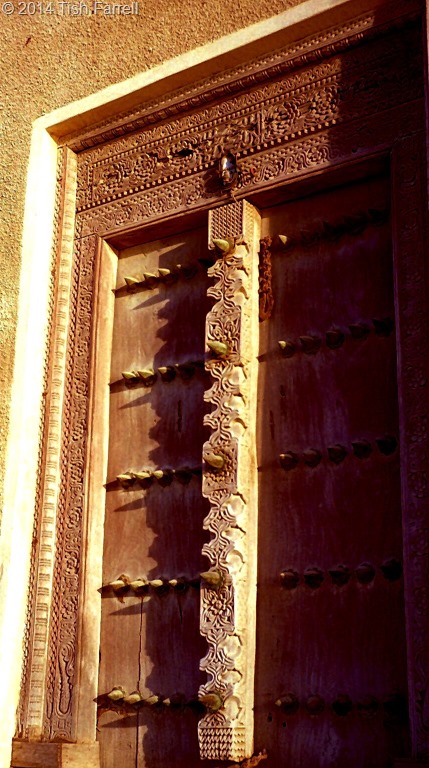
Zanzibar  – it’s all in the name – the Indian Ocean shores where Arab merchants met with African farmers and created a new people: the Swahili. In the Arabic Kilwa chronicles of the Middle Ages, the word Zanj denotes non-Muslim black people, and the word bar means coast, and the term back then referred to much of the East African seaboard – to wherever the dhow traders seasonally put in to haggle with Bantu farmers for ivory, leopard skins, rhino horn, iron, ambergris and mangrove poles.  These, then,  are the shores of the Sindbad (Sendebada) tales, but today the term ‘coast of the blacks’ survives only in the name of the Zanzibar archipelago (Unguja and Pemba Islands), now part of Tanzania.

These days too, Zanzibar Island, more properly known as Unguja, is seen as the heartland of Swahili culture, and the place where the purest form of KiSwahili is spoken. Once, though, there were many other powerful Swahili centres – independent city states that included Manda, Lamu, Malindi and Mombasa in Kenya, and Sofala far to the south in Mozambique. Such states, with stone towns built of coral rag, began evolving from at least the early 800s CE (Manda),  by which time KiSwahili was already a fully developed language, albeit with many regional forms.

100_3629

*

In fact the trade along East Africa had been going on from well before the 9th century. The Periplus of the Erythraean Sea, a Greek account of Indian Ocean trade written around 60 CE, indicates that the people of the kingdoms of Yemen and Arabia already had well established trade routes as far south as Mozambique. The Romans had also been here, doubtless making use – as all the seafarers did – of monsoon winds that in season carried them south down the African coast, or east to India, and then, with the change in the wind,s northwards and homewards to the Gulf.

Scan-130510-0008

*

The earliest traces of a stone town  on Unguja date from the 12th century when merchant princes from Shiraz in Persia settled on the island.  Over successive centuries this settlement  was destroyed twice by the Portuguese (who, after Vasco Da Gama discovered  he could sail round Africa in 1498, seized control of the Indian Ocean trade) and once by the Omani  Arabs whom the Swahili sultans of the Kenya coast called in on several occasions to help rid them of the European tyrants. The Portuguese were ousted from Zanzibar and the Swahili mainland at the close of the 17th century, and thereafter, until the British declared Zanzibar a protectorate in 1890, it was the Omani Arabs who controlled the surviving Swahili states.

Scan-130429-0102

Scan-130429-0095


The Stone Town we see today dates mostly from the nineteenth century when the place was at its most prosperous. Abdul Sheriff describes the scene:

“Zanzibar was then a cosmopolitan metropolis. Its harbour teemed with square-rigged ships from the West and oriental dhows with their lateen sails from many countries in the East, carrying all the colours of the rainbow. Here Yankee merchants from New England drove a hard bargain with Hindu traders in their large crimson turbans or  Khojas in their long coats, exchanging ivory for American cloth; the Marseillais haggled with the Somali for hides and sesame seeds from Benadir; Hamburg entrepreneurs shipped tons of cowrie shells to West Africa, where they served as currency; and Arab caravans rubbed shoulders with their African counterparts from the Mountains of the Moon.”  (The History and Conservation of Zanzibar Stone Town 1995).

Scan-130429-0027

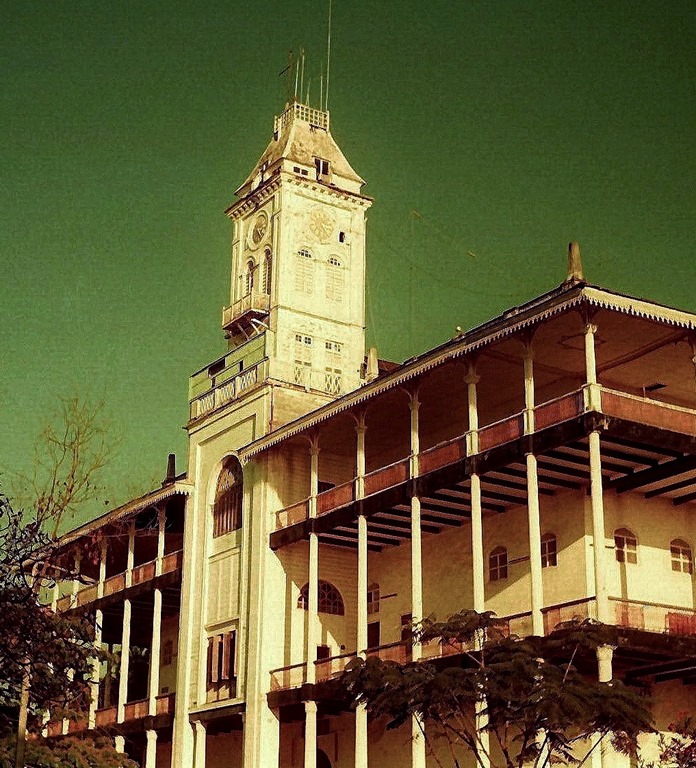
Beit al-Ajaib, The House of Wonders, was built by Sultan Barghash in 1883 to host ceremonial events. He was an extravagant man and, before his death in 1888, built 6 palaces across the island of Unguja. After the 1964 Zanzibar Revolution when the Omanis, along with many Indian residents, were killed or expelled, the building was used as government offices. When we visited in 1999 it was abandoned, but for one of the last sultan’s  cars (candy pink in colour) parked inside the atrium near the front door. A good friend who visited the House of Wonders recently tells me it is still there.

*

Trade was given much impetus in 1830 when the Sultans of Oman moved their capital to Zanzibar to oversee what turned out to the short-lived boom in clove production.  They and other Indian and Arab landowners owned many clove and coconut plantations  on the archipelago, and these were worked by African slaves.

The slave trade, then, was another source of the island’s prosperity. By 1860 the archipelago had some 60,000 slaves, not only working the plantations, but also fulfilling domestic and labouring tasks, and providing new wives for the sultan’s harem. And it is worth noting here that the slaves in Zanzibar were not generally ill treated in the way they were in the Americas; it was not unknown, after long service, for them to inherit their master’s land and property. The children of the harem slaves were also acknowledged by the sultans who fathered them, and treated as royal children with appropriate titles.

During the 19th century it is reckoned that some 50,000 slaves a year were being sold in the Zanzibar slave market. It was only in 1873 that the slaving was abolished, this after much pressure from the British who had first made a treaty with the Sultan Said in 1822 in an  attempt to kerb the trade. That treaty had produced little effect. There was too much demand. The French, in particular, needed slaves for their tropic island plantations.

And to meet the demand the Swahili and Arab slaving expeditions would set off from Zanzibar for the African mainland, taking their caravans of porters along well-walked slave paths through Tabora in Tanzania, and down into Zambia, or travelling up present day Kenya to the Great Lakes regions. The notorious Swahili slaver, and plantation owner, Tipu Tip, roved as far as the Congo , terrorizing villages across the territory.

Scan-130429-0020

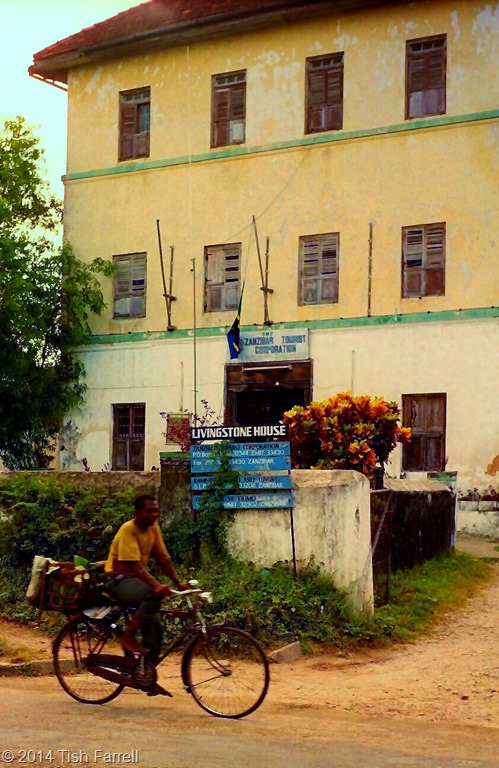
Finding some way to end the trade was one of the motivations that drove the missionary-explorer David Livingstone ever onwards on his gruelling explorations across Africa. It was thought that if the continent was opened up to civilizing Europeans, then the ‘filthy trade’ could be stopped.  But then like the slavers, he and other European explorers (Burton, Speke, Stanley, Cameron, Thomson) started their journeys from Zanzibar. All such travellers, including  missionaries, relied on  the expertise of porters and seasoned safari guides who otherwise worked on the slave caravans.  In 1866, before his last expedition, Livingstone stayed at the house above. It had not long been built by Sultan Majid. Now it is the office of the Zanzibar Tourist Corporation.

001 (2)

From John Hanning Speke’s Journal of the Discovery of the Nile 1863

*

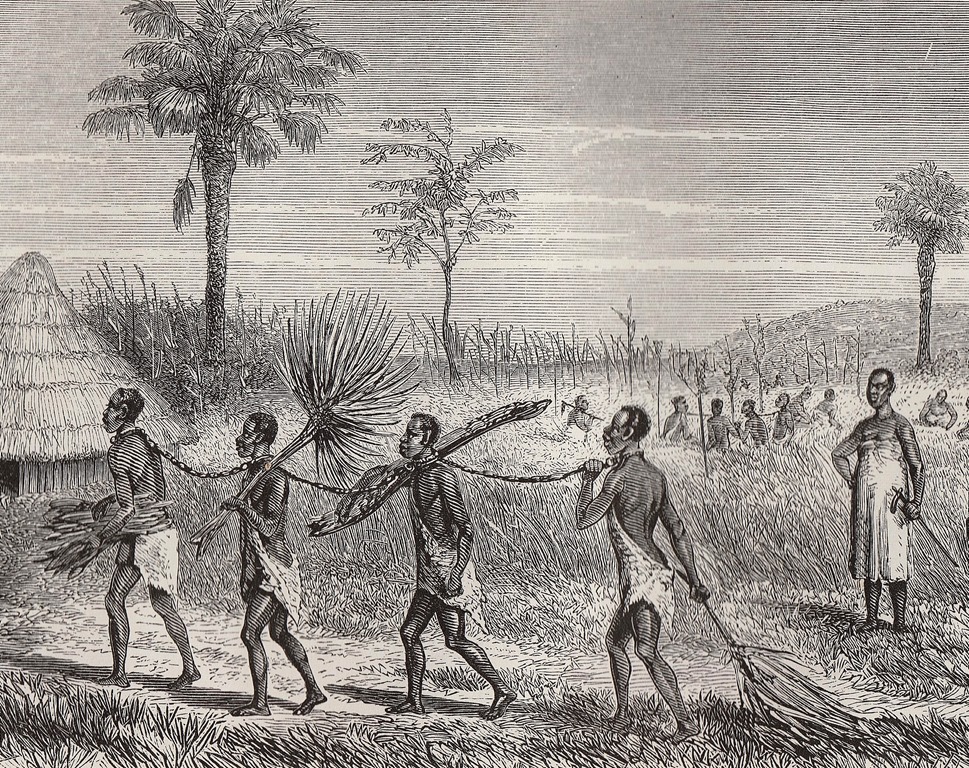
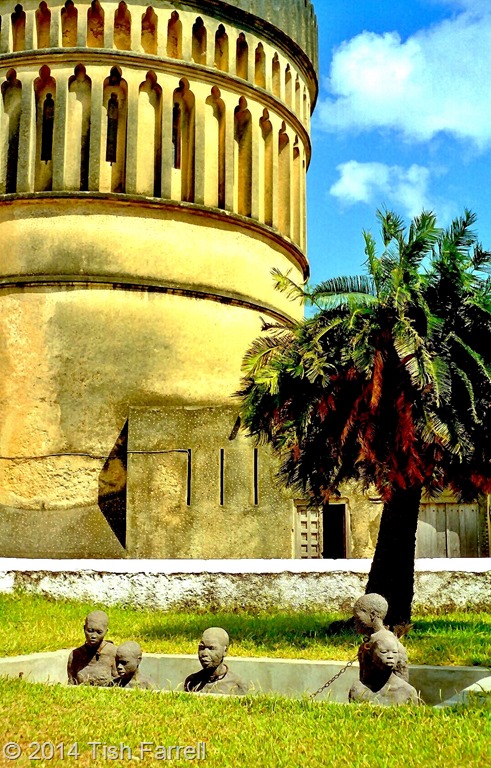
The slaving and ivory  trades worked in tandem. Newly captured slaves were not only driven on forced marches across the continent to the coast, but they were also made to carry supplies, and these included any elephant tusks that the slavers had procured – ivory destined for the production of piano keys and billiard balls for the European market.  It was only in 1897 that all slaves on Zanzibar were given their freedom. The Anglican church stands on the site of the slave market, beside the now famous sculptures commemorating the years of abuse. It is horrifying to consider what the cost of this trade has been for Africa: generation upon generation of  the strongest, brightest and  most  beautiful young people robbed from their communities.

Scan-130429-0005

Naturally the British could congratulate themselves on finally stopping the trade on Zanzibar, although I believe it continued well  into the 2oth century at Lamu. Today, too, slave mongering thrives, and under our very noses in Europe, only now the abused are not necessarily black, so perhaps we don’t think it’s the same thing – the brutal deprivation of liberty and dignity, along with forced labour?

But back to 1890, the end of the Sultans’ control and Britain’s laying claim to Zanzibar. Because now we come to a whole new angle. For this was also the year of the Heligoland-Zanzibar Treaty, an agreement between the Germans and the British, whereby (in return for Heligoland, the strategic North Sea island), the Germans waived rights to Zanzibar, Witu on the mainland coast, and to the territory now known as Kenya across which the British were planning to build the Uganda Railway. (Bismarck apparently called this deal swapping the trousers for a button). 

Suddenly, then, Zanzibar has a very particular purpose for the British Empire. It will become the spring board for the claiming of extensive East African territory, and it will start with that mad, mad railway from Mombasa to Lake Victoria. Of course, with slavery being outlawed, some new mechanism of harnessing native power will need to be thought up. Something civilized and civilizing. I know – we’ll call it colonialism, and enclose indigenous people in their own territory, make reserves of their own homes, which they can’t leave unless they have a pass. Then we’ll introduce hut and poll taxes so forcing them to work for Europeans…

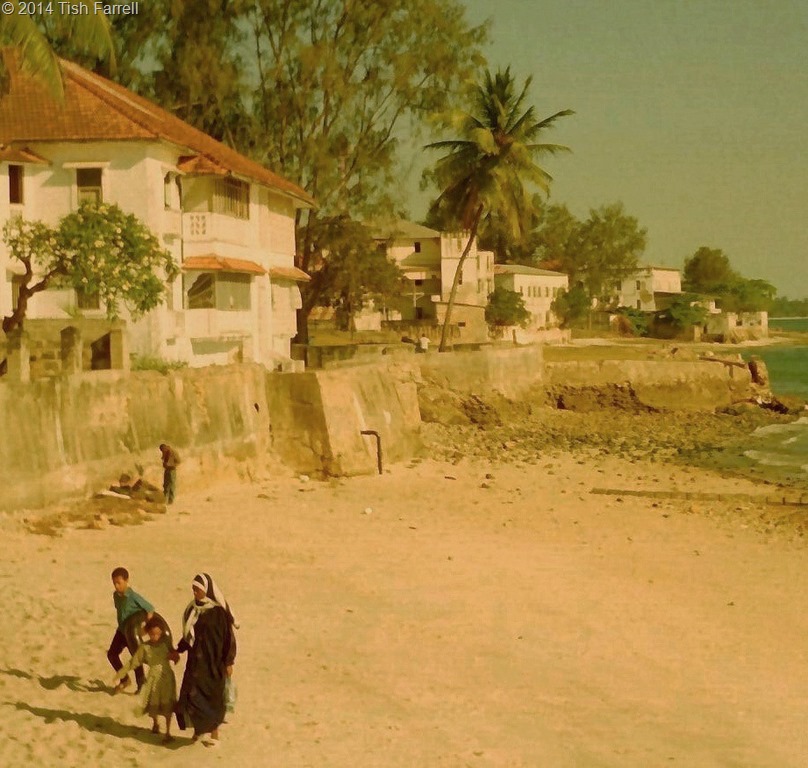
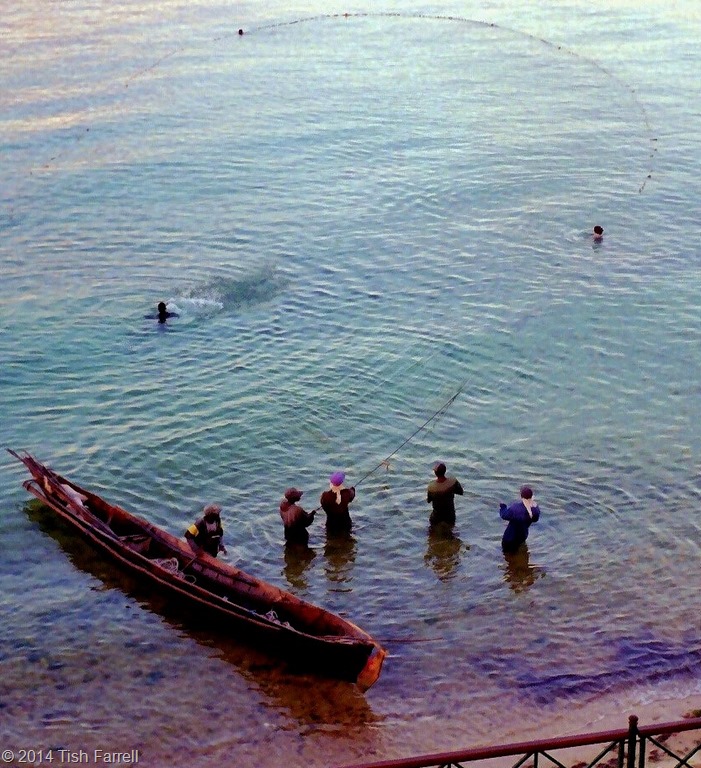
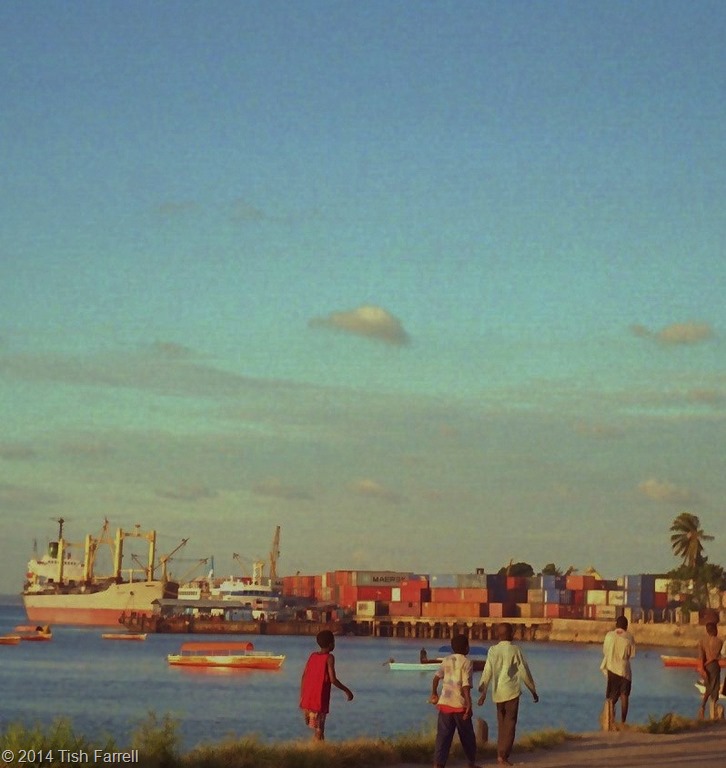
For more of the colonial story go to an earlier post Vulcanicity HERE. In the meantime below are some more soothing views in and around Stone Town, now a World Heritage site. Life is not so grand as it was in the days of the finely robed Omanis. Fishing, ferrying, farming (growing spices, coconuts and vegetables), curio trading, boat building, mangrove pole harvesting and tourism are the main sources of income. As in all African countries, people work hard to educate their children, and this is their number one priority.

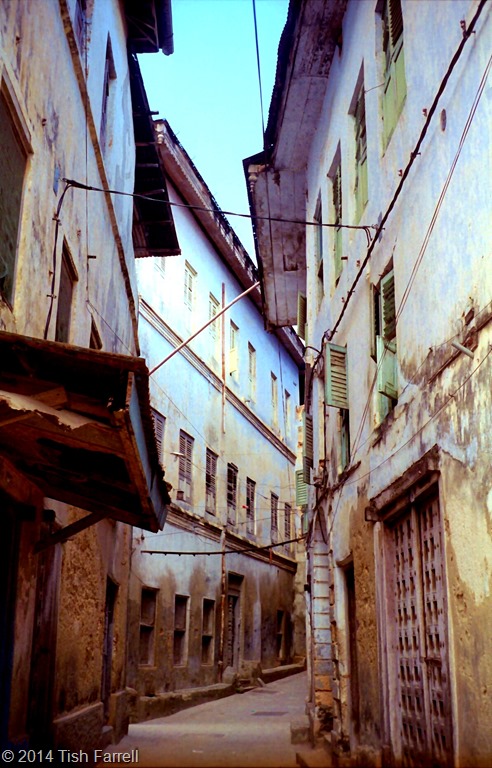
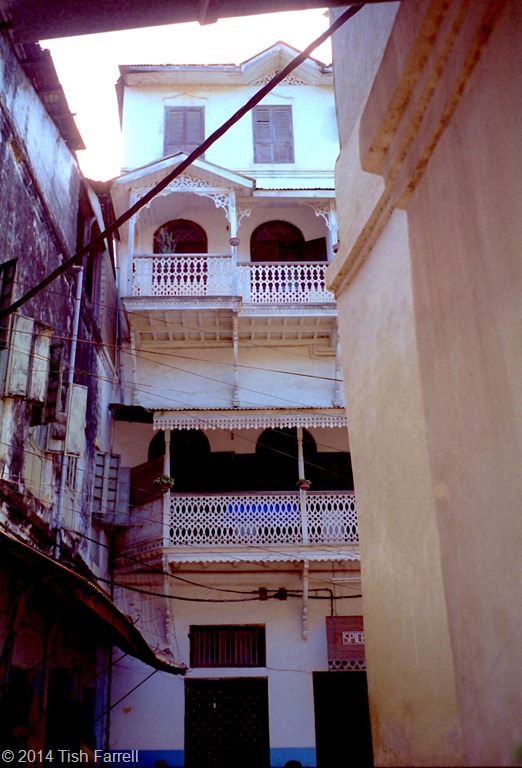
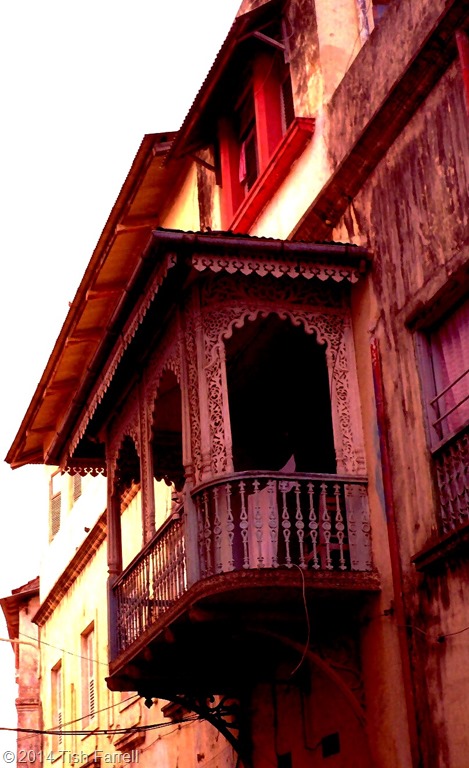
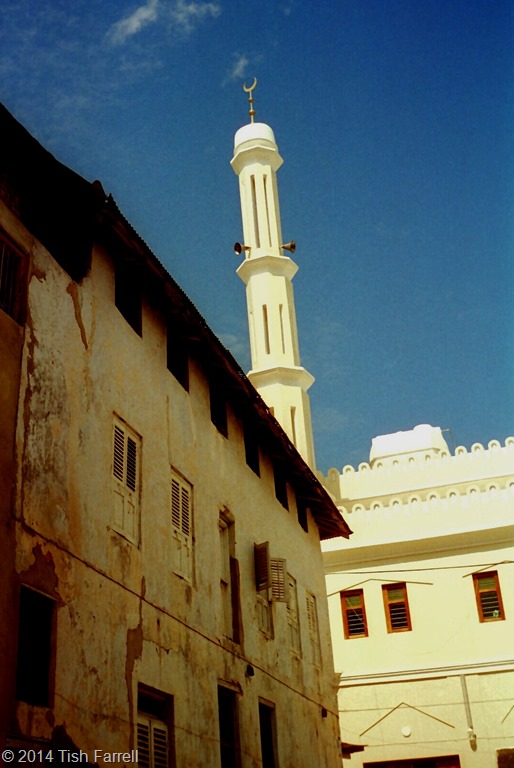
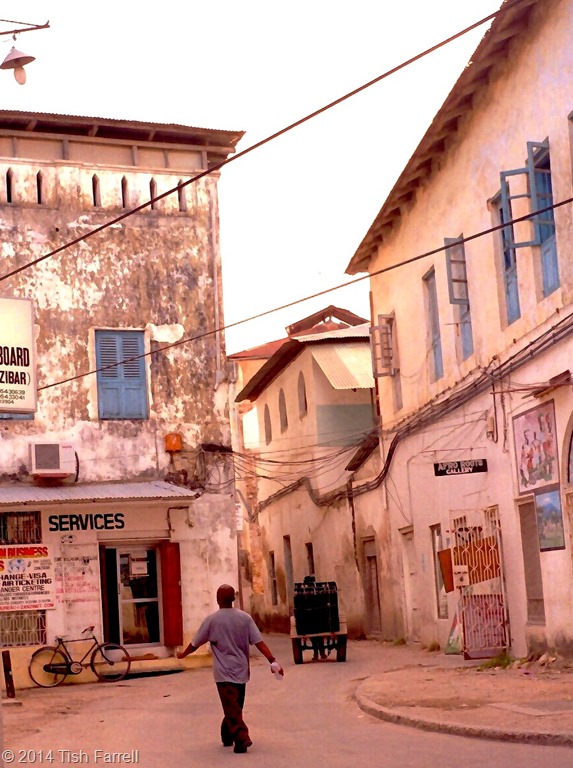
Stone Town is also a devoutly Muslim community, and sometimes this does not sit well with tourist inclinations to behave in ways not considered either respectful or respectable by Zanzibaris. There are over 50 mosques of several different Muslim persuasions, but most are unobtrusive buildings without minarets, and are scarcely noticeable among the domestic dwellings. There is also a Catholic cathedral as well as the Anglican church. The streets are maze-like and shadowy, but we met with nothing but gracious hospitality when we wandered along them.  The place may seem run down (although here and there restoration is in progress), but in the sudden whiffs of jasmine the Sinbad romance lingers on…

(For more about the Swahili see an earlier post HERE.)

Scan-130429-0110

Scan-130429-0129

Scan-130429-0149

Scan-130429-0131

Scan-130429-0046

Scan-130510-0002

Scan-130429-0123

Scan-130429-0081

Scan-130429-0122


AILSA’S TRAVEL CHALLENGE: TWIST

FLICKR COMMENTS TAGGED ‘Z’

copyright 2014 Tish Farrell


Yesterday’s Shining Star? The Restoring of Artist Mildred Elsi Eldridge (1909-1991)

www.glendwr.ac.uk (2)

Self Portrait Mildred Elsi Eldridge. Photo: Glyndwr University www.glyndwr.ac.uk

*

It has to be asked, this burning, niggling question, but why on earth do we forget women artists so readily? Why is it that their work is less exhibited, less revered or, if noticed at all, only grudgingly accorded a modicum of the status enjoyed by male artists?

I leave it to you to supply the answers to these questions. I only note that this same enquiry was the driving force behind Professor Amanda Vickery’s recent BBC2 series The Story of Women and Art. In this too brief historical exploration of  forgotten/hidden/suppressed  and otherwise invisible women artists, Professor Vickery introduced us to the breath-taking creativity of (among others) Sofonisba Anguissola, Berthe Morisot, Johanna Koerten, Properzia de Rossi and Artemisia Gentileschi.  I will be forever grateful for the introduction.

Now, though, I have a very particular question. It relates to the work you are about to see – details from a great mural that, until fairly recently, was hidden from view.


All photos: Glyndwr University www.glyndwr.ac.uk

DSC06549[1]

*

panel 6 glendwr


*

DSC06941[1]

*

DSC06556[1]


So my question is this. What was in the minds of the people when they took down and concealed from sight this work of lucent genius by Mildred Elsi Eldridge; how did they feel when they stowed away the Dance of Life?

Sorely deflated? Bereft? As if the light had gone out?

The work was originally commissioned in the early 1950s by the Hospital Management Committee of the Robert Jones Agnes Hunt Orthopaedic Hospital, Gobowen near Oswestry in Shropshire. A new nurse’s home had been built and the  mural was to hang in the dining hall. The hospital’s Doctors Menzies and Salt had recently been to Sweden and seen how art was being introduced to hospitals to enhance the healing process.

The fee for the commission was £500 and the work took M E Eldridge around five years to complete (Gwydion Thomas in Life and Times of M E Eldridge). In 1999, after being on display for forty years, the mural was put into storage. The hospital was undergoing development. But once consigned to custodial care, it was over a decade before moves were made to restore the panels and find them a new home. 

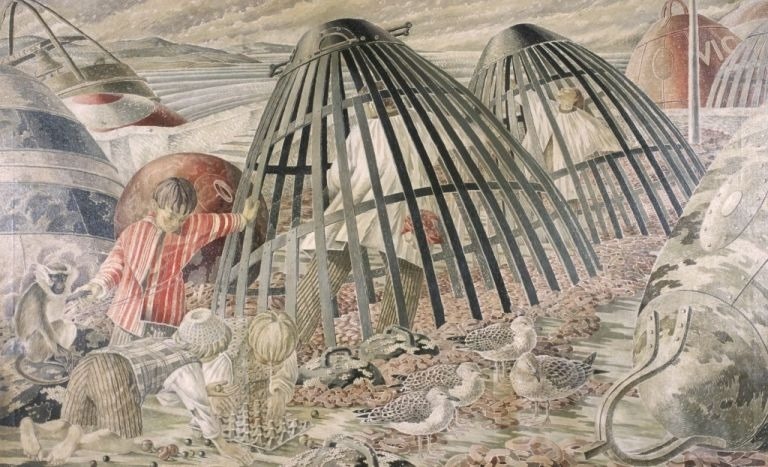
Elsi’s son, Gwydion Thomas, was a child when the panels were being painted  (see the boy with the monkey above). He says the work was created in their home, in the drawing room of Manafon Rectory, Montgomery. He says that, as there was not enough wall space to hang the work in progress, Elsi rolled up completed portions as she went along, hanging others over doors as she was painting. He says the work wound many times around the room. It is a sharp glimpse into this woman’s focus, vision and determination.

DSC06558[2]

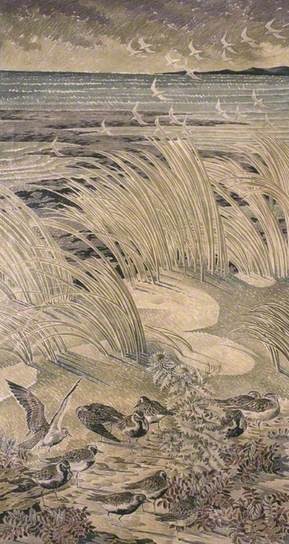
The mural’s overarching theme explores how we industrialized human beings have become detached from the natural cycles of life and death. There are depictions of alienation and loss. Yet the work inspires hope, too, through the reclaiming of forgotten wisdom and traditional ways of living and healing. And so, despite the dark undercurrents, the work is hugely elevating. Joyous.  Transcendent. Full of verve. When fellow artist, Stanley Spencer, saw it in 1958 he wrote to Elsi: “Just one look at the heavenly sheep panel would remove all fear and gloom.”

Art Historian, Peter Lord, has described the work as “a masterpiece on so many levels”, while pointing  out not only the technical ambitiousness of so large a project, but also the fact that Elsi completed the work without a suitable studio.

It is good news, then, that Dance of Life has now been released from custody, restored and put on permanent view at Glyndŵr University’s Centre for the Creative Industries in Wrexham. It can be viewed by visiting the main University Reception (tel: 01978 293950). 

DSC06663[1]

Restoration by Vanessa Andrew in progress at Glyndwr University www.glyndwr.ac.uk

*

DSC06933[1]

Gwydion Thomas speaking at a private view of the restored panels

Photos: Glyndwr University www.glyndwr.ac.uk

DSC06936[1]*


*

So: you have seen some of her work, including that self-assured self-portrait at the start of this post, but what of the artist M E Eldridge? Why isn’t she better known?

Mildred Elsi Eldridge

She was born in Wimbledon in 1909, the daughter of a pawn- broker turned  jeweller. She studied at Wimbledon College of Art and then at the Royal College of Art, where her teachers included Eric Ravilious, Edward Bawden and William Rothenstein. She was one of the RCA’s star pupils. In her autobiography she says of this time:

A free studentship in 1931 took me to the RCA which in those days was attached to the Victoria and Albert Museum. There were huge doors from the V&A into the College which were kept securely locked but as there was always one of the museum keepers on duty on the other side of the doors, special signs and knocks could be made so that after signing on at the RCA entrance desk it was possible to escape into the V&A and make drawings of the splendid treasures in the museum, or experimental drawings of one’s own which would probably have received severe criticism from the RCA staff. From there, sallies could be made to the Science Museum across Exhibition Road or to the Natural History Museum to make studies of animals, plants and fungus.

In 1934 The Rome Scholarship competition was held – the subject Music. I submitted the 5′ x 5′ Telling the Bees which later became the central part of the first panel in the mural in the Dining Hall of theNurses’ Home at the Gobowen Orthopaedic Hospital. 

M. E. Eldridge Autobiography

meeautobees[1]

This was the piece that won her the prestigious Travelling Scholarship to Italy and opened the doors to the art world. When she returned to London she soon established herself, being the only artist to sell all her work at 1936 Royal Academy exhibition. The next year she had a one-woman show at the Beaux Arts Gallery, and with the proceeds of the sales, including several to major collectors and large metropolitan art galleries, she bought herself a Bentley car. And then –

She turned her back on the glitter, and headed off in her Bentley for  the Shropshire-Wales borderlands to teach at Oswestry High School and Moreton Hall School for Girls in Shropshire. She lodged just over the border in Wales, in Chirk near Wrexham, and it was in the house where she was staying that she met the fellow lodger, a young curate, who was to become known to the world as poet, R.S. Thomas. She made this portrait of him in 1940, the year of their marriage.
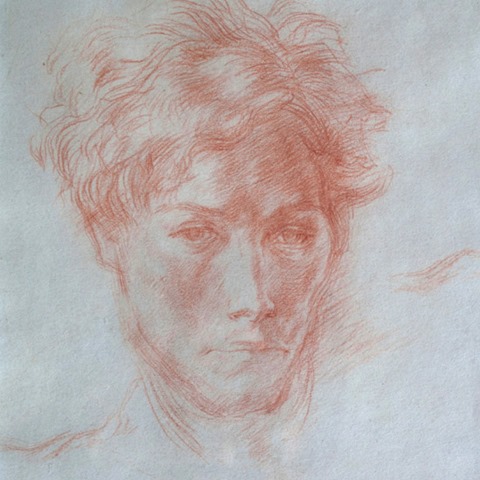
1940 yr of marriage

It would be easy to say that the growing fame of RS eclipsed or stunted Elsi’s talent. He apparently took no interest in her work or did anything to encourage her. There is a revealing interview in the New Welsh Review issue 64 in which Gwydion Thomas says that after Elsi’s death in 1991, his father wondered if Elsi would have “gone on painting properly” if, as they moved from rectory to rectory across Wales, he had ever bothered to arrange for a house with suitable work space for her. RS admitted, too, that he should never have expected her to live at Sarn y Plas in Rhiw (see the previous post) after he retired  from the priesthood, and the church authorities would not allow them to buy the Aberdaron rectory with its pleasant rooms and fine views.

cover_64[1]

Gwydion describes her room at the house in Rhiw: so dark with two tiny windows, and damp too. She had to keep her paintings in black plastic refuse bags to protect them from the water that  dripped through the walls. It was so cold, that as she painted, she kept her feet inside a cardboard box, along with a two-bar electric heater, and so was frequently burned. The room also had a low loft which she reached by means of a ladder. Here, with the company of mice, she both slept and worked. Tellingly, the new room that the Thomases built at Sarn y Plas served RS as bed-sitting room.

Elsewhere, Gwydion describes Elsi as

a remarkable and talented woman. She painted, and sold, some 2,000 finished pictures and produced innumerable studies…She was a weaver, a sculptor, a clothes maker – she made me clothes out of rabbit and mole skins – and a knitter, a teacher, a writer and illustrator of children’s books…She designed altar cloths, stained glass windows and wrought-iron chandeliers. She designed and planted four gardens, raised a child, cooked for my father: four meals a day, every day, for 50 years.

He did not know why she stopped painting landscapes, and took to churning out what he calls  ‘pretty’ paintings and illustrations. But he does say something that is perhaps illuminating. He says that when his parents first met, RS was writing “dreadful imitations of soppy Georgian poetry”, and full of dreams of Celtic romance. Then along comes this vibrant, shining, well read, well travelled and sophisticated young woman who can introduce him to other kinds of literature, and to the wider world besides.

When it comes to Elsi’s influence on the poet, R S Thomas scholar, Jason Walford Davies, calls her a catalyst, a promoter, the one who made things possible, and helped RS realize a career as poet. She certainly inspired him to write some of his most humane and moving poems.

Marriage

We met
under a shower
of bird-notes.
Fifty years passed,
love’s moment
in a world in
servitude to time.
She was young;
I kissed with my eyes
closed and opened
them on her wrinkles.
‘Come,’ said death,
choosing her as his
partner for
the last dance, And she,
who in life
had done everything
with a bird’s grace,
opened her bill now
for the shedding
of one sigh no
heavier than a feather.

R S Thomas

rst


And so perhaps, in a sense, R S Thomas was also one of Elsi’s creations, a co-creation certainly. She gave him the gift of possibility, and that is a great gift indeed. Her artist self may indeed have been diminished by the marriage, although she strikes me as a woman who knew her own mind and made her choices accordingly. Perhaps she had painted out all her best thoughts, and felt she had nothing more to add in terms of ‘great works’. She anyway never stopped creating, making paintings for Medici greetings cards for instance, and she was working still when she could barely see.

There seems to be no single explanation, then, as to why M E Eldridge, after such a glittering start, is not better known today. Clearly she had some hand in this when she decided  to drive away from her London career, and head for the Welsh Marches. But then to leave in a Bentley, that most self-aggrandizing of vehicles? It is all so playfully enigmatic.

And so instead of answers, I leave you, in like vein,  with this alluring abstract study called ‘Gwydion’s treasures 1952’. I love the shining light in the marbles: what a heart-felt evocation of childhood freedom, and not a shred of sentiment. Only wonder at the cycle of life and death to be observed upon the sea shore, and seen through the endlessly enquiring eyes of a child. Her child.

abstract 1952 httpwww.bbc.co.uknewsuk-wales-21714220

*

For further discussion of overlooked women artists:

Jeanne de Montbaston Women, Art and Authority: The Language of Exclusion

#artbywomen

Text © 2014 Tish Farrell