

Tish Farrell Writer
Before your very eyes: change




Summer came back on Saturday and took us to the fair…
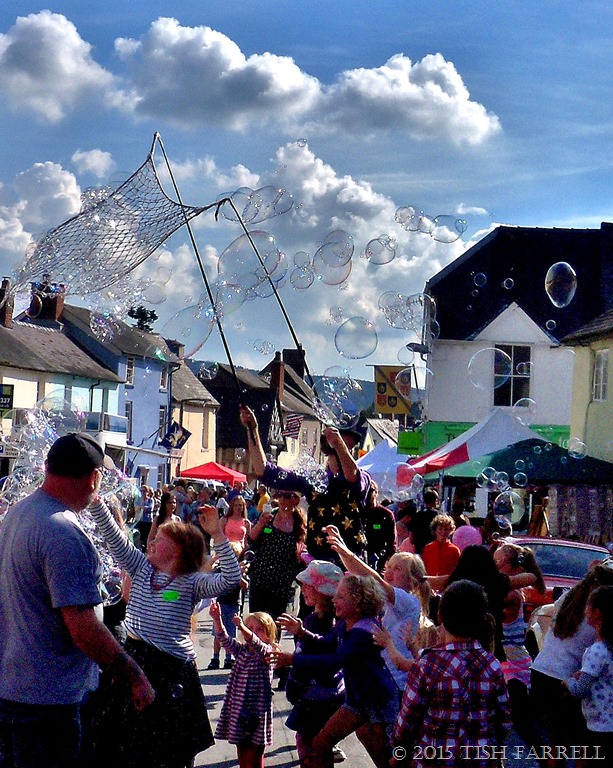
…to the Bishop’s Castle Michaelmas Fair, to be precise. And not only did summer come back to us after a week of dreary coldness, it was warm, and bright and stayed ALL day.
The fair was to be found in every quarter of the town, from St John the Baptist Church at the bottom of the hill to the Three Tuns Inn at the top of the hill, and with here-and-there enclaves in between.
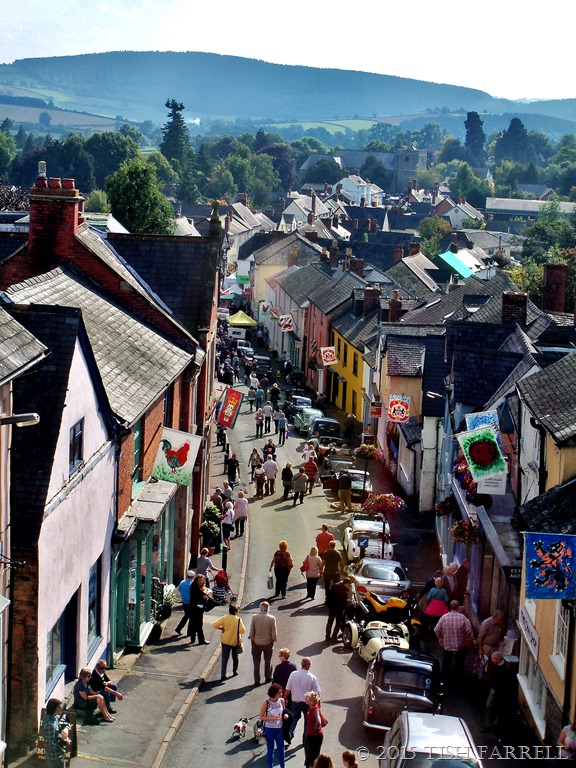
This shot of the High Street looking towards the church was taken from the window from the Town Hall. This handsome civic building (coming up next) has recently been refurbished and doubles up as the town’s market. This year it is celebrating its 250th birthday…
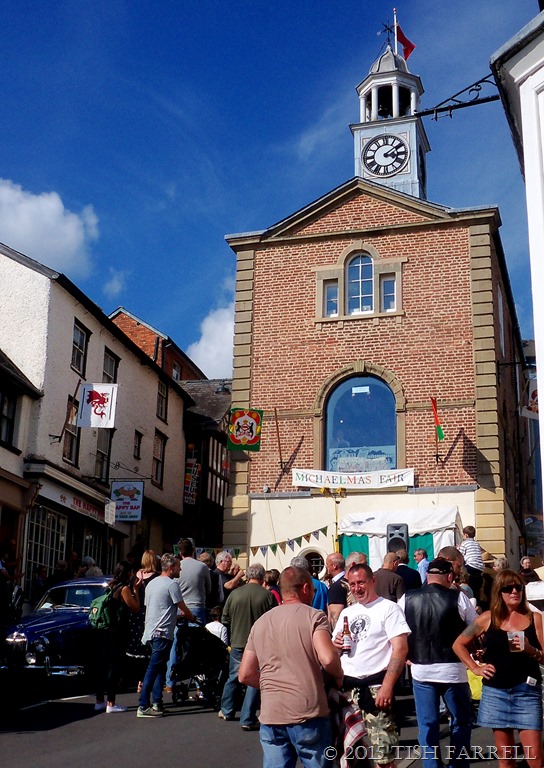
Wending on upwards past the Town Hall, and bearing to the right, you come to the Three Tuns Inn. It is one of Shropshire’s real ale treasures. They’ve been brewing beer there since 1642, so they must be doing something right. It’s apparently the oldest licensed brewery in Britain, but…

…it is not the only micro-brewery in this small town. For those who don’t care to climb hills for a pint, you can sample the Six Bells’ Cloud Nine, a piece of real ale heaven, down on the corner of Church Street.
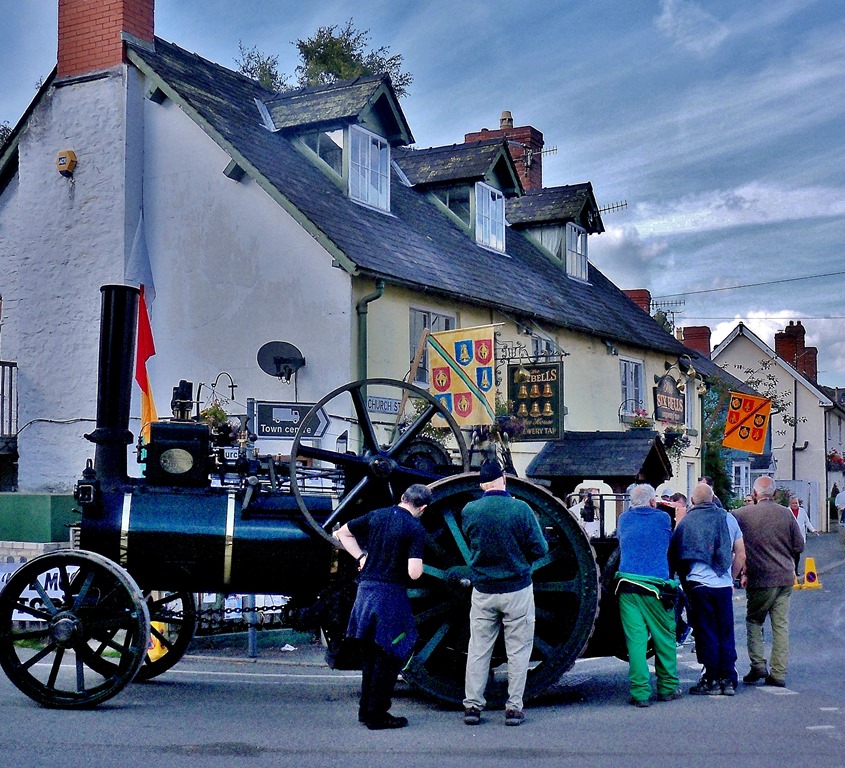
A nice set of wheels, chaps?
Which brings me to another big excitement of the day – the Michaelmas Fair Parade. Not only did we have beer, bubbles, folk songs, indie rock, ballads and wall to wall bonhomie, there were also classic cars, tractors, and steam powered vehicles. But before all that we had…
Oh ye, oh ye. Make way for the Bishop’s Castle Elephant…


He’s called Clive, and was created by local maker, Bamber Hawes, with help from the town’s Community College students. Bishop’s Castle artist, Esther Thorpe designed Clive’s ‘skin’, and the primary school children did the printing. And if you want to know why Bishop’s Castle has an elephant on parade, I’ll explain later.
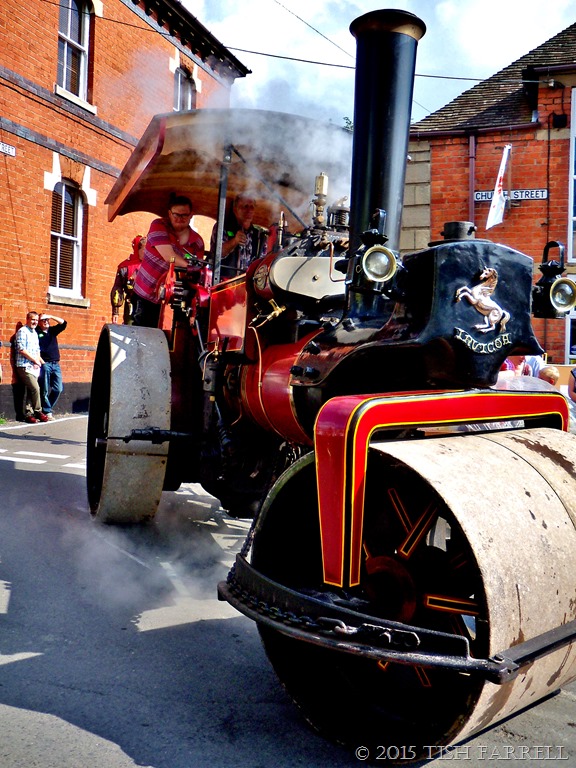
For now, watch your toes, here comes a huge steam roller…
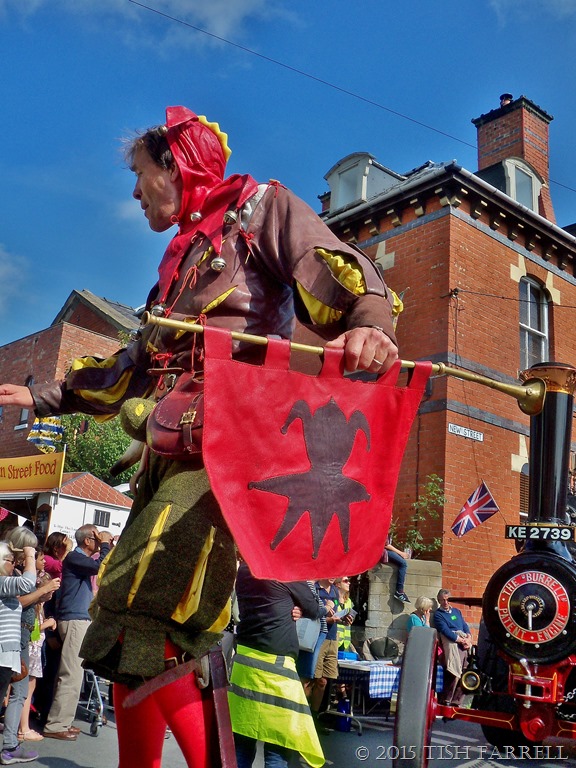
…and Peterkin the Fool on his stilts. He nearly trod on me…

…and then there were tractors (I remember when farmers had these)…
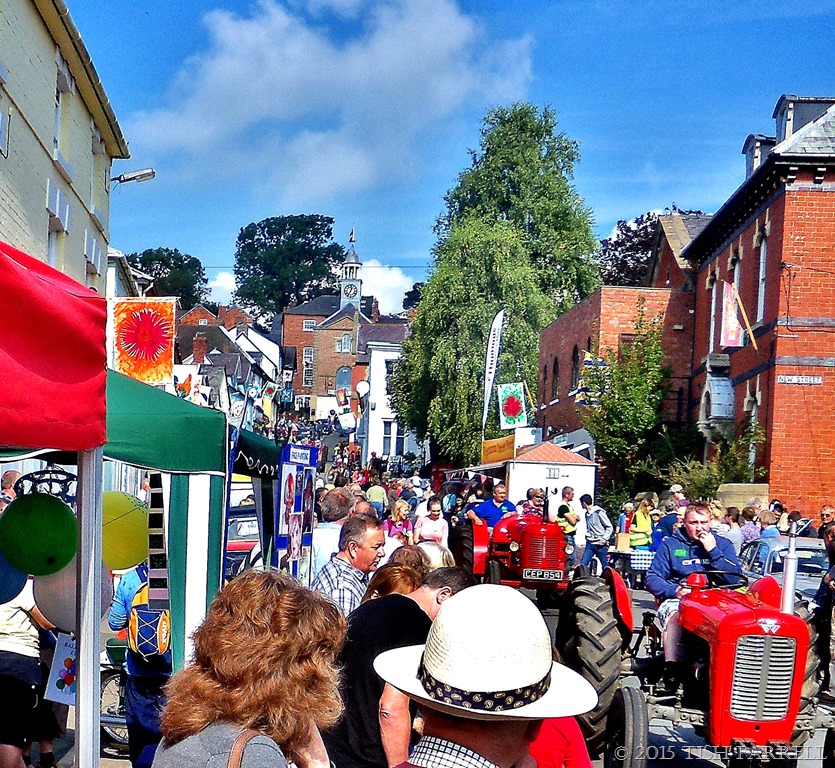
…and cool types in classic cars…

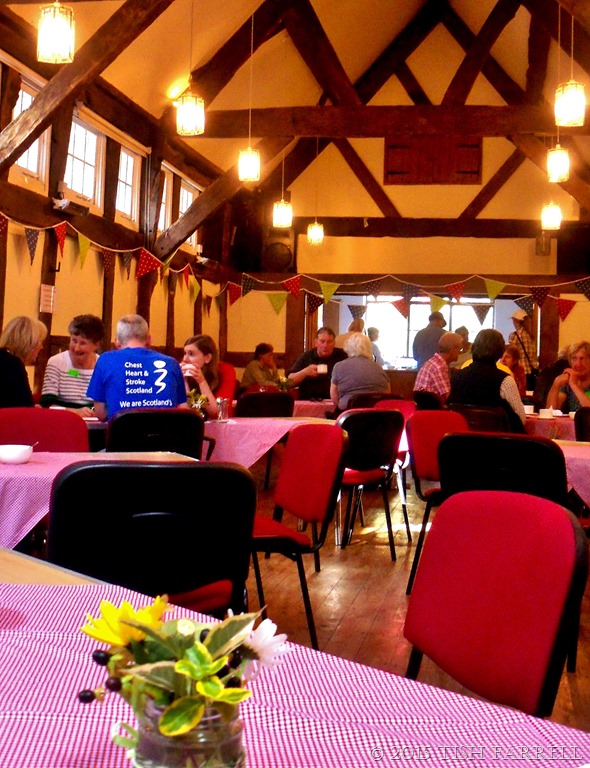
Then there were owls to hold, alpacas with socks to sample, more bubbles from the world’s tallest bubbleologist. We were so excited we had to resort to the Church Barn for soothing tea and brownies. After all, no good English ‘do’ is complete without afternoon tea…
And now as promised, a bit of a yarn about Clive the Elephant. It’s a tale of dirty dogs and political shenanigans of 250 years ago. These were the days when Bishop’s Castle was a notorious Rotten Borough. There were two Members of Parliament, and only 150 people with the right to vote. How people cast their vote was a matter of public record, and this meant voters could be intimidated into supporting particular candidates.
Enter Shropshire-born Robert Clive, aka First Baron Clive aka Clive of India. He was on a mission to build political power, and had the money to buy it. He had used his position in the (also notorious) British East India Company not only to found the British Empire in India, but also to return from the Sub-Continent with shiploads of loot. He then set about buying votes for the men he wished to have as MPs. As part of his scheme of self-aggrandizement he added an elephant to his coat arms. It symbolized India, and his personal power. Today, a stone carved version may still be seen in Bishop’s Castle’s old market place…

The reason Clive wanted power was so he could set about reforming the East India Company, and get rid of corruption in the administration. This did not come to much. Pots and kettles come to mind here. He died at the age of 49. All sorts of allegations were made as to cause of death – that he stabbed himself, cut his throat with a penknife, died of an opium overdose. It seems he suffered from gallstones, and was using the drug to deaden the pain. A more recent interpretation of events concludes he died of a heart attack due to the over-use of opium.
However you look at it, this is not a good elephant story. Far more heartening is the fact that during World War 2, a circus elephant was looked after in the town, and lived quietly in the stable of the Castle Hotel.
Finally a few more scenes of fun and jollification. I should also say that if I didn’t live in Much Wenlock, Bishop’s Castle would be the place I would most like to live – no longer a rotten borough, but a place bursting with community good spirits…


copyright 2015 Tish Farrell
Even though it was a Saturday, I’m linking this to Jo’s Monday Walk
Please visit her blog. There is no better place to be inspired to get out and about with your camera.
A bench for circular conversations and well-rounded arguments?
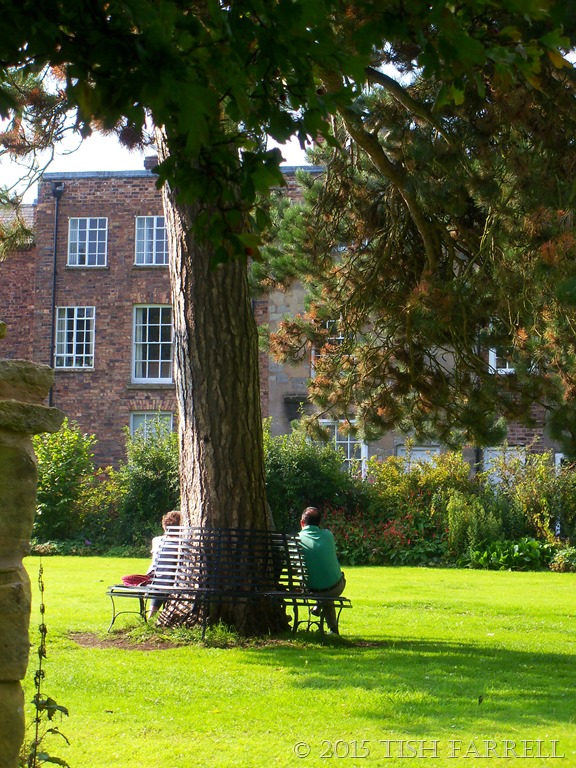

Here’s my bench for Jude’s Bench Series #38. This month she is asking us to find ones made of metal, and this is my favourite town seat. It surrounds a Wellingtonia on Much Wenlock’s Church Green and, apart from its circularity, it is perhaps not the most exciting of constructions. But it is in the perfect setting. And it has so many pleasing views and all through the year too. Things to watch out for include the annual Christmas Fayre and the Wenlock Poetry Festival…
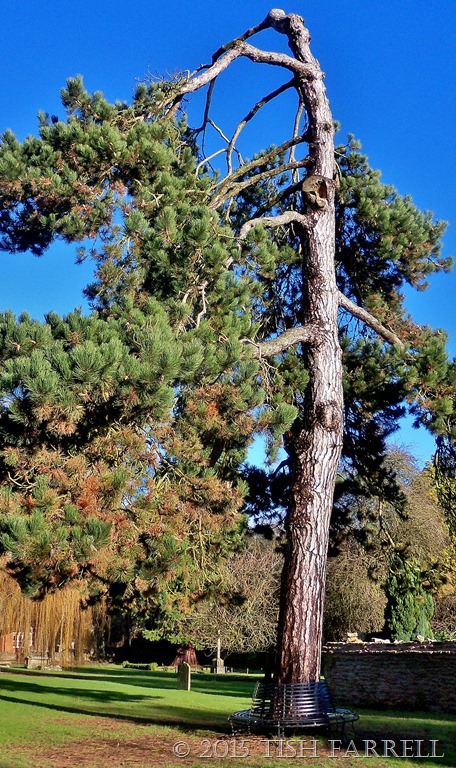

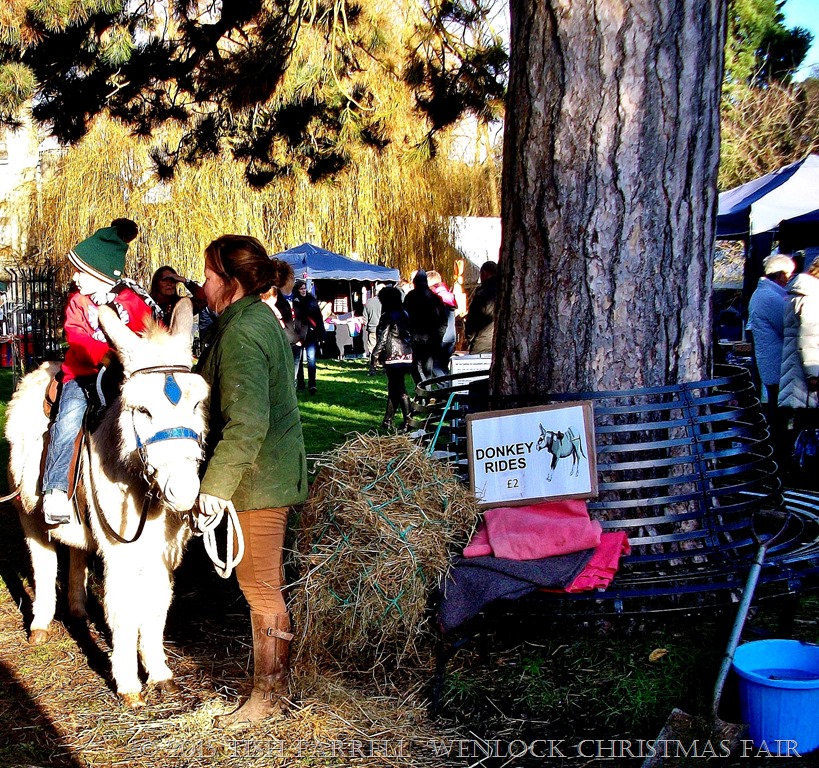
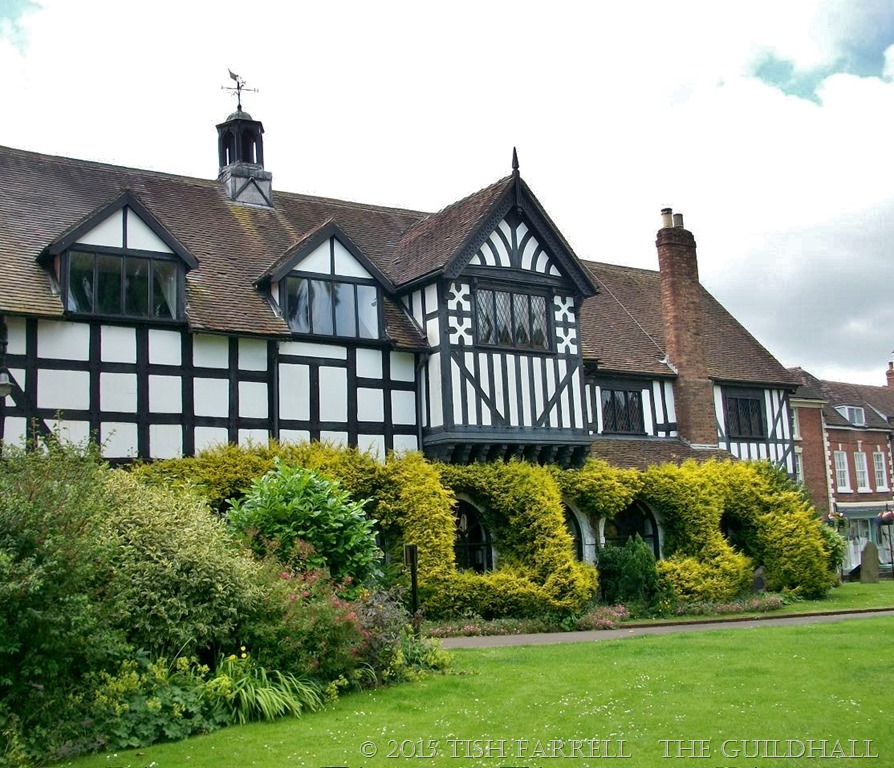

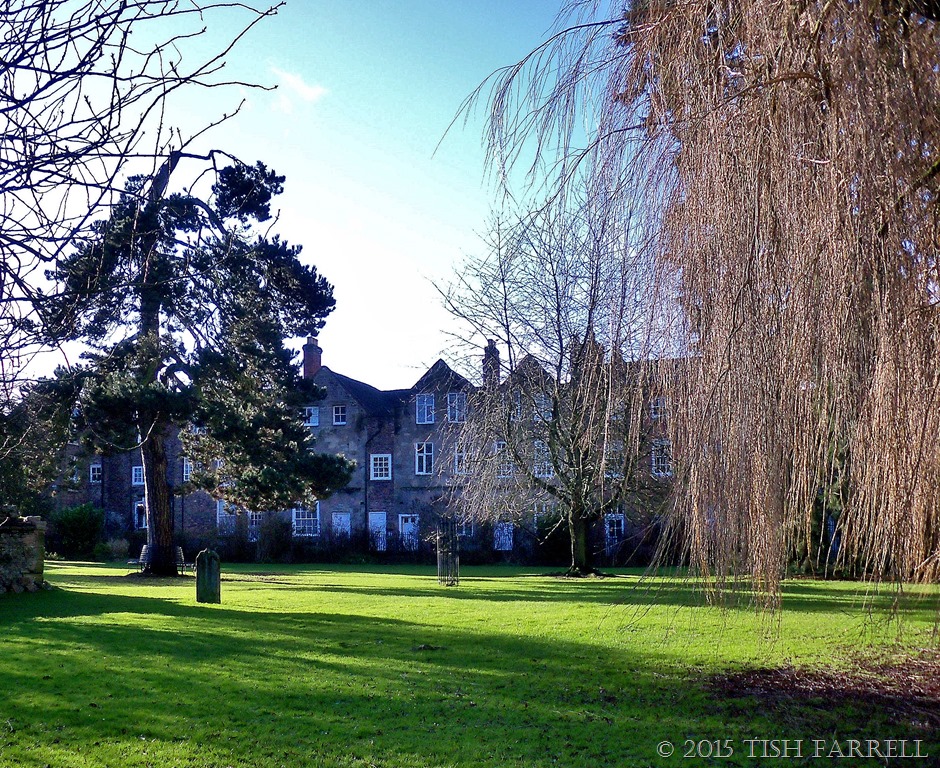


Visitors to the annual Wenlock Poetry Festival adding their poems to the Church Green’s Poetree. The next festival is April 2016. Click on the link for more details.
Tales From The Walled Garden

No, this is not the Tish Farrell ancestral pile, although my young aunt (standing) and my grandfather do look very much at home here. They are in the garden of Redhurst Manor, Surrey, where my grandfather, Charles Ashford was head gardener during the 1920s and ‘30s. My Aunt Evelyn was born in the gardener’s cottage on the estate, so you could say, in a way, that Redhurst was their domain – at least for a time. Grandfather certainly ruled the garden and the men who worked under him. He was fastidious in his gardening discipline, and much else besides, and expected the same from others; a true Victorian then.
And given his sense of propriety, I think one can be pretty sure that this particular Ashford family gathering, with Grandmother Alice Ashford (nee Eaton) sitting so comfortably on the lawn (she’s the one in the dark frock, busily chatting) would not have been happening if the Major and his lady had been within.
When I was editing this photograph, I thought about cropping off a good deal of that velvet smooth lawn. But then I thought, no. The fine state of it was down to Grandfather and his team with the horse-drawn mower. I also know that when Evelyn was small her mother used to smack her legs for rolling down that bank and getting her Sunday silk frock all green and grassy. Not the sort of the thing the very proper young lady in the photo would be doing. She was very tall for her age, so was probably only fifteen or sixteen when captured here.
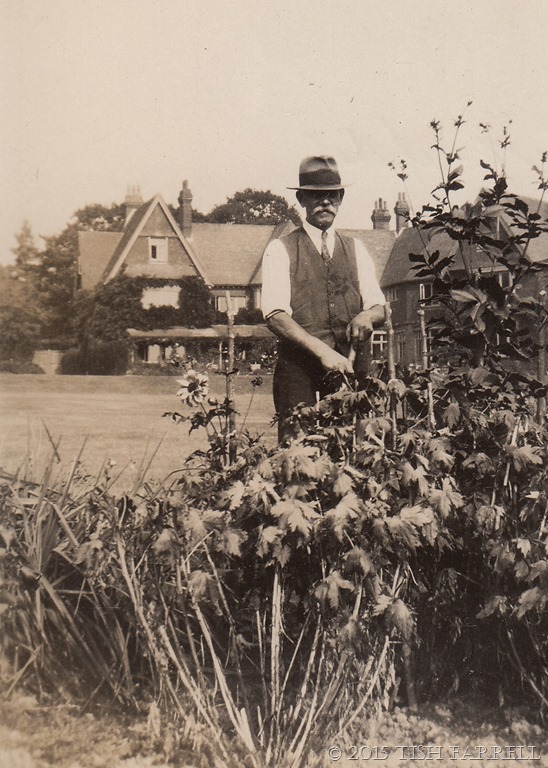
I gathered from family stories that Grandfather’s employer was an Anglo-Irish cavalry man who had been burned out of his home in Ireland during the troubles. He had another house up in Yorkshire, where he and his wife would often go.
Sometimes Grandfather accompanied them if they were going up for the shooting season. He had the reputation for being a fine shot. Even so, however you look at it, this was a most uncommon situation: a gentleman inviting his head gardener to a shooting party. My mother always said the Major’s lady was rather keen on Charles Ashford, and would invite him into her boudoir when he came to present her with the first peaches from the hot house. She would be dressed only in her silk negligee, reclining invitingly on a chaise. Mother could have made this up of course. In any case, Charles Ashford would have chosen not to notice such a state of shocking déshabillé in the presence of a member of the outdoor staff.
All the same, I do know he would take her sprigs of winter jasmine, arranged in little silver vases provided for him by Johnny the Butler, and selected specially by Grandfather from Johnny’s Butler’s Pantry. I also have a postcard sent to Grandfather in early March 1937, after he had left Redhurst and the Major moved permanently to Yorkshire. A touch of Lady Chatterly light?
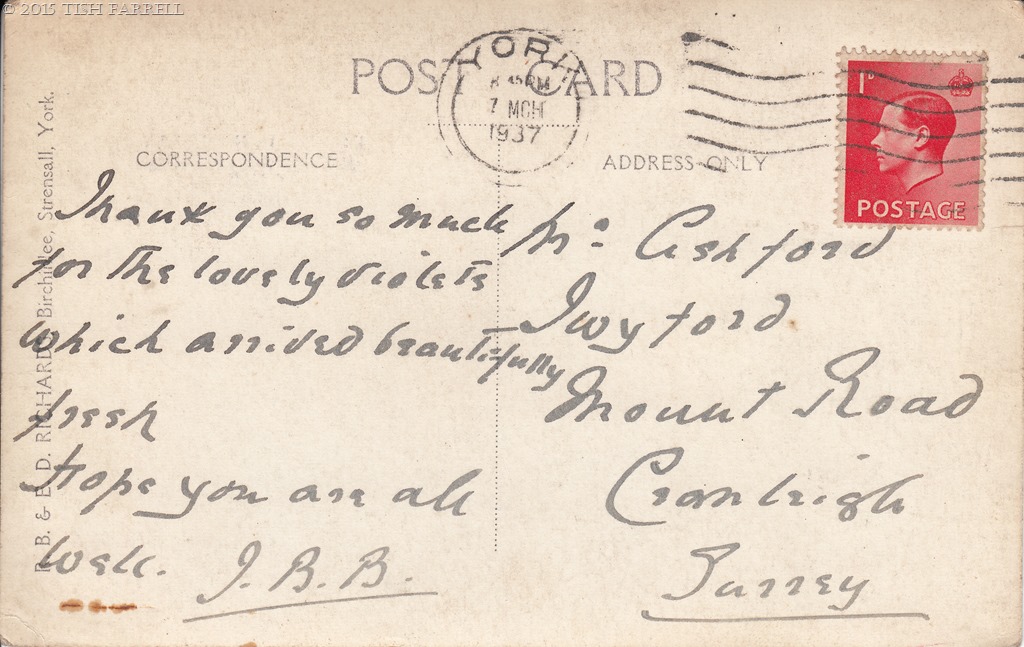
“Thank you so much for the lovely violets which arrived beautifully fresh. Hope you are all well. T.B.B.”
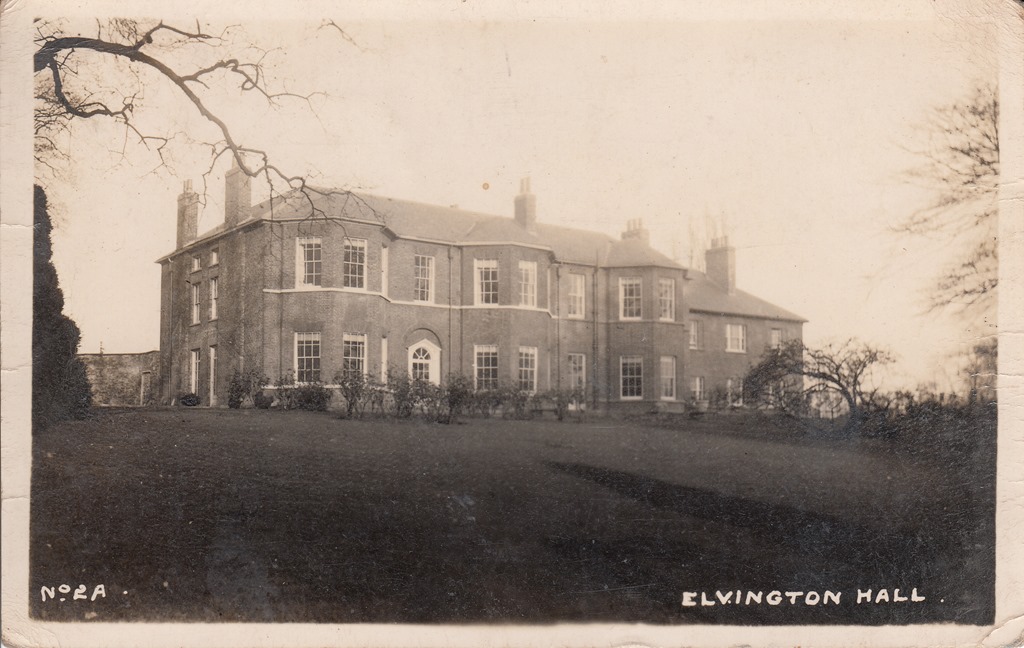
On the reverse side is this photo of what I assume is T.B.B.’s Yorkshire home. I am touched to think of Grandfather carefully packaging up the first spring violets to send to his former employer. I imagine him wrapping the stems with damp moss, adding swathes of paper to protect the flowers and placing all in a sturdy cardboard box, then taking the parcel to Cranleigh post office.
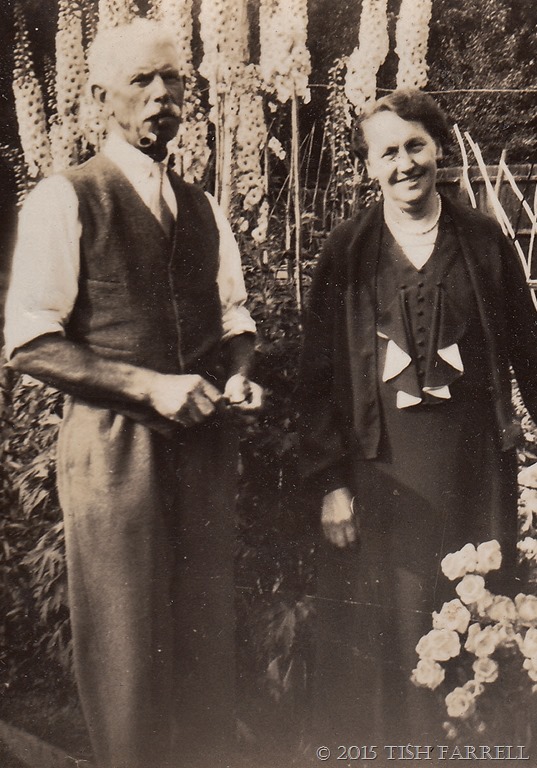
Here are my grandparents at around the time the postcard was sent. They are in the garden of their house on Mount Road, Cranleigh. Just look at those delphiniums. They were Grandfather’s favourites, along with heleniums. At the manor he had cultivated a big herbaceous border of mixed delphiniums and heleniums, using them to create a stunning screen between the walled kitchen garden and rest of the grounds. Such a planting scheme – spires of blue soaring through the golds, reds and oranges of heleniums, surprises me somehow; it sounds very modern – very nouveau garden designerish.
The kitchen garden was walled on three sides, and about half an acre in size. This was where Grandfather had his command post, and the reason I know this is because one of the treasures inherited from Evelyn were the notes of her talks given to her local gardening club. Charles Ashford was very much a feature. As a small child she followed him around, taking in everything he did, although he expected her to work too. Here is her description of her father’s work place. It reveals much about the man:
Imagine that we are standing in the holy of holies, my father’s potting shed. It was not all that large and the space was taken up with deep shelving on three sides of the shed. There was a door into the kitchen yard and another into the garden itself. On the back of one door were three large coat hooks to take the jackets that my father needed and also his green baize apron. On the other door hung his clean alpaca jacket which was worn when he went into the house, a dust coat to be used in the fruit room and his leather pruning apron with its thick, left-handed coarse leather glove sticking out of the pocket. These garments comprised his head gardener’s uniform; there was almost a ritual about putting them on for the various tasks.
My father’s own tools were hung in neat and spotless order on hooks to the left of the garden door. He insisted on clean tools and, after every task, the men had to be sure to wash, and then rub dry on old sacking any tool that had got even the slightest bit dirty. A little spot of oil was rubbed into the spades and trowels and forks until the metal shone. Wooden handles were treated with linseed oil which was thoroughly worked in. Only then could the tools be stored away. That is why, to this day, I am still using a well worn spade and fork that belonged to my father. There have been times when, if in a hurry I have hung my spade up dirty, I have gone scurrying back to give it a ‘a lick and a promise’. I can almost hear my father saying, ‘That won’t do, miss. Dirty tools make bad workmen.’
Reading these notes, I wish I had known him. I only remember meeting him twice. After Grandmother died, he lived with my aunt down in Wiltshire, and we lived miles away in Cheshire. But this next photo suggests that my father at least made one effort to visit him.
. 
I’m about two years old here, and I’m guessing that this was Grandfather’s eightieth birthday. I have my own distinct mental snapshot of him. Before lunch he was out in the vegetable garden in his shirt sleeves, sifting the stones from the soil in a big garden riddle. I remember being fascinated by this strange activity. My other snapshot is when he came to stay with us in Cheshire at Love Lane House. It must have been summer for I see him sitting in the sunshine outside the front door, shelling peas into a colander. I remember too, that he bought me a very beautiful little sailing yacht with a coffee coloured hull and ivory sails. I don’t think we had much luck sailing it though. But although I did not know him, and grew up mostly with my father’s tales of Grandfather’s monumental temper, I do often think of him -when I’m up at the allotment digging and weeding and seed sowing. I know he would be pleased to see me gardening, but I also know he would have some sharp words to say about my sloppy gardening habits.
copyright 2015 Tish Farrell
P.S. There will be more walled garden tales to follow
September in my garden
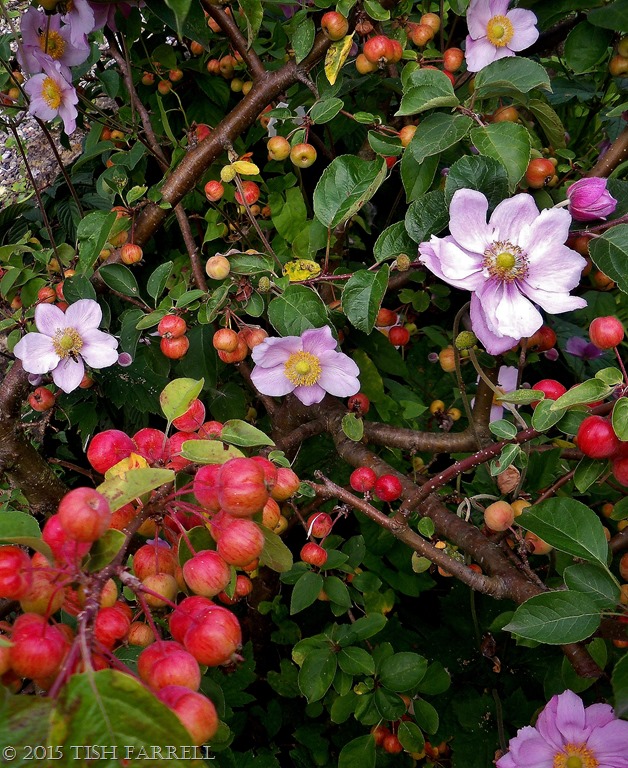
This year, for some reason, the Japanese anemones have decided to take on their close neighbour, the Japanese crab apple tree, in a ‘let’s see who can grow tallest’ contest.
Admittedly, the tree is a small one, three metres at most, but some of the anemones are already two metres tall.
This is the kind of gardening I love: where the plants come up with their own ideas. I did not plant the anemones directly under the tree. They seem to have moved in there by themselves, and now use the tree’s protecting arms as they grow ever taller.
Nor is this a colour scheme I would have thought of concocting – pale pinkish-purple, russet red and green. But somehow it’s very pleasing, and especially on the dull days we’ve been having lately.
Every day, too, I see the tiny crab apples turning a deeper shade of red: perfect Garden-of-Eden miniatures, which reminds me of a comment made by Melanie at My Virtual Playground. One of the times I featured my crab apples she told me they were called pommes sauvages in French – wild apples – an altogether much prettier name. I agree. Although my ‘wild’ ones have been much inbred, and don’t have quite the same sense of abandon of the truly wild ones found in our field hedgerows.
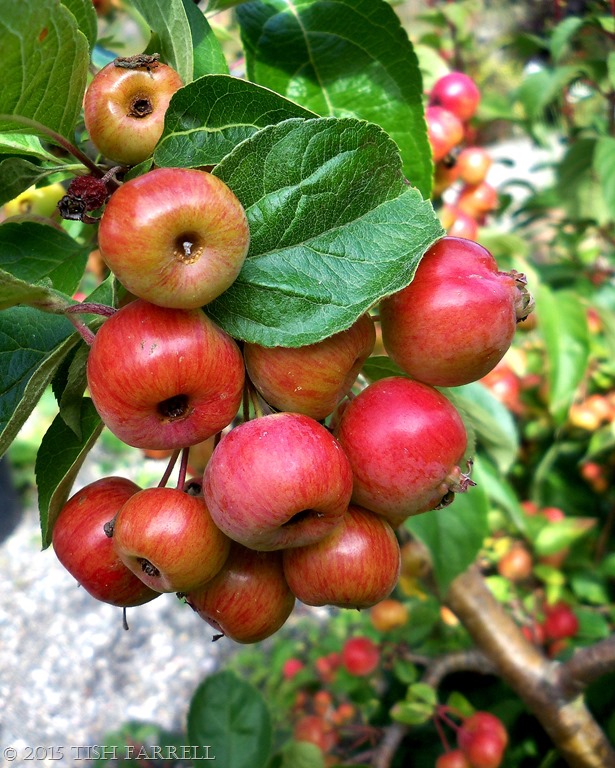
The tree is Malus Evereste by the way. It is glorious in spring too. (You’ve seen the picture). It’s growing in a tall bed which gives us an all-year good view from the kitchen French windows.
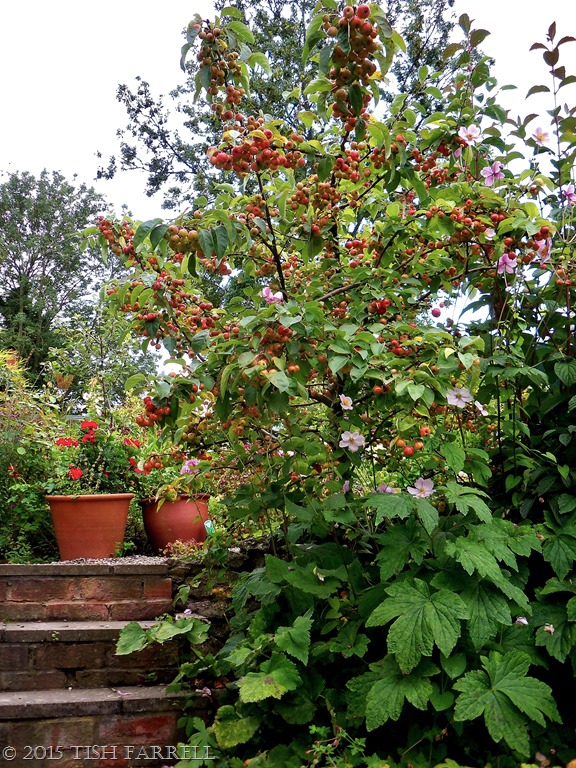
Elsewhere in the garden things are looking a little dreary round the edges, but there is still some stalwart blooming going on. The red geraniums look bright in the garden pots despite the recent downpours, as does this lovely penstemon:
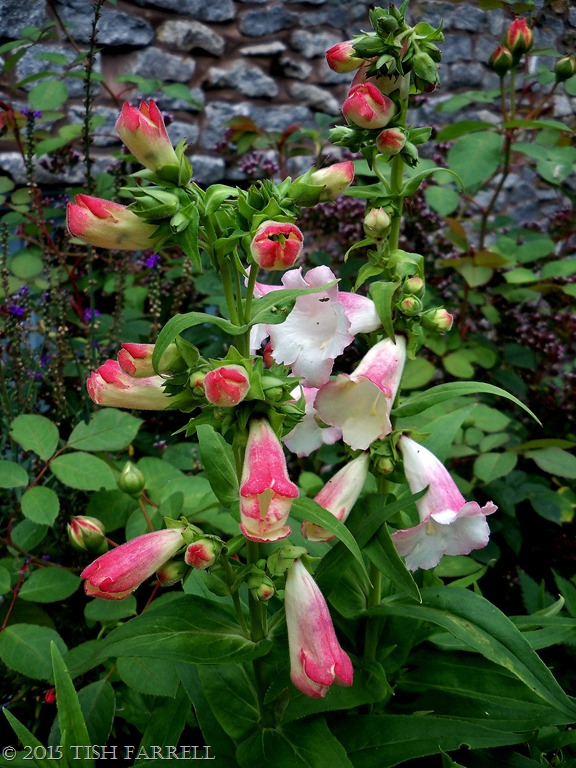
I think it’s my favourite version of this most obliging plant. If you cut down the stems after flowering, in a few weeks time you get another showing, perhaps more vigorous than the first. This variety is called Apple Blossom, but it makes me think of raspberry ripple ice cream – a rather shivery thought on this gloomy day.
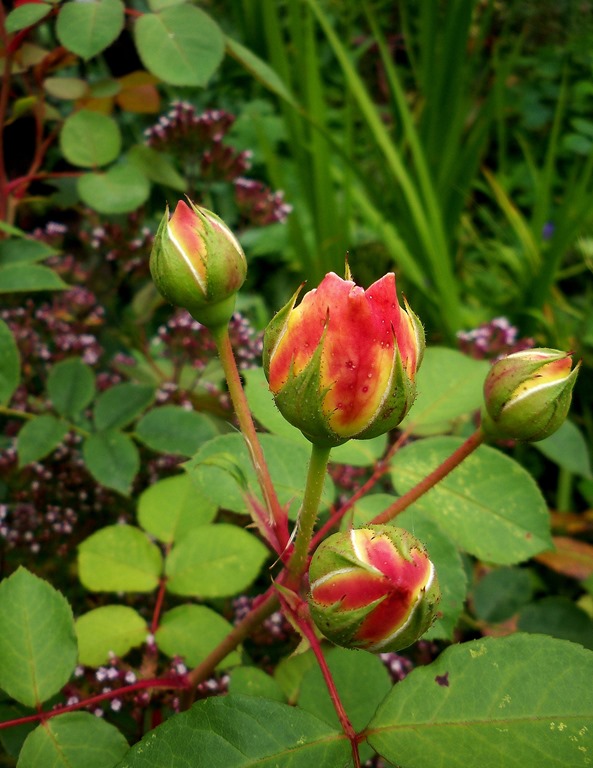
Growing in the bed just behind Apple Blossom, you can see Teasing Georgia. She’s in bud again too. This is such a lovely rose, and opens into dense whirls and whorls of pale gold.
I’m hoping she’ll open before the weather turns weirder than it already is. Forecasters are now promising us the coldest winter ever. But endlessly prone to optimism, I’m further hoping that this is the same order of forecast that in March promised us a barbecue summer and drought. (Hands up all of you in England who managed to fit in more than one barbecue between the wind and showers).
Our garden is all over the place and on different levels. This is because circa 1830 the house was built into a steep bank between the field behind, and the road in front. Later occupants then dug out a rear yard, and added a tall terrace bed, and behind it, a high retaining wall.
I have yet to get to grips with gardening in so many dimensions, which is why I rather depend on the garden to follow its own design. I also notice that it is devising its own timetable. For instance, what does this June-blooming foxglove think it is doing amongst the late summer rudbeckia?

Just to the left of the foxglove is the dead head of meadowsweet. It has a pink flower, which also surprised me this year. This is something else the garden has come up with: creating (somehow) a very vigorous hybrid from the original wild, and cream-flowered meadowsweet that I originally planted.
I shall definitely encourage the new version, and plant out any seedlings. It is a statuesque creation, very tall, and softly scented. Also Meadowsweet, apart from being used to flavour beer and deserts, has its place in Welsh legend. In the Fourth Branch of the Mabinogi, the 11th century transcription of age-old tales, there is the dark story of Blodeuwedd (flower-face), a beautiful woman created by the magicians, Math and Gwydion from the flowers of oak, broom and meadowsweet. The tale does not end well. Blodeuwedd (pronounced: blod-EYE-weth) is also the name for owl, a fact, along with a reworking of the Mabinogion story, that was famously explored in teen fiction by Alan Garner in The Owl Service.
And thinking of flower-faces, here are two growing in a pot by the old privies (now our two dysfunctional garden sheds – i.e much head-banging on lintels, followed by standing in one’s own light so you can’t see what’s in there). These sunflowers have taken ages to come out, but it’s nice to see them at last, and especially now the real sun has gone away. It’s hard not to smile back at them, isn’t it?

Happy Wednesday!
Inspired by (but with added fruit) Cee’s Flower of the Day
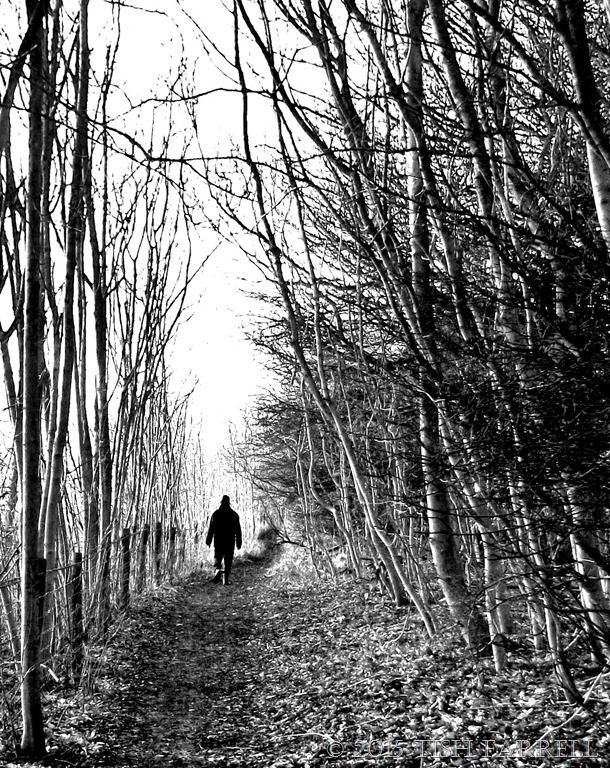
Beautiful in Black & White ~ Wenlock Edge in Winter

Connected, on and off the rails: a passion for steam
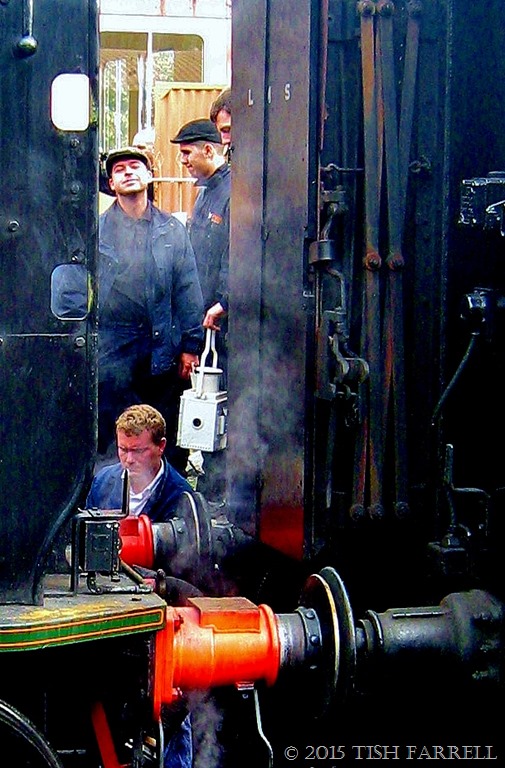
This year Shropshire’s Severn Valley Railway celebrates 50 years as a tourist attraction. That this 16-mile remnant of an 1862 main line railway is still up and running is due to the efforts of several generations of steam engine enthusiasts who lobbied, fund-raised, rescued and restored old rolling stock, and then threw the lot open to a willing public that now loves to spend its spare time watching and riding on steam trains. I mean who wouldn’t want to catch the Santa Special? If you’re up for it, I should tell you that advance booking opens on September 14th.
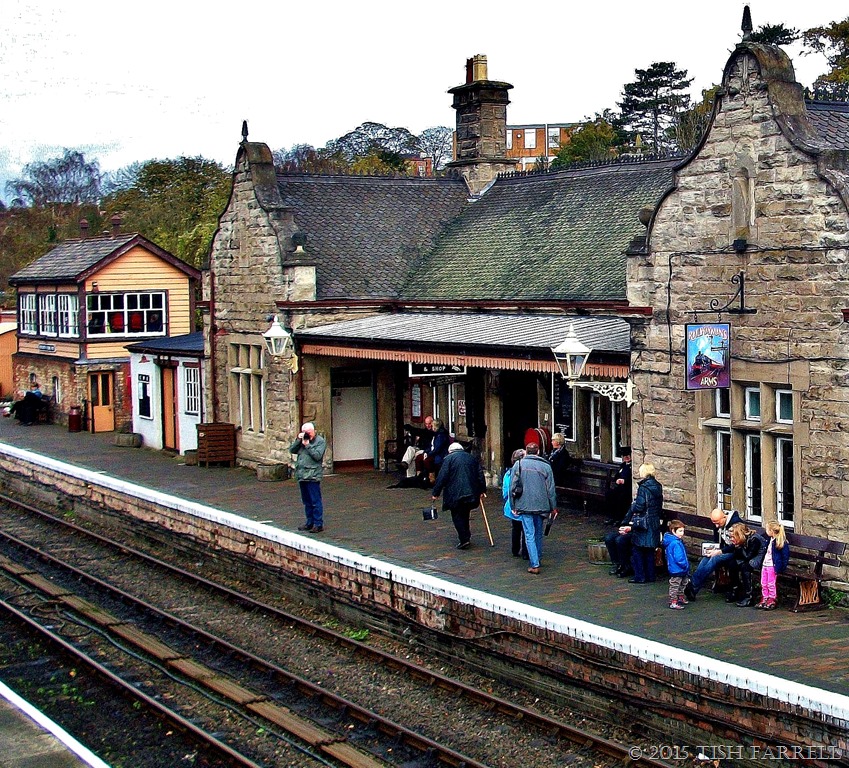
These photos were all taken back in the winter at Bridgnorth Station, our nearest market town, and the railway’s terminus. Graham was there on a mission – to look at rivets. I was just there to savour the steam. Aaaaah. Oh yes, and to take snaps. But perhaps I’d better explain about the rivets.
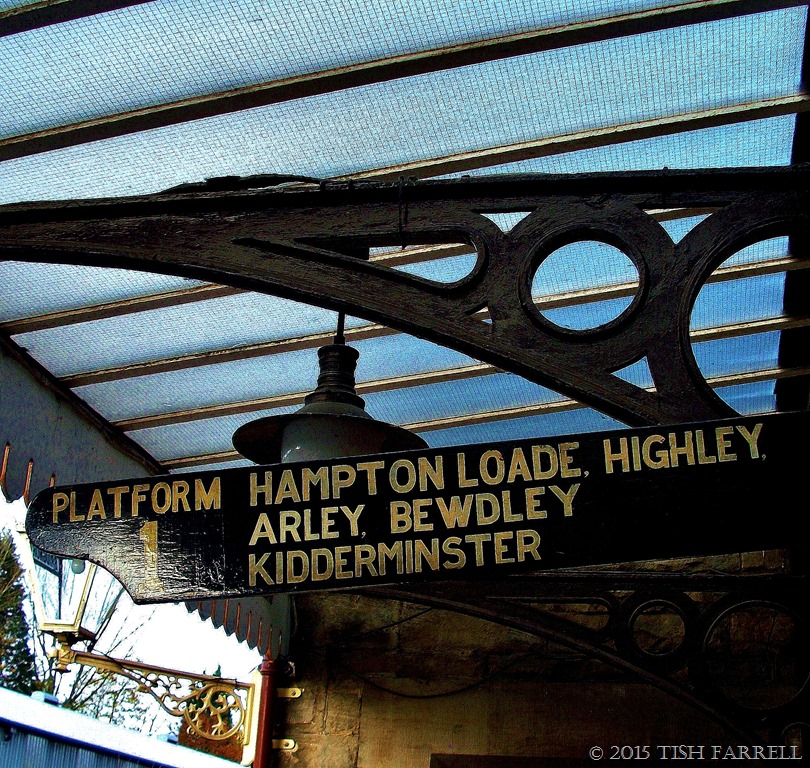
First a little back story. Rewind 153 years…
In 1862 a branch from the original Severn Valley line was built through Much Wenlock. Mainly it served the limestone quarries, but at Whitsuntide, the Great Western Railway put on special trains to bring thousands of spectators to see William Penny Brookes Wenlock Olympian Games. Conveniently, the station was right beside the Linden Field where the games were, and are still held every year.
And because it was Wenlock’s William Penny Brookes who inspired the notion of the modern Olympic Games, and because we are proud Wenlock residents, some time in 2011 Graham had the idea, as a de-stressing pursuit, and as his own celebration of our town’s connection to the 2012 Olympics, to make a gauge 1 model of the ‘Olympic Special’.
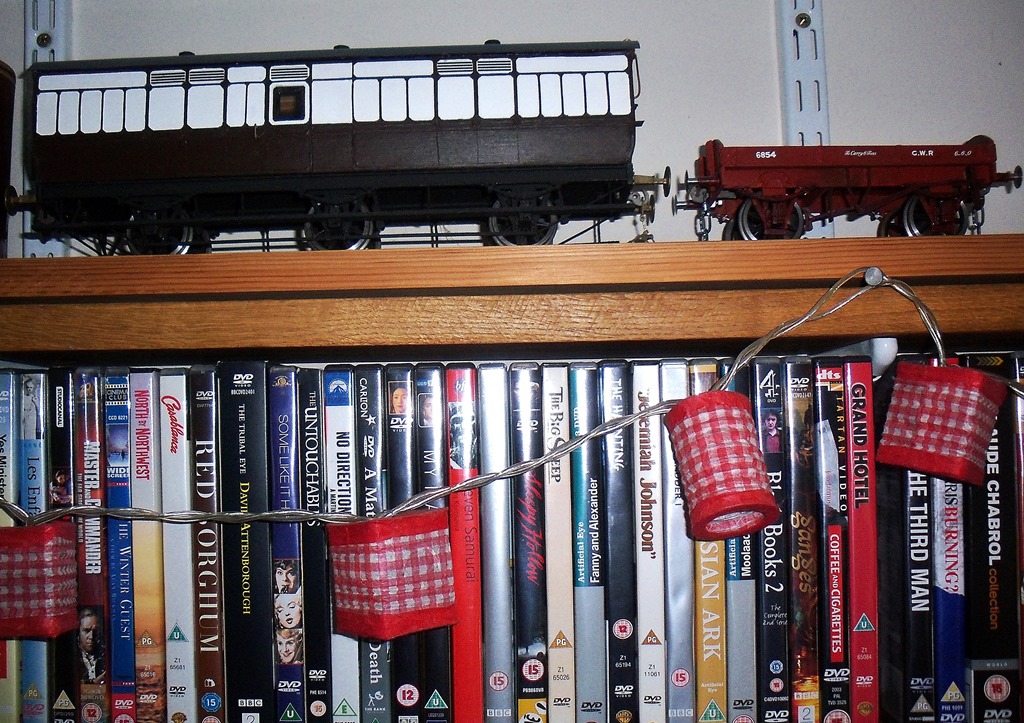
This resulted in the creation of very pleasing passenger carriage, and a goods waggon that was the original practice piece for the enterprise. The superstructures of both were made from scratch, following some 1860s plans that Graham had unearthed. I don’t remember where he found them. But then came the stumbling block – the locomotive itself.
For this, he would need equipment he did not own, and skills he did not think he possessed. Ever since he has been pondering on how to set about it, egged on by our good neighbour, Roger, who does have handy engineering skills. Part of the on-going pondering included first-hand experience of GWR engine rivets so that Graham could judge the scale of them. And who am I to throw cold water on a chap’s enthusiasm.
Besides, as a child, I spent a lot of time on steam trains, and more specifically waiting to catch one on Crewe Station. And anyone who knows their railway history will know that Crewe Station, built in 1837, is one of the world’s oldest stations, and that its junction was once a thing of railway wonder. So, all in all, I was glad to tag along on the boiler rivet hunt, and thereby have the chance sniff hot coal and engine oil, and look at rust on old locomotive hulks. Graham always claims I was born on the foot plate. And no. My father was not an engine driver.

*
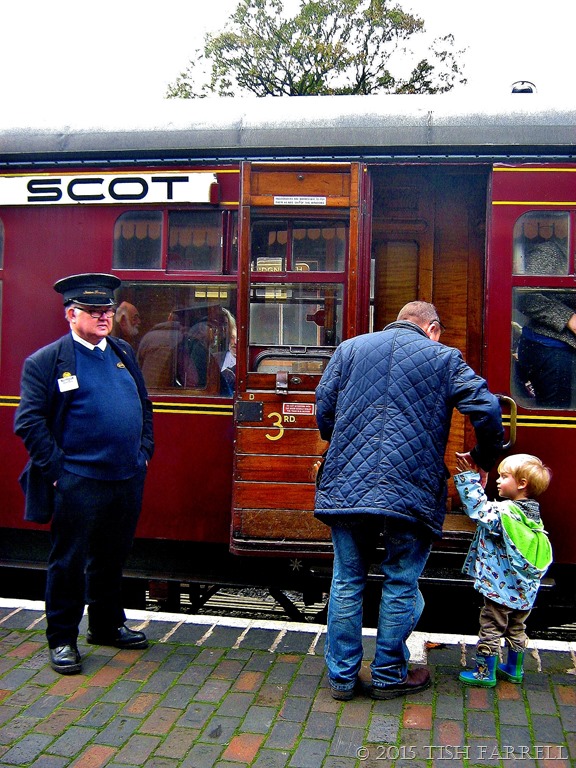
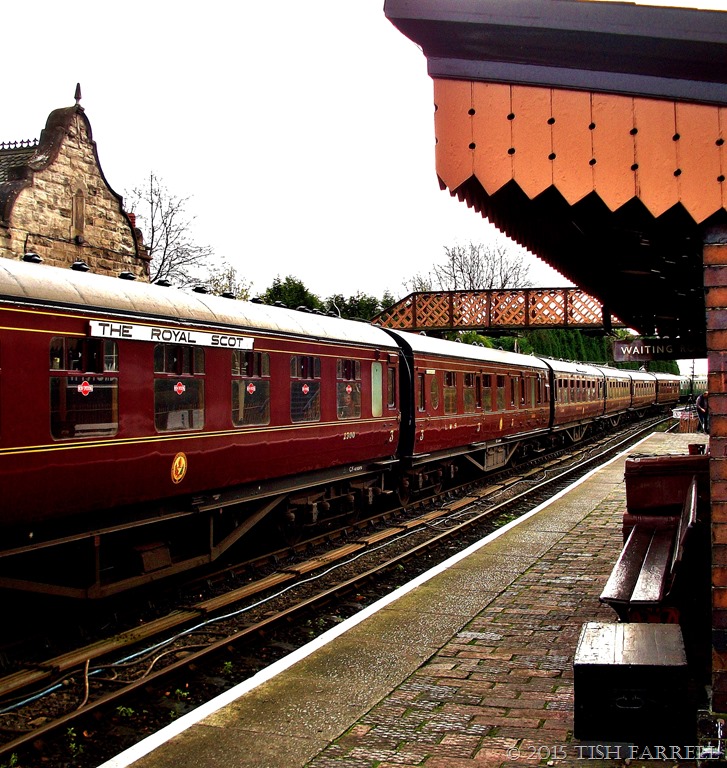
Also it was good to watch the happy voyagers waiting to embark on The Royal Scot…
*
And finally that brings me to the work in progress. It’s sitting over the DVD/CD shelves in the kitchen, waiting for an 1860s vintage locomotive to take it away. Passengers please take note. This train may not be leaving until the advent of the next Olympic Games. Graham says it’s good to have a deadline…
copyright 2015 Tish Farrell
Severn Valley Railway Go here to find out more about the SVR
#SVR #SevernValleyRailway #steamrailways
One thing leading to another on Windmill Hill: everything is connected
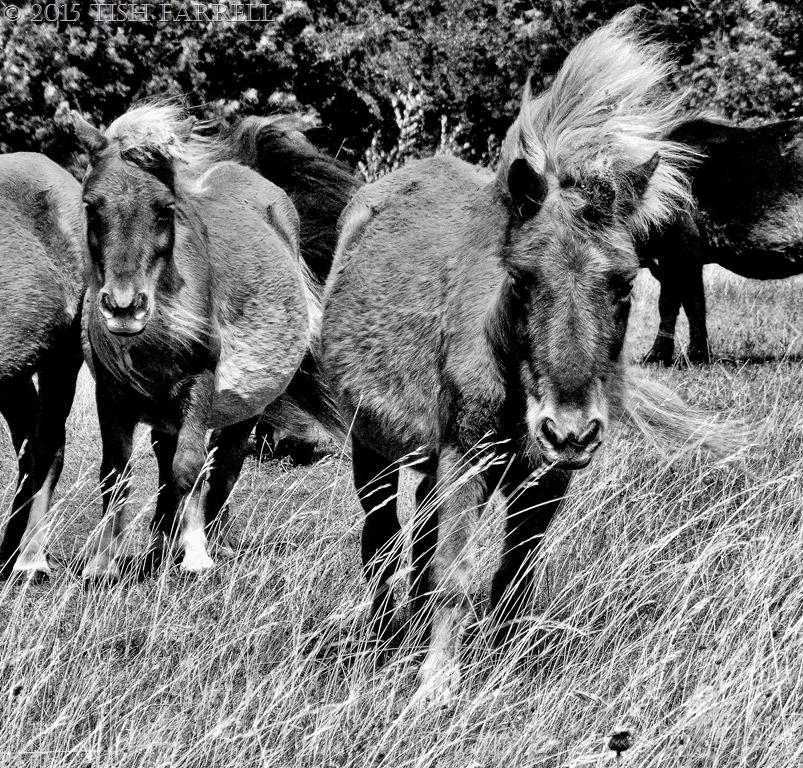
We’re barely into September and already autumn is here in Shropshire. It must be so, because the little horses are back on Windmill Hill. They will spend the next few months grazing off the dying summer grasses and wild flowers. They look very windswept, but the punk-mane-effect is mainly down to thickets of cleavers (goose grass) seeds in their top knots.
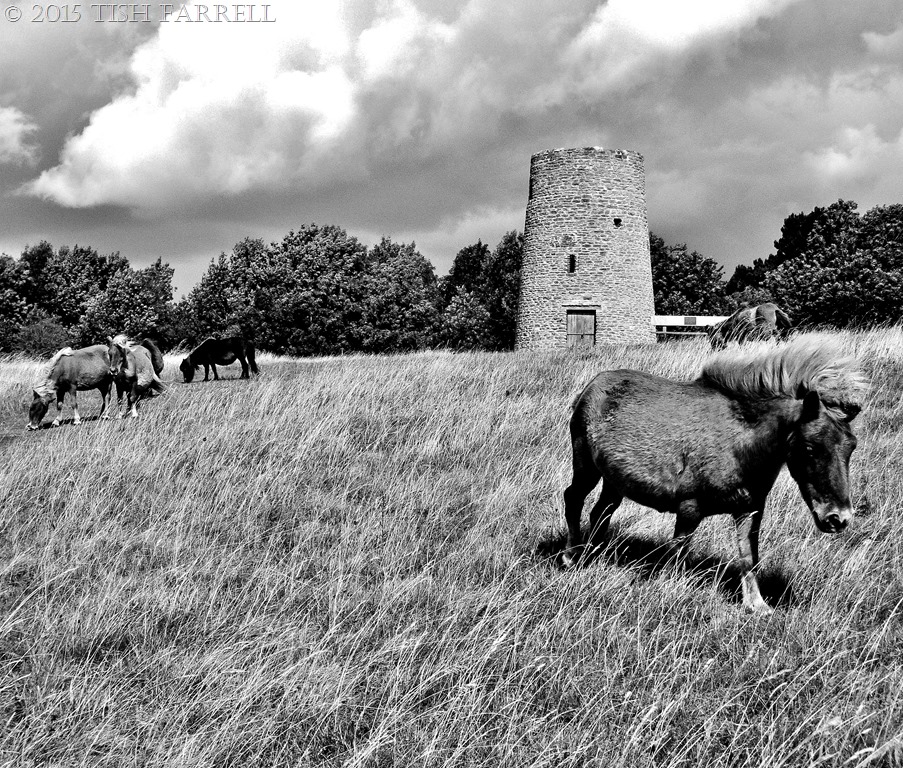
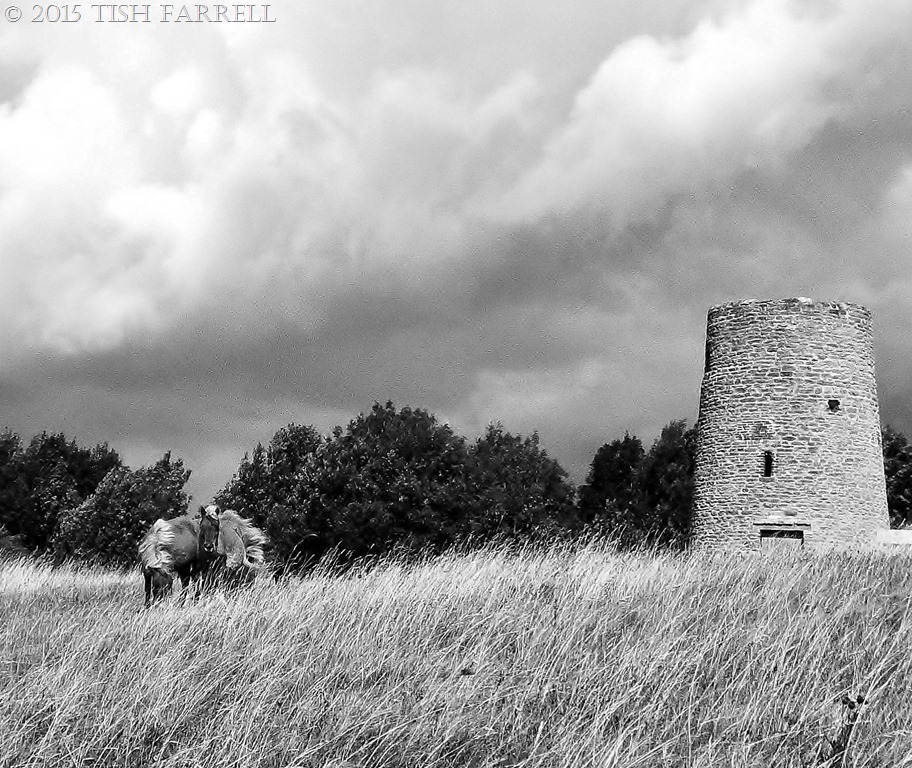
Looking across the hill there’s hardly a sign of the June-July flowering – all those buttery clouds of Lady’s Bedstraw quite gone. Not a trace of the orchids either. Only the dark and brittle seed heads of knapweed that always strike a note of dreariness. The weather doesn’t help either. For weeks it has been rain between showers.
Nor was I encouraged by the BBC radio science programme I heard yesterday. I caught it in the midst of recompiling a glut of runner beans into chutney (beans at least like rain). The guest climate experts were soon informing us that the El Nino effect they promised us all in 2014 did not come to much. In fact, they opined, (and they sounded quite definite about it too) we still have it very much to look forward to – the worst El Nino effect hitherto experienced, they said. For some reason the Pacific Ocean keeps heating up. And this means disrupted weather patterns worldwide, and for Europe, an even wetter winter than usual.
MORE RAIN? I wish we in Shropshire could email some of it to those lands whose dramatically changing climates mean that they now receive little or none. Mongolia is one place suffering massive desertification. Likewise, the countries of Africa’s Sahel that border the Sahara. In both regions, and many others besides, human actions, poverty and climate shift combine in a vicious downward spiral that results in increasing degradation of land and water sources. This, apart from war, is one of the main drivers of human migration. It’s all connected, despite what the climate change naysayers may wish to believe.
All of which is to tell myself to count my blessings. I am free to wander where I like without fear of being terrorized by extremists. I have all the food I need and more. I enjoy every comfort. I have the luxury to meander along Shropshire byways, talking to little horses, musing on the meaning life, the universe and everything, while across the globe desperate others risk all to find somewhere they can live a decent life with their families. Some people, we hear, do not want to share their land with refugees. It is assumed that they will be nothing but a drain on resources. Yet who knows what gifts in talent and skills these homeless souls might be bringing us? Also, not sharing may cost us more than we could ever imagine. In some societies the truest measure of civilisation is the gift of hospitality. Perhaps we need to think about this with a little more application. At least, I know I do.

copyright 2015 Tish Farrell
Help, Mr. King! My polytunnel needs editing

I have written elsewhere how gardening and writing become mixed up in my life. But just see what happens when you don’t rein in your gardening writing, when you let your setting run riot. Words, like plants, need a certain space to perform well; to be the stars of the show; to say their piece effectively.
I never intend to over-create. In fact my internal critic warns against it, whether gardening or writing. The polytunnel mayhem is of course easily explained: I simply had to plant out every last tomato seedling. How could I not, when I had nurtured each one through the cold spring months that seemed never ending?
All I can say if you write like this, and then don’t engage in some ruthless excision tactics, you will not be able to find the tomatoes for the overgrowth.
On the fiction writing front, Stephen King (On Writing: A Memoir) would call this kind of chaos “a thicket of description”. It’s what happens when writers become too attached to the minutely researched details of their setting, and then feel they can’t sacrifice a single beloved element.
It can also happen when you start a story in the wrong place, and then flounder about trying to write yourself to the right place. It’s like planting all your tall-growing tomato plants at the front of the bed, and then wondering why you, or anyone else can’t see what’s going on behind with short varieties. This, then, is also a setting problem: you have not planned the planting scheme and stuck to it (more or less).
All of which is to say, there comes a point when you have to take out a whole batch of words and shoot them – this so the survivors have room to expand and thrive (the excess tomato plants you could of course give to someone else.)
Stephen King explains the situation further (pp 138-9). He gives an example of using a real location as his setting for a piece of narrative, in this case the Palm Too restaurant in New York. It is somewhere he knows. As he starts to visualize the place, he summons the first four things that strike him. These, he says, are likely to be ‘the truest and the best’ details. He also says he can make up a few other things too, but there is really no need for more:
“This isn’t the Taj Mahal we’re visiting…and I don’t want to sell you the place…it’s not about setting, anyway – it’s about the story, and it’s always about the story.”
Put another way, you could say that fiction writing is never about the writer. To create, you need to GET OUT OF THE WAY. And the better you succeed in this, the better the story. This is not to say that the writer’s experiences and cast of mind do not inform/infuse the narrative, but think conduit and transit time, rather than compendium drag.
Words are fiction’s conveyance to transport readers out of themselves and into the lives of others in new/penetrating/exciting /inspiring ways. The words need lift, energy, vivacity. Anything that snags transition must be cut.
This is probably the hardest lesson for the starting-out writer to believe, let alone put into practice. But it is a truism: less is almost invariably more. Not believing this is one of the reasons we have slush-piles, and why publishers now mostly shut their doors to unsolicited submissions. It’s the reason why I have too many tomato plants in my polytunnel, when I could have made the best of, say, half a dozen of the strongest plants.
But then as Stephen King advocates, practice (lots of practice) will yield improvement. So I vow to improve in my prose and in my planting. For now I leave you with Mr. King’s brief words on the means to create viable settings:
“The key to good description begins with clear seeing and ends with clear writing, the kind of writing that employs fresh imagery and simple vocabulary.”
 N.B.: use only the brightest and the best tomatoes, and not too many.
Happy writing!
Related: Errant muse? But there’s still life at the allotment
copyright 2015 Tish Farrell

Secrets, conspiracies, tragedy, dark comedy
– a fast-paced novella of interwoven tales
set somewhere in East Africa
