Traces of the Past ~ Tools Of My Grandfather’s Trade

P1060192 - Copy

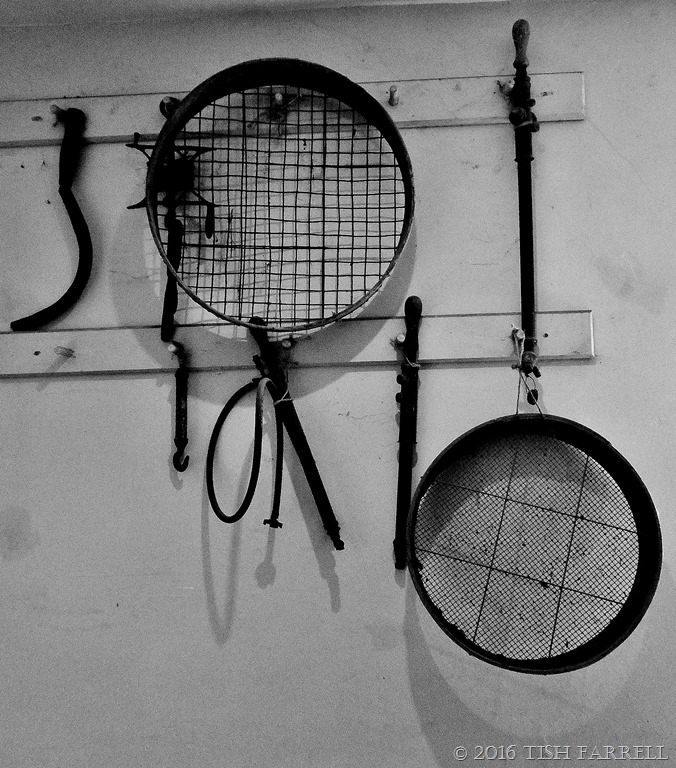
I hasten to say these are not my grandfather’s actual tools, but when I spotted this gardening paraphernalia in the gardeners’ bothy in the walled garden at Attingham Park yesterday,  I instantly thought of Charlie Ashford. He was head gardener at Redhurst Manor in Surrey from around 1921. I have written about him in the Tales from the Walled Garden. The links are at the end.

Attingham is one of Shropshire’s grandest stately homes, once home of the Berwick family, but now in the care of the National Trust. I did have photos of the house, taken on an earlier visit, but the computer seems to have eaten them, and yesterday the walled garden was my only objective. There has been a monumental restoration project going on there since 2008, and this was our first visit. (Always the same with places on the doorstep.)

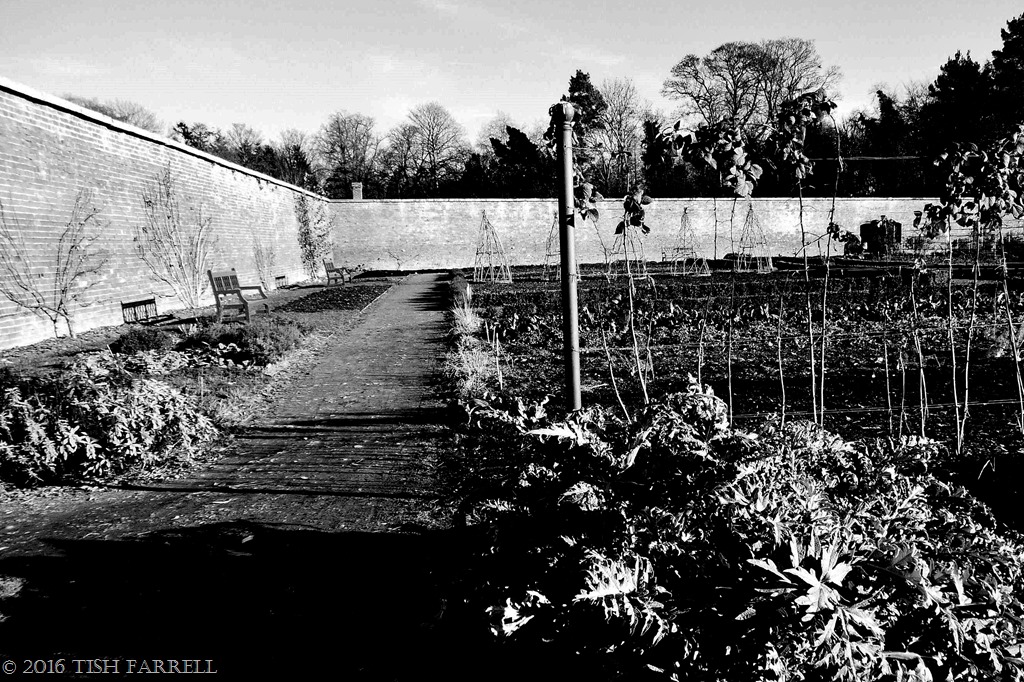
I think this is probably the hugest walled garden I have ever seen, and I truly cannot imagine why one household would need to produce quite so much food for itself even if it did include feeding all the servants. Here is one corner:
P1060183

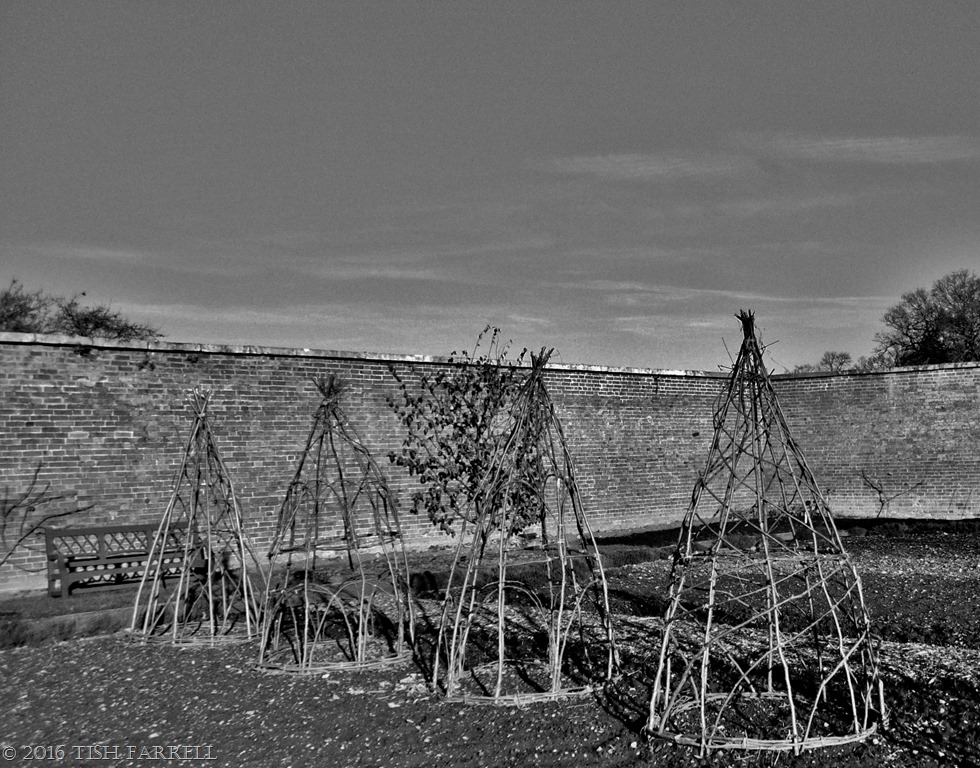
And yes, it was perverse to chose December for our first visit – a time when there is hardly anything growing. However, I was very taken with the climbing bean frames, just visible towards the back wall. Here’s a better view. I think they’re made from hazel whips. Ideal for sweet peas too.
P1060181

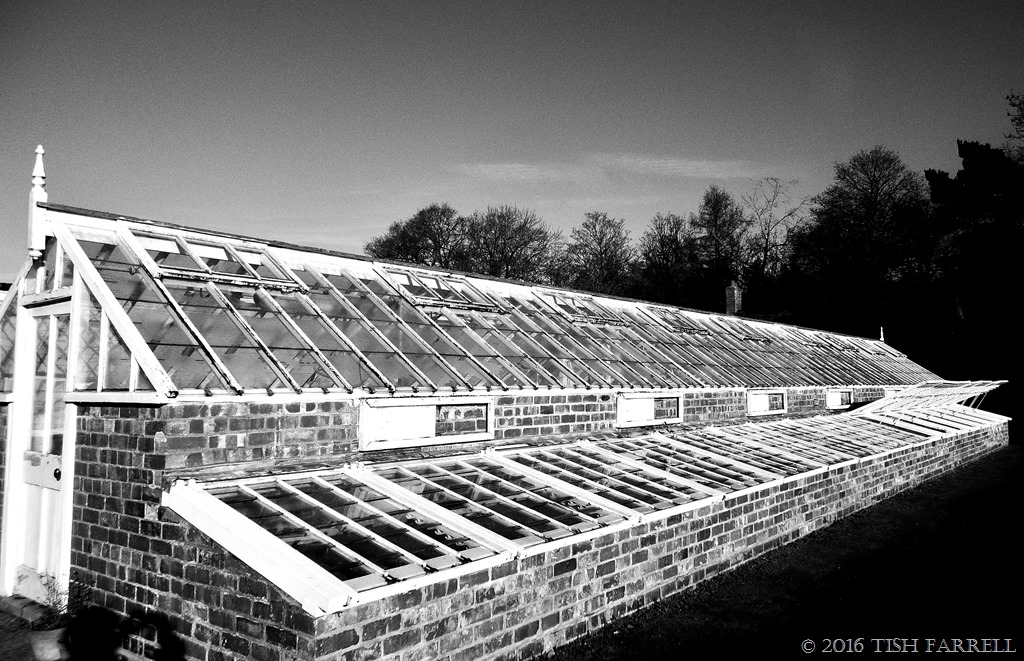
The path  around them leads to an adjoining much smaller walled garden. This is where we found the gardeners’ bothy, cold frames and glass houses, hot beds and hot walls – the kind of territory wherein my grandfather spent much of his working life:
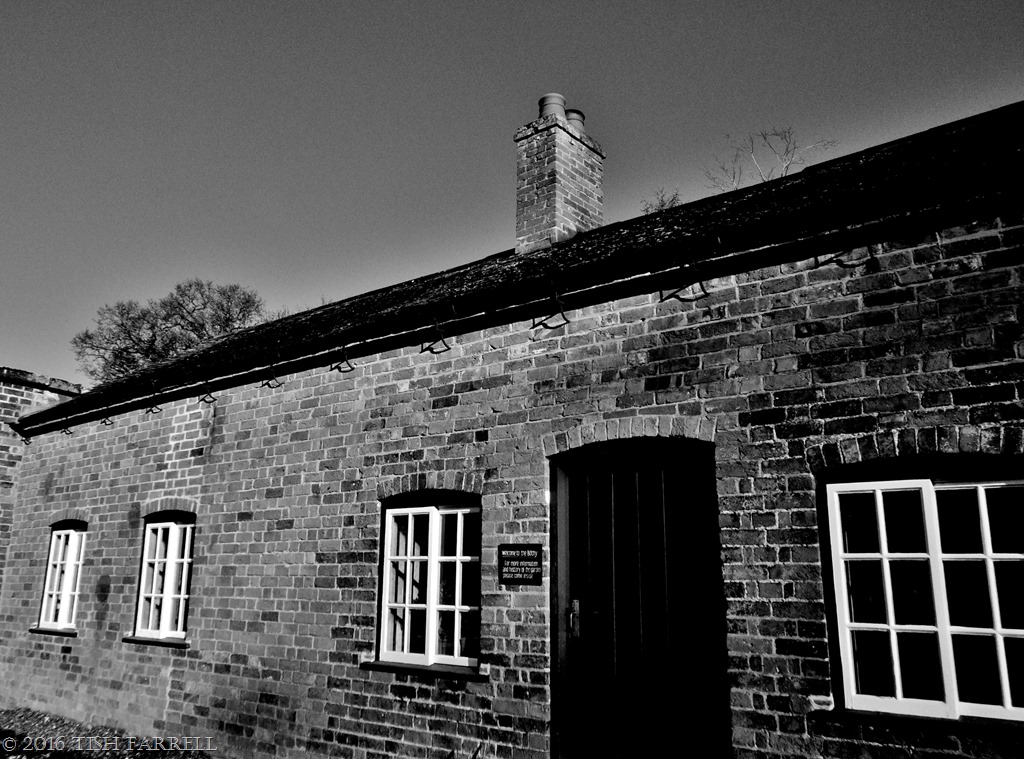
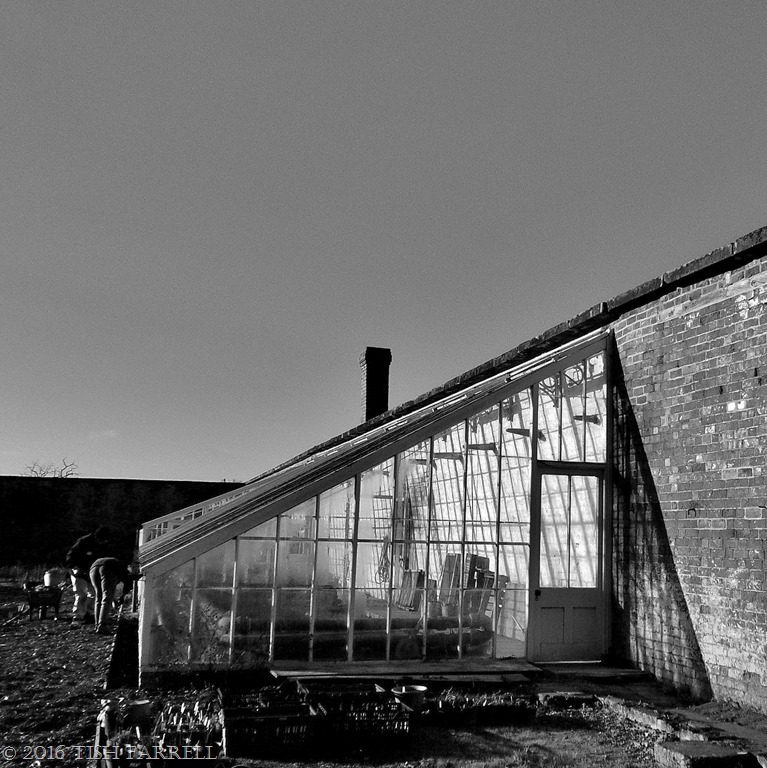
P1060188

P1060189

P1060186

Charlie Ashford served his apprenticeship in an establishment as grand as Attingham. The position of head gardener was akin to the role of butler within the house. The training was long and there was a strict hierarchy of under-gardeners and garden boys. Redhurst, though, was a much less grand affair – a modest country manor by comparison. You can see it in the background in the next photo – grandfather in the dahlia and delphinium bed. IMG_0012
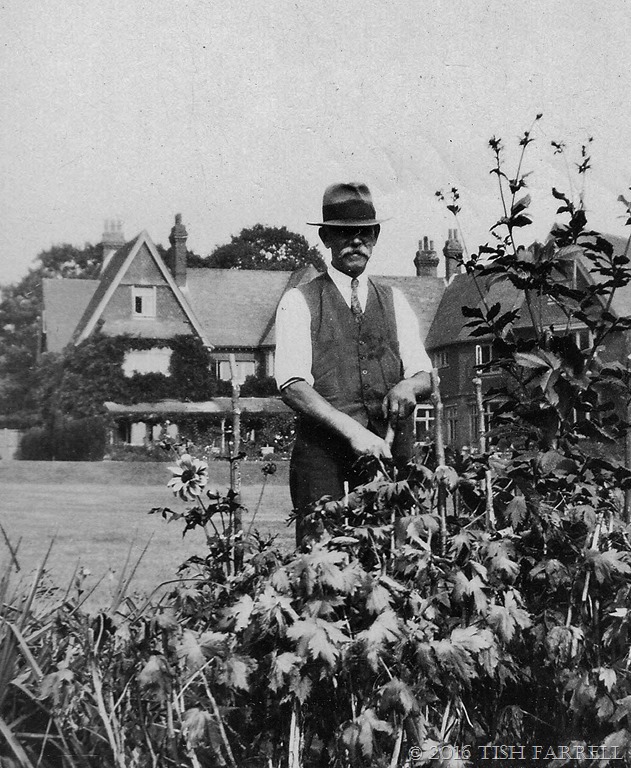
And here’s a glimpse of his working life from one of the talks his daughter, my Aunt Evelyn, gave to her gardening club. She was born in the gardener’s cottage at Redhurst and spent her earliest years in the garden there. I’ve posted excerpts before, but this is a longer version:

Imagine that we are standing in the holy of holies, my father’s potting shed. It was not all that large and the space was taken up with deep shelving on three sides of the shed. There was a door into the kitchen yard and another into the garden itself. On the back of one door were three large coat hooks to take the jackets that my father needed and also his green baize apron. On the other door hung his clean alpaca jacket which was worn when he went into the house, a dust coat to be used in the fruit room and his leather pruning apron with its thick, left-handed coarse leather glove sticking out of the pocket. These garments comprised his head gardener’s uniform; there was almost a ritual about putting them on for the various tasks.

My father’s own tools were hung in neat and spotless order on hooks to the left of the garden door. He insisted on clean tools and, after every task, the men had to be sure to wash, and then rub dry on old sacking any tool that had got even the slightest bit dirty. A little spot of oil was rubbed into the spades and trowels and forks until the metal shone. Wooden handles were treated with linseed oil which was thoroughly worked in. Only then could the tools be stored away. That is why probably to this day I am still using a well worn spade and fork that belonged to my father. There have been times when, if in a hurry I have hung my spade up dirty, I have gone scurrying back to give it at list ‘a lick and a promise’. I can almost hear my father saying, ‘That won’t do, miss. Dirty tools make bad workmen.’

The potting shed was filled with a wonderful mixture of smells of the sort you find in a ‘20s hardware store. Tarred string was the main one. Then there was the strange jungly smell of the raffia hanks hanging on the door. It suggested faraway places. There was bone meal, fish meal, sulphate of ammonia, Clays fertilizer, Fullers Earth, Hoof and Horn – everything to help bring in good crops – and all stored in wooden bins with brass bands and rivets and a wooden bushel or half-bushel measure on top.

*

There was the annual ritual of sowing seeds for vegetables, preparing the asparagus beds, pruning and shaping the fruit trees, getting the cold frames ready, going over the tennis courts to prepare them for the summer season. There would be glass to replace in the long glass-houses or hot houses. The herbaceous beds required a lot of work in autumn: overgrown plant clumps to be carefully split and replanted, all to be mulched with well rotted manure from the stable yard, or a sweeter mixture of well rotted compost and peat for plants that did not like manure.

Wages were low, and hours were very long, but there were seldom any complaints. Early in the year one man would be set the task of planting out young tomato plants in one section of the glass house. In another section another worker might be potting up seedling chrysanthemums. And so the cycle of work went on.

Dad had his own specialist greenhouse in which he grew plants for the house. Primulas were a particular speciality but he was careful to see that whichever of his men was put to work here that he was not allergic to the plants. Primulas can secrete a substance from the leaves that causes a painful and persistent rash not unlike shingles.

The kitchen garden was walled on three sides by a wall at least eight feet high. On the south side was some rustic fencing over which climbed roses, clematis and honeysuckle – all in a tumbling profusion that looked natural, but was carefully managed throughout the year.

Much of the equipment that the men used was made on the estate. There were sturdy wooden wheelbarrows made in the wood yard behind the stables. The wheels turning at a touch with never a squeak allowed. On busy grass cutting days an extra section fitted onto the top of the largest barrows so that the men could trundle the piles of cut grass away to the ‘frame yard’ to be spread on compost heaps there. Here there was also a long low open shed in which all the mowers were kept: a hand mower for paths and border edges; a small motor mower for the terraces and the little lawn areas; a large sit-on mower for the long stretches of lawn and the rough grass places; and a huge wide mower with a heavy roller, which a horse from the home farm used to pull across the beautifully kept lawn at the front of the house.

Cucumbers were also grown in the cold frames and never cheek by jowl with tomatoes in the hot house. It was a job for two men getting the frames ready early in spring. The frames were built of brick with solid wooden supports or runners to hold the strongly built wooden lights. When I was older I could just about help my father to open or shut the frames. It was important to keep the cucumbers at just the right heat and to give them sufficient ventilation. Grown like this they always tasted succulent. This was not surprising as they were grown in a deep, deep bed of well rotted stable manure mixed with peat and compost and leaves – anything to make the mixture ‘hot’.

Thinking back on the work done in those gardens everything had its use and nothing was wasted – especially time.

At the big house, it was important that gardeners should maintain a succession of lovely flowers – all year if possible, and especially those with scents. As soon as anything special bloomed, like Winter Jasmine or Viburnum fragrans, a spray or two went into the house early in the morning for madam’s breakfast tray, or the desk in the Major’s study. This was quite a ritual. Into the house we would go, but not into kitchen because that was Cook’s domain. We go around the house and in through a side door and into the Butler’s Pantry. Here Johnny the Butler ruled supreme. When we arrived with Dad’s offering for the day, the exchange would go something like this.

“What have got today then, Charlie? Do you want two silver holders or one cut glass?”

“Oh, I think two silvers, please, Johnny. I’ve got some fine sprays of Winter Jasmine.”

Then Dad would take the delicate sprays from the shallow basket that he always used and arranged them in the vases with great artistry. Thanks for such offerings reached him without fail: “Please tell Ashford that the flowers were just what madam likes. The colours matched her dress today.”

Evelyn Ashford Gibbings

Tales from the walled garden

Tales from the walled garden ~ back to the potting shed

Tales from the walled garden ~ when Alice met Charlie

Tales from the walled garden ~ more about Alice

*
Black & White Sunday ~ Traces of the Past

Echo Of Time Past ~ Hunter’s Lodge, Kiboko

IMG_0024

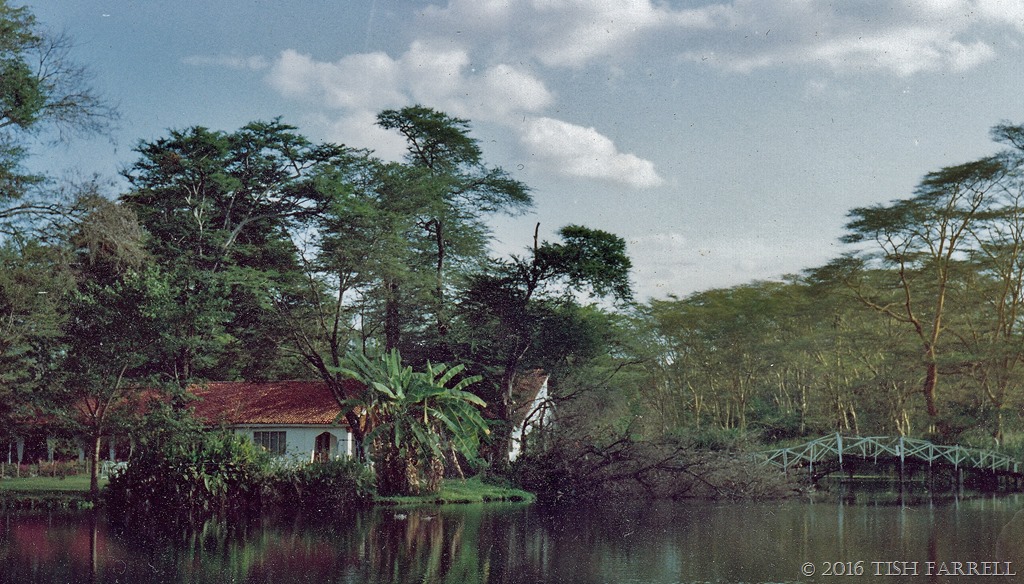
I’ve not done an Old Africa post of a while, and this photo is rather the worse for wear. But perhaps that is fitting in all sorts of ways.

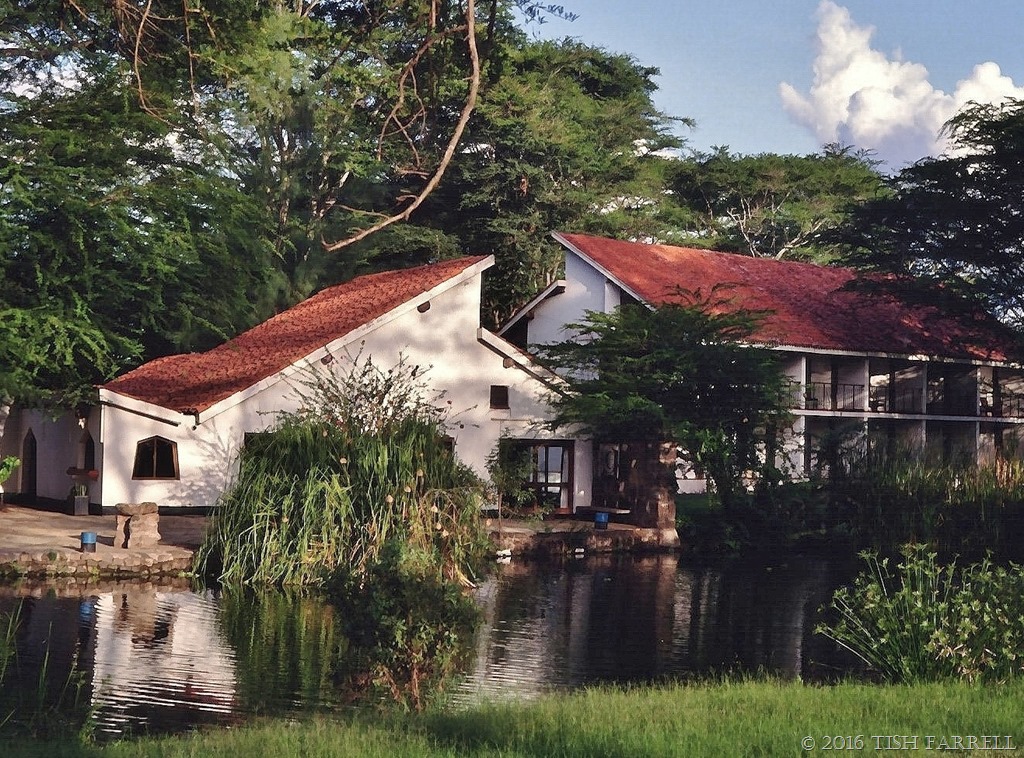
I also thought I’d post an excerpt from our 1990’s travels in Kenya – an account written not long after my arrival in 1992. During the eight years we lived there, we had many sojourns at Hunter’s Lodge on the Nairobi – Mombasa highway. Graham was overseeing a research project at the nearby field station and had to make regular visits. The Lodge had been built by great white hunter, John Hunter, around the late ‘50s – early ‘60s – his retirement home after a long career of game control, grand safaris and general  rhino and elephant slaughter.  He saw no irony in choosing a spot that had once been his favourite place for watching elephant at a sunset waterhole on the Kiboko River. He dammed the stream to make an ornamental garden lake for his guests’ pleasure. And instead of elephant, the place attracted a marvellous array of birds. The soundtrack here, then, is endless weaver bird chatter in the papyrus, and the clatter of stork beaks up in the fever trees. Oh yes, and the nonstop whine of crickets…

*
Monday 17th February, my two bags packed once more and Graham’s few belongings assembled, we set off for Kiboko. Although it was still early morning, the sun was already beginning to scorch my arm through the open car window; sweat trickled down my spine. But I was pleased to be on the move again; and Graham, who was watching me from the side-lines – to see how I would react to a new land, confined himself to saying that he hoped I would like the lodge where we would be staying for a few days.

I imagine I will, but at that moment it was not my main concern. I was excited at the prospect of my first safari. Too opulent a term for us perhaps, conjuring up an entourage of well-provisioned trucks each manned with a local African guide and tracker, bullish Europeans in khaki shorts, legs the colour of seasoned olive wood above long woollen socks, bush-hatted and safari-jacketed, a powerful rifle to hand to fend off attacks by a raging buffalo. But no, there was none of this; just a couple of bags and a few supplies for the field station in the boot of a modest Peugeot saloon. And anyway, in Swahili safari simply means journey, and so it was the journey itself that I was looking forward to, even if it only involved a few hours’ drive down the Nairobi-Mombasa highway.

We left the city by the same route I had come from the airport two days earlier. Now I could take it in with a more focused eye: the newspaper and magazine sellers out in force, and stepping between the traffic with all the ease of those who have taken up walking the plank for a living and survived to tell and retell the tale; the avenues of yellow blossomed acacias; the screens of puce pink bougainvillea; palm trees; throngs of citizens everywhere, waiting, milling, buying, selling, chatting, reading, walking; the welter of city centre multi-storey office blocks in as many styles, from oriental chic to Dallas smoked glass; the air heavy with dust and oily exhaust fumes and the smell of roasting maize cobs.

And as we head south out of Nairobi, through the flatlands of the industrial zone you feel that you could be leaving any city anywhere in the developed world. There is a Slumberworld bed centre, another for well-known names in bathroom and sanitary ware, a detergent factory, a Toyota showroom, a cut-price cash-and-carry warehouse, builders’ yards, air freight offices, the outposts of many a multi-national company, all neat brick buildings flying their corporate banners behind well-tended and irrigated flower beds.

At this point, you can only just glimpse the plains beyond. It is easy to think you are on familiar territory: the industrial estate, a modern major thoroughfare with white lines, UK road signs, traffic police operating speed traps, Esso service stations, driving on the left. The British-born may believe too quickly that they know all the rules, the received codes of behaviour that pertain here. After all, it did used to be “ours”; you would expect some sense of familiarity.

Or would you? The British of old empire days were not overly concerned about establishing decent infrastructure in the countries they colonized (“standards” maybe) beyond building railways to ferry their administrators and export their hard-won commodities, or erecting imposing edifices that represented the institutions of law and taxation used to control indigenous peoples, who though in their own land, found that it was no longer theirs. And so, having built the Uganda Railway across Kenya Colony, the British seem to have fallen short when it came to road building. For much of their sixty-year stay, the road between Nairobi and Mombasa port was three hundred miles of gut-twisting dirt corrugations that, if you were lucky, took a day and more to traverse. It was only on the last lap of occupation in the 1960s that the tarmac was laid, reducing journey time to a mere seven or eight hours.

And so quite quickly I see that we should not set too much store by apparent similarities, and the seeming familiar artefacts. The things that we British recognise now in Kenya are not necessarily the issue of what we left behind. Or, if there are remnants of our abandoned institutions, then it does not follow that they have exactly the same meaning or function for modern Kenyans. Therefore, lest they lead us astray or cause us to make wrong assumptions, we should ignore their supposed messages altogether; think of them as laying a false trail, for this is Africa and, as the locals would often tell us, anything can happen here.

It soon becomes apparent, too, that when the highway itself was being built, every effort was made to ensure that the ‘surface’ went as far as possible. There is only a thin skin, a makeshift causeway to hold the bush at bay. And while some stretches have been recently upgraded, for the most part it is rag-edged and pot-holed and, south of Nairobi, gives way altogether to a several mile detour on dirt road.

And even though it is not a busy road by European standards, it is one of Africa’s major transport routes, the main users being massively laden freight lorries hauling their own weight and the same again in trailers hitched on behind. Bales of iron rods from the Mombasa rolling mills; crates of Tusker beer; petrol in rusty tankers as battered and misshapen as badly squeezed toothpaste tubes; cargoes of maize; transporters filled with new white Japanese cars. That their drivers think they will ever make it to Uganda far to the north, or to Zambia way down south through Tanzania, or even to the next market pull-off twenty miles away often seems to be an act of supreme faith. Many of course do not survive the test, but are pulled off the road, the cabs bowed to the ground like broken-winded beasts, their drivers sprawled out asleep between the wheels to avoid the sun’s glare while waiting for rescue or inspiration.

***
Much of the first hour out of Nairobi was thus spent leap-frogging trucks, and it should be said that African lorry drivers are very courteous, using their right indicator if it is not safe for you to overtake, the left when it is. Once past, I would watch them in the wing mirror, grinding along slowly in our wake, their exhausts billowing out evil-smelling clouds that lingered in black fog banks for many yards behind. But we were out in open country now, to the west the pale grasslands of the Athi Plains extending and merging into the distant blue horizon, to the east and south the land falling away into thorn scrub valleys, undulating hills and blazing outcrops of red igneous rock.

There were problems of perception here as well. The landscapes which the road bisects are on too vast a scale to fit a single frame; to absorb. Always too much foreground, so that the mind switches off and dismisses the whole as featureless bush: thorn scrub followed by thorn scrub, stretching as far as the eye can see, across plains that are scarcely interrupted by the scatter of old volcanic peaks – which would be impressive, if only you could find some sense of proportion.

That is one perspective. Another might be to take heart at the sight of so much space, to acknowledge the inherent grandeur of mile after mile of untamed, uncultivated, unbuilt-on land that yields only sporadic evidence of human activity beyond the margins of the road. Yet a third might be to wonder at the apparent absurdity of driving down a main road along with Mercedes, Land Cruisers and BMWs and seeing ostriches loping away beneath the spans of power lines beside the highway, or to pass by a large farm field fenced off against the bush, and to realize that in amongst the well-contained herd of grazing domestic cattle are also Thompson’s Gazelle and hartebeest.

***

Nearly three hours out of Nairobi and we are bowling across the lowland plains, through the large dusty market settlements of Sultan Hamud and Emali. It is much hotter down here and the tarmac, straight and undulating before us, at one moment fragments into a heat haze and in the next, reforms, only to fragment again with each successive horizon. The bush now presses in against the bare dirt verges; it seethes with insect call; a callous thrust of sharp-tempered thorns. Yet not wholly impenetrable for this is Maasai country and, through occasional breaches in the bush, I could see baked terracotta drovers’ trails, worn and smoothed, season to season, by hoof and heel. We begin to see Maasai herders at the roadside too, men draped in their distinctive tartan shuka shawls. Always red.

Lads hare past on bicycles, the shawls now red capes caught up in the breeze and their cattle prods poised in hand as if heart-fired charioteers on the charge. And then there are the women, striding out along the track, tall and self-possessed; handsome heads shaved and dressed with strings of small coloured beads whose blues and greens mean God, and heaven and peace.

But as for us, we were by now hot and wet and dusty; our clothes welded to our backs. As we passed beneath an arch of tall fever trees, the first shade on the road in a hundred miles, we realized the urgent need for coolness; to stop being bounced and shaken and broiled. Only a little further. It was the next stand of fever trees that was to become our landmark over succeeding months. Here the Akamba woodcarvers have their stalls; here is a large petrol station with a cafe that sells bottles of chilled mineral water (the percolated snows of Kilimanjaro, or so the label suggests). This is Kiboko. And this is where we turn off the road for Hunter’s Lodge.


021 - Copy

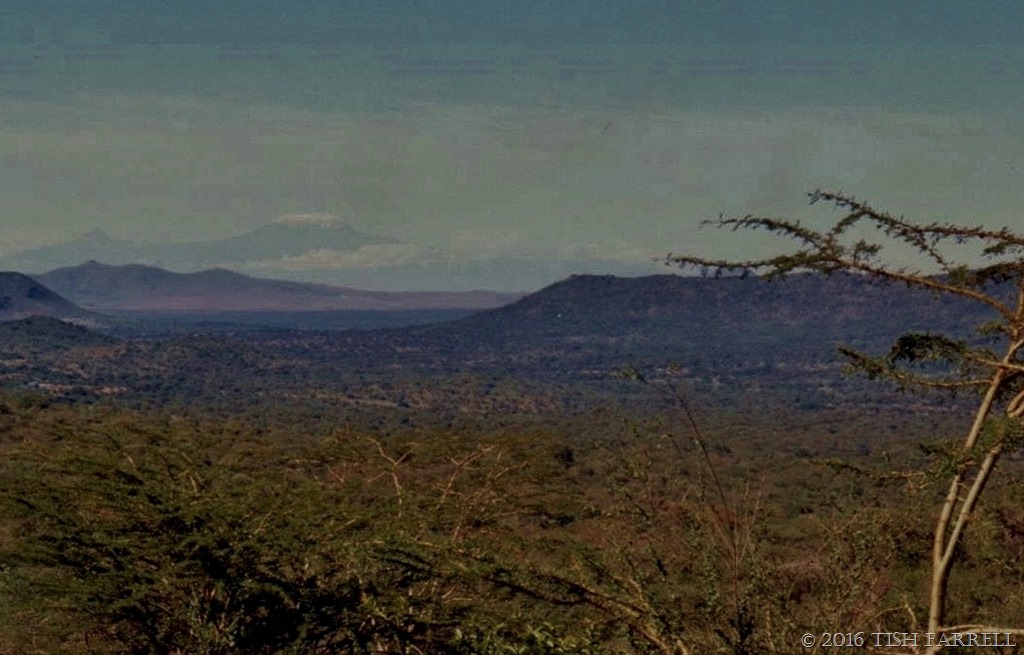
A misty, mysterious Kilimanjaro pushes through the clouds. Its appearances are usually fleeting, caught here from the Nairobi-Mombasa highway, where the road descends to the lowland plains of Ukambani.

212

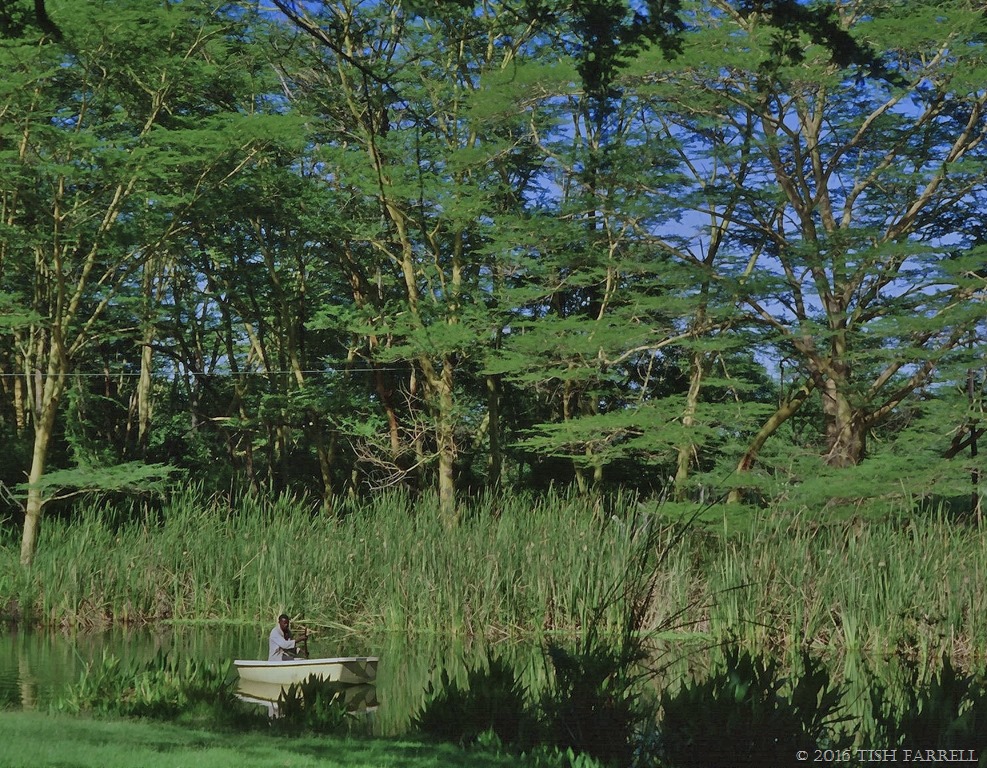
The pool at Hunter’s Lodge – a bird-watcher’s paradise; or just plain paradise. I spent hours just watching.

*

018

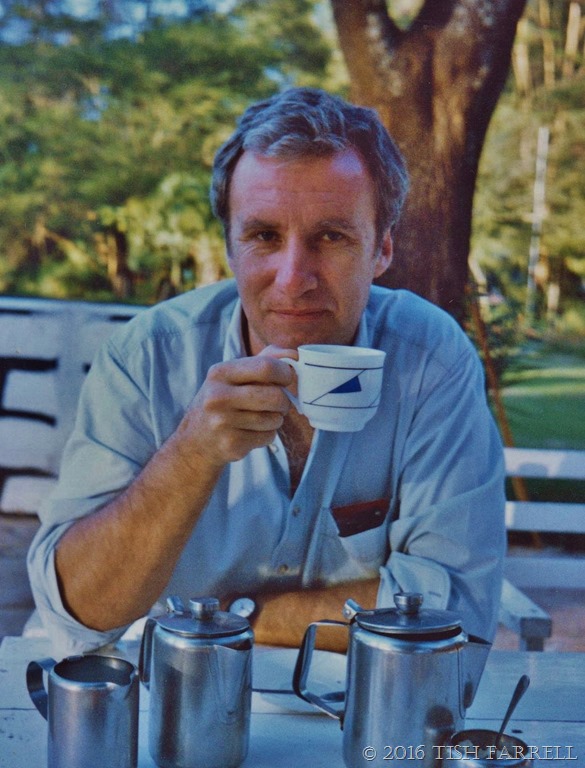
It became a ritual. So you might call afternoon tea on the bar terrace a libation. We were usually accompanied by the resident peacock who liked to steal the sugar if he got the chance. The tea tasted sulphurous from the local volcanic spring water, and the milk needed sieving because it was delivered daily by the Maasai, and the hotel staff subjected it to heavy boiling before serving. Even so, we always looked forward to it – the interlude before twilight and the firefly fly-past over the pool, and the prelude to supper and a chilled Tusker beer.

*

227

Paula at Thursday’s Special prompted this post with her December ‘pick a word’. So here we have aquatic echoes, an amiable Graham with chai libation, and a misty mountain protrusion. Cheers, Paula! Please visit her for further sources of inspiration.

Rambling Yesterday On Wenlock Edge ~ “The Holly And The Power Station”?

IMG_3731

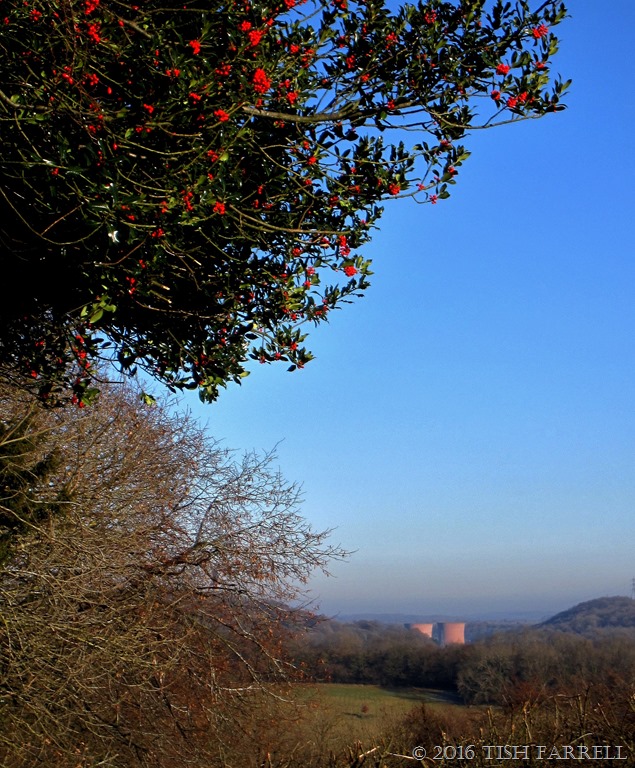
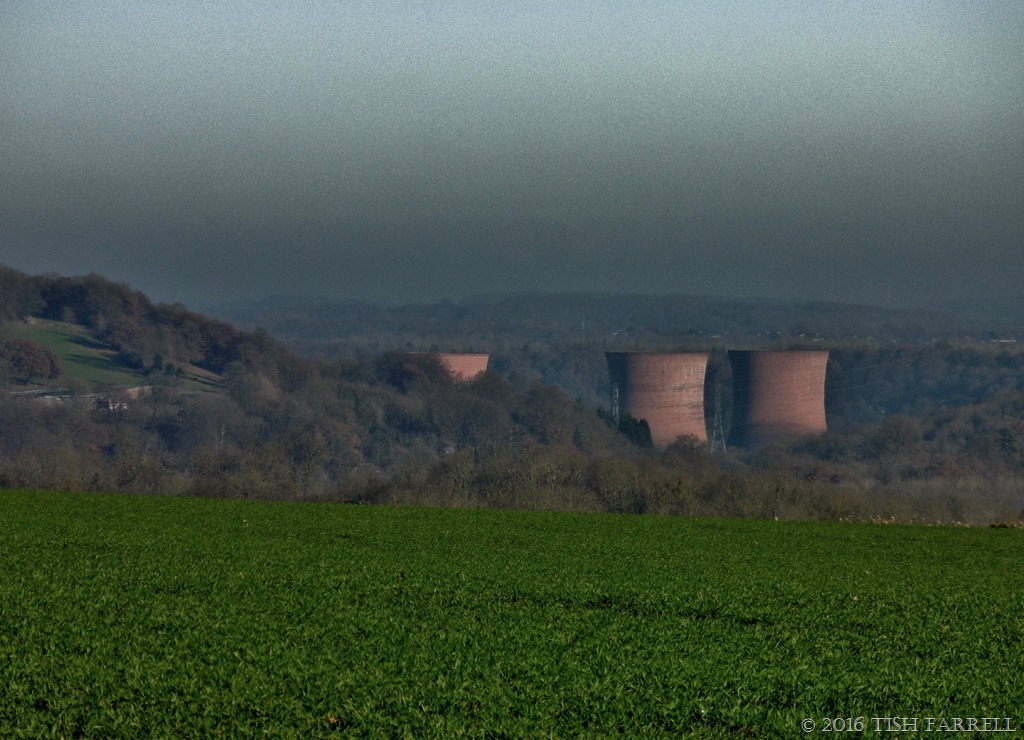
We went for a tramp along the Edge Wood at midday yesterday. It’s three fields up from our back garden and quite a haul to reach it. Once there, a breather is definitely called for, and so it’s a good moment to stop and look at the old Ironbridge Power Station cooling towers.

P1060131

Some find them ugly, but I like them. They are true landmarks – geologically and historically speaking. They stand on the banks of the River Severn, England’s longest river, which rises in the Welsh uplands and descends through the Midlands to the Bristol Channel. The towers stand on a piece of landscape – the Severn Gorge – which was only created 15,000 years ago – a mere nano-second past in Earth History Time.

But the thing that most fascinates me is that the River Severn, presently running south past the towers, once flowed north, so meeting the sea on the coast between North Wales and Chester. This remarkable change of direction is all down to the last Ice Age and the fact that the land was glacier-locked as far south as Shrewsbury, our county town. The Severn’s northern outlet thus became blocked by ice, and so the river backed up, forming a great lake (Lapworth) as the water lay trapped between the ice sheet, and the limestone ridge of Wenlock Edge.

Little by little, as the Ice Age drew to a close, the river wheedled its way through the northerly end of Wenlock Edge and carved a new course, cutting through, and so exposing the Industrial Revolution-making strata of coal, ironstone, fire clay, and limestone. And as I’ve said in other posts, this part of Shropshire lays claim to being ‘the cradle of the Industrial Revolution’, though crucible might be a better metaphor, given the emphasis on iron production.

However, the 18th century pioneering ironmasters of the Severn Gorge were not the first to take advantage of the local geology. Nearly two millennia earlier the Romans were already exploiting these resources. Their military camp of Viroconium (Wroxeter) lay just to the north of the Gorge and, once the locals were suitably subdued, so the camp transformed into a great city, one of the four largest in Britain. There is evidence of glass making and iron working in the area, and local clays would have served for brick and tile production. In fact one of the brick-built basilica walls still rises impressively above the surrounding farmland, a surprising survival when so much of the city fabric was recycled through succeeding centuries.

Back in the Gorge, and many centuries after the end of Roman rule, the mediaeval  monks of Buildwas Abbey and Much Wenlock Priory were also busy making use of local natural resources on an industrial scale. They had mines, decorative tile works, iron-making forges and bloomeries. They also had a thriving export business along the River Severn. There’s a record from around 1200 that states that the Prior of Buildwas was fined because twelve of his barges were blocking the river downstream at Bridgnorth. Probably not your usual vision of what monastic enterprises got up to.

Given so much entrepreneurial and manufacturing business afoot in the Gorge AND a navigable river with access to the great port of Bristol,  it is not surprising that when the monasteries were dissolved in 1540, and their properties distributed to the king’s friends and favourites, that the place should attract a rash of opportunistic London merchants, lawyers and aristocrats, all out to get rich and exploit the former monastic concerns for themselves. Soap  making, cold tar exploitation, coal mining, iron production, steel-making experiments were being conducted by very unlikely people of the well-heeled sort across south-east Shropshire.

Such industrial fervour was further stoked by Queen Elizabeth I (1533-1603) who offered a prize for anyone who could find a way to smelt decent iron using coal instead of charcoal. The loss of the nation’s great trees, needed for naval purposes and the protection of the realm, was causing the monarch much concern. The prize, however, was to remain unclaimed. It would be a good century later before  Abraham Darby arrived in the Gorge and, after remodelling a former monastic iron works in Coalbrookdale, perfected the much sought-after technique.

His discovery helped shape the world we occupy today. See what geology has to answer for.

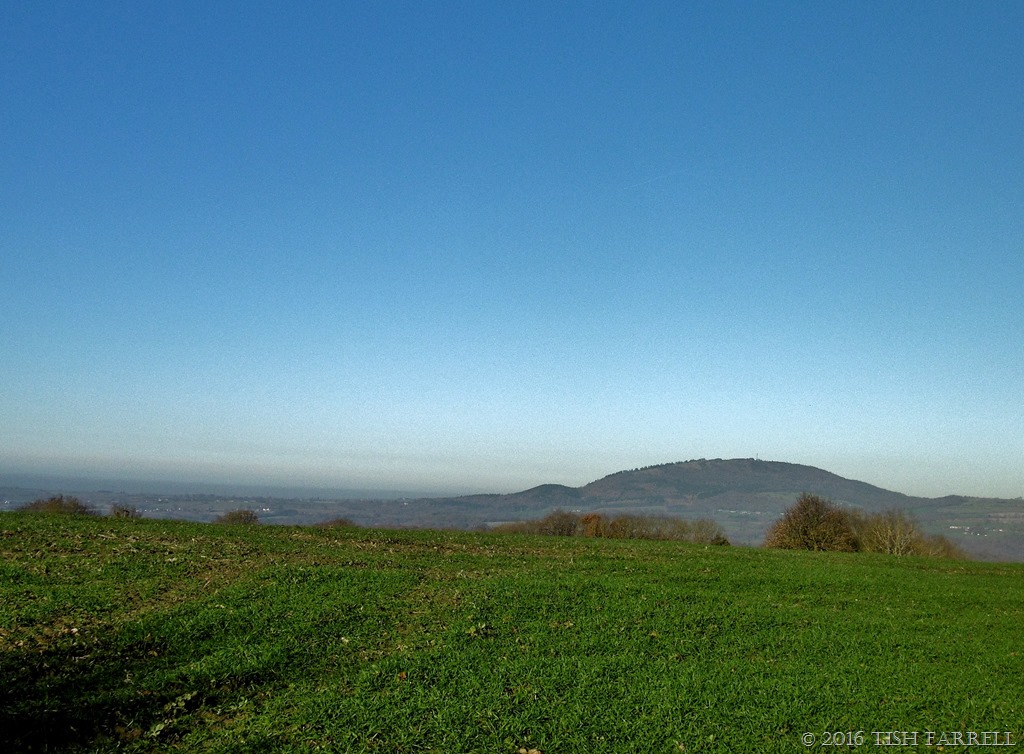
And here’s some more of quite another sort: the Wrekin. We have the best view of it on our homeward path back down into Wenlock.

P1060146

The plain to the left of the hill was the location of the glacial Lake Lapworth. The Roman city was in that vicinity too. The Severn Gorge is off-screen to the right of the Wrekin.

I’ve written about the Wrekin’s mythological and geological origins HERE, but I may not have mentioned there that it has an Iron Age hillfort on the top. This was a stronghold of the Celtic Cornovii  i.e. those who  were duly subdued and citified by the invading Romans. Under Roman rule Viroconium became the Cornovii regional capital, which they continued to occupy until the late 600s – 700 C.E. when the site was abandoned.

We were always told at school that Viroconium’s last days were due to Saxons or Vikings marauding up the River Severn, but there is no sign that the exit from the city was anything but peaceful. I remember working on the excavation of the presumed road-of-retreat long ago as an archaeology student. I have to say that at the time I wasn’t altogether convinced by the site director’s interpretation of the remains that we were uncovering. At least it made me consider that much depends on the way you excavate a site. This site was being stripped across a whole field, rather than being investigated through the judicious placing of exploratory trenches. It seemed to me that certain trowelling techniques, as applied by willing and enthusiastic novices, might be responsible for creating features that aren’t actually there at all. An interesting thought on how the past might be re-created and invented.

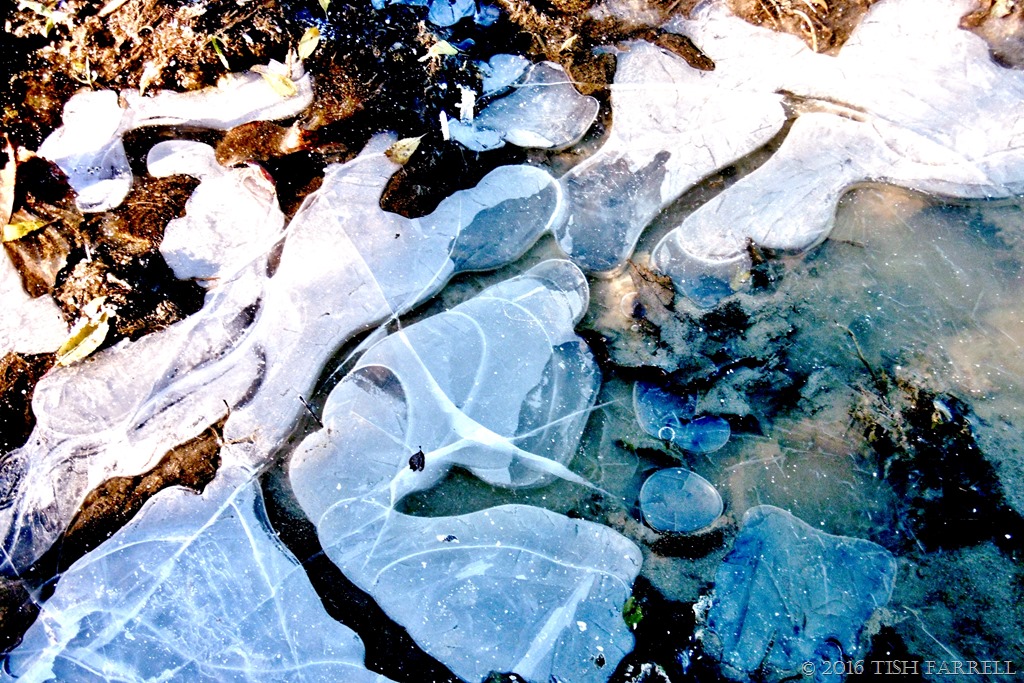
And now just to prove how cold it was on our ramble, and not just gloriously, and so unexpectedly sunny: next some ICE, a phenomenon not witnessed in these parts for several seasons. Which brings me back to the start of this yarn, but hopefully not to the start of a new Ice Age as long predicted by certain climatologists. There have been enough tangents along our path already.

P1060148

copyright 2016 Tish Farrell


Jo’s Monday Walk  Please take a turn in this quarter for another fabulous ramble with Jo in the Algarve.

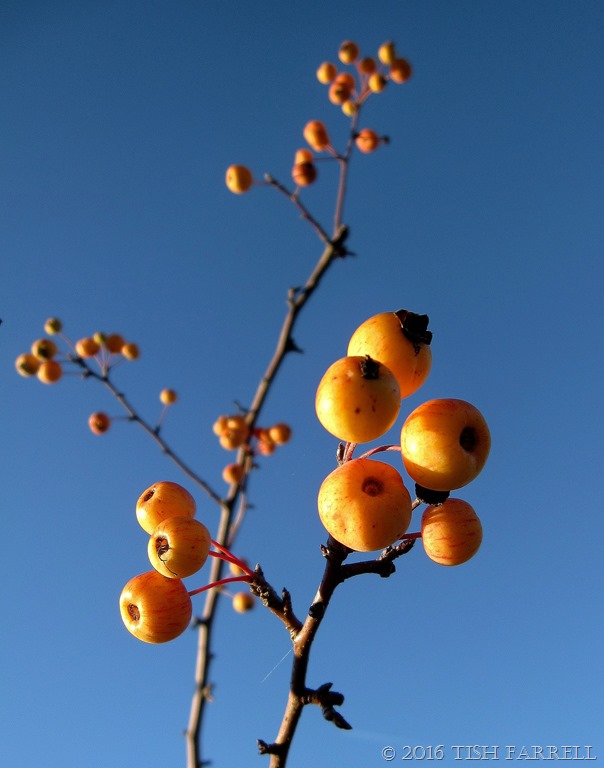
November Sky With Crab Apples

IMG_3726

Crab apples as caught in yesterday’s afternoon sun. There’s a bit of story here too. This year the fruit on our Evereste crab apple tree is absolutely tiny, nothing like the giant size suggested by the photo. But this is good, because it makes us think that the tree has survived  being moved back in the early summer. Hurrah! It has produced fruit, albeit apples of elfin proportions.

All through last winter we had ummed and ah-ed about doing something so rash and ruthless as digging up this lovely little tree. I had planted it not long after we moved to  Much Wenlock ten years ago. It was the star of an ugly and awkwardly large, raised bed at the back of the house. (You’ve probably seen the crab apple/blossom photos in earlier posts).

In the end we decided to risk it. Graham pruned back much of the  top growth, and then effectively dismantled the flower bed around the roots while I dug a big hole at the top of the garden.  The transplanting all had to be done double-quick. Then we firmed it in, stamped on the soil to get rid of any air pockets, and gave it lots of water. The final proof of success will be next spring. Will it ever flower again? I think it will.


The Old Quarry At Middleton Top, Derbyshire

P1050679

With today’s images I’m having a complete change in mood from yesterday’s full-colour Wenlock Edge vistas. These Middeton Top photos were taken in September during our brief stay in Derbyshire.

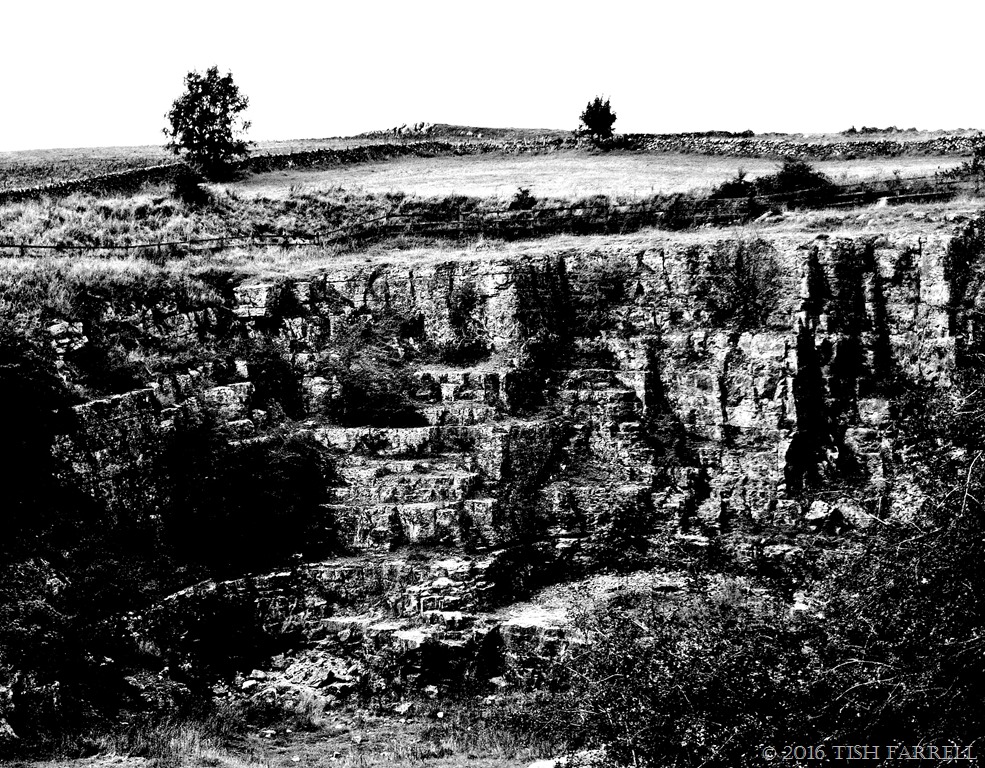
As you can see, the light was flat and dull. I thought colour photos probably wouldn’t work, but decided to try out my camera’s monochrome setting. (And yes a tripod might have helped.) The result, to my eye, looks rather like a lugubrious nineteenth century (if not older) engraving – quite a fitting outcome I’m thinking for this old Industrial Age quarry.

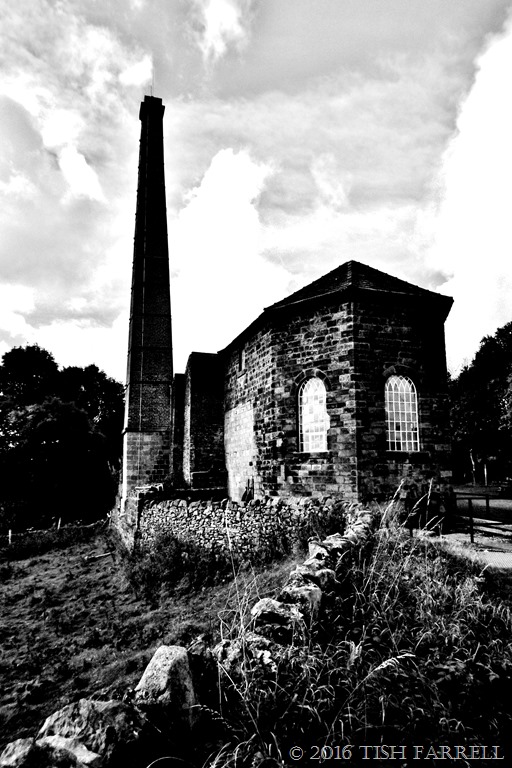
Middleton Top is anyway a dramatic spot. The quarry lies beside the old Cromford and High Peak Railway Line now part of the fabulous High Peak Trail. There is also an impressively long and steep inclined plane (1 in 8) and the 1829 steam winding engine that once hauled wagons up the hill is still there within its dark-stone engine house.

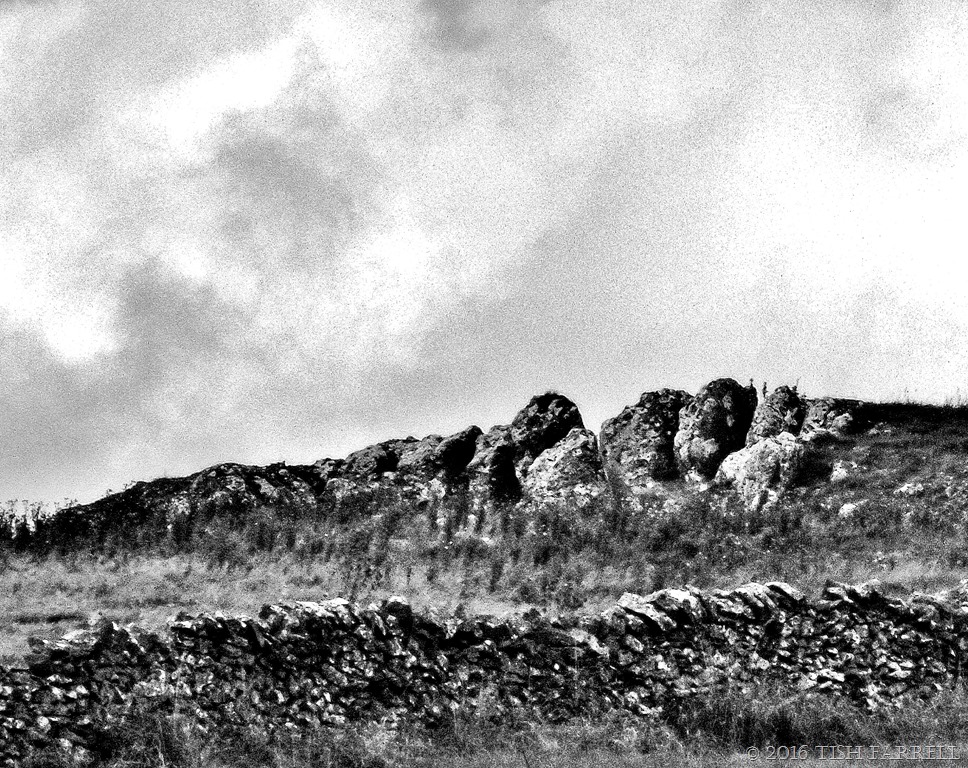
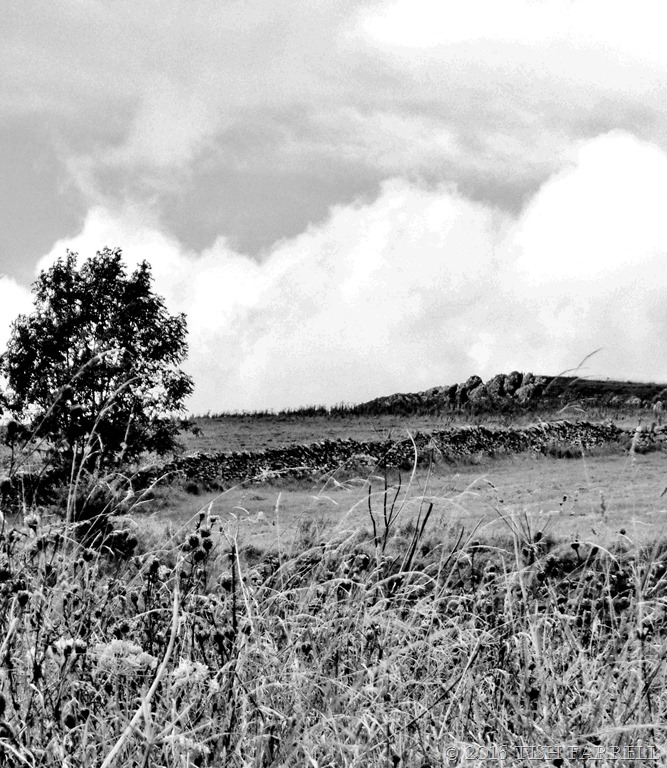
I always find quarries very disturbing places, the landscape hacked and blasted. Also the limestone in this part of the world seems to loom oddly – even on dull days. Up on the skyline between the two small trees you can just see a cluster of boulders; they caught my eye for this very reason. I also thought I spotted a raven there, but it flew off before I could organise myself with the binoculars. Instead, I went for maximun zoom on the Lumix and ended up with this ‘charcoal sketch’ effect. Also a bit unsettling. You will have to imagine the raven. Or a Wuthering Heights moment displaced from Yorkshire.P1050680

P1050682

And I couldn’t end without including a photo of the steam-winding engine house: an important piece of Britain’s industrial archaeological landscape. The engine is still in working order and has demonstration open days, though sadly no longer powered by steam. There’s a video HERE.

P1050673


Black & White Sunday

The Changing Seasons ~ Today Below Wenlock Edge, Rambling Through Westhope And Easthope

P1060056

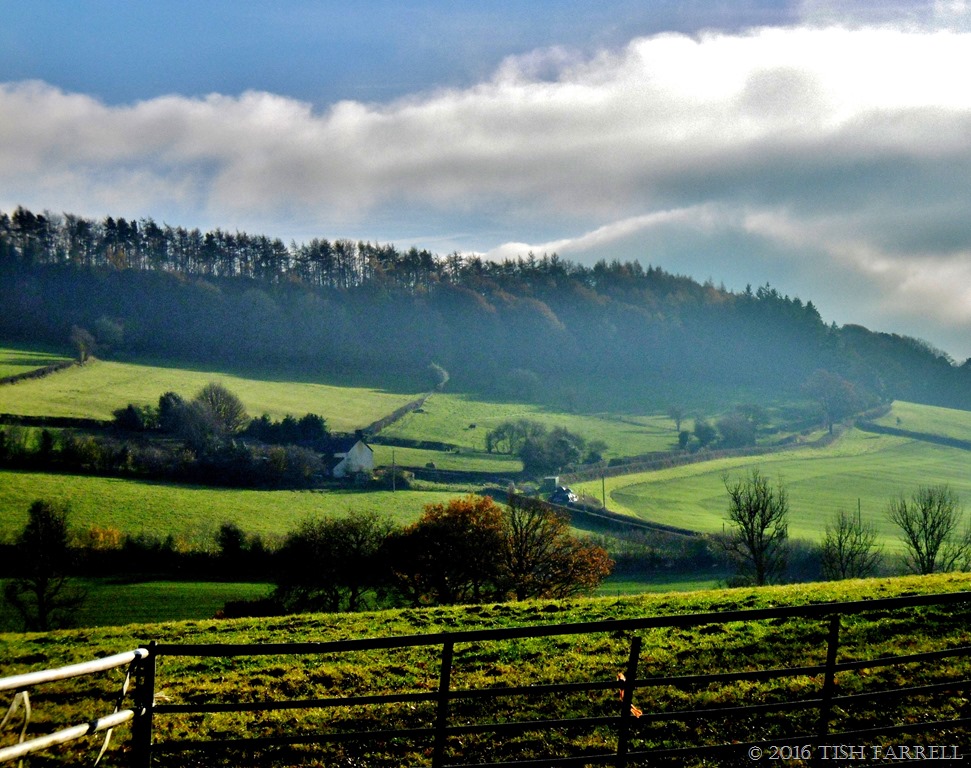
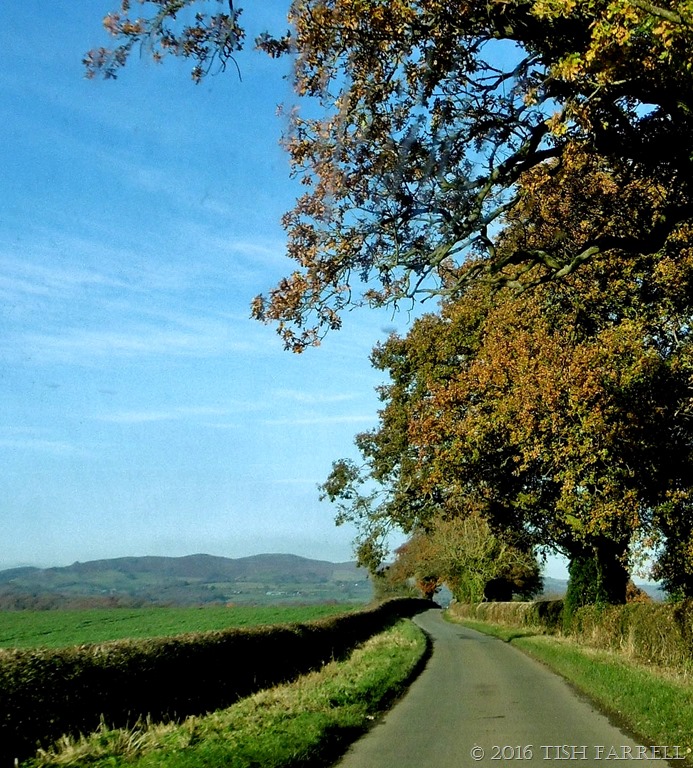
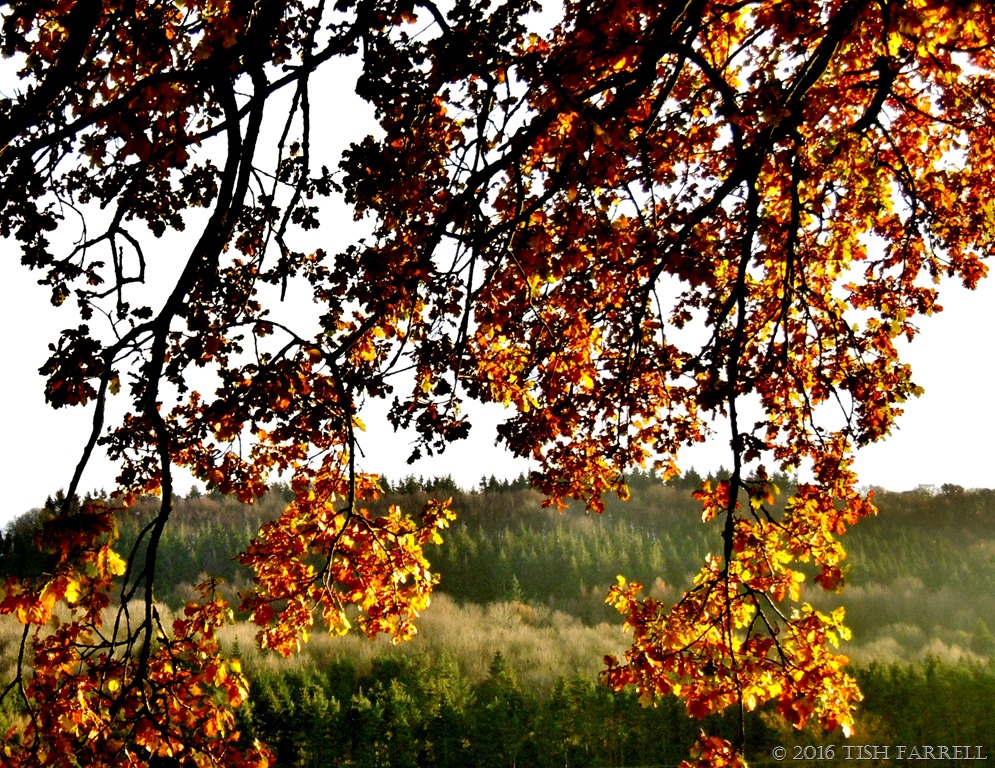
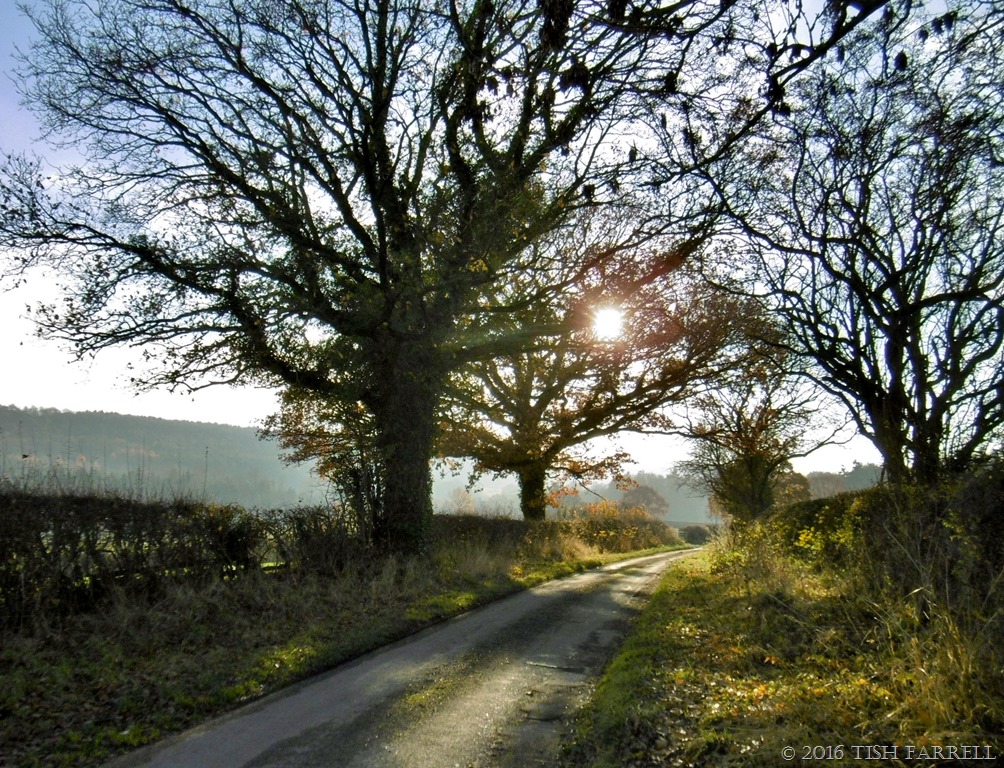
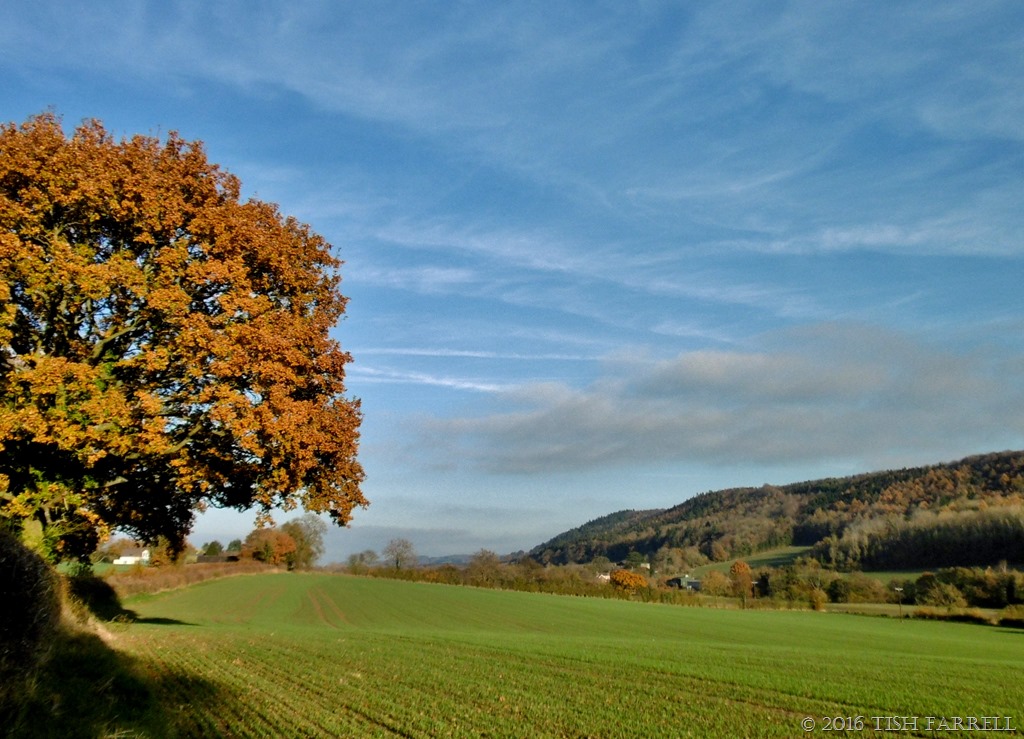
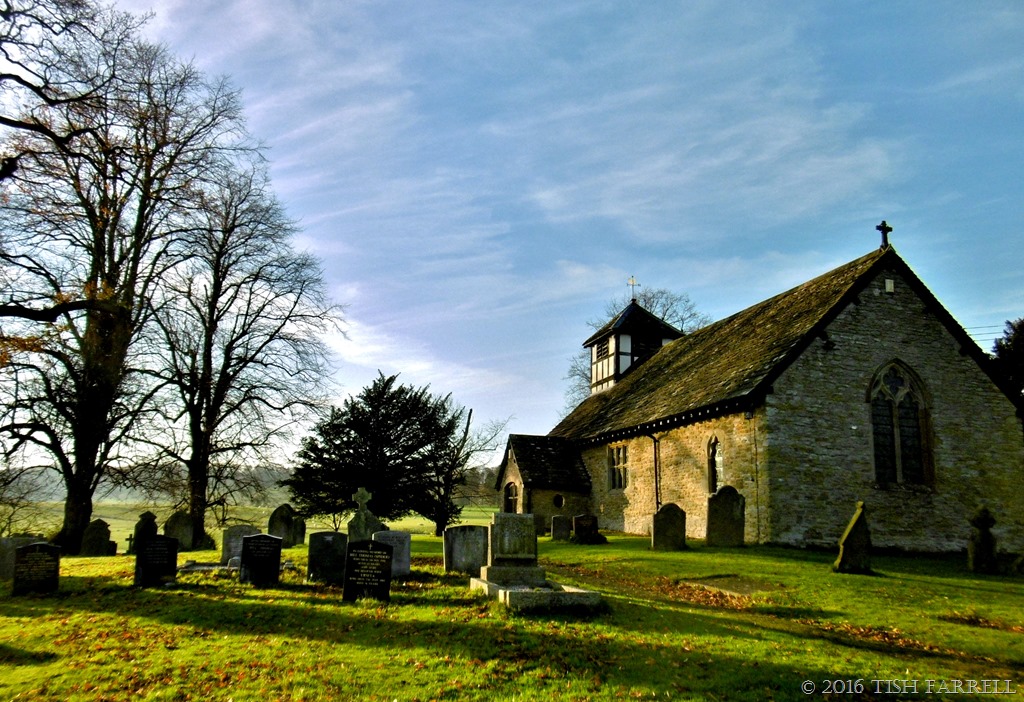
Today was a golden day – not a breath of air and the landscape lit up by the oak trees that still have their leaves. Here are some glimpses, then, of my corner of Shropshire on a late November afternoon.

P1060083

P1060095

P1060098

P1060101

P1060107

P1060080


This slideshow requires JavaScript.

Cardinal Guzman: The Changing Seasons

Twilight On The Sytche ~ Night Views From My Room

P1040221

If I stand on the bed in my office, I can open the roof-light and place my digital camera on the glass. It makes for some quite interesting twilight effects, and means I can use zoom and more zoom – i.e. as in playing, not writing. But then all writers/creators need to do lots of playing: it’s all part of nourishing the imagination. The knack, of course, is knowing when to stop, and get down to some hard graft. Not today, I’m afraid.

P1030053

P1030054


This Thursday at Lost in Translation Paula asks for twilight, and who are we to refuse her.

Who Sells The Pasts-That-Never-Were ~ Are We Seeing The Danger Signals?

100_7809

The past is a foreign country: they do things differently there.

L P Hartley The Go-Between

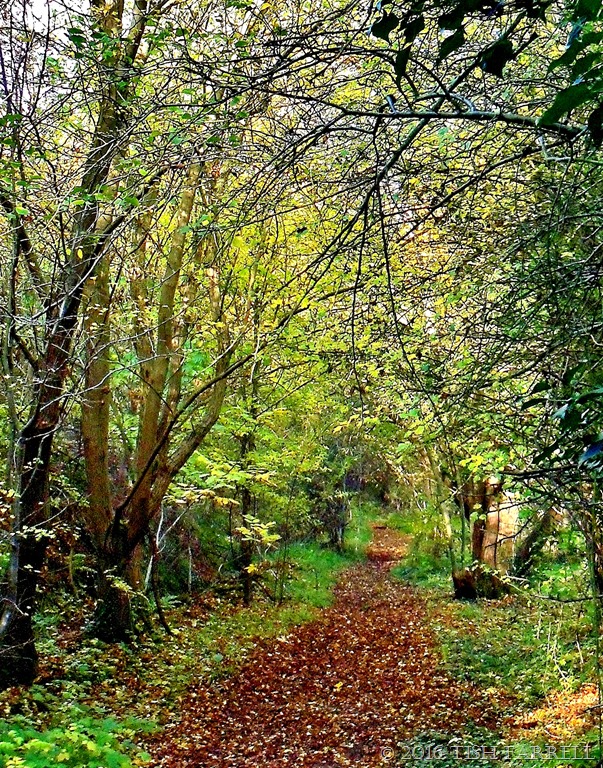
I’ve cropped and re-cropped this image in hopes you can put yourself right there on this path amid the fallen leaves. I’m hoping, too, your eye will be drawn further down the trail, that you will be wondering what lies beyond: where is this path taking us?

The ash trees and goat willows arching overhead make the path tunnel-like; mysterious, but not threatening. Slashes of light fall in from the right. They relieve the gloom of the overgrown embankment on the left.

Other impressions might occur. That this is a peaceful place: a perfect resort from the technologized maelstrom we have created for ourselves.  That it must be especially lovely in summer: birdsong and windrush through the greenery. Love-sick souls might wander here; those seeking solace from other cares; writers who have lost their plots; small boys intent on secluded thickets for a new den; dog walkers; girls on ponies: all seeking, consciously or not, the perceived restorative, imagining powers of wilderness.

As you take in the scene I might tell you that where you are standing is an ancient green lane, a once busy rustic thoroughfare used for centuries by the lay workers of Much Wenlock Priory. You can imagine them hauling carts of grain to the mill for grinding, or mule trains bringing in bales of wool from a shearing of the Prior’s flocks. I could throw in tales of St. Milburga, the seventh century abbess, who was renowned for striking springs of pure water from bare rock, or tell you that this path was one of the haunts of resistance fighter Wild Edric, the local Saxon lord who challenged Norman rule.

But no. That’s not it at all. Nothing in that last paragraph happened here as far as I know. What a shame. It had all the makings of a good yarn. We were beginning to identify with the characters. We were starting to confer on them certain notions/images/memories, conjuring a past we think we recognize.

Wait though. Here’s another version.

Into this tranquil scene comes what? A TRAIN?  Turn around and you will see what all the din is about. A large locomotive is rumbling out of the railway siding. It is hauling many wagons loaded with limestone from Wenlock’s vast Shadwell Quarry, which lies out of your sight behind the path embankment. The limestone is destined for the furnaces of South Wales and the West Midlands Black Country, used as a flux in the smelting of iron. This scene belongs to the 1860s when the United Kingdom was still a world leader in heavy industry, the monster-offspring of the 18th century Quaker Ironmasters who pioneered iron-making techniques just a mile or two away in Coalbrookdale.

Other scenes can be added: weekly earth-shattering blasts from the quarry; the land, lanes, town in a grey-dust pall; air filled with fumes from lime-burning kilns; a man burned one day in a kiln collapse; Wenlock’s Town Council of the late 1940s complaining that the blasting was shaking stones from the Wenlock Priory ruins; 1981 and rocks from a quarry blasting landing on the neighbouring secondary school, injuring three pupils.

Here then are a few clips from Much Wenlock’s many ‘pasts’; ones that actually happened. The path you are standing on is the track bed of the former Severn Valley Railway branch line. It once linked Much Wenlock to the rest of the world in a way that the River Severn had done in times past. This railway once served the nation’s industrial heartlands. And most of us have forgotten this now. Or never knew it. Looking at it now, it is anyway hard to believe.

In this particular case our forgetfulness or ignorance or disbelief is probably of little consequence. We have a lovely place to walk, and doubtless most of us will protest should anyone try to turn it into a car park or a housing development.

And yet?

I still have a niggling query. Should we not all be a good deal more knowledgeable about own histories, the actual lives of parents, grandparents and great grandparents? Should we not all be well versed in our nation’s last hundred years, including understanding our responsibilities as citizens, and knowing precisely how our land and its people make a living?

I’ll leave these questions with you, because I want to talk about the quotation. It has haunted me for decades, and is the opening line of L P Hartley’s novel The Go-Between. But it was not in the novel where I first read these words. My first encounter was in the title of quite another book. It was 1985 or 1986, and the book in question had not long been published. At the time I was employed as the seemingly grand, if poorly paid Leverhulme Research Fellow at the Ironbridge Gorge Museum Trust. (This being the sprawling Shropshire heritage enterprise that lays claim to protecting and interpreting the ‘birthplace of the Industrial Revolution’ aka the aforementioned Coalbrookdale – a location which thus has a very great deal to answer for).

In those days, the IGMT had recently set up an Institute of Heritage Management offering postgraduate diplomas to professionals in the heritage business. It was at one of the Institute seminars that I encountered David Lowenthal, American historian and geographer, and Professor of Geography at University College London. (He is at UCL still, Emeritus Professor at the age of 93.)

Lowenthal’s book The Past Is A Foreign Country is regarded as one of the classic works of cultural history. It was described by one erudite reviewer at the time as ‘a meditation on misuses of the past in contemporary culture’.

I will repeat that phrase in bold:

‘a meditation on the misuses of the past in contemporary culture’

In the light of recent events – the outcome of the US election and Britain’s Brexit vote wherein proponents’ projection of a perfect national past formed a key part of the ‘sales’ pitch – it seems to me that this is a phenomenon that should worry us all.

The past that was being sold was not an old past either, but one deemed to be within someone’s living memory – you know, that happy land just over the brow of the hill where everyone resides in the rosy glow of unchallenged prosperity and inviolable national sovereignty and with no incomers.

When did that place have its heyday? Can anyone tell me. I’ve been alive quite a long time, and I can’t pinpoint it. When I grew up in the 50s there was still post war rationing. Kids were getting polio. Pregnant unmarried girls were considered the scum of the earth, and hustled into homes. Racist language was the norm. Homosexual acts were criminal offences. There was the Korean War, the Suez Crisis, the Kenya Emergency, the Malayan Emergency, the Cuba Missile Crisis. The Cold War threat of nuclear missile strikes hung over us for decades – fear still lingering until 1989 when the Berlin Wall came down. All local authorities had their nuclear bunkers in place. Some are still extant.

So the golden age must have been earlier then – ‘40s, ‘30s, ‘20s? Surely not. Ah silly me. It was obviously the ‘80s when Thatcher and Reagan let all the bankers off the leash to start wreaking unmitigated financial mayhem across the globe…

Anyway, you get the picture.

It is doubtless a common human affliction to wish to turn back the clock whenever things go badly wrong. It also a well held fallacy that there is some perfect place from which humanity has been excluded – a sort of expulsion-from-Eden syndrome – and that maybe we can get back there?

Lowenthal points up our maladjusted relationship with the past  when he says:

…we also preserve, I suggest, because we are no longer intimate enough with that legacy to rework it creatively. We admire its relics, but they do not inspire our own acts and works.

He suggests too that “the past conjured up is…largely an artefact of the present”, “shaped by today’s predilections, its strangeness domesticated by our preservation of its vestiges.”

The past has become commoditized as escapism, a state endlessly replicated in the kind of costume dramas that lure us into thinking that people back then thought just as we do. It is an on-going process of re-invention that becomes ever more ‘real’ and so I think predisposes many us towards a hankering for a past that contains none of the things that so upset us now. It was so much better then.

Wanting to turn back the clock to a time-that-never-was suggests feelings of helplessness and hopelessness; of depression, hardship and broken spirit. Hanging on to such a notion is obviously not going to help solve any of the problems that face us.  In the short term it leaves us vulnerable to those who would sell fake pasts for our future salvation (and politicians have always manipulated history to confound us – some on a megalomaniac scale). In the longer term, when the lie is exposed, it will bring only further incapacitating disillusionment. It might bring worse too.

And how did we get into this position – we, the rich nations of the northern hemisphere? How did all our great assets reduce us to such impoverished and desperate ways of thinking? Why do we not know enough about ourselves and our nations to see off the self-serving opportunists who feed us fantasies and divisive hate-stories?

These are questions that surely have very many answers, and for now I’m leaving them with you too.

Interestingly, David Lowenthal decided to do a re-write of his book. It came out last year.The Past Is A Foreign Country – Revisited. It earned him the 2016 British Academy Medal, and here’s a nice review by Robert Tombs. The reason he apparently chose to do a new book was because the past he had addressed in 1985 had, over three decades, been so transformed as to be an entirely new realm. Well, who’d have thought it!

I have this mad, optimistic hope that one day we might get some slight grip on reality – before it gets a grip on us. And now it’s clearly time I took a walk. Back up the old railway line then. It is far more peaceful there.

copyright 2016 Tish Farrell

Postscript:

This post was written as a result of recent ‘conversations’ with poet Robyn at Jambo Robyn and scientist Swarn Gill at Cloak Unfurled. Many thanks both for the thought-provoking exchanges.

For The Love Of Steam ~ Trains And Tracks At The Severn Valley Railway

IMG_1835 - Copy

100_6811

IMG_1857

IMG_1858 - Copy

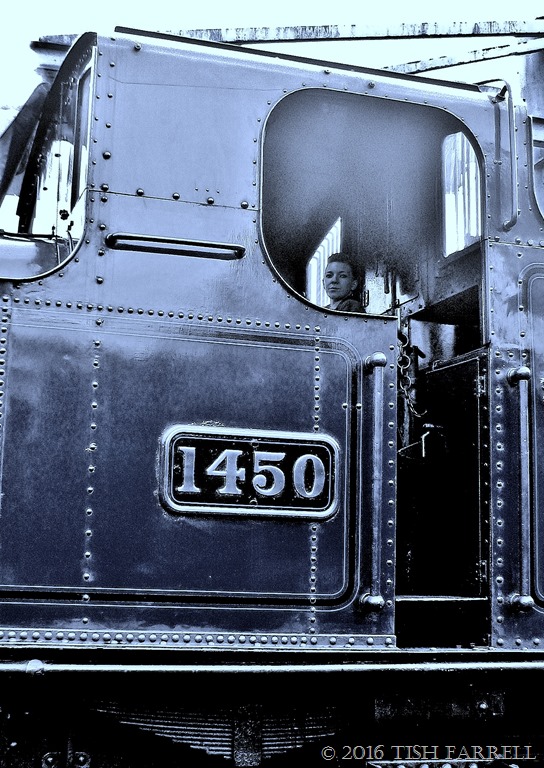
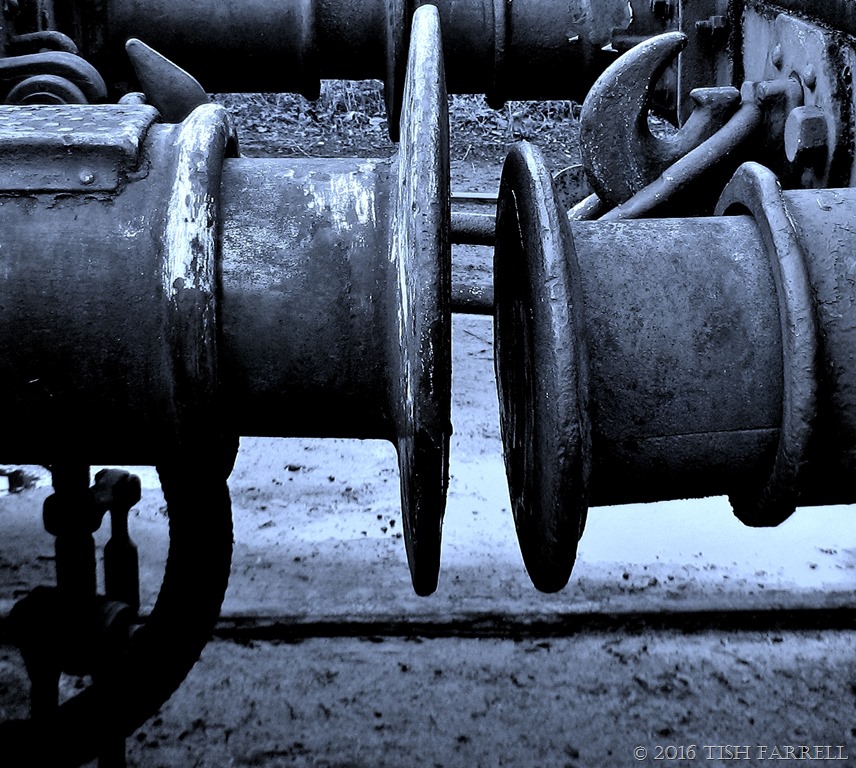
It was a gloomy, low-lit winter’s day when we went for a wander around Bridgnorth’s Severn Valley Railway. The reason for this visit is described elsewhere (Connected On And Off The Rails), so I will confine myself to mentioning that it had something to do with rivets and Graham’s model-making enterprise.

All these photos were originally colour shots which did not convert too well to straight black and white due to the aforementioned poor light. So I’ve added the blue-ish haze for interest’s sake. I think it suits the coal-burning, hard iron,  cold steel, railway yard feel of steam locomotion.

For more trains and tracks please clickety clack over to Cee’s B & W Thursday.

IMG_1840 - Copy