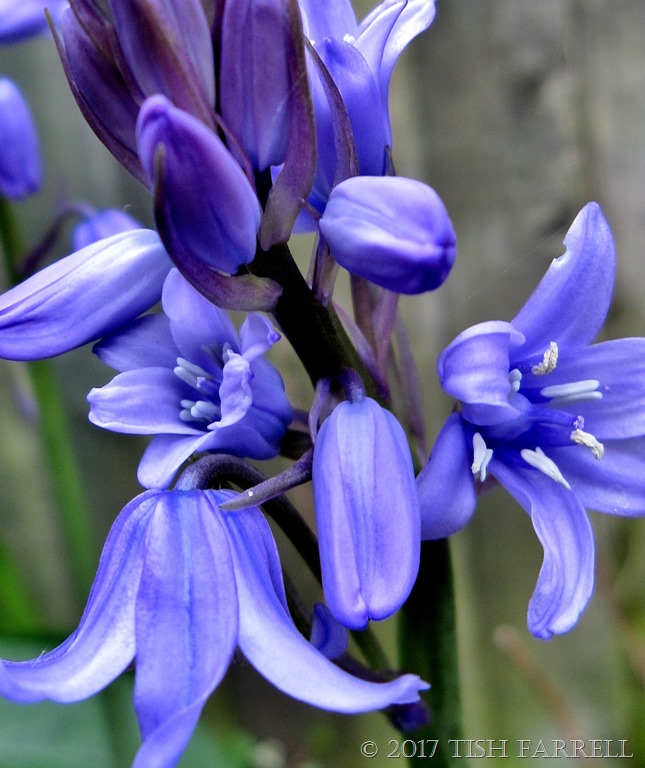
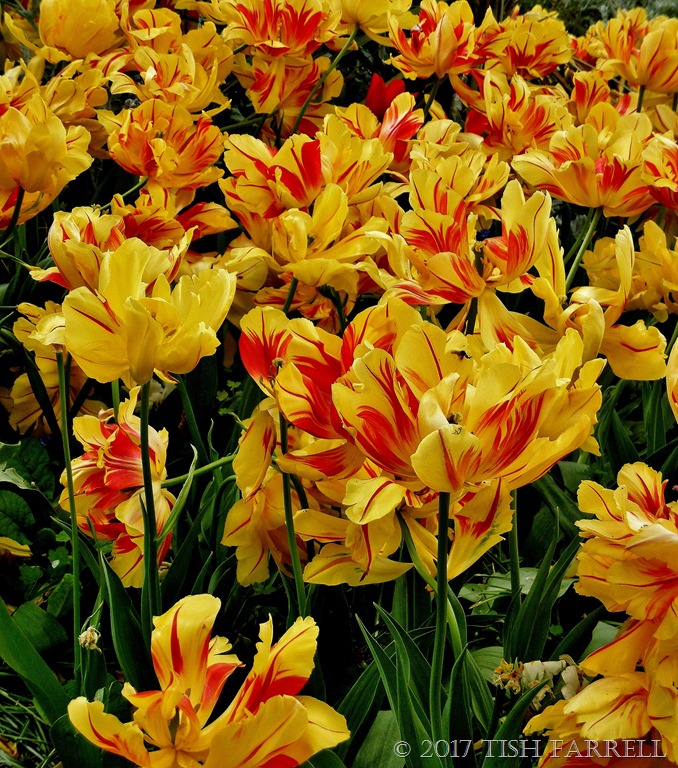
Thursdays Special ~ Les Quatre Saisons En Rouge et Noir

P1000335

P1030851

100_9963

100_8119

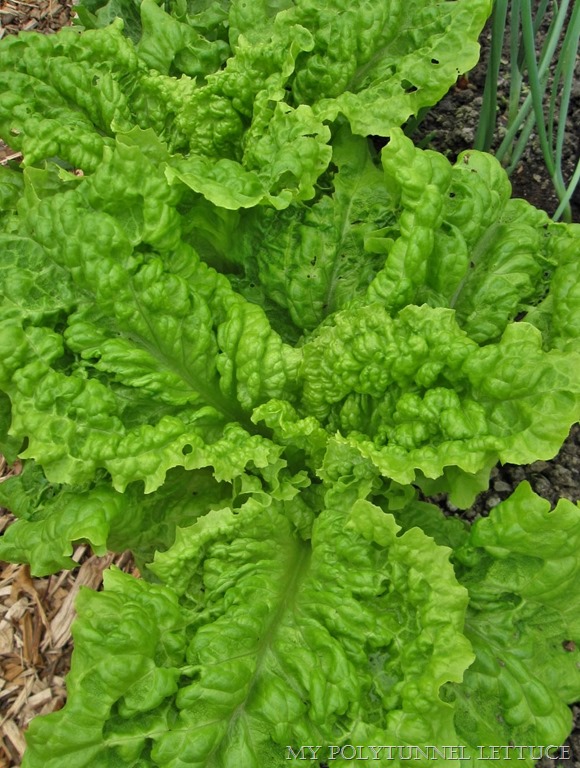
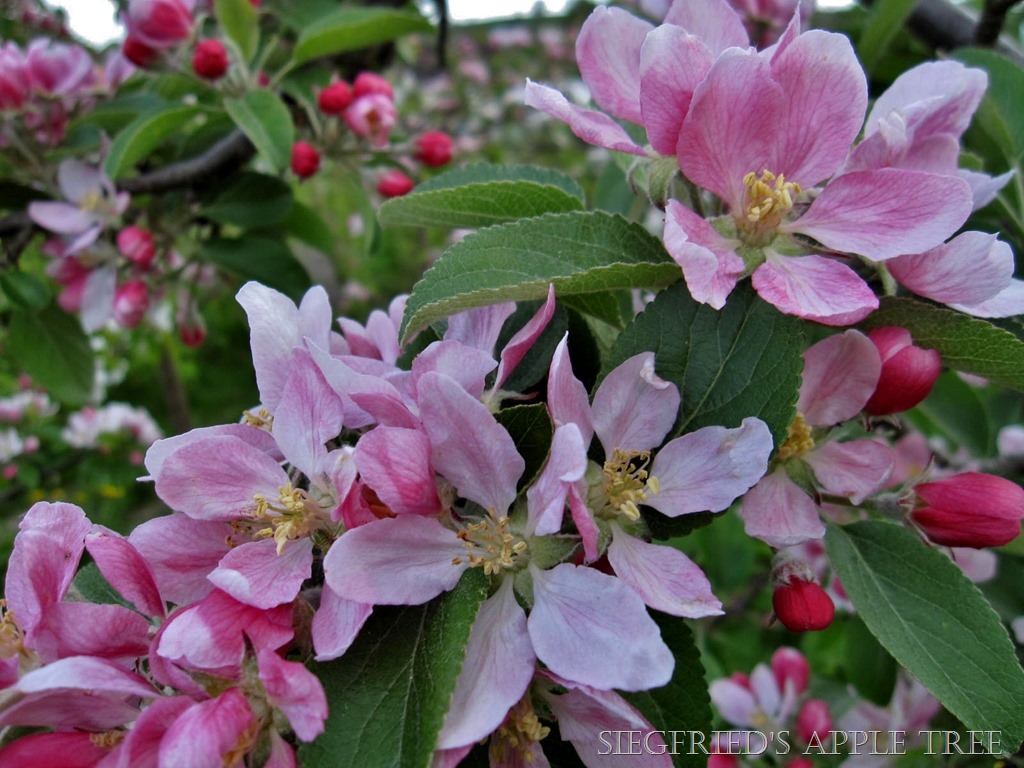
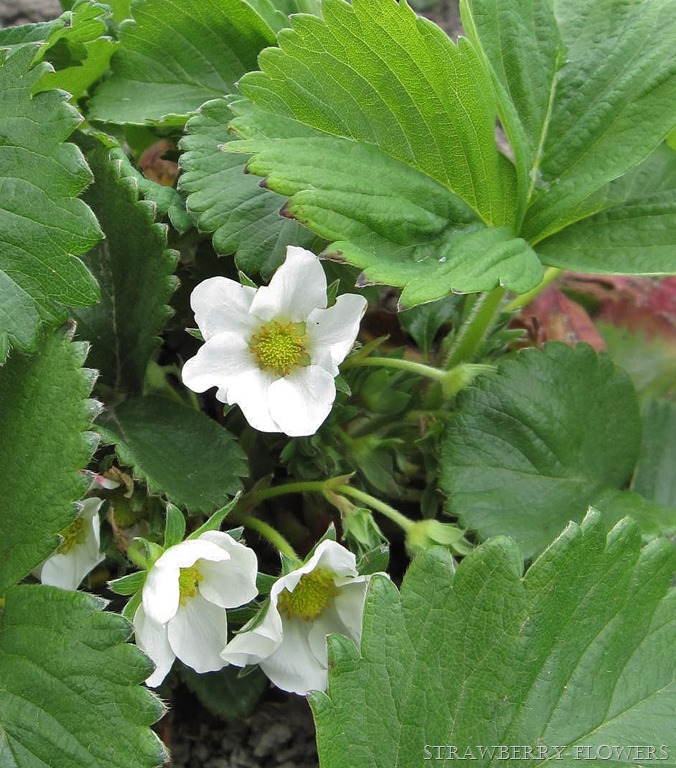
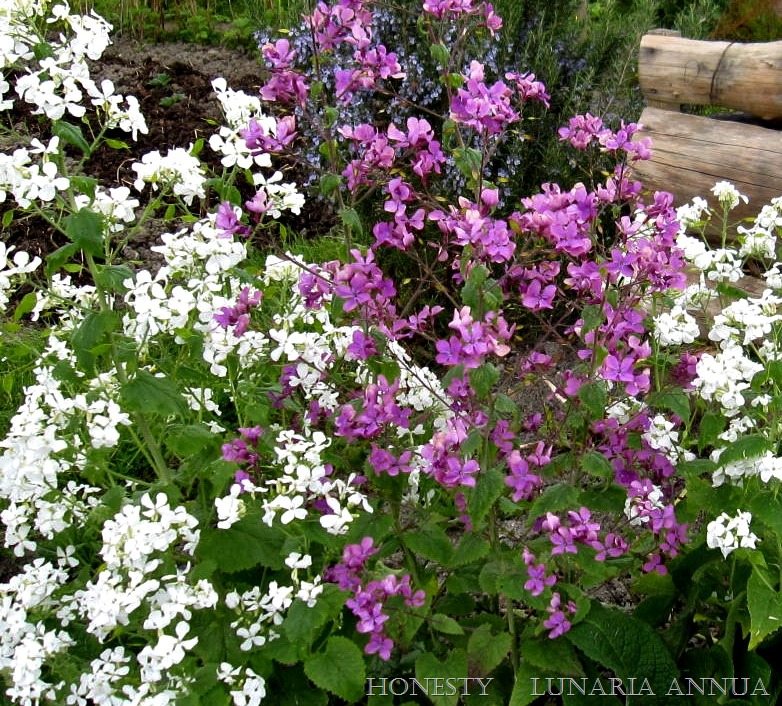
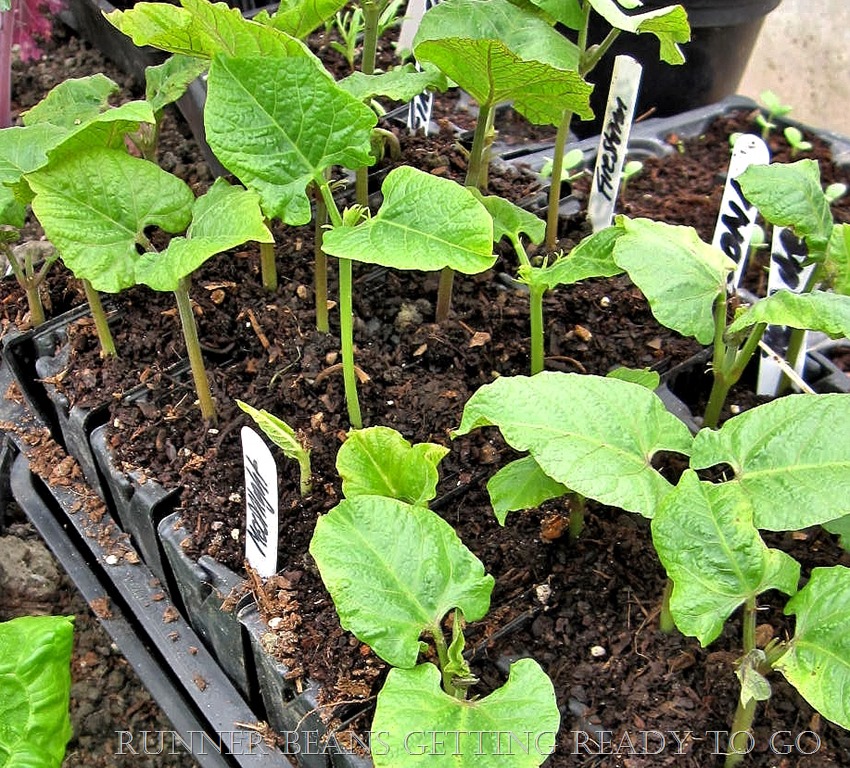
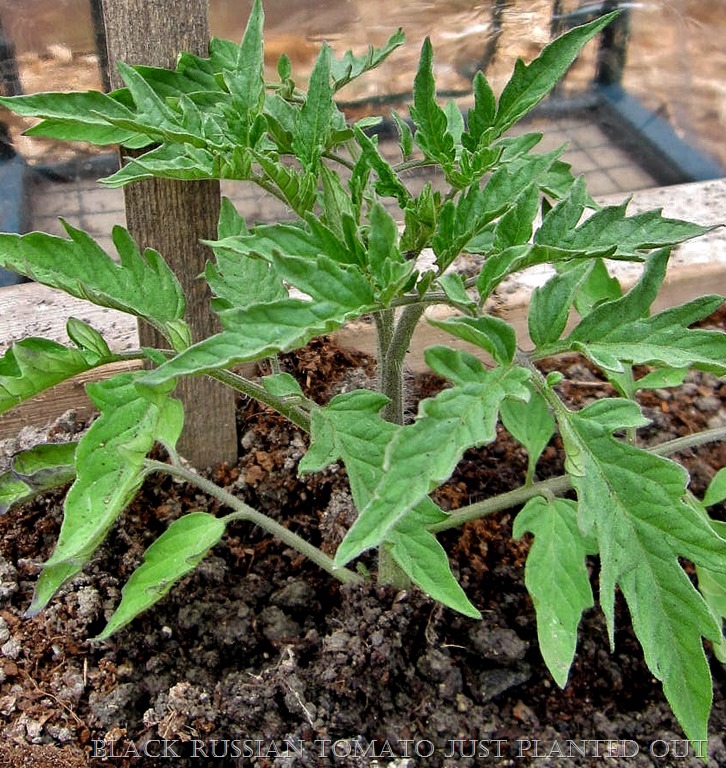
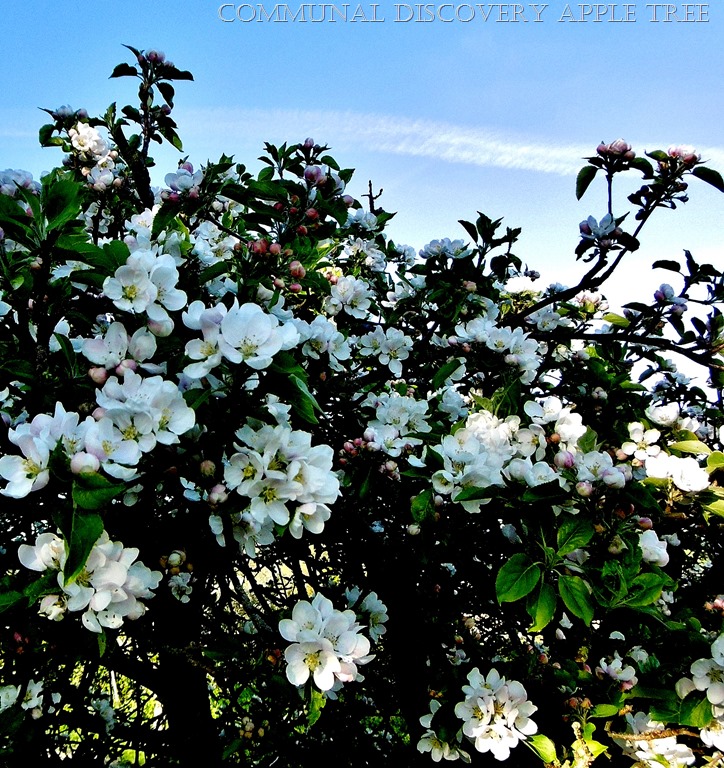
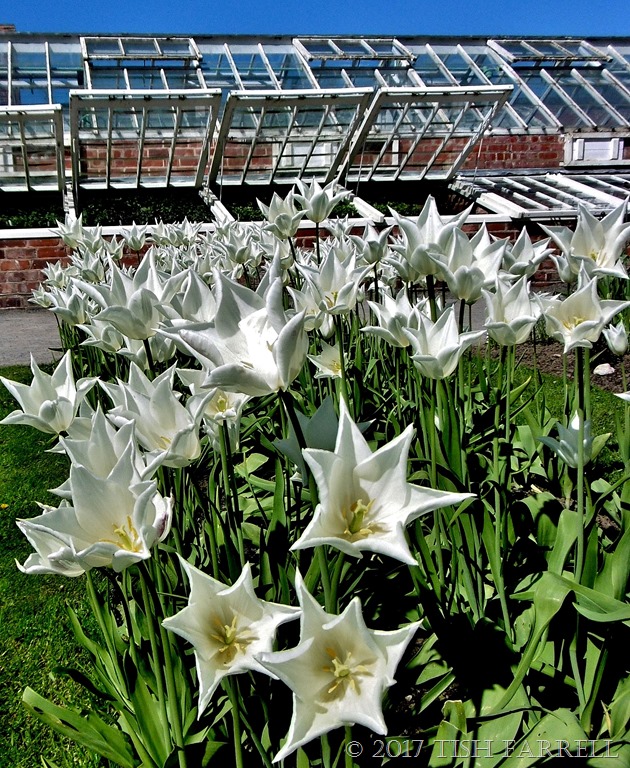
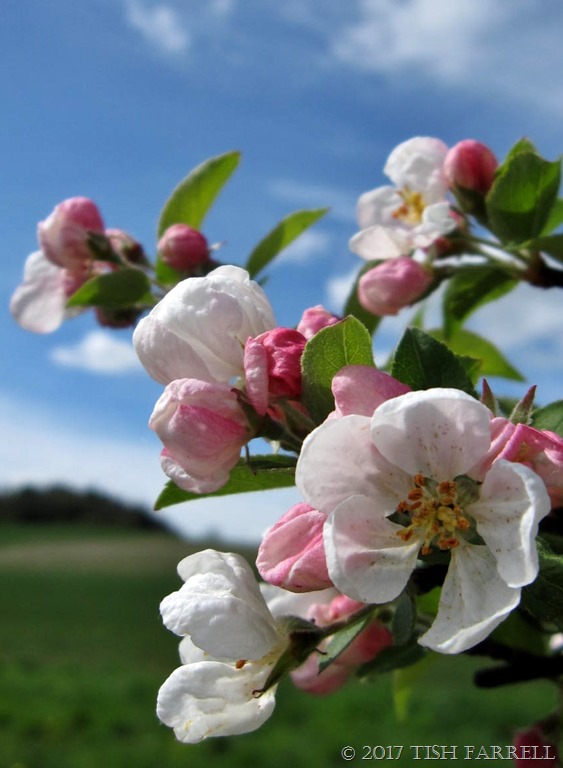
From top to bottom: winter witch hazel, spring tulips, summer oriental poppy, autumn crab apples.

*

The flowers on our little witch hazel tree are already brown and shrivelled. It was flowering back in January, and on bleak grey days the ragged clusters of russet petals made it look much like a tree invented by aliens. A welcome sight nonetheless. Otherwise the garden is presently dank and soggy – a scatter of snowdrops and one or two hellebore flowers opening.

But there are other signs of spring – tulips and daffodils shooting up several inches tall, and the oriental poppies making their first leaves. Also the  Evereste crab apple tree which we moved last year, and feared we had killed in the process, is covered in tight little buds; so fingers crossed.

Indoors, I’m fretting to start sowing – packets of seeds, old and new, in piles on the window sills, seed potatoes set out in trays in the conservatory. But it’s all too early to do much outside – the Shropshire soil still too cold and wet for sowing. I’m told by a fellow allotmenteer that the acid test for knowing if the soil is warm enough for growing is to sit on it with your pants down. Yep. Bare bottom pressed to the earth. If you can bear the baring, then it’s OK to plant. But this is not a procedure I could recommend for communal gardens, not unless one’s fellow gardeners are suitably forewarned.

And so, keeping my pants well pulled up, I’m stemming my impatience by starting off globe artichokes, coriander and basil in the kitchen, and nurturing my sweet pea seedlings. They don’t mind the cold conservatory, and probably could go outside now. I shall also sow some leeks in pots, and maybe do the same with beetroot.  And if I were truly organised I could also sort out my seed packets into month order so as not to miss the boat as I did with several things last year.

But it’s all so exciting – another seasons’ round in the offing. More things to learn; more things learned to put into practice. It is, after all, the gardener’s way – to travel hopefully.


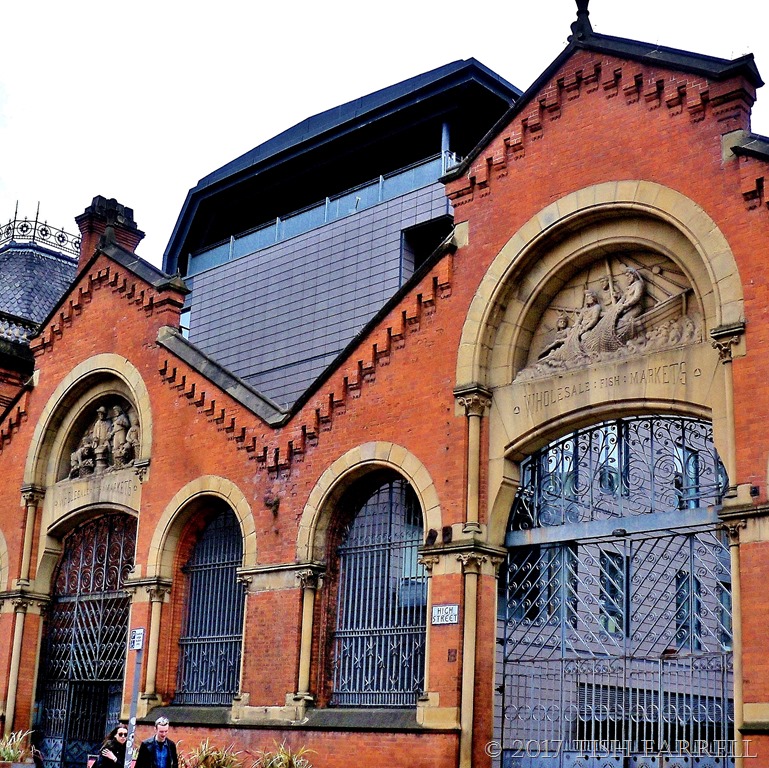
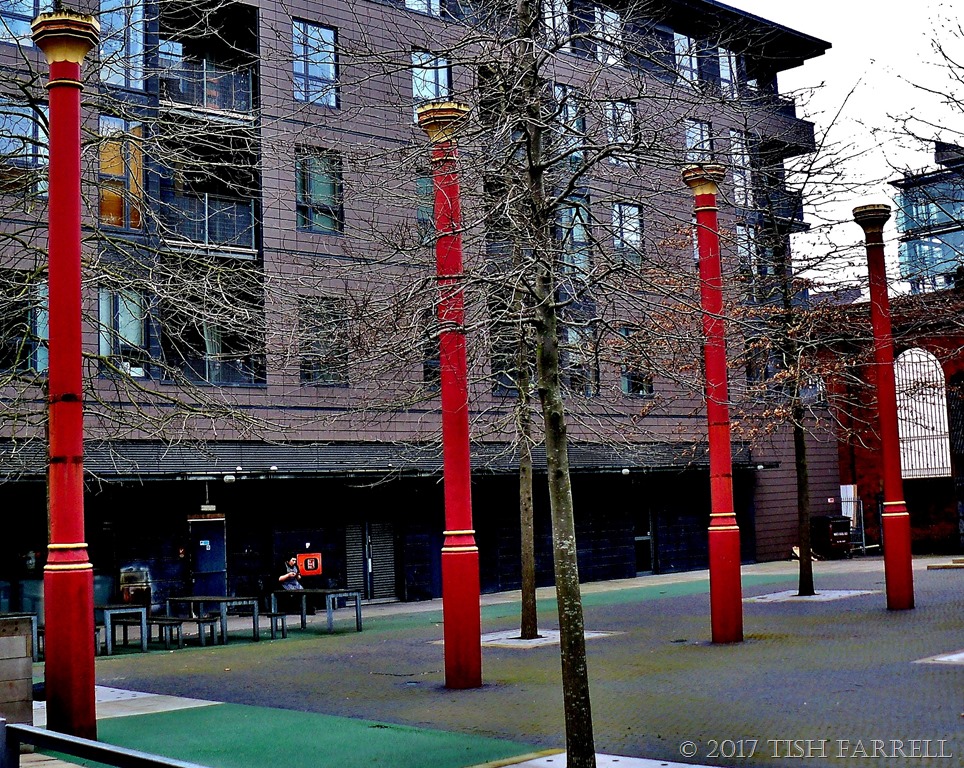
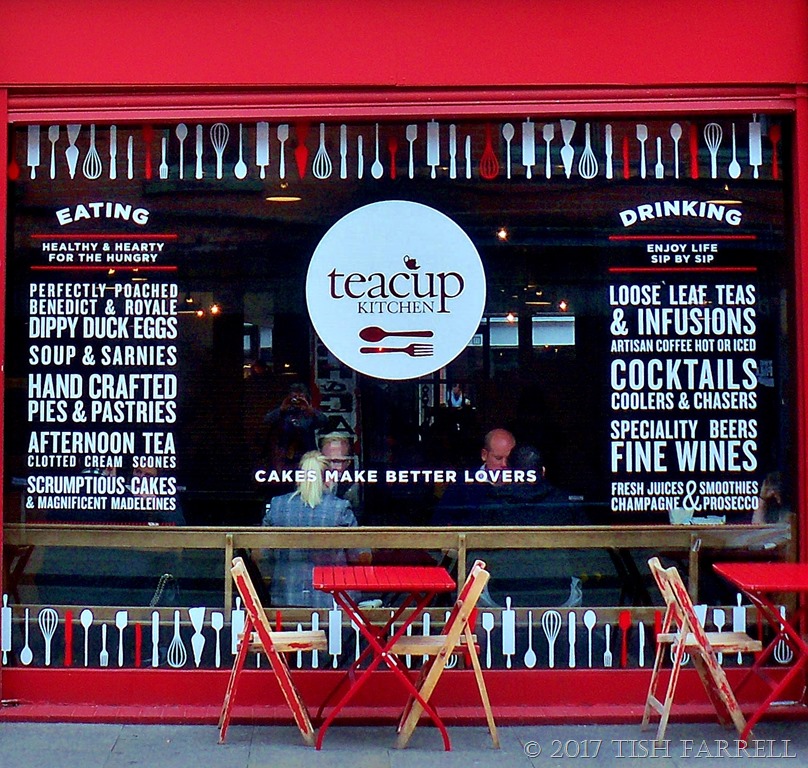
Paula’s Thursday’s Special ~ le rouge et le noir

Interesting The Things Your Stats Tell You

Tish Great Zimbabwe (2)

Actually this is probably just an excuse to post yet again this very old photo of me at Great Zimbabwe. We were living in Lusaka, Zambia at the time, Graham on a year’s attachment to the European Delegation, in charge of food aid distribution. You can read that story at the link.
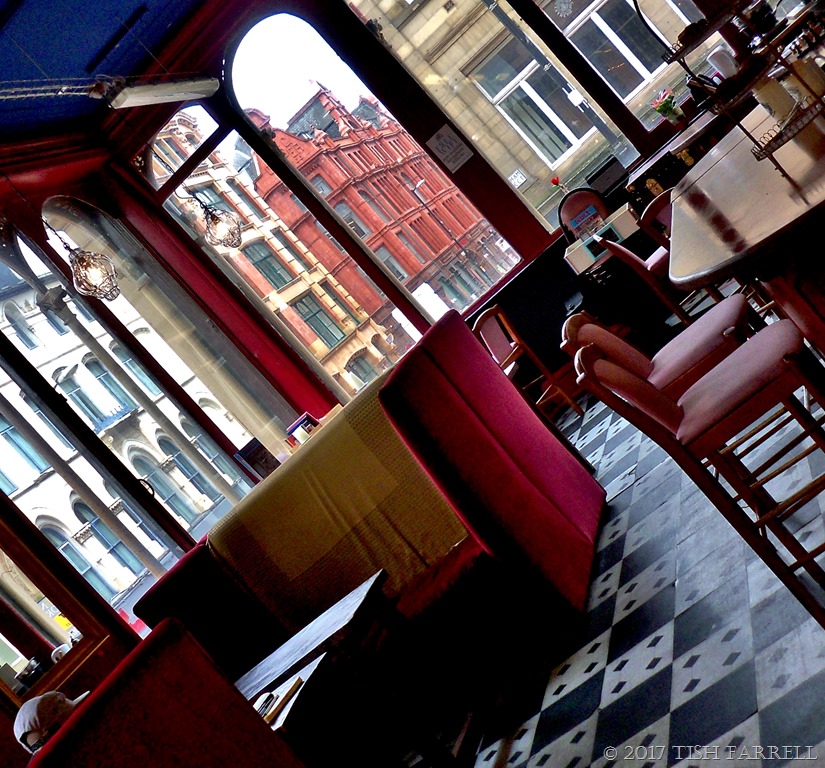
Towards the end of this posting we drove down to Zimbabwe, and spent a couple of weeks touring around. Back in the 1990s it was a fabulous country to visit. We simply followed our noses, and drove on near empty, but well-kept roads, one of which brought us at last to Great Zimbabwe. We pretty much had the place to ourselves too. It was astonishing.

Anyway my stats of the last few days suggest to me that somewhere in the U.S. a bunch of students has been given a Great Zimbabwe assignment. I know this because they’re all opening a post I wrote 3 years and 2 blog themes ago: Abandoned: Great Zimbabwe. This happens periodically, although sometimes it’s Zimbabwean students searching for material on why the place was abandoned. It’s one of my perennial posts – not so much viral as chronic. Every year the traffic has doubled. Last year 1,311 people dropped in there.

But nothing gets as much traffic as my post on Karen Blixen and Denys Finch Hatton. Caught Inside A Kikuyu Garden. This was also written three years ago, and so far has clocked up 12,715 views. Of course I have no way of knowing if all these people have actually read the piece, but I find it intriguing. I also sometimes wonder what would happen if I had a ‘Karen and Denys’ blog, and didn’t bother to post anything else. Funny old activity – blogging.

Black and White Sunday: Darkness and Light


It’s back to Llanddwyn Island on Anglesey for my response to this week’s prompt from Paula. Darkness and light – the stuff of fiction writing, but also the source of many diversions from the work-in-progress to play with my camera’s monochrome setting. The hazy uplands in the background are the mountains of mainland Wales. The island in question is in reality a long thin promontory  heading out to sea from Newborough Beach, and has, since Dark Ages times, been associated with St Dwynwen, Welsh patron saint of lovers. You can read more  HERE and HERE.

And now for a more abstract rendition of darkness and light: an early morning view across Menai Strait, taken from the fields above Beaumaris. Here on Anglesey, the sun in winter regularly puts on these mystical lightshows – shining searchlights through banks of low cloud on to the water. This particular shot was taken with quite a lot of zoom and then cropped.


P1060522

Thursdays Special ~ Profile Of The Leonine Kind

Marsh Pride male 1

We came upon the Maasai Mara’s famous Marsh Pride on a morning game drive out from Mara River Camp. It was August – as close to winter as Kenya gets – the skies leaden, the plains parched and dusty, the whole place waiting for the short rains that will not be happening for another two months; and perhaps not at all. In fact this trip had started out from Nairobi in thick fog, and descending the Great Rift escarpment was even more hair-raising exciting than usual.

But to get back to the lions. The pride was resting up in home territory, most of its members – mothers and cubs – scarcely visible in the grass. For one thing they were the same colour as the vegetation. For another, it is what lions do – disappear in twelve inches of grass.

As we drove nearer we spotted this male. He was pacing through the grass, roaring. This was answered by another male some distance away. It seemed they were busy marking out their patch. They ignored us anyway, which was comforting, though I have to say that lion-roars, especially ones at close quarters, make your spine resonate, and not in a good way.

Another hair-raising exciting moment then.

We watched them for a while from the safety of the safari truck, then left them to it, the roars following us down the track. By which time  we were  wondering if we were really there at all. Out in the African wilds it mostly feels like dreaming.
 

Profile:     Panthera Leo

                    Simba in KiSwahili

Weight:    Males 420-500 lb/110-135 kg

Length:     Males 5-7 ft/2.5-2 m

Lifespan:  Males 12 years


Thursdays Special: Profile

Please visit Paula to see her fantabulous shot of a snowy owl.

The Trail Of Tish ~ My Path To The Allotment

P1020408

Here is a well worn path of my daily comings and going along the margins of Townsend Meadow. The visible sign: the trail of gardening not writing.

There’s an unofficial gap in the hedge beside the first ash tree, and that’s my way into the allotment. The farmer leaves a swath of uncultivated ground on two sides of the field to soak up rainstorm run-off before it hits the houses at the bottom of the hill. For a couple of years these abandoned areas were simply left to grow, hence the nose-high grasses still standing in winter. But last summer, just before the wheat harvest, the weedy  wilderness was mowed. Now the only signs of my passing  are muddy boot impressions among the fallen ash leaves – not quite so photogenic.

Black & White Sunday: SIGN  Paula says to interpret this prompt any way we like.

The Solitude Within

Scan-140801-0001 - Copy (2)

As in the previous post, this is a Christmas photo, but one taken long ago when we were visiting Lamu off the Kenya coast. I’ve posted it before, but make no excuse for showing it again. It is one of my favourite photos, and one caught in a split second with my Olympus Trip. I think the gods of photography were smiling on me.

The gentleman so absorbed is Mzee Lali, the owner of the sailing dhow. He spoke no English, nor said a word to us that I recall on our day trip out to the reef. The conversation was dominated by his nephew, Athman, who, as a speaker of English, Kenya’s official language, could hold a captain’s licence, and so take tourists out on sailing trips.

He told us that Lali was born on Pate, one of the more remote large islands in the Lamu archipelago. He knew everything there was to know about sailing, Athman said. But because he spoke no English he could not take the necessary two and half year captain’s course, and so obtain a licence.

Somehow this photo echoes the dilemma of island elders. They belong to another world in another time.

copyright 2017 Tish Farrell


Weekly Photo Challenge:Solitude

Thursdays Special ~ The Arboreal Position And Why We Can’t Live Without Trees

P1060049

These late day views overlooking Wenlock were taken back in December. Many of the trees, especially the oaks, beeches and field maples, had hung on to their leaves, which in turn were gathering in, and reflecting the winter sun. Looking at these photos now makes me appreciate how well treed we are in our hollow beneath Wenlock Edge, this despite two thousand years of farming.

But then you simply cannot have too many. Our shamanic ancestors were wise in their conception of the world tree at the heart of all existence: trees are essential to our survival. Without them we would have a lot of problems breathing. According to science writer Luis Villazon at the BBC’s Science Focus each of us requires around 740 kilos of oxygen per year, which amounts to 7 or 8 trees’ worth.

But that’s not all. As well as providing us with the air we breathe, trees also stabilize, create and replenish soils. They support biodiversity. They affect the climate including rainfall patterns, and their destruction rapidly leads to desertification and soil erosion. They provide us with many useful products, and in the future we may come to rely on them as a source of essential and cheap medications to which everyone can have ready access.

In the light of all these arboreal gifts, going out and hugging a tree now seems an eminently sane thing to do. In fact I recommend it. At the very least, it will lift the spirits. The tree might like it too.

P1060044


Please visit Paula for her February Pick A Word and be inspired. There is a choice of five prompts, each of which she illustrates superbly: radiating, alimentary, frontal, arboreal, remote.

copyright 2017 Tish Farrell