Dreaming Places ~ From Shropshire To Lamu And All In A Day

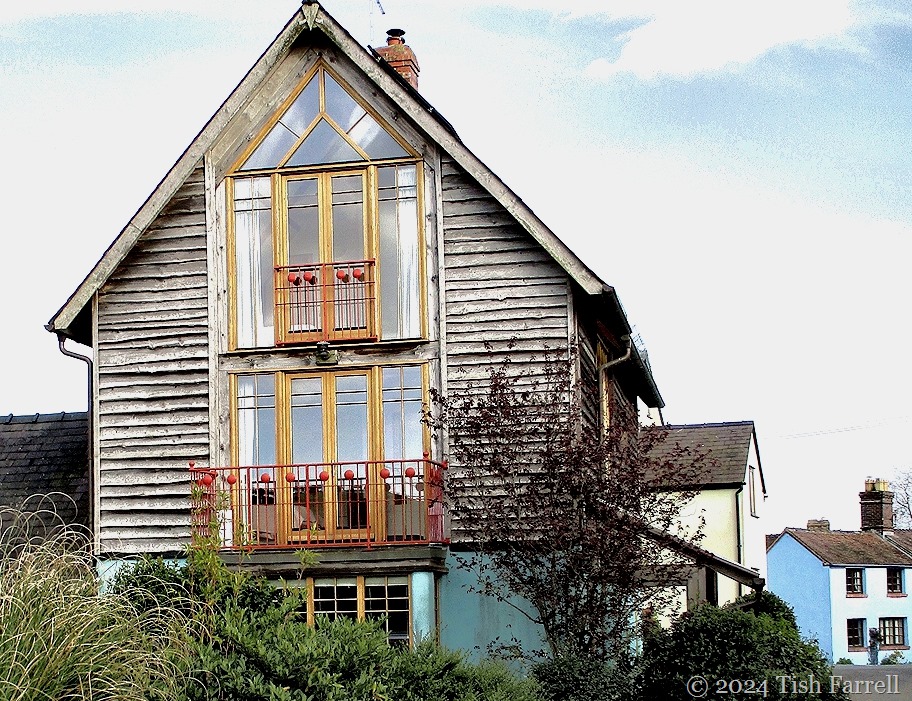
balcony 2

One of Bishop’s Castle’s pioneering eco-homes

*

Today, as July winds down, we have a summer’s day. Only the third in a month of coolness and cloud. Sunlight floods the house front. Warmth even. No trace of the wind that has dogged us for much of the year. Stillness then. The soundscape, resonant, a part-song of church bells, bee hum and pigeon chorale.

There’s a sense of bliss.

And where does my mind go?

Why, off to Kenya’s Indian Ocean island of Lamu – a trip made decades ago and at Christmas too.
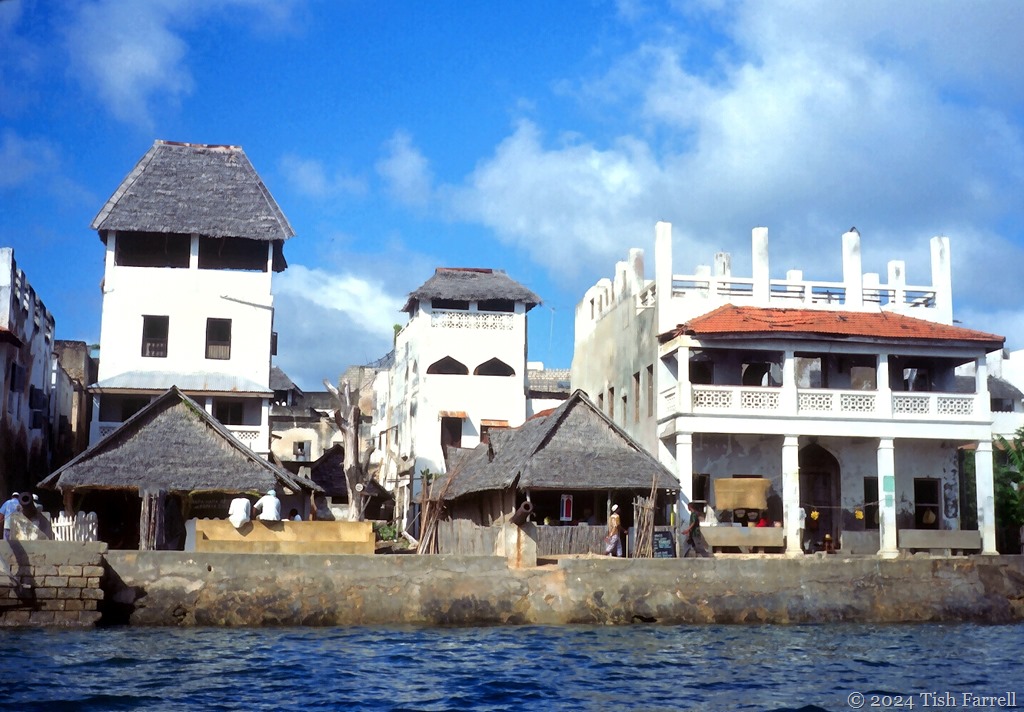
balcony

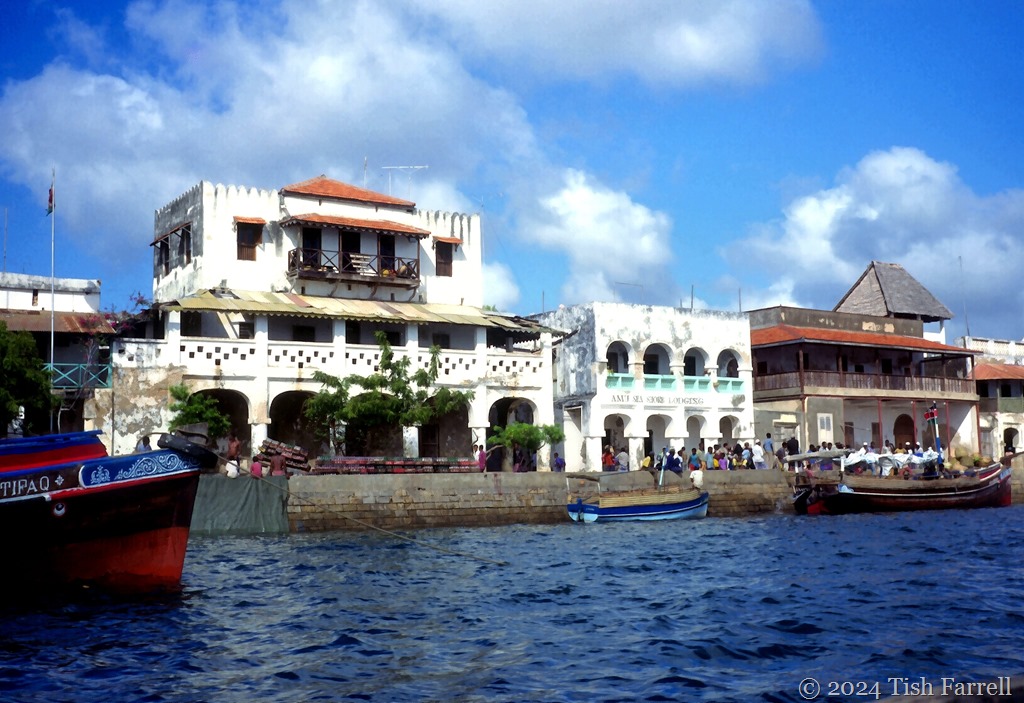
The harbour at Lamu’s Stone Town

*

Perhaps our recent spell of autumn-in-summer weather is seasonally disorienting me, although in mitigation, December in Lamu is the hot season, their summer; though rather hotter and steamier than ours.

But in the full-on Shropshire sunshine, the mind plays tricks. Meanders. Perhaps there’s another trigger to this farflung mental safari.

I soon spot it. Back in the days of the Lamu trip we lived in Nairobi, on one of Lavington’s tree-lined avenues of Jacarandas and flame trees and clipped grass frontages. (Strangely, I discovered later, I have ancestors named Lavington).

At nearly 6,000 feet, the climate there is mostly benign – a subtropical highland climate. In June and July the temperatures might drop as low as 48F (9C), and in December to March reach the upper 70s and low 80s F. The finest days there always had us thinking of perfect English summers (big skies and heat-hazy lawns), the sort from village fetes and school sports days.

Summers back then seemed, well, more summery.

And then amid my mind’s eye ramble arrives the Lens-Artists’ theme for the week: balconies. And so, by winding paths, I come to Lamu.
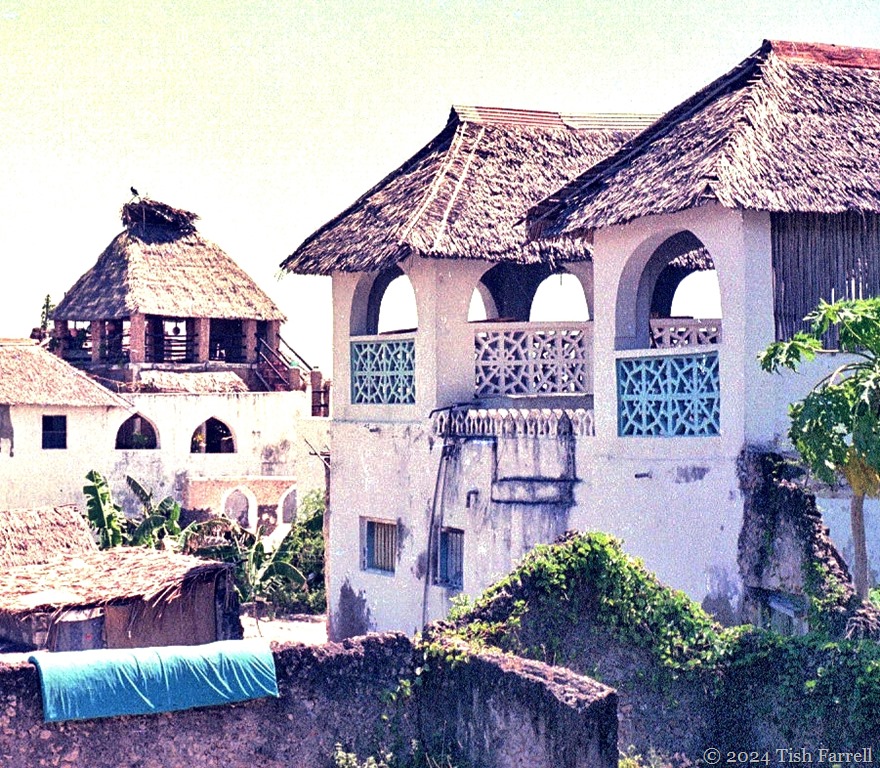
balcony 4

Stone Town – it is now a World Heritage Site. The surviving 18th century merchants’ homes, finely built of coral rag, are evidence of a once thriving city state, one of several Swahili towns and cities along the East African seaboard, stretching from Somalia to Mozambique. These settlements have origins back in the 8th and 9th centuries – the people who lived in them, their language, their culture born (literally) from a thousand and more years’ congress between Arab traders and indigenous African communities.
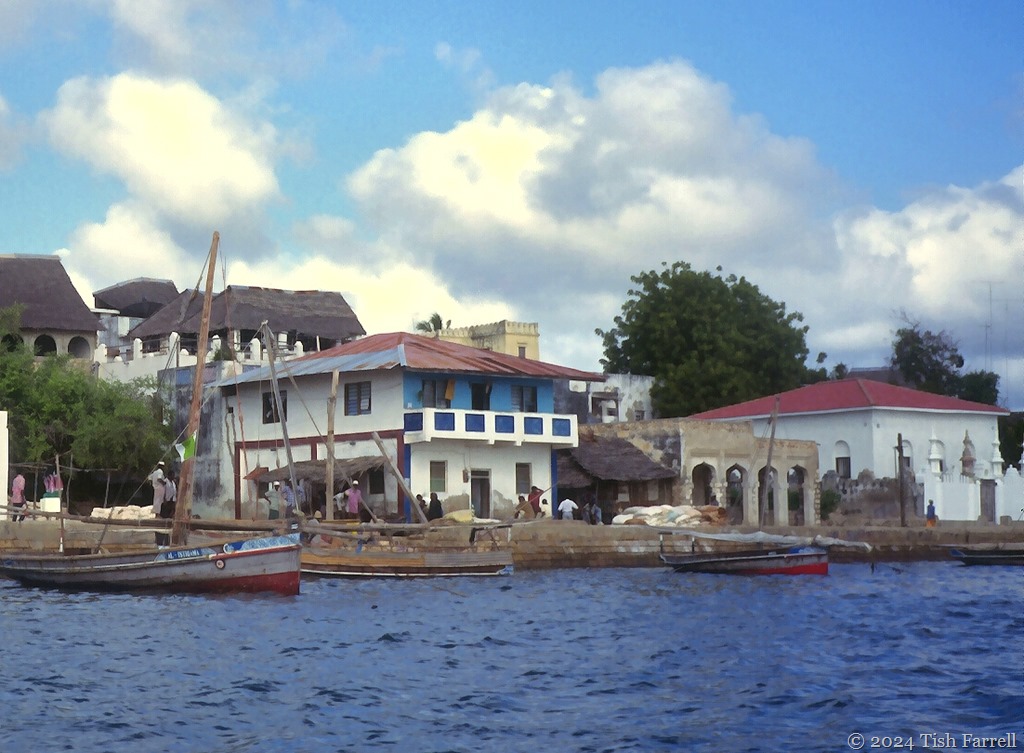
balcony 3a

The goods once traded out – ivory, leopard skins, tortoise shell, gold, mangrove poles (boriti) and slaves. The goods traded in – silks, porcelain, fine carved treasure chests, brass ware, jewellery and dates. In short this is Sinbad territory (Sendibada in KiSwahili stories). He doubtless plied the seas off East Africa; out from the Persian Gulf, the monsoon kaskazi bearing him south; and, after many hair-raising encounters, the kusi winds blowing him home again to Basra.

I’ve written more about this at Quayside Lamu. And about the Swahili HERE.

But now for more balconies. Those perfect places for dreaming. For today, bathed in unaccustomed warmth, I surely am dreaming.
balcony 2

balcony 5

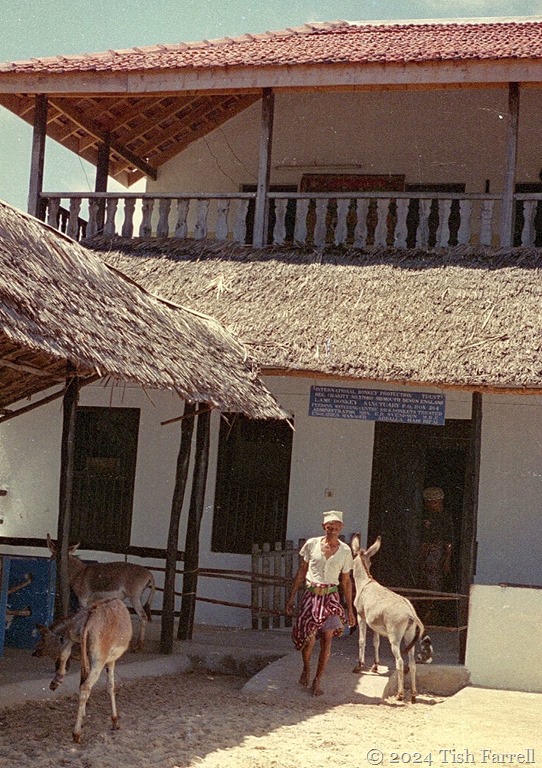
Lamu donkey sanctuary. Donkeys are a key mode of transport on the island

*
balcony 7

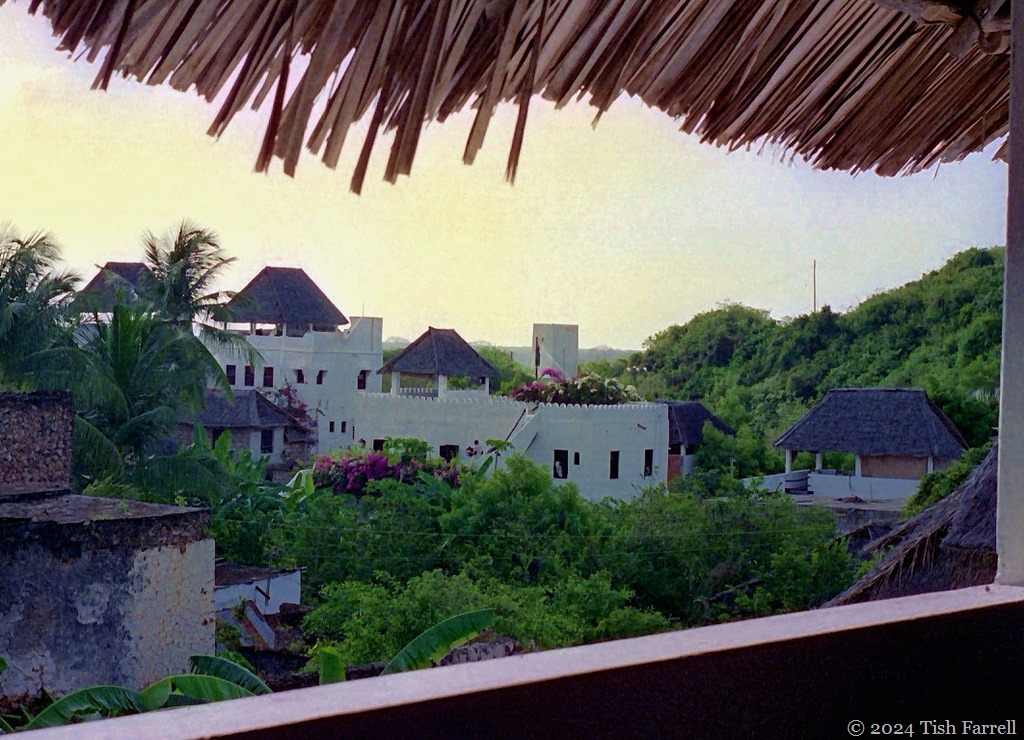
Sundowner look-out over Shela village, Lamu

*
balcony 6

Lens-Artists: Balconies This week PR at Flights of the Soul sets the theme. Follow the link for a fine gallery of balconies.

Looking Back ~ Moving Forward: From The Kenya Archive

giraffe2

I’m not sure that we’ll ever quite get over leaving Kenya, though it was never our homeland and, by 2000, when we left, our business there was done. But we had lived in Nairobi for seven years, seen many changes as Kenya moved uneasily from one-party rule towards multi-partyism: one externally imposed and alien structure to be replaced by another alien structure, this for a nation of many diverse communities that for centuries had each their own forms of traditional law and order, far closer, I might argue, to any form of democracy that the nations of the technocratic North might think they have invented or progressed towards.

And the reason we were there at all was because Graham (as plant pathologist and food storage specialist) was working on a British Government funded crop protection  project, working alongside Kenyan scientists and subsistence farmers in a bid to build in-the-field resilience against crop pests and diseases.

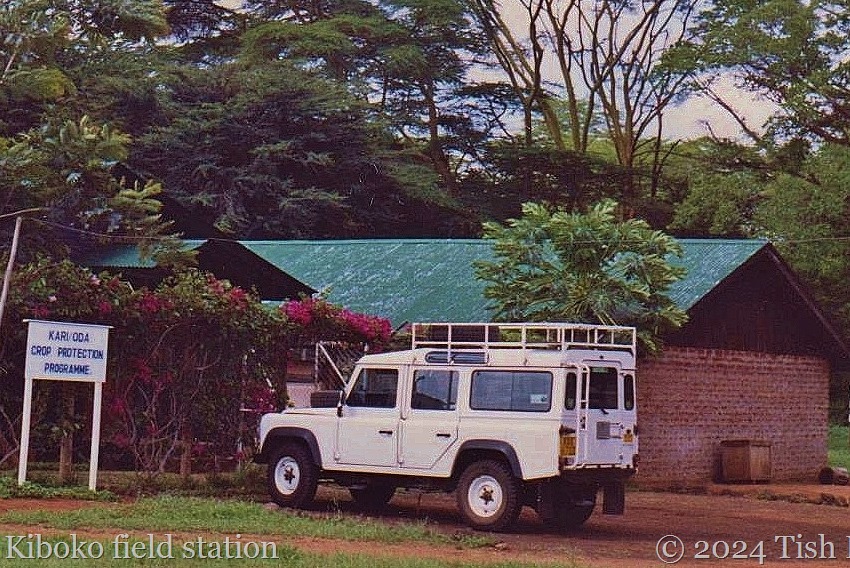
The project base was at the  Kenya Agricultural Research Institute (KARI) in Nairobi, but in the early days we did much travelling on the Mombasa highway, going back and forth between the capital and KARI’s Kiboko field station in Ukambani. Sometimes we drove the full 300 odd miles to Mombasa, sometimes less far to the Taita Hills. Mostly, though, it was the hundred mile trip that took us from the Nairobi plains at nearly 6,000 feet, down to the semi-arid lowland just north of Makindu and the Tsavo National Parks.

002

*

Ukambani, homeland of Akamba farmers and cattle keepers, is red earth, thorn-scrub country. You start to see mighty baobabs growing here too. They rise up in a natural parkland setting that you feel you must have imagined. Giant hornbills stalk around the verges. The farther vistas, heat-hazy towards the Yatta Plateau, may be dotted red from the shukas of Maasai as they fan out with their herds across the sparse grassland. You may also spot antelope and giraffe here too. For in Kenya it is said there is more wild game outside the huge national parks than inside them. Sometimes the great trucks that plied the highway back then would collide with a giraffe, thereby providing an unexpected meat meal for nearby farming families.

Kiboko ed Mombasa highway north of Kiboko

Mombasa highway at Kiboko looking north – Nairobi-bound

*

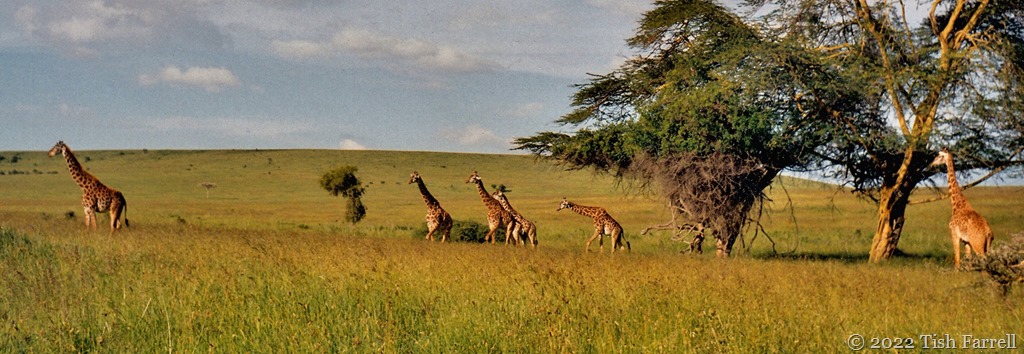
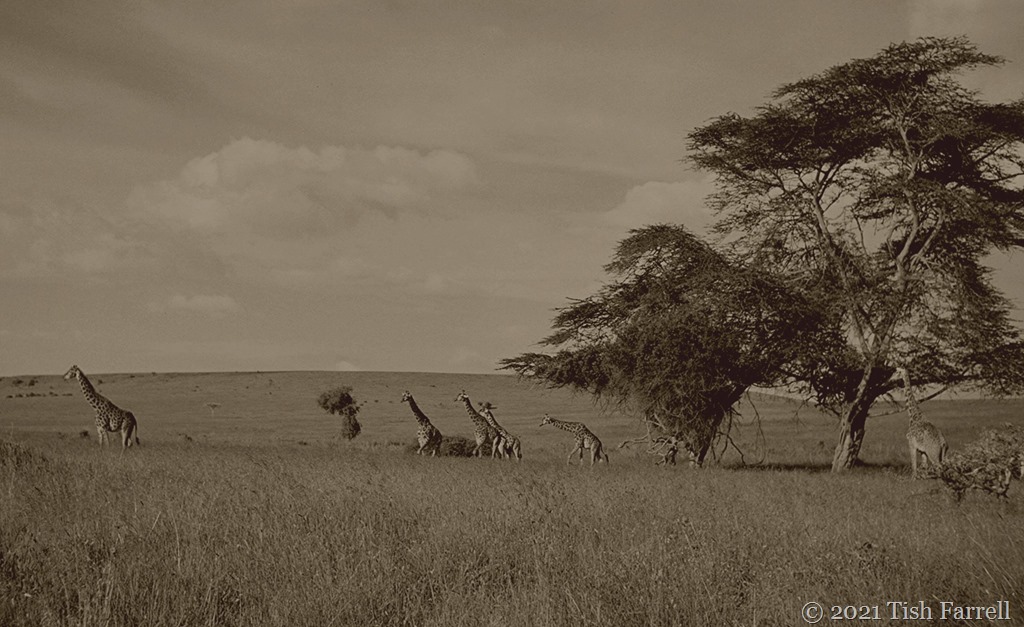
The giraffe in the header photo were spotted on the Kapiti Plains, south of Nairobi. We used to see ostrich, impala and gazelle on the roadside here too. But the sight of several giraffe moving across the plains, the peculiar gait that has them stepping in some shared slow rhythm all their own stopped the heart.

We were so very lucky to see such sights. Even now there’s a catch in my breath.

*

#SquaresRenew

giraffe 4 header

Once heard…

Marsh Pride male 1 ed

*

…never quite forgotten.

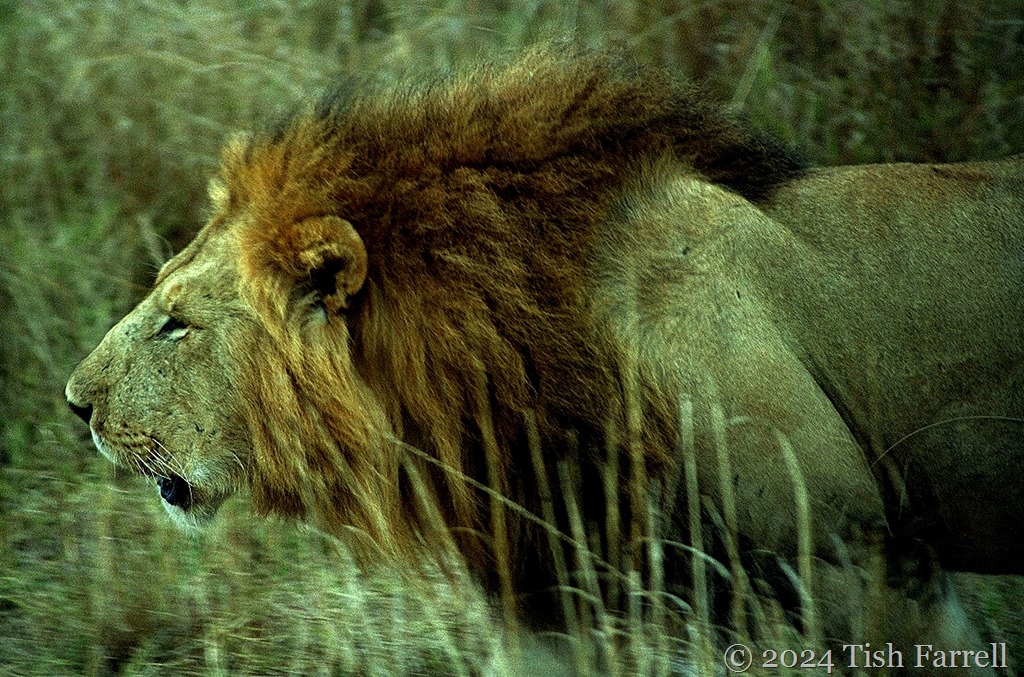
Thrilling and chilling both: a wild lion, in broad daylight, proclaiming his eminence. And not a full-throated Metro-Goldwyn-Mayer lion-roar (there’s no big show of fearsome canines); more a weaponized grunt that carries across the Mara grassland and rebounds against my sternum. And then in my skull.

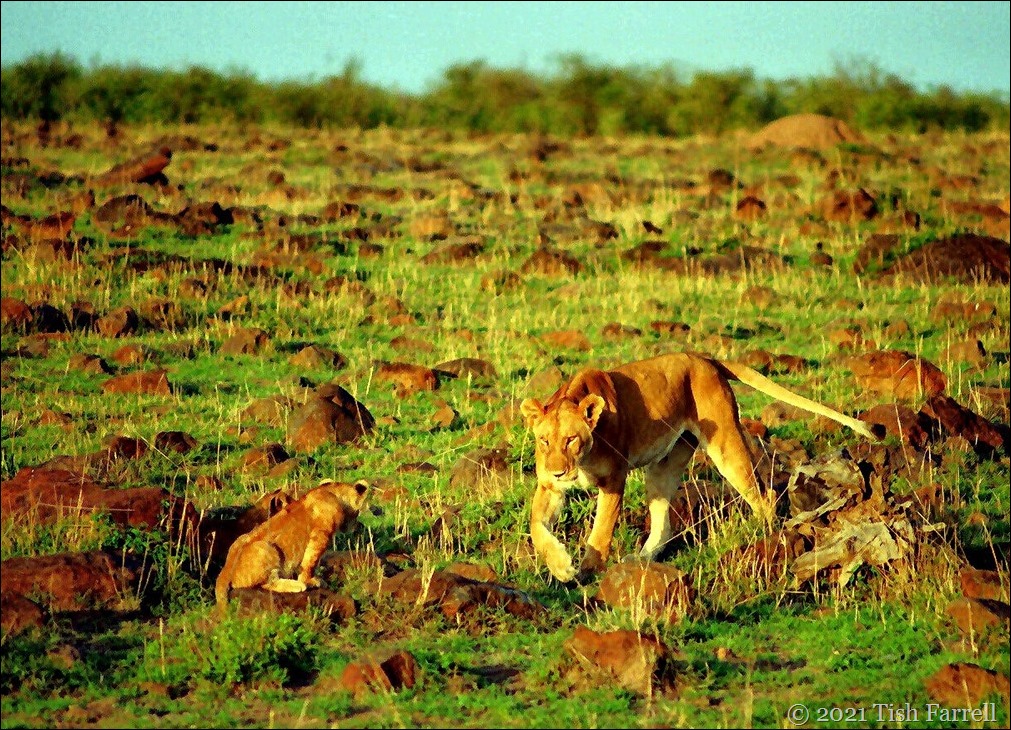
It takes some moments to re-ground, and assure the nervous system we’re not in danger.  We’re sitting in a big safari truck. The lion does not even look at us, nor appear to register our presence.  We pass by slowly. He parades. Our guide tells us he is the senior male of the Marsh Pride, a group of lions made famous on British TV during the 1990s, when wildlife photographer, Jonathan Scott, documented their movements. This lion, we’re told, is calling to the junior male. Meanwhile the pride’s three lionesses are busy devouring the kill, a hartebeast. They don’t see us either.
But still that resonating roar.

Throwing the voice is part of a male lion’s M.O. A spot of leonine ventriloquy if you like. To make themselves sound bigger and deadlier, they may also choose a dried up river bed for some night-time roaring. The dirt bank of a donga provides a  ‘sounding board’ to amplify the roar which may carry for several miles. Obviously the aim is to let other males know exactly what they’re up against should they dare to infringe territorial bounds.

We drive away, feeling somehow changed. Very small perhaps. It’s August 1999, the last of our seven years living in Kenya. When we return to England for good, what will we make of such days? Did they really happen? Sometimes it’s hard to be sure.

marsh pride senior male

*

To hear that lion call for yourself, there’s a brief clip here:

https://www.youtube.com/watch?v=1e0_4dwF9A4

Lens-Artists: Sound   Donna at Wind Kisses choses sound for this week’s theme – however you care to interpret it. Please pay her a visit.

Roadside Creations

Harare soapstone carver mono

It’s back to the old Africa album for Cee’s ‘made by humans’ theme because it was while I was thinking what to post, that I suddenly remembered here was something I really missed from our years living in Kenya and Zambia: the roadside artists and artisans who, day in and day out, made some truly wonderful creations.  In fact we did most of our best shopping on the pavement – from the decorative to the solidly functional.

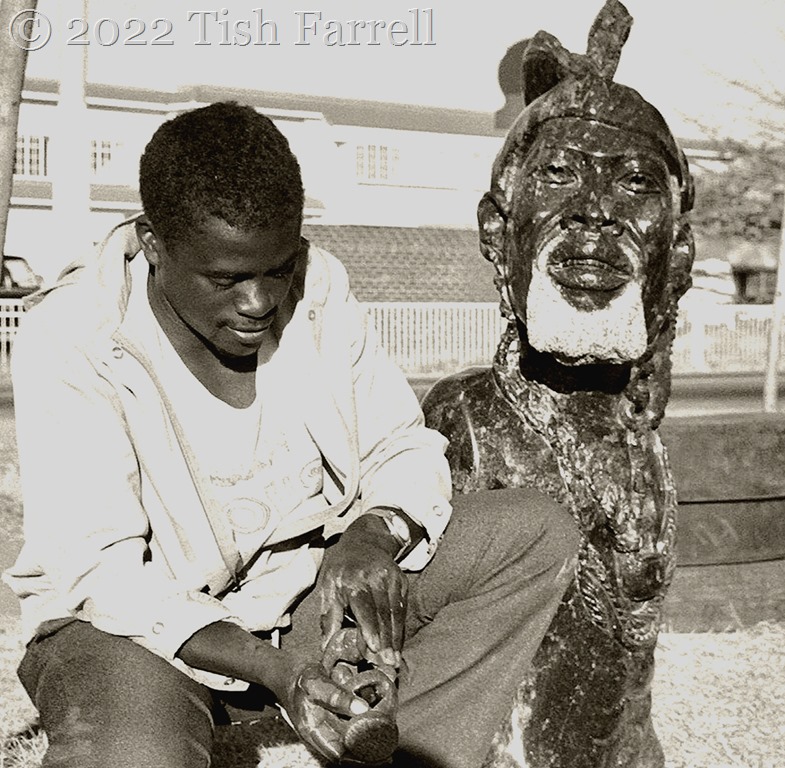
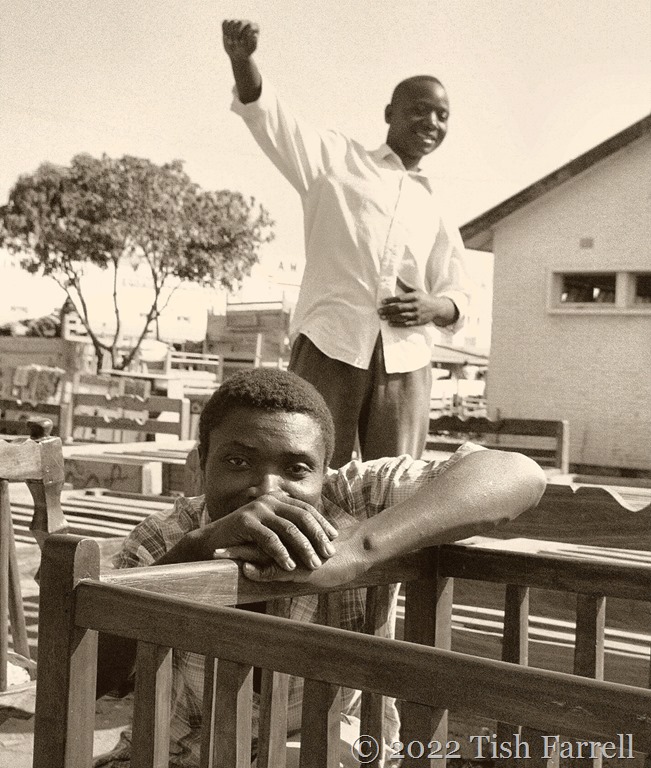
The header photo is a young soapstone sculptor in downtown Harare, taken during a road trip to Zimbabwe from Zambia. Meanwhile in Lusaka, here are the furniture makers who made beds of every kind, including ours, from repurposed air freight cases:

Kamwala roadside furniture market mono

*

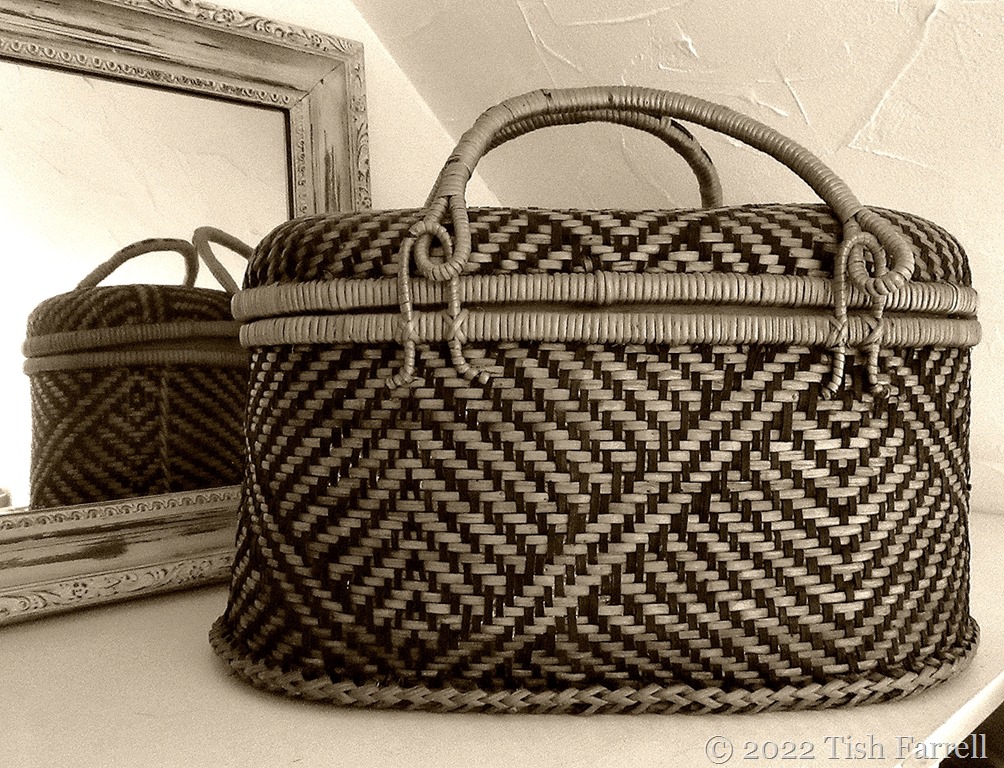
And while I’m here,  a more recent shot of one of my favourite baskets, made by the Tonga women of Zambia’s Southern Province. I use it for storing sewing and knitting bits and bobs.

mono

Cee’s Black & White Photo Challenge: Human-made

Reflections: Looking Back On Tiwi Reef

sea and sky on the reef at Tiwi ed

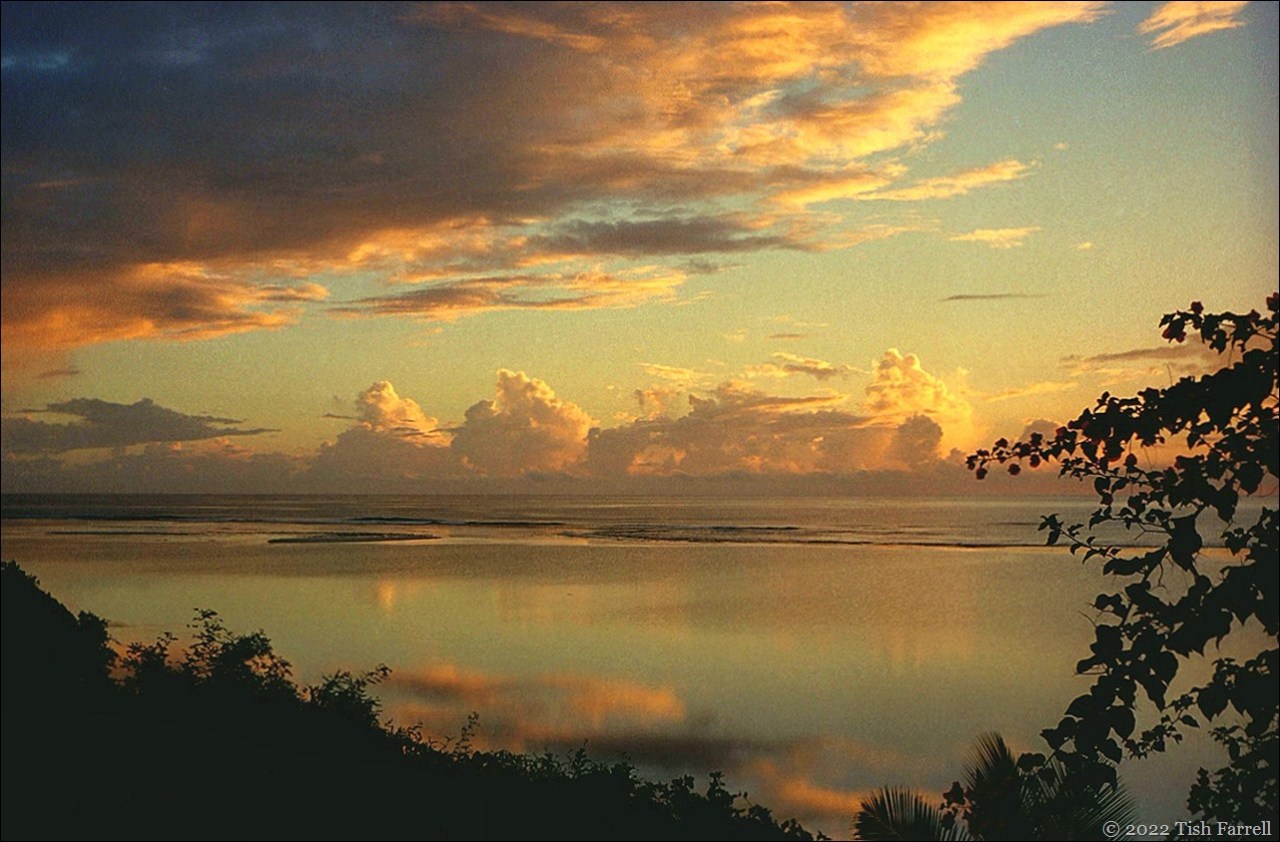
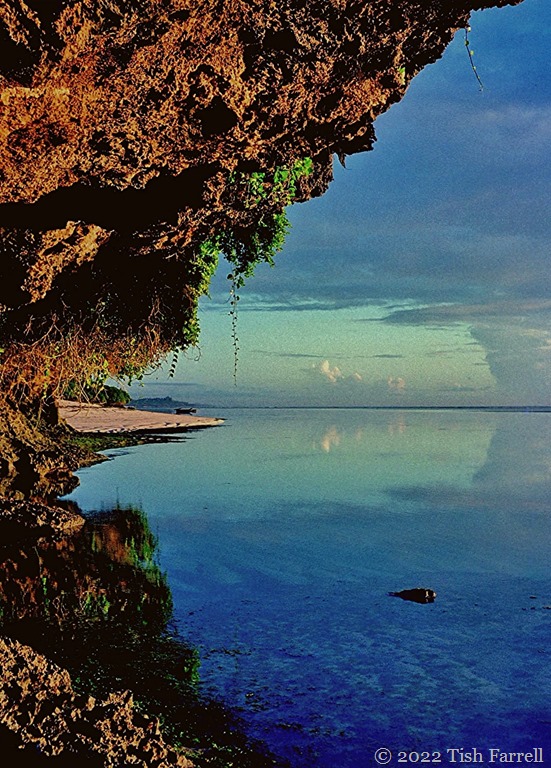
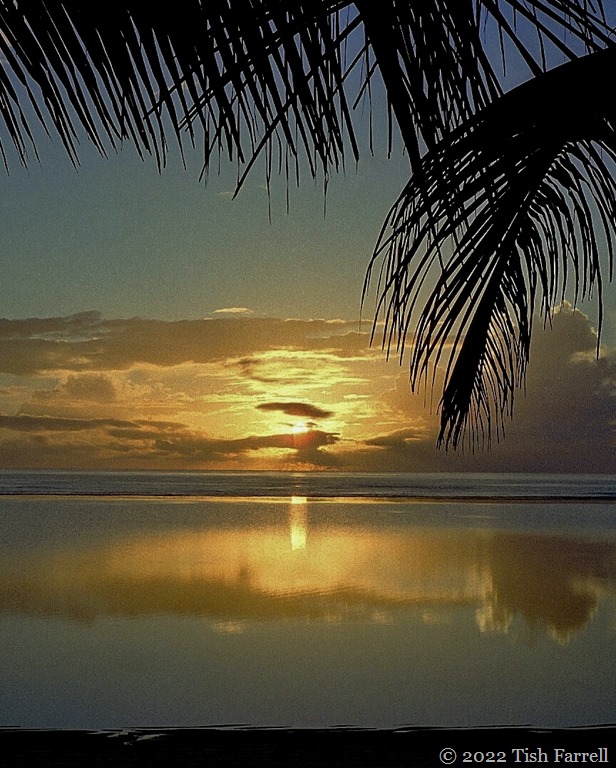
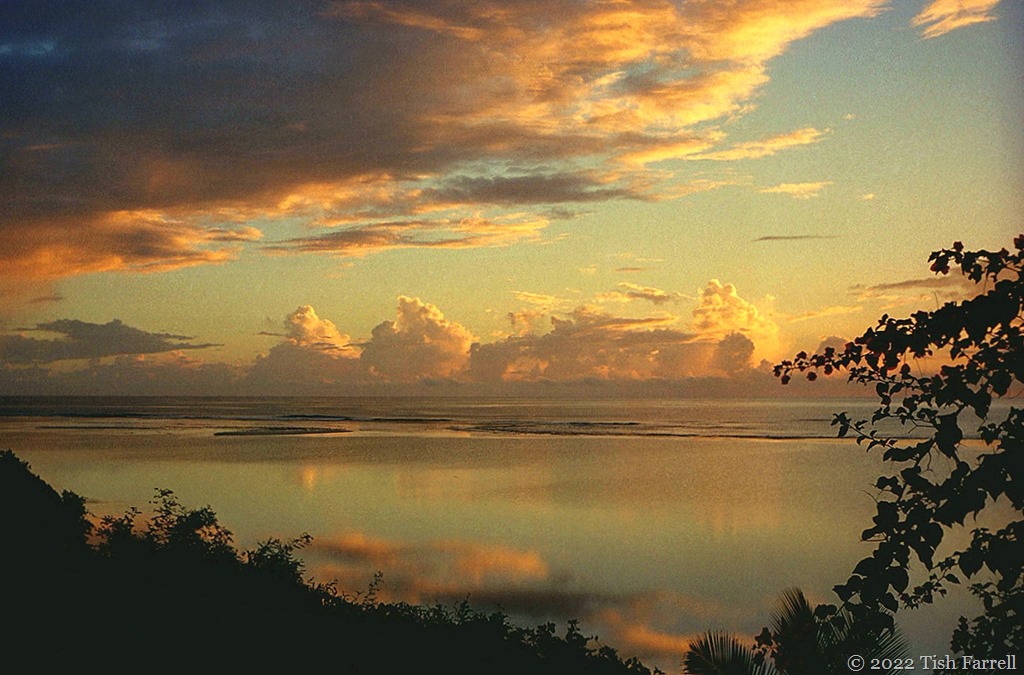
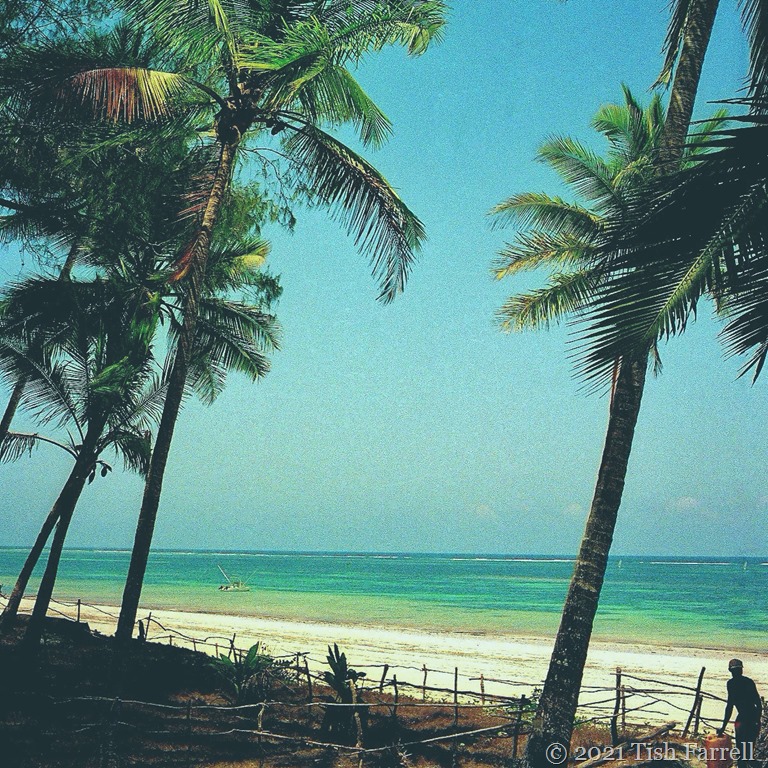
Today in Shropshire we are having a heatwave – 26 C which is hot for us. It’s making me think of Kenya days when we used to spend Christmas (the hottest season) on the South Mombasa coast. We took all our best friends and family there. So: fond, if long ago, thoughts of grilled reef fish and lobsters bought from the local fishermen, and daily visits from the vegetable seller who pushed his sturdy Chinese bike along the coral paths, the black frame slung with raffia panniers, the contents garnered from his shamba – pawpaws, tomatoes, red onions, tiny hen’s eggs, warty lemons, a pepper or two.

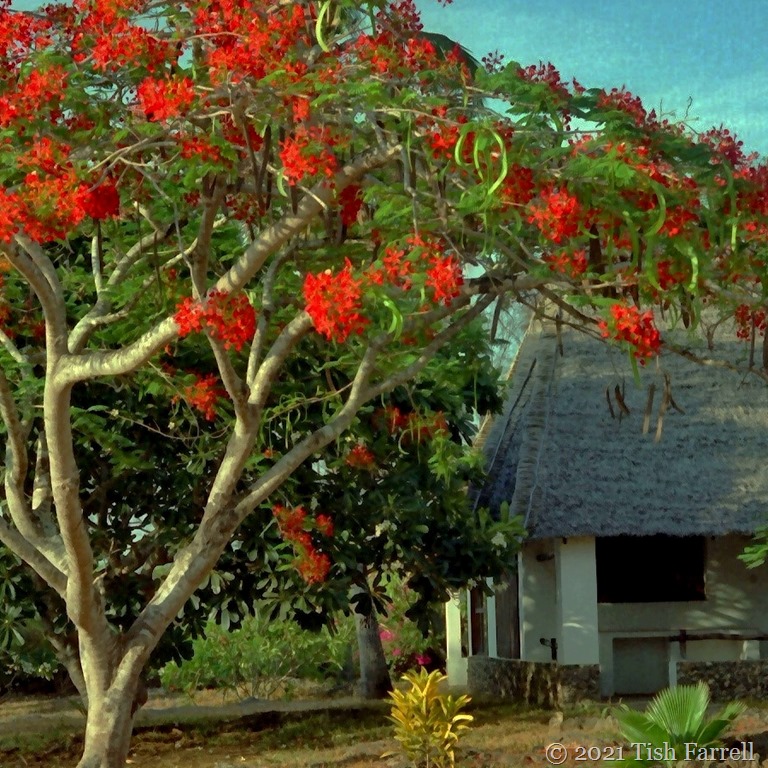
Of course it was steamy there beside the Indian Ocean, but breezy too, and the verandaed beach cottages, following the local style, were built to catch it – tall makuti thatched roofs, large unglazed windows shaded by louvered shutters with moveable slats. Billowing mosquito nets over the beds. The outside sounds blowing in, crickets in the hot grass, finch chatter in the Madagascar flame trees, plangent call of the water bottle bird emptying its flask, a descending doo-doo-doo-doo…then waft of frangipani, and further off, the ocean crashing on the reef. The smell of the sea. Aaaah! Tusker beer, anyone?

sunrise on the lagoon ed

dawn over Tiwi lagoon ed

ed

Lens-Artists: seeing double This week Jez has set the challenge. He has some stunning reflections on show.

Quiet Hour In The Maasai Mara

Scan-140726-0005 (9)

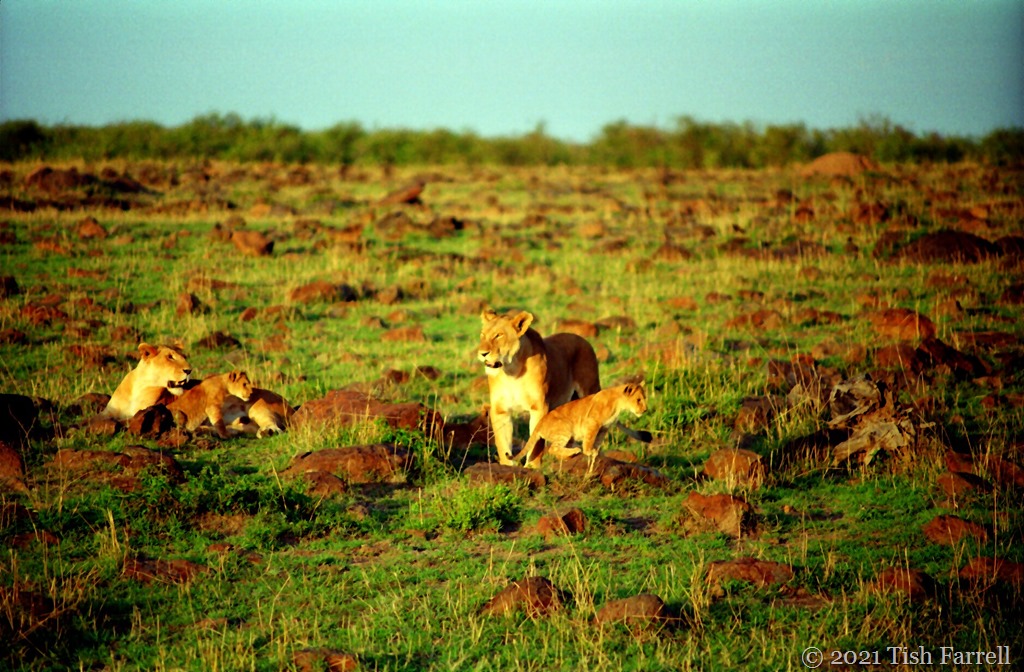
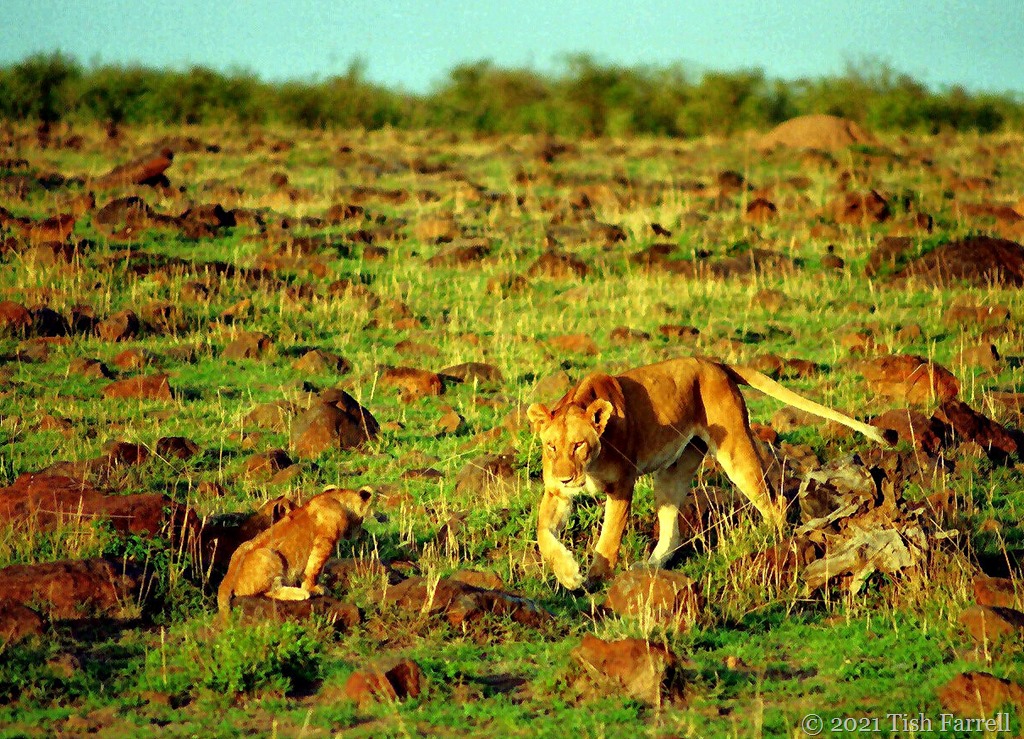
Almost sunset and a good time for mamas to play with the children…

Scan-140726-0004 (8) - Copy - Copy

*

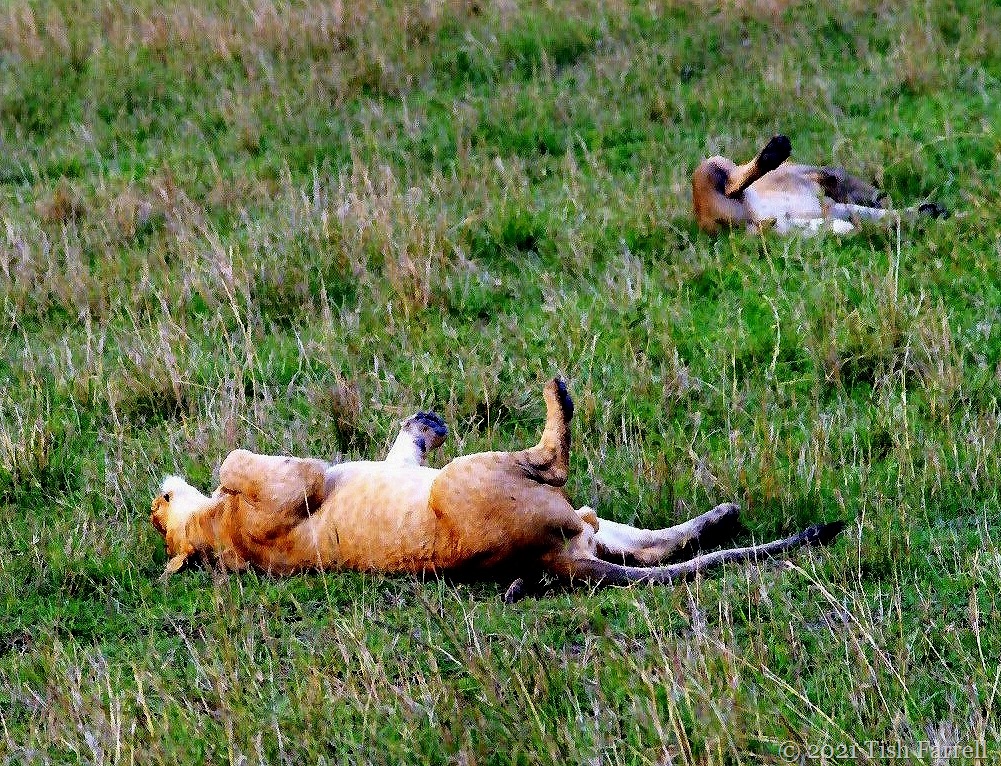
Or for lads to roll and loll…

Scan-140726-0003 (7)

*

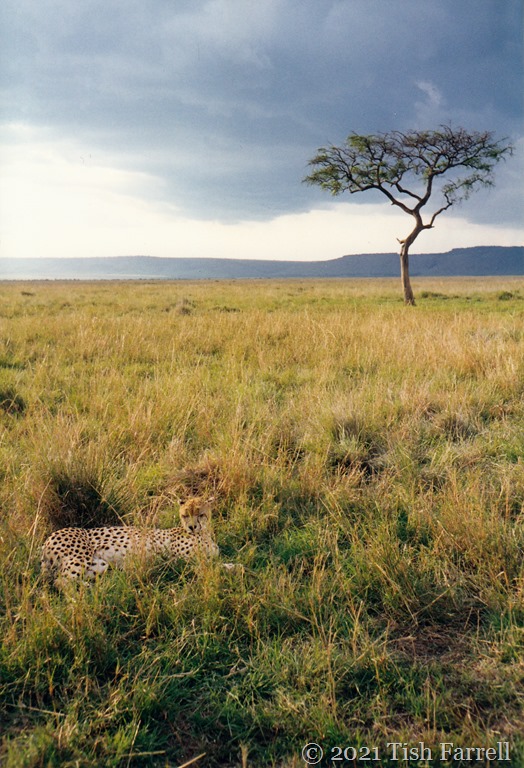
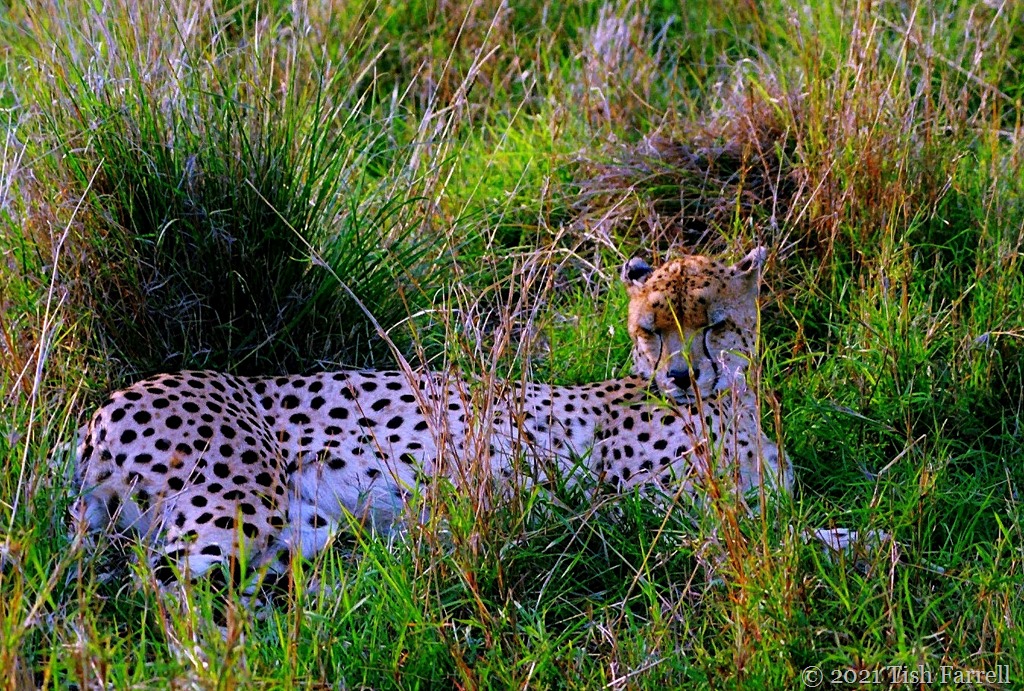
Or a cheetah to snooze in the grass beside a mulului tree…

IMG_0012

Scan-130520-0021

*

And then for humans to watch day’s end over the Mara plains…

Scan-140726-0003

Lens-Artists: Serene  This week Patti invites us all to stop and ponder on peaceful scenes. As ever,  these views are from the old Africa album.

In Matching Stripes?

Grevy's zebra

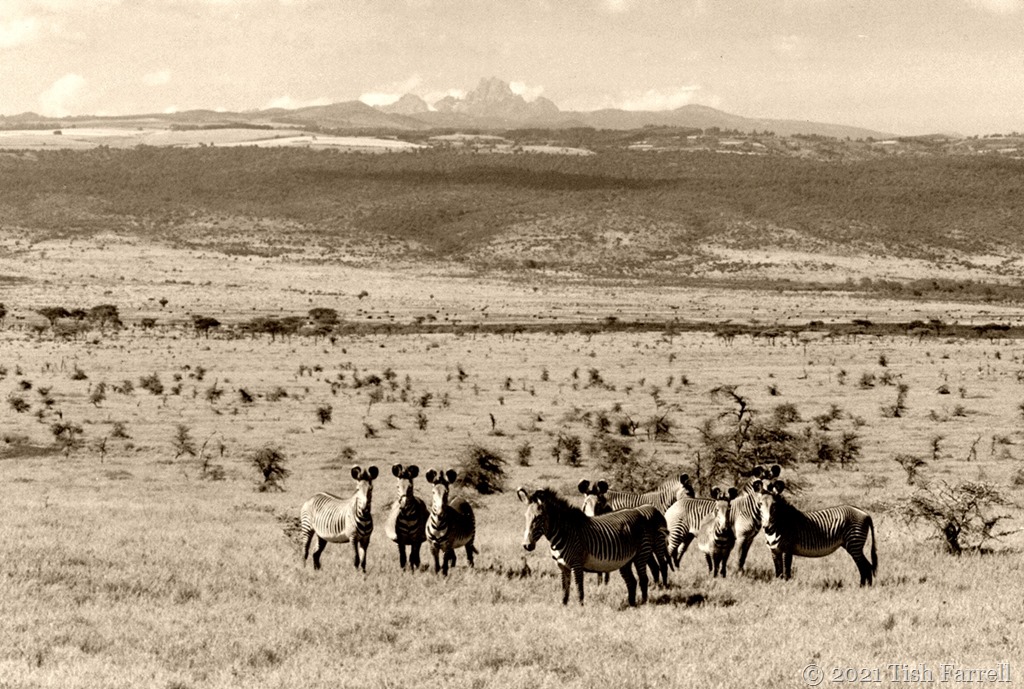
Day’s end and a gathering of Grevy’s zebra, the largest and most northerly race of zebra-kind. It was a chance encounter. For two hours Kevin, our Chagga guide had been driving us along the dirt tracks of the Lewa Downs reserve. It was new territory to us; our first trip to northern Kenya from our then home-town of Nairobi. The landscapes were breath-taking, sweeping rangelands, pale grasses, beetling gorges, the distant gauzy backdrop of the Matthews Range.

Earlier we had stopped to follow a Greater Kudu family on foot. They were moving in single file up a steep bush trail. We lingered under a thorn tree and in the late day light, watched as they melted one by one into dappled cover. Then it was back to the truck and more trail bashing, the only sign of wildlife, massive piles of elephant dung on the track, and some torn up thorn trees where the herd had passed.

We scanned the bush country all round for a glimpse of them, but they were gone, or at least we could not see them, which is not the same thing. Elephants are invisibility specialists. No matter. As I said, the country was magnificent, the light like liquid amber, and the air filled with the soothing scent of acacia blossom. Lemony with tones of jasmine. As ever, out in the bush, all felt like a dream.

And by now, too, the sun had dropped behind the mountains, the light fading fast. We headed back to camp, and it was then, as we rounded a bend on the trail, we met the zebra. There was only just enough light left to take their photo, but they obligingly stood perfectly still.

And just in case you’re wondering what the difference is between Grevy’s and the plains zebras, here’s another sundowner scene, this time from the Maasai Mara far to the south:

mara zebra

These are Common or Burchell’s Zebra, smaller than the Grevy’s. Their all-over, widely spaced stripes are thicker; ears pointed to Grevy’s endearingly round. Their social habits are different too, the plains’ zebra living in family groups with much grooming between members while their cousins appear to move in less structured gatherings.

But what about the stripes, you may ask: is every zebra’s livery unique?

park 17

It is hard to be sure from the Grevy’s portrait, though I’m thinking it’s highly likely. But when it comes to the plains’ cousins, I have told the tale before of how once in Zambia, on a New Year’s Day game drive, a rather tipsy guide waxed lyrical about the very particular patterns on each zebra’s ‘butticles’, and how it was by such means that zebra offspring recognised their respective mamas. I don’t know about the last bit, but these two photos from Nairobi National Park certainly prove a point, final blurry butticle shot aside: the stripes truly do not match.

IMG_0034

Cee’s Black & White Photo Challenge: Matching Things

‘Large As Life’ ~ More ‘Vintage’ Africa Scenes

elephants  sepia

Maasai Mara

*

For this week’s Black & White Photo Challenge, Cee asks for things on the large side, which at once had me thinking of big animals; big skies; big landscapes: Africa. And this further prompted the thought of trying a sepia-vintage look with photos from the Farrells’ aging Africa album. To my eye the results look rather like plates from some 1930s book club imprint of travellers’ tales.

Lewa Downs white rhino sepia

Lewa Downs, Northern Kenya: white rhino

*

Lewa Grevys Zebra and Mount Kenya sepia

Lewa Downs: Grevy’s zebra with Mount Kenya backdrop

*

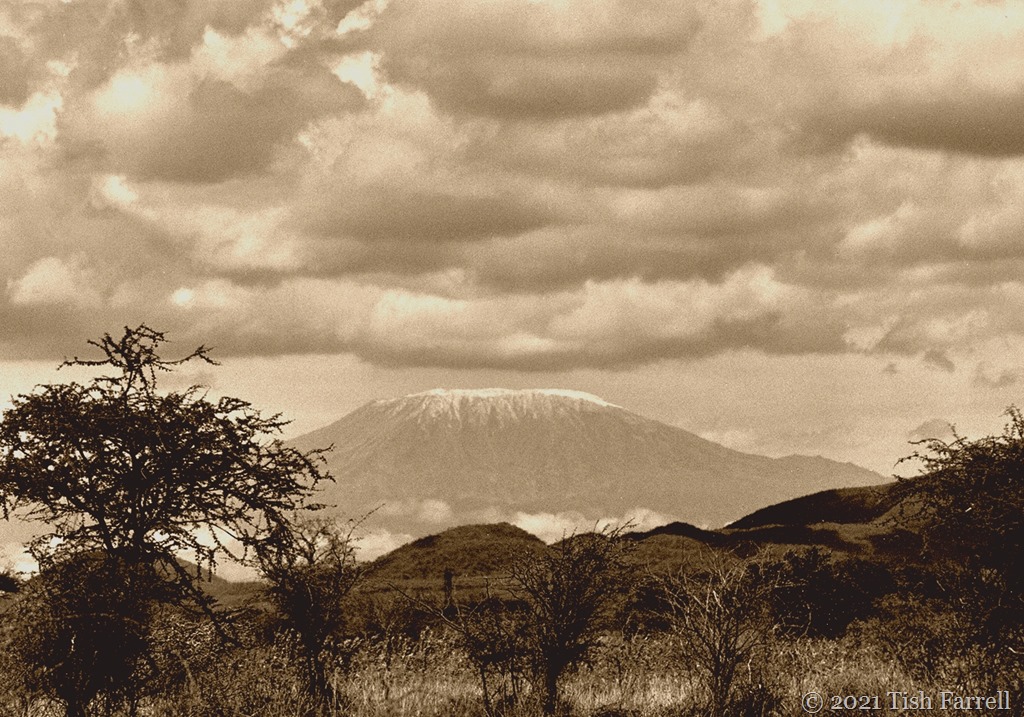
Kilimanjaro from Mombasa Highway sepia

Kilimanjaro revealed one morning on the Mombasa Highway at Kibwezi

*

Scan-140726-0005 (8)se

Maasai Mara Marsh Pride

*

290sep

Olololo Plateau and Thomson’s Gazelle

*

desert date mulului tree 001sepia

Desert Date tree Maasai Mara

*

Athi Plains giraffes sepia

Athi Plains Giraffe

*

Cee’s Black & White Photo Challenge: Large subjects

On The Reef ~ Tiwi Beach

Sq Tiwi 1201

In bygone days of Nairobi living we often made the long-haul drive down the old Mombasa Highway to the south Kenya coast. After 300 miles and six and more hours of judder and roar in the Land Rover, humping in out of potholes, getting covered in dust and smothered by truck fumes, being broiled in the queue for the Likoni Ferry, which once boarded you could never feel quite sure of making touch down, to arrive at last on Tiwi Beach felt like stepping into heaven. There were rarely many people there, not even in the Christmas high season, just a couple of beach cottage enclaves, the  local farmers calling round with fruit and vegetables for sale, the Digo fishermen bringing parrot fish and lobsters, and the unbroken soundscape of ocean pounding on reef, fluting notes of the water bottle bird, soft ting-ting of a bicycle bell when the vegetable seller came calling, the breeze in the coconut palms.

Sq flame tree 2

Madagascar Flame Tree and beach cottage

*

Life in Colour: greener shades of blue

Tree Square #11

Trees For Everything On Zanzibar

zanzibar 7

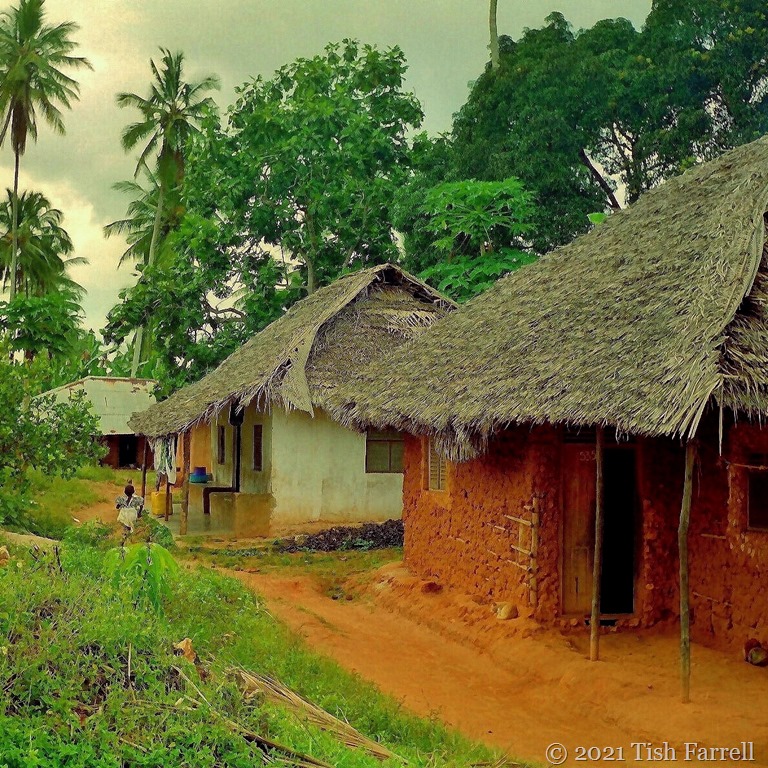
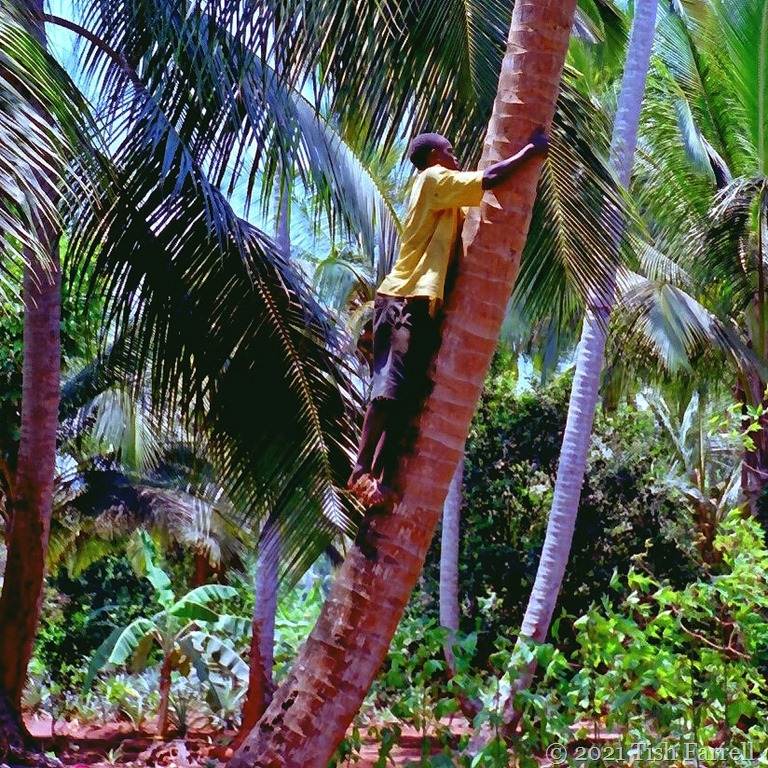
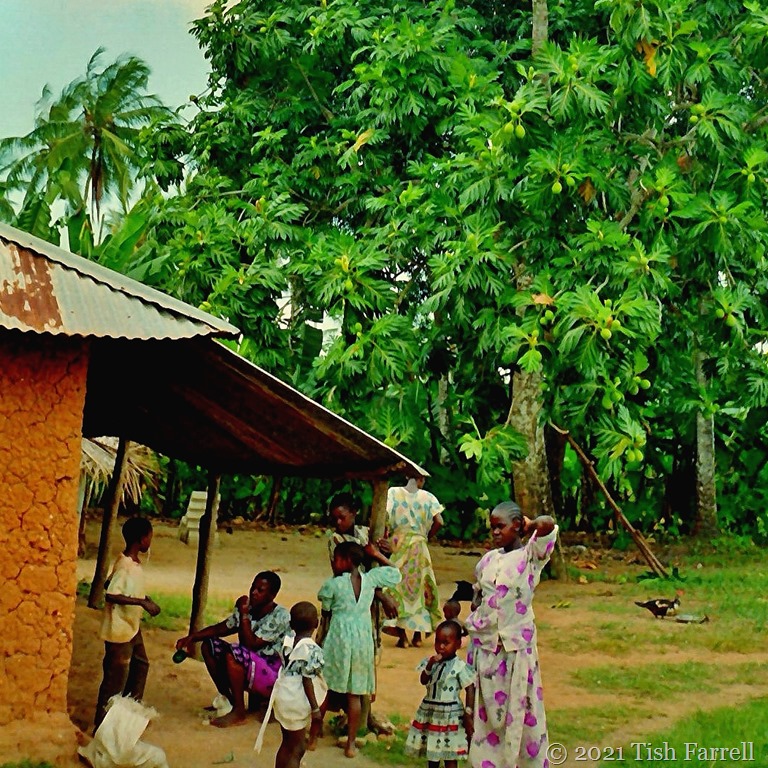
While I’m in East Africa arboreal mode, I remembered Zanzibar could not be beaten for its array of fabulous trees – from giant mangos and jackfruits to its plantations of spice-bearing nutmeg, cinnamon and cloves trees. On the family farms there are papaya, orange, banana and coconut groves, not only sources of family food, but also crops for market. And the leaves of the coconut palms can be turned into all kinds of useful recyclable household essentials – roof thatch, baskets, screens and sleeping mats.

Scan-130429-0074

The Coconut Harvester

*

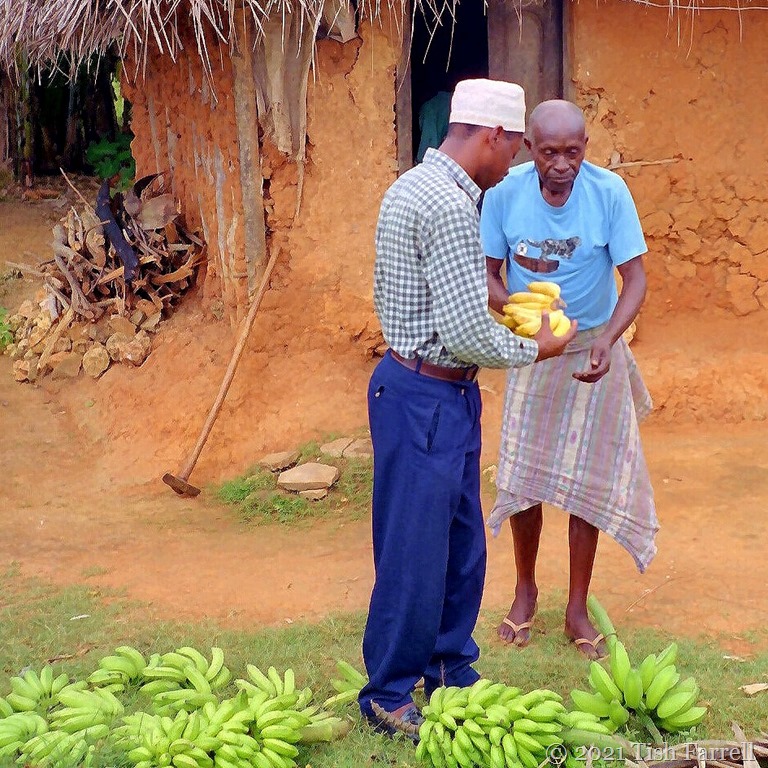
Island guide, Hari, doing a deal at the farmhouse door.

Scan-130429-0014

*

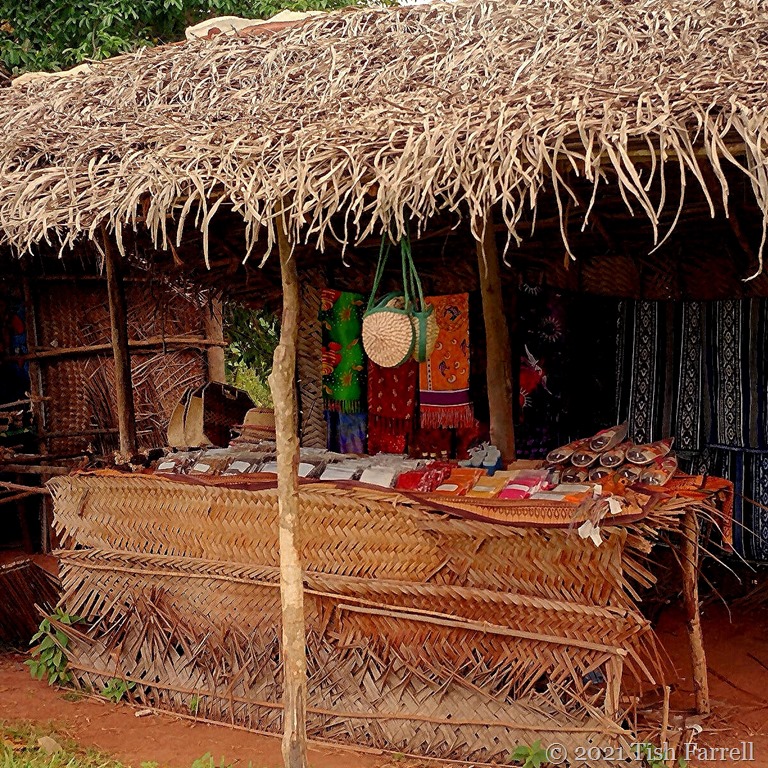
Roadside spice farm stall:

Scan-130429-0008

*

Jackfruit tree:

zanzibar6

*

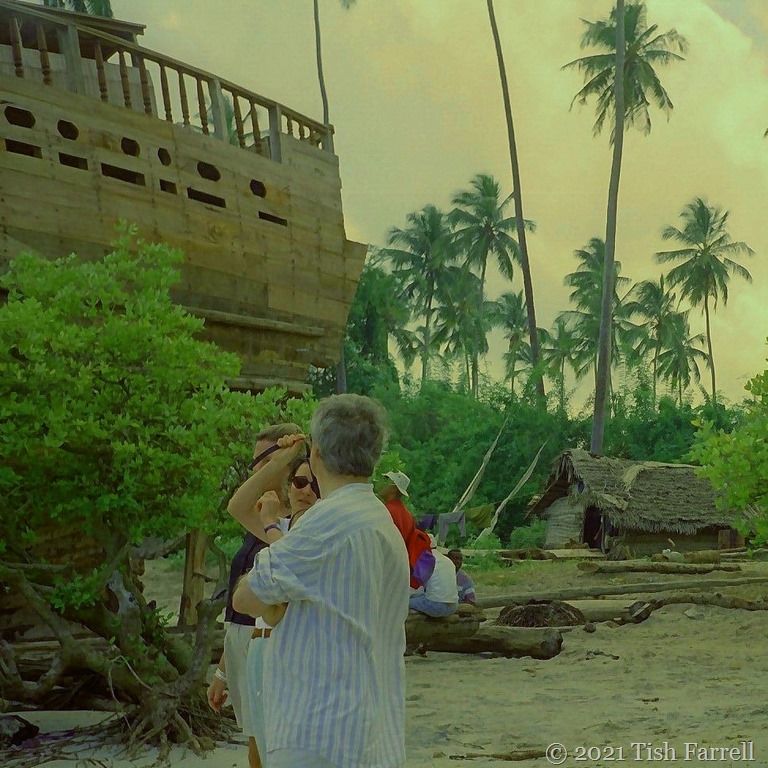
Maruhubi boat builders’ beach with an ocean going dhow under construction:

zanzibar

*

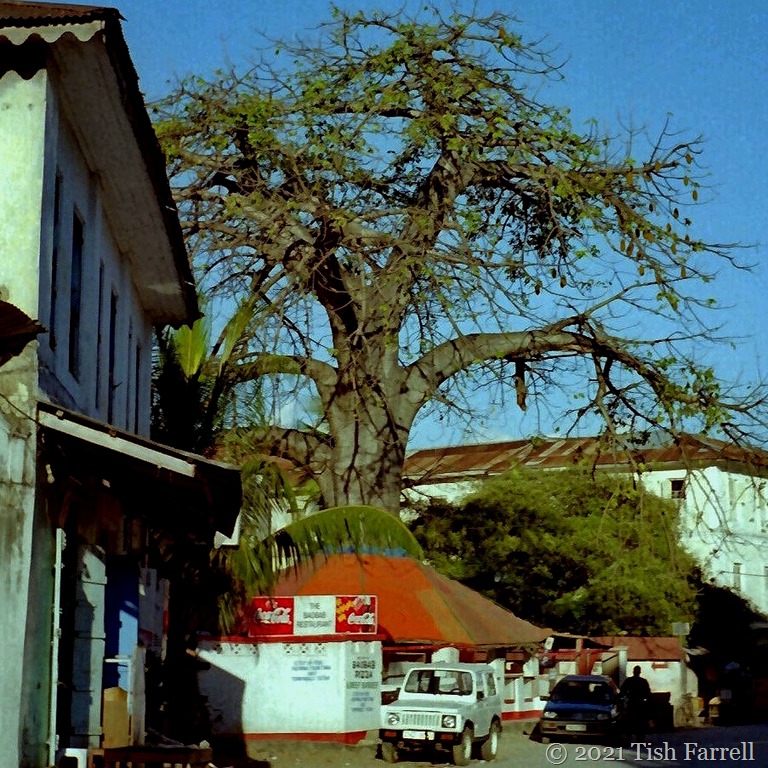
And then there are the baobabs. This one coming up is a little unusual – apart from being in leaf which only happens now and then, it’s providing the structural wherewithal for a Stone Town pizza joint:

zanzibar 4

Tree Square #10