#WordlessWednesday

#WordlessWednesday
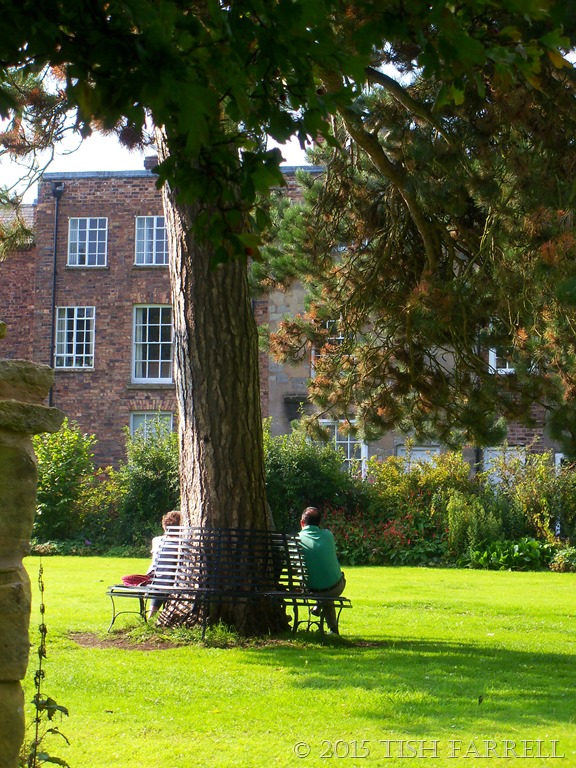

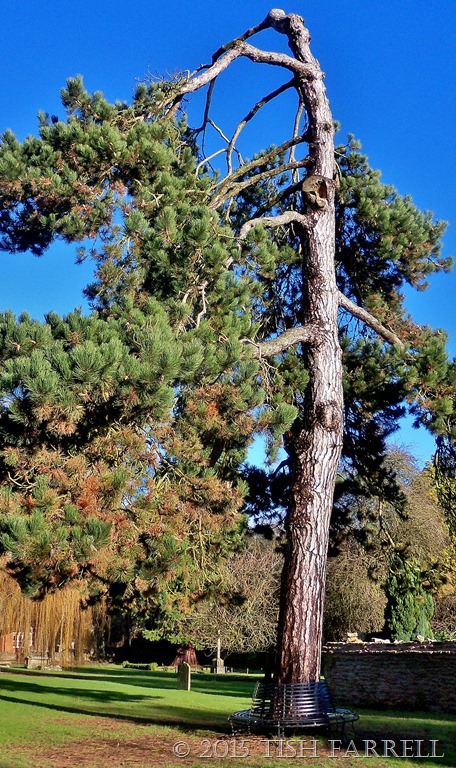
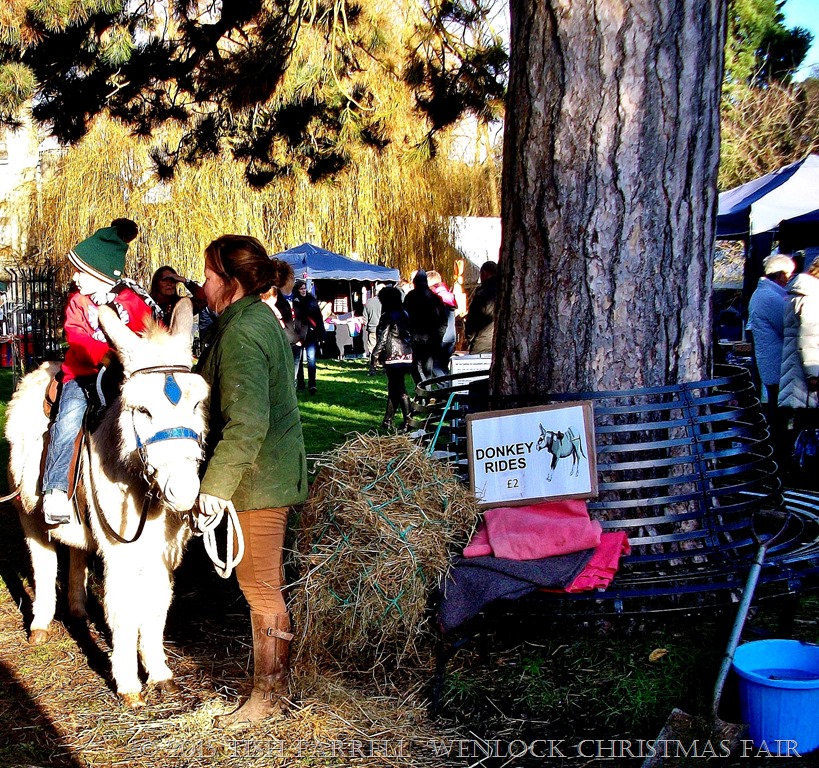
Here’s my bench for Jude’s Bench Series #38. This month she is asking us to find ones made of metal, and this is my favourite town seat. It surrounds a Wellingtonia on Much Wenlock’s Church Green and, apart from its circularity, it is perhaps not the most exciting of constructions. But it is in the perfect setting. And it has so many pleasing views and all through the year too. Things to watch out for include the annual Christmas Fayre and the Wenlock Poetry Festival…




Visitors to the annual Wenlock Poetry Festival adding their poems to the Church Green’s Poetree. The next festival is April 2016. Click on the link for more details.
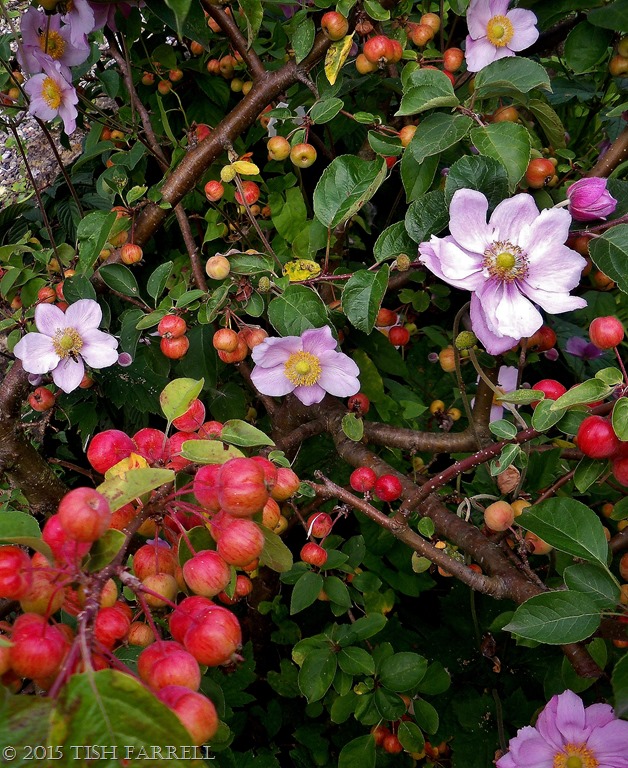
This year, for some reason, the Japanese anemones have decided to take on their close neighbour, the Japanese crab apple tree, in a ‘let’s see who can grow tallest’ contest.
Admittedly, the tree is a small one, three metres at most, but some of the anemones are already two metres tall.
This is the kind of gardening I love: where the plants come up with their own ideas. I did not plant the anemones directly under the tree. They seem to have moved in there by themselves, and now use the tree’s protecting arms as they grow ever taller.
Nor is this a colour scheme I would have thought of concocting – pale pinkish-purple, russet red and green. But somehow it’s very pleasing, and especially on the dull days we’ve been having lately.
Every day, too, I see the tiny crab apples turning a deeper shade of red: perfect Garden-of-Eden miniatures, which reminds me of a comment made by Melanie at My Virtual Playground. One of the times I featured my crab apples she told me they were called pommes sauvages in French – wild apples – an altogether much prettier name. I agree. Although my ‘wild’ ones have been much inbred, and don’t have quite the same sense of abandon of the truly wild ones found in our field hedgerows.
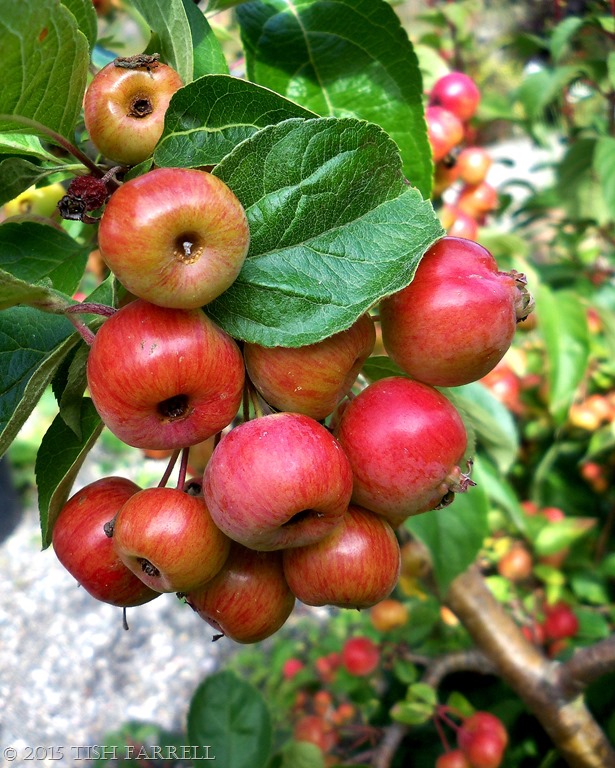
The tree is Malus Evereste by the way. It is glorious in spring too. (You’ve seen the picture). It’s growing in a tall bed which gives us an all-year good view from the kitchen French windows.
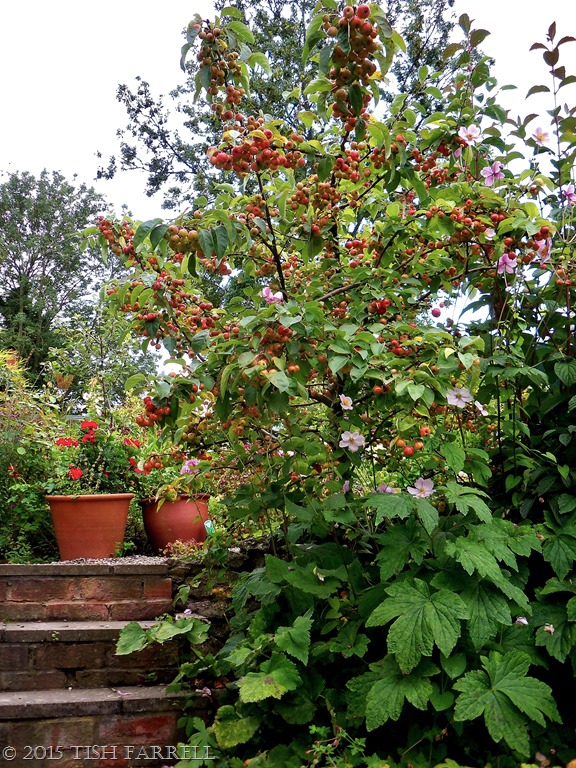
Elsewhere in the garden things are looking a little dreary round the edges, but there is still some stalwart blooming going on. The red geraniums look bright in the garden pots despite the recent downpours, as does this lovely penstemon:
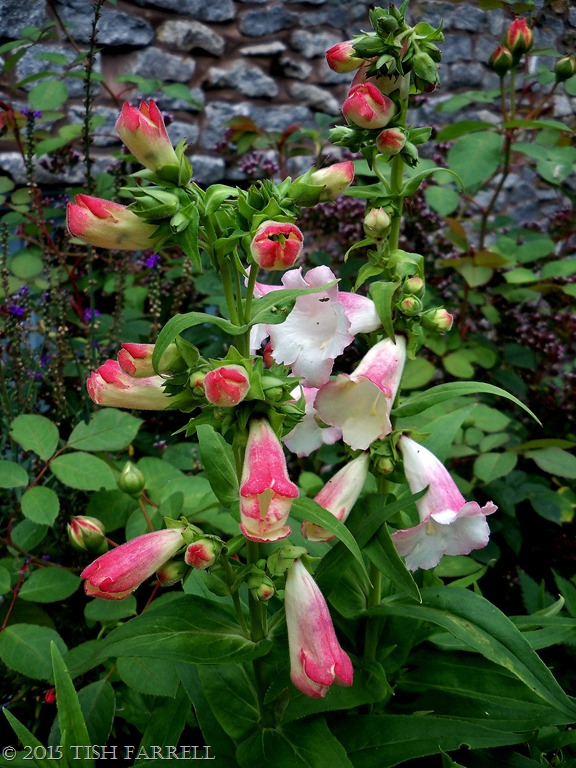
I think it’s my favourite version of this most obliging plant. If you cut down the stems after flowering, in a few weeks time you get another showing, perhaps more vigorous than the first. This variety is called Apple Blossom, but it makes me think of raspberry ripple ice cream – a rather shivery thought on this gloomy day.
Growing in the bed just behind Apple Blossom, you can see Teasing Georgia. She’s in bud again too. This is such a lovely rose, and opens into dense whirls and whorls of pale gold.
I’m hoping she’ll open before the weather turns weirder than it already is. Forecasters are now promising us the coldest winter ever. But endlessly prone to optimism, I’m further hoping that this is the same order of forecast that in March promised us a barbecue summer and drought. (Hands up all of you in England who managed to fit in more than one barbecue between the wind and showers).
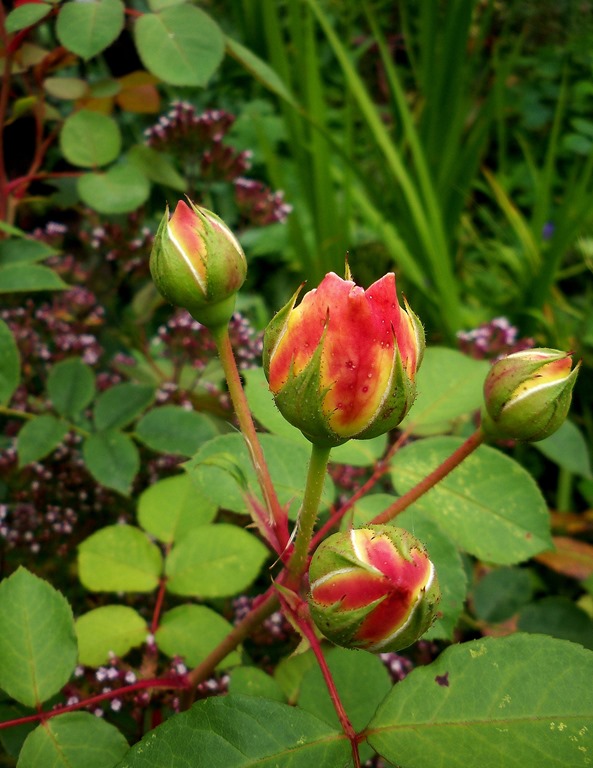
Our garden is all over the place and on different levels. This is because circa 1830 the house was built into a steep bank between the field behind, and the road in front. Later occupants then dug out a rear yard, and added a tall terrace bed, and behind it, a high retaining wall.
I have yet to get to grips with gardening in so many dimensions, which is why I rather depend on the garden to follow its own design. I also notice that it is devising its own timetable. For instance, what does this June-blooming foxglove think it is doing amongst the late summer rudbeckia?
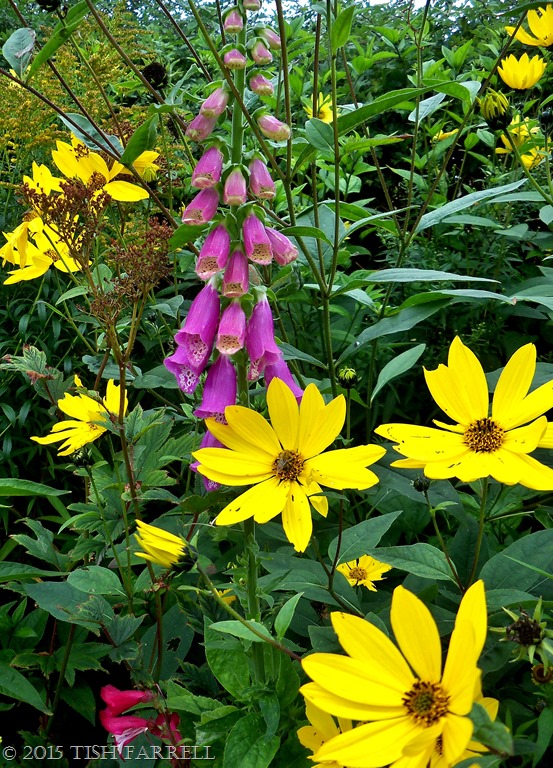
Just to the left of the foxglove is the dead head of meadowsweet. It has a pink flower, which also surprised me this year. This is something else the garden has come up with: creating (somehow) a very vigorous hybrid from the original wild, and cream-flowered meadowsweet that I originally planted.
I shall definitely encourage the new version, and plant out any seedlings. It is a statuesque creation, very tall, and softly scented. Also Meadowsweet, apart from being used to flavour beer and deserts, has its place in Welsh legend. In the Fourth Branch of the Mabinogi, the 11th century transcription of age-old tales, there is the dark story of Blodeuwedd (flower-face), a beautiful woman created by the magicians, Math and Gwydion from the flowers of oak, broom and meadowsweet. The tale does not end well. Blodeuwedd (pronounced: blod-EYE-weth) is also the name for owl, a fact, along with a reworking of the Mabinogion story, that was famously explored in teen fiction by Alan Garner in The Owl Service.
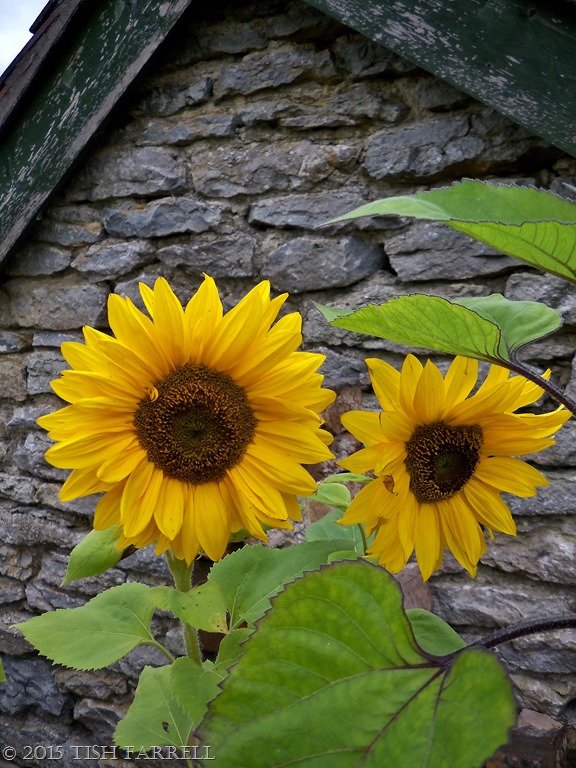
And thinking of flower-faces, here are two growing in a pot by the old privies (now our two dysfunctional garden sheds – i.e much head-banging on lintels, followed by standing in one’s own light so you can’t see what’s in there). These sunflowers have taken ages to come out, but it’s nice to see them at last, and especially now the real sun has gone away. It’s hard not to smile back at them, isn’t it?
Happy Wednesday!
Inspired by (but with added fruit) Cee’s Flower of the Day
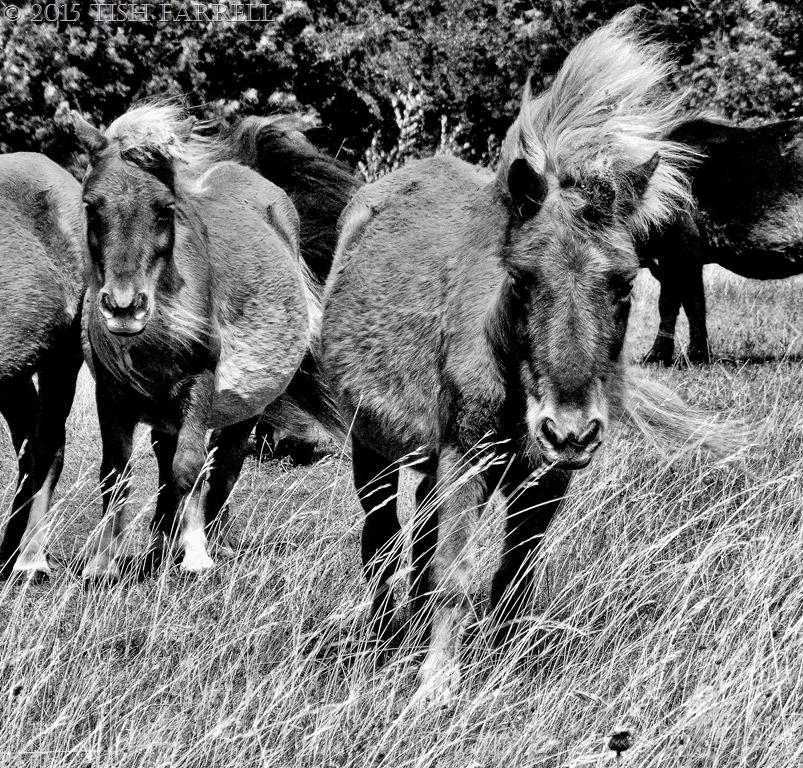
We’re barely into September and already autumn is here in Shropshire. It must be so, because the little horses are back on Windmill Hill. They will spend the next few months grazing off the dying summer grasses and wild flowers. They look very windswept, but the punk-mane-effect is mainly down to thickets of cleavers (goose grass) seeds in their top knots.
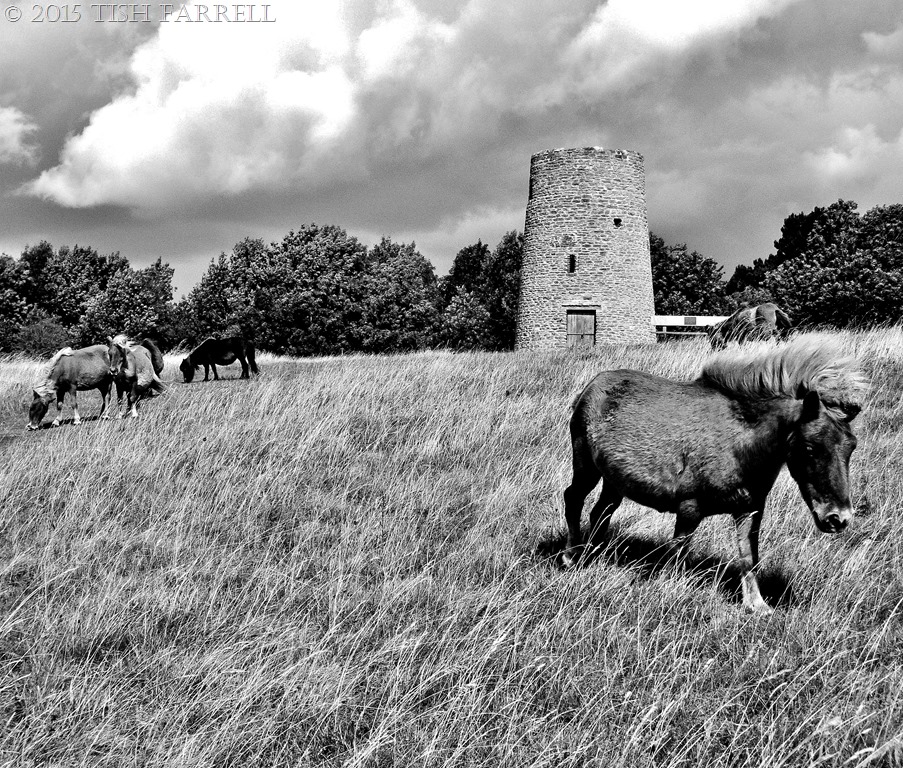
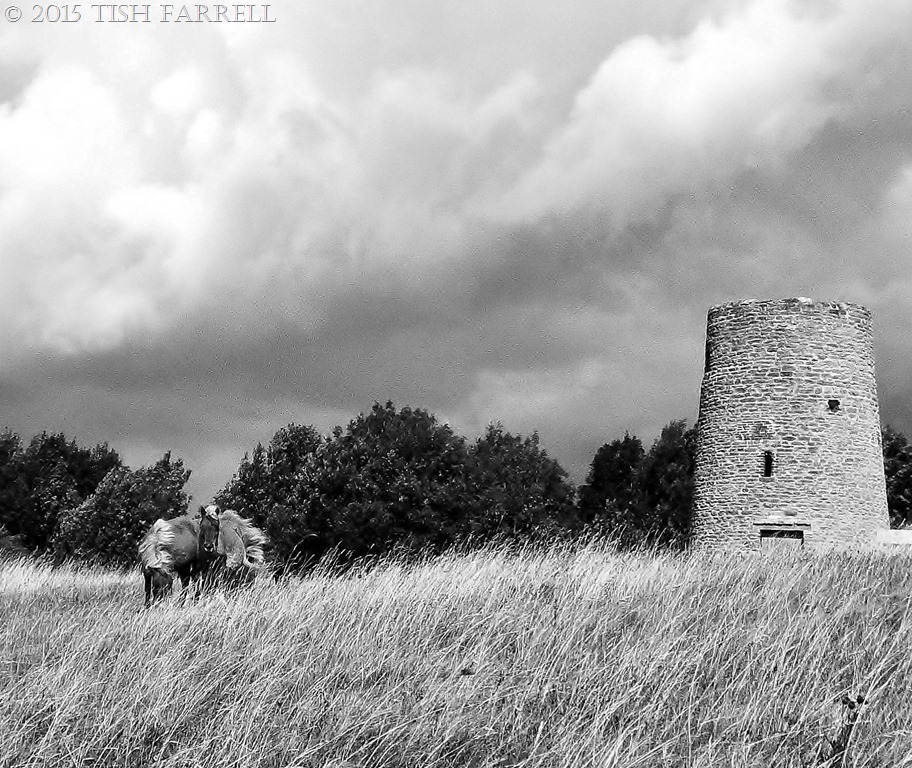
Looking across the hill there’s hardly a sign of the June-July flowering – all those buttery clouds of Lady’s Bedstraw quite gone. Not a trace of the orchids either. Only the dark and brittle seed heads of knapweed that always strike a note of dreariness. The weather doesn’t help either. For weeks it has been rain between showers.
Nor was I encouraged by the BBC radio science programme I heard yesterday. I caught it in the midst of recompiling a glut of runner beans into chutney (beans at least like rain). The guest climate experts were soon informing us that the El Nino effect they promised us all in 2014 did not come to much. In fact, they opined, (and they sounded quite definite about it too) we still have it very much to look forward to – the worst El Nino effect hitherto experienced, they said. For some reason the Pacific Ocean keeps heating up. And this means disrupted weather patterns worldwide, and for Europe, an even wetter winter than usual.
MORE RAIN? I wish we in Shropshire could email some of it to those lands whose dramatically changing climates mean that they now receive little or none. Mongolia is one place suffering massive desertification. Likewise, the countries of Africa’s Sahel that border the Sahara. In both regions, and many others besides, human actions, poverty and climate shift combine in a vicious downward spiral that results in increasing degradation of land and water sources. This, apart from war, is one of the main drivers of human migration. It’s all connected, despite what the climate change naysayers may wish to believe.
All of which is to tell myself to count my blessings. I am free to wander where I like without fear of being terrorized by extremists. I have all the food I need and more. I enjoy every comfort. I have the luxury to meander along Shropshire byways, talking to little horses, musing on the meaning life, the universe and everything, while across the globe desperate others risk all to find somewhere they can live a decent life with their families. Some people, we hear, do not want to share their land with refugees. It is assumed that they will be nothing but a drain on resources. Yet who knows what gifts in talent and skills these homeless souls might be bringing us? Also, not sharing may cost us more than we could ever imagine. In some societies the truest measure of civilisation is the gift of hospitality. Perhaps we need to think about this with a little more application. At least, I know I do.

copyright 2015 Tish Farrell
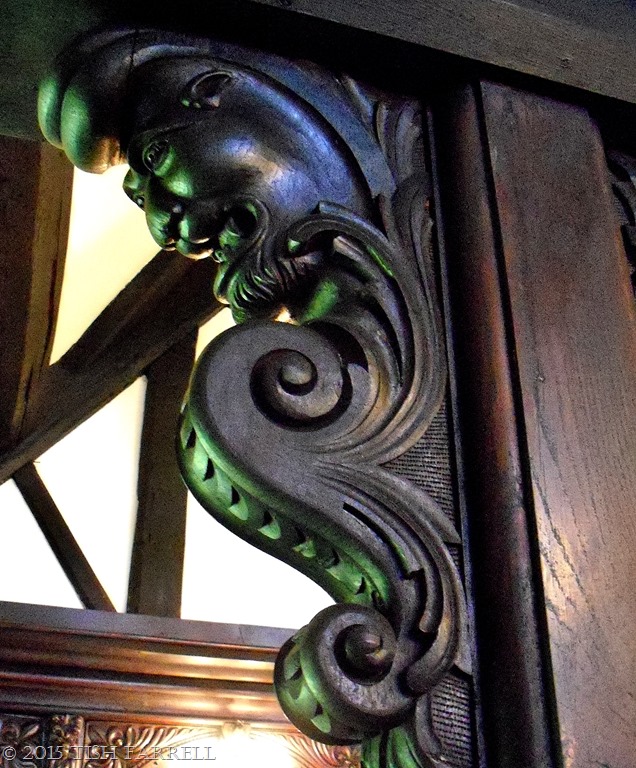
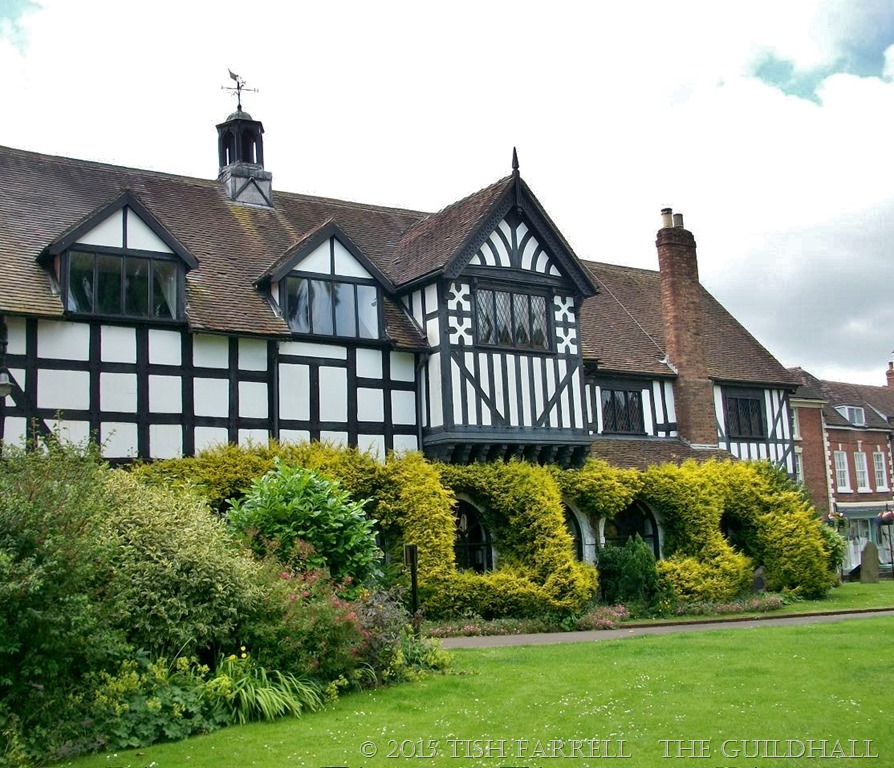
This is not the sort of chap you expect to find at a town council meeting (lion or devil, I’m not sure which) but then Much Wenlock’s council chamber is no ordinary place. It was built in 1577 as an extension on the 1540 civil courtroom. The two chambers on the upper floor of the Guildhall thus became the judicial and administrative centre for the 70 square miles that had once been ruled by the Prior of Wenlock. Underneath was the town lock-up, and an open space for a corn market. Behind is the churchyard, and next door, Holy Trinity parish church. The hub of the town then.

But perhaps the most surprising thing about the council chamber is that it is still in use today, although anyone sitting through a council meeting may well be left with distinctly unfavourable impressions of the past, and physically too: the seating is a torture on both knees and nether regions. I guess it was designed to keep everyone awake.
I’m afraid these upcoming interior shots look a bit woolly because of the spotlighting. On the other hand, they perhaps convey some sense of the antique residue that pervades the place.

The panelling around the walls is 17th century, and was bought from elsewhere and installed in Victorian times by the town’s doctor and benefactor, William Penny Brookes, he who invented the modern Olympic Games (a fact I may have mentioned a few times.). The mayoral and officers’ chairs are especially awe-striking, and the said august personages truly do need to have on all their robes , wigs and paraphernalia if not to get lost inside them. These days this usually only happens on Mayor Making Day, once every four years.
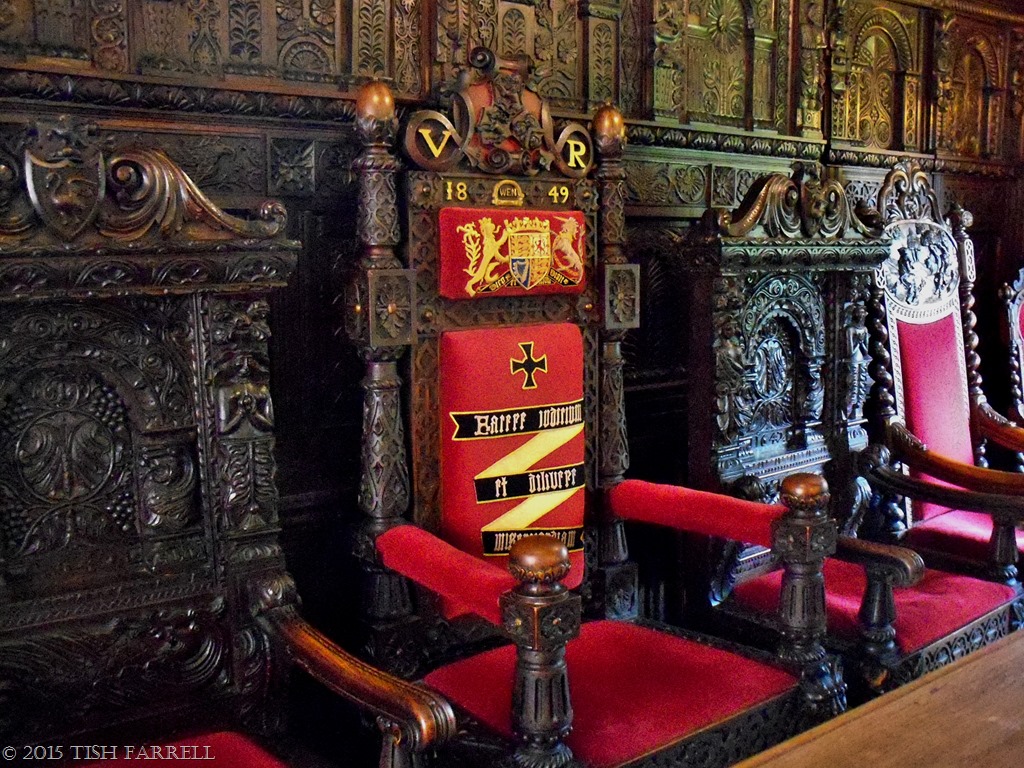

Here’s a closer view of the panelling behind the officers’ chairs. (There’s another scary entity up in the top right hand corner). Then coming up is the panel above the fireplace. Something to do with the Garden of Eden perhaps:

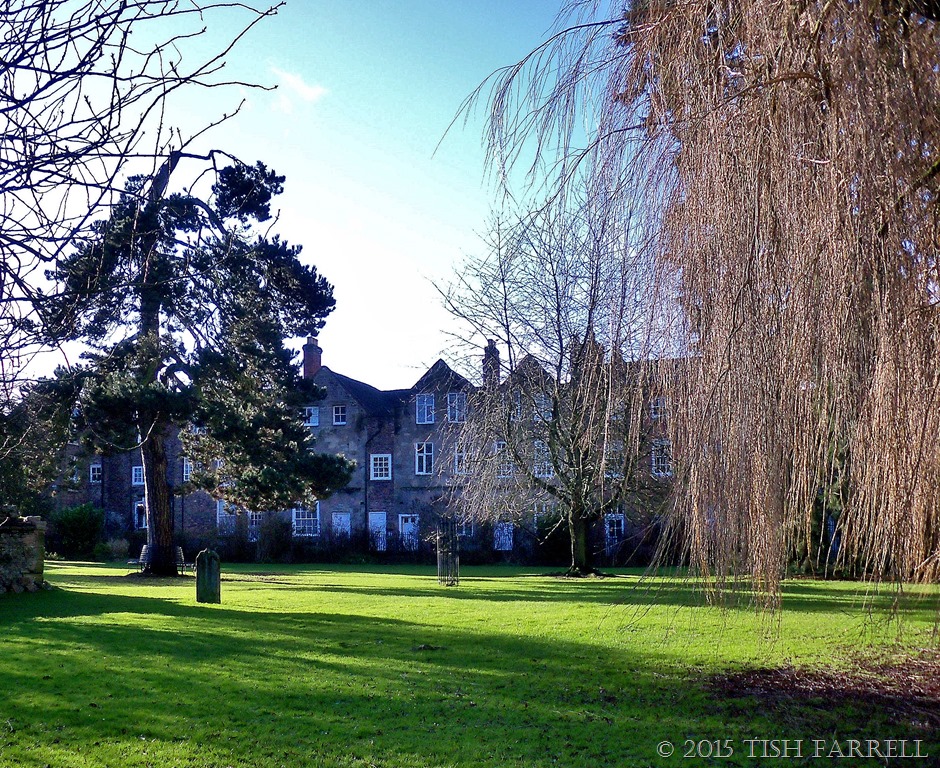
And now for a glimpse of the Church Green, along with the grave of William Penny Brookes. The blue painted surround is comprised of Olympian victors’ garlands. The Green is the venue for all the town’s fairs.
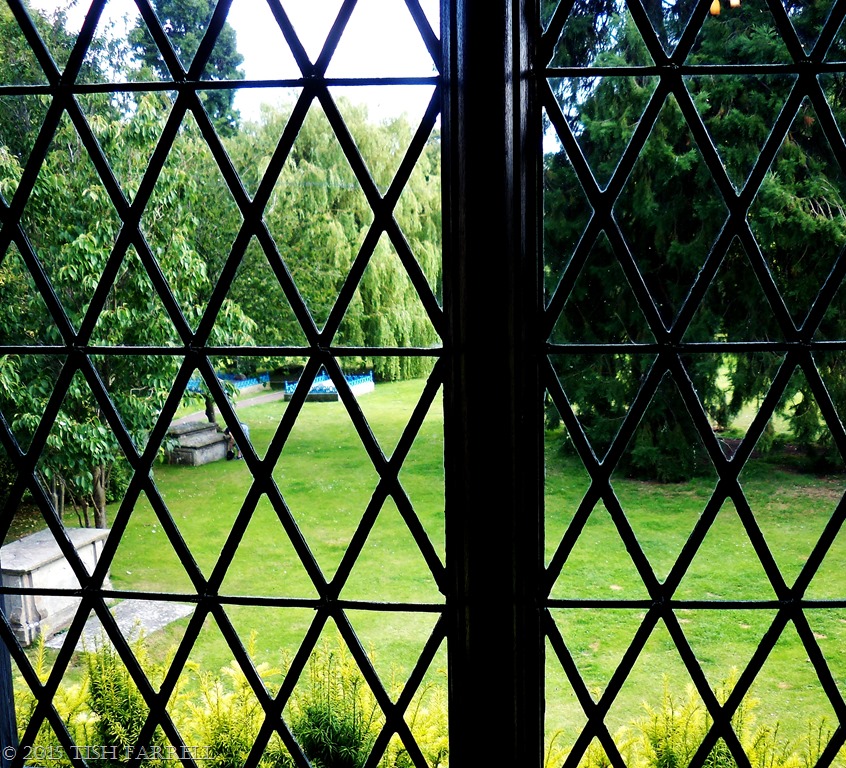
This next shot is taken from the Green. It’s hard to capture both the Guildhall and the church at one go:
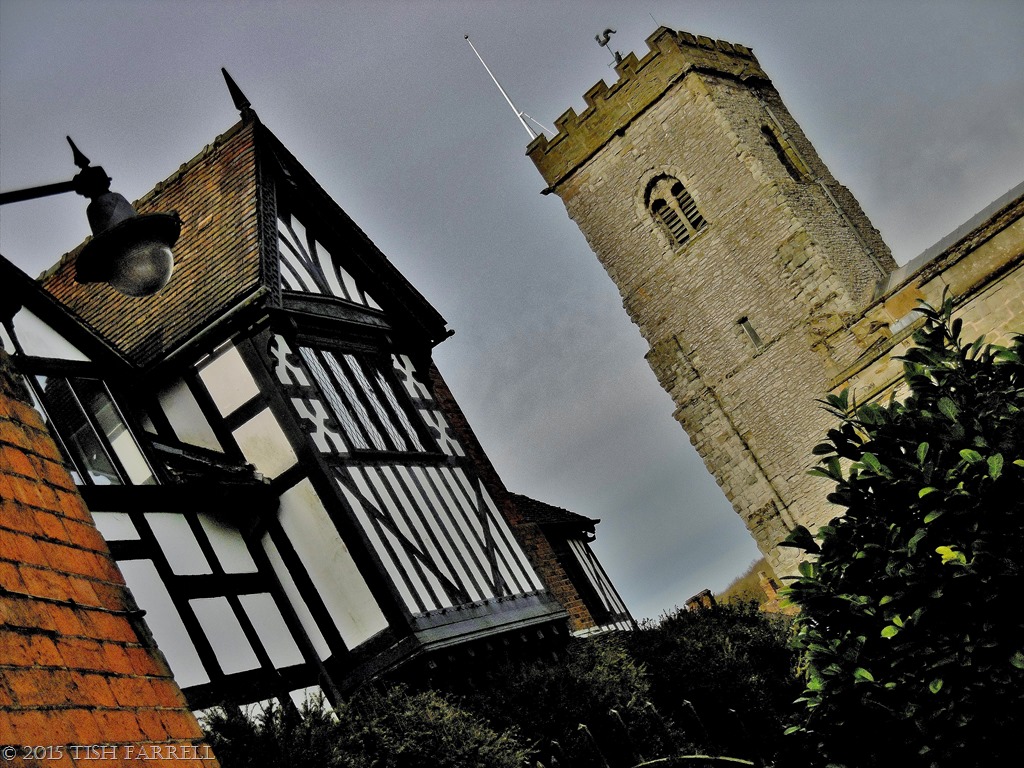
Of course the question that has doubtless surfaced in many of your minds is does the antiquated setting of the council chamber affect the quality of the thinking that goes on in there, and likewise the kind of decisions arrived at?
A few years ago I would have said that it certainly did. Some of the councillors back then had served for fifty years. These days, though, we have some very hardworking representatives. They are not paid either, since the once impressive Borough of Wenlock with its two members of parliament is no more, and the current town council has no more status than a parish council. But paid or not, our councillors still have some pretty big headaches to wrestle with, one of them being the continued upkeep of the Guildhall, including the roof over their own chamber.
It is perhaps a good example of the past becoming a public burden. Doubtless it is an amazing relic, and full of history, but it is no longer functional in modern terms. For one thing, there is no access for anyone with disabilities, or for the elderly who simply might have difficulty mounting the handrail-less stairs. As a listed building, the cost of installing some kind of lift would be astronomical, even if it were actually feasible. This situation immediately excludes quite a segment of the town from the democratic process. The uncomfortable seats probably do for the rest.
As to who foots the bill for running costs, then it is ultimately us, the council tax payers of Much Wenlock. If we did not pay to keep it going, it’s hard to know what anyone else would do with such a building. So here we have it – listed, listing, leaking energy, and generally not fit for purpose.
Attempts to raise some revenue by charging a modest fee to visit the old court room and council chamber did not work. Few people wanted to pay to go in. Now the court room is a small museum and art gallery, and entrance is free.
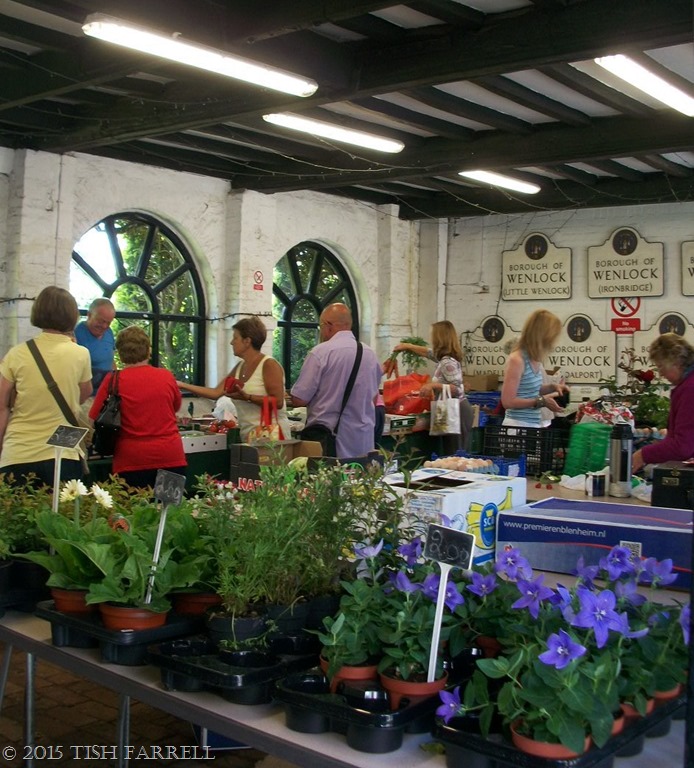
All of which leaves us with an impossible, but fascinating building, and one that probably no one in Wenlock would wish to be without. It gives the town its identity, and so maybe, at the end of the day, it’s only right that its citizens continue to support it, whatever way they can. At least the old corn market is still well used, and much for the purpose it was originally intended.
copyright 2015 Tish Farrell
This week at Thursday’s Special, Paula is inviting us to post traces of the past. Please visit her blog to find out what she and others have come up with.

Ladybirds seem to have been in short supply this year, so I was pleased to find this one nestling in my sage bush. Like bees, we absolutely need ladybirds. They are our natural pest controllers, preying on aphids and scale insects that can otherwise cause massive damage to food crops. As I was taking this photo, I was also delighted to scare off the harvestman spider that was creeping up on the ladybird. If you look in the bottom right corner above the copyright notice, you can just see the spider’s legs. Yikes!
*
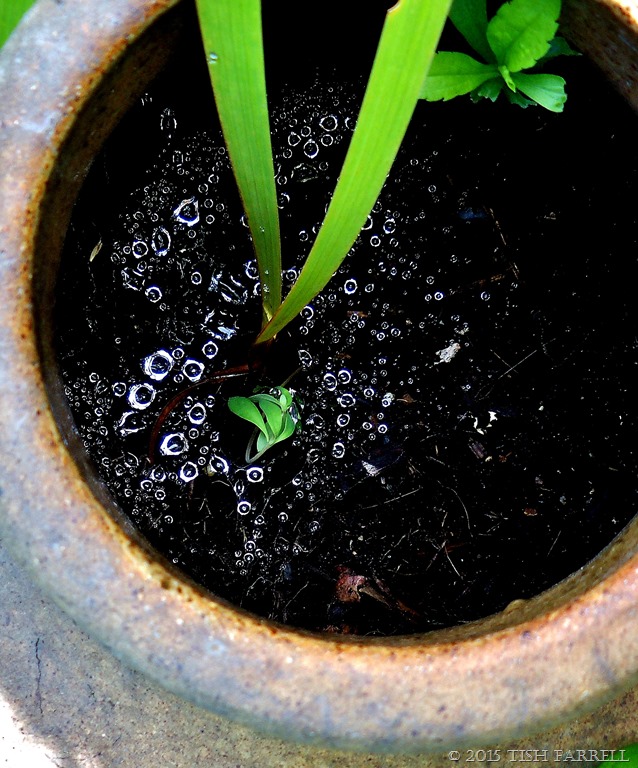
And here’s more evidence of spider activity: ambush exposed by raindrops in a garden pot.
*

Now for one of my favourite plants in the garden. The flowers of this later flowering phlox remind me of jasmine and are half the size of the usual cottage garden varieties. It has just the faintest subtle scent, and doesn’t mind shade.
*

Heuchera is another wonderful plant, and especially for ground cover. It comes in several hundred variations, and although understated on the floral front, it more than makes up for this with colour-bursting leaves that last all spring and summer. Also I see there’s spider lurking top left. I think it’s another harvestman. The bright green leaves amongst the heuchera are self-sown aquilegia seedlings. More granny’s bonnets to look forward to next year then. You never know what colour the flowers are going to be either – mauve, purple, pink, red, white. It’s one of the best things about plants that do their own gardening.
*
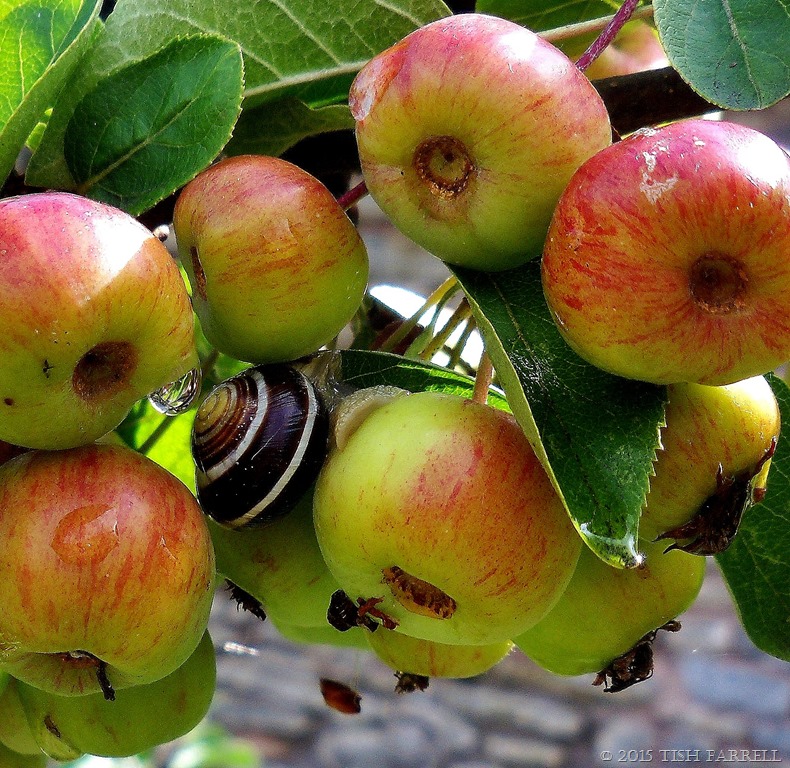
The tiny fruit on our Japanese crab apple are just beginning to take on their autumn colour. Soon they will be a deep russet red. I don’t think snails eat apples. At least I’m giving this one the benefit of the doubt; it’s probably just been sheltering from the rain.
*
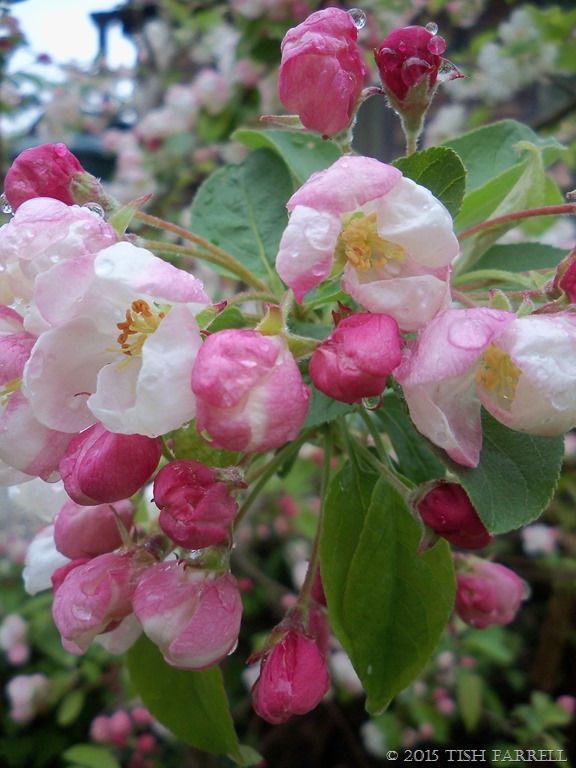
And now for a flashback-fastforward: the crab apple tree in April – spring past, spring to come…
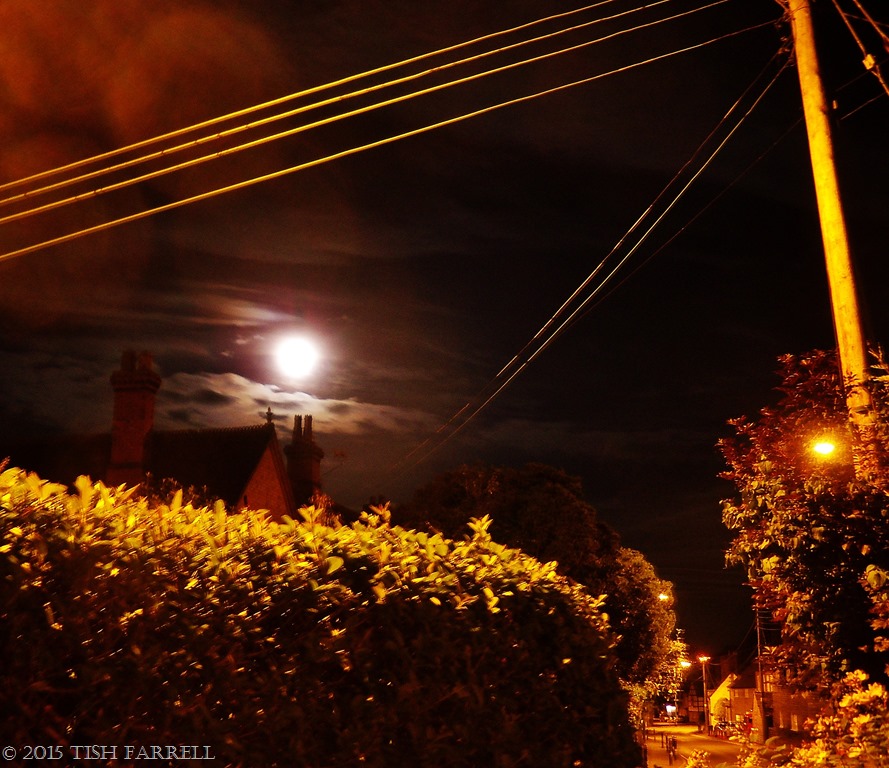
There’s all sorts of flare going on in this photo, not least around the moon. The pink smoke, and golden hedge effects are courtesy of a tall street light out of shot top left. I was trying to capture a blue moon. I even used a tripod. I’m not sure where the light on the right came from as there isn’t an actual street lamp on that side of the road. Anyway, if you peer hard you can look down the curve of Sheinton Street towards the town centre. It looks a bit like a film set. In fact isn’t that Mary Poppins coming along the road? Chim-chiminee, chim-chi…
Please visit Paula at Lost in Translation for more flare
The season of mists and mellow fruitfulness has arrived in Much Wenlock on the coattails of spring, missing out summer altogether. Perhaps we’ll have it at Christmas instead, the barbeque months that, back in March, the tabloids were screaming we were in for, along with prolonged drought and associated mayhem that would, shock-horror, stop people from watering their lawns, or hosing down their Range Rovers. Mind you, these are the sorts of rags that would have us believing it is raining migrants. (That would be people so desperate that they risk all to run away from home).
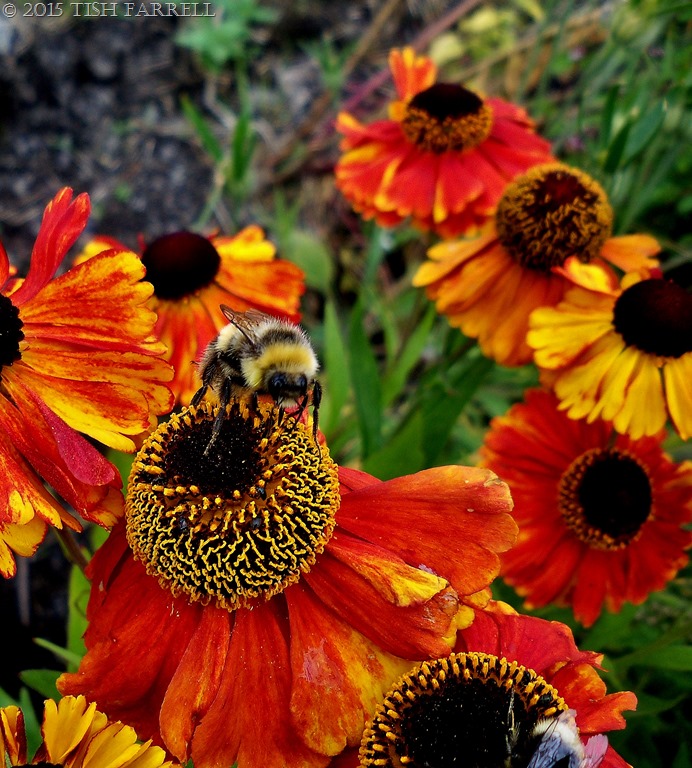
Anyway, whatever’s going on with the climate, the upshot is that much of the garden and the allotment has a very ‘left-over’ look, which is why I almost want to dash out in the garden and hug the sneeze weeds – bees notwithstanding – for being so vivaciously red and yellow as too much autumn dullness descends.
How can a plant so glorious be real? All the flowers in the photos, in all their wonderful variation, are growing on a single plant. And, as you can see, the bumble bees are gorging themselves. There are also some very tiny emerald beetles in amongst the pollen. Sneeze weed, by the way, is a country name for Helenium, which is a far more gracious name for such a generous plant, although one rarely used in the Farrell household.

And it’s thanks to the bees and other precious pollinators that we are at least having fruitfulness, if not harvest-hot weather. Up at the allotment apples are already weighing down the trees. They look like jewels:


Even the ornamental crab apples look good enough to eat raw. They’ll make brilliant jelly after a touch of frost, which hopefully won’t happen yet.
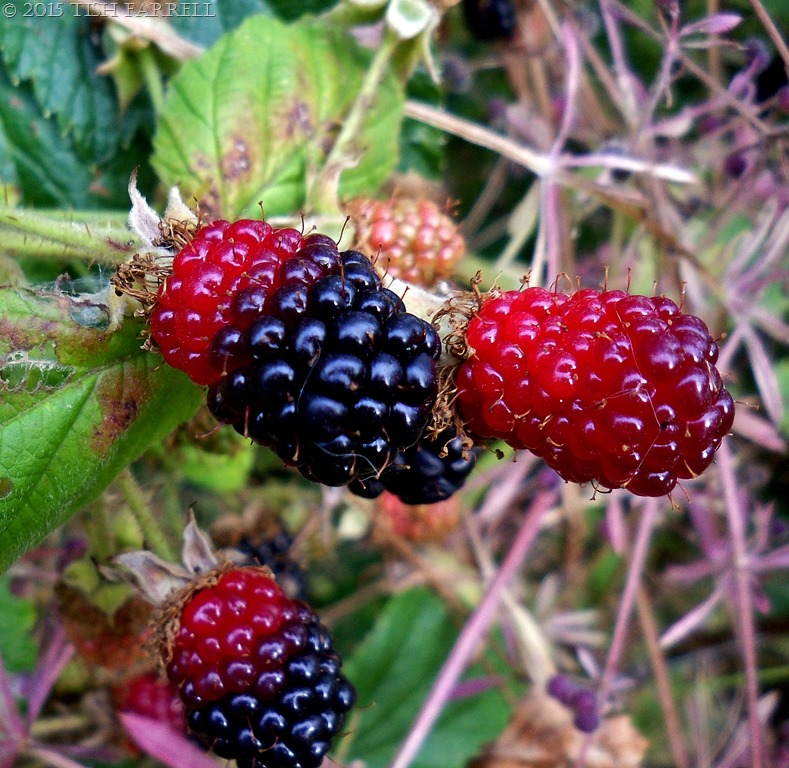
Then there are the brambles:
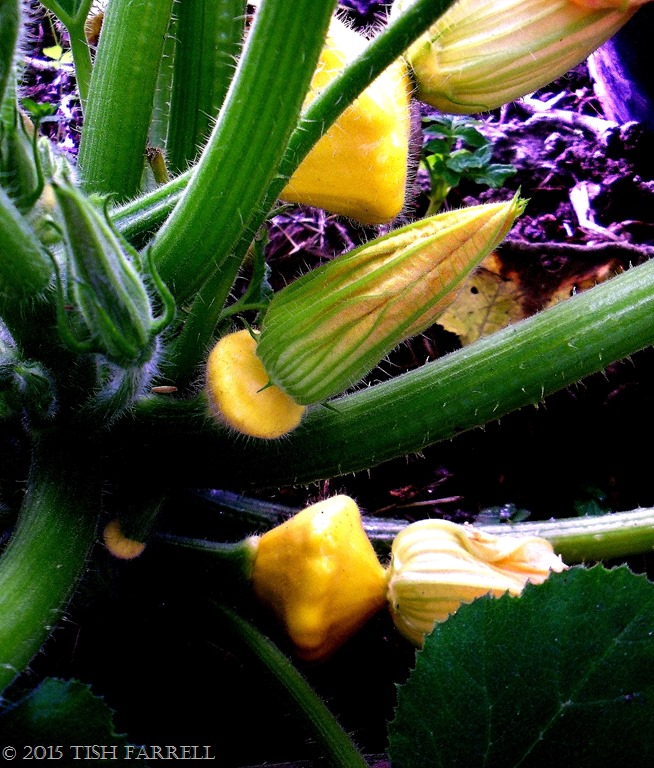
And the little yellow squashes that look like flying saucers:
And the runner beans have started to crop (this photo was taken a week or so ago). The sweet peas on the end of the row are there to attract pollinators:

Of course, when it comes to weather, we Brits are never happier than when we’re grumbling about it: too hot, too windy, too wet, too dry. But then even if someone did steal summer, we still have so much to be thankful for. Feeling mellow, however, may not be an appropriate response these days. There may well be some hard lessons to learn when it comes to adapting to an increasingly erratic world climate, and not only for ourselves, but for the people who find their own lands are no longer habitable. We should not be surprised if they risk all to make for the lands of plenty.
copyright 2015 Tish Farrell
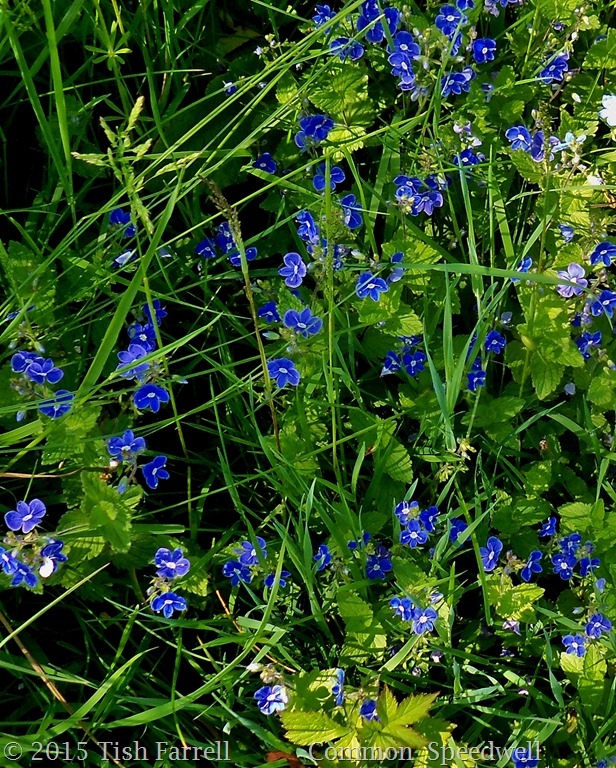
So much goes on beneath our feet, and beneath our gaze. For instance, if you want to find out what is going on in an English meadow, then you need to get down and in amongst it. There’s a whole other world down there, or maybe a thousand tiny universes. On the other hand, finding a meadow in the first place could well be a challenge. They have been dwindling since the 1920s. Mechanisation – bigger machines and bigger fields – plus a continuous drenching of agrichemicals has done for most of them. (One local landowner once told me he had to give his brussels sprout crop 14 separate dressings of pesticide).
Of course we have to be fed, but I often wonder if mass-production monoculture is the only way. I also wonder if there are perhaps still unrecognised consequences of us so radically down-sizing our natural biodiversity, and that what currently seems advanced, scientifically devised, and wealth-creating might in the end prove ill-conceived and ultimately impoverishing. But then perhaps we do not think it matters to lose potentially useful medicinal plants, or rich habitats that support a host of insects and other life forms, or to fail to rear our stock on the best and most varied herbage, both for their good and for ours.
In Much Wenlock we are lucky to still have several limestone meadows; fortunate too that they have been officially designated Sites of Special Scientific Interest, which gives them some protection. They do need to be managed however. A meadow does not just keep itself. My father used to talk of being roped in as a lad to help with mowing the hay in his village. He said the menfolk would walk in step, spread out across the field, each swinging his scythe with an easy, even rhythm.
These days how many people know how to use a scythe without cutting themselves off at the ankles? Our surviving meadows thus require the seasonal addition of grazing animals to keep them in some sort of order, usually after the summer wild flowers are over. And of course, in the past, the hay from a wildflower meadow would have provided farm animals with a wealth of mineral nutrients and vitamins, dietary additions that humans, too, would have benefitted from, particularly in the milk they drank.
Even back in Shakespeare’s time, the consquences of mismanaged land were well understood. The following passage from Henry V Act V Scene II is thus much cited by meadow management proponents:
The even mead that erst brought sweetly forth
The freckled cowslip, burnet and green clover
Wanting the scythe, all uncorrected, rank
Conceives by idleness, and nothing teems
But hateful docks, rough thistles, keksies, burs,
Losing both beauty and utility.
In fact the whole of Burgundy’s speech in this scene is a condemnation of bad agricultural practices – “husbandry doth lie on heaps, corrupting in its own fertility.”
All of which is to say, wherever we live in the world, we would do well to pay attention to the ground beneath our feet and to what is going on there. Our long-term health, the health of every living thing, depends on the quality of the soil. Right now most of it needs some concentrated TLC.
My home county of Shropshire is one of England’s biggest agricultural counties, with many large gentry-owned estates of ten thousand acres and more. And so, apart from the upland sheep grazing of the hill country, most farming here is highly mechanised. Of the few exceptions that still practice traditional mixed farming, Pimhill Farm is one of the most noteworthy. It has been managed organically by the Mayall family since 1949 – wheat, oats and dairy – so it proves it can be done. Their oat products are fantastic. Even their humble, savoury oatmeal biscuits taste out of this world, and porridge made from their oats is unbelievably creamy (no milk needed). You can read the Pimhill story by following the link.
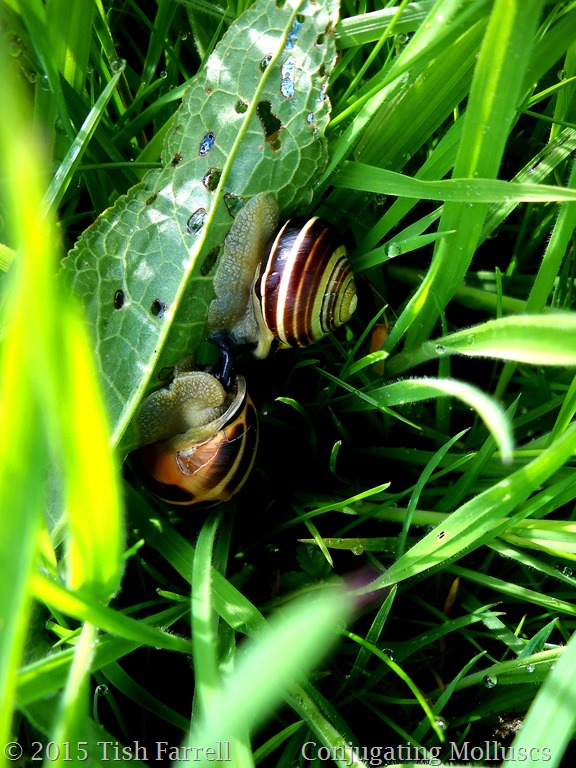
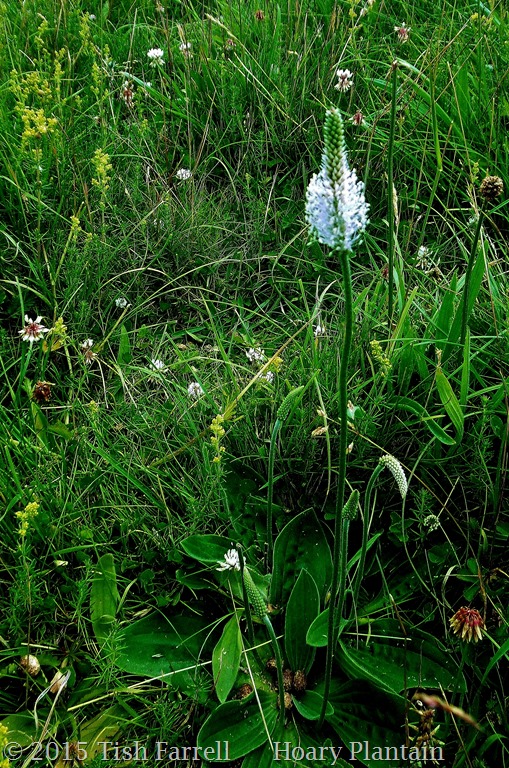
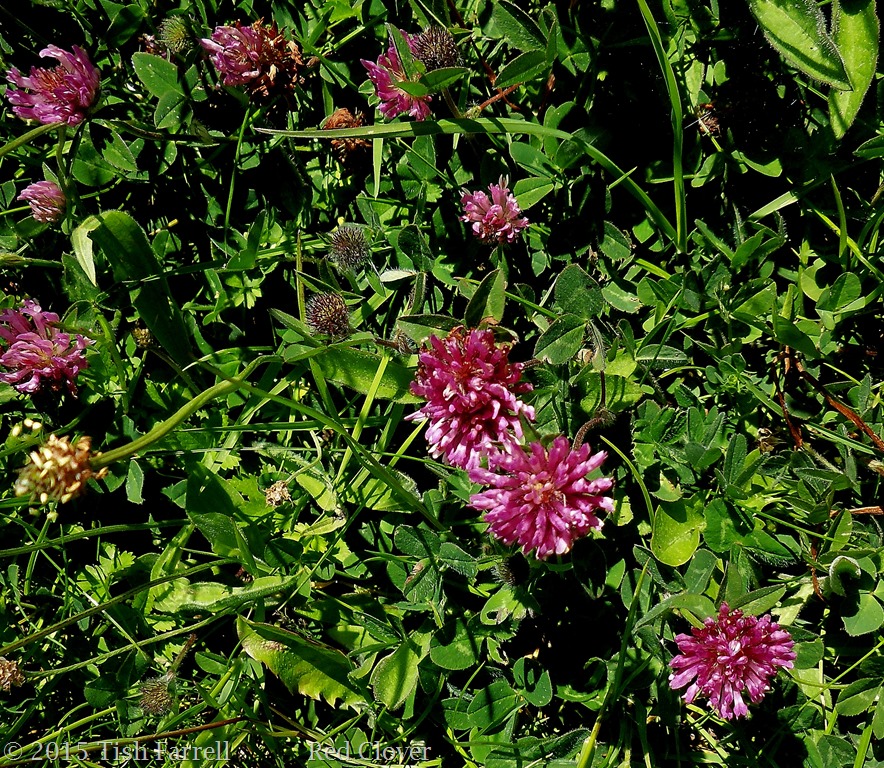
And now I’m putting my soap box away in order to get down in the dirt in my local meadow on Windmill Hill. Please also imagine the sweet and subtle scents of grasses, thyme and Lady’s Bedstraw that may only be fully savoured by lying down with them. First, though, look out for the snails:


copyright 2015 Tish Farrell
#PimhillFarm #organicfarming