On The Path To Harakopio ~ Peroulia Dreaming 13

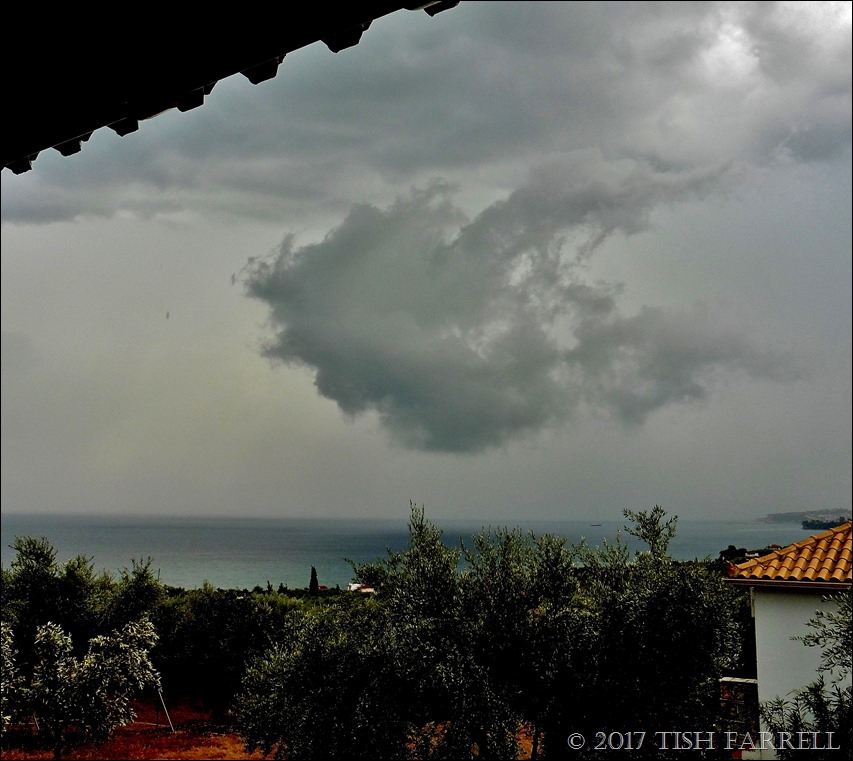
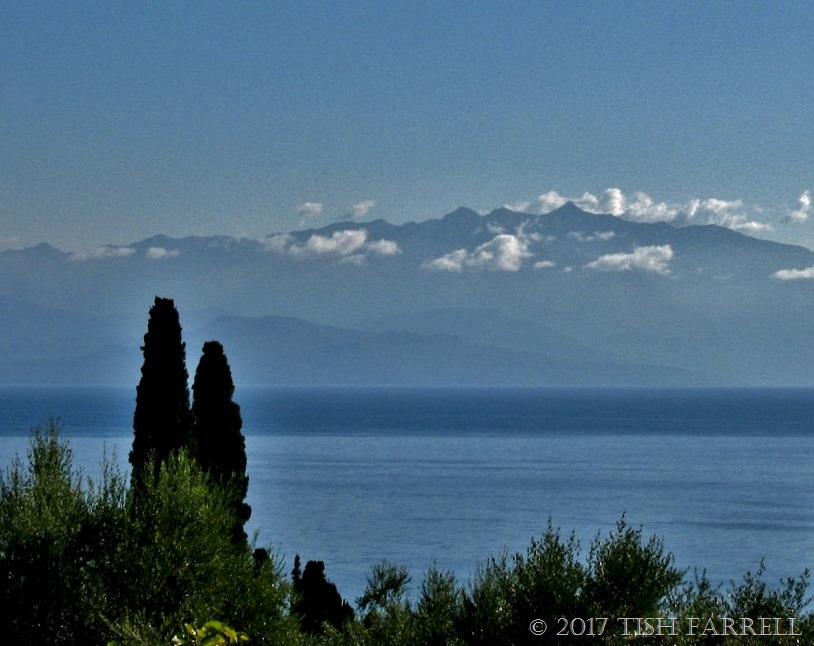
We had been promised rain, and rain it did, pounding off the pantile roofs, turning the veranda steps into cascades. By lunchtime the shining Gulf that had been our view all morning was sunk in steely gloom while the Taygetos had dissolved completely. (How can mountain ranges disappear like that?)

It was not a good start to the holiday. But the six of us gathered together in one little house,  and some of us prepared bruschetta using up the solid Greek bread together with the more delicious tomatoes and garlic from Maria’s garden, which we tucked into to the sound of tumbling rain.

But at last the storm bursts eased, and across the valley the cockerel began to crow, and among the garden olive trees the crickets sang, and the grasses steamed. A consensus of smart phone forecasts also suggested that the rain had passed – well, more or less, and that it might now be timely to set off to Harakopio and discover what its supermarket offered in the way of supper supplies.

We set off under cloudy skies, following directions on Maria’s hand-drawn map, which Bob had snapped with his cell phone. It was a one and half mile walk, we were told, mostly on level paths, and with our backs to the sea. Hopefully we would not lose ourselves on the network of byways between Harakopio and Kombi. We were also told that if we bought too much stuff to carry back to tell the girls at the supermarket and they would keep it until Michael was next passing in his car. Our hosts at the Iconpainter’s Villas left no stone unturned to ensure our every comfort and happiness.

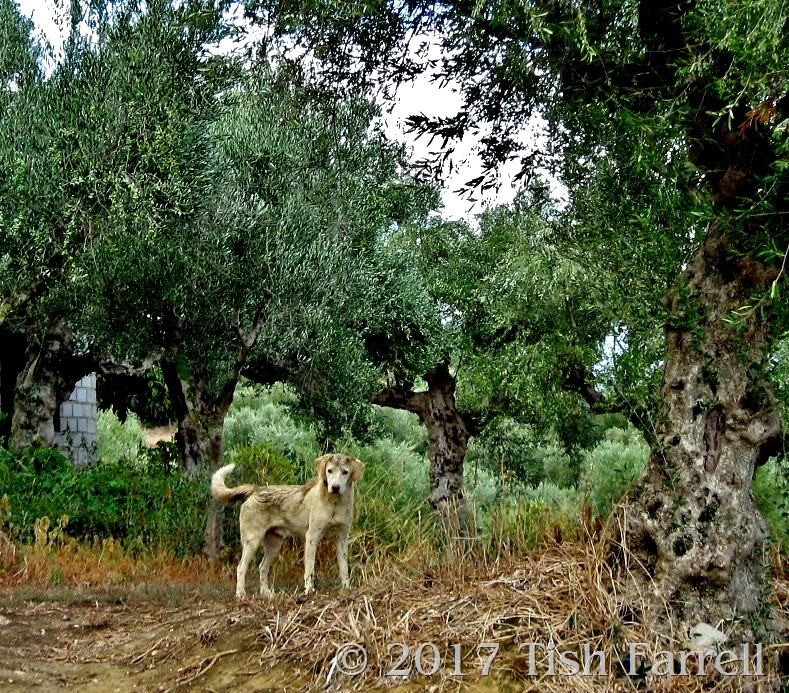
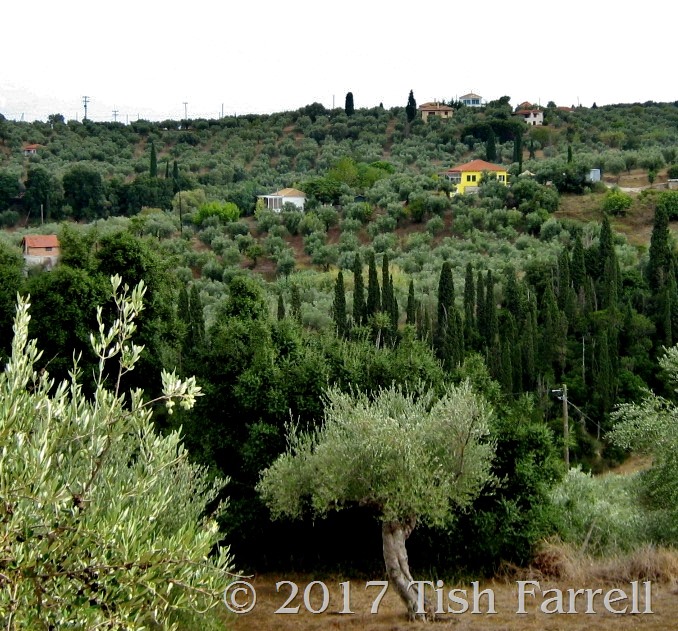
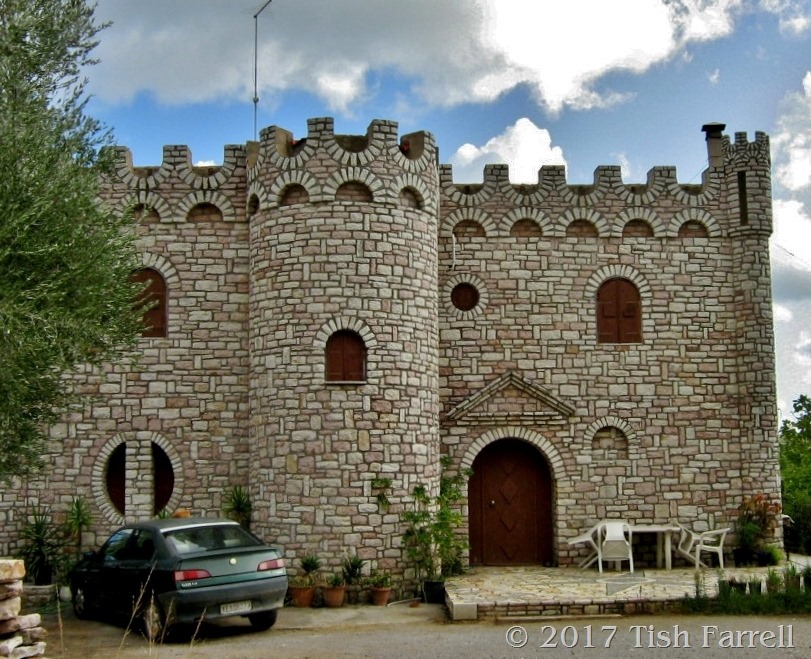
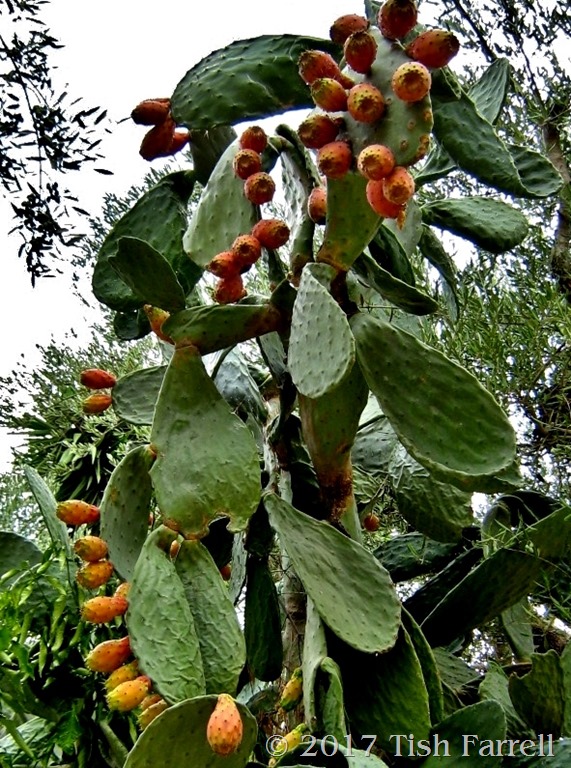
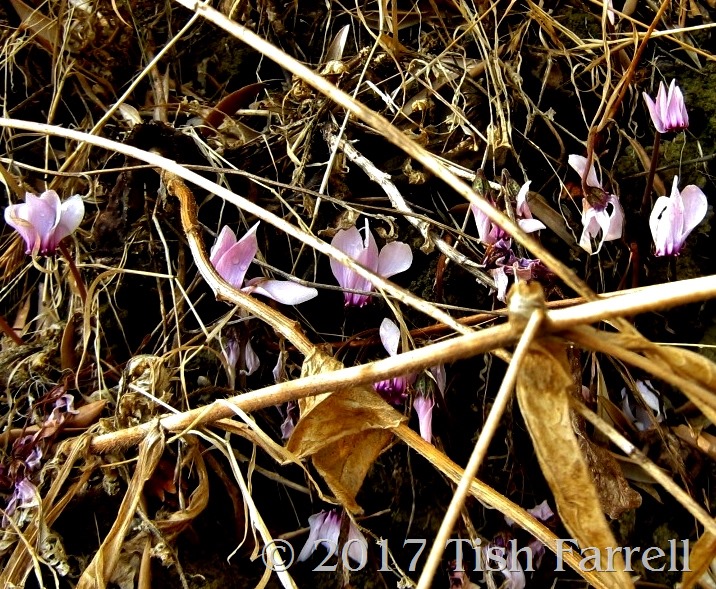
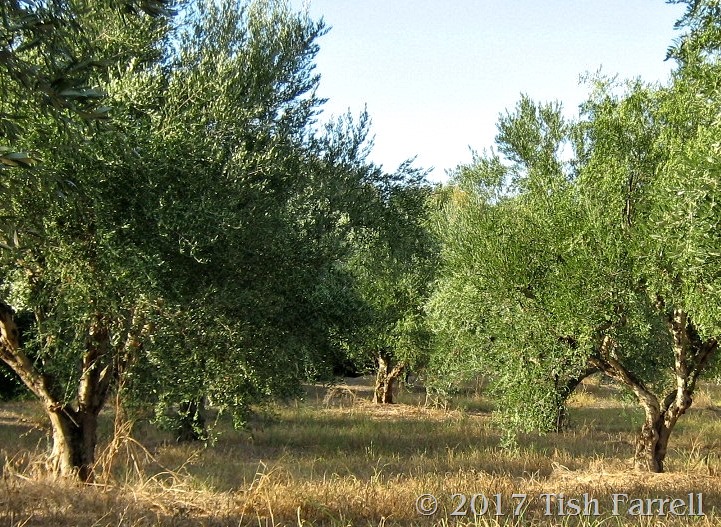
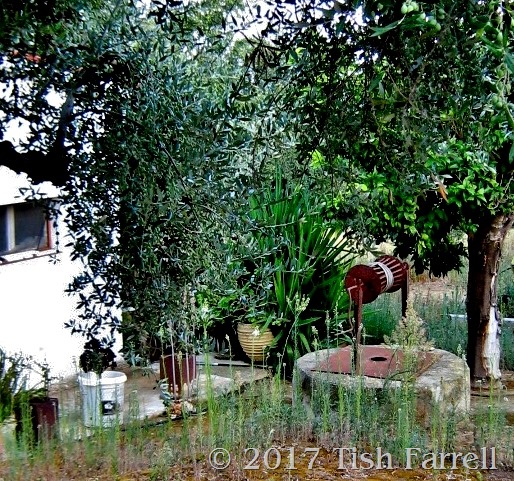
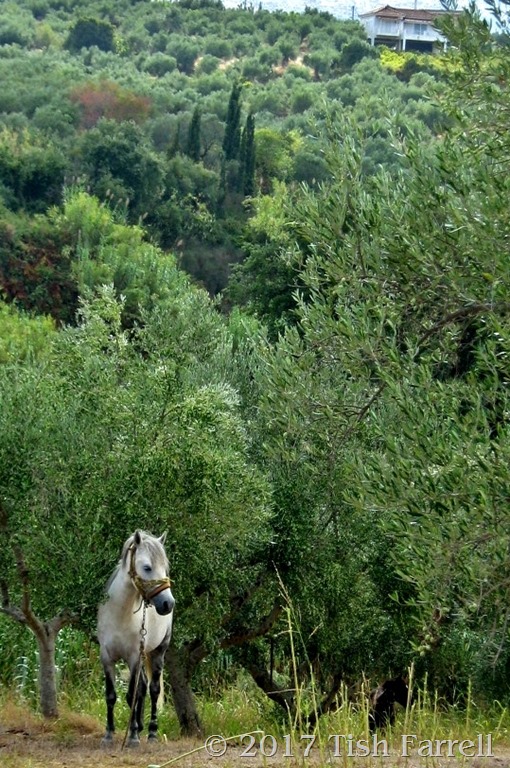
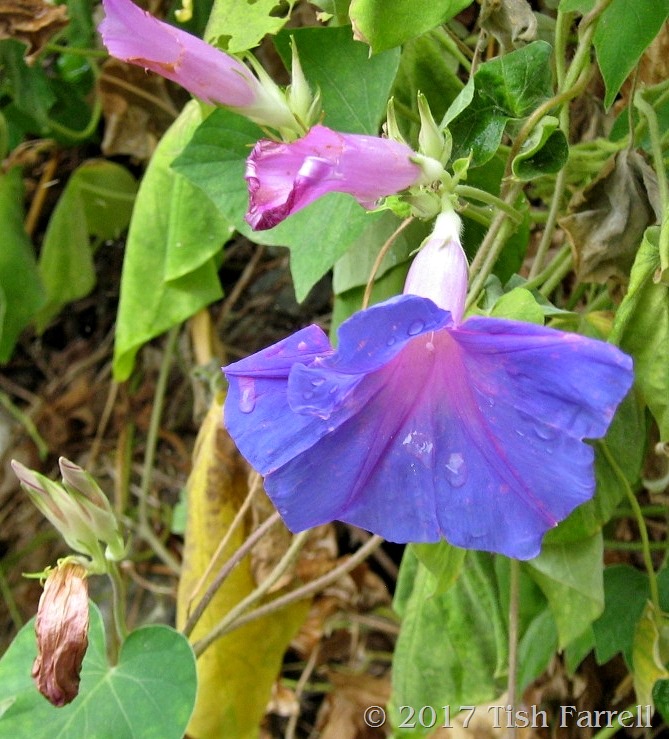
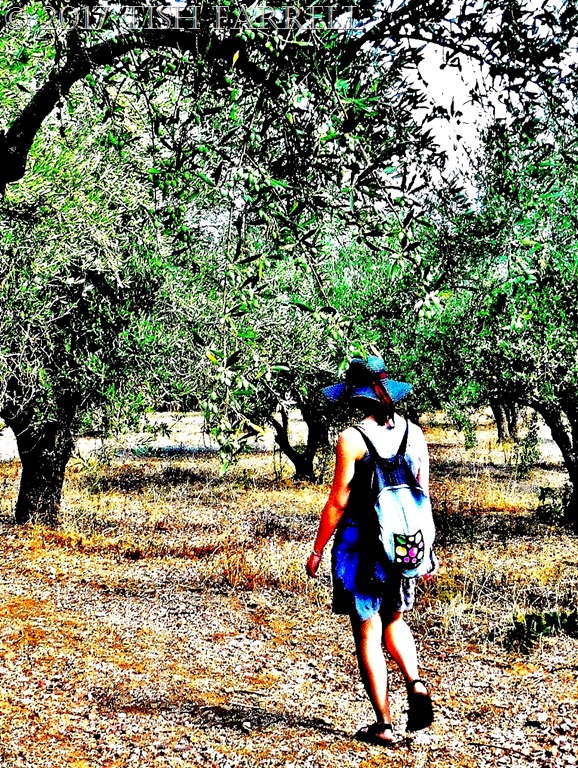
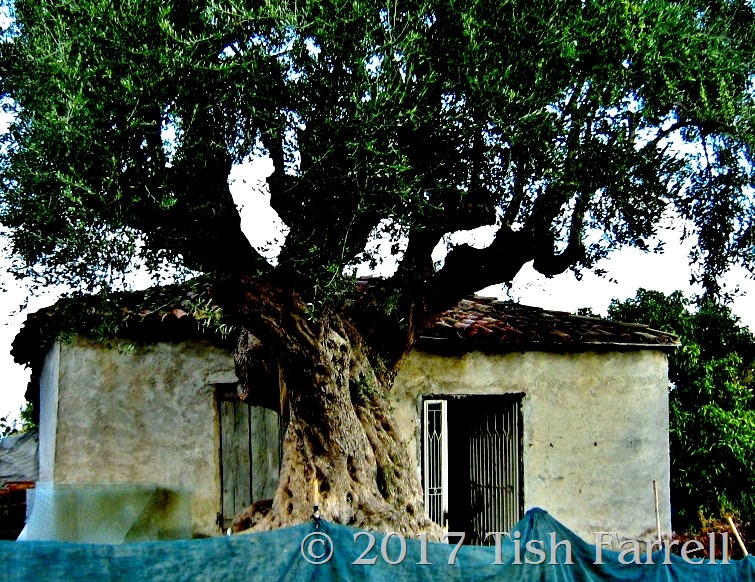
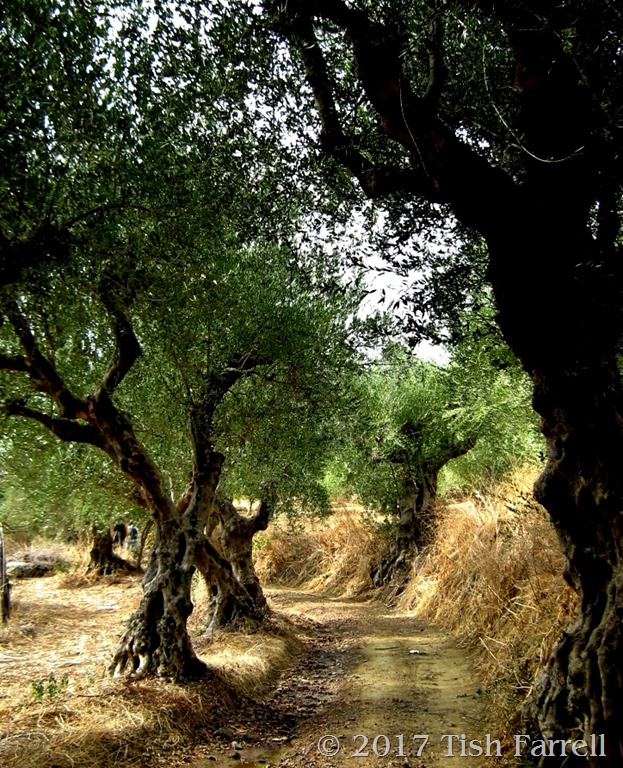
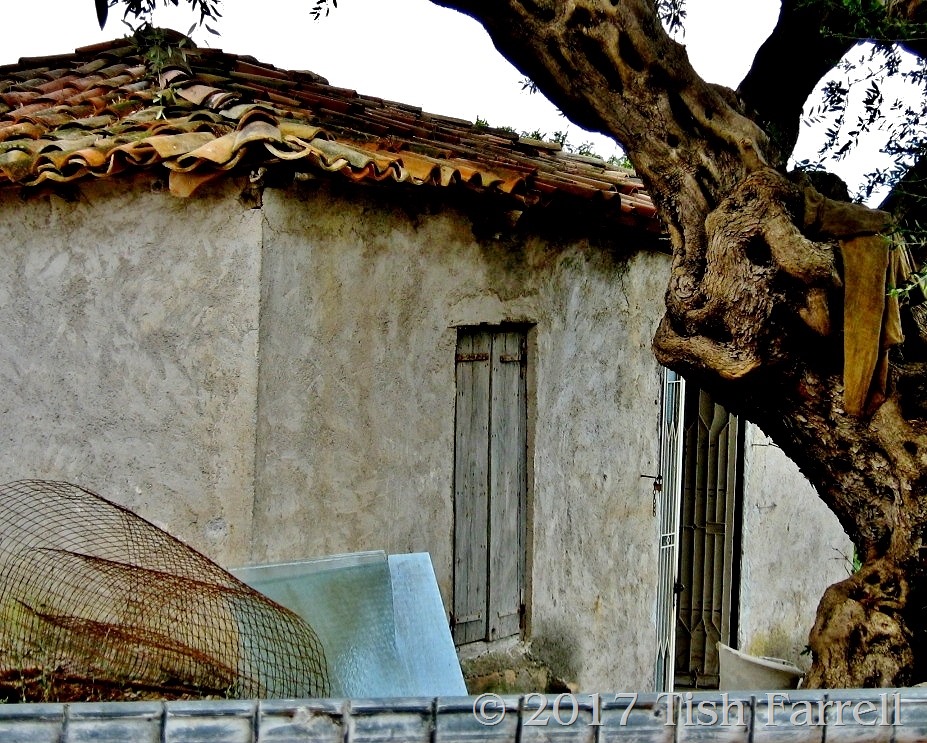
And so here are some of the sights and vistas on our path as it wound through olive groves and vineyards, by ramshackle farmsteads and deluxe villas, our passing marked by proprietorial, but good-natured barking from farmyard dogs. Otherwise, all was quietness. No cars. No distant traffic drone. Only our soft chatter. There were wild cyclamen growing along the verges, fennel and rosemary, shrubby Kermes oaks with their spiny acorn cups and leaves like holly, prickly pears, morning glory.  And as I went, I fell in love with olive trees, their stillness, their gnarly boles and contorted branches, the muted tones, the changes in light beneath and between the trees as the sun came out once more.
 

IMG_2441

IMG_2461

IMG_2438

IMG_2424

IMG_2429

IMG_2449

IMG_2450

IMG_2451

IMG_2452

IMG_2507

IMG_2498

IMG_2508

IMG_2443

IMG_2464

*

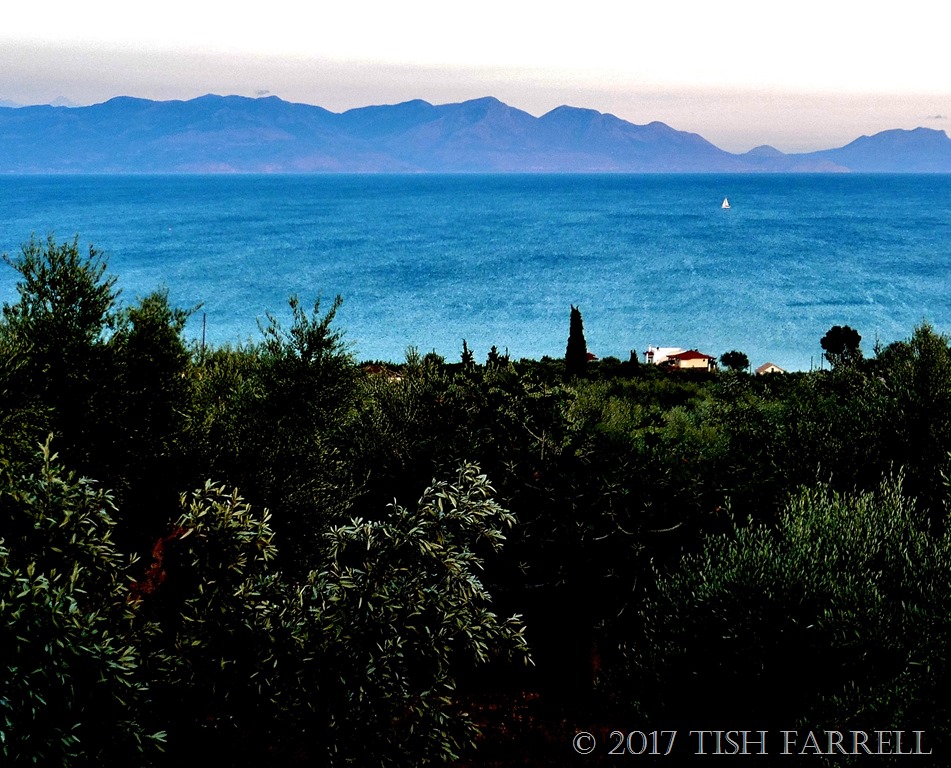
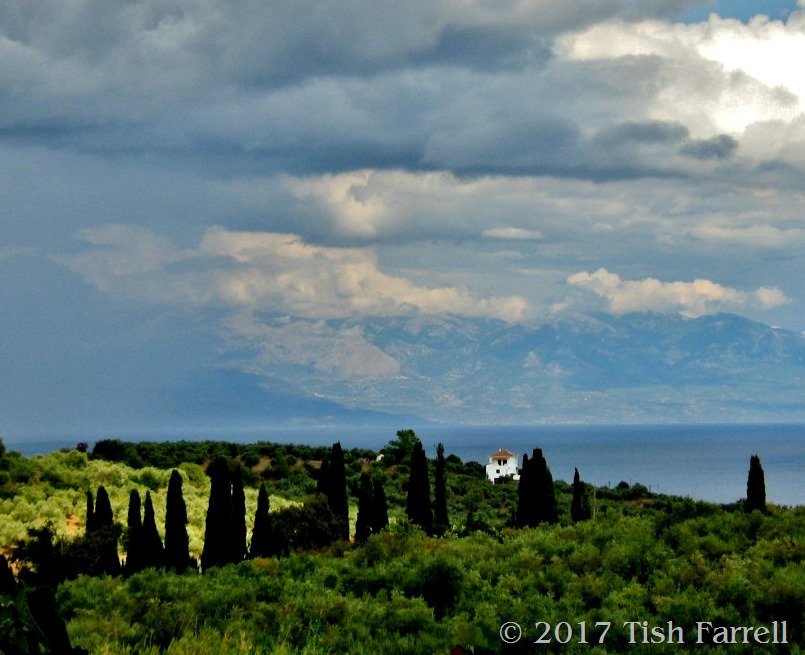
And on our return trip, well laden with good Greek produce, we again looked to the sea where the storm clouds were finally clearing, and beneath all was ethereal blue with the Taygetos doing their mirage impression. It would be a fine evening.
IMG_2460

copyright 2017 Tish Farrell

Travel theme: branches

Jo’s Monday Walk

Cats’ Eye Views Of Koroni ~ Peroulia Dreaming 12

P1020673

IMG_2798

P1020677

P1020679

P1020674

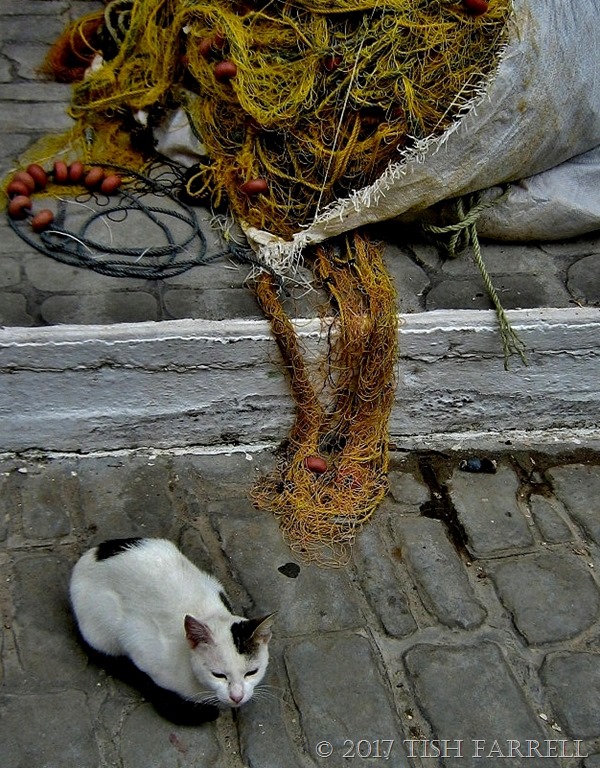
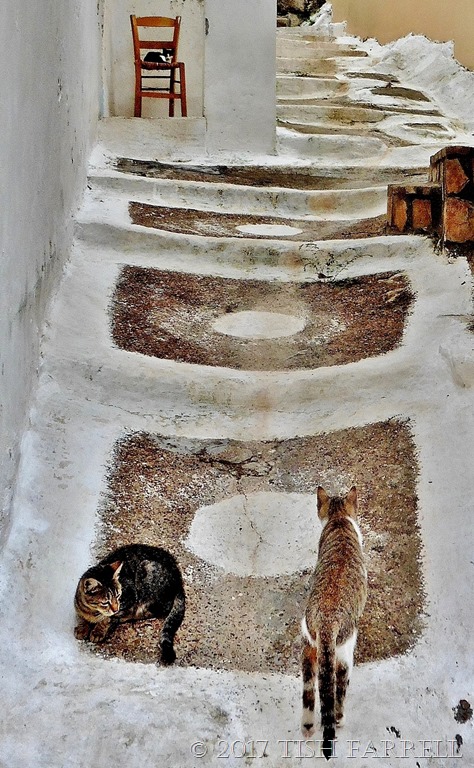
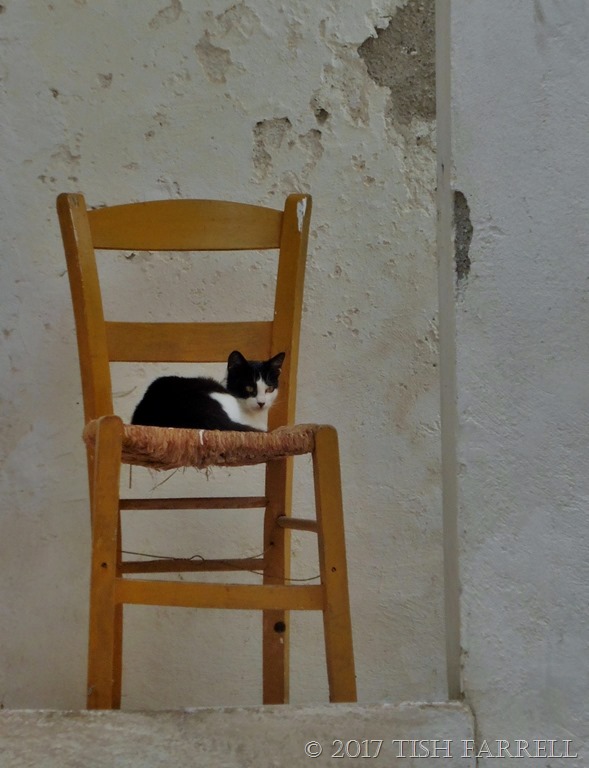
When it comes to pets, I have to admit to being a dog-lover first and foremost, but as we tramped up and down the many stepped byways to and from Koroni castle, we  met a number of very handsome cats. In fact there were cats and dogs everywhere we went along the coast. Some had more to say for themselves than others. The Koroni cats were particularly self-contained. One definitely had the impression it was THEIR village, and foreign interlopers were thus beneath their regard. They could take us or leave us.

The Castle At Koroni

P1020683

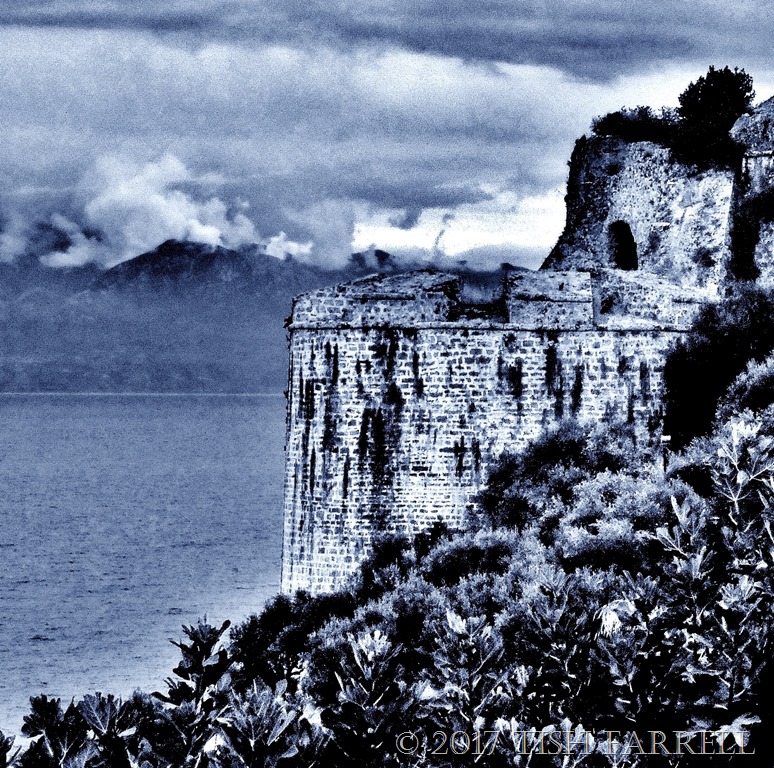
Over the past three thousand years the Messenian Peloponnese has suffered so many phases of foreign invasion it is hard to know where to start unravelling its history.  Best stick with the built remains then. This massive medieval bastion belongs to Koroni Castle, built in the early 1200s CE by the Venetians, and one of a string of Messenian coastal forts controlled by the Republic until 1500.

The Turks invaded next. After summary slaughter in neighbouring Methoni, so spurring Koroni to a quick surrender, they set about strengthening the  castle’s eastern defences, which perhaps included this tower. It is hard to track down details. One Greek writer, whose identity I am yet to discover, described Koroni Castle as ‘the architecture of hate.’ He had a point. Venice anyway regained control in 1685, and of course the Turks came back again later, staying until the Revolution of 1821, which finally ousted them.

Koroni’s historic heyday, though, was the thirteenth century. Under the first round of Venetian rule it was referred to as ‘the chief eyes of the Republic’, and as such, was one of the main ports of call for the ships and galleys of Venice’s Levantine trade. Its must-have product was cochineal, much desired by Venetians for the lustrous dye it yielded.  So now you know where that gorgeous Venetian red came from – this small corner of the Peloponnese.

P1020710 - Copy (2)

Today, you can spend many hours wandering around the castle’s 40 hectare interior. It is then you begin to grasp that before the Venetians occupied Koroni there were invader Franks on site – they of the French-Italian Crusader States. And before them, in the era of the Eastern Roman Empire of Constantinople, there was a Byzantine fort. This had apparently been built atop an ancient acropolis. And long before the Byzantine presence – that is from around 700 BCE and for a few hundred years, the Spartans were in occupation, so muddying the archaeological remains of the very much earlier Bronze Age Mycenaean period (1400-1100 BCE) and the ancient settlement of Assini.

And these are just the barest bones of Koroni’s history.

P1020707 - Copy (2)

There are also astonishing present-day aspects. The first that strikes you is that people actually live inside the castle. As you walk up from the towering seaward gateway, you find yourself on an ancient cobbled street, and next there are cottages with pretty gardens, and later we come on an olive grove and a small holding. As ever, there are many cats about. There is also a cemetery which is in current use, several churches, ancient and modern, used and disused, and a monastery that is now only inhabited by nuns. The latter has a tranquil garden and a gift shop and picturesque cottages where the nuns live, and you are free to wander around.

P1020713

*

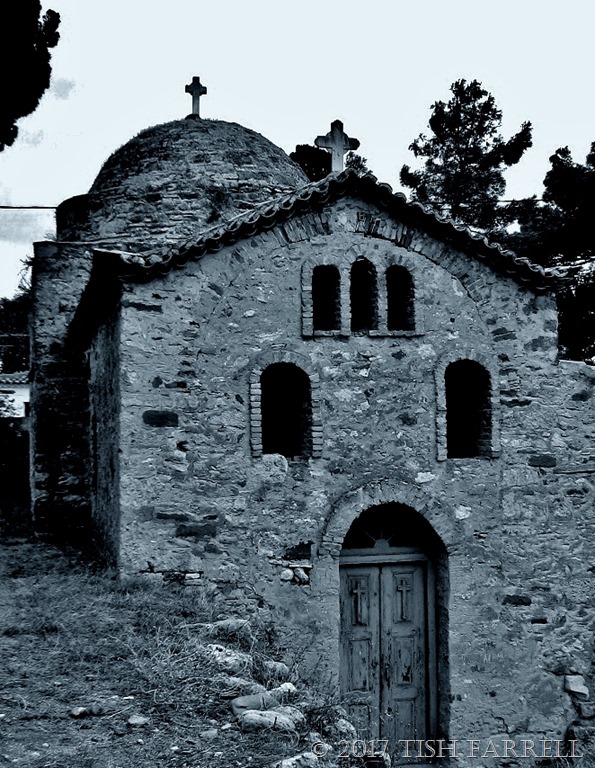
This next and final shot is was taken just outside the monastery entrance, one of the several sacred buildings built cheek by jowl in this part of the castle interior. It is dedicated to Saint Sophia and, dating from the 11th century Byzantine period, overlies the ancient temple precincts of Apollo. At which point you lose all grasp of time, since there is simply too much of it to fathom, and decide that a swift downhill return to a harbour taverna and an enlivening cappuccino is definitely called for.

IMG_2795

copyright 2017 Tish Farrell

castle 1688

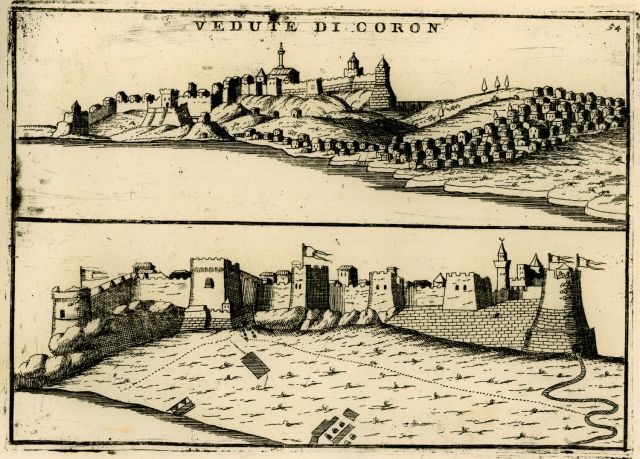
Koroni Castle CORONELLI, Vincenzo 1688  Aikaterini Laskaridis Foundation Library


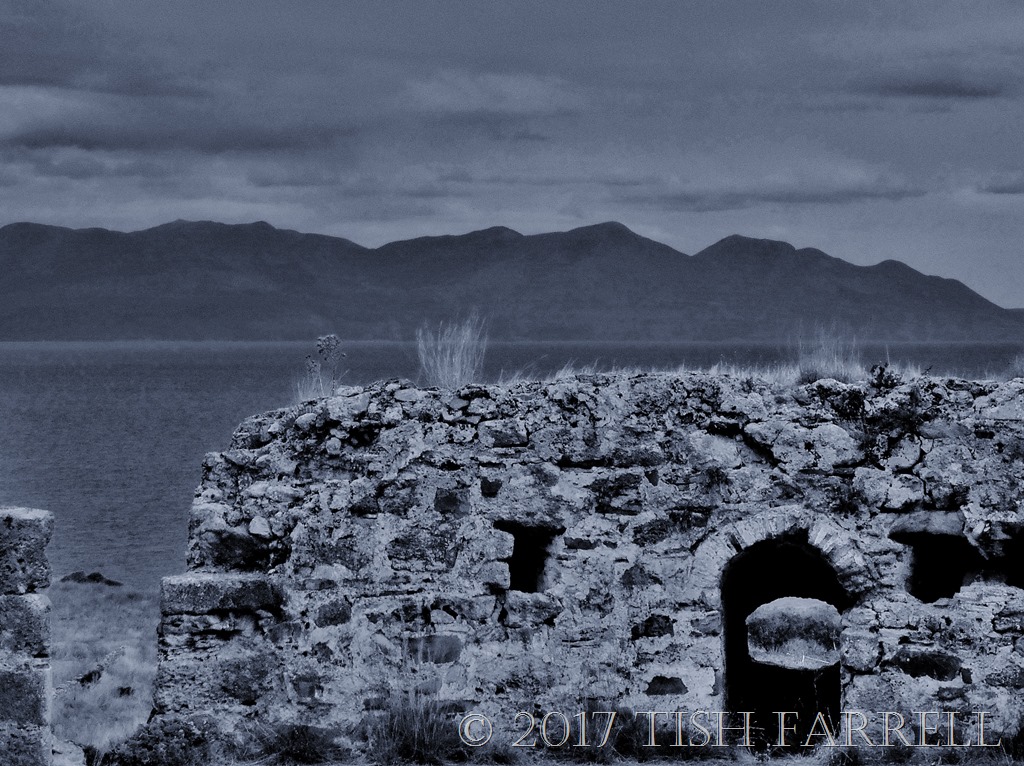
Cee’s Black & White Challenge: Bricks or Stones

#PerouliaDreaming

Peroulia Dreaming 8 ~ Greece Out Of Sync

P1020362

We’d tried to overlook the fact that rain and storm had been forecast during our seven-day trip to the Peloponnese. But here it came, quite dissolving the Mani peninsula, stilling the waters of the Gulf, giving them an ominously bruised look.

But then the drama of light and mood more than made up for the downpour, and once we had learned that the rain was responsible for boosting the oil content of the olives, and that the locals were pinning their hopes on a good harvest come November, it seemed churlish to feel resentful. Besides, Kalamata olive oil is some of the best there is. More power to its production and all who grow it is all I can say.

P1020659


P.S. I was sure I had posted this on Monday for Ailsa’s Travel Theme: Storm thus preceding Peroulia Dreaming #9 with the brolly.

But this morning I found I hadn’t. So here it is (with apologies for a few extra words) for Debbie’s Six Word Saturday


Peroulia Dreaming 7 ~ Son Of Poseidon Checks His Shell Phone?

P1020403

Well he has to be some sort of Greek god, doesn’t he? For one thing I can tell you he wasn’t wearing a stitch beyond the sarong slung round his neck though you will have to take my word on that.

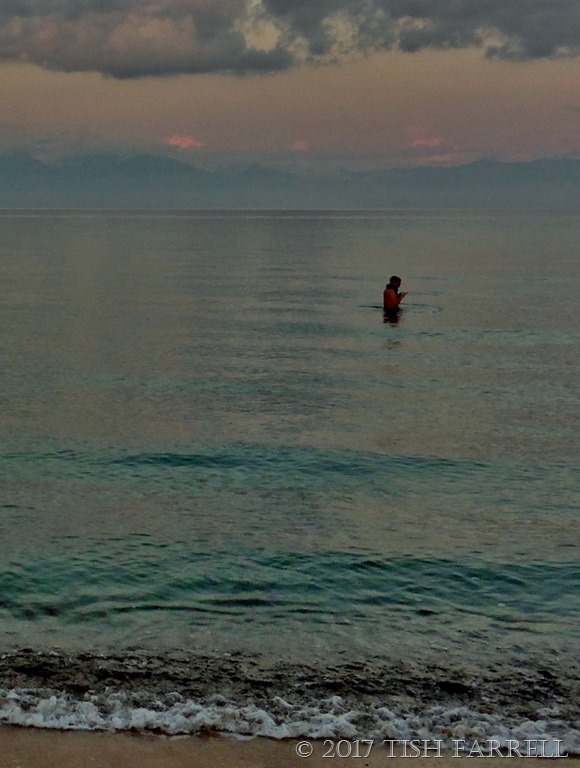
We had walked down to Peroulia Beach in hopes of some good photos. It had been gloomy all afternoon after short sharp showers. Only at sunset did the sky clear and the last light bathe the Messenian Gulf in shades of famille rose. It was all rather astonishing – a pink-blushed azure sea. And if at first the son of the deity was doggedly wading backwards across this seascape, presumably making a video on his phone and thus proving rather irritating to those of us who wished to take a photograph, when he turned to check his creation I decided he very much added to the scene.

Daily Post: scale

Peroulia Dreaming 4 ~ Walking Through Olive Groves To And From The Sea

P1020439

It was the quickest way to Peroulia Beach – left down the hill from the Iconpainter’s  gateway, with a quick wave and a kalimera to the old lady in the farmhouse opposite, then following the rough track beside the olive grove with the decomposing Volvo, then on through the trees to the pretty house with green shutters, whose owner we met several times out on the lane, clearing the drains in advance of the forecast storm; on into another olive grove, following the overhead power lines, then a dogleg round some more recently planted trees, a scramble down dirt steps in the cliff bottom (minding the little cyclamen) and finally picking our way through mature olive trees, pony droppings, the mish-mash of phragmites canes and onto the shore.

Phew! It really isn’t far, but it has the feeling of uncharted territory, and at least three of us admitted to losing our way on the return trip.

*

There is anyway something so momentful about olive groves. For one thing there is the complete and utter stillness; the depth of leaf litter that absorbs one’s footfalls and very probably one’s soul if you do not watch out. For then there is the existential sense of earth and weather elements and human hands, conspiring over generations to train and sculpt the trees to encourage the best possible yield; hands whose deftness is doubtless informed by Athena herself, that wise deity whose spear long ago struck the barren scarp of the Attic acropolis and so brought forth the first Greek olive tree.

From fruit and seed, empires were grown and in many Mediterranean lands beyond mainland Greece. Among the earliest, back in the Bronze Age, were the Minoan and Mycenaean civilizations of Crete. The olive tree was an all-provider. The timber served for tools and shelter, the fruits made good eating, their oil gave food, light, unguents, medicine and formed the basis of extensive trade networks. It is not surprising, then, that the trees were seen as sacred, to be protected on pain of death for those who would dare to destroy them. Athletes used the oil on the bodies to invoke its intrinsic power, and the victors at the Olympian games were crowned with olive leaves.

And so as you walk through a grove, the response is natural reverence. Every tree is its own self; its individual biography wrought in knotty bark and bough. There is more though. I would call it immanence. For if trees have spirits, then they are here. And if I had an olive grove, then I would worship it and none other.

Respect for the sheer potency of these trees is  also requisite. For I have read* that you should never fall asleep beneath an olive tree. Its shadow is said to be too heavy, and so may later induce bad dreams and vertigo. I can believe it. With all my heart I can.


* Patrick Leigh Fermor Mani: Travels in the Southern Peloponnese

Related:

Peroulia Dreaming 1

Peroulia Dreaming 2


Daily Post

Daily Prompt: Believe

Peroulia Dreaming 3 ~ Wild Cyclamen

P1020525

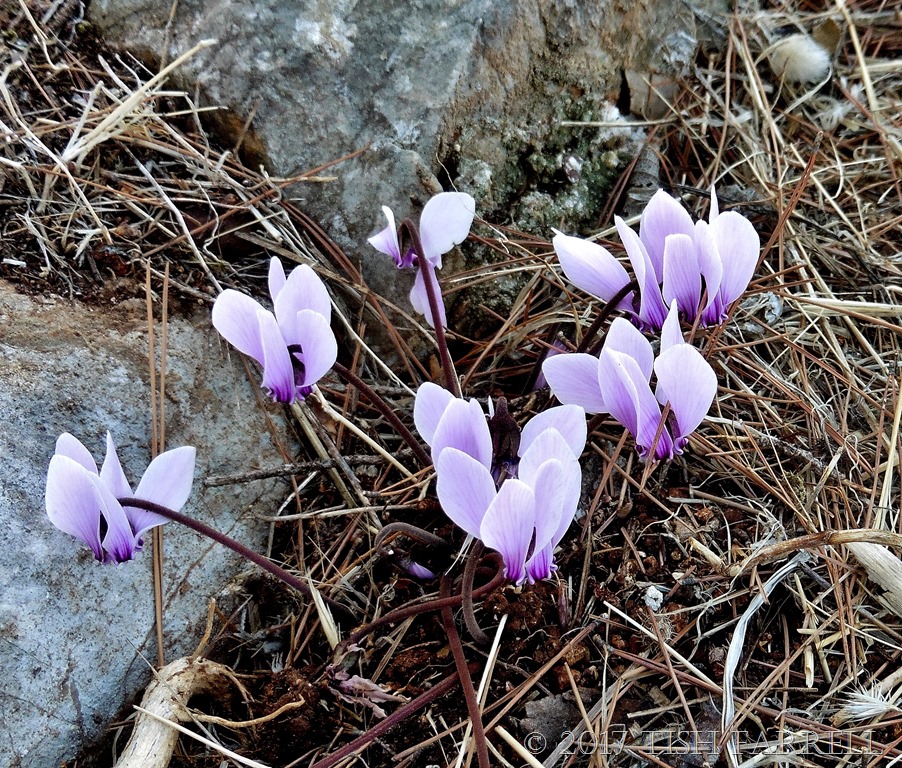
We found these tiny Greek cyclamen growing in the most unpromising places – in rocky clefts and on bone-dry litter among the pines below Pylos Castle. We also found them clinging to the cliff above Peroulia Beach, rooted in the arid cliff path where people keep walking on them. They seemed to be thriving.

Peroulia Dreaming 1

Peroulia Dreaming 2

Travel With Intent This Sunday Debbie is in the pink. Please pay her a visit.

Peroulia Dreaming 2 ~ The Promise Of Rain

It was a family celebration that brought the six of us to the Peloponnese in late September. Thoughts of Greek sunshine lured us too – after a lacklustre English summer. But as the departure date drew near, and the scanning of world weather forecasts stepped up in the hopes of better news, it was clear that the weather in Messenia was set to change.  With the equinox, daily temperatures were to drop by several degrees. Now there would be cloud, rain and storm along with the sunshine. Ah, well. Better pack the waterproofs.

Yet when we came into land at Kalamata airport  on Sunday lunchtime all was blue. The plane banked over the Gulf of Messenia heading out to the Mediterranean before flying back up the Mani peninsula, following the Taygetos Mountains into the airport. Blue sea. Blue mountains. Blue sky.

We stepped off the plane into high-summer warmth to be met by Dimitri, who whisked us  off in his smart Mercedes people carrier. You have chosen a good time to visit, he said; not too hot.

And so it proved.

*

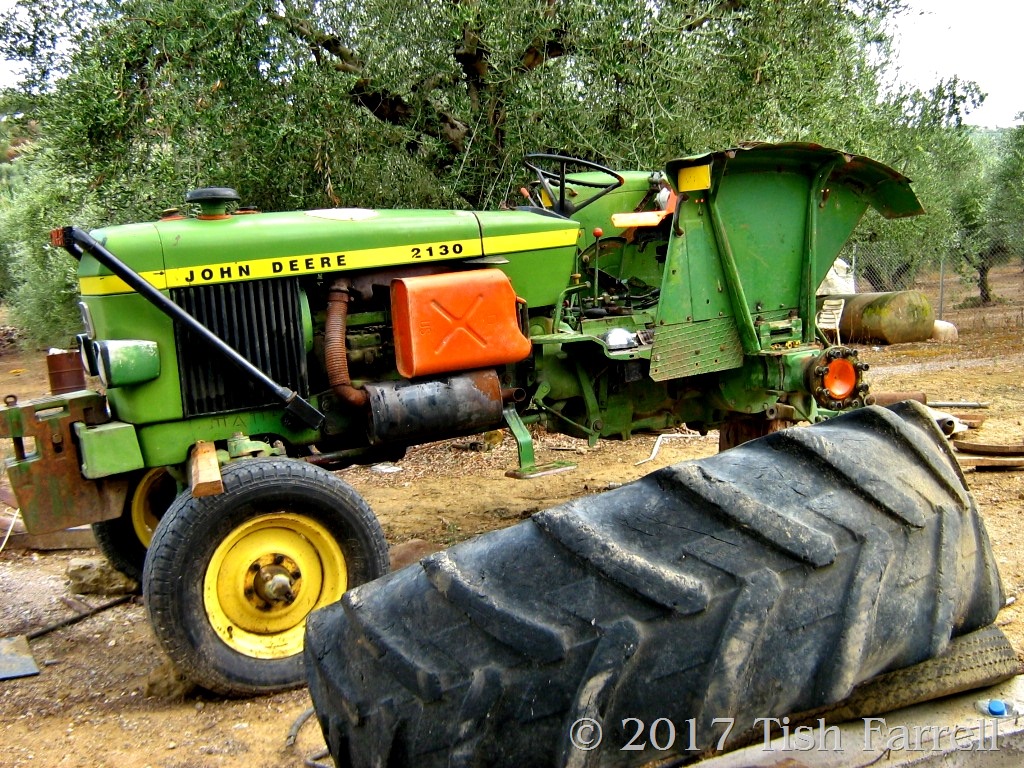
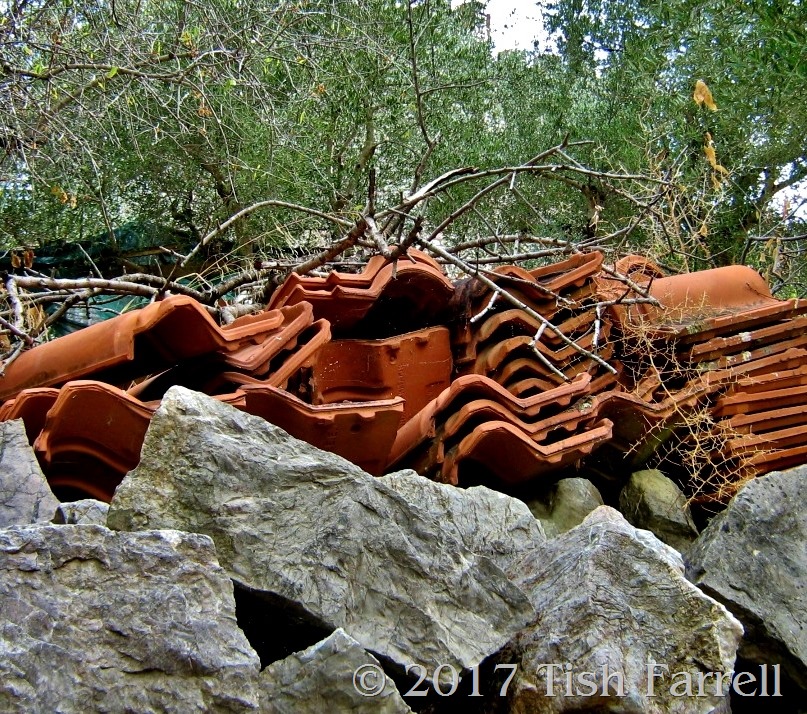
Hinterland Messenia is not pretty. It is a rugged, crumpled upland with deep valleys and winding roads, the vegetation parched from summer heat. Grass burned brown, bare earth between the trees and vines; wherever you look, the grey-green haze of olive groves spreading up and down hillsides and gullies, the dun colour palette spiked here and there: white-walled farmhouses, red tiled roofs, the odd designer villa, black spires of cypress  and, at the roadside, soaring clumps of phragmites grasses with their parchment coloured plumes. There is stuff and clutter among the trees – old tyres, beach loungers, broken down farm machinery, dead cars and stranded boats. Ramshackle stalls offer pumpkins and oranges. And then the road bends towards the Gulf and you glimpse the sea, glinting like jewels, the woodcut frieze of the Mani mountains beyond.

The road south from the airport to Koroni follows the coast – we pass by Messini, Velika, Petalidi, Hrani, Nea Koroni, Vounaria – more work-a-day farming communities than high-profile tourist territory. We know that when we reach Harakopio we must leave the main road and wend up the hillside above Peroulia Beach.  Michael and Maria, our hosts at the Iconpainter’s Villas, have provided a map, but in real life nothing looks straightforward. I’m relieved when it turns out that Dimitri mostly knows where he’s going.

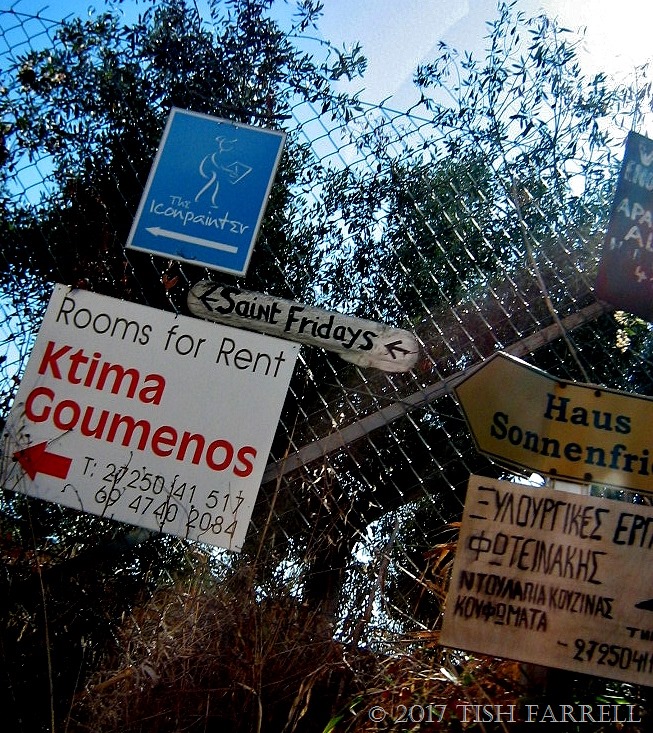
The turn is not obvious despite the clutch of signs on the fence, and almost at once we are ‘off the beaten track’ and seemingly in someone’s front yard. The road narrows so quickly I breathe in, and next we’re zigzagging round house ends, nudging round blind corners, Dimitri tooting the horn (not too loudly), then climbing up beside a whitewashed church, then on through olive groves.

The road is single track, mostly concrete, but in places broken down to rubble. It undulates with bold intention.There are small ravines and gullies. At one point there’s a frisson of alarm from Dimitri as he fears for his Mercedes. This is no game, he says, and we agree. But he is a game lad, and he presses on. IMG_2925

And suddenly we are turning into a smart gateway, pulling up the drive to a tall white house, and there is Michael to greet us and show us to three lovely little houses that will be home for the next seven days.

The bright turquoise doors are a good start. In our respective kitchens we find welcome boxes for lunch and the following day’s breakfast – tomatoes, oranges and figs from the garden, Maria’s home-made lemonade and bottled baby oranges, fig jam and chutney. In the fridge there are mini bottles of Ouzo, the Iconpainter’s own white wine, local yogurt, feta cheese and honey. There is also bread, milk, butter, ground coffee and tea, iced water, brown eggs, little fruit pastries, sesame biscuits, plums and bunches of grapes. It seems we have flown straight to heaven.P1020274We put out of our minds the fact that on Thursday there will be a big storm, and side line Michael’s apologies that the likelihood of rain is high. We have been longing for it, he tells us. All the olive farmers  are waiting. I know it’s not what you want.

We shrug. For now the sun is shining and it is time to eat our picnic lunch under the terrace awning hung with grapes. And then…And then it is time to throw off our travelling clothes, put on something looser and cooler and so take the path to Peroulia Beach…IMG_2919copyright 2017 Tish Farrell

PS I know I said I’d take you walking to Koroni. But that little trek will have to wait till the weather is cooler.
 Peroulia Dreaming Part 1