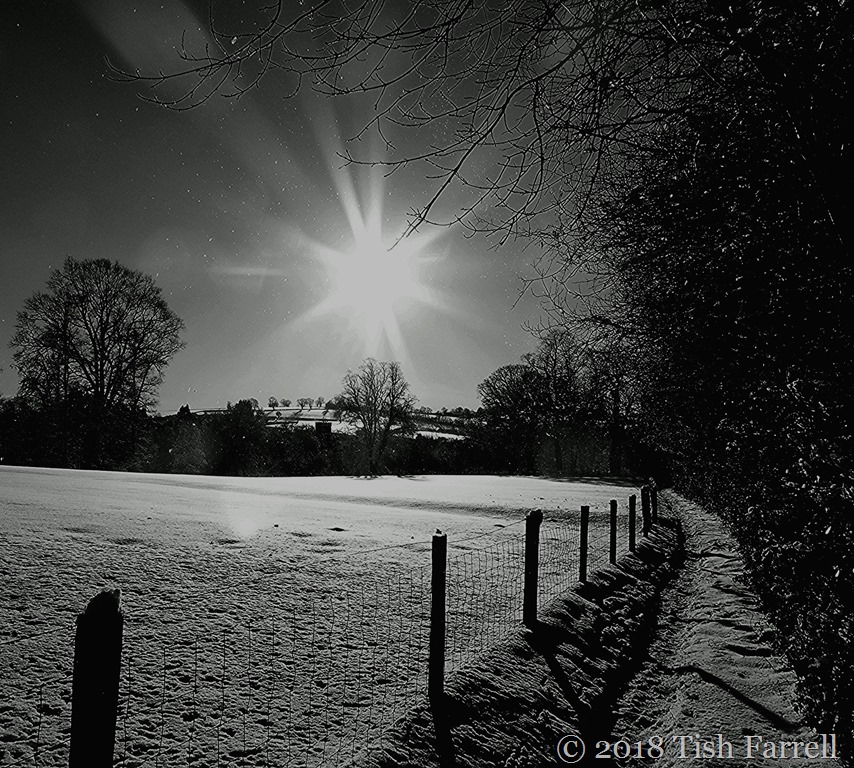
Looking Back At Wenlock’s Snow Paths In Black & White

It’s snowing again today, but hopefully without conviction: just enough to dust the field behind the house, and coat the roofs of the garden sheds. Otherwise, despite the winteryness, there are more signs of spring everywhere – winter pansies in full fettle in Wenlock gardens, allium leaves pushing up through the soil, buds on the flowering currant, more hellebores emerging, snowdrops and catkins in the hedgerows.

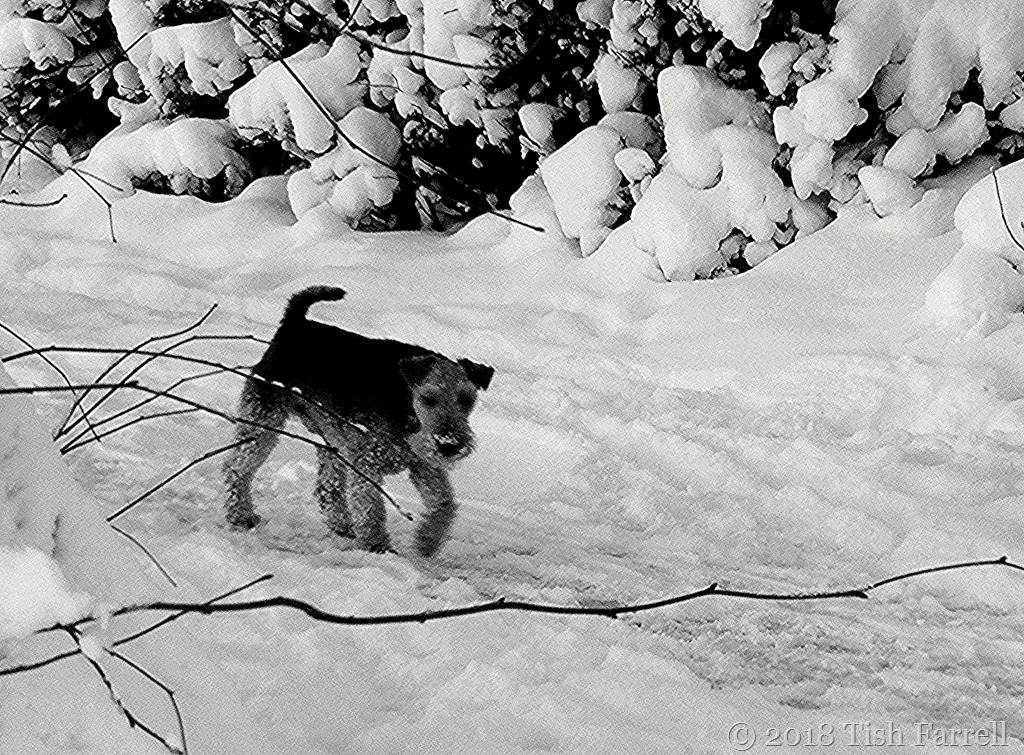
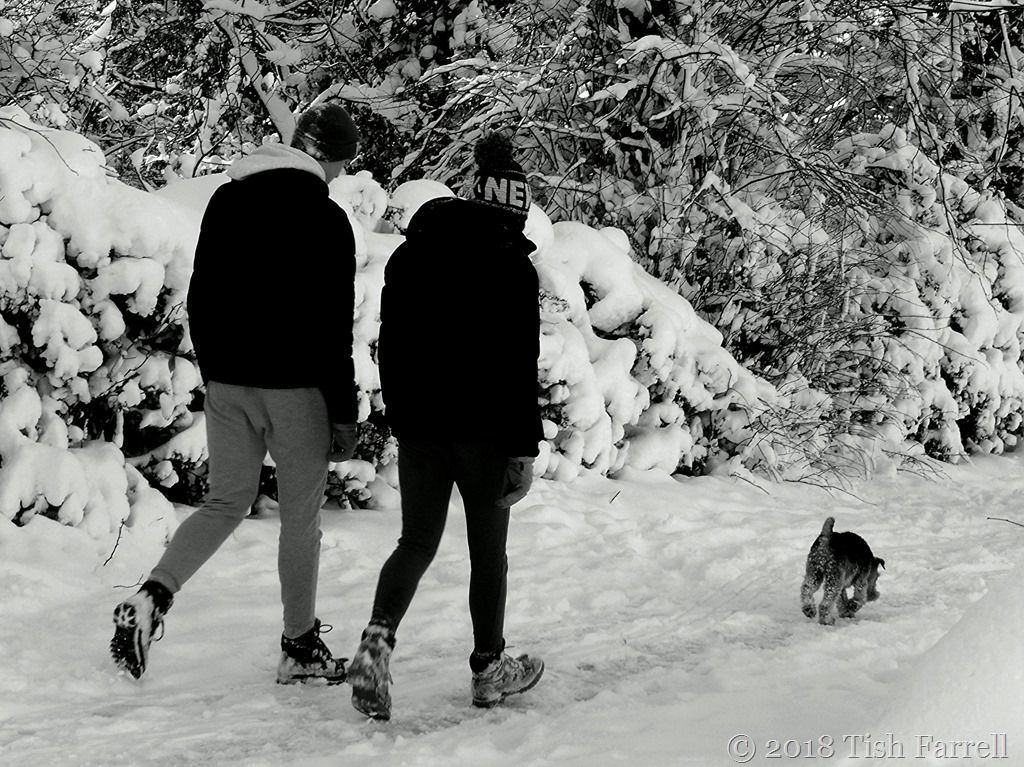
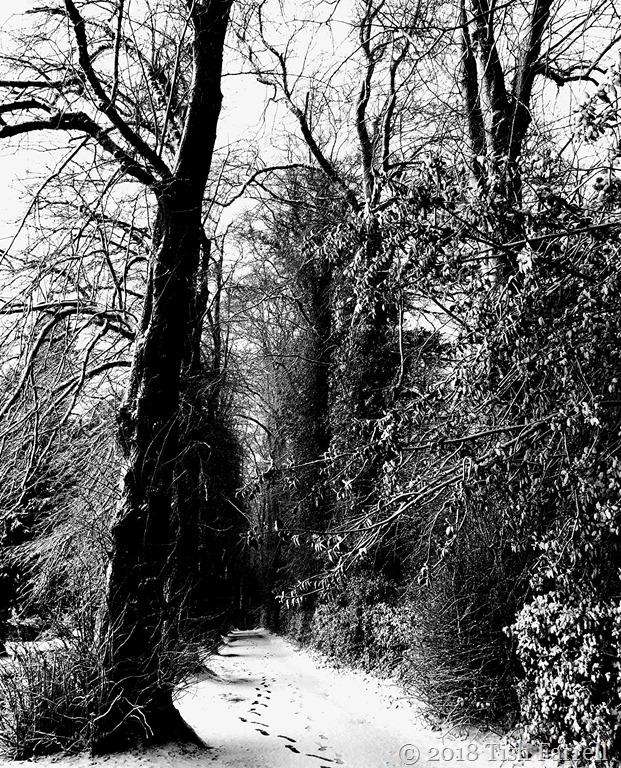
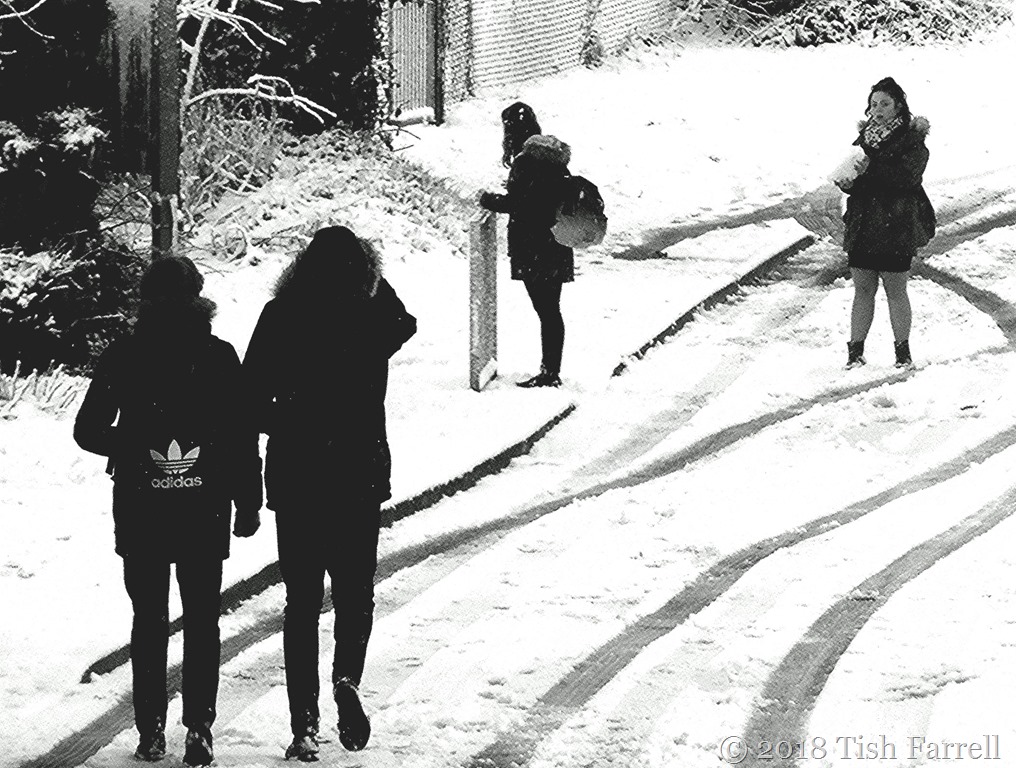
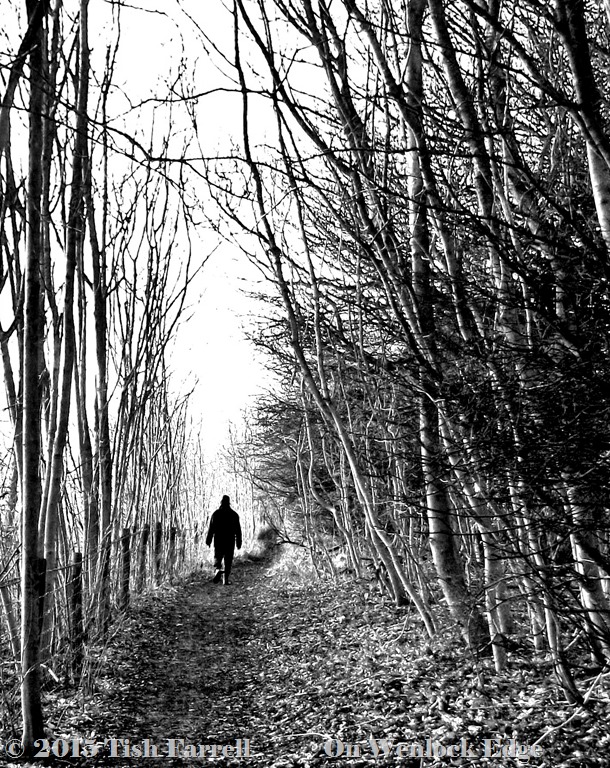
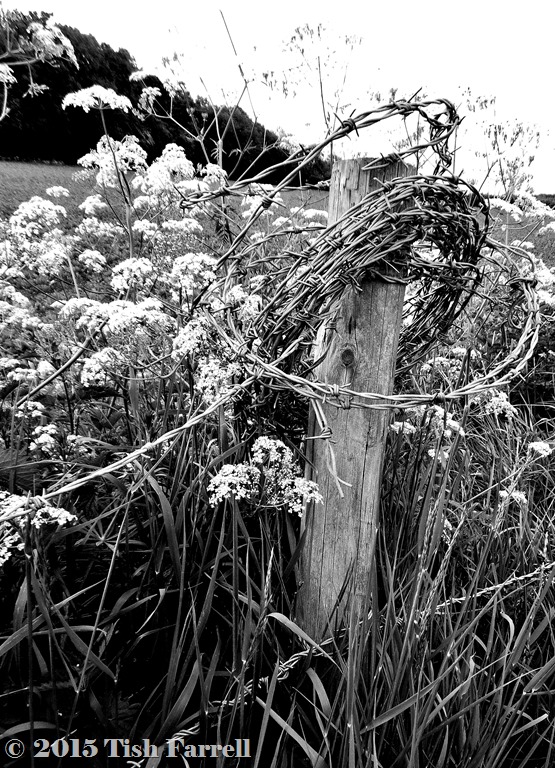
The December snow days were very beautiful, but best remembered now in photos. Some of the following shots were taken in monochrome, and some I’ve converted. The header is a conversion, and it’s only in this format that you can see that the sun is melting the snow from the branches in a mini snowstorm. It isn’t dust on the lens. The photos were taken in and around the Linden Field and I’m posting them in response to Cee’s Thursday black and white challenge: out doors – walks and roads. Follow the link below to join in.

P1030785 b

P1030786 b

P1030628

P1030637

P1030597ab

Cee’s Black & White Photo Challenge – walks and roads

This slideshow requires JavaScript.

The Weather In Wales ~ Winter Sun

P1060474

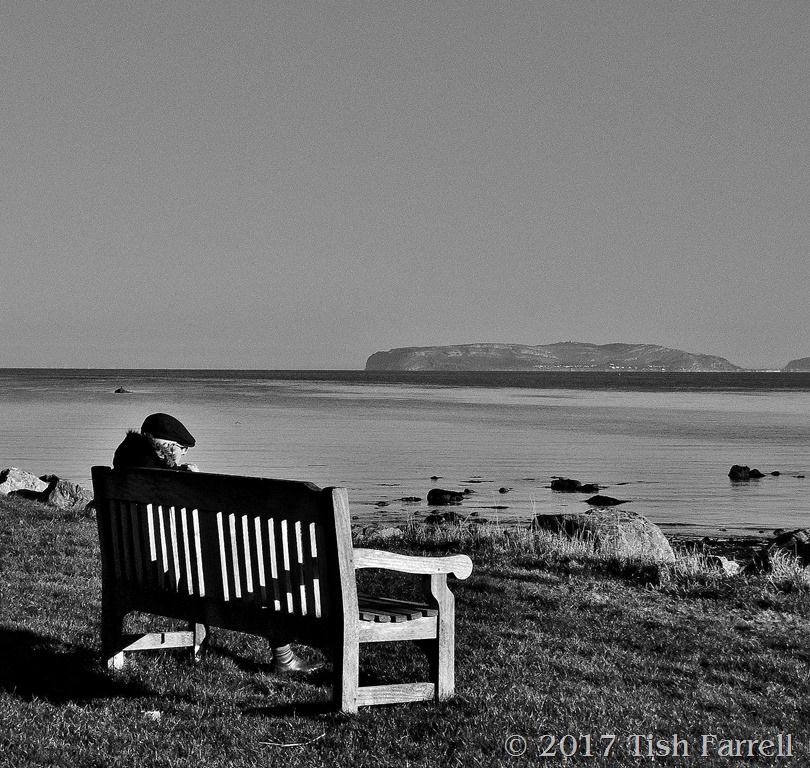
It’s hard to believe that I took this photo nearly a year ago – a late December day on the shore of  Menai Strait on Anglesey. There’s a view of the Great Orme across the water. Everywhere so still. Not a cloud in the sky. And sunshine warm enough to sit in.

I don’t know who the man on the bench is.  He was reading a book quite surrounded by this view. There’s something of an optical illusion about it – the dark cap above the seat back (echoing the nearby black rocks in the water), his foot below the seat, yet the corporeal lack of him in between head and toe,  where the sunlight seems to pass unimpeded through the bench slats. Curiouser and curiouser, said Alice…

copyright 2017 Tish Farrell

Cee’s Black & White Challenge: Weather

The Castle At Koroni

P1020683

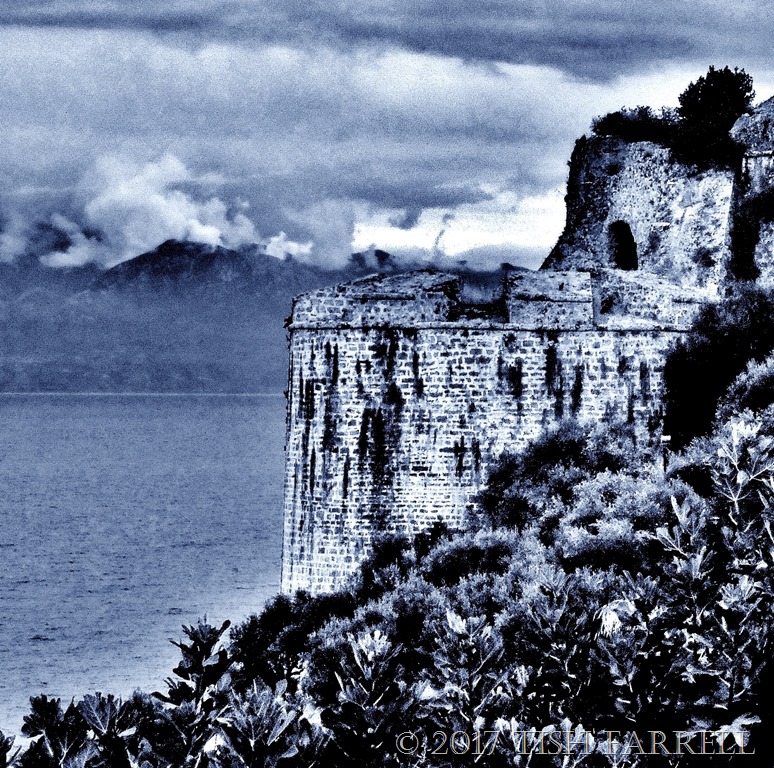
Over the past three thousand years the Messenian Peloponnese has suffered so many phases of foreign invasion it is hard to know where to start unravelling its history.  Best stick with the built remains then. This massive medieval bastion belongs to Koroni Castle, built in the early 1200s CE by the Venetians, and one of a string of Messenian coastal forts controlled by the Republic until 1500.

The Turks invaded next. After summary slaughter in neighbouring Methoni, so spurring Koroni to a quick surrender, they set about strengthening the  castle’s eastern defences, which perhaps included this tower. It is hard to track down details. One Greek writer, whose identity I am yet to discover, described Koroni Castle as ‘the architecture of hate.’ He had a point. Venice anyway regained control in 1685, and of course the Turks came back again later, staying until the Revolution of 1821, which finally ousted them.

Koroni’s historic heyday, though, was the thirteenth century. Under the first round of Venetian rule it was referred to as ‘the chief eyes of the Republic’, and as such, was one of the main ports of call for the ships and galleys of Venice’s Levantine trade. Its must-have product was cochineal, much desired by Venetians for the lustrous dye it yielded.  So now you know where that gorgeous Venetian red came from – this small corner of the Peloponnese.

P1020710 - Copy (2)

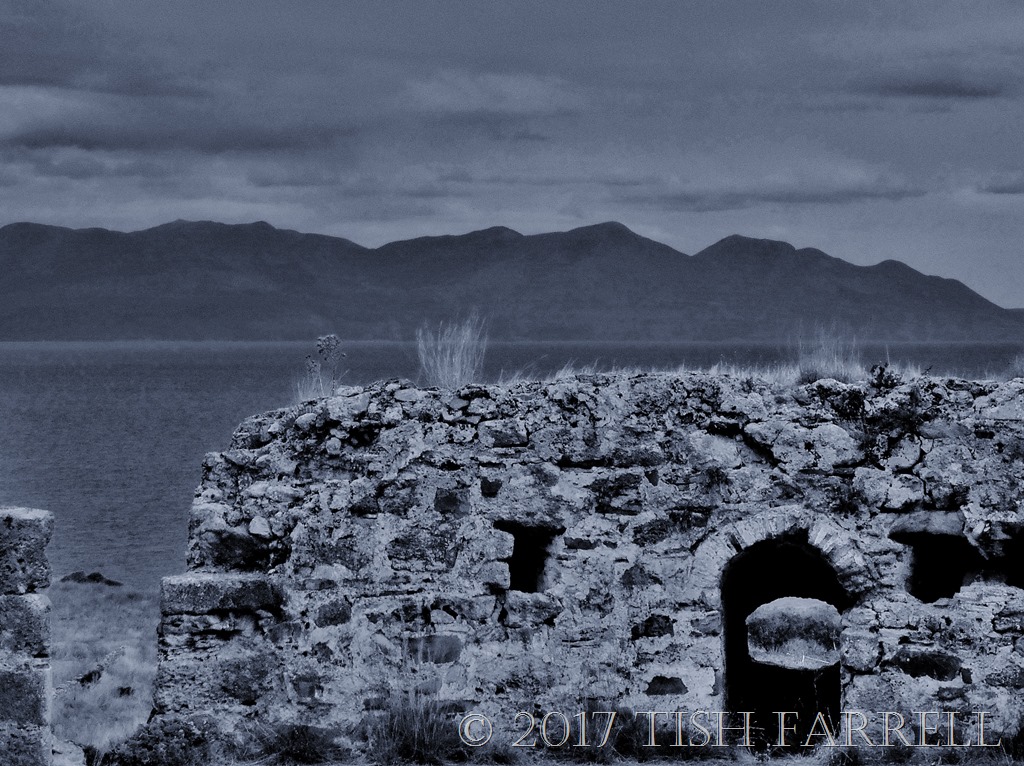
Today, you can spend many hours wandering around the castle’s 40 hectare interior. It is then you begin to grasp that before the Venetians occupied Koroni there were invader Franks on site – they of the French-Italian Crusader States. And before them, in the era of the Eastern Roman Empire of Constantinople, there was a Byzantine fort. This had apparently been built atop an ancient acropolis. And long before the Byzantine presence – that is from around 700 BCE and for a few hundred years, the Spartans were in occupation, so muddying the archaeological remains of the very much earlier Bronze Age Mycenaean period (1400-1100 BCE) and the ancient settlement of Assini.

And these are just the barest bones of Koroni’s history.

P1020707 - Copy (2)

There are also astonishing present-day aspects. The first that strikes you is that people actually live inside the castle. As you walk up from the towering seaward gateway, you find yourself on an ancient cobbled street, and next there are cottages with pretty gardens, and later we come on an olive grove and a small holding. As ever, there are many cats about. There is also a cemetery which is in current use, several churches, ancient and modern, used and disused, and a monastery that is now only inhabited by nuns. The latter has a tranquil garden and a gift shop and picturesque cottages where the nuns live, and you are free to wander around.

P1020713

*

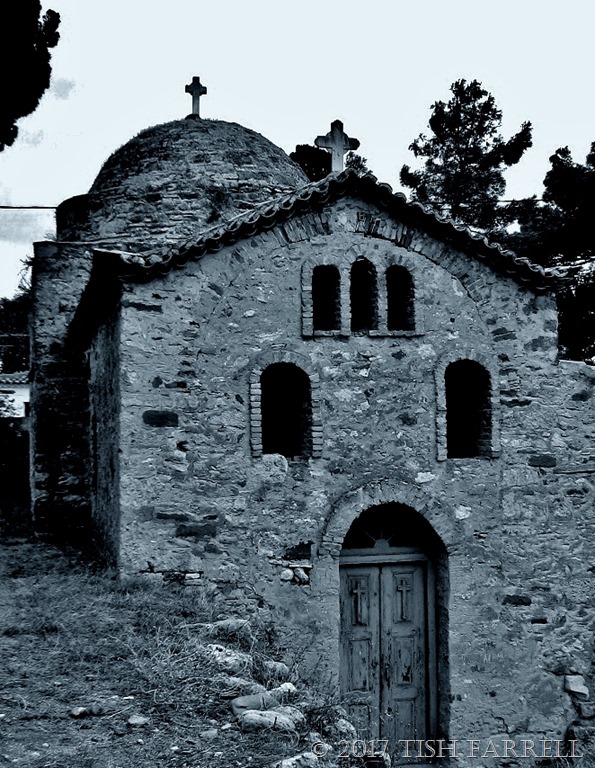
This next and final shot is was taken just outside the monastery entrance, one of the several sacred buildings built cheek by jowl in this part of the castle interior. It is dedicated to Saint Sophia and, dating from the 11th century Byzantine period, overlies the ancient temple precincts of Apollo. At which point you lose all grasp of time, since there is simply too much of it to fathom, and decide that a swift downhill return to a harbour taverna and an enlivening cappuccino is definitely called for.

IMG_2795

copyright 2017 Tish Farrell

castle 1688

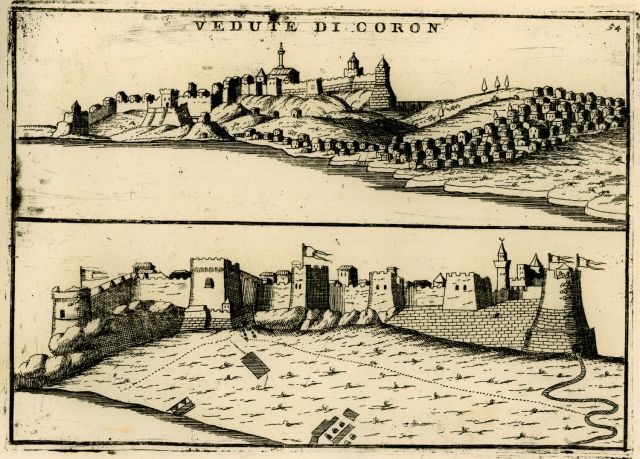
Koroni Castle CORONELLI, Vincenzo 1688  Aikaterini Laskaridis Foundation Library


Cee’s Black & White Challenge: Bricks or Stones

#PerouliaDreaming

For The Love Of Steam ~ Trains And Tracks At The Severn Valley Railway

IMG_1835 - Copy

100_6811

IMG_1857

IMG_1858 - Copy

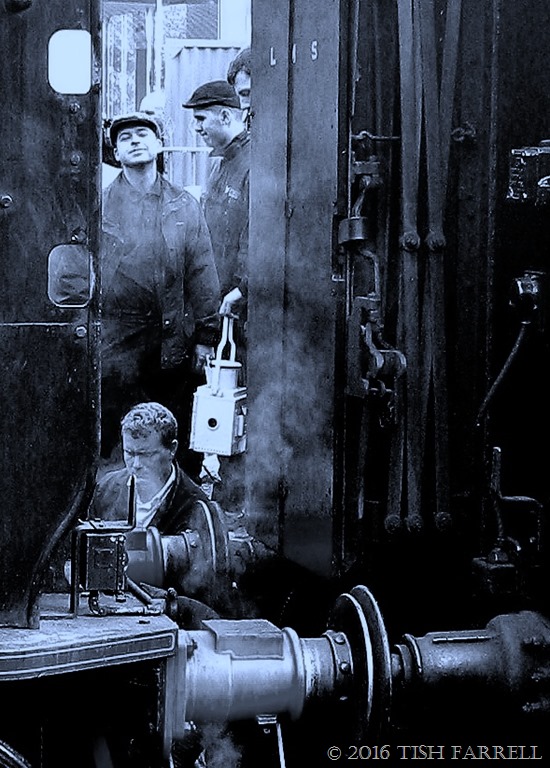
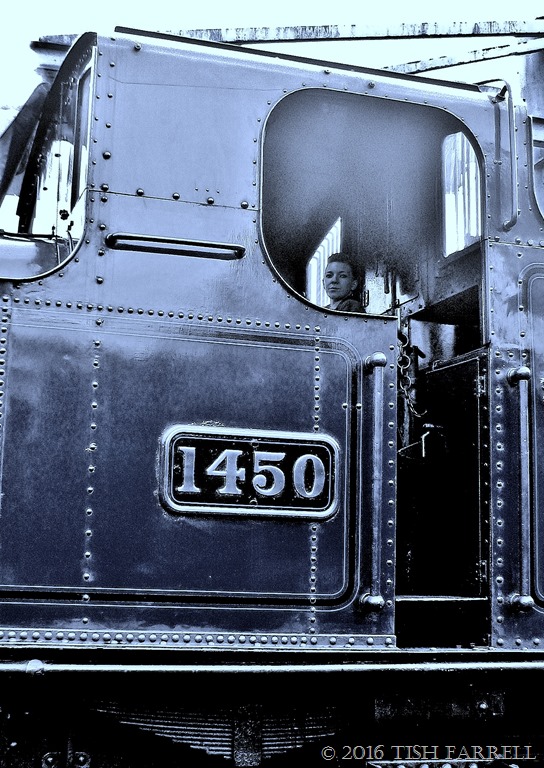
It was a gloomy, low-lit winter’s day when we went for a wander around Bridgnorth’s Severn Valley Railway. The reason for this visit is described elsewhere (Connected On And Off The Rails), so I will confine myself to mentioning that it had something to do with rivets and Graham’s model-making enterprise.

All these photos were originally colour shots which did not convert too well to straight black and white due to the aforementioned poor light. So I’ve added the blue-ish haze for interest’s sake. I think it suits the coal-burning, hard iron,  cold steel, railway yard feel of steam locomotion.

For more trains and tracks please clickety clack over to Cee’s B & W Thursday.

IMG_1840 - Copy

In the Distance ~ Much Wenlock’s By-Ways In Black & White

P1040281

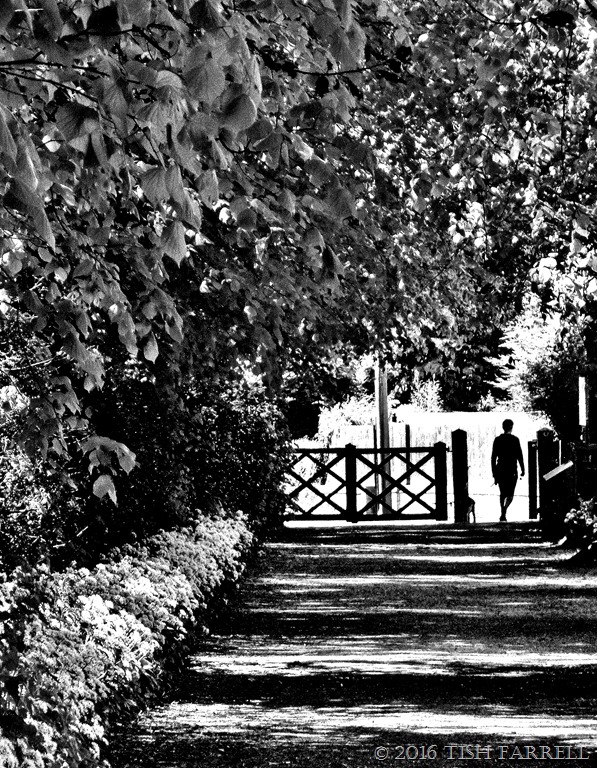
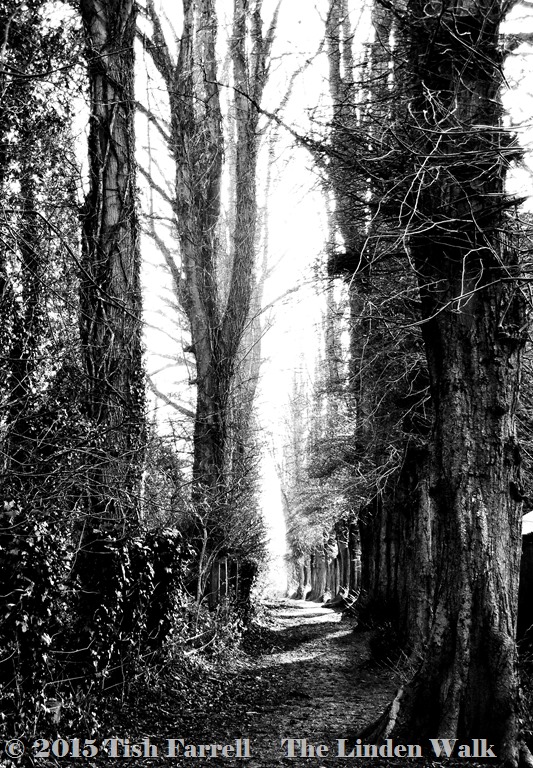
For once I wasn’t using my Lumix Dramatic Monochrome setting when I took this photo on Wenlock’s Linden Walk back in early June. But I think the manual colour version-turned black & white has come out quite well despite the deep shadow and lots of zoom.

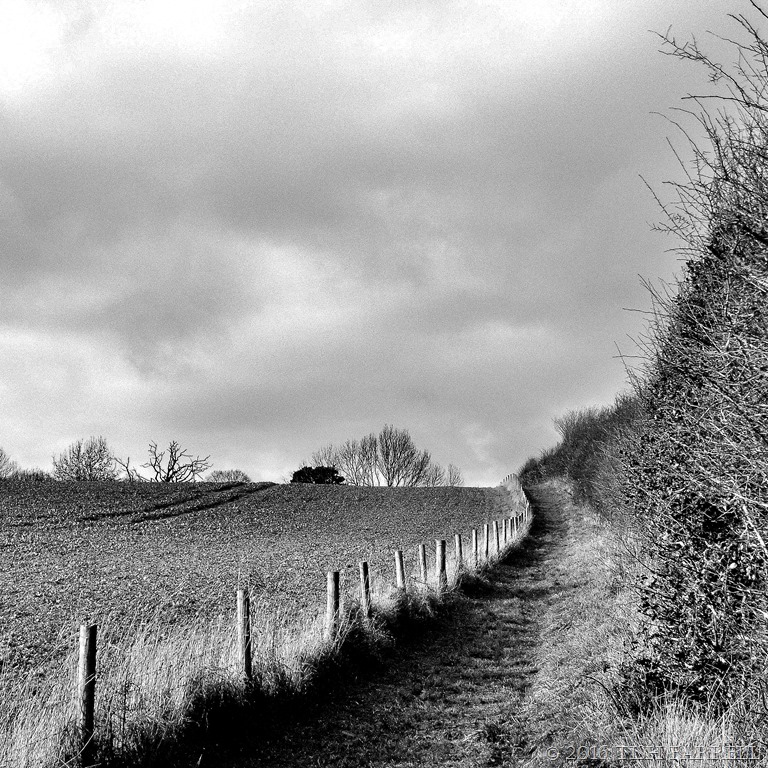
The next photo was taken on a winter’s day using the monochrome setting. It’s the path that runs from the field behind our house and up onto Wenlock Edge. The horizontal line of tree tops marks the top of the Edge. (I like the strange effect of false horizons). When you stand up there the land falls away from you rather hair-raisingly, dropping almost vertically through ancient hanging woodland. In winter, through the bare trees you can just make out the rooftops of Homer village way below.

P1030069

*

P1010921

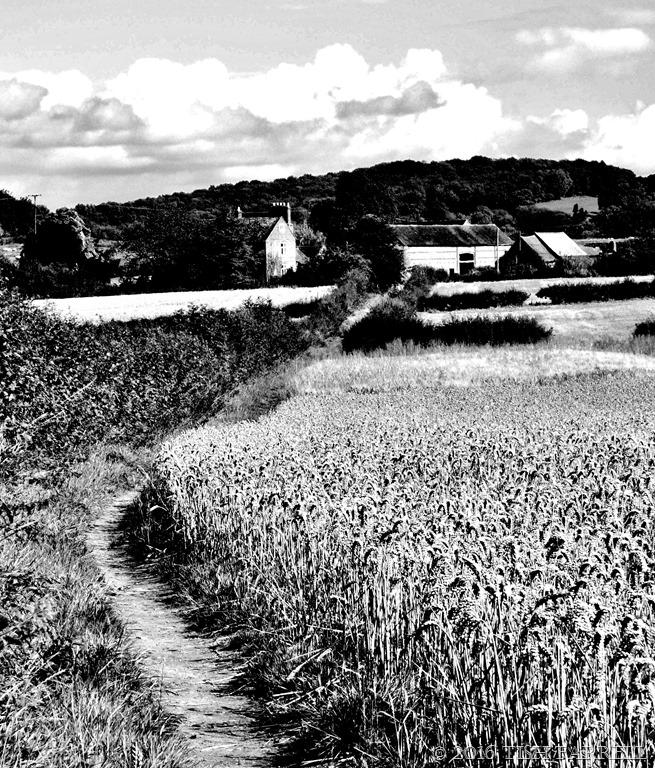
This is the footpath to Bradley Farm. It lies on the far side of the town away from the Edge. Also a change in seasons here: this was taken in full sun last August just as the wheat was ripening.

P1010968

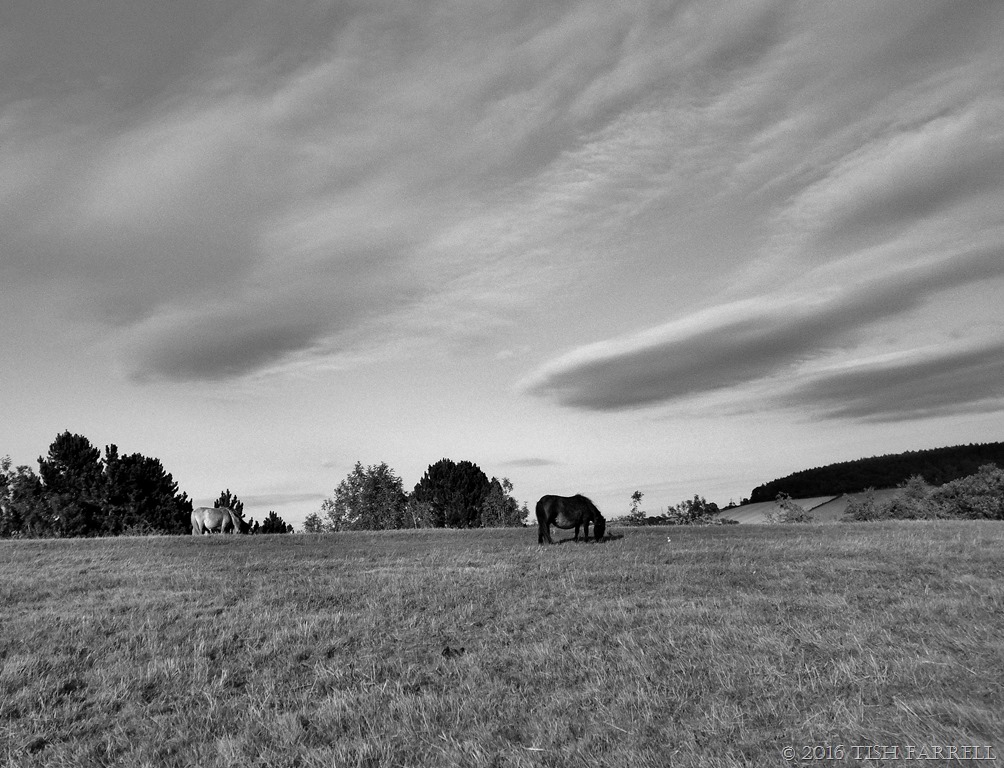
Windmill Hill sunset. I think it’s early autumn because the little ponies that are brought in to graze the hill have not yet been moved to their winter quarters.

*

P1020381

I take lots of photos of the hill on Down’s Farm. It’s an interesting shape and the spinney on top gives added character. But with distant views I always like some structure in the foreground too, in this case the Windmill Hill bench. I took the next photo with same idea in mind.

P1020167

The subject here is the cricket club’s shed on the Linden Field. It stands between the lime tree avenue and a line of Wellingtonia or Giant Sequoias. From this angle I think it looks rather mysterious. A Tardis type portal of some kind. It simply pretends to be the place where Wenlock’s cricketers keep the lawn mower.


Cee’s Black & White Challenge: In the distance

Please visit Cee for more distant compositions.

“When I came last to Ludlow…”

P1020333

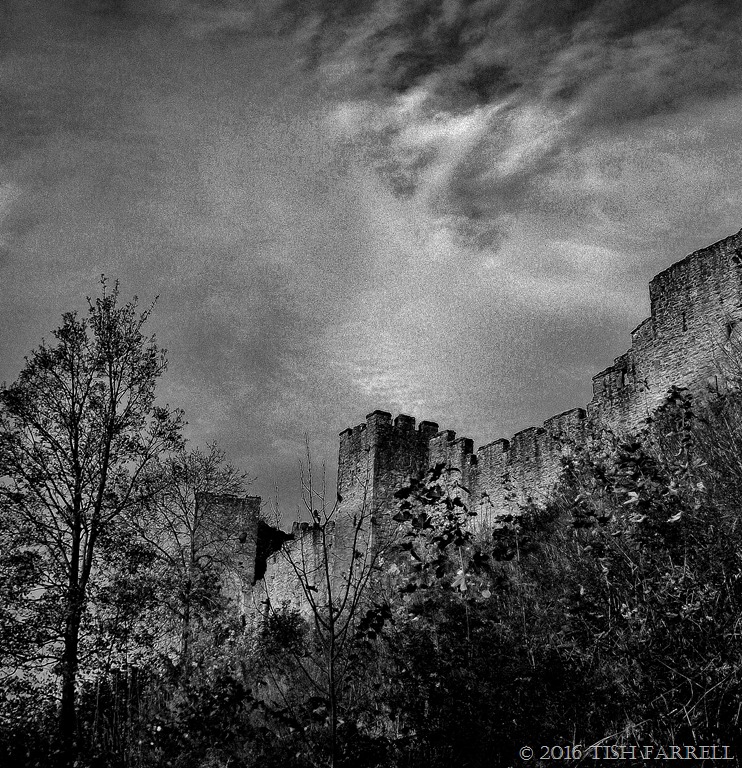
This week in her Black & White series, Cee gives us a free hand, and says we can post our favourite B & W images. Here is one of mine: Dinham Bridge over the River Teme, with Ludlow Castle above. For those of you who do not know England, Ludlow is a scenic market town in South Shropshire. All looks so tranquil here, and the town itself ever has a sleepy air.

Historically, though, Ludlow was an important border stronghold commanding the Welsh Marches to the west, and repeatedly the scene of bloody battles and political intrigue down the ages.

The castle is almost a thousand years old, having its beginnings on the crest of the hill in around 1075. The outer fortifications were added a hundred years later, and the castle continued to expand and become ever more grand over succeeding centuries.

I’ve mentioned before that one of the castle’s claims to fame is that it was here in 1501 that fifteen-year old Prince Arthur Tudor, son of Henry VII and thus Henry VIII-to-be’s older brother, spent his honeymoon with sixteen-year old Catherine of Aragon, and that Arthur caught a fever and was dead within the year, thus leaving Catherine to be betrothed to Henry.

Nearly thirty years later when Catherine was embroiled in Henry’s ugly attempts to be rid of her so he could marry Anne Boleyn (he demanded an annulment on the grounds that it went against biblical teaching for a man to marry his brother’s wife) she claimed that nothing had happened between her and Arthur at Ludlow; that their marriage was never consummated.

So much for Ludlow-past as a honeymoon destination.

100_6732 - Copy

But the castle has older more grizzly mysteries associated with it. They relate to the Wars of the Roses mentioned in the previous post. Ludlow Castle was one of Richard Third Duke of York’s key strongholds until it was lost to Lancastrian forces in 1459 at the Battle of Ludstone Bridge – the next bridge downriver from the one in the photo. Three years later in 1461, when his son defeated the Lancastrians and became Edward IV, the castle was restored to the Crown, and it was during Edward IV’s reign that both castle and town grew in political prominence.

And it was in Ludlow Castle where Edward IV’s sons, Edward and Richard, spent much of their childhood, and whence they were taken in 1483 to the Tower of London. Their father had died, and Edward aged twelve had been pronounced Edward V, but was not yet crowned. His father’s brother, Uncle Richard Duke of Gloucester, aka Richard Crookback and soon to be Richard III, was Lord Protector.

Then came news that Edward IV’s marriage had been proved invalid. His young sons were declared illegitimate, and Richard quickly had himself crowned. The boys, thereafter referred to as the Princes in the Tower,  were never seen again. Behind them only argument remained – did Richard III have his nephews murdered? Did the two small skeletons, later unearthed in the Tower,  belong to young Edward and Richard? When I think of them in the brooding Tower of London, which incidentally was then a royal palace and not a prison, it still gives me a pang. I sense their feelings of loss and displacement, a pining for Ludlow, ‘the hill beside loud waters’**, the forests and wide Shropshire vistas below the battlements; just the place for growing lads.

If Richard did kill the boys in a bid to secure his claim to rule, it didn’t do him much good. He was killed at the Battle of Bosworth in 1485  after only two years as king. His remains were buried in the church of a Franciscan Friary in Leicester, and in 2012 were re-discovered with much fanfare during an excavation of the site, which by this time lay buried under a city car park. Leicester University scientists then set out to prove the identity of the skeleton, an exciting piece of forensic archaeology and genealogy which is detailed at this link.

After Richard came Henry Tudor who won the day at Bosworth Field, the last significant conflict in the Wars of the Roses. So ended the Plantagenet Dynasty, and so began the Tudor Dynasty with the coronation of Henry VII – which is pretty much where this post began.

These days Ludlow Castle is a prime tourist attraction. It is privately owned by the Earls of Powys, and has recently been subject to much restoration work. If you can’t visit in person, then follow this link to do a virtual tour. But if you do get a chance to go there, the town itself is also a treasure. You will not be disappointed.

100_7941

copyright 2016 Tish Farrell


*  “ When I came last to Ludlow…” from A E Housman’s A Shropshire Lad  LVIII

** The name Ludlow is said to derive from the Old English meaning ‘the hill beside loud waters’

~

Related:

My Treat Today In Ludlow

A Five-Hundred-Year Old C.V.

Seaton Seascape

P1020706 - Copy - Copy (2)

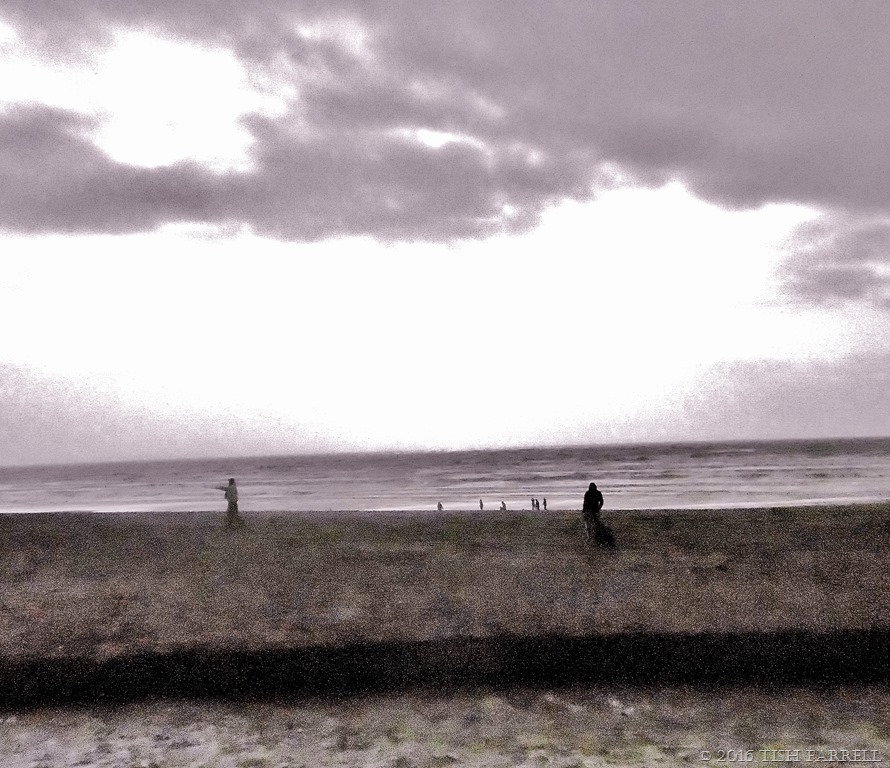
All I can say is my Lumix point and shoot was on a very strange setting when I took this photo. I blame the gale that was blowing along Seaton Beach, though you’d hardly know it by the ‘frozen-in-time’ look of this shot.

Cee’s Black & White Photo Challenge

This week Cee says the subject can be anything beginning with the letter ‘S’. Please follow the link to see her work and other bloggers’ renditions.

My Wenlock World In Black & White

P1000517

This week Cee has given us ‘carte blanche’ to post black and white images of our choice. So I thought I’d show you my everyday world, but with just a touch of ‘noir’.

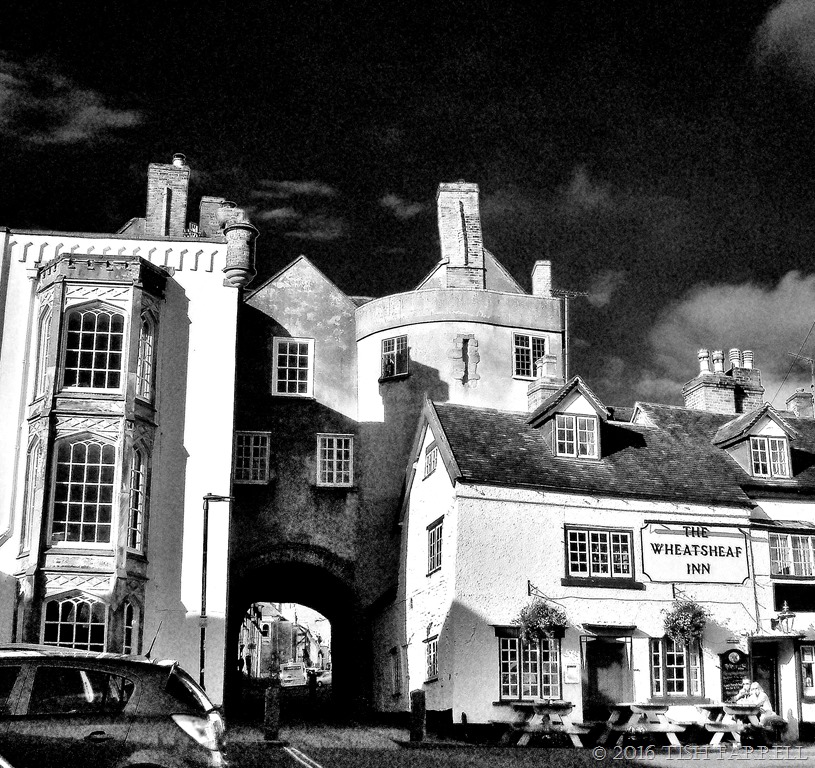
Welcome, then, to Much Wenlock

where all looks tranquil. Or does it?

100_7046


P1010518 (2)


P1010485


P1000562


100_5899


P1010145


Cee’s Black & White Photo Challenge

Go here to see Cee’s and other bloggers’ b & w favourites

Seeing My Town In Black & White: 1

P1010625

In this week’s Black & White Challenge, Cee is asking us to focus on subjects that are more than fifty years old. I’m pretty confident, then, that my home town of Much Wenlock more than fits the bill. As a settlement, it has been continuously occupied for the last thousand years.

The town windmill (seen above) is not quite that old. I’ve begun with it because it is the oldest structure near my house. It  was busy grinding corn from around 1655. Then a lightning bolt struck it in 1850, and it has remained sail-less ever since – either a pity or not, depending on your views on historic conservation.
IMG_1185

On the other hand, I perhaps needn’t have gone as far as the windmill. You might say my own house is something of a minor monument age-wise, much like its inhabitants (?).  It’s original half dates from the 1830s. In the living room there’s a massive inglenook fireplace complete with bread oven that defies my attempts to photograph it well, so you’ll have to imagine it. Instead I’ll take you on a walk down Sheinton Street to see a few of the other sights.
P1010161

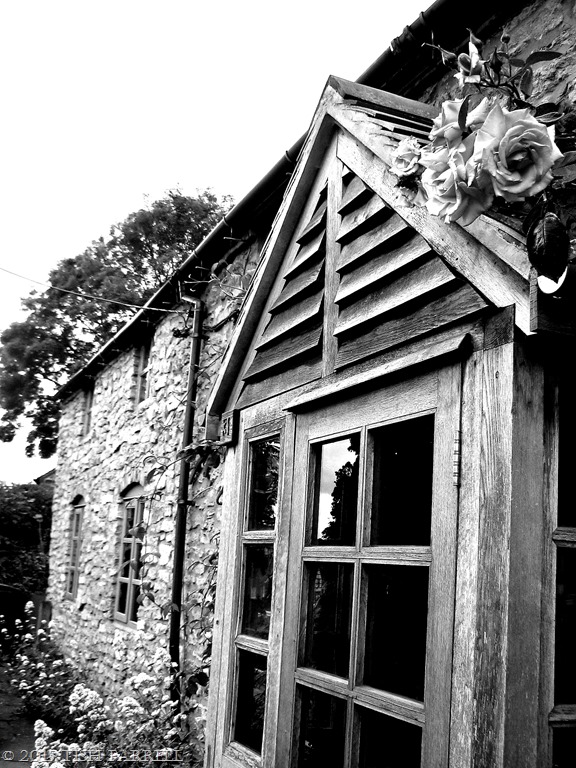
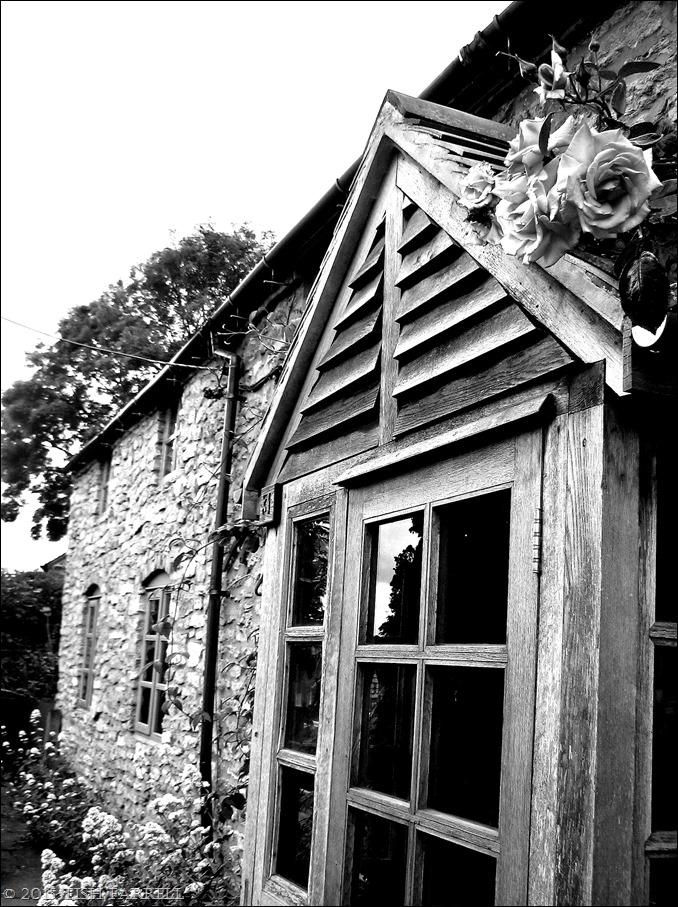
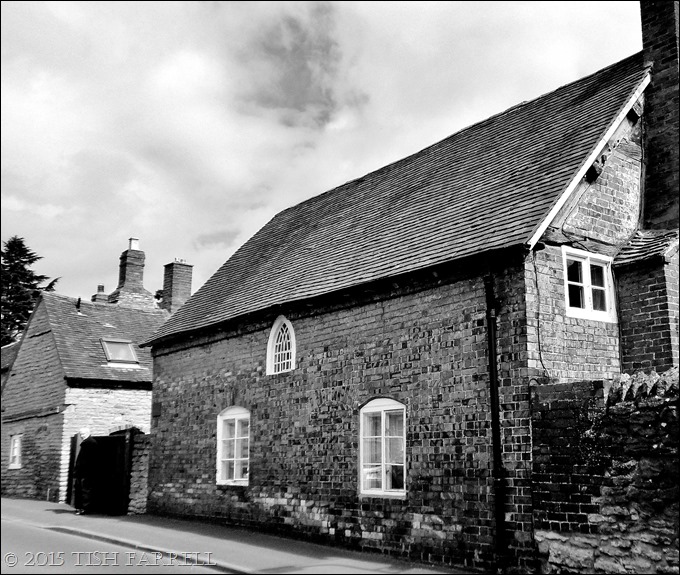
Heading into town, there are here-and-there signs of the medieval origins of many of the cottages, their timber frames concealed or disguised by brick and stone exteriors that have been added in more recent centuries.

Most of these cottages would have once housed artisans, their workshops opening directly onto the street to catch the eye of potential customers. The living quarters, and gardens would have been behind the workshops. In fact, the layout of long medieval burgage plots behind these Sheinton Street properties, and now pretty gardens, are still visible from the field path.

Today, Much Wenlock is a sleepy sort of place, much gentrified, and up-marketed. But step back a couple of hundred years, and much of it would have been grimy and industrial. Not only was there quarrying and limestone burning going on around the town, but within it were once the smoking kilns of the clay tobacco pipe manufacturers, stinking pits for the curing and tanning of hides for leather working, horses and carts churning up the dirt. Brewing was  also a big local trade, as were slaughtering, pewtering, smithing, weaving, and hat and shoe making. The unmade streets were alive with taverns to wet the throats of dusty quarrymen, and the final touch, ambiance-wise, would have been provided by the malodourous effluvia of the Schetbroke, an open sewer of a stream which ran through the town (but now happily culverted).
100_4963

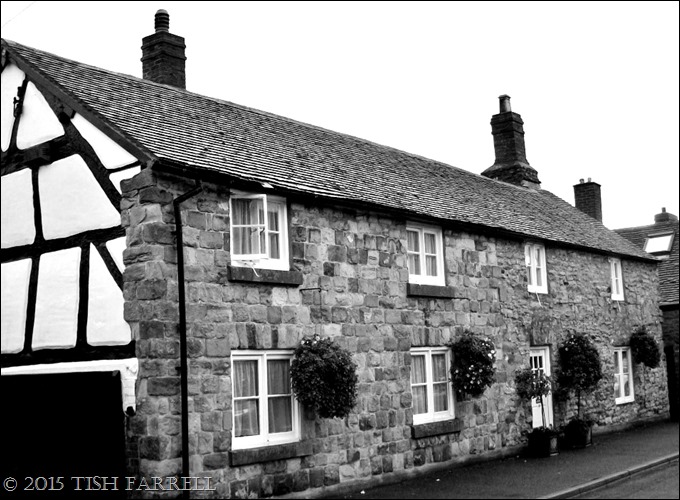
I don’t know the particular history of this rather grand cottage seen above, but it’s a good example of a later stone frontage added to a much older building. Most of the town’s stonework has in fact been recycled from its medieval priory, dissolved by Henry VIII in 1540.
100_6033

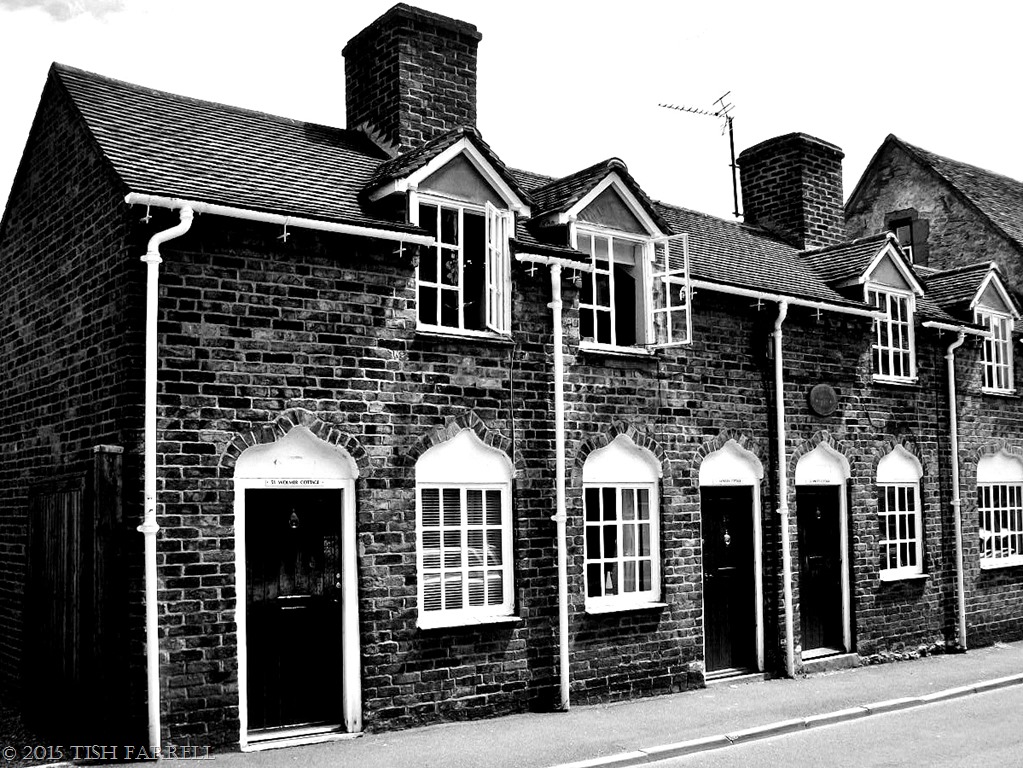
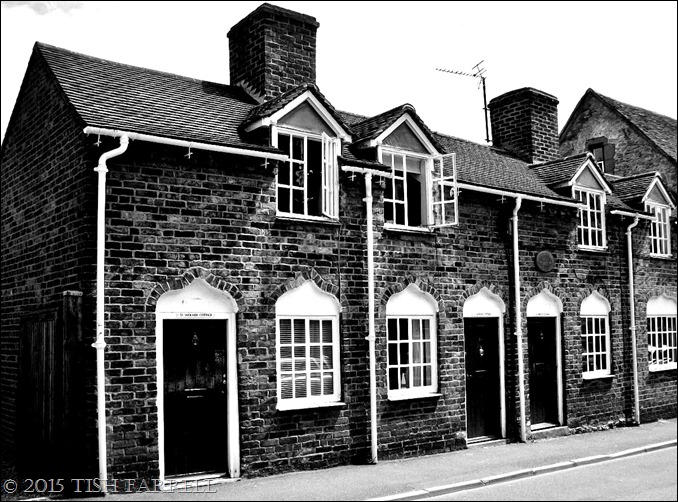
In amongst the antiquity we can also find more recent buildings. For instance, in the space between  medieval neighbours is this little set of picturesque alms houses built in 1810. They are known as Wolmer’s Alms Houses, a charity founded in the town in 1485. They are still operated on a charitable basis for the elderly. I love the brick ogival arches over the doors and windows.
P1010156

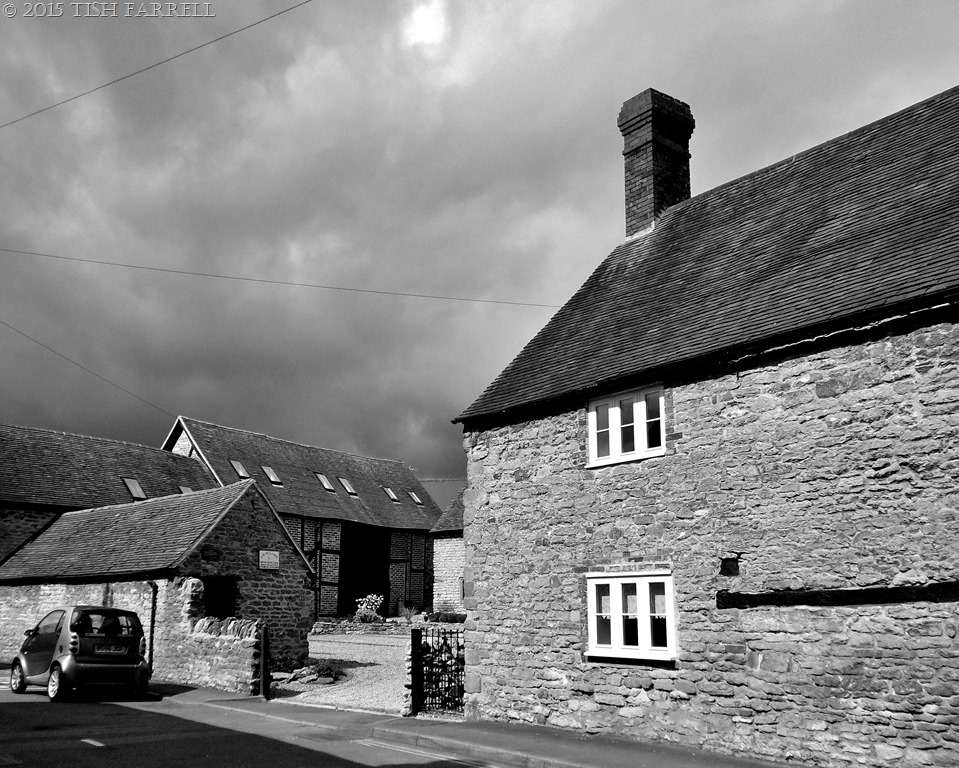
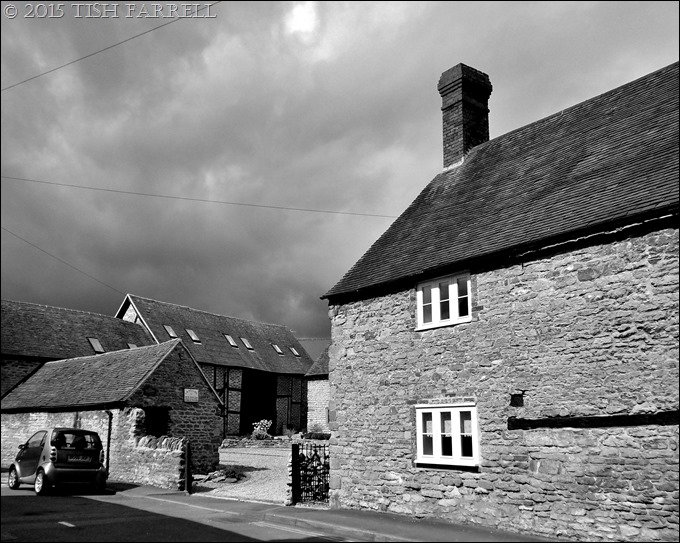
At the end of Sheinton Street is Brookhouse Farm. It is now a residential enclave of smart barn conversions, but until fairly recently was one of the last surviving examples of England’s town farms.  I can still remember it in the 1990s as a very rustic farmyard with cattle in the barns. The farmhouse in the foreground was stone-clad in the early 1700s, and is one of several Much Wenlock houses with a medieval hall concealed within it. You might call this the Chinese Box school of architecture.

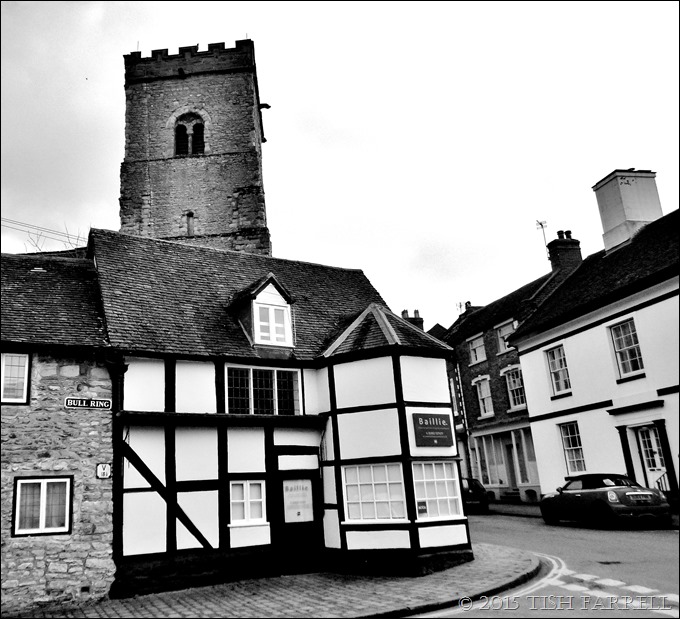
Then on the opposite corner from the farm is the Bull Ring…
P1000621

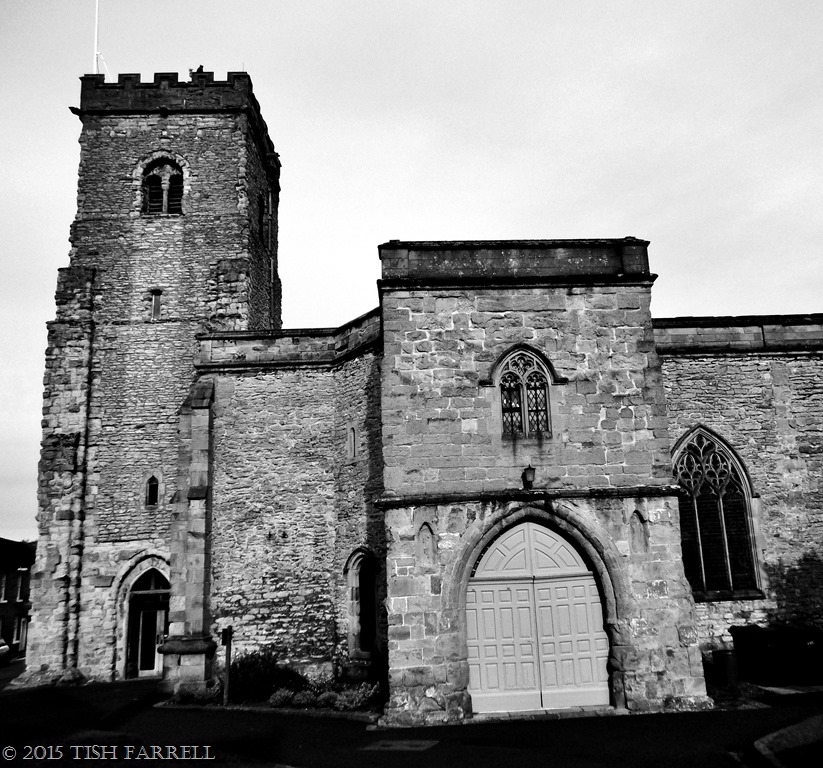
…so named after the unsavoury pursuit of bull-baiting that went on here until the early 1800s. By then the timber-framed building  had stood for some 200 years, while Holy Trinity Church, seen behind and in the next photo, stands on the site the Saxon women’s church of St Milburga’s Abbey, founded in c.680 AD as a religious house for both nuns and monks. The oldest part of the present church is the nave which dates from 1150. Other parts were constructed in the 14th and 15th centuries.

P1000408

During monastic times, Much Wenlock was ruled by the Prior under ecclesiastical law. After the dissolution in 1540 a new civil courthouse had to be built. It stands just across the Church Green, and marks the centre of the town. These days the ground floor is the venue for our various markets, while upstairs houses the original law court (now a gallery) and the council chamber which is still used for all Town Council meetings, and has to be one of the most uncomfortable, if august, venues in the whole town.

100_5540

And now we’ll double back on ourselves. Please head under the arch (look out for the man with a camera) and cut across the Church Green for our last stop on this tour – a quick look at Much Wenlock Priory.

P1000494

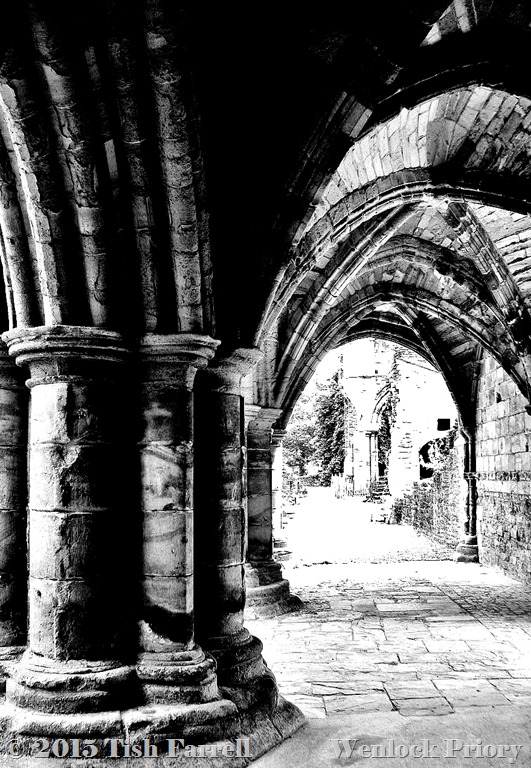
This is the view from the lane, where the site’s perimeter is shaded by soaring Corsican Pines. We’ll need more time to make it worthwhile buying a ticket to go inside, so I’ll leave you with a photo from one of my earlier visits: a close-up of the monks’ lavabo where they used to wash before entering the refectory to take their meals.

The carved panel dates from c.1180, which is odd, actually. I could swear one of the saints is on his cell phone.  Not so much religious texts, as a direct call to the Almighty?

100_5799

In Part 2 I’ll take you on a black and white stroll up the High Street.
copyright 2015 Tish Farrell

Related:

5 Photos 5 Stories Hidden Wenlock #1

Cee’s Black & White Photo Challenge: over fifty years old