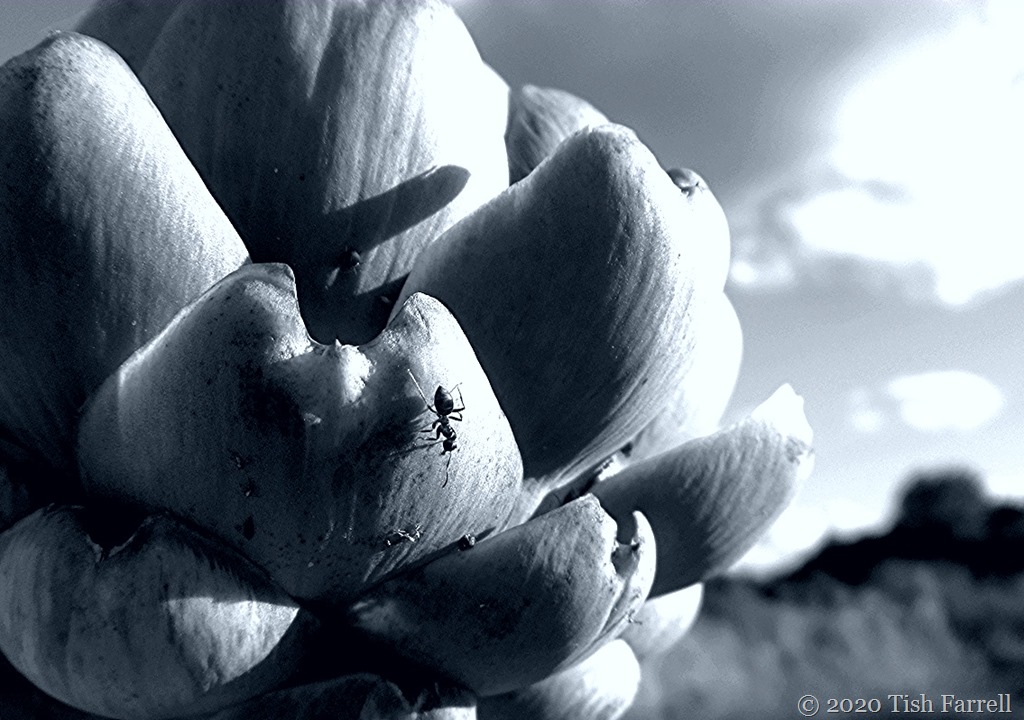
Friday evening at the allotment: the ant and the artichoke.
Please visit Thom at Writing Prompts and Practice for the true story behind this photo:
‘Be strong, be brave, and cast a big shadow.’

Friday evening at the allotment: the ant and the artichoke.
Please visit Thom at Writing Prompts and Practice for the true story behind this photo:
‘Be strong, be brave, and cast a big shadow.’
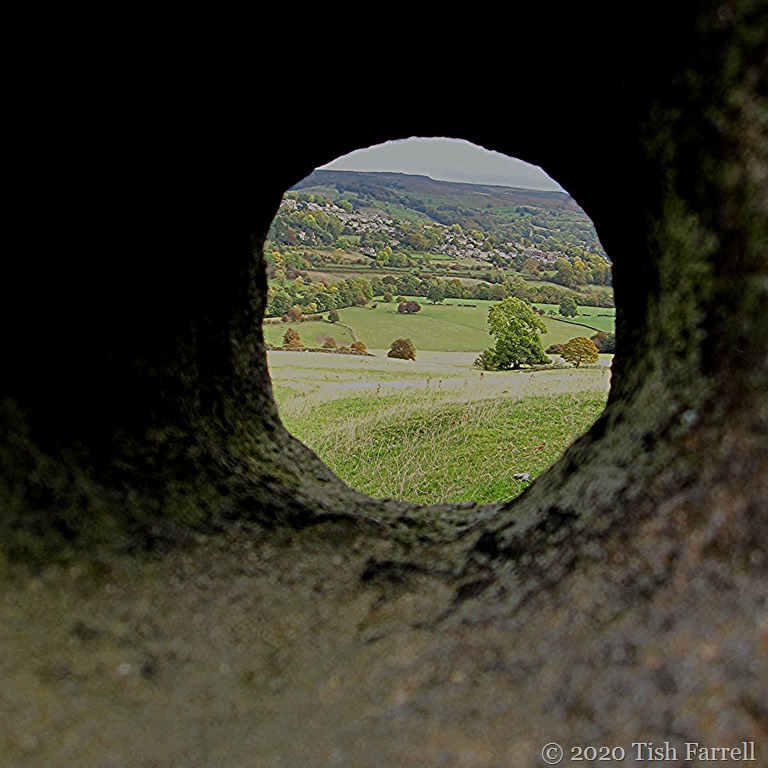
Well I like to think my great grandmother, Mary Ann Fox, might have looked through the hole in this old Derbyshire gatepost on her way from Callow Farm to Hathersage village. The post stands beside a path she would have known well until 1886 when, at the age of 23, and apparently already betrothed to the local squire, she ran off with a city type, a Bolton spindle manufacturer, Tom Shorrocks.
The High Peak of her homeland was by no means a rural idyll, although it looks so today. Alongside stock rearing and subsistence agriculture, small landowner-tenant farmers like the Foxes had for centuries engaged in other trades. Lead and fluorspar mining were mainstays of the area. So was the making of millstones up on Stanage Edge, though not so much for wheat grinding since the local gritstone discoloured the flour, but for pulping wood and crushing the lead ore for the smelting houses. The grind-stones also served the cutlery industry in nearby Sheffield and stones for wood pulping were exported to North America and Russia.
Hathersage, then (seen distantly here through the gate post), has a busy industrial past. From Tudor times it was the centre of wire-drawing, at first for making sieves for miners, and later for pins and needles. By Mary Ann’s day there were 5 such mills there, all powered by steam, their chimneys gushing out fumes that would have hung over the Derwent Valley. By then, too, the railway had arrived, the line from Manchester to Sheffield passing through land once owned by her grandfather. So, as I say, this was no rural idyll, but a community of industry and enterprise of the sort that had characterized High Peak farming families for generations. Growing and stock rearing might put food on the table, but farming did not bring the kind of prosperity that a rich seam of lead could be expected to yield.
But I do wonder if Mary Ann was not shocked to find herself in the little terraced villa on Kildare Street in Farnworth, (part of Greater Manchester), there in a maze of town streets, far from the far-reaching uplands she would have seen every day from Callow Farm. Did she miss these views? She certainly told my grandmother about crossing the River Derwent stepping stones on her way into Hathersage. And she told how she never forgave her father for taking away her pony, this because she would not desist from jumping the 5-bar gate at the end of the lane. He feared for her life. She mourned only her pony’s loss, back-broken by the overweight farmer who had bought it from her father.
Perhaps she had good reason to leave. Perhaps the squire of Abney was not to her taste. Perhaps city life was more exciting. From my perspective it is too easy to be overly sentimental about the loss of this landscape; one that I find so beguiling. It wasn’t really like this in great grandmother’s day. As L.P. Hartley says in the opening of his novel The Go-Between: “The past is a foreign country. They do things differently there.”


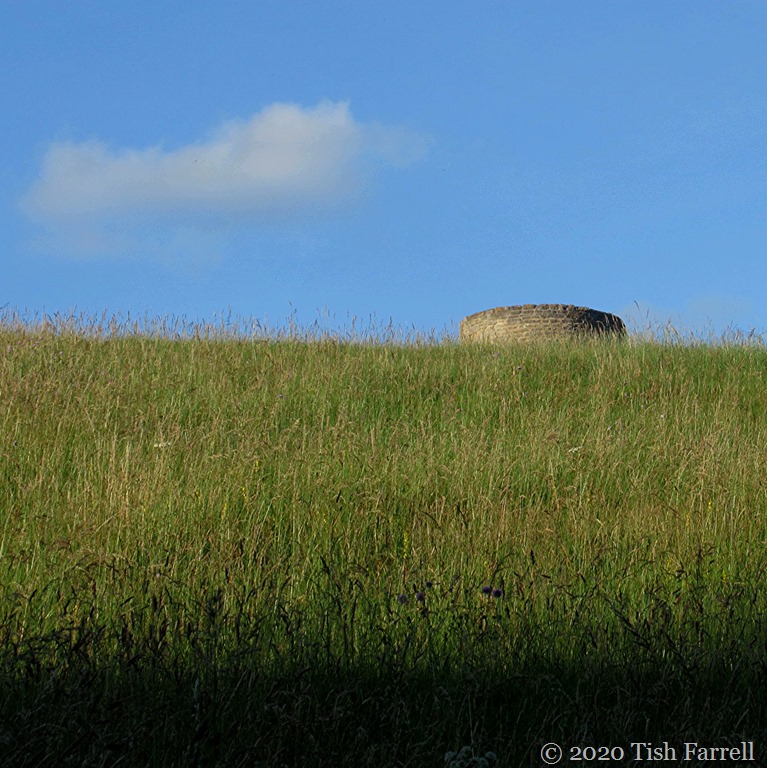
Those of you who come here often will know that Windmill Hill is my home town’s much loved landmark. Lucky for me it is only a five minute walk from the house, and that the walk there is mostly through the Linden Field (with its Linden Walk) where, from the 1850s the Wenlock Olympian Games, devised by William Penny Brookes, the town’s physician, were held every summer. In fact they still are an annual event, and should have been happening any day now, but for the pandemic panic.
Back in the Victorian era there were no large trees around the field as there are today and the slopes of Windmill Hill provided spectators with fine views of contesting hurdlers, hammer throwers and stone putters (featuring only local limestone quarry men and lime burners), football and cricket matches, tilting at the ring (lances wielded on horseback), long and high jumping, sprinting and cricket ball throwing. Needless to say these events did not feature women though there were knitting and sewing competitions for girls. And one year there was an ‘old woman’ race, for which the prize was a pound of tea.

The above photo shows the Wenlock Olympian Games in action in 1867. I could find no copyright notice for it. It appears, source unacknowledged, in Much Wenlock Windmill by M J Norrey.
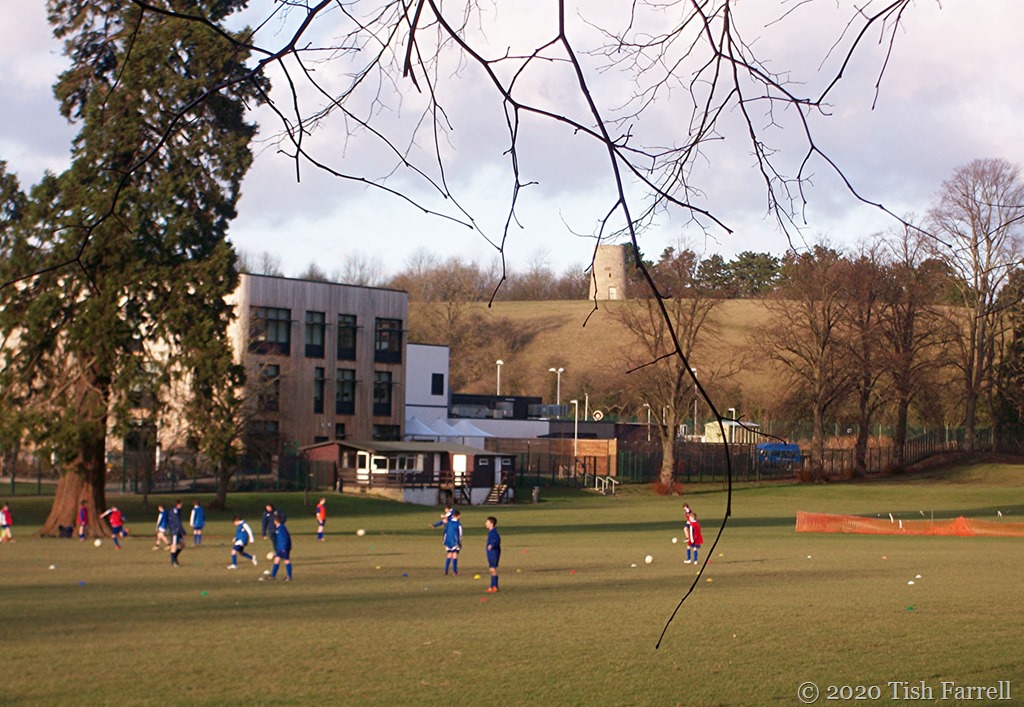
And here’s a more recent scene with the William Penny Brookes Academy on the left and some of its pupils during soccer practice. The oaks at the foot of Windmill Hill have all been planted to commemorate various events associated with the Olympian Games.

*

The windmill itself is a bit of mystery. The Windmill Trust who take care of it have done extensive research, and although there are documents from the 1540s onwards relating to successive land owners (i.e. post the 1540 dissolution of Wenlock Priory, the original landowner), there is no information that is absolutely specific to the windmill. Physical surveys of the present tower, however, did uncover two dates of 1655 and 1657 carved within the stone construction layers, but there were no clues as to the kind of milling gear and superstructure that may once have existed here.
Here’s what the inside looks like. These were taken on an ‘open day’ a few years ago:


*
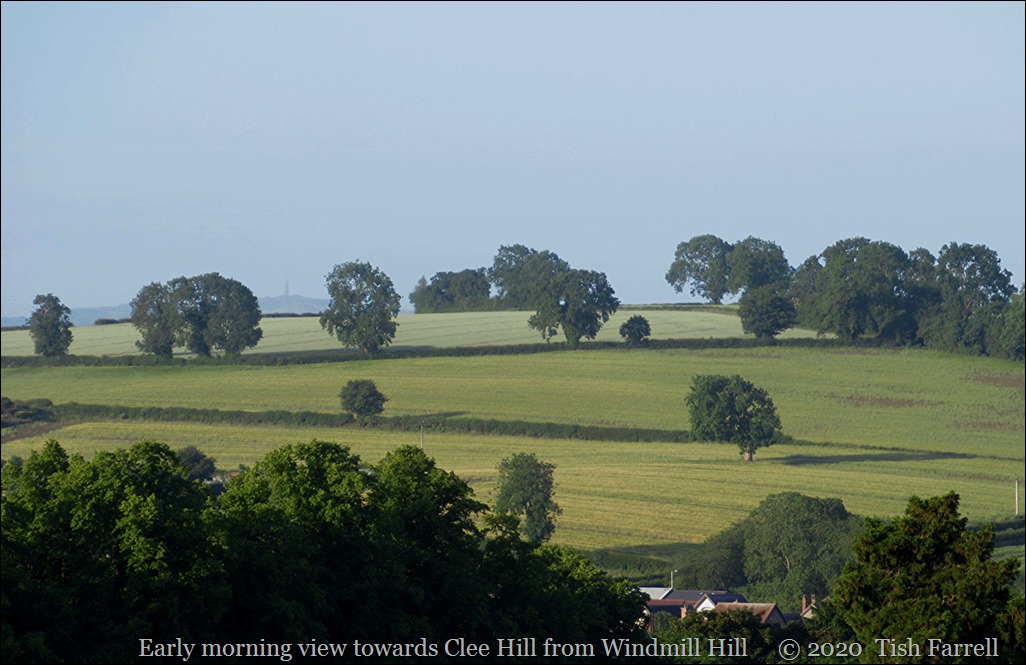
And here’s a cropped long-shot evening view taken from allotment three summers ago when oil seed rape was flowering in Townsend Meadow.


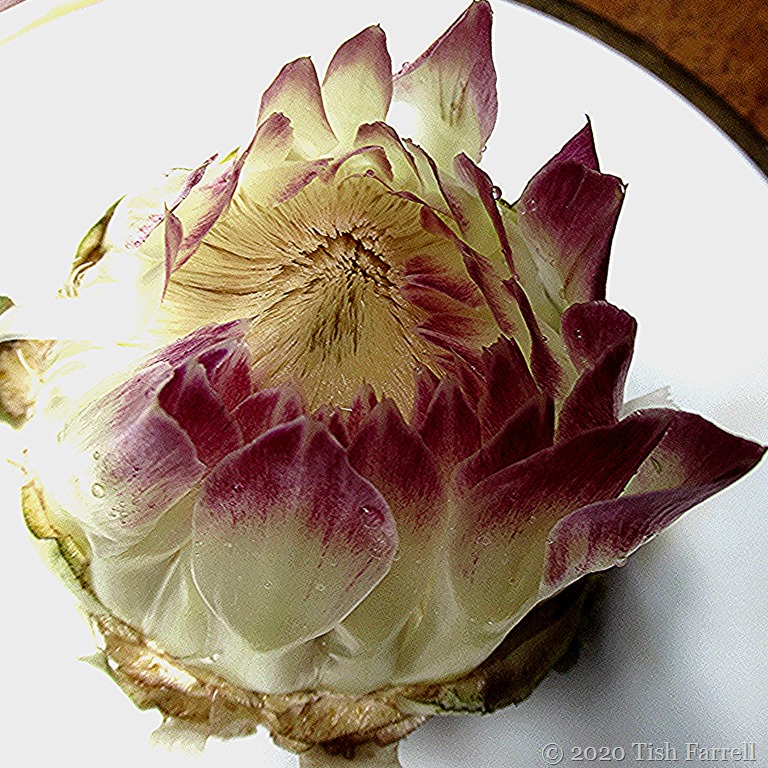
This year we’ve had masses of globe artichokes. I have several different varieties growing at the allotment, probably with the notion (as suggested by gardener-cook Sarah Raven) that doing this would extend the cropping season. It hasn’t. Well, not by much.
My usual way of cooking artichokes (one each) is to split then down the middle, cutting from stem to tip, scoop out the choke, drizzle the cut edges with lemon juice to stop discolouration (optional), then steam the halves for around 20 minutes. While that’s happening I put a dish on the hob and melt a big nugget of butter with a couple of cloves of crushed garlic (sometimes butter and olive oil), and when the artichokes are done, spoon this ‘sauce’ into each hollow.
After that it’s all a matter of pulling off the scaly leaves, dipping their bases in the garlic butter pool and sucking. By the time one gets to the flat juicy base, there’s no point in opting for a knife and fork, we’re all too butter fingered and dribbly chinned. Though a slice of wholemeal bread at this point may come in handy for general mopping up.
It is all incredibly messy, the kind of eating that Graham refers to as an ‘all over body experience’ and one that requires a thorough ‘hosing down’ afterwards. You also need to have ready a big dish for the debris. This later goes to ‘feed’ the hot composting bin.
Anyway, there’s only so much hedonistic dining a body can take, and I was just getting to the point of wondering who else at the allotment might like to eat our artichokes when I remembered Francesco da Mosto’s Venice TV series (2004!) It included a scene of women traders preparing buckets of what Francesco referred to as ‘artichoke bottoms’, these to be sold to Venetian cooks who couldn’t be bothered to confront this often challenging vegetable.
Artichoke bottoms! It had to be tried. The only problem, I quickly discovered, is that you need an incredibly sharp knife. Also most of my green globe heads were supporting an insectopolis of aphids, ants and earwigs that required some determined flushing out. After that it was down to the bread knife to get to the bottom of the bottom. At least it got part of the job done, though I regreted my lack of Venetian finesse.
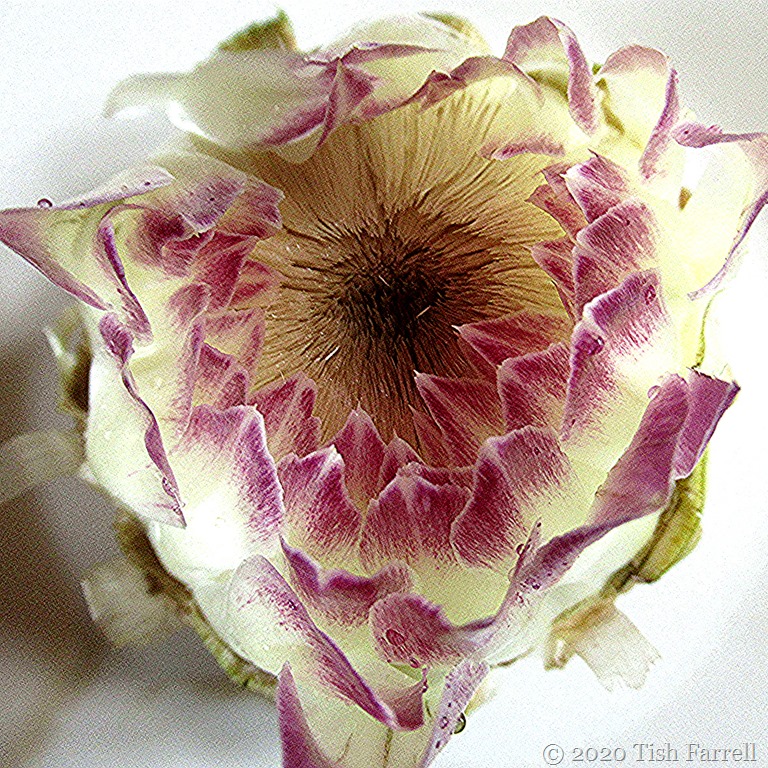
And so the photo. There comes a point when hacking can devolve to peeling (watching out for spiny leaf tips). As I reached the middle of this particular artichoke, and rather strangely, the last leaves clicked open in unison like a mechanical flower, so revealing the hairy choke and also providing this rather good imitation of a water lily.
I did not photograph the bottoms. After all the battling with bugs and wielding the contents of my knife drawer, there was not much to show for eight heads’ worth of artichoke. They are anyway not very pretty and seem to discolour whether or not you put them in acidulated water. But never mind. I braised them gently in olive oil with crushed garlic and fresh chopped oregano, added sliced baby courgettes and garden peas and served them sprinkled with pandano cheese. Delicious and also eaten using appropriate cutlery, so avoiding the dribbling and hosing down elements of my usual method. Some, of course, might think this drawback.
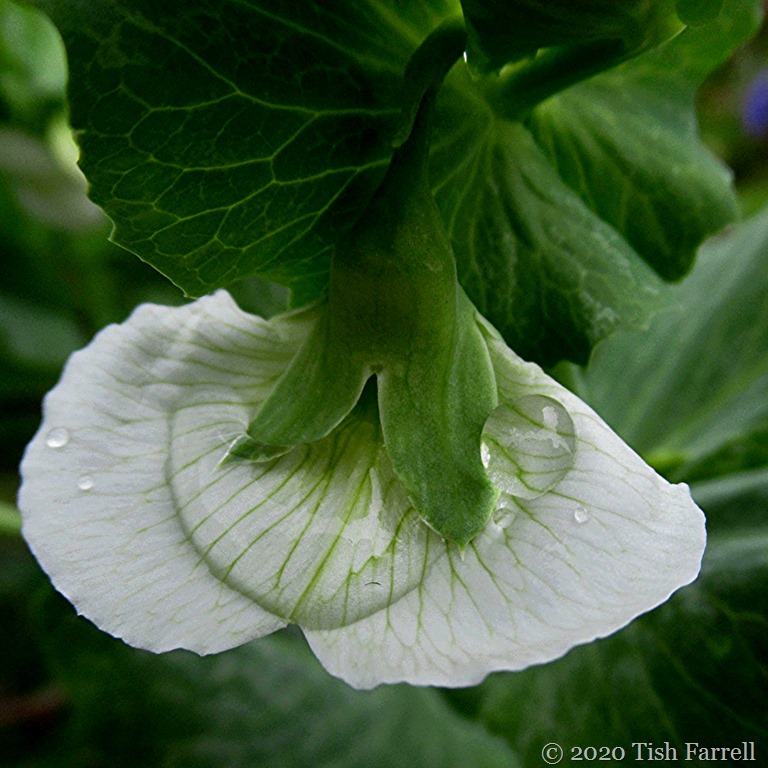
I have a few sugar snap peas growing in a bucket at the top of the garden by the seat. They have a few willow twigs for support and they seem quite happy surrounded by a profusion of geranium Rozanne. Also as I’m continually walking past them, I can easily spot the pods as soon as they’re ready for picking – usually enough to add to a stir fry or salad. So no glut of curly, tough and past-it pods. And then when these first plants have done their stuff, I have another bucket of later sown sugar snaps coming on beside them.
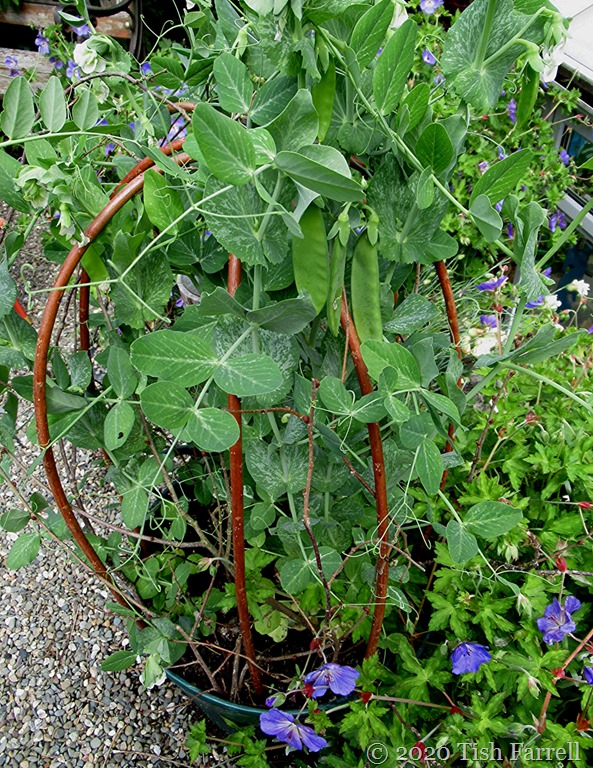
None of this was planned, but now that I’ve done it, I’m thinking it’s a good way to create small successions of this particular crop. Besides, the pea flowers provide ideal landing platforms for raindrops.
Pop over the Becky’s to see her handsome pusscat perspective.


There is a particular time (just now) when the wheat in Townsend Meadow, having grown its tallest, conjoins with a particular spot along my homeward path from the allotment. Together they cause the rooftops on Sytche Lane to look like this.
Note to self: must remember to take another shot when the wheat has turned to gold.
Square Perspective #1 For the month of July, Becky challenges us to show her some perspective – contrive it how we will, just so long as it’s in square format.
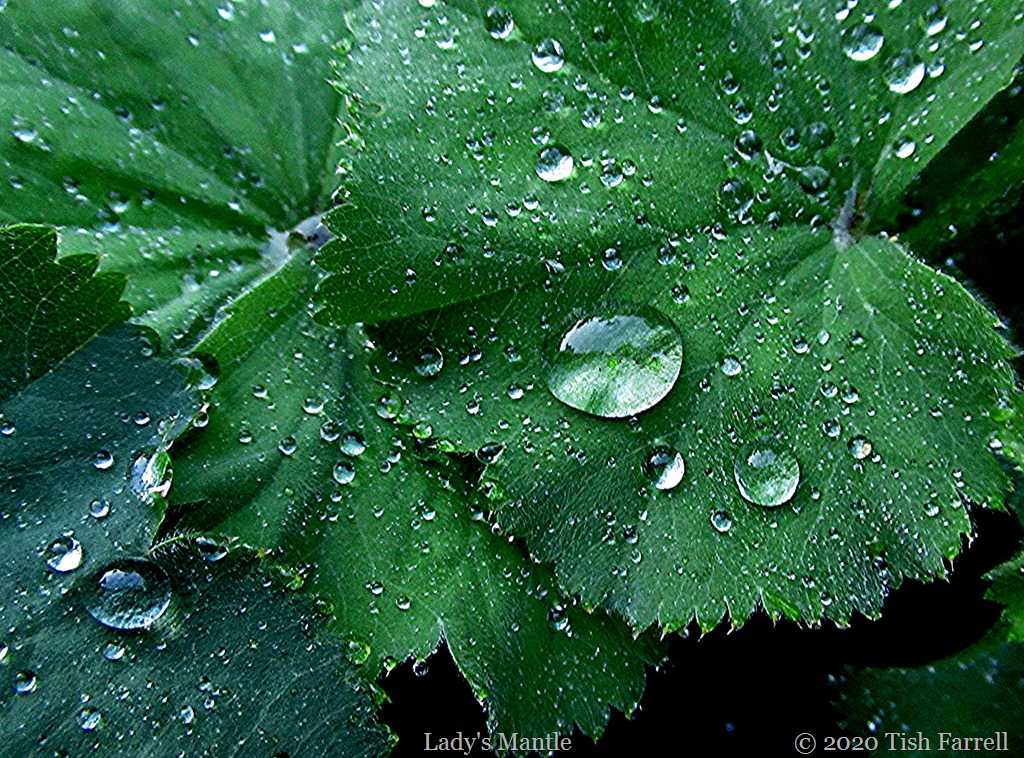
I’ve read, just the other day in fact, that rain and dew drops caught in the leaves of Lady’s Mantle were much sought after by alchemists. They called them ‘moon water’, a deemed essential ingredient in the making of the philosopher’s stone, which in turn would change base metal into gold.
This plant’s transformative powers are also suggested in the old common name alkmelych (alchemy) and preserved too in its botanical name Alchemilla vulgaris. Today medical herbalists prescribe it as a gynaecological tonic, in particular for balancing menopausal symptoms or resolving irregular menstrual cycles. The leaves and flowers are made into an infusion.
Anyway, the reason I mention this and indeed took the header photo is down to those big juicy drops. They mark the most transforming-transformative element of the month of June: RAIN. After a long dry spring, many weeks wherein our stolid Silurian soils set hard as concrete round limp and fainting plant life, we have finally had some good downpours; some of them quite torrential (as in stair rod assaults). We have also had hail and thunder. And in between, some over-heated sun-soaked days that made us think we had gone to the Mediterranean (while blissfully saved the airport check-in). But now, as the month comes to a close, the weather is more like late September – wind, drizzle, coolness and gloom. The allotment cabbage plots are happy though: just their kind of climate.
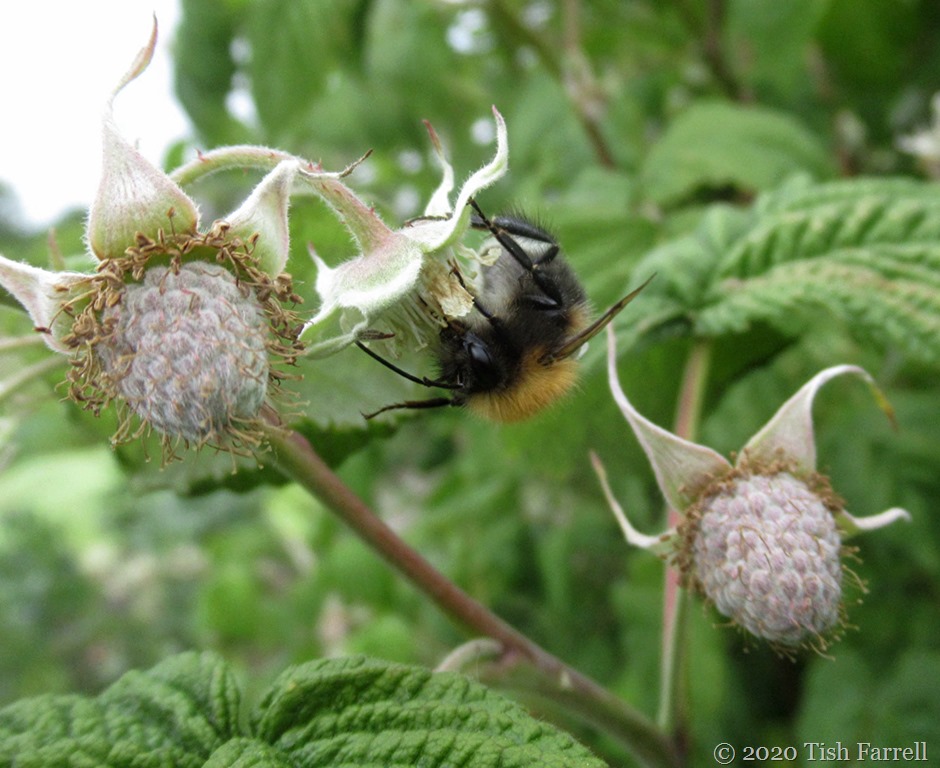
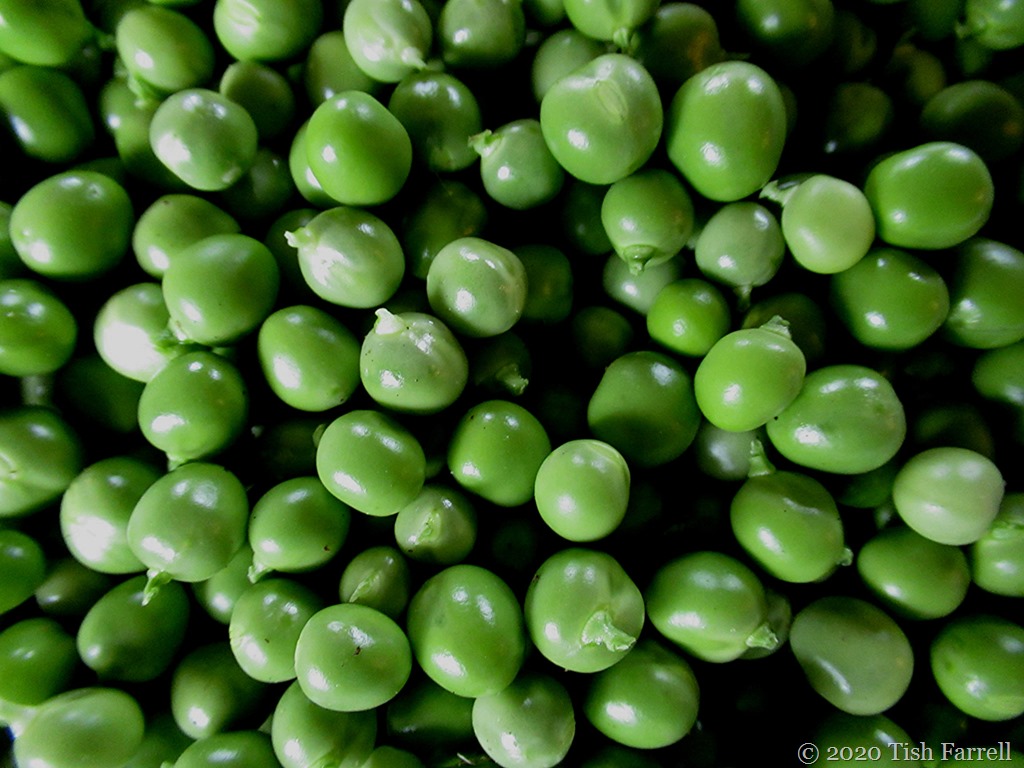
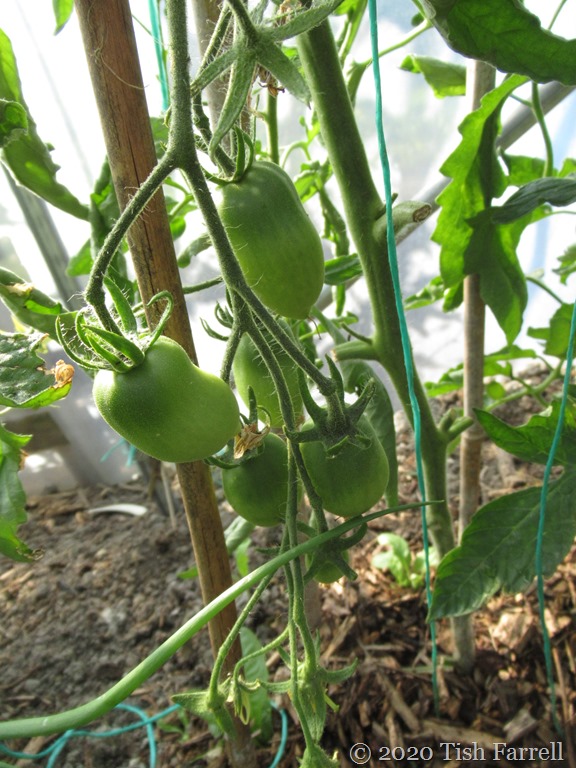
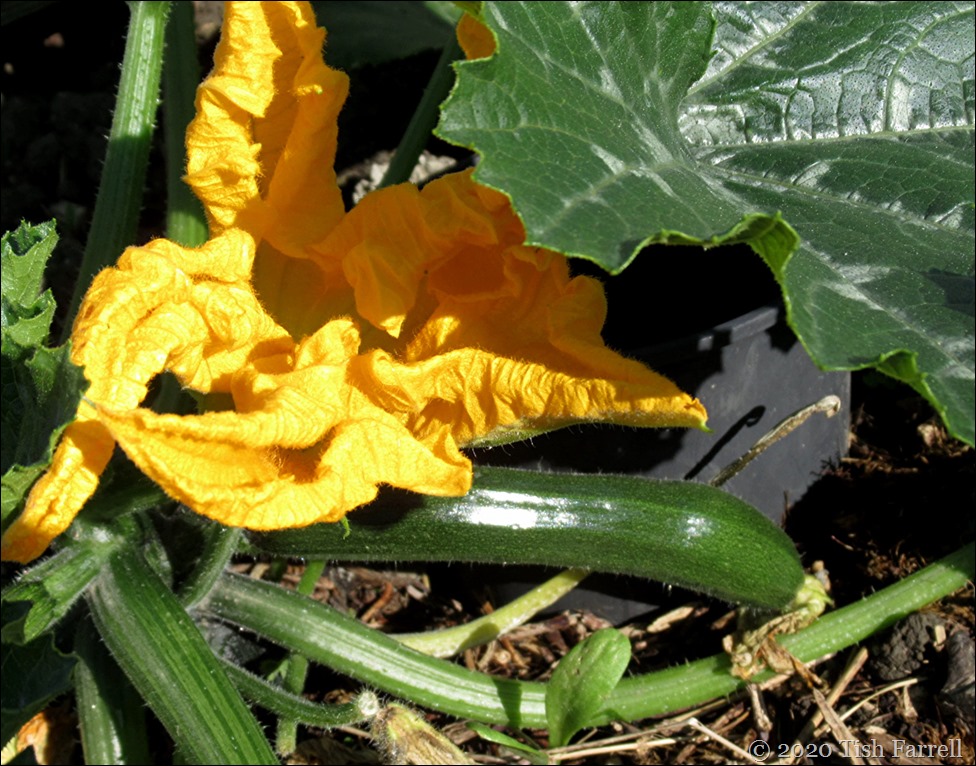
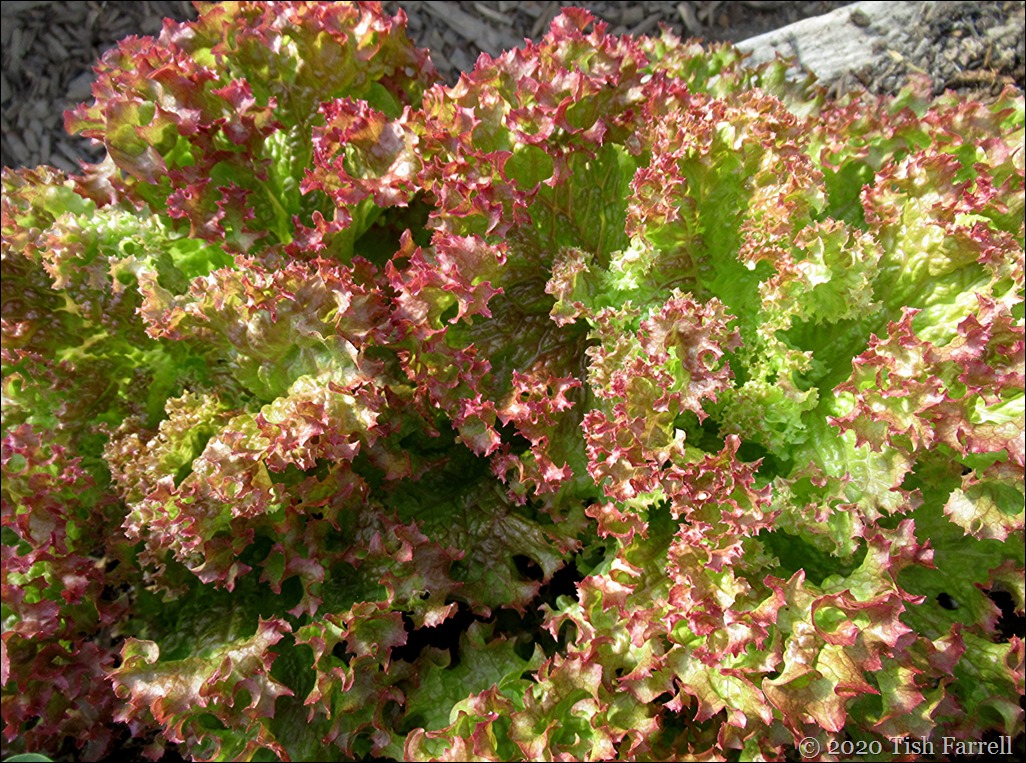
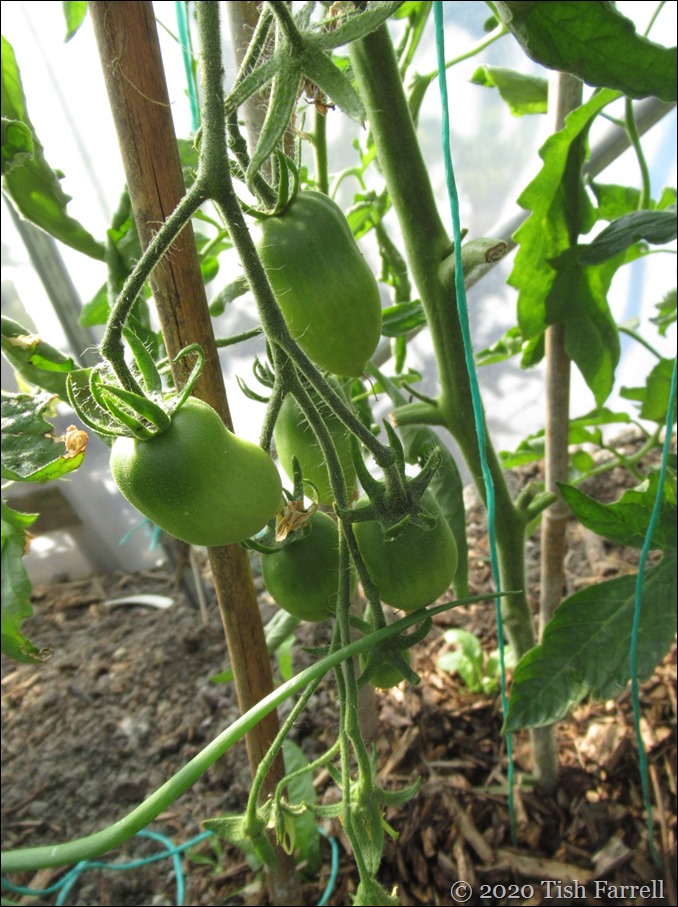
Surprisingly the dry spell has not noticeably curtailed production. Already garden harvest time is in full swing: peas, beetroot, lettuce, first potatoes, strawberries, raspberries, courgettes and broad beans. We’ve also had so many globe artichokes this year, I’ve had to prepare them en masse as hearts, braising them in olive oil and garlic. They can be eaten hot or cold.
As one crop finishes, so there is ground to clear, which means planning for the mid to late summer sowing and planting. Still lots to think about then. Mostly I’m thinking about fennel, various kinds of endives/chicories, carrots and spinach.



*
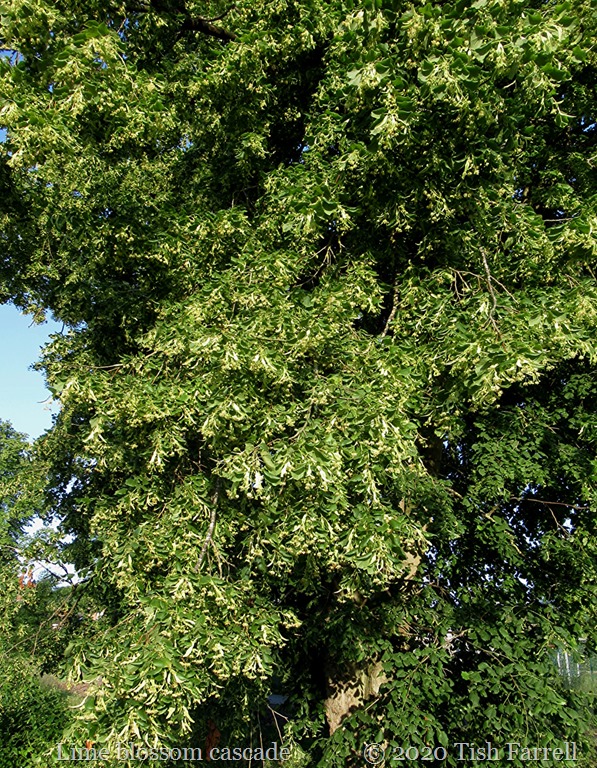
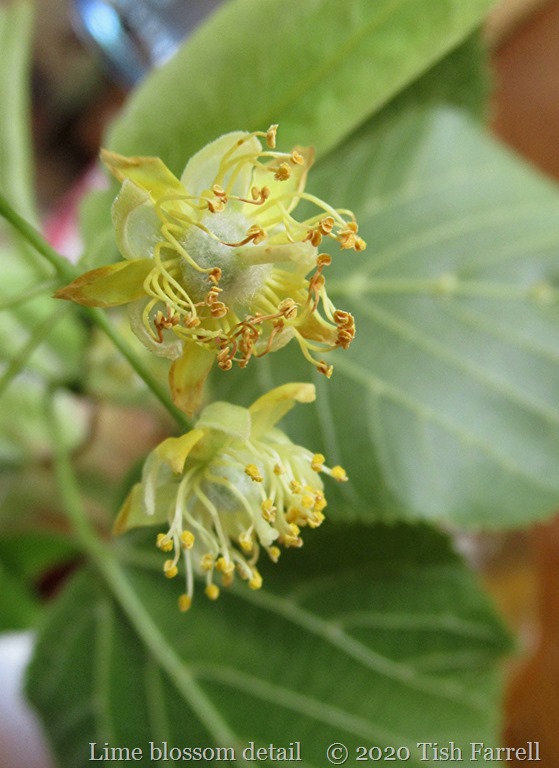
Around the town the paths and lanes, and especially the Linden Walk have been drenched in lime flower scent. It is astonishing how these tiny green-gold, dusty looking inflorescences can produce such a heady perfume. They do of course have highly sedative properties and should only be used with great care. No harm in some heavy sniffing though – as one passes by.
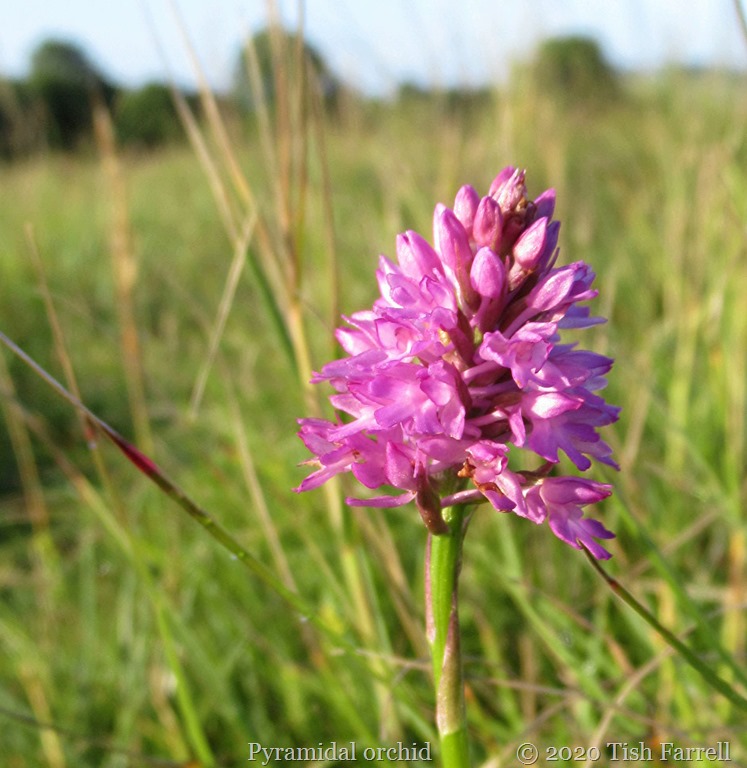
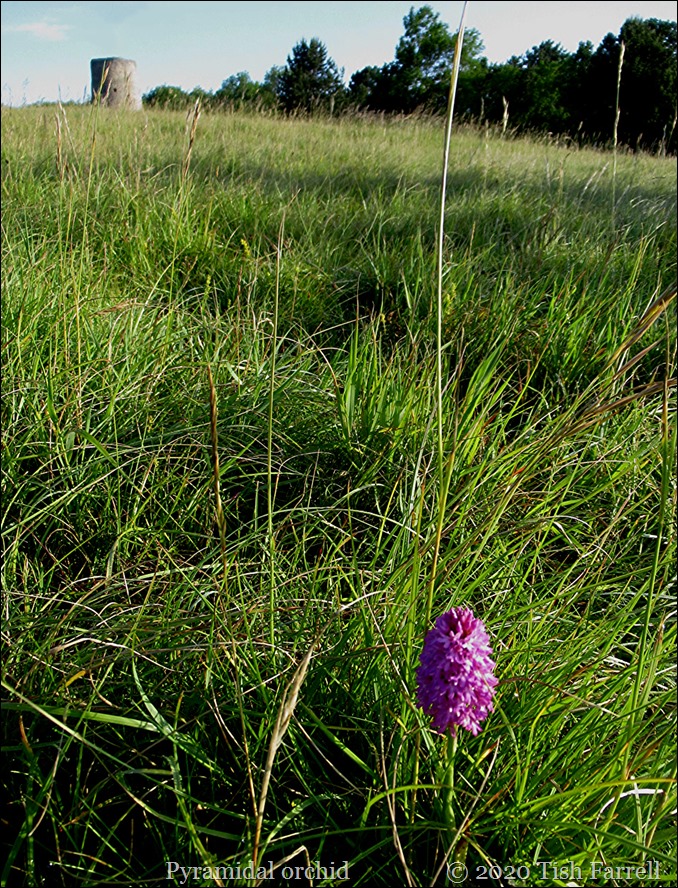
Early one morning, during the hot spell, I was doing just that, on my way to visit Windmill Hill. At 7 a.m. the sun was lighting up a lime tree by the children’s playground; the warmed perfume stopped me in my tracks: honeysuckle tempered with strains of citrus. Aaah! Up on Windmill Hill there were however distinct signs of the recent drought. June is the time of the annual orchid count. It was corona-ed this year of course, but anyway, there were only a few pyramidal orchids to be seen there. Hopefully their little tubers have not been totally desiccated and are saving themselves for more salubrious conditions next year. (Aren’t we all). Even the Lady’s Bedstraw was struggling to bloom. Usually the hillside below the windmill is a mass of limestone meadow flowers in early summer. There were at least some very handsome musk thistles.
Another noteworthy wildlife sighting this month has been the large number of scarlet tiger moths about the place. Soon there will be a lot more if the scene in our back garden flowerbed is anything to go by. At rest they are not always so immediately noticeable: cream and amber spots on black. But in flight there are flashes of scarlet ‘skirts’ as they dart by. Very fetching.

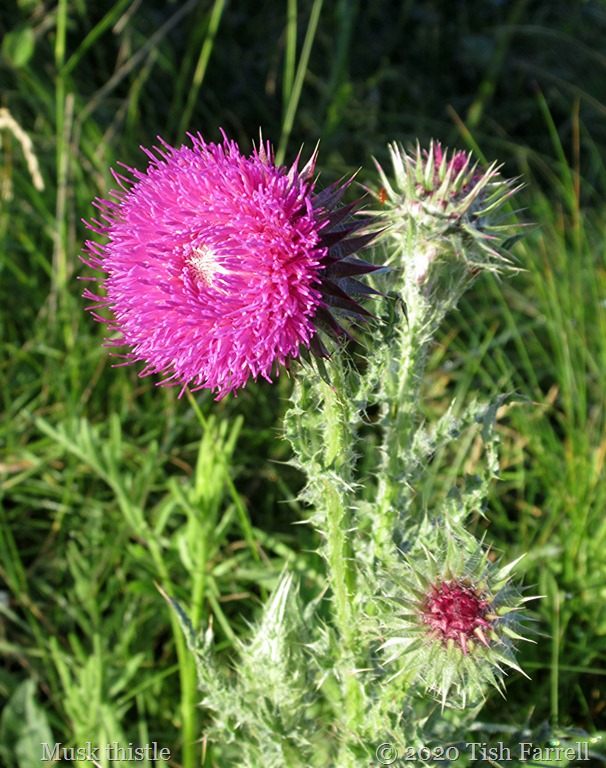
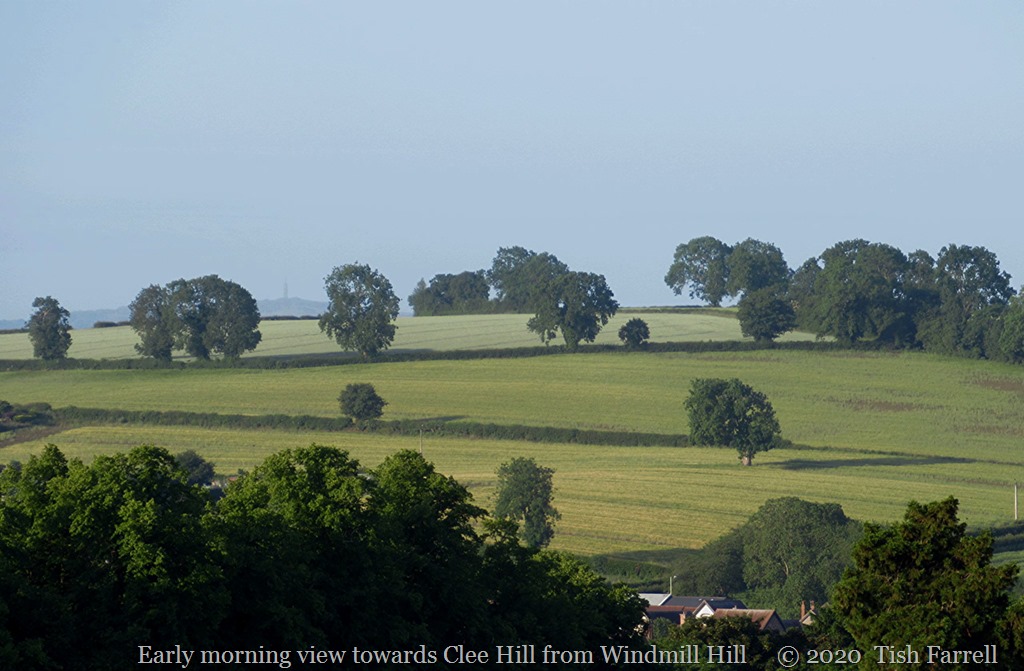
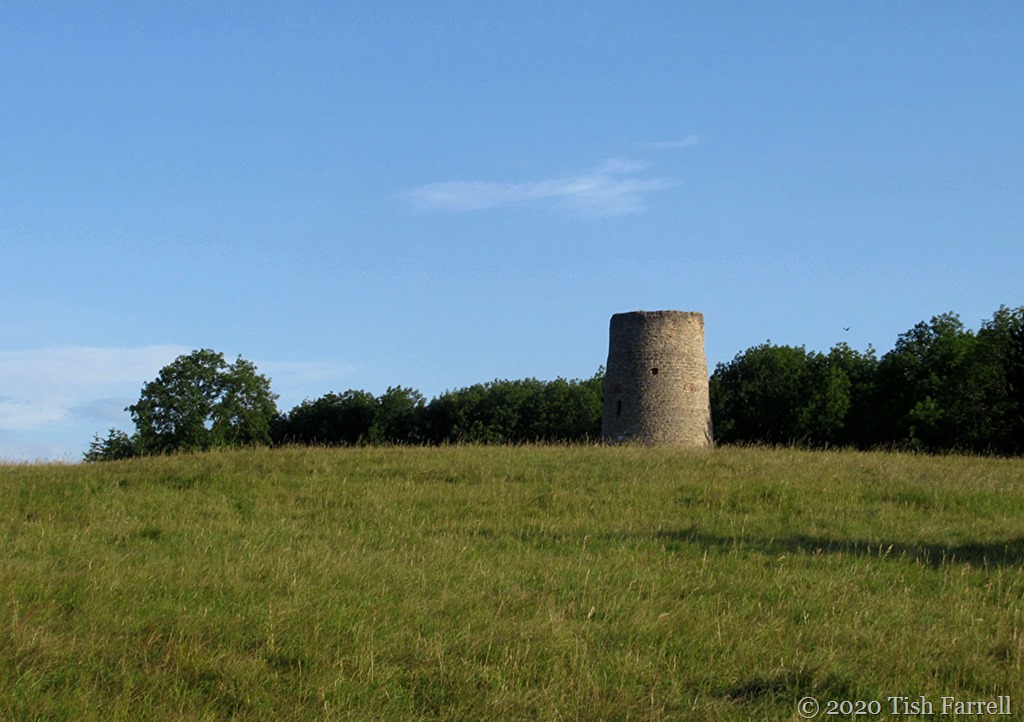
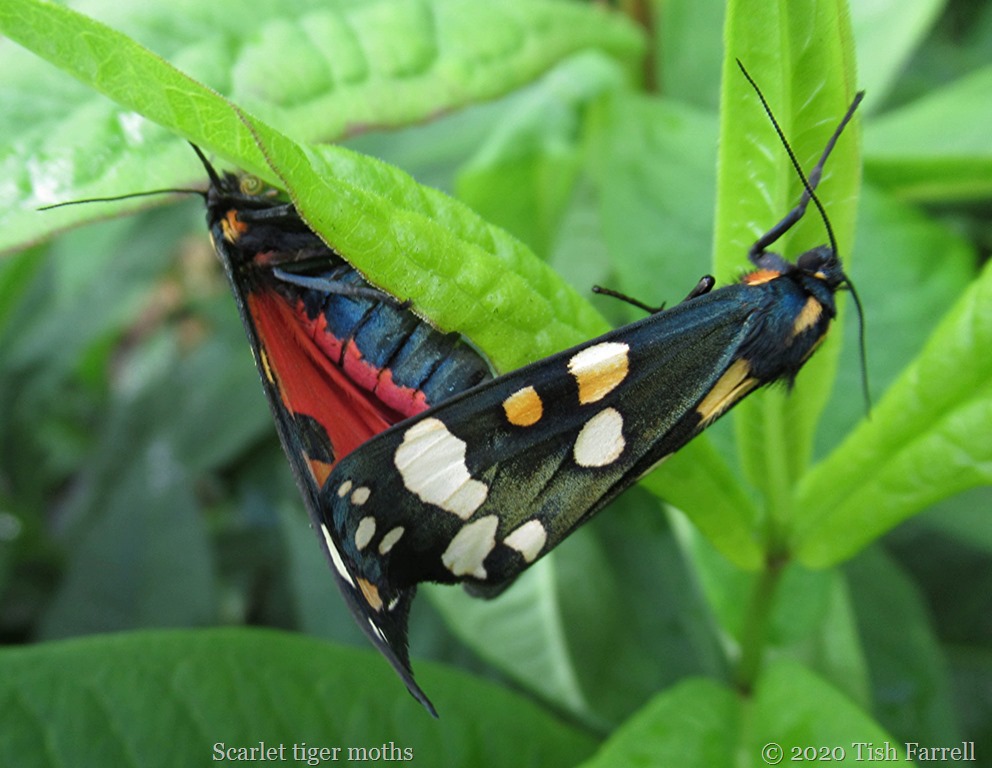
The Changing Seasons: June 2020 Please visit Su who hosts this challenge – not only for her lovely photos, but also for a very delicious soup recipe.
P.S. Cannot fathom this new system or how to put galleries where I want them. Hmph!
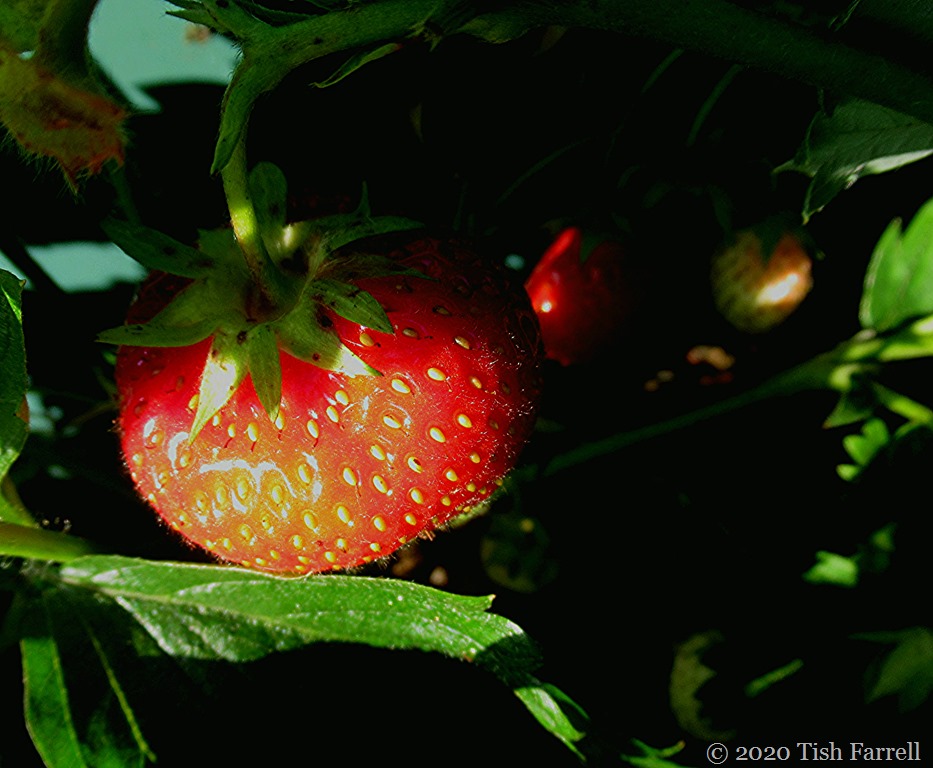
This strawberry was yesterday’s first breakfast, eaten at around 5.45 a.m. when the early morning sun was already flooding the allotment with the beginnings of a heat wave. I don’t usually go gardening at this extraordinary hour; nor certainly feel like eating breakfast, but the weather people divined the day would be hot, so I left the house at 5.15, set on opening the polytunnel doors in hopes of creating some through ventilation. I also wanted to do a spot of emergency watering and mulching – the young sweet corn especially, but before that could happen the strawberry plot beckoned, and who was I to refuse this sunny mouthful of deliciousness. Or indeed the next several.

Then I was distracted by the climbing peas. The day before, Lord Leicester had not been ready to pick, but suddenly he was. (It’s always problematical working out if a pod is actually full of grown-up peas: much gentle squeezing along the row). Of course it was necessary to test the contents, so a pea course followed the fruit course (and I can report that they too were very juicy). Then I spent the next twenty minutes picking peas. There was quite a haul for a first picking. Good show, milord!
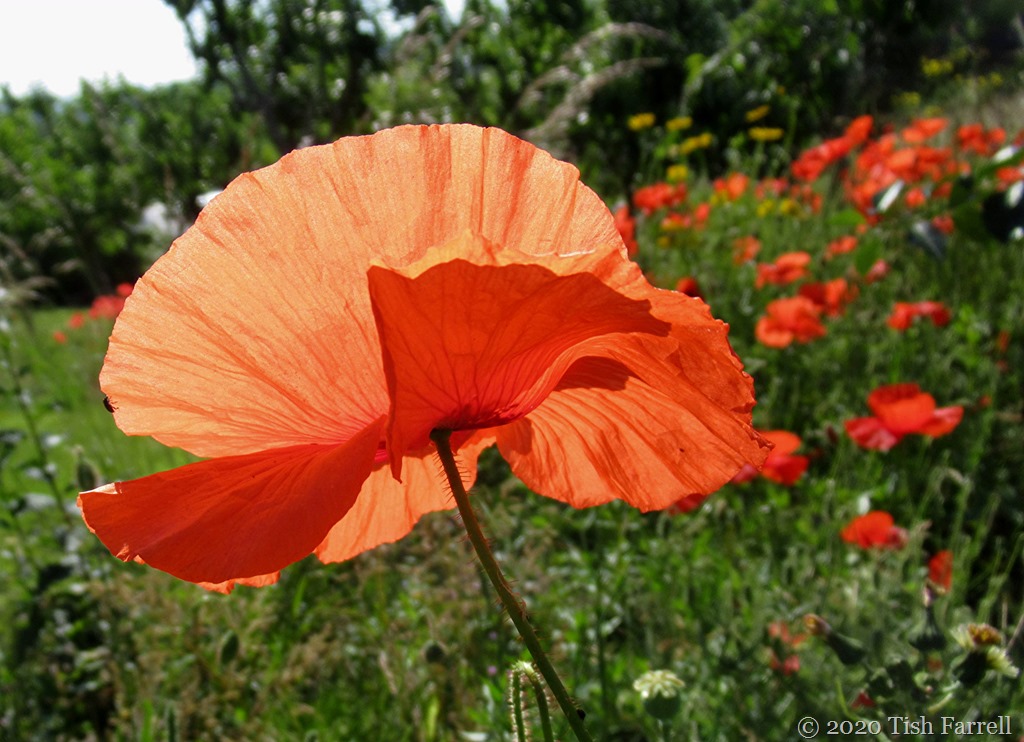
After that it was time for some proper work, the intended watering and mulching, the chopping of garden refuse for the compost bins. Next came an interlude of enviromesh wrestling, this with the aim of ensuring that the red cabbages and Tuscan kale were well protected from Cabbage White butterflies – their cohorts now conspicuously abroad from a recent hatching. This job is always an enormous faff (finding enough tent pegs, checking the hoops are tall enough to give the crops room, and the mesh wide enough in both dimensions to cover them while leaving sufficient all-round margin for a complete brassica lock-down). I always have to put myself on notice to get this done, even though I know it’s utterly worth doing.
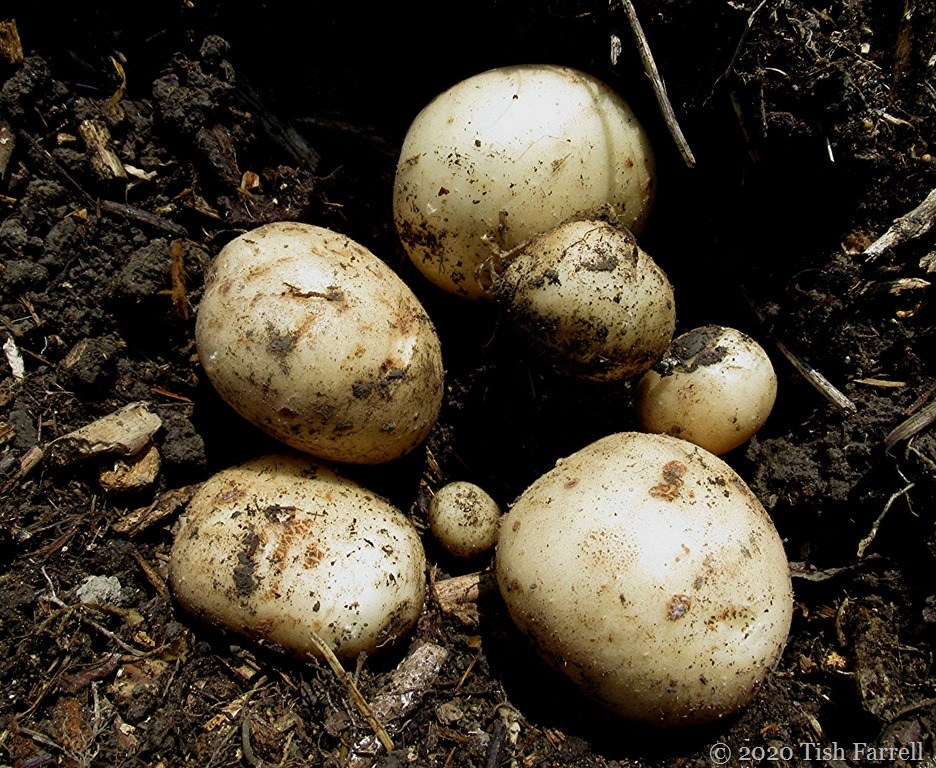
A reward for objective accomplished was to check if there were any new potatoes ready. I have to say this is ever one of the most exciting activities of the gardening year – rootling under a potato plant to see what’s what. Given our rainless spring I wasn’t expecting much of a crop from the first earlies, but here they are: Pentland Javelin and just enough of them for two:
As the morning grew ever warmer, the church clock struck the hours, and sounds of domestic awakening along nearby Southfield Road drifted over the allotment hedge. Now and then I would look up to see that another gardener had arrived quietly on their plot. Somehow people move about differently in the early morning: something slightly mesmeric as they go about their tasks; almost as if they are treading quietly on the grass paths: not wanting to disturb or be disturbed.
I chatted briefly with my plot neighbour when he arrived to fill his water butts, and we talked of the sample results from the soil test he had arranged on our mutual plots: very alkaline; very high in organic matter; but soil verging on the ‘very (as in too) heavy’. Action needed: lots of sand and potash to be added. He said how pleased he was discover that potential fertility was high. And I remembered that we should have known this, despite our often paltry crop results. This quarter of Much Wenlock where the allotment lies has been known as the Wheatlands for centuries, and still the crop is grown here, despite the heavy ground.
And soon five hours had passed, by which time I was very hungry for something other than peas and strawberries, and desperate for a mug of tea. Home then across Townsend Meadow where at 9.15 the present-day wheat already had a dreamy, heat-hazy air. As I go, I think not only of a second breakfast, but how very pleased Graham will be when I show him the spuds.


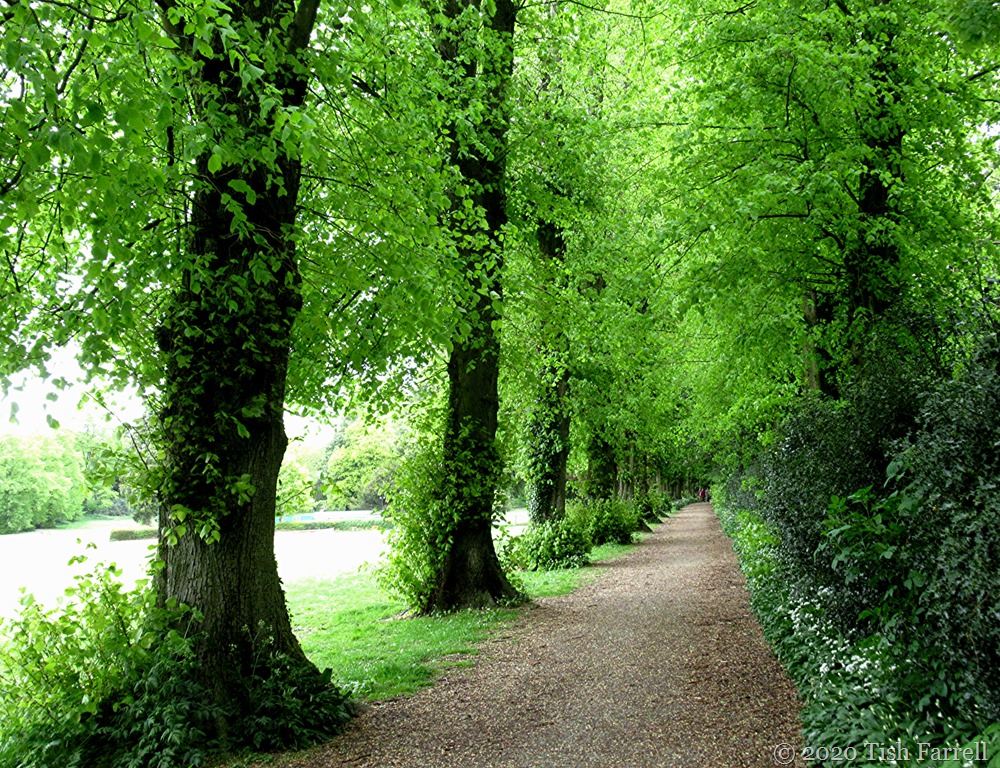
In these corona days people who live alone may well feel they have had far too much quietness thrust upon them, while many family members, forced together into states of furlough, home working and home schooling, may long for some personal space and silence. In either case heartfelt commiserations are due. Meanwhile here in Wenlock we are lucky to have many peaceful spots, and though they are a little busier than in pre-lockdown days, there is still a chance for some quiet meandering, and especially here along the Linden Walk. These photos were taken a few weeks ago during the lime trees’ first flush.

Mostly, though, we Farrells hardly need to leave our little domain for our ‘quiet moments’. He who is presently constructing a scratch model vintage Great Western Railway wagon has his shed in one corner of the garden, whither soft strains of classical music and the whirring of the lathe waft out over the flower beds. That or the sounds of heavy man-pondering.

At the other end of the garden we both have the benefit of the garden fence to lean on, which we do often with a mid-morning cup of coffee or a sundowner glass of wine, while surveying the sky, the field, the guerrilla garden or saying hello to the odd passer by. At times we can stand in the field and chat (loudly) with the next door neighbours, who have been sheltering for medical reasons, over their garden fence.

Near the back gate, between the honeysuckle and the Smoke Bush there is also the old Seat of Wisdom. This particular facility serves all who sit on it with a dousing of sage essence, this from the bush that insists on growing through the back of the seat no matter how many times we cut it back or move the seat. Recently we have let it get on with it, now certain that this ad hoc herbal treatment is most beneficial for body, mind and spirit. In fact I seem to remember sage figured largely in medicinal remedies during times of the Plague.

Finally on the daily-quiet-resort front there’s the field path to the allotment, which a little like Charles Darwin’s thinking path, though without the angst of evolutionary rumination, is a good place for my own brand of heavy pondering – on matters horticultural, or indeed for some silent ranting about the state of life, the universe and everything. For here’s the paradox: despite the immense good fortune of having at hand all these lovely places for peaceful contemplation, I can still feel another lockdown-regime rant coming on. Time to head to the allotment then – execute a few weeds.


Lens-Artists: A Quiet Moment This week Patti invites us to capture peaceful interludes, places for reflection and the recharging flagging spirits.