A few weeks ago Su Leslie at Zimmerbitch and I made a bit of a pact to rid ourselves of excess paper files. Those of you who have followed her family history blog, Shaking The Tree, will know, that on top of other talents, she is a genealogical super sleuth. And I suppose this was in my mind when I said I’d make a start by pruning my own family history archive – reduce copies (as in multiple) of documentary evidence, masses of scribbled notes and dead-end enquiries, and render them down to understandable brief storylines.
It seemed like a good idea.
Except it wasn’t.
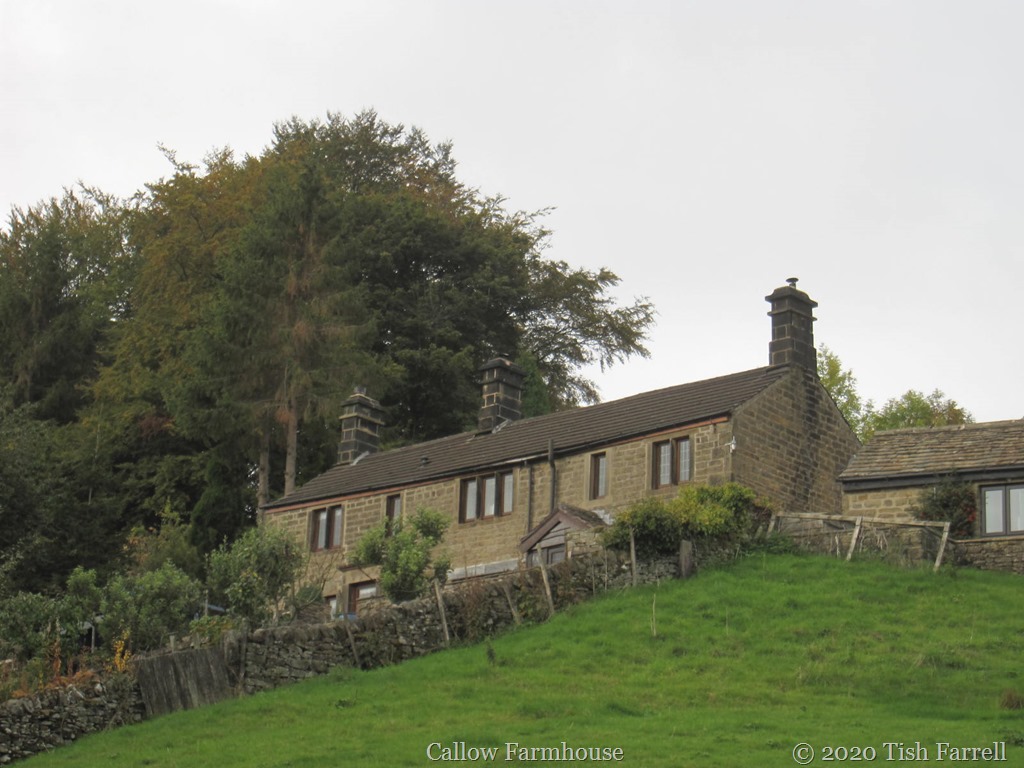
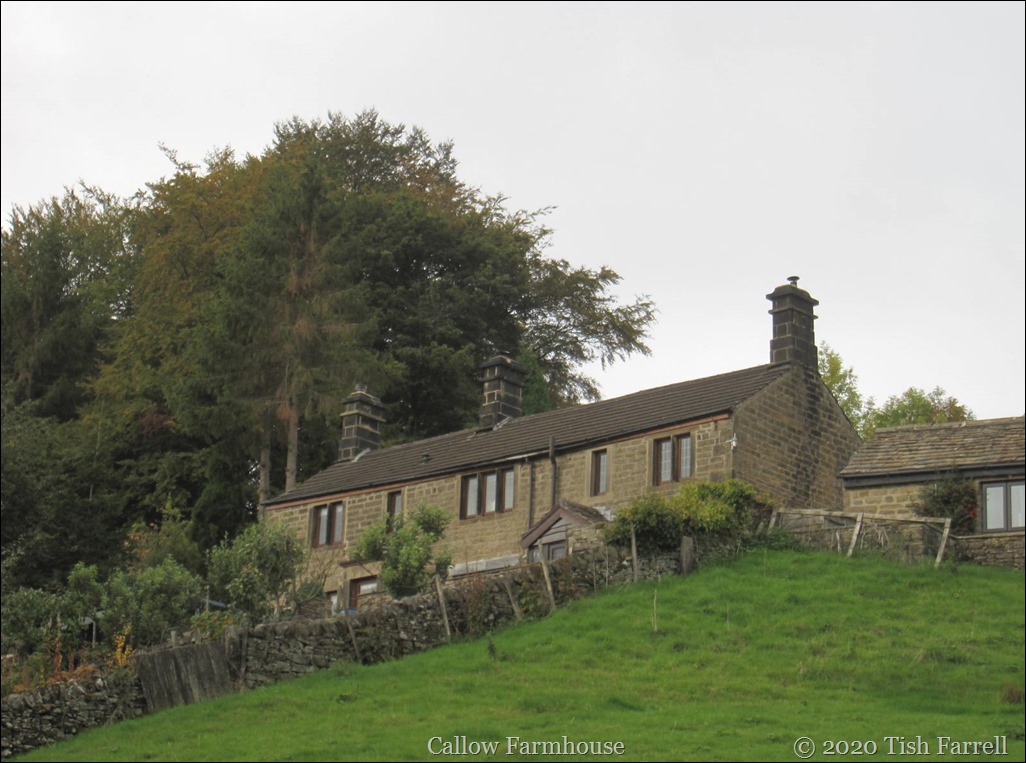
First I should say that, due to the virus, our library service has given us Shropshire folk free access to two family history sites. I had forgotten this until suddenly, here was the chance to check a few things. And so the inevitable happened: the intention to junk became an impulse to add. I began musing about Great Great Aunt Sophia, born 1814 at Callow Farm in Hathersage, Derbyshire, the second daughter of Robert Fox, farmer and (illegal) pugilist, and Mary Ann Williamson, of origins unknown, though apparently born (not in Derbyshire) around 1788, and locally referred to as ‘the London Lady’. They married by bond at Southwell Cathedral, Nottingham in 1812, Robert Fox pledging £200 that there were no impediments to their union; his fellow bondsman one Benjamin Torr, button manufacturer from Hathersage.
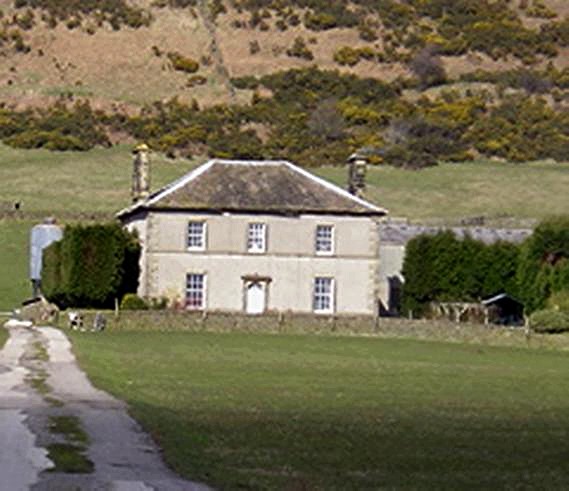
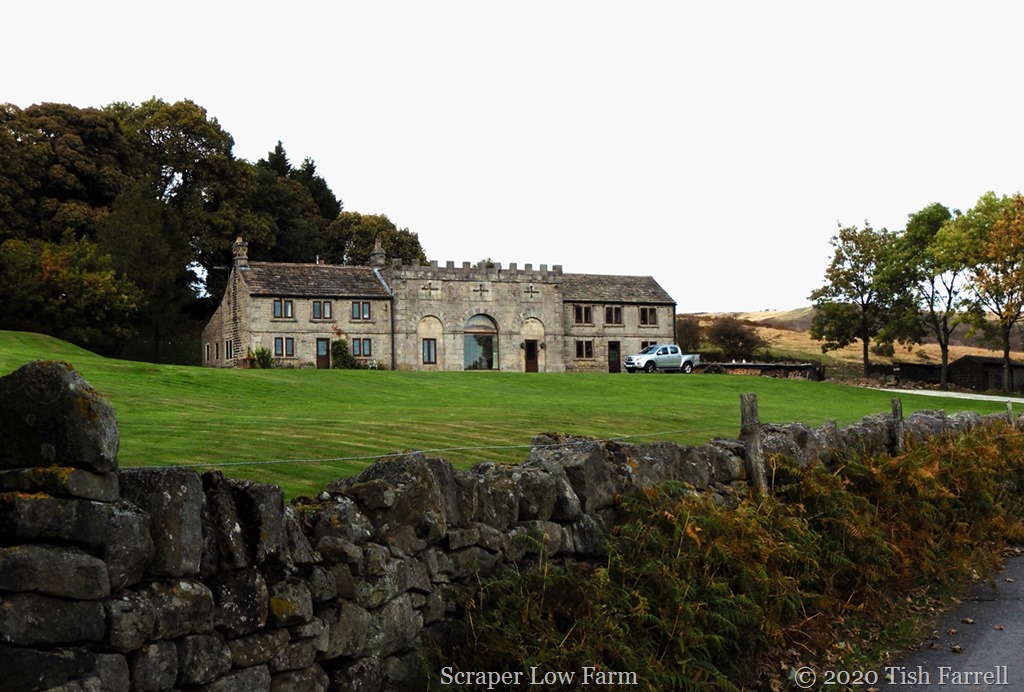
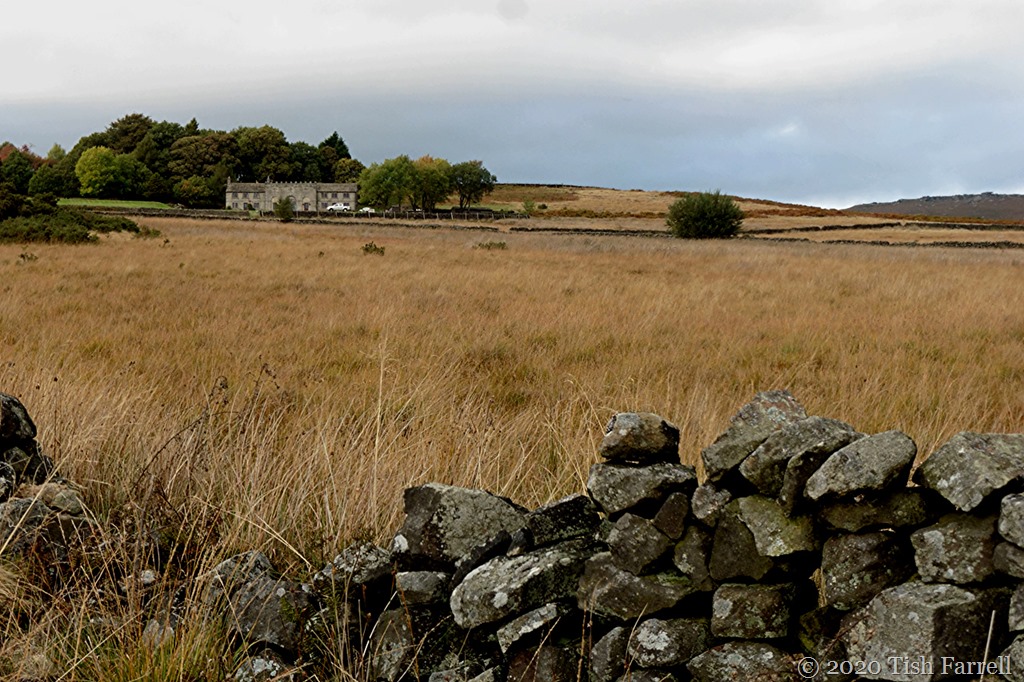
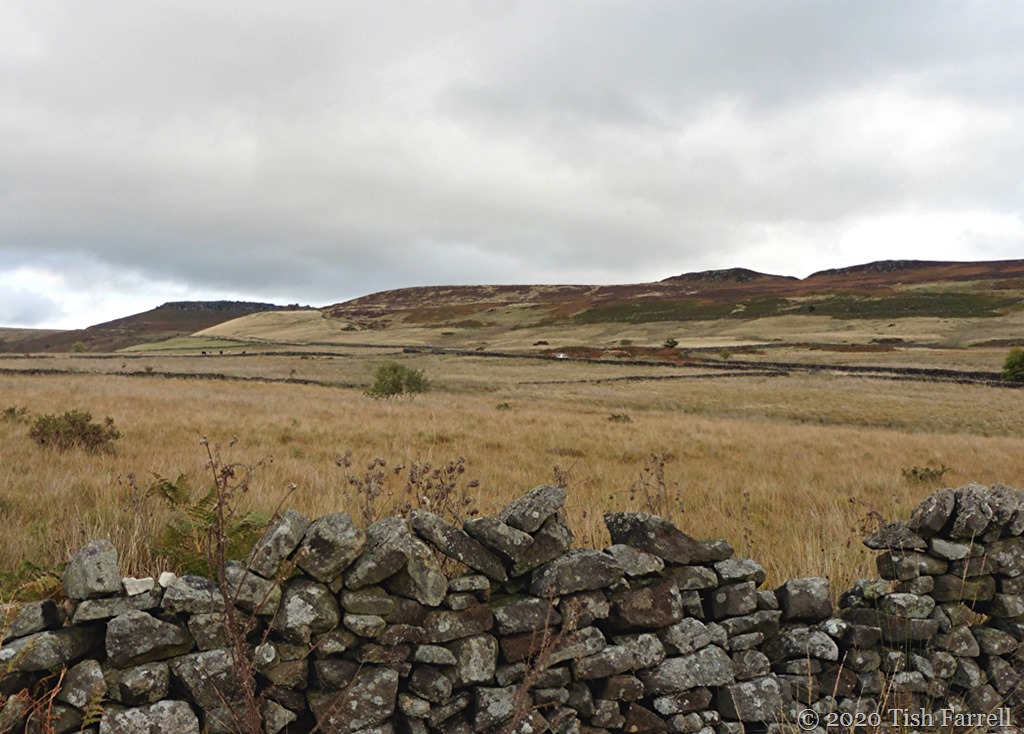
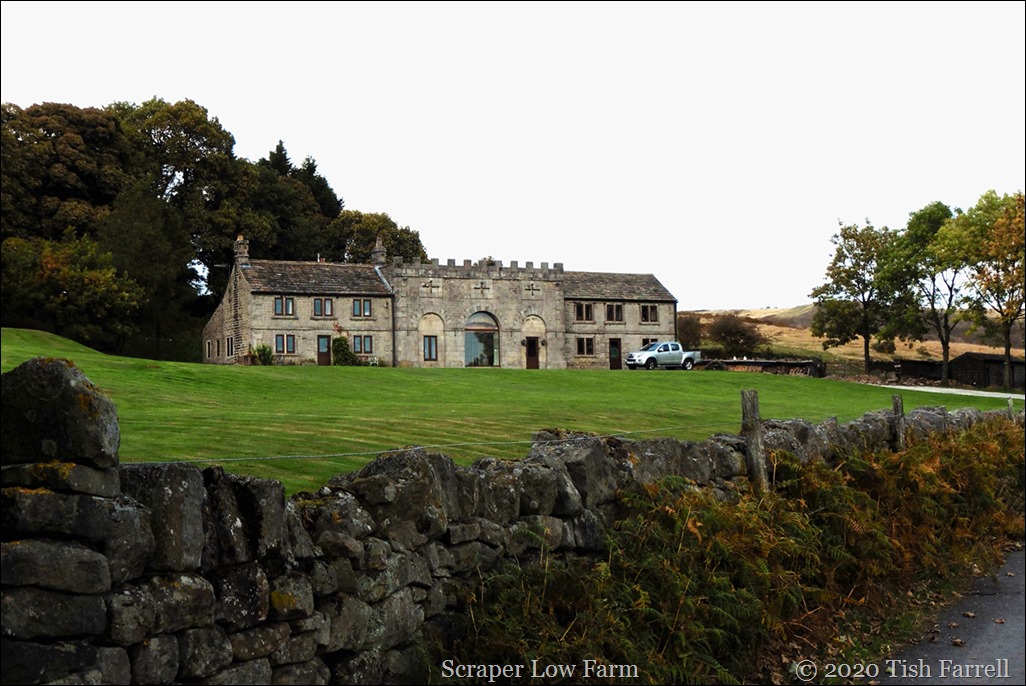
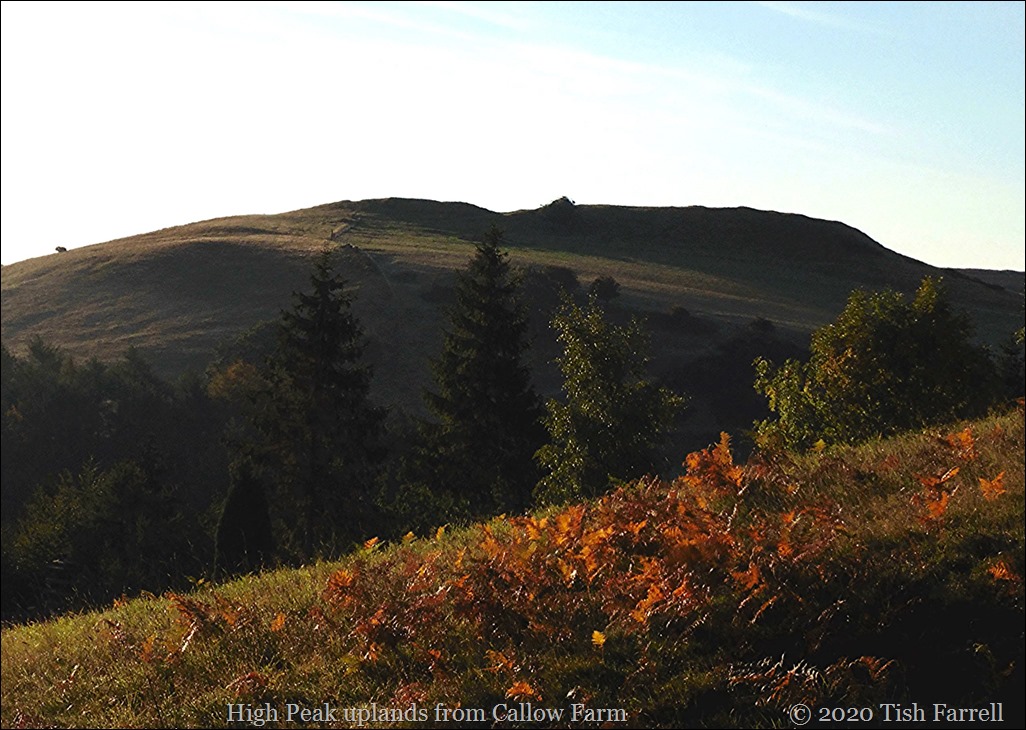
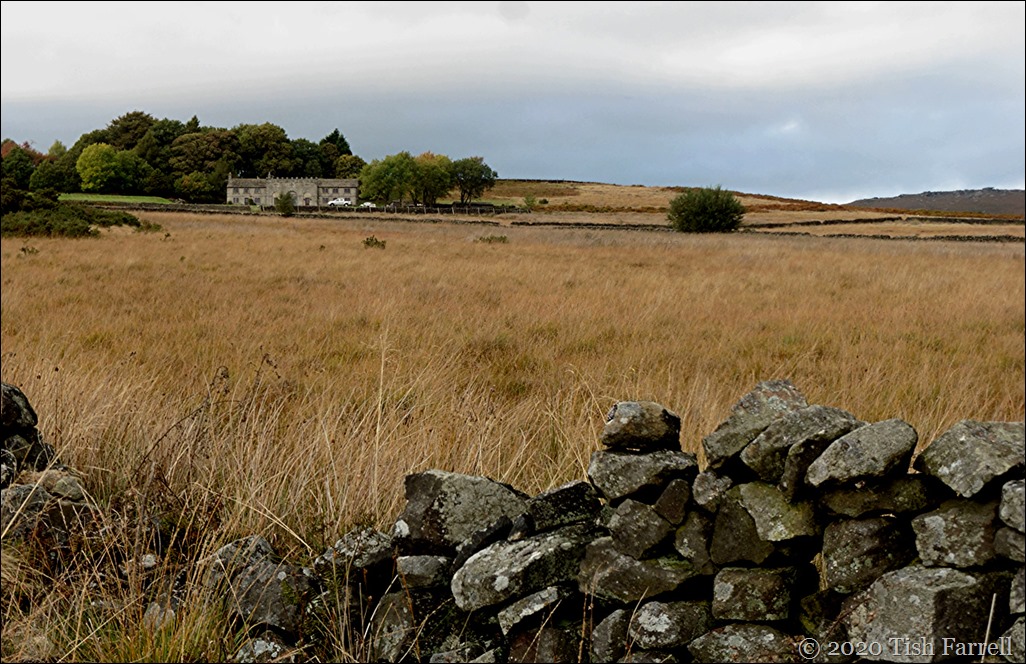
Sophia had plenty of her own mysteries. One is how in the 1880s she came to be living at the remote Scraper Low Farm (header photo) with her second husband, William Lister, a retired Sheffield silver stamper (Sheffield, West Yorkshire, long being a centre for the manufacture of silver goods and only a few miles over the Yorkshire-Derbyshire border from Scraper Low and Hathersage).
The other is why on every official document – whenever she was given the chance, she lied about her age. Even in her seventies she knocked off seven years for the benefit of the 1891 census enumerator. Yet this was nothing compared to the de-aging coup she effected on her marriage to Mr. Lister in 1881. They were both widowers in their late sixties, but the marriage licence they both signed has her down as 52 – fifteen years disappeared. Just like that. Well!
And in case you think this might have been a clerical error, or researcher misreading, she repeated the trick that same year. The 1881 census entry for the Listers ‘living behind’ 36, Norfolk Street, Sheffield, clearly states that Sophia Lister, born at Callow, was 52 while her new husband was 68.
And so I’m thinking if she could get away with that, either Mr. Lister was a touch myopic, which perhaps might be the case after decades in silver working. Or: she must have been blessed with very resilient skin. And indeed, the tale that talks of her mother ‘The London Lady’ does make a point of mentioning the refined features that Mary Ann Williamson, the supposedly well-born wife of a fist-fighting farmer, passed on to her offspring. Which of course only adds to the mystery. My further thought is that a fine complexion is not necessarily an asset to the daughters of a Derbyshire High Peak farmer. Conditions can be pretty bleak up there. I am guessing that Mary Ann may have discovered this to her cost. She herself died at 57 – of ‘general dropsy’. Seven children survived her, and their ‘fighting Fox’ father lived to be 84.
Sophia had three sisters and three brothers. They were born between 1813 and 1829, and all lived into late middle age and older, apart from the last born, Robert, who died in his thirties. The girls, I know, were literate, since they sign their own names in practised hands on official documents. The three eldest certainly worked for a living, each one in the households of wealthy industrialists or merchants.
In 1851 Louisa, the third born, was cook in the grand London home of a Jamaica merchant and later went on to be housekeeper (a job that required much financial and people management) in even grander surroundings – the country and town homes of Robert Williams MP: Bridehead House in Dorset and Brunswick Terrace, Hove. All of which suggests to me that Mary Ann Williamson Fox, ‘the London Lady’ had trained her daughters well, and/or had some useful connections, and/or acted in the knowledge that they would need to earn their own living far away from farm life?
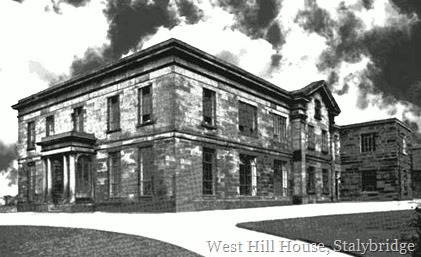
Louisa never married. She died of bronchitis in her 60s. The eldest sister, Mary Ann, was 29 when she married John Andrew, a carrier by trade, twenty years her senior. They married in Glossop, Derbyshire, a busily industrializing mill town between Sheffield and Manchester. According to the 1841 census Mary Ann had been working there, in the household of the Bennett family – cotton spinners and paper manufacturers. Sophia was at Callow in 1841, but ten years later she was in Stalybridge, Cheshire, in one of the brand new mansions of the Harrison cotton master dynasty. Here she took the opportunity to lose seven years.
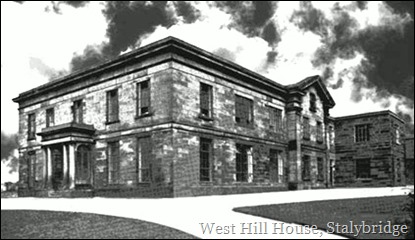
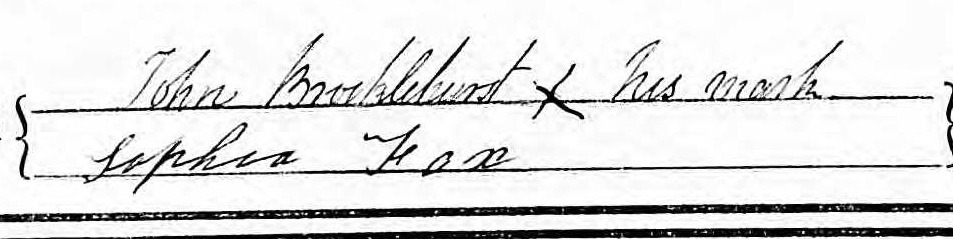
The next time she surfaces in the records it is 1857. She is 43, a spinster, the banns are being read in Glossop and she is marrying Derbyshire bachelor farmer, John Brocklehurst, 44. He signs the register with a cross. The farm, 37 acres, was worked by John on the death of his father John Brocklehurst. His widowed mother and two quarrymen brothers were also living there in 1851, though none of them were there by 1861. The farm, known only as Eastmeats, seems remote, near Chinley, on the edge of Glossop parish near Chapel-en-le-Frith. One wonders how Sophia even met the man. After her position at West Hill, it seems she had moved to Dunham, Chester (work place unknown) but this is the address on the banns and marriage licence.
But then comes another odd thing. In the next two censuses (1861 and 1871) John Brocklehurst states he is married, and on both occasions while there is an entry for the dairy maid and household servant, Eleanor Jones from Anglesey, there is no sign or mention of Sophia Brocklehurst – either at Eastmeats or anywhere!
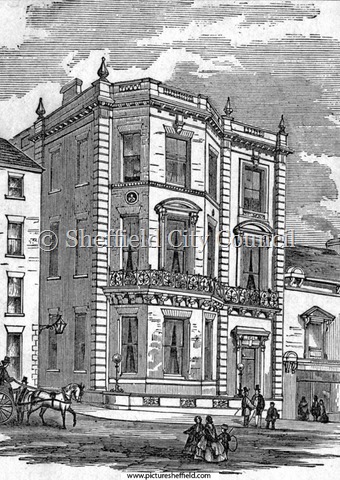
John Brocklehurst is dead by 1880, and the following year Sophia is marrying widower, William Lister, both then living at Norfolk Street, Sheffield, a busy cutlery making and electro-plating district. In different censuses William is either at 20 Norfolk Street or ‘behind 36 Norfolk Street.’ Number 36 was the Sheffield Club, custom-constructed in 1862 as a dining club for local businessmen, and paid for by its members – steel manufacturers, silver-platers, cutlers and solicitors. It is hard to work out from various censuses, but it seems the Club was built against a row of existing small properties, and the enumerator uses the Club as a means of pinpointing their location. The 1871 census has several households, including William and his first wife Ann Hawke, listed under the single page heading ‘Norfolk Street Club’. But in another (as will be seen) critical record of 1876, the Listers’ address is recorded as 20 Norfolk Street.
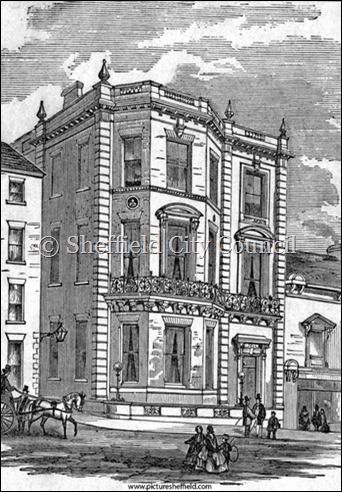
The Sheffield Club, 36, Norfolk Street, copyright Sheffield City Council
*
And so to Scraper Low. I know the Listers’ move to this remote small farm on the high moors above Hathersage happened after the 1881 census. The Barton family were still farming it in that year. But move there they did, because this is where William Lister died in 1889. However you look at it, the Listers would have both been around seventy years of age by the time they took up farming. Even if they were in a position to employ a farm hard, it still seems a surprising decision.
Here is the farm again, this time in its isolated setting, Stanage Edge behind to the right:
*
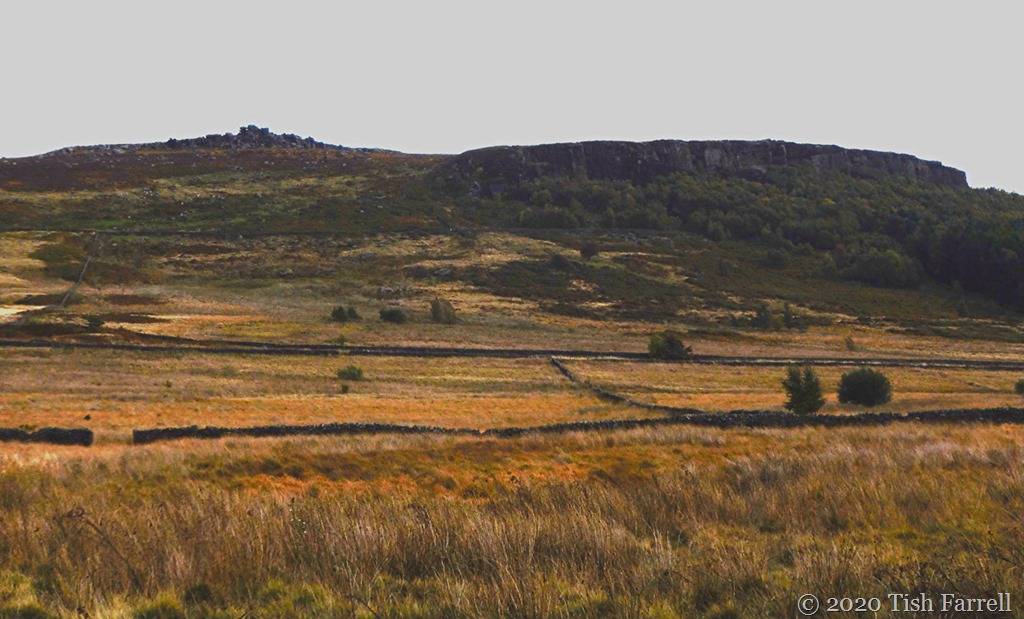
And the easterly view from the farm: Over Owler Tor and Millstone Edge:
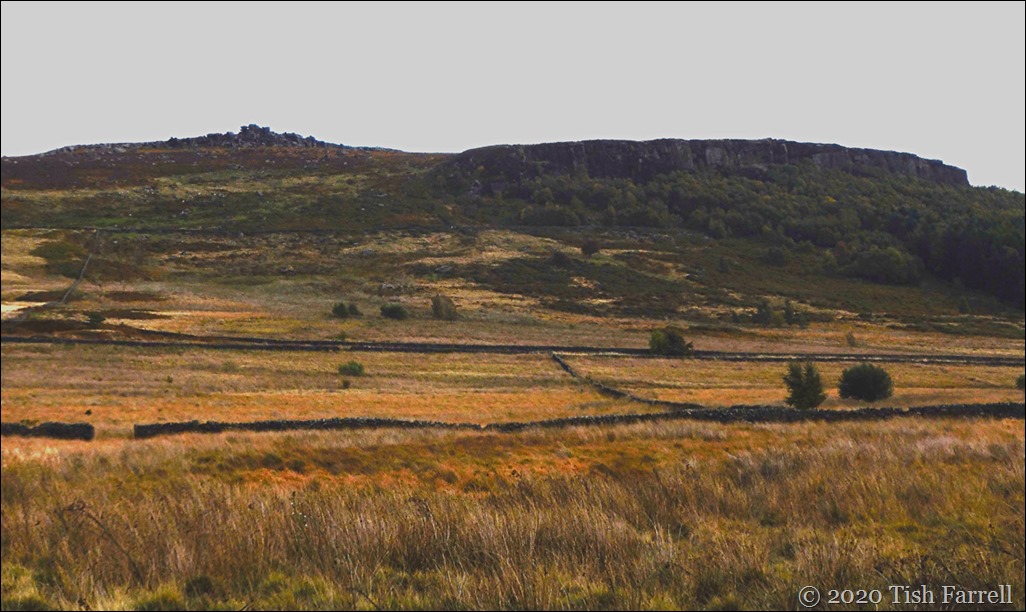
*
To the north and east: Hathersage Moor and Higger Tor:
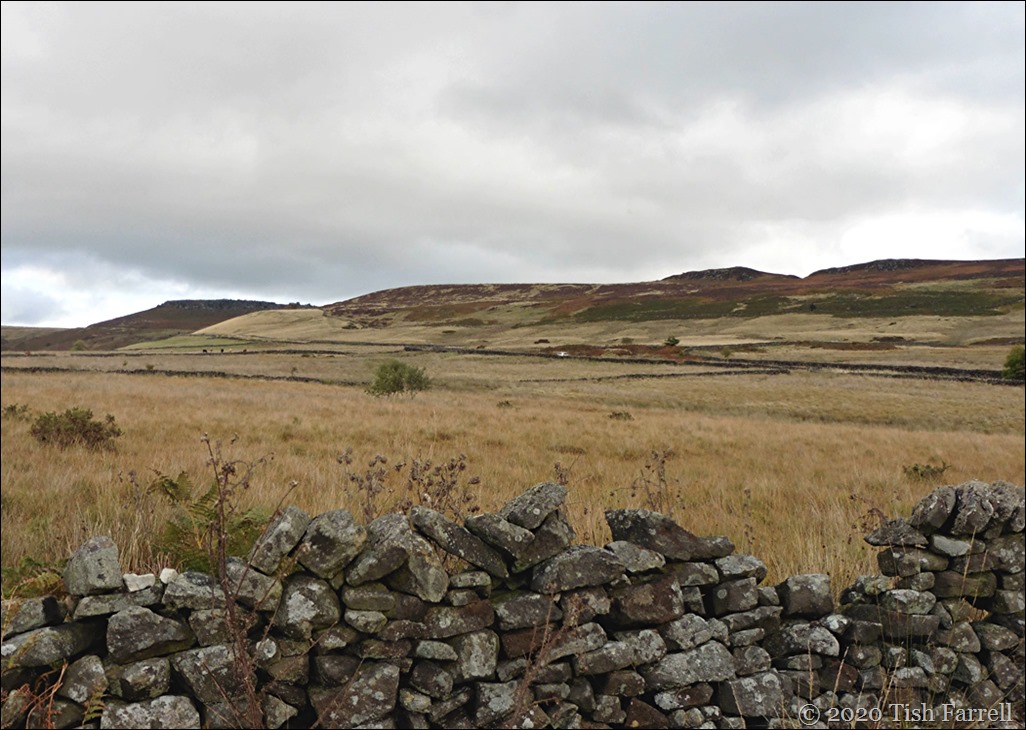
I haven’t been able to find out much about the actual building, though it is listed and said to be an early 19th century remodelling of an 18th century range. Much of the moorland in the High Peak was grouse shooting ground owned from the early 19th century either by the Duke of Rutland and/or Devonshire, so I’m assuming the farm belonged to one or other major landowner, and was tenanted. That said, the early 19th century castellated makeover is bizarre. So another thought: perhaps it was done up to serve for a time as an aristocratic shooting-cum-hunting lodge?
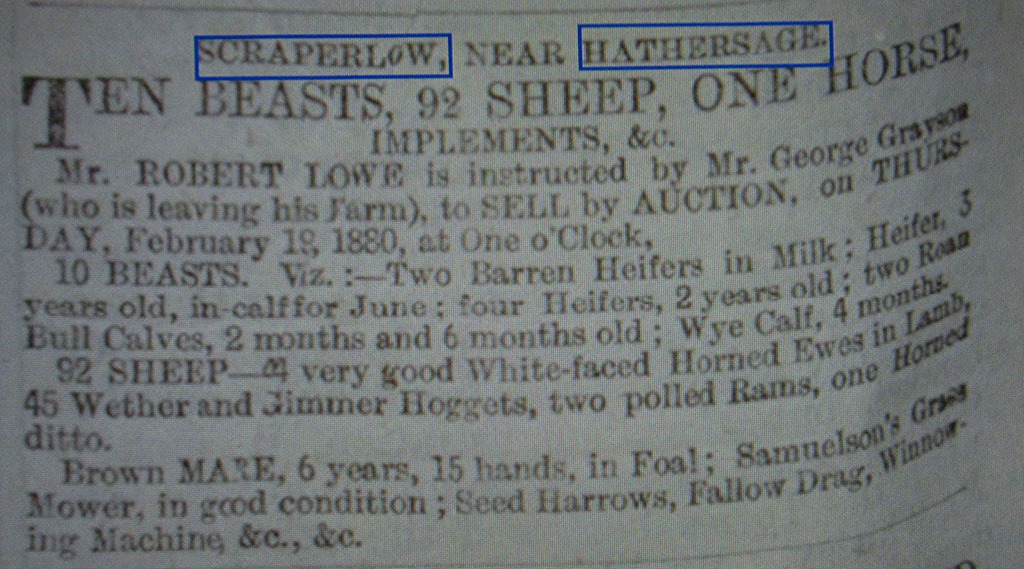
The Barton family, who preceded the Listers, can’t have been at Scraper Low for long because they followed on George Grayson, who was only selling up in 1880. The auctioneer’s notice from the local paper that year gives a nice glimpse of the kind of farm it was:
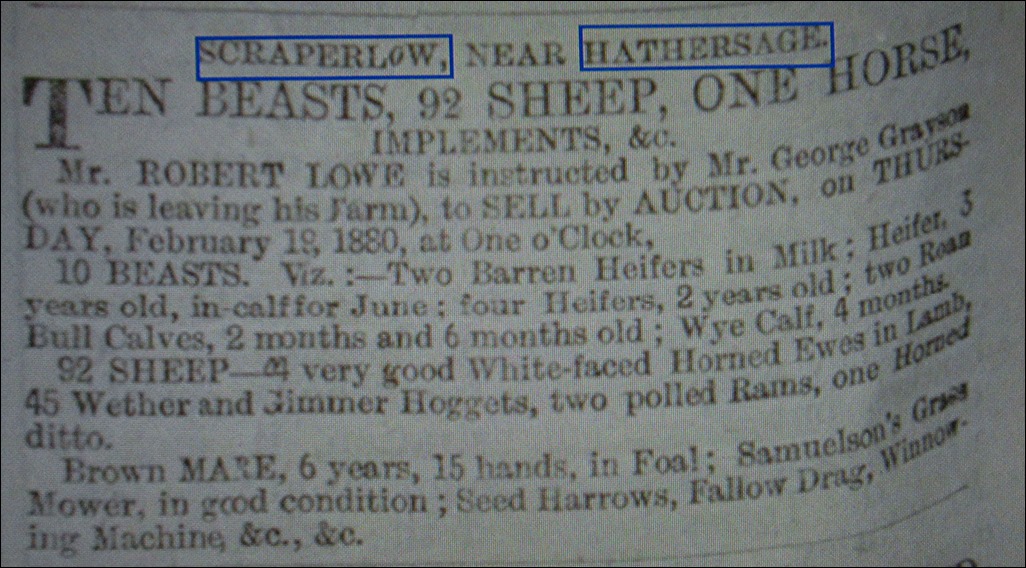
But what on earth were Sophia and William Lister thinking when they moved there: some dream of ending their days in a ruggedly remote fastness away from city living? William appears to have spent his entire working life in Sheffield’s silver trade, so perhaps he wanted a complete change (?) Also the marriage record does say that his father, George Lister, was a farmer in the Yorkshire village of Laughton en le Morthen where William was born. Obviously Sophia would have had some farming know-how, growing up at Callow. And then there were her twenty-three-year marriage to farmer John Brocklehurst.
Or was there?
A twist in the tale: four weddings, two funerals, one marriage duplicated, and two cases of bigamy?
Back to those 1861 and 1871 census returns for the Brocklehurst farm and that nagging query: where was Sophia?
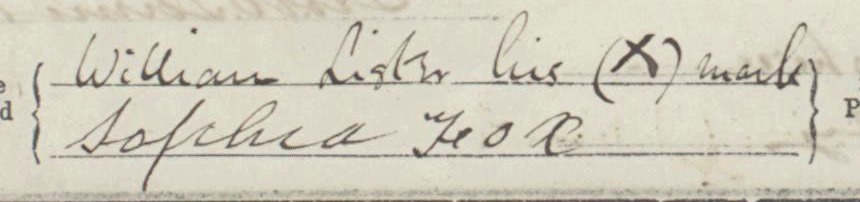
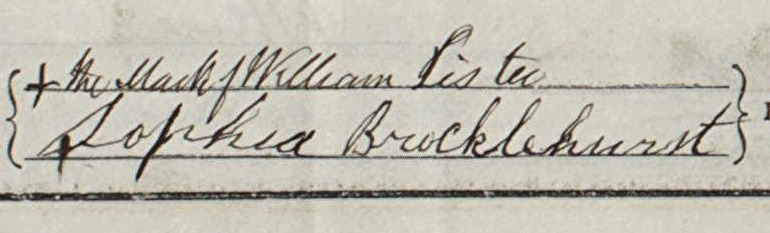
Last week this thought had me finally tracking down John Brocklehurst’s will. And what a discovery that has turned out to be. Suddenly I seem to have evidence not only for one bigamous marriage but two. And if this weren’t surprise enough, I now have proof that Sophia married William Lister TWICE, first in 1876 as Sophia Fox (when she was still married to Brocklehurst) and then as Sophia Brocklehurst in 1881, and on both occasions sharing William’s address at Norfolk Street.
Meanwhile back at Eastmeats, John Brocklehurst’s will, drawn up in 1878 when he is around 65 years old, leaves all his possessions to widow Eliza Mottram, sole executrix. There is no mention of his wife Sophia in the will:
I give devise and bequeath unto Eliza Mottram the widow of William Mottram of Chinley aforesaid farmer and who now resides with me all my real and personal effects…
Please note the particular wording of this document.
Eliza, a Glossop lass, was 40 years old when the will was written. She had married William Mottram, a widower, in 1872. Mottram was one of John Brocklehurst’s Chinley neighbours, a farmer and quarryman, and had presumably died at least by 1878. I haven’t found a death record for him yet, but in 1881 Eliza ‘his widow’ inherits John Brocklehurst’s ‘less than one hundred pounds’. Two years on she marries William Potts who works at a Glossop calico printing works.
BUT that’s not all. Then I found there was a marriage record for Eliza Mottram and John Brocklehurst. They married in 1875 at which time Brocklehurst claimed to be a widower. So now the odd wording of the will makes more sense. Wills doubtless still had sacred connotations for those making them. They were not the place for lies and wrong doing. So: Eliza is sole beneficiary and executrix but is nowhere called his wife. She is specifically William Mottram’s widow ‘who now resides with me.’
What on earth is going on here?
Some new-found circumstantial evidence?
So it seems that Sophia Brocklehurst was ‘a bolter’, and John Brocklehurst a bigamist. There is no knowing when she left the farm, but the 1876 marriage licence certainly proves that she did, and that she had reverted to her maiden name and unmarried status. She is not at the farm on census days in 1861 and 1871 and John Brocklehurst married Eliza Mottram in 1875 claiming he was a widower. Yet both of Sophia’s marriage licences prove she was still living. And the second licence states: Sophia Brocklehurst, daughter of Robert Fox, farmer of Callow marries William Lister, so there is no doubting that Sophia Fox 1876 and Sophia Brocklehurst 1881 are the same person .
So where has she been for twenty years?
I thought we were in brick-wall territory. Over the years I had trawled the censuses several times, and so had my fellow Fox family hunters. Then a chance find of a strangely transcribed 1861 entry on the free census site suddenly seemed to fit. Brookbottom, Mossley, a mill village among the many mill villages between Saddleworth Moor and the Pennines (Sheffield to the east and Manchester to the west). There was an entry for Baguley Hill for one Sophia Fox, but on the original form it looks like ‘Fix’ and that’s how it had been transcribed. The birthplace said ‘Adersige’, Derbyshire.
Adersige? No such place, but hang on, say this out loud and you could have the phonetic spelling of a dialect pronunciation of Hathersage? The age given is 37 (9 years younger than Sophia actually was, but it still could be her given her age-altering antics – and I’m not done with those yet).
This Sophia Fox was keeping house for Giles Andrew Senior (retired master cotton spinner and mill owner) and Giles Andrew Junior who had taken over the family business. It may be simply a coincidence, but Andrew is Sophia’s eldest sister’s married name. I can’t find out much about her husband, John Andrew, carrier and later farmer, except that he also hails from traditional weaving territory in Greater Manchester’s Hollinwood, not far away from Brookbottom in Mossley. Perhaps the Brookbottom Andrews were relatives; perhaps John Andrew knew them through his carrier business and could recommend a sister-in-law who needed employment. Perhaps Sophia had good references from her cotton master employers in Stalybridge, also not very far away.
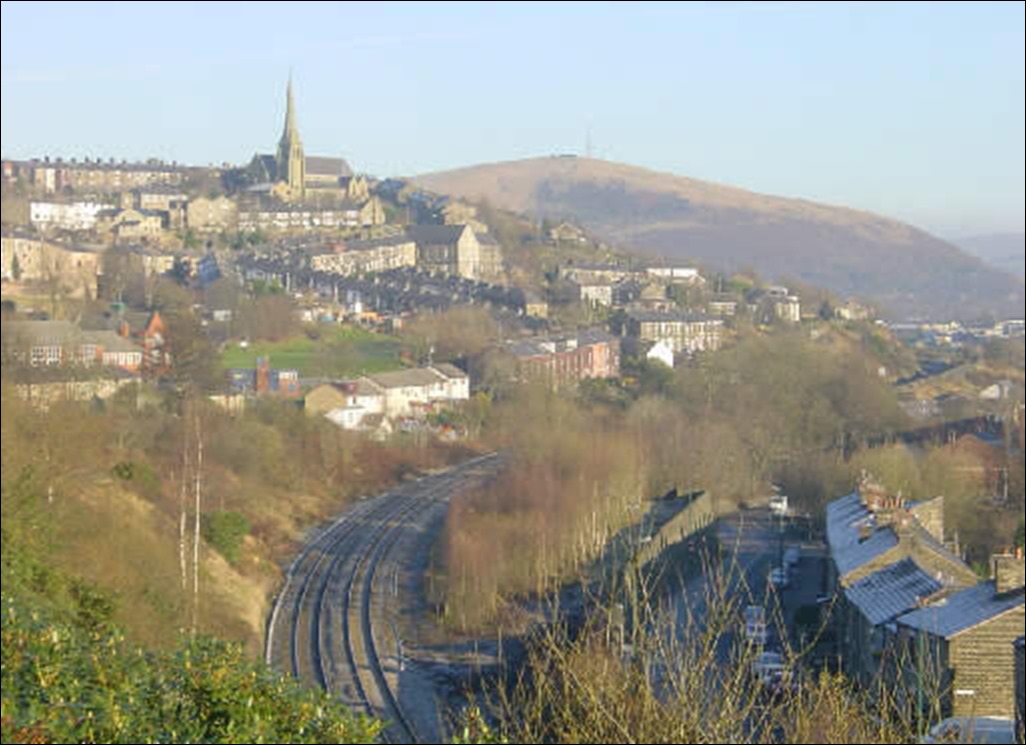
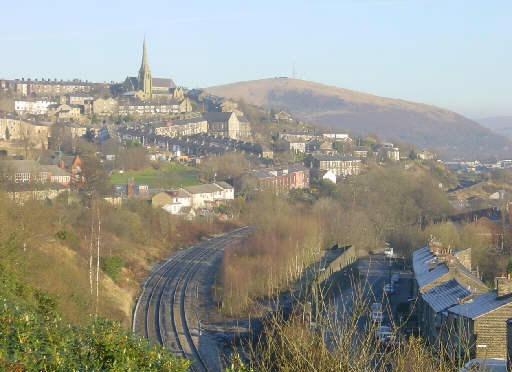
Photo: Martin Clark public domain; Mossley where three counties meet: Cheshire, Lancashire and West Riding of Yorkshire, between the Pennines and Saddleworth Moor
*
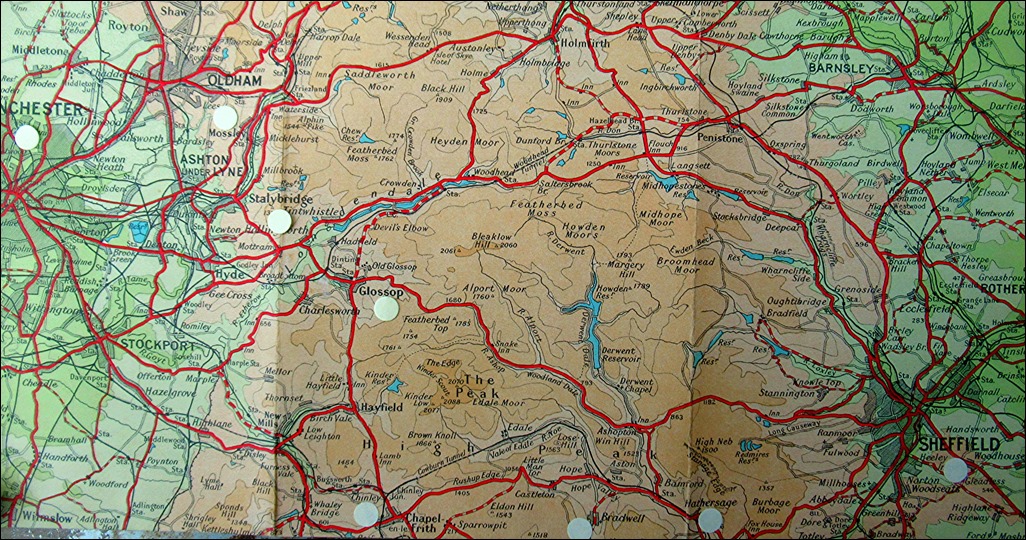
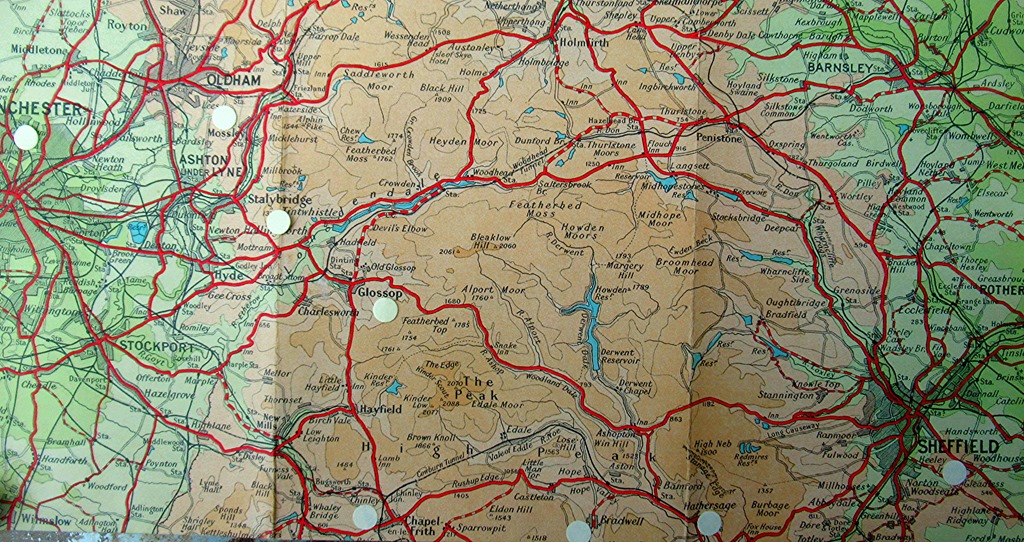
Sophia’s wanderings: Hathersage and Scraper Low first dot left of Sheffield (bottom right corner); Bradwell where she ended her days next dot left from Hathersage; third dot left of Sheffield is Chinley where John Brocklehurst farmed; Glossop where they married due north of Chinley; Stalybridge, Mossley, Manchester across the moors northwest of Glossop.
*
Once I’d decided that Sophia could have reverted to her Fox maiden name and unmarried status, I began to search the records in places where she might be in 1871. Her employer, Giles Andrew senior died in 1863, and in 1871 Giles Andrew junior was no longer at the place where she kept house on Baguley Hill. The only likely record (of two possibilities) to emerge from this next trawl was in Manchester. There I found a Sophia Fox, unmarried, 48, and staying in a Buxton Road lodging house. She says she is an unemployed housekeeper from Derbyshire. Might it not be her?
But back to some facts: and another case of bigamy
I know for certain that by 1876 Sophia is at 20 Norfolk Street with William Lister. (The first Mrs. Lister died the year before). They marry at St. Paul’s Church, Pinstone Street, and this time Sophia knocks 11 years off her age, says she is a spinster and signs herself Sophia Fox – the signature identical to the one on her 1857 marriage to Brocklehurst. At the time of the marriage she was already living at Norfolk Street with William Lister.
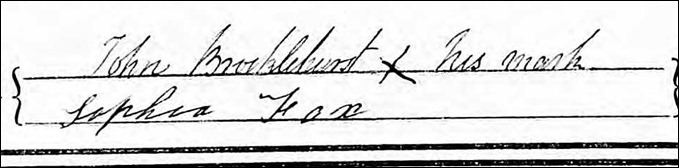
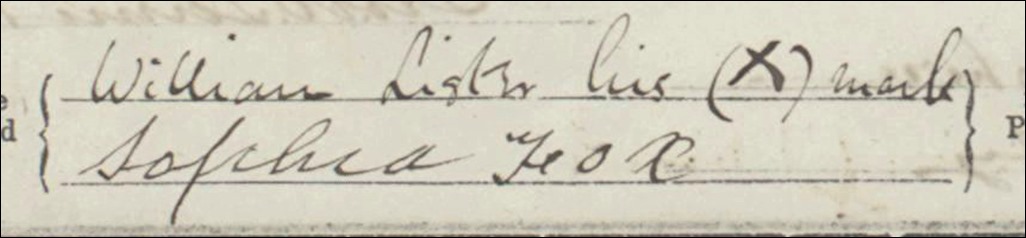
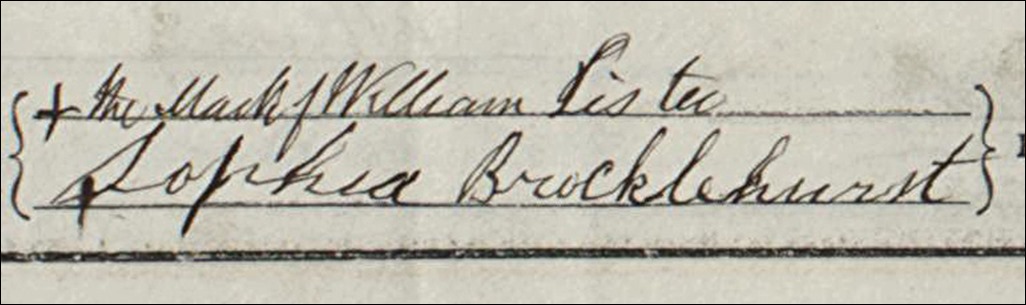
Well for goodness sake!
Not only did Sophia marry William Lister twice, she did so as ‘spinster’ Sophia Fox, daughter of Robert Fox, farmer of Callow while she was still married to John Brocklehurst. And then after he died and his small estate was settled on Eliza Mottram, Sophia must have wanted to put things right, and so re-married William as Sophia Brocklehurst widow, daughter of Robert Fox farmer (deceased) of Callow, but this time in Sheffield Cathedral. She also took the chance to lose 4 more years since her first marriage to Lister.
You have to wonder if William Lister ever did find out how old Sophia actually was. Also did he collude in the bigamous marriage, or did it come as a shock, and it was he who insisted on making amends? Did Sophia know about Brocklehurst’s marriage to Eliza Mottram in 1875? Had she come to some agreement with him – that they would both keep quiet, she pretending she had never married, he pretending that she had died?
William Lister died in 1889, aged 76. He seems to have left no will, but was buried with his first wife in Burngreave Cemetery in Sheffield. The 1891 census has Sophia in Water Lane, Bradwell, a lead-mining village some miles from Hathersage. She is listed as living on her ‘own means’. In 1892 in her 78th year and a matter of days before her own death of acute bronchitis, her will is drawn up. She is clearly too ill to sign it with more than ‘her mark’. She leaves everything to her two brothers, George Brayley Fox of Callow, (my great great grandfather), and his younger brother, William.
In 1893 there is an unseemly court case in Bakewell County Court. William’s wife Sarah claims she has not received some expected sum of money for expenses accrued while taking care of ‘their sister’ Sophia during her illness. The newspaper details are brief but garbled, though they do mention the selling up of Scraper Low and of William Fox having the land valued, so perhaps the Listers did own the farm (?)
In any event Sophia’s estate was valued at £99, 16 shillings and 1 penny, hardly a fortune.
The scant records of her life could suggest that Sophia Fox was capricious, vain, even criminally dishonest. But I think she was loved too. If William Lister did not know she was already married when he first married her, he surely knew the second time when he married widow, Mrs. Brocklehurst. Sister Mary Ann, and brother George both named daughters after her. And in her last days it seems she was cared for, this in a year when much was going wrong for her brother George at Callow, and indeed for all Derbyshire farmers who complained of high rents and low returns from their labours.
When I told my sister Jo of these discoveries, her first thought was that Sophia was free spirit in an age when women were still much hemmed in by convention. I like this notion, but I sense darker currents too.
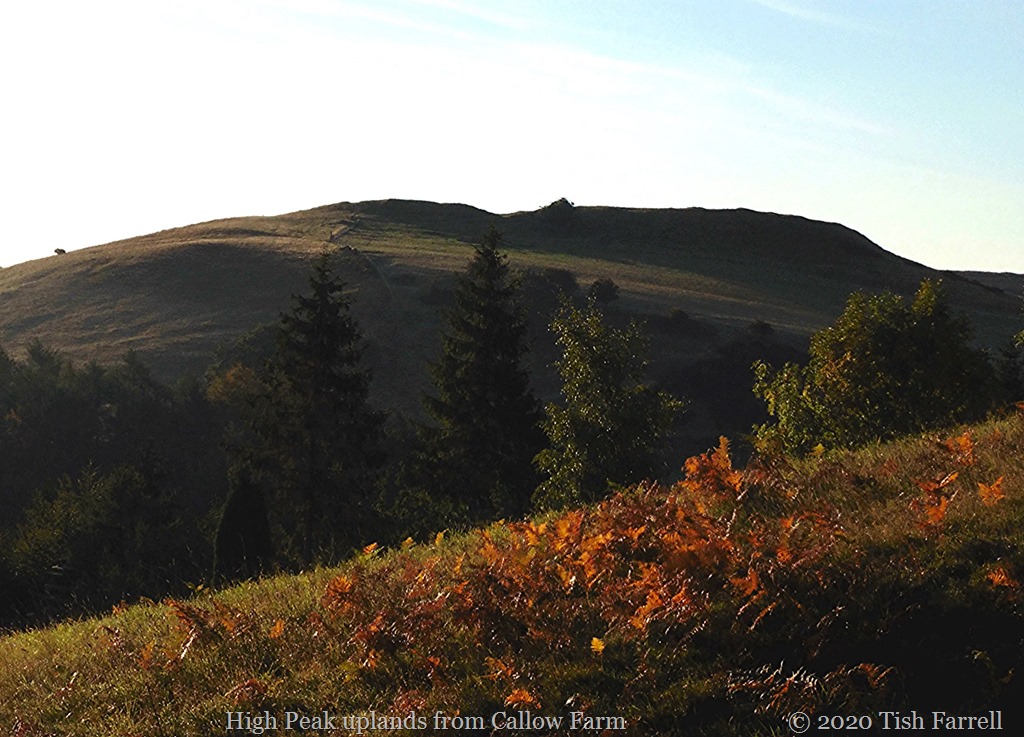
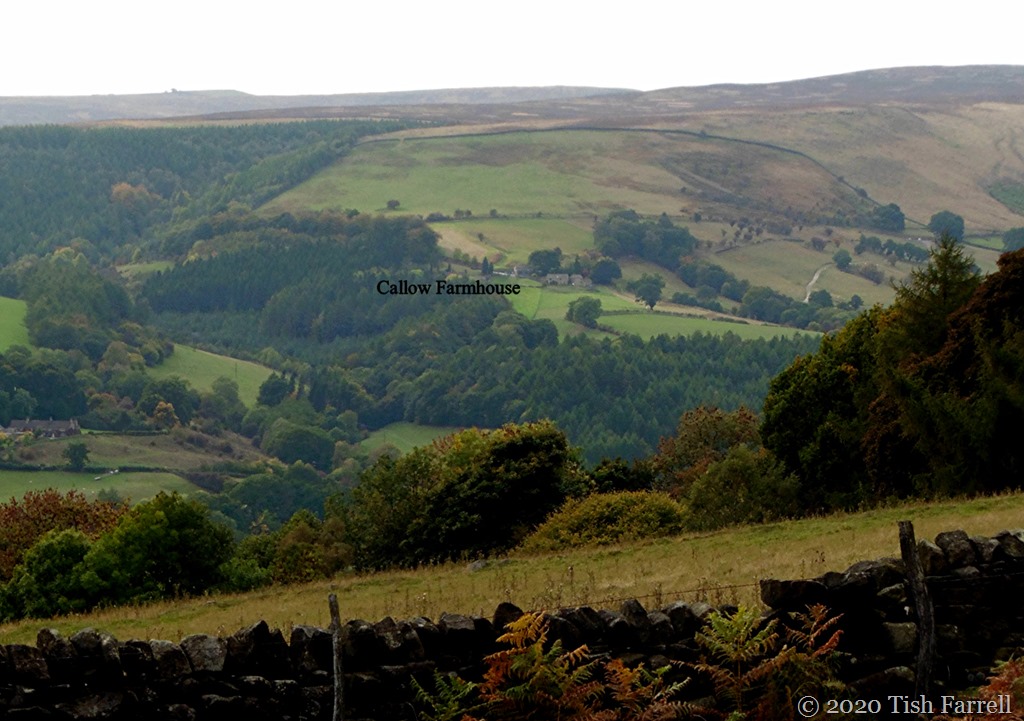
Two Septembers ago when Graham and I walked up the long track to Scraper Low Farm, I again wondered why Sophia had chosen this particular place to settle. It was only when we turned away from the house to retrace our steps that I think I found the answer. At the point where the track dog-legs back towards the road, there is a magnificent view across Hathersage’s Derwent valley. I could see Callow Barns (now a holiday let) where we were staying. Callow Farmhouse itself was now hidden by trees, but I could spot the two conifers at its back gate. 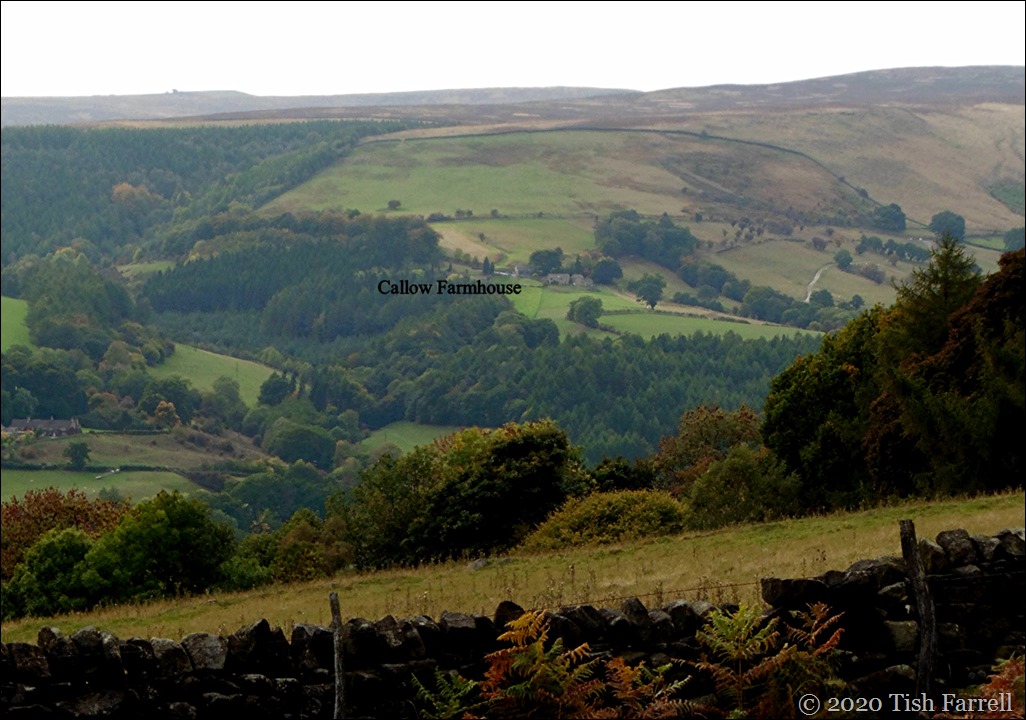
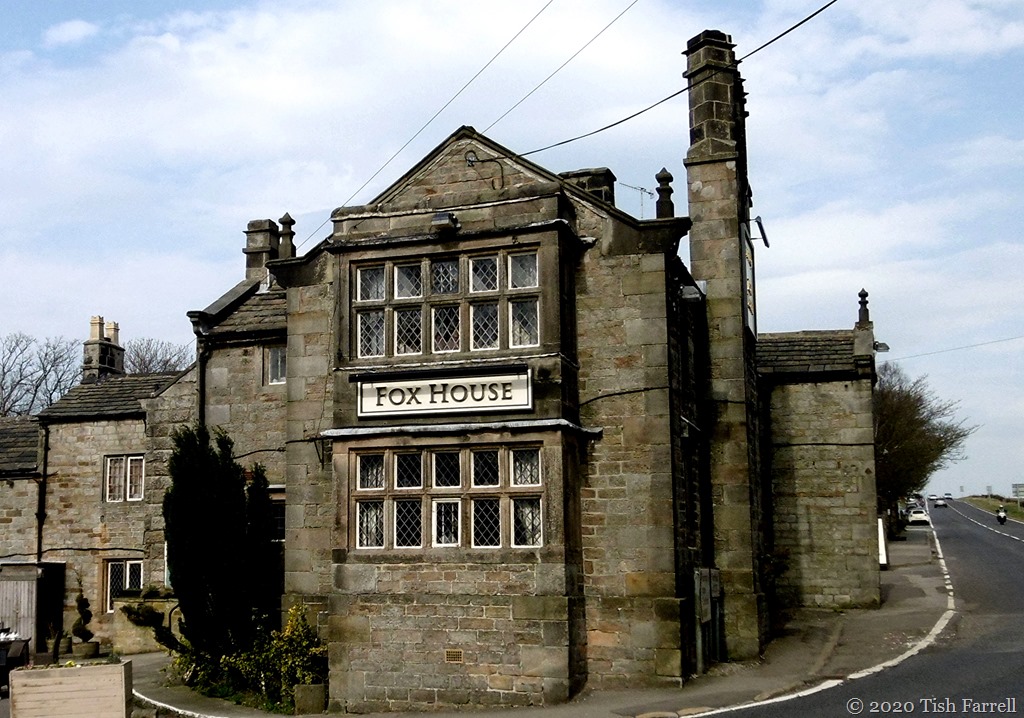
I remembered too that before the hifalutin Dukes of Rutland and Devonshire took over the moors east of Scraper Low, and went in for swapping parcels of land between them, it was said that the Fox family had long had a sheep run at Longshaw just beyond Millstone Edge and extending across the moors to Higger Tor. It was said too that in their day Sophia’s great grandparents, William and Sarah Fox, had grazed 500 sheep there and that their son George built the shepherd’s cottage that was later bought and expanded by the Duke of Rutland to use when he came to Longshaw to shoot. That property still stands, and is the well known local hostelry of Fox House Inn. Further snippets of family legend say that the George Fox who built the original cottage there sold the sheep walk to the Duke of Devonshire for £200 in around 1810.
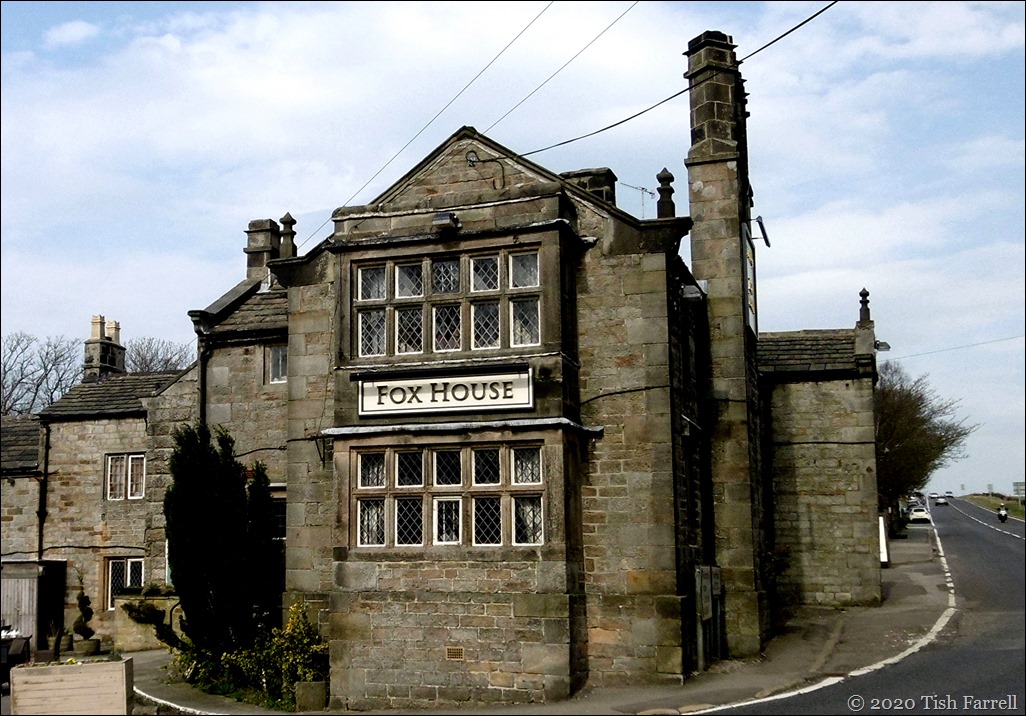
So perhaps after all her wanderings – a life wherein she had not achieved the kind of social status she thought she deserved – Sophia Fox of Callow had come back, at the last lap, briefly mistress of her own domain, looking out on the farm where she was born and over all the high places of her farming ancestors.
copyright 2020 Tish Farrell
Related:
So What Did Great Great Grandfather George Brayley Fox Keep In His Barns In 1892?