Regaining Our Cool

IMG_0983ed

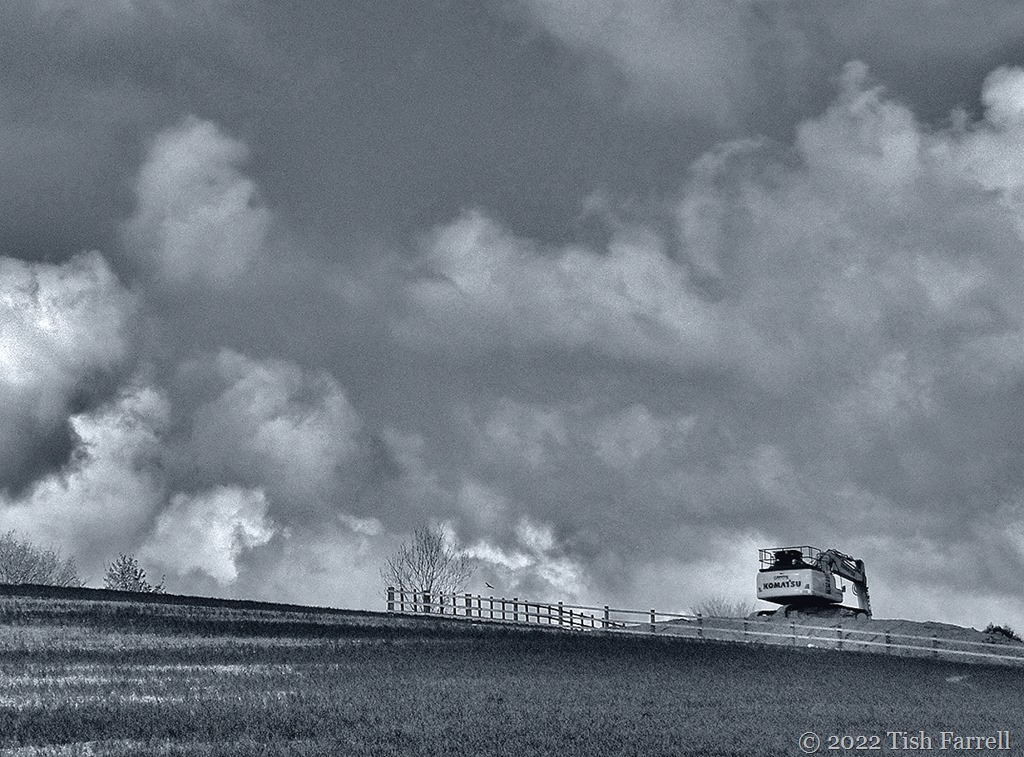
Well, it was pretty hot in Wenlock on Tuesday – 33-34C (bottom 90sF), this being the temperature given for Telford, our nearest big town. But then on Wednesday we were dropped back to 22C (72F) max and deeply gloomy skies. The breeze was back too. In fact yesterday afternoon when I took this photo, it was positively draughty walking along the Linden Walk; also very dry. You can see the wind blowing up a dust storm from the grass mower on the left.

At midday, as I write, my PC says it’s 14C (57F), and the forecast from our local weather station at RAF Shawbury indicates top temperatures of 17-24C (62-75F) for next nine days: https://www.weatherhq.co.uk/raf-shawbury/10d  The main thing though, we should have some rain tomorrow. Fingers crossed.

But, one asks, where did all that 2-day heat wave go? And how did it come in the first place? The explanations I’ve read state it was a burst of hot air out of North Africa pushed across Europe by a high pressure zone, a congruence of  events caused by a change in the jet stream, that mysterious air current whose meanderings appear to be responsible for all sorts of weather anomalies.

Of course in the Northern Hemisphere, this kind of heat wave has happened quite a few times over the past century. Such weather events not only came with extreme temperatures, but were often brutally long. The 1930s were particularly bad for overheated summers. This was the Dust Bowl era on the North American Great Plains, a time when (according to this Nature paper) there were 22 heat wave days per summer in Central US, and the maximum record temperatures reached then still stood at the time of 2019 US heat wave.

In Britain in August 1930 temperatures reached 34C, building over four days but, as seems to have happened this year, the high suddenly retreated allowing cool weather to move in.

Earlier, in 1911, people in Europe and America were not let off so lightly. The New England Historical Society HERE documents graphic accounts and photographs of the 11 days of sweltering heat that hit 44C/112F in the shade, said to have driven some people mad. Meanwhile in Britain the Wikipedia entry says the heat wave built from July through to September with a top temperature of 36.7C/98F. And in France, the 70-day broiling resulted in a horrendous death toll (scroll down for the English text.)

So all in all, uncomfortable as it was for many, it seems we got off lightly with a two-day baking. But many thanks to all fellow bloggers who expressed good wishes and concern. Much appreciated.

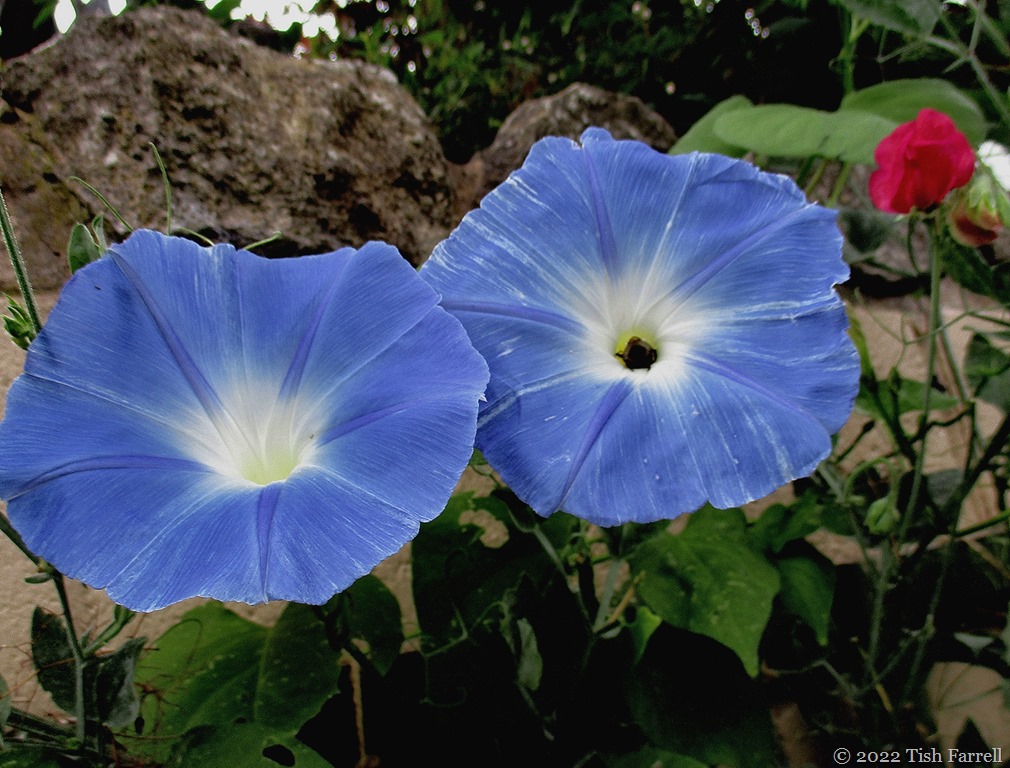
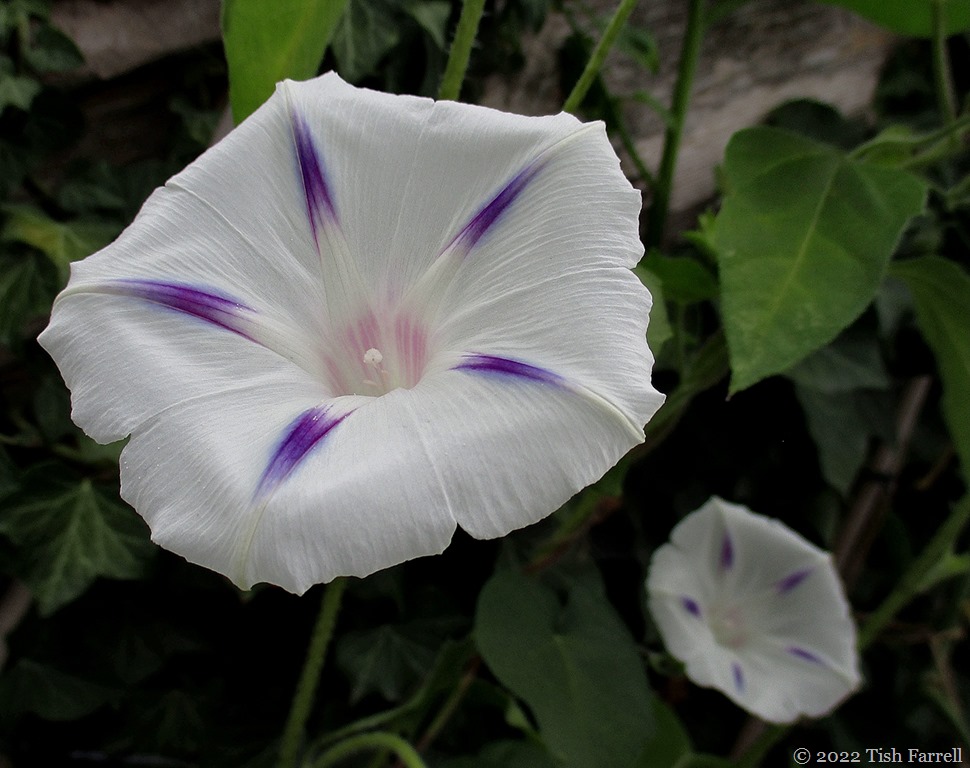
Cool Cool Convolvulus But Hot On The Plot

IMG_0957ed

We’re having a two-day heatwave here in the UK, temperatures in the 30s. That our summers for the last few years have been fairly heat-free seems to have erased memories that in times past we also had heatwaves. I remember baking to a crisp day after day on a Welsh beach back in the mid-1950s, and that was in May. And then there was the prolonged drought of 1975-76 when, due to severe water shortages, bathing with a friend was the catch phrase du jour. Wikipedia says this about that year:

Heathrow had 16 consecutive days over 30 °C (86 °F) from 23 June to 8 July[ and for 15 consecutive days from 23 June to 7 July temperatures reached 32.2 °C (90 °F) somewhere in England. Furthermore, five days saw temperatures exceed 35 °C (95 °F). On 28 June, temperatures reached 35.6 °C (96.1 °F) in Southampton, the highest June temperature recorded in the UK. The hottest day of all was 3 July, with temperatures reaching 35.9 °C (96.6 °F) in Cheltenham.

Whatever the weather, this gardener usually tries to avoid going away during the main growing season. At the best of times, watering the allotment vegetable plots and polytunnel seems too big an ask of fellow allotmenteers, and especially so during a dry spell. Summer for me, then, means garden watch. And so with the promise of a hot day ahead, this morning I was off to the allotment at 6 a.m. to see what rescue remedies might be needed after yesterday’s heat.

I needn’t have worried. The polytunnel (a sweat-inducing structure even in coolish weather) was fine. I’d left both doors open and the tomatoes, cucumbers and aubergines, lettuce and herbs looked happy enough. Meanwhile out on the plot, and since I was there, I damped down the mulch around the climbing peas and beans, courgettes and sweet corn, then picked raspberries that were looking a bit cooked, and gave vulnerable beetroot and leek seedlings a good soak.

IMG_0892

IMG_0919

IMG_0942ed

IMG_0929

IMG_0913ed

IMG_0910

*

And then I wandered around and took these photos, and was home by 8 a.m., by which time it was definitely warming up.  The BBC forecast says 35 C now at midday, though the Norwegian Met Office site YR (which I usually follow as it’s pretty good) says 34. In any event, it will be a much cooler 22C max tomorrow, and in the 20s for the rest of the week. I just hope we get some meaningful rain showers along with the returning coolness.

*

IMG_0956ed

*

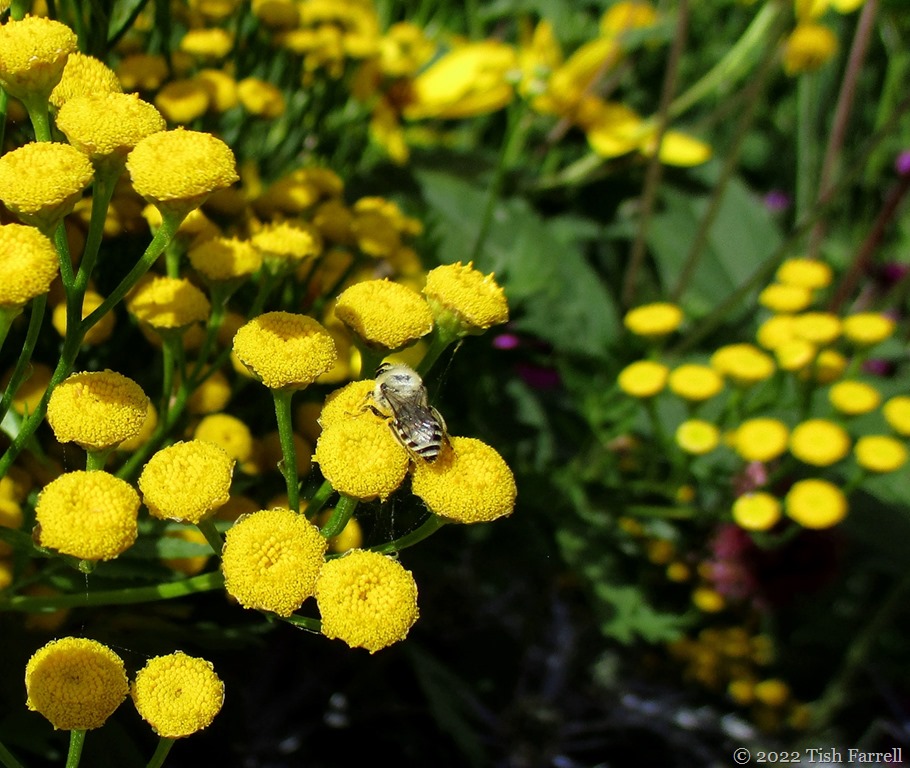
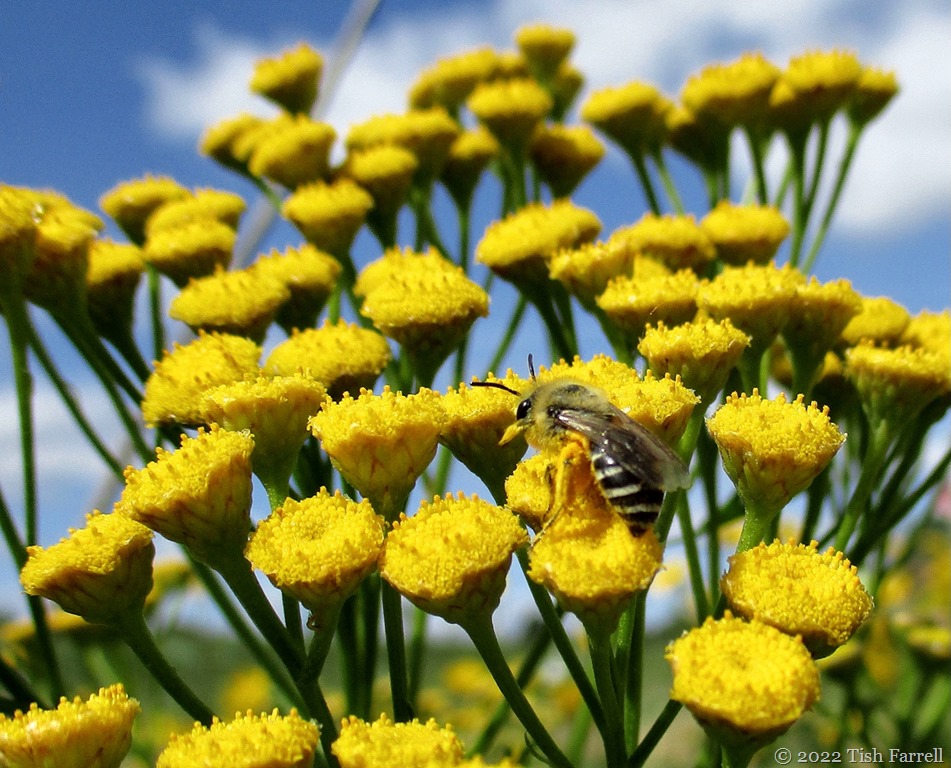
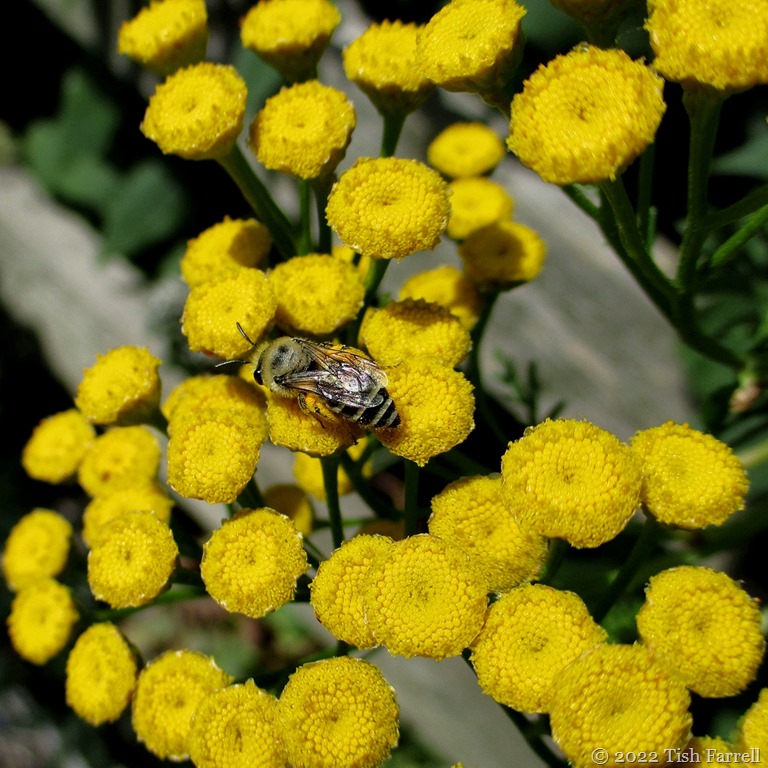
Back in the home garden, the borders are definitely struggling  through lack of rain. I can’t begin to water everything. The driest area is over the back fence in the guerrilla garden. Plants there simply have to take their chances, but even so, the tansy and golden rod are running rampant, towering over my head, and the late flowering Michaelmas daisies and helianthus are catching up. Meanwhile Ann Thomson geranium is holding her own against the lot of them. She may get cooked each day, but she’s still comes back flowering each morning. Oh, for such repeat resilience.

IMG_0970ed

IMG_0969

IMG_0966ed

And this summer in the garden I’m really pleased to find that one of my favourite  wild flowers, yellow toadflax, has decided to colonise the upstairs path. I grew it from seed a couple of years ago, and now it’s taken off. I first fell in love with it as a child, on trips into the Shropshire hills where it grows along the lane verges in high summer…

IMG_0961ed

*

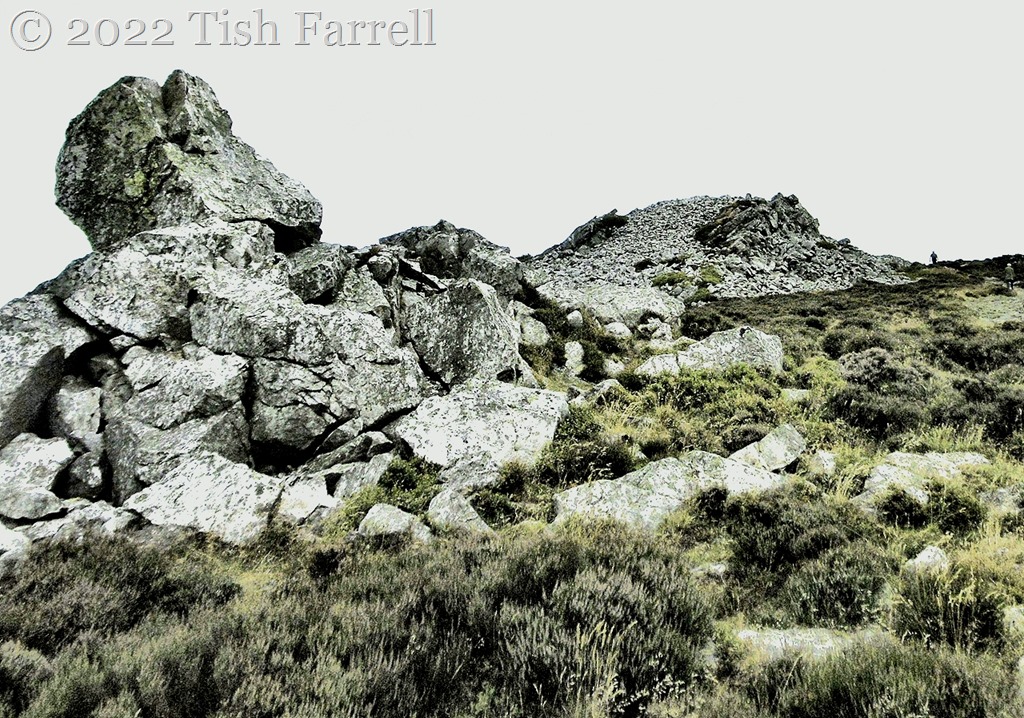
And talking of the Shropshire hills, I’ll leave you with summer views of the Shropshire-Wales borderland, taken a week or so ago on a visit to Mitchell’s Fold prehistoric stone circle.

IMG_0865ed

IMG_0862ed

Lens-Artists: Summer Vibes

This week Solaner has set the challenge.

Reflections: Looking Back On Tiwi Reef

sea and sky on the reef at Tiwi ed

Today in Shropshire we are having a heatwave – 26 C which is hot for us. It’s making me think of Kenya days when we used to spend Christmas (the hottest season) on the South Mombasa coast. We took all our best friends and family there. So: fond, if long ago, thoughts of grilled reef fish and lobsters bought from the local fishermen, and daily visits from the vegetable seller who pushed his sturdy Chinese bike along the coral paths, the black frame slung with raffia panniers, the contents garnered from his shamba – pawpaws, tomatoes, red onions, tiny hen’s eggs, warty lemons, a pepper or two.

Of course it was steamy there beside the Indian Ocean, but breezy too, and the verandaed beach cottages, following the local style, were built to catch it – tall makuti thatched roofs, large unglazed windows shaded by louvered shutters with moveable slats. Billowing mosquito nets over the beds. The outside sounds blowing in, crickets in the hot grass, finch chatter in the Madagascar flame trees, plangent call of the water bottle bird emptying its flask, a descending doo-doo-doo-doo…then waft of frangipani, and further off, the ocean crashing on the reef. The smell of the sea. Aaaah! Tusker beer, anyone?

sunrise on the lagoon ed

dawn over Tiwi lagoon ed

ed

Lens-Artists: seeing double This week Jez has set the challenge. He has some stunning reflections on show.

Centred At Wenlock Priory

p1000494

Of course for centuries Much Wenlock Priory was the centre of things for the ordinary folk who lived along Wenlock Edge and across the River Severn beyond Ironbridge. And I don’t only mean for the saving of their souls or temporal spiritual guidance. Successive priors were effectively CEOs of a large agricultural and industrial business enterprise. They ruled over an extensive landed estate in much the same way as powerful feudal lords of the manor ruled over their serfs and villeins.

The Priors laid down the law. They exacted rents, tithes and substantial death duties from the community, while the peasant smallholders, who were their rent-paying tenants, were obliged to provide a considerable amount of their labour –  ploughing, harvesting, transporting goods. The Priory was also a big wool producer and it was involved in industrial enterprises such as quarrying, milling, extracting coal, operating an iron-making bloomery in Coalbrookdale, and so presumably relying on members of the 18 local serf families to do much of this work.

The Priory also did very nicely when anyone died. One third (a terciar) of the value of the deceased person’s moveable goods would be claimed. In 1377 when John Brice a local lord of the manor died, his executors had to pay out 5 oxen, plus a further third in value of 5 cows, 7 horses, 132 sheep, 90 ewes, 75 lambs, 2 silver spoons, and 3 drinking bowls with silver decoration. Other terciar records indicate that people’s every last possession was weighed up (in all senses). This might include the value of meat in the larder, the iron parts of a plough, corn in the barn, pans and axes, a worn out harrow all converted to monetary worth and paid in coin (Wenlock in the Middle Ages  W F Mumford).

It is thus pleasing to know that there were moments when the Prior’s powers were well and truly challenged. In 1163 the villeins rebelled and ‘threw down their ploughshares’, calling for the repressive Prior to be deposed. The monks’ response was to excommunicate the lot, a truly horrifying penalty at the time. This only led to a riot. The church was besieged and knights called in to save the monks. But in the end the Prior was forced to hold an enquiry before a committee of knights and monks who, it seemed, listened to the villeins’ grievances and effected a compromise. In the following centuries, as the villeins’ own economic power grew, they were more and more able to demand payment for their services (A History of Much Wenlock Vivien Bellamy).

But with all this taxing and tithing, you can well see why in 1540 Thomas Cromwell wanted to get his hands on, as in liberate, the accumulated wealth of nation’s monastic houses. And here in Wenlock we still have the end result, nearly 6 centuries on – the dissolved relics of one of Europe’s most prestigious monasteries.

P1100067ed

Cee’s Black & White Photo Challenge: Centred

The Changing Seasons: This Was June

IMG_0777cr

A Horse Chestnut sun-catcher, as spotted on the old railway line below the Linden Walk. Such a cool and bosky spot on warm summer days, not that we have had very many of those. And we’ve certainly not had ‘flaming June’ except for a couple of windless days when it was warm enough to eat out in the upstairs garden.

IMG_0775ed

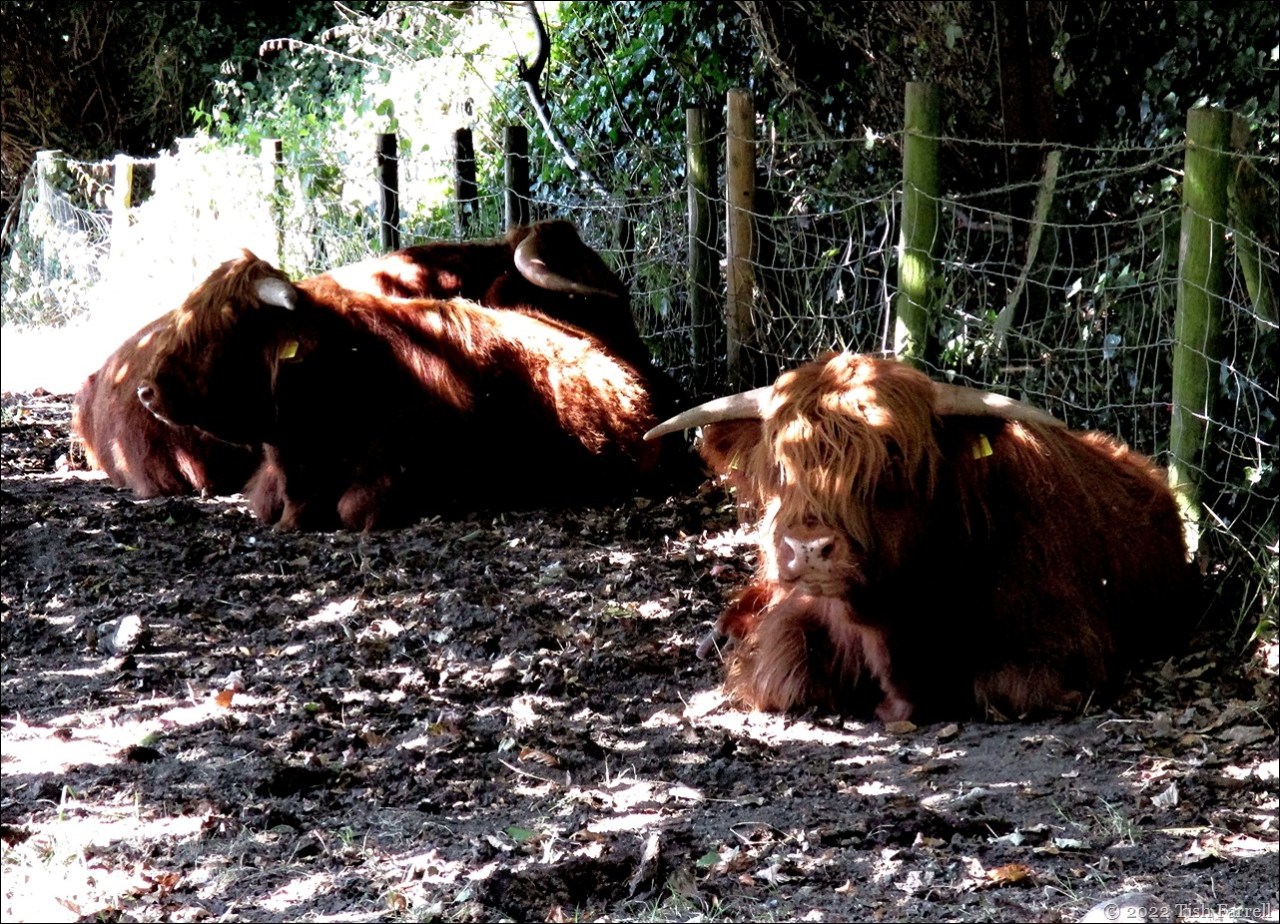
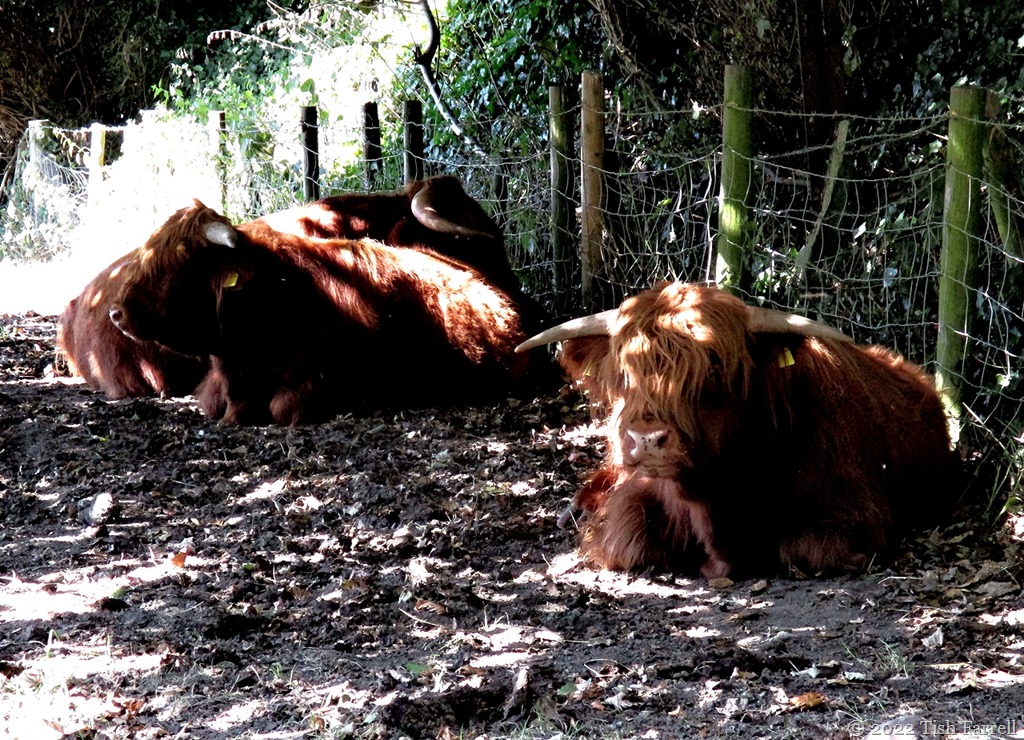
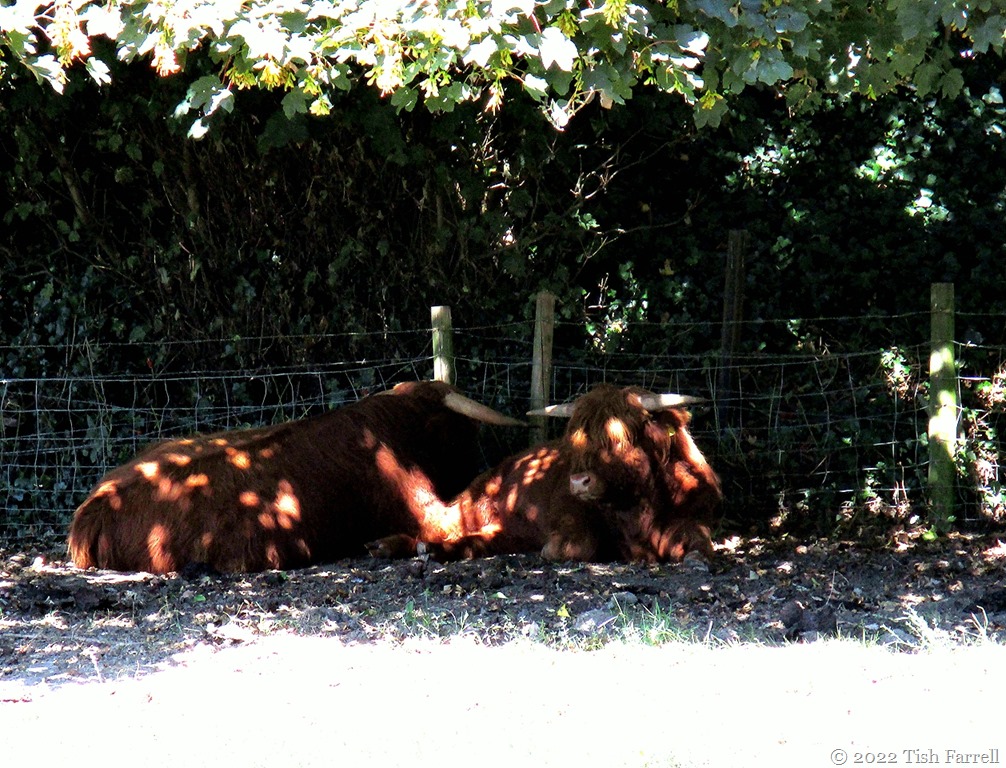
All the same, those few warm days did seem excessively hot to those of us still clinging to our winter underwear and especially to the MacMoo lads in their shaggy coats. They were driven to the shadow-margins of the Cutlins meadow to try and keep cool.

IMG_0807

*

While out on the Linden Field, human lads stripped off for a spot of football practice.

IMG_0790ed

*

In Townsend Meadow behind the house, this year’s crop of field beans is thriving. Early in the spring the plants struggled mightily due to lack of rain, but June’s cycle of showers and intermittent sun and cool temperatures has seen them shoot up and burst into flower. They are a variety of broad bean that produce masses of pea pod sized pods, each packed with several haricot sized beans. In Britain we mostly use them for animal feed and the bulk of the crops are exported to countries like Egypt where they are in great demand for human consumption.

Maybe as a nation, we should be rethinking this. The plants grow well in lacklustre weather, though wind can be problematic. And although the beans are fiddly to pod (I’ve grown my own good crop at the allotment), they are delicious, nutrient rich and only take a minute to steam or boil. The only problem was, this year they were ready all at once, and while I was hoping they would precede the main broad bean crop, the broad beans started cropping early. Upshot: eat the broad beans, freeze the field beans for making refried beans later in the year. But just look at the flowers. Aren’t they extraordinary?

IMG_0755ed

IMG_0759ed

IMG_0794ed

*

In the Farrell garden all is getting above itself – especially the cat mint. I don’t know what’s got into it this year. It’s the sort of plant I tend to ignore, nice enough as a wafty foil for more showy plants in summer borders, and that’s about it. But now it seems intent on taking over the upstairs garden, and what with the blue geranium joining in, Graham is having to fight his way through the encroaching undergrowth to reach the shed.

IMG_0799ed

*

Meanwhile Rose Teasing Georgia has been and gone. Lovely while she was with us looking in at the kitchen door. She should flower again later in the summer:

IMG_0769ed

*

Over the garden fence in the guerrilla garden where all the late summer bloomers are busy putting on stems metres tall, Geranium Anne Thomson is fighting her corner. She’s such a worthwhile garden plant – flowering her socks off all summer:

IMG_0804

*

And on the downstairs terrace the ruby red Centranthus has been the main June attraction, along with Penelope rose who this year has been growing us huge single stemmed  bouquets, now sadly past their best. She’s a lovely sweet smelling rose – a shrub variety that can be trained to be a climber on shortish walls.

IMG_0797ed

 IMG_0796ed

*

At the allotment, beans and peas and spuds and beetroot are growing well, tomatoes and salad stuff in the polytunnel, but I’ve not taken many photos apart from ones of the flat-pack cat and the wildflower plots of moon daisies:

IMG_0832ed

IMG_0827ed

*

Oh yes, and this evening view of the town as I’m heading home to make supper:

IMG_0840ed

The Changing Seasons Ju-Lyn and Brian are the hosts. Please pay them a visit.

Zanzibar’s House Of Wonders: A Door On The past

Scan-130429-0037sepcr

The ancient Swahili towns of East Africa’s seaboard and islands are renowned for their elaborately carved doors. Zanzibar (more properly Unguja) has some fine examples, so it’s a pity I have so few photos from our long-ago stay in Stone Town. There is a reason, however. For one thing the streets are so shadowy and narrow it is difficult to take decent shots without causing pedestrian chaos. And anyway, neither photographer, nor my then Olympus trip camera, whose back kept flicking open, were up to job.

Scan-130429-0037sep

Here though, on the steps of Beit-al-Ajaib, the House of Wonders, there was both light and room for manoeuvre. The doors belong to a palace built by Sultan Barghash in 1883 to host ceremonial events. Barghash belonged to the dynasty of Omani Arabs who had ruled over the Swahili city states from the late 17th century, this after the expulsion of the Portuguese who, thanks to explorer Vasco da Gama, had held the territory, thus controlling the Indian Ocean trade, for some two centuries.

So it was that one set of invaders succeeded another, the situation further complicated in the 19th century by competing European interests wherein Britain saw off Germany, and proclaimed the Zanzibari Omanis’ dominion a British protectorate; the stated objective being to put an end to the Arab slave trade, though some might say this was only an excuse, since there appear to have few means to back up the fine words, and slaving on parts of the East African coast anyway continued into the 1920s.

But back to the palace. Barghash was an extravagant man and, before his death in 1888, built six palaces across Unguja island. (The Zanzibari sultans’ wealth derived both from the slave trade and Unguja’s spice plantations). Their rule did not end well. 1964 saw the Zanzibar Revolution. The Omanis, along with many Indian residents, were killed or expelled. Thereafter the House of Wonders was used as government offices. When we visited in 1999 it was abandoned, shrouded in dust and empty  but for one of the last sultan’s  cars (a candy pink saloon) parked inside the atrium just behind those two front doors. One wonders how many men it took to carry it up the palace steps. A friend who visited more recently told me it was still there.
Scan-130429-0027sep

*

And finally, my only view of a Stone Town door, more gist than detail:

Scan-130429-0102sep

Cee’s Black & White Photo Challenge: doors and drawers

Laid Out At The Allotment: Flat-Pack Cat

IMG_0815

There are two long-abandoned plots next to mine at the Wenlock allotments. On recent late-day visits to my polytunnel, the sun still hot, I’ve found this allotment cat (one of several feral felines who haunt the place) stretched out between two dismantled shed panels. The pose says it all: absolute bliss.

IMG_0813

IMG_0818

*

Here’s its sibling. Both cats seem to make a living on the allotment. In fact I think they were born here and don’t seem to belong to anyone. I dare say there are plenty of rodents to hunt. And now I think about it, there are certainly fewer birds foraging on the plots. In the winter, one or other sleeps in my polytunnel.

IMG_0828

*

And here’s another regular prowler, doing a good little leopard imitation:

IMG_0823

IMG_0820

June Wanderings: Windmill Hill And The Linden Field

IMG_0634

Two sunny Saturdays in a row and an early evening stroll to check on the orchids on Windmill Hill. First, though, there’s a spot of cricket to watch on the Linden Field: a perfect English summer scene:

IMG_0615

IMG_0627re

IMG_0622

Apart from the green idyll, there’s some very big history in this view. This is the ground that hosted the annual Wenlock Olympian Games, devised in 1850 by the town’s physician, Doctor William Penny Brookes (1809-1895). They are still held here and at the neighbouring school every year. Brookes was an energetic lobbyist for all round social improvement. He was responsible for the introduction of physical education in English national schools. He also wrote letters to every literary celebrity in the land, begging copies of their books for the Wenlock Agricultural Reading Society’s library, a facility he founded to give local working people educational opportunities. But it was the town’s Olympian Games that were to have world-wide impact.
Wm Penny Brookes

In 1890, Brookes wrote to one Baron Coubertin who was visiting England to study sports education, and invited him to attend the Much Wenlock games, which he duly did. Brookes apparently filled him on all aspects of the enterprise, including the array of medals that he himself had designed and funded. And so it was that 6 years later in Athens when the first Modern Olympic Games were held, Coubertin paid tribute to Brookes who had died only months before, aged 86. The baron said it was down to the good doctor that the games had been revived, although it is Coubertin who is remembered as ‘the father of the modern Olympic movement.’

If you scan the field today, you can see it has been well treed since Brookes’ time, although he was responsible for the planting of the Linden Walk (behind the conifers in the view above). He was also responsible for bringing the railway to the town. This ran directly behind the Linden Walk, with the station just beyond the field gates. Olympian Special trains would be run to bring  games participants and spectators from all over the country.
And Windmill Hill, overlooking  the Linden Field (now obscured by trees) once provided a natural gallery for thousands of visitors:

IMG_0648

Today this hill is one of the town’s favourite walking spots, the windmill  (probably late 17th century) a well known landmark. The grassland all around is a surviving example of a traditional limestone meadow – rich in grasses and many wild flower species. Brookes would have known all about the local flora. Not only had he trained as a physician in Paris and London, he had also studied medical herbalism at the University of Padua. During his life-time in Wenlock he created a magnificent herbarium of pressed flowers, another town treasure, although it is now kept in Ludlow Museum’s special conservation facility. It is a marvellous document of what was once growing along Wenlock Edge and what has been lost.

*

But back to the walk. Climbing the hill behind the Linden Field we soon spot the freshly sprouting pyramidal orchids. To my eye, they seem to be extending their range across the hill. I’m surmising that this is due to the new management system for the grassland: the  end of season raking up of dying vegetation that has spread the tubers far and wide.

IMG_0712re

We also found spotted orchids…

IMG_0701re

…and, thanks to a chum who alerted us to its location, a single tiny bee orchid. They are very hard to find, their stems only a few inches tall.

IMG_0703re2

*

June and July are the main flowering times on the hill. Already you can see the wild thyme on exposed outcrops. Then there are briar roses, elderflowers, red clover – all four of them long used as medicinal herbs. The thymol extracted from thyme is a key active ingredient in cough syrups. Rose petals may be used to treat skin conditions. Elderflowers are particularly potent, with a host of healing properties including quercetin. Brewed as a tea they relieve colds and flu symptoms. Red clover is also used for skin and more deep-seated complaints.

IMG_0633

IMG_0733re

IMG_0748re

IMG_0715re

*

And then once you reach the top of the hill, there the views to ponder. Always something new, whatever the season.

IMG_0640

*

By the time we clamber back down to the Linden Field the cricket is over, and now is the moment for Wenlock dogs to play. We wander home beneath the conifer avenue. I always love the play of light and shadow under these trees:

IMG_0663re

As we go there’s the waft of lime tree in the air; only a subtle scent as yet;  the tiny green flowers are only just opening. But later in the month, and as the days grow warmer, the field will be bathed in its fragrance. And so we have another therapeutic plant, one that calms and heals, although as with all herbal remedies, it is best to consult a qualified medical herbalist as to their use.

IMG_0752re

IMG_0442re

*

And a final floriferous view of Windmill Hill:

IMG_2155

Lens-Artists: Local Vistas   This week Anne Sandler at Slow Shutter Speed  wants to see views from home territory.

Townsend Meadow: Views Spare Or Complex

IMG_0089

Ripening barley

*

It’s pretty much a truism when it comes to prose, the fewer words the better. This is a hard lesson for most writers to learn: how much to leave in; what to cut. Of course timing is involved too, not only scene setting. To build suspense, a sense of drama, irony, mystery, you can’t rush things. But then too much detail and description can bog things down, or worse, bore.

For most of us, honing the craft of captivating verbal particularity, the sort of writing that transports readers, heart-and-mind, right to the spot takes much practice and perseverance.  And there may come a point when the attempt to conjure with words becomes too darned hard. Well, aren’t we humans, above all, moved by visual stimuli. Just think.  If Word Press blogs were solely prose, how many of us would be here?

And so to images. These are all views from the field behind our house: the things that catch my eye: light and shadow; blocks of texture; earth colours. In this space, between our garden fence and Wenlock Edge,  it’s usually the sky that creates all the drama.

IMG_0053cr

The fence at the top of the field in winter

*

img_1729

Over the garden fence

*

p1060998

Summer grasses on the field path

*

cr

After the wheat harvest

*

P1000566re

Winter hedge-top

*

P1080430re

*

100_5858re

Midsummer sunset

*

100_5995

*

100_6568re

*

P1050990re

Lens-Artists: minimalism/maximalism   Sofia at Photographias has set this week’s theme. Please pay her a visit.