5 photos 5 Stories: Hidden Wenlock #1

IMG_1212

Pauline at Memories are made of this tagged me for this challenge: a photo and a story for five consecutive days. On her blog she took us to some of the world’s most resonant places, including the Taj Mahal, so please do visit her.

I thought I’d stay at home for five days, and reveal some local secrets. In fact in this first photo I want to show you something you cannot see at all. I’ll call it a ghost -more of which in a moment.

The things you can see are the ruins of Wenlock Priory. Before Henry VIII dissolved it in 1540, it was one of the biggest monastic houses in Europe, and a sister house to the abbey of Cluny in France. The monks in Wenlock would thus have all spoken French as well as Latin. I suppose they must have had some resident interpreter to manage all the Shropshire serfs who would have been needed to tend the Prior’s extensive domain.

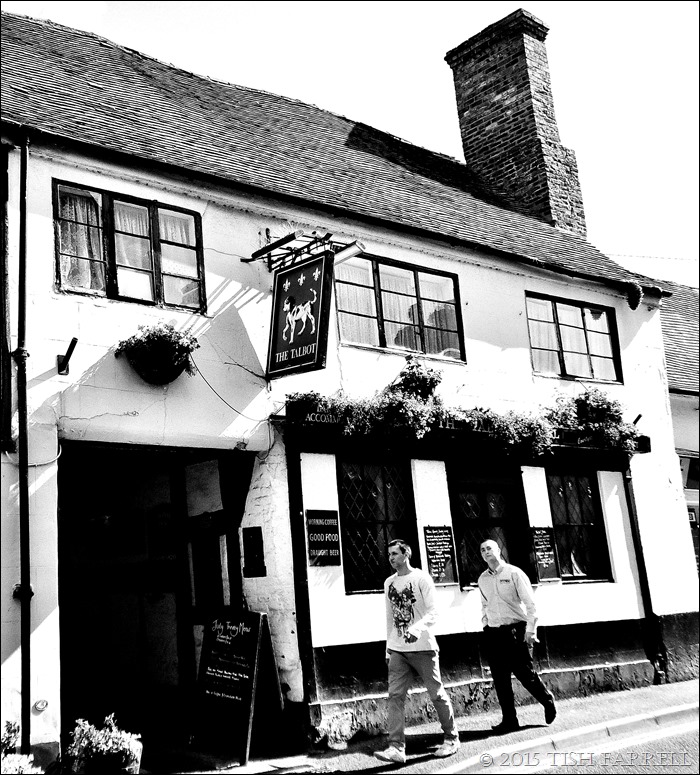
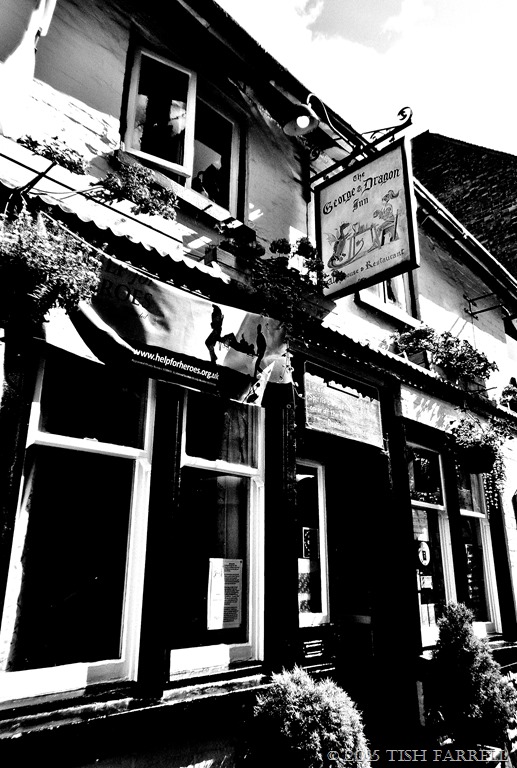
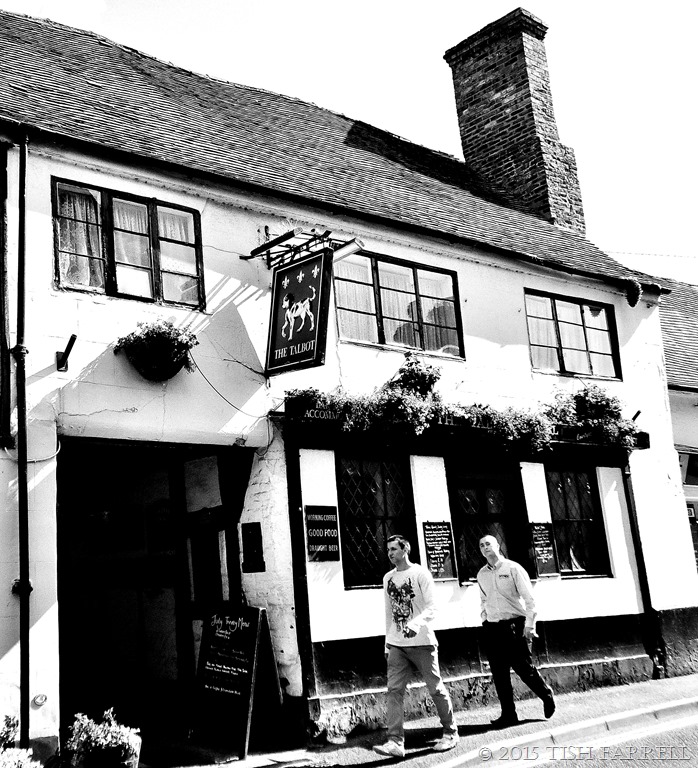
The Priory itself was a place of great pilgrimage, which in turn caused the small town of Much Wenlock, with its hostelries and traders, to grow up around it. Two of the towns surviving pubs, The George and Dragon and The Talbot  date from these pilgrim days. The big draw was St. Milburga and her healing miracles. She was the Saxon princess who was abbess of the town’s first religious house back in the 7th century. When her four hundred year old bones were conveniently rediscovered in 1101, they were said to glow, and smell sweetly as saints’ bones were wont to do.

Much Wenlock, then, has a long-established pedigree on the odour of sanctity front.

But now for that ghost – more a spirit of place really.  And it belongs to writer Henry James. In the days when the Priory comprised the personal ruins of the Milnes Gaskells who lived next door in the Prior’s House, Henry James was one of their many eminent house guests. In fact he came three times. There is more about his visit  in an earlier post  When Henry James Came To Wenlock, but first a postcard view of how the ruins might have looked back in his day, in the late 1870s:

001 (8)

And now you have the setting, both past and present, you can conjure Mr. Henry James from his own words. As I have said elsewhere, during one of his times here he was apparently working on his own ghost story The Turn of the Screw: Here is his description of the Priory, these days in the care of English Heritage:

Adjoining the house is a beautiful ruin, part of the walls and windows and bases of the piers of the magnificent church administered by the predecessor of your host, the abbot. These relics are very desultory, but they are still abundant and testify to the great scale and the stately beauty of the abbey. You may lie upon the grass at the base of an ivied fragment and measure the great girth of the great stumps of the central columns, half smothered in soft creepers, and think how strange it is in that in this quiet hollow, in the midst of lonely hills, so exquisite and so elaborate a work of art should have arisen.

Henry James Portraits of Places

*


Related posts:

In Much Wenlock An Inspector Calls

When Henry James Came To Wenlock

#5photos5stories

Clouds over Kenya

IMG_0024

This probably is not the kind of scene most people associate with Africa. It looks more like a stretch of bleak English moorland in December. Anyway Kenya it is, and it was taken one August in a Maasai group ranch conservancy, bordering the Maasai Mara National Park.

May to September is East Africa’s winter, and the skies are often overcast and leaden. The nights, and even the days can be chilly. Kenya, anyway, covers many of the world’s climatic zones either horizontally or vertically – from the hot and arid Northern District, bordering Ethiopia and Somalia, to the alpine heights of Mount Kenya with its glacial peaks. There are also the airy, and rarely too hot, highland plains around Nairobi, and the steamy humidity of the Mombasa coastal strip to the south.

Much of the nation’s weather is determined by the cycle of Indian Ocean monsoon winds. These, unless disrupted by El Nino effects, bring two seasons of rain – the long rains in March to May, and the short rains in November-December. In between, many areas receive little or no rain. Western Kenya, however, receives more regular rainfall courtesy of Lake Victoria Nyanza which makes its own weather.  Meanwhile in the fertile Central Highlands above Nairobi, altitude and forest combine to make June and July the season of heavy mists. It’s all a bit dreary, but the mist does have its uses – for instance, ripening the maize crops for the August harvest.

napier grass on the Rift

Smallholder farms and July mists in the Kikuyu highlands, north of Nairobi

*

In the late 1990s Team Farrell was often out and about in the Kikuyu highlands, visiting smallholder farms. And the reason we were doing this in the fog season was because the Team Leader, aka Graham, was – besides running an agricultural crop protection project on behalf of Her Majesty’s Government – gathering data for his doctoral thesis on smut. If you want to know more about our smut forays (of the plant variety that is) your can find out more HERE.

Rift lane after July downpour

Rural road after an unseasonal July downpour. Poor communications embed poverty, making it hard for farmers to get produce to market before it spoils.

*

tea fields and workers' houses

Lowering skies over Limuru’s tea gardens with tea pickers’ housing.

*

Kikuyu farmstead 1

Kikuyu farmhouse.

*

banana trees 2

Wintery fields in Muranga where the Del Monte pineapples grow.

*

And just sometimes, even on the gloomiest Kenyan winter’s day, the sun breaks through the clouds:

Kikuyu child 3


Jennifer Nichole Wells OWPC: cloudy     Go here for more bloggers’ cloudy offerings.

Seeking Spring ~ A Walk on Wenlock’s Wild Side

100_5445

I knew there was only a small window of opportunity. At nine thirty yesterday morning there was sunshine. Go out there at once, I told myself. The way the weather is these days, it might be the last you see of it. Carpe diem and all that.

So seized it I did, and it was certainly warmer to the touch than it has been for many days, and as you can see from the above photo, the ancient, and thus arboreally wise lime trees on the Linden Walk definitely think it is spring.  Drifts of green. Blissful.

P1010309

The dog walkers, too, were out en masse, owners chatting amiably on the Linden Field quite as if it were – well, spring. And despite Thursday’s appalling election results (Scots Nationalists excepted) and the return of a government that treats food banks as something to be proud of, and regards the nation as a resource for unbounded fracking, everyone I met seemed pretty cheerful. I will thus make no further mention of Tory attrition and spoil the moment.

The little green building you can see in the background behind the dog walkers is Much Wenlock’s Bowling Club HQ. It occupies a re-cycled railway carriage, a relic from our erstwhile lovely railway that once ran beside the Linden Walk and, until the 1960s, when the wretched Dr. Beeching axed thousands of miles of Britain’s railways, linked Much Wenlock to the outside world. But enough! Too much negativity already.

I headed off behind the Bowling Green to see what was growing on Windmill Hill. This quest was motivated by Meg at Snippetsandsnaps. In response to an earlier post here, she said she would like to see more of what happens on the old limestone pasture on which the windmill stands. I’d mentioned the wild orchids for one thing, so I thought  (given our erratic climate) I’d better go and check if they were flowering yet.

100_5459

They weren’t. Still too early. But the first thing I spotted were the cowslips, also known in Olde Shropshire as cowslops. The richly eggy coloured clumps were growing here and there. In the past they would have grown in yellow meadowsful all around Much Wenlock. I even remember them. When I was a child, my parents would make a point of driving out from Shrewsbury where we lived, simply to visit them. We’d have picnics amongst them.

P1010322

Once, too, cowslips were an important resource. In the days before modern farming methods seriously reduced their habitat, Wenlock’s school children would absent themselves from class at the National School in order to help with the annual gathering. The flowers were used to make herbal infusions to combat coughs and bronchitis, and in a town regularly doused in limestone dust from the quarries, bad chests would have been a common problem.

Doubtless, too, the town’s doctor, William Penny Brookes, (he who inspired the modern Olympics and planted the avenue of lime trees that we have just walked along), supported such an activity. He practised for the last fifty years of the 19th century and, as well as being a physician, he was also a highly knowledgeable herbalist, having trained both in medicine in London and herbalism at the renowned University of Padua.

And this was by no means quackery in action as some are wont to call herbal medicine. After all, from where does Big Pharma get so many of its notions if  not from trying to concoct synthetic (patentable) analogues of the deemed active chemicals teased from botanical compounds? All of which is to say, we lose our plant heritage at great cost to our future well being, to say nothing of the planet’s well being.

Besides which, flowers can mean fun and festivities. Cowslips were also used to make wine, and to strew the paths of spring brides. Mm. Just think of the air filled with their subtle, sunny scent in times when May was WARM.

And talking of warmth and nuptial pursuits, the next thing I came across while snapping cowslips, was a pair of mating molluscs, also known Cepaea nemoralis (Linnaeus, 1758), Britain’s commonest snails. Spring has certainly made this pair frisky, but I will spare you the more intimate shots, and leave you with their rather pleasing  Northamptonshire dialect name of pooties. Canoodling pooties then.

100_5452

Windmill Hill has more than its open, calcareous pasture. There are wooded flanks to the north and south and here, beneath the trees, I found violets and celandines. You can also see leaves of tiny wild strawberry plants (north of violets), germander speedwell (northeast of the celandine), and sprigs of Dog’s Mercury at the bottom of the shot.

P1010366

*

And coming up is Dog’s Mercury (Mercurialis  perennis  or Boggard Posy) in full flush. This unremarkable looking plant is a member of the spurge family and very toxic, a fact reported in a letter from Shropshire in 1693 and published that year in the Philosophical Transactions of the  Royal Society, 203 VIII. The letter gave a detailed account of how one  Mrs. Matthews had gathered, boiled and then fried the herb with bacon for her family’s supper. Two hours later there was much purging and vomiting followed by heavy sleeping. Sadly one of her children died after remaining unconscious for several days. Mr. Matthews, however, reported going to work the next day three hours late, but feeling as if “his Chin had bin all Day in the Fire.” He had therefore been forced keep his hat at his side as he worked, filled with water, so he could keep dipping his chin in it.

100_5469

*

This next plant, Arum maculatum,  also has toxic characteristics. And it has a host of intriguing country names, some of them certainly alluding to what William Shakespeare referred to in Hamlet as ‘country matters’. For instance we have Lords-and-ladies, Ladies and Gentlemen (Shropshire version), Devils and Angels, Willy Lily, Cows and bulls, Red-hot-poker. Then there are the more curious Jack in the Pulpit, Cuckoo-pint, Fairy Lamps and Shiners. Its hooded sheaths (spathes) do glow in a faintly sinister, not to say priapic fashion in the shadiest spots. When done flowering, and presumably duly fertilised, the sheath collapses in a disturbing manner. In the autumn, though, there are spires of fire-red berries that light up gloomy days.

As to usage, in the times when people still wore lacy ruffs, the arum roots were crushed to make starch, although the processing apparently gave the launderers nasty blisters on their hands. It presumably did not do much for the ruff-wearers’ necks and faces either. So yes, it’s also good to remember the toxic properties of plants along with their more healthful aspects.

P1010337

*

And now for something seriously edible, if you like garlic and onions, that is. The Wild Garlic or Ransoms (Allium ursinum) grows in profusion at the foot of Windmill Hill, and especially along the banks of the old railway line. Those who don’t care for the smell will appreciate its vernacular names of Stink Bombs and Stinking Nanny.

P1010304

But you can certainly cook, or add to salads, both the leaves and the flowers, and their flavour is not as strong as the smell suggests. Excellent wilted in olive oil with pasta, for instance, or in soups – cream of potato and wild garlic say.

This wild garlic photo was taken while the sun was still shining, and as I said at the start, I knew it wasn’t going to last. Even if I hadn’t read the Friday forecast of rain by noon, followed by more rain all day, the green woodpeckers would have warned me. As I headed down the hill and along the old railway line their cries, known as yaffling, dogged my footsteps. It’s interesting how this member of the woodpecker family likes to alert everyone to a coming downpour. In Africa it is the red-chested cuckoo that performs reliable rainbird duty.

100_5494

Those yafflers were dead right too. As I turned for home, the sky was leaden, and the first drifts of rain were falling through the trees. Bye bye sun!  But then the old railway line is a good place to be whatever the weather. It is one of the town’s most popular footpaths, and it is hard to imagine that along it the Great Western steam engines once came rattling into Wenlock – the Olympic special bringing thousands of spectators to the annual Wenlock Olympian Games on the next-door Linden Field; goods trains from South Wales coming to collect limestone from Shadwell Quarry behind Windmill Hill. These days, then, there a trees as well as leaves on the line (NB for those living outside the UK,  ‘leaves on the line’ has long been the old British Rail’s excuse for non-arriving trains.)

Finally, I’ll leave you with a few more shots of botanical specimens discovered round Windmill Hill and along the railway line. Clearly the natural world is busy cracking on – full of vim and vigour – even as I shiver in the cold wind, and hang on to my much layered clothing. That’s good to know though – that nature will out, even if, as time goes on, it may not quite do what we expect.

100_5488

100_5483

100_5490

copyright 2015 Tish Farrell

Reference: Richard Mabey Flora Britannica

Forces of Nature

This post was also inspired by Jo’s Monday Walk at restlessjo, a great venue for walkers, whether in body, mind or spirit.


Lions before the storm

IMG_0005


Before the storm we fall in with lion –

six scions out from the pride.

Unmaned, cub-spotted, they slump amongst thorns,

smug in their big-cat skins.

They know we’re here.

So now we’re adrift on the storm’s swell:

coming like lambs to lay down with lions?

Caught in their lure we listen to their breathing;

the rise and fall of soft flanks.

Our breath marks time.

Waiting – till a drift of rainfall stirs them.

Watching – till they they rise to make their kill.


IMG_0008

copyright 2015 Tish Farrell
 

Jennifer Nichole Wells: OWPC Storm

Is it really spring?

P1010198

Here at Sheinton Street we are wondering if spring has  come. Certainly it looks like spring. We have had daffodils, crocus and cherry blossom, and now the crab apple tree is blooming. But this is not spring as we know it. For one thing the winds have been icy, and unrelenting day after day.  For another we completely missed out on April showers, and when they finally came on Saturday night, they came all at once and pounded away what blossom was left on the damson tree. I’ll be surprised if  the Shropshire Prune has any fruit this year. Out in the very wet garden on Sunday morning the tulips looked positively shivery. Dishevelled too.

P1010199

Definitely brrrr all round. There’s an old English saying that advises, ‘Ne’er cast a clout till May is out,’ and I can tell you there will be no clout casting in this house – probably not till July.  Time to stoke up the wood burning stove, and see how the baked spuds are cooking.


Happy May, Everyone, Whatever Your Season

An Intricate Mind: Alan Turing 1912-1954

100_5256

100_5248

Alan Turing Memorial, Sackville Gardens, Manchester: sculptor Glyn Hughes

*

Here is the statue of man whose decoding of German Enigma Code is credited with shortening World War 2 by two years, and so saving thousands of lives. After the war, working in Manchester, he played a key role in developing ‘Baby’, the first digital computer. He had the brilliance of intellect and foresight that should have been considered a national treasure. Yet in 1952 he was charged with engaging in homosexual acts, tried and convicted of gross indecency. The penalty was prison or chemical castration through the administration of oestrogen. He chose the latter. But because homosexuals were considered security risks, he forfeited his security clearance. In 1954 he was found dead. At the inquest the coroner concluded he had committed suicide by taking potassium cyanide. He was forty two.

There have various theories about his death: that he staged it to look like an accident; that it was in fact an accident; that he was assassinated. In any event we can only guess at the scale of his future contributions to the domains of science, mathematics, and computer technology had he lived. In 1950, concluding his article in the journal Mind, Computing Machinery and Intelligence, he himself said:

We can see only a short distance ahead, but we can see plenty there that needs to be done.


In 2013 Turing was granted a royal pardon, and British Prime Minister, Gordon Brown, expressed his regret at the way the eminent mathematician had been treated. Today, Turing’s great-niece, Rachel Barnes is lending her support to the campaign Turing’s Law that wishes to see 49,000 others given posthumous pardons. She says that while the Turing family was delighted by Alan Turning’s pardon, they felt it unfair that it was not extended to others similarly convicted.

Turing relative demands pardons for gay men convicted under outdated laws

And all I can say is: see where bigotry takes us. And if you want to see what kind of funny, humane man Alan Turing was, and discover something of his intricate thinking, then read the article Computing Machinery and Intelligence at the link above. It begins with the words:

I propose to consider the question, “Can machines think?”

Intricate

Sun Setting Over Wenlock Edge ~ Or Did The Earth Move?

P1000591

From my house I often watch the late-day sun slip behind the Edge. But which of us is moving: me, or the sun? It’s the sort of displacement-activity question I ask myself when I should be doing something more constructive. It also makes me think about the Edge, the fact that something so apparently static is, of itself, an embodiment of movement; a geological exemplar of extreme process and change.

The limestone ridge on whose foothills we Wenlockians dwell, is 425 million years old. It runs for some twenty miles while rising up to three hundred feet above the land.  And so it goes without saying that a structure of this size cannot help but evoke a sense of monumental immobility.

How can it  move?

Yet move it has, and move it does, although these days not on quite the colossal scale of the Silurian Age when it was formed.  Its constituent parts, the sea-creature fossils that have fascinated the world’s geologists enough to earn them their own Wenlock Epoch, clearly indicate that our Edge is neither where it was, nor what it was in the aeons before fish were invented.

In fact during the Silurian era, and some 200 hundred million years before one cosmic hint of a Stegosaurus or Diplodocus was abroad, the strata that would become Wenlock Edge were quietly forming. Layers of dead and decomposing corals, sponges, sea lilies and molluscs were building up beneath a shallow tropical sea, and in a location somewhere off present-day East Africa and well south of the Equator.

Today, however, this former sea bed is an up-tilted escarpment, a steeply wooded ridgeway of ash, birch, hazel and oak trees. It bisects a temperate, rural Shropshire in the middle of England, which as most people know, is and often feels hugely north of the Equator. The power of tectonic shift and uplift is thus truly marvellous.

For the last couple of millennia, though, it has been humans who have been responsible for the Edge’s biggest movement. They have hacked, drilled, and blasted out the limestone with dogged persistence. At first the spoil would have been carried away on packhorses, then on carts, and finally by train and truck to wherever it was needed. Chunks of fossil sea bed hauled off to build grand monastic houses, feudal mansions, churches and cottages; limestone mortar to make them weather-tight; limestone to burn to make quick-lime for fertilizer; crushed limestone to pour into the top of massive blast furnaces, and so draw the impurities from smelting iron.

100_7035

One of the many old lime burning kilns on Wenlock Edge

*

In such ways did Wenlock’s broadcast and reconstituted Edge come to play its part in Britain’s Agricultural and Industrial Revolutions. Yet way before this, in the late 600s AD of Saxon times, it probably also gave us our curious sounding name. In those days it was the habit to paint the early Christian religious houses with lime-wash so they glowed luminously white against surrounding terrain.  It was also around this time that Milburga, daughter of a Mercian king, became abbess of a dual monastic house of monks and nuns that stood where the town’s parish church now stands .  Gwen/Wen means white, and Loc/Lock means chapel or religious house. So there you have it – Wenlock – the place of the white church.

In more recent times, aggregates for highway construction have been the Edge-product of choice, and supplies are still outstanding in one of the quarries. At intervals convoys of motorway construction trucks come rattling through the town to fill up – and all this so more and more traffic can rush about the place.

The mopping up of the aggregates marks the end of quarrying,  although the quarries themselves have now been occupied by other industries  – garden fencing  and woodchip fuel producers, paint and packaging companies – all taking advantage of the huge spaces left behind by the evacuated limestone.

100_7059

100_7071

Yet where the old workings and exploded cliff faces have been left to themselves, there are signs that the vegetation is reasserting itself, slowly extending the habitat for the Edge residents: deer, badgers, hares, weasels and mice.

I find the old quarries fascinating in a  morbid, Edgar Allan Poe-ish kind of way. Ravens like to nest there for one thing, which adds to their brooding allure. However, if you turn your back on the quarries, and look the other way, through breaks in the tree cover, you will see broad sweeps of Shropshire’s hills and farmland. And this, for most people, is the main reason why the twenty-mile-long vantage point is one of the county’s great treasures. The National Trust who own a long stretch of the wooded slopes, and manage the woods and paths, want to ensure it remains that way – a valued public resource.

IMG_1911

This  view looks towards the Welsh borders and, in the past, would have been gazed on by writers such as Thomas Hardy and Henry James, and by Africa’s darkest explorer, Henry Morton Stanley, all of whom were, at various times, guests of the Milnes-Gaskells, Much Wenlock’s erstwhile gentry who lived in the Prior’s House at Wenlock Abbey. The Milnes-Gaskells were good hosts and tour guides and made sure that their visitors always took in the best views.

On reflection, though, I’d say that this particular fieldscape would have looked very different a good century ago – smaller fields, many more hedges and trees back then. Much bigger trees too, for all the huge oaks were culled by the late nineteenth century, and those of us alive today have never seen their like other than in old photos, where their magnificence has been felled and stacked up, ready to serve some apparently pressing human purpose.

Life for ordinary people would have been tough too – with many more labourers working the land, horses pulling ploughs, vistas of scenic rusticity that did not fool Thomas Hardy for one moment. He is said to have been mightily appalled by the impoverished state of Wenlock’s workers.

P1000594

And so back to the setting sun/moving earth where this post began. The Edge then, is still in motion, although mostly in ways not much noticed by us. The limestone scarps are degrading. Rock becoming soil and mixing with the leaf mould to create new niches and microclimates, the old lime kilns, moss and ivy coated, weathering into the earth, the quarry scars and debris gradually being colonised by trees and plants.

Then there are the kinds of movement that I observe day after day behind our house: the march of clouds, weather; the change of light, dawn , dusk, the stars, the seasons, the rooks and jackdaws going out, and coming home. Everything shifting, transforming, recycling as the earth rotates around the sun. I find that thought – the revolving planet and the endless motion of its life forms – very joy-making. It is good to stand still and watch, and especially as the sun sets, or the earth moves.

100_5072

P1000341

Rooks and jackdaws coming home


copyright 2015 Tish Farrell

Jennifer Nichole Wells: sun

Motion

A bench with many views and a windmill

P1000684

P1000674

This bench is only a short walk from our house, although a bit of a steep haul up Windmill Hill. The windmill itself is quite a landmark in Much Wenlock, although much about its history, and how it looked when in use, remain to be discovered by the stalwart Windmill Trust whose members take care of it.

There is always something to see from this bench, quite apart from the views across Shropshire. Even the vegetation is interesting. It is a rare remnant of limestone meadow, and in late spring there will be cowslips and orchids here, wild thyme and primroses. Later there will be agrimony, giant  knapweed, St John’s Wort, yellow bedstraw and hare bells. Sometimes the miniature ponies graze here, all part and parcel of preserving the meadow.

100_6660

*

Recently some of us combined dog walking and watching the eclipse from here. And while we were doing that…

P1000748

… we also caught a glimpse of local marathon hero Jimmy Moore, apparently eighty years old this year, and still out training.

P1000750

He, more than most, has done so much to uphold the values of the town’s erstwhile physician, William Penny Brookes (1809-1895). Brookes reinvented the Olympic Games in Much Wenlock in the 1850s, and provided the inspiration for the modern Olympic Games.  The Wenlock Olympian Games are still held every July on the field below and at the nearby William Brookes School. The three-week series of contests attracts athletes from around the world. Jimmy has also coached many youngsters  participating in the Wenlock Games.

P1000685

P1000736

And finally, I thought I’d pass on some Olympian glow on this Monday morning. You can just see the windmill in the background, the William Penny Brookes Academy on the left, and the community’s own Linden (Olympian) Field in the centre ground. Besides, it is not good to linger about, sitting on benches, splendid though their views may be. Latest medical opinion informs us to keep standing up.  Or to quote Tom Petty and the Heartbreakers  “if you don’t run, you rust.”  Walking, however, is probably best for most of us.

Copyright 2015 Tish Farrell

At Travel Words during April, Jude is looking for benches with a view

No Glory in War, Only Brave Men Wasted

An updated version of an earlier post to honour the valour of men and boys who fought at Gallipoli.

image

My Great Uncle Giles (Victor) Rowles left little trace of himself on this earth. There is only this childhood photograph inside my great grandmother’s locket. For one thing he lived so briefly. Nineteen years. For another, he does not even have a grave. He was dropped from a hospital ship into the Mediterranean, two miles east of Mudros Harbour off the island of Lemnos. This happened around 10pm on the 10th August 1915, two days after admission to the ship with gunshot wounds. I know this only from the First Australian Imperial Force (1st AIF) records that the Australian National Archives have posted on the internet. I thank them for their dedication and care in making these records so freely available.

I have written what little I know of Giles Rowles in two earlier posts, but I have reason to repeat it.

On October 15th 1914, Cheshire born Giles (who at some point and for unknown reasons changed his name to Victor) enlisted in the 14th Battalion AIF in Melbourne, and then went directly for training at Broadmeadows. On 22 December 1914 he embarked for Egypt on HMAT ‘Berrima’, arriving there for further training in January 1915. In April the 14th Battalion took part in the landing at Gallipoli, and so began the hell-on-earth siege that achieved nothing but the pointless deaths of thousands of brave young men – Australian, New Zealanders, French, British and Turkish.

clip_image001

Landing at Anzac Cove 1915.  Photo: localhistory.kingston.vic.gov.au

*

Conditions at Gallipoli were unspeakable; it was a case of death by sniper, grenade or disease. Giles survived long enough to also take part in the August Offensive. This involved the Australian and New Zealand Army Corps moving up the coast from where they had been dug in for months to attack two peaks of the Sari Bair range while the British and French forces defended Helles. It was during this valiant but disorganised offensive that Giles was shot. On the 8th August 1915, and listed as Private Victor Rowles no. 1402, he was admitted to the hospital ship Devanha with gunshot wounds. Two days later he was dead.

There are several mysteries here. The first is how did this English lad end up volunteering with the AIF in Melbourne?

The last certain record I have of Giles on English soil is from the 1911 census. He is listed as 15 years old and working as a junior clerk for a shipping broker, Guthrie, Heywood and Co, in Cardiff. He is living with his widowed aunt, Louisa Rowles of 10, Despenser Gardens, where his older cousins, Beatrice a spinster, and John, a shipping agent also live. He is named after his uncle, Louisa’s late husband, Giles, a mariner. The Rowles family, it seems, have generations of seafaring connections.

Giles’ own father, Charles, was a retired ship’s captain, and thereafter a pilot on the Manchester Ship Canal. He was my great grandmother’s second husband. As a young widow with three small children and a stepson, Mary Ann Williamson Shorrocks (née Fox) ran the Old Red Lion Inn, and later the Bowling Green Inn in Hollinfare (Hollins Green), Cheshire. Her father, George Fox had taken up the license in 1894, a year after selling up the family farm of Callow in Derbyshire. At this time Mary Ann would have still been in mourning for her first husband. He had died in his late thirties, a bankrupt Bolton shuttle manufacturer.

It seems that the Fox family had secured the inn on Mary Ann’s behalf to ensure she had an income. It stood beside a then busy thoroughfare to Manchester, overlooking the new Ship Canal, which doubtless explains how the pretty young widow soon came to catch the eye of one Charles Rowles.

clip_image002

Mary Ann Williamson Fox at Callow Farm, Hathersage, Derbyshire taken before her first marriage to Thomas Shorrocks, a Bolton spindle manufacturer. Photo taken in the 1880s when Mary Ann was around 18 years old.

*

The sea captain was much older than Mary Ann, a widower with two grown-up daughters. They married in 1895, but by 1903, when Giles was only seven years old, Charles Rowles lay buried in Hollinfare’s quiet little cemetery. Six years later, Mary Ann joined him. She was forty six. She had died of heart disease at her stepson’s house in Moss-side, Manchester, where her simple-minded sister, and the three Shorrocks children (including my grandmother) also lived.

Whether Giles went to live with his Rowles relatives before or after his mother’s death is not known. Certainly he would have finished at Hollinfare village school at twelve years old, and the photo in the locket could well date from that time. It seems likely that the chance of a secure career in the shipping business prompted the move.

By the time Giles enlisted in Melbourne, he had changed his name to Victor. On the enlistment papers he calls himself a sailor.

The Broadmeadows medical officer records him as being eighteen years and seven months, 5 feet 5 and a quarter inches, and 135 pounds in weight. His complexion is described as ruddy, his eyes green and hair brown. His only distinguishing marks are two vaccination marks on his left arm. The reason he has given Aunt Louisa Rowles as his next of kin is also a mystery. She was not in fact a blood relative, and I know for a fact that his Shorrocks half-siblings adored him. It must have been they who had the tribute to Giles added to his parents’ gravestone in Hollinfare.

clip_image003

On his death, records say a brown paper package containing Giles’ few effects – a handkerchief, pipe, cigarette case, manicure-set, letters and photos, was later sent to Aunt Louisa, followed by his three service medals, a memorial scroll and plaque. All these items are now lost. He is nonetheless commemorated in his ill-fated name of Victor at Lone Pine Memorial, Turkey and on the Australian War Memorial at Canberra. On his parents’ and grandfather’s stone in Hollinfare it says:

“Pte Giles son of the above Charles and Mary A Rowles, who died of wounds received at the Dardanelles on August 10th 1915 aged 19. He hath done what he could.”

And why am I posting this story once again? Well surely someone knew Giles Victor Rowles? He must have had mates – at sea, at Broadmeadows, at Gallipoli. Did not some girl love him? Doesn’t his name occur in a fellow private’s letters home? Is there not some diary entry that mentions him? Doesn’t anyone know what happened to his medals?

The photo in his mother’s locket shows a boy with determination. His gaze is direct. He looks cherished. And it is his photo in the locket, and not one of his half-siblings. On the other side of the locket, delicate strands of hair from all five children – Robert (stepson), Mary, Lilian, Thomas Shorrocks and Giles – are woven together. Mary Ann would have been able to identify each child from the varying shades of blond and brown. This small locket, then, contains the only physical evidence of Giles Rowles’ existence.

clip_image004

POSTSCRIPT

Since writing this post I have tracked down one more scrap of Giles’s brief life: a grainy photocopy image and obituary in a Cardiff newspaper. Here he is then after he enlisted with the 14th Battalion AIF. What a boy he still looks. A good brave boy, like those lost on both sides at Gallipoli in this pointless, bloody, ill-conceived offensive.

Rowles_0002

As the firing increased and the boats grounded, the original Anzacs staggered into battle on rocky footings, weighed down with heavy packs and wet clothing. Ahead lay the impossible scramble up steep hills to the heights they would come to know so intimately. Ahead, also, was that deadly dance of bravery, madness and fear that characterised the confused fighting of the first days at Gallipoli.

The story of the next 240 days was heat, cold, disease, flies and death. In all, 8,709 Australians and 2,701 New Zealanders perished. Many more soldiers from Britain, France, India, Ireland and Newfoundland also died, while the number of Turkish dead and wounded across the peninsula is estimated at more than 150,000.

Mark Bowers on the landing at Gallipoli 25 April 1915, The Guardian 23 April 2015. See his time-lapse photos of Anzac Cove HERE

#nogloryinwar

copyright 2014 Tish Farrell
BY ALL MEANS SHARE THIS POST, BUT PLEASE ACKNOWLEDGE THIS SOURCE

The Monkeys’ Wedding: where rain meets sun

IMG_0001

Photo copyright 2015 Tish Farrell. Art copyright Kathleen Collins Howell
The Monkeys’ Wedding  was my first children’s short story. I wrote it while we were living in Zambia (see Letters from Lusaka 1 & 2) . It was also the first piece of work accepted for publication. This stroke of luck was due to my good friend, artist and illustrator, Kathleen Howell. At the time she was Professor of Children’s Illustration at SUNY Buffalo, and had received several freelance commissions from America’s well beloved children’s magazine group, Cricket.
Unbeknownst to me she had sent a copy of my story to the then Art Director. He liked it and, after much editing, I received a contract. Time passed. Quite a lot of time in fact. Things, as I was to learn from future contracts, can move slowly at Cricket Magazine. They like to do their best by their writers and illustrators, and in each monthly edition of their magazines, combines submissions that complement one another, or follow a theme. In the meantime, Kathy said she would like to illustrate it, and finally in 2001, some 7 years after I’d written it, the story saw the light of day in Spider Magazine. It was also given a re-run in 2009.

The thing that sparked the story in the first place was the colloquial expression ‘a monkeys’ wedding’. It is possibly of Zulu origin, and I found it in my South African Pocket Oxford Dictionary, the only dictionary I could find to buy in Lusaka. (There were hardly any books in Zambia in the early 1990s).  The  phrase means simultaneous sunshine and rain, and I was so pleased to discover it, I set about creating my own folk story to explain it.
And so evolved the humorous tale of the monkey chief who was about to marry off his daughter, but made the tactical error of inviting everyone except Rain to the wedding.  Rain, in a big sulk, then drenches the forest for days. Something has to be done, or the wedding will be a wash-out.

IMG_0003

Copyright 2001 Spider Magazine: August 2001 and September 2009

*

It’s interesting re-reading the text some 20 years on. I probably wouldn’t write it quite this way now, but Kathy’s illustrations are still brilliant. The top photo is some of her original artwork done with mixed media collage.

And now here’s a photo of an actual ‘monkeys’ wedding’ taken at Hunter’s Lodge, Kiboko, in Kenya during a sudden brief and sunny deluge. This place, with its many vervet monkeys, was also a source of inspiration for the story. Aaah. Happy days of finding monkeys under the bed, or rifling through my bag.

214 (2)

005

copyright 2015 Tish Farrell