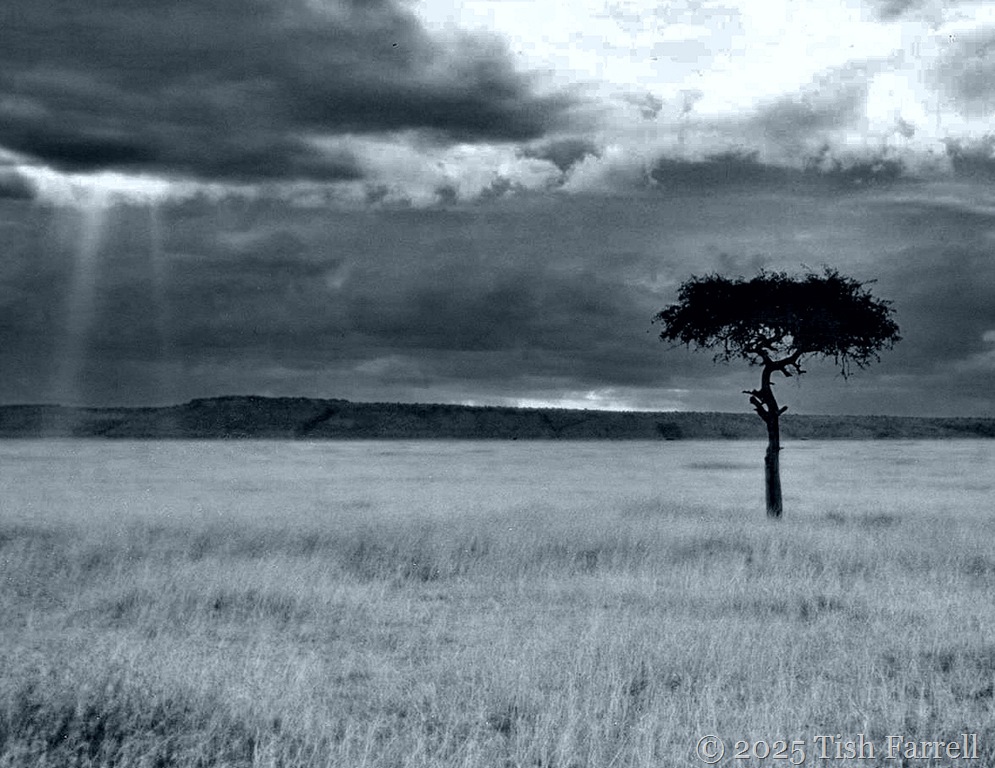
Waiting For Rain…In Kenya Past And Shropshire Present

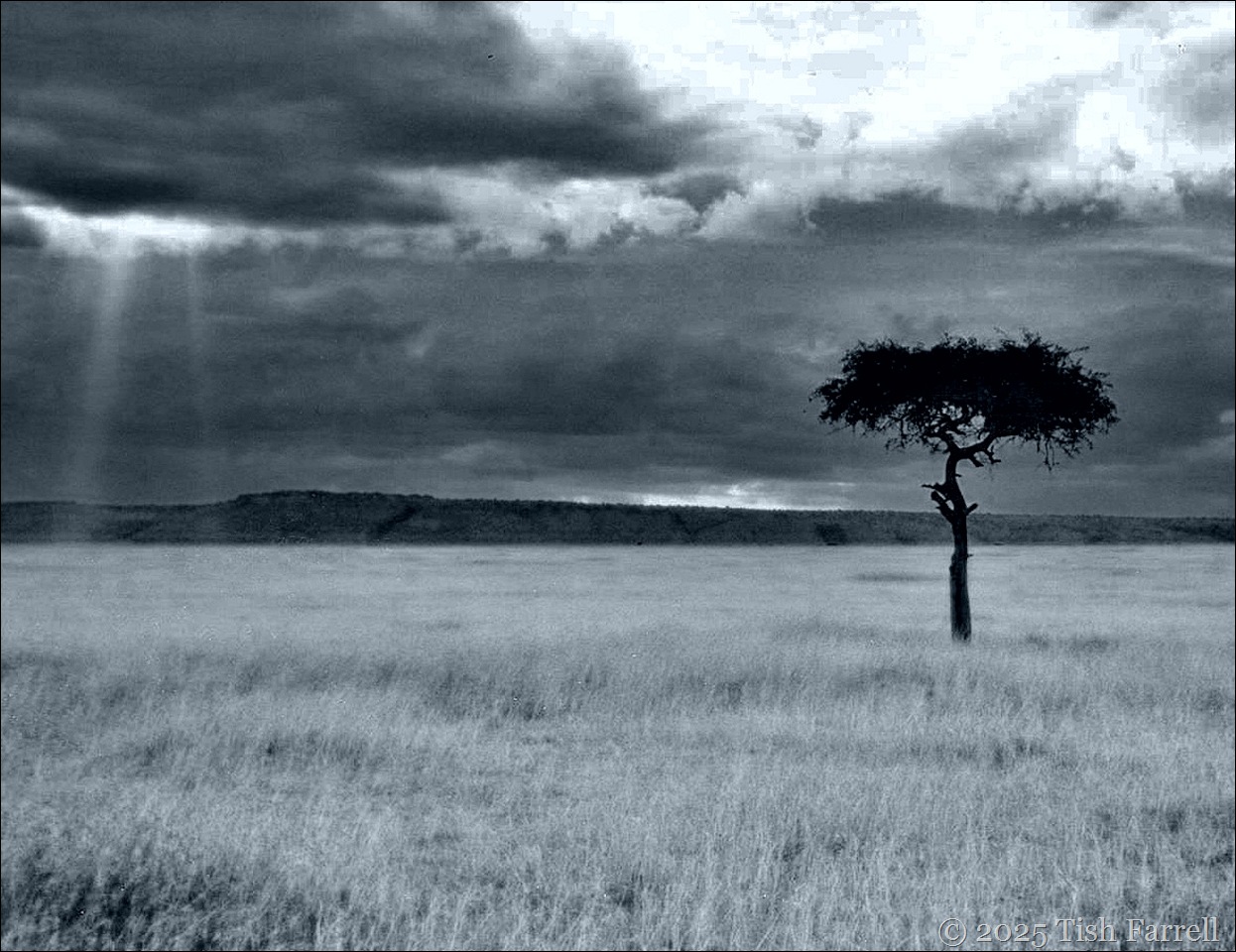
desert date mulului tree

Maasai Mara with desert date tree

*

We’ve been living back in the UK since 2000, our years in Africa increasingly faraway. And yet…

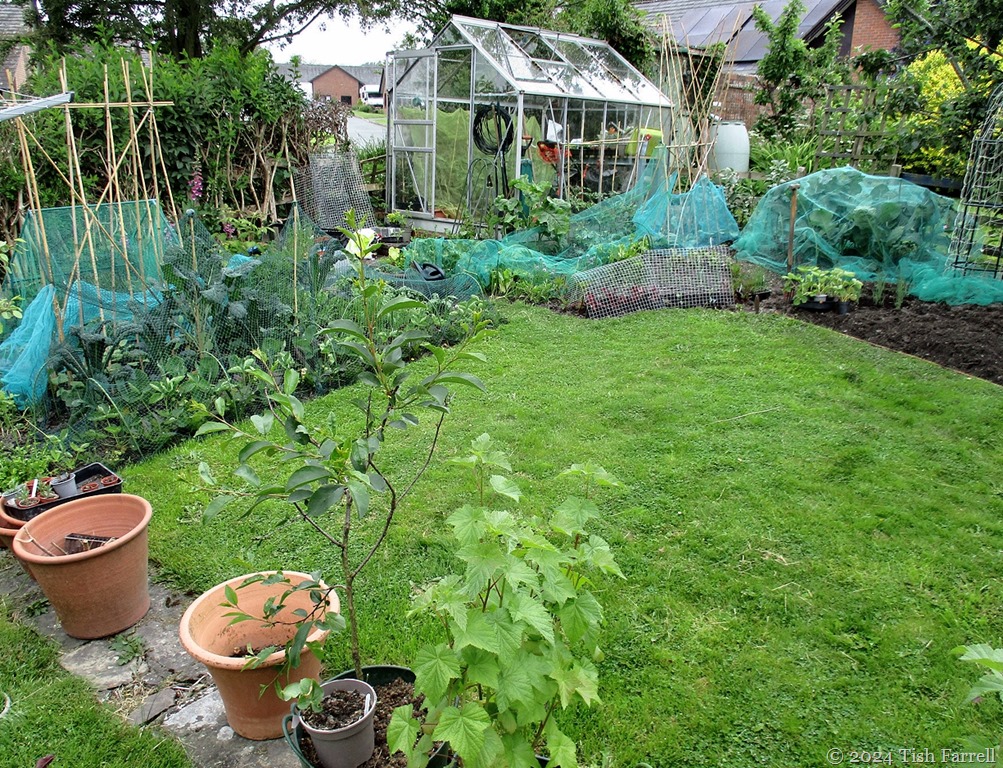
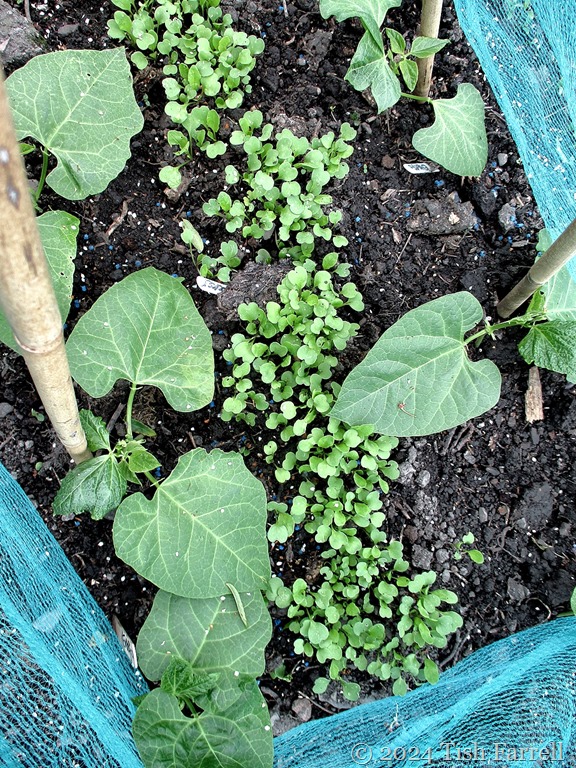
And yet this spring and summer in Shropshire we’ve been very short on rain. The temperatures, too, have recently risen after a cold and windy spring. My gardening self grows anxious. Several times a day I do the rounds of my vegetable plots, checking on the kales, chard, beans and potatoes, the onions and leeks, examining the greenhouse tomatoes and cucumbers for signs of stress. My hands are always dirty, soil crushed under nails, as I prod the soil, testing for moisture levels around the plants.

It makes me think of Kenya days, pastoralists like the Maasai depending on rain to replenish the grasslands for grazing, cattle their life-blood in every sense;  village farmers waiting for the November-December small rains for sowing; for the long rains March to May to bring the crops to harvest: lives and livelihoods dependent on monsoon weather systems that are nothing if not capricious.

Nor is this new. Oral history accounts, some going back two or more centuries, make reference to periods of drought and famine. One type of oral record is the memorized male circumcision list that survives in some communities. The rite  was carried out every ten years or so, and the given year commemorated by some notable event. Food shortages were often inferred.

For instance the list for Maragoli in Western Kenya has 1760 as the time of Kgwambiti. Our Maragoli house steward, Sam, interpreted this as people behaving selfishly like animals, suggesting a food shortage. Likewise Vuzililili  for the year 1800, a time when small insects fed on large insects. Then in 1900 Olololo-Lubwoni – refers to a time when jigger fleas (olololo) infested people’s feet, implying that that households were dusty and not swept properly. Lumbwoni is a very thin sweet potato, also suggesting drought and lean times.
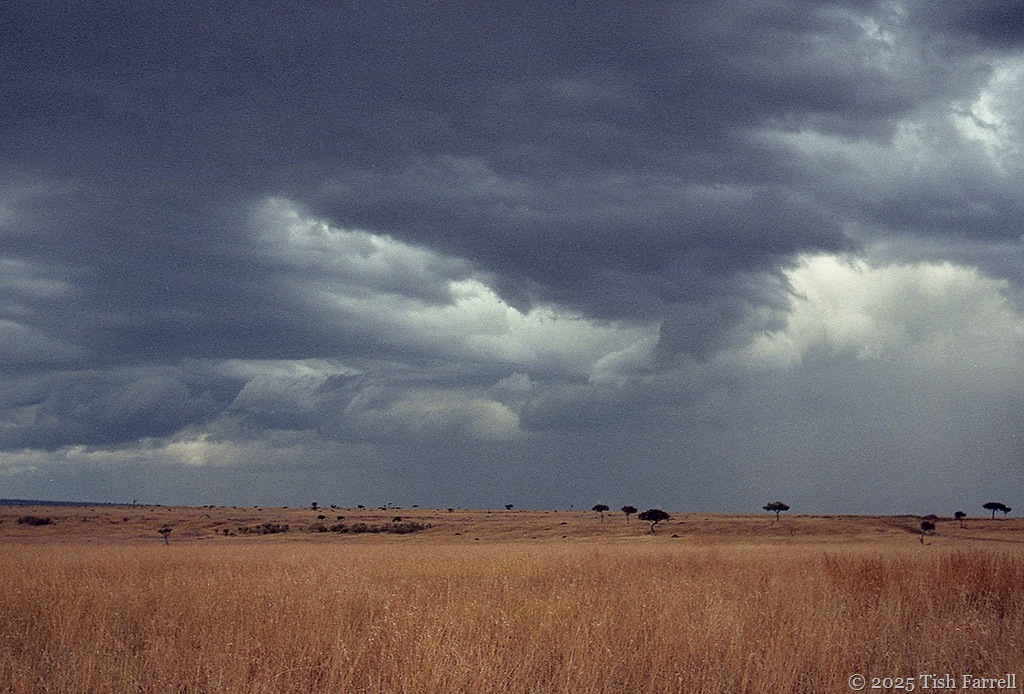
img120 ed

Another remarkable source of rains failure evidence is the revised historical events calendar used in the enumerators’ guide to the 1969 Kenya census. At this time many rural householders would have been born in the 19th century, or else reckoned family chronology according to particular past occurrences. For semi-arid Ukambani, a drought-prone region in southern Kenya, it was generally agreed that there had been six significant periods of famine in the 19th century: Ngovo (1868); Ngeetele (1870); Kiasa (1878); Ndata (1880); Nzana (1883) and Ngomanisye or Muvunga (1898).

In the past, too, it transpired that the Akamba people had established emergency strategies via extended kinship allegiances. This involved moving from the worst stricken areas and, for a time, living with relatives who were not so badly affected, or who had their own water-holes. Rules of reciprocity of course applied; this was not charity.

It was important, too, that in pre-colonial times the Akamba had a sphere of far-flung connections through their hunting and trading activities, one that extended into what is now Tanzania. This increased the scope for finding sanctuary from drought-stricken regions, but of course was curtailed when the colonial administration consigned each ethnic group to a designated reserve, basically drawing a line around the territory that each community apparently occupied at the time when the British arrived; self-determination being duly cancelled by a line on a map.

But perhaps the most compelling evidence for the enduringly random state of weather across East Africa is the deeply embedded cultural phenomenon of the rainmaker. Every community had them; perhaps still does. They were often rich and powerful individuals. And contrary to what may be imagined, the forecast of rain was mostly based on informed careful observation of natural phenomena, including the movement of clouds, wind directions, dew formation, the behaviour of particular hygroscopic plants and trees that respond to rises in ground water, the arrival of particular species of birds and insects. Such observations informed planting decisions, the particular crops chosen, the times and places they were sown.

It’s tempting to think our Met Office could learn and thing or two.

And so I ponder again on our lack of rain. Our lives do not depend on the success of our garden produce. The Co-op’s daily deliveries of fresh food are two minutes’ walk from the house. I anyway have an outside tap and a clutch of watering cans. The water is always there. (Or at least it is for now). A luxury however you look at it. But even so, the daily sight of parched soil does seem to trigger some bred-in-the-bone alarm system, all those generations of farmers and gardeners in my family tree worrying…

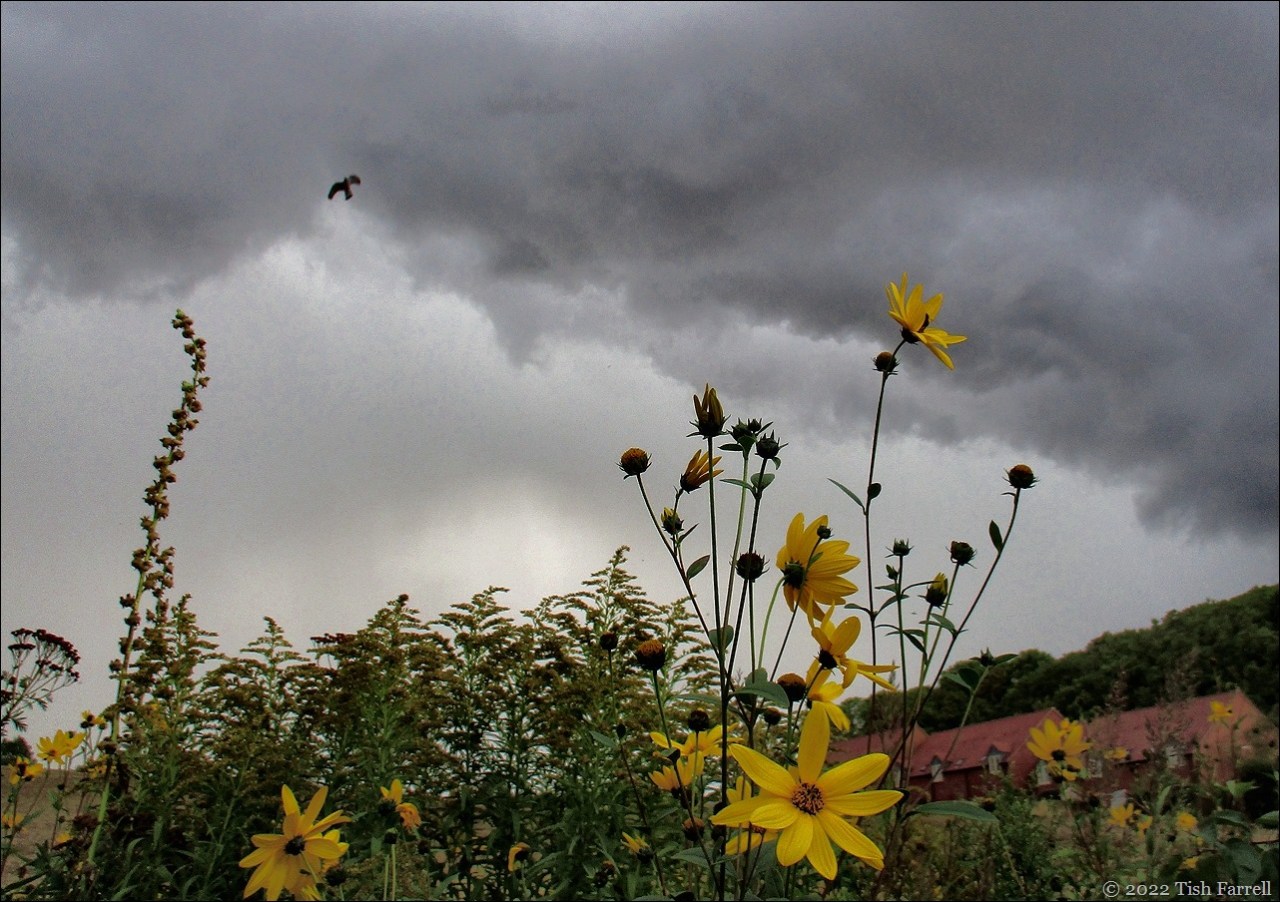
And so the sky-watching continues, the hopeful eyeing up of every darkening cloud.

And probably also, in the not too distant future when the rain comes, there will be the ungrateful complaint that it doesn’t seem to know when to stop.

*

copyright 2025 Tish Farrell

Lens-Artists: Stormy This week Beth wants to see scenes of storminess.
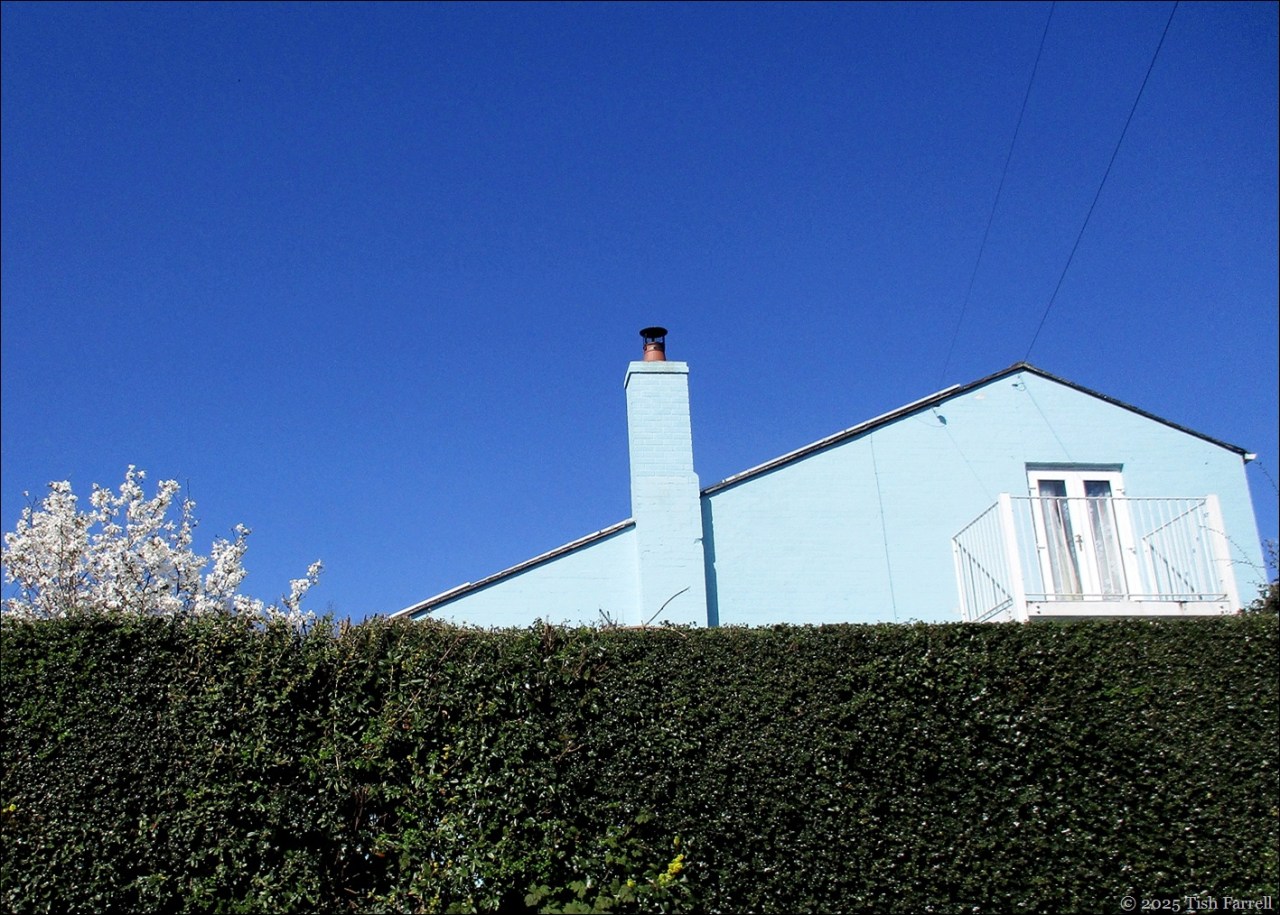
We’ve Been Having Blue Sky Days…

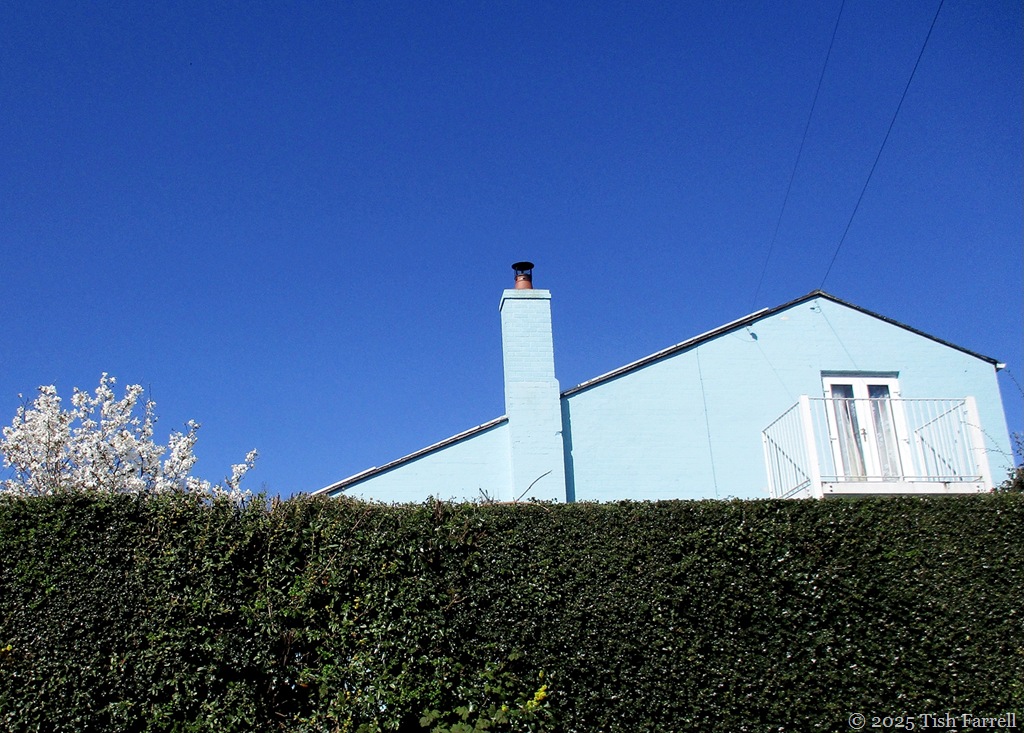
IMG_7302 blue

*

They arrived with the spring equinox on March 20th…

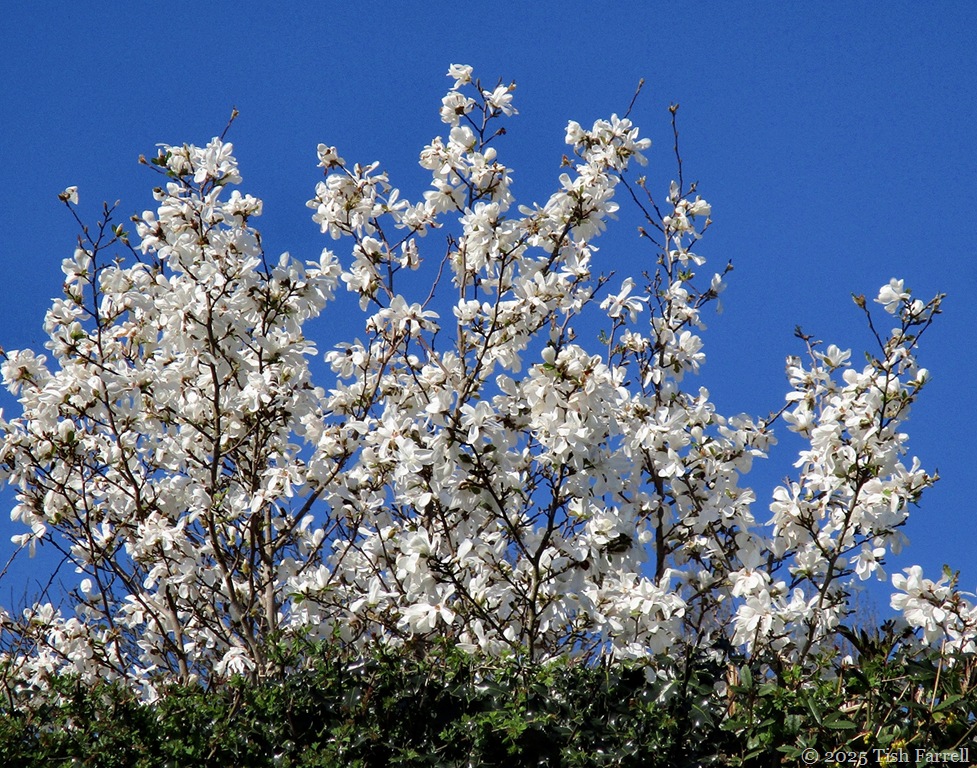
IMG_7303 blue

*

… days hot in the sun, but ice-cold in shade, as if the air came straight off a snow field…

IMG_7307 blue

*

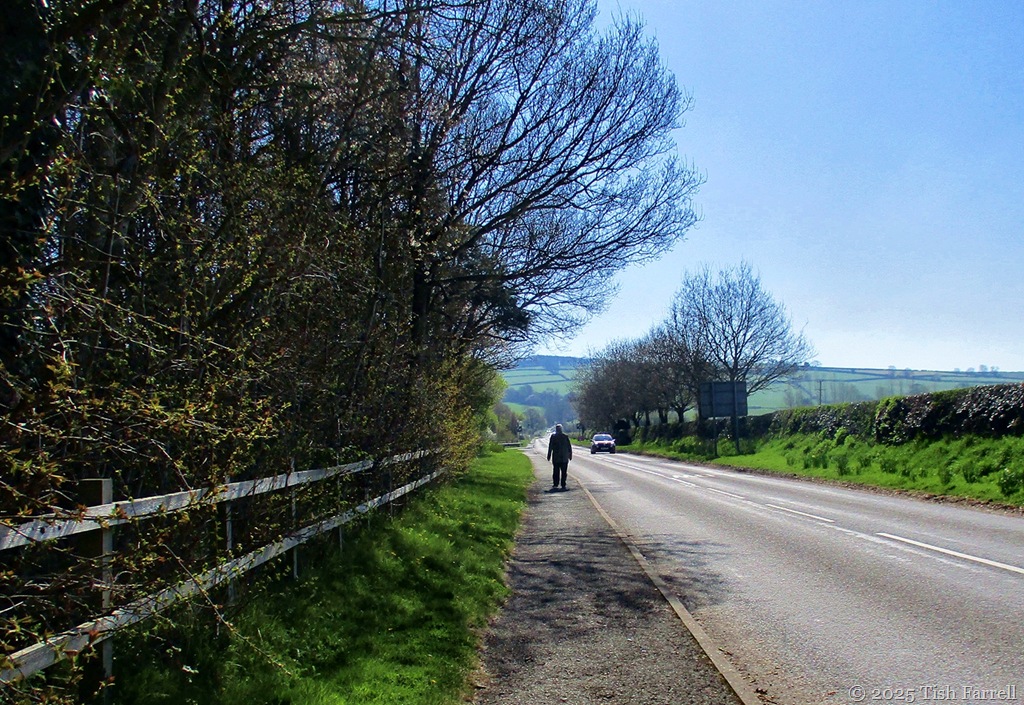
…yet so enlivening, it had us one day walking (instead of driving) to the builders’ merchants on the edge of town…

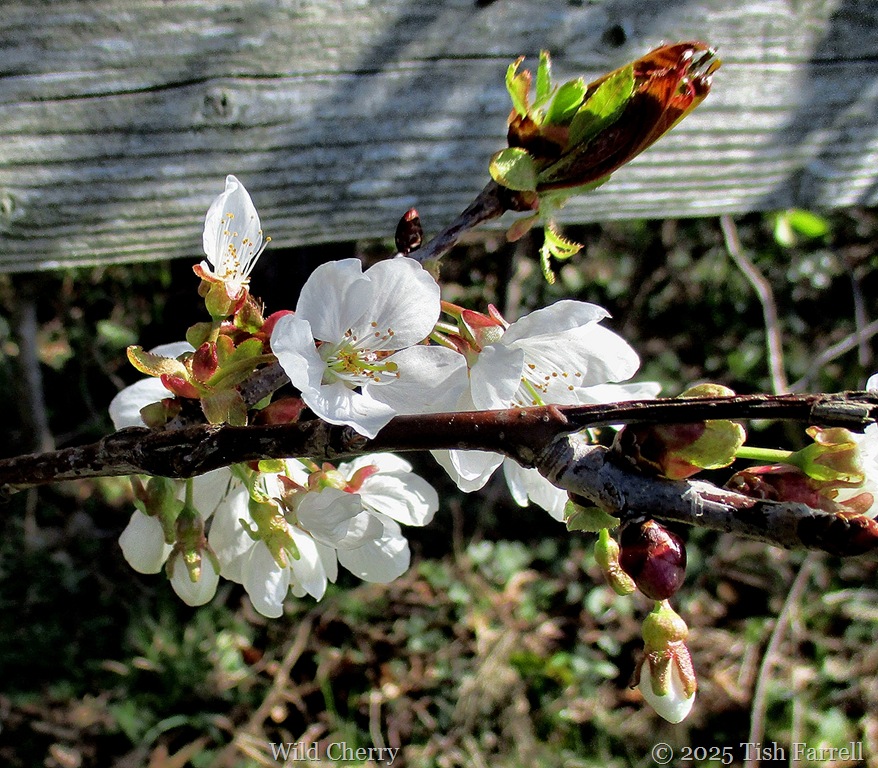
…spotting, as we went, wild cherry blossom, the bright white blackthorn that is everywhere in drifts on farm hedgerows, and then the distant green of wheat fields and fresh grassland.

IMG_7311 blue

*

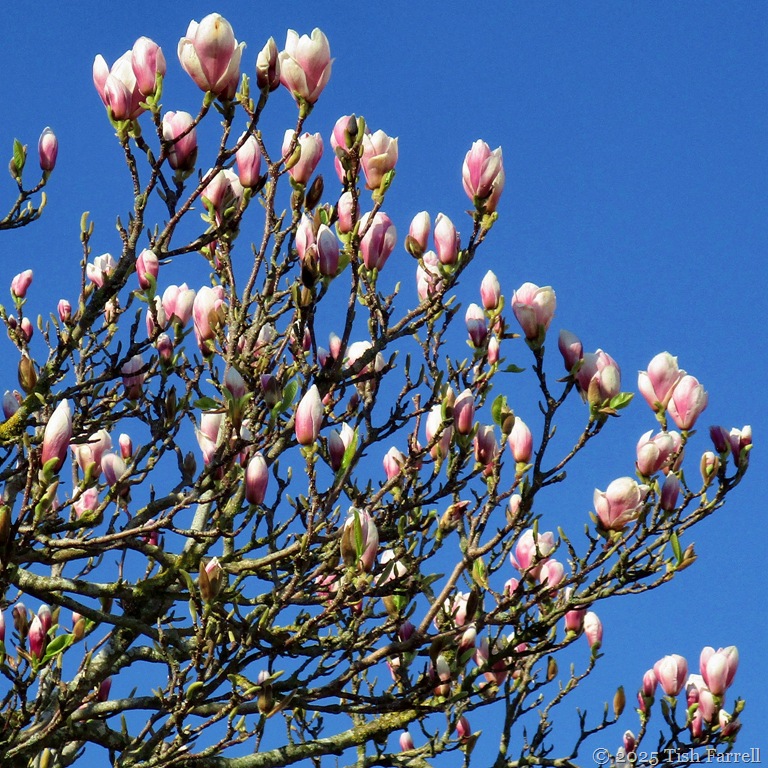
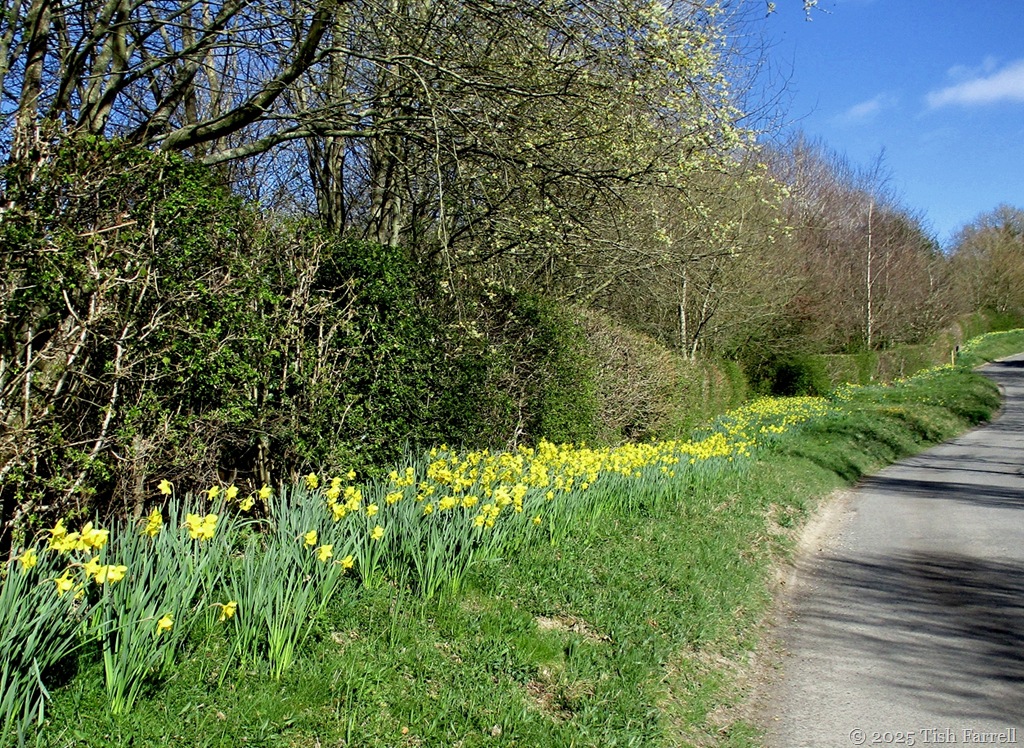
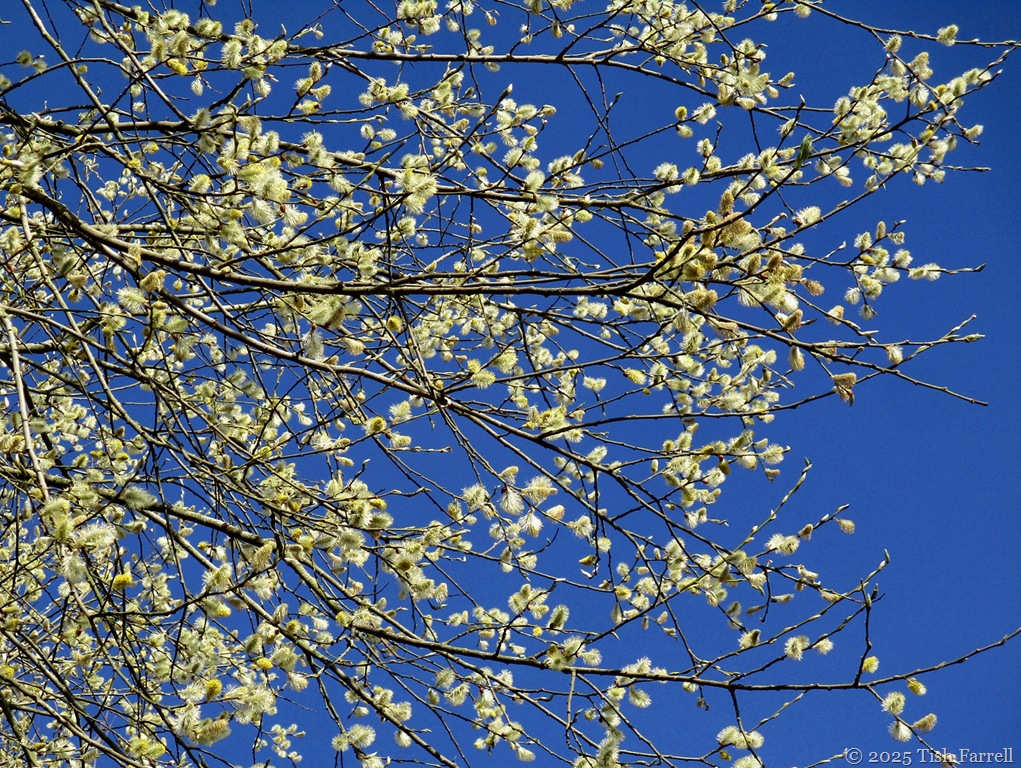
Meanwhile, the town lanes and gardens have been aglow with magnolias, daffodils, pussy willow, forsythia, camellias, fire-red japonica…

IMG_7300 blue

IMG_7284

IMG_7287 blue

IMG_7326 blue

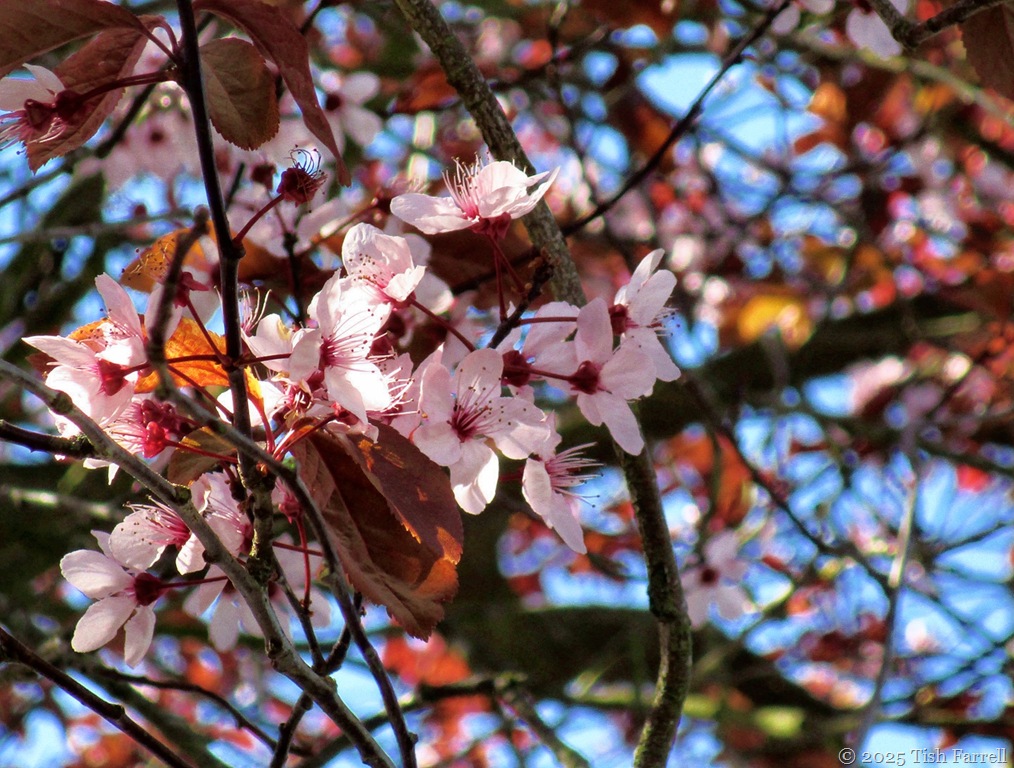
…and the cherry plum by the house has day by day been turning from pink to bronze, as blossom flutters off and gives way to leaves.

*

And so the Shropshire countryside has been drowsing in a haze of vernal glamour: an earth dream of a perfect spring come to life.

The blue sky days turned into weeks, three to be exact. Long enough for us to grow used to blissful weather, to think it ours forever.

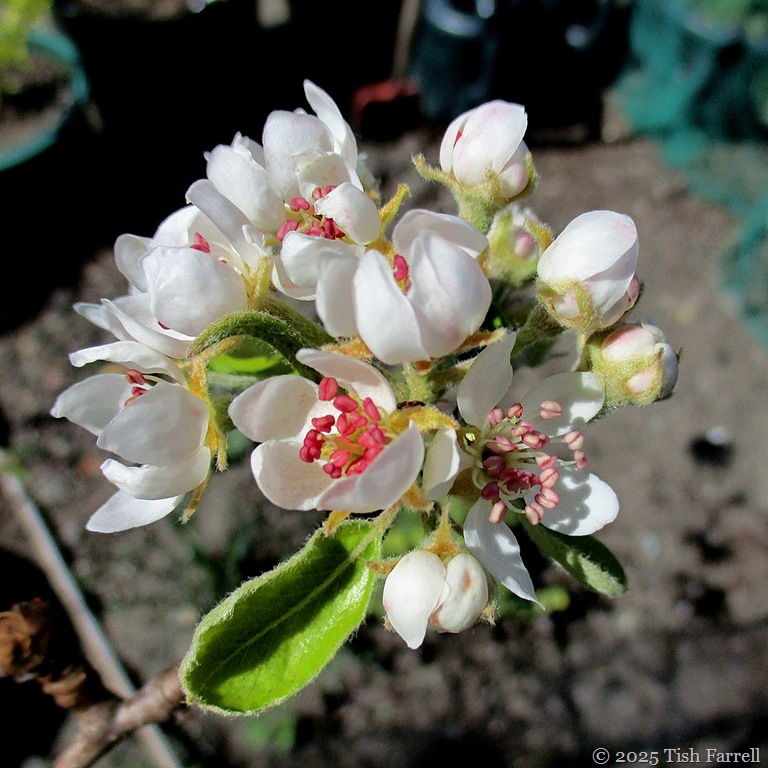
In the garden, our faces turned often to the sun, we noted the little pear tree begin to flower…

IMG_7317 blue

*

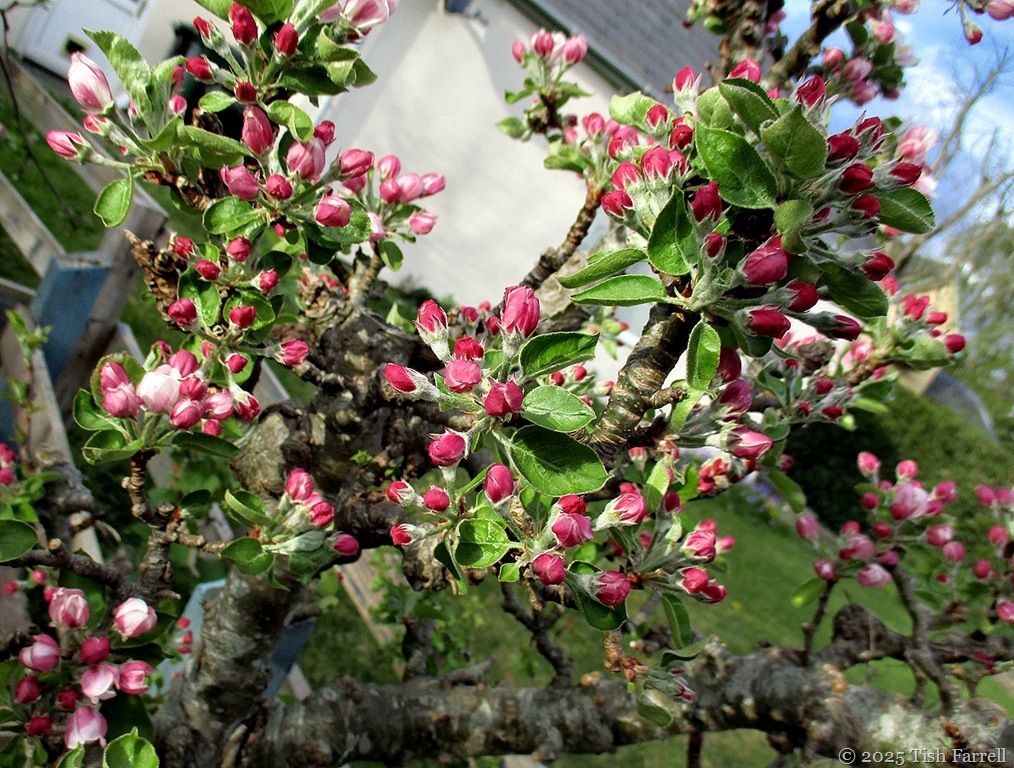
…and the old apple tree by the compost bin burst with buds…

IMG_7361

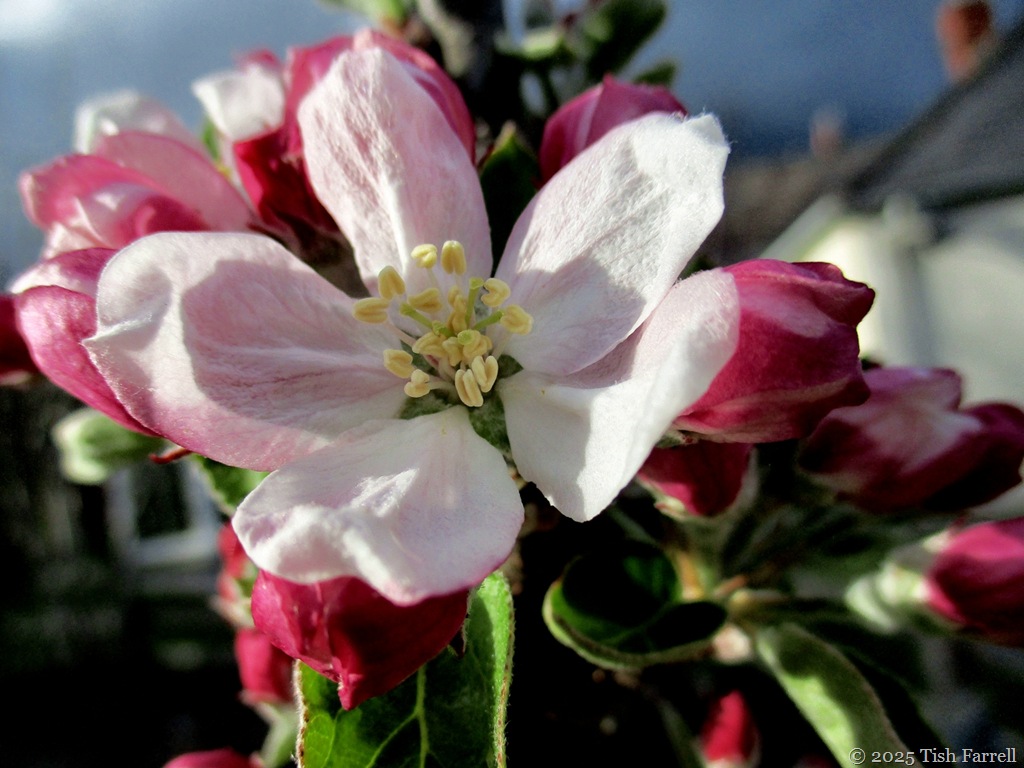
…that then begin to open…

IMG_7366

*

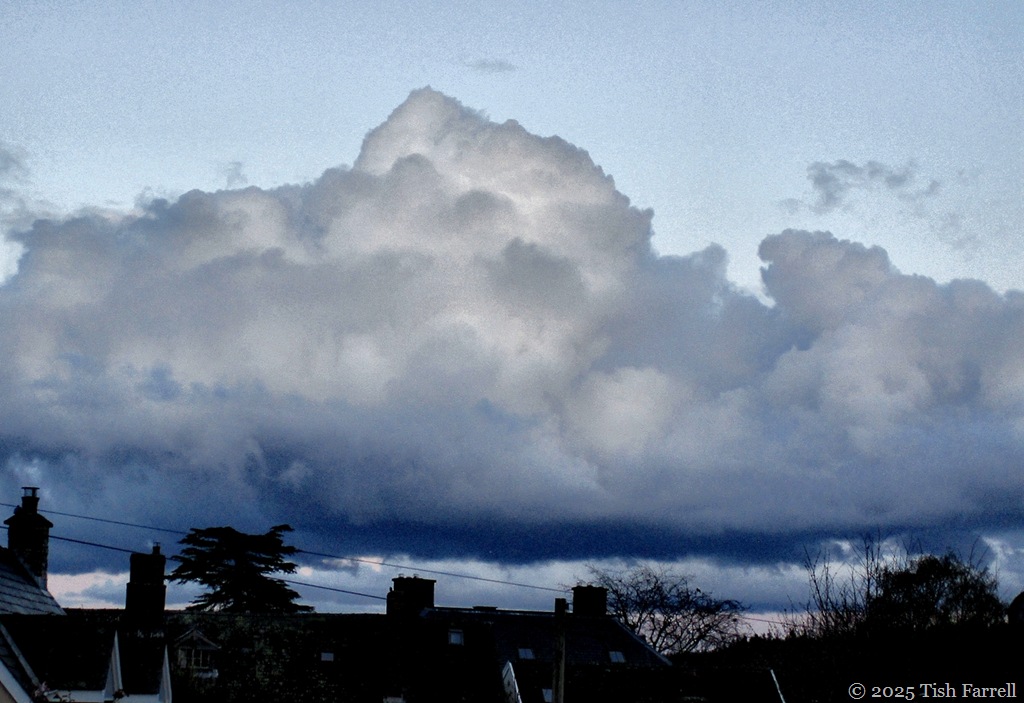
…just in time for Sunday’s full moon and a complete change in the weather…

IMG_7372

*

Today there is grey sky, racing rain clouds and a piercing wind that gusts down the chimneys. It feels like winter when we walk to the shops, clad in sweaters, quilted coats and woolly hats. We’re cast adrift in seasonal confusion. Bereft. Abandoned by spring. How could she do this when we so loved the sun, the light, the crisp air?

Ah, well.  The weather people say the wind should lessen tomorrow, all but doubling temperatures from 6 to a soaring 11 degrees C. There might also be a view of the sun on Easter Sunday morning, but little to see in the following week. Instead, there will be rain, of which this gardener and the nation’s farmers are much in need. So it goes. All chop and change. Perhaps blue sky spring will be back in May.

copyright 2025 Tish Farrell

Lens-Artists: abandoned  This week Anne sets us the topic ‘abandoned’. Please see her post for more serious cases of abandonment.

Weather’s Untamed Ways…

IMG_6969 ed

…from heavenly ethereal to eerily supernatural:

IMG_7161ed

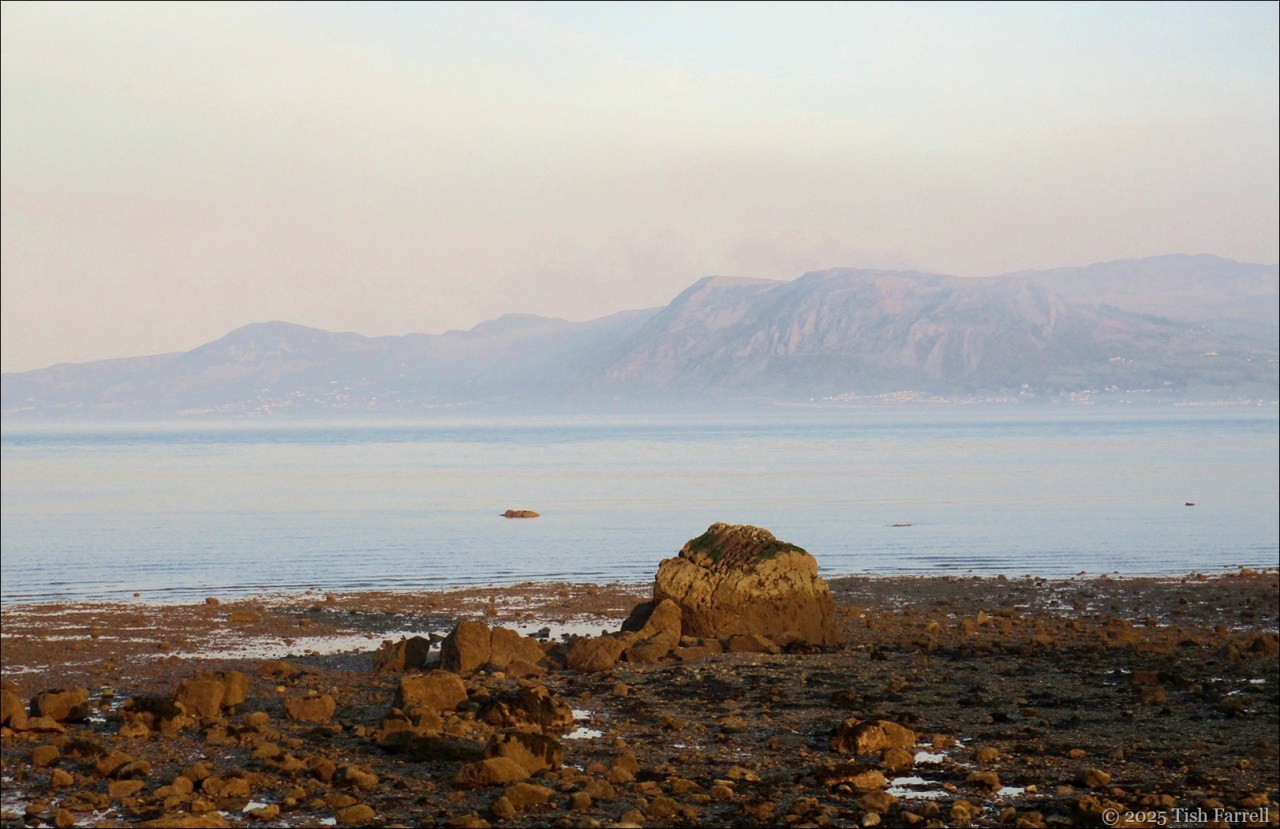
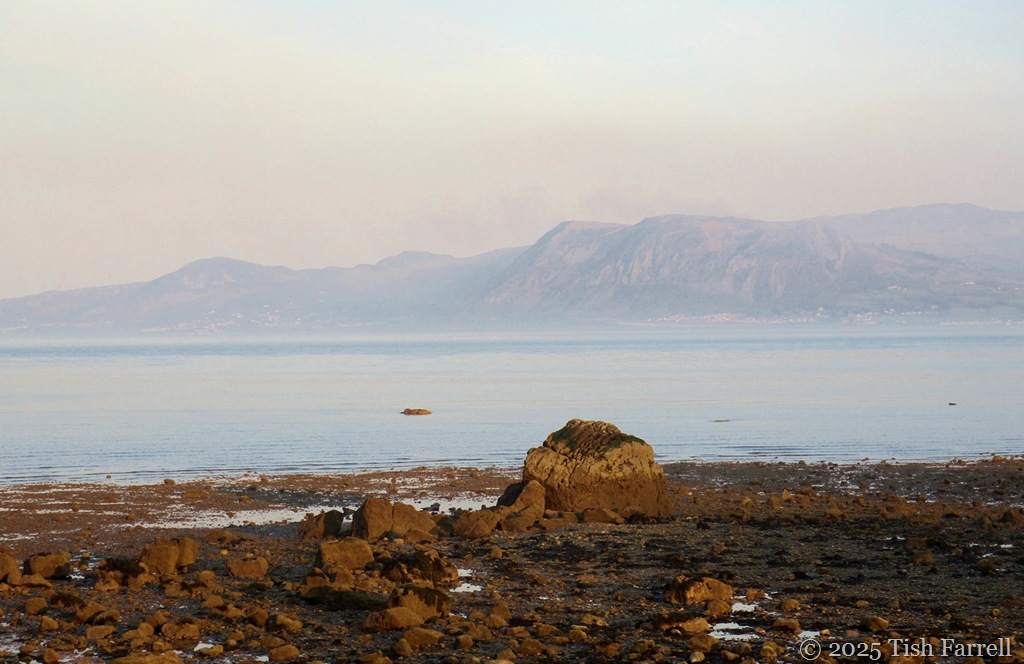
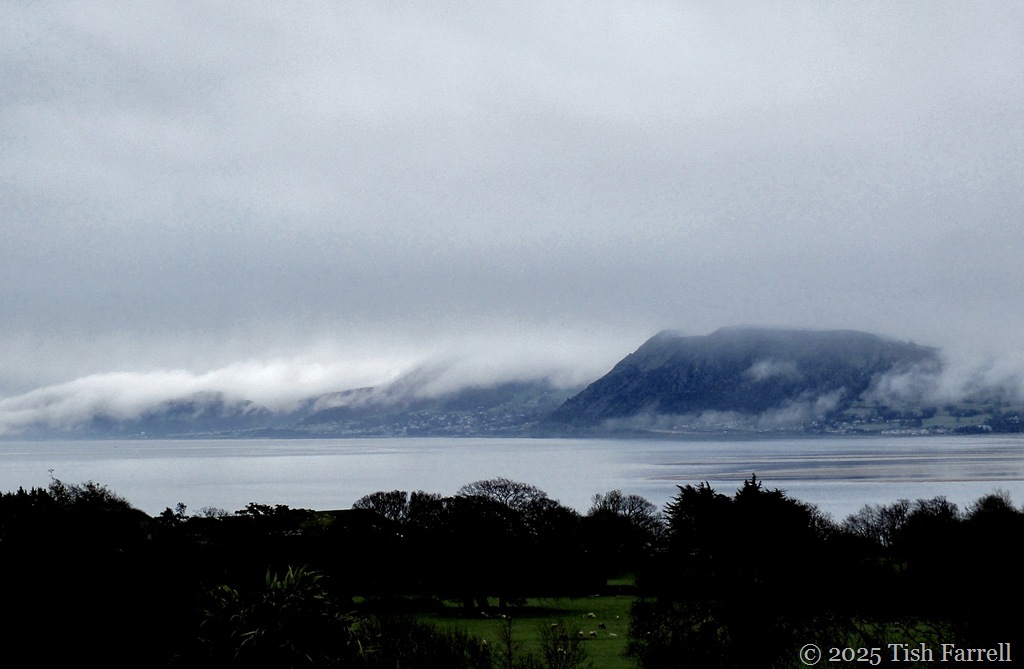
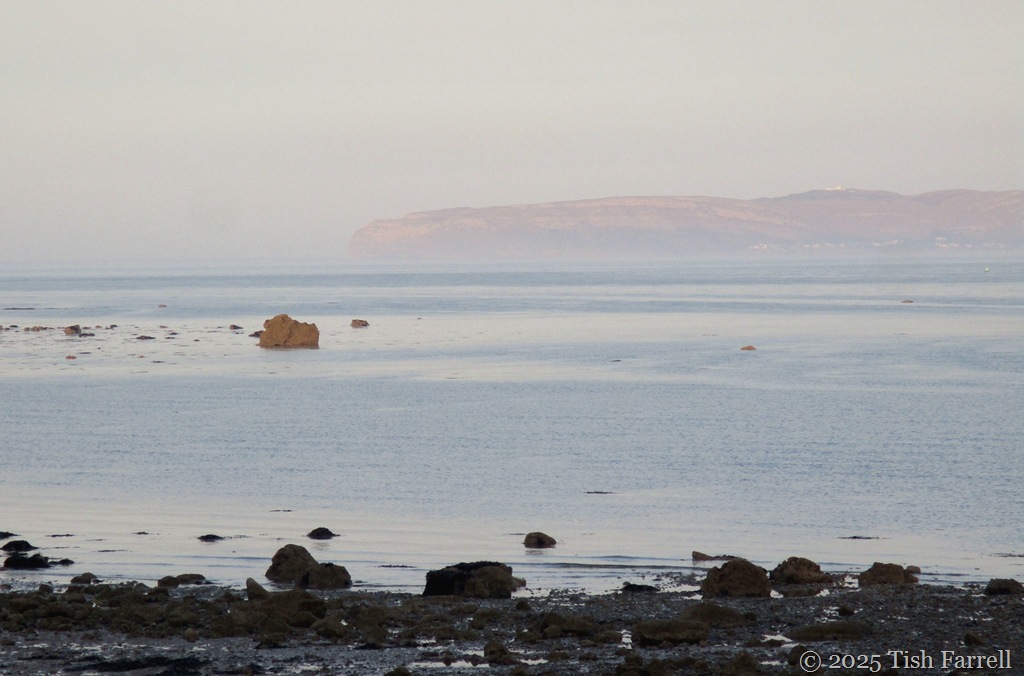
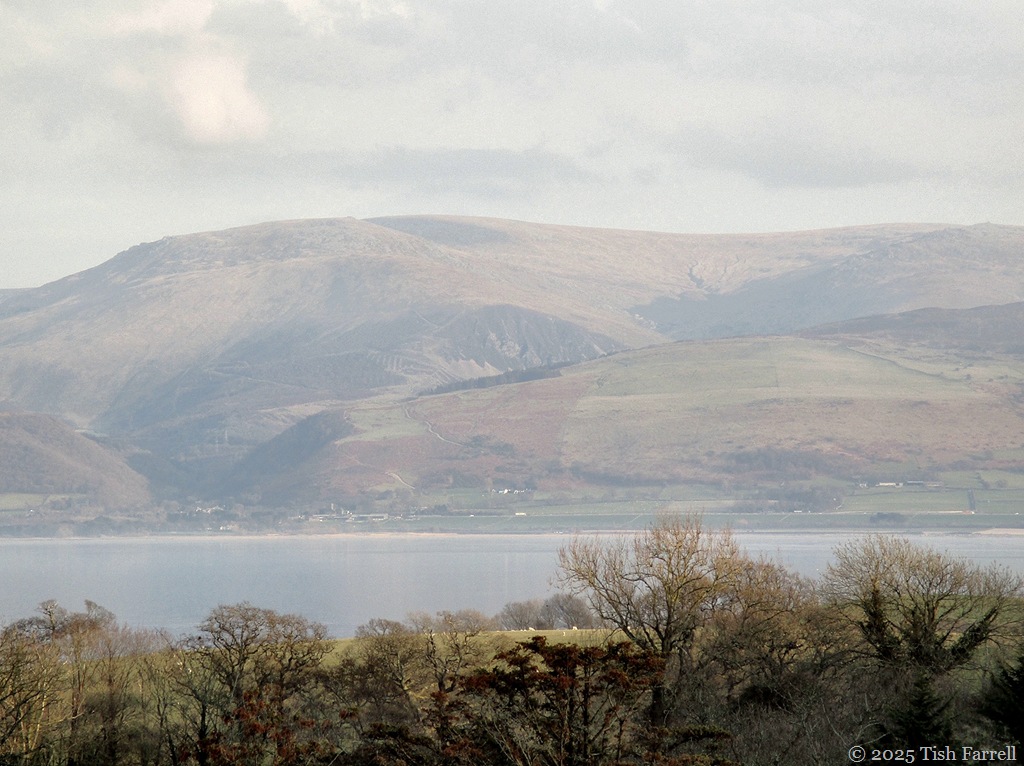
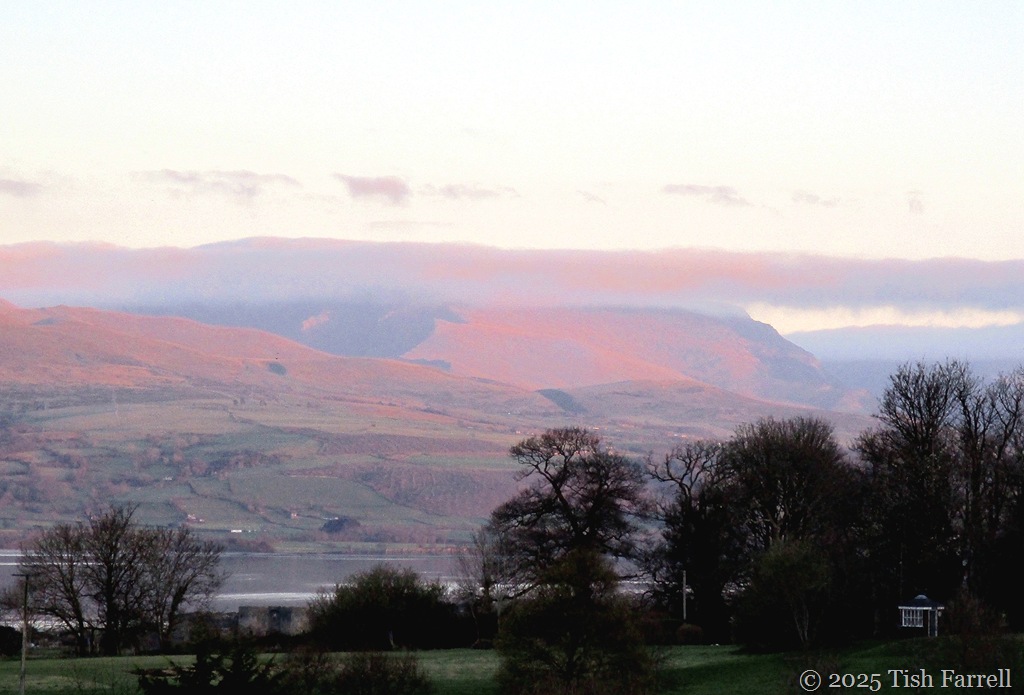
Herewith some recent views across the Menai Strait – from the island of Anglesey above Beaumaris to the Welsh mainland.

We’ve just returned from a week’s stay on Ynys Mon. It was our first March visit to the island, our usual time-slot being late December, and our arrival coincided with both the spring equinox and a spring tide. In fact we had never seen the low tides so low. When the sea went out, sand banks never glimpsed before, became exposed.

You can just make them out in the first photo.  This reminded me of the tales of the Roman invasion of Anglesey around 60 CE and how Governor Suetonius Paulinus equipped his army with flat bottomed boats to deal with the uncertain depths across the strait. But it is possible, too, that there are/were low-tide paths, known only to locals. Perhaps Suetonius Paulinus found himself an informer. The conquest anyway was bloody: the object to smash the power of the Celtic tribes’ druid priests who made their last stand on the island.

There’s more about this at an earlier post: Island of Old Ghosts.

For the mystically or meditatively inclined, you can see how weather watching can enthral; you never know what may happen next; all the elemental forces conspiring: the ever changing light, coastal winds, cycles of convection and condensation, the lunar-solar ebb and flow of tidal waters.

So much weather in a week on this tiny corner of the planet. We had hot sun, biting winds, cloudless blue skies, deep gloom, rain (though not so much for Wales), drizzle, mist, stormy and glass glittering seas.

IMG_7159ed

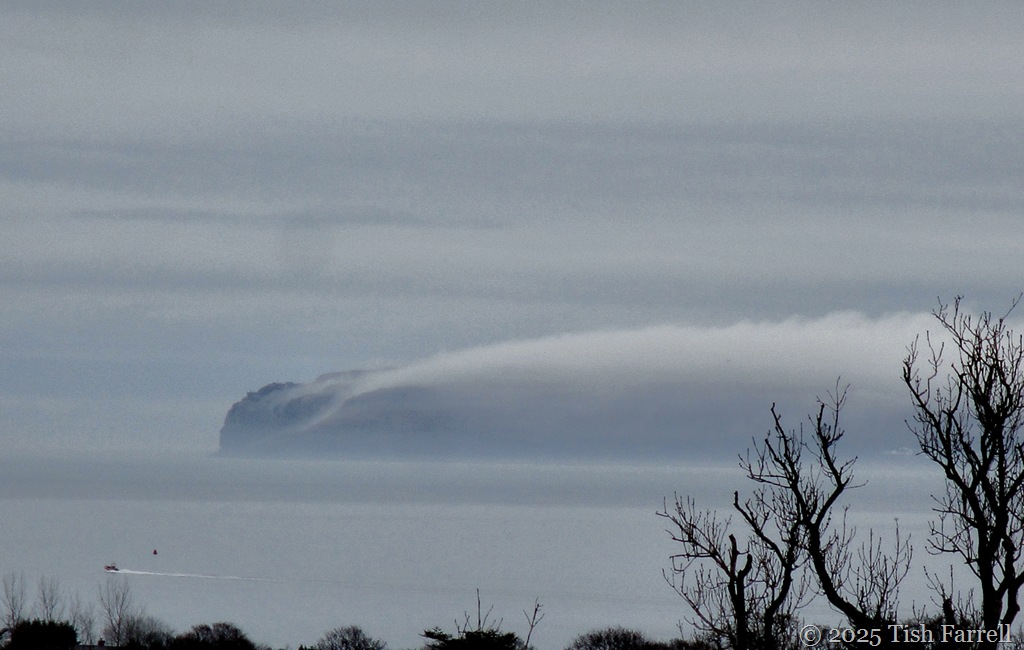
Late one afternoon we watched, with some sense of awe, as this white cloud moved low along the mainland shore, spilling out like dry ice till it reached the Great Orme headland.

And then one evening…

IMG_6971ed2

*

At other times the mainland looked gauzy. It could be a mirage. Or there again it reminded me of the magic painting books we had as children – the wash of colours emerging from the empty page.

IMG_6967ed

IMG_7184ed

Copyright 2025 Tish Farrell


Lens-Artists: Wild  This week Egidio at Through Brazilian Eyes wants to know what wild means to us. Go see what wild means to him.

Of Acrow Props And Potatoes: June Update

IMG_5385ed

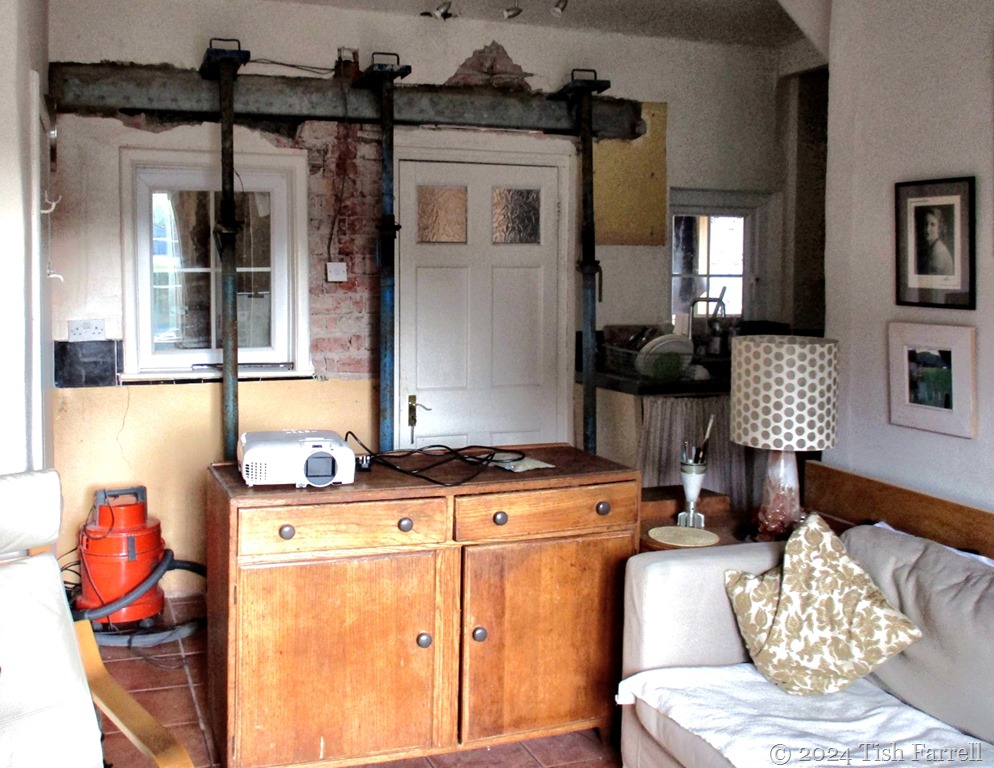
I hadn’t actually asked the question, as in how many stages are involved when it comes to demolishing a section of load-bearing house wall. I suppose I had wondered how the two steel beams (inside and out) would be inserted in the sitting-room-kitchen wall. And logically I would have assessed that this must be done before the actual wall, window and door were knocked out.

I also knew that this would not happen until the new kitchen extension was nearing completion (several weeks away). In other words I had not prepared myself for a double dust-storm event, mostly because the chaps, as in other half and builder Alan, had given me only scant (evening before) warning of the beam insertion process.

But the dust!

It was all I could say when I learned what was planned. Alan raised his eyebrows – part apology, part goes-with-the-territory. Plastic sheeting was duly taped, floor to ceiling, across the back of the sitting-room and across  the ‘L’ of the kitchen. More sheets were thrown over all the furniture, doors that could be shut were shut, and then the hammering began – first the plaster, then the wall whose bricks, as bricks go, are strangely adamantine. It’s likely they were made just down the road, in the days when Bishops Castle had a  brickworks.

And so here we are, a week on, still dusting; an activity that will doubtless segue into demolition phase II sometime in August.

But at least the acrow props have gone now and the furniture is back where it was, also a critical factor in a small house where we presently have more stuff than rooms to put it.

IMG_5378ed

*

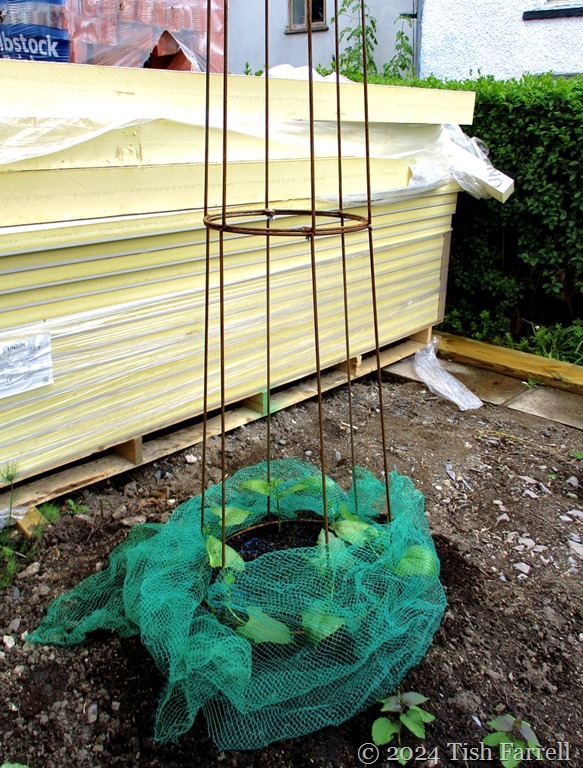
We’ve also been receiving deliveries  – the front garden now looking like a builders’ yard.

IMG_5395ed1

*

One half has been commandeered for supplies, it being the most accessible space for unloading. But I’ve hung onto a small corner and put in some Gigantes butter beans and two yellow courgette plants, tucked in between the insulation boards and the front door. Well, can’t miss the planting season, can I. And that border is particularly sunny. I popped in some Korean mint (Agastache) too.

IMG_5403ed

IMG_5405ed

*

As to the bed on the other side of the front path, I staked a claim back in April, so the roofers wouldn’t bury it in waste tiles. I’ve put in three small rows of potatoes – Rocket and Charlotte, which have sprouted well. There’s also the beginning of a herbaceous border under the sitting-room window: a lone delphinium accompanying some young alcalthaea plants (a cross between mallow and hollyhock), knautia and verbascum, blue geraniums and achillea, a purple toadflax with has turned out to be pale pink.

IMG_5401ed

*

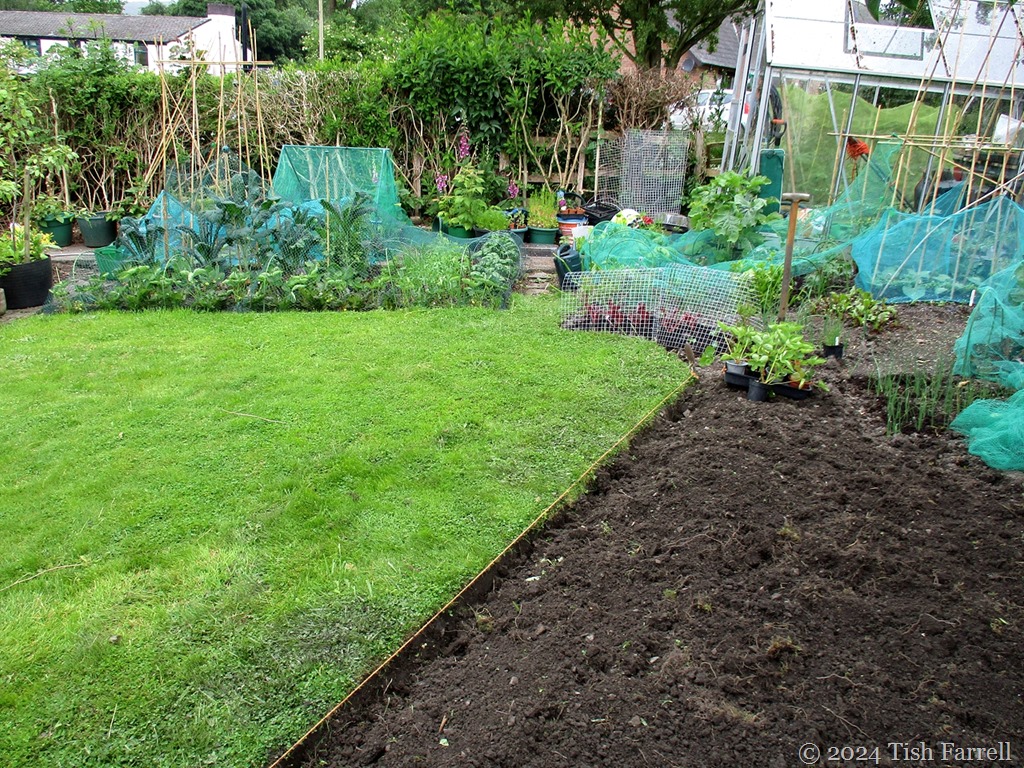
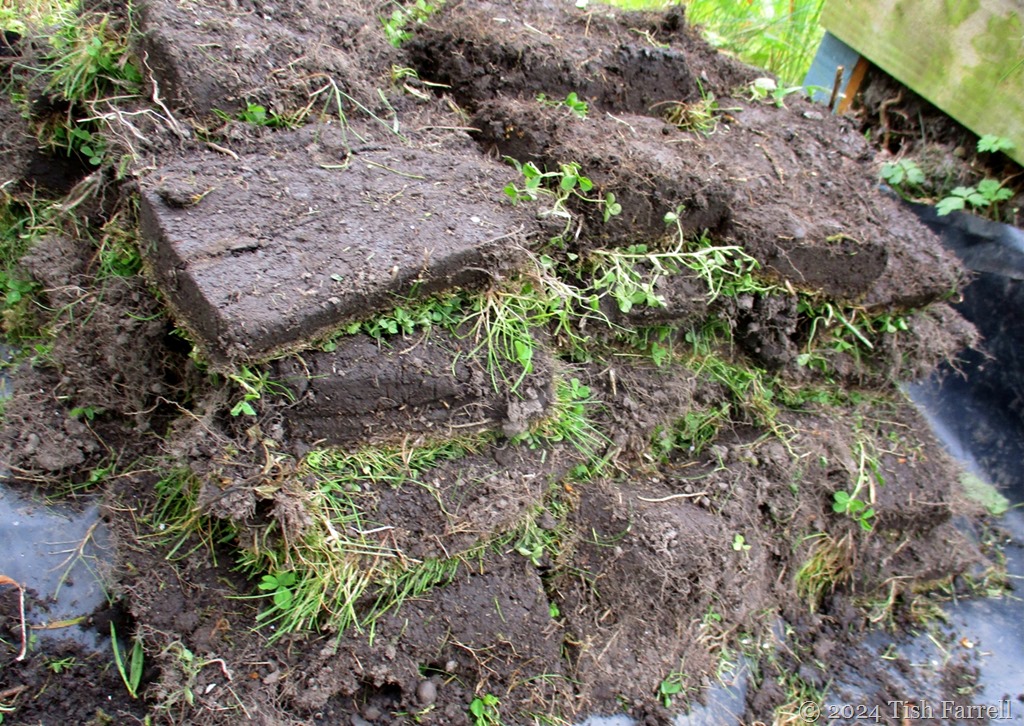
Meanwhile out in the back garden, the lawn has been continuing to disappear. Most of the turves are in the compost bin which is now full. I’m now stacking the rest, leaving them to rot down.

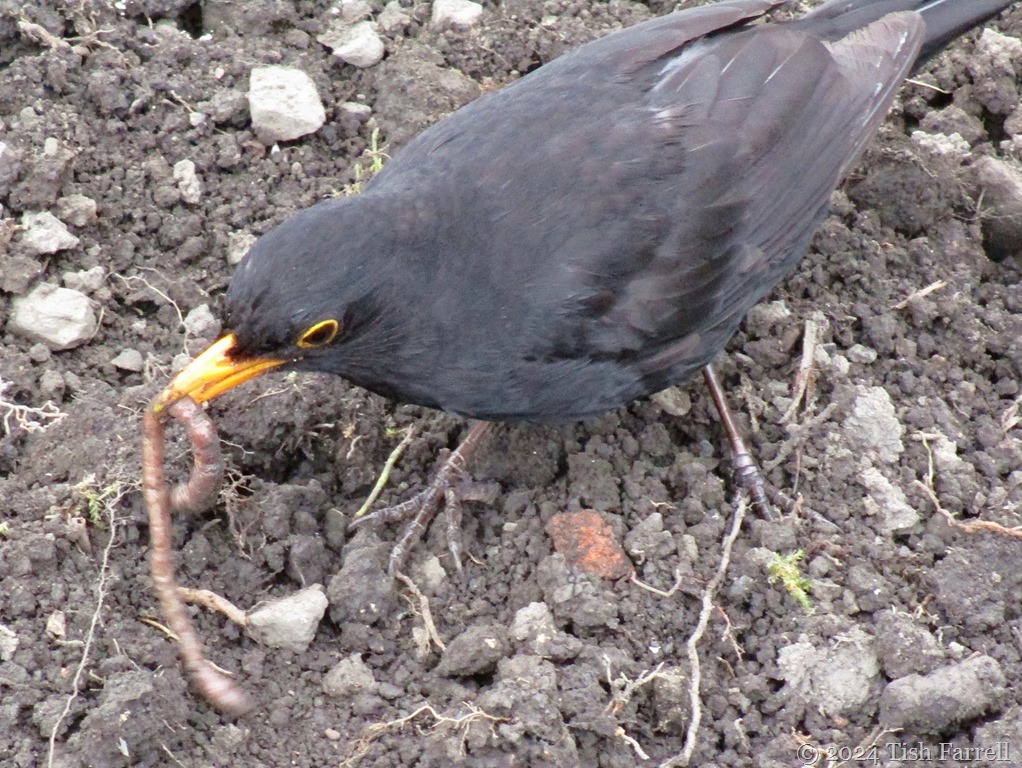
The more I dig, the bolder the blackbirds become, nipping in around my feet. I watched one carefully gather a stash of worms on the lawn whence they could not easily escape. When the bird had a good beak full, off it went, doubtless to feed a fresh brood of nestlings.

IMG_5408ed

IMG_5419ed

IMG_5427
*
Much like the house, the garden is chaotic. Somewhere there’s a plan. For now, I’m simply pleased to have all kinds of kale, spinach and lettuce busily thriving. We’ve even had a handful of early purple sprouting. There are field beans forming at the top of the garden where the Romanesco caulis are growing ever more gigantic leaves, though no sign of flowers. There are tomato plants inside and outside the greenhouse. Strawberries are plumping up alongside cabbages, spring onions and Moroccan Cress, and the Emergo runner beans are looking pleasingly robust, though not yet climbing their sticks. In the interim, I have some rocket (arugula) growing mid-row. It needs thinning out.
IMG_5409ed
IMG_5412ed
IMG_5416
IMG_5410ed
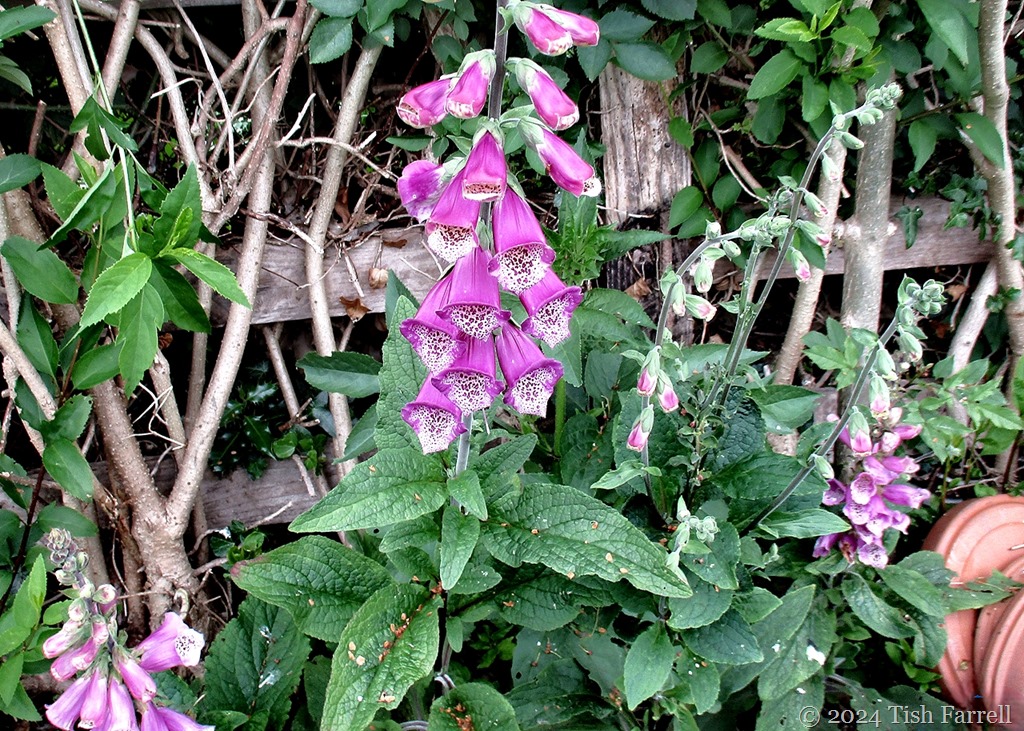
The horrid hedge still needs much work. I now see it’s full of sycamore and ash trees, some quite substantial, while the actual original hedge of holly, hawthorn, weigela and privet has been much mutilated by years of being squashed behind chicken wire and under great boughs of ivy. But that’s a job for autumn. I anyway think we’ll need a man with a chainsaw to cut it down to size so the lower quarters can regenerate. I’ve planted foxgloves to brighten up the bare patches.
*
So here we are in June with thoughts of summer, thoughts being the operative word. For although the gardens around the town say it is summer, the weather says otherwise. All this week builder Alan has been complaining of the cold, resorting to his winter windproof jacket. We’ve been going around  wrapped up in sweaters, lighting the wood burner each evening. And for sure we’ve had some sunshine, but the wind has an icy edge, and it’s hard to escape it. Still, the spuds are looking good, and apart from the dust, there is much to be happy about.
IMG_5401 header

Apple Blossom, Wintery Weather And A Puzzling Plant Pest

IMG_4889ed

The wind is roaring round the house as I write this. The good news is the house roof is back on and fully restored. Ace builder Alan finished it off today, up there on the scaffold top, in the teeth of gale and squall, painting the gable tops, realigning a dodgy gutter. He said it was freezing up there. What a hero.

The re-laid slates are looking pretty smart, but the grand reveal will have to wait till the scaffolding comes down at the end of the week. In the meantime, it’s good to know that the weather will now stay outside the house and the fragile gables stop crumbling into the bedrooms.

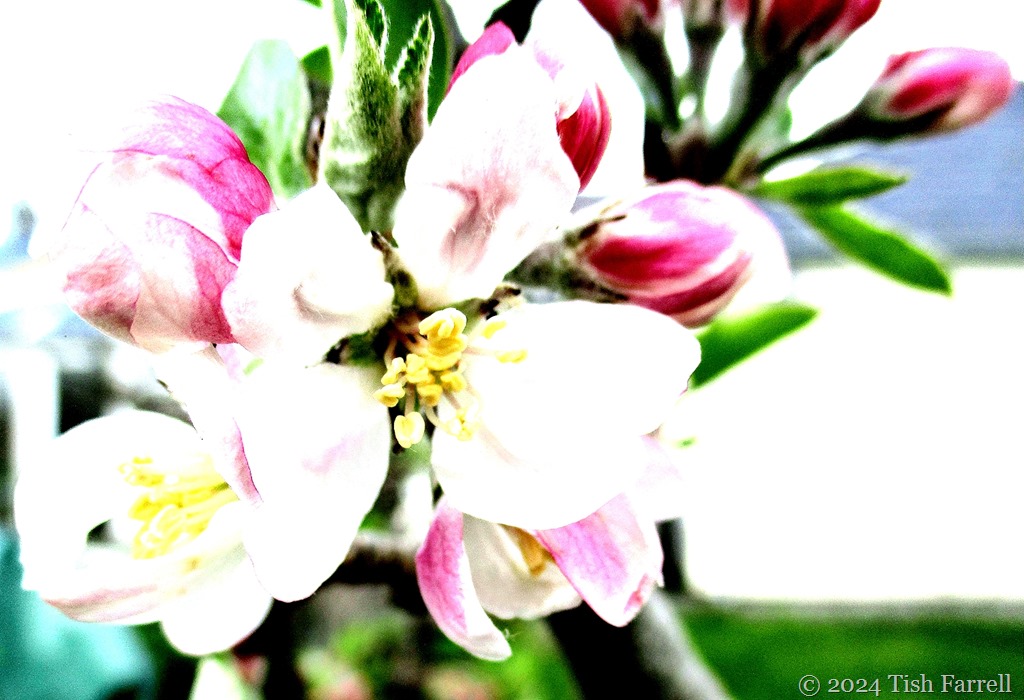
In the garden, spring is happening despite the perishing wind. Our gnarled little apple tree by the compost bin has dared to open three buds, but you can tell they’re shivering. I think it’s a Crispin. We had a few good apples from it last year. The other two apple trees that came with the garden, had to be hard pruned, as in eight feet of  top growth removed, so we’re not expecting much from them for a while.

IMG_4888ed

*

In between rainstorms, and wrapped up in sweaters, padded parka, fleecy pants and woolly hat, I’ve been a) digging up the lawn to create more vegetable growing space; b) attempting to dig out and unpick ground elder, Spanish bluebell and Mexican cigar plant colonies*; and c) continuing to disengage the hedge from chicken wire and the ivy overburden. This last activity is proving slow going. My presence causes the sparrows to dive from the hedge-side feeding post and into the hedge, where they shout loudly until I go away.

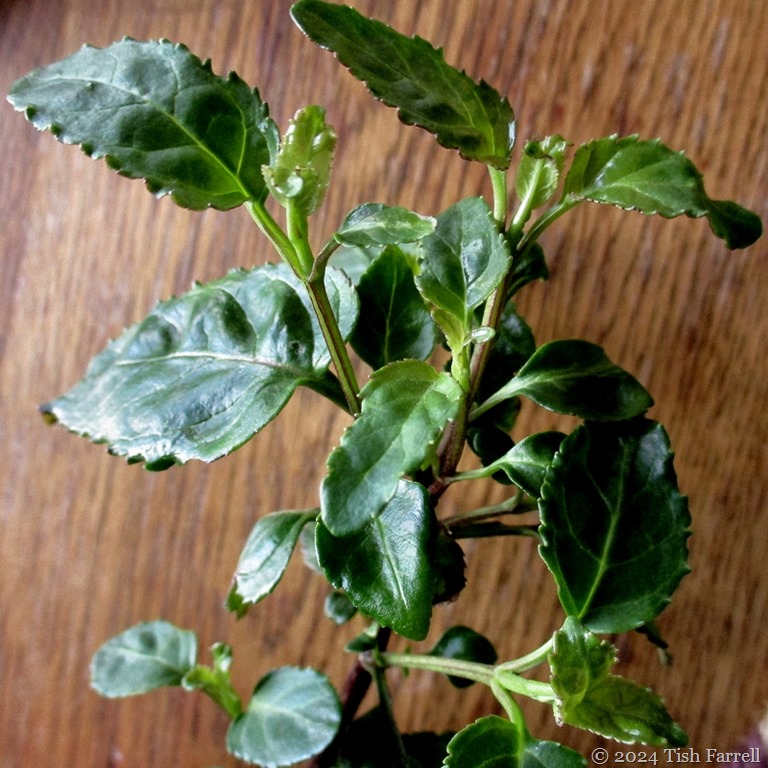
*Now for the plant pest and a note of caution, as in beware of letting Mexican cigar plant (Cuphea) loose on your property. In our garden, it’s like ground elder on steroids. Even the tiniest root fragment will turn into a shrub; the new roots spreading several feet in fleshy festoons, thick as macaroni – under paths, into lawns. When in flower, it has a trillion tube-like blooms that also make seeds. Only if you have the chance of entertaining humming birds should you have it in the garden, and only then in a container.

Needless to say, we do not have humming birds in Bishops Castle. It’s also astonishing that a tropical plant should make itself so at home in this rather draughty, frost-prone corner of Shropshire, although I gather there is at least one variety of the the 250 that is winter hardy.

When we moved into the house last August, this promiscuous entity was sprawling out of our garden, admittedly from a very sheltered, sunny bed, and up over next door’s garage roof, i.e. two metres taller than it’s supposed to grow. Though it did occur to me that perhaps it had found some ancient long-drop W.C. to root itself in. It was also giving itself a leg up along the length of a pine tree that was growing horizontally across the back of the flower bed. But I keep wondering if I’ve misidentified it; maligning an otherwise innocent shrub.

Any thoughts, gardeners? The serrated leaves are puzzling me, but when in flower, it looks like THIS. And descriptions of the swift growing/spreading roots/long flowering season fits.

IMG_4899ed

Here In The Marches, March Comes In Like A Lion

IMG_4681sq

*

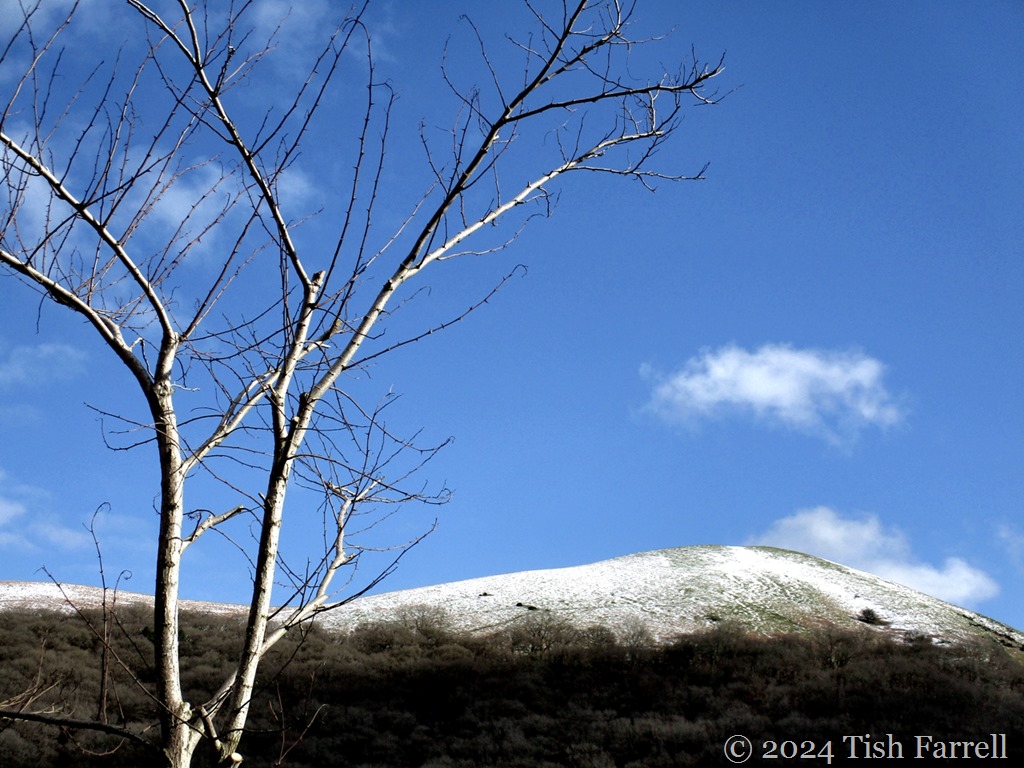
And we can only hope that old country lore comes up to snuff when it says that March coming in like a lion, goes out like a lamb. It can’t be too soon for some lamb-weather either. At least yesterday, after I’d taken this first photo of Ragleth Hill, the sun came out and melted the snow. But it was a one day wonder. Today, after more overnight frost, the wind is roaring round the house and down the chimneys and it’s wet, wet, wet. Downcast daffodils all round.

So, Weather Gods, more skies like this, please. (You can hold on the snow).

IMG_4686ed

Ragleth Hill, Church Stretton

There’s A Storm Coming…

IMG_1459ed

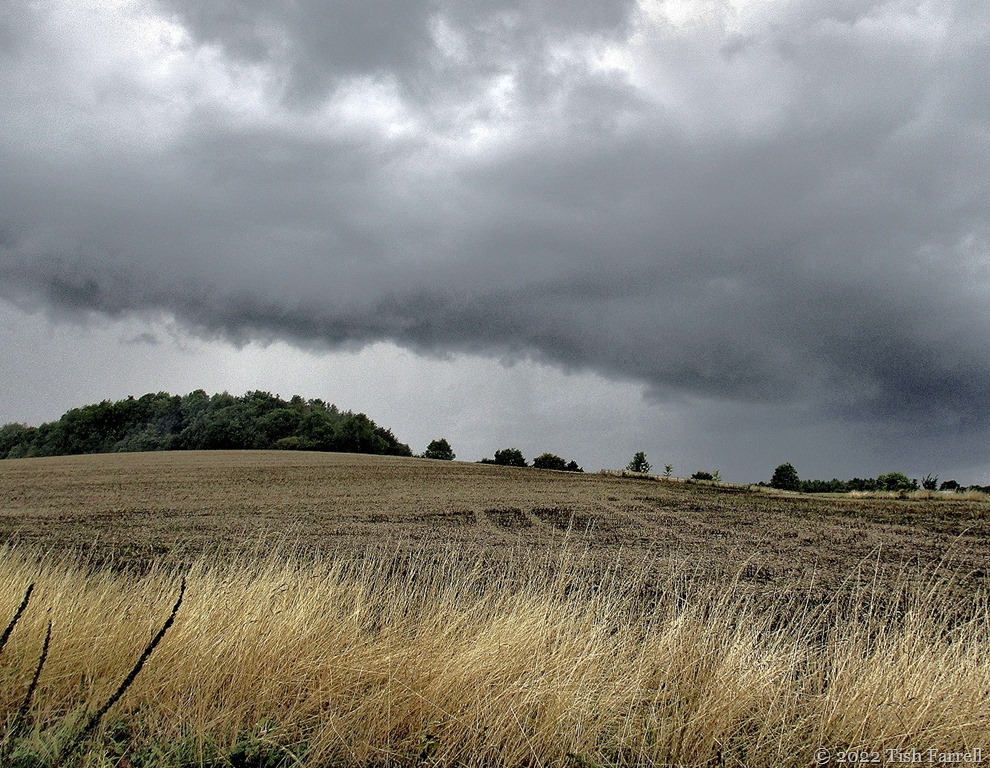
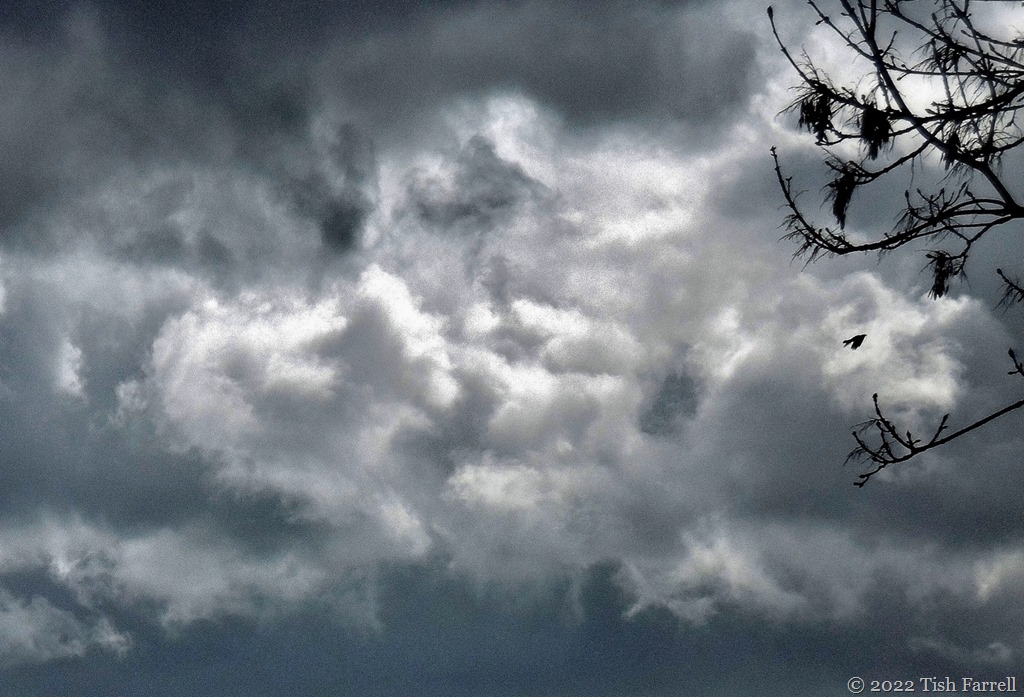
Over the garden fence this afternoon. And yes, after weeks of drought, we’ve had some rain, though the showers have not been as generous as these clouds seem to promise. I watched them roll out across Townsend Meadow towards Wenlock Edge. A cloud serpent, or a Chinese dragon in many shades of grey. There were pigeons flying every which way and some horizontal lightning.

Nothing like a spot of wild weather to stir the spirits.

IMG_1447ed


Glory Be!

IMG_1246

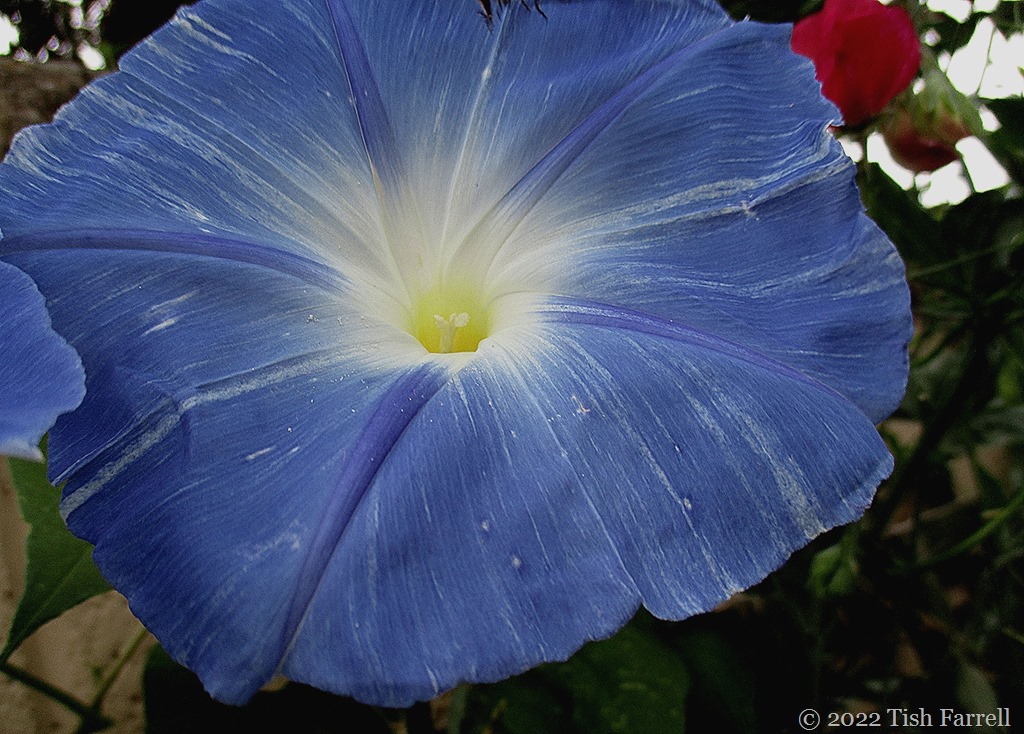
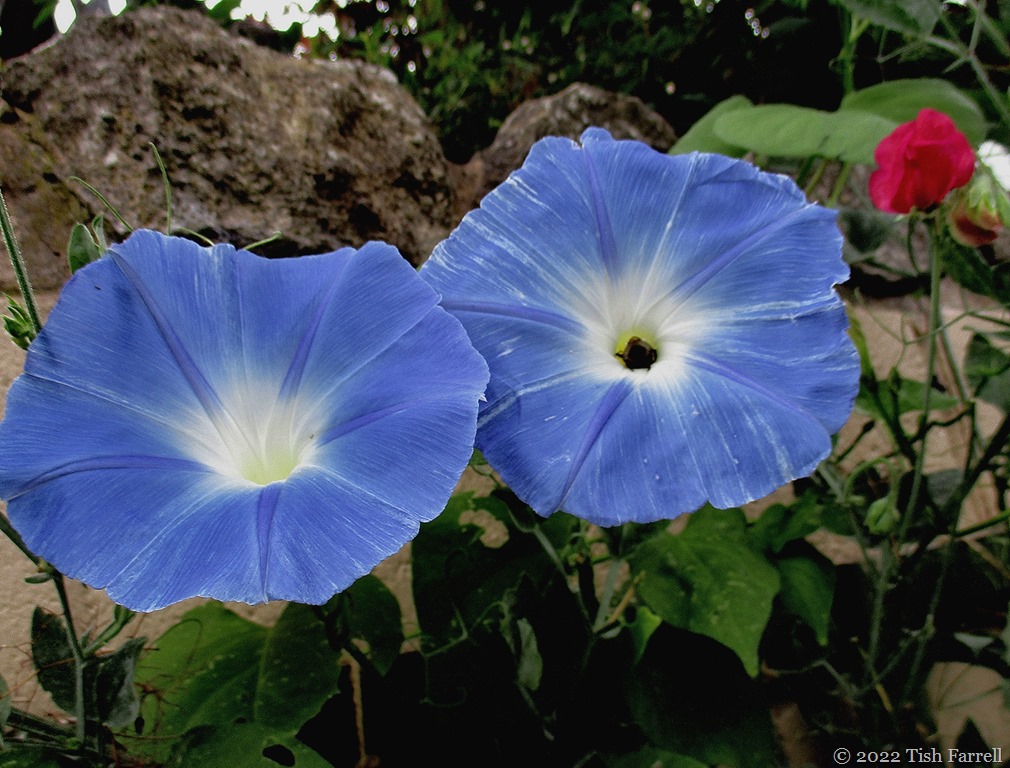
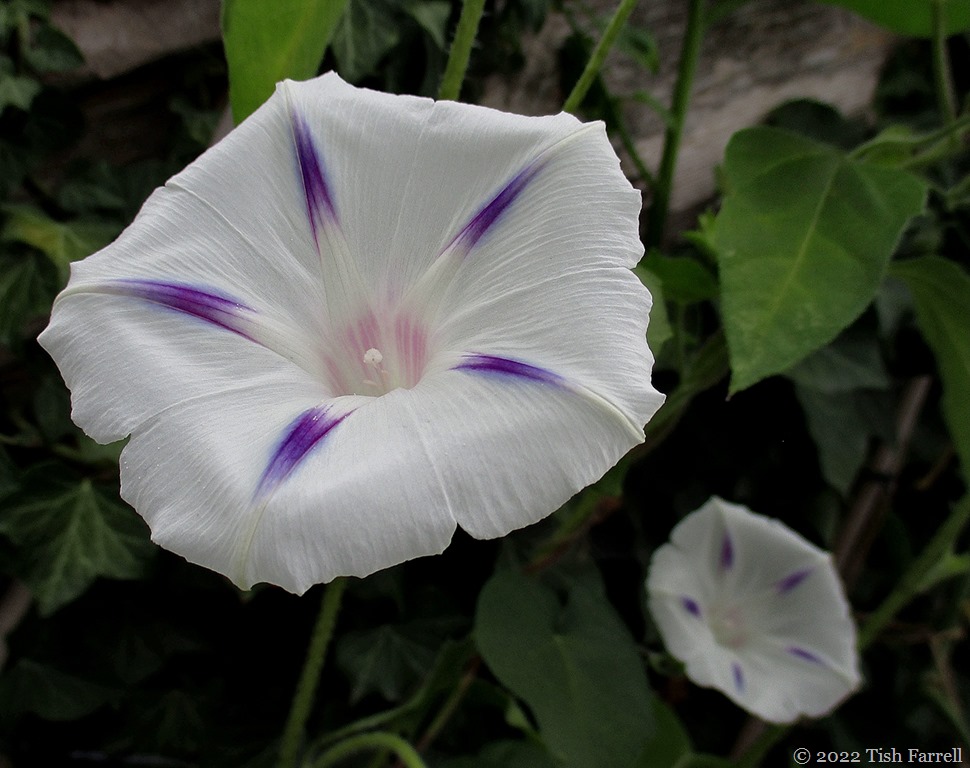
Thank goodness. Our second day of COOL, with a good 10 degrees C completely vanished in thin air. It’s back to grey skies too. They often feature in British summers, and for once we’re thankful. The Morning Glories seem to feel the same way. There were eight blooms out this morning: four Flying Saucers with the sweet peas on the downstairs terrace, and some white ones with purple flashes among the Sun Gold tomatoes in the upstairs garden. They don’t last long though, even without the blazing sun curling their petals.
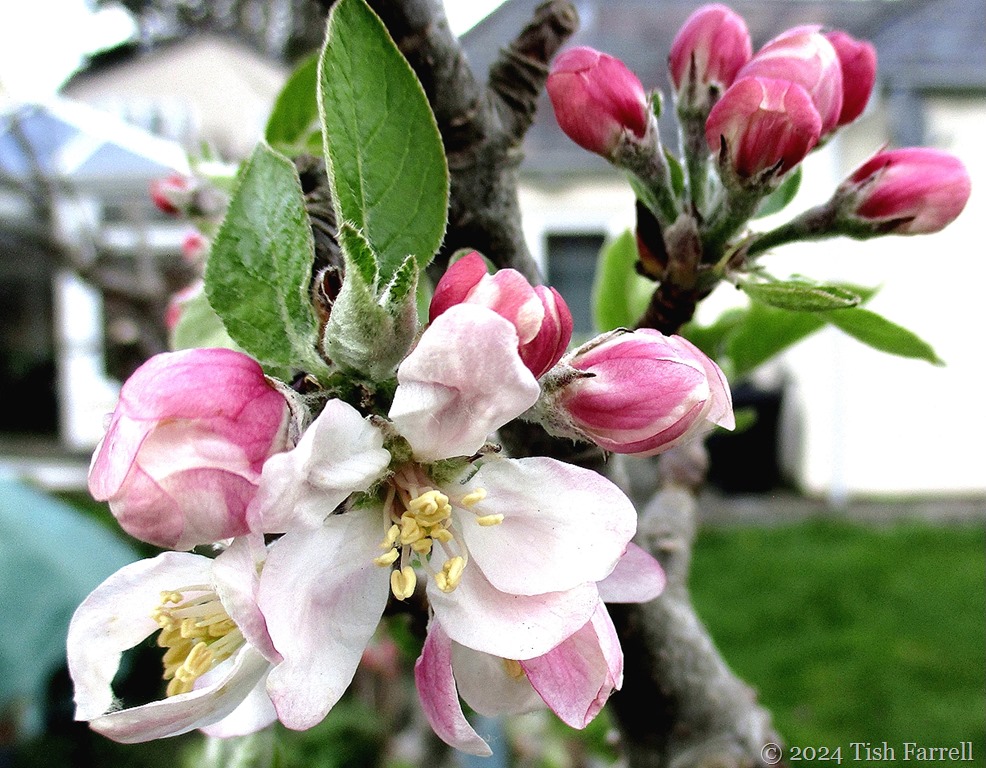
IMG_1245

We even had some gentle showers yesterday, this after weeks of drought. Hopefully there will be more purposeful rain tomorrow so I can sow spinach and carrot seeds, and plant out the lettuce that survived the baking.
I’m anyway feeling seasonally confused after the heat wave. Everywhere around the town, the trees and fields have a parched, end-of-season look that has me thinking already of autumn, and of the things I might sow in the polytunnel for winter salads. But I’m getting ahead of myself. We’re only just half way through August, and there’s still the tomato and cucumber crop to nurture. And in the home garden, even as today’s blooms fade and crumple,  there are plenty more glories to come.

IMG_1254

Regaining Our Cool

IMG_0983ed

Well, it was pretty hot in Wenlock on Tuesday – 33-34C (bottom 90sF), this being the temperature given for Telford, our nearest big town. But then on Wednesday we were dropped back to 22C (72F) max and deeply gloomy skies. The breeze was back too. In fact yesterday afternoon when I took this photo, it was positively draughty walking along the Linden Walk; also very dry. You can see the wind blowing up a dust storm from the grass mower on the left.

At midday, as I write, my PC says it’s 14C (57F), and the forecast from our local weather station at RAF Shawbury indicates top temperatures of 17-24C (62-75F) for next nine days: https://www.weatherhq.co.uk/raf-shawbury/10d  The main thing though, we should have some rain tomorrow. Fingers crossed.

But, one asks, where did all that 2-day heat wave go? And how did it come in the first place? The explanations I’ve read state it was a burst of hot air out of North Africa pushed across Europe by a high pressure zone, a congruence of  events caused by a change in the jet stream, that mysterious air current whose meanderings appear to be responsible for all sorts of weather anomalies.

Of course in the Northern Hemisphere, this kind of heat wave has happened quite a few times over the past century. Such weather events not only came with extreme temperatures, but were often brutally long. The 1930s were particularly bad for overheated summers. This was the Dust Bowl era on the North American Great Plains, a time when (according to this Nature paper) there were 22 heat wave days per summer in Central US, and the maximum record temperatures reached then still stood at the time of 2019 US heat wave.

In Britain in August 1930 temperatures reached 34C, building over four days but, as seems to have happened this year, the high suddenly retreated allowing cool weather to move in.

Earlier, in 1911, people in Europe and America were not let off so lightly. The New England Historical Society HERE documents graphic accounts and photographs of the 11 days of sweltering heat that hit 44C/112F in the shade, said to have driven some people mad. Meanwhile in Britain the Wikipedia entry says the heat wave built from July through to September with a top temperature of 36.7C/98F. And in France, the 70-day broiling resulted in a horrendous death toll (scroll down for the English text.)

So all in all, uncomfortable as it was for many, it seems we got off lightly with a two-day baking. But many thanks to all fellow bloggers who expressed good wishes and concern. Much appreciated.

And We Think Our Weather Is Chaotic, But What About 1821-22?

P1030781

Last night in Wenlock it was all howling wind and battering raindrops on the roof lights. Then this morning the gusts were positively whistling through the tiniest gap in the closed bathroom window. Shivery indeed. Yet the onset of this 40 mile per hour small gale was yesterday described by the weatherfolk  as ‘brisk’. A bit of an understatement methinks. But however one describes it, this current bout of wild and changeable weather now makes the week of lunch-in-the-garden back in March seem a long time ago. (Did it even happen?) And on top of that, it’s definitely curtailing gardening pursuits.

On the other hand, being confined indoors yesterday led to an interesting internet discovery of a wild-weather nature, this courtesy of the very fabulous Derbyshire Record Office which holds archive riches relating to Arctic explorer Sir John Franklin, he whose 1845 expedition to chart the Northwest Passage, tragically foundered in the ice. Among the treasure trove of documents listed in the archive is the transcription of an 1822 letter written in the May of that year by Franklin’s first wife, poet Eleanor Anne Porden. Franklin is away in the Arctic while Eleanor is writing from London, and filling him in on the dramatic events of England’s weather during 1821-1822.

For someone who is used to forever hearing how our weather is set to become ever more chaotic, I found it fascinating to learn how very chaotic it already was in 1821 when Britain was emerging from the Little Ice Age (c. medieval period – 1850). Eleanor’s letter in fact makes reference to the last of the Thames’ Frost Fairs held in 1814.

A view of the river Thames: 1814

The Last Frost Fair of 1814 copyright Museum of London

Between 1600 and 1814 the Thames would freeze for up to 2 months creating an astonishing  venue for all manner of events and entertainment.

*

But first she broaches the weather topic by telling John Franklin that though matters may be peaceable in other domains, ‘the elements are in sad confusion.’

She goes on to say:

I should think that the mean temperature of last year was pretty nearly what it ought to be, but the seasons were all mixed together, and not well mixed neither; we had neither Spring nor Autumn, Winter nor Summer. Only two nights greeted us with the agreeable novelty of a frost, and the consequence was that a friend of ours saw the armies of two rival confectioners fighting for the thin cake of ice on a pond behind his house. As for snow, I think you had best bring a little home in a bottle, to shew as a curiosity to those who may have forgotten its colour.

Then she moves on to the storms ‘such as I never remember’ following one after another for three months:

Trees were torn up, and houses blown down, and from the coasts the accounts were dreadful- three Indiamen* were lost in sight of land.

* ships of the British East India Company

Next came the Christmas Thames’ floods in London’s Westminster and Vauxhall

forcing numbers of inhabitants to take refuge in the upper rooms of their houses, till they could be carried away in boats. At Staines it is said that the water was rushing in torrents through every house, and parts of Windsor were in similar condition.

She quips that people who usually travelled up to London for the Christmas season had abandoned their plans, not wishing to embark on a sea voyage in order to achieve that objective.

And then follows an account of the most bizarre event of all:

To complete my catalogue of marvels, in less than three months after, a strong south wind so drove back the waters of the Thames, that aided by a neap tide the channel was left nearly dry, and it was crost on foot between London and Blackfriars bridges, almost in the spot where an ox had been roasted whole on the ice just 8 years before…I understand that the tide afterwards flowed with unusual force for 3 days, and it has been thought that the extraordinary shape of the river must have been connected with some volcanic phenomenon.

And finally she concludes with mention of London’s May weather:

this week we were shivering over a fire, and now the thermometer is at 81⁰ in the shade.

You can read the whole lively letter HERE

Meanwhile, planting still curtailed, I shall cultivate a state of reduced grumpiness about Shropshire’s changeable elements. I am anyway much amused by Eleanor’s suggestion that Sir John Franklin should return home with a bottle of snow to remind the general populace what this unfamiliar substance looks like. The more things change, eh…