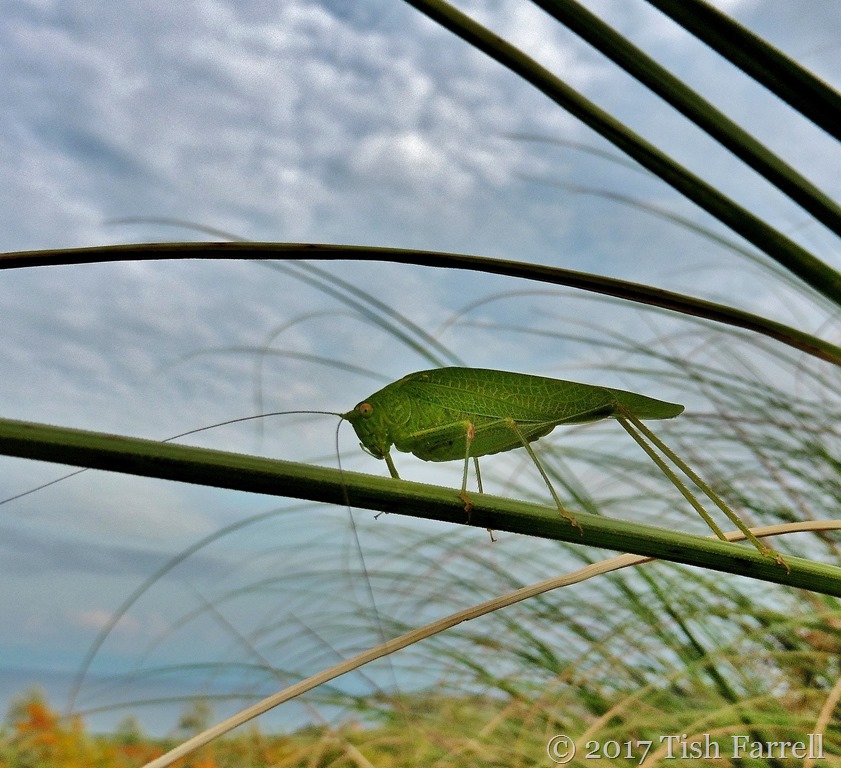
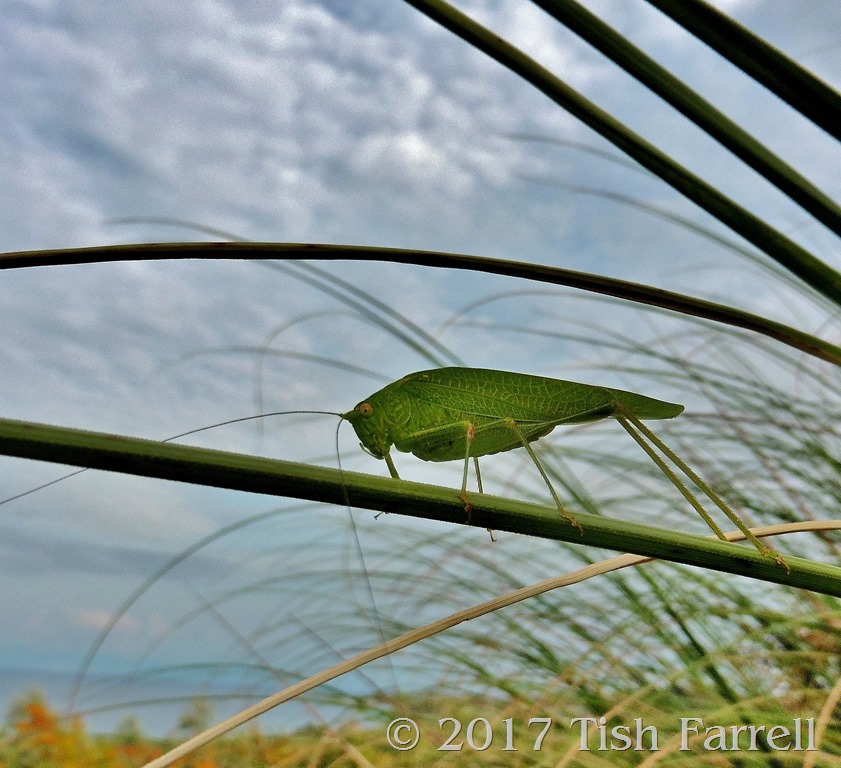
This week Paula asks us to post our best photo from 2017. I wasn’t sure where to start, but decided to reprise the cricket which, the first time around, Ark kindly identified as a Katydid or bush cricket. It is certainly my most surprising shot of the year – both for its clarity and the fact the cricket appears to have been watching me while I organised myself with the camera. I also like the curving grasses and the bands of light and shade, and the way the cricket appears to be super-illuminated. But best of all, it reminds me of Kalamata, and the mesmerizing views of the Taygetos and the Mani across the Gulf of Messinia for I find myself still badly smitten with the Peloponnese. Ah, well. Maybe next year…
Travel
Frosted Bracken ~ Black & White Sunday
When we left Hay-on-Wye on Friday morning we headed west into the hill country above the Wye valley. The lane wound up narrowly from Clyro to Painscastle, the hedgerows bathed in high-definition sunlight. But there were also rafts of ice – here and there, where the road dipped into shadow. It was exciting to see – real ice, even if it was swiftly turning to slush.
We were taking a somewhat round-about route to our immediate destination – the Erwood Art Gallery whose leaflet says it is the biggest privately owned gallery of contemporary art and craft in Wales. It is also in an isolated spot in the woods above the Wye, and to add to its interest is housed in three Victorian railway carriages left over from the days when the train came this way. Into my mind’s eye puffs a doughty steam engine pulling a long tail of carriages. I imagine rattling along the wide river valley, hills and farms and sheep pasture all around. And think: it’s a crying shame this loss of Britain’s most scenic railways – killed in the ‘60s by the wretched Dr. ‘Let them drive cars’ Beeching, he with his most undiscriminating axe that has done so much to promote the slow misery of dying rural communities, and the clogged up byways of our small island.
But enough ranting. It’s too fine a day. When we reach the moorland tops of The Begwns, and before our descent to Erwood, we stop to admire the view. And that’s when I come across the frosted bracken…
She Knows Where She’s Going ~ Thursday’s Special
We’ve just returned for a two-day trip to Hay-on-Wye, the second hand book capital of Great Britain, if not the universe. This ancient, tiny town stands on the banks of the mighty River Wye, on the Welsh side of the Wales-England border and, astonishingly for so small a settlement, has 23 book shops. Some are small and specialist – catering for poetry enthusiasts, natural historians and sleuthers of good murder mysteries; others are labyrinthine emporia, the size of college libraries – where all topics are covered. Many sell new books too and also, since the advent of the famous annual Hay Literary Festival, have upped their game from being the fusty, dusty places I remember from years ago, and transformed themselves into smart bookish resorts where you can curl up in a big leather armchair and spend the whole day reading. Richard Booth’s Bookshop even has its own cinema and very popular cafe. Treats all round then.
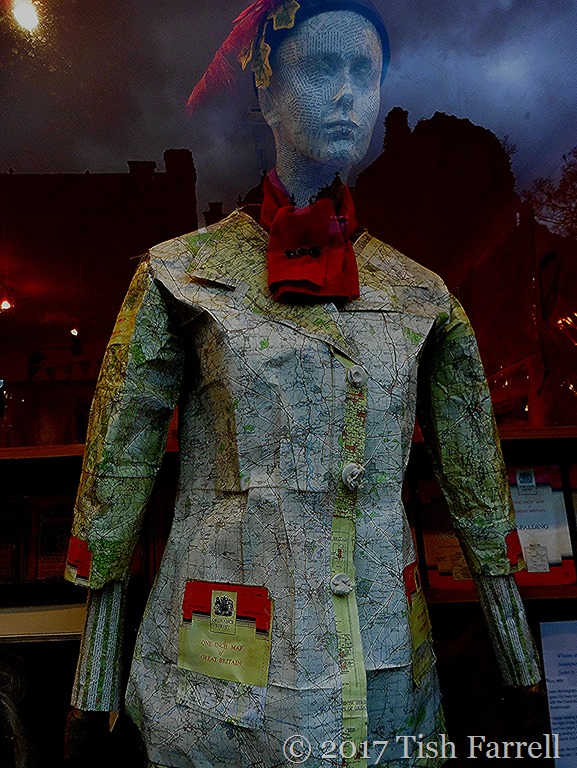
This photo was taken through the window of Mostly Maps and I think it covers all Paula’s word prompts for her December pick a word. Here we have the portrayal of a young woman by a non-human mannequin. She has the most sagacious looks too, clad in the re-worked remains of old ordnance survey maps. There are more remains reflected behind her – the dark silhouette of Hay Castle ruins. And then, here and there, are small stellar bursts from street and Christmas lights. Tarrah!
Now please visit Paula to see her and other bloggers’ cunning interpretations:
Thursday’s Special: pick a word in December
P.S. There will doubtless be more about Hay and our meanderings along the Wye in upcoming posts
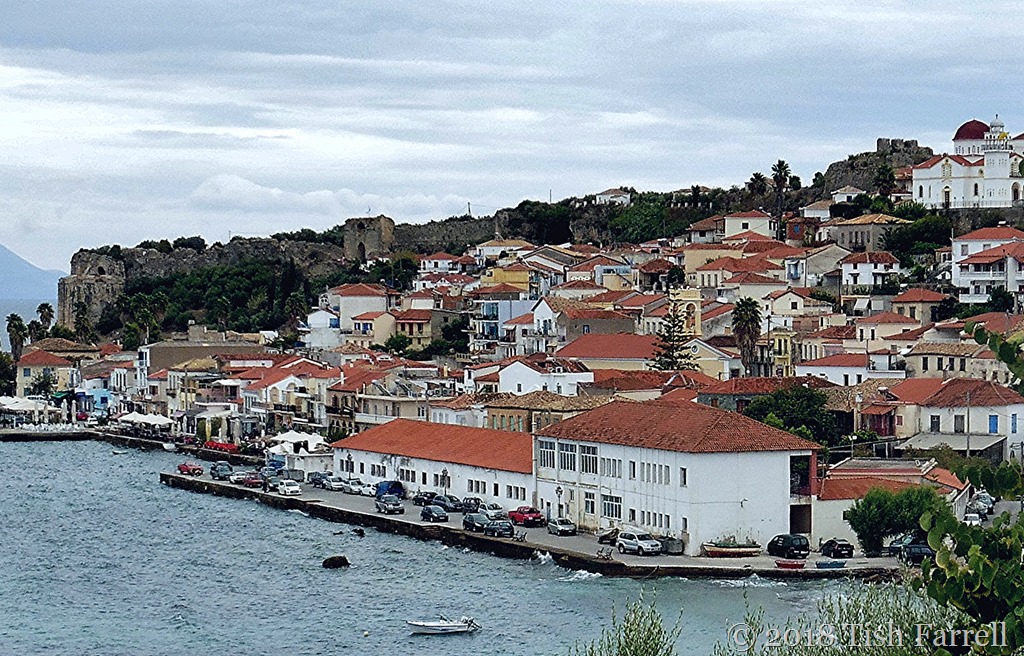
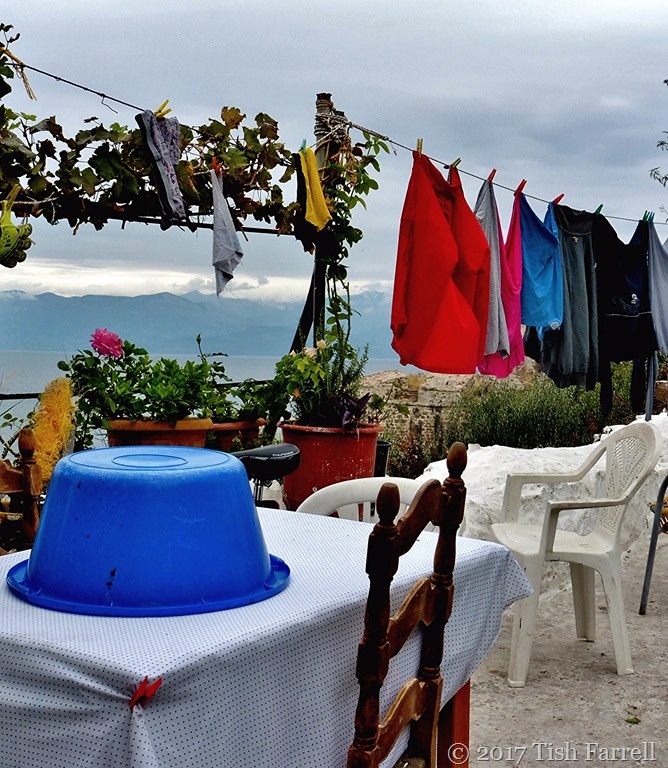
Washing With Mountain View In Koroni
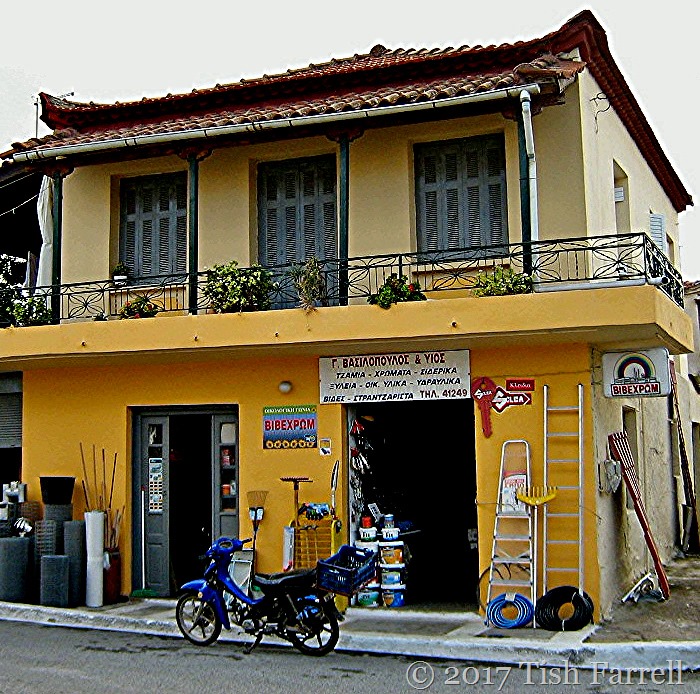
The Hardware Shop In Harakopio
I’m very fond of hardware shops, though I’m old enough to say they mostly aren’t what they used to be – those ill-lit aisles of childhood with their mysterious bins containing every size of nut, screw, hinge and widget. The cocktail whiffs of twine, Jeyes Fluid, paraffin and polish, and a little man in a brown cotton coat behind a high, gloss painted counter, he the unassuming master of this multi-component repository.
The shop in Harakopio looked promising on the authenticity front, and I was only sorry not to have the chance of a good mooch inside. But still, it was good to capture its jolly exterior, and nice of some local to park their blue motorcycle outside.
The Weather In Wales ~ Winter Sun
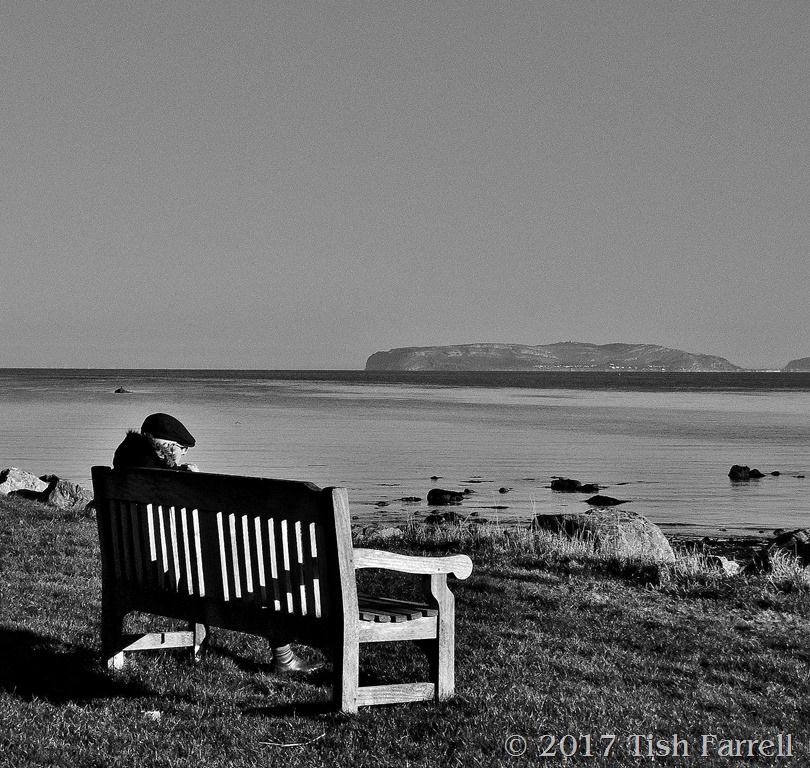
It’s hard to believe that I took this photo nearly a year ago – a late December day on the shore of Menai Strait on Anglesey. There’s a view of the Great Orme across the water. Everywhere so still. Not a cloud in the sky. And sunshine warm enough to sit in.
I don’t know who the man on the bench is. He was reading a book quite surrounded by this view. There’s something of an optical illusion about it – the dark cap above the seat back (echoing the nearby black rocks in the water), his foot below the seat, yet the corporeal lack of him in between head and toe, where the sunlight seems to pass unimpeded through the bench slats. Curiouser and curiouser, said Alice…
copyright 2017 Tish Farrell
Looking At You Looking At Me
Six Word Saturday Pop over to Debbie’s for more six-word posts and an astonishing view of Alice. And just in case you wanted to know, this cricket was spotted in the garden of the Iconpainter’s Villas in Greece.
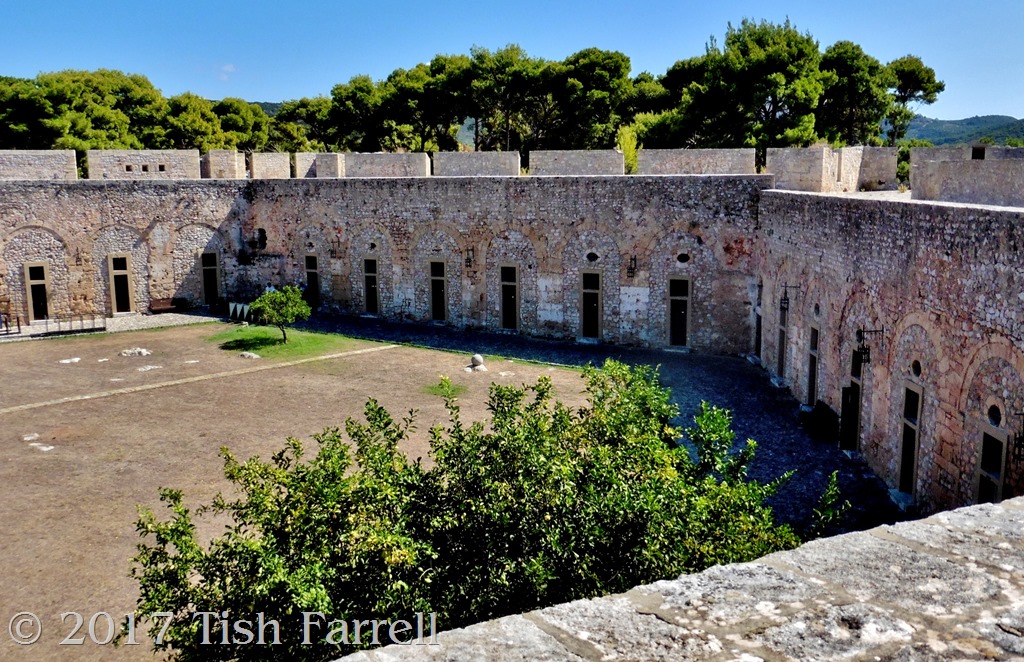
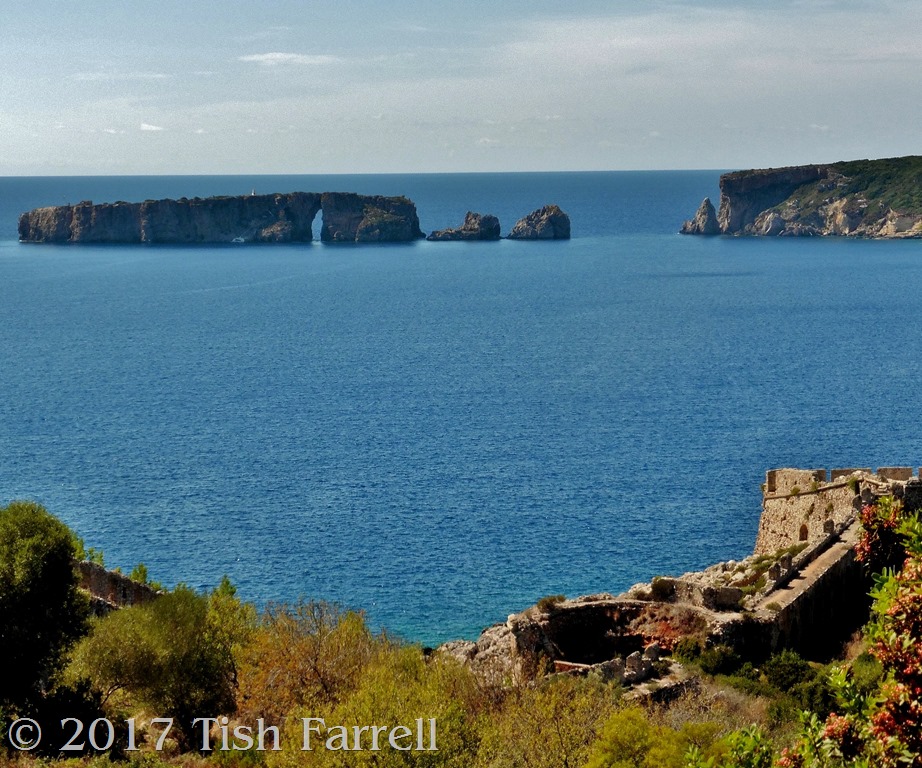
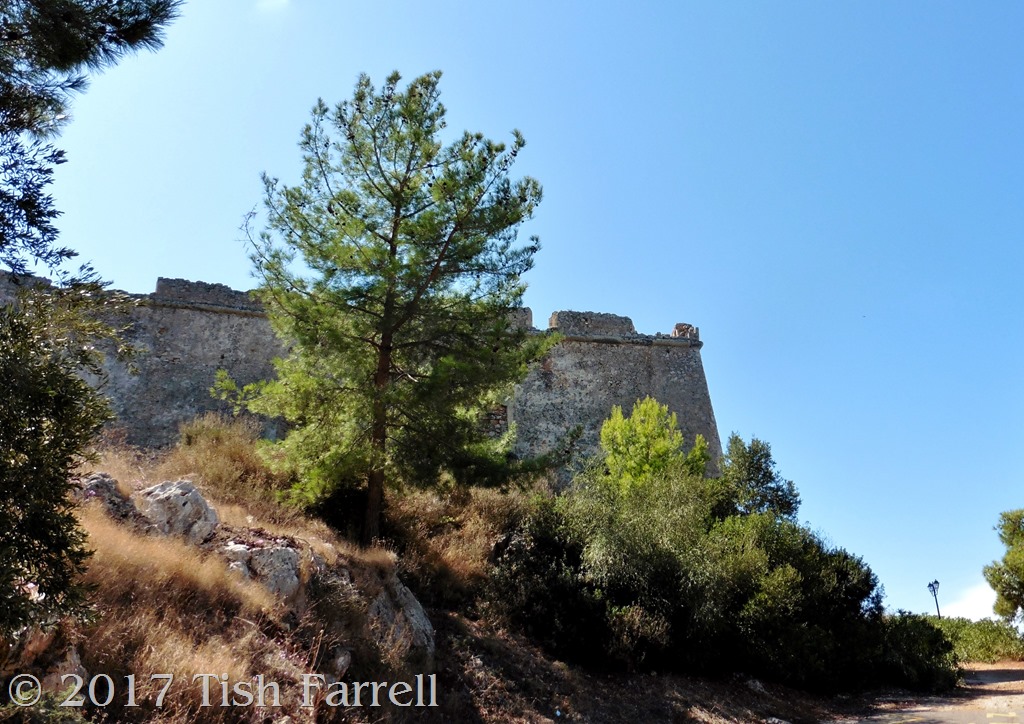
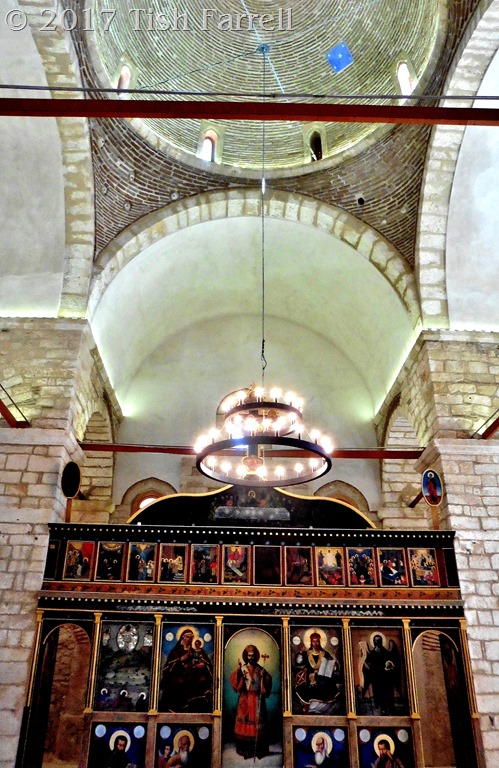
Inside The Old Fort At Pylos ~ Thursday’s Special
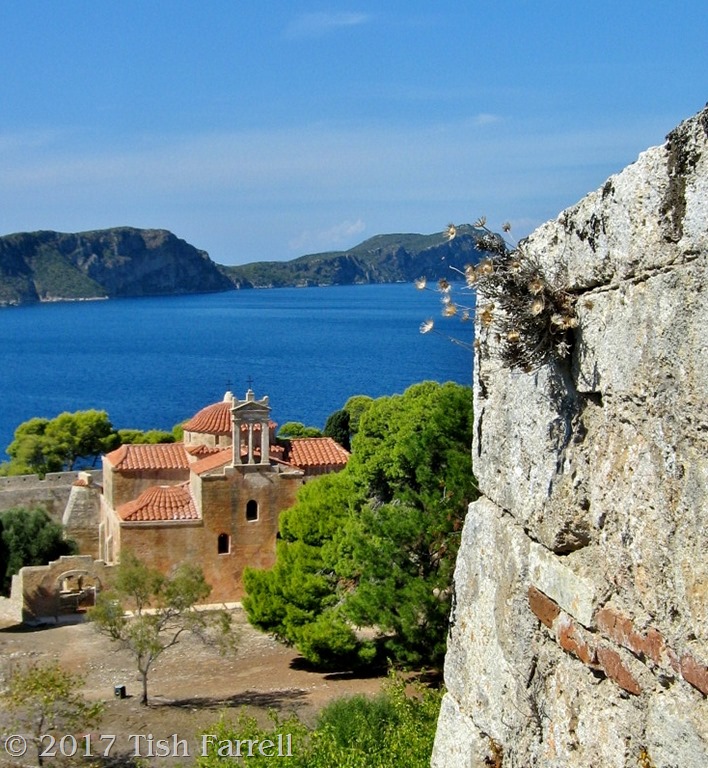
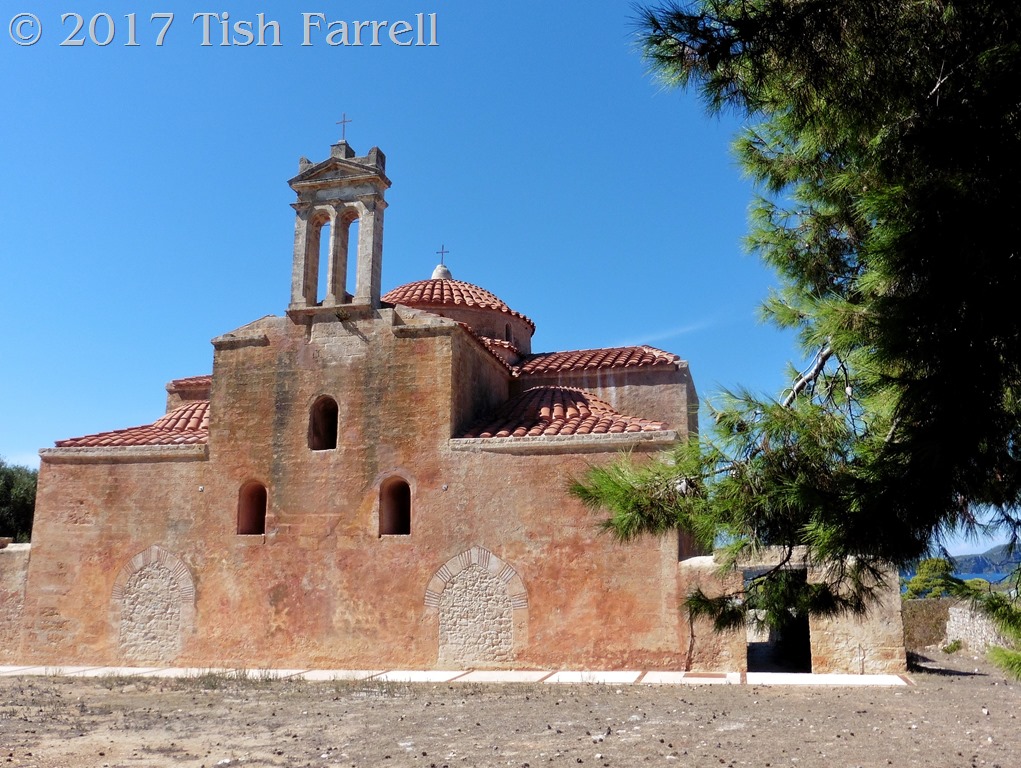
The Ottoman fort at Pylos is monumental, and comprised of an outer defensive wall and a citadel. It was built after the Turkish invasion of 1500, and apart from two brief interludes – one Venetian, one Russian, was held by the Ottoman regime until the Greek War of Independence in 1821. Even at the last lap, Ibrahim Pasha and his Turko-Egyptian army proved hard to oust, and after an initial surrender of the fort in 1821, it was reoccupied by them in 1825, and hung onto until 1828.
The first photo was taken from the citadel, which during occupation by the French in the 19th century was used as a prison. The church you can see below is the Church of the Transfiguration of the Saviour, and was originally built as a mosque around 1573. Under the brief Venetian rule of 1675 to 1715 and during the Orloff Revolt of 1770 it served as a Christian church, and it is in this capacity that it was restored by the Greek Government between 2011 – 2015.
*
Inside the citadel, and the nineteenth century prison cells.
*
Looking down on the outer defensive wall and the sea-arch beyond.
*
The outer walls on the seaward side. The hillside was heavy with the scent of pine trees, and cyclamen were growing everywhere among the cones and fallen castle debris.
*
Inside the Church of the Transfiguration of the Saviour.
Thursday’s Special: Traces of the Past Please visit Paula to see her fine view of Alnwick Castle.
Cats’ Eye Views Of Koroni ~ Peroulia Dreaming 12
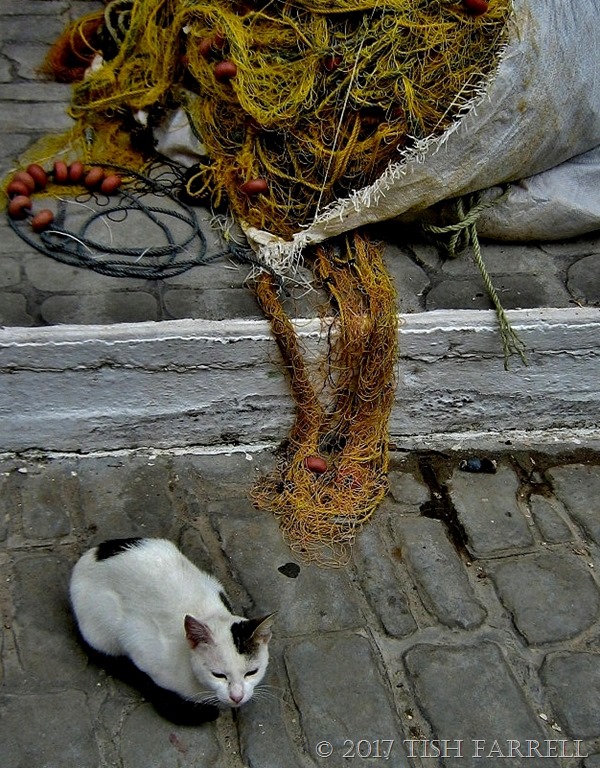
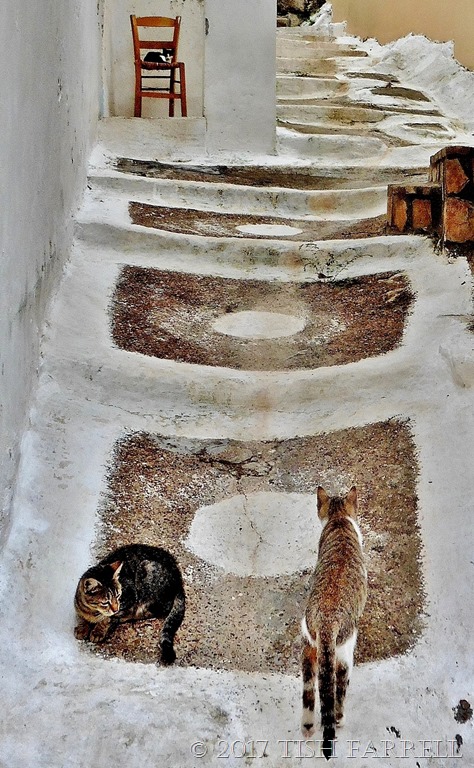
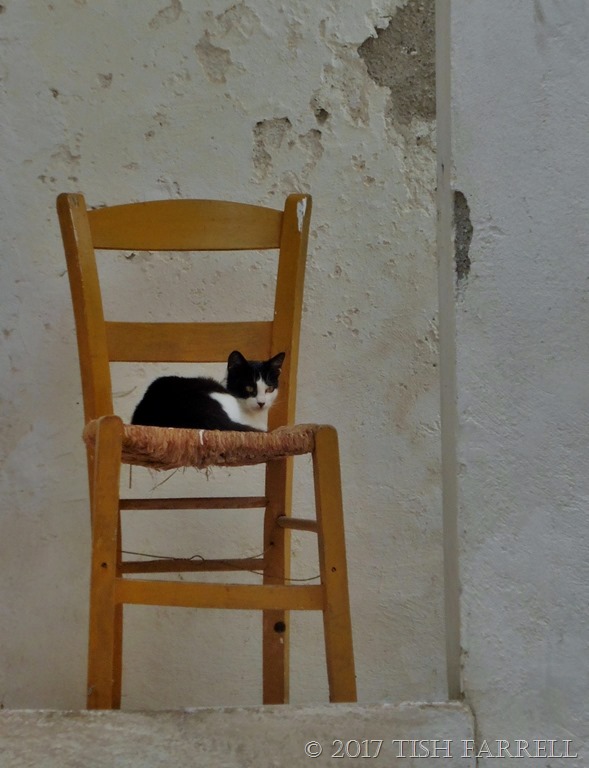
When it comes to pets, I have to admit to being a dog-lover first and foremost, but as we tramped up and down the many stepped byways to and from Koroni castle, we met a number of very handsome cats. In fact there were cats and dogs everywhere we went along the coast. Some had more to say for themselves than others. The Koroni cats were particularly self-contained. One definitely had the impression it was THEIR village, and foreign interlopers were thus beneath their regard. They could take us or leave us.
The Last Turtle Of Summer ~ Peroulia Dreaming 11
After wandering around Koroni Castle we descended down the stepped streets to the harbour front in search of ice creams and coffee. Greek ice cream is delicious and ours came in many astonishing flavours. We wolfed it down like five year olds. Next we settled ourselves at a seaside cafe and ordered coffee, but we had not been there long when the waiter came dashing to tell us there was a big turtle to be seen just off the quayside. ‘It is the last turtle of summer,’ he said. ‘Tomorrow it will be gone.’
A little crowd had gathered and was peering into the stormy looking water. The weather had changed, and there was a cool wind blowing off the Messenian Gulf. It was hard to spot the turtle between the dark ripples, and I missed a couple of chances to take a photo as it popped its snout above water. Then a silly young Frenchman decided he wanted to swim with it, jumped in and scared it away. ‘Merde’, said his girlfriend. Merde, indeed.
So here is my best shot. Little more than a peek. But then it is good to know that there are still loggerhead turtles around the Peloponnese. One of their breeding beaches is at Koroni on the far side of the castle. Every year between June and mid-September the turtles make some 46 nests there. These are monitored throughout the summer by ARCHELON, The Sea Turtle Protection Society of Greece, along with a host of volunteers from around the world. Good on them, I say, and bon voyage last loggerhead of summer.
You can find out more about Archelon, The Sea Turtle Protection Society of Greece HERE.