And Another Odd Capture

373sq

It’s hard to know how to follow yesterday’s yarn about my recent small-hours radio ‘haunting’, but since Shropshire landscapes cropped up in it, I thought I’d have a ‘rummage’ through that particular photo file. And so I found this one of me, courtesy of he-who-builds-sheds-and-greenhouses in the days before he did such things.

It must have been taken in the second winter after we left our life in Kenya. We had settled in Rochester, Kent. For the eight years we’d been living in Africa, Graham had been employed by the Natural Resources Institute (NRI), once the scientific arm of British Government overseas aid, but now part of the University of Greenwich. Its offices were based in the old Chatham dockyard, just up the road from Rochester. (Odd factoid: both locations have strong Charles Dickens connections). And so Graham was returning to base, though he had never had a desk there. It was a strange situation.

Neither of us wanted to be there. For one thing we were overwhelmed by the hemmed-in urban congestion of the Medway five towns: Strood, Rochester, Chatham, Gillingham and Rainham massing together so closely so that once in their midst, you could not see out or move for traffic. The one source of local relief was the River Medway that wound between them. We had bought a house there – in one of the new riverside developments that were sprouting up along its banks.

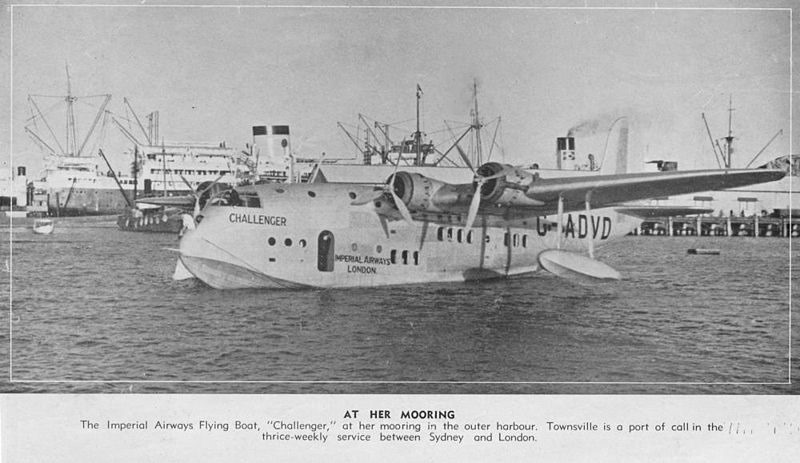
A little oddly too, our particular townhouse enclave was on the site of the old Short Brothers Empire flying boat factory, the craft that had served Imperial Airways during their 1930s pioneering of air travel to Africa, India and beyond. Later Imperial morphed into BOAC (British Overseas Airways Corporation), and I remembered that some of the first flights to Kenya used to land on Lake Naivasha and, while the crew put-up in the cottages of the Naivasha Country Club (where we ourselves had once stayed), travellers to Nairobi would have to complete the last sixty miles by dirt road.

The connection was a small ‘haunting.’ Added to when one of our first house guests, an expat friend from Nairobi (actually an Englishman who had settled in Australia)  told us that his father had been a steward with Imperial Airways. (This was the same person who, on another visit from Australia, came to stay with us in Much Wenlock, and on arrival told us he had a cousin living up the road).

Imperial Airways flying boat 1937 public domain

*

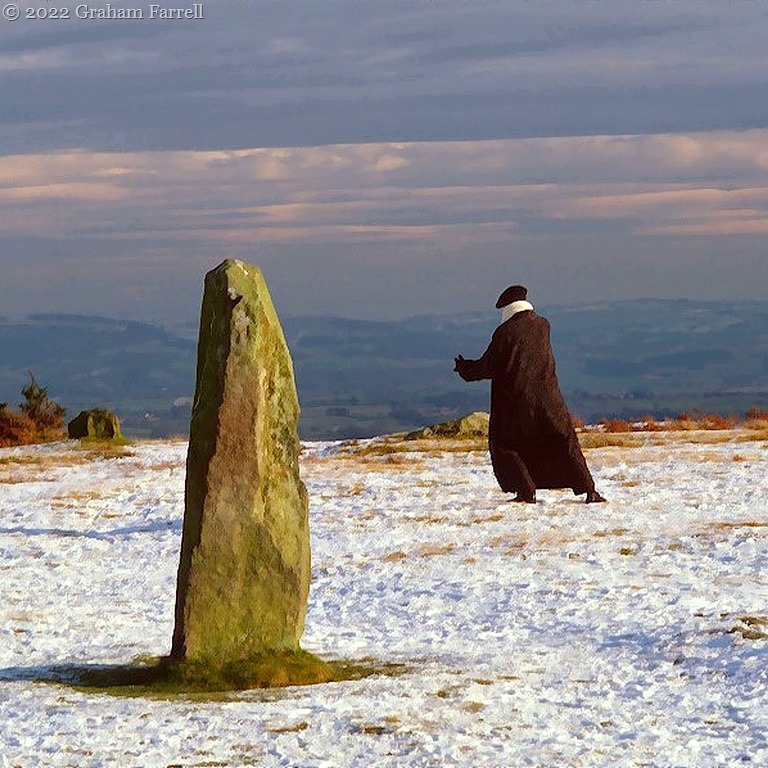
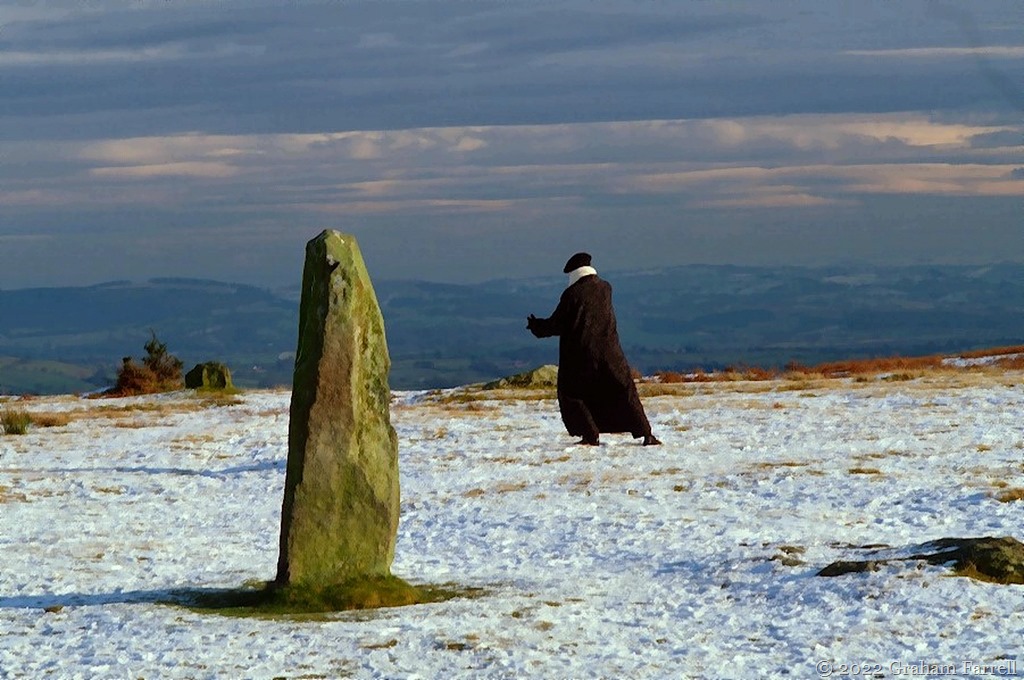
But back to the header photo. One of my adjustment strategies to UK life was to go to T’ai chi classes. This then explains the pose. I think I am in the throes of grasping the sparrow’s tail.

But what of the location?

One reason we didn’t want to be living in Kent was because family and friends were mostly faraway in the West Midlands: Shropshire and Staffordshire – and between them and us was the evil M25 London orbital car park motorway. We could access it in either direction from Rochester. It never made any difference. The jams seemed to last for days.

But then the photo shows we must have broken out. Here we are in Shropshire in late December 2001. It is one of the county’s most mysterious locations: Mitchell’s Fold, a Bronze Age stone circle, sitting on the borderland with Wales. I don’t remember now why we chose to be driving round the Shropshire hills in such wintery weather, but there’s more about that visit and the circle’s folk lore associations with wicked witch Mitchell here: Witch Catching In The Shropshire Hills

373

Copyright 2022 Tish Farrell

The Square Odds #3

Night Waves Oddities: When The Voice On The Radio Is Mine

IMG_0002odd

Photo: detail of glass vase taken at an odd angle

*

This post isn’t actually about the vase, though the photo is as close a visual cue as I can muster for the very odd thing that happened last week . It went like this.

When I wake in the night, I often plug in an ear bud and listen to Radio 4 Extra, the blessedly news-free zone that continuously recycles BBC broadcasts: drama, book readings, poetry, quizzes, whodunnit Miss Marples and Sherlock Holmes. Imagine the shock, then, when in the dark hours of Wednesday morning, I switch on and the voice that emerges on the digital air waves is mine. What on earth…?

The voice (familiar yet unfamiliar) speaks of seizing the day, of the fallacy of perfect landscapes whose ‘loss’ we continue to mourn. And accompanying the words, my unrehearsed, off-the-cuff words, are the heart-haunting strains of George Butterworth’s Rhapsody, the orchestral epilogue to his song cycles that had set some of A E Housman’s A Shropshire Lad  poems to music.

It is all about loss – Housman’s song-like stanzas of Shropshire’s young men going off to war, written in reaction to the Boer War; Butterworth’s later musical echo, premiered in 1913, followed by his own death on the Somme in 1916.

Listening in the small hours of 26 January 2022, I struggle to believe what I’m hearing. Soul Music is a popular Radio 4 series, featuring several people’s stories and responses to a particular piece of music. In June 2014 I’d taken part in the programme’s recording. It was a special production for Remembrance Sunday November 2014. Yet here I was, randomly switching on, in the middle of the night, eight years later, just at the moment when the repeat broadcast was being aired. Had I become my own oracle? Was some entity trying to tell me something?

As I said, I was only one of several contributors whose thoughts on Butterworth and Housman were used to create the programme. Shropshire broadcaster, Sybil Ruscoe, provided the narrative thread, telling of the loss of her young great uncle who, like Butterworth, had died on the Somme.  So it was stranger still to next discover that it was my sound bites that had been edited to create a trailer for that week’s Soul Music reprise. Over the next couple of nights, there I was again, several times over – talking to me. As odd experiences go, and days later, it’s still hard to process.

*

P.S. The story of how I came to be involved with the programme in the first place, my words being recorded by producer Maggie Ayre out in a Shropshire wheat field on Wenlock Edge  can be found here. It was all down to her reading a post I’d done on Butterworth and landscape.

Some of you may be able download the programme here: https://www.bbc.co.uk/programmes/b04nrw25

*

Square Odds  This month Becky, Doyenne of Squares, wants our header photos to feature all manner of oddities and oddnesses – however they come so long as they’re square.

The Changing Seasons ~ January 2022

IMG_9280

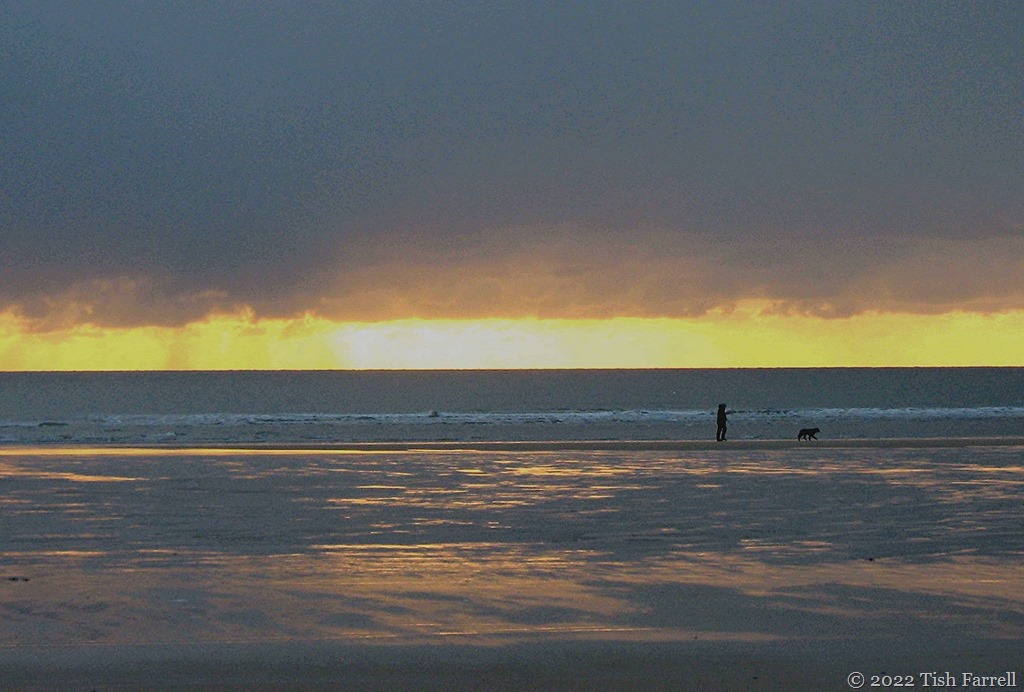
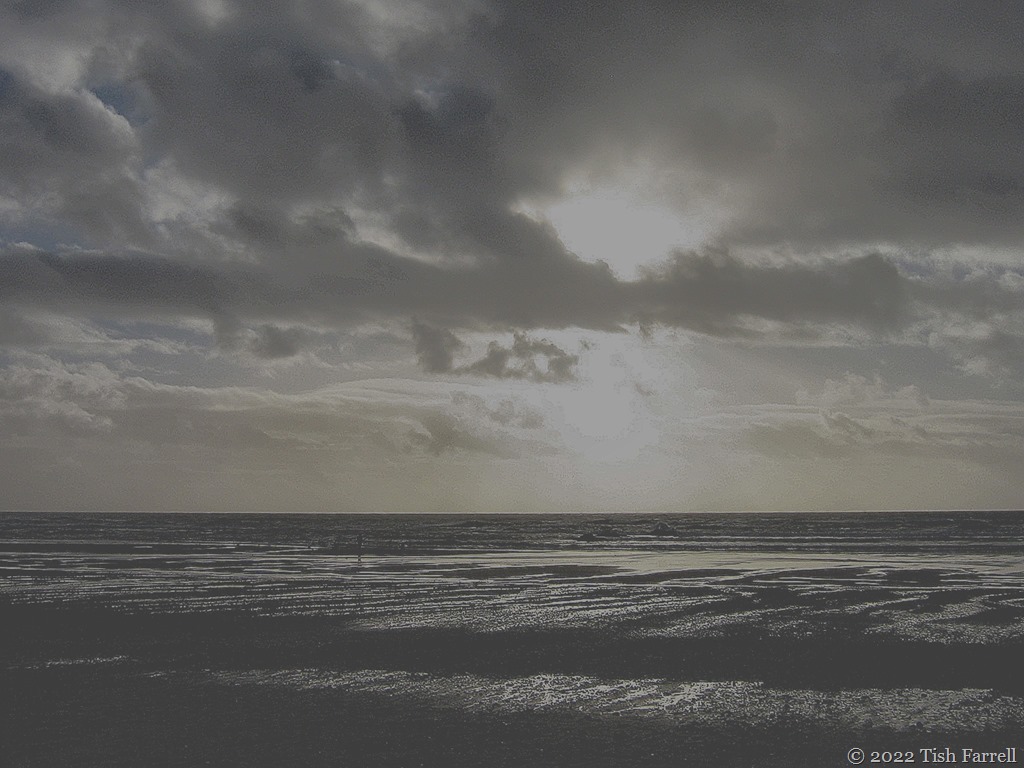
Our January blew in with sudden squalls and sea gales off the Celtic Sea, and a week’s sojourn on west coast Anglesey. From the sands of Aberffraw and nearby Newborough we could see the mountains of Snowdonia across the Menai Strait, a wood-cut frieze: sometimes steely grey, sometimes indigo; watch as snow dusted the high slopes. The place was blisteringly cold, but enthralling too. And we did have sunshine interludes too.

IMG_4227

IMG_4184

IMG_4168

*

And the deep-cloud afternoons did give up their gloom just in time for some breath-taking sunsets.

IMG_4270

IMG_4221

IMG_9268

*

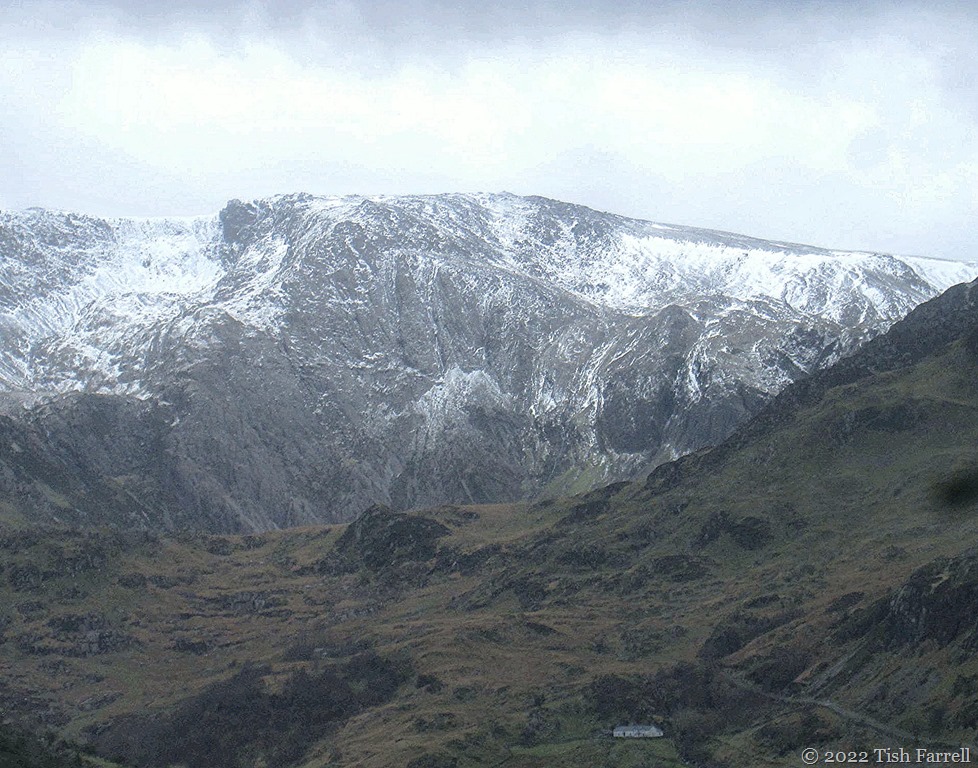
And then, too soon, it was time to leave, and then, as often happens when we drive over the Menai Strait away from Anglesey, the morning light failed. An eclipse of the sun? Some ancient Celtic curse on the land made manifest? In any event, our hundred-mile, mid-day drive home to Much Wenlock proceeded through a depressing dusk, although it did have its moment of mystifying grandeur as we wound through the Llanberis Pass. Can you spot the tiny white farmhouse at the foot of the photo?

IMG_9319resized

*

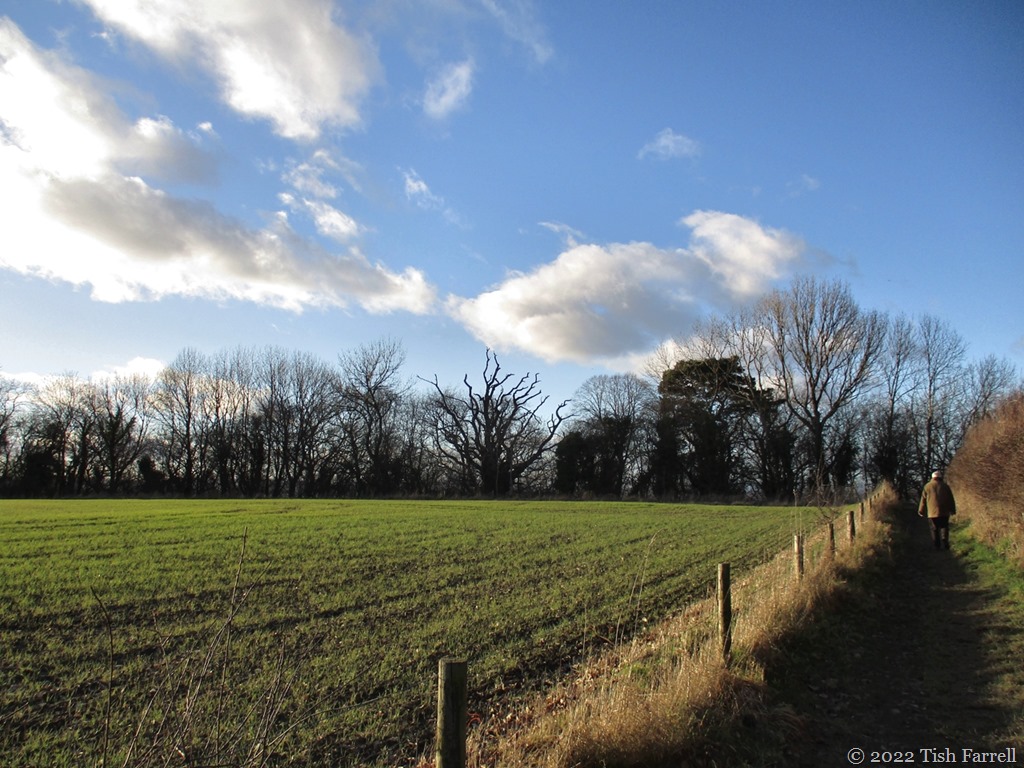
And so back home and last week’s walk up on to Wenlock Edge, taking the field paths behind the house. A gentler landscape certainly, and warmer too after a brisk upward hike. Also from our side of the Edge its true drama is quite concealed. We see only fields and treetops, but when you reach the path that runs along the ridge summit, it is only when you peer through the underbrush that you see that the land simply drops off – falling through hundreds of feet of hanging woodland, so steep as to be inaccessible except to birds and small mammals and perhaps an adventurous deer. This impression of no-man’s-land and apparent lack of management by humankind adds to its eeriness. On winter days, too, when the trees are bare, you can glimpse the village of Homer way below, and beyond it the farm fields of the Shropshire Plain.

IMG_0072

The path up to Wenlock Edge

*

IMG_0067

Looking back on the town

*

IMG_0082resized

Over the Edge

*

IMG_0088cropped

On the homeward path with view of the Wrekin

*

And on the home front, a wintery upstairs garden:

IMG_0004

IMG_0044resized

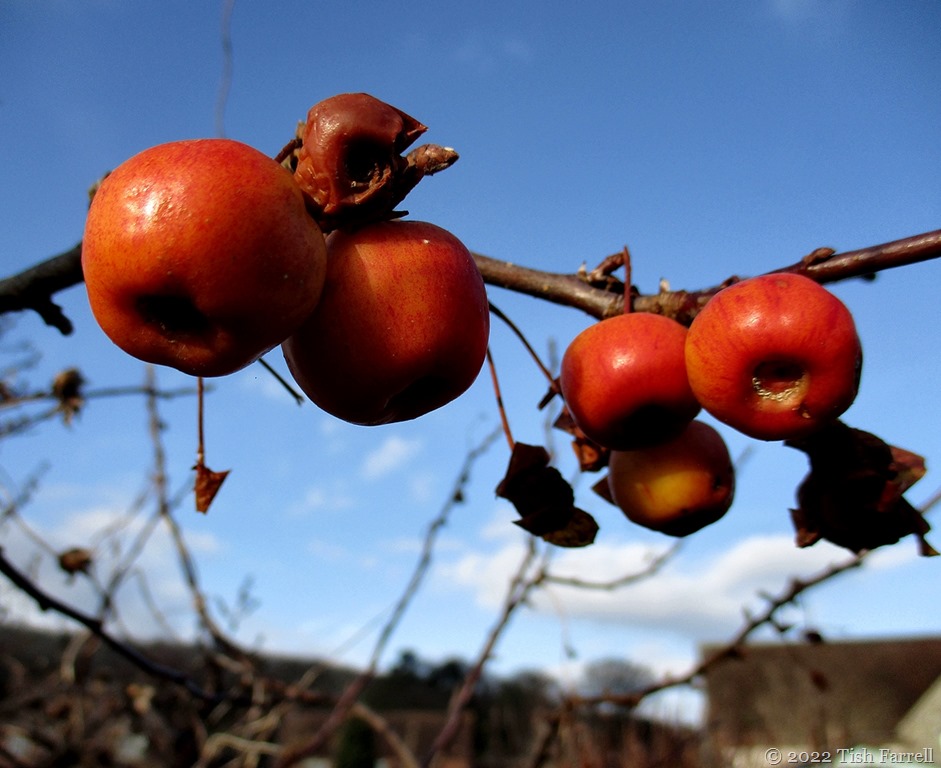
But still a few crab apples left

*

And in the kitchen: some surviving allotment marigolds and crusty spelt-flour soda bread:

IMG_0033

The Changing Seasons: January 2022. Please call in on our hosts, Ju-Lyn in Singapore, and Brian in Australia and see their January vistas.

Windfall-Tree With Chilli Dressing

IMG_3203

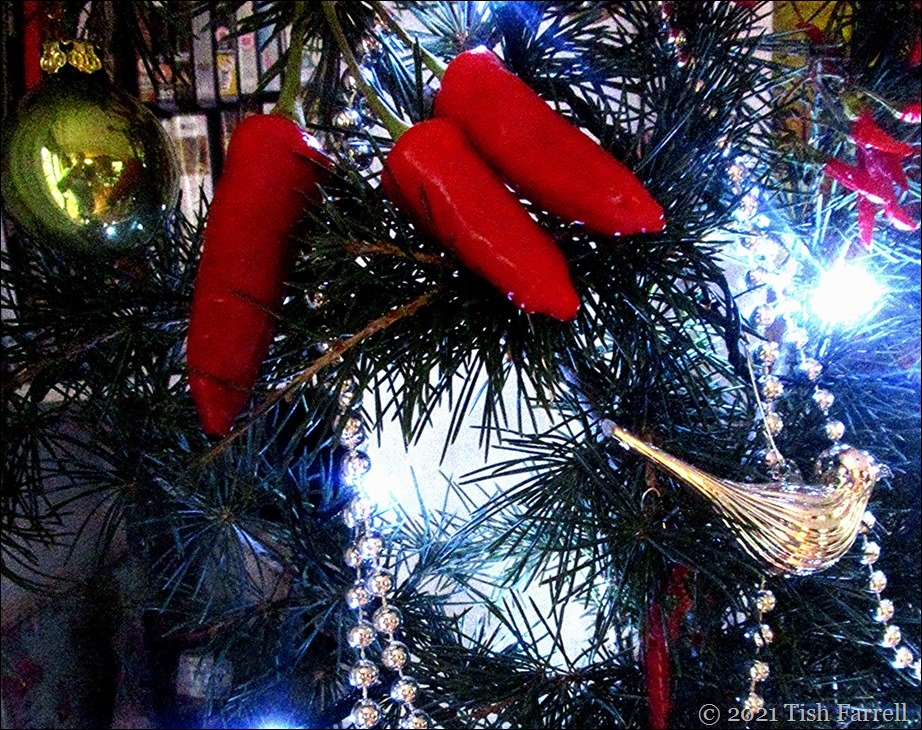
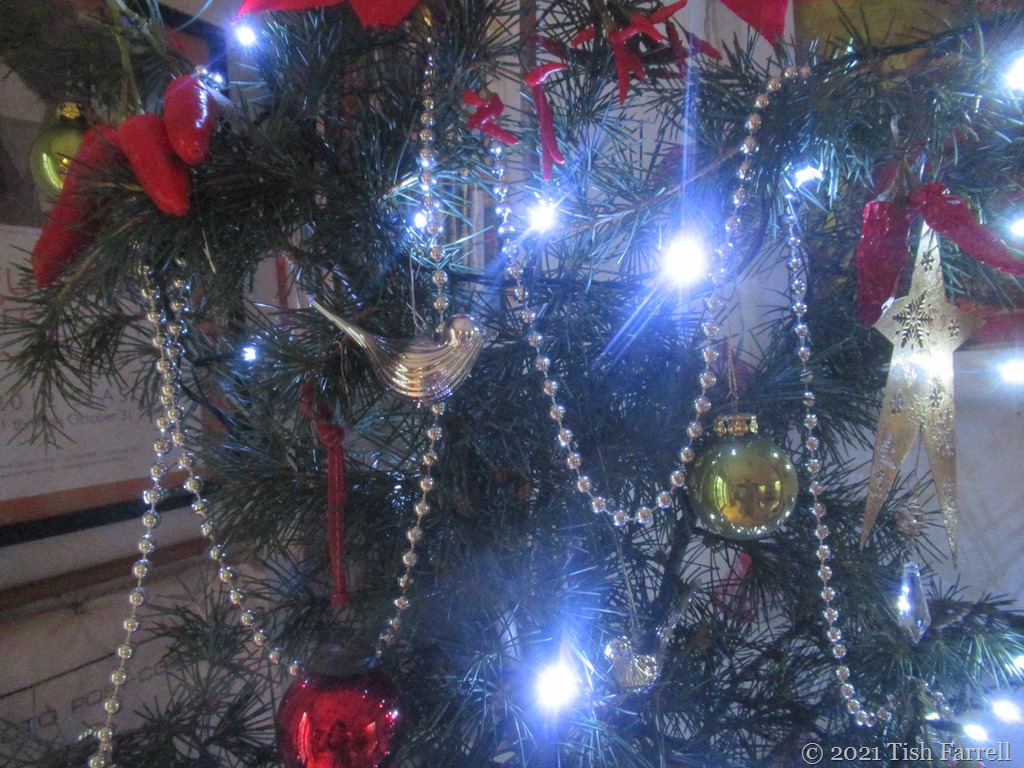
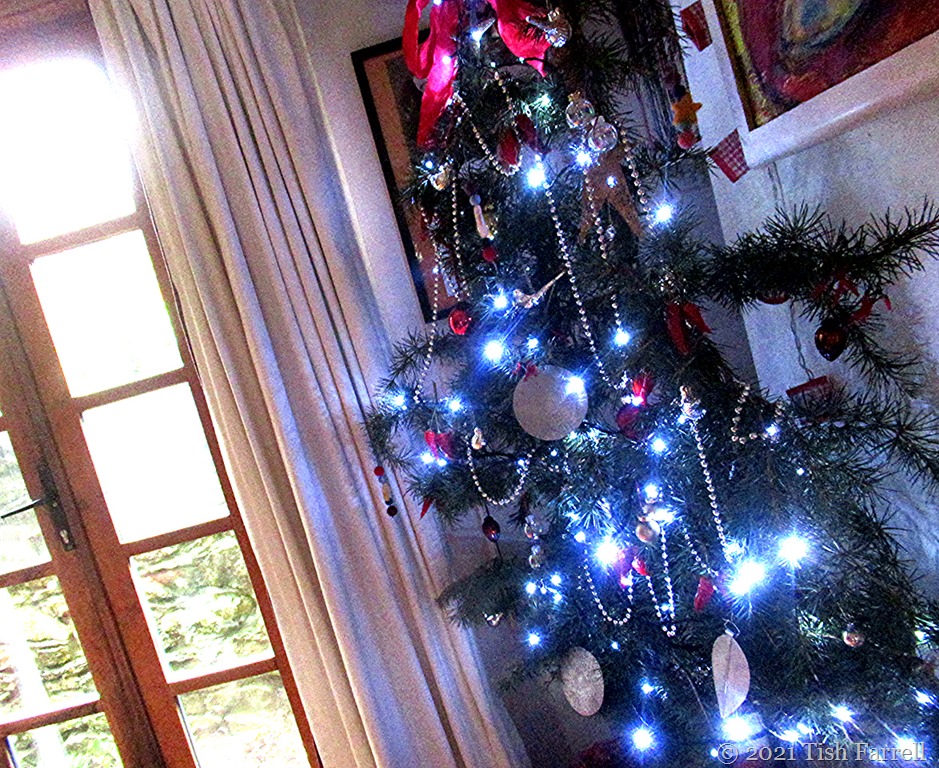
There’s not much leeway for Christmas trees in our cottage. This is mostly because the two main living rooms have multiple doorways. We ummed and ah-ed about getting a small one, and then one morning as we were walking home from a spot of shopping, there beside the old railway line at the junction with Sheinton Street was a crashed Wellingtonia branch, the result of high wind events in early December. So that solved the problem. For one thing it was flat. Two dimensional dressing only, which meant it would fit in the corner of the kitchen.

The branch was hauled home, trimmed and propped with rocks inside a coconut sellers’ basket that had come back with us from Kenya twenty odd years ago. It  was then sited in the chosen position where it did indeed fit. Just. Lights and decorations were unearthed, and it was then that certain limitations were encountered. When it came to suspending decorations, the individual small stems along the branch were neither robust nor numerous. They were also more vertical than horizontal. What to do? The in-house stock of lightweight knick-knackery was soon exhausted, leaving us, I felt, with a rather sparse effort, festively speaking. More red was needed, and that’s how a trip to the allotment polytunnel resolved matters. Chillis, large and small, were duly harvested. And the whole effort topped with a red ribbon. So there we have it; our make-do ‘tree’.
IMG_3205 (2)

IMG_3210

Wishing Everyone A Happy Problem-Solving New Year

Chasing The Light Over Townsend Meadow

P1060987

Those who come here often know that our Shropshire cottage overlooks a field that once marked Much Wenlock’s northerly boundary. It’s all in the name of course – Townsend Meadow. In times past it was pasture for dairy cows. The farm, long gone, was in the corner of the field, and the dairy, where the milk was collected, was a few doors down from our house on Sheinton Street. But in the years since we’ve lived here the field has been used solely for growing arable crops; wheat mostly, but now-and-then oil seed rape, oats, field beans and barley.

Our further view, beyond the field, is of the woods along the summit of Wenlock Edge. You can just make them out in the middle distance of the first photo. This vista and this field and the sky above, are the places where I endlessly discover events and effects. In this sense you could call it a source of rich sustenance; the everyday world that is never commonplace.

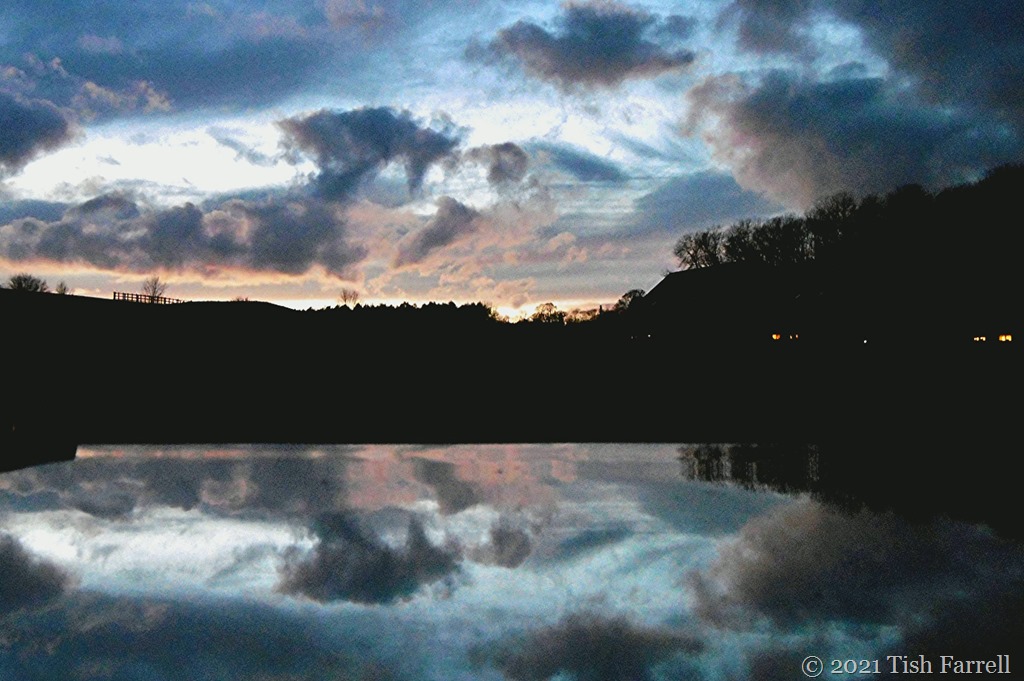
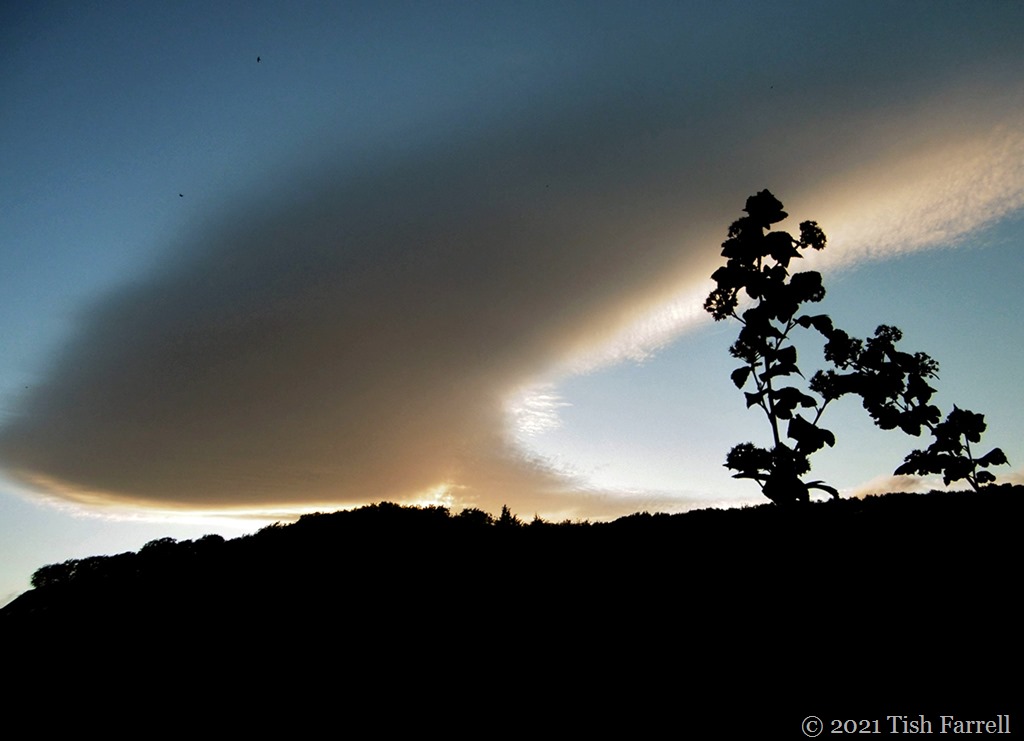
When it comes to photography, I belong to the ranks of happy snappers. I have zero technical skills, though somewhat perversely I’m particularly drawn to taking photos in challenging light conditions – to see what will happen, I suppose. The first photo is a good example. It was taken by opening the rooflight window in my office to the horizontal position (which also involved standing on the spare bed) resting my Lumix point-and-shoot camera on the back of said window – that is, on the outside frame nearest me – engaging some zoom, and hoping things are as focused as can be. And there we are.  It is a strange photo. A bit quantum physics-ish. Lost realms and parallel universe kind of stuff.

Here are some rather more obvious low-light Townsend Meadow moments.

P1070611

P1100710

IMG_0222

IMG_4214

P1080191

p1000553

IMG_2927ch

townsend meadow 5

Lens-Artists: Follow Your Bliss Lindy has set the challenge this week.

The Iron Bridge ~ Our World Famous Local Landmark

Iron Bridge 3

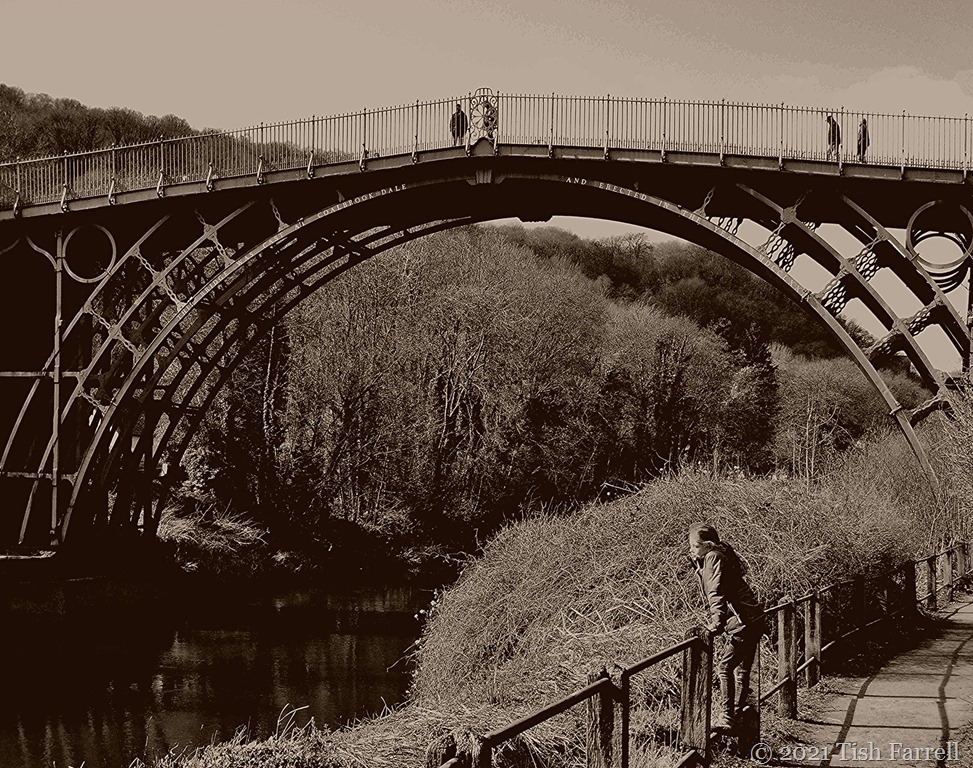
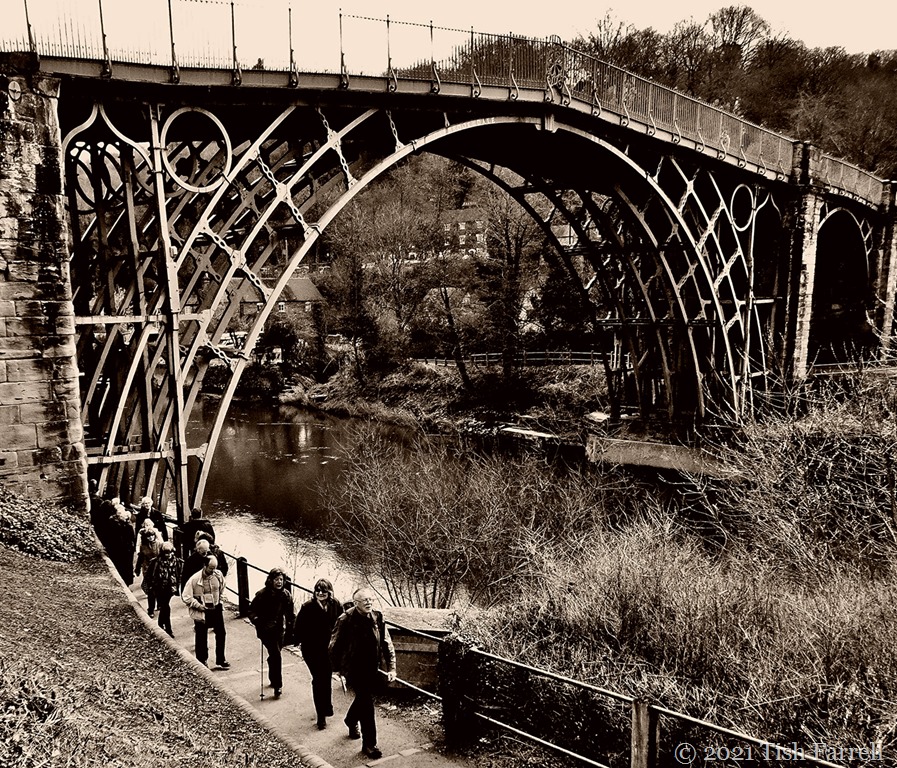
Well some of us might be excited by the sight of the world’s first cast iron bridge (a single span built in 1779 to replace a treacherous ferry crossing, while being tall enough to let the Severn sailing barges pass through without de-masting; cutting edge technology of its time). But then none of this appears to cut much ice with the lass on the fence. I love her look of wistful nonchalance. Bridge? What bridge?

Iron Bridge 2

Upstream of the bridge we find a band of happy industrial architecture enthusiasts. They have just enjoyed a spirited ‘Iron Bridge’ talk from the late John Powell, for many years librarian at the Ironbridge Gorge Museum Trust,  and seen here leading the group onwards to other exciting Severn Gorge sights.

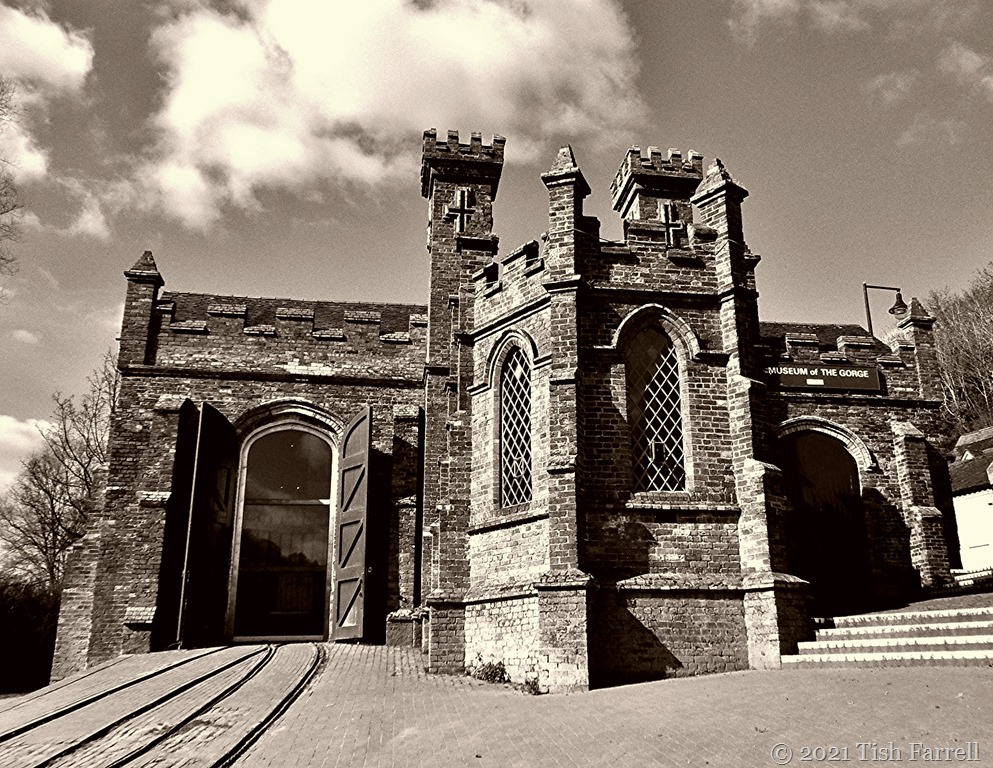
Which could well be this, the Coalbrookdale ironmasters’ riverside warehouse (built in Gothic style), the point from which their cast iron goods (especially cauldrons) were exported downriver to the wide world:

P1000856

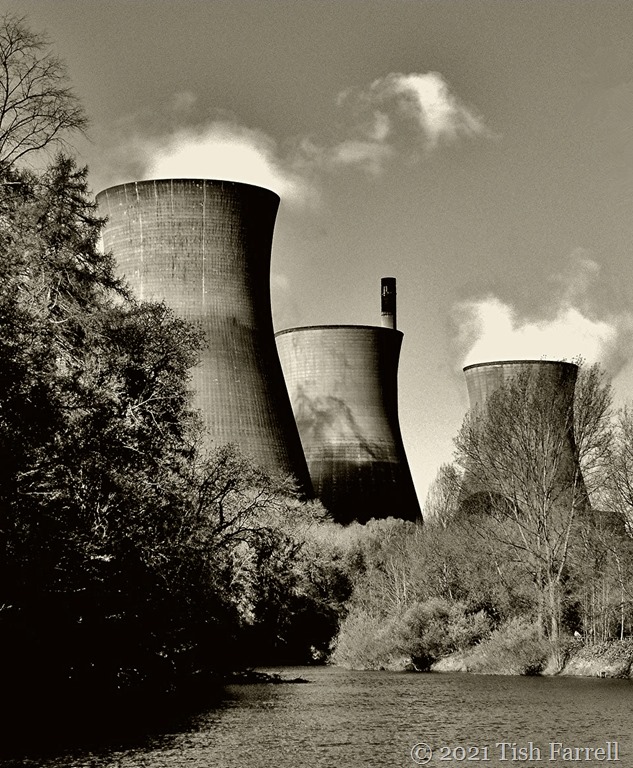
And at the time when these photos were taken, visitors to the Severn Warehouse would also have seen these:

Ironbridge cooling towers2

The cooling towers of the now demolished Ironbridge Power Station.

Cee’s Black & White Photo Challenge: on or by the water

So What’s Missing Here?

IMG_2799

We were walking along the top of Wenlock Edge earlier this week – Edge on the left of this photo, Ironbridge Gorge right of centre. This is a circular walk that can include Windmill Hill as a slight detour, but otherwise takes you out of Much Wenlock before sending you up a field path (with fine views of the Wrekin) to the Edge above Homer village.

The final climb to the Edge top is quite steep and rocky, but once negotiated, you step out on a  pleasingly level track, farm fields on one side, hanging woodland on the other. I should say, though, that for those nervous of heights it doesn’t do to stop and look down into the wood. There, the huge ash, beech, oak, and sycamore trees grow hugger mugger on prodigiously tall, straight trunks that cling to several hundred feet of near vertical hillside. Here and there, between rare gaps in the canopy, you can just glimpse the fields of the Shropshire plain way below.

This is a winter’s day view of the Edge trackway, the seeming benign but beetling Edge wood on the right:

P1060126

*

There’s a point further along this track where a path hives off at right angles, taking us back and down to the town. There’s also a particular fence post here that I often use in lieu of the tripod. I used it to take the header shot, including the grass stem pointer,  but in the past I used it to capture these views – the cooling towers of Ironbridge Power Station, shortly to be developed into a very large riverside housing complex:

 cooling towers

Here’s another winter’s view with the cooling towers steaming away, and to the left a glimpse of the chimney beacon that finally came down this summer:

101_4973

cooling towers resized

All gone now. This may well be a good thing. On the other hand,  we need to think very hard and carefully how, and at what precise cost, we will heat and power our homes in the future. At present there is, to say the least, something of a technological shortfall. Nothing, it seems, is settled.

IMG_2803

Changing Seasons: This Was October

IMG_2641

The turn of the year: light and shadow; one summer gone, another planned for:

In Townsend Meadow…

IMG_2718

IMG_2711

IMG_2729

*

Around the town: winter wheat sprouting, highland cattle lounging…

IMG_9202

IMG_9201

IMG_9197

IMG_9218

*

At the allotment: October morning glories on the pea sticks and in the polytunnel, bucket planting of endive and chicory for winter salad, summer squash and the last sweetcorn eaten, a sudden blooming of nasturtiums…

IMG_2647

IMG_2635

IMG_2554

IMG_2557

IMG_2661

IMG_2643

*

Final floral fling in the home garden:

IMG_9195

IMG_2769

IMG_2768

IMG_2778

*

Over the garden fence (sunshine and lots of rain)…

IMG_2781

IMG_2762

IMG_2561

IMG_2568

IMG_2751

*

On the Linden Walk:

IMG_2665

IMG_2694

IMG_2678

The Changing Seasons: October 2021  Please join hosts Ju-Lyn at Touring My Back yard and Brian at Bushboys World for this monthly challenge

Orange Power

IMG_1137

I thought this marigold square deserved another outing – essence of orange as visual infusion. And yes, I know. I keep writing about this particular cottage garden pharmacopoeia, so just to prove I’m not some old wife telling ill founded tales, here’s a scientific paper that highlights calendula’s potential for all manner of human ills, and calls for a thorough investigation of likely benefits. The list of this plant’s phytoconstituents is breath-taking:

https://www.ncbi.nlm.nih.gov/pmc/articles/PMC3841996/

The paper also points out that pot marigold, Calendula officinalis, is used clinically around the globe, especially for skin complaints. This has been so for hundreds of years. It would certainly have been found in the monastic physic garden, and the medieval wife would also have grown it in her kitchen garden, since she was the one responsible for dealing with family ills in an era when ordinary folk had to shift for themselves when it came to illness.

Anyway, just looking at my current marigold horde at the allotment cheers me up. So here’s a further dose:

IMG_9553

IMG_9044

Past Square #28

Life in Colour: Orange