on a knife edge at victoria falls

Zambia's Victoria Falls looking along knife-edge to Zimbabwe's falls

Hang-gliding over the hundred metre precipice at Victoria Falls is not to be recommended. Nor had I intended to take the plunge, my ‘sail’ being nothing more than a wet kanga-wrap, held up to fend off a tropical deluge. Somehow, though, circumstances (and a lack of sensible forward planning) had led us to the Falls’ knife-edge just as Zambia’s 18-month drought was ending, and the rains beginning. Even without  the hang-gliding it was a heart-stopping moment.

The prolonged drought across Southern Africa was of course the reason for Team Farrell’s presence in Zambia in late 1992. The Team Leader, Graham, had been seconded to the European Union Delegation to manage maize flour and cooking oil distribution to foodless villages across the nation. We had only been in the country a couple of weeks when G was directed to go down to Livingstone on the southern border to inspect a newly arrived consignment of maize. His boss suggested he should drive down on a Saturday and take me too. Naturally Nosy Writer (that’s me) was only too pleased to head off on a several hundred mile safari.

Looking back, the diplomat’s suggestion that I should go was possibly a kindness in disguise. Nothing was spelled out, since we were newly arrived, and Bernard (aka the boss) did not wish to scare us before we had found our bearings. But security in the capital Lusaka was not good. President Chiluba, the newly democratically elected leader, had been in office for barely a year, this after ousting the incumbent of decades, Kenneth Kaunda.

Later it transpired that Kaunda’s army officer son, Rezi, had been intent on destabilizing the country, and was apparently behind the city’s upsurge in violent crime. On top of that, in neighbouring Zaire (now DR Congo) President Mobutu had not been paying the army, and so gangs of gun-toting soldiers would drive down to Lusaka for a spot of night-time car-jacking and house-breaking. In a nation of impoverished people, the diplomatic quarter was the obvious target. Better, then,  that I should not be left alone. Not that I knew this then. Nor had G’s company thought to mention any of this before offering his services to the EU. As they say, ignorance is bliss.
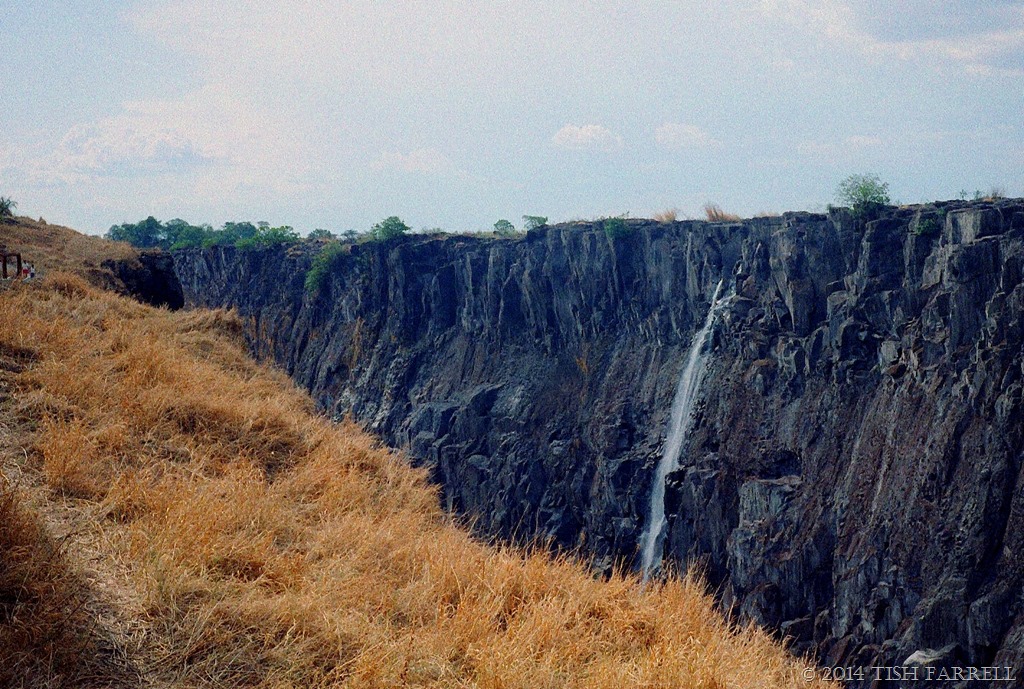
Zambia's Victoria Falls in the dry season

And so one Saturday morning under a wide blue, and seemingly ever rainless sky we set off south. The road, once clear of the city, ran on mile after mile after mile with hardly another vehicle in sight. We passed through landscapes of rolling woodland, the tall-tree miombo which, at first glance seemed more like Europe than Africa. After nine months in Kenya the vistas, too, seemed curiously lacking in drama –until, that is, we reached Livingstone.

Our hotel stood beside the Zambezi, and after tea on the lawn in the English manner it was off to the nearby Falls. The photo above was my first view of them. I wasn’t sure whether to laugh, cry or simply stare open-mouthed. Where was the water?

The drought had much to do with it of course. But the other reason was that Zambia abstracts large volumes of water to run its hydroelectric plant.
004 (2)

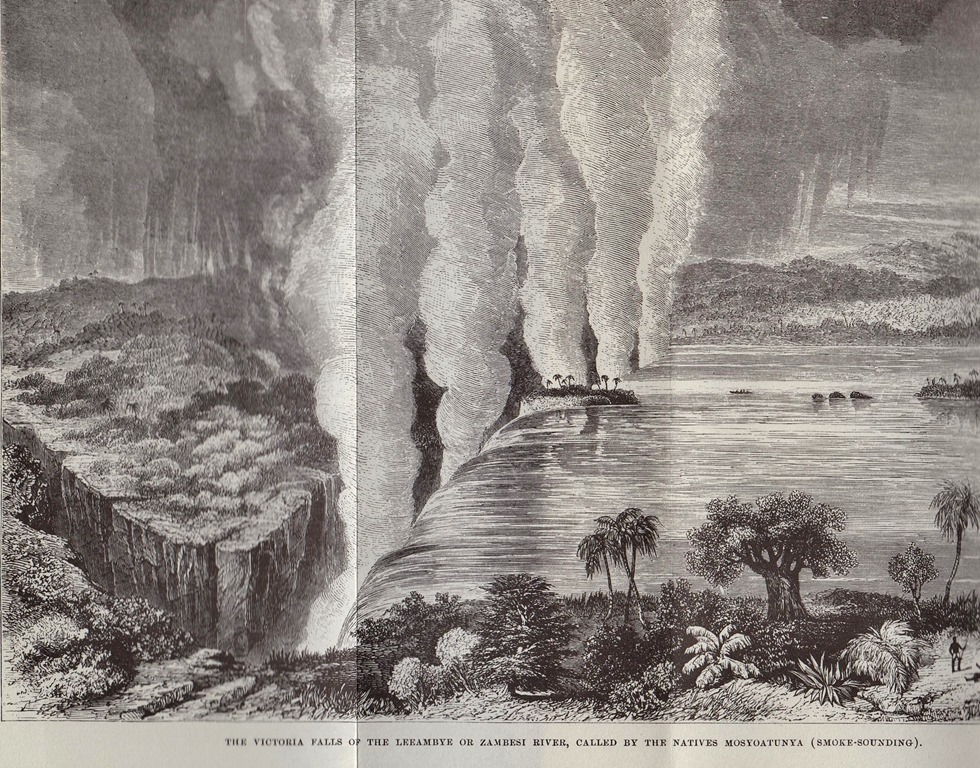
The Falls as seen (and ‘discovered’) by  David Livingstone.

Engraving from Missionary Travels and Researches in South Africa 1857

*

G told me the best view of the falls was across the border in Zimbabwe, and that if we had remembered to bring my passport we could have walked across. Most frustrating.

Instead, we walked along the path beside Zambia’s waterless gorge.  But trailing through dead vegetation while staring at the stark basalt cliff face felt more and more oppressive. It made me think of Tolkein’s Mordor. We gave it up and went back to the hotel.

Our room theoretically had a river view. In reality all we could see was its empty bed, with huge boulders and clumps of palms here and there. But on Sunday afternoon I noticed that people walking across it. “Let’s go,” I said.

The sun was shining when we set off, and soon we were joined by a boy who appeared from nowhere and offered to guide us to the best Falls’ viewpoint. We duly followed, picking our way round oily looking rock-pools, mammoth sized boulders, and piles of fresh elephant dung.

We must have scrambled on for nearly a kilometre when the sky started to turn grey. I began to feel nervous, glancing upstream and expecting a wall of water to come rolling down. Or to walk round a boulder and into an elephant.

And then the rain came down. Fat freezing drops. We made a dash for cover, which happened to be some trees on Livingstone Island, the very spot from where the explorer had first viewed the Falls in 1855. We crouched for ages under dripping trees until at last, thoroughly soaked, G asked the boy if the ‘good view’ was much further. On discovering that it wasn’t we made a final dash. And here it is. The view:
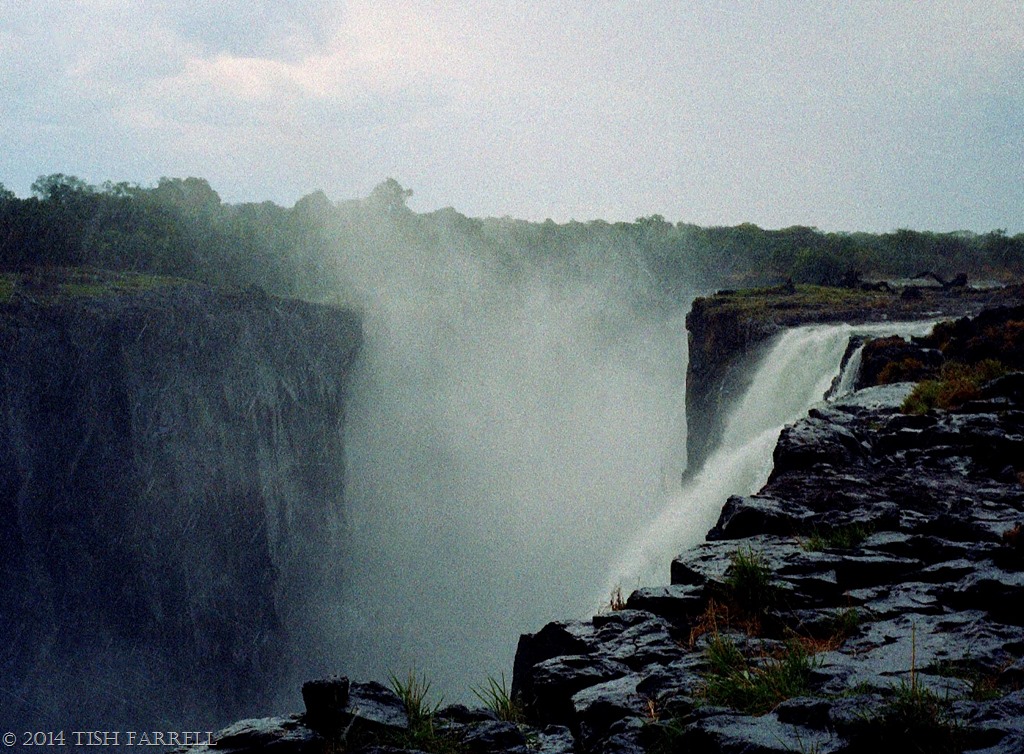
Victoria Falls, looking over the knife edge in a rainstorm

Not much to be seen for the spray coming up, and rain coming down. I took this quick snap, and then held up the sodden cotton wrap that I had been wearing earlier to fend off the sun. As I stood on the knife-edge the sudden gust of wind that filled the wrap was enough to lift me towards the abyss. I stepped back in shock. I’d had more than enough of Mosi-oa-Tunya (the smoke that thunders). So had the boy.  Soon he was sprinting away without even waiting for a tip, and that really had me worried. What did he know that we didn’t? We slipped and slid, back the way we had come. More phantom elephants. More imaginary flash floods. More getting lost in outcrops of giant boulders. It seemed a long, long way back to the hotel.

It was not until several months later that we finally got to see the Falls, this time from the Zimbabwe side. On this occasion we only got drenched from the spray, while I took yet another wet and misty photograph, but thankfully avoided all inclination to hang-glide.

Victoria Falls and Zambezi

copyright 2014 Tish Farrell


Related:

The Smoke that Thunders

Letters from Lusaka I

Letters from Lusaka II

Once in Zambia – in memoriam


Daily Post Photo Challenge: adventure for more bloggers’ photo-adventures

strait edge

IMG_0834

This awe-striking effect of cloud and sunlight seems to be a feature of Menai Strait, the narrow stretch of tidal water between the island of Anglesey (Ynys Môn) and the North Wales mainland. This photo (looking towards the mainland) was taken around midday in December last year. The cloud had banked so thickly it seemed we were heading into night. Over the previous days there had been horrendous winds that had torn across the island, ripping up trees and closing roads. And then quite suddenly the sun broke through – a moment of luminous tranquillity after all the storms.

Anglesey has a long and dramatic history extending back to at least the Neolithic. At the start of the Common Era it was also the stronghold of the Celtic peoples’ priestly caste, the Druids. These warrior mystics were slaughtered in a terrible battle by the army of the Roman Governor of Britain, Suetonius, which in 61/62 AD bore down on them across this Strait. You can read more about it in Island of Old Ghosts.

copyright 2014 Tish Farrell

Ailsa’s Travel Challenge: Edge for more edgy photo stories

Hyena Heist in the Mara

Scan-140826-0021jpeg

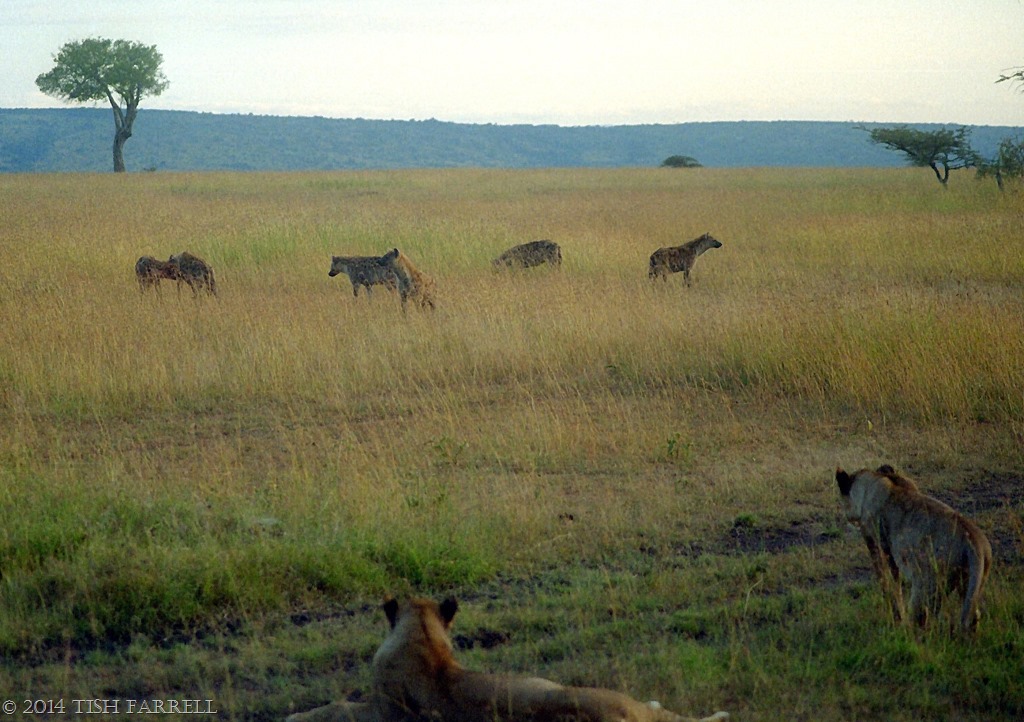
First light on the Mara plains, and the Marsh Pride lionesses have eaten well. In the night they have killed a giraffe and are resting up near the remains of the carcase.  The peace doesn’t last though. And it isn’t us who are bothering them.

Scan-140826-0029jpeg

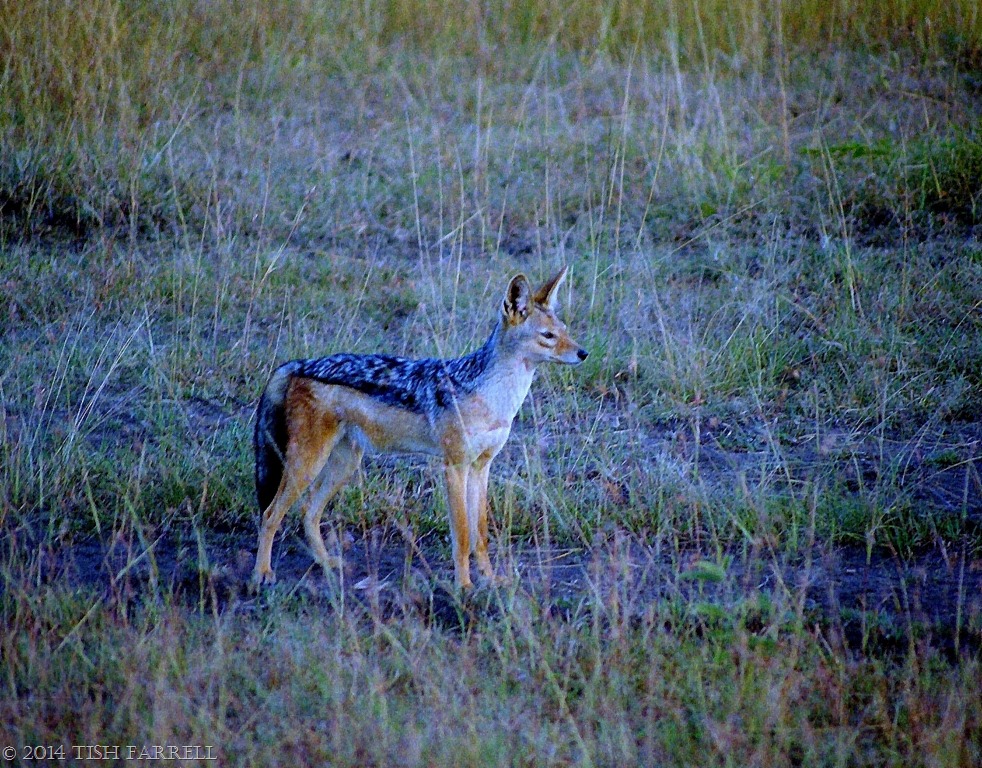
Other predators are moving in on the leftovers.  First a black-backed jackal comes trotting by, watches hopefully from the side-lines. Her chances are looking slim…

Scan-140826-0024jpeg

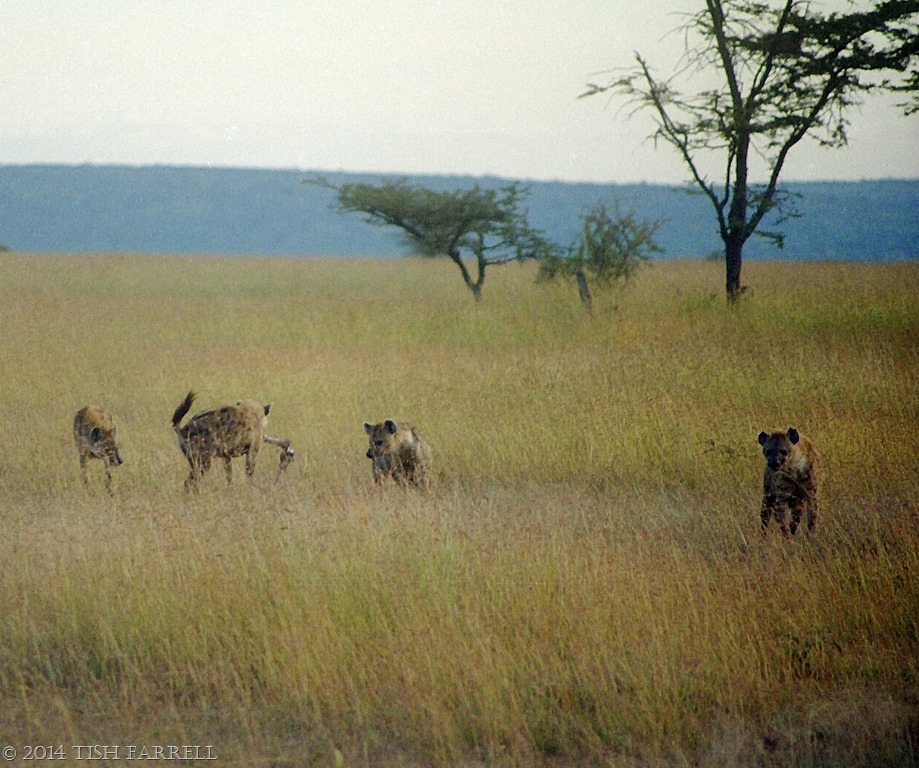
…already the heavy mob are moving in – a pack of spotted hyenas.

Scan-140826-0027jpeg

As I said in an earlier post, hyenas do  not only scavenge, they are powerful hunters with jaws like demolition-crushers. And despite their lop-sided gait, their feet with blunt, non-retractable claws, are well adapted for the long-distance chase. They can take down a wildebeest and eat and digest the lot (apart from horns and rumen) within 24 hours. They will also eat anything, including the faces of sleeping humans caught out without sufficient night-time protection. This was a commonly reported horror while we lived in Kenya.  In consequence they are East Africa’s most successful large predator, apart from politicians, that is.

Scan-140826-0026jpeg

Here, one of the pack has made a rush on the kill and escaped with some leg bones, but it doesn’t look as if sharing is on the hyenas’ menu.

Scan-140826-0006jpeg

Scan-140826-0008jpeg

The lionesses go on watching, alert in that laid-back kind of way that cats do so well. The remnants are not worth fighting over. When the time comes, and bellies are empty, they will make another kill.

FLICKR COMMENTS ‘H’ WORDS for more bloggers’ stories

copyright 2014 Tish Farrell

sunday stills: from my garden today

100_6285

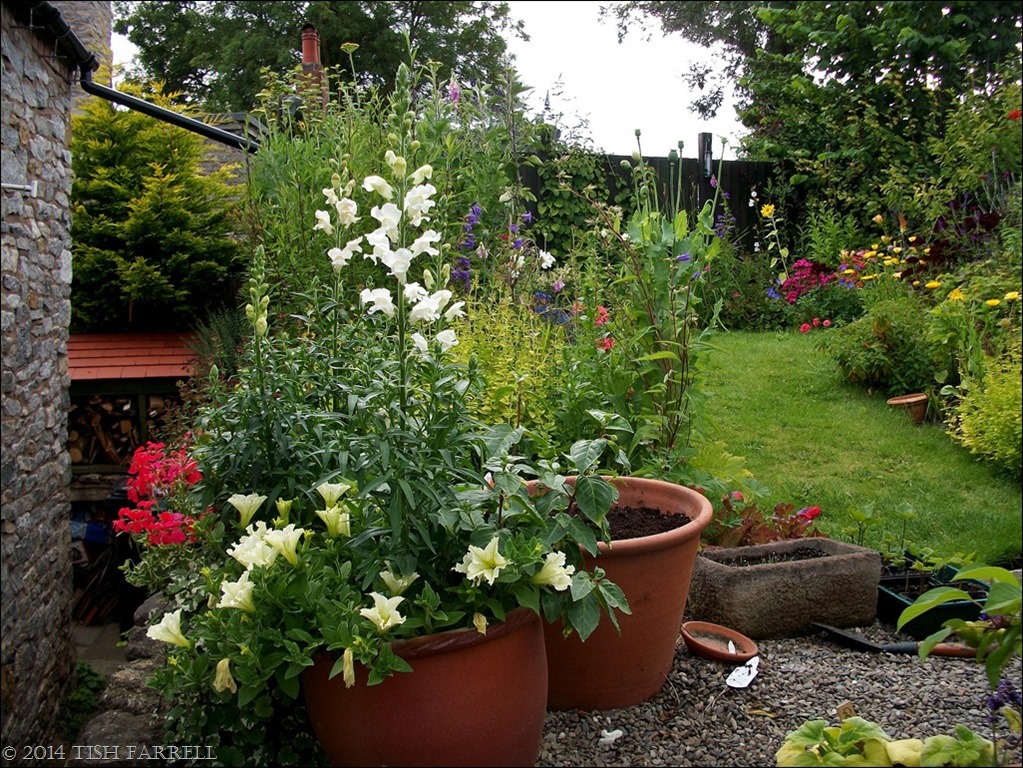
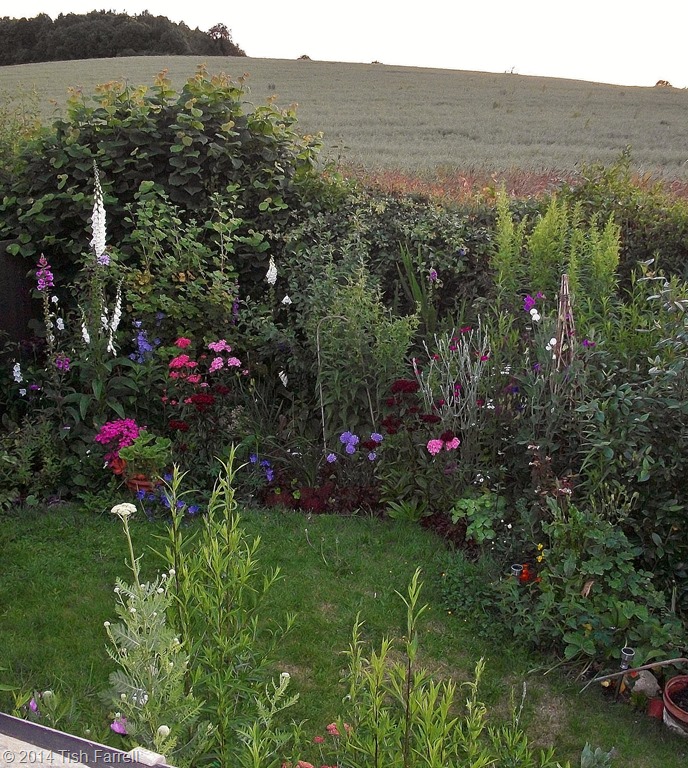
There’s a rainstorm brewing along Wenlock Edge, and the garden has taken on an autumnal air. All afternoon I’ve been watching this harvester ply the wheat field. At close quarters the cutting blades are of a scale more suited to the Canadian prairies than to a small Shropshire field. I feel the soil compact beneath the giant machinery, and it strikes me that industrial farming does not care much for the welfare of the earth, or ultimately for the nutritional quality of the crops produced.  I have this image of starvation in the face of plenty, and think how skewed have our rich-world values have become. But before I make everyone feel too dreary, here’s a brighter shot of my garden earlier in the summer.

013_thumb2


Sunday Stills

Cee’s fun foto challenge: water/winter

100_1454


100_1451 - Copy

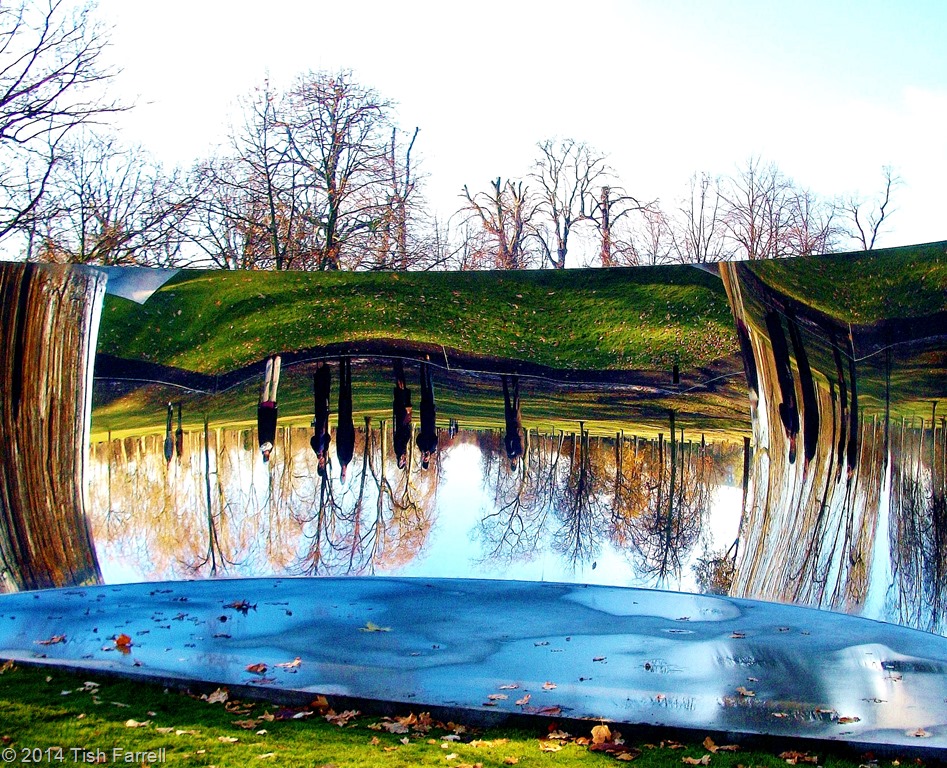
These photos of the C-Curve by Indian sculptor, Anish Kapoor, were taken on freezing cold winter’s morning in London’s Kensington Park. The marvellous stainless steel creation was one of four Kapoor pieces sited across the park for the Seeing the World Upside Down exhibition hosted by the Serpentine Gallery and Royal Parks in 2010-2011.

Some of you will have seen these  shots in earlier posts, but I thought they were perfect for Cee’s challenge for all sorts of reasons. For one thing, the stark silhouettes of trees say ‘winter’, but the bright sunlight also says that life goes on; and the trees themselves, though dormant, are still full of life. I also like the reflections of the couple and the trees in the puddles on the plinth, and the reflections of the puddles in the sculpture. It is all so playful, yet reflective too – and in every sense.


Cee’s Fun Foto Challenge: water or the season of winter    Go here to see more bloggers’ takes on this challenge

“Wheat…fields of wheat…” Musings on the path to the allotment


100_5994

Okay, who knows which film this quote comes from? As an extra clue I give you the line in ‘full’: “Wheat… lots of wheat… fields of wheat… a tremendous amount of wheat…”

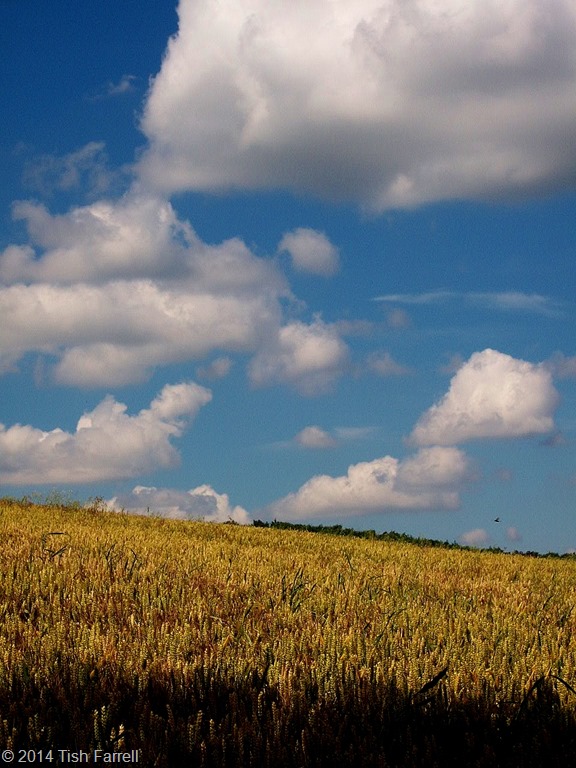
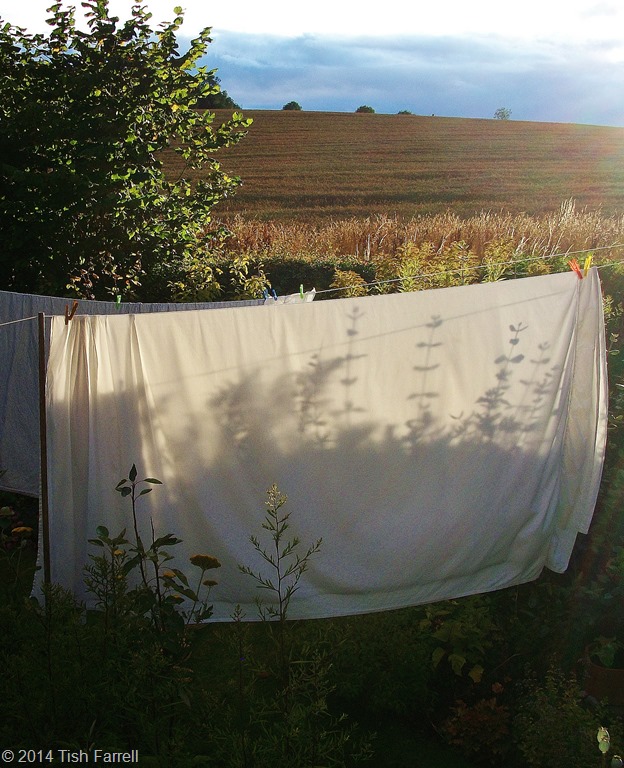
For some reason I cannot explain, this particular exhortation is rather popular in the Farrell household.  The Team Leader is wont to deliver it at unexpected  intervals and with some vigour. This habit even predates the time when we actually came to live beside  a field that often has wheat growing in it. So here is it. The field behind our house. And while I admit it might overstep the bounds of propriety to share my washing with the world, here is another view of the wheat field from our garden. I also think the flower shadows on the sheet rather fine: housework turned artwork?

077 (2)

I have written in earlier posts how our house lies on the edge of Wenlock Edge, a twenty-mile scarp formed from the upthrust bed of a tropical sea – the Silurian Sea in fact. This geological formation is a breath-taking 400  million years old – a place once inhabited by trilobites, and molluscs, and sponges and corals, although it should be made clear that when these creatures lived, the shallow sea in question was not in the northern hemisphere.  No indeed. In its tropical heyday Shropshire lay off equatorial East Africa. We are thus, for all our rustic appearance, a well-travelled county. We also have lots of geology of international importance, but  which I cannot begin to describe because the terminology and chronological expanses confound even me, a prehistorian. The Shropshire Geological Society have  a good site HERE should you wish to know more.

100_2077

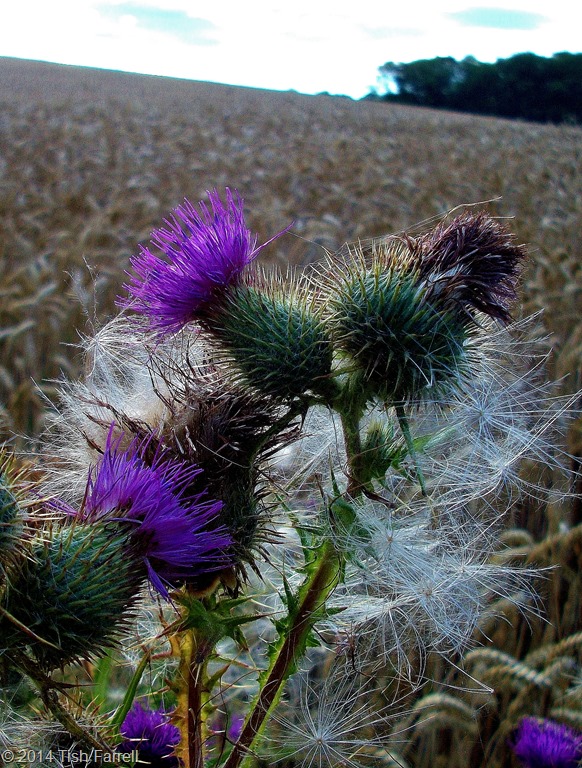
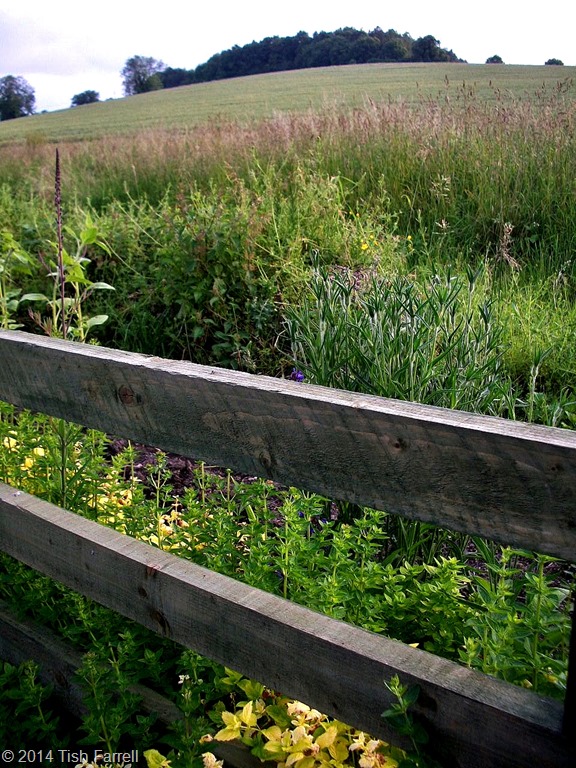
The reason I’m showing you the wheat field is because my path to the allotment runs along the edge of it. I walk back and forth at least once a day. And so when I’m not writing blog posts or fiddling with my novel, this is one of the places where I’m likely to be. There is always something that catches my eye – thistles, the light, clouds, buzzards, the rooks and jackdaws, a neighbour’s three white ducks that regularly escape from their pen to eat slugs along the path, cats on the prowl, pretending I can’t see them.

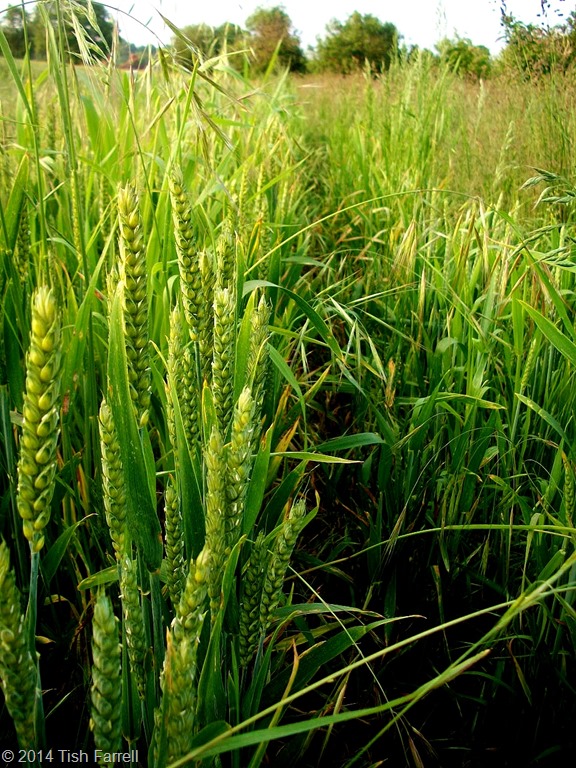
Even the wheat is quite interesting. It amazes me how it manages to force its way up through a cloddy layer of grey clay that bakes to concrete after a few days with no rain. This soil, too, is a product of a geological event – a deluge of  volcanic ash from aeons ago and that has now broken down into bentonite clay.  It is the same soil in the allotment. Soft fruits seem to thrive on it. Everything else is a challenge. Wheat, though, has apparently been grown along the slopes above the town for generations, hence the name The Wheatlands for some of our now built-upon areas.

100_5840

100_5839

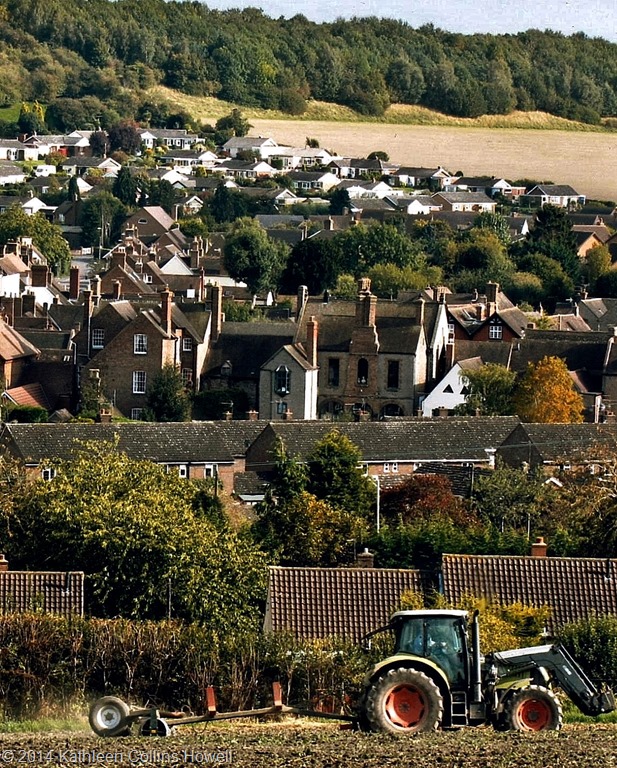
And talking of building, a couple of years ago when the Local Authority called for landowners to put forward development land, our local landowner proposed  this and most of the fields on the Edge side of the town, including the allotments too, gardens  that have been there since the 1940s.  Development on this scale is something that most town residents fervently  hope will not happen. We have already been threatened with up to 500 houses over the next 11 years. This in a town with antiquated drainage, severe traffic congestion, few jobs, poor public transport, and inflated house prices, and one that has seen several new developments of upmarket houses in the last few years.  More crucially, the town sits in a bowl below the Edge and has recently been designated a rapid response flood risk area by the Environment Agency.

001 (2)

More tarmac, roofs and roads that speed up run off from the hills above our homes are the last thing we need.  Some of the newest developments in the town are themselves subject to flooding.

100_5849

 100_5995

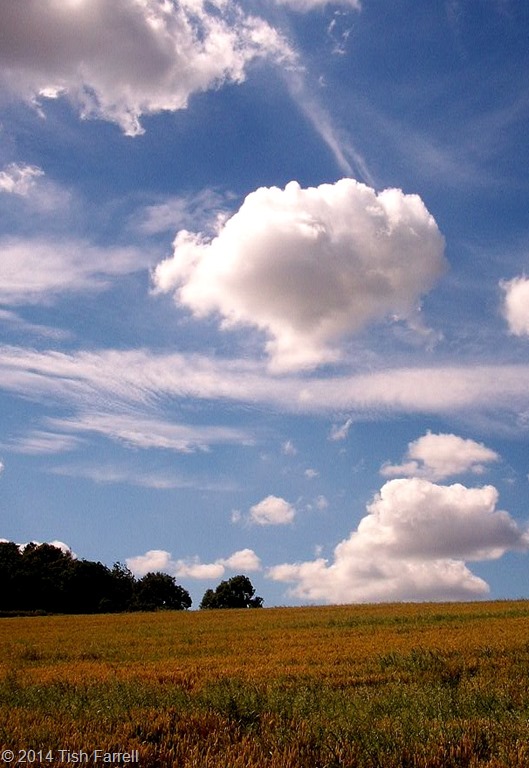
All right, I admit it. The landscape behind our house is perhaps not particularly noteworthy of itself, but the light and sky above it are. The uptilted scarp of Wenlock Edge forms a false horizon, so there is always much weather to watch. It changes every second. One day we saw a fire rainbow which we gather is quite rare.

Ironically, it it perhaps because this view from our house is ever under threat, that makes us look at it and appreciate it all the more. But it makes me angry too. I am not opposed to development, but it should be well planned, and enhance the locality, not cause problems for other people’s homes. There appears to be no mechanism in English planning that can ensure the provision of good quality housing at prices people can afford. Density seems to be the only planning criterion, not  homes with green spaces around them, and places for community orchards and gardens, footpaths and cycle tracks and areas where people of all ages can play. All things that boost wellbeing. You would wonder why it is so hard to do.

It is true that  Much Wenlock people have recently voted to have the Local Authority  accept their Neighbourhood Plan, a community compiled document that reflects our aspirations and plans for the foreseeable future. Our Conservative Party MP, Philip Dunne, tells us the Plan will deliver localism to our door, that is, we will have a say in the kind and scale of development that is proposed for our town and parish, development that will protect landscapes, open spaces and heritage while improving the quality of life for everyone. Whether it will, or not remains to be seen, particularly under a government whose recently sacked Secretary for the Environment apparently allowed for the destruction of ancient woodland as long as developers replanted elsewhere.  Bio-diversity anyone?

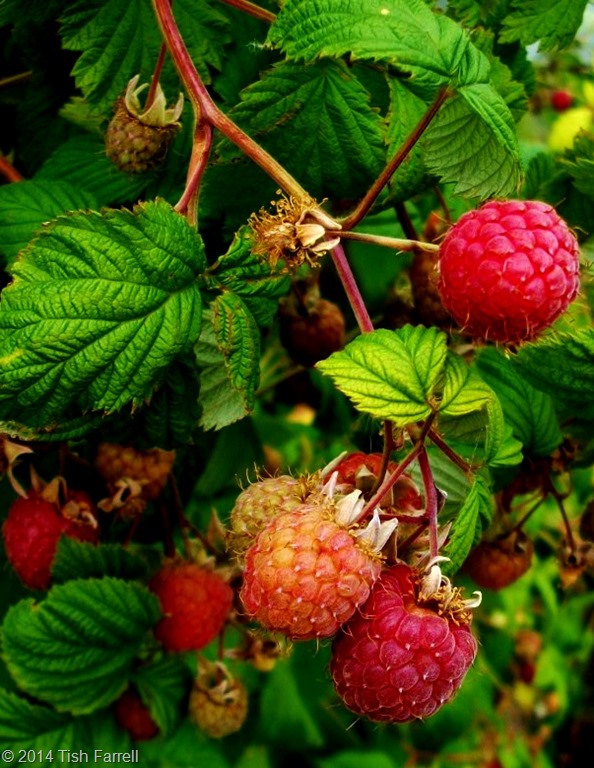
Which I suppose brings me back to the quote; “Wheat…fields of wheat…” You can’t get more of a monoculture than that. Hey ho. So many things to unpick. Think I’ll trundle up the path to the allotment and pick raspberries.

copyright 2014 Tish Farrell

Related:

…of Silurian Shores

Old Stones of Wenlock: repurposing the Silurian Sea

In Much Wenlock an Inspector Calls

100_4193

P.S. The quote is from Woody Allen’s Love and Death