Expressions Of Power ~ Secular And Spiritual?

P1050703 - Copy (2)

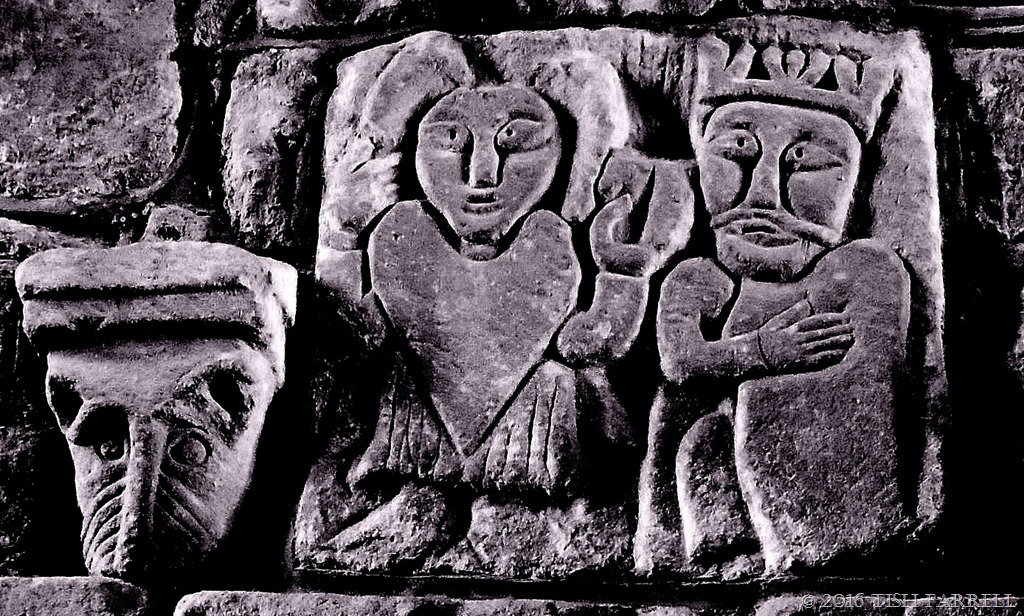
These Saxon carvings in Wirksworth’s St. Mary’s Church in the Derbyshire Peak District are around 1,300 years old. They appear to have been randomly placed in the walls during the rebuilding of the church during the thirteenth century. Nothing more is known about them, or of their precise age and origins.

At the time they were carved, Wirksworth, located in the English East Midlands, was part of the great Saxon kingdom of Mercia, whose kings and sub-kings held dominion over most of England between AD 600 – 900. i.e. until the Vikings arrived and spoiled it all with the imposition of Danelaw.

Mercia also included my West Midlands home county of Shropshire and, though seventy odd miles apart, it turns out that Saxon, and indeed later, Wirksworth has much in common with Much Wenlock; so much so, I think the towns should be twinned.

One of the Mercian kings’ cunning strategies to cement their power over their extensive territory was the spreading of Christianity, and the setting up of religious foundations and church minsters on their royal estates. These were ruled by abbesses, kings’ daughters and noble women who had been thoroughly educated for the job.

In Much Wenlock we have Milburga, daughter of King Merewald  who ruled over the Wenlock dual monastic house (monks and nuns) from around 680 AD. Her sisters and mother also had charge of religious houses across Mercia, and this function further included the management of the considerable estates and the resources that went with them.

The spread of Christianity across Mercia had its beginnings some thirty years earlier when Elchfrida (also Alchfliad), daughter of King Oswui of Northumbria married Peada, son of Penda, the last great pagan king of Mercia. According to Bede, Oswui had murdered Penda, and the later marriage of his daughter to Penda’s son was part of a peace treaty between Northumberland and Mercia, conditional on Mercia adopting the new faith. Elchfrida thus travelled south into Mercia with an entourage that included missionary priests, and it is supposed that one of them, Betti, founded the church at Wirksworth in 653 AD.

Which brings me back to the Saxon carvings. We clearly have a king. And so perhaps also his queen? It would be nice to give them names – say, Elchfrida and Peada? On the other hand the looks they are giving us are a little disturbing; Sphinx-like, enigmatic; as if they know something they cannot now reveal. Even the wild boar that has been popped in beside them by the thirteenth century mason re-cyclers looks to have something worrying on his mind.

But there is a post-script to this story. It would seem that not long after the marriage, Elchfrida betrayed her king, which led to his murder. For a brief time, then, her father King Oswui held sway over Mercia, until the uprising of 658 AD when another of Penda’s sons, Wulfhere, restored Mercian authority. It makes one wonder if Elchfrida, Christian or not, wasn’t a double agent all along. I wonder what became of her.

Wulfhere apparently went on to implement the ‘dynastic power and faith’ model with the founding of Repton Abbey near Derby. Here he installed his daughter Werburgh (later sanctified like Much Wenlock’s St. Milburga) as the first abbess. So here we have yet another example of ‘Princess Power’ Saxon-style – of royal women extending and consolidating the temporal power of their fathers through the exercise of spiritual authority.

Back in Wirksworth a document from 835 AD indicates that at this time the Wirksworth township was under the jurisdiction of Abbess Cynewaru. But there was serious trouble afoot. It seems she was being forced to cede some of her land holdings to Duke Humbert of Tamworth. She was especially afraid that this would compromise the sending of a gift of lead, valued at 300 shillings, which she made every year to Christ Church, Canterbury. (Wirksworth had been an important lead-mining area since Roman times).  Just to make sure that Duke Humbert knows where his duty lies, and who has the upper hand spiritually speaking, she proclaims in the charter that ‘if anyone should take away this my gift from Christ Church, Canterbury, may he be smitten with perpetual anathema, and may the devil possess him as one of his own.’

Fascinating stuff all this power-wielding.

copyright 2016 Tish Farrell
 

Black & White Sunday: Expression

Two Being Nosy On The High Street ~ As Caught By Nosy Writer ~ (That Would Be Me)

100_6264

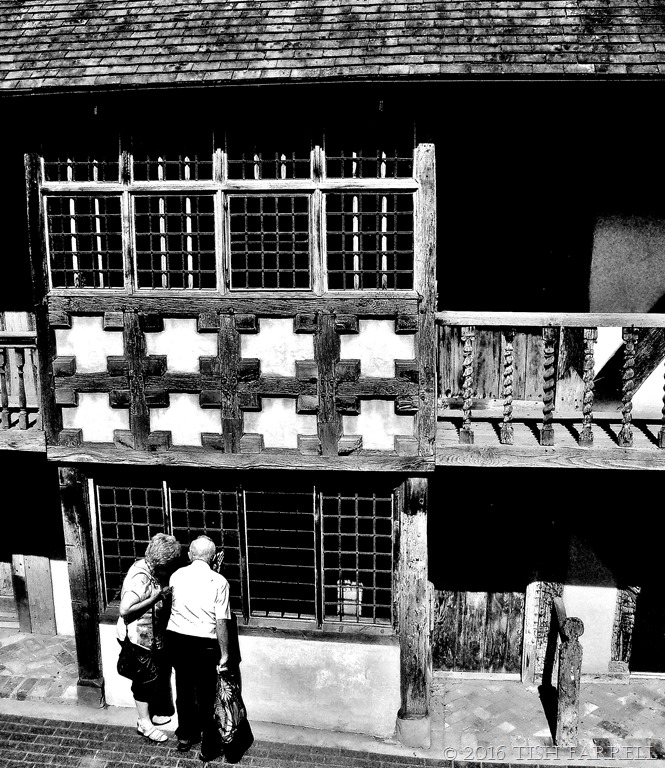
I do it myself of course when I’m walking along Much Wenlock High Street. The windows of Raynald’s Mansion are just too tempting for those disposed to be nosy. There are always interesting artifacts and pieces of unusual antique furniture inside. The place appears to be some kind of shop, but it is never open. The extraordinary timbered facade, built in 1682, was apparently a later addition to a fifteenth century hall. The Victoria County History for Shropshire rather sniffily suggests that this kind of construction was both crude and ‘old hat’ for a time when everyone who had money was going in for smart townhouse frontages in brick and stone. But  never mind the architectural snobbery. It is still one of the town’s most picturesque buildings. There are also said to be ghostly apparitions at these windows. Just the job for Halloween. I must look out for them the next time I’m out and about on the High Street.

 copyright 2016 Tish Farrell
Black & White Sunday: Couple(s)

Derbyshire’s Arbor Low ~ They Call It The Stonehenge Of The North

IMG_3357

Unlike Stonehenge a visit to Arbor Low does not include accompanying hosts of fellow enthusiasts, tacky gifts and bad coffee, nor the parting with large sums of money to go in (adult ticket £16.50). In consequence there are absolutely no facilities, no opening or closing times, and thus no need to pre-book to avoid the rush.

There is, however, an honesty box by the farm gate, and a requested fee of £1 per person. This is fine by me. The monument, though scheduled, is on private land. The farmer has to put up with the repeated nuisance of standing stones devotees, although on the September afternoon of our visit, takings suggested that scarcely a couple of dozen others had preceded us that day, and as we set off from the car there were only three people ahead of us on the track.

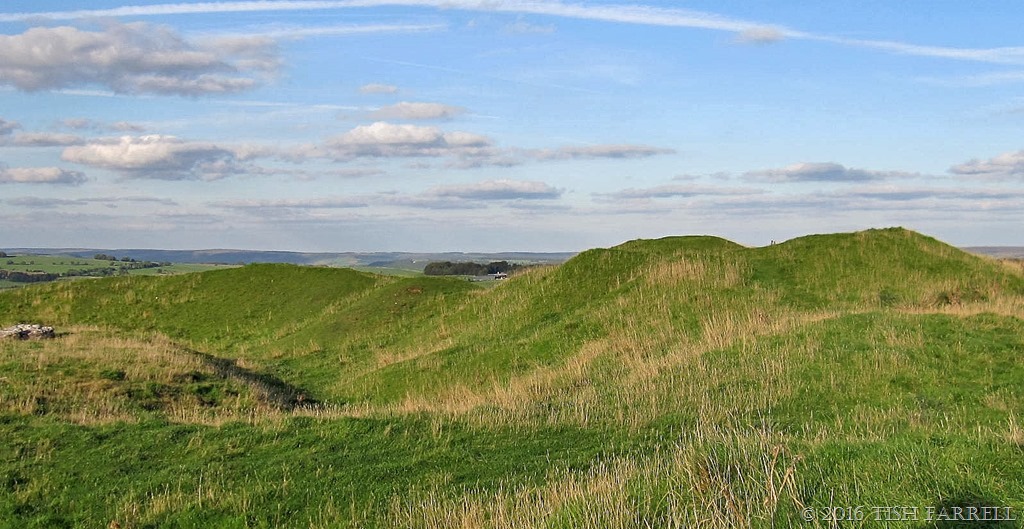
The only problem with Arbor Low is that once you’ve trekked through the farmyard and across the field to visit Derbyshire’s most important Neolithic henge (one’s head inevitably full of Stonehenge images, and lots of anticipation) it all looks decidedly flat when you get there, and so quite lacking in the upstanding drama of its more famous southern analogue. And while Arbor Low surely has considerable edge when it comes to setting (a thousand feet up on a limestone crest of the White Peak)  one wonders why the comparison has been implied at all. Isn’t Arbor Low its own special place?

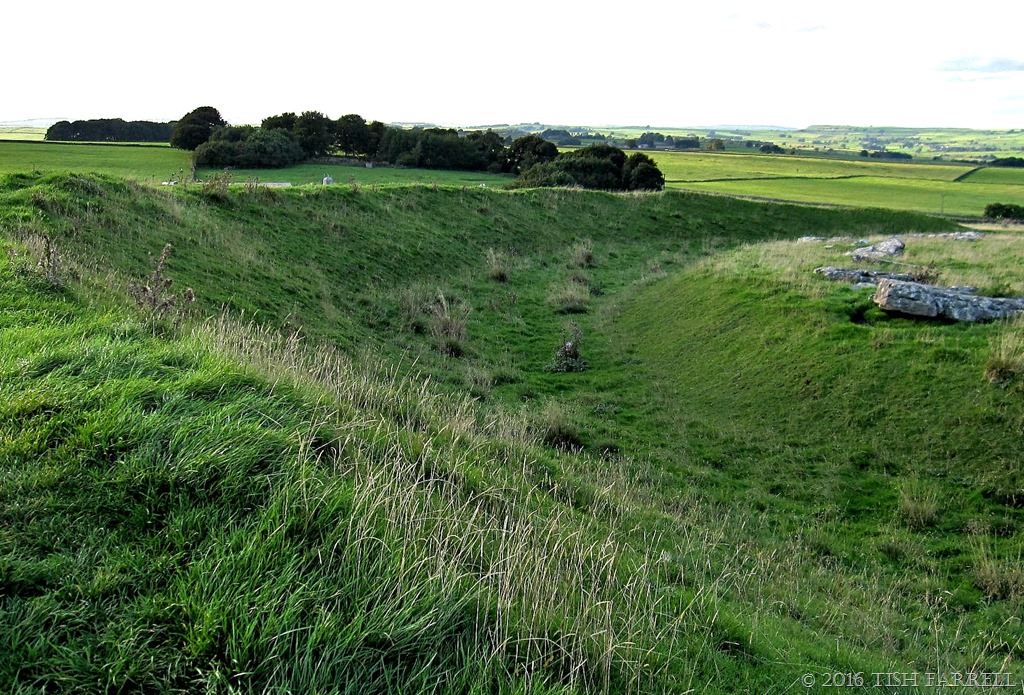
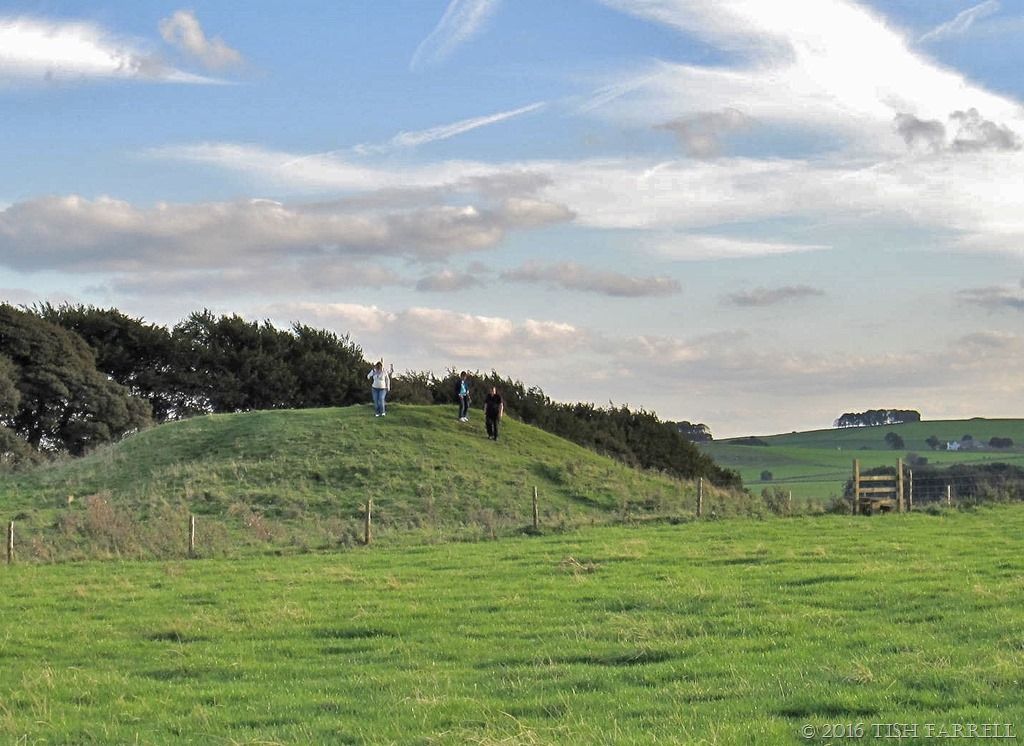
I suppose, then, that mentioning the two sites in the same breath is really more about emphasising their prehistoric importance than suggesting any correspondence in physical scale or appearance. Arbor Low is anyway a much smaller circle. But it does have its own unique features, apart from the recumbent stones that is. These include a very impressive encircling ditch and an outer rampart with the added extra of a later Bronze Age round barrow built across its southerly bank. You can see it on the right of the next photograph.

IMG_3358

So now that I’ve raised the vision of Stonehenge with its great sarsen lintels, I want you to forget it, and think about digging. The time is some four and half thousand years ago. I am the foreman, and I am handing you an antler pick, and maybe a cattle bone shoulder-blade to use as a shovel. We have marked out a circle some 70 metres across, and now you have to start digging 3 metres down into the limestone bedrock, while shovelling up your spoil to create the outer bank.

After many, many, many man-, woman-, and child-hours you can step back and regard the massive earthwork thus created. The freshly dug limestone of the rampart will doubtless have an unearthly white-grey glow. It will be visible from miles around, despite a more wooded landscape than today. At sunrise and sunset it will look spectacular against the skyline, the bank much taller and with a sharper profile that the present remains. In other words, it cannot be mistaken for anything other than a highly prestigious, and momentous man-made structure – the visual shock equivalent of coming upon a designer high-rise in the middle of a wilderness. Or maybe Starship Enterprise.

IMG_3354

After all the digging you are left with a central oval platform around 50 metres across. Perhaps the limestone slabs are already located there, set up on end, and bedded, after much hefting and shunting, in the rocky ground. They could have been worked during the making of the ditch, or sourced from somewhere nearby. In any event, they would have involved considerable effort given your limited toolkit of stone, wood and bone.

From outside the earthwork – and because of the height of the outer bank, you cannot see either the stone circle, or to observe anything that is going on within. Stepping through the entrance to view the newly built monument is thus perhaps a deliberately contrived catch-your-breath moment: the scene before you covert, unnerving, awe-inspiring, drama-filled. If some ceremony is in progress – a narrative declaimed or sung, the outer bank will amplify the sounds in mysterious ways – echoing, resonant, other-worldly; it may be a place of loud whispers.

There will perhaps be no grass cover, just an exposed limestone arena. Around the oval platform you will see some forty standing stones.

IMG_3347

In the centre there is also some kind of sanctuary, a rectangular configuration of more standing stones. The barrow on the southern bank is not yet there. It will be another thousand years before this spot is used as a burial site – perhaps by strangers, perhaps by the distant descendants of  you henge builders. These newcomers have also built another barrow, Gib Hill, just across the field from Arbor Low. Here they raised their own tomb atop the long barrow built by your forebears, a monument that possibly long preceded the stone circle. And so although you can no longer remember the rites and customs of these ancestors, you do know that, like the great mediaeval cathedrals of Europe with their roots in Roman and Saxon times, this place was considered ‘sacred space’ for a millennium and more…

*

And so back to reality and the flattened circle we see today. No one knows when the stones were laid low or why. There are other so-called recumbent stone circles in Britain. Sometimes some of the stones have also been buried. Superstitious dread could have much to do with it: an attempt to neutralise the stones’ power perhaps. There is also archaeological evidence in other contexts that suggests that the prehistoric occupants themselves have ritually ‘closed’ particular sites, perhaps prior to moving to a new centre of operations. There are other more practical reasons too: later farmers came along and simply re-used or moved the stones because they were ‘in the way’.

I also seem to remember from my student field-trip days to Avebury stone circle in Wiltshire that one of the stones had been buried in mediaeval times to cover up a murder. When the stone was being restored to its upright position, beneath it was found the grisly remains of a surgeon-barber, identifiable by the tools of his trade that were still with him. More fanciful interpretations of this find could of course suggest the presumed continuing practice in pagan sacrificial offerings, i.e. the kind of activity that we modern folk so very much like to associate with all ancient stones.

IMG_3353

I suppose one of the most surprising things I discovered about Arbor Low is that there has been no archaeological exploration of this site since early Victorian times when the local antiquarian Thomas Bateman of Lomerdale Hall, and serial excavator of prehistoric barrows, tackled the place. It was he who discovered a human burial in the stone circle barrow and, during his Gib Hill excavation, uncovered a stone cist (a slab built tomb) in which the cremated human remains were placed along with an urn and offerings of meat and flint tools. And this, it seems, is all that is known.

IMG_3364

So many mysteries then, and no likely answers. Instead I’ll leave you with the words of Thomas Bateman and his description of Arbor Low from his Vestiges of the Antiquities of Derbyshire 1848:

…the solitude of the place and the boundless view of uncultivated country are such as to carry the observer back through a multitude of centuries, and make him believe that he sees the same view and the same state of things as existed in the days of the architects of this once holy fane.


copyright 2016 Tish Farrell

Blown-Away Opium Poppy: Thursday’s Special

IMG_1812

Paula has truly set us a challenge this week: DECONSTRUCTION. So as my stab at this school of philosophical thought, here is an abstracted opium poppy, its stamens and petals being blown off in the wind: caught in the act of deconstruction then: from flower to seed capsule. The cycle of life in all its parts.

Thursday’s Special: Deconstruction

This Morning Over My Garden Wall: Still Life

IMG_2868

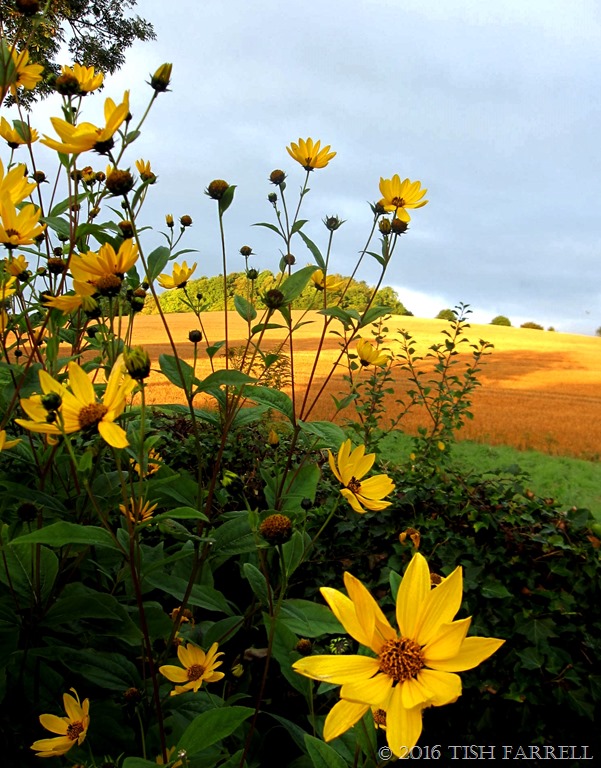
The wheat field behind the house has been harvested leaving us with a yellow stubble carpet to look at. At least for now. Doubtless it will soon be ploughed and re-sown. This morning I watched the early morning sun spread down the hill. Liquid amber. The garden was still in deep shadow, but even so, the rudbeckia were not to be outdone,  making their own sunshine.

IMG_2886

Framed On Lamu

Scan-130428-0113

I said in my last post that we seem only to go to the seaside at Christmas. It was a habit begun when we lived in Kenya through the 1990s: December is the high holiday season, and heading for some Indian Ocean beach cottage was what all Aid-industry wazungu did.  Coral beaches glistened. The sea was warm, and fresh fish, mangos, papaya, eggs and sun-baked tomatoes arrived daily at your cottage door courtesy of the local Digo traders.

We have of course been repatriated for many years, but somehow we still have not re-shaped ourselves for northern latitudes. Perhaps being blown inside out on a midwinter Welsh or Cornish beach only serves to burnish memories filled with clattering leaves of coconut palms, the roar of surf on reef, and the ‘ding-ding’ of the vegetable seller’s bicycle bell. Oh yes, and of a Christmas Dinner that only involves a barbecued lobster, salad, and a glass or two of Tusker beer.

Mostly we spent Christmas at Maweni, on the south Mombasa coast, joined there by UK friends and family, who still remember these as the best Christmases ever. One year, however, when we had no visitors, we took the Christmas Eve flight out of Nairobi’s Wilson Airport, and made for Lamu. We were booked in for four nights at the Island Hotel in the heart of Shela village.

Our Air Kenya plane was small, a couple of dozen passengers aboard, and our journey just over an hour. We took off over the city’s sprawling tin towns, banked over the grasslands of Nairobi National Park, then turned towards the sun, or would have done if it had been at all visible through the lowering cloud. Beneath us the bush country of Eastern Kenya looked comfortingly or uncomfortably close, depending on your inclination, though either way the unending view of brown scrub soon grew monotonous. Also the flight’s chosen altitude, which seemed neither quite up nor down, played havoc with my Eustachian tubes; I tried to spot elephants to distract myself from the accompanying earache, though had no luck on either front.

We touched down on Manda Island airfield in gathering storm clouds – inky black -and were ushered into dhow taxis at the airport jetty, quickly sorted by the Swahili boatmen according to destination: Shela village or Lamu town. Our baggage followed on our heels, piled up on push carts, and was just as swiftly stowed – all highly efficient.

By now the storm meant business. It was starting to rain. Our dhow rocked unsteadily at its moorings. The crew hoisted an awning to give us some shelter, and it was at this point it occurred to me – as I sat, unexpectedly shivering in the tropics, with the sky shut down to the sea, and rain like knives – that all the swift efficiency I was witnessing might also be seen as a general urgency.  We had to cross the Strait before the storm grew any worse, a voyage of around twenty minutes. I remember thinking, as the engine sparked into life, it sounded all too puny for our purposes.

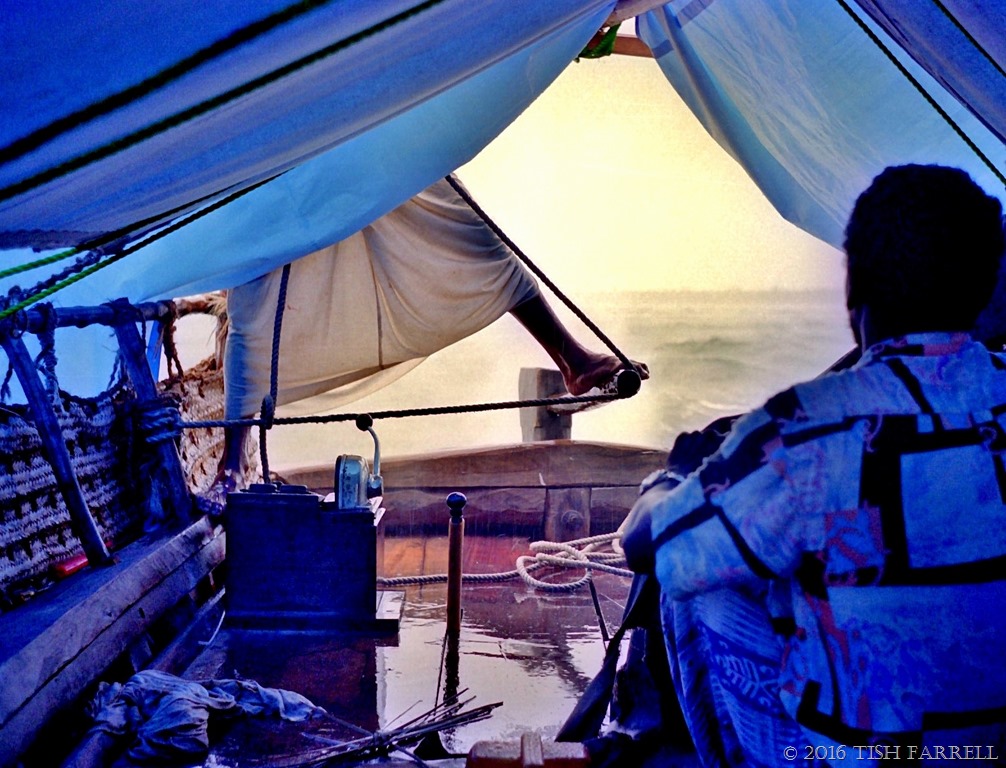
Finding ourselves crammed under the awning with several other travellers we could not see much, which was probably as well. When the sea is choppy, Lamu dhows sit alarmingly low in the water. This brought on another interlude of would-be distraction as I attempted to take a few photos. This shot of our boat captain is one of my favourite Lamu photographs. I’ve posted cropped versions of it in other posts. I like the way his kikoi sarong mimics a dhow sail.

In the end there was no real cause for anxiety (if one overlooked the lack of life belts), and we weren’t afloat long enough to feel too queasy. The storm came to nothing and by the time we put in at Shela harbour the rain had stopped. Within the sheltering arm of the bay there was no wind either. Now as we were handed ashore we began to melt in the sudden humidity. All seemed airless, sticky, sultry, otherworldly in the kind of vaguely luminous gloom that conjures the tropics’ tristesse of Somerset Maugham. It was hard to get one’s bearings. I felt myself slither into sheep-mode: please someone take me to where I need to go.

And being Kenya, where hospitality is always top of the list, someone did.

Our guide led us up winding pathways – past overgrown gardens and abandoned houses where the coral rag walls steamed darkly. The air was spiked with salt and jasmine. My ears were still troubling me and my footfalls echoed strangely on the sand covered alleyways. I was hearing the world as if through a long drain pipe. It did not help.

My heart sank too as we were led further into the maze of dark streets and tall village houses where the air became thicker and hotter. I had visions of four stifling, mosquito ridden nights. And then we were there – shown into a dark vestibule straight off the street. It could have been a merchant’s house in a Sinbad tale. And finally when we were shown to our room, four floors up, I knew I’d been given the best Christmas present possible.

They called it the penthouse suite. And roof-top it was – with a high makuti thatch, woven from palm leaves. But here any expectation of luxury ended, at least in western eyes. The room was certainly huge, but it housed only a bed – an antique Lamu contrivance that was too short for a tall man and too narrow for two people to sleep comfortably side by side. Sleeping in shifts would be called for then.

Scan-130428-0123

The Penthouse Suite

*

Leading off the main room was a little sitting area with deck chairs, and next door, a concrete cubicle wherein a cold-shower shower could be had. In fact there was only one complete wall that went from floor to ceiling, and seemingly made so in order to provide a place to hang the door. Otherwise the walls were mostly windows, or rather, they were large spaces open to the elements.

And here was the luxury. The breeze. It blew through the room, bringing not only coolness, but also seeing off the mosquitoes. It was like being at sea. Or having one’s own look-out post, for in three of the four quarters we could survey the intimacies of Shela village life.

One of our views took in a neighbour’s rooftop bedroom one floor down. Sometimes the bed would be occupied. At other times only a bright kikoi lay abandoned on the simple rope-strung frame. Under the eaves there was a store of big yellow pumpkins. It felt like a privilege to have one’s stranger-closeness deemed so acceptable by Shela folk. And indeed, over those four days we received nothing but smiling kindness from the people we met there.

You can read more on this at: Christmas on Lamu: Views of Swahili Community

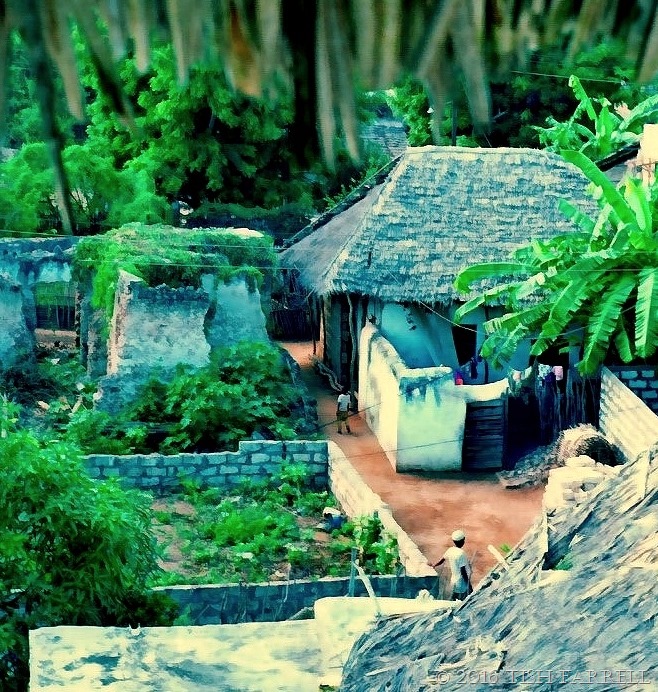
For now here’s a rear window view – first as I took it, framed by the thatch and wall, and then cropped to within an inch of its life, using the house walls and roof as the frame. My camera was a little Olympus trip, and the time: before digital was invented.

Scan-140802-0004

Scan-140802-0004 (2)


Frame

Thursday’s Special: Seaside Disorder

IMG_0788

For some reason we mostly go to the seaside at Christmas, and not at all in high summer. Of course a beach can be a dramatic place any time of the year – changing and unchanging all at once, figuratively and physically. How we treat with it reflects our current mood or emotion – heightening  or lowering it, depending on our inclinations.

This photo was taken on Ynys Mon,  the island of Anglesey in North Wales. It was Boxing Day. The wind was perishing yet spirit-filling too, but then I always find ‘going to the beach’ exciting, in much the same way as I did when I was four. You just never know what you will find there in the margins between land and sea.

So here we have a tumble of razor shells embedded in a beach stream that was running off the marshy hinterland. I think there’s a viscid quality about the stream in the winter’s light, as if the shells have fixed there by the water rather than by the shift of sand.  I like the slashes of greyish-white across medley of ochre shades. An intriguing state of disorder, then: the beach endlessly creating its own artwork.

Thursday’s Special

The Railway Men: Black & White Sunday

P1040808 - Copy

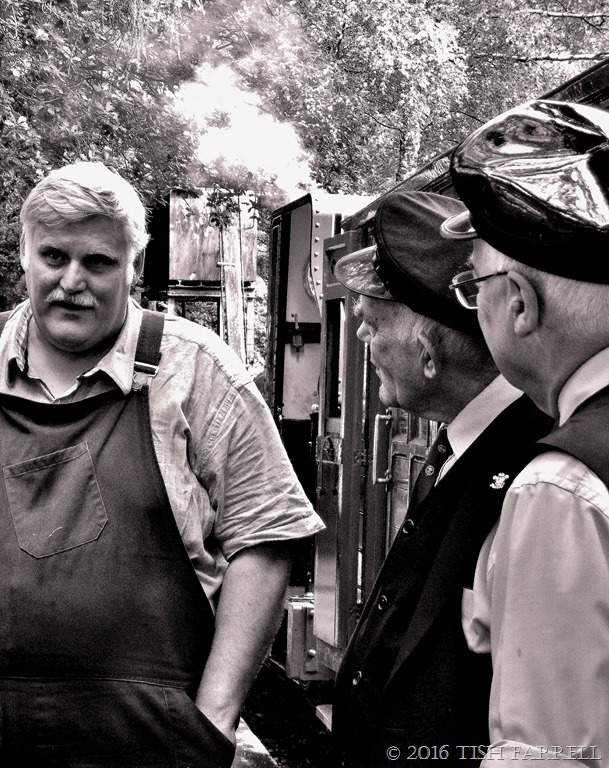
The Talyllyn Railway in mid Wales is the oldest preserved steam railway in Britain. Over the past half century it has inspired many other such ventures and there are now some 500 miles of restored lines across the country.

That they are there at all and can offer us steamingly enjoyable train rides is mostly down to armies of enthusiastic volunteers like these chaps in the photo. It’s an enterprise fraught with responsibilities too; the health and safety implications are momentous: track, rolling stock and passengers all to be kept in good order.

And in case you missed it back in June, you can read more about Tish and Graham’s big train day out at:

Partners in steam on the Talyllyn Railway – Woo-hooooo

*

This week at Black & White Sunday Paula’s challenge is COMPOSITION. Please visit to see her own very fine composition, and the other entries it inspired.

My own photo was composed in Dynamic Monochrome.

Operation Floral Sat Nav ~ Bee Makes Bee-Line For Foxglove

IMG_1716

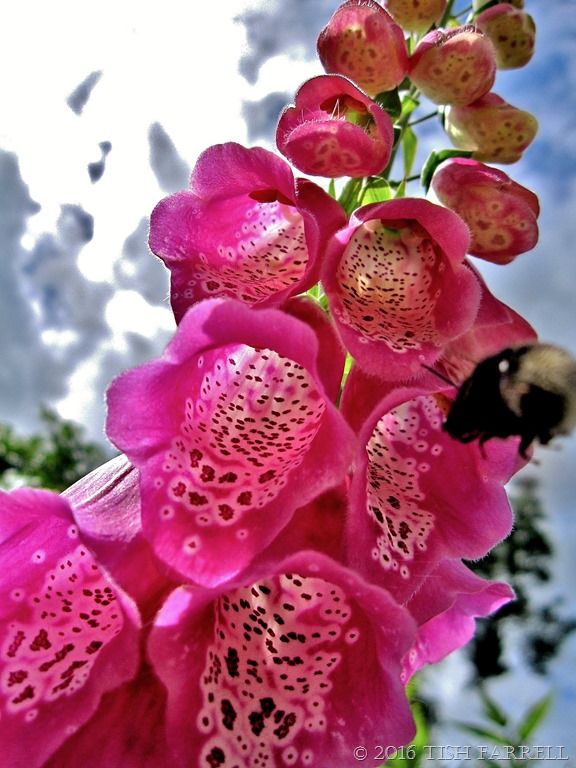
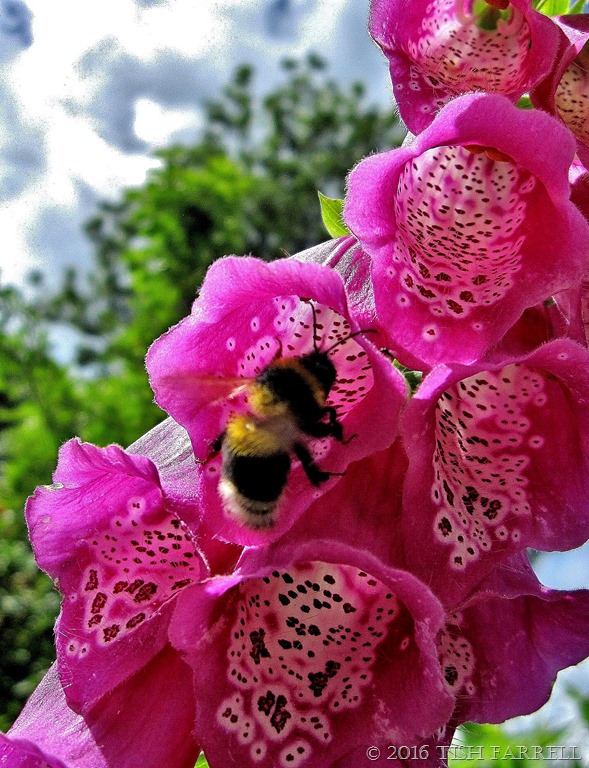
Yesterday at the Farrell establishment we had bees in poppies. Today it’s bees in the foxgloves, and thank you to Lynn at Word Shamble for mentioning bees and foxgloves in the comments. This reminded  me I’d taken these snaps earlier in the month just before the foxgloves went over. I was trying out my new second-hand Canon Ixus 870 – and oh, the nippy little macro setting – I’m in love with it!

Also please drop in at Lynn’s blog to read a wicked piece of flash fiction: it definitely has a sting in the tale/tail.

Now for more shots of bees. Also just look at the foxglove’s come-hither devices  – no ‘Sat Nav Map Error’ here; but an intricate systems of dots and splodges guiding in any would-be pollinator to get pollinating.  It looks like every little ‘glove’ has its own touch-pad access code:

IMG_1715

IMG_1704


Cee’s Flower of the Day

Daily Post Weekly Photo Challenge: Details

Over My Garden Fence This Morning

IMG_1827

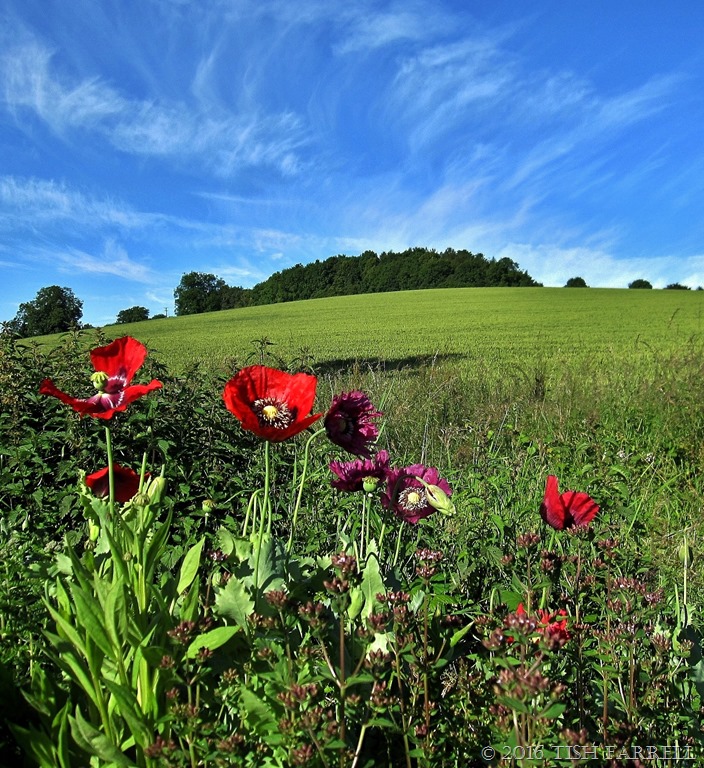
We didn’t invite them, but this crowd of opium poppies showed up anyway, pushing in behind the garden fence along with several other blooming gate-crashers. There’s a whole bunch more behind the garden shed. Papaver somniferum – the sleep bearing poppy, Asian in origin but now naturalised in Britain on waste ground and in field margins. And in case you are wondering, in our cool climate it does not produce the latex from which opium is derived. Better to get high by looking at them. And what a cheering sight it is on a Monday morning. So poppies, we’re glad you came. Please feel free to make yourselves at home here.

IMG_1803

IMG_1811

For more 4th July blooming visit Cee at Flower of the Day.