On Top On Llanddwyn Island ~ Black & White Sunday

P1060365

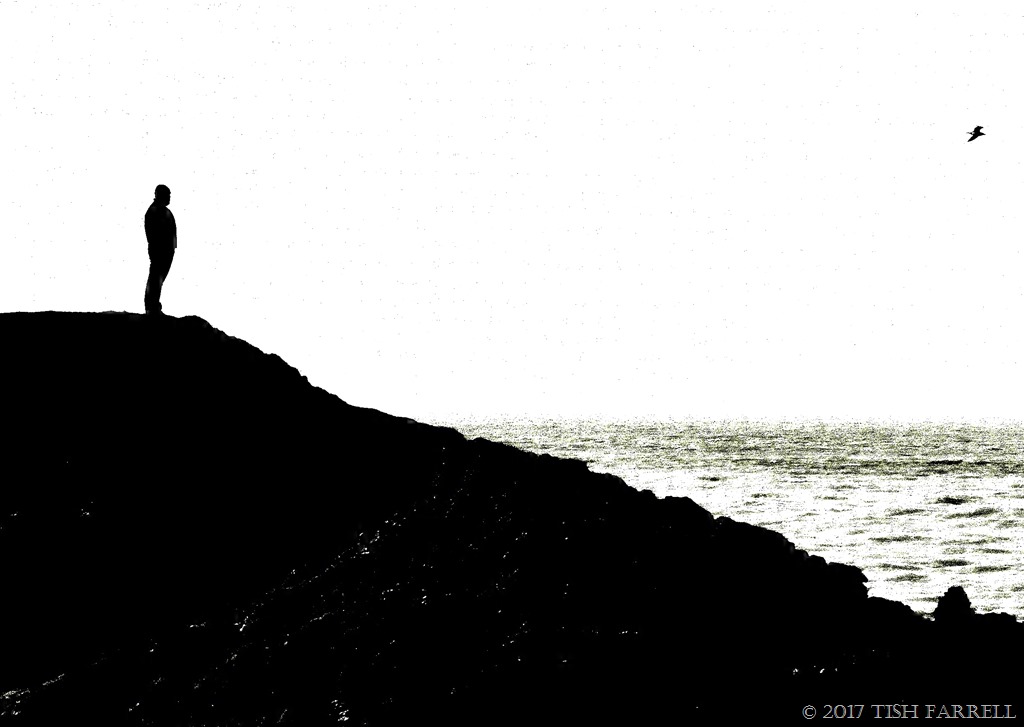
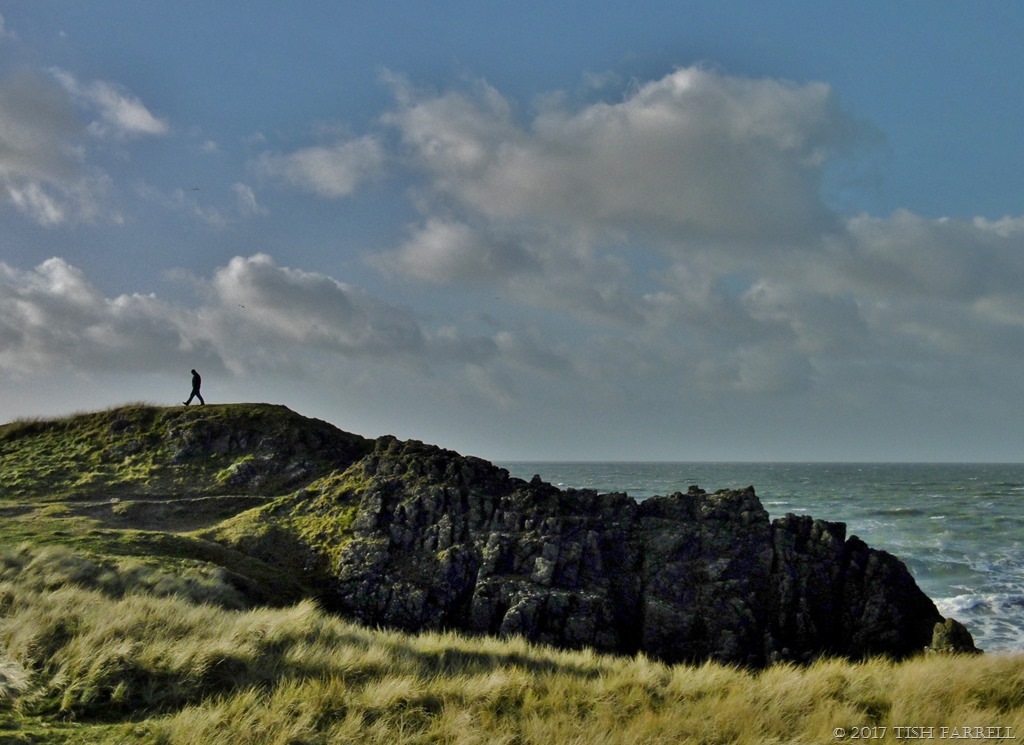
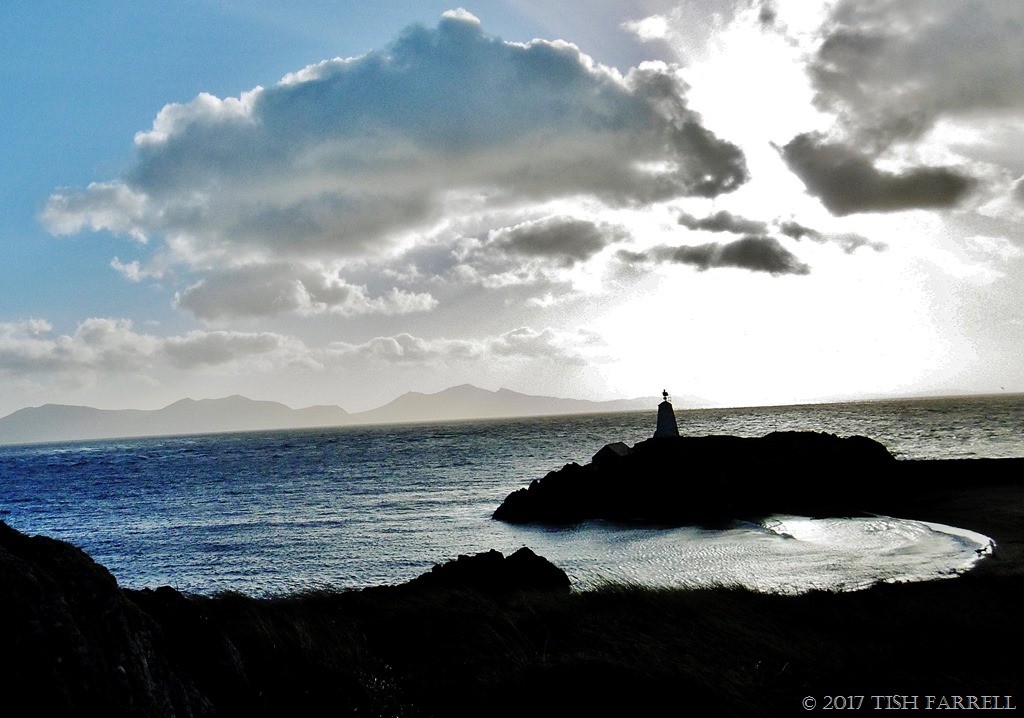
Here’s another view of, and from Llanddwyn Island, taken on our recent trip to Anglesey. It was snapped on high zoom in high wind and thus has pixilation tendencies, much like the snapper, some might say. So I edited it to exaggerate the silhouette effect. I anyway like the stance of this unknown man on the cliff top. He is so well rooted against the gale; so absorbed by the seascape.

I’ve written more about the island’s story at To the Isle of Dwynwen, Welsh Saint of Lovers.

Now please visit Paula at Lost in Translation. Her rendition of this week’s ‘on top’ theme is stunning.

Moving Pictures ~ Wales Through The Windscreen

P1060737 (2)

P1060737

P1060737 - Copy (2)

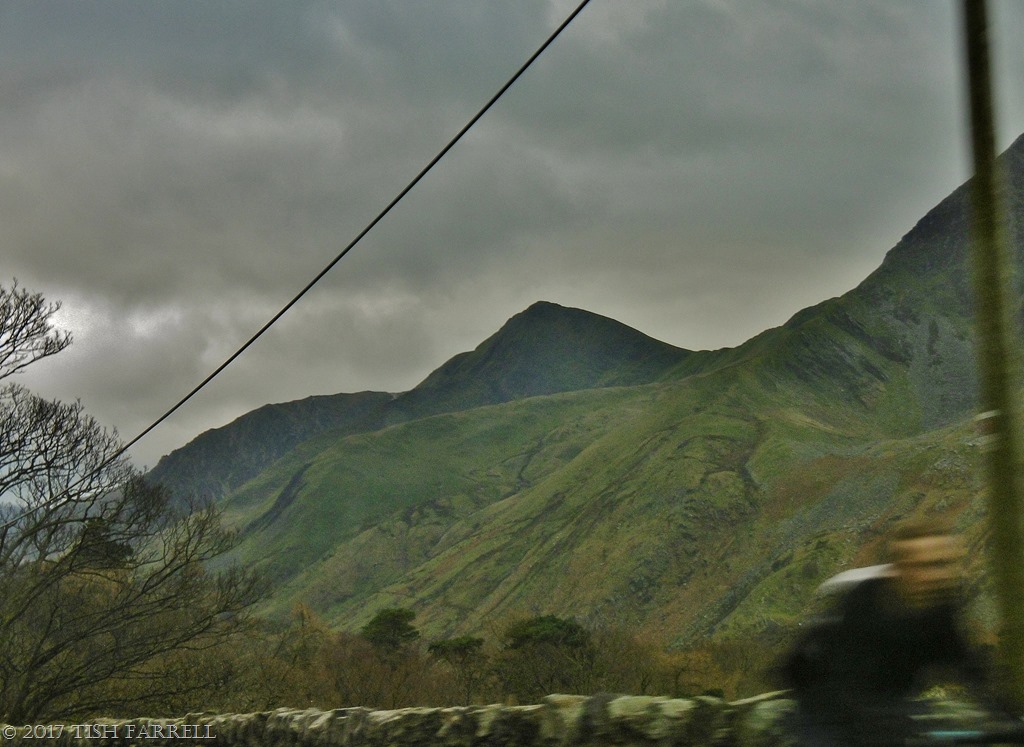
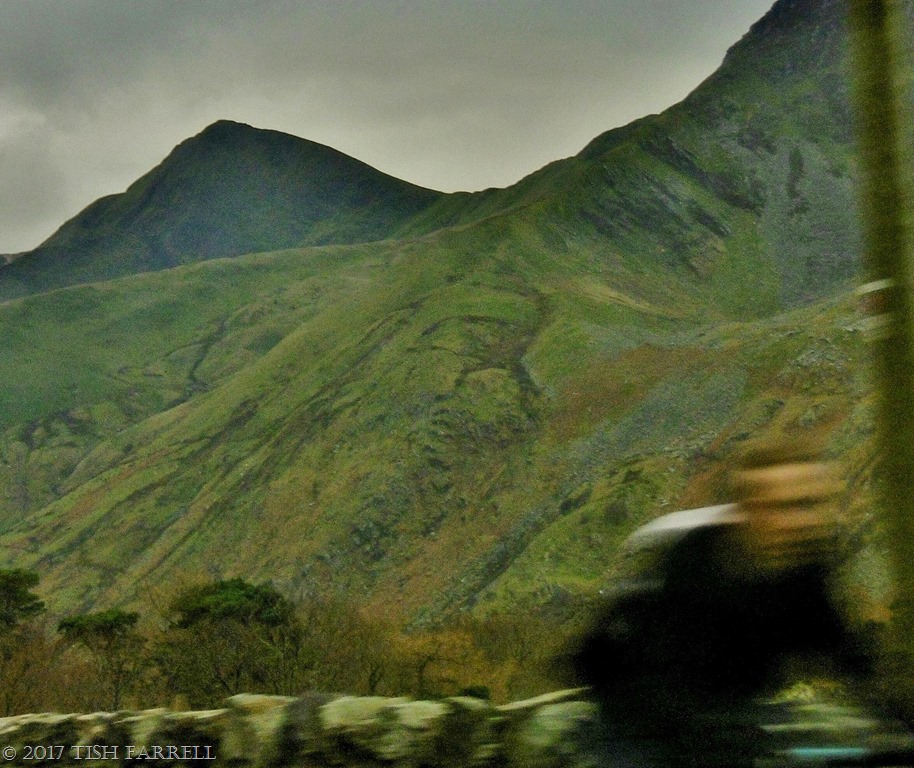
Nowhere does brooding gloom like Wales on a wet winter’s day. This happenstance shot was taken on New Year’s Eve as we were motoring home from Anglesey. I’d propped my camera briefly on the car dashboard as we’d headed through the mountain pass to Capel Curig. Then randomly pressed the shutter and so caught the cyclist.

This week at Lost in Translation Paula asks us to show her ‘unfocused’. She kindly says she doesn’t mind ‘happy accidents’, so here is mine.

Llanddwyn Bound ~ Crossing To The Isle Of Lovers

P1060383

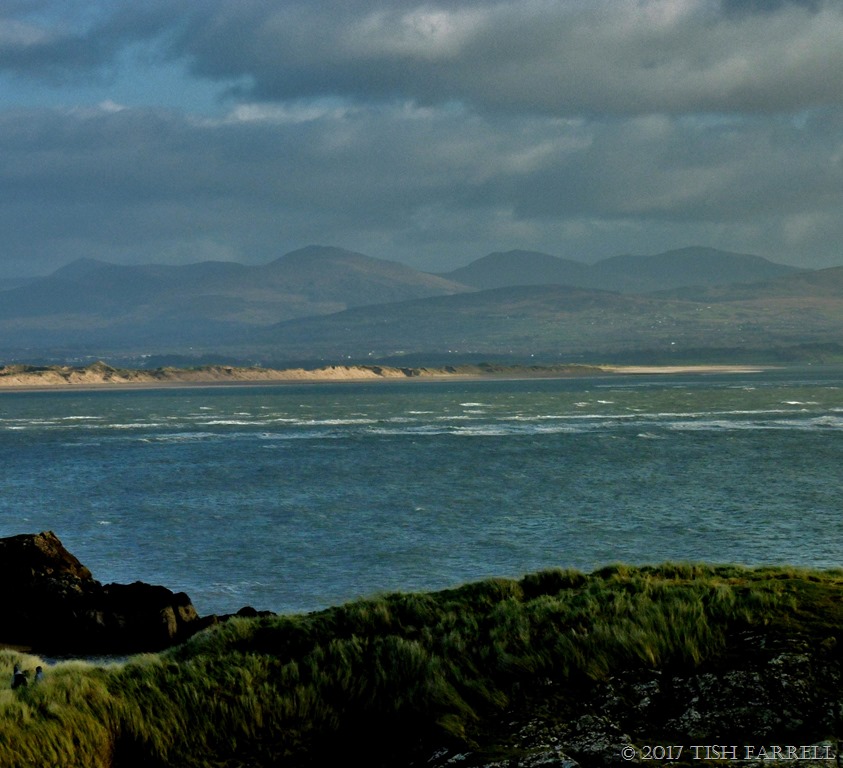
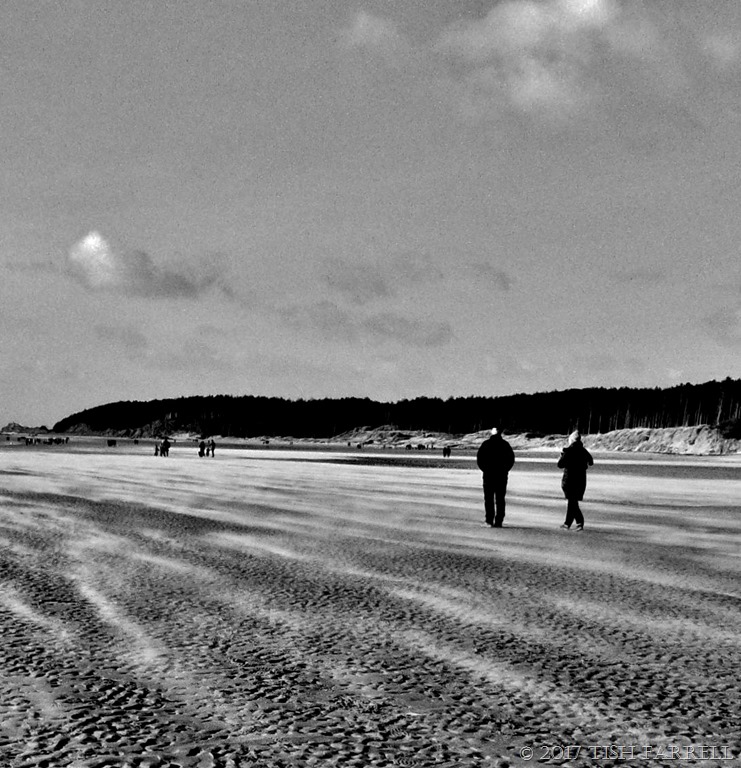
It was blowing a gale, wind like ice on our faces. But that did not stop us – nor a hundred like-minded souls, all intent on the secular pilgrimage of walking off Christmas Day excesses, giving the family dogs a much needed airing, and heading to Llanddwyn Island while the tide was on the ebb. Anyway the sun was out, the light crystal bright, and the mountains of mainland Wales across Menai Strait looking their dreamy best. So why wouldn’t you head for the sea shore.

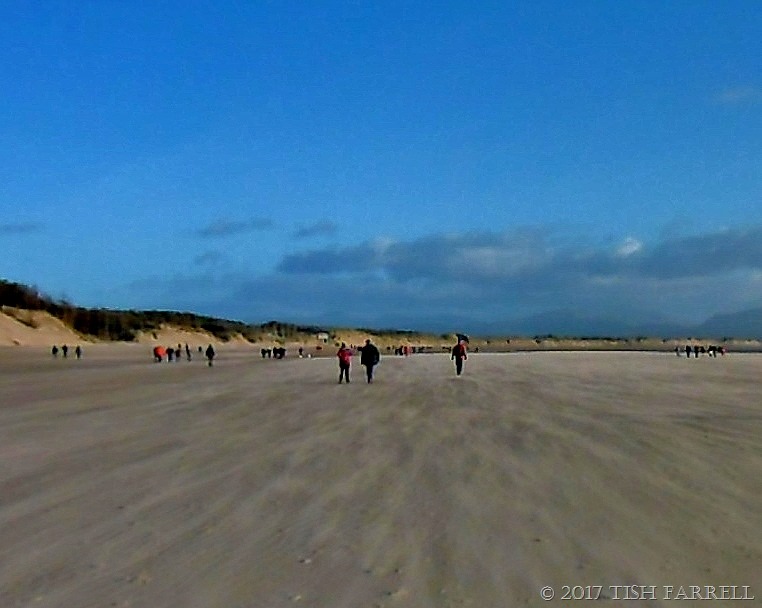
Newborough Beach was positively crowded. Not only that, the sands were coming to meet us as we set off to the island. It was the strangest experience, which along with eyes full of wind-tears played havoc with one’s perceptions. It was rather like going backwards on a forward moving pavement.

P1060353

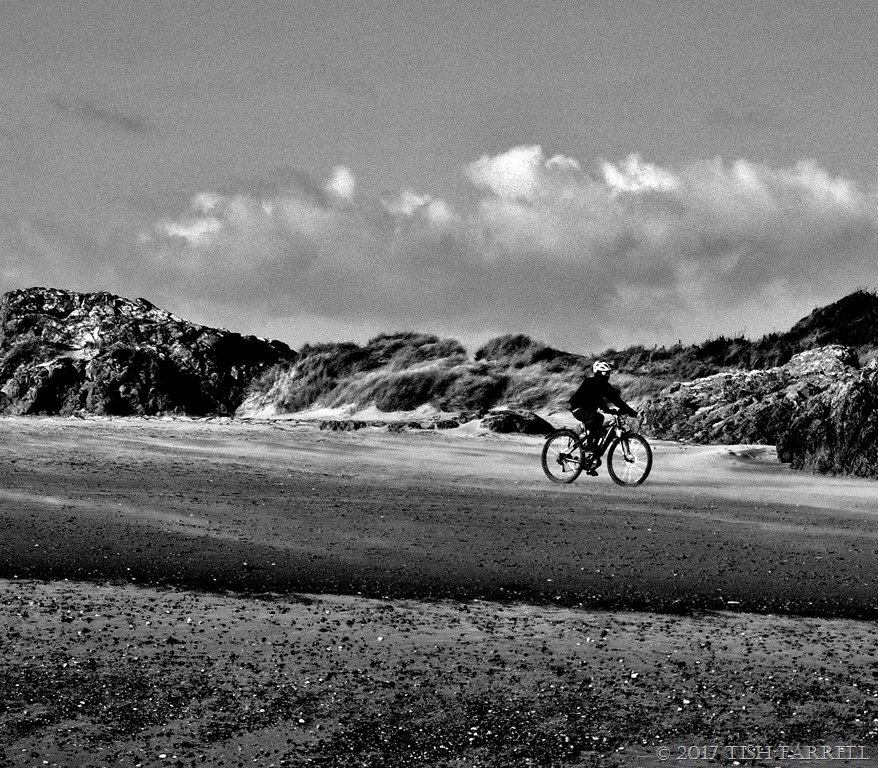
And so at this point, seeing a chap on a bicycle seemed most surreal. But then why not ride your bike on the beach? So much space. No grouchy motorists on your tail. All that sand for a soft (well soft-ish) landing.

P1060354

I’ve written about Llanddwyn (roughly pronounced ‘hlanthwin’) Island before. We were here two years ago, on Christmas Day, but then the tide was too high for us to reach the island.

In fact it is not an island at all, but a long, slender peninsula, poking out into the Irish Sea like some dragon’s  tongue. And it was here that St Dwynwen, daughter of a Welsh king, withdrew from the world to form a convent. This was in the fifth century, around the time that Roman rule in Britain was coming to an end. You can read her story at the link above, although there are many versions, and they mostly have to do with spurned or thwarted love, and so are used to explain how she came to be the Welsh patron saint of lovers. Her day is celebrated each year on 25th January.

During the Middle Ages, as poets and pilgrims were drawn to Llanddwyn Island, so the accounts of their visits helped grow  Dwynwen’s reputation for mystical powers of healing and divination. Even her well was said to be inhabited by sacred eels, and through the cunning reading of their movements, you might predict the future. On the other hand, if the waters boiled up during your visit you could be assured of love and good fortune.

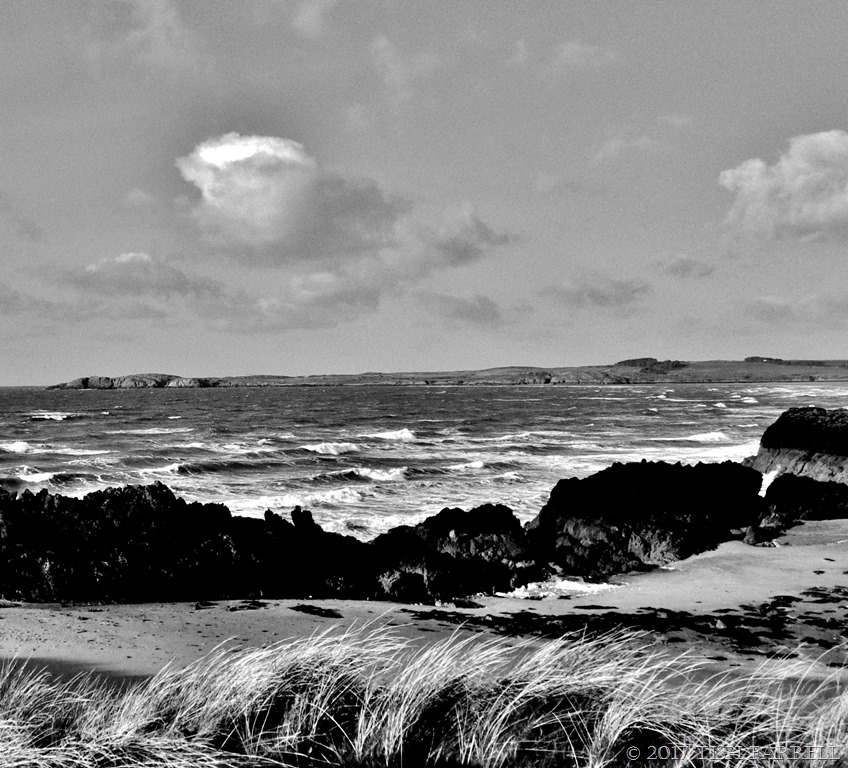
We, however, were not enticed from the path to see this for ourselves. A very pungent odour wafting our way suggested something had died there. Perhaps the sacred eels? Instead we took the cliff path and enjoyed the thrill of stepping out above a stormy sea.

P1060364

P1060368

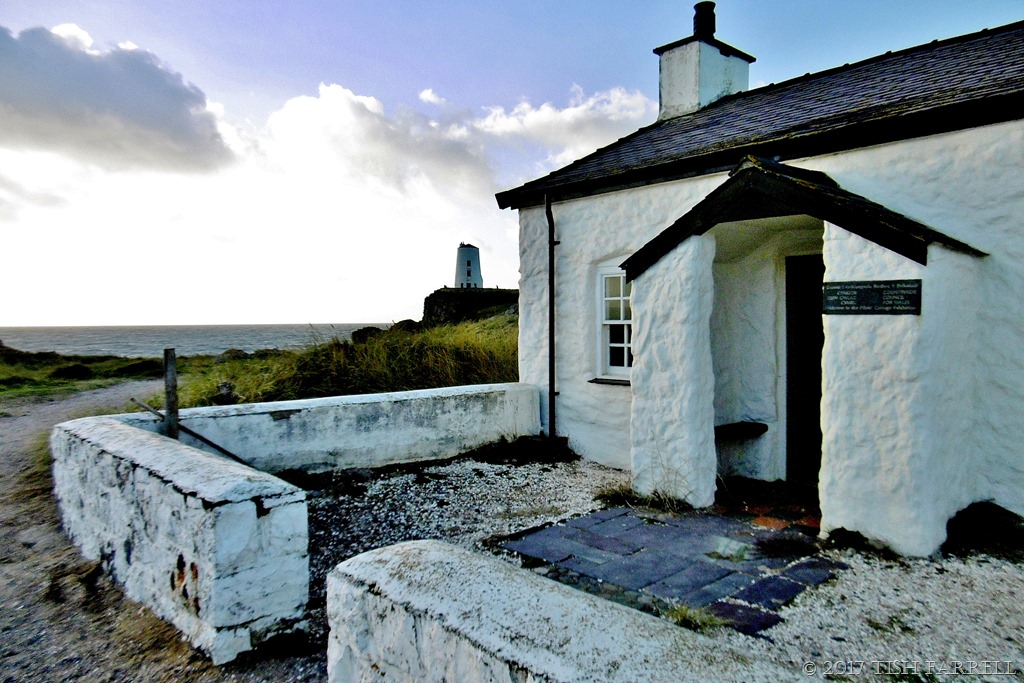
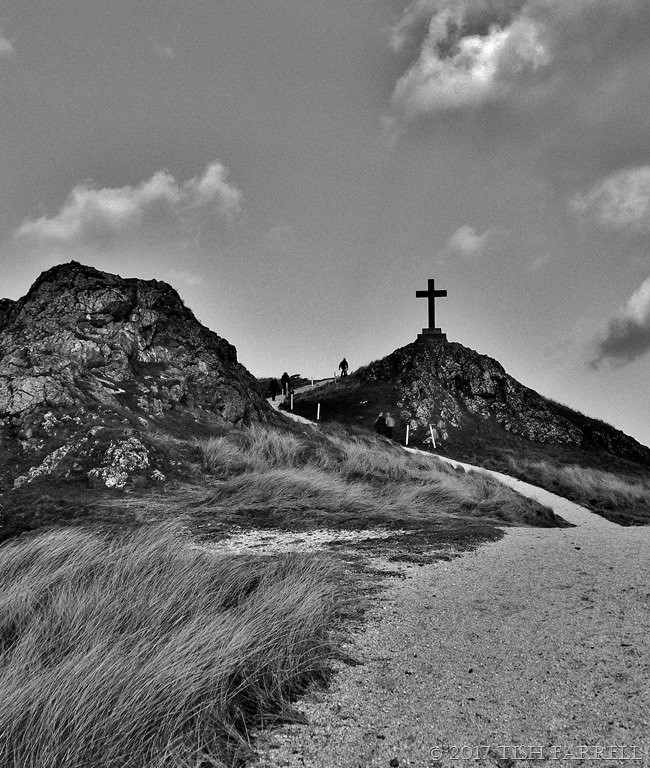
There is anyway much to explore on this small promontory. At every point, as the sea recedes, there are enticing coves – some rocky, some sandy. There are many man-made features too: a Celtic cross of nineteenth century vintage, another marking Dwynwen’s death in 465 C.E. There are the ruins of a Tudor church built on the site of Dwynwen’s own church which she apparently built herself from beach stones, and so doubtless did not stand the test of time and wild Welsh weather. There is also a beacon, a lighthouse and three cottages built for the lighthouse keepers and their families. In the nineteenth century the export of Welsh slate was a thriving industry, and the lighthouse served the slate ships in particular, keeping them off the dangerous Menai Strait sand bars.

P1060394

P1060396

P1060379

On the long walk back up the beach, the wind was behind us. Now we were walking with the moving sand. But it was still a very odd experience.

P1060409

Crossing

Solstice Sky And A Fine Quotation To Match

P1060302

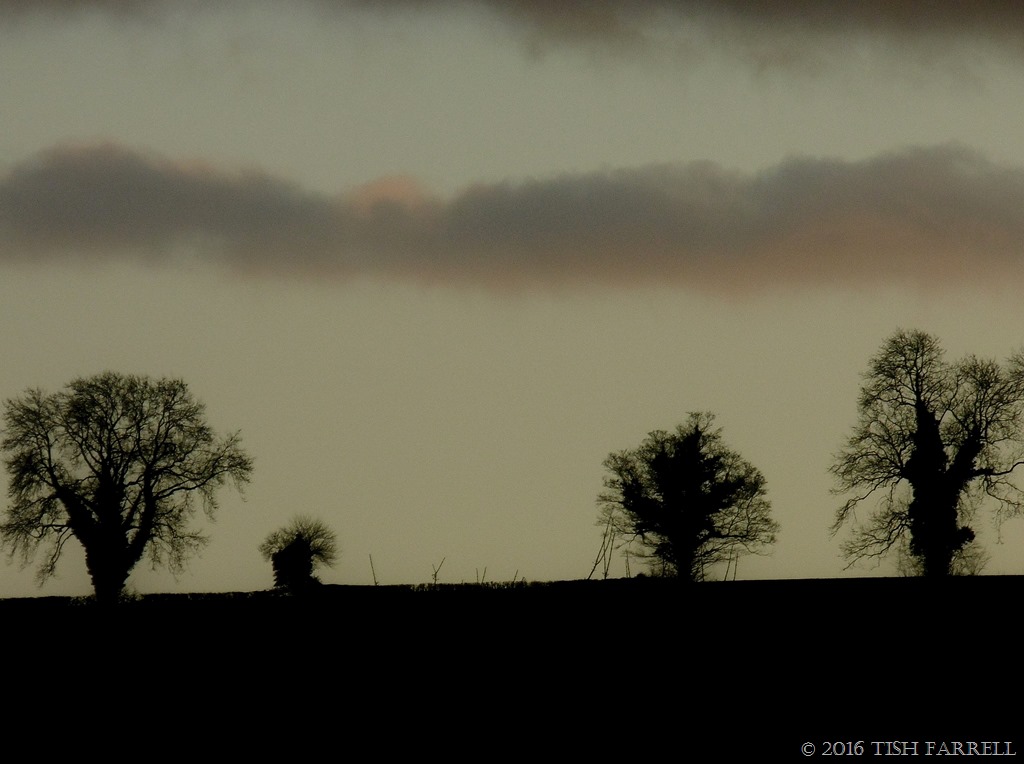
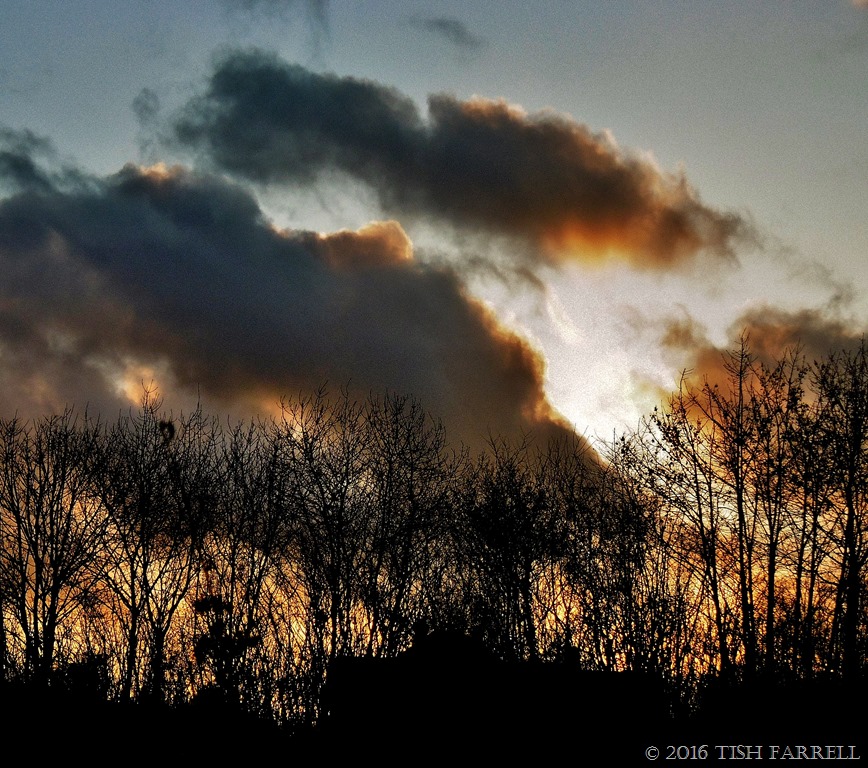
I dashed up to the allotment this afternoon while it was still fine. The weather forecast is promising us storms tomorrow so I thought I’d better get the Christmas parsnips dug up fast, and the Brussels sprouts and red cabbage gathered in.  The ground was very water-logged and the plots looked dreary, and naturally there were no other mad gardeners around but me. But as the sun went down, just a fraction later after the shortest day, the light over the town was magical.

These photos were taken with lots of zoom, and in the next one the sky looks to be on fire.

P1060297

All of which reminded me of an Albert Camus quote which I read on a writing blog earlier this week. It was so hope-inducing I thought I’d pass it on at the first opportunity. It’s especially apt for all you creative people out there, which would be every man Jack and Jill of you. More power to your making in 2017:

 In the depth of winter, I finally learned that within me there lay an invincible summer.

Albert Camus

Some Favourite Horizons ~ the Silurian Sea Effect And The Changing Seasons

IMG_1373

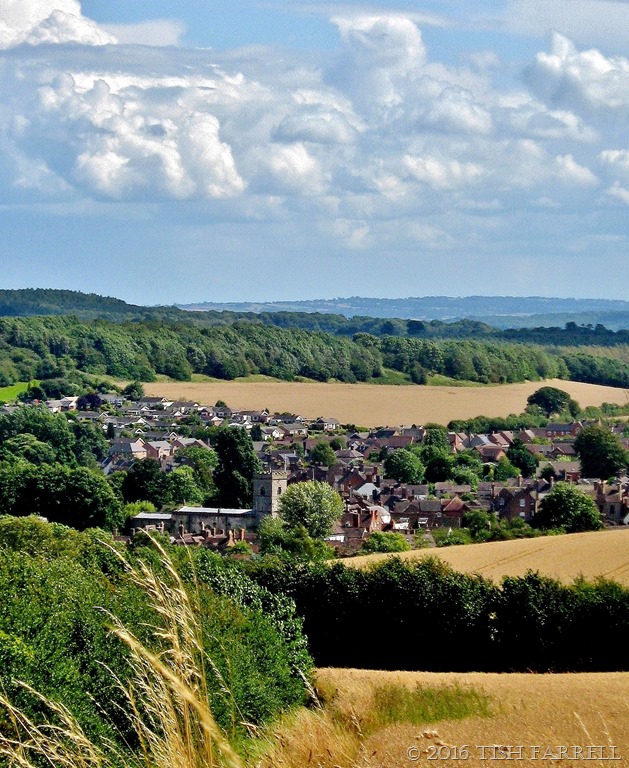
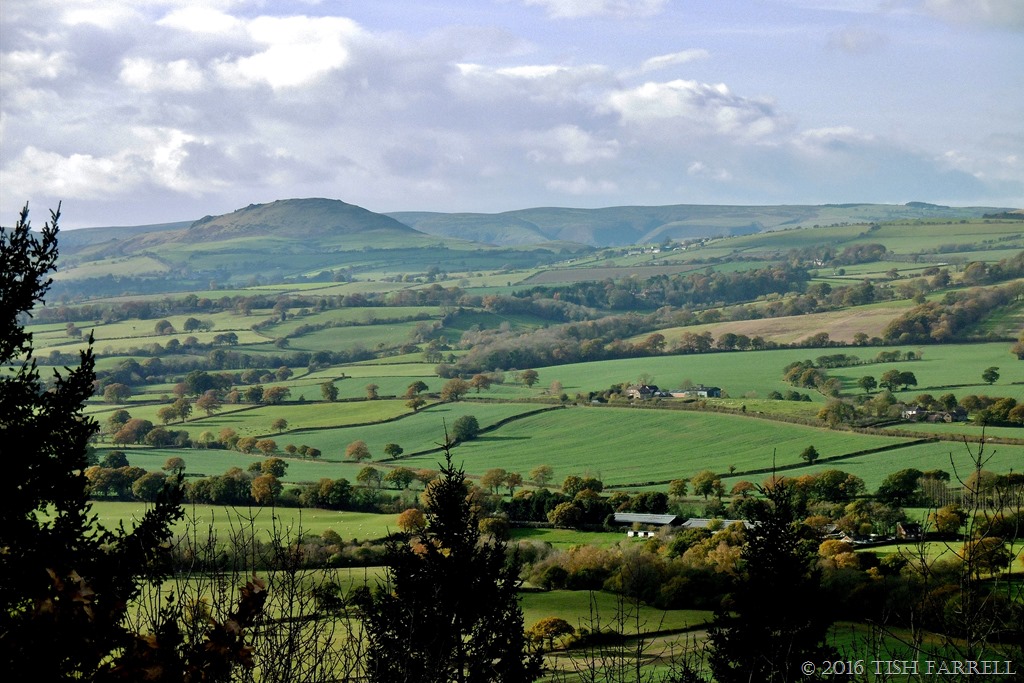
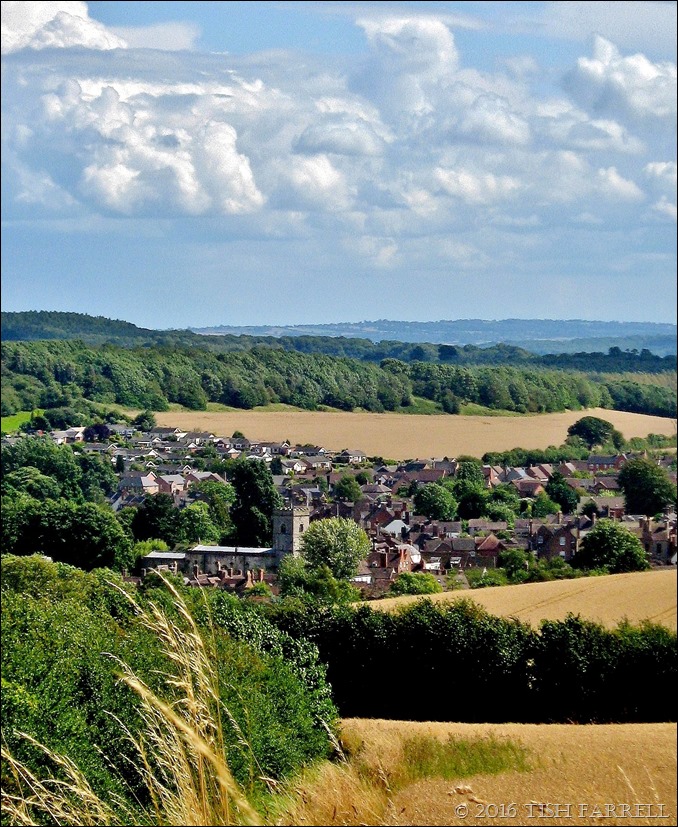
Here in the small English Midlands town of Much Wenlock,  we live in the lea of an upthrust ancient sea. (I may have mentioned this once or several times before). As I took this photo I was standing on the petrified flanks of Wenlock Edge – the compacted deposits of shallow tropical waters that teemed with giant sea scorpions, sea lilies,  corals, trilobites and all manner of brachiopods in the long ago age before fish, or indeed, before life as we know it.

In fact, as the photo well shows, we sit in a bowl, lodged between several folds in the landscape. It is a place of naturally rising springs, which is probably why St. Milburga’s family of Saxon Mercian princes founded an abbey here in the seventh century: pure water and the presumption of godliness going hand in hand. The town also has several other holy wells besides those associated with Milburga. It seems to have been the equivalent of a calling card. Every saint who visited Much Wenlock left us a well to remember them by. Then in the 1930s the good burghers of Wenlock decided they were a risk to physical well being and had them all capped.

Milburga’s Well, though, had especially enduring powers. As I have also mentioned before, the legends that tell of the life of this Paris-educated abbess, are routinely associated with springs bursting hither and thither. In fact so potent is her association with pure water sources that even in the late nineteenth century, rain collected from the roof of the parish church – a building founded on the remains of Milburga’s abbey, was still considered to be an essential ingredient  for beer brewing (never mind the additional mossy deposits). Likewise, water from the actual well was absolutely expected to cure all manner of eye disorders, as well as reflecting in its glassy surface the identity of husbands-to-be to the lovelorn Wenlock lasses who, come May Day, would rush to look there for signs of their future partners.

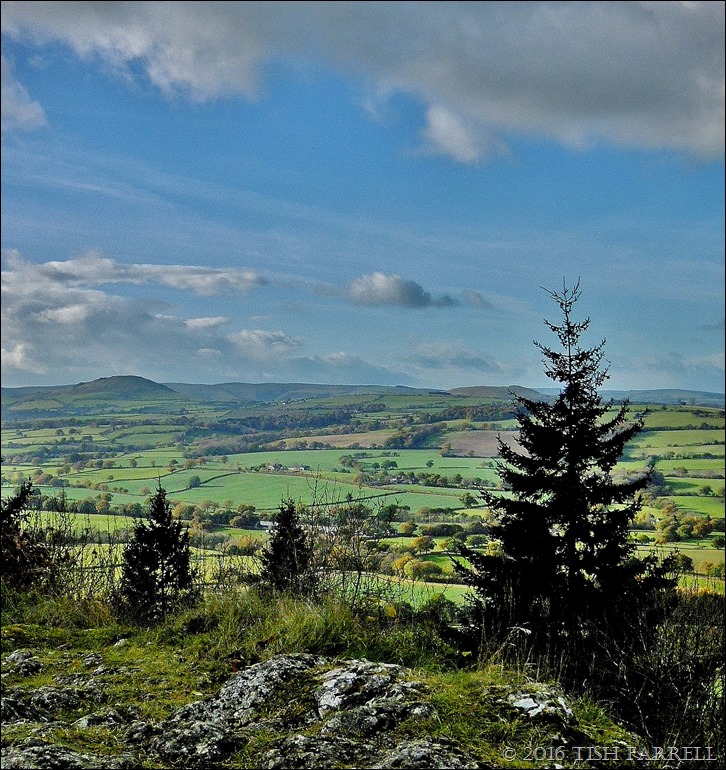
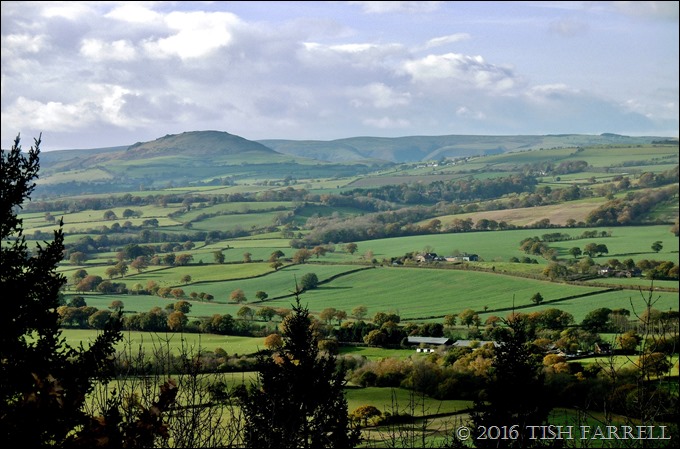
Anyway, I suppose the point I’m trying to make is that there are certainly great disadvantages to living your life in a hollow. It can limit your vistas in every sense. But there are advantages too. In our case it also means that whichever way you strike out of the town, you are always in for a fresh horizon. In every direction we have them; one for every moment of the day. So here are some of my favourites.

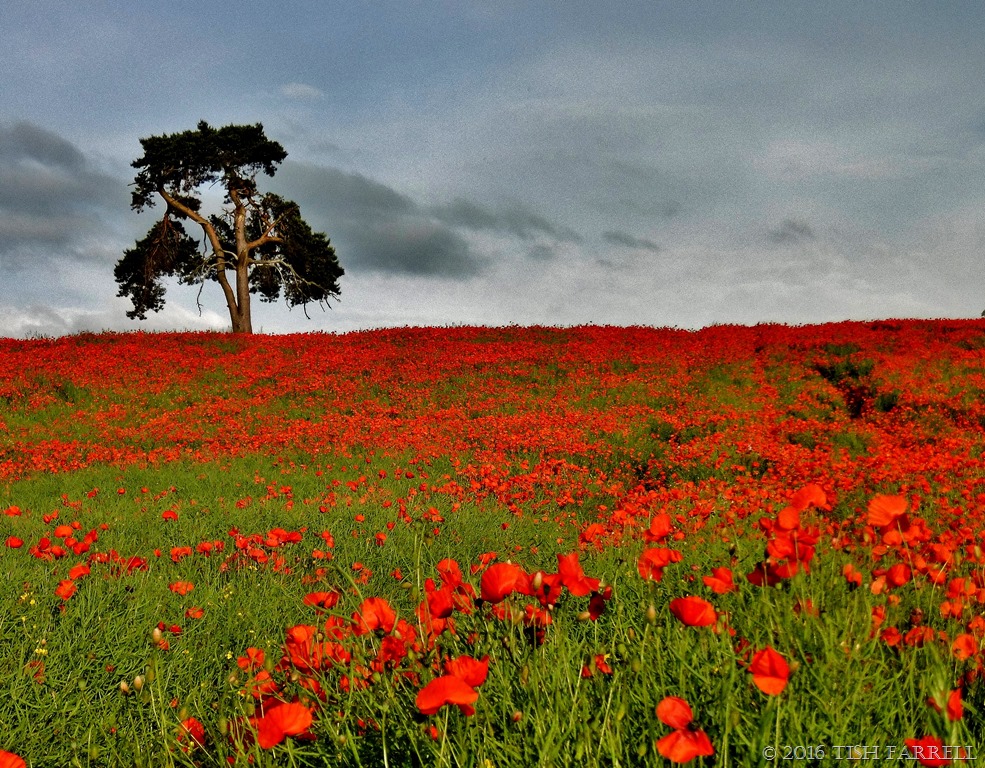
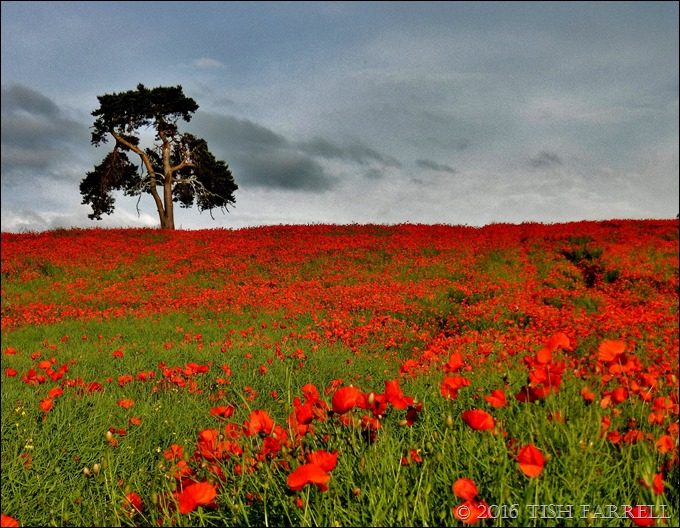
In June to the south of the town we had an outbreak of poppies. It was stupendous:
P1050068

*

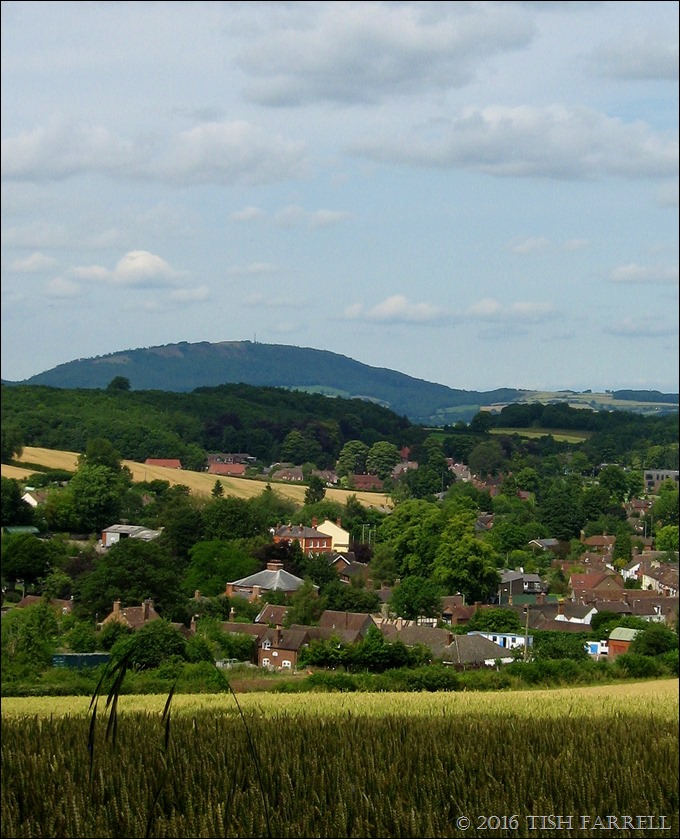
Then in late summer, standing at the southerly end of the town, among the wheat fields and looking north, I discovered this fine view of the Wrekin. Some trick of the light/perspective/geography has made it seem extraordinarily looming and close:
IMG_1285

*

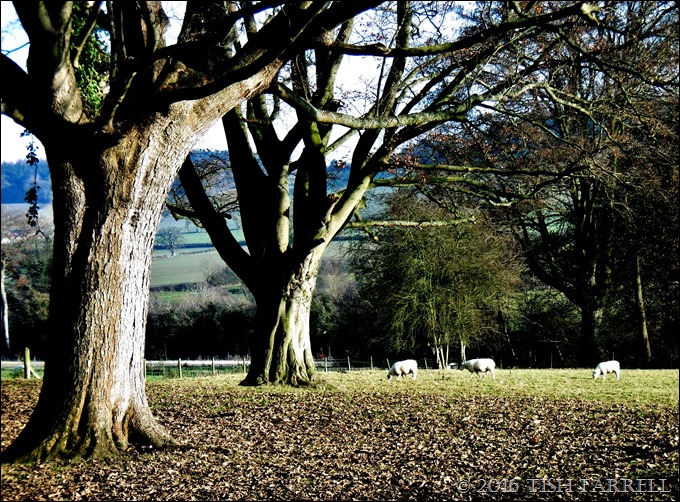
When it comes to the other quarters, if walk from the town centre, in an easterly direction, down the Bull Ring and out past the ruins of the 12th century Cluniac Priory, you will find the once monastic parkland where the Prior went hunting before the place was asset-stripped and sold off to Henry VIII’s faithful servants, and thereafter to generations of would-be gentry. This photo was taken a few days ago. A winter’s view then:
P1060221

*

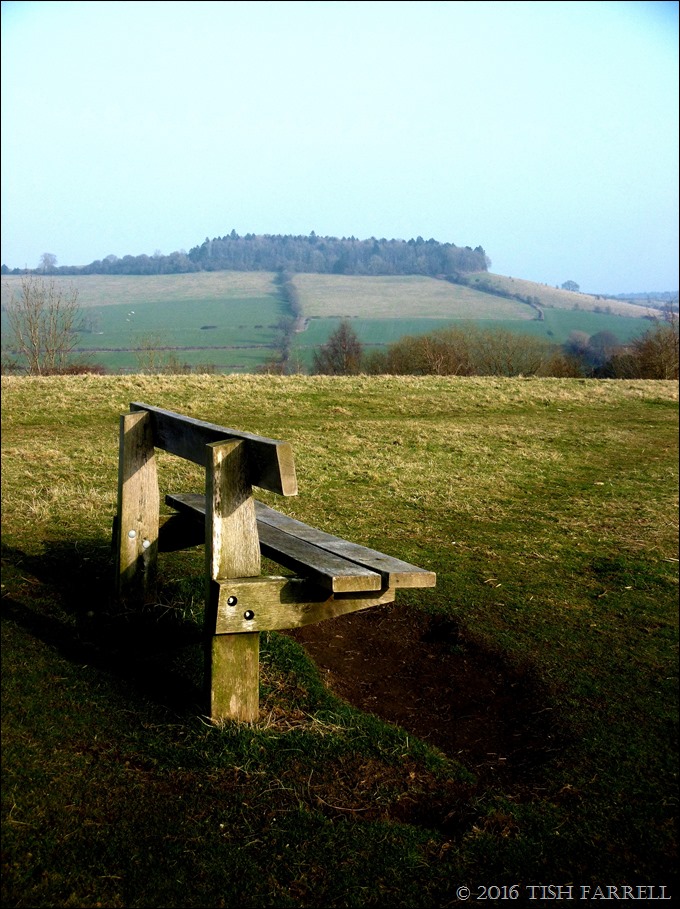
And then looking east from the north end of the town – this time from Windmill Hill:
P1000684

*

Also there are the ever-changing westerly false-horizons as seen from our house that backs on to the foothills of Wenlock Edge:

This slideshow requires JavaScript.

*

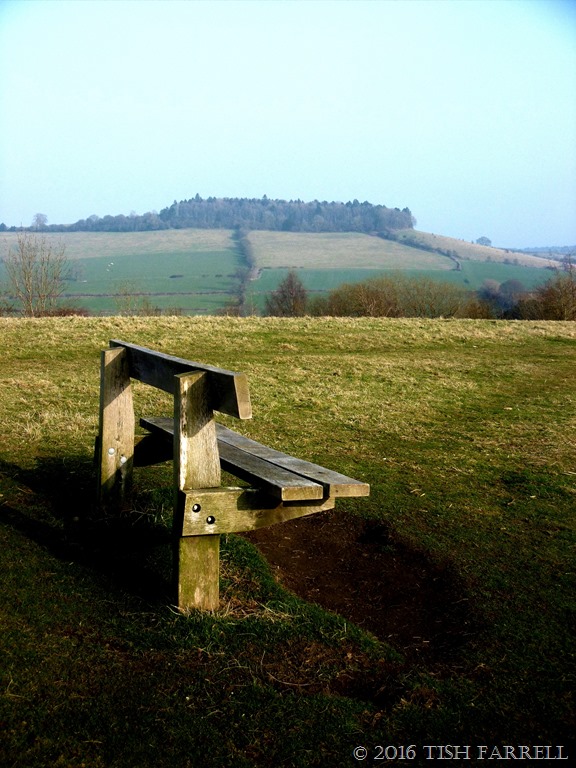
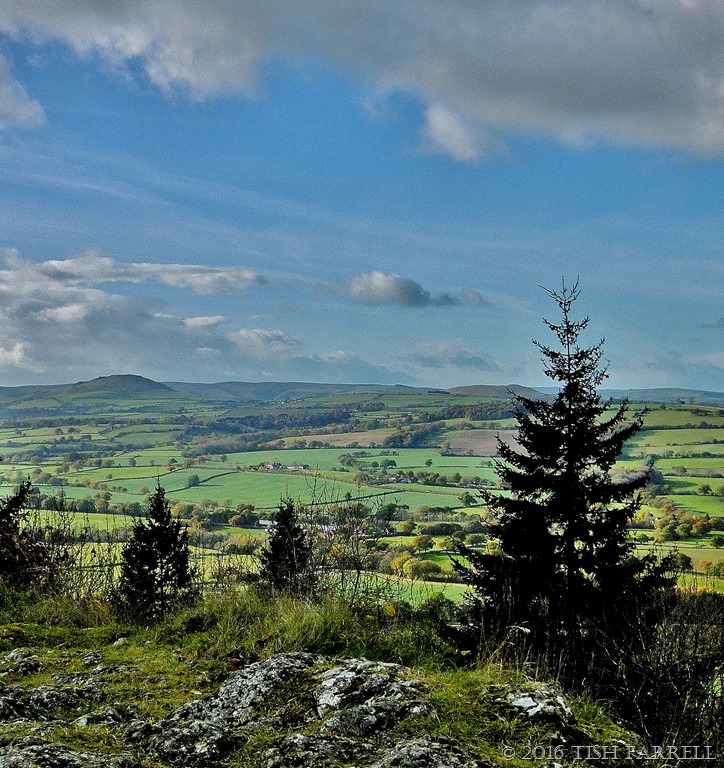
Finally, if you leave the town and climb on to Wenlock Edge itself, and if you can find a suitable gap in the trees, you can look west across Shropshire and towards the Welsh borderland:
P1050959

P1050954

And the reason why I’m posting all these views?

Well, this week the WordPress photo challenge invites us to pre-empt the New Year making of resolutions and post a photo impression of what that resolution might be, or if not a resolution, then of some envisaged new horizon; to look ahead beyond life’s present busyness.

This made me consider my own horizon-watching habit, which daily fills me with a sense of wonder.(For one thing I am very lucky to have the time to do it at all – a luxury of luxuries). It is a form of day-dreaming, or watchful meditation and a good way to rest a racing mind. I also enjoy posting views of my homeland landscapes because I believe we cannot love the world too much. But I’m wondering, too, if we don’t do altogether too much ‘looking ahead’, ‘looking for more/the next/the new.’

The fresh horizons we may be seeking are not really OUT THERE. “Look within to the universal self.” Inside each of us, that’s where all the work needs to be done if we want to see real change. I know I can change myself, though I recognise that I might need some assistance. I also know that I definitely cannot change others, much as I might wish to in these times when too many people appear to define their identities through their fear, envy and hatred of others. If anyone ever wants to know where hell is, then it is there.

copyright 2016 Tish Farrell


New Horizon

Today From Wenlock’s Old Railway Line

IMG_3778

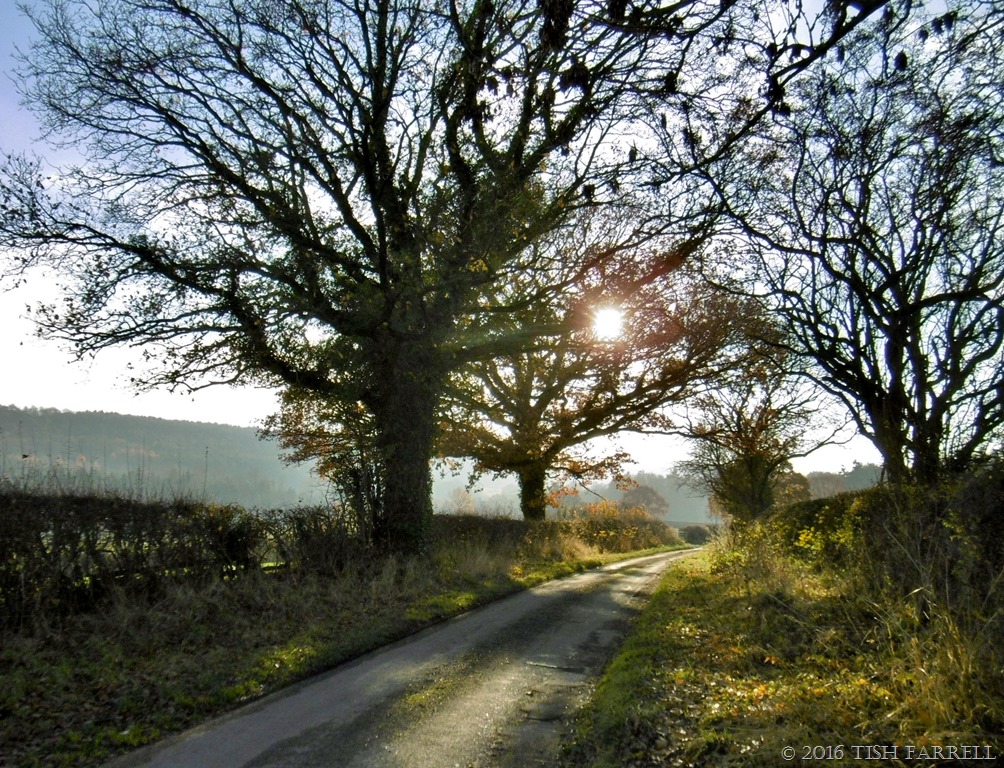
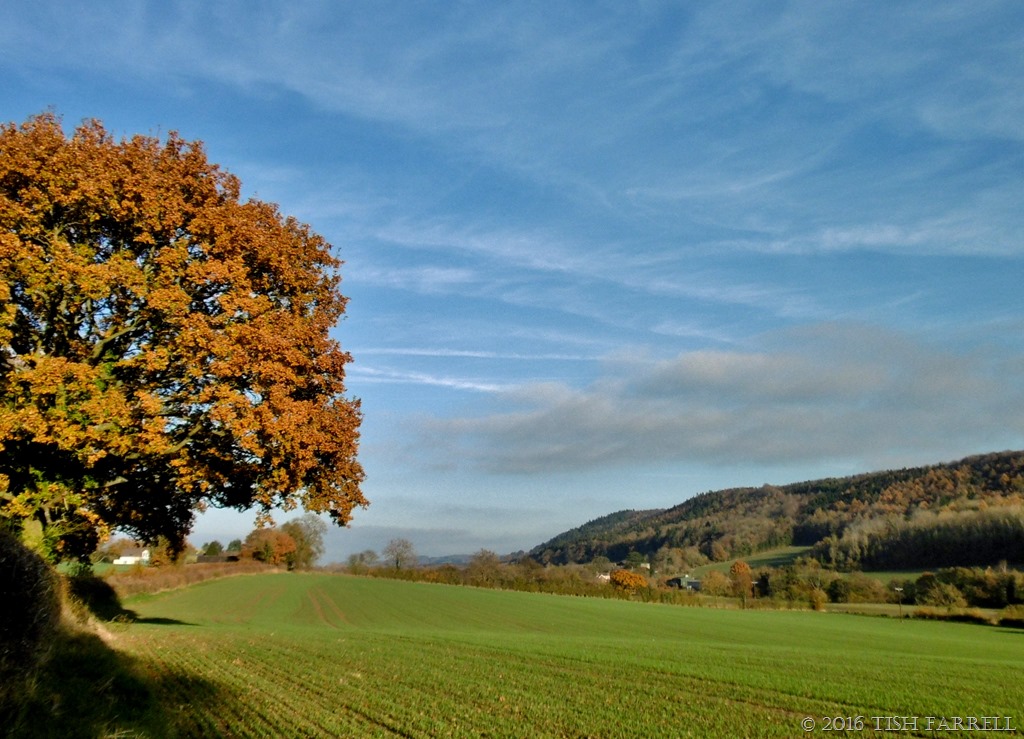
December 7 and at noon we had sun and 12 degree warmth: a spring day in winter. Graham and I headed out over the fields and came back down the old railway line. He strode off ahead while I stopped here to take this photo. It is for my U.S. Buffalo chum, Kathy. She and Jack come each year like swallows to spend the summer in Wenlock, away from Buffalo’s heavy heat. This is the walk she often walks with me, and we always stop at this fence, lean awhile, churn over world events, sometimes rant a little. And then at last simply look, taking in the view – the ever-changing unchanging landscape. (At least for now).
Of Rivers Running Backwards And Looping The Loop

P1060204

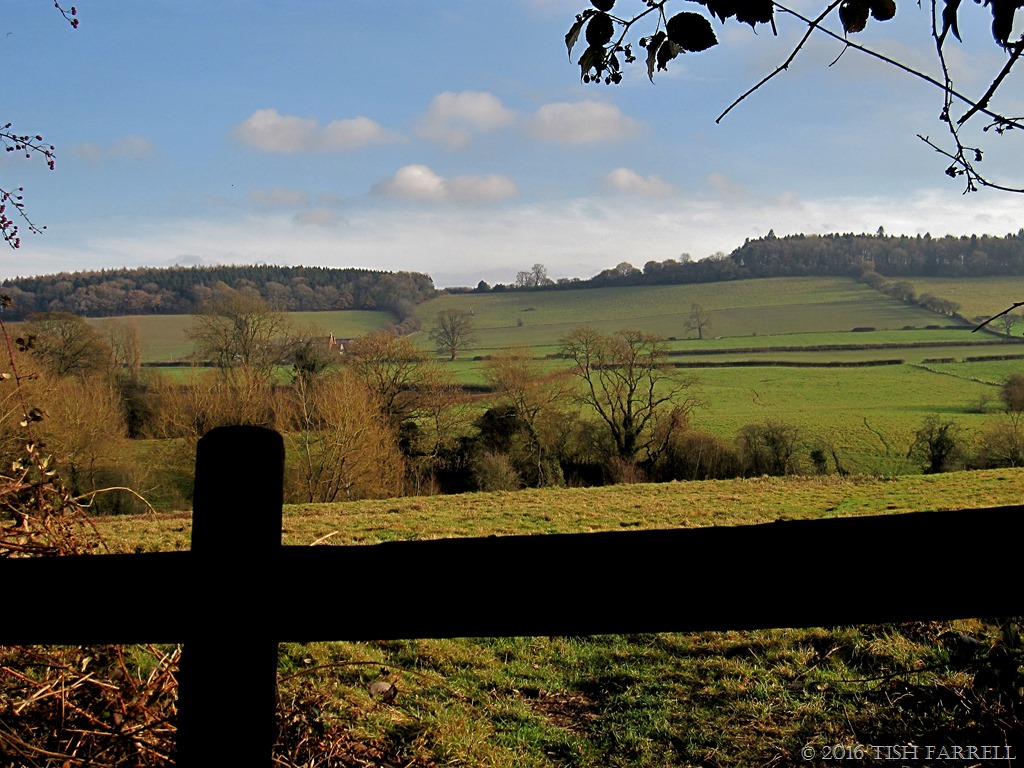
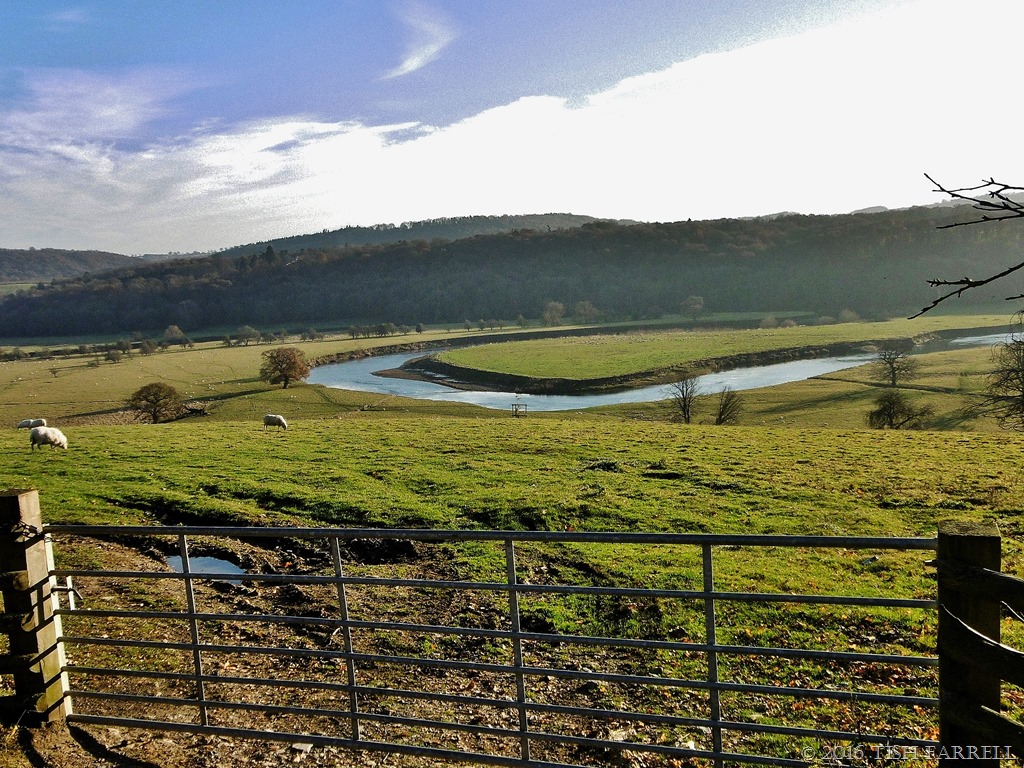
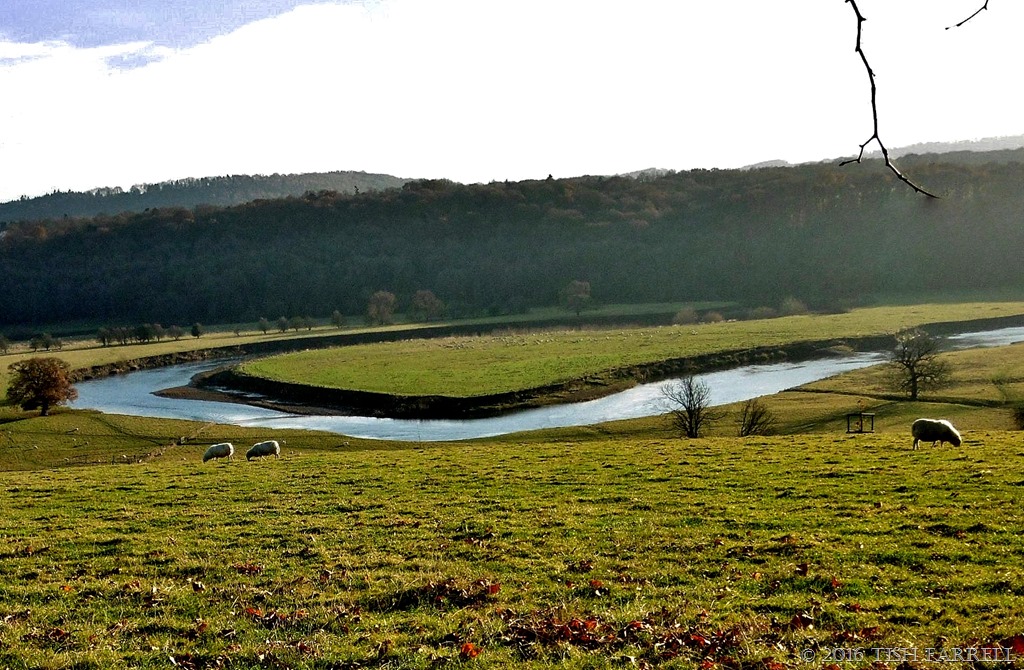
Last week I took you on a walk along Wenlock Edge behind our house, and talked about the melting ice fields of the last Ice Age (around 15,000 years ago), and how the River Severn that once flowed north, started to back up against the limestone ridge of Wenlock Edge and so formed Lake Lapworth. And then I said how the expanding melt waters worked their way through the rock wall, and so formed the Severn Gorge, and at the same time created a whole new southerly course for Britain’s longest river.  Well, this is where it all happened – at the northerly end of Wenlock Edge.

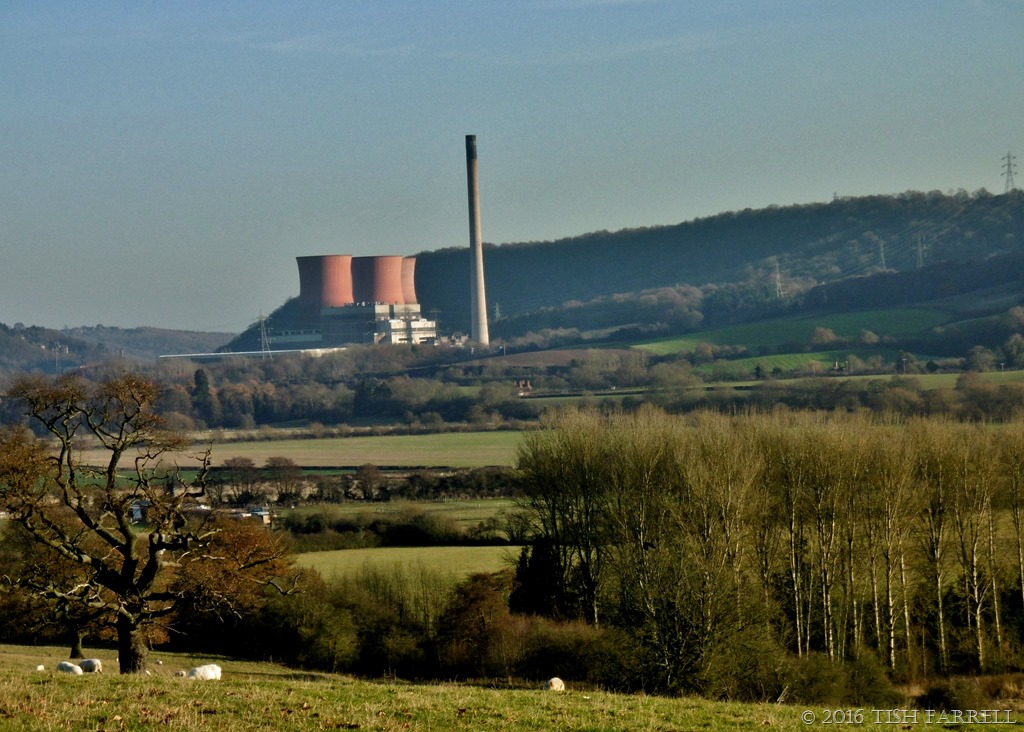
Off to the left of the photo, and out of shot, is the old Ironbridge Power Station. It’s coming up next in a ‘zoomed in’ shot.

P1060205

The power station stands on the riverbank at the entrance of the Gorge, and below Benthall Edge, and thus marks the spot where the Severn first headed south. And just to orientate you further, dead ahead to the left of the power station is Ironbridge and Coalbrookdale, and to the right, and below the power station is the road to Much Wenlock. You can just see the house roofs along it. Benthall Edge is thus a southerly spur striking off from Wenlock Edge.

Like Wenlock Edge, Benthall Edge is also composed of limestone strata formed around 400 million years ago when both Edges were part of the Silurian Sea. From the early 1200s the monks of nearby Buildwas Abbey had the rights from Lord Benthall to quarry the limestone, which they burned in kilns to make fertilizer for their farm fields, and lime mortar for building. They also cropped the woodland along Benthall Edge to make charcoal.

In later centuries the Benthall limestone was used in local blast furnaces, tipped in with ironstone, and when fired,  acted as a flux which drew impurities from the metal. This was tapped off as slag, and the resulting molten iron cast into ‘pigs’ on the furnace floor. The pig iron was then shipped on to the forge to be worked further into wrought iron, a more durable product than cast iron, which has a tendency to fracture. So now, if you can picture it,  see that little stretch of the Gorge by the power station thick with sulphurous smoke, and hear the whole place banging and clanging with forge hammers.

These days Benthall Edge is a tranquil place of hanging woodland and winding paths, although you can still spot the remains of old quarries among the trees. The ‘Lime Trail’ information leaflet of the Severn Gorge Countryside Trust provides an extraordinary statistic about the quarrying. It says that over a period of 750 years an estimated 1.2 million cubic metres of limestone was removed from the Edge. So there we have it: landscape formed both by human and natural agencies – though I’m wondering how that piece of man-made intervention was calculated.

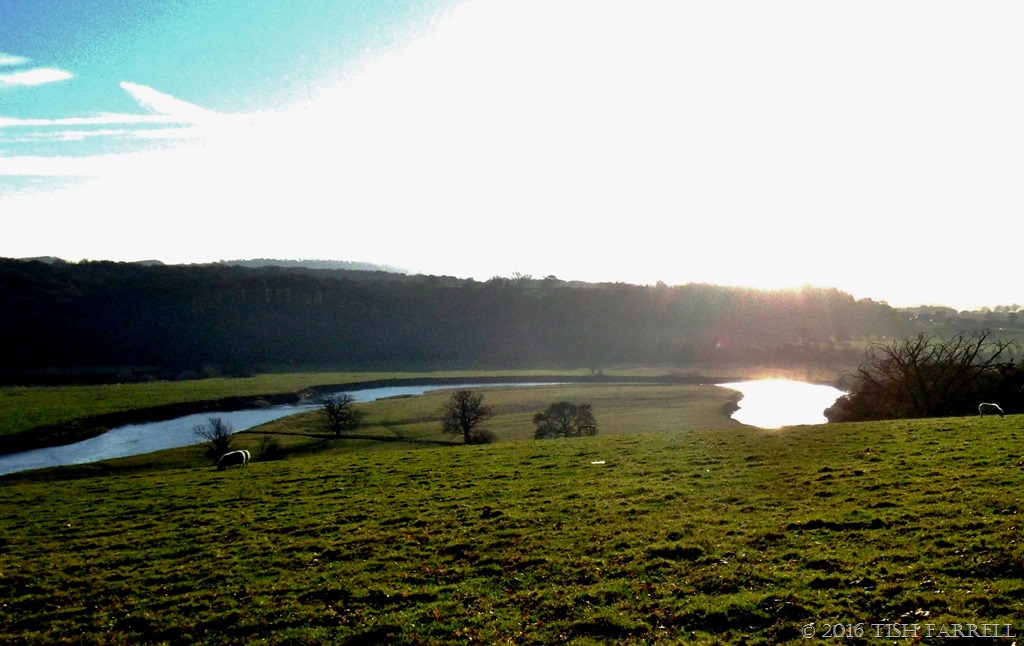
But now to get back to the other feature of note at this spot – the River Severn’s meanders between the villages of Buildwas and Leighton.

P1060211

I’ve not really done it justice, this looping riverscape formed by silting on the one hand, and erosion on the other; an oxbow lake in the making. I think I probably needed to climb a tree to achieve a better panorama:

P1060203

It is  of course a favourite viewpoint for geography fieldtrippers, and a very fine place to linger, although not for too long on a winter’s afternoon, however bright and beautiful.

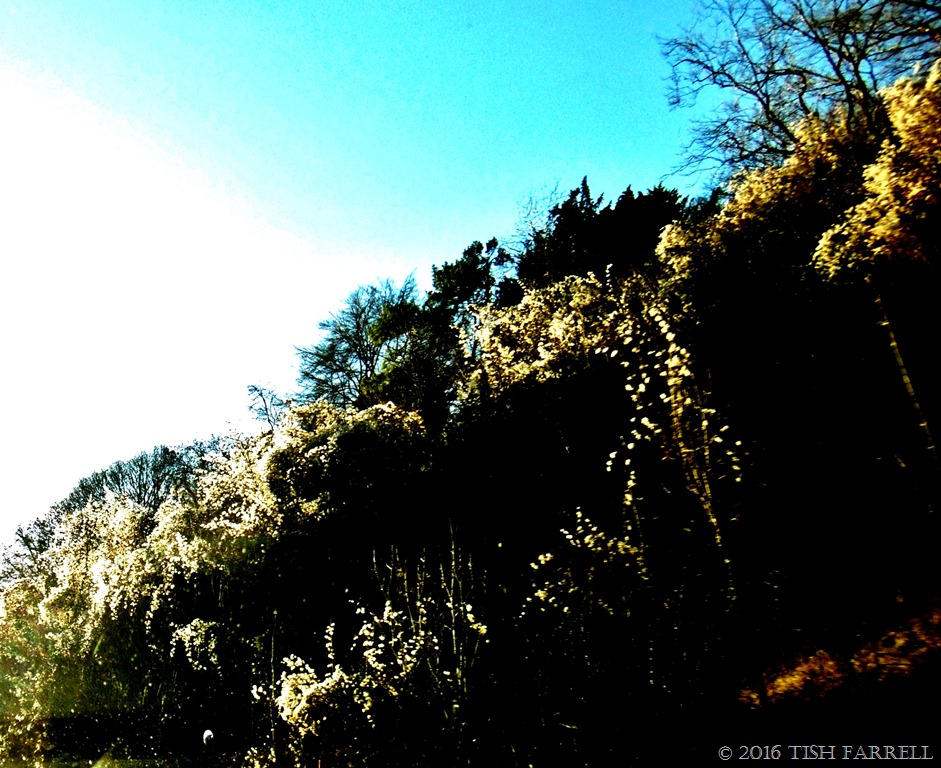
As we headed home, the December sun was lighting up cascades of Old Man’s Beard along the roadside; the trailing seed heads of wild clematis making their own festive streamers. Caught here through the car windscreen. (I wasn’t driving).

P1060212

The Old Quarry At Middleton Top, Derbyshire

P1050679

With today’s images I’m having a complete change in mood from yesterday’s full-colour Wenlock Edge vistas. These Middeton Top photos were taken in September during our brief stay in Derbyshire.

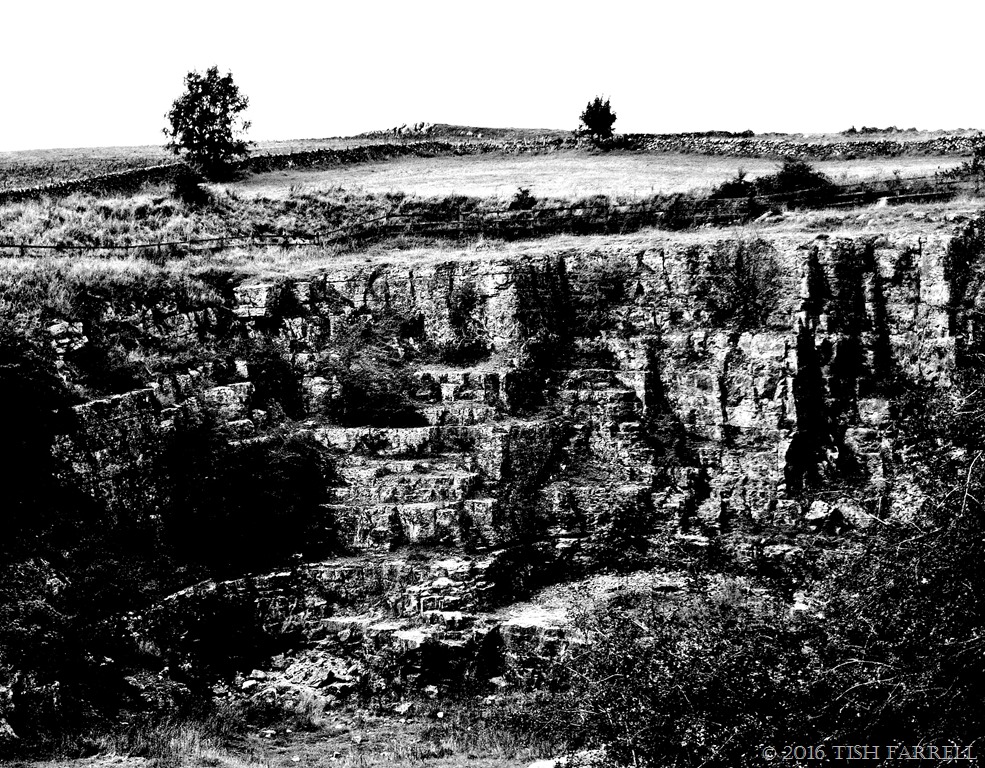
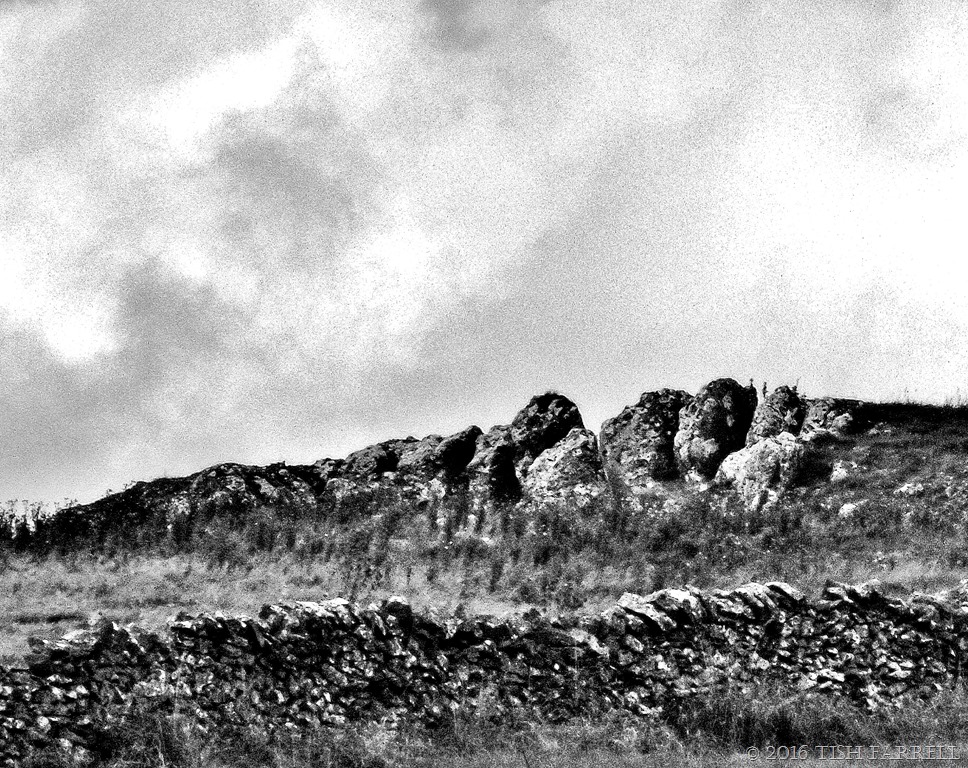
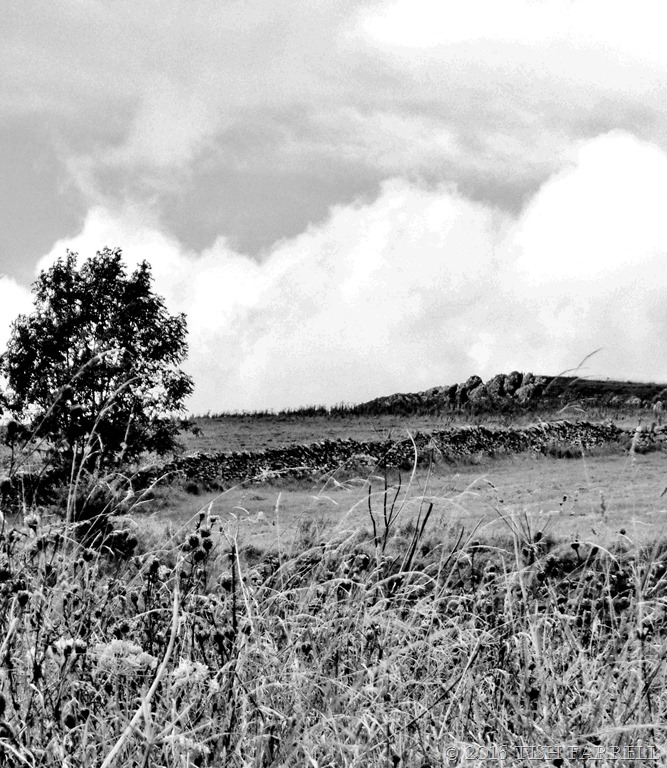
As you can see, the light was flat and dull. I thought colour photos probably wouldn’t work, but decided to try out my camera’s monochrome setting. (And yes a tripod might have helped.) The result, to my eye, looks rather like a lugubrious nineteenth century (if not older) engraving – quite a fitting outcome I’m thinking for this old Industrial Age quarry.

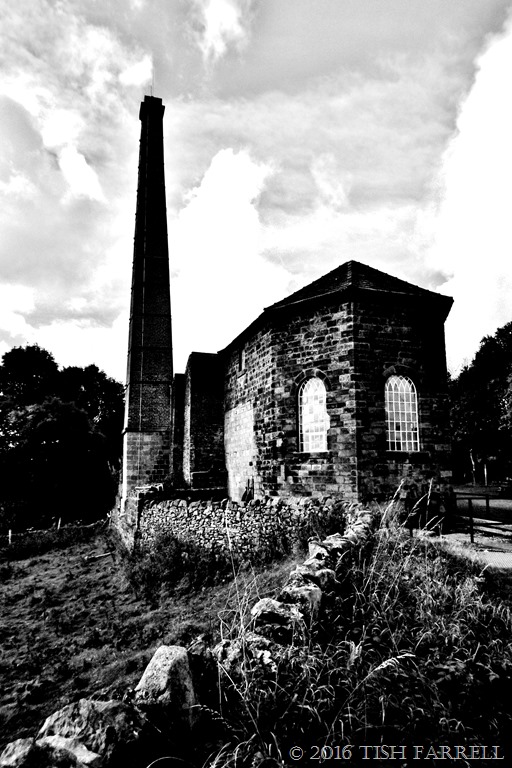
Middleton Top is anyway a dramatic spot. The quarry lies beside the old Cromford and High Peak Railway Line now part of the fabulous High Peak Trail. There is also an impressively long and steep inclined plane (1 in 8) and the 1829 steam winding engine that once hauled wagons up the hill is still there within its dark-stone engine house.

I always find quarries very disturbing places, the landscape hacked and blasted. Also the limestone in this part of the world seems to loom oddly – even on dull days. Up on the skyline between the two small trees you can just see a cluster of boulders; they caught my eye for this very reason. I also thought I spotted a raven there, but it flew off before I could organise myself with the binoculars. Instead, I went for maximun zoom on the Lumix and ended up with this ‘charcoal sketch’ effect. Also a bit unsettling. You will have to imagine the raven. Or a Wuthering Heights moment displaced from Yorkshire.P1050680

P1050682

And I couldn’t end without including a photo of the steam-winding engine house: an important piece of Britain’s industrial archaeological landscape. The engine is still in working order and has demonstration open days, though sadly no longer powered by steam. There’s a video HERE.

P1050673


Black & White Sunday

The Changing Seasons ~ Today Below Wenlock Edge, Rambling Through Westhope And Easthope

P1060056

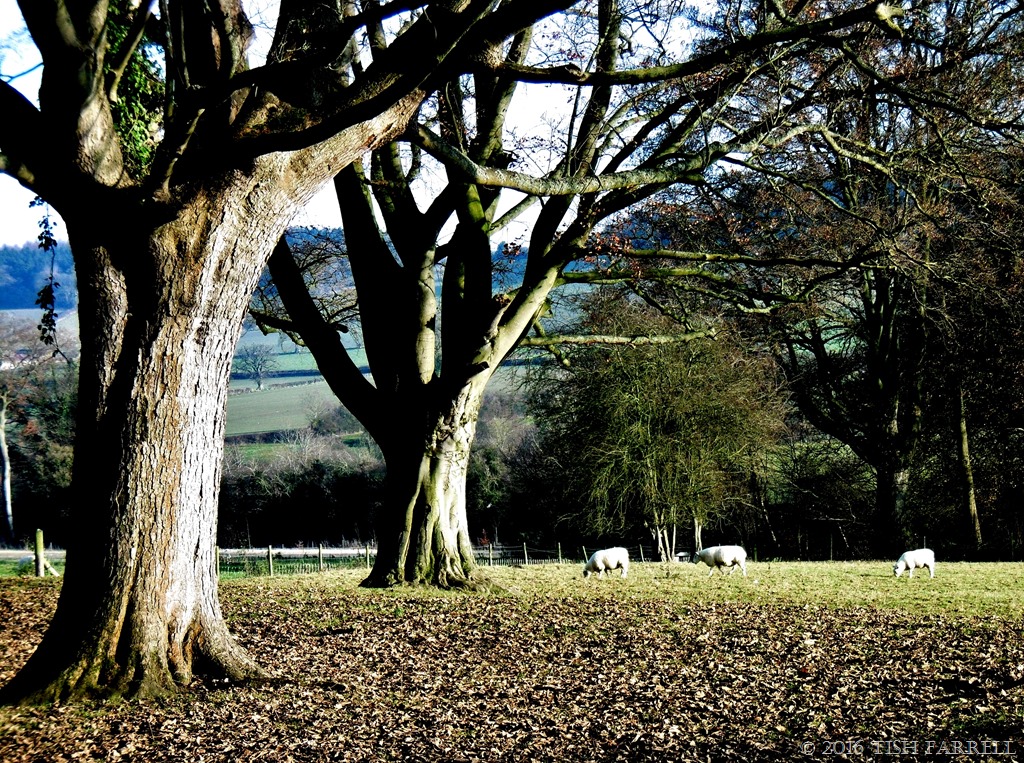
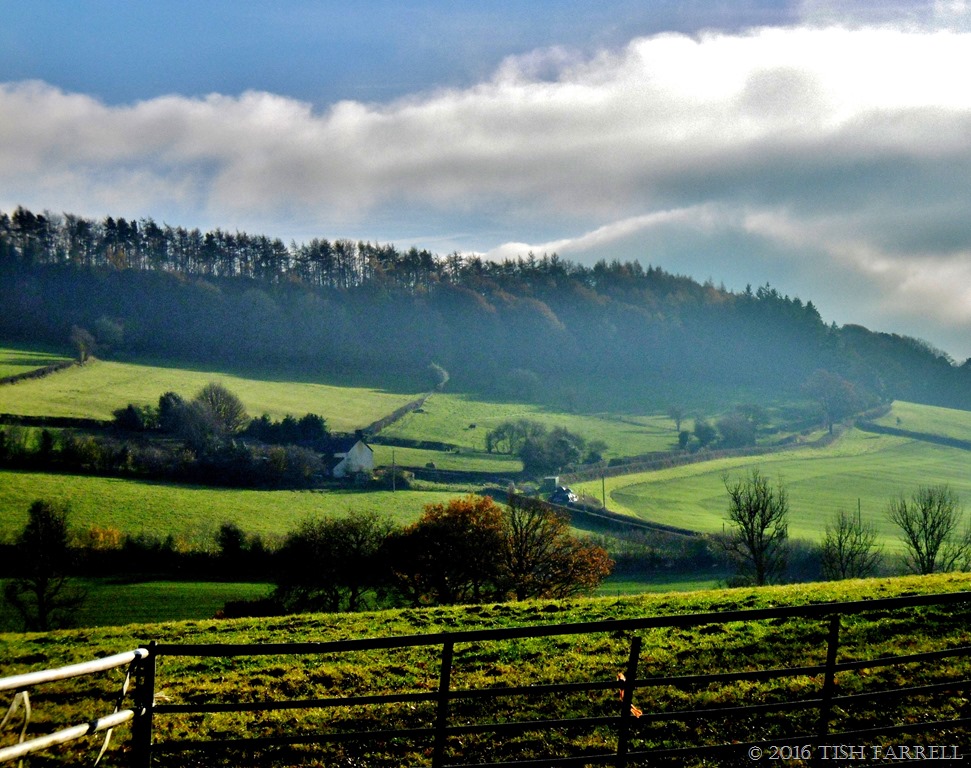
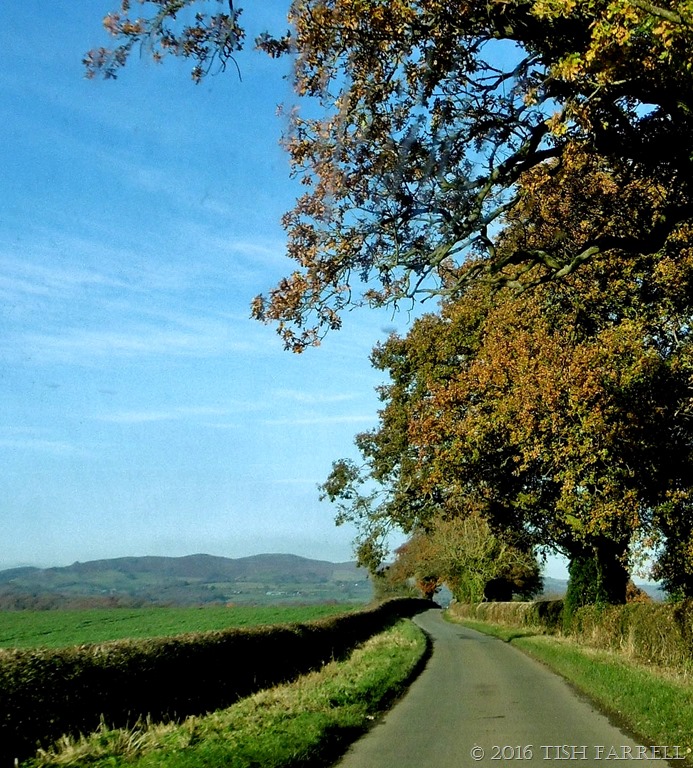
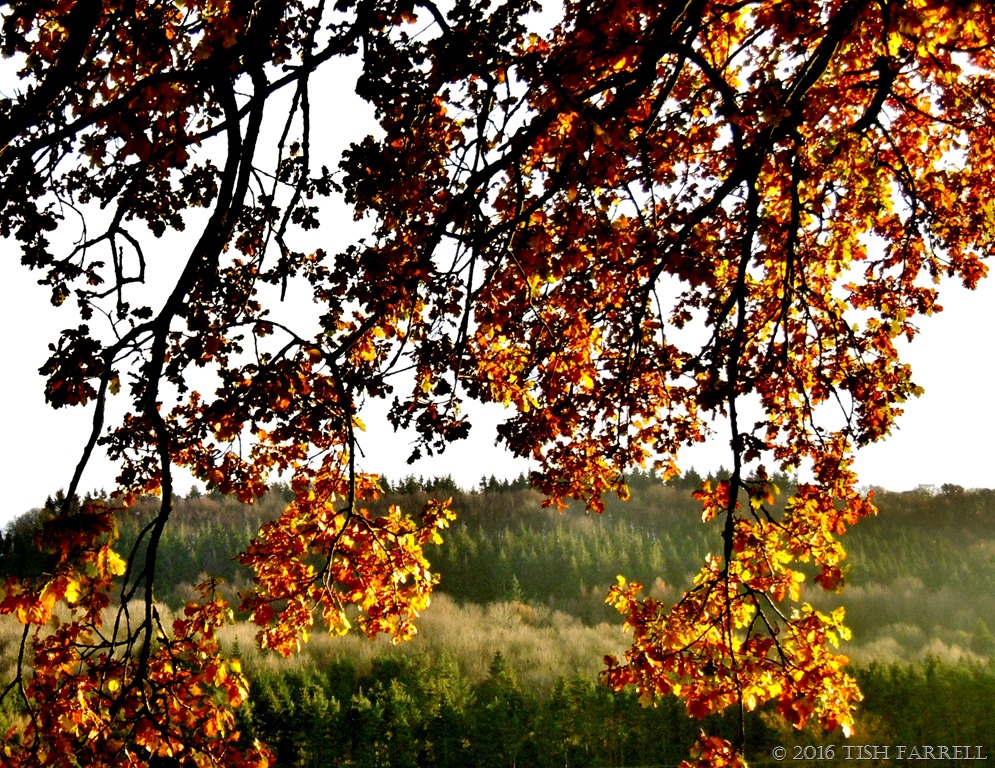
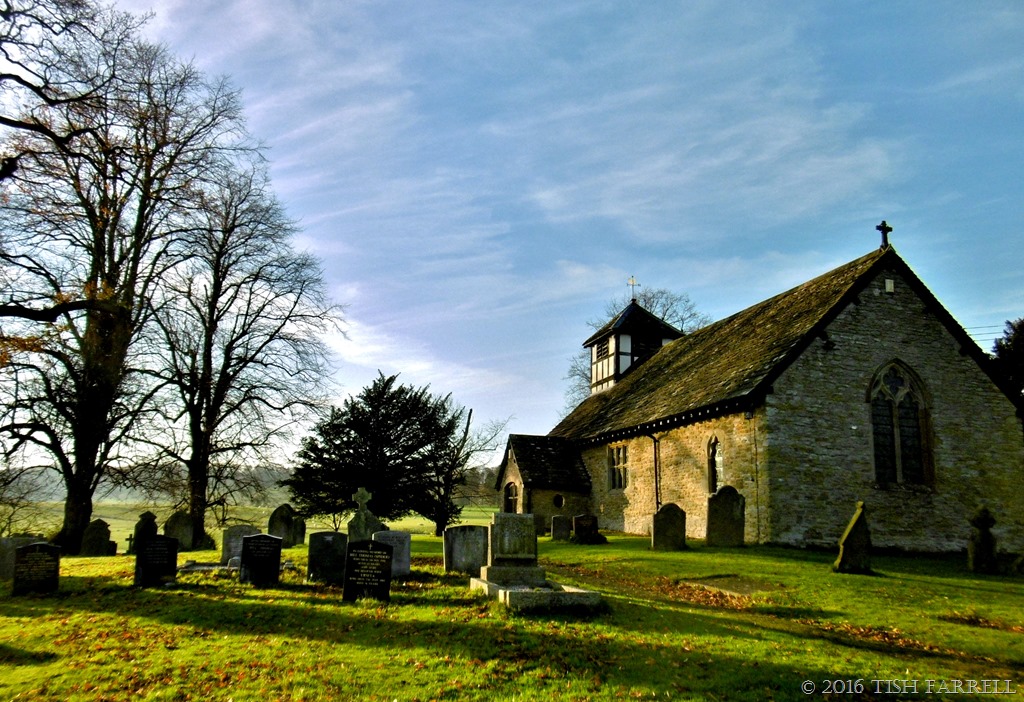
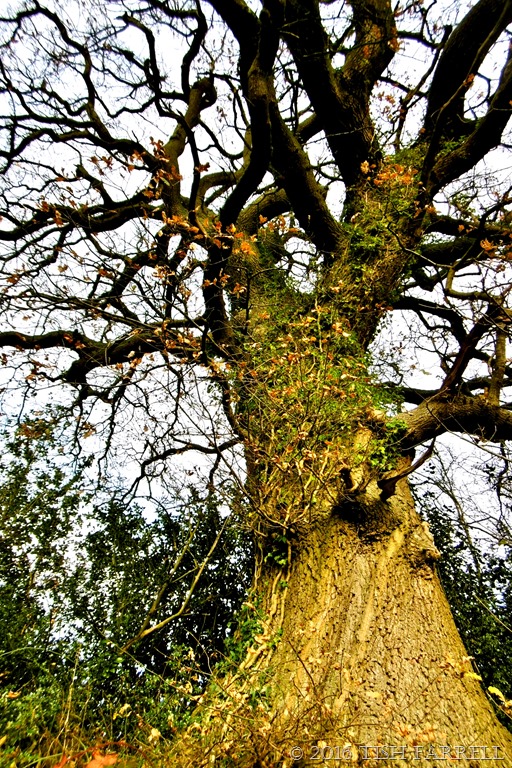
Today was a golden day – not a breath of air and the landscape lit up by the oak trees that still have their leaves. Here are some glimpses, then, of my corner of Shropshire on a late November afternoon.

P1060083

P1060095

P1060098

P1060101

P1060107

P1060080


This slideshow requires JavaScript.

Cardinal Guzman: The Changing Seasons