A Laburnum Roof?

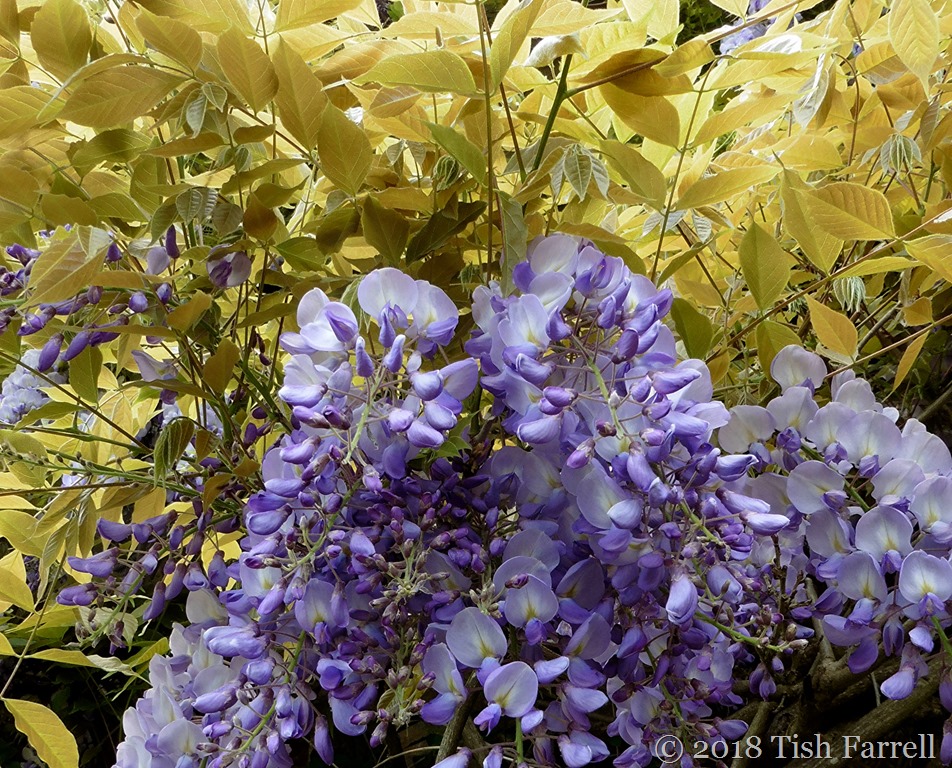
Becky has kicked off her June spree of roof shots in square format with a view of Kew. I’d also been thinking of roofs in a garden setting, so here’s a tiny segment of the Laburnum Arch at Arley Arboretum as seen a couple of weeks ago. At 65 metres, it is the longest Britain. But where, you might be asking, are the flowers, the golden cascade thronging with bee-hum. Sorry to say we were a week early. The flowers were only just coming out. Not only that, it seems we walked down the arch the wrong way. The intention of the recent extension being to bring you to a spectacular view over the Severn Valley. Pretty much like this one, or so I imagine. Anyway, I enjoyed looking up into the  tracery of entwining boughs – which would not of course be visible if the flowers were out. Always good to find a silver lining in the absence of gold.

Please pop over to Becky’s for more June Roof Squares:

June Squares

P1060120sq

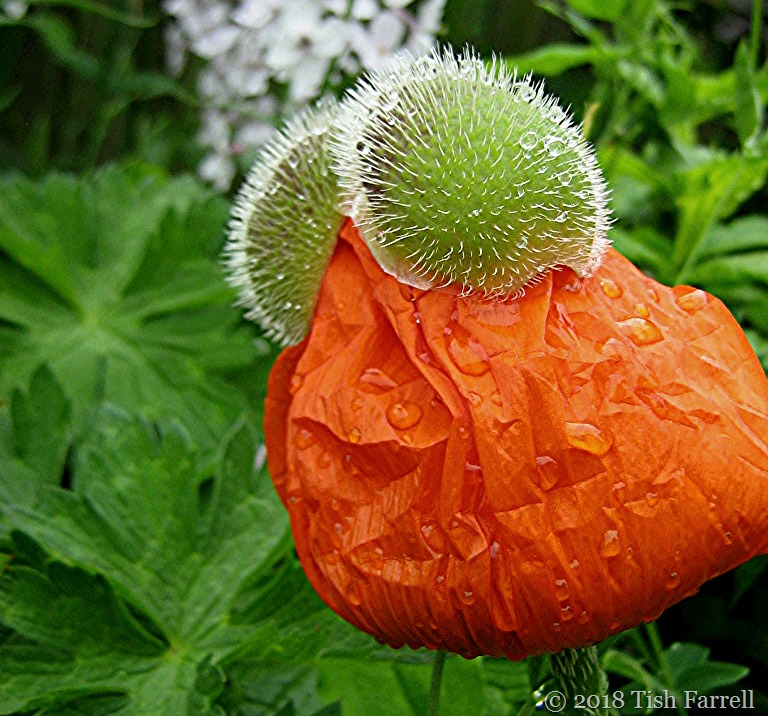
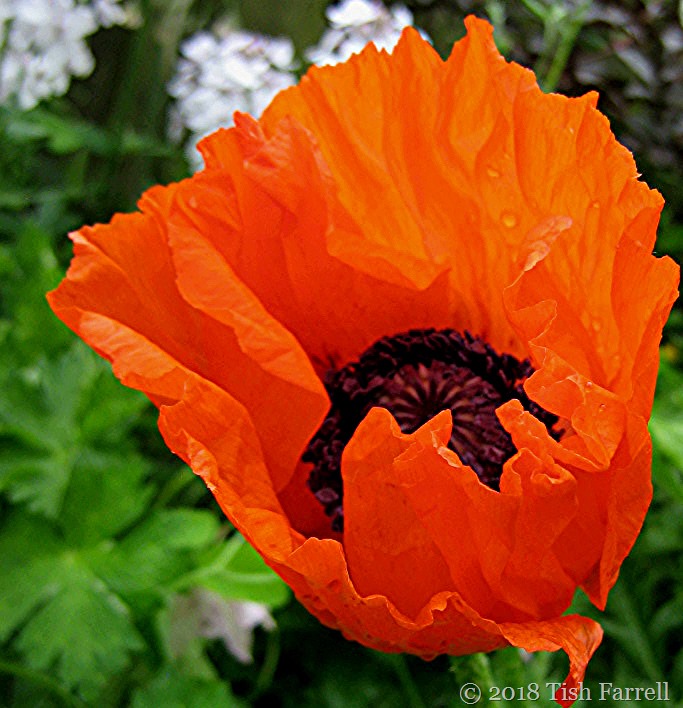
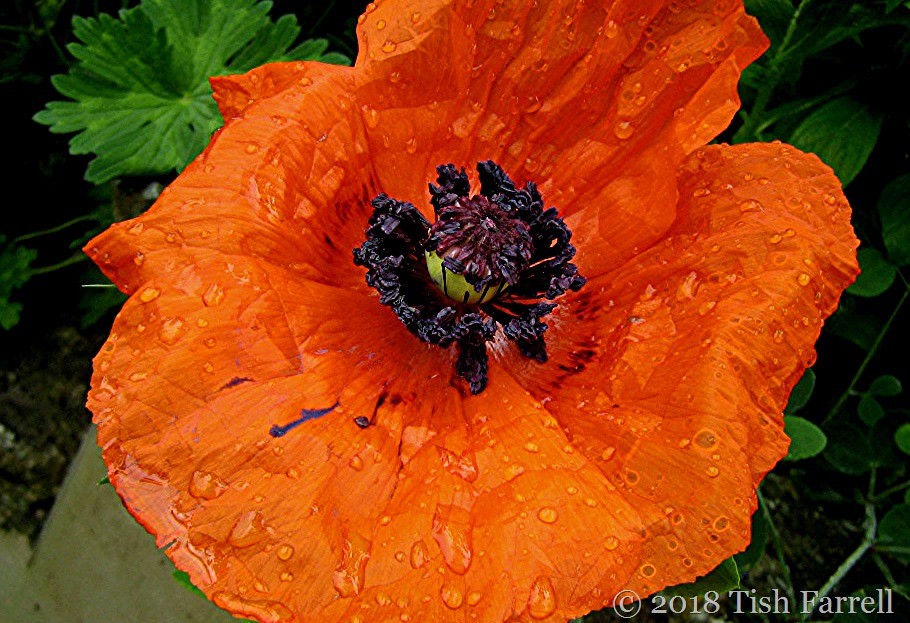
Poppy Power ~ The Show Goes On Rain Or Shine

IMG_3543

IMG_3558

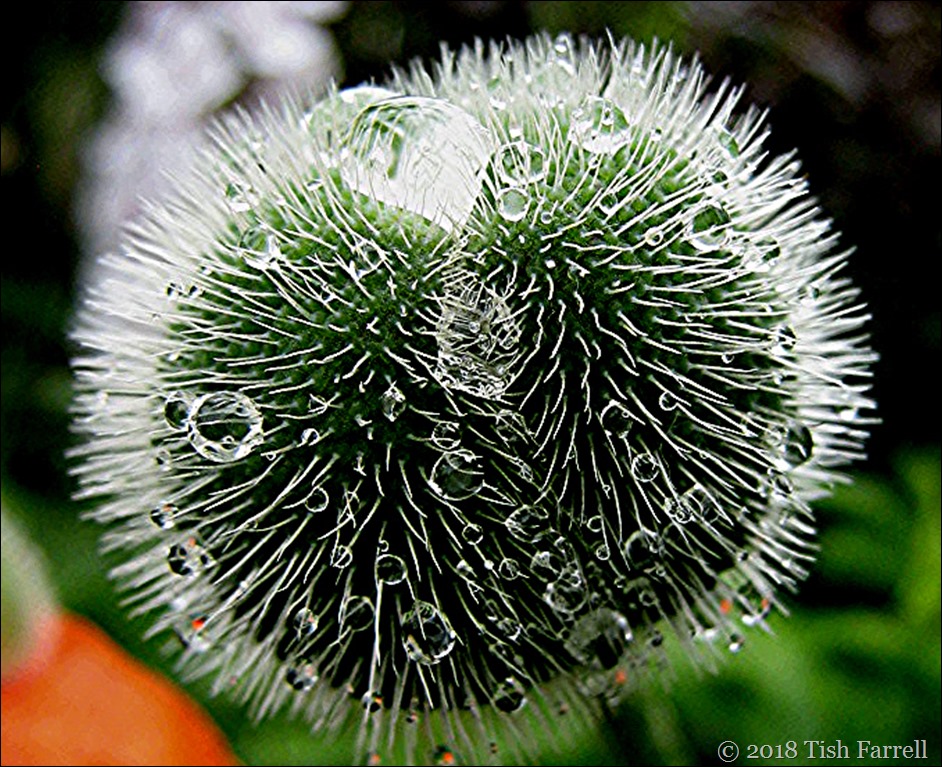
To be honest I’m not too fond of this particular shade of oriental poppy – essence of Heinz Tomato Soup. It was already a garden resident when we bought the house, and although I keep digging it up, it seems determined, not only to stay, but to multiply. Anyway, I like its chutzpah, if not its colour. I can always be sure it will pop up somewhere to annoy me. Then I think, oh well. At least the bees love it. And who can gainsay such show-off vim and vigour.

IMG_3540

On Sunday after the storms, I even felt rather sorry for this very rain-drenched one – made me think of an ageing star, past her prime, crying into her gin. Overdone mascara on the run…I should get out more.

Plant Collectors’ Fair At Arley Arboretum

Set within a walled garden above the River Severn on the Worcestershire border is one of the oldest and finest arboreta in Britain. It was begun around 1800 by Earl Mountnorris who owned the Upper Arley village estate. But by the 1950s both arboretum and the village cottages had fallen into neglect. Enter Roger Turner, Midlands philanthropist and iron and steel man. He set about restoring the arboretum and brought Arley village back to life, repairing properties, building new homes and a community centre. When he died in 1999, the estate was left to his Charitable Trust. The arboretum was first opened to the public in 2002, its objectives both recreational and educational. So could one a imagine a lovelier venue for last Saturday’s gathering of nurserymen and women all selling their very special garden plants?

The fair was set up just outside the walled garden entrance and overlooking the parkland. For the small price of £2.50 you could go to the fair and spend the whole day in the arboretum.

And then into the arboretum:


This slideshow requires JavaScript.

Arley Aboretum and Upper Arley village for more information.

Six Word Saturday

This Morning Over The Garden Wall…

P1060315

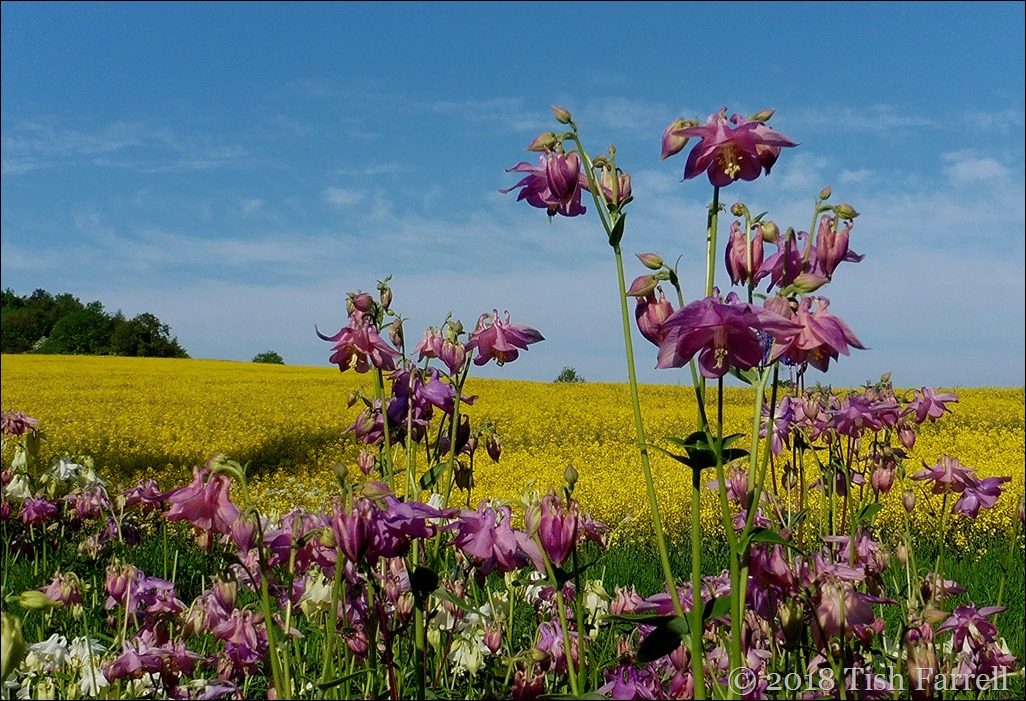
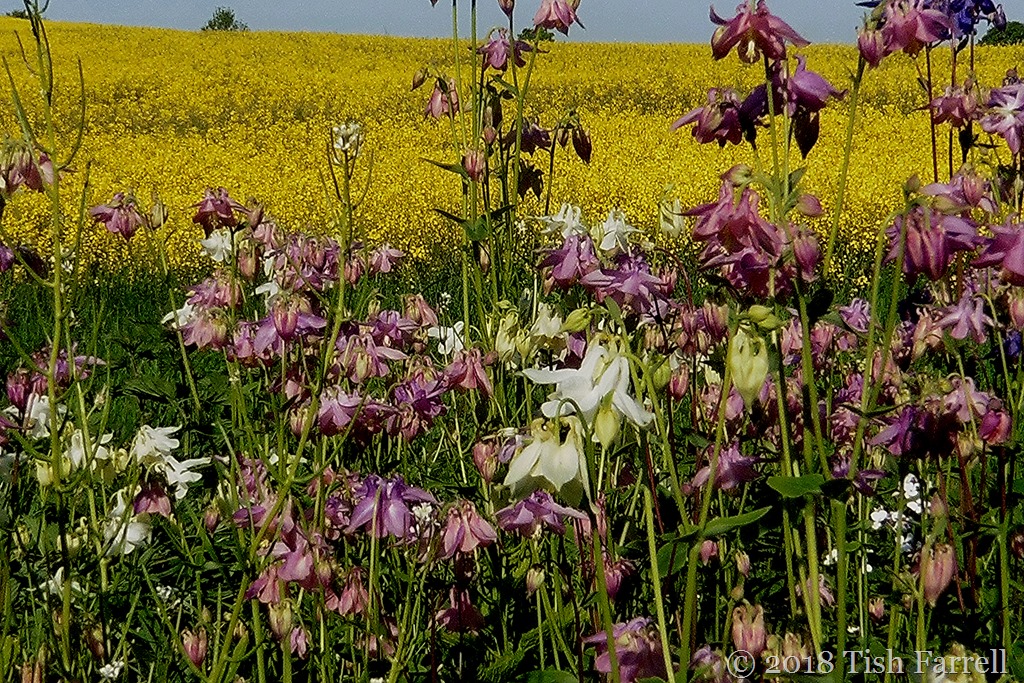
…we have a forest of Granny’s Bonnets. How did so many of them blow in and settle here?

We do of course confess to a spot of guerrilla gardening on our boundary with the field, and this does involve a tacit understanding with any passing flower life that if we clear back the couch grass and other less interesting invaders outside our hedge, wall and fence, then they are welcome to drop in for the spring and summer season. Two years ago we had the profusion of opium poppies. Then there was a borage jungle. This year the aquilegias are claiming the stage.

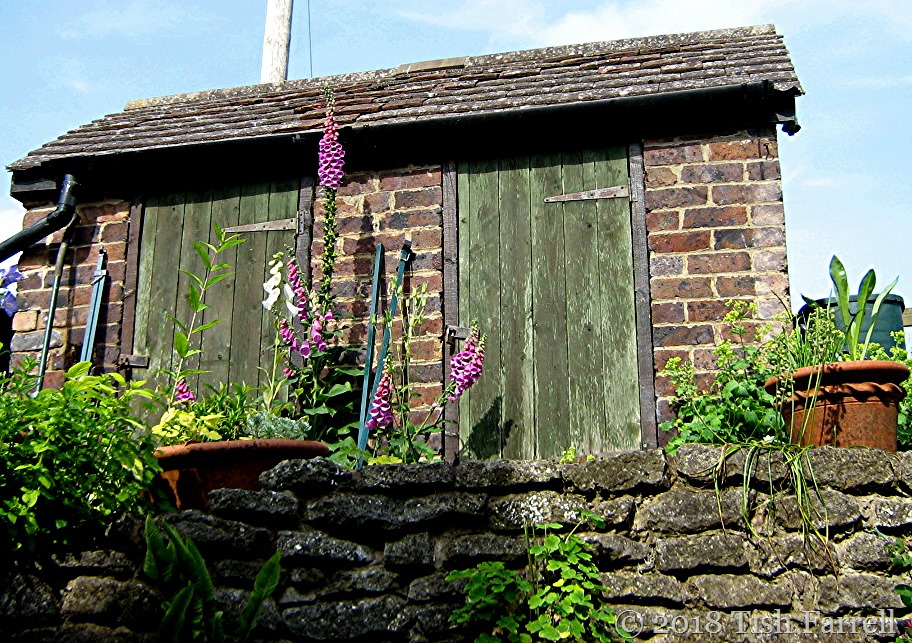
Further along the boundary behind our old privies, creamy flowered comfrey has also arrived, and feverfew is a frequent visitor there too. Beyond the privies is the fence, upon which he-who-builds-sheds-and-binds-books likes to lean while ruminating on the next project. Here I have encouraged purple-spired toadflax, wild stock, pink campion, moon daisies and foxgloves to multiply and, in the past, scattered corn cockle seeds that now self-propagate and put on annual show. I also move any ‘spare’ herbaceous perennials out there too – especially plants of the late summer, clump-forming variety that will stand in when the wildflowers have gone their way: Rudbeckia, perennial sunflowers, Golden Rod, Michaelmas daisies, phlox and helenium.

It’s a sort of give-and-take gardening with borrowed landscape (and in every sense). It gives great pleasure, not only to us, but to anyone passing on the field path. You never quite know what will be happening out there. At present, too, the rapeseed blooms are providing a golden backdrop. Though not for too much longer because, even as I am writing this, the crop is busy setting seed. Then it will be on to the next scene  at the guerrilla garden theatre. Us the ever-willing audience.

copyright 2018 Tish Farrell

P1060306

A Bit Of Magic On Monday ~ Quintessentially Exquisite Quince Flowers

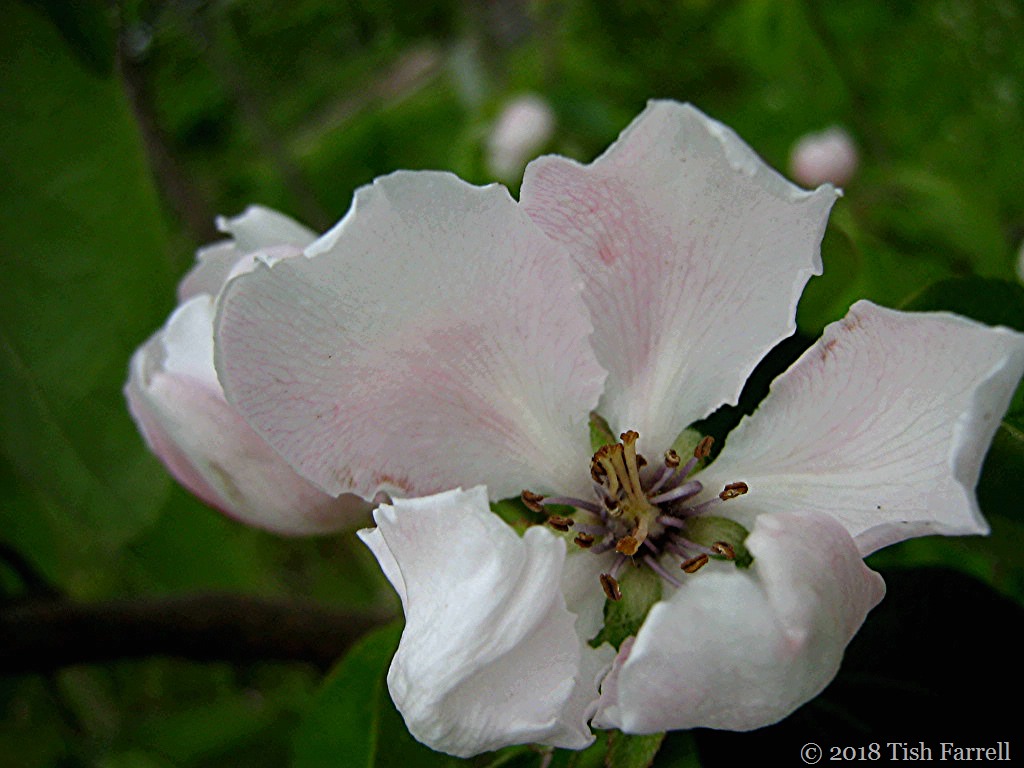
I discovered the quince tree (Cydonia oblonga) at the allotment only last year. It was hanging in large golden fruits like overfed pears. They had a subtle fragrance too. And I was entranced. It seemed as if the tree had materialised from out of some ancient Persian painting. Later I discovered that this was indeed one of its homelands (in that belt of southwest Asia between Armenia, Turkey, North Iran and Afghanistan). On Saturday evening as I was going home, I caught the tree on the last lap of flowering – petals like finest Dresden porcelain. What a treasure. And then I started thinking about quince jelly and quince ‘cheese’ – the dulce de membrillo – as made on Spain’s Iberian peninsula and eaten with Manchego cheese. And then I thought how very generous is the plant world to human kind.

copyright 2018 Tish Farrell

Look What I Found At The Allotment Yesterday – An Unexpected Cauliflower

IMG_3280

As vegetables go, cauliflowers are sneaky entities. I could swear there were no signs of this one a few days ago. In fact  when I ventured to lift the protective mesh to give the outer leaves a prod, I decided it was probably a cabbage. It and the four other ‘cabbages’ were looking pretty healthy too – an astonishing feat after three lots of winter snow and months of never ending rain.

I bought the seedling plants on line in October from Delfland Nursery, along with sprouting broccoli plugs which have also grown strongly and served us well. I’ve used this company several times, and they are brilliant when you have forgotten to think ahead and sow for autumn and winter crops. Or just forgotten.

Anyway, after the long overwintering I thought the ‘cabbages’ deserved a feed and gave them the last of some vintage homemade comfrey liquor which I discovered in the polytunnel during an unlikely phase of tidying. That was a couple of days ago. And look what happened. I’m going to try for giant beanstalks next, though promise not to facilitate the advent of any outsize fee-fi-fo-fumming individuals. A hen that lays golden eggs might be fun though.

copyright 2018 Tish Farrell

April’s Changing Seasons ~ Bleak With Bright Blooming Intervals

Here in Shropshire we’re back to wintery temperatures after last week’s four days of summer. The header photo was taken on Sunday up at the allotment – damson blossom against a stormy sky.

But despite the coolness, plant life seems to be thriving:

Out in the woods:

*

In monochrome:

*

As seen from Wenlock Edge and in the Shropshire Hills (on a hot day last Thursday):

*

And out in the garden:

Who knows what will happen next:

P1050435

The Changing Seasons:  April 2018

Please visit Su to see her changing seasons over in New Zealand